Question bank

Q&A: practice questions with answers

Search questions on any topic. Filter by exam category, exam, subject and topic, try the question, then open the answer and explanation.

Courses – airGurukul

20,719 questions found.

Q6801.
Select the pair which follows the same pattern as that followed by the two set of pairs given below. Both pairs follow the same pattern.
ICK : KEF
HDW : JFR
उस युग्म का चयन कीजिए जो उसी पैटर्न का अनुसरण करता है जिसका अनुसरण नीचे दिए गए दो युग्मों द्वारा किया जाता है। दोनों युग्म एक ही पैटर्न का अनुसरण करते हैं।
ICK : KEF
HDW : JFR
  1. ARFM : TIH
  2. BVJF : XLA
  3. CKLR : MNN
  4. DGGP : IJK
Show answer

Concept: Find the position change of each letter (A = 1 … Z = 26).

  1. ICK → KEF: I +2 = K, C +2 = E, K −5 = F.
  2. HDW → JFR: H +2 = J, D +2 = F, W −5 = R. Pattern: +2, +2, −5.
  3. VJF → XLA: V +2 = X, J +2 = L, F −5 = A ✓
  4. RFM → TIH (+3 in middle), KLR → MNN (−4), GGP → IJK (+3) fail.

Trick: Check only the middle letter first (+2) – it removes A and D at once.

Answer: (B) VJF : XLA

अवधारणा: हर अक्षर का स्थानीय मान (A = 1 … Z = 26) में बदलाव देखें।

  1. ICK → KEF: I +2 = K, C +2 = E, K −5 = F।
  2. HDW → JFR: H +2 = J, D +2 = F, W −5 = R। पैटर्न: +2, +2, −5।
  3. VJF → XLA: V +2 = X, J +2 = L, F −5 = A ✓
  4. RFM → TIH (बीच में +3), KLR → MNN (−4), GGP → IJK (+3) गलत।

ट्रिक: पहले केवल बीच का अक्षर (+2) जाँचें – A और D तुरंत हट जाते हैं।

उत्तर: (B) VJF : XLA
RRB NTPC Graduate CBT 1General Intelligence and ReasoningLetter AnalogyRRB NTPC Graduate CBT 1 2024 · 23 Jun Shift 3 →
Q6802.
Select the set in which the numbers are related in the same way as are the numbers of the following sets.
(NOTE: Operations should be performed on the whole numbers, without breaking down the numbers into their constituent digits. E.g. 13 – Operations on 13 such as
adding/subtracting/multiplying to 13 can be performed. Breaking down 13 into 1 and 3 and then performing mathematical operations on 1 and 3 is not allowed.)
(7, 80, 22)
(43, 143, 19)
उस समुच्चय का चयन कीजिए जिसमें संख्याएँ उसी प्रकार संबंधित हैं जिस प्रकार निम्नलिखित समुच्चयों की संख्याएँ संबंधित हैं।
(ध्यान दें: संख्याओं को उनके घटक अंकों में विभाजित किए बिना, संक्रियाएँ पूर्ण संख्याओं पर की जानी चाहिए। उदाहरण के लिए 13 – 13 पर संक्रियाएँ जैसे
13 में जोड़ना/घटाना/गुणा करना आदि की जा सकती हैं। 13 को 1 और 3 में विभाजित करना और फिर 1 और 3 पर गणितीय संक्रियाएँ करना वर्जित है।)
(7, 80, 22)
(43, 143, 19)
  1. A(25, 91, 15)
  2. B(11, 63, 15)
  3. C(13, 89, 21)
  4. D(49, 139, 15)
Show answer

Concept: Find one rule linking first, second and third numbers that works for both sets.

  1. (7,80,22): 2×7+3×22=14+66=80 ✓
  2. (43,143,19): 2×43+3×19=86+57=143 ✓ → Rule: 2a+3c=b
  3. (13,89,21): 26+63=89 ✓
  4. Others: 50+45=95≠91; 22+45=67≠63; 98+45=143≠139.

Trick: The middle number is largest → it is built from the other two; try 2a+3c, a+2c, 3a+c quickly.

Answer: (C) (13, 89, 21)

अवधारणा: ऐसा एक नियम खोजें जो दोनों समूहों में पहली, दूसरी और तीसरी संख्या को जोड़ता हो।

  1. (7,80,22): 2×7+3×22=14+66=80 ✓
  2. (43,143,19): 2×43+3×19=86+57=143 ✓ → नियम: 2a+3c=b
  3. (13,89,21): 26+63=89 ✓
  4. अन्य: 50+45=95≠91; 22+45=67≠63; 98+45=143≠139।

ट्रिक: बीच की संख्या सबसे बड़ी है → वह अन्य दो से बनी है; 2a+3c, a+2c, 3a+c जल्दी आज़माएँ।

उत्तर: (C) (13, 89, 21)

RRB NTPC Graduate CBT 1General Intelligence and ReasoningNumber Set RelationshipRRB NTPC Graduate CBT 1 2024 · 23 Jun Shift 3 →
Q6803.
Refer to the following number and symbol series and answer the question that follows. Counting to be done from left to right only.
(Left) 6 @ $ 1 8 # 9 % ≺ 2 4 ⋟ 3 ^ 5 & 7 (Right)
If all the numbers are dropped from the series, which of the following will be sixth from the right?
निम्नलिखित संख्या और प्रतीक श्रृंखला को देखिए और उसके बाद आने वाले प्रश्न का उत्तर दीजिए। गिनती केवल बाएँ से दाएँ की जानी है।
(बाएँ) 6 @ $ 1 8 # 9 % ≺ 2 4 ⋟ 3 ^ 5 & 7 (दाएँ)
यदि श्रृंखला से सभी संख्याएँ हटा दी जाएँ, तो निम्नलिखित में से कौन-सा दाएँ से छठा होगा?
  1. A%
  2. B$
  3. C#
  4. D≺
Show answer

Concept: Remove all numbers, rewrite only the symbols, then count from the right.

  1. Symbols left (left → right): @ $ # % ≺ ⋟ ^ &
  2. From right: & (1), ^ (2), ⋟ (3), ≺ (4), % (5), # (6).

Trick: 8 symbols remain, so 6th from right = 3rd from left (8 − 6 + 1 = 3) = #.

Answer: (C) #

अवधारणा: सभी संख्याएँ हटाकर केवल प्रतीक लिखें, फिर दाएँ से गिनें।

  1. बचे प्रतीक (बाएँ → दाएँ): @ $ # % ≺ ⋟ ^ &
  2. दाएँ से: & (1), ^ (2), ⋟ (3), ≺ (4), % (5), # (6)।

ट्रिक: 8 प्रतीक बचे, अतः दाएँ से 6वाँ = बाएँ से तीसरा (8 − 6 + 1 = 3) = #।

उत्तर: (C) #

RRB NTPC Graduate CBT 1General Intelligence and ReasoningSymbol-Number SeriesRRB NTPC Graduate CBT 1 2024 · 23 Jun Shift 3 →
Q6804.
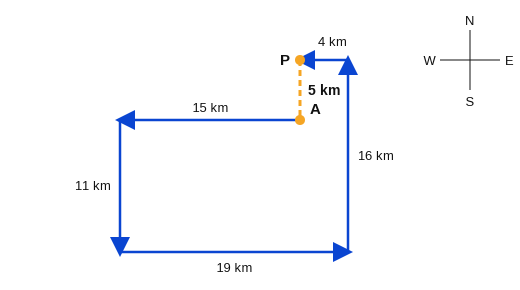
Mr. XYZ starts from Point A and drives 15 km towards the west. He then takes a left turn, drives 11 km, turns left and drives 19 km. He then takes a left turn and drives 16 km. He takes a final left turn, drives 4 km and stops at Point P. How far (shortest distance) and in which direction should he drive in order to reach Point A again? (All turns are 90-degree turns only unless specified)
श्री XYZ बिंदु A से चलना शुरू करते हैं और पश्चिम की ओर 15 km गाड़ी चलाते हैं। फिर वे बाएँ मुड़ते हैं, 11 km गाड़ी चलाते हैं, बाएँ मुड़ते हैं और 19 km गाड़ी चलाते हैं। फिर वे बाएँ मुड़ते हैं और 16 km गाड़ी चलाते हैं। वे अंतिम बार बाएँ मुड़ते हैं, 4 km गाड़ी चलाते हैं और बिंदु P पर रुक जाते हैं। पुनः बिंदु A पर पहुँचने के लिए उन्हें कितनी दूर (न्यूनतम दूरी) और किस दिशा में गाड़ी चलानी चाहिए? (जब तक निर्दिष्ट न हो, सभी मोड़ केवल 90 डिग्री के हैं)
  1. A5 km to the westपश्चिम की ओर 5 km
  2. B5 km to the southदक्षिण की ओर 5 km
  3. C3 km to the eastपूर्व की ओर 3 km
  4. D3 km to the northउत्तर की ओर 3 km
Show answer

Concept: Track the facing direction after each left turn (W → S → E → N → W) and add net displacements.

  1. West 15, left → South 11, left → East 19, left → North 16, left → West 4.
  2. East–West: −15+19−4=0 → P is directly in line with A.
  3. North–South: 16−11=5 km north of A.
  4. To return: 5 km towards south.

Trick: Net E–W =19−15−4=0, net N–S =16−11=5 – no need for Pythagoras.

Answer: (B) 5 km to the south

अवधारणा: हर बाएँ मोड़ के बाद दिशा (W → S → E → N → W) लिखें और कुल विस्थापन जोड़ें।

  1. पश्चिम 15, बाएँ → दक्षिण 11, बाएँ → पूर्व 19, बाएँ → उत्तर 16, बाएँ → पश्चिम 4।
  2. पूर्व–पश्चिम: −15+19−4=0 → P, A की सीध में है।
  3. उत्तर–दक्षिण: 16−11=5 km, A के उत्तर में।
  4. वापस आने के लिए: 5 km दक्षिण की ओर।

ट्रिक: कुल E–W =0, कुल N–S =5 – पाइथागोरस की ज़रूरत नहीं।

उत्तर: (B) 5 km दक्षिण की ओर

RRB NTPC Graduate CBT 1General Intelligence and ReasoningDirection and DistanceRRB NTPC Graduate CBT 1 2024 · 23 Jun Shift 3 →
Q6805.
This question is based on the five, three-digit numbers given below.
(Left) 815 497 460 637 147 (Right)
(Example- 697 – First digit = 6, second digit = 9 and third digit = 7)
(NOTE: All operations to be done from left to right.)
What will be the resultant if the second digit of the highest number is subtracted from the third digit of the lowest number?
यह प्रश्न नीचे दी गई तीन अंकों वाली पाँच संख्याओं पर आधारित है।
(बाएँ) 815 497 460 637 147 (दाएँ)
(उदाहरण- 697 – पहला अंक = 6, दूसरा अंक = 9 और तीसरा अंक = 7)
(ध्यान दें: सभी संक्रियाएँ बाएँ से दाएँ की जानी हैं।)
यदि सबसे बड़ी संख्या के दूसरे अंक को सबसे छोटी संख्या के तीसरे अंक में से घटाया जाए, तो परिणाम क्या होगा?
  1. A6
  2. B8
  3. C9
  4. D7
Show answer

Concept: Identify the highest and lowest numbers first, then pick the asked digits.

  1. Highest = 815 → second digit = 1.
  2. Lowest = 147 → third digit = 7.
  3. 7−1=6

Trick: Read the order carefully: "A subtracted from B" means B−A.

Answer: (A) 6

अवधारणा: पहले सबसे बड़ी और सबसे छोटी संख्या पहचानें, फिर माँगे गए अंक लें।

  1. सबसे बड़ी = 815 → दूसरा अंक = 1।
  2. सबसे छोटी = 147 → तीसरा अंक = 7।
  3. 7−1=6

ट्रिक: "A को B में से घटाना" = B−A।

उत्तर: (A) 6

RRB NTPC Graduate CBT 1General Intelligence and ReasoningThree-Digit Number OperationsRRB NTPC Graduate CBT 1 2024 · 23 Jun Shift 3 →
Q6806.
If 1 is added to each even digit and 2 is subtracted from each odd digit in the number 936245, then how many digits will appear more than once in the new number thus formed?
यदि संख्या 936245 में प्रत्येक सम अंक में 1 जोड़ दिया जाए और प्रत्येक विषम अंक में से 2 घटा दिया जाए, तो इस प्रकार बनी नई संख्या में कितने अंक एक से अधिक बार आएँगे?
  1. AThreeतीन
  2. BNoneकोई नहीं
  3. COneएक
  4. DTwoदो
Show answer

Concept: Apply the rule digit by digit (even +1, odd −2), then count digits that repeat.

  1. Number: 9 3 6 2 4 5
  2. New: 7 1 7 3 5 3
  3. 7 appears twice, 3 appears twice → two digits.

Trick: Write the new number under the old one; then tick repeated digits once each.

Answer: (D) Two

अवधारणा: हर अंक पर नियम (सम +1, विषम −2) लगाएँ, फिर दोहराए अंक गिनें।

  1. संख्या: 9 3 6 2 4 5
  2. नई: 7 1 7 3 5 3
  3. 7 दो बार, 3 दो बार → दो अंक।

ट्रिक: पुरानी संख्या के नीचे नई संख्या लिखें, फिर दोहराए अंकों को एक-एक बार गिनें।

उत्तर: (D) दो

RRB NTPC Graduate CBT 1General Intelligence and ReasoningNumber OperationsRRB NTPC Graduate CBT 1 2024 · 23 Jun Shift 3 →
Q6807.
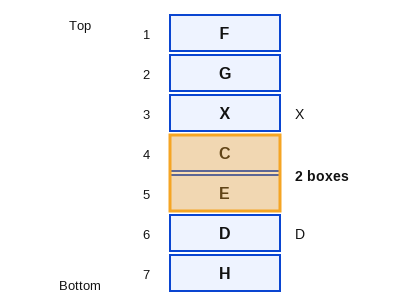
Seven boxes, C, D, E, F, G, H and X, are kept one over the other but not necessarily in the same order. Only two boxes are kept between C and H. Only F is kept above G. Only one box is kept between G and C. E is kept at some place below X but at some place above D. How many boxes are kept between X and D?
सात बक्से C, D, E, F, G, H और X एक के ऊपर एक रखे गए हैं, परंतु आवश्यक नहीं कि इसी क्रम में हों। C और H के बीच केवल दो बक्से रखे गए हैं। केवल F, G के ऊपर रखा गया है। G और C के बीच केवल एक बक्सा रखा गया है। E, X के नीचे किसी स्थान पर, परंतु D के ऊपर किसी स्थान पर रखा गया है। X और D के बीच कितने बक्से रखे गए हैं?
  1. AThreeतीन
  2. BTwoदो
  3. CFourचार
  4. DOneएक
Show answer

Concept: Number positions 1 (top) to 7 (bottom) and fix the "only" clues first.

  1. Only F above G → F = 1, G = 2.
  2. One box between G and C → C = 4. Two boxes between C and H → H = 7.
  3. Positions 3, 5, 6 for X, E, D with X above E above D → X = 3, E = 5, D = 6.
  4. Between X and D: C, E = two.

Trick: Boxes between positions p and q =|p−q|−1=6−3−1=2.

Answer: (B) Two

अवधारणा: स्थान 1 (ऊपर) से 7 (नीचे) मानें और "केवल" वाली शर्तें पहले लगाएँ।

  1. G के ऊपर केवल F → F = 1, G = 2।
  2. G और C के बीच एक → C = 4; C और H के बीच दो → H = 7।
  3. बचे 3, 5, 6 पर X, E, D (X ऊपर, फिर E, फिर D) → X = 3, E = 5, D = 6।
  4. X और D के बीच: C, E = दो।

ट्रिक: स्थान p और q के बीच बॉक्स =|p−q|−1=6−3−1=2।

उत्तर: (B) दो

RRB NTPC Graduate CBT 1General Intelligence and ReasoningBox ArrangementRRB NTPC Graduate CBT 1 2024 · 23 Jun Shift 3 →
Q6808.
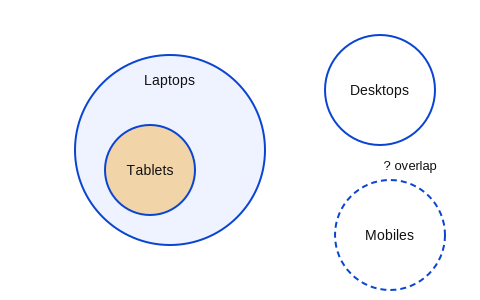
Read the given statements and conclusions carefully. Assuming that the information given in the statements is true, even if it appears to be at variance with commonly known facts, decide which of the given conclusion(s) logically follow(s) from the statements.
Statements:
All tablets are laptops.
No laptop is a desktop.
No laptop is a mobile.
Conclusions:
(I) No tablet is a desktop.
(II) Some mobiles are desktops.
दिए गए कथनों और निष्कर्षों को ध्यानपूर्वक पढ़िए। यह मानते हुए कि कथनों में दी गई जानकारी सत्य है, भले ही वह सामान्यतः ज्ञात तथ्यों से भिन्न प्रतीत होती हो, निर्णय कीजिए कि दिए गए निष्कर्षों में से कौन-सा/कौन-से निष्कर्ष कथनों का तार्किक रूप से अनुसरण करता है/करते हैं।
कथन:
सभी टैबलेट, लैपटॉप हैं।
कोई लैपटॉप, डेस्कटॉप नहीं है।
कोई लैपटॉप, मोबाइल नहीं है।
निष्कर्ष:
(I) कोई टैबलेट, डेस्कटॉप नहीं है।
(II) कुछ मोबाइल, डेस्कटॉप हैं।
  1. AOnly conclusion (I) follows.केवल निष्कर्ष (I) अनुसरण करता है।
  2. BOnly conclusion (II) follows.केवल निष्कर्ष (II) अनुसरण करता है।
  3. CNeither conclusion (I) nor (II) follows.न तो निष्कर्ष (I) और न ही (II) अनुसरण करता है।
  4. DBoth conclusions (I) and (II) follow.निष्कर्ष (I) और (II) दोनों अनुसरण करते हैं।
Show answer

Concept: Draw the least-overlap Venn diagram; a conclusion follows only if it is true in every possible case.

  1. All tablets lie inside laptops, and no laptop touches desktop → no tablet is a desktop. (I) follows.
  2. Mobiles and desktops are both outside laptops, but no statement links them – they may or may not overlap. (II) does not follow.

Trick: "All A are B" + "No B is C" ⇒ "No A is C" always.

Answer: (A) Only conclusion (I) follows.

अवधारणा: न्यूनतम-अतिव्यापन (least overlap) वाला वेन आरेख बनाएँ; निष्कर्ष तभी सही है जब हर संभावित स्थिति में सत्य हो।

  1. सभी टैबलेट लैपटॉप के अंदर हैं और कोई लैपटॉप डेस्कटॉप नहीं → कोई टैबलेट डेस्कटॉप नहीं। (I) सही।
  2. मोबाइल और डेस्कटॉप दोनों लैपटॉप से बाहर हैं, पर उनके बीच कोई संबंध नहीं दिया – ओवरलैप निश्चित नहीं। (II) गलत।

ट्रिक: "सभी A, B हैं" + "कोई B, C नहीं" ⇒ "कोई A, C नहीं" हमेशा।

उत्तर: (A) केवल निष्कर्ष (I) अनुसरण करता है।

RRB NTPC Graduate CBT 1General Intelligence and ReasoningSyllogismRRB NTPC Graduate CBT 1 2024 · 23 Jun Shift 3 →
Q6809.
Based on the English alphabetical order, three of the following four letter-clusters are alike in a certain way and thus form a group. Which letter-cluster DOES NOT belong to that group?
(Note: The odd one out is not based on the number of consonants/vowels or their position in the letter-cluster.)
अंग्रेज़ी वर्णमाला क्रम के आधार पर, निम्नलिखित चार अक्षर-समूहों में से तीन किसी निश्चित प्रकार से एकसमान हैं और इस प्रकार एक समूह बनाते हैं। कौन-सा अक्षर-समूह उस समूह से संबंधित नहीं है?
(ध्यान दें: असंगत अक्षर-समूह, अक्षर-समूह में व्यंजनों/स्वरों की संख्या या उनके स्थान पर आधारित नहीं है।)
  1. APVQ
  2. BKQM
  3. CMSN
  4. DHNI
Show answer

Concept: Compare letter positions (A = 1 … Z = 26) within each cluster.

  1. PVQ: P +6 = V, V −5 = Q.
  2. MSN: M +6 = S, S −5 = N. HNI: H +6 = N, N −5 = I.
  3. KQM: K +6 = Q, but Q −4 = M → breaks the pattern.

Trick: In the group, the 3rd letter is just next to the 1st (P→Q, M→N, H→I); K→M skips one.

Answer: (B) KQM

अवधारणा: हर समूह में अक्षरों के स्थानीय मान (A = 1 … Z = 26) की तुलना करें।

  1. PVQ: P +6 = V, V −5 = Q।
  2. MSN: M +6 = S, S −5 = N; HNI: H +6 = N, N −5 = I।
  3. KQM: K +6 = Q, पर Q −4 = M → पैटर्न टूटा।

ट्रिक: समूह में तीसरा अक्षर पहले का अगला अक्षर है (P→Q, M→N, H→I); K→M में एक छूटा।

उत्तर: (B) KQM

RRB NTPC Graduate CBT 1General Intelligence and ReasoningOdd One Out – Letter ClustersRRB NTPC Graduate CBT 1 2024 · 23 Jun Shift 3 →
Q6810.
In a certain code language, ‘rough and ready’ is coded as ‘mo hp km’ and ‘road is rough’ is coded as ‘tx km bn’. How is ‘rough’ coded in the given language?
एक निश्चित कूट भाषा में, 'rough and ready' को 'mo hp km' के रूप में कूटबद्ध किया जाता है और 'road is rough' को 'tx km bn' के रूप में कूटबद्ध किया जाता है। दी गई भाषा में 'rough' को किस प्रकार कूटबद्ध किया जाता है?
  1. Ahp
  2. Btx
  3. Cbn
  4. Dkm
Show answer

Concept: A word common to two sentences takes the code common to both.

  1. "rough and ready" → mo hp km; "road is rough" → tx km bn.
  2. Common word: rough; common code: km.
  3. So rough = km.

Trick: Underline the common word and circle the common code – done in seconds.

Answer: (D) km

अवधारणा: दोनों वाक्यों में उभयनिष्ठ शब्द का कोड दोनों कोडों में उभयनिष्ठ होता है।

  1. "rough and ready" → mo hp km; "road is rough" → tx km bn।
  2. उभयनिष्ठ शब्द: rough; उभयनिष्ठ कोड: km।
  3. अतः rough = km।

ट्रिक: उभयनिष्ठ शब्द और उभयनिष्ठ कोड मिलाएँ – कुछ ही सेकंड में उत्तर।

उत्तर: (D) km

RRB NTPC Graduate CBT 1General Intelligence and ReasoningCoding-DecodingRRB NTPC Graduate CBT 1 2024 · 23 Jun Shift 3 →
Q6811.
Which of the following letter-number clusters will replace the question mark (?) in the given series to make it logically complete?
AAA 16, ECZ 36, IEY 64, MGX 100, ?
निम्नलिखित में से कौन-सा अक्षर-संख्या समूह दी गई श्रृंखला में प्रश्न चिह्न (?) के स्थान पर आकर उसे तार्किक रूप से पूर्ण करेगा?
AAA 16, ECZ 36, IEY 64, MGX 100, ?
  1. AQIW 144
  2. BUVW 81
  3. CWIU 100
  4. DUIW 121
Show answer

Concept: Check each position of the cluster separately.

  1. 1st letter: A, E, I, M → +4 → Q.
  2. 2nd letter: A, C, E, G → +2 → I.
  3. 3rd letter: A, Z, Y, X → −1 → W.
  4. Number: 42,62,82,102 → 122=144.

Trick: Only option (A) has second letter I and a perfect square of an even number.

Answer: (A) QIW 144

अवधारणा: समूह के हर स्थान को अलग-अलग जाँचें।

  1. पहला अक्षर: A, E, I, M → +4 → Q।
  2. दूसरा अक्षर: A, C, E, G → +2 → I।
  3. तीसरा अक्षर: A, Z, Y, X → −1 → W।
  4. संख्या: 42,62,82,102 → 122=144।

ट्रिक: केवल विकल्प (A) में दूसरा अक्षर I और सम संख्या का वर्ग है।

उत्तर: (A) QIW 144

RRB NTPC Graduate CBT 1General Intelligence and ReasoningLetter-Number SeriesRRB NTPC Graduate CBT 1 2024 · 23 Jun Shift 3 →
Q6812.
In a certain code language, ‘FARM’ is coded as ‘4683’ and ‘MUSE’ is coded as ‘2419’. What is the code for ‘M’ in the given code language?
एक निश्चित कूट भाषा में, 'FARM' को '4683' के रूप में कूटबद्ध किया जाता है और 'MUSE' को '2419' के रूप में कूटबद्ध किया जाता है। दी गई कूट भाषा में 'M' के लिए कूट क्या है?
  1. A1
  2. B4
  3. C2
  4. D3
Show answer

Concept: The letter common to both words takes the digit common to both codes.

  1. FARM → 4683; MUSE → 2419.
  2. Common letter: M; common digit: 4.
  3. So M = 4.

Trick: Compare only the common letter and common digit – order of digits does not matter.

Answer: (B) 4

अवधारणा: दोनों शब्दों में उभयनिष्ठ अक्षर का कोड दोनों कोडों में उभयनिष्ठ अंक होता है।

  1. FARM → 4683; MUSE → 2419।
  2. उभयनिष्ठ अक्षर: M; उभयनिष्ठ अंक: 4।
  3. अतः M = 4।

ट्रिक: केवल उभयनिष्ठ अक्षर व अंक मिलाएँ – अंकों का क्रम मायने नहीं रखता।

उत्तर: (B) 4

RRB NTPC Graduate CBT 1General Intelligence and ReasoningCoding-DecodingRRB NTPC Graduate CBT 1 2024 · 23 Jun Shift 3 →
Q6813.
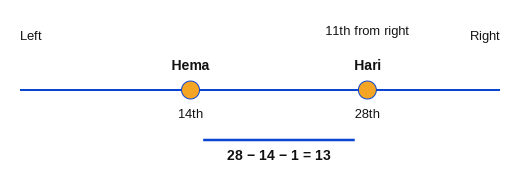
38 people are standing in a row facing north. Hari is 11th from the right end while Hema is 14th from the left end. How many people are there between Hari and Hema?
38 व्यक्ति एक पंक्ति में उत्तर की ओर मुख करके खड़े हैं। हरि दाएँ छोर से 11वें स्थान पर है, जबकि हेमा बाएँ छोर से 14वें स्थान पर है। हरि और हेमा के बीच कितने व्यक्ति हैं?
  1. A12
  2. B13
  3. C14
  4. D11
Show answer

Concept: Position from left = Total − position from right +1.

  1. Hari from left =38−11+1=28th.
  2. Hema is 14th from left.
  3. People between =28−14−1=13

Trick: Both counted from the same end → between = difference −1.

Answer: (B) 13

अवधारणा: बाएँ से स्थान = कुल − दाएँ से स्थान +1।

  1. हरि बाएँ से =38−11+1=28वाँ।
  2. हेमा बाएँ से 14वीं।
  3. बीच में व्यक्ति =28−14−1=13

ट्रिक: दोनों स्थान एक ही छोर से हों तो बीच में = अंतर −1।

उत्तर: (B) 13

RRB NTPC Graduate CBT 1General Intelligence and ReasoningRanking and PositionRRB NTPC Graduate CBT 1 2024 · 23 Jun Shift 3 →
Q6814.
Refer to the following number and symbol series and answer the question that follows. Counting to be done from left to right only.
(Note: All numbers are single digit numbers only.)
(Left) % 3 £ 3 & © * 3 & 7 7 3 7 % 4 8 © * 1 * 9 9 (Right)
How many such numbers are there, each of which is immediately preceded by a symbol and also immediately followed by a symbol?
निम्नलिखित संख्या और प्रतीक श्रृंखला को देखिए और उसके बाद आने वाले प्रश्न का उत्तर दीजिए। गिनती केवल बाएँ से दाएँ की जानी है।
(ध्यान दें: सभी संख्याएँ केवल एक अंक वाली संख्याएँ हैं।)
(बाएँ) % 3 £ 3 & © * 3 & 7 7 3 7 % 4 8 © * 1 * 9 9 (दाएँ)
ऐसी कितनी संख्याएँ हैं, जिनमें से प्रत्येक के ठीक पहले एक प्रतीक है और ठीक बाद भी एक प्रतीक है?
  1. A3
  2. B5
  3. C2
  4. D4
Show answer

Concept: Check each number: the element just before it and just after it must both be symbols.

  1. Series: % 3 £ 3 & © * 3 & 7 7 3 7 % 4 8 © * 1 * 9 9
  2. % 3 £ ✔, £ 3 & ✔, * 3 & ✔.
  3. & 7 7 – followed by a number ✘; % 4 8 ✘; 9 9 at the end ✘.
  4. * 1 * ✔. Total = 4.

Trick: Mark only those numbers that sit alone between two symbols – a pattern 'symbol–number–symbol'.

Answer: (D) 4

अवधारणा: प्रत्येक संख्या के ठीक पहले और ठीक बाद वाला तत्व, दोनों प्रतीक होने चाहिए।

  1. श्रृंखला: % 3 £ 3 & © * 3 & 7 7 3 7 % 4 8 © * 1 * 9 9
  2. % 3 £ ✔, £ 3 & ✔, * 3 & ✔।
  3. & 7 7 – बाद में संख्या ✘; % 4 8 ✘; अंत के 9 9 ✘।
  4. * 1 * ✔। कुल = 4।

ट्रिक: केवल 'प्रतीक–संख्या–प्रतीक' पैटर्न को गिनें।

उत्तर: (D) 4

RRB NTPC Graduate CBT 1General Intelligence and ReasoningNumber–symbol seriesRRB NTPC Graduate CBT 1 2024 · 23 Jun Shift 3 →
Q6815.
What should come in place of the question mark (?) in the given series based on the English alphabetical order?
XQS VOQ TMO RKM ?
अंग्रेज़ी वर्णमाला क्रम के आधार पर दी गई श्रृंखला में प्रश्न चिह्न (?) के स्थान पर क्या आना चाहिए?
XQS VOQ TMO RKM ?
  1. APJL
  2. BPIL
  3. CPIK
  4. DPJK
Show answer

Concept: Check each letter position separately using alphabet positions.

  1. 1st letters: X, V, T, R → each −2 → next P
  2. 2nd letters: Q, O, M, K → each −2 → next I
  3. 3rd letters: S, Q, O, M → each −2 → next K
  4. So the missing term is PIK.

Trick: All three positions move back by 2 together, so just shift RKM by −2: R→P, K→I, M→K.

Answer: (C) PIK

अवधारणा: हर स्थान के अक्षर को अलग-अलग जाँचें।

  1. पहला अक्षर: X, V, T, R → हर बार −2 → P
  2. दूसरा अक्षर: Q, O, M, K → −2 → I
  3. तीसरा अक्षर: S, Q, O, M → −2 → K
  4. अतः उत्तर PIK।

ट्रिक: तीनों अक्षर साथ में 2 पीछे जाते हैं, इसलिए RKM के हर अक्षर से 2 घटाएँ।

उत्तर: (C) PIK

RRB NTPC Graduate CBT 1General Intelligence and ReasoningLetter seriesRRB NTPC Graduate CBT 1 2024 · 23 Jun Shift 3 →
Q6816.
In this question, a group of number/symbol is coded using letter codes as per the codes given below and the conditions which follow. The correct combination of codes (following only the condition/s that applies) is your answer.
Note: If none of the conditions apply, then codes for the respective number/symbol are to be followed directly as given in the table.
Number/symbolREAUMDFPQIOHNWZB
Code#76$8%*594©@d321

Conditions:
i) If the first element is a consonant and the third is a vowel, the codes for these two (the first and the third elements) are to be interchanged.
ii) If the first element is vowel and the fourth letter is a consonant, the first and fourth elements are to be coded as the code for the vowel.
iii) If the second and third elements the consonants, both are to be coded as the code for the third element.
Based on the above instructions, what would be the code for ‘OBAHMQ’?
इस प्रश्न में, संख्या/प्रतीक के एक समूह को नीचे दिए गए कूटों और उसके बाद दी गई शर्तों के अनुसार अक्षर कूटों का उपयोग करके कूटबद्ध किया गया है। कूटों का सही संयोजन (केवल लागू होने वाली शर्त/शर्तों का पालन करते हुए) आपका उत्तर है।
ध्यान दें: यदि कोई भी शर्त लागू नहीं होती है, तो संबंधित संख्या/प्रतीक के कूटों का सीधे तालिका में दिए अनुसार पालन किया जाना है।
संख्या/प्रतीकREAUMDFPQIOHNWZB
कूट#76$8%*594©@d321

शर्तें:
i) यदि पहला अवयव एक व्यंजन है और तीसरा एक स्वर है, तो इन दोनों (पहले और तीसरे अवयवों) के कूटों को आपस में बदल दिया जाना है।
ii) यदि पहला अवयव स्वर है और चौथा अक्षर एक व्यंजन है, तो पहले और चौथे अवयवों को स्वर के कूट के रूप में कूटबद्ध किया जाना है।
iii) यदि दूसरा और तीसरा अवयव व्यंजन हैं, तो दोनों को तीसरे अवयव के कूट के रूप में कूटबद्ध किया जाना है।
उपर्युक्त निर्देशों के आधार पर, 'OBAHMQ' का कूट क्या होगा?
  1. A©16@87
  2. B@$6@89
  3. C@16@89
  4. D©16©89
Show answer

Concept: Test each condition on the word first, then apply only the one(s) that fit.

  1. OBAHMQ: 1st O (vowel), 3rd A (vowel), 4th H (consonant), 2nd B (consonant).
  2. Condition (i) ✘ (first is not a consonant); (iii) ✘ (third A is a vowel).
  3. Condition (ii) ✔: first and fourth both get the code of O = ©.
  4. Codes: O→©, B→1, A→6, H→©, M→8, Q→9 ⇒ ©16©89.

Trick: Eliminate options by condition: only one option has © in both 1st and 4th place.

Answer: (D) ©16©89

अवधारणा: पहले देखें कौन-सी शर्त लागू होती है, फिर केवल वही लगाएँ।

  1. OBAHMQ: पहला O (स्वर), तीसरा A (स्वर), चौथा H (व्यंजन), दूसरा B (व्यंजन)।
  2. शर्त (i) ✘ (पहला व्यंजन नहीं); (iii) ✘ (तीसरा A स्वर है)।
  3. शर्त (ii) ✔: पहले और चौथे दोनों को O का कोड © मिलेगा।
  4. कोड: O→©, B→1, A→6, H→©, M→8, Q→9 ⇒ ©16©89।

ट्रिक: केवल एक विकल्प में पहले और चौथे स्थान पर © है।

उत्तर: (D) ©16©89

RRB NTPC Graduate CBT 1General Intelligence and ReasoningCoding with conditionsRRB NTPC Graduate CBT 1 2024 · 23 Jun Shift 3 →
Q6817.
Based on the English alphabetical order, three of the following four letter-cluster pairs are alike in a certain way and thus form a group. Which letter-cluster pair DOES NOT belong to that group?
(Note: The odd one out is not based on the number of consonants/vowels or their position in the letter-cluster.)
अंग्रेज़ी वर्णमाला क्रम के आधार पर, निम्नलिखित चार अक्षर-समूह युग्मों में से तीन किसी निश्चित प्रकार से एकसमान हैं और इस प्रकार एक समूह बनाते हैं। कौन-सा अक्षर-समूह युग्म उस समूह से संबंधित नहीं है?
(ध्यान दें: असंगत अक्षर-समूह, अक्षर-समूह में व्यंजनों/स्वरों की संख्या या उनके स्थान पर आधारित नहीं है।)
  1. AIL - FI
  2. BMP - JM
  3. CNQ - KN
  4. DMJ - DF
Show answer

Concept: Compare each letter of the first cluster with the matching letter of the second cluster.

  1. IL - FI: I−3=F, L−3=I ✔
  2. MP - JM: M−3=J, P−3=M ✔; NQ - KN: N−3=K, Q−3=N ✔
  3. MJ - DF: M→D is −9, J→F is −4 ✘
  4. Also in the first three, the 2nd letter is 3 ahead of the 1st in each cluster.

Trick: Quick check – the last letter of the second cluster equals the first letter of the first cluster: IL-FI, MP-JM, NQ-KN.

Answer: (D) MJ - DF

अवधारणा: पहले समूह के हर अक्षर की दूसरे समूह के संगत अक्षर से तुलना करें।

  1. IL - FI: I−3=F, L−3=I ✔
  2. MP - JM: M−3=J, P−3=M ✔; NQ - KN ✔
  3. MJ - DF: M→D −9, J→F −4 ✘
  4. पहले तीनों में हर समूह का दूसरा अक्षर पहले से 3 आगे है।

ट्रिक: जल्दी जाँच: IL-FI, MP-JM, NQ-KN – दूसरे युग्म का अंतिम अक्षर पहले युग्म का पहला अक्षर है।

उत्तर: (D) MJ - DF

RRB NTPC Graduate CBT 1General Intelligence and ReasoningLetter-cluster pair odd one outRRB NTPC Graduate CBT 1 2024 · 23 Jun Shift 3 →
Q6818.
In a certain code language,
A + B means ‘A is the son of B’,
A – B means ‘A is the sister of B’,
A x B means ‘A is the wife of B’ and
A ÷ B means ‘A is the father of B’.
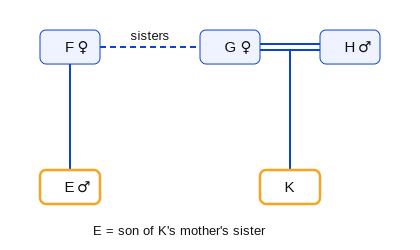
Based on the above, how is E related to K if ‘E + F – G x H ÷ K’?
एक निश्चित कूट भाषा में,
A + B का अर्थ है 'A, B का पुत्र है',
A – B का अर्थ है 'A, B की बहन है',
A x B का अर्थ है 'A, B की पत्नी है' और
A ÷ B का अर्थ है 'A, B का पिता है'।
उपर्युक्त के आधार पर, यदि 'E + F – G x H ÷ K' है, तो E, K से किस प्रकार संबंधित है?
  1. AMother's sister's husbandमाँ की बहन का पति
  2. BFather's sister's sonपिता की बहन का पुत्र
  3. CMother's sister's sonमाँ की बहन का पुत्र
  4. D​Father's sister's husbandपिता की बहन का पति
Show answer

Concept: Decode each symbol from left to right and build a family tree.

  1. E + F: E is the son of F.
  2. F – G: F is the sister of G (so F is female).
  3. G × H: G is the wife of H; H ÷ K: H is the father of K ⇒ G is K's mother.
  4. F = K's mother's sister, so E = K's mother's sister's son.

Trick: Fix K's parents first (G, H), then attach F and E to G's side.

Answer: (C) Mother's sister's son

अवधारणा: हर प्रतीक को बाएँ से दाएँ डिकोड करके पारिवारिक वृक्ष बनाएँ।

  1. E + F: E, F का पुत्र है।
  2. F – G: F, G की बहन है (F महिला)।
  3. G × H: G, H की पत्नी; H ÷ K: H, K का पिता ⇒ G, K की माँ।
  4. F = K की मौसी, अतः E = K की मौसी का पुत्र (Mother's sister's son)।

ट्रिक: पहले K के माता-पिता (G, H) तय करें, फिर F और E को माँ की ओर जोड़ें।

उत्तर: (C) Mother's sister's son

RRB NTPC Graduate CBT 1General Intelligence and ReasoningBlood relation (coded)RRB NTPC Graduate CBT 1 2024 · 23 Jun Shift 3 →
Q6819.
If 1 is added to each odd digit and 2 is subtracted from each even digit in the number 5364178, then what will the sum of the digits which are second from the left and second from the right in the new number thus formed be?
यदि संख्या 5364178 में प्रत्येक विषम अंक में 1 जोड़ दिया जाए और प्रत्येक सम अंक में से 2 घटा दिया जाए, तो इस प्रकार बनी नई संख्या में बाएँ से दूसरे और दाएँ से दूसरे अंकों का योग क्या होगा?
  1. A10
  2. B7
  3. C9
  4. D12
Show answer

Concept: Apply the rule to every digit, then pick the required positions.

  1. 5364178: odd digits +1 (5→6, 3→4, 1→2, 7→8); even digits −2 (6→4, 4→2, 8→6).
  2. New number: 6 4 4 2 2 8 6
  3. 2nd from left = 4, 2nd from right = 8
  4. Sum =4+8=12

Trick: Only transform the two required digits: 3→4 and 7→8 ⇒ 4+8=12.

Answer: (D) 12

अवधारणा: हर अंक पर नियम लगाएँ, फिर आवश्यक स्थान चुनें।

  1. 5364178: विषम अंक +1 (5→6, 3→4, 1→2, 7→8); सम अंक −2 (6→4, 4→2, 8→6)।
  2. नई संख्या: 6 4 4 2 2 8 6
  3. बाएँ से दूसरा = 4, दाएँ से दूसरा = 8
  4. योग =4+8=12

ट्रिक: सिर्फ़ ज़रूरी दो अंक बदलें: 3→4 और 7→8 ⇒ 12।

उत्तर: (D) 12

RRB NTPC Graduate CBT 1General Intelligence and ReasoningNumber operationsRRB NTPC Graduate CBT 1 2024 · 23 Jun Shift 3 →
Q6820.
YAGK is related to RTZD in a certain way based on the English alphabetical order. In the same way, WYEI is related to PRXB. To which of the following options is BDJN related, following the same logic?
अंग्रेज़ी वर्णमाला क्रम के आधार पर YAGK एक निश्चित प्रकार से RTZD से संबंधित है। उसी प्रकार, WYEI, PRXB से संबंधित है। समान तर्क का अनुसरण करते हुए, BDJN निम्नलिखित में से किस विकल्प से संबंधित है?
  1. AUWHY
  2. BUWAC
  3. CUWCG
  4. DUWCH
Show answer

Concept: Find the shift applied to each letter.

  1. YAGK → RTZD: Y−7=R, A−7=T, G−7=Z, K−7=D.
  2. WYEI → PRXB: each letter −7 again ✔.
  3. BDJN: B−7=U, D−7=W, J−7=C, N−7=G ⇒ UWCG.

Trick: −7 is the same as +19; B(2)+19=21=U.

Answer: (C) UWCG

अवधारणा: प्रत्येक अक्षर पर लगे खिसकाव (shift) को खोजें।

  1. YAGK → RTZD: हर अक्षर −7।
  2. WYEI → PRXB: फिर से हर अक्षर −7 ✔।
  3. BDJN: B→U, D→W, J→C, N→G ⇒ UWCG।

ट्रिक: −7 और +19 समान हैं; B(2)+19=21=U।

उत्तर: (C) UWCG

RRB NTPC Graduate CBT 1General Intelligence and ReasoningLetter analogyRRB NTPC Graduate CBT 1 2024 · 23 Jun Shift 3 →