Question bank

Q&A: practice questions with answers

Search questions on any topic. Filter by exam category, exam, subject and topic, try the question, then open the answer and explanation.

Courses – airGurukul

20,719 questions found.

Q7081.
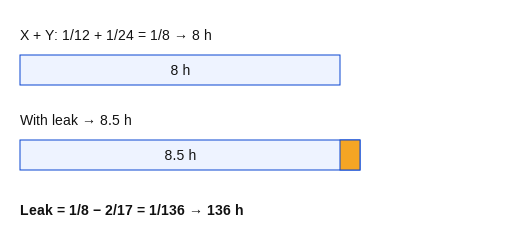
Two taps, X and Y, can fill a tank in 12 hours and 24 hours, respectively. If both the taps are open, then due to leakage, it takes 30 minutes more to fill the tank. If the tank is full, how long will it take for the leakage alone to empty the tank?
दो नल, X और Y, एक टंकी को क्रमशः 12 घंटे और 24 घंटे में भर सकते हैं। यदि दोनों नल खुले हों, तो रिसाव के कारण टंकी को भरने में 30 मिनट अधिक लगते हैं। यदि टंकी भरी हुई है, तो अकेले रिसाव द्वारा टंकी को खाली करने में कितना समय लगेगा?
  1. A100 hours100 घंटे
  2. B75 hours75 घंटे
  3. C36 hours36 घंटे
  4. D136 hours136 घंटे
Show answer

Concept: Leak rate = (filling rate without leak) − (filling rate with leak).

  1. X + Y: 112+124=324=18 → 8 hours
  2. With leak: 8+0.5=8.5=172 hours → rate 217
  3. Leak =18−217=17−16136=1136
  4. Leak empties the full tank in 136 hours.

Trick: Shortcut: leak time =T1T2T2−T1=8×8.50.5=136.

Answer: (D) 136 hours

अवधारणा: रिसाव की दर = (रिसाव बिना भरने की दर) − (रिसाव सहित दर)।

  1. X + Y: 112+124=18 → 8 घंटे
  2. रिसाव सहित: 8.5=172 घंटे → दर 217
  3. रिसाव =18−217=1136
  4. रिसाव भरी टंकी को 136 घंटे में खाली करेगा।

ट्रिक: शॉर्टकट: T1T2T2−T1=8×8.50.5=136।

उत्तर: (D) 136 घंटे

RRB NTPC Graduate CBT 1MathematicsPipes and CisternsRRB NTPC Graduate CBT 1 2024 · 21 Jun Shift 3 →
Q7082.
Which of the following is the greatest number that divides 59 and 133 and leaves 5 and 7 as respective remainders?
निम्नलिखित में से वह सबसे बड़ी संख्या कौन-सी है जिससे 59 और 133 को विभाजित करने पर क्रमशः 5 और 7 शेषफल प्राप्त होते हैं?
  1. A18
  2. B22
  3. C19
  4. D20
Show answer

Concept: Greatest number dividing a and b leaving remainders r1,r2 =HCF(a−r1,b−r2).

  1. 59−5=54 and 133−7=126.
  2. 54=2×33, 126=2×32×7.
  3. HCF=2×32=18 (and 18>7, so remainders 5 and 7 are valid).

Trick: Check options: 59÷18 leaves 5, 133÷18 leaves 7 ✓.

Answer: (A) 18

अवधारणा: a और b को भाग देकर शेष r1,r2 छोड़ने वाली सबसे बड़ी संख्या =HCF(a−r1,b−r2)।

  1. 59−5=54 और 133−7=126।
  2. 54=2×33, 126=2×32×7।
  3. HCF=2×32=18 (और 18>7, इसलिए शेष 5 और 7 मान्य हैं)।

ट्रिक: विकल्प जाँचें: 59÷18 से शेष 5, 133÷18 से शेष 7 ✓।

उत्तर: (A) 18

RRB NTPC Graduate CBT 1MathematicsHCF with RemaindersRRB NTPC Graduate CBT 1 2024 · 21 Jun Shift 3 →
Q7083.
A pipe can fill a tank in 12 hours. Another pipe can empty the filled tank in 21 hours. If both the pipes are opened simultaneously, then the time (in hours) in which the tank will be half filled, is:
एक पाइप एक टंकी को 12 घंटे में भर सकता है। दूसरा पाइप भरी हुई टंकी को 21 घंटे में खाली कर सकता है। यदि दोनों पाइप एक साथ खोल दिए जाएँ, तो टंकी कितने समय (घंटों में) में आधी भर जाएगी?
  1. A28
  2. B14
  3. C15
  4. D29
Show answer

Concept: Net filling rate = filling rate − emptying rate.

  1. Per hour: 112−121=7−484=384=128 of the tank.
  2. Full tank takes 28 hours.
  3. Half tank takes 282=14 hours.

Trick: Net time =12×2121−12=2529=28 h; half of it =14 h.

Answer: (B) 14

अवधारणा: शुद्ध भरने की दर = भरने की दर − खाली करने की दर।

  1. प्रति घंटा: 112−121=7−484=384=128 टंकी।
  2. पूरी टंकी 28 घंटे में भरेगी।
  3. आधी टंकी 282=14 घंटे में।

ट्रिक: शुद्ध समय =12×2121−12=2529=28 घंटे; आधा =14 घंटे।

उत्तर: (B) 14

RRB NTPC Graduate CBT 1MathematicsPipes and CisternsRRB NTPC Graduate CBT 1 2024 · 21 Jun Shift 3 →
Q7084.
A man walks to a viewpoint and returns to the starting point by his car and thus takes a total time of 8 hours 15 minutes. He would have gained 5 hours by driving both ways. How long would he have taken to walk both ways?
एक व्यक्ति पैदल चलकर एक दर्शनीय स्थल (viewpoint) तक जाता है और अपनी कार से प्रारंभिक बिंदु पर लौटता है, और इस प्रकार कुल 8 घंटे 15 मिनट का समय लेता है। यदि वह दोनों ओर कार से जाता, तो उसके 5 घंटे बच जाते। दोनों ओर पैदल चलने में उसे कितना समय लगता?
  1. A13 hours 45 minutes13 घंटे 45 मिनट
  2. B14 hours 30 minutes14 घंटे 30 मिनट
  3. C12 hours 15 minutes12 घंटे 15 मिनट
  4. D13 hours 15 minutes13 घंटे 15 मिनट
Show answer

Concept: Let walking one way take w and driving one way take d.

  1. w+d=8h15min.
  2. Driving both ways saves 5 h: 2d=8h15min−5h=3h15min, i.e. w−d=5h.
  3. Walking both ways =2w=(w+d)+(w−d)=8h15min+5h=13h15min.

Trick: Walk both ways = given total + time gained by driving.

Answer: (D) 13 hours 15 minutes

अवधारणा: एक तरफ पैदल समय w और कार से d मानें।

  1. w+d=8h15min।
  2. दोनों ओर कार से 5 घंटे बचते हैं: 2d=3h15min, अर्थात w−d=5h।
  3. दोनों ओर पैदल =2w=(w+d)+(w−d)=8h15min+5h=13h15min।

ट्रिक: दोनों ओर पैदल = दिया गया कुल समय + कार से बचा समय।

उत्तर: (D) 13 घंटे 15 मिनट

RRB NTPC Graduate CBT 1MathematicsTime and DistanceRRB NTPC Graduate CBT 1 2024 · 21 Jun Shift 3 →
Q7085.
When one-third of a number is increased by 10, the result is 65. Find the sum of the digits of the original number.
जब किसी संख्या के एक-तिहाई में 10 की वृद्धि की जाती है, तो परिणाम 65 प्राप्त होता है। मूल संख्या के अंकों का योग ज्ञात कीजिए।
  1. A9
  2. B14
  3. C11
  4. D12
Show answer

Concept: Form an equation for the number x.

  1. x3+10=65.
  2. x3=55⇒x=165.
  3. Sum of digits =1+6+5=12.

Trick: Reverse the steps: (65−10)×3=165.

Answer: (D) 12

अवधारणा: संख्या x के लिए समीकरण बनाएँ।

  1. x3+10=65।
  2. x3=55⇒x=165।
  3. अंकों का योग =1+6+5=12।

ट्रिक: उल्टा चलें: (65−10)×3=165।

उत्तर: (D) 12

RRB NTPC Graduate CBT 1MathematicsLinear EquationRRB NTPC Graduate CBT 1 2024 · 21 Jun Shift 3 →
Q7086.
Which of the following is the equivalent ratio of 6 : 4?
निम्नलिखित में से कौन-सा 6 : 4 का तुल्य अनुपात है?
  1. A60 : 40
  2. B66 : 56
  3. C61 : 41
  4. D62 : 46
Show answer

Concept: Equivalent ratios are obtained by multiplying both terms by the same number.

  1. 6:4=6×10:4×10=60:40.
  2. Others: 66:56=33:28, 61:41, 62:46=31:23 – none equals 3:2.

Trick: Reduce each option: only 60:40=3:2=6:4.

Answer: (A) 60 : 40

अवधारणा: दोनों पदों को एक ही संख्या से गुणा करने पर तुल्य अनुपात मिलता है।

  1. 6:4=6×10:4×10=60:40।
  2. अन्य: 66:56=33:28, 61:41, 62:46=31:23 – कोई भी 3:2 नहीं।

ट्रिक: हर विकल्प को सरल करें: केवल 60:40=3:2=6:4।

उत्तर: (A) 60 : 40

RRB NTPC Graduate CBT 1MathematicsRatioRRB NTPC Graduate CBT 1 2024 · 21 Jun Shift 3 →
Q7087.
Express 0.583― in the form pq, where p and q are integers and q≠0.
0.583― को pq के रूप में व्यक्त कीजिए, जहाँ p और q पूर्णांक हैं और q≠0.
  1. A583999
  2. B141499
  3. C141256
  4. D277333
Show answer

Concept: For a pure recurring decimal, 0.abc―=abc999.

  1. Let x=0.583583…; then 1000x=583.583583…
  2. 1000x−x=583⇒x=583999.
  3. 583=11×53 and 999=27×37 share no factor, so it is already in lowest terms.

Trick: As many 9s in the denominator as there are digits under the bar.

Answer: (A) 583999

अवधारणा: शुद्ध आवर्ती दशमलव में 0.abc―=abc999।

  1. माना x=0.583583…; तब 1000x=583.583583…
  2. 1000x−x=583⇒x=583999।
  3. 583=11×53 और 999=27×37 में कोई उभयनिष्ठ गुणनखंड नहीं, अतः यही सरलतम रूप है।

ट्रिक: बार के नीचे जितने अंक, हर में उतने 9।

उत्तर: (A) 583999

RRB NTPC Graduate CBT 1MathematicsRecurring DecimalsRRB NTPC Graduate CBT 1 2024 · 21 Jun Shift 3 →
Q7088.
If a sum of ₹6,60,000 is invested for a year at 2% per annum compounded half yearly, then find the compound interest.
यदि ₹6,60,000 की राशि को 2% वार्षिक ब्याज दर पर, अर्धवार्षिक रूप से संयोजित, एक वर्ष के लिए निवेश किया जाता है, तो चक्रवृद्धि ब्याज ज्ञात कीजिए।
  1. A₹11,987
  2. B₹12,824
  3. C₹13,266
  4. D₹12,931
Show answer

Concept: Compounded half-yearly: rate is halved and time (number of periods) is doubled.

  1. Rate per half-year =2%2=1%; periods =2.
  2. CI=P[(1+1100)2−1]=660000×0.0201.
  3. 660000×0.0201=13266.

Trick: Two periods at 1% → effective rate 1+1+1×1100=2.01%; 2.01% of ₹6,60,000 = ₹13,266.

Answer: (C) ₹13,266

अवधारणा: छमाही चक्रवृद्धि: दर आधी, अवधियाँ दोगुनी।

  1. प्रति छमाही दर =2%2=1%; अवधियाँ =2।
  2. CI=P[(1+1100)2−1]=660000×0.0201।
  3. 660000×0.0201=13266।

ट्रिक: 1% की दो अवधियाँ → प्रभावी दर 1+1+1×1100=2.01%; ₹6,60,000 का 2.01% = ₹13,266।

उत्तर: (C) ₹13,266

RRB NTPC Graduate CBT 1MathematicsCompound InterestRRB NTPC Graduate CBT 1 2024 · 21 Jun Shift 3 →
Q7089.
Evaluate: 82 × 111
मान ज्ञात कीजिए: 82 × 111
  1. A9092
  2. B9202
  3. C9102
  4. D9112
Show answer

Concept: Multiply by 111 using 111=100+10+1.

  1. 82×100=8200, 82×10=820, 82×1=82.
  2. 8200+820+82=9102.

Trick: For a 2-digit ab×111: write a,(a+b),(a+b),b with carry → 8, 10, 10, 2 → 9102.

Answer: (C) 9102

अवधारणा: 111=100+10+1 लेकर गुणा करें।

  1. 82×100=8200, 82×10=820, 82×1=82।
  2. 8200+820+82=9102।

ट्रिक: दो अंकों की ab×111: a,(a+b),(a+b),b लिखें, हासिल जोड़ें → 8, 10, 10, 2 → 9102।

उत्तर: (C) 9102

RRB NTPC Graduate CBT 1MathematicsMultiplicationRRB NTPC Graduate CBT 1 2024 · 21 Jun Shift 3 →
Q7090.
A total profit of ₹12,200 is to be distributed amongst P, Q, and R such that P : Q = 15 : 4 and Q : R = 3 : 1. The share (in ₹) of R in the profit is:
₹12,200 के कुल लाभ को P, Q और R के बीच इस प्रकार बाँटा जाना है कि P : Q = 15 : 4 और Q : R = 3 : 1 हो। लाभ में R का हिस्सा (₹ में) है:
  1. A700
  2. B800
  3. C650
  4. D750
Show answer

Concept: Make Q common in both ratios to combine them.

  1. P:Q=15:4=45:12 and Q:R=3:1=12:4.
  2. P:Q:R=45:12:4; total parts =61.
  3. One part =1220061=200; R's share =4×200=800.

Trick: Total 12,200 is divisible by 61 – a quick check that the ratio is right.

Answer: (B) 800

अवधारणा: दोनों अनुपातों में Q को समान बनाएँ।

  1. P:Q=15:4=45:12 और Q:R=3:1=12:4।
  2. P:Q:R=45:12:4; कुल भाग =61।
  3. एक भाग =1220061=200; R का हिस्सा =4×200=800।

ट्रिक: 12,200 का 61 से पूरा भाग होना – अनुपात सही होने की त्वरित जाँच।

उत्तर: (B) 800

RRB NTPC Graduate CBT 1MathematicsRatio and PartnershipRRB NTPC Graduate CBT 1 2024 · 21 Jun Shift 3 →
Q7091.
At what rate (in percentage) per annum on simple interest will a sum of money triple itself in 10 years?
साधारण ब्याज पर किस वार्षिक दर (प्रतिशत में) से कोई धनराशि 10 वर्षों में तीन गुनी हो जाएगी?
  1. A20%
  2. B30%
  3. C29%
  4. D19%
Show answer

Concept: SI=P×R×T100.

  1. Amount =3P, so SI=2P.
  2. 2P=P×R×10100⇒R=20%.

Trick: To become n times in T years: R=(n−1)×100T=2×10010=20%.

Answer: (A) 20%

अवधारणा: SI=P×R×T100।

  1. मिश्रधन =3P, अतः SI=2P।
  2. 2P=P×R×10100⇒R=20%।

ट्रिक: T वर्ष में n गुना: R=(n−1)×100T=2×10010=20%।

उत्तर: (A) 20%

RRB NTPC Graduate CBT 1MathematicsSimple InterestRRB NTPC Graduate CBT 1 2024 · 21 Jun Shift 3 →
Q7092.
If 20% of a number is equal to 34 of another number, then what is the ratio of the first number to the second number?
यदि एक संख्या का 20%, दूसरी संख्या के 34 के बराबर है, तो पहली संख्या का दूसरी संख्या से अनुपात क्या है?
  1. A15 : 4
  2. B13 : 5
  3. C20 : 1
  4. D10 : 7
Show answer

Concept: Write the condition as an equation and find ab.

  1. 20100a=34b⇒a5=3b4.
  2. ab=34×5=154.
  3. Ratio a:b=15:4.

Trick: If x% of A = y of B, then A:B=y:x100 → 34:15=15:4.

Answer: (A) 15 : 4

अवधारणा: शर्त को समीकरण में लिखकर ab निकालें।

  1. 20100a=34b⇒a5=3b4।
  2. ab=34×5=154।
  3. अनुपात a:b=15:4।

ट्रिक: यदि A का x% = B का y, तो A:B=y:x100 → 34:15=15:4।

उत्तर: (A) 15 : 4

RRB NTPC Graduate CBT 1MathematicsPercentage and RatioRRB NTPC Graduate CBT 1 2024 · 21 Jun Shift 3 →
Q7093.
If a + b = 70 and (a − b)2 = 208, find the value of the product of a and b.
यदि a + b = 70 और (a − b)2 = 208 है, तो a और b के गुणनफल का मान ज्ञात कीजिए।
  1. A1173
  2. B1254
  3. C1223
  4. D1240
Show answer

Concept: (a+b)2−(a−b)2=4ab.

  1. (a+b)2=702=4900.
  2. 4ab=4900−208=4692.
  3. ab=46924=1173.

Trick: ab=(a+b)2−(a−b)24 – one line.

Answer: (A) 1173

अवधारणा: (a+b)2−(a−b)2=4ab।

  1. (a+b)2=702=4900।
  2. 4ab=4900−208=4692।
  3. ab=46924=1173।

ट्रिक: ab=(a+b)2−(a−b)24 – एक पंक्ति में।

उत्तर: (A) 1173

RRB NTPC Graduate CBT 1MathematicsAlgebraic IdentitiesRRB NTPC Graduate CBT 1 2024 · 21 Jun Shift 3 →
Q7094.
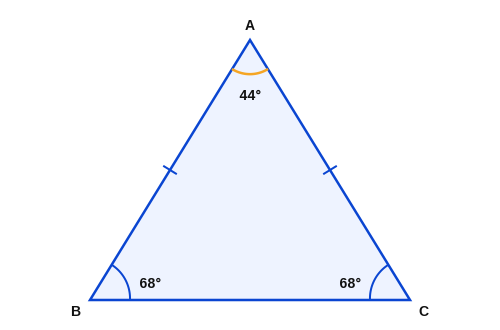
In an isosceles triangle, the vertex angle measures 44°. What is the measure of each of the base angles?
एक समद्विबाहु त्रिभुज में, शीर्ष कोण 44° का है। प्रत्येक आधार कोण की माप क्या है?
  1. A58° and 58°58° और 58°
  2. B65° and 65°65° और 65°
  3. C68° and 68°68° और 68°
  4. D64° and 64°64° और 64°
Show answer

Concept: In an isosceles triangle the two base angles are equal, and the angles add up to 180∘.

  1. Let each base angle be x: 44∘+2x=180∘.
  2. 2x=136∘⇒x=68∘.

Trick: Base angle =90∘−vertex2=90∘−22∘=68∘.

Answer: (C) 68∘ and 68∘

अवधारणा: समद्विबाहु त्रिभुज में दोनों आधार कोण बराबर होते हैं और कोणों का योग 180∘ है।

  1. प्रत्येक आधार कोण x: 44∘+2x=180∘।
  2. 2x=136∘⇒x=68∘।

ट्रिक: आधार कोण =90∘−शीर्ष कोण2=90∘−22∘=68∘।

उत्तर: (C) 68∘ और 68∘

RRB NTPC Graduate CBT 1MathematicsTrianglesRRB NTPC Graduate CBT 1 2024 · 21 Jun Shift 3 →
Q7095.
A man sold an article at a gain of 39%. If he had sold it for ₹558 more, he would have gained 64%. The cost price (in ₹) of the article is:
एक व्यक्ति ने एक वस्तु 39% के लाभ पर बेची। यदि उसने इसे ₹558 अधिक में बेचा होता, तो उसे 64% का लाभ होता। वस्तु का क्रय मूल्य (₹ में) है:
  1. A2,230
  2. B2,232
  3. C2,231
  4. D2,233
Show answer

Concept: Extra selling price corresponds to the extra gain percentage on the cost price.

  1. Gain rises from 39% to 64% → difference =25% of CP.
  2. 25% of CP =₹558.
  3. CP =558×4=₹2232.

Trick: Difference in gain % × CP = difference in SP.

Answer: (B) 2,232

अवधारणा: अतिरिक्त विक्रय मूल्य, लागत पर अतिरिक्त लाभ प्रतिशत के बराबर है।

  1. लाभ 39% से 64% → अंतर =25% लागत मूल्य का।
  2. लागत का 25% =₹558।
  3. लागत =558×4=₹2232।

ट्रिक: लाभ % का अंतर × लागत = विक्रय मूल्य का अंतर।

उत्तर: (B) 2,232

RRB NTPC Graduate CBT 1MathematicsProfit and LossRRB NTPC Graduate CBT 1 2024 · 21 Jun Shift 3 →
Q7096.
Refer to the following number and symbol series and answer the question that follows. Counting to be done from left to right only.
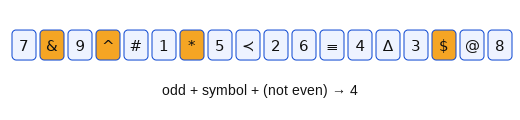
(Left) 7 & 9 ^ # 1 * 5 ≺ 2 6 ≡ 4 ∆ 3 $ @ 8 (Right)
How many such symbols are there, each of which is immediately preceded by an odd number but NOT immediately followed by an even number?
(Note: a combination of three elements should be considered while answering this question.)
निम्नलिखित संख्या और प्रतीक श्रृंखला को देखिए और नीचे दिए गए प्रश्न का उत्तर दीजिए। गिनती केवल बाएँ से दाएँ की जानी है।
(बाएँ) 7 & 9 ^ # 1 * 5 ≺ 2 6 ≡ 4 ∆ 3 $ @ 8 (दाएँ)
ऐसे कितने प्रतीक हैं, जिनमें से प्रत्येक के ठीक पहले एक विषम संख्या है, लेकिन ठीक बाद एक सम संख्या नहीं है?
(नोट: इस प्रश्न का उत्तर देते समय तीन तत्वों के संयोजन पर विचार किया जाना चाहिए।)
  1. ATwoदो
  2. BThreeतीन
  3. COneएक
  4. DMore than threeतीन से अधिक
Show answer

Concept: Check every symbol: the element just before it must be an odd number and the element just after it must NOT be an even number.

  1. & : 7 before, 9 after → ✔
  2. ^ : 9 before, # after → ✔
  3. * : 1 before, 5 after → ✔ ; ≺ : 5 before but 2 after → ✘
  4. $ : 3 before, @ after → ✔ ; others (#, ≡, ∆, @) are not preceded by an odd number.
  5. Total = 4, i.e. more than three.

Trick: First list symbols after odd numbers (&, ^, *, ≺, $), then strike out those followed by an even number (≺).

Answer: (D) More than three

अवधारणा: हर प्रतीक जाँचें: उसके ठीक पहले विषम संख्या हो और ठीक बाद सम संख्या न हो।

  1. & : पहले 7, बाद में 9 → ✔
  2. ^ : पहले 9, बाद में # → ✔
  3. * : पहले 1, बाद में 5 → ✔ ; ≺ : पहले 5 पर बाद में 2 → ✘
  4. $ : पहले 3, बाद में @ → ✔ ; बाकी (#, ≡, ∆, @) के पहले विषम संख्या नहीं है।
  5. कुल = 4, अर्थात तीन से अधिक।

ट्रिक: पहले विषम संख्या के बाद वाले प्रतीक चुनें (&, ^, *, ≺, $), फिर जिनके बाद सम संख्या है उन्हें हटाएँ (≺)।

उत्तर: (D) तीन से अधिक

RRB NTPC Graduate CBT 1General Intelligence and ReasoningNumber–Symbol SeriesRRB NTPC Graduate CBT 1 2024 · 21 Jun Shift 3 →
Q7097.
If ‘P’ stands for ‘×’, ‘Q’ stands for ‘÷’, ‘R’ stands for ‘−’ and ‘S’ stands for ‘+’, then what will come in place of the question mark (?) in the following equation?
81 S 28 R 39 S (98 Q 7) = ?
यदि ‘P’ का अर्थ ‘×’, ‘Q’ का अर्थ ‘÷’, ‘R’ का अर्थ ‘−’ और ‘S’ का अर्थ ‘+’ है, तो निम्नलिखित समीकरण में प्रश्न चिह्न (?) के स्थान पर क्या आएगा?
81 S 28 R 39 S (98 Q 7) = ?
  1. A72
  2. B96
  3. C84
  4. D68
Show answer

Concept: Replace letters by signs (S = +, R = −, Q = ÷) and use BODMAS.

  1. 81+28−39+(98÷7)
  2. =81+28−39+14
  3. =84

Trick: Bracket first, then add/subtract left to right.

Answer: (C) 84

अवधारणा: अक्षरों के स्थान पर चिह्न रखें (S = +, R = −, Q = ÷) और BODMAS लगाएँ।

  1. 81+28−39+(98÷7)
  2. =81+28−39+14
  3. =84

ट्रिक: पहले कोष्ठक, फिर बाएँ से दाएँ जोड़-घटाव।

उत्तर: (C) 84

RRB NTPC Graduate CBT 1General Intelligence and ReasoningMathematical OperationsRRB NTPC Graduate CBT 1 2024 · 21 Jun Shift 3 →
Q7098.
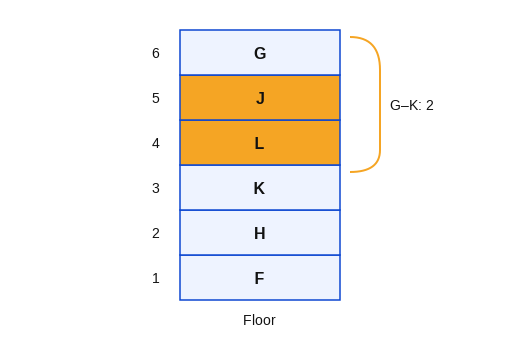
F, G, H, J, K and L live on six different floors of the same building. The lowermost floor in the building is numbered 1, the floor above it, number 2 and so on till the topmost floor is numbered 6. J lives immediately above L. Only two people live between F and L. F lives on an odd numbered floor. H lives immediately below K. How many people live between G and K?
F, G, H, J, K और L एक ही इमारत की छह अलग-अलग मंज़िलों पर रहते हैं। इमारत की सबसे निचली मंज़िल की संख्या 1 है, उसके ऊपर वाली मंज़िल की संख्या 2 है और इसी प्रकार सबसे ऊपरी मंज़िल की संख्या 6 है। J, L के ठीक ऊपर रहता है। F और L के बीच केवल दो व्यक्ति रहते हैं। F एक विषम संख्या वाली मंज़िल पर रहता है। H, K के ठीक नीचे रहता है। G और K के बीच कितने व्यक्ति रहते हैं?
  1. AFourचार
  2. BTwoदो
  3. COneएक
  4. DThreeतीन
Show answer

Concept: Place the fixed pair J–L, then test where F (odd floor, two people between F and L) can fit, and finally fit the H–K pair.

  1. L = 2, J = 3 → F = 5, but no two consecutive floors are left for H–K ✘. L = 3 or 5 → F would be on 6 or 2 (even) ✘. L = 1 → F = 4 (even) ✘.
  2. L = 4, J = 5 → F = 1 (odd) ✔. Free floors 2, 3, 6 → H = 2, K = 3, G = 6.
  3. Between G (6) and K (3): J and L → two people.

Trick: Start with the pair whose position is most restricted (J–L with F odd); only one case survives.

Answer: (B) Two

अवधारणा: जोड़ी J–L रखें, फिर देखें F (विषम मंज़िल, F और L के बीच दो लोग) कहाँ आ सकता है, अंत में H–K जोड़ी रखें।

  1. L = 2, J = 3 → F = 5, पर H–K के लिए लगातार दो मंज़िलें नहीं बचतीं ✘। L = 3 या 5 → F सम मंज़िल पर ✘। L = 1 → F = 4 (सम) ✘।
  2. L = 4, J = 5 → F = 1 (विषम) ✔। खाली 2, 3, 6 → H = 2, K = 3, G = 6।
  3. G (6) और K (3) के बीच: J और L → दो व्यक्ति।

ट्रिक: सबसे सीमित जोड़ी (J–L, F विषम) से शुरू करें; केवल एक स्थिति बचती है।

उत्तर: (B) दो

RRB NTPC Graduate CBT 1General Intelligence and ReasoningFloor PuzzleRRB NTPC Graduate CBT 1 2024 · 21 Jun Shift 3 →
Q7099.
In this question, a group of numbers/symbols are coded using letter codes as per the codes given below and the conditions that follow. The correct combination of codes (following only the condition/s that apply) is your answer.
Note: If none of the conditions apply, then codes for the respective number/symbol are to be followed directly as given in the table.
Number/symbol4#$7926@3&5+%8
CodeBWQCATJNPDGEYS

Conditions:
(i) If the first element is a number and the last element is a symbol, then the codes for the first and last element are interchanged.
(ii) If the first element is divisible by 2 and the last element is divisible by 3, then the first and last elements are to be coded *.
(iii) If the first element is a symbol and the last element is an even number, then their codes (i.e. first and last element) are to be changed to the code for 3.
What is the code for the following?
@&238
इस प्रश्न में, संख्याओं/प्रतीकों के एक समूह को नीचे दिए गए कूटों और उसके बाद दी गई शर्तों के अनुसार अक्षर कूटों का उपयोग करके कूटबद्ध किया गया है। कूटों का सही संयोजन (केवल लागू होने वाली शर्त/शर्तों का पालन करते हुए) आपका उत्तर है।
नोट: यदि कोई भी शर्त लागू नहीं होती है, तो संबंधित संख्या/प्रतीक के लिए कूटों का सीधे तालिका में दिए गए अनुसार पालन किया जाना है।
संख्या/प्रतीक4#$7926@3&5+%8
कूटBWQCATJNPDGEYS

शर्तें:
(i) यदि पहला तत्व एक संख्या है और अंतिम तत्व एक प्रतीक है, तो पहले और अंतिम तत्व के कूट आपस में बदल दिए जाते हैं।
(ii) यदि पहला तत्व 2 से विभाज्य है और अंतिम तत्व 3 से विभाज्य है, तो पहले और अंतिम तत्व को * के रूप में कूटबद्ध किया जाना है।
(iii) यदि पहला तत्व एक प्रतीक है और अंतिम तत्व एक सम संख्या है, तो उनके कूटों (अर्थात् पहले और अंतिम तत्व) को 3 के कूट में बदल दिया जाना है।
निम्नलिखित के लिए कूट क्या है?
@&238
  1. ANDTPS
  2. BNDTPP
  3. CPDTPP
  4. DPDTPS
Show answer

Concept: Write the direct codes, then check which condition applies to the first and last elements.

  1. @&238: first @ (symbol), last 8 (even number) → condition (iii) applies; (i) and (ii) need a number first, so they fail.
  2. Direct codes: @ = N, & = D, 2 = T, 3 = P, 8 = S.
  3. By (iii) first and last both become the code for 3 = P → P D T P P.

Trick: Always check the type of first and last element (number/symbol, even/odd) before coding.

Answer: (C) PDTPP

अवधारणा: पहले सीधे कोड लिखें, फिर देखें पहले और अंतिम तत्व पर कौन-सी शर्त लागू होती है।

  1. @&238: पहला @ (प्रतीक), अंतिम 8 (सम संख्या) → शर्त (iii) लागू; (i) और (ii) में पहला तत्व संख्या होना चाहिए।
  2. सीधे कोड: @ = N, & = D, 2 = T, 3 = P, 8 = S।
  3. (iii) से पहला और अंतिम दोनों 3 का कोड = P → P D T P P।

ट्रिक: कोड लिखने से पहले पहले व अंतिम तत्व का प्रकार (संख्या/प्रतीक, सम/विषम) जाँचें।

उत्तर: (C) PDTPP

RRB NTPC Graduate CBT 1General Intelligence and ReasoningCoding with ConditionsRRB NTPC Graduate CBT 1 2024 · 21 Jun Shift 3 →
Q7100.
This question is based on the five, three-digit numbers given below.
(Left) 325 503 158 391 144 (Right)
(Example- 697 – First digit = 6, second digit = 9 and third digit = 7)
(NOTE: All operations to be done from left to right.)
What will be the resultant if the second digit of the highest number is added to the first digit of the lowest number?
यह प्रश्न नीचे दी गई तीन अंकों वाली पाँच संख्याओं पर आधारित है।
(बाएँ) 325 503 158 391 144 (दाएँ)
(उदाहरण- 697 – पहला अंक = 6, दूसरा अंक = 9 और तीसरा अंक = 7)
(नोट: सभी संक्रियाएँ बाएँ से दाएँ की जानी हैं।)
यदि सबसे बड़ी संख्या के दूसरे अंक को सबसे छोटी संख्या के पहले अंक में जोड़ा जाए, तो परिणाम क्या होगा?
  1. A3
  2. B4
  3. C1
  4. D2
Show answer

Concept: Identify the highest and lowest numbers first, then pick the required digits.

  1. Highest = 503 → second digit 0.
  2. Lowest = 144 → first digit 1.
  3. 0+1=1

Trick: Arrange: 144 < 158 < 325 < 391 < 503.

Answer: (C) 1

अवधारणा: पहले सबसे बड़ी और सबसे छोटी संख्या पहचानें, फिर आवश्यक अंक लें।

  1. सबसे बड़ी = 503 → दूसरा अंक 0।
  2. सबसे छोटी = 144 → पहला अंक 1।
  3. 0+1=1

ट्रिक: क्रम: 144 < 158 < 325 < 391 < 503।

उत्तर: (C) 1

RRB NTPC Graduate CBT 1General Intelligence and ReasoningThree-digit Number OperationsRRB NTPC Graduate CBT 1 2024 · 21 Jun Shift 3 →