Question bank

Q&A: practice questions with answers

Search questions on any topic. Filter by exam category, exam, subject and topic, try the question, then open the answer and explanation.

Courses – airGurukul

20,719 questions found.

Q7381.
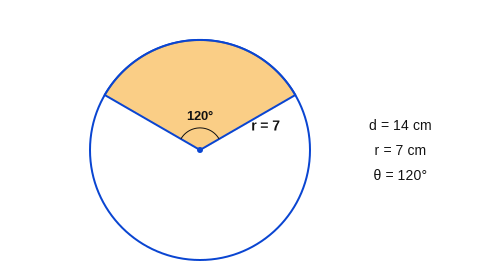
Find the area of the sector of a circle with diameter 14 cm, if the arc of the sector makes an angle of 120° at the centre of the circle. (Use π=227)
14 cm व्यास वाले एक वृत्त के त्रिज्यखंड का क्षेत्रफल ज्ञात कीजिए, यदि त्रिज्यखंड का चाप वृत्त के केंद्र पर 120° का कोण बनाता है। (π=227 का प्रयोग कीजिए)
  1. A5113cm2
  2. B5112cm2
  3. C150cm2
  4. D154cm2
Show answer

Concept: Area of sector=θ360∘×πr2.

  1. r=142=7cm.
  2. πr2=227×49=154.
  3. Area =120360×154=1543=5113cm2.

Trick: 120∘ is one-third of the circle: 1543.

Answer: (A) 5113cm2

अवधारणा: त्रिज्यखंड का क्षेत्रफल=θ360∘×πr2।

  1. r=142=7cm।
  2. πr2=227×49=154।
  3. क्षेत्रफल =120360×154=5113cm2।

ट्रिक: 120∘ वृत्त का एक-तिहाई है: 1543।

उत्तर: (A) 5113cm2

RRB NTPC Graduate CBT 1MathematicsMensuration – SectorRRB NTPC Graduate CBT 1 2024 · 20 Jun Shift 3 →
Q7382.
If a sum of ₹9,10,000 is invested for a year at 2% per annum compounded half yearly, then find the compound interest.
यदि ₹9,10,000 की राशि को 2% वार्षिक दर पर अर्धवार्षिक रूप से संयोजित चक्रवृद्धि ब्याज पर एक वर्ष के लिए निवेश किया जाता है, तो चक्रवृद्धि ब्याज ज्ञात कीजिए।
  1. A₹18,291
  2. B₹20,081
  3. C₹17,125
  4. D₹18,828
Show answer

Concept: Half-yearly compounding: rate is halved and time (periods) doubled.

  1. Rate per half-year =22=1%, periods =2.
  2. A=910000×(1.01)2=910000×1.0201=928291
  3. CI=928291−910000=18291

Trick: For 2 periods at r%, effective rate =2r+r2100=2.01%; 910000×0.0201=18291.

Answer: (A) ₹18,291

अवधारणा: अर्धवार्षिक चक्रवृद्धि में दर आधी और अवधि (periods) दोगुनी हो जाती है।

  1. प्रति छमाही दर =22=1%, अवधियाँ =2
  2. A=910000×(1.01)2=928291
  3. CI=928291−910000=18291

ट्रिक: 2 अवधियों के लिए प्रभावी दर =2r+r2100=2.01%; 910000×0.0201=18291

उत्तर: (A) ₹18,291

RRB NTPC Graduate CBT 1MathematicsCompound Interest (half-yearly)RRB NTPC Graduate CBT 1 2024 · 20 Jun Shift 3 →
Q7383.
The mode of the observations 21, 27, 25, 31, 21, 35, 23, 25, 32, 27, 21, 29, 32, 29 and 31 is:
प्रेक्षणों 21, 27, 25, 31, 21, 35, 23, 25, 32, 27, 21, 29, 32, 29 और 31 का बहुलक क्या है?
  1. A27
  2. B31
  3. C25
  4. D21
Show answer

Concept: Mode = the value that occurs most often.

  1. Count: 21 → 3 times; 25, 27, 29, 31, 32 → 2 times each; others once.
  2. Highest frequency is 3, for 21.

Trick: Tally just the repeated values; ignore the singles.

Answer: (D) 21

अवधारणा: बहुलक (mode) = सबसे अधिक बार आने वाला मान।

  1. गिनती: 21 → 3 बार; 25, 27, 29, 31, 32 → 2-2 बार; बाकी एक बार।
  2. सबसे अधिक बारंबारता 3 है, जो 21 की है।

ट्रिक: केवल दोहराए गए मानों को गिनें।

उत्तर: (D) 21

RRB NTPC Graduate CBT 1MathematicsStatistics – ModeRRB NTPC Graduate CBT 1 2024 · 20 Jun Shift 3 →
Q7384.
Which of the following numbers is divisible by 11?
निम्नलिखित में से कौन-सी संख्या 11 से विभाज्य है?
  1. A2118
  2. B1440
  3. C2652
  4. D1749
Show answer

Concept: A number is divisible by 11 if (sum of alternate digits) − (sum of other digits) is 0 or a multiple of 11.

  1. 2118: (2+1)−(1+8)=−6 ✗
  2. 1440: (1+4)−(4+0)=1 ✗; 2652: (2+5)−(6+2)=−1 ✗
  3. 1749: (1+4)−(7+9)=−11 ✓ (1749=11×159)

Trick: Difference of alternate-digit sums must be 0,±11,…

Answer: (D) 1749

अवधारणा: कोई संख्या 11 से विभाज्य है यदि एकांतर अंकों के योग का अंतर 0 या 11 का गुणज हो।

  1. 2118: (2+1)−(1+8)=−6 ✗
  2. 1440: (1+4)−(4+0)=1 ✗; 2652: (2+5)−(6+2)=−1 ✗
  3. 1749: (1+4)−(7+9)=−11 ✓ (1749=11×159)

ट्रिक: एकांतर अंकों के योग का अंतर 0,±11,… होना चाहिए।

उत्तर: (D) 1749

RRB NTPC Graduate CBT 1MathematicsDivisibility by 11RRB NTPC Graduate CBT 1 2024 · 20 Jun Shift 3 →
Q7385.
Find the possible value of x.
x4−17x2+60=0
x का संभावित मान ज्ञात कीजिए।
x4−17x2+60=0
  1. A−6
  2. B−2
  3. C−3
  4. D−12
Show answer

Concept: Put x2=t to turn x4−17x2+60=0 into a quadratic.

  1. t2−17t+60=0⇒(t−12)(t−5)=0
  2. t=12 or t=5, so x=±12 or x=±5.
  3. Among the options only −12 fits.

Trick: Check options: x2=12⇒144−204+60=0 ✓.

Answer: (D) −12

अवधारणा: x2=t रखकर x4−17x2+60=0 को द्विघात बनाएँ।

  1. t2−17t+60=0⇒(t−12)(t−5)=0
  2. t=12 या t=5, अतः x=±12 या x=±5
  3. विकल्पों में केवल −12 सही बैठता है।

ट्रिक: विकल्प जाँचें: x2=12⇒144−204+60=0 ✓

उत्तर: (D) −12

RRB NTPC Graduate CBT 1MathematicsBiquadratic EquationsRRB NTPC Graduate CBT 1 2024 · 20 Jun Shift 3 →
Q7386.
There are two sections A and B of a class, consisting of 22 and 44 students,
respectively. If the average weight of section A is 40 kg and that of section B is 37 kg, find the average weight of the whole class (in kg).
एक कक्षा के दो वर्गों A और B में क्रमशः 22 और 44 विद्यार्थी हैं।
यदि वर्ग A का औसत भार 40 kg और वर्ग B का औसत भार 37 kg है, तो पूरी कक्षा का औसत भार (kg में) ज्ञात कीजिए।
  1. A37.5
  2. B38
  3. C38.5
  4. D39
Show answer

Concept: Combined average =n1a1+n2a2n1+n2.

  1. Total weight =22×40+44×37=880+1628=2508
  2. Average =250866=38 kg

Trick: Ratio 22:44=1:2, so average =40+2×373=1143=38.

Answer: (B) 38

अवधारणा: संयुक्त औसत =n1a1+n2a2n1+n2

  1. कुल भार =22×40+44×37=880+1628=2508
  2. औसत =250866=38 kg

ट्रिक: अनुपात 22:44=1:2, औसत =40+2×373=38

उत्तर: (B) 38

RRB NTPC Graduate CBT 1MathematicsAverage – Combined GroupsRRB NTPC Graduate CBT 1 2024 · 20 Jun Shift 3 →
Q7387.
A woman travelled at a speed of 20 m/min for 80 min, and at a speed of 65 m/min for 70 min. Her average speed (in m/min) is:
एक महिला ने 80 min तक 20 m/min की चाल से और 70 min तक 65 m/min की चाल से यात्रा की। उसकी औसत चाल (m/min में) कितनी है?
  1. A47
  2. B45
  3. C41
  4. D34
Show answer

Concept: Average speed =total distancetotal time.

  1. Distance =20×80+65×70=1600+4550=6150 m
  2. Time =80+70=150 min
  3. Average =6150150=41 m/min

Trick: Never average the two speeds directly (20+652=42.5 is wrong) – weight them by time.

Answer: (C) 41

अवधारणा: औसत चाल =कुल दूरीकुल समय

  1. दूरी =20×80+65×70=1600+4550=6150 m
  2. समय =80+70=150 min
  3. औसत =6150150=41 m/min

ट्रिक: दोनों चालों का सीधा औसत (42.5) गलत है – समय से भारित करें।

उत्तर: (C) 41

RRB NTPC Graduate CBT 1MathematicsAverage SpeedRRB NTPC Graduate CBT 1 2024 · 20 Jun Shift 3 →
Q7388.
The successive discounts of 24%, 18% and 20% are equivalent to a single discount of: (Rounded up to two decimal places.)
24%, 18% और 20% की क्रमागत छूटें किस एकल छूट के बराबर हैं? (दो दशमलव स्थानों तक पूर्णांकित)
  1. A51.51%
  2. B52.84%
  3. C49.27%
  4. D50.14%
Show answer

Concept: Successive discounts multiply the remaining fractions.

  1. Remaining =0.76×0.82×0.80
  2. 0.76×0.82=0.6232; 0.6232×0.8=0.49856
  3. Single discount =1−0.49856=0.50144≈50.14%

Trick: Two at a time: a+b−ab100: 24,18→37.68; 37.68,20→50.144.

Answer: (D) 50.14%

अवधारणा: क्रमिक छूट में बची हुई भिन्नों का गुणा होता है।

  1. शेष =0.76×0.82×0.80
  2. 0.76×0.82=0.6232; 0.6232×0.8=0.49856
  3. एकल छूट =1−0.49856=50.144%≈50.14%

ट्रिक: a+b−ab100: 24,18→37.68; 37.68,20→50.144

उत्तर: (D) 50.14%

RRB NTPC Graduate CBT 1MathematicsSuccessive DiscountsRRB NTPC Graduate CBT 1 2024 · 20 Jun Shift 3 →
Q7389.
A booster pump can be used for filling as well as for emptying a tank. The capacity of the tank is 1800 m3. The emptying capacity of the tank is 10 m3/min higher than its filling capacity, and the pump needs 6 minutes lesser to empty the tank than it needs to fill it. What is the filling capacity of the pump in m3/min?
एक बूस्टर पंप का उपयोग टंकी को भरने के साथ-साथ खाली करने के लिए भी किया जा सकता है। टंकी की धारिता 1800 m3 है। टंकी को खाली करने की क्षमता उसे भरने की क्षमता से 10 m3/min अधिक है, और पंप को टंकी खाली करने में उसे भरने की तुलना में 6 मिनट कम लगते हैं। पंप की भरने की क्षमता m3/min में कितनी है?
  1. A65
  2. B27
  3. C50
  4. D18
Show answer

Concept: Time =capacityrate. Let filling rate =x, emptying rate =x+10 (m3/min).

  1. 1800x−1800x+10=6
  2. 1800×10=6x(x+10)⇒x(x+10)=3000
  3. x2+10x−3000=0⇒(x+60)(x−50)=0⇒x=50

Trick: Option check: 180050=36, 180060=30, difference 6 ✓.

Answer: (C) 50

अवधारणा: समय =क्षमतादर; भरने की दर =x, खाली करने की दर =x+10 (m3/min)

  1. 1800x−1800x+10=6
  2. 1800×10=6x(x+10)⇒x(x+10)=3000
  3. x2+10x−3000=0⇒x=50

ट्रिक: विकल्प से: 180050=36, 180060=30, अंतर 6 ✓

उत्तर: (C) 50

RRB NTPC Graduate CBT 1MathematicsPipes and CisternsRRB NTPC Graduate CBT 1 2024 · 20 Jun Shift 3 →
Q7390.
The population of a village was 1,10,000. It increased by 5% in the first year and increased by 30% in the second year. Its population after two years is _______.
एक गाँव की जनसंख्या 1,10,000 थी। पहले वर्ष में इसमें 5% की वृद्धि हुई और दूसरे वर्ष में 30% की वृद्धि हुई। दो वर्ष बाद इसकी जनसंख्या _______ है।
  1. A1,50,150
  2. B1,15,500
  3. C1,48,500
  4. D1,43,000
Show answer

Concept: Successive % increases multiply: P×(1+r1100)(1+r2100).

  1. After year 1: 110000×1.05=115500
  2. After year 2: 115500×1.30=150150

Trick: Net increase =5+30+5×30100=36.5%; 110000×1.365=150150.

Answer: (A) 1,50,150

अवधारणा: क्रमिक प्रतिशत वृद्धि: P×(1+r1100)(1+r2100)

  1. पहले वर्ष बाद: 110000×1.05=115500
  2. दूसरे वर्ष बाद: 115500×1.30=150150

ट्रिक: कुल वृद्धि =5+30+5×30100=36.5%; 110000×1.365=150150

उत्तर: (A) 1,50,150

RRB NTPC Graduate CBT 1MathematicsPopulation GrowthRRB NTPC Graduate CBT 1 2024 · 20 Jun Shift 3 →
Q7391.
Kavita buys 2 apples and 5 mangoes for ₹239. When the cost of an apple is decreased by 50% and that of a mango remains the same, then the cost of 2 apples and 4 mangoes is ₹184. What is the original cost of 8 apples and 8 mangoes?
कविता ₹239 में 2 सेब और 5 आम खरीदती है। जब एक सेब का मूल्य 50% कम हो जाता है और आम का मूल्य समान रहता है, तब 2 सेब और 4 आम का मूल्य ₹184 होता है। 8 सेब और 8 आम का मूल मूल्य क्या है?
  1. A₹438
  2. B₹440
  3. C₹436
  4. D₹441
Show answer

Concept: Let apple =a, mango =m (in ₹).

  1. 2a+5m=239
  2. Apple at half price: 2×a2+4m=184⇒a+4m=184
  3. Double it: 2a+8m=368; subtract: 3m=129⇒m=43, a=184−172=12
  4. 8a+8m=8×55=440

Trick: You only need a+m=55, then multiply by 8.

Answer: (B) ₹440

अवधारणा: सेब का मूल्य =a, आम =m (₹ में)।

  1. 2a+5m=239
  2. सेब आधे दाम पर: a+4m=184
  3. दोगुना करें: 2a+8m=368; घटाएँ: 3m=129⇒m=43, a=12
  4. 8a+8m=8×55=440

ट्रिक: केवल a+m=55 चाहिए, फिर 8 से गुणा।

उत्तर: (B) ₹440

RRB NTPC Graduate CBT 1MathematicsLinear EquationsRRB NTPC Graduate CBT 1 2024 · 20 Jun Shift 3 →
Q7392.
If 600 bananas were distributed among three monkeys in the ratio 114:12:93 respectively, how many bananas did the third monkey get?
यदि 600 केलों को तीन बंदरों में क्रमशः 114:12:93 के अनुपात में बाँटा गया, तो तीसरे बंदर को कितने केले मिले?
  1. A506
  2. B505
  3. C503
  4. D504
Show answer

Concept: Clear fractions by multiplying by the LCM of denominators.

  1. 114:12:93=114:12:3
  2. Multiply by 14: 1:7:42, total =50 parts
  3. Third monkey =4250×600=504

Trick: 600÷50=12 per part; 42×12=504.

Answer: (D) 504

अवधारणा: हरों के LCM से गुणा कर भिन्न हटाएँ।

  1. 114:12:93=114:12:3
  2. 14 से गुणा: 1:7:42, कुल =50 भाग
  3. तीसरा बंदर =4250×600=504

ट्रिक: एक भाग =600÷50=12; 42×12=504

उत्तर: (D) 504

RRB NTPC Graduate CBT 1MathematicsRatio and ProportionRRB NTPC Graduate CBT 1 2024 · 20 Jun Shift 3 →
Q7393.
Which of the following ratios is greatest?
निम्नलिखित में से कौन-सा अनुपात सबसे बड़ा है?
  1. A18 : 37
  2. B23 : 25
  3. C25 : 26
  4. D13 : 32
Show answer

Concept: Convert each ratio to a decimal (or compare with 1).

  1. 1837≈0.49, 1332≈0.41 – both below 12.
  2. 2325=0.92, 2526≈0.96
  3. Greatest: 25:26

Trick: For fractions just below 1, the one with the smaller gap from 1 is bigger: 126<225.

Answer: (C) 25:26

अवधारणा: प्रत्येक अनुपात को दशमलव में बदलें।

  1. 1837≈0.49, 1332≈0.41 – दोनों 12 से कम
  2. 2325=0.92, 2526≈0.96
  3. सबसे बड़ा: 25:26

ट्रिक: 1 के निकट भिन्नों में जिसका 1 से अंतर कम, वह बड़ा: 126<225

उत्तर: (C) 25:26

RRB NTPC Graduate CBT 1MathematicsComparison of RatiosRRB NTPC Graduate CBT 1 2024 · 20 Jun Shift 3 →
Q7394.
The sum of the perimeter of two cubes, the length of whose edges are x cm and y cm, respectively, is 300 cm and the product of edges x and y is 156 cm2. Find the sum of the volume of both cubes.
दो घनों, जिनके किनारों की लंबाई क्रमशः x cm और y cm है, के परिमापों का योग 300 cm है और किनारों x और y का गुणनफल 156 cm2 है। दोनों घनों के आयतनों का योग ज्ञात कीजिए।
  1. A2968 cm3
  2. B2178 cm3
  3. C1756 cm3
  4. D3925 cm3
Show answer

Concept: A cube has 12 equal edges, so its perimeter (total edge length) =12a. Use x3+y3=(x+y)3−3xy(x+y).

  1. 12x+12y=300⇒x+y=25; xy=156
  2. x3+y3=253−3×156×25
  3. =15625−11700=3925cm3

Trick: x+y=25, xy=156 gives x=13, y=12: 2197+1728=3925.

Answer: (D) 3925cm3

अवधारणा: घन के 12 बराबर किनारे होते हैं, अतः परिमाप (कुल किनारा लंबाई) =12a; सूत्र x3+y3=(x+y)3−3xy(x+y)

  1. 12x+12y=300⇒x+y=25; xy=156
  2. x3+y3=253−3×156×25
  3. =15625−11700=3925cm3

ट्रिक: x+y=25, xy=156 से x=13, y=12: 2197+1728=3925

उत्तर: (D) 3925cm3

RRB NTPC Graduate CBT 1MathematicsMensuration – Cubes (Algebra)RRB NTPC Graduate CBT 1 2024 · 20 Jun Shift 3 →
Q7395.
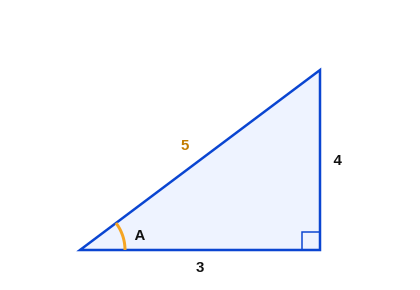
If 3tanA=4, then find the value of (1−secA)(1+secA)(1−cosecA)(1+cosecA).
यदि 3tanA=4 है, तो (1−secA)(1+secA)(1−cosecA)(1+cosecA) का मान ज्ञात कीजिए।
  1. A649
  2. B25681
  3. C8027
  4. D169
Show answer

Concept: (1−a)(1+a)=1−a2; sec2A−1=tan2A, csc2A−1=cot2A.

  1. Expression =1−sec2A1−csc2A=−tan2A−cot2A=tan4A
  2. tanA=43
  3. tan4A=25681

Trick: tan2Acot2A=tan4A – no need to find sec or cosec.

Answer: (B) 25681

अवधारणा: (1−a)(1+a)=1−a2; sec2A−1=tan2A, csc2A−1=cot2A

  1. व्यंजक =1−sec2A1−csc2A=−tan2A−cot2A=tan4A
  2. tanA=43
  3. tan4A=25681

ट्रिक: tan2Acot2A=tan4A – sec या cosec निकालने की ज़रूरत नहीं।

उत्तर: (B) 25681

RRB NTPC Graduate CBT 1MathematicsTrigonometric IdentitiesRRB NTPC Graduate CBT 1 2024 · 20 Jun Shift 3 →
Q7396.
Select the pair which follows the same pattern as that followed by the two set of pairs given below. Both pairs follow the same pattern.
AJK : BEG
JIL : KDH
उस युग्म का चयन कीजिए जो उसी पैटर्न का अनुसरण करता है जिसका अनुसरण नीचे दिए गए दो युग्मों द्वारा किया गया है। दोनों युग्म एक ही पैटर्न का अनुसरण करते हैं।
AJK : BEG
JIL : KDH
  1. ARLO : SIK
  2. BBKK : CFH
  3. COHF : PCC
  4. DKKQ : LFM
Show answer

Concept: Compare each letter of the first cluster with the matching letter of the second by its alphabet position.

  1. AJK → BEG: A +1 = B, J −5 = E, K −4 = G.
  2. JIL → KDH: J +1 = K, I −5 = D, L −4 = H.
  3. KKQ → LFM: K +1 = L, K −5 = F, Q −4 = M ✔. (RLO → SIK fails: L −3 = I.)

Trick: Pattern (+1,−5,−4); check only the 2nd letter first – it eliminates most options fast.

Answer: (D) KKQ : LFM

अवधारणा: पहले समूह के प्रत्येक अक्षर की तुलना दूसरे समूह के संगत अक्षर से (वर्णमाला स्थान) करें।

  1. AJK → BEG: A +1 = B, J −5 = E, K −4 = G।
  2. JIL → KDH: J +1 = K, I −5 = D, L −4 = H।
  3. KKQ → LFM: K +1 = L, K −5 = F, Q −4 = M ✔। (RLO → SIK में L −3 = I, गलत)

ट्रिक: पैटर्न (+1,−5,−4); पहले केवल दूसरा अक्षर जाँचें – अधिकतर विकल्प तुरंत हट जाते हैं।

उत्तर: (D) KKQ : LFM

RRB NTPC Graduate CBT 1General Intelligence and ReasoningLetter AnalogyRRB NTPC Graduate CBT 1 2024 · 20 Jun Shift 3 →
Q7397.
Refer to the number and symbol series given below and answer the question that follows. Counting to be done from left to right only.
(NOTE: All numbers are single digit numbers only.)
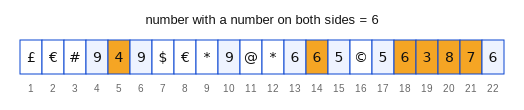
(Left) £ € # 9 4 9 $ € * 9 @ * 6 6 5 © 5 6 3 8 7 6 (Right)
How many such numbers are there, each of which is immediately preceded by a number and also immediately followed by a number?
नीचे दी गई संख्या और प्रतीक श्रृंखला को देखिए और उसके बाद दिए गए प्रश्न का उत्तर दीजिए। गिनती केवल बाएँ से दाएँ की जानी है।
(नोट: सभी संख्याएँ केवल एक-अंकीय संख्याएँ हैं।)
(बाएँ) £ € # 9 4 9 $ € * 9 @ * 6 6 5 © 5 6 3 8 7 6 (दाएँ)
ऐसी कितनी संख्याएँ हैं, जिनमें से प्रत्येक के ठीक पहले एक संख्या है और ठीक बाद भी एक संख्या है?
  1. A7
  2. B5
  3. C8
  4. D6
Show answer

Concept: Look for the pattern number–number–number (three consecutive digits); the middle one is counted.

  1. Digit runs in the series: "9 4 9", "6 6 5", "5 6 3 8 7 6".
  2. "9 4 9" → 4 counted (1). "6 6 5" → middle 6 counted (1).
  3. "5 6 3 8 7 6" → 6, 3, 8, 7 counted (4); the end digits of a run never count.
  4. Total =1+1+4=6.

Trick: In a run of k consecutive digits, k−2 digits qualify: (3−2)+(3−2)+(6−2)=6.

Answer: (D) 6

अवधारणा: संख्या–संख्या–संख्या (लगातार तीन अंक) का पैटर्न देखें; बीच वाला अंक गिना जाता है।

  1. श्रृंखला में अंकों के समूह: "9 4 9", "6 6 5", "5 6 3 8 7 6"।
  2. "9 4 9" → 4 (1)। "6 6 5" → बीच का 6 (1)।
  3. "5 6 3 8 7 6" → 6, 3, 8, 7 (4); समूह के किनारे वाले अंक नहीं गिने जाते।
  4. कुल =1+1+4=6।

ट्रिक: k लगातार अंकों के समूह में k−2 अंक मान्य: (3−2)+(3−2)+(6−2)=6।

उत्तर: (D) 6

RRB NTPC Graduate CBT 1General Intelligence and ReasoningNumber-Symbol SeriesRRB NTPC Graduate CBT 1 2024 · 20 Jun Shift 3 →
Q7398.
If 2 is added to each even digit and 1 is subtracted from each odd digit in the number 26347591, what will be the sum of the second digit from left and third digit from right in the new number thus formed?
यदि संख्या 26347591 में प्रत्येक सम अंक में 2 जोड़ा जाए और प्रत्येक विषम अंक में से 1 घटाया जाए, तो इस प्रकार बनी नई संख्या में बाएँ से दूसरे अंक और दाएँ से तीसरे अंक का योग क्या होगा?
  1. A14
  2. B10
  3. C8
  4. D12
Show answer

Concept: Change each digit separately: even +2, odd −1.

  1. 2 6 3 4 7 5 9 1 → 4 8 2 6 6 4 8 0.
  2. Second digit from left =8.
  3. Third digit from right (from 4 8 2 6 6 4 8 0) =4.
  4. Sum =8+4=12.

Trick: Only transform the two positions asked: 2nd from left is 6 → 8; 3rd from right is 5 → 4.

Answer: (D) 12

अवधारणा: हर अंक अलग से बदलें: सम अंक +2, विषम अंक −1।

  1. 2 6 3 4 7 5 9 1 → 4 8 2 6 6 4 8 0।
  2. बाएँ से दूसरा अंक =8।
  3. दाएँ से तीसरा अंक (4 8 2 6 6 4 8 0) =4।
  4. योग =8+4=12।

ट्रिक: केवल पूछे गए स्थान बदलें: बाएँ से दूसरा 6 → 8; दाएँ से तीसरा 5 → 4।

उत्तर: (D) 12

RRB NTPC Graduate CBT 1General Intelligence and ReasoningNumber OperationsRRB NTPC Graduate CBT 1 2024 · 20 Jun Shift 3 →
Q7399.
If 1 is added to each odd digit and 2 is subtracted from each even digit in the number 1847653, what will be the sum of the highest and lowest digits in the number thus formed?
यदि संख्या 1847653 में प्रत्येक विषम अंक में 1 जोड़ा जाए और प्रत्येक सम अंक में से 2 घटाया जाए, तो इस प्रकार बनी संख्या में सबसे बड़े और सबसे छोटे अंकों का योग क्या होगा?
  1. A11
  2. B14
  3. C12
  4. D10
Show answer

Concept: Odd digit +1, even digit −2, applied to every digit.

  1. 1 8 4 7 6 5 3 → 2 6 2 8 4 6 4.
  2. Highest digit =8, lowest digit =2.
  3. Sum =8+2=10.

Trick: Odd digits become even after +1, so the new number has only even digits – quick check.

Answer: (D) 10

अवधारणा: विषम अंक +1, सम अंक −2, हर अंक पर।

  1. 1 8 4 7 6 5 3 → 2 6 2 8 4 6 4।
  2. सबसे बड़ा अंक =8, सबसे छोटा =2।
  3. योग =8+2=10।

ट्रिक: विषम में +1 और सम में −2 से सभी अंक सम बनते हैं – जल्दी जाँच।

उत्तर: (D) 10

RRB NTPC Graduate CBT 1General Intelligence and ReasoningNumber OperationsRRB NTPC Graduate CBT 1 2024 · 20 Jun Shift 3 →
Q7400.
This question is based on the five, three-digit numbers given below.
(Left) 657 435 578 659 619 (Right)
(Example- 697 – First digit = 6, second digit = 9 and third digit = 7)
(NOTE: All operations to be done from left to right.)
What will be the resultant if the second digit of the highest number is added to the third digit of the lowest number?
यह प्रश्न नीचे दी गई तीन-अंकीय पाँच संख्याओं पर आधारित है।
(बाएँ) 657 435 578 659 619 (दाएँ)
(उदाहरण- 697 – पहला अंक = 6, दूसरा अंक = 9 और तीसरा अंक = 7)
(नोट: सभी संक्रियाएँ बाएँ से दाएँ की जानी हैं।)
यदि सबसे बड़ी संख्या के दूसरे अंक को सबसे छोटी संख्या के तीसरे अंक में जोड़ा जाए, तो परिणाम क्या होगा?
  1. A10
  2. B11
  3. C12
  4. D9
Show answer

Concept: First find the highest and lowest numbers, then pick the asked digits.

  1. Numbers: 657, 435, 578, 659, 619. Highest =659, lowest =435.
  2. Second digit of 659 =5; third digit of 435 =5.
  3. 5+5=10.

Trick: Compare first digits first (6 vs 4 or 5), then second digits only among ties.

Answer: (A) 10

अवधारणा: पहले सबसे बड़ी और सबसे छोटी संख्या ज्ञात करें, फिर पूछे गए अंक लें।

  1. संख्याएँ: 657, 435, 578, 659, 619। सबसे बड़ी =659, सबसे छोटी =435।
  2. 659 का दूसरा अंक =5; 435 का तीसरा अंक =5।
  3. 5+5=10।

ट्रिक: पहले पहला अंक तुलना करें, बराबरी होने पर ही दूसरा अंक देखें।

उत्तर: (A) 10

RRB NTPC Graduate CBT 1General Intelligence and ReasoningThree-Digit NumbersRRB NTPC Graduate CBT 1 2024 · 20 Jun Shift 3 →