Question bank

Q&A: practice questions with answers

Search questions on any topic. Filter by exam category, exam, subject and topic, try the question, then open the answer and explanation.

Courses – airGurukul

20,719 questions found.

Q741.
Which of the following is NOT an example of connective tissue?
निम्नलिखित में से कौन-सा संयोजी ऊतक का उदाहरण नहीं है?
  1. ACartilageउपास्थि
  2. BBloodरक्त
  3. CSkinत्वचा
  4. DBoneअस्थि
Show answer

Concept: Connective tissue connects/supports organs and has cells scattered in a matrix.

  1. Bone and cartilage → skeletal connective tissue (solid/semi-solid matrix).
  2. Blood → fluid connective tissue (matrix = plasma).
  3. Skin (epidermis) is made of stratified squamous epithelial tissue – a covering tissue, not connective.

Short trick: Connective = “B-B-C-L-T-A”: Blood, Bone, Cartilage, Ligament, Tendon, Areolar/Adipose. Skin is a cover → epithelium.

Answer: (C) Skin

अवधारणा: संयोजी ऊतक अंगों को जोड़ता/सहारा देता है; इसकी कोशिकाएँ आधात्री (मैट्रिक्स) में बिखरी रहती हैं।

  1. अस्थि और उपास्थि → कंकालीय संयोजी ऊतक।
  2. रक्त → तरल संयोजी ऊतक (आधात्री = प्लाज्मा)।
  3. त्वचा (बाह्यत्वचा) स्तरित शल्की उपकला ऊतक से बनी है – आवरण ऊतक, संयोजी नहीं।

शॉर्ट ट्रिक: संयोजी = रक्त, अस्थि, उपास्थि, स्नायु, कंडरा, एरिओलर/वसा। त्वचा = आवरण → उपकला।

उत्तर: (C) त्वचा
RRB ALP CBT 1General ScienceAnimal tissues – connective tissueRRB ALP CBT 1 2025 · 13 Feb Shift 1 →
Q742.
Which reaction is NOT a displacement reaction?
कौन-सी अभिक्रिया विस्थापन अभिक्रिया नहीं है?
  1. ANa + H₂O → NaOH + H₂
  2. BHCl + NaOH → NaCl + H₂O
  3. CFe + CuSO₄ → FeSO₄ + Cu
  4. DZn + H₂SO₄ → ZnSO₄ + H₂
Show answer

Concept: In a displacement reaction a more reactive element pushes a less reactive one out of its compound.

  1. Na displaces H from water; Fe displaces Cu from CuSO₄; Zn displaces H from H₂SO₄ – all displacement.
  2. HCl + NaOH → NaCl + H₂O: acid + base → salt + water = neutralisation; no free element displaces another.

Short trick: Look for a lone element on the left side: A, C, D have Na, Fe, Zn; B has none → not displacement.

Answer: (B) HCl + NaOH → NaCl + H₂O

अवधारणा: विस्थापन अभिक्रिया में अधिक क्रियाशील तत्व कम क्रियाशील तत्व को उसके यौगिक से हटा देता है।

  1. Na जल से H विस्थापित करता है; Fe, CuSO₄ से Cu; Zn, H₂SO₄ से H – सभी विस्थापन।
  2. HCl + NaOH → NaCl + H₂O: अम्ल + क्षार → लवण + जल = उदासीनीकरण; कोई मुक्त तत्व विस्थापित नहीं करता।

शॉर्ट ट्रिक: बाएँ ओर अकेला तत्व खोजें: A, C, D में Na, Fe, Zn हैं; B में नहीं → विस्थापन नहीं।

उत्तर: (B) HCl + NaOH → NaCl + H₂O

RRB ALP CBT 1General ScienceChemical reactions – displacement vs neutralisationRRB ALP CBT 1 2025 · 13 Feb Shift 1 →
Q743.
A tuning fork is struck harder. Which of the following increases as a result?
एक स्वरित्र (ट्यूनिंग फोर्क) को अधिक जोर से मारा जाता है। इसके परिणामस्वरूप निम्नलिखित में से क्या बढ़ता है?
  1. AFrequency and amplitudeआवृत्ति और आयाम
  2. BFrequency onlyकेवल आवृत्ति
  3. CNeither frequency nor amplitudeन तो आवृत्ति और न ही आयाम
  4. DAmplitude onlyकेवल आयाम
Show answer

Concept: Frequency (pitch) of a tuning fork depends only on its length, mass and material; amplitude depends on how hard it is struck.

  1. Striking harder gives more energy → larger vibration → larger amplitude → louder sound.
  2. The fork still vibrates at its natural frequency → frequency unchanged.

Short trick: “Hit harder = louder, not higher.” Loudness ↔ amplitude, pitch ↔ frequency.

Answer: (D) Amplitude only

अवधारणा: स्वरित्र की आवृत्ति (तारत्व) केवल उसकी लंबाई, द्रव्यमान और पदार्थ पर निर्भर करती है; आयाम इस पर निर्भर करता है कि उसे कितनी जोर से मारा गया।

  1. जोर से मारने पर अधिक ऊर्जा → बड़ा कंपन → अधिक आयाम → तेज (प्रबल) ध्वनि।
  2. स्वरित्र अपनी प्राकृतिक आवृत्ति पर ही कंपन करता है → आवृत्ति अपरिवर्तित।

शॉर्ट ट्रिक: “जोर से मारो = तेज आवाज, ऊँचा सुर नहीं।” प्रबलता ↔ आयाम, तारत्व ↔ आवृत्ति।

उत्तर: (D) केवल आयाम

RRB ALP CBT 1General ScienceSound – amplitude and frequencyRRB ALP CBT 1 2025 · 13 Feb Shift 1 →
Q744.
Which of the following best describes a heterogeneous mixture?
निम्नलिखित में से कौन-सा कथन विषमांगी मिश्रण का सबसे अच्छा वर्णन करता है?
  1. AIt has a single composition.इसका संघटन एक ही होता है।
  2. BIts components are visibly distinct.इसके घटक स्पष्ट रूप से अलग दिखाई देते हैं।
  3. CIt is a pure substance.यह एक शुद्ध पदार्थ है।
  4. DIt cannot be separated physically.इसे भौतिक रूप से अलग नहीं किया जा सकता।
Show answer

Concept: A heterogeneous mixture has non-uniform composition, so its components/boundaries can be seen.

  1. Examples: sand + water, oil + water, soil, salt + iron filings.
  2. “Single composition” describes a homogeneous mixture; a mixture is never a pure substance; mixtures CAN be separated by physical methods.

Short trick: Hetero = different → you can SEE the different parts.

Answer: (B) Its components are visibly distinct.

अवधारणा: विषमांगी मिश्रण का संघटन असमान होता है, इसलिए इसके घटक/सीमाएँ दिखाई देती हैं।

  1. उदाहरण: रेत + पानी, तेल + पानी, मिट्टी, नमक + लौह चूर्ण।
  2. “एक समान संघटन” समांगी मिश्रण का लक्षण है; मिश्रण कभी शुद्ध पदार्थ नहीं होता; मिश्रण को भौतिक विधियों से अलग किया जा सकता है।

शॉर्ट ट्रिक: विषम = अलग-अलग → अलग भाग आँखों से दिखते हैं।

उत्तर: (B) इसके घटक स्पष्ट रूप से अलग दिखाई देते हैं।

RRB ALP CBT 1General ScienceMatter – heterogeneous mixtureRRB ALP CBT 1 2025 · 13 Feb Shift 1 →
Q745.
If an object is moved from beyond the center of curvature towards the focus in front of a concave mirror, the image _______.
यदि किसी वस्तु को अवतल दर्पण के सामने वक्रता केंद्र से परे से फोकस की ओर ले जाया जाता है, तो प्रतिबिंब _______।
  1. Abecomes virtual and moves towards the mirrorआभासी हो जाता है और दर्पण की ओर चला जाता है
  2. Bremains the same size and positionउसी आकार और स्थिति में रहता है
  3. Cbecomes larger and moves away from the mirrorबड़ा हो जाता है और दर्पण से दूर चला जाता है
  4. Dbecomes smaller and moves closer to the mirrorछोटा हो जाता है और दर्पण के करीब आ जाता है
Show answer

Concept: For a concave mirror, as the object comes closer (from far towards F), the real image moves away from the mirror and grows.

  1. Object beyond C → image between F and C, diminished.
  2. Object at C → image at C, same size.
  3. Object between C and F → image beyond C, enlarged.
  4. So moving from beyond C towards F: image becomes larger and moves away from the mirror (to infinity when object reaches F).

Short trick: “Object in, image out” – the object and real image always move in opposite directions.

Answer: (C) becomes larger and moves away from the mirror

अवधारणा: अवतल दर्पण में जैसे-जैसे वस्तु पास आती है (दूर से F की ओर), वास्तविक प्रतिबिंब दर्पण से दूर जाता है और बड़ा होता है।

  1. वस्तु C से परे → प्रतिबिंब F और C के बीच, छोटा।
  2. वस्तु C पर → प्रतिबिंब C पर, समान आकार।
  3. वस्तु C और F के बीच → प्रतिबिंब C से परे, बड़ा।
  4. अतः C से परे से F की ओर: प्रतिबिंब बड़ा होता है और दर्पण से दूर जाता है (F पर अनंत पर)।

शॉर्ट ट्रिक: “वस्तु अंदर, प्रतिबिंब बाहर” – वस्तु और वास्तविक प्रतिबिंब हमेशा विपरीत दिशा में चलते हैं।

उत्तर: (C) बड़ा हो जाता है और दर्पण से दूर चला जाता है

RRB ALP CBT 1General ScienceLight – image by concave mirrorRRB ALP CBT 1 2025 · 13 Feb Shift 1 →
Q746.
During the propagation of sound in air, rarefaction is the region where:
वायु में ध्वनि के संचरण के दौरान, विरलन वह क्षेत्र है जहाँ:
  1. Aparticles are very closeकण बहुत पास-पास होते हैं
  2. Bdensity is minimumघनत्व न्यूनतम होता है
  3. Cwavelength becomes zeroतरंगदैर्ध्य शून्य हो जाता है
  4. Dpressure is highदाब अधिक होता है
Show answer

Concept: Sound in air is a longitudinal wave made of compressions and rarefactions.

  1. Compression: particles crowded → high density, high pressure.
  2. Rarefaction: particles spread apart → minimum density, low pressure.
  3. Wavelength is a property of the whole wave; it never becomes zero.

Short trick: “RARE-faction = particles are RARE” → lowest density and pressure.

Answer: (B) density is minimum

अवधारणा: वायु में ध्वनि एक अनुदैर्ध्य तरंग है जो संपीडन और विरलन से बनी होती है।

  1. संपीडन: कण पास-पास → अधिक घनत्व, अधिक दाब।
  2. विरलन: कण दूर-दूर → न्यूनतम घनत्व, कम दाब।
  3. तरंगदैर्ध्य पूरी तरंग का गुण है; यह कभी शून्य नहीं होता।

शॉर्ट ट्रिक: “विरल = कम” → विरलन में कण कम, घनत्व और दाब न्यूनतम।

उत्तर: (B) घनत्व न्यूनतम होता है

RRB ALP CBT 1General ScienceSound – compression and rarefactionRRB ALP CBT 1 2025 · 13 Feb Shift 1 →
Q747.
Which of the following is NOT a characteristic of muscular tissue?
निम्नलिखित में से कौन-सी पेशी ऊतक की विशेषता नहीं है?
  1. AVoluntary muscles are also called skeletal muscles.ऐच्छिक पेशियों को कंकाल पेशियाँ भी कहा जाता है।
  2. BMuscles in limbs are voluntary muscles.अंगों (हाथ-पैर) की पेशियाँ ऐच्छिक पेशियाँ होती हैं।
  3. CMuscular tissues are composed of muscle fibres.पेशी ऊतक पेशी तंतुओं से बने होते हैं।
  4. DCardiac muscles are voluntary muscles.हृदय पेशियाँ ऐच्छिक पेशियाँ होती हैं।
Show answer

Concept: Muscle types: skeletal (voluntary, striated), smooth (involuntary, unstriated), cardiac (involuntary, striated).

  1. Skeletal muscles are voluntary and found in the limbs – A, B true.
  2. Muscular tissue is made of elongated muscle fibres – C true.
  3. Cardiac muscles work without our will, lifelong → involuntary; D is false.

Short trick: “The heart never takes orders” – cardiac = involuntary.

Answer: (D) Cardiac muscles are voluntary muscles.

अवधारणा: पेशी के प्रकार: कंकाल पेशी (ऐच्छिक, रेखित), चिकनी पेशी (अनैच्छिक, अरेखित), हृदय पेशी (अनैच्छिक, रेखित)।

  1. कंकाल पेशियाँ ऐच्छिक हैं और अंगों (हाथ-पैर) में होती हैं – A, B सत्य।
  2. पेशी ऊतक लंबे पेशी तंतुओं से बना होता है – C सत्य।
  3. हृदय पेशी हमारी इच्छा के बिना जीवन भर कार्य करती है → अनैच्छिक; D असत्य।

शॉर्ट ट्रिक: “दिल किसी का हुक्म नहीं मानता” – हृदय पेशी = अनैच्छिक।

उत्तर: (D) हृदय पेशियाँ ऐच्छिक पेशियाँ हैं।

RRB ALP CBT 1General ScienceAnimal tissues – muscular tissueRRB ALP CBT 1 2025 · 13 Feb Shift 1 →
Q748.
Which of the following is NOT lined by epithelial tissue?
निम्नलिखित में से कौन-सा उपकला ऊतक द्वारा आस्तरित नहीं है?
  1. ASkinत्वचा
  2. BKidney tubulesवृक्क नलिकाएँ
  3. CBloodरक्त
  4. DLung alveoliफेफड़ों की कूपिकाएँ
Show answer

Concept: Epithelium covers or lines body surfaces, cavities and tubes.

  1. Skin – stratified squamous epithelium (outer cover).
  2. Kidney tubules – cuboidal epithelium.
  3. Lung alveoli – thin simple squamous epithelium for gas exchange.
  4. Blood is a fluid connective tissue – it is not lined by epithelium.

Short trick: Epithelium = “wallpaper” of organs; blood is a liquid flowing inside, not a surface.

Answer: (C) Blood

अवधारणा: उपकला ऊतक शरीर की सतहों, गुहाओं और नलिकाओं को ढकता या आस्तरित करता है।

  1. त्वचा – स्तरित शल्की उपकला (बाहरी आवरण)।
  2. वृक्क नलिकाएँ – घनाकार उपकला।
  3. फेफड़ों की कूपिकाएँ – पतली सरल शल्की उपकला (गैस विनिमय)।
  4. रक्त एक तरल संयोजी ऊतक है – यह उपकला से आस्तरित नहीं होता।

शॉर्ट ट्रिक: उपकला = अंगों का “वॉलपेपर”; रक्त अंदर बहने वाला द्रव है, सतह नहीं।

उत्तर: (C) रक्त

RRB ALP CBT 1General ScienceAnimal tissues – epithelial tissueRRB ALP CBT 1 2025 · 13 Feb Shift 1 →
Q749.
Good governance means:
सुशासन का अर्थ है:
  1. AGovernment control over the mediaमीडिया पर सरकारी नियंत्रण
  2. BTransparent, accountable, and citizen-friendly administrationपारदर्शी, जवाबदेह और नागरिक-हितैषी प्रशासन
  3. CPowerful political leadersशक्तिशाली राजनीतिक नेता
  4. DOnly strict lawsकेवल कठोर कानून
Show answer

Concept: Good governance = administration that is transparent, accountable, responsive, participatory and follows the rule of law.

  1. Media control, only strict laws or powerful leaders are not features of good governance.
  2. UN lists 8 features: participation, rule of law, transparency, responsiveness, consensus, equity, effectiveness, accountability.
  3. India observes Good Governance Day on 25 December.

Short trick: Hook “TAC”: Transparent – Accountable – Citizen-friendly.

Answer: (B) Transparent, accountable, and citizen-friendly administration

अवधारणा: सुशासन = पारदर्शी, जवाबदेह, उत्तरदायी, सहभागी तथा विधि के शासन पर आधारित प्रशासन।

  1. मीडिया पर नियंत्रण, केवल कठोर कानून या शक्तिशाली नेता सुशासन के लक्षण नहीं हैं।
  2. UN के 8 लक्षण: भागीदारी, विधि का शासन, पारदर्शिता, उत्तरदायित्व, आम सहमति, समता, प्रभावशीलता, जवाबदेही।
  3. भारत में 25 दिसंबर को सुशासन दिवस मनाया जाता है।

शॉर्ट ट्रिक: याद रखें “पा-ज-ना”: पारदर्शी – जवाबदेह – नागरिक-हितैषी।

उत्तर: (B) पारदर्शी, जवाबदेह और नागरिक-हितैषी प्रशासन

RRB ALP CBT 1General AwarenessPolity – good governanceRRB ALP CBT 1 2025 · 13 Feb Shift 1 →
Q750.
Which of the following Indian states became the third to achieve full functional literacy under the ULLAS - Nav Bharat Saaksharta Karyakram (New India Literacy Programme) in June 2025?
जून 2025 में उल्लास - नव भारत साक्षरता कार्यक्रम (न्यू इंडिया लिटरेसी प्रोग्राम) के तहत पूर्ण कार्यात्मक साक्षरता प्राप्त करने वाला तीसरा भारतीय राज्य निम्नलिखित में से कौन-सा बना?
  1. AGujaratगुजरात
  2. BTripuraत्रिपुरा
  3. CAssamअसम
  4. DKeralaकेरल
Show answer

Concept: Under ULLAS – Nav Bharat Saaksharta Karyakram (for adults 15+), a state with about 95% literacy is declared “fully functionally literate”.

  1. Mizoram (May 2025) was the first state and Goa the second.
  2. Tripura was declared the third state in June 2025.
  3. Ladakh (UT) had earlier been declared fully literate in June 2024.

Short trick: Order of the 2025 states: “M-G-T” – Mizoram, Goa, Tripura.

Answer: (B) Tripura

अवधारणा: उल्लास – नव भारत साक्षरता कार्यक्रम (15+ आयु के वयस्कों के लिए) में लगभग 95% साक्षरता वाला राज्य “पूर्ण कार्यात्मक साक्षर” घोषित होता है।

  1. मिज़ोरम (मई 2025) पहला राज्य और गोवा दूसरा राज्य बना।
  2. त्रिपुरा जून 2025 में तीसरा राज्य घोषित हुआ।
  3. लद्दाख (केंद्र शासित प्रदेश) जून 2024 में पूर्ण साक्षर घोषित हुआ था।

शॉर्ट ट्रिक: 2025 के राज्यों का क्रम: “मि-गो-त्रि” – मिज़ोरम, गोवा, त्रिपुरा।

उत्तर: (B) त्रिपुरा

RRB ALP CBT 1General AwarenessCurrent affairs – ULLAS literacyRRB ALP CBT 1 2025 · 13 Feb Shift 1 →
Q751.
The marked price of a refrigerator is ₹50,000. The dealer offered three successive discounts of 15%, 20%, and 30%. The selling price will be:
एक रेफ्रिजरेटर का अंकित मूल्य ₹50,000 है। डीलर ने 15%, 20% और 30% की तीन क्रमिक छूट दी। विक्रय मूल्य होगा:
  1. A₹23,450
  2. B₹23,800
  3. C₹24,050
  4. D₹24,500
Show answer

Concept: SP = MP × (1 − d₁)(1 − d₂)(1 − d₃).

  1. SP=50000×0.85×0.80×0.70
  2. =42500×0.56=23800

Short trick: 0.8 × 0.7 = 0.56 first; 50000 × 0.56 = 28000; 15% off 28000 = 28000 − 4200 = 23800.

Answer: (B) ₹23,800

अवधारणा: विक्रय मूल्य = अंकित मूल्य × (1 − d₁)(1 − d₂)(1 − d₃)।

  1. SP=50000×0.85×0.80×0.70
  2. =42500×0.56=23800

शॉर्ट ट्रिक: पहले 0.8 × 0.7 = 0.56; 50000 × 0.56 = 28000; 28000 का 15% घटाएँ = 28000 − 4200 = 23800.

उत्तर: (B) ₹23,800

RRB ALP CBT 1MathematicsSuccessive discountsRRB ALP CBT 1 2025 · 11 Mar Shift 1 →
Q752.
A person drove at 71 kmph for 2.5 hours, then increased his speed by 21 kmph, and reached the destination in another hour. Find the average speed (in kmph) of the person during the entire journey.
एक व्यक्ति ने 2.5 घंटे तक 71 km/h की चाल से गाड़ी चलाई, फिर अपनी चाल 21 km/h बढ़ाई और अगले एक घंटे में गंतव्य पर पहुँच गया। पूरी यात्रा के दौरान व्यक्ति की औसत चाल (km/h में) ज्ञात कीजिए।
  1. A82
  2. B77
  3. C80
  4. D74
Show answer

Concept: Average speed = total distance ÷ total time.

  1. Distance 1 = 71 × 2.5 = 177.5 km; new speed = 92 km/h, distance 2 = 92 km.
  2. Average = 177.5+923.5=269.53.5=77 km/h

Short trick: Time-weighted mean: 71 + 21 × (1/3.5) = 71 + 6 = 77.

Answer: (B) 77

अवधारणा: औसत चाल = कुल दूरी ÷ कुल समय।

  1. दूरी 1 = 71 × 2.5 = 177.5 km; नई चाल = 92 km/h, दूरी 2 = 92 km.
  2. औसत = 177.5+923.5=269.53.5=77 km/h

शॉर्ट ट्रिक: समय-भारित माध्य: 71 + 21 × (1/3.5) = 71 + 6 = 77.

उत्तर: (B) 77

RRB ALP CBT 1MathematicsAverage speedRRB ALP CBT 1 2025 · 11 Mar Shift 1 →
Q753.
A boat can travel 60 km downstream in the same time that it takes to travel 36 km upstream. The boat then makes a round trip of 240 km, going 120 km downstream and returning 120 km upstream. The total time taken for this round trip is 1 hour more than the time it would have taken to cover 240 km in still water. Find the speed (in km/h) of the boat in still water.
एक नाव धारा के अनुकूल 60 km उतने ही समय में तय कर सकती है जितने समय में वह धारा के प्रतिकूल 36 km तय करती है। फिर नाव 240 km की एक चक्कर यात्रा करती है, 120 km धारा के अनुकूल जाती है और 120 km धारा के प्रतिकूल लौटती है। इस चक्कर यात्रा में लगा कुल समय, शांत जल में 240 km तय करने में लगने वाले समय से 1 घंटा अधिक है। शांत जल में नाव की चाल (km/h में) ज्ञात कीजिए।
  1. A16
  2. B18
  3. C15
  4. D17
Show answer

Concept: Same time ⇒ speeds are in the ratio of distances.

  1. Downstream : upstream = 60 : 36 = 5 : 3 → u+v=5k, u−v=3k ⇒ u=4k, v=k.
  2. Round trip time = 1205k+1203k=64k; still water time = 2404k=60k.
  3. 64k−60k=1 ⇒ k=4 ⇒ u=16 km/h.

Short trick: Boat speed must be a multiple of 4 (u = 4k): only 16 among 16, 18, 15, 17.

Answer: (A) 16

अवधारणा: समान समय ⇒ चालें दूरियों के अनुपात में।

  1. अनुकूल : प्रतिकूल = 60 : 36 = 5 : 3 → u+v=5k, u−v=3k ⇒ u=4k, v=k.
  2. चक्कर का समय = 1205k+1203k=64k; शांत जल का समय = 2404k=60k.
  3. 64k−60k=1 ⇒ k=4 ⇒ u=16 km/h.

शॉर्ट ट्रिक: नाव की चाल 4 का गुणज होनी चाहिए (u = 4k): विकल्पों में केवल 16.

उत्तर: (A) 16

RRB ALP CBT 1MathematicsBoats and streamsRRB ALP CBT 1 2025 · 11 Mar Shift 1 →
Q754.
What sum (in ₹) will earn an interest of ₹460 in 2 years at 8% simple interest per year?
8% वार्षिक साधारण ब्याज पर 2 वर्षों में ₹460 ब्याज कितनी राशि (₹ में) पर अर्जित होगा?
  1. A3025
  2. B2675
  3. C3075
  4. D2875
Show answer

Concept: P=SI×100R×T

  1. P=460×1008×2=4600016=2875

Short trick: Total rate = 16% → 460 is 16% of P → 1% = 28.75 → P = 2875.

Answer: (D) 2875

अवधारणा: P=SI×100R×T

  1. P=460×1008×2=4600016=2875

शॉर्ट ट्रिक: कुल दर = 16% → 460, P का 16% → 1% = 28.75 → P = 2875.

उत्तर: (D) 2875

RRB ALP CBT 1MathematicsSimple interestRRB ALP CBT 1 2025 · 11 Mar Shift 1 →
Q755.
Find the mean proportional of 49 and 25.
49 और 25 का मध्यानुपाती ज्ञात कीजिए।
  1. A38
  2. B32
  3. C47
  4. D35
Show answer

Concept: Mean proportional of a and b = ab.

  1. 49×25=7×5=35

Short trick: Both are perfect squares: multiply the roots, 7 × 5.

Answer: (D) 35

अवधारणा: a और b का मध्यानुपाती = ab।

  1. 49×25=7×5=35

शॉर्ट ट्रिक: दोनों पूर्ण वर्ग हैं: वर्गमूलों का गुणा, 7 × 5.

उत्तर: (D) 35

RRB ALP CBT 1MathematicsMean proportionalRRB ALP CBT 1 2025 · 11 Mar Shift 1 →
Q756.
A shopkeeper bought six identical mobile phones for ₹ 30000, and sold two of them for ₹ 28000. Find his gain percentage.
एक दुकानदार ने छह एक जैसे मोबाइल फ़ोन ₹30000 में खरीदे, और उनमें से दो को ₹28000 में बेचा। उसका लाभ प्रतिशत ज्ञात कीजिए।
  1. A178%
  2. B181%
  3. C180%
  4. D183%
Show answer

Concept: Compare CP and SP of the same number of items.

  1. CP of one = 30000 ÷ 6 = ₹5000 → CP of two = ₹10000.
  2. Profit = 28000 − 10000 = 18000 → Profit% = 1800010000×100=180%

Short trick: SP is 2.8 times CP → profit = (2.8 − 1) × 100 = 180%.

Answer: (C) 180%

अवधारणा: समान संख्या की वस्तुओं के क्रय और विक्रय मूल्य की तुलना करें।

  1. एक का क्रय मूल्य = 30000 ÷ 6 = ₹5000 → दो का = ₹10000.
  2. लाभ = 28000 − 10000 = 18000 → लाभ% = 1800010000×100=180%

शॉर्ट ट्रिक: विक्रय मूल्य = 2.8 × क्रय मूल्य → लाभ = (2.8 − 1) × 100 = 180%.

उत्तर: (C) 180%

RRB ALP CBT 1MathematicsProfit and lossRRB ALP CBT 1 2025 · 11 Mar Shift 1 →
Q757.
If the mode of the given frequency distribution is 37.5, then find the missing frequency p.
ClassFrequency
10-202
20-304
30-407
40-50p
50-601
यदि दिए गए बारंबारता बंटन का बहुलक 37.5 है, तो लुप्त बारंबारता p ज्ञात कीजिए।
वर्गबारंबारता
10-202
20-304
30-407
40-50p
50-601
  1. A4
  2. B5
  3. C6
  4. D2
Show answer

Concept: Mode = l+f1−f02f1−f0−f2×h

  1. Mode 37.5 lies in 30-40: l=30, f1=7, f0=4, f2=p, h=10.
  2. 37.5=30+310−p×10 ⇒ 3010−p=7.5 ⇒ 10−p=4 ⇒ p=6.

Short trick: Mode is 7.5 into a width-10 class, i.e. split 3 : 1 → (f₁ − f₀) : (f₁ − f₂) = 3 : 1 → 3 : (7 − p) = 3 : 1 → p = 6.

Answer: (C) 6

अवधारणा: बहुलक = l+f1−f02f1−f0−f2×h

  1. बहुलक 37.5 वर्ग 30-40 में: l=30, f1=7, f0=4, f2=p, h=10.
  2. 37.5=30+310−p×10 ⇒ 3010−p=7.5 ⇒ 10−p=4 ⇒ p=6.

शॉर्ट ट्रिक: बहुलक वर्ग में 7.5/10, यानी 3 : 1 विभाजन → (f₁ − f₀) : (f₁ − f₂) = 3 : 1 → 7 − p = 1 → p = 6.

उत्तर: (C) 6

RRB ALP CBT 1MathematicsMode of grouped dataRRB ALP CBT 1 2025 · 11 Mar Shift 1 →
Q758.
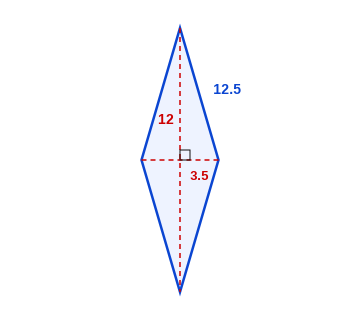
The diagonals of a rhombus are 7 cm and 24 cm. Find the perimeter of the rhombus.
एक समचतुर्भुज के विकर्ण 7 cm और 24 cm हैं। समचतुर्भुज का परिमाप ज्ञात कीजिए।
  1. A50 cm
  2. B25 cm
  3. C30 cm
  4. D40 cm
Show answer

Concept: Diagonals of a rhombus bisect each other at right angles.

  1. Half-diagonals: 3.5 cm and 12 cm.
  2. Side = 3.52+122=12.25+144=156.25=12.5 cm.
  3. Perimeter = 4 × 12.5 = 50 cm.

Short trick: Perimeter = 2d12+d22=249+576=2×25=50 (7-24-25 triplet).

Answer: (A) 50 cm

अवधारणा: समचतुर्भुज के विकर्ण एक-दूसरे को समकोण पर समद्विभाजित करते हैं।

  1. आधे विकर्ण: 3.5 cm और 12 cm.
  2. भुजा = 3.52+122=156.25=12.5 cm.
  3. परिमाप = 4 × 12.5 = 50 cm.

शॉर्ट ट्रिक: परिमाप = 2d12+d22=249+576=2×25=50 (7-24-25 त्रिक)।

उत्तर: (A) 50 cm

RRB ALP CBT 1MathematicsRhombus – diagonals and sideRRB ALP CBT 1 2025 · 11 Mar Shift 1 →
Q759.
A tap can fill a tank in 48 minutes, whereas another tap can empty it in 2 hours. If both the taps are opened at 11:40 A.M., at what time will the tank be filled?
एक नल एक टंकी को 48 मिनट में भर सकता है, जबकि दूसरा नल उसे 2 घंटे में खाली कर सकता है। यदि दोनों नल पूर्वाह्न 11:40 बजे खोले जाते हैं, तो टंकी किस समय भरेगी?
  1. A1:35 P.M.अपराह्न 1:35
  2. B1:00 P.M.अपराह्न 1:00
  3. C1:30 P.M.अपराह्न 1:30
  4. D12:40 P.M.अपराह्न 12:40
Show answer

Concept: Net rate = filling rate − emptying rate.

  1. Net per minute = 148−1120=5−2240=180.
  2. Time = 80 min = 1 h 20 min → 11:40 A.M. + 1:20 = 1:00 P.M.

Short trick: Time = abb−a=48×12072=80 min.

Answer: (B) 1:00 P.M.

अवधारणा: शुद्ध दर = भरने की दर − खाली करने की दर।

  1. प्रति मिनट शुद्ध = 148−1120=5−2240=180.
  2. समय = 80 मिनट = 1 घं 20 मि → 11:40 + 1:20 = अपराह्न 1:00.

शॉर्ट ट्रिक: समय = abb−a=48×12072=80 मिनट।

उत्तर: (B) अपराह्न 1:00

RRB ALP CBT 1MathematicsPipes and cisternsRRB ALP CBT 1 2025 · 11 Mar Shift 1 →
Q760.
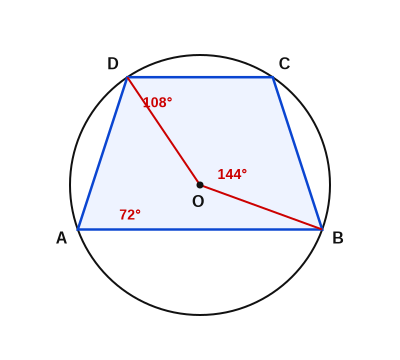
O is the centre of the circle and ABCD is a cyclic quadrilateral in which AB and DC are parallel. If ∠DAB = 72°, then what is the ratio of ∠ADC to obtuse ∠DOB?
O वृत्त का केंद्र है और ABCD एक चक्रीय चतुर्भुज है जिसमें AB और DC समांतर हैं। यदि ∠DAB = 72° है, तो ∠ADC और अधिक कोण ∠DOB का अनुपात क्या है?
  1. A3:4
  2. B2:3
  3. C6:5
  4. D5:4
Show answer

Concept: Opposite angles of a cyclic quadrilateral are supplementary; central angle = 2 × inscribed angle.

  1. AB ∥ DC ⇒ co-interior angles: ∠ADC = 180° − 72° = 108°.
  2. Arc DCB subtends ∠DAB = 72° at A ⇒ ∠DOB = 2 × 72° = 144° (obtuse).
  3. Ratio = 108 : 144 = 3 : 4.

Short trick: (180 − x) : 2x = 108 : 144; divide by 36 → 3 : 4.

Answer: (A) 3:4

अवधारणा: चक्रीय चतुर्भुज के सम्मुख कोण संपूरक; केंद्रीय कोण = 2 × परिधि कोण।

  1. AB ∥ DC ⇒ ∠ADC = 180° − 72° = 108°.
  2. चाप DCB, A पर ∠DAB = 72° बनाता है ⇒ ∠DOB = 2 × 72° = 144° (अधिक कोण)।
  3. अनुपात = 108 : 144 = 3 : 4.

शॉर्ट ट्रिक: (180 − x) : 2x = 108 : 144; 36 से भाग → 3 : 4.

उत्तर: (A) 3:4

RRB ALP CBT 1MathematicsCircle – cyclic quadrilateralRRB ALP CBT 1 2025 · 11 Mar Shift 1 →