Question bank

Q&A: practice questions with answers

Search questions on any topic. Filter by exam category, exam, subject and topic, try the question, then open the answer and explanation.

Courses – airGurukul

20,719 questions found.

Q7901.
In a certain code language, ‘PEAR’ is coded as ‘7481’ and ‘DEAR’ is coded as ‘7154’. What is the code for ‘D’ in the given code language?
एक निश्चित कूट भाषा में, ‘PEAR’ को ‘7481’ के रूप में कूटबद्ध किया जाता है और ‘DEAR’ को ‘7154’ के रूप में कूटबद्ध किया जाता है। उस कूट भाषा में ‘D’ का कूट क्या है?
  1. A7
  2. B4
  3. C1
  4. D5
Show answer

Concept: Common letters share common digits.

  1. PEAR = {7, 4, 8, 1}; DEAR = {7, 1, 5, 4}.
  2. Common letters E, A, R ↔ common digits 7, 4, 1.
  3. Left over: P = 8 and D = 5.

Trick: Cancel the common part; the leftover letter takes the leftover digit.

Answer: (D) 5

अवधारणा: समान अक्षरों के समान अंक होते हैं।

  1. PEAR = {7, 4, 8, 1}; DEAR = {7, 1, 5, 4}।
  2. समान अक्षर E, A, R ↔ समान अंक 7, 4, 1।
  3. बचे हुए: P = 8 और D = 5।

ट्रिक: साझा भाग हटाएँ; बचा अक्षर = बचा अंक।

उत्तर: (D) 5
RRB NTPC Graduate CBT 1General Intelligence and ReasoningCoding–DecodingRRB NTPC Graduate CBT 1 2024 · 19 Jun Shift 1 →
Q7902.
A group of numbers and symbols is coded using letter codes as per the codes given below and the conditions that follow. Study the given codes and conditions and answer the question that follows.
Note: If none of the conditions apply, then codes for the respective number/symbol to be followed directly as given in the table.
Number/Symbol3#8$7&6*4^2
CodeBSDFGHJKLPR
Conditions:
i) If the first element is a symbol and the last a number, the codes for these two (the first and the last elements) are to be interchanged.
ii) If the first element is an odd number and the last an even number, the first and last elements are to be coded as ©.
iii) If both the second and third elements are perfect squares, then the code of the second element will be the code for the third element.
What will be the code for the following group?
849@
संख्याओं और प्रतीकों के एक समूह को नीचे दिए गए कूटों और उसके बाद दी गई शर्तों के अनुसार अक्षर कूटों का उपयोग करके कूटबद्ध किया गया है। दिए गए कूटों और शर्तों का अध्ययन कीजिए और उसके बाद दिए गए प्रश्न का उत्तर दीजिए।
नोट: यदि कोई भी शर्त लागू नहीं होती है, तो संबंधित संख्या/प्रतीक के लिए तालिका में दिए गए कूटों का सीधे अनुसरण किया जाना है।
संख्या/प्रतीक3#8$7&6*4^2
कूटBSDFGHJKLPR
शर्तें:
i) यदि पहला अवयव एक प्रतीक है और अंतिम अवयव एक संख्या है, तो इन दोनों (पहले और अंतिम अवयवों) के कूट आपस में बदल दिए जाएँगे।
ii) यदि पहला अवयव एक विषम संख्या है और अंतिम अवयव एक सम संख्या है, तो पहले और अंतिम दोनों अवयवों को © के रूप में कूटबद्ध किया जाएगा।
iii) यदि दूसरा और तीसरा दोनों अवयव पूर्ण वर्ग हैं, तो दूसरे अवयव का कूट ही तीसरे अवयव का कूट होगा।
निम्नलिखित समूह का कूट क्या होगा?
849@
  1. ADLUC
  2. BCLUD
  3. CDULC
  4. DDLLC
Show answer

Concept: Check each condition on the group 849@, then code.

  1. Codes: 8 = D, 4 = L, 9 = U, @ = C → plain code DLUC.
  2. (i) First element 8 is a number, not a symbol ✗. (ii) First element 8 is even ✗.
  3. (iii) Second (4 =22) and third (9 =32) are both perfect squares ✓ → code of 9 becomes code of 4, i.e. L.
  4. Final code: D L L C.

Trick: Check conditions in order; only (iii) applies here.

Answer: (D) DLLC

अवधारणा: समूह 849@ पर हर शर्त जाँचें, फिर कोड लिखें।

  1. कोड: 8 = D, 4 = L, 9 = U, @ = C → सामान्य कोड DLUC।
  2. (i) पहला तत्व 8 संख्या है, प्रतीक नहीं ✗। (ii) पहला तत्व 8 सम है ✗।
  3. (iii) दूसरा (4 =22) और तीसरा (9 =32) दोनों पूर्ण वर्ग ✓ → 9 का कोड = 4 का कोड, यानी L।
  4. अंतिम कोड: D L L C।

ट्रिक: शर्तें क्रम से जाँचें; यहाँ केवल (iii) लागू है।

उत्तर: (D) DLLC

RRB NTPC Graduate CBT 1General Intelligence and ReasoningCoding with ConditionsRRB NTPC Graduate CBT 1 2024 · 19 Jun Shift 1 →
Q7903.
A group of numbers and symbols is coded using letter codes as per the codes given below and the conditions that follow. Study the given codes and conditions and answer the question that follows.
Note: If none of the conditions apply, then codes for the respective number/symbol are to be followed directly as given in the table.
Number/Symbol3#4$7&6*8^2
CodeHAJBKCLDMEN
Conditions:
i) If the first element is a symbol and the last a number, the codes for these two (the first and the last elements) are to be interchanged.
ii) If the first element is an odd number and the last an even number, the first and last elements are to be coded as ©.
iii) If both the second and third elements are perfect cubes, the code of the second element will be the code of third element.
What will be the code for the following group?
3$72
संख्याओं और प्रतीकों के एक समूह को नीचे दिए गए कूटों और उसके बाद दी गई शर्तों के अनुसार अक्षर कूटों का उपयोग करके कूटबद्ध किया गया है। दिए गए कूटों और शर्तों का अध्ययन कीजिए और उसके बाद दिए गए प्रश्न का उत्तर दीजिए।
नोट: यदि कोई भी शर्त लागू नहीं होती है, तो संबंधित संख्या/प्रतीक के लिए तालिका में दिए गए कूटों का सीधे अनुसरण किया जाना है।
संख्या/प्रतीक3#4$7&6*8^2
कूटHAJBKCLDMEN
शर्तें:
i) यदि पहला अवयव एक प्रतीक है और अंतिम अवयव एक संख्या है, तो इन दोनों (पहले और अंतिम अवयवों) के कूट आपस में बदल दिए जाएँगे।
ii) यदि पहला अवयव एक विषम संख्या है और अंतिम अवयव एक सम संख्या है, तो पहले और अंतिम दोनों अवयवों को © के रूप में कूटबद्ध किया जाएगा।
iii) यदि दूसरा और तीसरा दोनों अवयव पूर्ण घन हैं, तो दूसरे अवयव का कूट ही तीसरे अवयव का कूट होगा।
निम्नलिखित समूह का कूट क्या होगा?
3$72
  1. ANBKH
  2. B©BK©
  3. CHBKN
  4. DHKB©
Show answer

Concept: Check each condition on the group 3$72, then code.

  1. Plain codes: 3 = H, $ = B, 7 = K, 2 = N → HBKN.
  2. (i) First element 3 is a number, not a symbol ✗.
  3. (ii) First element 3 is odd and last element 2 is even ✓ → both coded as ©.
  4. (iii) $ and 7 are not perfect cubes ✗. Final code: © B K ©.

Trick: Odd-first + even-last → both ends become ©.

Answer: (B) ©BK©

अवधारणा: समूह 3$72 पर हर शर्त जाँचें, फिर कोड लिखें।

  1. सामान्य कोड: 3 = H, $ = B, 7 = K, 2 = N → HBKN।
  2. (i) पहला तत्व 3 संख्या है, प्रतीक नहीं ✗।
  3. (ii) पहला तत्व 3 विषम और अंतिम 2 सम ✓ → दोनों का कोड ©।
  4. (iii) $ और 7 पूर्ण घन नहीं ✗। अंतिम कोड: © B K ©।

ट्रिक: पहला विषम + अंतिम सम → दोनों सिरे ©।

उत्तर: (B) ©BK©

RRB NTPC Graduate CBT 1General Intelligence and ReasoningCoding with ConditionsRRB NTPC Graduate CBT 1 2024 · 19 Jun Shift 1 →
Q7904.
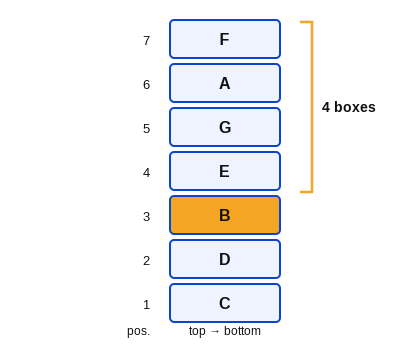
Seven boxes, A, B, C, D, E, F and G, are kept one over the other, but not necessarily in the same order. No box is kept above F. Only three boxes are kept between F and B. Only one box is kept between A and E. E is kept immediately above B. Only four boxes are kept between A and C. G is kept at some place above D. How many boxes are kept above B?
सात बक्से, A, B, C, D, E, F और G, एक के ऊपर एक रखे गए हैं, लेकिन ज़रूरी नहीं कि इसी क्रम में हों। F के ऊपर कोई बक्सा नहीं रखा है। F और B के बीच केवल तीन बक्से रखे हैं। A और E के बीच केवल एक बक्सा रखा है। E को B के ठीक ऊपर रखा गया है। A और C के बीच केवल चार बक्से रखे हैं। G को D के ऊपर किसी स्थान पर रखा गया है। B के ऊपर कितने बक्से रखे हैं?
  1. A2
  2. B4
  3. C3
  4. D1
Show answer

Concept: Number positions 1 (bottom) to 7 (top) and place fixed boxes first.

  1. No box above F → F = 7. Three between F and B → B = 3; E just above B → E = 4.
  2. One between A and E → A = 2 or 6; four between A and C → A = 6, C = 1.
  3. G above D in remaining 5 and 2 → G = 5, D = 2.
  4. Above B: F, A, G, E = 4 boxes.

Trick: Fix the top/bottom box first; 'n between' means positions differ by n+1.

Answer: (B) 4

अवधारणा: स्थान 1 (नीचे) से 7 (ऊपर) मानें, पहले निश्चित बॉक्स रखें।

  1. F के ऊपर कोई नहीं → F = 7। F और B के बीच तीन → B = 3; E ठीक B के ऊपर → E = 4।
  2. A और E के बीच एक → A = 2 या 6; A और C के बीच चार → A = 6, C = 1।
  3. शेष 5 और 2 में G, D के ऊपर → G = 5, D = 2।
  4. B के ऊपर: F, A, G, E = 4 बॉक्स।

ट्रिक: पहले सबसे ऊपर/नीचे वाला बॉक्स तय करें; 'n बीच में' = स्थानों का अंतर n+1।

उत्तर: (B) 4

RRB NTPC Graduate CBT 1General Intelligence and ReasoningBox ArrangementRRB NTPC Graduate CBT 1 2024 · 19 Jun Shift 1 →
Q7905.
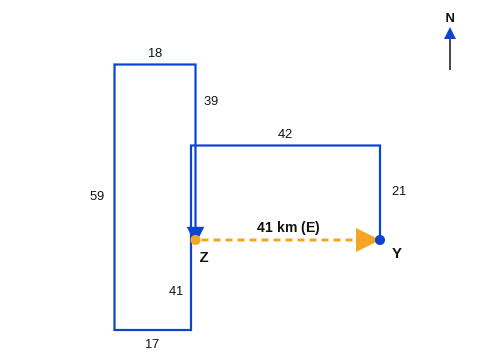
Ishan starts from Point Y and drives 21 km towards the north. He then takes a left turn, drives 42 km, turns left and drives 41 km. He then takes a right turn and drives 17 km. He takes a right turn, drives 59 km. He then turns right, drives 18 km, turns right and drives 39 km to stop at Point Z. How far (shortest distance) and towards which direction should he drive in order to reach Point Y again? (All turns are 90-degree turns only unless specified.)
ईशान बिंदु Y से चलना शुरू करता है और उत्तर की ओर 21 km ड्राइव करता है। फिर वह बाएँ मुड़ता है, 42 km ड्राइव करता है, बाएँ मुड़ता है और 41 km ड्राइव करता है। फिर वह दाएँ मुड़ता है और 17 km ड्राइव करता है। वह दाएँ मुड़ता है, 59 km ड्राइव करता है। फिर वह दाएँ मुड़ता है, 18 km ड्राइव करता है, दाएँ मुड़ता है और 39 km ड्राइव करके बिंदु Z पर रुक जाता है। बिंदु Y पर फिर से पहुँचने के लिए उसे कितनी दूरी (न्यूनतम दूरी) तक और किस दिशा में ड्राइव करना चाहिए? (जब तक निर्दिष्ट न किया जाए, सभी मोड़ केवल 90 डिग्री के मोड़ हैं।)
  1. A39 km towards the eastपूर्व की ओर 39 km
  2. B43 km towards the westपश्चिम की ओर 43 km
  3. C45 km towards the southदक्षिण की ओर 45 km
  4. D41 km towards the eastपूर्व की ओर 41 km
Show answer

Concept: Track net east–west and north–south movement.

  1. North–south: +21−41+59−39=0 → Z is on the same line as Y.
  2. East–west: west 42+17=59, east 18 → net 41 km west.
  3. So Z is 41 km west of Y; to return he drives 41 km east.

Trick: Add all N/S and all E/W legs separately; turns don't matter after that.

Answer: (D) 41 km towards the east

अवधारणा: कुल पूर्व–पश्चिम और उत्तर–दक्षिण गति निकालें।

  1. उत्तर–दक्षिण: +21−41+59−39=0 → Z, Y की ही रेखा पर है।
  2. पूर्व–पश्चिम: पश्चिम 42+17=59, पूर्व 18 → शुद्ध 41 km पश्चिम।
  3. अतः Z, Y से 41 km पश्चिम है; लौटने के लिए 41 km पूर्व जाना होगा।

ट्रिक: सभी उत्तर/दक्षिण और पूर्व/पश्चिम दूरियाँ अलग-अलग जोड़ें।

उत्तर: (D) 41 km पूर्व की ओर

RRB NTPC Graduate CBT 1General Intelligence and ReasoningDirection and DistanceRRB NTPC Graduate CBT 1 2024 · 19 Jun Shift 1 →
Q7906.
What should come in place of the question mark (?) in the given series?
713 715 720 722 727 729 ?
दी गई श्रृंखला में प्रश्न चिह्न (?) के स्थान पर क्या आना चाहिए?
713 715 720 722 727 729 ?
  1. A739
  2. B734
  3. C731
  4. D736
Show answer

Concept: Look at alternating differences.

  1. Differences: +2,+5,+2,+5,+2.
  2. Next is +5: 729+5=734.

Trick: Two alternating steps → continue the cycle.

Answer: (B) 734

अवधारणा: बारी-बारी से आने वाले अंतर देखें।

  1. अंतर: +2,+5,+2,+5,+2।
  2. अगला +5: 729+5=734।

ट्रिक: दो बदलते चरण → चक्र जारी रखें।

उत्तर: (B) 734

RRB NTPC Graduate CBT 1General Intelligence and ReasoningNumber SeriesRRB NTPC Graduate CBT 1 2024 · 19 Jun Shift 1 →
Q7907.
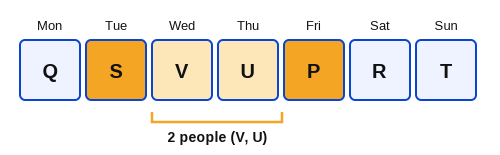
Each of P, Q, R, S, T, U and V has an exam on a different day of a week starting from Monday and ending on Sunday of the same week. Q has the exam on Monday. P has the exam before R. Only two people have exams between U and Q. V has the exam immediately before U but after S. R has the exam before T.
How many people have exams between P and S?
P, Q, R, S, T, U और V में से प्रत्येक की परीक्षा एक ही सप्ताह के सोमवार से शुरू होकर रविवार को समाप्त होने वाले सप्ताह के अलग-अलग दिन है। Q की परीक्षा सोमवार को है। P की परीक्षा R से पहले है। U और Q के बीच केवल दो व्यक्तियों की परीक्षा है। V की परीक्षा U से ठीक पहले लेकिन S के बाद है। R की परीक्षा T से पहले है।
P और S के बीच कितने व्यक्तियों की परीक्षा है?
  1. ATwoदो
  2. BThreeतीन
  3. CFiveपाँच
  4. DFourचार
Show answer

Concept: Place the fixed day first, then chain the clues.

  1. Q = Mon; two between U and Q → U = Thu.
  2. V immediately before U → V = Wed; S before V → S = Tue.
  3. P, R, T in Fri, Sat, Sun with P before R before T → P = Fri, R = Sat, T = Sun.
  4. Between S (Tue) and P (Fri): V, U = two.

Trick: Chain clues (S → V → U) fill most slots at once.

Answer: (A) Two

अवधारणा: पहले निश्चित दिन रखें, फिर संकेतों को जोड़ें।

  1. Q = सोमवार; U और Q के बीच दो → U = गुरुवार।
  2. V ठीक U से पहले → V = बुधवार; S, V से पहले → S = मंगलवार।
  3. P, R, T शुक्र, शनि, रवि में; P < R < T → P = शुक्र, R = शनि, T = रवि।
  4. S (मंगल) और P (शुक्र) के बीच: V, U = दो।

ट्रिक: शृंखला वाले संकेत (S → V → U) एक साथ कई स्थान भर देते हैं।

उत्तर: (A) दो

RRB NTPC Graduate CBT 1General Intelligence and ReasoningScheduling PuzzleRRB NTPC Graduate CBT 1 2024 · 19 Jun Shift 1 →
Q7908.
Select the letter-cluster from among the given options that can replace the question mark (?) in the following series.
ETQ IQO MNM QKK ?
दिए गए विकल्पों में से उस अक्षर-समूह का चयन कीजिए जो निम्नलिखित श्रृंखला में प्रश्न चिह्न (?) का स्थान ले सकता है।
ETQ IQO MNM QKK ?
  1. AUHI
  2. BUHJ
  3. CUII
  4. DUJJ
Show answer

Concept: Track each letter position separately.

  1. 1st letters: E, I, M, Q → +4 → U.
  2. 2nd letters: T, Q, N, K → −3 → H.
  3. 3rd letters: Q, O, M, K → −2 → I.

Trick: Split the clusters into three columns and find each column's step.

Answer: (A) UHI

अवधारणा: हर स्थान के अक्षर अलग-अलग देखें।

  1. पहले अक्षर: E, I, M, Q → +4 → U।
  2. दूसरे अक्षर: T, Q, N, K → −3 → H।
  3. तीसरे अक्षर: Q, O, M, K → −2 → I।

ट्रिक: समूहों को तीन स्तंभों में बाँटें, हर स्तंभ का चरण निकालें।

उत्तर: (A) UHI

RRB NTPC Graduate CBT 1General Intelligence and ReasoningLetter SeriesRRB NTPC Graduate CBT 1 2024 · 19 Jun Shift 1 →
Q7909.
Which of the following letter-number clusters will replace the question mark (?) in the given series to make it logically complete?
FKN17 GLO28 HMP39 INQ50 ?
निम्नलिखित में से कौन-सा अक्षर-संख्या समूह दी गई श्रृंखला को तार्किक रूप से पूर्ण करने के लिए प्रश्न चिह्न (?) का स्थान लेगा?
FKN17 GLO28 HMP39 INQ50 ?
  1. AJOR61
  2. BJOS61
  3. CJOR60
  4. DJOS60
Show answer

Concept: Each part follows its own step.

  1. Letters: F→G→H→I→J, K→L→M→N→O, N→O→P→Q→R (each +1).
  2. Numbers: 17, 28, 39, 50 → +11 → 61.
  3. Next term: JOR61.

Trick: Third letter after Q is R (not S) — options test exactly this.

Answer: (A) JOR61

अवधारणा: हर भाग का अपना चरण है।

  1. अक्षर: F→G→H→I→J, K→L→M→N→O, N→O→P→Q→R (हर बार +1)।
  2. संख्याएँ: 17, 28, 39, 50 → +11 → 61।
  3. अगला पद: JOR61।

ट्रिक: Q के बाद R आता है (S नहीं) — विकल्प इसी को परखते हैं।

उत्तर: (A) JOR61

RRB NTPC Graduate CBT 1General Intelligence and ReasoningLetter-Number SeriesRRB NTPC Graduate CBT 1 2024 · 19 Jun Shift 1 →
Q7910.
Refer to the following number and symbol series and answer the question that follows. Counting to be done from left to right only.
(NOTE: All numbers are single digit numbers only.)
(Left) 1 $ @ % 1 4 3 * # 6 3 4 £ % 2 @ 6 % 8 % 9 $ (Right)
How many such numbers are there each of which is immediately preceded by a symbol and also immediately followed by a symbol?
निम्नलिखित संख्या और प्रतीक श्रृंखला को देखिए और उसके बाद दिए गए प्रश्न का उत्तर दीजिए। गिनती केवल बाएँ से दाएँ की जानी है।
(नोट: सभी संख्याएँ केवल एक अंक वाली संख्याएँ हैं।)
(बाएँ) 1 $ @ % 1 4 3 * # 6 3 4 £ % 2 @ 6 % 8 % 9 $ (दाएँ)
ऐसी कितनी संख्याएँ हैं, जिनमें से प्रत्येक के ठीक पहले एक प्रतीक है और ठीक बाद भी एक प्रतीक है?
  1. A3
  2. B5
  3. C6
  4. D4
Show answer

Concept: Check every number: symbol on both sides?

  1. Pattern symbol–number–symbol occurs at: % 2 @, @ 6 %, % 8 %, % 9 $.
  2. Others fail, e.g. # 6 3 and % 1 4 (a number on one side).
  3. Count =4.

Trick: Scan only the stretch where numbers are isolated (here the end of the series).

Answer: (D) 4

अवधारणा: हर संख्या जाँचें: दोनों ओर प्रतीक है या नहीं?

  1. प्रतीक–संख्या–प्रतीक का क्रम: % 2 @, @ 6 %, % 8 %, % 9 $।
  2. बाकी जैसे # 6 3 और % 1 4 में एक ओर संख्या है।
  3. कुल =4।

ट्रिक: केवल वहाँ देखें जहाँ संख्याएँ अकेली हैं (यहाँ श्रृंखला का अंत)।

उत्तर: (D) 4

RRB NTPC Graduate CBT 1General Intelligence and ReasoningSymbol–Number SeriesRRB NTPC Graduate CBT 1 2024 · 19 Jun Shift 1 →
Q7911.
Select the pair that follows the same pattern as that followed by the two pairs given below. Both pairs follow the same pattern.
TJR : PKT
DHQ : ZIS
उस युग्म का चयन कीजिए जो उसी पैटर्न का अनुसरण करता है, जिसका अनुसरण नीचे दिए गए दोनों युग्म करते हैं। दोनों युग्म एक ही पैटर्न का अनुसरण करते हैं।
TJR : PKT
DHQ : ZIS
  1. AXBG : TCI
  2. BEMT : CQX
  3. CKOS : IQV
  4. DCRJ : BTN
Show answer

Concept: Find the shift for each letter position.

  1. TJR→PKT: T−4=P, J+1=K, R+2=T. DHQ→ZIS: D−4=Z, H+1=I, Q+2=S.
  2. Rule: −4,+1,+2.
  3. XBG→TCI: X−4=T, B+1=C, G+2=I ✓

Trick: Check the first letter's −4 to eliminate options fast (EMT→C is −2, KOS→I is −2, CRJ→B is −1).

Answer: (A) XBG : TCI

अवधारणा: हर स्थान के अक्षर का खिसकाव निकालें।

  1. TJR→PKT: T−4=P, J+1=K, R+2=T। DHQ→ZIS: D−4=Z, H+1=I, Q+2=S।
  2. नियम: −4,+1,+2।
  3. XBG→TCI: X−4=T, B+1=C, G+2=I ✓

ट्रिक: पहले अक्षर का −4 जाँचकर तेजी से विकल्प हटाएँ (E→C −2, K→I −2, C→B −1)।

उत्तर: (A) XBG : TCI

RRB NTPC Graduate CBT 1General Intelligence and ReasoningLetter AnalogyRRB NTPC Graduate CBT 1 2024 · 19 Jun Shift 1 →
Q7912.
In a certain code language,
'A + B' means ‘A is the sister of B’
'A – B' means ‘A is the father of B’
'A x B' means ‘A is the wife of B’
'A ÷ B' means ‘A is the son of B’
Based on the above, how is P related to T if ‘P x Q ÷ R – S + T’?
एक निश्चित कूट भाषा में,
'A + B' का अर्थ है ‘A, B की बहन है’
'A – B' का अर्थ है ‘A, B का पिता है’
'A x B' का अर्थ है ‘A, B की पत्नी है’
'A ÷ B' का अर्थ है ‘A, B का पुत्र है’
उपर्युक्त के आधार पर, यदि ‘P x Q ÷ R – S + T’ है, तो P, T से किस प्रकार संबंधित है?
  1. ABrother's wifeभाई की पत्नी
  2. BSister's daughterबहन की पुत्री
  3. CSon's wife's sisterपुत्र की पत्नी की बहन
  4. DBrother's son's wifeभाई के पुत्र की पत्नी
Show answer

Concept: Decode each symbol and draw the family tree.

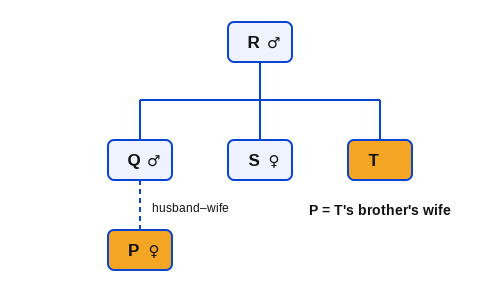
  1. P × Q: P is wife of Q. Q ÷ R: Q is son of R.
  2. R – S: R is father of S. S + T: S is sister of T → Q, S, T are children of R.
  3. Q is T's brother, and P is Q's wife.

Trick: Decode left to right and keep genders (Q male, P female) in the tree.

Answer: (A) Brother's wife

अवधारणा: हर चिह्न को डिकोड कर परिवार वृक्ष बनाएँ।

  1. P × Q: P, Q की पत्नी है। Q ÷ R: Q, R का पुत्र है।
  2. R – S: R, S का पिता है। S + T: S, T की बहन है → Q, S, T तीनों R की संतान।
  3. Q, T का भाई है और P, Q की पत्नी है।

ट्रिक: बाएँ से दाएँ डिकोड करें और लिंग (Q पुरुष, P महिला) वृक्ष में लिखें।

उत्तर: (A) भाई की पत्नी

RRB NTPC Graduate CBT 1General Intelligence and ReasoningBlood Relations – CodedRRB NTPC Graduate CBT 1 2024 · 19 Jun Shift 1 →
Q7913.
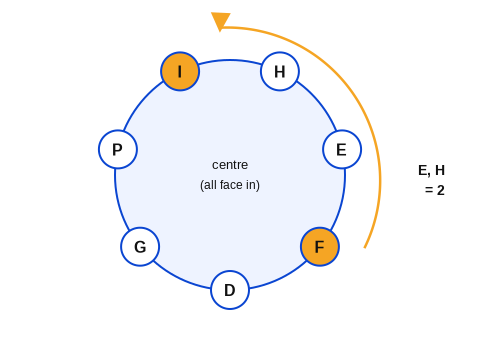
D, E, F, G, H, I and P are sitting around a circular table facing the centre of the table. Only four people sit between D and P when counted from the right of D. D sits third to the left of H. G sits third to the left of E. I is an immediate neighbour of both P and H. How many people sit between F and I when counted from the right of F?
D, E, F, G, H, I और P एक वृत्ताकार मेज़ के चारों ओर मेज़ के केंद्र की ओर मुख करके बैठे हैं। D के दाएँ से गिनने पर D और P के बीच केवल चार व्यक्ति बैठे हैं। D, H के बाएँ से तीसरे स्थान पर बैठा है। G, E के बाएँ से तीसरे स्थान पर बैठा है। I, P और H दोनों का निकटतम पड़ोसी है। F के दाएँ से गिनने पर F और I के बीच कितने व्यक्ति बैठे हैं?
  1. AOneएक
  2. BFourचार
  3. CThreeतीन
  4. DTwoदो
Show answer

Concept: Facing the centre: moving to the right = anticlockwise.

  1. Fix D. Four between D and P from D's right → P is 5th to the right of D. D third to the left of H → H is 3rd to the right of D.
  2. I is between P and H → I is 4th to the right of D.
  3. Remaining seats 1, 2, 6 (right of D): G third to the left of E works only for E = 2, G = 6; so F = 1.
  4. From F's right: E, H, then I → two people.

Trick: Write positions as numbers to the right of D; 'third to the left' = subtract 3.

Answer: (D) Two

अवधारणा: केंद्र की ओर मुख: दाईं ओर जाना = वामावर्त (anticlockwise)।

  1. D को स्थिर करें। D के दाएँ से गिनने पर D और P के बीच चार → P, D के दाएँ 5वाँ। D, H के बाएँ तीसरा → H, D के दाएँ तीसरा।
  2. I, P और H दोनों का पड़ोसी → I, D के दाएँ चौथा।
  3. शेष स्थान 1, 2, 6: G, E के बाएँ तीसरा केवल E = 2, G = 6 पर सही → F = 1।
  4. F के दाएँ से: E, H, फिर I → दो व्यक्ति।

ट्रिक: D के दाएँ स्थानों को संख्या से लिखें; 'बाएँ तीसरा' = 3 घटाएँ।

उत्तर: (D) दो

RRB NTPC Graduate CBT 1General Intelligence and ReasoningCircular Seating ArrangementRRB NTPC Graduate CBT 1 2024 · 19 Jun Shift 1 →
Q7914.
Read the given statements and conclusions carefully. Assuming that the information given in the statements is true, even if it appears to be at variance with commonly known facts, decide which of the given conclusion(s) logically follow(s) from the statements.
Statements:
All sweater are jacket.
All sweater are coat.
All coat are blazer.
Conclusions:
(I) All sweater are blazer.
(II) Some coat are jacket.
दिए गए कथनों और निष्कर्षों को ध्यानपूर्वक पढ़िए। यह मानते हुए कि कथनों में दी गई जानकारी सत्य है, भले ही वह सामान्यतः ज्ञात तथ्यों से भिन्न प्रतीत होती हो, निर्णय कीजिए कि दिए गए निष्कर्षों में से कौन-सा/कौन-से निष्कर्ष कथनों का तार्किक रूप से अनुसरण करता है/करते हैं।
कथन:
सभी स्वेटर, जैकेट हैं।
सभी स्वेटर, कोट हैं।
सभी कोट, ब्लेज़र हैं।
निष्कर्ष:
(I) सभी स्वेटर, ब्लेज़र हैं।
(II) कुछ कोट, जैकेट हैं।
  1. AOnly conclusion (I) followsकेवल निष्कर्ष (I) अनुसरण करता है
  2. BNeither conclusion (I) nor (II) followsन तो निष्कर्ष (I) और न ही (II) अनुसरण करता है
  3. CBoth conclusions (I) and (II) followनिष्कर्ष (I) और (II) दोनों अनुसरण करते हैं
  4. DOnly conclusion (II) followsकेवल निष्कर्ष (II) अनुसरण करता है
Show answer

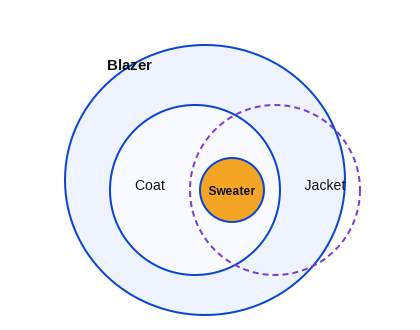
Concept: Draw the minimum-overlap Venn diagram.

  1. Sweater ⊂ Coat ⊂ Blazer → All sweater are blazer: (I) follows.
  2. Sweater lies inside both Coat and Jacket, so the coats that are sweaters are jackets → Some coat are jacket: (II) follows.

Trick: Two 'All' statements with the same subject (sweater) always give 'Some' between their predicates.

Answer: (C) Both conclusions (I) and (II) follow

अवधारणा: न्यूनतम अतिव्यापन वाला वेन आरेख बनाएँ।

  1. स्वेटर ⊂ कोट ⊂ ब्लेज़र → सभी स्वेटर ब्लेज़र हैं: (I) अनुसरण करता है।
  2. स्वेटर, कोट और जैकेट दोनों के अंदर है, अतः जो कोट स्वेटर हैं वे जैकेट भी हैं → कुछ कोट जैकेट हैं: (II) अनुसरण करता है।

ट्रिक: एक ही उद्देश्य (स्वेटर) वाले दो 'सभी' कथन, उनके विधेयों में 'कुछ' संबंध देते हैं।

उत्तर: (C) निष्कर्ष (I) और (II) दोनों अनुसरण करते हैं

RRB NTPC Graduate CBT 1General Intelligence and ReasoningSyllogismRRB NTPC Graduate CBT 1 2024 · 19 Jun Shift 1 →
Q7915.
Select the pair that follows the same pattern as that followed by the two pairs given below. Both pairs follow the same pattern.
BGM : DEK
SVL : UTJ
उस युग्म का चयन कीजिए जो उसी पैटर्न का अनुसरण करता है, जिसका अनुसरण नीचे दिए गए दोनों युग्म करते हैं। दोनों युग्म एक ही पैटर्न का अनुसरण करते हैं।
BGM : DEK
SVL : UTJ
  1. AHXF : LTB
  2. BGOU : KMQ
  3. CEKX : GIV
  4. DIMZ : MIW
Show answer

Concept: Find the shift for each letter position.

  1. BGM→DEK: B+2=D, G−2=E, M−2=K. SVL→UTJ: +2,−2,−2.
  2. EKX→GIV: E+2=G, K−2=I, X−2=V ✓
  3. Others start with +4 (H→L, G→K, I→M).

Trick: First letter +2 alone eliminates three options.

Answer: (C) EKX : GIV

अवधारणा: हर स्थान के अक्षर का खिसकाव निकालें।

  1. BGM→DEK: B+2=D, G−2=E, M−2=K। SVL→UTJ: +2,−2,−2।
  2. EKX→GIV: E+2=G, K−2=I, X−2=V ✓
  3. बाकी विकल्पों में पहला अक्षर +4 (H→L, G→K, I→M)।

ट्रिक: केवल पहले अक्षर का +2 देखकर तीन विकल्प हट जाते हैं।

उत्तर: (C) EKX : GIV

RRB NTPC Graduate CBT 1General Intelligence and ReasoningLetter AnalogyRRB NTPC Graduate CBT 1 2024 · 19 Jun Shift 1 →
Q7916.
If 1 is added to each odd digit and 2 is subtracted from each even digit in the number 7134856, which of the following digits will be second from the left in the new number thus formed?
यदि संख्या 7134856 में प्रत्येक विषम अंक में 1 जोड़ा जाए और प्रत्येक सम अंक में से 2 घटाया जाए, तो इस प्रकार बनी नई संख्या में बाएँ से दूसरा अंक निम्नलिखित में से कौन-सा होगा?
  1. A3
  2. B2
  3. C4
  4. D1
Show answer

Concept: Change every digit by the given rule, then read the required position.

  1. Odd digits (7, 1, 3, 5) get +1: 7→8, 1→2, 3→4, 5→6.
  2. Even digits (4, 8, 6) get −2: 4→2, 8→6, 6→4.
  3. 7134856 becomes 8 2 4 2 6 6 4.
  4. Second digit from the left = 2.

Trick: Only convert the first two digits: 7→8, 1→2 – done in seconds.

Answer: (B) 2

अवधारणा: हर अंक को नियम के अनुसार बदलें, फिर माँगा गया स्थान पढ़ें।

  1. विषम अंक (7, 1, 3, 5) में +1: 7→8, 1→2, 3→4, 5→6।
  2. सम अंक (4, 8, 6) में −2: 4→2, 8→6, 6→4।
  3. 7134856 बन जाता है 8 2 4 2 6 6 4।
  4. बाएँ से दूसरा अंक = 2।

ट्रिक: केवल पहले दो अंक बदलें: 7→8, 1→2 – उत्तर तुरंत।

उत्तर: (B) 2

RRB NTPC Graduate CBT 1General Intelligence and ReasoningDigit operationsRRB NTPC Graduate CBT 1 2024 · 19 Jun Shift 1 →
Q7917.
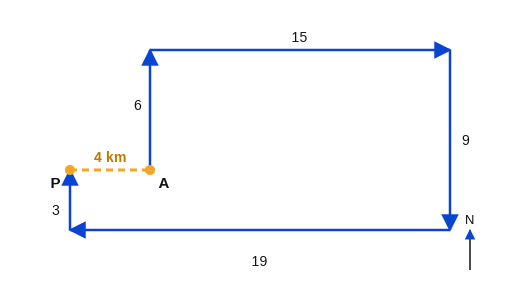
T starts from Point A and drives 6 km towards the North. He then takes a right turn, drives 15 km, turns right and drives 9 km. He then takes a right turn and drives 19 km. He takes a final right turn, drives 3 km and stops at Point P. How far (shortest distance) and towards which direction should he drive in order to reach Point A again? (All turns are 90 degrees turns only unless specified)
T बिंदु A से चलना शुरू करता है और उत्तर की ओर 6 km ड्राइव करता है। फिर वह दाएँ मुड़ता है, 15 km ड्राइव करता है, दाएँ मुड़ता है और 9 km ड्राइव करता है। फिर वह दाएँ मुड़ता है और 19 km ड्राइव करता है। वह अंतिम बार दाएँ मुड़ता है, 3 km ड्राइव करता है और बिंदु P पर रुक जाता है। बिंदु A पर फिर से पहुँचने के लिए उसे कितनी दूरी (न्यूनतम दूरी) तक और किस दिशा में ड्राइव करना चाहिए? (जब तक निर्दिष्ट न किया जाए, सभी मोड़ केवल 90 डिग्री के मोड़ हैं)
  1. A2 km to the Eastपूर्व की ओर 2 km
  2. B4 km to the Eastपूर्व की ओर 4 km
  3. C6 km to the Northउत्तर की ओर 6 km
  4. D8 km to the Northउत्तर की ओर 8 km
Show answer

Concept: Track net North–South and East–West movement; a right turn while facing North means facing East.

  1. North 6, East 15, South 9, West 19, North 3.
  2. North–South: 6−9+3=0, so P is on the same level as A.
  3. East–West: 15−19=−4, so P is 4 km West of A.
  4. To return, T must drive 4 km towards the East.

Trick: Add opposite directions separately; whichever is non-zero is the reverse path.

Answer: (B) 4 km to the East

अवधारणा: उत्तर–दक्षिण और पूर्व–पश्चिम की कुल दूरी अलग-अलग जोड़ें; उत्तर की ओर मुँह करके दाएँ मुड़ने पर दिशा पूर्व होती है।

  1. उत्तर 6, पूर्व 15, दक्षिण 9, पश्चिम 19, उत्तर 3।
  2. उत्तर–दक्षिण: 6−9+3=0, अतः P, A की सीध में है।
  3. पूर्व–पश्चिम: 15−19=−4, अतः P, A से 4 km पश्चिम में है।
  4. वापस A पहुँचने के लिए 4 km पूर्व की ओर जाना होगा।

ट्रिक: विपरीत दिशाओं को अलग-अलग घटाएँ; जो बचे, उसकी उलटी दिशा में लौटें।

उत्तर: (B) 4 km पूर्व की ओर

RRB NTPC Graduate CBT 1General Intelligence and ReasoningDirection and distanceRRB NTPC Graduate CBT 1 2024 · 19 Jun Shift 1 →
Q7918.
Based on the English alphabetical order, three of the following four letter-cluster pairs are alike in a certain way and thus form a group. Which letter-cluster pair DOES NOT belong to that group?
(Note: The odd one out is not based on the number of consonants/vowels or their position in the letter-cluster.)
अंग्रेज़ी वर्णमाला क्रम के आधार पर, निम्नलिखित चार अक्षर-समूह युग्मों में से तीन किसी निश्चित प्रकार से एकसमान हैं और इस प्रकार एक समूह बनाते हैं। कौन-सा अक्षर-समूह युग्म उस समूह से संबंधित नहीं है?
(नोट: असंगत अक्षर-समूह, उस अक्षर-समूह में व्यंजनों/स्वरों की संख्या या उनके स्थान पर आधारित नहीं है।)
  1. AHK – NU
  2. BXA – CK
  3. CAD – FN
  4. DKN – PX
Show answer

Concept: Check the gaps between letters within each cluster and between the clusters.

  1. XA – CK: X→A +3, A→C +2, C→K +8.
  2. AD – FN: A→D +3, D→F +2, F→N +8.
  3. KN – PX: K→N +3, N→P +2, P→X +8.
  4. HK – NU: H→K +3, K→N +3, N→U +7 – pattern breaks.

Trick: Pattern +3, +2, +8; just test the middle jump – only HK–NU has +3.

Answer: (A) HK – NU

अवधारणा: प्रत्येक समूह के अक्षरों के बीच और दोनों समूहों के बीच का अंतर देखें।

  1. XA – CK: X→A +3, A→C +2, C→K +8।
  2. AD – FN: A→D +3, D→F +2, F→N +8।
  3. KN – PX: K→N +3, N→P +2, P→X +8।
  4. HK – NU: H→K +3, K→N +3, N→U +7 – पैटर्न टूटता है।

ट्रिक: पैटर्न +3, +2, +8; बीच वाला अंतर जाँचें – केवल HK–NU में +3 है।

उत्तर: (A) HK – NU

RRB NTPC Graduate CBT 1General Intelligence and ReasoningLetter cluster odd one outRRB NTPC Graduate CBT 1 2024 · 19 Jun Shift 1 →
Q7919.
WDFG is related to ZGIJ in a certain way based on the English alphabetical order. In the same way, IPRS is related to LSUV. To which of the following options is RYAB related, following the same logic?
अंग्रेज़ी वर्णमाला क्रम के आधार पर WDFG एक निश्चित प्रकार से ZGIJ से संबंधित है। उसी प्रकार, IPRS, LSUV से संबंधित है। समान तर्क का अनुसरण करते हुए, RYAB निम्नलिखित में से किस विकल्प से संबंधित है?
  1. AUBDE
  2. BUDEB
  3. CUBED
  4. DUDBE
Show answer

Concept: Find the shift applied to each letter.

  1. W→Z, D→G, F→I, G→J: each letter +3.
  2. Check: I→L, P→S, R→U, S→V (also +3).
  3. RYAB: R→U, Y→B, A→D, B→E.
  4. Result: UBDE.

Trick: Y +3 wraps round: Y→Z→A→B.

Answer: (A) UBDE

अवधारणा: हर अक्षर पर लगाया गया खिसकाव (shift) पता करें।

  1. W→Z, D→G, F→I, G→J: प्रत्येक अक्षर +3।
  2. जाँच: I→L, P→S, R→U, S→V (यहाँ भी +3)।
  3. RYAB: R→U, Y→B, A→D, B→E।
  4. परिणाम: UBDE।

ट्रिक: Y में +3 घूमकर: Y→Z→A→B।

उत्तर: (A) UBDE

RRB NTPC Graduate CBT 1General Intelligence and ReasoningLetter analogyRRB NTPC Graduate CBT 1 2024 · 19 Jun Shift 1 →
Q7920.
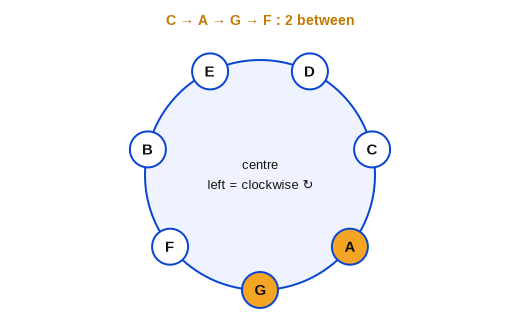
A, B, C, D, E, F, and G are sitting around a circular table facing the centre.
Only two people sit between D and F when counted from the left of F. E sits third to the left of G. A sits to the immediate right of G. A sits second to the left of D. B is an immediate neighbour of E.
How many people sit between C and F when counted from the left of C?
A, B, C, D, E, F और G एक वृत्ताकार मेज़ के चारों ओर केंद्र की ओर मुख करके बैठे हैं।
F के बाएँ से गिनने पर D और F के बीच केवल दो व्यक्ति बैठे हैं। E, G के बाएँ से तीसरे स्थान पर बैठा है। A, G के ठीक दाएँ बैठा है। A, D के बाएँ से दूसरे स्थान पर बैठा है। B, E का निकटतम पड़ोसी है।
C के बाएँ से गिनने पर C और F के बीच कितने व्यक्ति बैठे हैं?
  1. ATwoदो
  2. BFourचार
  3. CThreeतीन
  4. DOneएक
Show answer

Concept: Facing the centre, "left" means moving clockwise and "right" anticlockwise.

  1. Fix G. A is immediate right of G; E is third to the left of G.
  2. A is second to the left of D, so D is next to E (on the clockwise side of E).
  3. Counting from the left of F, two people then D ⇒ F is immediate left of G.
  4. B is a neighbour of E ⇒ B between F and E; C takes the last seat between D and A.
  5. From the left of C: A, G, then F ⇒ two people.

Trick: Start with the person mentioned most (G) and place definite clues first.

Answer: (A) Two

अवधारणा: केंद्र की ओर मुख होने पर "बाएँ" = दक्षिणावर्त (clockwise), "दाएँ" = वामावर्त।

  1. G को स्थिर करें। A, G के ठीक दाएँ; E, G के बाएँ तीसरे स्थान पर।
  2. A, D के बाएँ दूसरे स्थान पर है, अतः D, E के बगल में (E के clockwise ओर)।
  3. F के बाएँ से गिनने पर दो व्यक्ति फिर D ⇒ F, G के ठीक बाएँ।
  4. B, E का पड़ोसी ⇒ B, F और E के बीच; C बची सीट (D और A के बीच)।
  5. C के बाएँ से: A, G, फिर F ⇒ दो व्यक्ति।

ट्रिक: सबसे अधिक बार आए व्यक्ति (G) से शुरू कर निश्चित सूचनाएँ पहले रखें।

उत्तर: (A) दो

RRB NTPC Graduate CBT 1General Intelligence and ReasoningCircular seating arrangementRRB NTPC Graduate CBT 1 2024 · 19 Jun Shift 1 →