Question bank

Q&A: practice questions with answers

Search questions on any topic. Filter by exam category, exam, subject and topic, try the question, then open the answer and explanation.

Courses – airGurukul

20,719 questions found.

Q61.
Based on the English alphabetical order, three of the following four letter-clusters are alike in a certain way and thus form a group. Which letter-cluster DOES NOT belong to that group?
(Note: The odd one out is not based on the number of consonants/vowels or their position in the letter-cluster.)
अंग्रेज़ी वर्णमाला क्रम के आधार पर, निम्नलिखित चार अक्षर-समूहों में से तीन किसी निश्चित प्रकार से एक समान हैं और इस प्रकार एक समूह बनाते हैं। कौन-सा अक्षर-समूह उस समूह से संबंधित नहीं है? (नोट: असंगत अक्षर-समूह, उस अक्षर-समूह में व्यंजनों/स्वरों की संख्या या उनके स्थान पर आधारित नहीं है।)
  1. ACFK
  2. BMOU
  3. CKNS
  4. DRUZ
Show answer

Concept: Find the gaps between consecutive letters.

  1. CFK3 → 6 → 11+3, +5
    MOU13 → 15 → 21+2, +6
    KNS11 → 14 → 19+3, +5
    RUZ18 → 21 → 26+3, +5
  2. MOU breaks the +3, +5 pattern.

Short trick: First gap alone: C→F, K→N, R→U are +3; M→O is +2 → odd.

Answer: (B) MOU

अवधारणा: क्रमागत अक्षरों के बीच का अंतर देखें।

  1. CFK3 → 6 → 11+3, +5
    MOU13 → 15 → 21+2, +6
    KNS11 → 14 → 19+3, +5
    RUZ18 → 21 → 26+3, +5
  2. MOU पैटर्न +3, +5 को तोड़ता है।

शॉर्ट ट्रिक: केवल पहला अंतर: C→F, K→N, R→U +3 हैं; M→O +2 → विषम।

उत्तर: (B) MOU

RRB ALP CBT 1General Intelligence and ReasoningOdd one out – letter clustersRRB ALP CBT 1 2025 · 18 Feb Shift 3 →
Q62.
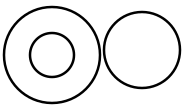
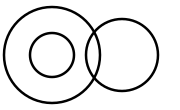
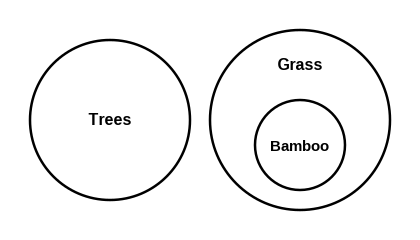
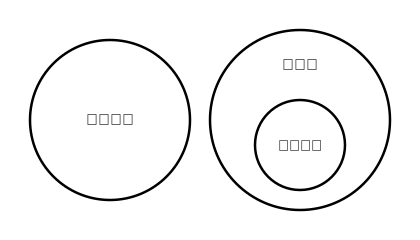
Select the Venn diagram that best illustrates the relationship between the following classes.
Trees, Grass, Bamboo
उस वेन आरेख का चयन कीजिए जो निम्नलिखित वर्गों के बीच संबंध को सर्वोत्तम रूप से दर्शाता है।
पेड़, घास, बाँस
  1. A
  2. B
  3. C
  4. D
Show answer

Concept: Bamboo is botanically a grass (family Poaceae); trees are a separate class.

  1. Bamboo ⊂ Grass → small circle inside a bigger circle.
  2. Trees are neither grass nor bamboo → separate circle.
  3. Option B shows exactly this.

Short trick: Remember: bamboo is the tallest grass, not a tree.

Answer: (B) Figure B

अवधारणा: बाँस वनस्पति-विज्ञान के अनुसार एक घास है (कुल पोएसी); पेड़ एक अलग वर्ग है।

  1. बाँस ⊂ घास → बड़े वृत्त के अंदर छोटा वृत्त।
  2. पेड़ न घास हैं न बाँस → अलग वृत्त।
  3. विकल्प B ठीक यही दर्शाता है।

शॉर्ट ट्रिक: याद रखें: बाँस सबसे ऊँची घास है, पेड़ नहीं।

उत्तर: (B) आकृति B

RRB ALP CBT 1General Intelligence and ReasoningVenn diagram – classificationRRB ALP CBT 1 2025 · 18 Feb Shift 3 →
Q63.
A, B, C, D, E, F and G live on seven different floors of the same building. The lowermost floor in the building is numbered 1, the floor above it is numbered 2 and so on till the topmost floor is numbered 7. B lives on the third floor. Only two persons live between B and D. Only one person live between D and A. Only one person lives between F and C but C does not live on the topmost floor. G lives immediately below E. On which floor number does E live?
A, B, C, D, E, F और G एक ही इमारत की सात अलग-अलग मंज़िलों पर रहते हैं। इमारत की सबसे निचली मंज़िल की संख्या 1 है, उसके ऊपर की मंज़िल की संख्या 2 है और इसी प्रकार सबसे ऊपरी मंज़िल की संख्या 7 है। B तीसरी मंज़िल पर रहता है। B और D के बीच केवल दो व्यक्ति रहते हैं। D और A के बीच केवल एक व्यक्ति रहता है। F और C के बीच केवल एक व्यक्ति रहता है लेकिन C सबसे ऊपरी मंज़िल पर नहीं रहता है। G, E के ठीक नीचे रहता है। E किस मंज़िल पर रहता है?
  1. AFloor number 6मंज़िल संख्या 6
  2. BFloor number 7मंज़िल संख्या 7
  3. CFloor number 2मंज़िल संख्या 2
  4. DFloor number 5मंज़िल संख्या 5
Show answer

Concept: Start with fixed floors (bottom = 1).

  1. Floor1234567
    PersonGEBACDF
  2. B = 3; two between B and D → D = 6; one between D and A → A = 4.
  3. G immediately below E: free floors 1, 2, 5, 7 → only 1–2 are consecutive → G = 1, E = 2.
  4. F, C in 5, 7 with C not on top → C = 5, F = 7.

Short trick: The only consecutive free pair after placing B, D, A is floors 1–2, so E = 2 at once.

Answer: (C) Floor number 2

अवधारणा: निश्चित मंज़िलों से शुरू करें (नीचे = 1)।

  1. मंज़िल1234567
    व्यक्तिGEBACDF
  2. B = 3; B और D के बीच दो → D = 6; D और A के बीच एक → A = 4।
  3. G, E के ठीक नीचे: खाली मंज़िलें 1, 2, 5, 7 → केवल 1–2 क्रमागत → G = 1, E = 2।
  4. F, C मंज़िल 5, 7 पर, C सबसे ऊपर नहीं → C = 5, F = 7।

शॉर्ट ट्रिक: B, D, A रखने के बाद केवल 1–2 क्रमागत खाली हैं, अतः तुरंत E = 2।

उत्तर: (C) मंज़िल संख्या 2

RRB ALP CBT 1General Intelligence and ReasoningFloor puzzleRRB ALP CBT 1 2025 · 18 Feb Shift 3 →
Q64.
Each vowel in the word WONDERS is changed to the letter immediately following it in the English alphabetical order and each consonant is changed to the letter immediately preceding it in the English alphabetical order. How many vowels will be there in the new group of letters thus formed?
शब्द WONDERS में प्रत्येक स्वर को अंग्रेज़ी वर्णमाला क्रम में उसके ठीक बाद आने वाले अक्षर से बदल दिया जाता है और प्रत्येक व्यंजन को अंग्रेज़ी वर्णमाला क्रम में उससे ठीक पहले आने वाले अक्षर से बदल दिया जाता है। इस प्रकार बने अक्षरों के नए समूह में कितने स्वर होंगे?
  1. A0
  2. B2
  3. C1
  4. D3
Show answer

Concept: Vowel → next letter; consonant → previous letter.

  1. WONDERS
    VPMCFQR
  2. VPMCFQR has no vowel → 0.

Short trick: Vowels +1 become consonants (O→P, E→F); a consonant −1 becomes a vowel only if it is B, F, J, P or V — none here.

Answer: (A) 0

अवधारणा: स्वर → अगला अक्षर; व्यंजन → पिछला अक्षर।

  1. WONDERS
    VPMCFQR
  2. VPMCFQR में कोई स्वर नहीं → 0।

शॉर्ट ट्रिक: स्वर +1 होकर व्यंजन बनते हैं (O→P, E→F); व्यंजन −1 होकर स्वर तभी बनता है जब वह B, F, J, P या V हो — यहाँ कोई नहीं।

उत्तर: (A) 0

RRB ALP CBT 1General Intelligence and ReasoningLetter coding – vowel/consonant shiftRRB ALP CBT 1 2025 · 18 Feb Shift 3 →
Q65.
Each vowel in the word RESTING is changed to the letter immediately following it in the English alphabetical order and each consonant is changed to the letter immediately preceding it in the English alphabetical order. Which of the following letters will appear exactly twice in the new group of letters thus formed?
शब्द RESTING में प्रत्येक स्वर को अंग्रेज़ी वर्णमाला क्रम में उसके ठीक बाद आने वाले अक्षर से बदल दिया जाता है और प्रत्येक व्यंजन को अंग्रेज़ी वर्णमाला क्रम में उससे ठीक पहले आने वाले अक्षर से बदल दिया जाता है। इस प्रकार बने अक्षरों के नए समूह में निम्नलिखित में से कौन-सा अक्षर ठीक दो बार आएगा?
  1. AS
  2. BJ
  3. CF
  4. DR
Show answer

Concept: Vowel → next letter; consonant → previous letter.

  1. RESTING
    QFRSJMF
  2. F appears twice (from E and G).

Short trick: E + 1 = F and G − 1 = F — the letters on either side of F meet there.

Answer: (C) F

अवधारणा: स्वर → अगला अक्षर; व्यंजन → पिछला अक्षर।

  1. RESTING
    QFRSJMF
  2. F दो बार आता है (E और G से)।

शॉर्ट ट्रिक: E + 1 = F और G − 1 = F — F के दोनों ओर के अक्षर वहीं मिलते हैं।

उत्तर: (C) F

RRB ALP CBT 1General Intelligence and ReasoningLetter coding – vowel/consonant shiftRRB ALP CBT 1 2025 · 18 Feb Shift 3 →
Q66.
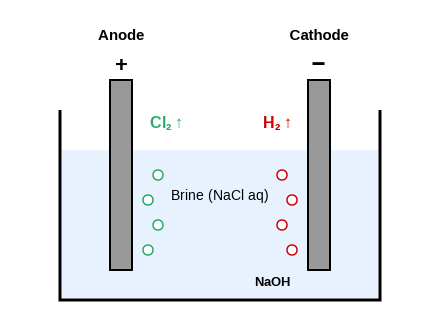
During the chlor-alkali process, which of the following statements is correct regarding the products formed at different electrodes?
क्लोर-क्षार प्रक्रिया के दौरान, विभिन्न इलेक्ट्रोडों पर बनने वाले उत्पादों के संबंध में निम्नलिखित में से कौन-सा कथन सही है?
  1. AHydrogen gas is released at the cathode and chlorine gas at the anode.कैथोड पर हाइड्रोजन गैस और एनोड पर क्लोरीन गैस मुक्त होती है।
  2. BChlorine gas is released at the cathode and hydrogen gas at the anode.कैथोड पर क्लोरीन गैस और एनोड पर हाइड्रोजन गैस मुक्त होती है।
  3. CSodium hydroxide is formed at the anode and chlorine gas at the cathode.एनोड पर सोडियम हाइड्रॉक्साइड और कैथोड पर क्लोरीन गैस बनती है।
  4. DSodium hydroxide and hydrogen gas both form at the anode.सोडियम हाइड्रॉक्साइड और हाइड्रोजन गैस दोनों एनोड पर बनते हैं।
Show answer

Concept: Electrolysis of brine (aq. NaCl): 2NaCl+2H2O→2NaOH+Cl2+H2.

  1. Anode (+) attracts Cl⁻ ions → oxidised to Cl₂ gas.
  2. Cathode (−) reduces water → H₂ gas; OH⁻ left there combines with Na⁺ → NaOH forms near the cathode.
  3. So H₂ at cathode, Cl₂ at anode.

Short trick: Name = products: Chlor (Cl₂, at anode) + Alkali (NaOH, at cathode) with H₂ at cathode. Mnemonic: “Cl₂ at Anode, H₂ at Cathode”.

Answer: (A) Hydrogen gas is released at the cathode and chlorine gas at the anode.

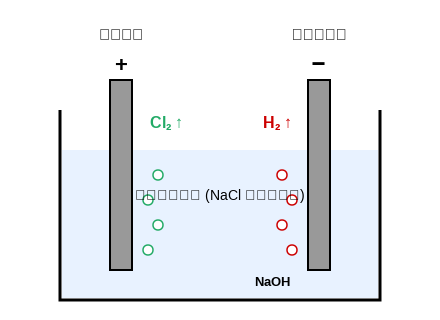
अवधारणा: ब्राइन (NaCl का जलीय विलयन) का विद्युत अपघटन: 2NaCl+2H2O→2NaOH+Cl2+H2।

  1. एनोड (+) Cl⁻ आयनों को आकर्षित करता है → ये Cl₂ गैस में ऑक्सीकृत होते हैं।
  2. कैथोड (−) पर जल का अपचयन → H₂ गैस; वहाँ बचे OH⁻, Na⁺ से मिलकर कैथोड के पास NaOH बनाते हैं।
  3. अतः कैथोड पर H₂ और एनोड पर Cl₂।

शॉर्ट ट्रिक: नाम ही उत्पाद बताता है: क्लोर (Cl₂, एनोड पर) + क्षार (NaOH, कैथोड पर), साथ में कैथोड पर H₂।

उत्तर: (A) कैथोड पर हाइड्रोजन गैस और एनोड पर क्लोरीन गैस मुक्त होती है।

RRB ALP CBT 1General ScienceChlor-alkali processRRB ALP CBT 1 2025 · 18 Feb Shift 3 →
Q67.
A sound wave has a frequency of 4 kHz and a wavelength of 25 cm. How much time will it take to travel a distance of 2.5 km?
एक ध्वनि तरंग की आवृत्ति 4 kHz और तरंगदैर्ध्य 25 cm है। 2.5 km की दूरी तय करने में इसे कितना समय लगेगा?
  1. A2.6 s
  2. B2.2 s
  3. C2.0 s
  4. D2.5 s
Show answer

Concept: Wave speed v=fλ; time t=dv.

  1. v=4000×0.25=1000 m/s.
  2. t=25001000=2.5 s.

Short trick: Convert first: 4 kHz × 25 cm = 4000 × ¼ m = 1 km/s → 2.5 km takes 2.5 s.

Answer: (D) 2.5 s

अवधारणा: तरंग की चाल v=fλ; समय t=dv।

  1. v=4000×0.25=1000 m/s।
  2. t=25001000=2.5 s।

शॉर्ट ट्रिक: 4 kHz × 25 cm = 4000 × ¼ m = 1 km/s → 2.5 km में 2.5 s।

उत्तर: (D) 2.5 s

RRB ALP CBT 1General ScienceWave speedRRB ALP CBT 1 2025 · 18 Feb Shift 3 →
Q68.
Transportation of water in plants takes place through ________.
पौधों में जल का परिवहन ________ के माध्यम से होता है।
  1. AXylemजाइलम
  2. BPhloemफ्लोएम
  3. CSclerenchymaदृढ़ोतक (स्क्लेरेनकाइमा)
  4. DParenchymaमृदूतक (पैरेनकाइमा)
Show answer

Concept: Xylem carries water and minerals from roots upward; phloem carries food.

  1. Xylem vessels and tracheids form continuous tubes from roots to leaves.
  2. Transpiration pull draws water up through them.
  3. Phloem translocates sugars; sclerenchyma/parenchyma are support/storage tissues.

Short trick: Memory hook: Xylem = eXport of water up; Phloem = Food.

Answer: (A) Xylem

अवधारणा: जाइलम जड़ों से जल और खनिज ऊपर ले जाता है; फ्लोएम भोजन ले जाता है।

  1. जाइलम की वाहिकाएँ और वाहिनिकाएँ जड़ से पत्ती तक निरंतर नलिकाएँ बनाती हैं।
  2. वाष्पोत्सर्जन खिंचाव जल को ऊपर खींचता है।
  3. फ्लोएम शर्करा का स्थानांतरण करता है; दृढ़ोतक/मृदूतक सहारा/संग्रह ऊतक हैं।

शॉर्ट ट्रिक: याद रखें: जाइलम = जल; फ्लोएम = फूड (भोजन)।

उत्तर: (A) जाइलम

RRB ALP CBT 1General SciencePlant transport – xylemRRB ALP CBT 1 2025 · 18 Feb Shift 3 →
Q69.
A body of mass 4 kg has a kinetic energy of 72 J. Its speed is:
4 kg द्रव्यमान वाले एक पिंड की गतिज ऊर्जा 72 J है। इसकी चाल है:
  1. A4 m/s
  2. B3 m/s
  3. C9 m/s
  4. D6 m/s
Show answer

Concept: KE=12mv2.

  1. 72=12×4×v2=2v2.
  2. v2=36 → v=6 m/s.

Short trick: v=2KEm=1444=6.

Answer: (D) 6 m/s

अवधारणा: KE=12mv2।

  1. 72=12×4×v2=2v2।
  2. v2=36 → v=6 m/s।

शॉर्ट ट्रिक: v=2KEm=1444=6।

उत्तर: (D) 6 m/s

RRB ALP CBT 1General ScienceKinetic energyRRB ALP CBT 1 2025 · 18 Feb Shift 3 →
Q70.
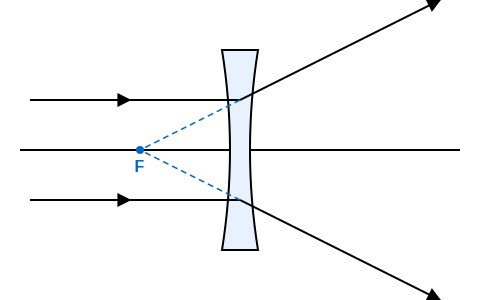
Which of the following statements correctly describes a double concave lens?
निम्नलिखित में से कौन-सा कथन उभयावतल (द्वि-अवतल) लेंस का सही वर्णन करता है?
  1. AIt is thinner at the edges and thicker in the middle; it converges light rays.यह किनारों पर पतला और बीच में मोटा होता है; यह प्रकाश किरणों को अभिसरित करता है।
  2. BIt is used to focus light to a single point.इसका उपयोग प्रकाश को एक बिंदु पर फोकस करने के लिए किया जाता है।
  3. CIt is equally thick at the center and edges; it neither converges nor diverges light.यह केंद्र और किनारों पर समान रूप से मोटा होता है; यह प्रकाश को न तो अभिसरित करता है और न ही अपसरित।
  4. DIt is thicker at the edges and thinner in the middle; it diverges light rays.यह किनारों पर मोटा और बीच में पतला होता है; यह प्रकाश किरणों को अपसरित करता है।
Show answer

Concept: A double concave lens is thicker at the edges and thinner at the middle; it is a diverging lens.

  1. Parallel rays spread out after passing through it.
  2. The refracted rays appear to come from the principal focus F on the same side.
  3. A convex lens (thick middle) converges; option C describes a plain glass slab.

Short trick: Concave = caved in at the middle → thin centre → spreads (diverges) light.

Answer: (D) It is thicker at the edges and thinner in the middle; it diverges light rays.

अवधारणा: उभयावतल लेंस किनारों पर मोटा और बीच में पतला होता है; यह अपसारी लेंस है।

  1. समांतर किरणें इससे गुज़रकर फैल जाती हैं।
  2. अपवर्तित किरणें उसी ओर के मुख्य फोकस F से आती प्रतीत होती हैं।
  3. उत्तल लेंस (बीच में मोटा) अभिसारी होता है; विकल्प C काँच की समतल पट्टिका का वर्णन है।

शॉर्ट ट्रिक: अवतल = बीच में धँसा हुआ → पतला केंद्र → प्रकाश फैलाता है (अपसरण)।

उत्तर: (D) यह किनारों पर मोटा और बीच में पतला होता है; यह प्रकाश किरणों को अपसरित करता है।

RRB ALP CBT 1General ScienceLenses – concave lensRRB ALP CBT 1 2025 · 18 Feb Shift 3 →
Q71.
Which of the following is a mechanical method of weed control?
निम्नलिखित में से कौन-सी खरपतवार नियंत्रण की यांत्रिक विधि है?
  1. ASpraying herbicidesशाकनाशियों का छिड़काव
  2. BHand weedingहाथ से निराई
  3. CCrop rotationफसल चक्रण
  4. DSeed treatmentबीज उपचार
Show answer

Concept: Mechanical control = physically removing or destroying weeds.

  1. Hand weeding, hoeing, tilling and harrowing are mechanical methods.
  2. Spraying herbicides (weedicides) is chemical control.
  3. Crop rotation is a cultural/preventive method; seed treatment protects seeds from pests/diseases.

Short trick: Mechanical = by hand or machine; Chemical = by spray.

Answer: (B) Hand weeding

अवधारणा: यांत्रिक नियंत्रण = खरपतवारों को भौतिक रूप से हटाना या नष्ट करना।

  1. हाथ से निराई, गुड़ाई, जुताई और हैरो चलाना यांत्रिक विधियाँ हैं।
  2. शाकनाशी (खरपतवारनाशी) का छिड़काव रासायनिक नियंत्रण है।
  3. फसल चक्रण कृषि/निवारक विधि है; बीज उपचार बीजों को रोग/कीट से बचाता है।

शॉर्ट ट्रिक: यांत्रिक = हाथ या मशीन से; रासायनिक = छिड़काव से।

उत्तर: (B) हाथ से निराई

RRB ALP CBT 1General ScienceWeed control methodsRRB ALP CBT 1 2025 · 18 Feb Shift 3 →
Q72.
Waste products formed in body by energy generation processes are desirable to remove by which of the following life processes?
शरीर में ऊर्जा उत्पादन की प्रक्रियाओं द्वारा बने अपशिष्ट उत्पादों को निम्नलिखित में से किस जैव प्रक्रम द्वारा बाहर निकालना वांछनीय है?
  1. AExcretionउत्सर्जन
  2. BNutritionपोषण
  3. CCirculationपरिसंचरण
  4. DDigestionपाचन
Show answer

Concept: Excretion removes harmful metabolic wastes (CO₂, urea, etc.) produced in the body.

  1. Respiration and other energy-releasing reactions make CO₂, water and nitrogenous wastes.
  2. Their removal (by kidneys, lungs, skin) is excretion.
  3. Nutrition takes in food, circulation transports, digestion breaks food down.

Short trick: Excretion = Exit of metabolic waste (undigested food leaving = egestion, not excretion).

Answer: (A) Excretion

अवधारणा: उत्सर्जन शरीर में बने हानिकारक उपापचयी अपशिष्ट (CO₂, यूरिया आदि) को बाहर निकालता है।

  1. श्वसन व अन्य ऊर्जा-मुक्ति अभिक्रियाएँ CO₂, जल और नाइट्रोजनी अपशिष्ट बनाती हैं।
  2. इनका निष्कासन (वृक्क, फेफड़े, त्वचा द्वारा) उत्सर्जन है।
  3. पोषण भोजन ग्रहण, परिसंचरण परिवहन और पाचन भोजन को तोड़ना है।

शॉर्ट ट्रिक: उत्सर्जन = उपापचयी अपशिष्ट का निकास (अपचित भोजन का निकलना बहिःक्षेपण है, उत्सर्जन नहीं)।

उत्तर: (A) उत्सर्जन

RRB ALP CBT 1General ScienceLife processes – excretionRRB ALP CBT 1 2025 · 18 Feb Shift 3 →
Q73.
Which of the following correctly describes the properties of a proton?
निम्नलिखित में से कौन-सा प्रोटॉन के गुणों का सही वर्णन करता है?
  1. AIt is positively charged and has a mass approximately 2000 times that of an electron.यह धनावेशित होता है और इसका द्रव्यमान इलेक्ट्रॉन के द्रव्यमान का लगभग 2000 गुना होता है।
  2. BIt has no charge and is present in the nucleus.इस पर कोई आवेश नहीं होता और यह नाभिक में उपस्थित होता है।
  3. CIt is negatively charged and located inside the nucleus.यह ऋणावेशित होता है और नाभिक के अंदर स्थित होता है।
  4. DIt has a positive charge and a mass equal to an electron.इस पर धनावेश होता है और इसका द्रव्यमान इलेक्ट्रॉन के बराबर होता है।
Show answer

Concept: A proton carries a unit positive charge (+1.6 × 10⁻¹⁹ C) and has mass ≈ 1.67 × 10⁻²⁷ kg.

  1. Electron mass ≈ 9.1 × 10⁻³¹ kg → proton ≈ 1836 ≈ 2000 times heavier.
  2. Neutron: no charge (option B); electron: negative and outside the nucleus (C wrong).
  3. Option D wrongly equates the masses.

Short trick: Proton = Positive + Plump (≈ 1836 × electron).

Answer: (A) It is positively charged and has a mass approximately 2000 times that of an electron.

अवधारणा: प्रोटॉन पर एक इकाई धनावेश (+1.6 × 10⁻¹⁹ C) होता है और द्रव्यमान ≈ 1.67 × 10⁻²⁷ kg।

  1. इलेक्ट्रॉन का द्रव्यमान ≈ 9.1 × 10⁻³¹ kg → प्रोटॉन ≈ 1836 ≈ 2000 गुना भारी।
  2. न्यूट्रॉन: कोई आवेश नहीं (विकल्प B); इलेक्ट्रॉन: ऋणावेशित और नाभिक के बाहर (C गलत)।
  3. विकल्प D द्रव्यमानों को गलत रूप से बराबर बताता है।

शॉर्ट ट्रिक: प्रोटॉन = Positive (धन) + भारी (≈ 1836 × इलेक्ट्रॉन)।

उत्तर: (A) यह धनावेशित होता है और इसका द्रव्यमान इलेक्ट्रॉन के द्रव्यमान का लगभग 2000 गुना होता है।

RRB ALP CBT 1General ScienceAtomic structure – protonRRB ALP CBT 1 2025 · 18 Feb Shift 3 →
Q74.
Under the Right to Equality, of the Indian Constitution, which type of equality is ensured in public employment?
भारतीय संविधान के अंतर्गत समता के अधिकार के तहत, लोक नियोजन (सार्वजनिक रोज़गार) में किस प्रकार की समता सुनिश्चित की जाती है?
  1. AReligious equalityधार्मिक समता
  2. BEconomic equalityआर्थिक समता
  3. CPolitical equalityराजनीतिक समता
  4. DEquality of opportunityअवसर की समता
Show answer

Concept: Article 16 guarantees equality of opportunity in matters of public employment.

  1. Articles 14–18 form the Right to Equality.
  2. Art. 16: no citizen can be discriminated against in public employment on grounds of religion, race, caste, sex, descent, place of birth or residence.
  3. Hence the equality ensured is equality of opportunity.

Short trick: Art. 16 → “Job at 16” (public employment); Art. 17 abolishes untouchability, Art. 18 abolishes titles.

Answer: (D) Equality of opportunity

अवधारणा: अनुच्छेद 16 लोक नियोजन के विषयों में अवसर की समता की गारंटी देता है।

  1. अनुच्छेद 14–18 समता का अधिकार बनाते हैं।
  2. अनु. 16: धर्म, मूलवंश, जाति, लिंग, उद्भव, जन्मस्थान या निवास के आधार पर लोक नियोजन में भेदभाव नहीं।
  3. अतः सुनिश्चित समता अवसर की समता है।

शॉर्ट ट्रिक: अनु. 16 → सरकारी नौकरी; अनु. 17 अस्पृश्यता का अंत, अनु. 18 उपाधियों का अंत।

उत्तर: (D) अवसर की समता

RRB ALP CBT 1General AwarenessRight to Equality – Article 16RRB ALP CBT 1 2025 · 18 Feb Shift 3 →
Q75.
The Indian Genomic Data Set launched in 2025 is stored at which of the following facilities?
वर्ष 2025 में लॉन्च किया गया भारतीय जीनोमिक डेटा सेट निम्नलिखित में से किस सुविधा में संग्रहीत है?
  1. ABharat Bioinformatics Centerभारत बायोइन्फॉर्मेटिक्स सेंटर
  2. BNational Data Archive of Indiaनेशनल डेटा आर्काइव ऑफ इंडिया
  3. CIndian Genomics Mission Labइंडियन जीनोमिक्स मिशन लैब
  4. DIndian Biological Data Centreभारतीय जैविक डेटा केंद्र (IBDC)
Show answer

Concept: The Genome India data (10,000 whole genomes), released in January 2025, is housed at the Indian Biological Data Centre (IBDC), Faridabad.

  1. The Genome India Project (DBT) sequenced 10,000 healthy Indians from 99 population groups.
  2. Its data set was opened to researchers through IBDC, India’s national repository for life-science data.
  3. IBDC is located at the Regional Centre for Biotechnology, Faridabad (Haryana).

Short trick: Hook: “India’s Bio Data Centre” = IBDC → stores India’s genome data.

Answer: (D) Indian Biological Data Centre

अवधारणा: जीनोम इंडिया डेटा (10,000 संपूर्ण जीनोम), जिसे जनवरी 2025 में जारी किया गया, भारतीय जैविक डेटा केंद्र (IBDC), फरीदाबाद में संग्रहीत है।

  1. जीनोम इंडिया परियोजना (DBT) ने 99 जनसंख्या समूहों के 10,000 स्वस्थ भारतीयों का अनुक्रमण किया।
  2. इसका डेटा सेट IBDC के माध्यम से शोधकर्ताओं के लिए खोला गया, जो जीवन-विज्ञान डेटा का राष्ट्रीय भंडार है।
  3. IBDC, क्षेत्रीय जैव-प्रौद्योगिकी केंद्र, फरीदाबाद (हरियाणा) में स्थित है।

शॉर्ट ट्रिक: याद रखें: “Indian Biological Data Centre” = IBDC → भारत का जीनोम डेटा।

उत्तर: (D) भारतीय जैविक डेटा केंद्र (IBDC)

RRB ALP CBT 1General AwarenessScience and technology – genomicsRRB ALP CBT 1 2025 · 18 Feb Shift 3 →
Q76.
8 men can complete a job in 20 days. 8 women can complete the same job in 32 days. In how many days will 5 men and 8 women together complete the same job?
8 पुरुष एक कार्य को 20 दिनों में पूरा कर सकते हैं। 8 महिलाएँ उसी कार्य को 32 दिनों में पूरा कर सकती हैं। 5 पुरुष और 8 महिलाएँ मिलकर उसी कार्य को कितने दिनों में पूरा करेंगे?
  1. A22 days22 दिन
  2. B20 days20 दिन
  3. C16 days16 दिन
  4. D18 days18 दिन
Show answer

Concept: One day work of a group = sum of individual one day works.

  1. 1 man’s 1 day work =18×20=1160; 1 woman’s =18×32=1256.
  2. 5 men + 8 women per day =5160+8256=132+132=116.
  3. Days = 16.

Short trick: 5 men = 58 of the men-group → does 58×120=132; 8 women also do 132. Together 232=116 → 16 days.

Answer: (C) 16 days

अवधारणा: समूह का 1 दिन का कार्य = व्यक्तिगत 1 दिन के कार्यों का योग।

  1. 1 पुरुष का 1 दिन का कार्य =1160; 1 महिला का =1256।
  2. 5 पुरुष + 8 महिलाएँ प्रतिदिन =5160+8256=132+132=116।
  3. दिन = 16।

शॉर्ट ट्रिक: 5 पुरुष = 8 पुरुषों का 58 → प्रतिदिन 132; 8 महिलाएँ भी 132। कुल 116 → 16 दिन।

उत्तर: (C) 16 दिन

RRB ALP CBT 1MathematicsTime and work – men and womenRRB ALP CBT 1 2025 · 18 Feb Shift 2 →
Q77.
Karan and Arjun start a business by investing ₹45,000 and ₹50,000, respectively. Karan invests his money for 4 months and Arjun for 10 months. At the end of the year, 20% of the total profit is ₹30,600. What is Arjun’s share of the profit (in ₹)?
करण और अर्जुन क्रमशः ₹45,000 और ₹50,000 का निवेश करके एक व्यवसाय शुरू करते हैं। करण अपना धन 4 महीने के लिए और अर्जुन 10 महीने के लिए निवेश करता है। वर्ष के अंत में कुल लाभ का 20% ₹30,600 है। लाभ में अर्जुन का हिस्सा (₹ में) कितना है?
  1. A1,14,600
  2. B1,14,250
  3. C1,12,500
  4. D1,12,350
Show answer

Concept: Profit is shared in the ratio of capital × time.

  1. Karan : Arjun = 45000×4:50000×10=180000:500000=9:25.
  2. Total profit = 306000.2=153000.
  3. Arjun = 153000×2534=4500×25=112500.

Short trick: 153000 ÷ 34 = 4500 exactly; Arjun’s share must be a multiple of 25 × 4500 → 1,12,500.

Answer: (C) 1,12,500

अवधारणा: लाभ का बँटवारा पूँजी × समय के अनुपात में होता है।

  1. करण : अर्जुन = 45000×4:50000×10=9:25।
  2. कुल लाभ = 306000.2=153000।
  3. अर्जुन = 153000×2534=112500।

शॉर्ट ट्रिक: 153000 ÷ 34 = 4500; अर्जुन का हिस्सा = 25 × 4500 = 1,12,500।

उत्तर: (C) 1,12,500

RRB ALP CBT 1MathematicsPartnership – capital × timeRRB ALP CBT 1 2025 · 18 Feb Shift 2 →
Q78.
Three partners, Alex, Ben, and Chris, invest in a startup. Alex invests ₹30,000, Ben invests ₹45,000, and Chris invests ₹60,000. After one year, the profit is ₹27,000. What is Alex’s share in the profit?
तीन साझेदार, एलेक्स, बेन और क्रिस, एक स्टार्टअप में निवेश करते हैं। एलेक्स ₹30,000, बेन ₹45,000 और क्रिस ₹60,000 का निवेश करता है। एक वर्ष के बाद लाभ ₹27,000 है। लाभ में एलेक्स का हिस्सा कितना है?
  1. A₹5,000
  2. B₹5,200
  3. C₹5,800
  4. D₹6,000
Show answer

Concept: Same period, so profit is shared in the ratio of investments.

  1. 30000 : 45000 : 60000 = 2 : 3 : 4 (sum 9).
  2. Alex = 27000×29=6000.

Short trick: 1 part = 27000 ÷ 9 = 3000; Alex has 2 parts = ₹6,000.

Answer: (D) ₹6,000

अवधारणा: समय समान है, अतः लाभ निवेश के अनुपात में बँटेगा।

  1. 30000 : 45000 : 60000 = 2 : 3 : 4 (योग 9)।
  2. एलेक्स = 27000×29=6000।

शॉर्ट ट्रिक: 1 भाग = 27000 ÷ 9 = 3000; एलेक्स के 2 भाग = ₹6,000।

उत्तर: (D) ₹6,000

RRB ALP CBT 1MathematicsPartnership – same timeRRB ALP CBT 1 2025 · 18 Feb Shift 2 →
Q79.
A trader mixes two varieties of rice, A and B, in the ratio 3 : 5 by weight. He sells the mixture at a price such that he gains 20% on rice A and incurs a loss of 10% on rice B. If the overall profit on the mixture is 8%, find the ratio of the cost prices per kg of rice A to rice B.
एक व्यापारी चावल की दो किस्मों, A और B, को भार के अनुसार 3 : 5 के अनुपात में मिलाता है। वह मिश्रण को ऐसे मूल्य पर बेचता है कि उसे चावल A पर 20% का लाभ और चावल B पर 10% की हानि होती है। यदि मिश्रण पर कुल लाभ 8% है, तो चावल A और चावल B के प्रति kg क्रय मूल्यों का अनुपात ज्ञात कीजिए।
  1. A4:3
  2. B3:4
  3. C2:5
  4. D5:2
Show answer

Concept: Total profit = profit on A + profit on B.

  1. Let CP per kg be a and b; quantities 3 and 5.
  2. 0.2(3a)−0.1(5b)=0.08(3a+5b)
  3. 0.6a−0.5b=0.24a+0.4b ⇒ 0.36a=0.9b ⇒ ab=52.

Short trick: Alligation on cost values: A’s profit 20 is 12 above 8, B’s −10 is 18 below 8 → total costs 3a:5b=18:12=3:2 ⇒ a:b=5:2.

Answer: (D) 5:2

अवधारणा: कुल लाभ = A पर लाभ + B पर लाभ।

  1. प्रति kg क्रय मूल्य a और b; मात्राएँ 3 और 5।
  2. 0.2(3a)−0.1(5b)=0.08(3a+5b)
  3. 0.36a=0.9b ⇒ ab=52।

शॉर्ट ट्रिक: क्रय मूल्यों पर एलीगेशन: 20 − 8 = 12, 8 − (−10) = 18 → 3a:5b=18:12 ⇒ a:b=5:2।

उत्तर: (D) 5:2

RRB ALP CBT 1MathematicsMixture – profit on componentsRRB ALP CBT 1 2025 · 18 Feb Shift 2 →
Q80.
The distances between the points A, B and C are such that AB = 180 km and BC = 240 km. A traveler goes from A to B at 45 km/h, from B to C at 60 km/h, returns from C to B at 40 km/h, and finally from B to A at 30 km/h. Find the average speed (in km/h) for the entire journey.
बिंदुओं A, B और C के बीच की दूरियाँ इस प्रकार हैं कि AB = 180 km और BC = 240 km है। एक यात्री A से B तक 45 km/h की चाल से, B से C तक 60 km/h की चाल से जाता है, C से B तक 40 km/h की चाल से लौटता है, और अंत में B से A तक 30 km/h की चाल से आता है। पूरी यात्रा के लिए औसत चाल (km/h में) ज्ञात कीजिए।
  1. A45
  2. B42
  3. C41
  4. D51
Show answer

Concept: Average speed = total distance ÷ total time.

  1. Distance = 180 + 240 + 240 + 180 = 840 km.
  2. Time = 180/45 + 240/60 + 240/40 + 180/30 = 4 + 4 + 6 + 6 = 20 h.
  3. Average = 840 ÷ 20 = 42 km/h.

Short trick: All legs give whole hours – just add 4 + 4 + 6 + 6 = 20, then 840 ÷ 20.

Answer: (B) 42

अवधारणा: औसत चाल = कुल दूरी ÷ कुल समय।

  1. दूरी = 180 + 240 + 240 + 180 = 840 km।
  2. समय = 4 + 4 + 6 + 6 = 20 h।
  3. औसत = 840 ÷ 20 = 42 km/h।

शॉर्ट ट्रिक: हर भाग का समय पूर्ण घंटे में – 20 h, फिर 840 ÷ 20 = 42।

उत्तर: (B) 42

RRB ALP CBT 1MathematicsAverage speed – multiple legsRRB ALP CBT 1 2025 · 18 Feb Shift 2 →