Question bank

Q&A: practice questions with answers

Search questions on any topic. Filter by exam category, exam, subject and topic, try the question, then open the answer and explanation.

Courses – airGurukul

20,719 questions found.

Q801.
What should come in place of the question mark (?) in the given series based on the English alphabetical order?
RPE YWL FDS MKZ ?
अंग्रेज़ी वर्णमाला क्रम के आधार पर दी गई श्रृंखला में प्रश्न चिह्न (?) के स्थान पर क्या आना चाहिए?
RPE YWL FDS MKZ ?
  1. ATGR
  2. BTRG
  3. CTHY
  4. DTGU
Show answer

Concept: Each position moves +7 (cyclic).

  1. 1st letters: R, Y, F, M → T.
  2. 2nd letters: P, W, D, K → R.
  3. 3rd letters: E, L, S, Z → G. Answer TRG.

Short trick: Within each cluster, 1st − 2 = 2nd (R→P, Y→W): T − 2 = R → only TRG.

Answer: (B) TRG

अवधारणा: हर स्थान +7 (चक्रीय) बढ़ता है।

  1. पहले अक्षर: R, Y, F, M → T.
  2. दूसरे अक्षर: P, W, D, K → R.
  3. तीसरे अक्षर: E, L, S, Z → G. उत्तर TRG.

शॉर्ट ट्रिक: हर समूह में पहला − 2 = दूसरा: T − 2 = R → केवल TRG.

उत्तर: (B) TRG
RRB ALP CBT 1General Intelligence and ReasoningLetter seriesRRB ALP CBT 1 2025 · 11 Mar Shift 1 →
Q802.
In the following number-pairs, the second number is obtained by applying certain mathematical operation(s) to the first number. Which numbers should replace X and Y, so that the pattern followed by the two numbers on the left side of :: is the same as that on the right side of ::?
(NOTE: Operations should be performed on the whole numbers, without breaking down the numbers into their constituent digits. E.g. 13 – Operations on 13 such as adding to/subtracting from/multiplying with 13 can be performed. Breaking down 13 into 1 and 3 and then performing mathematical operations on 1 and 3 is not allowed.)
X : 126 :: 21 : Y
निम्नलिखित संख्या-युग्मों में, दूसरी संख्या पहली संख्या पर कुछ गणितीय संक्रिया/संक्रियाएँ लागू करके प्राप्त की जाती है। X और Y के स्थान पर कौन-सी संख्याएँ आनी चाहिए ताकि :: के बाईं ओर की दो संख्याओं का पैटर्न :: के दाईं ओर के पैटर्न के समान हो?
(नोट: संख्याओं को उनके घटक अंकों में तोड़े बिना, संक्रियाएँ पूर्ण संख्याओं पर की जानी चाहिए। उदाहरण के लिए 13 – 13 पर संक्रियाएँ जैसे 13 में जोड़ना/से घटाना/से गुणा करना आदि किया जा सकता है। 13 को 1 और 3 में तोड़कर फिर 1 और 3 पर गणितीय संक्रियाएँ करने की अनुमति नहीं है।)
X : 126 :: 21 : Y
  1. AX = 16, Y = 574
  2. BX = 19, Y = 365
  3. CX = 14, Y = 441
  4. DX = 12, Y = 207
Show answer

Concept: Test each option for one common rule.

  1. Try X = 12, Y = 207: (12 + 2) × 9 = 126 and (21 + 2) × 9 = 207 ✔.
  2. Other options: (16 + 2) × 9 = 162, (19 + 2) × 9 = 189, (14 + 2) × 9 = 144 ≠ 126 ✘.

Short trick: 126 and 207 are both multiples of 9 (digit sum 9) → rule ×9 is natural: 126/9 = 14 = 12 + 2, 207/9 = 23 = 21 + 2.

Answer: (D) X = 12, Y = 207

अवधारणा: प्रत्येक विकल्प में एक समान नियम जाँचें।

  1. X = 12, Y = 207: (12 + 2) × 9 = 126 और (21 + 2) × 9 = 207 ✔.
  2. अन्य: 162, 189, 144 ≠ 126 ✘.

शॉर्ट ट्रिक: 126 और 207 दोनों 9 के गुणज → 126/9 = 14 = 12 + 2, 207/9 = 23 = 21 + 2.

उत्तर: (D) X = 12, Y = 207

RRB ALP CBT 1General Intelligence and ReasoningNumber analogyRRB ALP CBT 1 2025 · 11 Mar Shift 1 →
Q803.
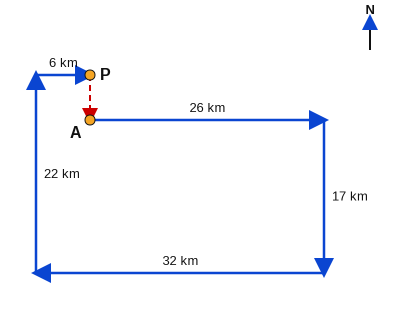
Farooque starts from Point A and drives 26 km towards East. He then takes a right turn, drives 17 km, turns right and drives 32 km. He then takes a right turn and drives 22 km. He takes a final right turn, drives 6 km and stops at Point P. How far (shortest distance) and towards which direction should he drive in order to reach Point A again? (All turns are 90-degree turns only, unless specified.)
फ़ारूक़ बिंदु A से शुरू करता है और पूर्व की ओर 26 km गाड़ी चलाता है। फिर वह दाएँ मुड़ता है, 17 km चलाता है, दाएँ मुड़ता है और 32 km चलाता है। फिर वह दाएँ मुड़ता है और 22 km चलाता है। वह अंतिम बार दाएँ मुड़ता है, 6 km चलाता है और बिंदु P पर रुक जाता है। बिंदु A पर फिर से पहुँचने के लिए उसे कितनी दूरी (न्यूनतम दूरी) और किस दिशा में गाड़ी चलानी चाहिए? (जब तक निर्दिष्ट न हो, सभी मोड़ केवल 90 डिग्री के हैं।)
  1. A6 km to the Southदक्षिण की ओर 6 km
  2. B5 km to the Southदक्षिण की ओर 5 km
  3. C5 km to the Northउत्तर की ओर 5 km
  4. D6 km to the Northउत्तर की ओर 6 km
Show answer

Concept: Add east–west and north–south moves separately.

  1. East 26 → (26, 0); right = South 17 → (26, −17); right = West 32 → (−6, −17).
  2. Right = North 22 → (−6, 5); right = East 6 → P (0, 5).
  3. P is 5 km north of A → drive 5 km to the South.

Short trick: E–W: 26 − 32 + 6 = 0; N–S: 22 − 17 = 5 north → 5 km South.

Answer: (B) 5 km to the South

अवधारणा: पूर्व–पश्चिम और उत्तर–दक्षिण गतियाँ अलग-अलग जोड़ें।

  1. पूर्व 26 → (26, 0); दाएँ = दक्षिण 17 → (26, −17); दाएँ = पश्चिम 32 → (−6, −17).
  2. दाएँ = उत्तर 22 → (−6, 5); दाएँ = पूर्व 6 → P (0, 5).
  3. P, A से 5 km उत्तर → दक्षिण की ओर 5 km चलाना होगा।

शॉर्ट ट्रिक: पू–प: 26 − 32 + 6 = 0; उ–द: 22 − 17 = 5 उत्तर → 5 km दक्षिण।

उत्तर: (B) दक्षिण की ओर 5 km

RRB ALP CBT 1General Intelligence and ReasoningDirection sense – distanceRRB ALP CBT 1 2025 · 11 Mar Shift 1 →
Q804.
KK 8 is related to NH -5 in a certain way. In the same way, VO 3 is related to YL -10. To which of the given options is RT 12 related, following the same logic?
KK 8 एक निश्चित प्रकार से NH -5 से संबंधित है। उसी प्रकार, VO 3, YL -10 से संबंधित है। समान तर्क का अनुसरण करते हुए, RT 12 दिए गए विकल्पों में से किससे संबंधित है?
  1. AUR -1
  2. BUQ -1
  3. CVQ -1
  4. DVQ -3
Show answer

Concept: Handle letters and number separately.

  1. K → N (+3), K → H (−3), 8 → −5 (−13).
  2. V → Y (+3), O → L (−3), 3 → −10 (−13).
  3. R+3 = U, T−3 = Q, 12 − 13 = −1 → UQ -1.

Short trick: Number part −1 leaves UR, UQ, VQ; R+3 = U removes VQ; T−3 = Q picks UQ.

Answer: (B) UQ -1

अवधारणा: अक्षर और संख्या अलग-अलग देखें।

  1. K → N (+3), K → H (−3), 8 → −5 (−13).
  2. V → Y (+3), O → L (−3), 3 → −10 (−13).
  3. R+3 = U, T−3 = Q, 12 − 13 = −1 → UQ -1.

शॉर्ट ट्रिक: संख्या −1 से UR, UQ, VQ; R+3 = U से VQ बाहर; T−3 = Q → UQ.

उत्तर: (B) UQ -1

RRB ALP CBT 1General Intelligence and ReasoningAlphanumeric analogyRRB ALP CBT 1 2025 · 11 Mar Shift 1 →
Q805.
A question is followed by two statements numbered (I) and (II). You have to decide whether the data provided in the statements are sufficient to answer the question. Read both the statements and select the most appropriate answer.
Question:
Among 5 poles, I, L, O, M and D each having a different height, which pole is the tallest?
Statements:
(I) L is taller than D. D is shorter than only one pole.
(II) I is shorter than O but taller than M.
एक प्रश्न के बाद दो कथन (I) और (II) दिए गए हैं। आपको यह तय करना है कि कथनों में दिए गए आँकड़े प्रश्न का उत्तर देने के लिए पर्याप्त हैं या नहीं। दोनों कथनों को पढ़ें और सबसे उपयुक्त उत्तर चुनें।
प्रश्न:
5 खंभों I, L, O, M और D में, जिनमें से प्रत्येक की ऊँचाई अलग-अलग है, कौन-सा खंभा सबसे ऊँचा है?
कथन:
(I) L, D से ऊँचा है। D केवल एक खंभे से छोटा है।
(II) I, O से छोटा है परंतु M से ऊँचा है।
  1. AData in both statements I and II together (and not statement I alone or statement II alone) are sufficient to answer the question.कथन I और II दोनों के आँकड़े मिलकर (न कि अकेले कथन I या अकेले कथन II) प्रश्न का उत्तर देने के लिए पर्याप्त हैं।
  2. BData in statement II alone is sufficient to answer the question while data in statement I is not.केवल कथन II के आँकड़े प्रश्न का उत्तर देने के लिए पर्याप्त हैं, जबकि कथन I के आँकड़े पर्याप्त नहीं हैं।
  3. CData in both statements I and II together are not sufficient to answer the question.कथन I और II दोनों के आँकड़े मिलकर भी प्रश्न का उत्तर देने के लिए पर्याप्त नहीं हैं।
  4. DData in statement I alone is sufficient to answer the question while data in statement II is not.केवल कथन I के आँकड़े प्रश्न का उत्तर देने के लिए पर्याप्त हैं, जबकि कथन II के आँकड़े पर्याप्त नहीं हैं।
Show answer

Concept: Check each statement alone first.

  1. I: D is shorter than only one pole → D is 2nd tallest; L is taller than D → L is the tallest ✔.
  2. II: O > I > M says nothing about L and D ✘.

Short trick: 'Shorter than only one' = 2nd; whoever is taller than it is 1st.

Answer: (D) Statement I alone is sufficient

अवधारणा: पहले प्रत्येक कथन अकेले जाँचें।

  1. I: D केवल एक से छोटा → D दूसरा सबसे ऊँचा; L, D से ऊँचा → L सबसे ऊँचा ✔.
  2. II: O > I > M से L और D के बारे में कुछ नहीं ✘.

शॉर्ट ट्रिक: 'केवल एक से छोटा' = दूसरा; जो उससे ऊँचा है वही पहला।

उत्तर: (D) केवल कथन I पर्याप्त

RRB ALP CBT 1General Intelligence and ReasoningData sufficiency – rankingRRB ALP CBT 1 2025 · 11 Mar Shift 1 →
Q806.
If ‘A’ stands for ‘÷’, ‘B’ stands for ‘×’, ‘C’ stands for ‘+’ and ‘D’ stands for ‘−’, what will come in place of the question mark (?) in the following equation?
8 D 46 A 46 B 40 C 47 = ?
यदि ‘A’ का अर्थ ‘÷’, ‘B’ का अर्थ ‘×’, ‘C’ का अर्थ ‘+’ और ‘D’ का अर्थ ‘−’ है, तो निम्नलिखित समीकरण में प्रश्न चिह्न (?) के स्थान पर क्या आएगा?
8 D 46 A 46 B 40 C 47 = ?
  1. A16
  2. B17
  3. C13
  4. D15
Show answer

Concept: Substitute and apply BODMAS.

  1. 8 − 46 ÷ 46 × 40 + 47
  2. = 8 − 1 × 40 + 47 = 8 − 40 + 47 = 15

Short trick: 46 ÷ 46 = 1 → the middle term is just 40: 8 + 47 − 40 = 15.

Answer: (D) 15

अवधारणा: प्रतिस्थापित करें और BODMAS लागू करें।

  1. 8 − 46 ÷ 46 × 40 + 47
  2. = 8 − 40 + 47 = 15

शॉर्ट ट्रिक: 46 ÷ 46 = 1 → बीच का पद 40: 8 + 47 − 40 = 15.

उत्तर: (D) 15

RRB ALP CBT 1General Intelligence and ReasoningMathematical operations – symbol substitutionRRB ALP CBT 1 2025 · 11 Mar Shift 1 →
Q807.
Read the given statement(s) and conclusions carefully. Assuming that the information given in the statements is true, even if it appears to be at variance with commonly known facts, decide which of the given conclusions logically follow(s) from the statement(s).
Statements:
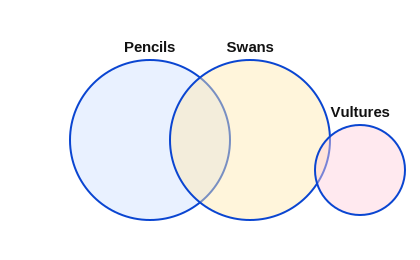
Some pencils are swans.
No vultures are pencils.
Conclusions:
(I) No vultures are swans.
(II) Some swans are not vultures.
दिए गए कथन/कथनों और निष्कर्षों को ध्यानपूर्वक पढ़ें। यह मानते हुए कि कथनों में दी गई जानकारी सत्य है, भले ही वह सामान्य रूप से ज्ञात तथ्यों से भिन्न प्रतीत होती हो, निर्णय लें कि दिए गए निष्कर्षों में से कौन-सा/कौन-से निष्कर्ष कथन/कथनों का तार्किक रूप से अनुसरण करता है/करते हैं।
कथन:
कुछ पेंसिलें, हंस हैं।
कोई गिद्ध, पेंसिल नहीं है।
निष्कर्ष:
(I) कोई गिद्ध, हंस नहीं है।
(II) कुछ हंस, गिद्ध नहीं हैं।
  1. AOnly conclusion (II) follows.केवल निष्कर्ष (II) अनुसरण करता है।
  2. BOnly conclusion (I) follows.केवल निष्कर्ष (I) अनुसरण करता है।
  3. CNeither conclusion (I) nor (II) follows.न तो निष्कर्ष (I) और न ही (II) अनुसरण करता है।
  4. DBoth conclusions (I) and (II) follow.दोनों निष्कर्ष (I) और (II) अनुसरण करते हैं।
Show answer

Concept: Some A are B + No C is A ⇒ Some B are not C.

  1. The swans that are pencils can never be vultures → 'Some swans are not vultures' ✔ (II).
  2. Vultures may still overlap with the other swans → 'No vultures are swans' is not certain ✘ (I).

Short trick: Rule: Some + No = 'Some not' (in the direction of the 'some' term).

Answer: (A) Only conclusion (II) follows.

अवधारणा: कुछ A, B हैं + कोई C, A नहीं ⇒ कुछ B, C नहीं हैं।

  1. जो हंस पेंसिल हैं वे कभी गिद्ध नहीं हो सकते → 'कुछ हंस गिद्ध नहीं हैं' ✔ (II).
  2. गिद्ध अन्य हंसों से मिल सकते हैं → 'कोई गिद्ध हंस नहीं' निश्चित नहीं ✘ (I).

शॉर्ट ट्रिक: नियम: कुछ + कोई नहीं = 'कुछ नहीं' ('कुछ' वाले पद की दिशा में)।

उत्तर: (A) केवल निष्कर्ष (II) अनुसरण करता है।

RRB ALP CBT 1General Intelligence and ReasoningSyllogismRRB ALP CBT 1 2025 · 11 Mar Shift 1 →
Q808.
Refer to the following letter series and answer the question that follows. Counting to be done from left to right only.
(Left) S W L V F E D N M B H I O P L M J U H B N V F R T Y G B V C D E W (Right)
How many letters are there in the English alphabetical series between the letter which is third from right end and the letter that is third from left end?
निम्नलिखित अक्षर श्रृंखला को देखें और नीचे दिए गए प्रश्न का उत्तर दें। गिनती केवल बाएँ से दाएँ की जानी है।
(बाएँ) S W L V F E D N M B H I O P L M J U H B N V F R T Y G B V C D E W (दाएँ)
अंग्रेज़ी वर्णमाला श्रृंखला में दाएँ छोर से तीसरे अक्षर और बाएँ छोर से तीसरे अक्षर के बीच कितने अक्षर हैं?
  1. A7
  2. B4
  3. C6
  4. D9
Show answer

Concept: Locate both letters, then count letters between them in A–Z.

  1. Third from the left end: S, W, L → L.
  2. Third from the right end: W, E, D → D.
  3. Between D (4) and L (12): 12 − 4 − 1 = 7 letters (E, F, G, H, I, J, K).

Short trick: Letters between positions p and q = |p − q| − 1.

Answer: (A) 7

अवधारणा: दोनों अक्षर खोजें, फिर A–Z में उनके बीच के अक्षर गिनें।

  1. बाएँ छोर से तीसरा: S, W, L → L.
  2. दाएँ छोर से तीसरा: W, E, D → D.
  3. D (4) और L (12) के बीच: 12 − 4 − 1 = 7 अक्षर (E, F, G, H, I, J, K)।

शॉर्ट ट्रिक: स्थान p और q के बीच अक्षर = |p − q| − 1.

उत्तर: (A) 7

RRB ALP CBT 1General Intelligence and ReasoningLetter series – positionRRB ALP CBT 1 2025 · 11 Mar Shift 1 →
Q809.
Based on the English alphabetical order, three of the following four letter-clusters are alike in a certain way and thus form a group. Which letter-cluster DOES NOT belong to that group? (Note: The odd one out is not based on the number of consonants/vowels or their position in the letter-cluster.)
अंग्रेज़ी वर्णमाला क्रम के आधार पर, निम्नलिखित चार अक्षर-समूहों में से तीन किसी निश्चित प्रकार से एकसमान हैं और इस प्रकार एक समूह बनाते हैं। कौन-सा अक्षर-समूह उस समूह से संबंधित नहीं है? (नोट: असंगत अक्षर-समूह, उस अक्षर-समूह में व्यंजनों/स्वरों की संख्या या उनके स्थान पर आधारित नहीं है।)
  1. ATYX
  2. BOTS
  3. CFHJ
  4. DCHG
Show answer

Concept: Find the gap pattern within each cluster.

  1. TYX: +5, −1. OTS: +5, −1. CHG: +5, −1.
  2. FHJ: +2, +2 → odd.

Short trick: Only FHJ is in increasing order; the other three go up then step back.

Answer: (C) FHJ

अवधारणा: प्रत्येक समूह के भीतर अंतर का पैटर्न देखें।

  1. TYX: +5, −1. OTS: +5, −1. CHG: +5, −1.
  2. FHJ: +2, +2 → असंगत।

शॉर्ट ट्रिक: केवल FHJ बढ़ते क्रम में; बाकी तीन ऊपर जाकर एक कदम पीछे।

उत्तर: (C) FHJ

RRB ALP CBT 1General Intelligence and ReasoningOdd letter-clusterRRB ALP CBT 1 2025 · 11 Mar Shift 1 →
Q810.
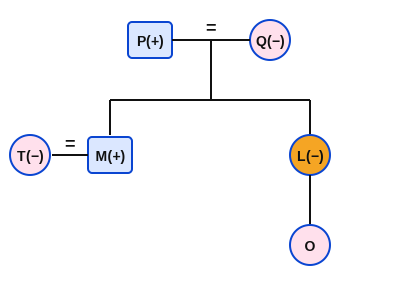
P and Q are married to each other. P is the father of M. M is the husband of T. Q is the mother of L. L is the mother of O. How is L related to M?
P और Q एक-दूसरे से विवाहित हैं। P, M का पिता है। M, T का पति है। Q, L की माता है। L, O की माता है। L का M से क्या संबंध है?
  1. AWifeपत्नी
  2. BSisterबहन
  3. CBrotherभाई
  4. DHusbandपति
Show answer

Concept: Build the family tree; use gender clues.

  1. P (father) and Q (mother) are a couple; M and L are both their children.
  2. M is a husband → male; L is a mother → female.
  3. So L is M's sister.

Short trick: Same parents + L is female → Sister.

Answer: (B) Sister

अवधारणा: वंश-वृक्ष बनाएँ; लिंग संकेतों का उपयोग करें।

  1. P (पिता) और Q (माता) दंपती; M और L दोनों उनकी संतान।
  2. M पति है → पुरुष; L माता है → महिला।
  3. अतः L, M की बहन है।

शॉर्ट ट्रिक: समान माता-पिता + L महिला → बहन।

उत्तर: (B) बहन

RRB ALP CBT 1General Intelligence and ReasoningBlood relationsRRB ALP CBT 1 2025 · 11 Mar Shift 1 →
Q811.
In a certain code language, ‘DASH’ is coded as ‘8465’ and ‘HADE’ is coded as ‘5862’. What is the code for ‘E’ in the given code language?
एक निश्चित कूट भाषा में, ‘DASH’ को ‘8465’ और ‘HADE’ को ‘5862’ के रूप में कूटबद्ध किया जाता है। दी गई कूट भाषा में ‘E’ का कूट क्या है?
  1. A2
  2. B6
  3. C5
  4. D8
Show answer

Concept: Common letters share common digits (order may be jumbled).

  1. Common letters D, A, H ↔ common digits 8, 6, 5.
  2. DASH leftover: S ↔ 4; HADE leftover: E ↔ 2.

Short trick: The unique letter of a word gets the unique digit of its code.

Answer: (A) 2

अवधारणा: उभयनिष्ठ अक्षरों के कूट उभयनिष्ठ अंक (क्रम बदला हो सकता है)।

  1. उभयनिष्ठ अक्षर D, A, H ↔ उभयनिष्ठ अंक 8, 6, 5.
  2. DASH में बचा: S ↔ 4; HADE में बचा: E ↔ 2.

शॉर्ट ट्रिक: शब्द का अनोखा अक्षर उसके कूट का अनोखा अंक लेता है।

उत्तर: (A) 2

RRB ALP CBT 1General Intelligence and ReasoningCoding – common lettersRRB ALP CBT 1 2025 · 11 Mar Shift 1 →
Q812.
Refer to the following letter, symbol series and answer the question.
(Left) R T % & V B M > < Y P L + A # ^ & ? A S P I % + E # A @ Q B T G & + % C ? (Right)
If all the symbols are dropped from the series, which of the following will be fifth from the right?
निम्नलिखित अक्षर, प्रतीक श्रृंखला को देखें और प्रश्न का उत्तर दें।
(बाएँ) R T % & V B M > < Y P L + A # ^ & ? A S P I % + E # A @ Q B T G & + % C ? (दाएँ)
यदि श्रृंखला से सभी प्रतीक हटा दिए जाएँ, तो निम्नलिखित में से कौन-सा दाएँ से पाँचवाँ होगा?
  1. AM
  2. BY
  3. CQ
  4. DB
Show answer

Concept: Drop all symbols and count from the right.

  1. Letters from the right end: C (1), G (2), T (3), B (4), Q (5).
  2. Fifth from the right = Q.

Short trick: Only the right end matters — rewrite just the last few letters.

Answer: (C) Q

अवधारणा: सभी प्रतीक हटाकर दाएँ से गिनें।

  1. दाएँ छोर से अक्षर: C (1), G (2), T (3), B (4), Q (5).
  2. दाएँ से पाँचवाँ = Q.

शॉर्ट ट्रिक: केवल दायाँ छोर देखें — अंतिम कुछ अक्षर ही लिखें।

उत्तर: (C) Q

RRB ALP CBT 1General Intelligence and ReasoningLetter–symbol seriesRRB ALP CBT 1 2025 · 11 Mar Shift 1 →
Q813.
Each vowel in the word CERTAIN is changed to the letter immediately following it in the English alphabetical order and each consonant is changed to the letter immediately preceding it in the English alphabetical order. Which of the following letters will appear exactly twice in the group of letters thus formed?
शब्द CERTAIN में प्रत्येक स्वर को अंग्रेज़ी वर्णमाला क्रम में उसके ठीक बाद वाले अक्षर में बदल दिया जाता है और प्रत्येक व्यंजन को अंग्रेज़ी वर्णमाला क्रम में उसके ठीक पहले वाले अक्षर में बदल दिया जाता है। इस प्रकार बने अक्षरों के समूह में निम्नलिखित में से कौन-सा अक्षर ठीक दो बार आएगा?
  1. AS
  2. BQ
  3. CJ
  4. DB
Show answer

Concept: Vowel → next letter, consonant → previous letter.

  1. C→B, E→F, R→Q, T→S, A→B, I→J, N→M.
  2. New group: B F Q S B J M → B appears twice.

Short trick: B can come from A (vowel +1) and from C (consonant −1) — CERTAIN has both.

Answer: (D) B

अवधारणा: स्वर → अगला अक्षर, व्यंजन → पिछला अक्षर।

  1. C→B, E→F, R→Q, T→S, A→B, I→J, N→M.
  2. नया समूह: B F Q S B J M → B दो बार।

शॉर्ट ट्रिक: B, A (स्वर +1) और C (व्यंजन −1) दोनों से बनता है — CERTAIN में दोनों हैं।

उत्तर: (D) B

RRB ALP CBT 1General Intelligence and ReasoningLetter transformationRRB ALP CBT 1 2025 · 11 Mar Shift 1 →
Q814.
Each of G, H, I, J, K, L and M has an exam on a different day of a week starting from Monday and ending on Sunday of the same week. L has an exam on Saturday. Only two persons have exam between G and L. Only one person has exam between G and I but I's exam is not on the first day. Only two persons have exams between J and I. K has exam immediately before J. H's exam is not on the last day. On which day does H have the exam?
G, H, I, J, K, L और M में से प्रत्येक की परीक्षा एक ही सप्ताह के सोमवार से शुरू होकर रविवार को समाप्त होने वाले सप्ताह के अलग-अलग दिन है। L की परीक्षा शनिवार को है। G और L के बीच केवल दो व्यक्तियों की परीक्षा है। G और I के बीच केवल एक व्यक्ति की परीक्षा है लेकिन I की परीक्षा पहले दिन नहीं है। J और I के बीच केवल दो व्यक्तियों की परीक्षाएँ हैं। K की परीक्षा J से ठीक पहले है। H की परीक्षा अंतिम दिन नहीं है। H की परीक्षा किस दिन है?
  1. AThursdayगुरुवार
  2. BMondayसोमवार
  3. CSundayरविवार
  4. DTuesdayमंगलवार
Show answer

Concept: Fix the definite days and work outward.

  1. L = Saturday; two between G and L → G = Wednesday.
  2. One between G and I, I not Monday → I = Friday.
  3. Two between J and I → J = Tuesday; K just before J → K = Monday.
  4. Thursday and Sunday remain for H and M; H not on the last day → H = Thursday.

Short trick: Use a 7-slot strip Mon–Sun and fill L, G, I, J, K in one pass.

Answer: (A) Thursday

अवधारणा: निश्चित दिन तय करके आगे बढ़ें।

  1. L = शनिवार; G और L के बीच दो → G = बुधवार।
  2. G और I के बीच एक, I सोमवार नहीं → I = शुक्रवार।
  3. J और I के बीच दो → J = मंगलवार; K, J से ठीक पहले → K = सोमवार।
  4. गुरुवार और रविवार H, M के लिए; H अंतिम दिन नहीं → H = गुरुवार।

शॉर्ट ट्रिक: सोम–रवि के 7 खाने बनाकर एक बार में L, G, I, J, K भरें।

उत्तर: (A) गुरुवार

RRB ALP CBT 1General Intelligence and ReasoningDay-based schedulingRRB ALP CBT 1 2025 · 11 Mar Shift 1 →
Q815.
What should come in place of ? in the given series?
31 32 34 38 46 ?
दी गई श्रृंखला में ? के स्थान पर क्या आना चाहिए?
31 32 34 38 46 ?
  1. A62
  2. B63
  3. C61
  4. D64
Show answer

Concept: Differences are powers of 2.

  1. Differences: 1, 2, 4, 8 → next 16.
  2. 46 + 16 = 62.

Short trick: Each difference doubles: 8 × 2 = 16.

Answer: (A) 62

अवधारणा: अंतर 2 की घातें हैं।

  1. अंतर: 1, 2, 4, 8 → अगला 16.
  2. 46 + 16 = 62.

शॉर्ट ट्रिक: हर अंतर दोगुना: 8 × 2 = 16.

उत्तर: (A) 62

RRB ALP CBT 1General Intelligence and ReasoningNumber series – doubling differencesRRB ALP CBT 1 2025 · 11 Mar Shift 1 →
Q816.
The refractive index of water is 1.33. What does this value mean?
जल का अपवर्तनांक 1.33 है। इस मान का क्या अर्थ है?
  1. ALight travels 1.33 times faster in water than in air.प्रकाश वायु की तुलना में जल में 1.33 गुना तेज़ चलता है।
  2. BThe speed of light in air is 1.33 times the speed of light in water.वायु में प्रकाश की चाल, जल में प्रकाश की चाल की 1.33 गुना है।
  3. CLight travels 1.33 times slower in air than in water.प्रकाश जल की तुलना में वायु में 1.33 गुना धीमा चलता है।
  4. DThe speed of light in water and air is the same.जल और वायु में प्रकाश की चाल समान है।
Show answer

Concept: Refractive index of a medium n = c (speed in air/vacuum) ÷ v (speed in the medium).

  1. n=cv=1.33 ⇒ c=1.33v.
  2. So light in air is 1.33 times faster than in water; light slows down in water.

Short trick: Memory hook: 'n = c by v' — bigger n, slower light (denser medium).

Answer: (B) The speed of light in air is 1.33 times the speed of light in water.

अवधारणा: किसी माध्यम का अपवर्तनांक n = c (वायु/निर्वात में चाल) ÷ v (माध्यम में चाल)।

  1. n=cv=1.33 ⇒ c=1.33v.
  2. अतः वायु में प्रकाश की चाल जल से 1.33 गुना है; जल में प्रकाश धीमा हो जाता है।

शॉर्ट ट्रिक: याद रखें: 'n = c बटा v' — n जितना बड़ा, प्रकाश उतना धीमा (सघन माध्यम)।

उत्तर: (B) वायु में प्रकाश की चाल, जल में प्रकाश की चाल की 1.33 गुना है।

RRB ALP CBT 1General ScienceRefractive indexRRB ALP CBT 1 2025 · 11 Mar Shift 1 →
Q817.
In carbon dioxide (CO₂), 12 g of carbon (C) combines with 32 g of oxygen (O). If 36 g of carbon is used, how much oxygen will combine according to the law of constant proportions?
कार्बन डाइऑक्साइड (CO₂) में, 12 g कार्बन (C), 32 g ऑक्सीजन (O) के साथ संयोग करता है। यदि 36 g कार्बन का उपयोग किया जाए, तो स्थिर अनुपात के नियम के अनुसार कितनी ऑक्सीजन संयोग करेगी?
  1. A96 g
  2. B64 g
  3. C48 g
  4. D72 g
Show answer

Concept: A compound always contains its elements in a fixed ratio by mass (C : O = 12 : 32 = 3 : 8 in CO₂).

  1. 36 g C = 3 × 12 g.
  2. Oxygen = 3 × 32 = 96 g.

Short trick: Carbon tripled → oxygen tripled. (Law given by Proust.)

Answer: (A) 96 g

अवधारणा: एक यौगिक में तत्व सदैव द्रव्यमान के निश्चित अनुपात में होते हैं (CO₂ में C : O = 12 : 32 = 3 : 8)।

  1. 36 g C = 3 × 12 g.
  2. ऑक्सीजन = 3 × 32 = 96 g.

शॉर्ट ट्रिक: कार्बन तिगुना → ऑक्सीजन तिगुनी। (नियम: प्राउस्ट)

उत्तर: (A) 96 g

RRB ALP CBT 1General ScienceLaw of constant proportionsRRB ALP CBT 1 2025 · 11 Mar Shift 1 →
Q818.
In traditional grain storage, farmers often mix grains with neem leaves to prevent:
पारंपरिक अनाज भंडारण में, किसान अक्सर अनाज के साथ नीम की पत्तियाँ मिलाते हैं ताकि रोका जा सके:
  1. AMoisture absorptionनमी अवशोषण
  2. BGerminationअंकुरण
  3. CLoss of nutrientsपोषक तत्वों की हानि
  4. DInsect infestationकीट संक्रमण
Show answer

Concept: Dried neem leaves act as a natural insect repellent in stored grain.

  1. Neem contains azadirachtin, which repels and disrupts the growth of storage pests (weevils, beetles, moths).
  2. It is a cheap, chemical-free method used at home and on farms.

Short trick: Hook: Neem = natural pesticide (azadirachtin).

Answer: (D) Insect infestation

अवधारणा: सूखी नीम की पत्तियाँ भंडारित अनाज में प्राकृतिक कीट-विकर्षक का काम करती हैं।

  1. नीम में एज़ाडिरैक्टिन होता है, जो भंडारण कीटों (घुन, भृंग, पतंगे) को दूर रखता है और उनकी वृद्धि रोकता है।
  2. यह सस्ती और रसायन-रहित विधि है।

शॉर्ट ट्रिक: याद रखें: नीम = प्राकृतिक कीटनाशक (एज़ाडिरैक्टिन)।

उत्तर: (D) कीट संक्रमण

RRB ALP CBT 1General ScienceStorage of food grainsRRB ALP CBT 1 2025 · 11 Mar Shift 1 →
Q819.
Digestion of food by means of gastric glands and hydrochloric acid takes place in which part of the body?
गैस्ट्रिक ग्रंथियों और हाइड्रोक्लोरिक अम्ल द्वारा भोजन का पाचन शरीर के किस भाग में होता है?
  1. ALarge intestineबड़ी आंत
  2. BStomachआमाशय
  3. CSmall intestineछोटी आंत
  4. DPancreasअग्न्याशय
Show answer

Concept: Gastric glands in the stomach wall secrete HCl, pepsin and mucus.

  1. HCl makes the medium acidic and kills germs; it activates pepsin for protein digestion.
  2. Mucus protects the stomach lining from the acid.

Short trick: 'Gastric' = stomach (Greek gaster).

Answer: (B) Stomach

अवधारणा: आमाशय की भित्ति की जठर ग्रंथियाँ HCl, पेप्सिन और श्लेष्मा स्रावित करती हैं।

  1. HCl माध्यम को अम्लीय बनाता है, कीटाणु मारता है और प्रोटीन पाचन हेतु पेप्सिन को सक्रिय करता है।
  2. श्लेष्मा अम्ल से आमाशय की परत की रक्षा करता है।

शॉर्ट ट्रिक: 'गैस्ट्रिक' = आमाशय (यूनानी gaster)।

उत्तर: (B) आमाशय

RRB ALP CBT 1General ScienceHuman digestive systemRRB ALP CBT 1 2025 · 11 Mar Shift 1 →
Q820.
Which of the following is NOT an example of a single cell that constitutes a complete organism?
निम्नलिखित में से कौन-सा एकल कोशिका का उदाहरण नहीं है जो एक पूर्ण जीव का निर्माण करती है?
  1. AAmoebaअमीबा
  2. BChlamydomonasक्लैमाइडोमोनास
  3. CParamoeciumपैरामीशियम
  4. DCycasसाइकस
Show answer

Concept: Unicellular organisms: a single cell performs all life functions.

  1. Amoeba, Paramoecium (protozoa) and Chlamydomonas (green alga) are unicellular.
  2. Cycas is a multicellular gymnosperm plant (a 'living fossil').

Short trick: Hook: Cycas = a tree-like plant you can see — never one cell.

Answer: (D) Cycas

अवधारणा: एककोशिकीय जीव: एक ही कोशिका सभी जीवन क्रियाएँ करती है।

  1. अमीबा, पैरामीशियम (प्रोटोज़ोआ) और क्लैमाइडोमोनास (हरा शैवाल) एककोशिकीय हैं।
  2. साइकस एक बहुकोशिकीय अनावृतबीजी पौधा ('जीवित जीवाश्म') है।

शॉर्ट ट्रिक: याद रखें: साइकस = दिखने वाला पेड़ जैसा पौधा — कभी एक कोशिका नहीं।

उत्तर: (D) साइकस

RRB ALP CBT 1General ScienceUnicellular organismsRRB ALP CBT 1 2025 · 11 Mar Shift 1 →