Question bank

Q&A: practice questions with answers

Search questions on any topic. Filter by exam category, exam, subject and topic, try the question, then open the answer and explanation.

Courses – airGurukul

20,719 questions found.

Q8601.
Karuna, Jyoti, Shiv, Ram, Puran, Om and Luv are sitting around a circular table, facing the centre. Shiv sits third to the left of Luv. Karuna sits second to the left of Shiv. Jyoti sits third to the right of Puran. Ram sits second to the right of Jyoti. Ram is not an immediate neighbour of Shiv. Who sits to the immediate left of Ram?
करुणा, ज्योति, शिव, राम, पूरन, ओम और लव एक वृत्ताकार मेज़ के चारों ओर केंद्र की ओर मुख करके बैठे हैं। शिव, लव के बाईं ओर तीसरे स्थान पर बैठा है। करुणा, शिव के बाईं ओर दूसरे स्थान पर बैठी है। ज्योति, पूरन के दाईं ओर तीसरे स्थान पर बैठी है। राम, ज्योति के दाईं ओर दूसरे स्थान पर बैठा है। राम, शिव का निकटतम पड़ोसी नहीं है। राम के ठीक बाईं ओर कौन बैठा है?
  1. ALuvलव
  2. BKarunaकरुणा
  3. COmओम
  4. DPuranपूरन
Show answer

Concept: Facing the centre, "left" means clockwise and "right" means anticlockwise.
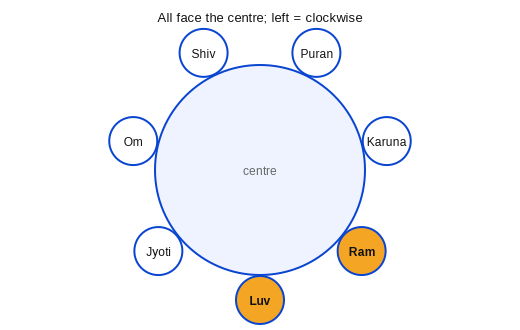
  1. Fix Luv; Shiv is 3rd to his left and Karuna 2nd to the left of Shiv.
  2. Jyoti is 3rd to the right of Puran and Ram is 2nd to the right of Jyoti, so Ram is 2nd to the left of Puran.
  3. Only one fit keeps Ram away from Shiv: Puran, Ram, Luv consecutive with Om and Jyoti on the other side (see figure).
  4. Ram sits between Karuna and Luv; going left (clockwise) from Ram we reach Luv.

Trick: Draw the fixed pair first (Luv–Shiv–Karuna) and test the free chain.

Answer: (A) Luv

अवधारणा: केंद्र की ओर मुख हो तो "बाएँ" = दक्षिणावर्त (clockwise) और "दाएँ" = वामावर्त।

  1. लव को स्थिर करें; शिव उसके बाएँ तीसरे और करुणा शिव के बाएँ दूसरे स्थान पर।
  2. ज्योति, पूरन के दाएँ तीसरे और राम, ज्योति के दाएँ दूसरे – अर्थात राम, पूरन के बाएँ दूसरे।
  3. राम को शिव से दूर रखने वाली केवल एक व्यवस्था बनती है (चित्र देखें)।
  4. राम, करुणा और लव के बीच है; राम के ठीक बाएँ लव है।

ट्रिक: पहले स्थिर समूह (लव–शिव–करुणा) बनाएँ, फिर बाकी जाँचें।

उत्तर: (A) Luv
RRB NTPC Graduate CBT 1General Intelligence and ReasoningCircular Seating ArrangementRRB NTPC Graduate CBT 1 2024 · 16 Jun Shift 3 →
Q8602.
Two sets of numbers are given below. In each set of numbers, certain mathematical operation(s) on the first number results in the second number. Similarly, certain mathematical operation(s) on the second number results in the third number and so on. Which of the given options follows the same set of operations as in the given sets? (NOTE: Operations should be performed on the whole numbers, without breaking down the numbers into their constituent digits. E.g. 13 – Operations on 13 such as adding / subtracting / multiplying to 13 can be performed. Breaking down 13 into 1 and 3 and then performing mathematical operations on 1 and 3 is not allowed.)
13 - 26 - 30 - 60; 5 - 10 - 14 - 28
नीचे संख्याओं के दो समुच्चय दिए गए हैं। संख्याओं के प्रत्येक समुच्चय में, पहली संख्या पर कुछ निश्चित गणितीय संक्रिया/संक्रियाएँ करने पर दूसरी संख्या प्राप्त होती है। इसी प्रकार, दूसरी संख्या पर कुछ निश्चित गणितीय संक्रिया/संक्रियाएँ करने पर तीसरी संख्या प्राप्त होती है और इसी तरह आगे भी। दिए गए विकल्पों में से कौन-सा विकल्प दिए गए समुच्चयों की तरह संक्रियाओं के समान समुच्चय का अनुसरण करता है? (नोट: संख्याओं को उनके घटक अंकों में विभाजित किए बिना, पूर्ण संख्याओं पर संक्रियाएँ की जानी चाहिए। उदाहरण 13 – 13 पर संक्रियाएँ जैसे 13 में जोड़ना/घटाना/गुणा करना आदि किया जा सकता है। 13 को 1 और 3 में विभाजित करके फिर 1 और 3 पर गणितीय संक्रियाएँ करने की अनुमति नहीं है।)
13 - 26 - 30 - 60; 5 - 10 - 14 - 28
  1. A3 - 6 - 10 - 30
  2. B7 - 14 - 18 - 22
  3. C10 - 20 - 24 - 48
  4. D2 - 4 - 8 - 12
Show answer

Concept: Find the operations between consecutive numbers.

  1. 13×2=26, 26+4=30, 30×2=60.
  2. 5×2=10, 10+4=14, 14×2=28.
  3. Pattern: ×2, +4, ×2.
  4. Option C: 10×2=20, 20+4=24, 24×2=48. ✓

Trick: Check the last step: only 24×2=48 fits among the options.

Answer: (C) 10 - 20 - 24 - 48

अवधारणा: क्रमागत संख्याओं के बीच संक्रियाएँ खोजें।

  1. 13×2=26, 26+4=30, 30×2=60।
  2. 5×2=10, 10+4=14, 14×2=28।
  3. नियम: ×2, +4, ×2।
  4. विकल्प C: 10×2=20, 20+4=24, 24×2=48 ✓।

ट्रिक: अंतिम चरण जाँचें: केवल 24×2=48 नियम पर खरा उतरता है।

उत्तर: (C) 10 - 20 - 24 - 48

RRB NTPC Graduate CBT 1General Intelligence and ReasoningNumber Series – OperationsRRB NTPC Graduate CBT 1 2024 · 16 Jun Shift 3 →
Q8603.
Read the given statements and conclusions carefully. Assuming that the information given in the statements is true, even if it appears to be at variance with commonly known facts, decide which of the given conclusion(s) logically follow(s) from the statements.
Statements:
All lions are tigers.
Some tigers are leopard.
No leopard is giraffe.
Conclusions:
(I) Some leopards are lions.
(II) Some giraffe can be tigers.
दिए गए कथनों और निष्कर्षों को ध्यानपूर्वक पढ़िए। कथनों में दी गई जानकारी को सत्य मानते हुए, भले ही वह सामान्यतः ज्ञात तथ्यों से भिन्न प्रतीत होती हो, निर्णय लीजिए कि दिए गए निष्कर्षों में से कौन-सा/से निष्कर्ष कथनों का तार्किक रूप से अनुसरण करता है/करते हैं।
कथन:
सभी शेर, बाघ हैं।
कुछ बाघ, तेंदुए हैं।
कोई तेंदुआ, जिराफ़ नहीं है।
निष्कर्ष:
(I) कुछ तेंदुए, शेर हैं।
(II) कुछ जिराफ़, बाघ हो सकते हैं।
  1. ABoth conclusions (I) and (II) followनिष्कर्ष (I) और (II) दोनों अनुसरण करते हैं
  2. BOnly conclusion (I) followsकेवल निष्कर्ष (I) अनुसरण करता है
  3. CEither conclusion (I) or conclusion (II) followsया तो निष्कर्ष (I) या निष्कर्ष (II) अनुसरण करता है
  4. DOnly conclusion (II) followsकेवल निष्कर्ष (II) अनुसरण करता है
Show answer

Concept: Draw the least possible Venn diagram and test each conclusion.

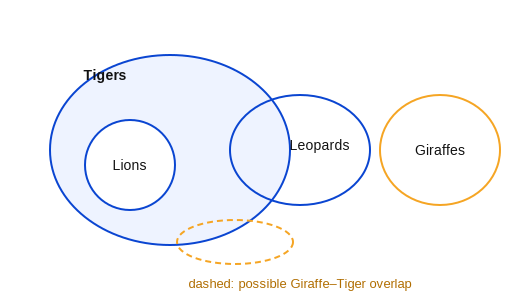
  1. Lions lie inside Tigers; Leopards only partly overlap Tigers.
  2. (I) Lions and Leopards need not meet → not definite → does not follow.
  3. (II) Giraffes are separated only from Leopards, not from Tigers, so a Giraffe–Tiger overlap is possible → follows.

Trick: "Can be" conclusions follow whenever no statement forbids them.

Answer: (D) Only conclusion (II) follows

अवधारणा: न्यूनतम वेन आरेख बनाकर प्रत्येक निष्कर्ष जाँचें।

  1. Lions पूरी तरह Tigers के अंदर; Leopards का Tigers से आंशिक मेल।
  2. (I) Lions और Leopards का मिलना निश्चित नहीं → अनुसरण नहीं करता।
  3. (II) Giraffe केवल Leopard से अलग है, Tiger से नहीं; अतः Giraffe–Tiger संभव → अनुसरण करता है।

ट्रिक: "हो सकता है" वाले निष्कर्ष तब सही होते हैं जब कोई कथन उन्हें रोकता न हो।

उत्तर: (D) Only conclusion (II) follows

RRB NTPC Graduate CBT 1General Intelligence and ReasoningSyllogismRRB NTPC Graduate CBT 1 2024 · 16 Jun Shift 3 →
Q8604.
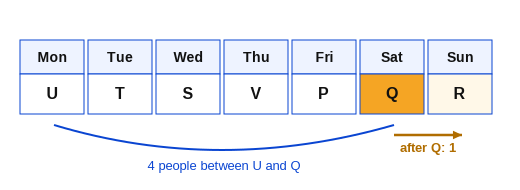
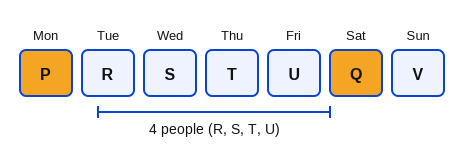
Each of P, Q, R, S, T, U and V has an exam on a different day of a week starting from Monday and ending on Sunday of the same week. V has an exam on Thursday. Exactly 4 people have their exams between U and Q, neither of whom has an exam on Sunday. T has an exam immediately before S. R does not have an exam on Friday. U does not have an exam after S. How many people have exams after Q?
P, Q, R, S, T, U और V में से प्रत्येक की परीक्षा एक ही सप्ताह के सोमवार से शुरू होकर रविवार को समाप्त होने वाले सप्ताह के अलग-अलग दिन है। V की परीक्षा गुरुवार को है। U और Q के बीच ठीक 4 लोगों की परीक्षाएँ हैं, इन दोनों में से किसी की भी परीक्षा रविवार को नहीं है। T की परीक्षा S से ठीक पहले है। R की परीक्षा शुक्रवार को नहीं है। U की परीक्षा S के बाद नहीं है। Q के बाद कितने लोगों की परीक्षाएँ हैं?
  1. A3
  2. B1
  3. C4
  4. D2
Show answer

Concept: Fix the definite clues first: V on Thursday and the U–Q gap.

  1. 4 people between U and Q → (Mon, Sat) or (Tue, Sun); none on Sunday → U, Q on Mon and Sat.
  2. If U were Saturday, S would need Sunday and T Saturday – clash. So U = Mon, Q = Sat.
  3. T immediately before S → Tue, Wed. R not Friday → R = Sun, P = Fri.
  4. After Q (Saturday) only R (Sunday) → 1 person.

Trick: "Exactly 4 between" in a 7-day week means positions 1 & 6 or 2 & 7.

Answer: (B) 1

अवधारणा: पहले निश्चित सूचनाएँ रखें: V गुरुवार और U–Q का अंतर।

  1. U और Q के बीच 4 लोग → (सोम, शनि) या (मंगल, रवि); रविवार नहीं → सोम और शनि।
  2. U शनिवार हो तो S रविवार व T शनिवार – टकराव। अतः U = सोम, Q = शनि।
  3. T, S से ठीक पहले → मंगल, बुध। R शुक्रवार नहीं → R = रवि, P = शुक्र।
  4. Q (शनिवार) के बाद केवल R → 1 व्यक्ति।

ट्रिक: 7 दिनों में "ठीक 4 बीच में" = स्थान 1 व 6 या 2 व 7।

उत्तर: (B) 1

RRB NTPC Graduate CBT 1General Intelligence and ReasoningScheduling PuzzleRRB NTPC Graduate CBT 1 2024 · 16 Jun Shift 3 →
Q8605.
This question is based on the five, three-digit numbers given below.
(Left) 190 735 494 761 781 (Right)
(Example- 697 – First digit = 6, second digit = 9 and third digit = 7)
(NOTE: All operations to be done from left to right.)
What will be the resultant if the second digit of the highest number is subtracted from the second digit of the lowest number?
यह प्रश्न नीचे दी गई पाँच, तीन अंकों वाली संख्याओं पर आधारित है।
(बाएँ) 190 735 494 761 781 (दाएँ)
(उदाहरण- 697 – पहला अंक = 6, दूसरा अंक = 9 और तीसरा अंक = 7)
(नोट: सभी संक्रियाएँ बाएँ से दाएँ की जानी हैं।)
यदि सबसे बड़ी संख्या के दूसरे अंक को सबसे छोटी संख्या के दूसरे अंक में से घटाया जाए, तो परिणाम क्या होगा?
  1. A0
  2. B4
  3. C2
  4. D1
Show answer

Concept: Pick the highest and lowest numbers, then take their second digits.

  1. Highest = 781 → second digit 8; lowest = 190 → second digit 9.
  2. Second digit of highest subtracted from that of lowest: 9−8=1.

Trick: "A subtracted from B" means B−A.

Answer: (D) 1

अवधारणा: सबसे बड़ी और सबसे छोटी संख्या चुनकर उनके दूसरे अंक लें।

  1. सबसे बड़ी = 781 → दूसरा अंक 8; सबसे छोटी = 190 → दूसरा अंक 9।
  2. सबसे बड़ी का दूसरा अंक, सबसे छोटी के दूसरे अंक में से घटाएँ: 9−8=1।

ट्रिक: "A को B में से घटाना" = B−A।

उत्तर: (D) 1

RRB NTPC Graduate CBT 1General Intelligence and ReasoningNumber ArrangementRRB NTPC Graduate CBT 1 2024 · 16 Jun Shift 3 →
Q8606.
Which of the following letter-number clusters will replace the question mark (?) in the given series to make it logically complete?
SM13 QK25 OI37 MG49 ?
निम्नलिखित में से कौन-सा अक्षर-संख्या समूह दी गई श्रृंखला को तार्किक रूप से पूर्ण करने के लिए प्रश्न चिह्न (?) का स्थान लेगा?
SM13 QK25 OI37 MG49 ?
  1. AKF62
  2. BKE62
  3. CKE61
  4. DKF61
Show answer

Concept: Treat the first letter, second letter and number as three separate series.

  1. First letters: S, Q, O, M → −2 each → K.
  2. Second letters: M, K, I, G → −2 each → E.
  3. Numbers: 13, 25, 37, 49 → +12 each → 61.

Trick: Each part moves by a constant: −2, −2, +12.

Answer: (C) KE61

अवधारणा: पहला अक्षर, दूसरा अक्षर और संख्या – तीन अलग श्रृंखलाएँ मानें।

  1. पहले अक्षर: S, Q, O, M → हर बार −2 → K।
  2. दूसरे अक्षर: M, K, I, G → हर बार −2 → E।
  3. संख्याएँ: 13, 25, 37, 49 → हर बार +12 → 61।

ट्रिक: हर भाग स्थिर अंतर से चलता है: −2, −2, +12।

उत्तर: (C) KE61

RRB NTPC Graduate CBT 1General Intelligence and ReasoningAlpha-Numeric SeriesRRB NTPC Graduate CBT 1 2024 · 16 Jun Shift 3 →
Q8607.
What will come in the place of the question mark ‘(?)’ in the following equation, if ‘+’ and ‘−’ are interchanged and ‘×’ and ‘÷’ are interchanged?
43 ÷ 9 − 988 × 2 + 11 = ?
यदि ‘+’ और ‘−’ को आपस में बदल दिया जाए तथा ‘×’ और ‘÷’ को आपस में बदल दिया जाए, तो निम्नलिखित समीकरण में प्रश्न चिह्न ‘(?)’ के स्थान पर क्या आएगा?
43 ÷ 9 − 988 × 2 + 11 = ?
  1. A880
  2. B895
  3. C870
  4. D875
Show answer

Concept: Interchange the signs, then follow BODMAS.

  1. New expression: 43×9+988÷2−11.
  2. 43×9=387 and 988÷2=494.
  3. 387+494−11=870.

Trick: Do × and ÷ first, then + and − from left to right.

Answer: (C) 870

अवधारणा: चिह्न बदलें, फिर BODMAS लगाएँ।

  1. नया व्यंजक: 43×9+988÷2−11।
  2. 43×9=387 और 988÷2=494।
  3. 387+494−11=870।

ट्रिक: पहले × और ÷, फिर बाएँ से दाएँ + और −।

उत्तर: (C) 870

RRB NTPC Graduate CBT 1General Intelligence and ReasoningMathematical OperationsRRB NTPC Graduate CBT 1 2024 · 16 Jun Shift 3 →
Q8608.
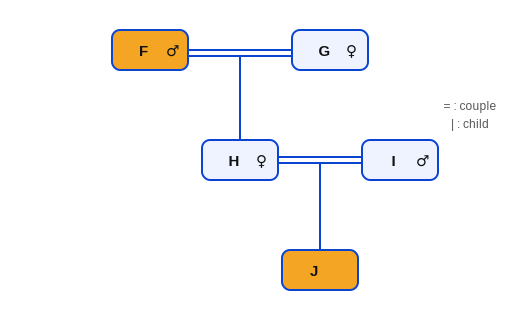
​F is the husband of G. G is the mother of H. H is the wife of I. I is the father of J. How is F related to J?
F, G का पति है। G, H की माता है। H, I की पत्नी है। I, J का पिता है। F का J से क्या संबंध है?
  1. AMother's brotherमाता का भाई
  2. BMother's fatherमाता का पिता
  3. CFather's fatherपिता का पिता
  4. DFather's brotherपिता का भाई
Show answer

Concept: Draw the family tree generation by generation.

  1. F (male) is the husband of G; G is the mother of H, so F is H’s father.
  2. H is the wife of I, and I is the father of J → H is J’s mother.
  3. F is the father of J’s mother.

Trick: Father of mother = maternal grandfather (Nana).

Answer: (B) Mother's father

अवधारणा: पीढ़ी-दर-पीढ़ी वंश वृक्ष बनाएँ।

  1. F (पुरुष), G का पति है; G, H की माँ है → F, H का पिता।
  2. H, I की पत्नी है और I, J का पिता → H, J की माँ।
  3. F, J की माँ का पिता है।

ट्रिक: माँ के पिता = नाना।

उत्तर: (B) Mother's father

RRB NTPC Graduate CBT 1General Intelligence and ReasoningBlood RelationsRRB NTPC Graduate CBT 1 2024 · 16 Jun Shift 3 →
Q8609.
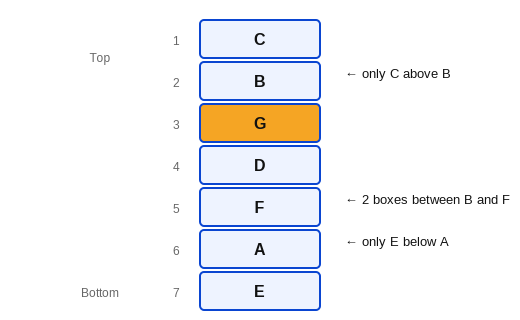
Seven boxes, A, B, C, D, E, F and G, are kept one above the other but not necessarily in the same order. Only C is kept above B. Only two boxes are kept between B and F. Only E is kept below A. G is not kept immediately above F. How many boxes are kept above G?
सात बक्से, A, B, C, D, E, F और G, एक के ऊपर एक रखे गए हैं, लेकिन आवश्यक नहीं कि इसी क्रम में हों। केवल C को B के ऊपर रखा गया है। B और F के बीच केवल दो बक्से रखे गए हैं। केवल E को A के नीचे रखा गया है। G को F के ठीक ऊपर नहीं रखा गया है। G के ऊपर कितने बक्से रखे गए हैं?
  1. A4
  2. B2
  3. C1
  4. D3
Show answer

Concept: Number the positions 1 (top) to 7 (bottom) and fix the "only" clues.

  1. Only C above B → C = 1, B = 2.
  2. Only E below A → A = 6, E = 7.
  3. Two boxes between B and F → F = 5.
  4. G not immediately above F → G ≠ 4, so G = 3, D = 4. Above G: C and B → 2.

Trick: "Only X above Y" fixes both at the top immediately.

Answer: (B) 2

अवधारणा: स्थान 1 (ऊपर) से 7 (नीचे) तक मानें और "केवल" वाले संकेत पहले लगाएँ।

  1. केवल C, B के ऊपर → C = 1, B = 2।
  2. केवल E, A के नीचे → A = 6, E = 7।
  3. B और F के बीच दो बक्से → F = 5।
  4. G, F के ठीक ऊपर नहीं → G = 3, D = 4। G के ऊपर C, B → 2।

ट्रिक: "केवल X, Y के ऊपर" से दोनों तुरंत सबसे ऊपर तय होते हैं।

उत्तर: (B) 2

RRB NTPC Graduate CBT 1General Intelligence and ReasoningVertical ArrangementRRB NTPC Graduate CBT 1 2024 · 16 Jun Shift 3 →
Q8610.
Based on the English alphabetical order, three of the following four letter-cluster pairs are alike in a certain way and thus form a group. Which letter-cluster pair DOES NOT belong to that group?
(Note: The odd one out is not based on the number of consonants/vowels or their position in the letter-cluster.)
अंग्रेज़ी वर्णमाला क्रम के आधार पर, निम्नलिखित चार अक्षर-समूह युग्मों में से तीन किसी निश्चित प्रकार से एक समान हैं और इस प्रकार एक समूह बनाते हैं। कौन-सा अक्षर-समूह युग्म उस समूह से संबंधित नहीं है?
(नोट: असंगत का चयन व्यंजनों/स्वरों की संख्या या अक्षर-समूह में उनके स्थान पर आधारित नहीं है।)
  1. AOR – TN
  2. BJM – OH
  3. CSV – XQ
  4. DBE – GZ
Show answer

Concept: Compare positions: 1st→2nd letter, 1st→3rd letter, 2nd→4th letter.

  1. JM – OH: J+3 = M, J+5 = O, M−5 = H.
  2. SV – XQ: S+3 = V, S+5 = X, V−5 = Q.
  3. BE – GZ: B+3 = E, B+5 = G, E−5 = Z (cyclic).
  4. OR – TN: O+3 = R, O+5 = T but R−4 = N (should be M) → odd.

Trick: Pattern +3, +5, −5; break in the last letter gives the odd one.

Answer: (A) OR – TN

अवधारणा: स्थान तुलना करें: पहला→दूसरा, पहला→तीसरा, दूसरा→चौथा अक्षर।

  1. JM – OH: J+3 = M, J+5 = O, M−5 = H।
  2. SV – XQ: S+3 = V, S+5 = X, V−5 = Q।
  3. BE – GZ: B+3 = E, B+5 = G, E−5 = Z (चक्रीय)।
  4. OR – TN: O+3 = R, O+5 = T पर R−4 = N (M होना चाहिए) → विषम।

ट्रिक: नियम +3, +5, −5; अंतिम अक्षर में टूट = विषम।

उत्तर: (A) OR – TN

RRB NTPC Graduate CBT 1General Intelligence and ReasoningOdd One Out – Letter PairsRRB NTPC Graduate CBT 1 2024 · 16 Jun Shift 3 →
Q8611.
Select the letter-cluster from among the given options that can replace the question mark (?) in the following series.
YOD WNF UMH SLJ ?
दिए गए विकल्पों में से उस अक्षर-समूह का चयन कीजिए जो निम्नलिखित श्रृंखला में प्रश्न चिह्न (?) का स्थान ले सकता है।
YOD WNF UMH SLJ ?
  1. AQKL
  2. BQLL
  3. CQKK
  4. DQLK
Show answer

Concept: Track each letter position separately.

  1. 1st letters: Y, W, U, S → −2 → Q.
  2. 2nd letters: O, N, M, L → −1 → K.
  3. 3rd letters: D, F, H, J → +2 → L.

Trick: Three positions move by −2, −1, +2.

Answer: (A) QKL

अवधारणा: प्रत्येक स्थान के अक्षर अलग-अलग देखें।

  1. पहले अक्षर: Y, W, U, S → −2 → Q।
  2. दूसरे अक्षर: O, N, M, L → −1 → K।
  3. तीसरे अक्षर: D, F, H, J → +2 → L।

ट्रिक: तीन स्थान −2, −1, +2 से चलते हैं।

उत्तर: (A) QKL

RRB NTPC Graduate CBT 1General Intelligence and ReasoningLetter SeriesRRB NTPC Graduate CBT 1 2024 · 16 Jun Shift 3 →
Q8612.
In a certain code language, ‘MANY’ is coded as ‘5391’ and ‘ARCS’ is coded as ‘2458’. What is the code for ‘A’ in the given code language?
एक निश्चित कूट भाषा में, ‘MANY’ को ‘5391’ लिखा जाता है और ‘ARCS’ को ‘2458’ लिखा जाता है। उस कूट भाषा में ‘A’ के लिए क्या कूट है?
  1. A5
  2. B3
  3. C2
  4. D8
Show answer

Concept: The only letter common to both words gets the only digit common to both codes.

  1. MANY → 5, 3, 9, 1 and ARCS → 2, 4, 5, 8.
  2. Common letter: A; common digit: 5.
  3. So A = 5.

Trick: One common letter ↔ one common digit.

Answer: (A) 5

अवधारणा: दोनों शब्दों का एकमात्र सामान्य अक्षर = दोनों कोड का एकमात्र सामान्य अंक।

  1. MANY → 5, 3, 9, 1 और ARCS → 2, 4, 5, 8।
  2. सामान्य अक्षर A; सामान्य अंक 5।
  3. अतः A = 5।

ट्रिक: एक सामान्य अक्षर ↔ एक सामान्य अंक।

उत्तर: (A) 5

RRB NTPC Graduate CBT 1General Intelligence and ReasoningCoding-DecodingRRB NTPC Graduate CBT 1 2024 · 16 Jun Shift 3 →
Q8613.
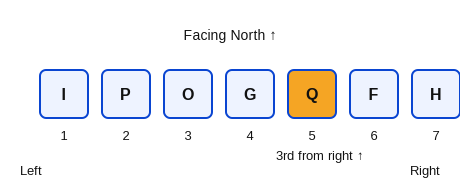
Seven friends, F, G, H, I, O, P and Q, are sitting in a row facing north. Only two people sit between I and G. Only H sits to the right of F. Only one person sits between G and F. O sits at some place to the right of P but at some place to the left of Q. Who sits third from the right end of the line?
सात मित्र, F, G, H, I, O, P और Q, उत्तर की ओर मुख करके एक पंक्ति में बैठे हैं। I और G के बीच केवल दो व्यक्ति बैठे हैं। F के दाईं ओर केवल H बैठा है। G और F के बीच केवल एक व्यक्ति बैठा है। O, P के दाईं ओर कहीं बैठा है, लेकिन Q के बाईं ओर कहीं बैठा है। पंक्ति के दाएँ छोर से तीसरे स्थान पर कौन बैठा है?
  1. AF
  2. BG
  3. CH
  4. DQ
Show answer

Concept: Facing north, the right end is position 7. Fix the definite clues first.

  1. Only H is to the right of F ⇒ F = 6, H = 7.
  2. One person between G and F ⇒ G = 4.
  3. Two between I and G ⇒ I = 1 (7 is taken).
  4. P < O < Q in the free seats 2, 3, 5 ⇒ P = 2, O = 3, Q = 5.
  5. Row: I P O G Q F H; third from right = Q.

Trick: Start with "only X to the right of Y" — it pins two seats at the end immediately.

Answer: (D) Q

अवधारणा: उत्तर की ओर मुख होने पर दायाँ छोर स्थान 7 है। पहले निश्चित सूचनाएँ लगाएँ।

  1. केवल H, F के दाएँ ⇒ F = 6, H = 7।
  2. G और F के बीच एक व्यक्ति ⇒ G = 4।
  3. I और G के बीच दो ⇒ I = 1 (7 भरा है)।
  4. खाली स्थान 2, 3, 5 में P, O, Q क्रम से ⇒ P = 2, O = 3, Q = 5।
  5. पंक्ति: I P O G Q F H; दाएँ से तीसरा = Q।

ट्रिक: "केवल X, Y के दाएँ" वाली सूचना से छोर के दो स्थान तुरंत तय हो जाते हैं।

उत्तर: (D) Q

RRB NTPC Graduate CBT 1General Intelligence and ReasoningLinear Seating ArrangementRRB NTPC Graduate CBT 1 2024 · 16 Jun Shift 3 →
Q8614.
Which of the following letter-clusters should replace # and % so that the pattern and relationship followed between the letter-cluster pair on the left side of :: is the same as that on the right side of :: ?
# : CRX :: ELU : %
निम्नलिखित में से कौन-से अक्षर-समूह # और % को प्रतिस्थापित करने चाहिए ताकि :: के बाईं ओर के अक्षर-समूह युग्म के बीच का पैटर्न और संबंध वही हो जो :: के दाईं ओर है?
# : CRX :: ELU : %
  1. A# = BIY, % = HNW
  2. B# = AHW, % = GMY
  3. C# = APW, % = GNV
  4. D# = BPU, % = DNY
Show answer

Concept: Find the letter-wise shift from # to CRX and apply the same shift to ELU.

  1. Option (C): A → C (+2), P → R (+2), W → X (+1).
  2. ELU: E → G (+2), L → N (+2), U → V (+1) = GNV.
  3. Both pairs follow +2, +2, +1, so # = APW, % = GNV.

Trick: Test the right-hand pair first (ELU → %), it filters options fastest.

Answer: (C) # = APW, % = GNV

अवधारणा: # से CRX तक हर अक्षर का खिसकाव ज्ञात करें और वही ELU पर लगाएँ।

  1. विकल्प (C): A → C (+2), P → R (+2), W → X (+1)।
  2. ELU: E → G (+2), L → N (+2), U → V (+1) = GNV।
  3. दोनों युग्म +2, +2, +1 का पालन करते हैं, अतः # = APW, % = GNV।

ट्रिक: पहले दाएँ युग्म (ELU → %) को जाँचें, विकल्प जल्दी कटते हैं।

उत्तर: (C) # = APW, % = GNV

RRB NTPC Graduate CBT 1General Intelligence and ReasoningLetter AnalogyRRB NTPC Graduate CBT 1 2024 · 16 Jun Shift 3 →
Q8615.
What should come in place of the question mark (?) in the given series?
176 168 159 149 138 ? 113
दी गई श्रृंखला में प्रश्न चिह्न (?) के स्थान पर क्या आना चाहिए?
176 168 159 149 138 ? 113
  1. A125
  2. B129
  3. C126
  4. D123
Show answer

Concept: Check the differences between consecutive terms.

  1. 176−8=168, 168−9=159, 159−10=149, 149−11=138
  2. Next: 138−12=126
  3. Check: 126−13=113 ✓

Trick: Differences increasing by 1 (8, 9, 10, …) → subtract the next number.

Answer: (C) 126

अवधारणा: क्रमागत पदों का अंतर देखें।

  1. 176−8=168, 168−9=159, 159−10=149, 149−11=138
  2. अगला: 138−12=126
  3. जाँच: 126−13=113 ✓

ट्रिक: अंतर 1-1 बढ़ रहा है (8, 9, 10, …)।

उत्तर: (C) 126

RRB NTPC Graduate CBT 1General Intelligence and ReasoningNumber SeriesRRB NTPC Graduate CBT 1 2024 · 16 Jun Shift 3 →
Q8616.
Each of P, Q, R, S, T, U and V has an exam on a different day of a week starting from Monday and ending on Sunday of the same week. R has the exam on Tuesday. Only two people have exams between U and R. Q has the exam immediately before V but not on Wednesday. S has the exam immediately before T.
How many people have exams between Q and P ?
P, Q, R, S, T, U और V में से प्रत्येक की परीक्षा एक ही सप्ताह के सोमवार से शुरू होकर रविवार को समाप्त होने वाले सप्ताह के अलग-अलग दिन है। R की परीक्षा मंगलवार को है। U और R के बीच केवल दो लोगों की परीक्षाएँ हैं। Q की परीक्षा V से ठीक पहले है, लेकिन बुधवार को नहीं है। S की परीक्षा T से ठीक पहले है।
Q और P के बीच कितने लोगों की परीक्षाएँ हैं?
  1. AThreeतीन
  2. BFourचार
  3. CTwoदो
  4. DOneएक
Show answer

Concept: Number days Mon = 1 … Sun = 7 and place definite clues first.

  1. R = Tue (2). Two between U and R ⇒ U = 5 (Fri).
  2. Free days: Mon, Wed, Thu, Sat, Sun. Consecutive pairs available: Wed–Thu and Sat–Sun.
  3. Q–V not starting on Wed ⇒ Q = Sat, V = Sun; S = Wed, T = Thu; P = Mon.
  4. Between Q (Sat) and P (Mon): R, S, T, U = 4.

Trick: Blocks of two (QV, ST) can only fit where two free days are adjacent.

Answer: (B) Four

अवधारणा: सोम = 1 … रवि = 7 मानें और पहले निश्चित सूचनाएँ लगाएँ।

  1. R = मंगल (2)। U और R के बीच दो ⇒ U = 5 (शुक्र)।
  2. खाली दिन: सोम, बुध, गुरु, शनि, रवि। लगातार युग्म: बुध–गुरु और शनि–रवि।
  3. Q–V बुध से नहीं ⇒ Q = शनि, V = रवि; S = बुध, T = गुरु; P = सोम।
  4. Q (शनि) और P (सोम) के बीच: R, S, T, U = 4।

ट्रिक: दो-दो के ब्लॉक (QV, ST) केवल वहीं आएँगे जहाँ दो खाली दिन साथ हों।

उत्तर: (B) चार

RRB NTPC Graduate CBT 1General Intelligence and ReasoningScheduling Puzzle – Days of WeekRRB NTPC Graduate CBT 1 2024 · 16 Jun Shift 3 →
Q8617.
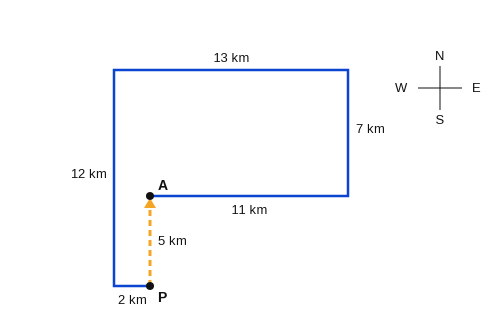
Kanav starts from point A and drives 11 km towards the east. He then takes a left turn, drives 7 km, turns left and drives 13 km. He then takes a left turn and drives 12 km. He takes a final left turn, drives 2 km and stops at point P. How far (shortest distance) and towards which direction should he drive in order to reach point A again? (All turns are 90-degree turns only unless specified.)
कनव बिंदु A से शुरू करता है और पूर्व की ओर 11 km गाड़ी चलाता है। फिर वह बाएँ मुड़ता है, 7 km गाड़ी चलाता है, बाएँ मुड़ता है और 13 km गाड़ी चलाता है। फिर वह बाएँ मुड़ता है और 12 km गाड़ी चलाता है। वह अंतिम बार बाएँ मुड़ता है, 2 km गाड़ी चलाता है और बिंदु P पर रुक जाता है। पुनः बिंदु A पर पहुँचने के लिए उसे कितनी दूरी (न्यूनतम दूरी) तक और किस दिशा में गाड़ी चलानी चाहिए? (जब तक निर्दिष्ट न हो, सभी मोड़ केवल 90 डिग्री के मोड़ हैं।)
  1. A5 km to the southदक्षिण की ओर 5 km
  2. B4 km to the southदक्षिण की ओर 4 km
  3. C4 km to the northउत्तर की ओर 4 km
  4. D5 km to the northउत्तर की ओर 5 km
Show answer

Concept: Track coordinates: east/north positive. Each left turn rotates the direction 90° anticlockwise.

  1. East 11 → (11, 0); left = north 7 → (11, 7).
  2. Left = west 13 → (−2, 7); left = south 12 → (−2, −5).
  3. Left = east 2 → P (0, −5).
  4. A (0, 0) is 5 km directly north of P.

Trick: Net E–W: 11−13+2=0; net N–S: 7−12=−5 ⇒ P is 5 km south of A, so go 5 km north.

Answer: (D) 5 km to the north

अवधारणा: निर्देशांक लें: पूर्व/उत्तर धनात्मक। हर बाएँ मोड़ पर दिशा 90° वामावर्त घूमती है।

  1. पूर्व 11 → (11, 0); बाएँ = उत्तर 7 → (11, 7)।
  2. बाएँ = पश्चिम 13 → (−2, 7); बाएँ = दक्षिण 12 → (−2, −5)।
  3. बाएँ = पूर्व 2 → P (0, −5)।
  4. A (0, 0), P से ठीक 5 km उत्तर में है।

ट्रिक: शुद्ध पूर्व–पश्चिम: 11−13+2=0; उत्तर–दक्षिण: 7−12=−5 ⇒ 5 km उत्तर जाना होगा।

उत्तर: (D) उत्तर की ओर 5 km

RRB NTPC Graduate CBT 1General Intelligence and ReasoningDirection and DistanceRRB NTPC Graduate CBT 1 2024 · 16 Jun Shift 3 →
Q8618.
What should come in place of the question mark (?) in the given series?
862 860 856 850 842 ?
दी गई श्रृंखला में प्रश्न चिह्न (?) के स्थान पर क्या आना चाहिए?
862 860 856 850 842 ?
  1. A832
  2. B833
  3. C831
  4. D830
Show answer

Concept: Look at the differences between terms.

  1. 862−2=860, 860−4=856, 856−6=850, 850−8=842
  2. Next difference is 10: 842−10=832

Trick: Differences are consecutive even numbers 2, 4, 6, 8, 10.

Answer: (A) 832

अवधारणा: पदों के बीच अंतर देखें।

  1. 862−2=860, 860−4=856, 856−6=850, 850−8=842
  2. अगला अंतर 10: 842−10=832

ट्रिक: अंतर क्रमागत सम संख्याएँ 2, 4, 6, 8, 10 हैं।

उत्तर: (A) 832

RRB NTPC Graduate CBT 1General Intelligence and ReasoningNumber SeriesRRB NTPC Graduate CBT 1 2024 · 16 Jun Shift 3 →
Q8619.
Refer to the following number and symbol series and answer the question that follows. Counting to be done from left to right only.
(NOTE: All numbers are single digit numbers only.)
(Left) 8 & 1 9 5 £ $ 6 8 $ # 8 & @ * 5 $ # * 5 $ 9 (Right)
How many such symbols are there each of which is immediately preceded by a number and also immediately followed by a symbol?
निम्नलिखित संख्या और प्रतीक श्रृंखला का संदर्भ लीजिए और उसके बाद दिए गए प्रश्न का उत्तर दीजिए। गिनती केवल बाएँ से दाएँ की जानी है।
(नोट: सभी संख्याएँ केवल एक अंक वाली संख्याएँ हैं।)
(बाएँ) 8 & 1 9 5 £ $ 6 8 $ # 8 & @ * 5 $ # * 5 $ 9 (दाएँ)
ऐसे कितने प्रतीक हैं जिनमें से प्रत्येक के ठीक पहले एक संख्या है और ठीक बाद एक प्रतीक भी है?
  1. A5
  2. B6
  3. C4
  4. D3
Show answer

Concept: Pattern needed: Number – Symbol – Symbol. Scan each symbol and check both neighbours.

  1. Series: 8 & 1 9 5 £ $ 6 8 $ # 8 & @ * 5 $ # * 5 $ 9
  2. 5 £ $ ✓, 8 $ # ✓, 8 & @ ✓, 5 $ # ✓
  3. Rejected: 8 & 1 (followed by number), 5 $ 9 (followed by number); other symbols are preceded by symbols.
  4. Total = 4

Trick: First mark every "number followed by symbol", then keep only those where the next item is also a symbol.

Answer: (C) 4

अवधारणा: आवश्यक पैटर्न: संख्या – प्रतीक – प्रतीक। हर प्रतीक के दोनों पड़ोसी जाँचें।

  1. श्रृंखला: 8 & 1 9 5 £ $ 6 8 $ # 8 & @ * 5 $ # * 5 $ 9
  2. 5 £ $ ✓, 8 $ # ✓, 8 & @ ✓, 5 $ # ✓
  3. अस्वीकृत: 8 & 1 (बाद में संख्या), 5 $ 9 (बाद में संख्या); बाकी प्रतीकों से पहले प्रतीक है।
  4. कुल = 4

ट्रिक: पहले हर "संख्या के बाद प्रतीक" चिह्नित करें, फिर केवल वे रखें जिनके बाद भी प्रतीक हो।

उत्तर: (C) 4

RRB NTPC Graduate CBT 1General Intelligence and ReasoningSymbol-Number SeriesRRB NTPC Graduate CBT 1 2024 · 16 Jun Shift 3 →
Q8620.
In a certain code language, ‘FAIR’ is coded as ‘9357’ and ‘ROSE’ is coded as ‘8632’. What is the code for R’ in the given code language?
एक निश्चित कूट भाषा में, ‘FAIR’ को ‘9357’ लिखा जाता है और ‘ROSE’ को ‘8632’ लिखा जाता है। उस कूट भाषा में ‘R’ के लिए क्या कूट है?
  1. A2
  2. B8
  3. C7
  4. D3
Show answer

Concept: In jumbled-letter coding, the letter common to two words takes the digit common to their codes.

  1. FAIR → 9357 and ROSE → 8632.
  2. Common letter: R. Common digit: 3.
  3. So R = 3.

Trick: Common letter ↔ common digit; order of digits does not matter.

Answer: (D) 3

अवधारणा: उलझे क्रम वाली कोडिंग में दो शब्दों का उभयनिष्ठ अक्षर, दोनों कोडों के उभयनिष्ठ अंक से कोड होता है।

  1. FAIR → 9357 और ROSE → 8632।
  2. उभयनिष्ठ अक्षर: R; उभयनिष्ठ अंक: 3।
  3. अतः R = 3।

ट्रिक: उभयनिष्ठ अक्षर ↔ उभयनिष्ठ अंक; अंकों का क्रम मायने नहीं रखता।

उत्तर: (D) 3

RRB NTPC Graduate CBT 1General Intelligence and ReasoningCoding-DecodingRRB NTPC Graduate CBT 1 2024 · 16 Jun Shift 3 →