Question bank

Q&A: practice questions with answers

Search questions on any topic. Filter by exam category, exam, subject and topic, try the question, then open the answer and explanation.

Courses – airGurukul

20,719 questions found.

Q8781.
If α, β and γ are the roots of the equation 6x3 − 11x2 + 6x − 1 = 0, find Σα2βγ.
यदि α, β और γ समीकरण 6x3 − 11x2 + 6x − 1 = 0 के मूल हैं, तो Σα2βγ ज्ञात कीजिए।
  1. A116
  2. B1136
  3. C−1136
  4. D−116
Show answer

Concept: For ax3+bx2+cx+d=0: α+β+γ=−ba, αβγ=−da.

  1. Σα2βγ=αβγ(α+β+γ).
  2. α+β+γ=116, αβγ=−−16=16.
  3. Σα2βγ=16×116=1136.

Trick: Roots are 1,12,13 (check: 6−11+6−1=0); product 16, sum 116.

Answer: (B) 1136

अवधारणा: ax3+bx2+cx+d=0 के लिए: α+β+γ=−ba, αβγ=−da।

  1. Σα2βγ=αβγ(α+β+γ)।
  2. α+β+γ=116, αβγ=16।
  3. Σα2βγ=16×116=1136।

ट्रिक: मूल 1,12,13 हैं; गुणनफल 16, योग 116।

उत्तर: (B) 1136

RRB NTPC Graduate CBT 1MathematicsRoots of Cubic EquationRRB NTPC Graduate CBT 1 2024 · 16 Jun Shift 1 →
Q8782.
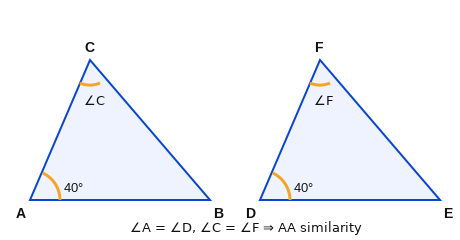
Let ABC and DEF be two triangles such that ∠A = ∠D = 40° and AB = DE. What is the condition required to be met such that ABC and DEF are similar triangles?
मान लीजिए ABC और DEF दो त्रिभुज इस प्रकार हैं कि ∠A = ∠D = 40° और AB = DE है। ABC और DEF के समरूप त्रिभुज होने के लिए किस शर्त का पूरा होना आवश्यक है?
  1. A∠B = ∠F
  2. BBC = EF
  3. C∠C = ∠F
  4. D∠B = ∠D
Show answer

Concept: AA criterion: two triangles are similar if two angles of one equal two angles of the other.

  1. Already ∠A=∠D=40∘.
  2. One more pair of corresponding equal angles is needed: ∠C=∠F (or ∠B=∠E).
  3. Then △ABC~△DEF. AB = DE alone does not decide shape; ∠B=∠F or ∠B=∠D are not corresponding pairs.

Trick: Similarity needs matching angles in the same order: A↔D, B↔E, C↔F.

Answer: (C) ∠C=∠F

अवधारणा: AA कसौटी: यदि दो त्रिभुजों के दो कोण बराबर हों तो वे समरूप होते हैं।

  1. पहले से ∠A=∠D=40∘ है।
  2. एक और संगत कोण-युग्म चाहिए: ∠C=∠F (या ∠B=∠E)।
  3. तब △ABC~△DEF। केवल AB = DE से आकार तय नहीं होता; ∠B=∠F संगत युग्म नहीं है।

ट्रिक: संगत क्रम: A↔D, B↔E, C↔F।

उत्तर: (C) ∠C=∠F

RRB NTPC Graduate CBT 1MathematicsSimilar TrianglesRRB NTPC Graduate CBT 1 2024 · 16 Jun Shift 1 →
Q8783.
7 times the present age of X is 6 years less than 2 times the present age of Y. At present, P is 7 times as old as X, and Y is 6 years younger than Q. If P is 70 years older than Q, then the present age (in years) of Y is:
X की वर्तमान आयु का 7 गुना, Y की वर्तमान आयु के 2 गुने से 6 वर्ष कम है। वर्तमान में, P की आयु X की आयु की 7 गुनी है, और Y, Q से 6 वर्ष छोटा है। यदि P, Q से 70 वर्ष बड़ा है, तो Y की वर्तमान आयु (वर्षों में) है:
  1. A73
  2. B75
  3. C82
  4. D78
Show answer

Concept: Write each statement as an equation and eliminate step by step.

  1. 7X=2Y−6 … (i); P=7X; Y=Q−6⇒Q=Y+6; P=Q+70.
  2. So 7X=Q+70=Y+76.
  3. From (i): 2Y−6=Y+76⇒Y=82.

Trick: Since P=7X, P itself equals 2Y−6; put it equal to Q+70=Y+76 directly.

Answer: (C) 82 years

अवधारणा: हर कथन को समीकरण बनाएँ और क्रम से हटाएँ।

  1. 7X=2Y−6 … (i); P=7X; Q=Y+6; P=Q+70।
  2. अतः 7X=Y+76।
  3. (i) से: 2Y−6=Y+76⇒Y=82।

ट्रिक: P=7X=2Y−6 और P=Y+76 सीधे बराबर करें।

उत्तर: (C) 82 वर्ष

RRB NTPC Graduate CBT 1MathematicsAgesRRB NTPC Graduate CBT 1 2024 · 16 Jun Shift 1 →
Q8784.
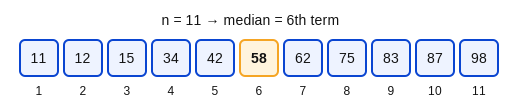
The median of the observations 34, 58, 98, 42, 83, 62, 12, 11, 87, 75 and 15 is:
प्रेक्षणों 34, 58, 98, 42, 83, 62, 12, 11, 87, 75 और 15 की माध्यिका है:
  1. A75
  2. B58
  3. C42
  4. D62
Show answer

Concept: Median of n (odd) observations = (n+12)th term after sorting.

  1. Sorted: 11, 12, 15, 34, 42, 58, 62, 75, 83, 87, 98.
  2. n=11, so median =(11+12)th=6th term.
  3. 6th term = 58.

Trick: Always sort first – the middle of the unsorted list (62) is a trap.

Answer: (B) 58

अवधारणा: n (विषम) प्रेक्षणों की माध्यिका = क्रम में लगाने के बाद (n+12)वाँ पद।

  1. क्रम: 11, 12, 15, 34, 42, 58, 62, 75, 83, 87, 98।
  2. n=11, माध्यिका =6वाँ पद।
  3. 6वाँ पद = 58।

ट्रिक: पहले क्रम में लगाएँ – बिना क्रम का बीच वाला मान (62) जाल है।

उत्तर: (B) 58

RRB NTPC Graduate CBT 1MathematicsMedianRRB NTPC Graduate CBT 1 2024 · 16 Jun Shift 1 →
Q8785.
The average of eight numbers is 14. The average of five of these numbers is 14. The average of the remaining three numbers is:
आठ संख्याओं का औसत 14 है। इनमें से पाँच संख्याओं का औसत 14 है। शेष तीन संख्याओं का औसत है:
  1. A13
  2. B16
  3. C14
  4. D15
Show answer

Concept: Total = average × count.

  1. Total of 8 numbers =8×14=112.
  2. Total of 5 numbers =5×14=70.
  3. Remaining 3 numbers =112−70=42; average =423=14.

Trick: If part of a group has the same average as the whole, the rest also has that average.

Answer: (C) 14

अवधारणा: योग = औसत × संख्या।

  1. 8 संख्याओं का योग =8×14=112।
  2. 5 संख्याओं का योग =70।
  3. शेष 3 का योग =42; औसत =423=14।

ट्रिक: यदि एक भाग का औसत पूरे समूह के बराबर है, तो शेष का औसत भी वही होगा।

उत्तर: (C) 14

RRB NTPC Graduate CBT 1MathematicsAverageRRB NTPC Graduate CBT 1 2024 · 16 Jun Shift 1 →
Q8786.
Find a single discount (rounded up to two decimal places) equal to three consecutive discounts of 3%, 27% and 23%.
3%, 27% और 23% की तीन क्रमागत छूटों के बराबर एकल छूट (दो दशमलव स्थानों तक पूर्णांकित) ज्ञात कीजिए।
  1. A43.03%
  2. B45.34%
  3. C45.73%
  4. D45.48%
Show answer

Concept: Successive discounts multiply the remaining fractions.

  1. Remaining =0.97×0.73×0.77.
  2. 0.97×0.73=0.7081; 0.7081×0.77=0.545237.
  3. Single discount =(1−0.545237)×100=45.4763%≈45.48%.

Trick: Two discounts a,b: a+b−ab100; apply twice: 3 and 27 give 29.19%; with 23 give 45.48%.

Answer: (D) 45.48%

अवधारणा: क्रमिक छूट में बची हुई भिन्नों का गुणा करें।

  1. शेष =0.97×0.73×0.77।
  2. =0.7081×0.77=0.545237।
  3. एकल छूट =45.4763%≈45.48%।

ट्रिक: दो छूट: a+b−ab100; 3 और 27 से 29.19%, फिर 23 के साथ 45.48%।

उत्तर: (D) 45.48%

RRB NTPC Graduate CBT 1MathematicsSuccessive DiscountsRRB NTPC Graduate CBT 1 2024 · 16 Jun Shift 1 →
Q8787.
Which of the following numbers is divisible by 87?
निम्नलिखित में से कौन-सी संख्या 87 से विभाज्य है?
  1. A7221
  2. B7099
  3. C6712
  4. D7741
Show answer

Concept: 87=3×29; the number must be divisible by both 3 and 29.

  1. Digit sums: 7221 → 12 (÷3 ✓), 7099 → 25, 6712 → 16, 7741 → 19. Only 7221 is divisible by 3.
  2. Check 29: 7221÷87=83 exactly (87×83=7221).

Trick: Use the divisibility rule of 3 to eliminate options quickly.

Answer: (A) 7221

अवधारणा: 87=3×29; संख्या 3 और 29 दोनों से विभाज्य होनी चाहिए।

  1. अंकों का योग: 7221 → 12 (3 से ✓), 7099 → 25, 6712 → 16, 7741 → 19। केवल 7221 ही 3 से विभाज्य।
  2. जाँच: 87×83=7221।

ट्रिक: 3 के नियम से विकल्प जल्दी हटाएँ।

उत्तर: (A) 7221

RRB NTPC Graduate CBT 1MathematicsDivisibilityRRB NTPC Graduate CBT 1 2024 · 16 Jun Shift 1 →
Q8788.
Three numbers are in the ratio 2 : 14 : 3, and their LCM is 4116. Their HCF is:
तीन संख्याएँ 2 : 14 : 3 के अनुपात में हैं, और उनका LCM 4116 है। उनका HCF है:
  1. A98
  2. B100
  3. C108
  4. D95
Show answer

Concept: If numbers are 2x,14x,3x (co-prime ratio terms), HCF =x and LCM =x×LCM(2,14,3).

  1. LCM(2,14,3)=42.
  2. 42x=4116⇒x=98.
  3. HCF =98 (numbers 196, 1372, 294).

Trick: HCF = given LCM ÷ LCM of ratio terms, i.e. 411642.

Answer: (A) 98

अवधारणा: संख्याएँ 2x,14x,3x हों तो HCF =x और LCM =x×LCM(2,14,3)।

  1. LCM(2,14,3)=42।
  2. 42x=4116⇒x=98।
  3. HCF =98।

ट्रिक: HCF = दिया LCM ÷ अनुपात पदों का LCM।

उत्तर: (A) 98

RRB NTPC Graduate CBT 1MathematicsHCF and LCMRRB NTPC Graduate CBT 1 2024 · 16 Jun Shift 1 →
Q8789.
Kanchan’s salary is ₹12,000 per month. He spends ₹4,000 on house rent and ₹2,000 on bills, and the rest of the amount is his monthly savings. Find his savings (in ₹) in a year, if in the month of his birthday, he spent all his monthly savings on birthday
celebrations.
कंचन का वेतन ₹12,000 प्रति माह है। वह ₹4,000 मकान किराए पर और ₹2,000 बिलों पर खर्च करता है, और शेष राशि उसकी मासिक बचत है। एक वर्ष में उसकी बचत (₹ में) ज्ञात कीजिए, यदि अपने जन्मदिन वाले महीने में उसने अपनी पूरी मासिक बचत जन्मदिन के
उत्सव पर खर्च कर दी।
  1. A66,000
  2. B60,000
  3. C72,000
  4. D54,000
Show answer

Concept: Monthly saving = salary − expenses; one month's saving is fully spent.

  1. Monthly saving =12000−4000−2000=6000.
  2. Birthday month saving = 0, so savings come from 11 months.
  3. Yearly saving =11×6000=66000.

Trick: Year saving =12×6000−6000.

Answer: (A) ₹66,000

अवधारणा: मासिक बचत = वेतन − खर्च; एक महीने की पूरी बचत खर्च हुई।

  1. मासिक बचत =12000−4000−2000=6000।
  2. जन्मदिन वाले महीने की बचत 0; अतः 11 महीने की बचत।
  3. वार्षिक बचत =11×6000=66000।

ट्रिक: वार्षिक बचत =12×6000−6000।

उत्तर: (A) ₹66,000

RRB NTPC Graduate CBT 1MathematicsIncome and SavingsRRB NTPC Graduate CBT 1 2024 · 16 Jun Shift 1 →
Q8790.
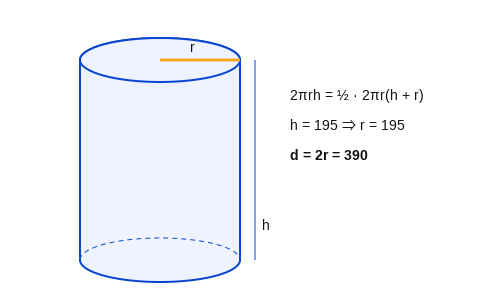
The curved surface area of a cylinder is half of its total surface area. If its height is 195 cm, then find its diameter (in cm).
एक बेलन का वक्र पृष्ठीय क्षेत्रफल उसके कुल पृष्ठीय क्षेत्रफल का आधा है। यदि इसकी ऊँचाई 195 cm है, तो इसका व्यास (cm में) ज्ञात कीजिए।
  1. A393
  2. B390
  3. C383
  4. D381
Show answer

Concept: CSA =2πrh, TSA =2πr(h+r).

  1. 2πrh=12×2πr(h+r)⇒2h=h+r.
  2. So r=h=195cm.
  3. Diameter =2r=390cm.

Trick: CSA = half of TSA ⇔ CSA = area of the two bases ⇔ r=h.

Answer: (B) 390

अवधारणा: वक्र पृष्ठ =2πrh, कुल पृष्ठ =2πr(h+r)।

  1. 2πrh=12×2πr(h+r)⇒2h=h+r।
  2. अतः r=h=195cm।
  3. व्यास =2r=390cm।

ट्रिक: CSA = TSA का आधा ⇔ r=h।

उत्तर: (B) 390

RRB NTPC Graduate CBT 1MathematicsCylinder – Surface AreaRRB NTPC Graduate CBT 1 2024 · 16 Jun Shift 1 →
Q8791.
A factory produces 15, 20, 25, 10, and 30 units of a gadget over five days. What is the average production (in units) per day?
एक कारखाना पाँच दिनों में किसी गैजेट की 15, 20, 25, 10 और 30 इकाइयों का उत्पादन करता है। प्रति दिन औसत उत्पादन (इकाइयों में) कितना है?
  1. A18
  2. B20
  3. C24
  4. D22
Show answer

Concept: Average = total ÷ number of days.

  1. Total =15+20+25+10+30=100.
  2. Average =1005=20 units.

Trick: Deviation from 20: −5,0,+5,−10,+10 sum to 0, so average is 20.

Answer: (B) 20

अवधारणा: औसत = कुल ÷ दिनों की संख्या।

  1. कुल =15+20+25+10+30=100।
  2. औसत =1005=20 इकाई।

ट्रिक: 20 से विचलन −5,0,+5,−10,+10 का योग 0 है।

उत्तर: (B) 20

RRB NTPC Graduate CBT 1MathematicsAverageRRB NTPC Graduate CBT 1 2024 · 16 Jun Shift 1 →
Q8792.
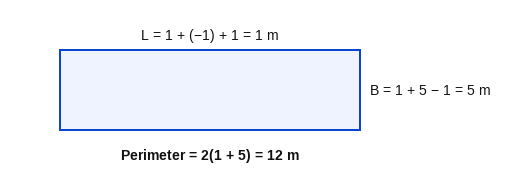
The length of a rectangular plot is (x2+xy+y2) m and its breadth is (x2−5xy−y2) m. Find its perimeter, when x=1 and y=−1.
एक आयताकार भूखंड की लंबाई (x2+xy+y2) m और चौड़ाई (x2−5xy−y2) m है। जब x=1 और y=−1 हो, तो इसका परिमाप ज्ञात कीजिए।
  1. A19 m
  2. B17 m
  3. C8 m
  4. D12 m
Show answer

Concept: Substitute values, then perimeter =2(l+b).

  1. l=x2+xy+y2=1−1+1=1m.
  2. b=x2−5xy−y2=1+5−1=5m.
  3. Perimeter =2(1+5)=12m.

Trick: 2(l+b)=2(2x2−4xy)=2(2+4)=12.

Answer: (D) 12m

अवधारणा: मान रखें, फिर परिमाप =2(l+b)।

  1. l=1−1+1=1m।
  2. b=1+5−1=5m।
  3. परिमाप =2(1+5)=12m।

ट्रिक: 2(l+b)=2(2x2−4xy)=12।

उत्तर: (D) 12m

RRB NTPC Graduate CBT 1MathematicsAlgebra – PerimeterRRB NTPC Graduate CBT 1 2024 · 16 Jun Shift 1 →
Q8793.
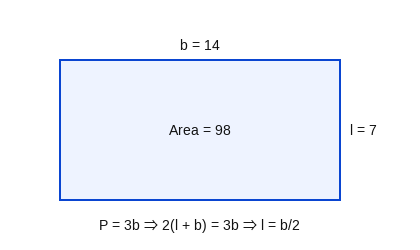
The ratio between the perimeter and breadth of a rectangle is 3 : 1. If the area of the rectangle is 98 cm2, find the perimeter (in cm) of the rectangle.
एक आयत के परिमाप और चौड़ाई का अनुपात 3 : 1 है। यदि आयत का क्षेत्रफल 98 cm2 है, तो आयत का परिमाप (cm में) ज्ञात कीजिए।
  1. A38
  2. B50
  3. C42
  4. D47
Show answer

Concept: Perimeter =2(l+b), area =l×b.

  1. 2(l+b)=3b⇒l=b2.
  2. l×b=b22=98⇒b2=196⇒b=14, l=7.
  3. Perimeter =3b=42cm.

Trick: Perimeter must be a multiple of 3 here: only 42 among options with b=14.

Answer: (C) 42

अवधारणा: परिमाप =2(l+b), क्षेत्रफल =l×b।

  1. 2(l+b)=3b⇒l=b2।
  2. b22=98⇒b=14, l=7।
  3. परिमाप =3b=42cm।

ट्रिक: परिमाप 3 का गुणज होना चाहिए; विकल्पों में 42 ही उपयुक्त।

उत्तर: (C) 42

RRB NTPC Graduate CBT 1MathematicsRectangle – Perimeter and AreaRRB NTPC Graduate CBT 1 2024 · 16 Jun Shift 1 →
Q8794.
M is inversely proportional to N. If M is 18, then N is 21. If N = 27, then what is the value of M?
M, N के व्युत्क्रमानुपाती है। यदि M का मान 18 है, तो N का मान 21 है। यदि N = 27 है, तो M का मान क्या है?
  1. A14
  2. B12
  3. C13
  4. D16
Show answer

Concept: M∝1N⇒M×N=constant.

  1. 18×21=378.
  2. M×27=378⇒M=14.

Trick: M=18×2127=18×79=14.

Answer: (A) 14

अवधारणा: M∝1N⇒M×N=अचर।

  1. 18×21=378।
  2. M×27=378⇒M=14।

ट्रिक: M=18×79=14।

उत्तर: (A) 14

RRB NTPC Graduate CBT 1MathematicsInverse ProportionRRB NTPC Graduate CBT 1 2024 · 16 Jun Shift 1 →
Q8795.
Akash sold an article at a loss of 21%. If he had bought the item at 8% less and had sold it for ₹198 more, then he would have gained 5%. Find the cost price (in ₹) of the article.
आकाश ने एक वस्तु 21% की हानि पर बेची। यदि उसने वस्तु को 8% कम मूल्य पर खरीदा होता और ₹198 अधिक में बेचा होता, तो उसे 5% का लाभ होता। वस्तु का क्रय मूल्य (₹ में) ज्ञात कीजिए।
  1. A1,419
  2. B686
  3. C1,125
  4. D685
Show answer

Concept: Let CP =x; build both selling prices and equate the difference to ₹198.

  1. Actual SP =0.79x.
  2. New CP =0.92x; new SP =1.05×0.92x=0.966x.
  3. 0.966x−0.79x=0.176x=198⇒x=1125.

Trick: Take CP = 1000: SPs 790 and 966 differ by 176; 198176×1000=1125.

Answer: (C) ₹1,125

अवधारणा: मान लें क्रय मूल्य =x; दोनों विक्रय मूल्य बनाकर अंतर ₹198 रखें।

  1. वास्तविक विक्रय मूल्य =0.79x।
  2. नया क्रय मूल्य =0.92x; नया विक्रय मूल्य =0.966x।
  3. 0.176x=198⇒x=1125।

ट्रिक: CP = 1000 लें: 790 और 966 का अंतर 176; 198176×1000=1125।

उत्तर: (C) ₹1,125

RRB NTPC Graduate CBT 1MathematicsProfit and LossRRB NTPC Graduate CBT 1 2024 · 16 Jun Shift 1 →
Q8796.
Based on the English alphabetical order, three of the following four letter-cluster pairs are alike in a certain way and thus form a group. Which letter-cluster pair DOES NOT belong to that group?
(Note: The odd one out is not based on the number of consonants/vowels or their position in the letter-cluster.)
अंग्रेज़ी वर्णमाला क्रम के आधार पर, निम्नलिखित चार अक्षर-समूह युग्मों में से तीन किसी निश्चित प्रकार से एक समान हैं और इस प्रकार एक समूह बनाते हैं। कौन-सा अक्षर-समूह युग्म उस समूह से संबंधित नहीं है?
(नोट: असंगत अक्षर-समूह, उस अक्षर-समूह में व्यंजनों/स्वरों की संख्या या उनके स्थान पर आधारित नहीं है।)
  1. AIE – NG
  2. BQM – VO
  3. CGC – LF
  4. DDZ – IB
Show answer

Concept: Compare the shift of each letter from the first cluster to the second (wrap Z→A).

  1. IE – NG: I→N (+5), E→G (+2).
  2. QM – VO: Q→V (+5), M→O (+2).
  3. DZ – IB: D→I (+5), Z→B (+2), wrapping past Z.
  4. GC – LF: G→L (+5) but C→F (+3) – breaks the pattern.

Trick: Write the positions: the first letters always move +5; just check the second letters.

Answer: (C) GC – LF

अवधारणा: पहले समूह के प्रत्येक अक्षर से दूसरे समूह के अक्षर तक का अंतर देखें (Z के बाद A)।

  1. IE – NG: I→N (+5), E→G (+2)।
  2. QM – VO: Q→V (+5), M→O (+2)।
  3. DZ – IB: D→I (+5), Z→B (+2) (Z के बाद फिर A से)।
  4. GC – LF: G→L (+5) पर C→F (+3) – नियम टूटता है।

ट्रिक: पहले अक्षर हमेशा +5 हैं; केवल दूसरे अक्षर का अंतर जाँचें।

उत्तर: (C) GC – LF

RRB NTPC Graduate CBT 1General Intelligence and ReasoningOdd One Out – Letter PairsRRB NTPC Graduate CBT 1 2024 · 16 Jun Shift 1 →
Q8797.
If ‘A’ stands for ‘÷’, ‘B’ stands for ‘×’, ‘C’ stands for ‘+’ and ‘D’ stands for ‘−’, then what will come in place of the question mark (?) in the following equation?
(46 B 8) A 16 C 15 B 3 D 27 =?
यदि ‘A’ का अर्थ ‘÷’, ‘B’ का अर्थ ‘×’, ‘C’ का अर्थ ‘+’ और ‘D’ का अर्थ ‘−’ है, तो निम्नलिखित समीकरण में प्रश्न चिह्न (?) के स्थान पर क्या आएगा?
(46 B 8) A 16 C 15 B 3 D 27 =?
  1. A41
  2. B68
  3. C29
  4. D52
Show answer

Concept: Replace the letters by the signs and solve using BODMAS.

  1. A = ÷, B = ×, C = +, D = −.
  2. Expression: (46×8)÷16+15×3−27.
  3. 368÷16=23; 15×3=45.
  4. 23+45−27=41.

Trick: Do brackets, then ÷ and × left to right, then + and −.

Answer: (A) 41

अवधारणा: अक्षरों के स्थान पर चिह्न रखें और BODMAS से हल करें।

  1. A = ÷, B = ×, C = +, D = −।
  2. व्यंजक: (46×8)÷16+15×3−27।
  3. 368÷16=23; 15×3=45।
  4. 23+45−27=41।

ट्रिक: पहले कोष्ठक, फिर ÷, ×, अंत में +, −।

उत्तर: (A) 41

RRB NTPC Graduate CBT 1General Intelligence and ReasoningMathematical OperationsRRB NTPC Graduate CBT 1 2024 · 16 Jun Shift 1 →
Q8798.
In a certain code language, ‘FISH’ is coded as ‘6147’ and ‘SALE’ is coded as ‘9512’. What is the code for ‘S’ in the given code language?
एक निश्चित कूट भाषा में, ‘FISH’ को ‘6147’ और ‘SALE’ को ‘9512’ के रूप में कूटबद्ध किया जाता है। दी गई कूट भाषा में ‘S’ के लिए कूट क्या है?
  1. A5
  2. B4
  3. C9
  4. D1
Show answer

Concept: A letter common to both words gets the digit common to both codes.

  1. FISH → 6, 1, 4, 7; SALE → 9, 5, 1, 2.
  2. Common letter: S. Common digit: 1.
  3. Hence S = 1.

Trick: Common letter ↔ common digit.

Answer: (D) 1

अवधारणा: दोनों शब्दों में उभयनिष्ठ अक्षर को दोनों कोड का उभयनिष्ठ अंक मिलता है।

  1. FISH → 6, 1, 4, 7; SALE → 9, 5, 1, 2।
  2. उभयनिष्ठ अक्षर: S, उभयनिष्ठ अंक: 1।
  3. अतः S = 1।

ट्रिक: उभयनिष्ठ अक्षर ↔ उभयनिष्ठ अंक।

उत्तर: (D) 1

RRB NTPC Graduate CBT 1General Intelligence and ReasoningCoding-DecodingRRB NTPC Graduate CBT 1 2024 · 16 Jun Shift 1 →
Q8799.
Refer to the following number and symbol series and answer the question that follows. Counting to be done from left to right only.
(NOTE: All numbers are single digit numbers only.)
(Left) 7 @ £ 1 @ 7 # * 8 7 8 6 5 3 8 4 € # £ 9 1 £ (Right)
How many such symbols are there each of which is immediately preceded by a number and also immediately followed by a number?
निम्नलिखित संख्या और प्रतीक श्रृंखला को देखिए और उसके बाद दिए गए प्रश्न का उत्तर दीजिए। गिनती केवल बाएँ से दाएँ की जानी है।
(नोट: सभी संख्याएँ केवल एक अंक वाली संख्याएँ हैं।)
(बाएँ) 7 @ £ 1 @ 7 # * 8 7 8 6 5 3 8 4 € # £ 9 1 £ (दाएँ)
ऐसे कितने प्रतीक हैं, जिनमें से प्रत्येक के ठीक पहले एक संख्या है और ठीक बाद भी एक संख्या है?
  1. A1
  2. B3
  3. C2
  4. D0
Show answer

Concept: Check each symbol: the element before it and after it must both be digits.

  1. Symbols: @, £, @, #, *, €, #, £, £.
  2. 7 @ £ – no; 1 @ 7 – yes; 7 # * – no; # * 8 – no.
  3. 4 € # – no; € # £ – no; # £ 9 – no; 1 £ (end) – no.
  4. Only one such symbol.

Trick: Look for the pattern digit–symbol–digit only.

Answer: (A) 1

अवधारणा: प्रत्येक प्रतीक के ठीक पहले और ठीक बाद संख्या होनी चाहिए।

  1. प्रतीक: @, £, @, #, *, €, #, £, £।
  2. 7 @ £ – नहीं; 1 @ 7 – हाँ; 7 # * – नहीं; # * 8 – नहीं।
  3. 4 € # – नहीं; € # £ – नहीं; # £ 9 – नहीं; 1 £ (अंत) – नहीं।
  4. केवल एक प्रतीक।

ट्रिक: केवल 'संख्या–प्रतीक–संख्या' पैटर्न खोजें।

उत्तर: (A) 1

RRB NTPC Graduate CBT 1General Intelligence and ReasoningNumber-Symbol SeriesRRB NTPC Graduate CBT 1 2024 · 16 Jun Shift 1 →
Q8800.
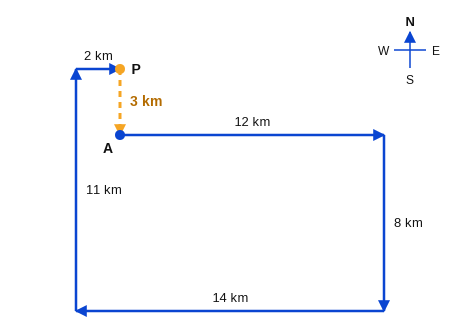
Anuj starts from Point A and drives 12 km towards East. He then takes a right turn, drives 8 km, turns right and drives 14 km. He then takes a right turn and drives 11 km. He takes a final right turn, drives 2 km and stops at Point P. How far (shortest distance) and towards which direction should he drive in order to reach Point A again? (All turns are 90° turns only, unless specified.)
अनुज बिंदु A से चलना शुरू करता है और पूर्व की ओर 12 km गाड़ी चलाता है। फिर वह दाएँ मुड़ता है, 8 km गाड़ी चलाता है, दाएँ मुड़ता है और 14 km गाड़ी चलाता है। फिर वह दाएँ मुड़ता है और 11 km गाड़ी चलाता है। वह अंतिम बार दाएँ मुड़ता है, 2 km गाड़ी चलाता है और बिंदु P पर रुक जाता है। बिंदु A पर फिर से पहुँचने के लिए उसे कितनी दूर (न्यूनतम दूरी) और किस दिशा में गाड़ी चलानी चाहिए? (जब तक निर्दिष्ट न हो, सभी मोड़ केवल 90° के मोड़ हैं।)
  1. A2 km to the southदक्षिण की ओर 2 km
  2. B4 km to the southदक्षिण की ओर 4 km
  3. C1 km to the southदक्षिण की ओर 1 km
  4. D3 km to the southदक्षिण की ओर 3 km
Show answer

Concept: Track each turn: a right turn while facing East makes you face South, and so on.

  1. Take A =(0,0). East 12 → (12,0).
  2. Right (South) 8 → (12,−8); right (West) 14 → (−2,−8).
  3. Right (North) 11 → (−2,3); right (East) 2 → (0,3) = P.
  4. P is 3 km due North of A, so he must drive 3 km to the South.

Trick: East-West net: 12−14+2=0; North-South net: −8+11=3 North.

Answer: (D) 3 km to the south

अवधारणा: हर मोड़ पर दिशा बदलें: पूर्व की ओर मुख करके दाएँ मुड़ने पर दक्षिण, आदि।

  1. A =(0,0)। पूर्व 12 → (12,0)।
  2. दाएँ (दक्षिण) 8 → (12,−8); दाएँ (पश्चिम) 14 → (−2,−8)।
  3. दाएँ (उत्तर) 11 → (−2,3); दाएँ (पूर्व) 2 → (0,3) = P।
  4. P, A से 3 km उत्तर में है, अतः 3 km दक्षिण जाना होगा।

ट्रिक: पूर्व-पश्चिम: 12−14+2=0; उत्तर-दक्षिण: −8+11=3 उत्तर।

उत्तर: (D) 3 km दक्षिण

RRB NTPC Graduate CBT 1General Intelligence and ReasoningDirection and DistanceRRB NTPC Graduate CBT 1 2024 · 16 Jun Shift 1 →