Question bank

Q&A: practice questions with answers

Search questions on any topic. Filter by exam category, exam, subject and topic, try the question, then open the answer and explanation.

Courses – airGurukul

20,719 questions found.

Q10081.
3 years ago from now, the age of father was 14 years more than twice his son's age. After how many years, from now, will he be twice his son's age?
अब से 3 वर्ष पहले, पिता की आयु उसके पुत्र की आयु के दोगुने से 14 वर्ष अधिक थी। अब से कितने वर्ष बाद, उसकी आयु उसके पुत्र की आयु की दोगुनी होगी?
  1. A12
  2. B14
  3. C8
  4. D11
Show answer

Concept: Form equations from the given conditions; the age difference between father and son never changes.

  1. Let present ages be father F and son S. Three years ago: F−3=2(S−3)+14⇒F=2S+11.
  2. After x years: F+x=2(S+x)⇒x=F−2S.
  3. x=(2S+11)−2S=11 years.

Trick: When F=2S+k today, the father becomes twice the son's age after exactly k years.

Answer: (D) 11

अवधारणा: दी गई शर्तों से समीकरण बनाइए; पिता और पुत्र की आयु का अंतर कभी नहीं बदलता।

  1. माना वर्तमान आयु पिता F, पुत्र S। 3 वर्ष पहले: F−3=2(S−3)+14⇒F=2S+11।
  2. x वर्ष बाद: F+x=2(S+x)⇒x=F−2S।
  3. x=(2S+11)−2S=11 वर्ष।

ट्रिक: यदि आज F=2S+k है, तो ठीक k वर्ष बाद पिता की आयु पुत्र की दोगुनी होगी।

उत्तर: (D) 11
RRB NTPC Graduate CBT 1MathematicsProblems on AgesRRB NTPC Graduate CBT 1 2024 · 10 Jun Shift 2 →
Q10082.
A retailer offers the following discount schemes for buyers on an article.
I. Two successive discounts of 27%.
II. A discount of 36% followed by a discount of 45%.
III. Successive discounts of 19% and 32%.
IV. A discount of 34% followed by a discount of 7%.
Which scheme will fetch the maximum selling price?
एक खुदरा विक्रेता किसी वस्तु पर ख़रीदारों के लिए निम्नलिखित छूट योजनाएँ प्रस्तुत करता है।
I. 27% की दो क्रमिक छूटें।
II. 36% की छूट के बाद 45% की छूट।
III. 19% और 32% की क्रमिक छूटें।
IV. 34% की छूट के बाद 7% की छूट।
किस योजना से अधिकतम विक्रय मूल्य प्राप्त होगा?
  1. AIII
  2. BI
  3. CIV
  4. DII
Show answer

Concept: Maximum selling price comes from the scheme whose net multiplier (product of the remaining percentages) is the largest.

  1. I: 0.73×0.73=0.5329
  2. II: 0.64×0.55=0.352
  3. III: 0.81×0.68=0.5508
  4. IV: 0.66×0.93=0.6138 ← largest, i.e. least net discount =38.62%.

Trick: Net discount =a+b−ab100: IV gives 34+7−2.38=38.62%, the smallest of all.

Answer: (C) IV

अवधारणा: अधिकतम विक्रय मूल्य उस योजना से मिलेगा जिसका शुद्ध गुणक (बचे हुए प्रतिशतों का गुणनफल) सबसे बड़ा हो।

  1. I: 0.73×0.73=0.5329
  2. II: 0.64×0.55=0.352
  3. III: 0.81×0.68=0.5508
  4. IV: 0.66×0.93=0.6138 ← सबसे बड़ा, यानी न्यूनतम शुद्ध छूट =38.62%।

ट्रिक: शुद्ध छूट =a+b−ab100: IV में 34+7−2.38=38.62%, जो सबसे कम है।

उत्तर: (C) IV

RRB NTPC Graduate CBT 1MathematicsSuccessive DiscountsRRB NTPC Graduate CBT 1 2024 · 10 Jun Shift 2 →
Q10083.
The average of three numbers is 23. If two of them are 11 and 26, the third number is:
तीन संख्याओं का औसत 23 है। यदि उनमें से दो संख्याएँ 11 और 26 हैं, तो तीसरी संख्या है:
  1. A31
  2. B33
  3. C32
  4. D34
Show answer

Concept: Sum of numbers = average × count.

  1. Sum of three numbers =23×3=69.
  2. Third number =69−(11+26)=69−37=32.

Trick: Deviations from 23: 11→−12, 26→+3; third must be +9 → 23+9=32.

Answer: (C) 32

अवधारणा: संख्याओं का योग = औसत × संख्याओं की गिनती।

  1. तीनों संख्याओं का योग =23×3=69।
  2. तीसरी संख्या =69−(11+26)=69−37=32।

ट्रिक: 23 से विचलन: 11→−12, 26→+3; तीसरी का विचलन +9 → 23+9=32।

उत्तर: (C) 32

RRB NTPC Graduate CBT 1MathematicsAverageRRB NTPC Graduate CBT 1 2024 · 10 Jun Shift 2 →
Q10084.
Anil bought the first pen for ₹100 and the second pen for ₹160, respectively. He sells the first pen at 15% of the profit but the buyer bargains for the price, and he has to offer a 29% discount and the second pen at 58% of the profit. Find the total profit he had in this transaction (correct to two decimal places).
अनिल ने पहला पेन ₹100 में और दूसरा पेन ₹160 में ख़रीदा। वह पहला पेन 15% लाभ पर बेचता है, लेकिन ख़रीदार मूल्य पर मोल-भाव करता है और उसे 29% की छूट देनी पड़ती है, तथा दूसरा पेन 58% लाभ पर बेचता है। इस लेन-देन में उसे हुआ कुल लाभ ज्ञात कीजिए (दशमलव के दो स्थानों तक सही)।
  1. A₹74.26
  2. B₹74.45
  3. C₹77.75
  4. D₹72.91
Show answer

Concept: Find each pen's actual selling price, then total profit = total SP − total CP.

  1. Pen 1: marked at 15% profit =100×1.15= ₹115; after 29% discount: 115×0.71= ₹81.65 → loss ₹18.35.
  2. Pen 2: sold at 58% profit =160×1.58= ₹252.80 → profit ₹92.80.
  3. Net profit =92.80−18.35= ₹74.45.

Trick: Total SP =81.65+252.80=334.45; total CP =260 → profit =74.45.

Answer: (B) ₹74.45

अवधारणा: हर पेन का वास्तविक विक्रय मूल्य निकालें; कुल लाभ = कुल SP − कुल CP।

  1. पेन 1: 15% लाभ पर मूल्य =100×1.15= ₹115; 29% छूट के बाद: 115×0.71= ₹81.65 → हानि ₹18.35।
  2. पेन 2: 58% लाभ पर =160×1.58= ₹252.80 → लाभ ₹92.80।
  3. शुद्ध लाभ =92.80−18.35= ₹74.45।

ट्रिक: कुल SP =81.65+252.80=334.45; कुल CP =260 → लाभ =74.45।

उत्तर: (B) ₹74.45

RRB NTPC Graduate CBT 1MathematicsProfit, Loss and DiscountRRB NTPC Graduate CBT 1 2024 · 10 Jun Shift 2 →
Q10085.
The equivalent fraction of 2.777... is:
2.777... की तुल्य भिन्न है:
  1. A2811
  2. B293
  3. C212
  4. D259
Show answer

Concept: A pure recurring decimal 0.a―=a9.

  1. 2.777…=2+0.7―=2+79.
  2. =18+79=259.
  3. Check: 25÷9=2.777…

Trick: whole number without bar−non-recurring part9=27−29=259.

Answer: (D) 259

अवधारणा: शुद्ध आवर्ती दशमलव 0.a―=a9 होता है।

  1. 2.777…=2+0.7―=2+79।
  2. =18+79=259।
  3. जाँच: 25÷9=2.777…

ट्रिक: पूरी संख्या−अनावर्ती भाग9=27−29=259।

उत्तर: (D) 259

RRB NTPC Graduate CBT 1MathematicsRecurring DecimalsRRB NTPC Graduate CBT 1 2024 · 10 Jun Shift 2 →
Q10086.
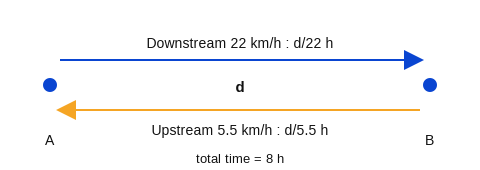
The downstream speed is 22 km/hr and the upstream speed is 5.5 km/hr. It takes a boat a total of 8 hours to go to a place and come back. What is the total distance travelled by the boat?
धारा के अनुकूल चाल 22 km/hr है और धारा के प्रतिकूल चाल 5.5 km/hr है। एक नाव को किसी स्थान तक जाने और वापस आने में कुल 8 घंटे लगते हैं। नाव द्वारा तय की गई कुल दूरी कितनी है?
  1. A3665 km
  2. B3525 km
  3. C1765 km
  4. D1726 km
Show answer

Concept: Time =DistanceSpeed; one-way distance d is covered once downstream and once upstream.

  1. d22+d5.5=8⇒d22+4d22=8.
  2. 5d22=8⇒d=1765km (one way).
  3. Total distance (to and fro) =2d=3525km.

Trick: Speeds ratio 22:5.5=4:1 → times 1:4 → downstream takes 85 h, so d=22×85=1765; double it.

Answer: (B) 3525km

अवधारणा: समय =दूरीचाल; एक ओर की दूरी d एक बार धारा के साथ और एक बार विपरीत तय होती है।

  1. d22+d5.5=8⇒d22+4d22=8।
  2. 5d22=8⇒d=1765km (एक ओर)।
  3. कुल दूरी (जाना + आना) =2d=3525km।

ट्रिक: चाल अनुपात 22:5.5=4:1 → समय 1:4 → downstream समय 85 h, d=22×85=1765; इसे दोगुना करें।

उत्तर: (B) 3525km

RRB NTPC Graduate CBT 1MathematicsBoats and StreamsRRB NTPC Graduate CBT 1 2024 · 10 Jun Shift 2 →
Q10087.
By selling an article for ₹112, a man loses 20%. At what price (in ₹) should he sell it to gain 50%?
एक वस्तु को ₹112 में बेचने पर एक व्यक्ति को 20% की हानि होती है। 50% लाभ प्राप्त करने के लिए उसे वह वस्तु किस मूल्य (₹ में) पर बेचनी चाहिए?
  1. A220
  2. B210
  3. C200
  4. D230
Show answer

Concept: SP=CP×100±gain/loss%100.

  1. At 20% loss: 112=CP×0.8⇒CP= ₹140.
  2. For 50% gain: SP=140×1.5= ₹210.

Trick: 80%→112, so 150%→11280×150=210.

Answer: (B) 210

अवधारणा: SP=CP×100±लाभ/हानि%100।

  1. 20% हानि पर: 112=CP×0.8⇒CP= ₹140।
  2. 50% लाभ के लिए: SP=140×1.5= ₹210।

ट्रिक: 80%→112, अतः 150%→11280×150=210।

उत्तर: (B) 210

RRB NTPC Graduate CBT 1MathematicsProfit and LossRRB NTPC Graduate CBT 1 2024 · 10 Jun Shift 2 →
Q10088.
If sinA=34, then calculate 2cosA7.
यदि sinA=34 है, तो 2cosA7 की गणना कीजिए।
  1. A72
  2. B74
  3. C12
  4. D14
Show answer

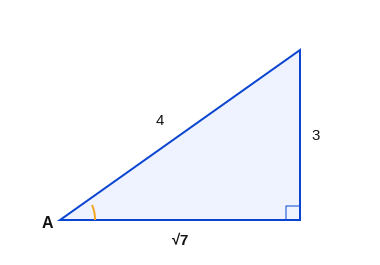
Concept: In a right triangle, sinA=perpendicularhypotenuse and cosA=basehypotenuse.

  1. sinA=34 → perpendicular 3, hypotenuse 4, base =16−9=7.
  2. cosA=74.
  3. 2cosA7=2×747=24=12.

Trick: Use cosA=1−sin2A=1−916=74 – the 7 cancels.

Answer: (C) 12

अवधारणा: समकोण त्रिभुज में sinA=लंबकर्ण और cosA=आधारकर्ण।

  1. sinA=34 → लंब 3, कर्ण 4, आधार =16−9=7।
  2. cosA=74।
  3. 2cosA7=2×747=24=12।

ट्रिक: cosA=1−sin2A=1−916=74 – 7 कट जाता है।

उत्तर: (C) 12

RRB NTPC Graduate CBT 1MathematicsTrigonometryRRB NTPC Graduate CBT 1 2024 · 10 Jun Shift 2 →
Q10089.
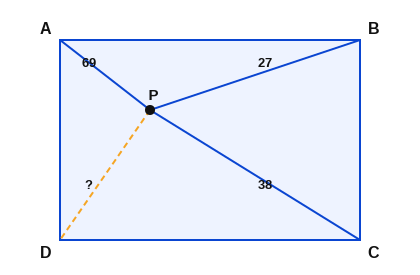
P is any point inside the rectangle ABCD. If PA = 69 cm, PB = 27 cm and PC = 38 cm, then the length of PD (in cm) is:
P आयत ABCD के अंदर स्थित कोई बिंदु है। यदि PA = 69 cm, PB = 27 cm और PC = 38 cm है, तो PD की लंबाई (cm में) है:
  1. A70
  2. B72
  3. C78
  4. D74
Show answer

Concept: British Flag theorem: for any point P inside rectangle ABCD, PA2+PC2=PB2+PD2 (opposite corners pair up).

  1. PA2+PC2=692+382=4761+1444=6205.
  2. PD2=6205−PB2=6205−272=6205−729=5476.
  3. PD=5476=74cm.

Trick: A and C are opposite, B and D are opposite – the sums of squares of distances to opposite corners are equal.

Answer: (D) 74

अवधारणा: British Flag प्रमेय: आयत ABCD के अंदर किसी बिंदु P के लिए PA2+PC2=PB2+PD2 (आमने-सामने के कोने)।

  1. PA2+PC2=692+382=4761+1444=6205।
  2. PD2=6205−PB2=6205−272=6205−729=5476।
  3. PD=5476=74cm।

ट्रिक: A-C और B-D आमने-सामने हैं – सम्मुख कोनों की दूरियों के वर्गों का योग बराबर होता है।

उत्तर: (D) 74

RRB NTPC Graduate CBT 1MathematicsGeometry – RectangleRRB NTPC Graduate CBT 1 2024 · 10 Jun Shift 2 →
Q10090.
Find the simple interest (in ₹) on ₹1,200 at an interest rate of 3% per month in 1 month.
₹1,200 पर 3% प्रति माह की ब्याज दर से 1 माह का साधारण ब्याज (₹ में) ज्ञात कीजिए।
  1. A6
  2. B36
  3. C23
  4. D3
Show answer

Concept: SI=P×R×T100 with R and T in the same time unit.

  1. P=1200, R=3% per month, T=1 month.
  2. SI=1200×3×1100=36.

Trick: 1 month at 3% per month = simply 3% of principal: 12×3=36.

Answer: (B) 36

अवधारणा: SI=P×R×T100, जहाँ R और T एक ही समय-इकाई में हों।

  1. P=1200, R=3% प्रति माह, T=1 माह।
  2. SI=1200×3×1100=36।

ट्रिक: 3% प्रति माह पर 1 माह = मूलधन का 3%: 12×3=36।

उत्तर: (B) 36

RRB NTPC Graduate CBT 1MathematicsSimple InterestRRB NTPC Graduate CBT 1 2024 · 10 Jun Shift 2 →
Q10091.
If x+1x=4, then the value of x3+1x3 is:
यदि x+1x=4 है, तो x3+1x3 का मान है:
  1. A52
  2. B134
  3. C151
  4. D39
Show answer

Concept: x3+1x3=(x+1x)3−3(x+1x).

  1. Put x+1x=4.
  2. x3+1x3=43−3×4=64−12=52.

Trick: If x+1x=a, then x3+1x3=a3−3a.

Answer: (A) 52

अवधारणा: x3+1x3=(x+1x)3−3(x+1x)।

  1. x+1x=4 रखें।
  2. x3+1x3=43−3×4=64−12=52।

ट्रिक: यदि x+1x=a, तो x3+1x3=a3−3a।

उत्तर: (A) 52

RRB NTPC Graduate CBT 1MathematicsAlgebraic IdentitiesRRB NTPC Graduate CBT 1 2024 · 10 Jun Shift 2 →
Q10092.
A person who spends 33% of his monthly income is able to save ₹6,298 per month. His monthly expenses (in ₹) are:
एक व्यक्ति जो अपनी मासिक आय का 33% ख़र्च करता है, प्रति माह ₹6,298 बचा पाता है। उसका मासिक व्यय (₹ में) है:
  1. A3,195
  2. B3,083
  3. C3,102
  4. D3,024
Show answer

Concept: Income = Expenditure + Savings.

  1. Expenditure =33% → savings =67% of income =6298.
  2. 1%=629867=94.
  3. Expenditure =33×94=3102.

Trick: Income =9400; go straight to 33% of it.

Answer: (C) 3,102

अवधारणा: आय = व्यय + बचत।

  1. व्यय =33% → बचत =67% आय =6298।
  2. 1%=629867=94।
  3. व्यय =33×94=3102।

ट्रिक: आय =9400; सीधे इसका 33% निकालें।

उत्तर: (C) 3,102

RRB NTPC Graduate CBT 1MathematicsPercentage – Income and SavingsRRB NTPC Graduate CBT 1 2024 · 10 Jun Shift 2 →
Q10093.
The average height of 15 boys out of a class of 50 is 163 cm. If the average height of the remaining boys is 165 cm, the average height (in cm) of all the boys of the class is:
50 छात्रों की एक कक्षा में से 15 लड़कों की औसत ऊँचाई 163 cm है। यदि शेष लड़कों की औसत ऊँचाई 165 cm है, तो कक्षा के सभी लड़कों की औसत ऊँचाई (cm में) है:
  1. A164.4
  2. B165
  3. C164
  4. D165.4
Show answer

Concept: Overall average =n1a1+n2a2n1+n2.

  1. Remaining boys =50−15=35.
  2. Total height =15×163+35×165=2445+5775=8220.
  3. Average =822050=164.4cm.

Trick: Start at 163: extra =35×250=1.4 → 164.4.

Answer: (A) 164.4

अवधारणा: कुल औसत =n1a1+n2a2n1+n2।

  1. शेष लड़के =50−15=35।
  2. कुल ऊँचाई =15×163+35×165=2445+5775=8220।
  3. औसत =822050=164.4cm।

ट्रिक: 163 से शुरू करें: अतिरिक्त =35×250=1.4 → 164.4।

उत्तर: (A) 164.4

RRB NTPC Graduate CBT 1MathematicsWeighted AverageRRB NTPC Graduate CBT 1 2024 · 10 Jun Shift 2 →
Q10094.
The mean and the mode of a data set are 51.5 and 61.7, respectively. Find the median of the data set, using the empirical formula.
एक आँकड़ा समुच्चय का माध्य और बहुलक क्रमशः 51.5 और 61.7 हैं। आनुभविक सूत्र का उपयोग करके आँकड़ा समुच्चय की माध्यिका ज्ञात कीजिए।
  1. A55.4
  2. B56.1
  3. C54.3
  4. D54.9
Show answer

Concept: Empirical relation: Mode=3Median−2Mean.

  1. 3Median=Mode+2Mean=61.7+2×51.5=61.7+103=164.7.
  2. Median=164.73=54.9.

Trick: Median=Mean+Mode−Mean3=51.5+10.23=54.9.

Answer: (D) 54.9

अवधारणा: आनुभविक संबंध: बहुलक=3माध्यिका−2माध्य।

  1. 3माध्यिका=61.7+2×51.5=61.7+103=164.7।
  2. माध्यिका=164.73=54.9।

ट्रिक: माध्यिका=माध्य+बहुलक−माध्य3=51.5+10.23=54.9।

उत्तर: (D) 54.9

RRB NTPC Graduate CBT 1MathematicsStatistics – Mean, Median, ModeRRB NTPC Graduate CBT 1 2024 · 10 Jun Shift 2 →
Q10095.
Three persons X, Y, and Z started a business with their shares in the ratio 13 : 20 : 15. After 7 months, Y withdrew his 33% share, while Z withdrew his 24% share 5 months prior to the completion of the year. If the total profit at the end of year is ₹16,100, find the share of Z (in ₹) in the profit.
तीन व्यक्तियों X, Y और Z ने 13 : 20 : 15 के अनुपात में अपने अंश लगाकर एक व्यवसाय शुरू किया। 7 महीने बाद, Y ने अपना 33% अंश निकाल लिया, जबकि Z ने वर्ष पूरा होने से 5 महीने पहले अपना 24% अंश निकाल लिया। यदि वर्ष के अंत में कुल लाभ ₹16,100 है, तो लाभ में Z का हिस्सा (₹ में) ज्ञात कीजिए।
  1. A4,888
  2. B5,250
  3. C5,063
  4. D4,968
Show answer

Concept: Profit is shared in the ratio of capital×time.

  1. Take capitals 1300, 2000, 1500. X: 1300×12=15600.
  2. Y keeps 67% after 7 months: 2000×7+1340×5=14000+6700=20700.
  3. Z withdraws 24% with 5 months left: 1500×7+1140×5=10500+5700=16200.
  4. Total =52500; Z's share =1620052500×16100=4968.

Trick: Ratio 15600:20700:16200=52:69:54 (sum 175); Z =54175×16100=54×92=4968.

Answer: (D) 4,968

अवधारणा: लाभ पूँजी×समय के अनुपात में बँटता है।

  1. पूँजी 1300, 2000, 1500 लें। X: 1300×12=15600।
  2. Y 7 माह बाद 33% निकालता है (बचा 67%): 2000×7+1340×5=14000+6700=20700।
  3. Z वर्ष पूरा होने से 5 माह पहले 24% निकालता है: 1500×7+1140×5=10500+5700=16200।
  4. कुल =52500; Z का हिस्सा =1620052500×16100=4968।

ट्रिक: अनुपात 15600:20700:16200=52:69:54 (योग 175); Z =54175×16100=54×92=4968।

उत्तर: (D) 4,968

RRB NTPC Graduate CBT 1MathematicsPartnershipRRB NTPC Graduate CBT 1 2024 · 10 Jun Shift 2 →
Q10096.
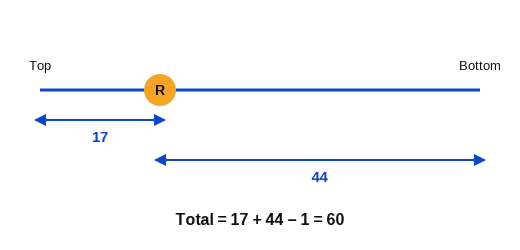
Rajesh ranked 17th from the top and 44th from the bottom in his class. How many students are there in his class?
राजेश अपनी कक्षा में ऊपर से 17वें और नीचे से 44वें स्थान पर था। उसकी कक्षा में कितने छात्र हैं?
  1. A61
  2. B60
  3. C59
  4. D62
Show answer

Concept: Total persons =(rank from top)+(rank from bottom)−1, because the person is counted twice.

  1. Rank from top =17, rank from bottom =44.
  2. Total =17+44−1=60.

Trick: Add both ranks and subtract 1.

Answer: (B) 60

अवधारणा: कुल व्यक्ति =(ऊपर से रैंक)+(नीचे से रैंक)−1, क्योंकि वह व्यक्ति दो बार गिना जाता है।

  1. ऊपर से रैंक =17, नीचे से रैंक =44।
  2. कुल =17+44−1=60।

ट्रिक: दोनों रैंक जोड़ें और 1 घटाएँ।

उत्तर: (B) 60

RRB NTPC Graduate CBT 1General Intelligence and ReasoningRankingRRB NTPC Graduate CBT 1 2024 · 10 Jun Shift 2 →
Q10097.
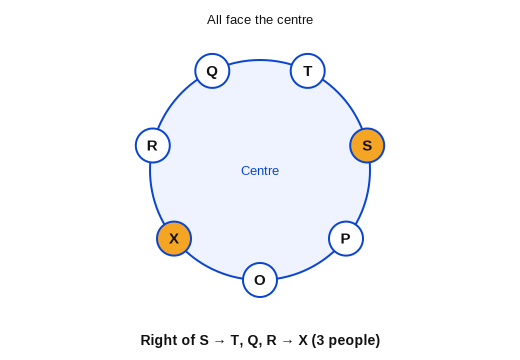
O, P, Q, R, S, T and X are sitting around a circular table facing the centre of the table. Only one person sits between Q and X when counted from the left of X. P sits third to the right of R. O sits third to the left of T. P sits to the immediate right of O. S is not an immediate neighbour of O. How many people sit between S and X when counted from the right of S?
O, P, Q, R, S, T और X एक वृत्ताकार मेज़ के चारों ओर मेज़ के केंद्र की ओर मुख करके बैठे हैं। X के बाएँ से गिनने पर Q और X के बीच केवल एक व्यक्ति बैठा है। P, R के दाएँ से तीसरे स्थान पर बैठा है। O, T के बाएँ से तीसरे स्थान पर बैठा है। P, O के ठीक दाएँ बैठा है। S, O का निकटतम पड़ोसी नहीं है। S के दाएँ से गिनने पर S और X के बीच कितने व्यक्ति बैठे हैं?
  1. ATwoदो
  2. BOneएक
  3. CThreeतीन
  4. DFourचार
Show answer

Concept: Facing the centre: a person's right is anticlockwise and left is clockwise. Fix O first, then place the others.

  1. P is immediately right of O; P is third to the right of R, so R is third to the left of P.
  2. O is third to the left of T, so T is third to the right of O.
  3. Free seats remain on O's left side and the top. S is not next to O, and Q is second to the left of X, so X sits immediately left of O, Q two seats further and S in the last seat.
  4. Counting from the right of S: T, Q, R, then X → three people in between.

Trick: Draw O at the bottom; right = anticlockwise for centre-facing people.

Answer: (C) Three

अवधारणा: केंद्र की ओर मुख होने पर व्यक्ति का दायाँ = वामावर्त और बायाँ = दक्षिणावर्त। पहले O को स्थिर करें।

  1. P, O के ठीक दाएँ है; P, R के तीसरे दाएँ है, अतः R, P के तीसरे बाएँ।
  2. O, T के तीसरे बाएँ है, अतः T, O के तीसरे दाएँ।
  3. बची सीटें O के बाएँ और ऊपर हैं। S, O का पड़ोसी नहीं और Q, X के दूसरे बाएँ है, अतः X ठीक O के बाएँ, Q दो सीट आगे और S आख़िरी सीट पर।
  4. S के दाएँ से गिनें: T, Q, R, फिर X → बीच में तीन व्यक्ति।

ट्रिक: O को नीचे बनाएँ; केंद्र की ओर मुख = दायाँ वामावर्त।

उत्तर: (C) तीन

RRB NTPC Graduate CBT 1General Intelligence and ReasoningCircular seatingRRB NTPC Graduate CBT 1 2024 · 10 Jun Shift 2 →
Q10098.
What will come in the place of the question mark (?) in the following equation, if ‘+’ and ‘−’ are interchanged and ‘×’ and ‘÷’ are interchanged?
173 ÷ 3 − 135 × 5 + 17 = ?
यदि '+' और '−' को आपस में बदल दिया जाए तथा '×' और '÷' को आपस में बदल दिया जाए, तो निम्नलिखित समीकरण में प्रश्न चिह्न (?) के स्थान पर क्या आएगा?
173 ÷ 3 − 135 × 5 + 17 = ?
  1. A529
  2. B528
  3. C527
  4. D530
Show answer

Concept: Interchange the signs first, then apply BODMAS (÷, × before +, −).

  1. Interchanging '+'↔'−' and '×'↔'÷': 173×3+135÷5−17.
  2. 173×3=519 and 135÷5=27.
  3. 519+27−17=529.

Trick: Rewrite the whole expression with new signs before calculating.

Answer: (A) 529

अवधारणा: पहले चिह्न बदलें, फिर BODMAS लगाएँ (÷, × पहले, फिर +, −)।

  1. '+'↔'−' और '×'↔'÷' बदलने पर: 173×3+135÷5−17।
  2. 173×3=519 और 135÷5=27।
  3. 519+27−17=529।

ट्रिक: गणना से पहले पूरा व्यंजक नए चिह्नों के साथ लिखें।

उत्तर: (A) 529

RRB NTPC Graduate CBT 1General Intelligence and ReasoningSymbol interchangeRRB NTPC Graduate CBT 1 2024 · 10 Jun Shift 2 →
Q10099.
This question is based on the five, three-digit numbers given below.
(Left) 611 733 279 265 370 (Right)
(Example: 697 – First digit = 6, second digit = 9 and third digit = 7)
(NOTE: All operations to be done from left to right.)
What will be the resultant if the second digit of the highest number is added to the first digit of the lowest number?
यह प्रश्न नीचे दी गई तीन अंकों वाली पाँच संख्याओं पर आधारित है।
(बाएँ) 611 733 279 265 370 (दाएँ)
(उदाहरण: 697 – पहला अंक = 6, दूसरा अंक = 9 और तीसरा अंक = 7)
(नोट: सभी संक्रियाएँ बाएँ से दाएँ की जानी हैं।)
यदि सबसे बड़ी संख्या के दूसरे अंक को सबसे छोटी संख्या के पहले अंक में जोड़ा जाए, तो परिणाम क्या होगा?
  1. A4
  2. B5
  3. C6
  4. D8
Show answer

Concept: Identify the highest and lowest numbers, then pick the required digits.

  1. Numbers: 611, 733, 279, 265, 370. Highest =733, lowest =265.
  2. Second digit of 733 =3; first digit of 265 =2.
  3. 3+2=5.

Trick: Comparing only first digits quickly gives highest (7xx) and lowest (2xx; 265 is less than 279).

Answer: (B) 5

अवधारणा: सबसे बड़ी और सबसे छोटी संख्या पहचानें, फिर आवश्यक अंक लें।

  1. संख्याएँ: 611, 733, 279, 265, 370। सबसे बड़ी =733, सबसे छोटी =265।
  2. 733 का दूसरा अंक =3; 265 का पहला अंक =2।
  3. 3+2=5।

ट्रिक: पहले अंक से तुलना करें: सबसे बड़ी 7xx, सबसे छोटी 2xx (265, 279 से छोटी)।

उत्तर: (B) 5

RRB NTPC Graduate CBT 1General Intelligence and ReasoningNumber–digit operationsRRB NTPC Graduate CBT 1 2024 · 10 Jun Shift 2 →
Q10100.
CSVG is related to GOZC in a certain way based on the English alphabetical order. In the same way, KKDY is related to OGHU. To which of the given options is SCLQ related, following the same logic?
अंग्रेज़ी वर्णमाला क्रम के आधार पर CSVG एक निश्चित प्रकार से GOZC से संबंधित है। उसी प्रकार, KKDY, OGHU से संबंधित है। समान तर्क का अनुसरण करते हुए, SCLQ दिए गए विकल्पों में से किससे संबंधित है?
  1. AVZPL
  2. BWYPM
  3. CWZOL
  4. DXYQN
Show answer

Concept: Find the position change of each letter: here the pattern is +4,−4,+4,−4.

  1. CSVG → GOZC: C+4=G, S−4=O, V+4=Z, G−4=C.
  2. KKDY → OGHU: K+4=O, K−4=G, D+4=H, Y−4=U ✓.
  3. SCLQ: S+4=W, C−4=Y (wrapping back from A to Z), L+4=P, Q−4=M → WYPM.

Trick: C −4: C(3) → 3−4+26=25 = Y.

Answer: (B) WYPM

अवधारणा: हर अक्षर का स्थान परिवर्तन देखें: पैटर्न +4,−4,+4,−4 है।

  1. CSVG → GOZC: C+4=G, S−4=O, V+4=Z, G−4=C।
  2. KKDY → OGHU: K+4=O, K−4=G, D+4=H, Y−4=U ✓।
  3. SCLQ: S+4=W, C−4=Y (A के बाद Z पर लौटकर), L+4=P, Q−4=M → WYPM।

ट्रिक: C −4: C(3) → 3−4+26=25 = Y।

उत्तर: (B) WYPM

RRB NTPC Graduate CBT 1General Intelligence and ReasoningLetter analogyRRB NTPC Graduate CBT 1 2024 · 10 Jun Shift 2 →