Question bank

Q&A: practice questions with answers

Search questions on any topic. Filter by exam category, exam, subject and topic, try the question, then open the answer and explanation.

Courses – airGurukul

20,719 questions found.

Q10101.
A group of numbers and symbols is coded using letter codes as per the codes given below and the conditions that follow. Study the given codes and conditions and answer the question that follows.
Note: If none of the conditions apply, then codes for the respective number/symbol are to be followed directly as given in the table.
LetterLMEPAUX
Code7$@92%6
Conditions:
1. If the 1st letter is a vowel and the last letter is a consonant, their codes are to be interchanged.
2. If the 2nd letter is a vowel and the last letter is a consonant, both are to be coded as ‘W’.
3. If the 3rd and 4th letters are consonants, both are to be coded as the code for the 3rd letter.
4. If the 1st and 2nd letters are vowels, then both are to be coded as ‘Q’.
What will be the code for the following group?
APUXR
संख्याओं और प्रतीकों के एक समूह को नीचे दिए गए कूटों और उसके बाद दी गई शर्तों के अनुसार अक्षर कूटों का उपयोग करके कूटबद्ध किया जाता है। दिए गए कूटों और शर्तों का अध्ययन कीजिए और नीचे दिए गए प्रश्न का उत्तर दीजिए।
नोट: यदि कोई भी शर्त लागू नहीं होती है, तो संबंधित संख्या/प्रतीक के लिए तालिका में दिए गए कूटों का सीधे अनुसरण किया जाना है।
अक्षरLMEPAUX
कूट7$@92%6
शर्तें:
1. यदि पहला अक्षर स्वर है और अंतिम अक्षर व्यंजन है, तो उनके कूट आपस में बदल दिए जाने हैं।
2. यदि दूसरा अक्षर स्वर है और अंतिम अक्षर व्यंजन है, तो दोनों को 'W' के रूप में कूटबद्ध किया जाना है।
3. यदि तीसरा और चौथा अक्षर व्यंजन हैं, तो दोनों को तीसरे अक्षर के कूट के रूप में कूटबद्ध किया जाना है।
4. यदि पहला और दूसरा अक्षर स्वर हैं, तो दोनों को 'Q' के रूप में कूटबद्ध किया जाना है।
निम्नलिखित समूह के लिए कूट क्या होगा?
APUXR
  1. A2 9 % 6 4
  2. BQ 9 % 6 Q
  3. C2 9 % 6 2
  4. D4 9 % 6 2
Show answer

Concept: Check each condition on the given group; apply only those that hold, otherwise use the table codes.

  1. A P U X R: 1st letter A is a vowel and last letter R is a consonant → condition 1 applies (interchange codes of A and R).
  2. Condition 2: 2nd letter P is a consonant ✗. Condition 3: U is a vowel ✗. Condition 4: P is a consonant ✗.
  3. Direct codes: A = 2, P = 9, U = %, X = 6, R = 4 (the option pattern 4 9 % 6 2 shows R's code is 4).
  4. After interchanging the 1st and last codes: 4 9 % 6 2.

Trick: Test condition 1 first: vowel at start + consonant at end → just swap the end codes.

Answer: (D) 4 9 % 6 2

अवधारणा: दिए गए समूह पर हर शर्त जाँचें; जो लागू हों वही लगाएँ, अन्यथा तालिका के कूट लें।

  1. A P U X R: पहला अक्षर A स्वर और अंतिम R व्यंजन → शर्त 1 लागू (A और R के कूट आपस में बदलें)।
  2. शर्त 2: दूसरा अक्षर P व्यंजन ✗। शर्त 3: U स्वर ✗। शर्त 4: P व्यंजन ✗।
  3. सीधे कूट: A = 2, P = 9, U = %, X = 6, R = 4 (विकल्प 4 9 % 6 2 से R का कूट 4 स्पष्ट है)।
  4. पहले और अंतिम कूट बदलने पर: 4 9 % 6 2।

ट्रिक: पहले शर्त 1 देखें: शुरू में स्वर + अंत में व्यंजन → केवल सिरों के कूट बदलें।

उत्तर: (D) 4 9 % 6 2
RRB NTPC Graduate CBT 1General Intelligence and ReasoningCoding with conditionsRRB NTPC Graduate CBT 1 2024 · 10 Jun Shift 2 →
Q10102.
5 is related to 35 following a certain logic. Following the same logic, 2 is related to 14. To which of the following is 9 related, following the same logic?
(NOTE: Operations should be performed on the whole numbers, without breaking down the numbers into their constituent digits. E.g. 13 – Operations on 13 such as
adding/subtracting/multiplying to 13 can be performed. Breaking down 13 into 1 and 3 and then performing mathematical operations on 1 and 3 is not allowed.)
एक निश्चित तर्क का अनुसरण करते हुए 5, 35 से संबंधित है। उसी तर्क का अनुसरण करते हुए, 2, 14 से संबंधित है। समान तर्क का अनुसरण करते हुए, 9 निम्नलिखित में से किससे संबंधित है?
(नोट: संख्याओं को उनके घटक अंकों में विभक्त किए बिना, पूर्ण संख्याओं पर संक्रियाएँ की जानी चाहिए। उदाहरण: 13 – 13 पर संक्रियाएँ जैसे 13 में
जोड़ना/घटाना/गुणा करना आदि की जा सकती हैं। 13 को 1 और 3 में विभक्त करना और फिर 1 और 3 पर गणितीय संक्रियाएँ करना वर्जित है।)
  1. A63
  2. B61
  3. C65
  4. D67
Show answer

Concept: Find one operation that works for both given pairs.

  1. 5×7=35.
  2. 2×7=14 ✓ – the rule is 'multiply by 7'.
  3. 9×7=63.

Trick: Both outputs are multiples of 7 – divide and check.

Answer: (A) 63

अवधारणा: दोनों दिए गए युग्मों पर लागू होने वाली एक संक्रिया खोजें।

  1. 5×7=35।
  2. 2×7=14 ✓ – नियम है '7 से गुणा'।
  3. 9×7=63।

ट्रिक: दोनों उत्तर 7 के गुणज हैं – भाग देकर जाँचें।

उत्तर: (A) 63

RRB NTPC Graduate CBT 1General Intelligence and ReasoningNumber analogyRRB NTPC Graduate CBT 1 2024 · 10 Jun Shift 2 →
Q10103.
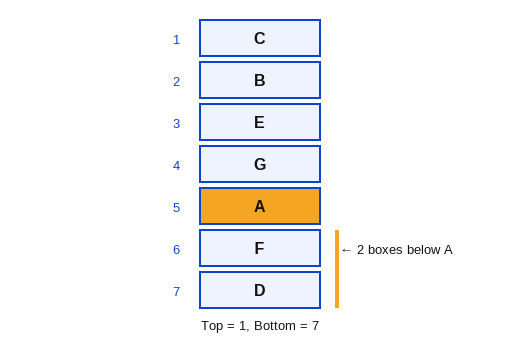
Seven boxes, A, B, C, D, E, F and G, are kept one over the other but not necessarily in the same order. Only three boxes are kept above G. Only one box is kept between F and G. Only three boxes are kept between F and B. B is kept in some place above G. E is kept immediately below B. A is kept in one of the places above D. C is not kept immediately above or below F. How many boxes are kept below A?
सात डिब्बे A, B, C, D, E, F और G एक के ऊपर एक रखे गए हैं, परंतु आवश्यक नहीं कि इसी क्रम में हों। G के ऊपर केवल तीन डिब्बे रखे गए हैं। F और G के बीच केवल एक डिब्बा रखा गया है। F और B के बीच केवल तीन डिब्बे रखे गए हैं। B, G के ऊपर किसी स्थान पर रखा गया है। E, B के ठीक नीचे रखा गया है। A, D के ऊपर के स्थानों में से किसी एक पर रखा गया है। C, F के ठीक ऊपर या ठीक नीचे नहीं रखा गया है। A के नीचे कितने डिब्बे रखे गए हैं?
  1. A2
  2. B4
  3. C1
  4. D3
Show answer

Concept: Number positions 1 (top) to 7 (bottom) and place the boxes with fixed positions first.

  1. Three boxes above G → G is at 4. One box between F and G → F at 2 or 6.
  2. Three boxes between F and B with B above G: F = 6 gives B = 2 ✓ (F = 2 gives B = 6, below G ✗). E just below B → E = 3.
  3. Free places 1, 5, 7. C is not next to F (6) → C = 1. A above D → A = 5, D = 7.
  4. Below A: F and D → 2 boxes.

Trick: Fix G first, then F–B pair; the rest falls in place.

Answer: (A) 2

अवधारणा: स्थान 1 (ऊपर) से 7 (नीचे) तक मानें और पहले निश्चित स्थान वाले डिब्बे रखें।

  1. G के ऊपर तीन डिब्बे → G स्थान 4 पर। F और G के बीच एक → F, 2 या 6 पर।
  2. F और B के बीच तीन तथा B, G के ऊपर: F = 6 से B = 2 ✓ (F = 2 से B = 6, G के नीचे ✗)। E ठीक B के नीचे → E = 3।
  3. खाली स्थान 1, 5, 7। C, F (6) के पास नहीं → C = 1। A, D के ऊपर → A = 5, D = 7।
  4. A के नीचे: F और D → 2 डिब्बे।

ट्रिक: पहले G, फिर F–B जोड़ी तय करें; बाकी अपने-आप बैठ जाते हैं।

उत्तर: (A) 2

RRB NTPC Graduate CBT 1General Intelligence and ReasoningBox arrangementRRB NTPC Graduate CBT 1 2024 · 10 Jun Shift 2 →
Q10104.
This question is based on the five, three-digit numbers given below.
(Left) 388 739 783 483 785 (Right)
(Example: 697 – First digit = 6, second digit = 9 and third digit = 7)
(NOTE: All operations to be done from left to right.)
What will be the resultant if the first digit of the highest number is subtracted from the third digit of the lowest number?
यह प्रश्न नीचे दी गई तीन अंकों वाली पाँच संख्याओं पर आधारित है।
(बाएँ) 388 739 783 483 785 (दाएँ)
(उदाहरण: 697 – पहला अंक = 6, दूसरा अंक = 9 और तीसरा अंक = 7)
(नोट: सभी संक्रियाएँ बाएँ से दाएँ की जानी हैं।)
यदि सबसे बड़ी संख्या के पहले अंक को सबसे छोटी संख्या के तीसरे अंक में से घटाया जाए, तो परिणाम क्या होगा?
  1. A0
  2. B1
  3. C2
  4. D4
Show answer

Concept: Identify the highest and lowest numbers, then pick the required digits.

  1. Numbers: 388, 739, 783, 483, 785. Highest =785, lowest =388.
  2. First digit of 785 =7; third digit of 388 =8.
  3. 8−7=1.

Trick: 783 vs 785: compare the last digit → 785 is highest.

Answer: (B) 1

अवधारणा: सबसे बड़ी और सबसे छोटी संख्या पहचानें, फिर आवश्यक अंक लें।

  1. संख्याएँ: 388, 739, 783, 483, 785। सबसे बड़ी =785, सबसे छोटी =388।
  2. 785 का पहला अंक =7; 388 का तीसरा अंक =8।
  3. 8−7=1।

ट्रिक: 783 और 785: अंतिम अंक से तुलना → 785 सबसे बड़ी।

उत्तर: (B) 1

RRB NTPC Graduate CBT 1General Intelligence and ReasoningNumber–digit operationsRRB NTPC Graduate CBT 1 2024 · 10 Jun Shift 2 →
Q10105.
In a certain code language,
'A + B' means 'A is the mother of B',
'A – B' means 'A is the brother of B',
'A × B' means 'A is the wife of B' and
'A ÷ B' means 'A is the father of B'.
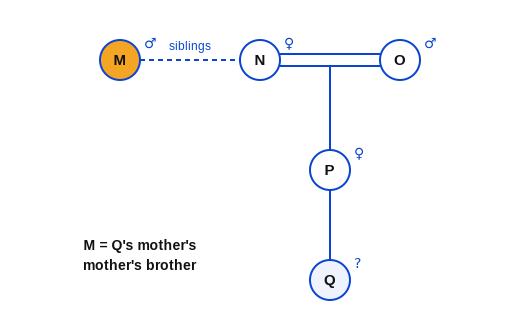
Based on the above, how is M related to Q if 'M – N × O ÷ P + Q'?
एक निश्चित कूट भाषा में,
'A + B' का अर्थ है 'A, B की माता है',
'A – B' का अर्थ है 'A, B का भाई है',
'A × B' का अर्थ है 'A, B की पत्नी है' और
'A ÷ B' का अर्थ है 'A, B का पिता है'।
उपर्युक्त के आधार पर, यदि 'M – N × O ÷ P + Q' है, तो M का Q से क्या संबंध है?
  1. AMother's Mother's Brotherमाता की माता का भाई
  2. BFather's Brotherपिता का भाई
  3. CMother's Fatherमाता का पिता
  4. D​Father's Fatherपिता का पिता
Show answer

Concept: Decode each symbol from left to right and draw the family tree.

  1. M – N: M is the brother of N.
  2. N × O: N is the wife of O (N is female).
  3. O ÷ P: O is the father of P, so N is P's mother.
  4. P + Q: P is the mother of Q. So N is Q's mother's mother and M is her brother.

Trick: Read the chain backwards from Q: mother (P) → her mother (N) → N's brother (M).

Answer: (A) Mother's Mother's Brother

अवधारणा: हर चिह्न को बाएँ से दाएँ डिकोड करें और वंश-वृक्ष बनाएँ।

  1. M – N: M, N का भाई है।
  2. N × O: N, O की पत्नी है (N महिला)।
  3. O ÷ P: O, P का पिता है, अतः N, P की माँ।
  4. P + Q: P, Q की माँ है। अतः N, Q की नानी है और M उसका भाई।

ट्रिक: Q से उल्टा पढ़ें: माँ (P) → उसकी माँ (N) → N का भाई (M)।

उत्तर: (A) माँ की माँ का भाई

RRB NTPC Graduate CBT 1General Intelligence and ReasoningCoded blood relationsRRB NTPC Graduate CBT 1 2024 · 10 Jun Shift 2 →
Q10106.
Which of the following letter-number-clusters will replace the question mark (?) in the given series to make it logically complete?
CJL 11, DKM 15, ELN 19, FMO 23, ?
निम्नलिखित में से कौन-सा अक्षर-संख्या समूह दी गई श्रृंखला में प्रश्न चिह्न (?) का स्थान लेकर उसे तार्किक रूप से पूर्ण करेगा?
CJL 11, DKM 15, ELN 19, FMO 23, ?
  1. AQNO 27
  2. BTXU 26
  3. CTUY 26
  4. DGNP 27
Show answer

Concept: Track letters and numbers separately.

  1. Each letter moves +1: C→D→E→F→G, J→K→L→M→N, L→M→N→O→P → GNP.
  2. Numbers increase by 4: 11, 15, 19, 23, 27.

Trick: Only GNP continues the first letter after F.

Answer: (D) GNP 27

अवधारणा: अक्षर और संख्याएँ अलग-अलग देखें।

  1. हर अक्षर +1: C→D→E→F→G, J→K→L→M→N, L→M→N→O→P → GNP।
  2. संख्याएँ 4 से बढ़ती हैं: 11, 15, 19, 23, 27।

ट्रिक: F के बाद G से शुरू होने वाला केवल GNP है।

उत्तर: (D) GNP 27

RRB NTPC Graduate CBT 1General Intelligence and ReasoningLetter-number seriesRRB NTPC Graduate CBT 1 2024 · 10 Jun Shift 2 →
Q10107.
What will come in place of the question mark (?) in the following equation, if ‘+’ and ‘–’ are interchanged, and ‘×’ and ‘÷’ are interchanged?
87 × 3 ÷ 4 + 12 – 30 = ?
यदि '+' और '–' को आपस में बदल दिया जाए, तथा '×' और '÷' को आपस में बदल दिया जाए, तो निम्नलिखित समीकरण में प्रश्न चिह्न (?) के स्थान पर क्या आएगा?
87 × 3 ÷ 4 + 12 – 30 = ?
  1. A134
  2. B145
  3. C122
  4. D144
Show answer

Concept: Interchange the signs first, then apply BODMAS.

  1. After interchanging '+'↔'–' and '×'↔'÷': 87÷3×4−12+30.
  2. 87÷3=29; 29×4=116.
  3. 116−12+30=134.

Trick: Write the new expression completely before solving.

Answer: (A) 134

अवधारणा: पहले चिह्न बदलें, फिर BODMAS लगाएँ।

  1. '+'↔'–' और '×'↔'÷' बदलने पर: 87÷3×4−12+30।
  2. 87÷3=29; 29×4=116।
  3. 116−12+30=134।

ट्रिक: हल करने से पहले नया व्यंजक पूरा लिखें।

उत्तर: (A) 134

RRB NTPC Graduate CBT 1General Intelligence and ReasoningSymbol interchangeRRB NTPC Graduate CBT 1 2024 · 10 Jun Shift 2 →
Q10108.
If 2 is added to each odd digit and 1 is subtracted from each even digit in the number 7481652, what will be the difference between the first digit from the left and the first digit from the right in the new number thus formed?
यदि संख्या 7481652 में प्रत्येक विषम अंक में 2 जोड़ा जाए और प्रत्येक सम अंक में से 1 घटाया जाए, तो इस प्रकार बनी नई संख्या में बाएँ से पहले अंक और दाएँ से पहले अंक के बीच का अंतर क्या होगा?
  1. A6
  2. B2
  3. C4
  4. D8
Show answer

Concept: Change every digit by its rule (odd +2, even −1), then read the required digits.

  1. 7481652: 7→9, 4→3, 8→7, 1→3, 6→5, 5→7, 2→1.
  2. New number: 9373571.
  3. First digit from left =9, first from right =1; difference =9−1=8.

Trick: Only the end digits matter: 7 (odd) → 9, 2 (even) → 1.

Answer: (D) 8

अवधारणा: हर अंक को नियम से बदलें (विषम +2, सम −1), फिर आवश्यक अंक पढ़ें।

  1. 7481652: 7→9, 4→3, 8→7, 1→3, 6→5, 5→7, 2→1।
  2. नई संख्या: 9373571।
  3. बाएँ से पहला अंक =9, दाएँ से पहला =1; अंतर =9−1=8।

ट्रिक: केवल सिरे के अंक चाहिए: 7 (विषम) → 9, 2 (सम) → 1।

उत्तर: (D) 8

RRB NTPC Graduate CBT 1General Intelligence and ReasoningDigit operationsRRB NTPC Graduate CBT 1 2024 · 10 Jun Shift 2 →
Q10109.
Read the given statements and conclusions carefully. Assuming that the information given in the statements is true, even if it appears to be at variance with commonly known facts, decide which of the given conclusion(s) logically follow(s) from the statements.
Statements:
All cars are old.
Some old are new.
Some new are red.
Conclusions:
(I) All old are cars.
(II) Some new are old.
दिए गए कथनों और निष्कर्षों को ध्यानपूर्वक पढ़िए। यह मानते हुए कि कथनों में दी गई जानकारी सत्य है, भले ही वह सामान्यतः ज्ञात तथ्यों से भिन्न प्रतीत होती हो, निर्णय कीजिए कि दिए गए निष्कर्षों में से कौन-सा/से निष्कर्ष कथनों का तार्किक रूप से अनुसरण करता है/करते हैं।
कथन:
सभी कारें पुरानी हैं।
कुछ पुरानी, नई हैं।
कुछ नई, लाल हैं।
निष्कर्ष:
(I) सभी पुरानी, कारें हैं।
(II) कुछ नई, पुरानी हैं।
  1. ABoth conclusions (I) and (II) follow.निष्कर्ष (I) और (II) दोनों अनुसरण करते हैं।
  2. BNeither conclusion (I) nor (II) follows.न तो निष्कर्ष (I) और न ही (II) अनुसरण करता है।
  3. COnly conclusion (I) follows.केवल निष्कर्ष (I) अनुसरण करता है।
  4. DOnly conclusion (II) follows.केवल निष्कर्ष (II) अनुसरण करता है।
Show answer

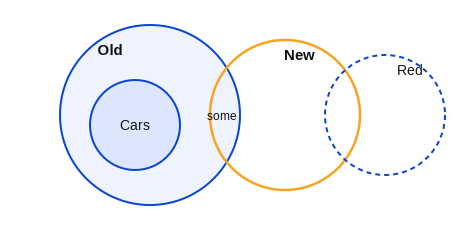
Concept: Draw the smallest Venn diagram that satisfies all statements; a conclusion follows only if it is true in every possible diagram.

  1. 'All cars are old' – the Cars circle lies inside Old; Old can be much bigger, so 'All old are cars' is not certain. (I) does not follow.
  2. 'Some old are new' converts to 'Some new are old' (a 'some' statement can be reversed). (II) follows.
  3. 'Some new are red' is not needed for these conclusions.

Yaad rakhein: 'All A are B' can never be reversed to 'All B are A', but 'Some A are B' always reverses to 'Some B are A'.

Answer: (D) Only conclusion (II) follows.

अवधारणा: सबसे छोटा Venn diagram बनाएँ जो सभी कथनों को संतुष्ट करे; निष्कर्ष तभी सही है जब वह हर संभव चित्र में सत्य हो।

  1. 'सभी cars, old हैं' – Cars वृत्त Old के अंदर है; Old बड़ा हो सकता है, इसलिए 'सभी old, cars हैं' निश्चित नहीं। (I) अनुसरण नहीं करता।
  2. 'कुछ old, new हैं' को उलटकर 'कुछ new, old हैं' लिखा जा सकता है। (II) अनुसरण करता है।
  3. 'कुछ new, red हैं' इन निष्कर्षों के लिए आवश्यक नहीं है।

याद रखें: 'सभी A, B हैं' को उलटकर 'सभी B, A हैं' नहीं बनता, पर 'कुछ A, B हैं' हमेशा 'कुछ B, A हैं' बनता है।

उत्तर: (D) केवल निष्कर्ष (II) अनुसरण करता है।

RRB NTPC Graduate CBT 1General Intelligence and ReasoningSyllogismRRB NTPC Graduate CBT 1 2024 · 10 Jun Shift 2 →
Q10110.
What should come in place of the question mark (?) in the given series based on the English alphabetical order?
FCA HEC JGE LIG ?
अंग्रेज़ी वर्णमाला क्रम के आधार पर दी गई श्रृंखला में प्रश्न चिह्न (?) के स्थान पर क्या आना चाहिए?
FCA HEC JGE LIG ?
  1. ANKI
  2. BNKJ
  3. CNLJ
  4. DNLI
Show answer

Concept: Check each letter position of the clusters separately.

  1. 1st letters: F, H, J, L → +2 each → next N.
  2. 2nd letters: C, E, G, I → +2 each → next K.
  3. 3rd letters: A, C, E, G → +2 each → next I.

Trick: Every letter moves +2, so simply add 2 to each letter of LIG: L→N, I→K, G→I.

Answer: (A) NKI

अवधारणा: हर समूह के अक्षरों की स्थिति अलग-अलग जाँचिए।

  1. पहले अक्षर: F, H, J, L → हर बार +2 → अगला N।
  2. दूसरे अक्षर: C, E, G, I → +2 → अगला K।
  3. तीसरे अक्षर: A, C, E, G → +2 → अगला I।

ट्रिक: हर अक्षर +2 बढ़ता है, इसलिए LIG के हर अक्षर में 2 जोड़ें: L→N, I→K, G→I।

उत्तर: (A) NKI

RRB NTPC Graduate CBT 1General Intelligence and ReasoningLetter SeriesRRB NTPC Graduate CBT 1 2024 · 10 Jun Shift 2 →
Q10111.
What should come in place of the question mark (?) in the given series?
502 500 496 490 482 ?
दी गई श्रृंखला में प्रश्न चिह्न (?) के स्थान पर क्या आना चाहिए?
502 500 496 490 482 ?
  1. A472
  2. B471
  3. C469
  4. D468
Show answer

Concept: Look at the differences between consecutive terms.

  1. 502−500=2, 500−496=4, 496−490=6, 490−482=8.
  2. The differences increase by 2, so the next difference is 10.
  3. 482−10=472.

Trick: Subtract consecutive even numbers: −2, −4, −6, −8, −10.

Answer: (A) 472

अवधारणा: क्रमागत पदों के अंतर देखिए।

  1. 502−500=2, 500−496=4, 496−490=6, 490−482=8।
  2. अंतर 2-2 से बढ़ रहा है, अगला अंतर 10 होगा।
  3. 482−10=472।

ट्रिक: क्रमागत सम संख्याएँ घटाइए: −2, −4, −6, −8, −10।

उत्तर: (A) 472

RRB NTPC Graduate CBT 1General Intelligence and ReasoningNumber SeriesRRB NTPC Graduate CBT 1 2024 · 10 Jun Shift 2 →
Q10112.
Based on the English alphabetical order, three of the following four letter-cluster pairs are alike in a certain way and thus form a group. Which letter-cluster pair DOES NOT belong to that group?
(Note: The odd one out is not based on the number of consonants/vowels or their position in the letter-cluster.)
अंग्रेज़ी वर्णमाला क्रम के आधार पर, निम्नलिखित चार अक्षर-समूह युग्मों में से तीन किसी निश्चित प्रकार से एक समान हैं और इस प्रकार एक समूह बनाते हैं। कौन-सा अक्षर-समूह युग्म उस समूह से संबंधित नहीं है?
(नोट: असंगत युग्म, व्यंजनों/स्वरों की संख्या या अक्षर-समूह में उनके स्थान पर आधारित नहीं है।)
  1. ABJ-FZ
  2. BHP-LF
  3. CGO-KF
  4. DTB-XR
Show answer

Concept: Use letter positions (A=1 … Z=26) and compare both letters of each pair.

  1. BJ-FZ: B(2)→F(6) is +4, J(10)→Z(26) is +16.
  2. HP-LF: H→L +4, P(16)→F(6) is +16 (wrapping: 32−26=6). TB-XR: T→X +4, B(2)→R(18) +16.
  3. GO-KF: G→K +4, but O(15)+16=31−26=5 = E, not F.

Trick: Pattern: first letter +4, second letter +16 (same as −10). GO-KF breaks it.

Answer: (C) GO-KF

अवधारणा: अक्षरों की स्थिति (A=1 … Z=26) लेकर हर युग्म के दोनों अक्षरों की तुलना कीजिए।

  1. BJ-FZ: B(2)→F(6) +4, J(10)→Z(26) +16।
  2. HP-LF: H→L +4, P(16)→F(6) +16 (चक्र: 32−26=6)। TB-XR: T→X +4, B(2)→R(18) +16।
  3. GO-KF: G→K +4, पर O(15)+16=31−26=5 = E होना चाहिए, F नहीं।

ट्रिक: नियम: पहला अक्षर +4, दूसरा अक्षर +16 (यानी −10)। GO-KF इसे तोड़ता है।

उत्तर: (C) GO-KF

RRB NTPC Graduate CBT 1General Intelligence and ReasoningOdd One Out – Letter ClustersRRB NTPC Graduate CBT 1 2024 · 10 Jun Shift 2 →
Q10113.
Each of J, K, L, M, N, O and P has an exam on a different day of a week starting from Monday and ending on Sunday of the same week. Only two people have exams before P. Only one person has an exam after L. Only three people have exams between P and J. Only one person has an exam between K and L. O has an exam immediately after M. How many people have exams between M and N?
J, K, L, M, N, O और P में से प्रत्येक की परीक्षा एक ही सप्ताह के सोमवार से शुरू होकर रविवार को समाप्त होने वाले सप्ताह के अलग-अलग दिन है। P से पहले केवल दो व्यक्तियों की परीक्षा है। L के बाद केवल एक व्यक्ति की परीक्षा है। P और J के बीच केवल तीन व्यक्तियों की परीक्षा है। K और L के बीच केवल एक व्यक्ति की परीक्षा है। O की परीक्षा M के ठीक बाद है। M और N के बीच कितने व्यक्तियों की परीक्षा है?
  1. AFourचार
  2. BTwoदो
  3. COneएक
  4. DThreeतीन
Show answer

Concept: Fix the people with definite positions first (Mon = 1 … Sun = 7), then place the rest.

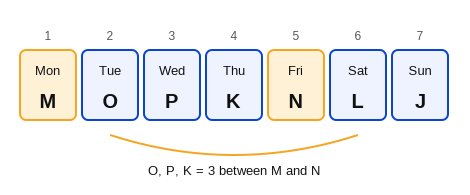
  1. Two before P → P = Wed (3). One after L → L = Sat (6).
  2. Three between P and J → J = Sun (7). One between K and L → K = Thu (4).
  3. Left: Mon, Tue, Fri. O immediately after M → M = Mon, O = Tue; N = Fri.
  4. Between M (Mon) and N (Fri): O, P, K = 3 people.

Trick: Start from 'only two before' and 'only one after' – they fix exact slots at once.

Answer: (D) Three

अवधारणा: पहले निश्चित स्थान वाले व्यक्ति रखें (सोम = 1 … रवि = 7), फिर बाकी।

  1. P से पहले केवल दो → P = बुध (3)। L के बाद केवल एक → L = शनि (6)।
  2. P और J के बीच तीन → J = रवि (7)। K और L के बीच एक → K = गुरु (4)।
  3. बचे: सोम, मंगल, शुक्र। O, M के ठीक बाद → M = सोम, O = मंगल; N = शुक्र।
  4. M (सोम) और N (शुक्र) के बीच: O, P, K = 3 लोग।

ट्रिक: 'केवल दो पहले' और 'केवल एक बाद' जैसी शर्तों से शुरू करें – ये सीधे स्थान तय कर देती हैं।

उत्तर: (D) तीन

RRB NTPC Graduate CBT 1General Intelligence and ReasoningScheduling PuzzleRRB NTPC Graduate CBT 1 2024 · 10 Jun Shift 2 →
Q10114.
Town A is to the south of Town B. Town C is to the east of Town B. Town D is to the west of Town C. Town E is to the north of Town D. Town A is to the south-east of Town E. What is the position of Town B with respect to Town D?
शहर A, शहर B के दक्षिण में है। शहर C, शहर B के पूर्व में है। शहर D, शहर C के पश्चिम में है। शहर E, शहर D के उत्तर में है। शहर A, शहर E के दक्षिण-पूर्व में है। शहर D के सापेक्ष शहर B की स्थिति क्या है?
  1. AEastपूर्व
  2. BSouthदक्षिण
  3. CWestपश्चिम
  4. DNorthउत्तर
Show answer

Concept: Place the towns on a grid step by step and read the final relation.

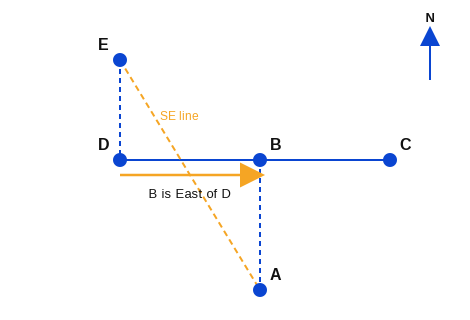
  1. B is a reference point; C is east of B and A is south of B.
  2. D is west of C on the same line, and E is directly north of D.
  3. A is south-east of E, so A (and hence B, which is directly above A) lies to the east of E's column, i.e. east of D.
  4. So B lies on the line D–C, to the east of D.

Trick: When a point X is SE of Y, X is both south and east of Y – use the 'east' part to fix the column.

Answer: (A) East

अवधारणा: कस्बों को चरणबद्ध रूप से ग्रिड पर रखें और अंतिम संबंध पढ़ें।

  1. B संदर्भ बिंदु है; C, B के पूर्व में और A, B के दक्षिण में है।
  2. D उसी रेखा पर C के पश्चिम में है, और E, D के ठीक उत्तर में है।
  3. A, E के दक्षिण-पूर्व में है, अतः A (और उसके ठीक ऊपर B) E के स्तंभ से पूर्व में है, यानी D के पूर्व में।
  4. इसलिए B, रेखा D–C पर D के पूर्व में है।

ट्रिक: यदि X, Y के दक्षिण-पूर्व में है, तो X, Y से दक्षिण और पूर्व दोनों में है – 'पूर्व' भाग से स्तंभ तय करें।

उत्तर: (A) पूर्व

RRB NTPC Graduate CBT 1General Intelligence and ReasoningDirection SenseRRB NTPC Graduate CBT 1 2024 · 10 Jun Shift 2 →
Q10115.
Select the triad that follows the same pattern as that followed by the two triads given below. Both triads follow the same pattern.
FB-ID-KM
JF-MH-OQ
उस त्रिक का चयन कीजिए जो उसी पैटर्न का अनुसरण करता है जिसका अनुसरण नीचे दिए गए दो त्रिक करते हैं। दोनों त्रिक एक ही पैटर्न का अनुसरण करते हैं।
FB-ID-KM
JF-MH-OQ
  1. AMI-PK-RT
  2. BNI-PL-RU
  3. CMI-PK-RU
  4. DNI-PK-RU
Show answer

Concept: Find the change from each letter of one pair to the corresponding letter of the next pair.

  1. FB → ID → KM: F+3=I, B+2=D; I+2=K, D+9=M.
  2. JF → MH → OQ: J+3=M, F+2=H; M+2=O, H+9=Q.
  3. MI → PK → RT: M+3=P, I+2=K; P+2=R, K+9=T ✓. Option (C) has U (+10), so it fails.

Trick: Rule: +3, +2 then +2, +9. Check the last letter first – it eliminates fast.

Answer: (A) MI-PK-RT

अवधारणा: एक युग्म के प्रत्येक अक्षर से अगले युग्म के संगत अक्षर तक का परिवर्तन देखें।

  1. FB → ID → KM: F+3=I, B+2=D; I+2=K, D+9=M।
  2. JF → MH → OQ: J+3=M, F+2=H; M+2=O, H+9=Q।
  3. MI → PK → RT: M+3=P, I+2=K; P+2=R, K+9=T ✓। विकल्प (C) में U (+10) है, इसलिए गलत।

ट्रिक: नियम: +3, +2 फिर +2, +9। पहले अंतिम अक्षर जाँचें – जल्दी छँटनी होती है।

उत्तर: (A) MI-PK-RT

RRB NTPC Graduate CBT 1General Intelligence and ReasoningLetter TriadsRRB NTPC Graduate CBT 1 2024 · 10 Jun Shift 2 →
Q10116.
In a certain code language, ‘BORN’ is coded as ‘2468’ and ‘NEST’ is coded as ‘1327’. What is the code for ‘N’ in the given code language?
एक निश्चित कूट भाषा में, 'BORN' को '2468' के रूप में कूटबद्ध किया जाता है और 'NEST' को '1327' के रूप में कूटबद्ध किया जाता है। दी गई कूट भाषा में 'N' के लिए कूट क्या है?
  1. A7
  2. B2
  3. C8
  4. D1
Show answer

Concept: When two words share exactly one letter, the shared letter has the shared digit as its code.

  1. BORN → 2468 and NEST → 1327.
  2. Common letter: N. Common digit: 2.
  3. So N = 2.

Trick: Match common letters with common digits – order of digits does not matter.

Answer: (B) 2

अवधारणा: जब दो शब्दों में केवल एक अक्षर उभयनिष्ठ हो, तो उसका कोड उभयनिष्ठ अंक होता है।

  1. BORN → 2468 और NEST → 1327।
  2. उभयनिष्ठ अक्षर: N। उभयनिष्ठ अंक: 2।
  3. अतः N = 2।

ट्रिक: उभयनिष्ठ अक्षर को उभयनिष्ठ अंक से मिलाइए – अंकों का क्रम मायने नहीं रखता।

उत्तर: (B) 2

RRB NTPC Graduate CBT 1General Intelligence and ReasoningCoding-DecodingRRB NTPC Graduate CBT 1 2024 · 10 Jun Shift 2 →
Q10117.
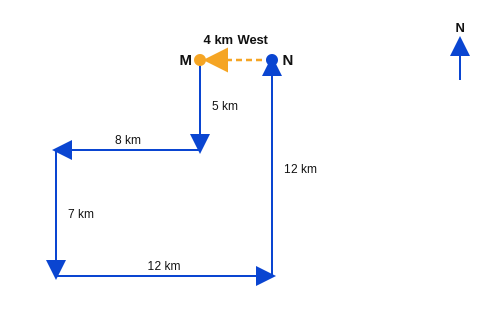
Mr. I starts from Point M and drives 5 km towards the south. He then takes a right turn, drives 8 km, turns left and drives 7 km. He then takes a left turn and drives 12 km. He takes a final left turn, drives 12 km and stops at Point N. How far (shortest distance) and towards which direction should he drive in order to reach Point M again? (All turns are 90 degree turns only unless specified.)
श्री I बिंदु M से शुरू करते हैं और दक्षिण की ओर 5 km गाड़ी चलाते हैं। फिर वे दाएँ मुड़ते हैं, 8 km गाड़ी चलाते हैं, बाएँ मुड़ते हैं और 7 km गाड़ी चलाते हैं। फिर वे बाएँ मुड़ते हैं और 12 km गाड़ी चलाते हैं। वे अंतिम बार बाएँ मुड़ते हैं, 12 km गाड़ी चलाते हैं और बिंदु N पर रुक जाते हैं। बिंदु M पर फिर से पहुँचने के लिए उन्हें कितनी दूरी (न्यूनतम दूरी) और किस दिशा में गाड़ी चलानी चाहिए? (जब तक निर्दिष्ट न किया जाए, सभी मोड़ केवल 90 डिग्री के मोड़ हैं।)
  1. A4 km towards the eastपूर्व की ओर 4 km
  2. B12 km towards the northउत्तर की ओर 12 km
  3. C5 km towards the southदक्षिण की ओर 5 km
  4. D4 km towards the westपश्चिम की ओर 4 km
Show answer

Concept: Track the position with coordinates, taking M = (0, 0), east = +x, north = +y.

  1. 5 km south → (0, −5). Right turn (facing west), 8 km → (−8, −5).
  2. Left turn (south), 7 km → (−8, −12). Left turn (east), 12 km → (4, −12).
  3. Left turn (north), 12 km → N = (4, 0).
  4. N is 4 km east of M, so he must drive 4 km towards the west.

Trick: Net north–south: −5 −7 +12 = 0; net east–west: −8 +12 = +4 (east). Return = 4 km west.

Answer: (D) 4 km towards the west

अवधारणा: M = (0, 0), पूर्व = +x, उत्तर = +y लेकर स्थिति ट्रैक करें।

  1. 5 km दक्षिण → (0, −5)। दाएँ मुड़कर (पश्चिम) 8 km → (−8, −5)।
  2. बाएँ (दक्षिण) 7 km → (−8, −12)। बाएँ (पूर्व) 12 km → (4, −12)।
  3. बाएँ (उत्तर) 12 km → N = (4, 0)।
  4. N, M से 4 km पूर्व में है, अतः उसे 4 km पश्चिम की ओर जाना होगा।

ट्रिक: शुद्ध उत्तर–दक्षिण: −5 −7 +12 = 0; पूर्व–पश्चिम: −8 +12 = +4 (पूर्व)। वापसी = 4 km पश्चिम।

उत्तर: (D) 4 km पश्चिम की ओर

RRB NTPC Graduate CBT 1General Intelligence and ReasoningDirection and DistanceRRB NTPC Graduate CBT 1 2024 · 10 Jun Shift 2 →
Q10118.
Based on the English alphabetical order, three of the following four letter-cluster pairs are alike in a certain way and thus form a group. Which letter-cluster pair DOES NOT belong to that group?
(Note: The odd one out is not based on the number of consonants/vowels or their position in the letter-cluster.)
अंग्रेज़ी वर्णमाला क्रम के आधार पर, निम्नलिखित चार अक्षर-समूह युग्मों में से तीन किसी निश्चित प्रकार से एक समान हैं और इस प्रकार एक समूह बनाते हैं। कौन-सा अक्षर-समूह युग्म उस समूह से संबंधित नहीं है?
(नोट: असंगत युग्म, व्यंजनों/स्वरों की संख्या या अक्षर-समूह में उनके स्थान पर आधारित नहीं है।)
  1. ABZ−WU
  2. BYW−TR
  3. CMK−GH
  4. DKI−FD
Show answer

Concept: Compare letters inside each cluster and between the clusters (A=1 … Z=26).

  1. BZ-WU: B−2=Z, W−2=U; B−5=W.
  2. YW-TR: Y−2=W, T−2=R; Y−5=T. KI-FD: K−2=I, F−2=D; K−5=F.
  3. MK-GH: M−2=K but G+1=H, and M−6=G – the pattern breaks.

Trick: Pattern: each cluster is 'letter, letter −2', and the second cluster starts 5 letters back.

Answer: (C) MK-GH

अवधारणा: हर समूह के अंदर और दोनों समूहों के बीच अक्षरों की तुलना करें (A=1 … Z=26)।

  1. BZ-WU: B−2=Z, W−2=U; B−5=W।
  2. YW-TR: Y−2=W, T−2=R; Y−5=T। KI-FD: K−2=I, F−2=D; K−5=F।
  3. MK-GH: M−2=K पर G+1=H, और M−6=G – नियम टूटता है।

ट्रिक: नियम: हर समूह 'अक्षर, अक्षर −2' है और दूसरा समूह 5 अक्षर पीछे से शुरू होता है।

उत्तर: (C) MK-GH

RRB NTPC Graduate CBT 1General Intelligence and ReasoningOdd One Out – Letter ClustersRRB NTPC Graduate CBT 1 2024 · 10 Jun Shift 2 →
Q10119.
WR 21 is related to ZS 6 in a certain way. In the same way, GV 11 is related to JW −4. To which of the given options is UE 5 related, following the same logic?
WR 21 एक निश्चित प्रकार से ZS 6 से संबंधित है। उसी प्रकार, GV 11, JW −4 से संबंधित है। समान तर्क का अनुसरण करते हुए, UE 5 दिए गए विकल्पों में से किससे संबंधित है?
  1. ANM −7
  2. BXF −10
  3. CFV −6
  4. DVW −9
Show answer

Concept: Treat the letters and the number separately.

  1. WR 21 → ZS 6: W+3=Z, R+1=S, 21−15=6.
  2. GV 11 → JW −4: G+3=J, V+1=W, 11−15=−4.
  3. UE 5 → U+3=X, E+1=F, 5−15=−10 → XF −10.

Trick: Rule: +3, +1 on letters and −15 on the number.

Answer: (B) XF −10

अवधारणा: अक्षरों और संख्या को अलग-अलग देखें।

  1. WR 21 → ZS 6: W+3=Z, R+1=S, 21−15=6।
  2. GV 11 → JW −4: G+3=J, V+1=W, 11−15=−4।
  3. UE 5 → U+3=X, E+1=F, 5−15=−10 → XF −10।

ट्रिक: नियम: अक्षरों पर +3, +1 और संख्या पर −15।

उत्तर: (B) XF −10

RRB NTPC Graduate CBT 1General Intelligence and ReasoningAnalogy – Letters and NumbersRRB NTPC Graduate CBT 1 2024 · 10 Jun Shift 2 →
Q10120.
If ‘A’ stands for ‘÷’, ‘B’ stands for ‘×’, ‘C’ stands for ‘+’ and ‘D’ stands for ‘−’, then the resultant of which of the following would be 77?
यदि 'A' का अर्थ '÷', 'B' का अर्थ '×', 'C' का अर्थ '+' और 'D' का अर्थ '−' है, तो निम्नलिखित में से किसका परिणाम 77 होगा?
  1. A42 B 6 C 38 D 18 A 6
  2. B42 A 6 D 38 C 18 B 6
  3. C42 C 6 B 38 A 18 D 6
  4. D42 D 6 A 38 B 18 C 6
Show answer

Concept: Replace letters by signs (A = ÷, B = ×, C = +, D = −) and solve using BODMAS.

  1. (B) 42 A 6 D 38 C 18 B 6 → 42÷6−38+18×6.
  2. =7−38+108=77 ✓.
  3. (A) 42×6+38−18÷6=287; (C) 42+6×38÷18−6≈48.7; (D) 42−6÷38×18+6≈45.2.

Trick: Do ÷ and × first; a big product like 18 × 6 = 108 usually decides the result quickly.

Answer: (B) 42 A 6 D 38 C 18 B 6

अवधारणा: अक्षरों को चिह्नों से बदलें (A = ÷, B = ×, C = +, D = −) और BODMAS से हल करें।

  1. (B) 42 A 6 D 38 C 18 B 6 → 42÷6−38+18×6।
  2. =7−38+108=77 ✓।
  3. (A) 42×6+38−18÷6=287; (C) 42+6×38÷18−6≈48.7; (D) 42−6÷38×18+6≈45.2।

ट्रिक: पहले ÷ और ×; 18 × 6 = 108 जैसा बड़ा गुणनफल परिणाम जल्दी तय करता है।

उत्तर: (B) 42 A 6 D 38 C 18 B 6

RRB NTPC Graduate CBT 1General Intelligence and ReasoningMathematical OperationsRRB NTPC Graduate CBT 1 2024 · 10 Jun Shift 2 →