Question bank

Q&A: practice questions with answers

Search questions on any topic. Filter by exam category, exam, subject and topic, try the question, then open the answer and explanation.

Courses – airGurukul

20,719 questions found.

Q10781.
A vendor bought lemons at 7 for ₹1. How many lemons must he sell for ₹1 to gain 40%?
एक विक्रेता ने ₹1 में 7 की दर से नींबू खरीदे। 40% लाभ प्राप्त करने के लिए उसे ₹1 में कितने नींबू बेचने होंगे?
  1. A6
  2. B9
  3. C5
  4. D7
Show answer

Concept: For a fixed selling amount, SP of n items=1.4×CP of n items when gain is 40%.

  1. CP of 1 lemon = ₹17.
  2. For 40% gain, SP of 1 lemon =17×140100 = ₹15.
  3. So for ₹1 he must sell 1÷15=5 lemons.

Trick: Lemons to sell =7×100140=5.

Answer: (C) 5

अवधारणा: 40% लाभ के लिए विक्रय मूल्य=1.4×क्रय मूल्य।

  1. 1 नींबू का क्रय मूल्य = ₹17।
  2. 40% लाभ पर 1 नींबू का विक्रय मूल्य =17×140100 = ₹15।
  3. अतः ₹1 में 1÷15=5 नींबू बेचने होंगे।

ट्रिक: बेचने वाले नींबू =7×100140=5।

उत्तर: (C) 5

RRB NTPC Graduate CBT 1MathematicsProfit and LossRRB NTPC Graduate CBT 1 2024 · 6 Jun Shift 1 →
Q10782.
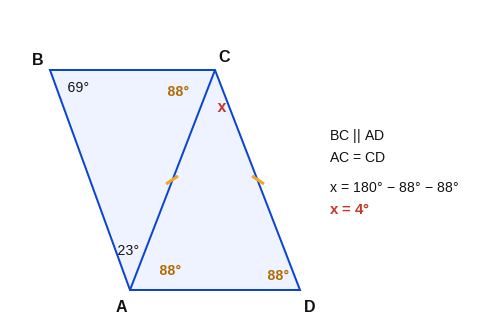
ABCD is a trapezium in which BC∥AD and AC=CD. If ∠ABC=69∘ and ∠BAC=23∘, then what is the measure of ∠ACD (in degree)?
ABCD एक समलंब चतुर्भुज है जिसमें BC∥AD और AC=CD है। यदि ∠ABC=69∘ और ∠BAC=23∘ है, तो ∠ACD की माप (डिग्री में) क्या है?
  1. A4°
  2. B7°
  3. C14°
  4. D10°
Show answer

Concept: Angle sum of a triangle is 180∘; alternate interior angles between parallel lines are equal; angles opposite equal sides are equal.

  1. In △ABC: ∠BCA=180∘−69∘−23∘=88∘.
  2. BC∥AD, so ∠CAD=∠BCA=88∘ (alternate angles).
  3. AC=CD, so ∠CDA=∠CAD=88∘.
  4. In △ACD: ∠ACD=180∘−88∘−88∘=4∘.

Trick: ∠ACD=180∘−2(180∘−69∘−23∘)=180∘−176∘=4∘.

Answer: (A) 4∘

अवधारणा: त्रिभुज के कोणों का योग 180∘; समांतर रेखाओं के बीच एकांतर कोण बराबर; बराबर भुजाओं के सामने के कोण बराबर।

  1. △ABC में: ∠BCA=180∘−69∘−23∘=88∘।
  2. BC∥AD, अतः ∠CAD=∠BCA=88∘ (एकांतर कोण)।
  3. AC=CD, अतः ∠CDA=∠CAD=88∘।
  4. △ACD में: ∠ACD=180∘−88∘−88∘=4∘।

ट्रिक: ∠ACD=180∘−2(180∘−69∘−23∘)=180∘−176∘=4∘।

उत्तर: (A) 4∘

RRB NTPC Graduate CBT 1MathematicsGeometry – QuadrilateralsRRB NTPC Graduate CBT 1 2024 · 6 Jun Shift 1 →
Q10783.
What is the average of the first 10 prime numbers?
प्रथम 10 अभाज्य संख्याओं का औसत क्या है?
  1. A15.8
  2. B14
  3. C16
  4. D12.9
Show answer

Concept: Average=SumCount.

  1. First 10 primes: 2, 3, 5, 7, 11, 13, 17, 19, 23, 29.
  2. Sum =2+3+5+7+11+13+17+19+23+29=129.
  3. Average =12910=12.9.

Yaad rakhein: Sum of first 10 primes = 129; of first 25 primes (up to 100) = 1060.

Answer: (D) 12.9

अवधारणा: औसत=योगसंख्या।

  1. पहली 10 अभाज्य संख्याएँ: 2, 3, 5, 7, 11, 13, 17, 19, 23, 29।
  2. योग =2+3+5+7+11+13+17+19+23+29=129।
  3. औसत =12910=12.9।

याद रखें: पहली 10 अभाज्य संख्याओं का योग = 129; 100 तक की 25 अभाज्य संख्याओं का योग = 1060।

उत्तर: (D) 12.9

RRB NTPC Graduate CBT 1MathematicsAverage – Prime NumbersRRB NTPC Graduate CBT 1 2024 · 6 Jun Shift 1 →
Q10784.
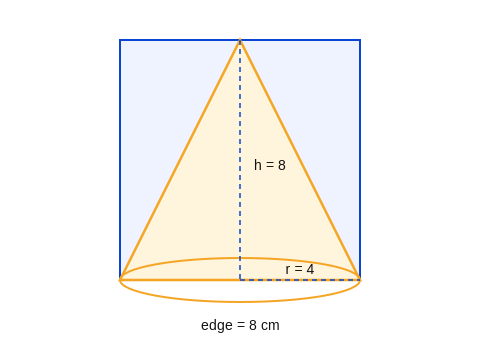
Find the volume (in cm3) of the largest right circular cone that can be cut out from a cube with an edge of 8 cm.
Use π=227
8 cm किनारे वाले एक घन में से काटे जा सकने वाले सबसे बड़े लंब वृत्तीय शंकु का आयतन (cm3 में) ज्ञात कीजिए।
π=227 का प्रयोग कीजिए
  1. A136221
  2. B134221
  3. C138221
  4. D127221
Show answer

Concept: The largest cone cut from a cube of edge a has r=a2 and h=a; V=13πr2h.

  1. a=8, so r=4cm, h=8cm.
  2. V=13×227×42×8=22×12821=281621.
  3. 281621=134221cm3.

Trick: Largest cone in cube =πa312=22×51284=134221.

Answer: (B) 134221

अवधारणा: भुजा a वाले घन से काटे गए सबसे बड़े शंकु में r=a2 और h=a; V=13πr2h।

  1. a=8, अतः r=4cm, h=8cm।
  2. V=13×227×42×8=22×12821=281621।
  3. 281621=134221cm3।

ट्रिक: घन में सबसे बड़ा शंकु =πa312=22×51284=134221।

उत्तर: (B) 134221

RRB NTPC Graduate CBT 1MathematicsMensuration – Cone in CubeRRB NTPC Graduate CBT 1 2024 · 6 Jun Shift 1 →
Q10785.
Simplify: 127 - [7 x (1 - 5 + 4)] ÷ 91
सरल कीजिए: 127 - [7 x (1 - 5 + 4)] ÷ 91
  1. A135
  2. B133
  3. C127
  4. D118
Show answer

Concept: Follow BODMAS – innermost bracket first.

  1. (1−5+4)=0.
  2. 7×0=0, and 0÷91=0.
  3. 127−0=127.

Trick: Spot the zero bracket – the whole term vanishes.

Answer: (C) 127

अवधारणा: BODMAS का पालन करें – सबसे अंदर का कोष्ठक पहले।

  1. (1−5+4)=0।
  2. 7×0=0, और 0÷91=0।
  3. 127−0=127।

ट्रिक: शून्य वाला कोष्ठक पहचानें – पूरा पद शून्य हो जाता है।

उत्तर: (C) 127

RRB NTPC Graduate CBT 1MathematicsSimplification – BODMASRRB NTPC Graduate CBT 1 2024 · 6 Jun Shift 1 →
Q10786.
One pipe can fill the tank in 21 minutes while another pipe can empty completely filled tank in 24 minutes. If both the pipes are operated together on empty tank, how long (in minutes) will it take to fill one-fourth of the tank?
एक पाइप टंकी को 21 मिनट में भर सकता है, जबकि दूसरा पाइप पूरी भरी हुई टंकी को 24 मिनट में खाली कर सकता है। यदि दोनों पाइपों को खाली टंकी पर एक साथ चलाया जाए, तो टंकी का एक-चौथाई भाग भरने में कितना समय (मिनट में) लगेगा?
  1. A42
  2. B126
  3. C84
  4. D168
Show answer

Concept: Net rate = filling rate − emptying rate.

  1. Net rate per minute =121−124=8−7168=1168 of the tank.
  2. Full tank takes 168 minutes together.
  3. One-fourth tank takes 1684=42 minutes.

Trick: LCM method: tank = 168 units; filler 8, emptier 7 units per minute → net 1 unit; 14 tank = 42 units = 42 min.

Answer: (A) 42

अवधारणा: शुद्ध दर = भरने की दर − खाली करने की दर।

  1. प्रति मिनट शुद्ध दर =121−124=8−7168=1168 टंकी।
  2. दोनों साथ में पूरी टंकी 168 मिनट में भरते हैं।
  3. एक-चौथाई टंकी =1684=42 मिनट।

ट्रिक: LCM विधि: टंकी = 168 इकाई; भरने वाला 8, खाली करने वाला 7 इकाई/मिनट → शुद्ध 1 इकाई; 14 टंकी = 42 इकाई = 42 मिनट।

उत्तर: (A) 42

RRB NTPC Graduate CBT 1MathematicsPipes and CisternsRRB NTPC Graduate CBT 1 2024 · 6 Jun Shift 1 →
Q10787.
6893.5 × 603.3 × 0.3019 is equal in value to:
6893.5 × 603.3 × 0.3019 का मान किसके बराबर है?
  1. A6.8935 × 6.033 × 301.9
  2. B6.8935 × 60.33 × 30.19
  3. C68.935 × 6033 × 3.019
  4. D689.35 × 603.3 × 301.9
Show answer

Concept: A product stays the same if the total shift of decimal points is zero.

  1. Option (C): 6893.5→68.935 (divided by 102), 603.3→6033 (×10), 0.3019→3.019 (×10).
  2. Net factor =10×10100=1 → product unchanged ✓.
  3. (A) and (B) give a net factor 1100; (D) gives 100.

Trick: Count decimal places: original 1 + 1 + 4 = 6; in (C) 3 + 0 + 3 = 6 – same total.

Answer: (C) 68.935×6033×3.019

अवधारणा: यदि दशमलव बिंदुओं का कुल खिसकाव शून्य हो तो गुणनफल वही रहता है।

  1. विकल्प (C): 6893.5→68.935 (102 से भाग), 603.3→6033 (×10), 0.3019→3.019 (×10)।
  2. शुद्ध गुणक =10×10100=1 → गुणनफल अपरिवर्तित ✓।
  3. (A) और (B) में शुद्ध गुणक 1100; (D) में 100।

ट्रिक: दशमलव स्थान गिनें: मूल 1 + 1 + 4 = 6; (C) में 3 + 0 + 3 = 6 – कुल समान।

उत्तर: (C) 68.935×6033×3.019

RRB NTPC Graduate CBT 1MathematicsDecimals – Place ValueRRB NTPC Graduate CBT 1 2024 · 6 Jun Shift 1 →
Q10788.
The arithmetic mean of the observations 28, 31, 40, 63, 57, 37, 34, 70 and 99 is:
प्रेक्षणों 28, 31, 40, 63, 57, 37, 34, 70 और 99 का समांतर माध्य कितना है?
  1. A55
  2. B50
  3. C41
  4. D51
Show answer

Concept: Mean=Sum of observationsNumber of observations.

  1. Sum =28+31+40+63+57+37+34+70+99=459.
  2. Number of observations = 9.
  3. Mean =4599=51.

Trick: Pair to round numbers: (31 + 99) + (63 + 37) + (70 + 40) + (28 + 57 + 34) = 130 + 100 + 110 + 119 = 459.

Answer: (D) 51

अवधारणा: माध्य=प्रेक्षणों का योगप्रेक्षणों की संख्या।

  1. योग =28+31+40+63+57+37+34+70+99=459।
  2. प्रेक्षणों की संख्या = 9।
  3. माध्य =4599=51।

ट्रिक: जोड़ियाँ बनाएँ: (31 + 99) + (63 + 37) + (70 + 40) + (28 + 57 + 34) = 130 + 100 + 110 + 119 = 459।

उत्तर: (D) 51

RRB NTPC Graduate CBT 1MathematicsStatistics – MeanRRB NTPC Graduate CBT 1 2024 · 6 Jun Shift 1 →
Q10789.
When x is added to each of 22, 26, 19 and 21, then the numbers so obtained, in this order, are in proportion. Then, if 2x : y :: y : (4x-8), and y > 0, what is the value of y?
जब 22, 26, 19 और 21 में से प्रत्येक में x जोड़ा जाता है, तो इस प्रकार प्राप्त संख्याएँ, इसी क्रम में, समानुपात में होती हैं। तब, यदि 2x : y :: y : (4x-8) और y > 0 है, तो y का मान क्या है?
  1. A48
  2. B37
  3. C46
  4. D54
Show answer

Concept: If a:b::c:d then ad=bc; mean proportional y of p and q satisfies y2=pq.

  1. 22+x26+x=19+x21+x⇒(22+x)(21+x)=(19+x)(26+x).
  2. 462+43x=494+45x⇒2x=−32⇒x=−16 (check: 6, 10, 3, 5 are in proportion).
  3. 2x=−32, 4x−8=−72; y2=(−32)(−72)=2304.
  4. y>0⇒y=48.

Trick: y=32×72=2304=48.

Answer: (A) 48

अवधारणा: यदि a:b::c:d तो ad=bc; p और q का मध्यानुपाती y हो तो y2=pq।

  1. 22+x26+x=19+x21+x⇒(22+x)(21+x)=(19+x)(26+x)।
  2. 462+43x=494+45x⇒2x=−32⇒x=−16 (जाँच: 6, 10, 3, 5 समानुपात में हैं)।
  3. 2x=−32, 4x−8=−72; y2=(−32)(−72)=2304।
  4. y>0⇒y=48।

ट्रिक: y=32×72=2304=48।

उत्तर: (A) 48

RRB NTPC Graduate CBT 1MathematicsRatio and ProportionRRB NTPC Graduate CBT 1 2024 · 6 Jun Shift 1 →
Q10790.
If x−1x=4, then the value of x3−1x3 is:
यदि x−1x=4 है, तो x3−1x3 का मान कितना है?
  1. A76
  2. B414
  3. C420
  4. D259
Show answer

Concept: x3−1x3=(x−1x)3+3(x−1x).

  1. Here x−1x=4.
  2. x3−1x3=43+3×4=64+12.
  3. =76.

Trick: If x−1x=k, then x3−1x3=k3+3k.

Answer: (A) 76

अवधारणा: x3−1x3=(x−1x)3+3(x−1x)।

  1. यहाँ x−1x=4।
  2. x3−1x3=43+3×4=64+12।
  3. =76।

ट्रिक: यदि x−1x=k, तो x3−1x3=k3+3k।

उत्तर: (A) 76

RRB NTPC Graduate CBT 1MathematicsAlgebra – IdentitiesRRB NTPC Graduate CBT 1 2024 · 6 Jun Shift 1 →
Q10791.
Manoj has 200 litres of Oil A and 274 litres of Oil B. He fills a number of identical containers with the two types of oil in a manner that each container has only one type of oil, and all containers are completely filled. What can be the maximum volume (in litres) of each container that Manoj uses, so that all the oil that Manoj has, of both the types, can be poured into these containers?
मनोज के पास 200 लीटर तेल A और 274 लीटर तेल B है। वह दोनों प्रकार के तेल से कई एक समान बर्तन इस प्रकार भरता है कि प्रत्येक बर्तन में केवल एक ही प्रकार का तेल हो, और सभी बर्तन पूरी तरह भरे हों। मनोज द्वारा प्रयुक्त प्रत्येक बर्तन का अधिकतम आयतन (लीटर में) कितना हो सकता है, ताकि मनोज के पास उपलब्ध दोनों प्रकार का सारा तेल इन बर्तनों में डाला जा सके?
  1. A2
  2. B10
  3. C8
  4. D3
Show answer

Concept: The largest container that exactly measures both quantities = HCF of the quantities.

  1. 200=23×52.
  2. 274=2×137 (137 is prime).
  3. HCF =2 → maximum volume of each container = 2 litres.

Trick: 274−200=74=2×37; HCF must divide 74 and 200 → only 2 works.

Answer: (A) 2

अवधारणा: दोनों मात्राओं को पूरा-पूरा मापने वाला सबसे बड़ा बर्तन = मात्राओं का HCF।

  1. 200=23×52।
  2. 274=2×137 (137 अभाज्य है)।
  3. HCF =2 → प्रत्येक बर्तन का अधिकतम आयतन = 2 लीटर।

ट्रिक: 274−200=74=2×37; HCF को 74 और 200 दोनों को विभाजित करना होगा → केवल 2।

उत्तर: (A) 2

RRB NTPC Graduate CBT 1MathematicsHCF ApplicationsRRB NTPC Graduate CBT 1 2024 · 6 Jun Shift 1 →
Q10792.
Find roots of 4m2+6m+2=0
4m2+6m+2=0 के मूल ज्ञात कीजिए।
  1. A−12 and −4−12 और −4
  2. B12 and 112 और 1
  3. C−12 and −1−12 और −1
  4. D−12 and 4−12 और 4
Show answer

Concept: Simplify, then factorise by splitting the middle term.

  1. 4m2+6m+2=0⇒2m2+3m+1=0.
  2. 2m2+2m+m+1=0⇒(2m+1)(m+1)=0.
  3. m=−12 or m=−1.

Trick: All coefficients positive → both roots negative; sum =−64=−32 and product =24=12 fit −12,−1.

Answer: (C) −12 and −1

अवधारणा: पहले सरल करें, फिर मध्य पद को विभाजित कर गुणनखंड करें।

  1. 4m2+6m+2=0⇒2m2+3m+1=0।
  2. 2m2+2m+m+1=0⇒(2m+1)(m+1)=0।
  3. m=−12 या m=−1।

ट्रिक: सभी गुणांक धनात्मक → दोनों मूल ऋणात्मक; योग =−64=−32 और गुणनफल =24=12, जो −12,−1 से मेल खाते हैं।

उत्तर: (C) −12 और −1

RRB NTPC Graduate CBT 1MathematicsQuadratic EquationsRRB NTPC Graduate CBT 1 2024 · 6 Jun Shift 1 →
Q10793.
Akshay spends 40% of his income. If he saves ₹24,000, then his income (in ₹) is:
अक्षय अपनी आय का 40% खर्च करता है। यदि वह ₹24,000 की बचत करता है, तो उसकी आय (₹ में) कितनी है?
  1. A9,600
  2. B40,000
  3. C41,000
  4. D39,000
Show answer

Concept: Savings%=100%−Expenditure%.

  1. Spends 40% → saves 60% of income.
  2. 60% of income = ₹24,000.
  3. Income =24000×10060 = ₹40,000.

Trick: 60% = 24,000 → 10% = 4,000 → 100% = 40,000.

Answer: (B) 40,000

अवधारणा: बचत%=100%−व्यय%।

  1. 40% खर्च → आय का 60% बचत।
  2. आय का 60% = ₹24,000।
  3. आय =24000×10060 = ₹40,000।

ट्रिक: 60% = 24,000 → 10% = 4,000 → 100% = 40,000।

उत्तर: (B) 40,000

RRB NTPC Graduate CBT 1MathematicsPercentage – Income & SavingsRRB NTPC Graduate CBT 1 2024 · 6 Jun Shift 1 →
Q10794.
If the selling price of a bed is 2-times of initial, then the profit is 11-times of initial. Find the initial profit percentage.
यदि एक पलंग का विक्रय मूल्य प्रारंभिक मूल्य का 2 गुना हो, तो लाभ प्रारंभिक लाभ का 11 गुना हो जाता है। प्रारंभिक लाभ प्रतिशत ज्ञात कीजिए।
  1. A9211%
  2. B11%
  3. C1119%
  4. D9%
Show answer

Concept: Cost price stays the same; Profit=SP−CP.

  1. Let CP =C, initial profit =p, so SP =C+p.
  2. New SP =2(C+p), new profit =11p: 2(C+p)−C=11p.
  3. C+2p=11p⇒C=9p.
  4. Initial profit %=p9p×100=1009=1119%.

Trick: Doubling SP adds one more SP =(C+p) to profit: C+p=10p⇒C=9p.

Answer: (C) 1119%

अवधारणा: क्रय मूल्य वही रहता है; लाभ=विक्रय मूल्य−क्रय मूल्य।

  1. माना क्रय मूल्य =C, प्रारंभिक लाभ =p, अतः विक्रय मूल्य =C+p।
  2. नया विक्रय मूल्य =2(C+p), नया लाभ =11p: 2(C+p)−C=11p।
  3. C+2p=11p⇒C=9p।
  4. प्रारंभिक लाभ %=p9p×100=1009=1119%।

ट्रिक: विक्रय मूल्य दोगुना करने से लाभ में एक और (C+p) जुड़ता है: C+p=10p⇒C=9p।

उत्तर: (C) 1119%

RRB NTPC Graduate CBT 1MathematicsProfit and LossRRB NTPC Graduate CBT 1 2024 · 6 Jun Shift 1 →
Q10795.
The marked price of a bookshelf is ₹3,100, which is 25% above the cost price. It is sold at a discount of 12% on the marked price. Find the profit percentage.
एक बुकशेल्फ़ का अंकित मूल्य ₹3,100 है, जो क्रय मूल्य से 25% अधिक है। इसे अंकित मूल्य पर 12% की छूट पर बेचा जाता है। लाभ प्रतिशत ज्ञात कीजिए।
  1. A11%
  2. B8%
  3. C9%
  4. D10%
Show answer

Concept: CP=MP1+markup, SP=MP×(1−discount).

  1. CP =3100×100125 = ₹2480.
  2. SP =3100×88100 = ₹2728.
  3. Profit =2728−2480 = ₹248; Profit %=2482480×100=10%.

Trick: Net effect =25−12−25×12100=10% – no need for actual prices.

Answer: (D) 10%

अवधारणा: क्रय मूल्य=अंकित मूल्य1+markup, विक्रय मूल्य=अंकित मूल्य×(1−छूट)।

  1. क्रय मूल्य =3100×100125 = ₹2480।
  2. विक्रय मूल्य =3100×88100 = ₹2728।
  3. लाभ =2728−2480 = ₹248; लाभ %=2482480×100=10%।

ट्रिक: शुद्ध प्रभाव =25−12−25×12100=10% – वास्तविक मूल्यों की ज़रूरत नहीं।

उत्तर: (D) 10%

RRB NTPC Graduate CBT 1MathematicsProfit, Loss and DiscountRRB NTPC Graduate CBT 1 2024 · 6 Jun Shift 1 →
Q10796.
Based on the English alphabetical order, three of the following four letter-clusters are alike in a certain way and thus form a group. Which letter-cluster DOES NOT belong to that group? (Note: The odd one out is not based on the number of consonants/vowels or their position in the letter-cluster.)
अंग्रेज़ी वर्णमाला क्रम के आधार पर, निम्नलिखित चार अक्षर-समूहों में से तीन किसी निश्चित प्रकार से एकसमान हैं और इस प्रकार एक समूह बनाते हैं। कौन-सा अक्षर-समूह उस समूह से संबंधित नहीं है? (ध्यान दें: असंगत अक्षर-समूह, उस अक्षर-समूह में व्यंजनों/स्वरों की संख्या या उनके स्थान पर आधारित नहीं है।)
  1. ASUP
  2. BNPK
  3. CPRV
  4. DGID
Show answer

Concept: Check the alphabet gaps between consecutive letters.

  1. SUP: S +2 U, U −5 P
  2. NPK: N +2 P, P −5 K
  3. GID: G +2 I, I −5 D
  4. PRV: P +2 R, R +4 V — breaks the pattern

Trick: Write position numbers: S19 U21 P16 → +2, −5.

Answer: (C) PRV

अवधारणा: क्रमागत अक्षरों के बीच वर्णमाला अंतर देखें।

  1. SUP: S +2 U, U −5 P
  2. NPK: N +2 P, P −5 K
  3. GID: G +2 I, I −5 D
  4. PRV: P +2 R, R +4 V — पैटर्न टूटता है

ट्रिक: स्थान संख्या लिखें: S19 U21 P16 → +2, −5।

उत्तर: (C) PRV

RRB NTPC Graduate CBT 1General Intelligence and ReasoningLetter cluster odd one outRRB NTPC Graduate CBT 1 2024 · 6 Jun Shift 1 →
Q10797.
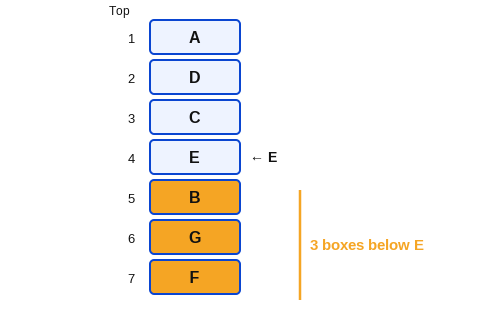
Seven boxes, A, B, C, D, E, F and G, are kept one over the other but not necessarily in the same order. Only four boxes are kept between D and F. Only A is kept above D. Only two boxes are kept between C and G. E is kept immediately above B. G is not kept immediately above E. How many boxes are kept below E?
सात बक्से, A, B, C, D, E, F और G, एक के ऊपर एक रखे गए हैं, परंतु आवश्यक नहीं कि इसी क्रम में हों। D और F के बीच केवल चार बक्से रखे गए हैं। D के ऊपर केवल A रखा गया है। C और G के बीच केवल दो बक्से रखे गए हैं। E, B के ठीक ऊपर रखा गया है। G, E के ठीक ऊपर नहीं रखा गया है। E के नीचे कितने बक्से रखे गए हैं?
  1. A1
  2. B2
  3. C4
  4. D3
Show answer

Concept: Fix the certain positions first (top = 1, bottom = 7).

  1. Only A above D → A = 1, D = 2; four between D and F → F = 7.
  2. C and G (two between) fill 3 & 6; E–B pair takes 4–5.
  3. If G = 3, G is immediately above E ✘ → C = 3, E = 4, B = 5, G = 6.
  4. Below E: B, G, F = 3 boxes.

Trick: Always place the "only X above" clue first — it fixes the top.

Answer: (D) 3

अवधारणा: पहले निश्चित स्थान तय करें (ऊपर = 1, नीचे = 7)।

  1. केवल A, D के ऊपर → A = 1, D = 2; D और F के बीच चार → F = 7।
  2. C और G (बीच में दो) 3 व 6 पर; E–B जोड़ी 4–5 पर।
  3. G = 3 हो तो G, E के ठीक ऊपर ✘ → C = 3, E = 4, B = 5, G = 6।
  4. E के नीचे: B, G, F = 3 बॉक्स।

ट्रिक: "केवल X ऊपर" वाला संकेत पहले लगाएँ — इससे शीर्ष तय होता है।

उत्तर: (D) 3

RRB NTPC Graduate CBT 1General Intelligence and ReasoningBox arrangementRRB NTPC Graduate CBT 1 2024 · 6 Jun Shift 1 →
Q10798.
WJ 15 is related to UN 11 in a certain way. In the same way, QH 8 is related to OL 4. To which of the given options is RI 3 related, following the same logic?
WJ 15 एक निश्चित प्रकार से UN 11 से संबंधित है। उसी प्रकार, QH 8, OL 4 से संबंधित है। समान तर्क का अनुसरण करते हुए, RI 3 दिए गए विकल्पों में से किससे संबंधित है?
  1. AIN −9
  2. BPL −7
  3. CTR −5
  4. DPM −1
Show answer

Concept: Apply the same change to each part.

  1. WJ15 → UN11: W −2 = U, J +4 = N, 15 −4 = 11
  2. QH8 → OL4: Q −2 = O, H +4 = L, 8 −4 = 4
  3. RI3 → R −2 = P, I +4 = M, 3 −4 = −1 → PM −1

Trick: Rule: (−2, +4, −4).

Answer: (D) PM −1

अवधारणा: हर भाग पर वही परिवर्तन लगाएँ।

  1. WJ15 → UN11: W −2 = U, J +4 = N, 15 −4 = 11
  2. QH8 → OL4: Q −2 = O, H +4 = L, 8 −4 = 4
  3. RI3 → R −2 = P, I +4 = M, 3 −4 = −1 → PM −1

ट्रिक: नियम: (−2, +4, −4)।

उत्तर: (D) PM −1

RRB NTPC Graduate CBT 1General Intelligence and ReasoningAnalogy (letters and numbers)RRB NTPC Graduate CBT 1 2024 · 6 Jun Shift 1 →
Q10799.
In a certain code language, ‘joy lab poet’ is coded as ‘to dl dh’ and ‘poet win union’ is coded as ‘dl fo kb’. How is ‘poet’ coded in the given language?
एक निश्चित कूट भाषा में, ‘joy lab poet’ को ‘to dl dh’ के रूप में कूटबद्ध किया जाता है और ‘poet win union’ को ‘dl fo kb’ के रूप में कूटबद्ध किया जाता है। दी गई भाषा में ‘poet’ को किस प्रकार कूटबद्ध किया जाता है?
  1. Adl
  2. Bdh
  3. Cfo
  4. Dto
Show answer

Concept: A word common to two sentences gets the code common to both.

  1. ‘poet’ appears in both: joy lab poet / poet win union.
  2. Common code in ‘to dl dh’ and ‘dl fo kb’ is dl.

Trick: Common word ↔ common code.

Answer: (A) dl

अवधारणा: दोनों वाक्यों में सामान्य शब्द का कोड भी दोनों में सामान्य होगा।

  1. ‘poet’ दोनों में है: joy lab poet / poet win union।
  2. ‘to dl dh’ और ‘dl fo kb’ में सामान्य कोड dl है।

ट्रिक: सामान्य शब्द ↔ सामान्य कोड।

उत्तर: (A) dl

RRB NTPC Graduate CBT 1General Intelligence and ReasoningCoding-decodingRRB NTPC Graduate CBT 1 2024 · 6 Jun Shift 1 →
Q10800.
Each of the digits in the number 8142769 is arranged in the ascending order from left to right. Which of the following digits will be fourth from the left in the new number thus formed?
संख्या 8142769 के प्रत्येक अंक को बाएँ से दाएँ आरोही क्रम में व्यवस्थित किया जाता है। इस प्रकार बनी नई संख्या में बाएँ से चौथा अंक निम्नलिखित में से कौन-सा होगा?
  1. A6
  2. B4
  3. C8
  4. D2
Show answer

Concept: Arrange the digits in ascending order and count from the left.

  1. Digits of 8142769: 8, 1, 4, 2, 7, 6, 9
  2. Ascending: 1 2 4 6 7 8 9
  3. Fourth from left = 6

Trick: With 7 digits, 4th from left is the middle (median) digit.

Answer: (A) 6

अवधारणा: अंकों को आरोही क्रम में रखकर बाएँ से गिनें।

  1. 8142769 के अंक: 8, 1, 4, 2, 7, 6, 9
  2. आरोही: 1 2 4 6 7 8 9
  3. बाएँ से चौथा = 6

ट्रिक: 7 अंकों में बाएँ से चौथा = बीच वाला अंक।

उत्तर: (A) 6

RRB NTPC Graduate CBT 1General Intelligence and ReasoningDigit arrangementRRB NTPC Graduate CBT 1 2024 · 6 Jun Shift 1 →