Question bank

Q&A: practice questions with answers

Search questions on any topic. Filter by exam category, exam, subject and topic, try the question, then open the answer and explanation.

Courses – airGurukul

20,719 questions found.

Q11701.
Who among the following appoints judges of Family Courts in India?
निम्नलिखित में से कौन भारत में कुटुंब न्यायालयों (Family Courts) के न्यायाधीशों की नियुक्ति करता है?
  1. AGovernorराज्यपाल
  2. BUnion Home Ministerकेंद्रीय गृह मंत्री
  3. CPresidentराष्ट्रपति
  4. DState Governmentराज्य सरकार
Show answer

Concept: Under the Family Courts Act, 1984, the State Government sets up Family Courts.

  1. Judges of Family Courts are appointed by the State Government with the concurrence of the High Court (Section 4).
  2. The Governor appoints district judges, which is a different provision (Article 233).

Yaad rakhein: Family Court judge → State Government + High Court consent.

Answer: (D) State Government

अवधारणा: कुटुंब न्यायालय अधिनियम (Family Courts Act), 1984 के तहत राज्य सरकार कुटुंब न्यायालय स्थापित करती है।

  1. इनके न्यायाधीश राज्य सरकार उच्च न्यायालय की सहमति से नियुक्त करती है (धारा 4)।
  2. ज़िला न्यायाधीशों की नियुक्ति राज्यपाल करता है — वह अलग प्रावधान है (अनुच्छेद 233)।

याद रखें: कुटुंब न्यायालय न्यायाधीश → राज्य सरकार + उच्च न्यायालय की सहमति।

उत्तर: (D) राज्य सरकार
RRB NTPC Undergraduate CBT 1General AwarenessPolity – Family CourtsRRB NTPC Undergraduate CBT 1 2025 · 20 Jun Shift 1 →
Q11702.
Which gas is the main contributor to acid rain formation?
अम्लीय वर्षा के निर्माण में मुख्य योगदान किस गैस का होता है?
  1. AMethaneमीथेन
  2. BHydrogenहाइड्रोजन
  3. CNeonनियॉन
  4. DSulphur dioxideसल्फर डाइऑक्साइड
Show answer

Concept: Acid rain forms when sulphur dioxide and nitrogen oxides dissolve in rainwater.

  1. SO2 (mainly from burning coal) forms sulphuric acid H2SO4 — the main contributor.
  2. Methane is a greenhouse gas; hydrogen and neon do not form acids.

Yaad rakhein: Acid rain = SO2 + NOx; Taj Mahal yellowing (Mathura refinery) is a famous example.

Answer: (D) Sulphur dioxide

अवधारणा: अम्ल वर्षा तब होती है जब सल्फ़र डाइऑक्साइड और नाइट्रोजन ऑक्साइड वर्षा जल में घुलते हैं।

  1. SO2 (मुख्यतः कोयला जलने से) सल्फ़्यूरिक अम्ल H2SO4 बनाती है — मुख्य कारण।
  2. मीथेन ग्रीनहाउस गैस है; हाइड्रोजन और नियॉन अम्ल नहीं बनाते।

याद रखें: अम्ल वर्षा = SO2 + NOx; ताजमहल का पीलापन (मथुरा रिफ़ाइनरी) प्रसिद्ध उदाहरण।

उत्तर: (D) सल्फ़र डाइऑक्साइड

RRB NTPC Undergraduate CBT 1General AwarenessEnvironment – Acid RainRRB NTPC Undergraduate CBT 1 2025 · 20 Jun Shift 1 →
Q11703.
What was the installed cement capacity and production of cement, respectively, in the Indian cement industry by 2022-23?
2022-23 तक भारतीय सीमेंट उद्योग में सीमेंट की स्थापित क्षमता और सीमेंट का उत्पादन क्रमशः कितना था?
  1. A600 MT and 391 MT600 MT और 391 MT
  2. B500 MT and 231 MT500 MT और 231 MT
  3. C250 MT and 151 MT250 MT और 151 MT
  4. D300 MT and 181 MT300 MT और 181 MT
Show answer

Concept: India is the second-largest cement producer in the world (after China).

  1. By 2022-23 the installed capacity was about 600 million tonnes (MT).
  2. Actual production in 2022-23 was about 391 MT, i.e. roughly 65% capacity utilisation.

Yaad rakhein: Cement: capacity ≈ 600 MT, production ≈ 391 MT (2022-23).

Answer: (A) 600 MT and 391 MT

अवधारणा: भारत विश्व का दूसरा सबसे बड़ा सीमेंट उत्पादक है (चीन के बाद)।

  1. 2022-23 तक स्थापित क्षमता लगभग 600 मिलियन टन (MT) थी।
  2. 2022-23 में वास्तविक उत्पादन लगभग 391 MT था, यानी लगभग 65% क्षमता उपयोग।

याद रखें: सीमेंट: क्षमता ≈ 600 MT, उत्पादन ≈ 391 MT (2022-23)।

उत्तर: (A) 600 MT और 391 MT

RRB NTPC Undergraduate CBT 1General AwarenessIndian Economy – Cement IndustryRRB NTPC Undergraduate CBT 1 2025 · 20 Jun Shift 1 →
Q11704.
Where did Narendra Modi inaugurate India’s first deepwater transshipment port in May 2025?
मई 2025 में नरेंद्र मोदी ने भारत के पहले गहरे पानी वाले ट्रांसशिपमेंट बंदरगाह का उद्घाटन कहाँ किया?
  1. AGujaratगुजरात
  2. BKeralaकेरल
  3. CMaharashtraमहाराष्ट्र
  4. DKarnatakaकर्नाटक
Show answer

Concept: PM Modi dedicated the Vizhinjam International Deepwater Multipurpose Seaport, Thiruvananthapuram (Kerala), on 2 May 2025.

  1. It is India's first dedicated deepwater container transshipment port.
  2. It was developed by Adani Ports under a PPP model with the Kerala government.

Yaad rakhein: Vizhinjam → Kerala → first transshipment port.

Answer: (B) Kerala

अवधारणा: प्रधानमंत्री मोदी ने 2 मई 2025 को विझिंजम अंतरराष्ट्रीय डीपवाटर बहुउद्देशीय बंदरगाह, तिरुवनंतपुरम (केरल) राष्ट्र को समर्पित किया।

  1. यह भारत का पहला समर्पित डीपवाटर कंटेनर ट्रांसशिपमेंट बंदरगाह है।
  2. इसे केरल सरकार के साथ PPP मॉडल पर Adani Ports ने विकसित किया।

याद रखें: विझिंजम → केरल → पहला ट्रांसशिपमेंट बंदरगाह।

उत्तर: (B) केरल

RRB NTPC Undergraduate CBT 1General AwarenessCurrent Affairs – PortsRRB NTPC Undergraduate CBT 1 2025 · 20 Jun Shift 1 →
Q11705.
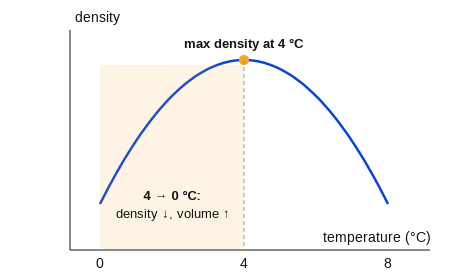
Which of the following statements is true for water when it is cooled from 4°C to 0°C?
जल को 4°C से 0°C तक ठंडा करने पर उसके लिए निम्नलिखित में से कौन-सा कथन सत्य है?
  1. AVolume and density both increaseआयतन और घनत्व दोनों बढ़ते हैं
  2. BVolume and density both decreaseआयतन और घनत्व दोनों घटते हैं
  3. CVolume increases but density decreasesआयतन बढ़ता है परंतु घनत्व घटता है
  4. DVolume decreases but density remains sameआयतन घटता है परंतु घनत्व समान रहता है
Show answer

Concept: Water has maximum density at 4∘C (anomalous expansion).

  1. On cooling from 4∘C to 0∘C, water expands — volume increases.
  2. Since mass is fixed, density =mV decreases.
  3. This is why ice floats and lakes freeze from the top.

Yaad rakhein: Below 4∘C water behaves "opposite": cool → expand.

Answer: (C) Volume increases but density decreases

अवधारणा: जल का अधिकतम घनत्व 4∘C पर होता है (असंगत प्रसार)।

  1. 4∘C से 0∘C तक ठंडा करने पर जल फैलता है — आयतन बढ़ता है।
  2. द्रव्यमान स्थिर है, अतः घनत्व =mV घटता है।
  3. इसी कारण बर्फ़ तैरती है और झीलें ऊपर से जमती हैं।

याद रखें: 4∘C से नीचे जल "उल्टा" व्यवहार करता है: ठंडा → फैलाव।

उत्तर: (C) आयतन बढ़ता है पर घनत्व घटता है

RRB NTPC Undergraduate CBT 1General AwarenessPhysics – Anomalous Expansion of WaterRRB NTPC Undergraduate CBT 1 2025 · 20 Jun Shift 1 →
Q11706.
In which Indian state are the renowned Bagh Caves, famous for their ancient murals, located?
अपने प्राचीन भित्ति-चित्रों के लिए प्रसिद्ध बाघ की गुफाएँ भारत के किस राज्य में स्थित हैं?
  1. AMaharashtraमहाराष्ट्र
  2. BOdishaओडिशा
  3. CMadhya Pradeshमध्य प्रदेश
  4. DChhattisgarhछत्तीसगढ़
Show answer

Concept: The Bagh Caves are a group of nine rock-cut Buddhist caves famous for their mural paintings.

  1. They lie on the banks of the Baghani river in Dhar district, Madhya Pradesh.
  2. They date to about the 5th–6th century CE and their murals are often compared with those of Ajanta.
  3. Ajanta and Ellora (often confused) are in Maharashtra, not Bagh.

Yaad rakhein: Bagh → Baghani river → Dhar (MP).

Answer: (C) Madhya Pradesh

अवधारणा: बाघ गुफाएँ (Bagh Caves) नौ शैलकृत बौद्ध गुफाओं का समूह हैं, जो अपनी भित्ति-चित्रकला (murals) के लिए प्रसिद्ध हैं।

  1. ये मध्य प्रदेश के धार ज़िले में बाघिनी नदी के किनारे स्थित हैं।
  2. ये लगभग 5वीं–6वीं शताब्दी ई. की हैं; इनके चित्रों की तुलना अजंता से की जाती है।
  3. अजंता-एलोरा (जिनसे भ्रम होता है) महाराष्ट्र में हैं, बाघ नहीं।

याद रखें: बाघ → बाघिनी नदी → धार (म.प्र.)।

उत्तर: (C) मध्य प्रदेश

RRB NTPC Undergraduate CBT 1General AwarenessIndian art & cavesRRB NTPC Undergraduate CBT 1 2025 · 20 Jun Shift 1 →
Q11707.
Which wildlife conservation strategy protects entire ecosystems rather than a single species?
वन्यजीव संरक्षण की कौन-सी रणनीति किसी एक प्रजाति के बजाय संपूर्ण पारितंत्रों की रक्षा करती है?
  1. ASeed banksबीज बैंक
  2. BBiodiversity hotspotsजैव विविधता हॉटस्पॉट
  3. CCaptive breedingबंदी प्रजनन (Captive breeding)
  4. DIn-situ conservationस्वस्थाने संरक्षण (In-situ conservation)
Show answer

Concept: In-situ conservation means protecting species in their natural habitat, so the whole ecosystem is conserved.

  1. National parks, wildlife sanctuaries and biosphere reserves are in-situ methods – they protect all plants, animals and their habitat together.
  2. Seed banks and captive breeding are ex-situ (outside the habitat) and target selected species.
  3. Biodiversity hotspots are only regions identified for priority, not a conservation method itself.

Yaad rakhein: In-situ = in the site (natural home); Ex-situ = exit the site (zoo, seed bank).

Answer: (D) In-situ conservation

अवधारणा: स्व-स्थाने संरक्षण (In-situ conservation) में प्रजातियों को उनके प्राकृतिक आवास में ही बचाया जाता है, इसलिए पूरा पारितंत्र (ecosystem) सुरक्षित रहता है।

  1. राष्ट्रीय उद्यान, वन्यजीव अभयारण्य और बायोस्फीयर रिज़र्व in-situ तरीके हैं – पौधे, जीव और आवास सब एक साथ बचते हैं।
  2. Seed bank और captive breeding ex-situ (आवास से बाहर) तरीके हैं, जो चुनी हुई प्रजातियों के लिए होते हैं।
  3. Biodiversity hotspot केवल प्राथमिकता वाले क्षेत्र हैं, संरक्षण विधि नहीं।

याद रखें: In-situ = अपने घर में; Ex-situ = घर से बाहर (चिड़ियाघर, बीज बैंक)।

उत्तर: (D) In-situ conservation (स्व-स्थाने संरक्षण)

RRB NTPC Undergraduate CBT 1General AwarenessBiodiversity conservationRRB NTPC Undergraduate CBT 1 2025 · 20 Jun Shift 1 →
Q11708.
Which of the following regions in India is characterised by brackish lakes locally known as playas?
भारत के निम्नलिखित में से किस क्षेत्र की विशेषता खारे पानी की झीलें हैं, जिन्हें स्थानीय रूप से प्लाया (playas) कहा जाता है?
  1. AMalabar Coastमालाबार तट
  2. BWestern Ghatsपश्चिमी घाट
  3. CDeccan Plateauदक्कन का पठार
  4. DThar Desertथार मरुस्थल
Show answer

Concept: Playas are shallow, saline (brackish) lakes formed in inland drainage basins of arid regions.

  1. In India they are found in the Thar Desert of Rajasthan, where rivers do not reach the sea.
  2. Examples: Sambhar, Didwana, Pachpadra and Lunkaransar lakes; many dry up in summer, leaving salt.
  3. Malabar Coast has lagoons (kayals), not playas.

Yaad rakhein: Desert + salt lake = Playa (Sambhar is the biggest).

Answer: (D) Thar Desert

अवधारणा: प्लाया (Playa) शुष्क क्षेत्रों के आंतरिक जल-निकास बेसिन में बनने वाली उथली खारी झीलें हैं।

  1. भारत में ये राजस्थान के थार मरुस्थल में मिलती हैं, जहाँ नदियाँ समुद्र तक नहीं पहुँचतीं।
  2. उदाहरण: सांभर, डीडवाना, पचपदरा, लूणकरणसर; गर्मी में ये सूखकर नमक छोड़ देती हैं।
  3. मालाबार तट पर लैगून (कयाल) हैं, प्लाया नहीं।

याद रखें: मरुस्थल + खारी झील = प्लाया (सबसे बड़ी: सांभर)।

उत्तर: (D) थार मरुस्थल

RRB NTPC Undergraduate CBT 1General AwarenessPhysical geography of IndiaRRB NTPC Undergraduate CBT 1 2025 · 20 Jun Shift 1 →
Q11709.
Which institute helped carry out the cloud seeding trial in Delhi in October 2025?
अक्टूबर 2025 में दिल्ली में क्लाउड सीडिंग (cloud seeding) परीक्षण करने में किस संस्थान ने सहायता की?
  1. AIIT MadrasIIT मद्रास
  2. BIIT KanpurIIT कानपुर
  3. CIIT BombayIIT बॉम्बे
  4. DIIT GuwahatiIIT गुवाहाटी
Show answer

Concept: Cloud seeding sprays particles such as silver iodide into clouds to help rain droplets form.

  1. In late October 2025 the Delhi Government conducted cloud-seeding trials over parts of Delhi to tackle air pollution.
  2. The trials were carried out with IIT Kanpur, which flew its own Cessna research aircraft from Kanpur.

Yaad rakhein: Delhi cloud seeding → IIT Kanpur's aircraft.

Answer: (B) IIT Kanpur

अवधारणा: क्लाउड सीडिंग (कृत्रिम वर्षा) में बादलों में सिल्वर आयोडाइड जैसे कण छिड़के जाते हैं ताकि वर्षा की बूँदें बन सकें।

  1. अक्टूबर 2025 के अंत में दिल्ली सरकार ने वायु प्रदूषण कम करने के लिए दिल्ली के कुछ हिस्सों में क्लाउड सीडिंग परीक्षण किए।
  2. ये परीक्षण IIT कानपुर के साथ किए गए, जिसने कानपुर से अपना Cessna अनुसंधान विमान उड़ाया।

याद रखें: दिल्ली क्लाउड सीडिंग → IIT कानपुर का विमान।

उत्तर: (B) IIT कानपुर

RRB NTPC Undergraduate CBT 1General AwarenessCurrent affairs – scienceRRB NTPC Undergraduate CBT 1 2025 · 20 Jun Shift 1 →
Q11710.
Which organisation was founded by Raja Ram Mohan Roy in 1828?
1828 में राजा राम मोहन राय द्वारा किस संगठन की स्थापना की गई थी?
  1. APrarthana Samajप्रार्थना समाज
  2. BBrahmo Samajब्रह्म समाज
  3. CArya Samajआर्य समाज
  4. DRamakrishna Missionरामकृष्ण मिशन
Show answer

Concept: Raja Ram Mohan Roy, 'Father of the Indian Renaissance', founded the Brahmo Sabha in Calcutta in 1828, later called the Brahmo Samaj.

  1. It preached monotheism and opposed idol worship, sati and caste rigidity.
  2. Prarthana Samaj – Atmaram Pandurang (1867); Arya Samaj – Dayanand Saraswati (1875); Ramakrishna Mission – Swami Vivekananda (1897).

Yaad rakhein: 1828 → Brahmo; 1875 → Arya; 1897 → Ramakrishna Mission.

Answer: (B) Brahmo Samaj

अवधारणा: 'भारतीय पुनर्जागरण के जनक' राजा राममोहन राय ने 1828 में कलकत्ता में ब्रह्म सभा की स्थापना की, जो बाद में ब्रह्म समाज कहलाई।

  1. इसने एकेश्वरवाद का प्रचार किया और मूर्तिपूजा, सती प्रथा व जाति-कठोरता का विरोध किया।
  2. प्रार्थना समाज – आत्माराम पांडुरंग (1867); आर्य समाज – दयानंद सरस्वती (1875); रामकृष्ण मिशन – स्वामी विवेकानंद (1897)।

याद रखें: 1828 → ब्रह्म; 1875 → आर्य; 1897 → रामकृष्ण मिशन।

उत्तर: (B) ब्रह्म समाज

RRB NTPC Undergraduate CBT 1General AwarenessSocio-religious reform movementsRRB NTPC Undergraduate CBT 1 2025 · 20 Jun Shift 1 →
Q11711.
Which Amendment added Konkani, Manipuri, and Nepali to the Eighth Schedule?
किस संशोधन द्वारा कोंकणी, मणिपुरी और नेपाली को आठवीं अनुसूची में जोड़ा गया?
  1. A42nd Amendment42वाँ संशोधन
  2. B71st Amendment71वाँ संशोधन
  3. C63rd Amendment63वाँ संशोधन
  4. D52nd Amendment52वाँ संशोधन
Show answer

Concept: The Eighth Schedule lists the official languages of India (now 22).

  1. The 71st Amendment Act, 1992 added Konkani, Manipuri and Nepali.
  2. The 21st Amendment (1967) added Sindhi; the 92nd Amendment (2003) added Bodo, Dogri, Maithili and Santhali.
  3. The 42nd Amendment (1976) is the 'mini-Constitution' and has nothing to do with languages.

Yaad rakhein: Languages: 21 → Sindhi, 71 → KMN (Konkani-Manipuri-Nepali), 92 → BDMS.

Answer: (B) 71st Amendment

अवधारणा: आठवीं अनुसूची में भारत की मान्यता प्राप्त भाषाएँ (अब 22) दी गई हैं।

  1. 71वें संशोधन अधिनियम, 1992 ने कोंकणी, मणिपुरी और नेपाली जोड़ीं।
  2. 21वें संशोधन (1967) ने सिंधी; 92वें संशोधन (2003) ने बोडो, डोगरी, मैथिली और संथाली जोड़ीं।
  3. 42वाँ संशोधन (1976) 'लघु संविधान' है, भाषाओं से संबंधित नहीं।

याद रखें: भाषाएँ: 21 → सिंधी, 71 → KMN (कोंकणी-मणिपुरी-नेपाली), 92 → BDMS।

उत्तर: (B) 71वाँ संशोधन

RRB NTPC Undergraduate CBT 1General AwarenessConstitutional amendmentsRRB NTPC Undergraduate CBT 1 2025 · 20 Jun Shift 1 →
Q11712.
Which Article prohibits judicial inquiry into ministerial advice tendered to President during constitutional functioning?
कौन-सा अनुच्छेद संवैधानिक कार्यप्रणाली के दौरान राष्ट्रपति को दी गई मंत्रिस्तरीय सलाह की न्यायिक जाँच को प्रतिबंधित करता है?
  1. AArticle 78अनुच्छेद 78
  2. BArticle 76अनुच्छेद 76
  3. CArticle 72अनुच्छेद 72
  4. DArticle 74अनुच्छेद 74
Show answer

Concept: Article 74 deals with the Council of Ministers headed by the PM to aid and advise the President.

  1. Article 74(2): the question whether any, and if so what, advice was tendered by Ministers to the President shall not be inquired into in any court.
  2. Art. 78 – duties of PM to inform the President; Art. 76 – Attorney General; Art. 72 – pardoning power.

Yaad rakhein: 74 = Advice of Ministers (and its secrecy from courts).

Answer: (D) Article 74

अवधारणा: अनुच्छेद 74 राष्ट्रपति को सहायता व सलाह देने हेतु प्रधानमंत्री की अध्यक्षता वाली मंत्रिपरिषद से संबंधित है।

  1. अनुच्छेद 74(2): मंत्रियों ने राष्ट्रपति को कोई सलाह दी या क्या सलाह दी, इसकी जाँच किसी न्यायालय में नहीं की जाएगी।
  2. अनु. 78 – PM का राष्ट्रपति को सूचना देने का कर्तव्य; अनु. 76 – महान्यायवादी; अनु. 72 – क्षमादान शक्ति।

याद रखें: 74 = मंत्रियों की सलाह (और न्यायालय से उसकी गोपनीयता)।

उत्तर: (D) अनुच्छेद 74

RRB NTPC Undergraduate CBT 1General AwarenessIndian Polity – ExecutiveRRB NTPC Undergraduate CBT 1 2025 · 20 Jun Shift 1 →
Q11713.
Khut, Muqaddam and Patwari during the Delhi Sultanate were _________.
दिल्ली सल्तनत के दौरान खूत, मुकद्दम और पटवारी _________ थे।
  1. Avillage functionariesग्राम पदाधिकारी
  2. Broyal court functionariesशाही दरबार के पदाधिकारी
  3. Ctown functionariesनगर पदाधिकारी
  4. Dprovincial functionariesप्रांतीय पदाधिकारी
Show answer

Concept: The Delhi Sultanate's lowest administrative unit was the village.

  1. Khut and Muqaddam were village headmen/landholders who collected land revenue for the state.
  2. The Patwari was the village accountant who kept land and revenue records.
  3. So all three were village-level functionaries, not court, town or provincial officers.

Yaad rakhein: Patwari still exists today in villages – so this whole group is village level.

Answer: (A) village functionaries

अवधारणा: दिल्ली सल्तनत में सबसे निचली प्रशासनिक इकाई गाँव थी।

  1. खुत और मुकद्दम गाँव के मुखिया/भूस्वामी थे जो राज्य के लिए भू-राजस्व वसूलते थे।
  2. पटवारी गाँव का लेखाकार था जो भूमि व राजस्व का हिसाब रखता था।
  3. इसलिए तीनों ग्राम-स्तर के अधिकारी थे, दरबार, नगर या प्रांत के नहीं।

याद रखें: पटवारी आज भी गाँवों में है – इसलिए पूरा समूह ग्राम-स्तरीय है।

उत्तर: (A) village functionaries (ग्राम अधिकारी)

RRB NTPC Undergraduate CBT 1General AwarenessDelhi Sultanate administrationRRB NTPC Undergraduate CBT 1 2025 · 20 Jun Shift 1 →
Q11714.
The Confederation of Indian Industry (CII) successfully concluded the 13th edition of EXCON 2025 in which of the following cities?
भारतीय उद्योग परिसंघ (CII) ने EXCON 2025 के 13वें संस्करण का निम्नलिखित में से किस शहर में सफलतापूर्वक समापन किया?
  1. AJaipurजयपुर
  2. BNew Delhiनई दिल्ली
  3. CChandigarhचंडीगढ़
  4. DBengaluruबेंगलुरु
Show answer

Concept: EXCON is South Asia's largest construction-equipment trade fair, organised by the Confederation of Indian Industry (CII).

  1. The 13th edition, EXCON 2025, was held in December 2025 at the Bangalore International Exhibition Centre (BIEC), Bengaluru.
  2. EXCON is traditionally hosted in Bengaluru every two years.

Yaad rakhein: EXCON = construction-equipment expo → Bengaluru (BIEC).

Answer: (D) Bengaluru

अवधारणा: EXCON दक्षिण एशिया का सबसे बड़ा निर्माण-उपकरण व्यापार मेला है, जिसे भारतीय उद्योग परिसंघ (CII) आयोजित करता है।

  1. 13वाँ संस्करण, EXCON 2025, दिसंबर 2025 में बेंगलुरु अंतर्राष्ट्रीय प्रदर्शनी केंद्र (BIEC), बेंगलुरु में हुआ।
  2. EXCON परंपरागत रूप से हर दो वर्ष में बेंगलुरु में होता है।

याद रखें: EXCON = निर्माण-उपकरण प्रदर्शनी → बेंगलुरु (BIEC)।

उत्तर: (D) बेंगलुरु

RRB NTPC Undergraduate CBT 1General AwarenessCurrent affairs – eventsRRB NTPC Undergraduate CBT 1 2025 · 20 Jun Shift 1 →
Q11715.
Which of the following is NOT a pull factor of migration?
निम्नलिखित में से कौन-सा प्रवास का आकर्षण कारक (pull factor) नहीं है?
  1. ASocio-economic backwardnessसामाजिक-आर्थिक पिछड़ापन
  2. BBetter job opportunitiesबेहतर रोज़गार के अवसर
  3. CPeace and stabilityशांति और स्थिरता
  4. DSecurity of lifeजीवन की सुरक्षा
Show answer

Concept: Push factors force people to leave their origin; pull factors attract them to the destination.

  1. Better jobs, peace and stability, and security of life are attractions of the destination → pull factors.
  2. Socio-economic backwardness (poverty, unemployment, poor facilities) drives people out of a place → it is a push factor.

Yaad rakhein: Push = problems at home; Pull = attractions elsewhere.

Answer: (A) Socio-economic backwardness

अवधारणा: प्रतिकर्षण (push) कारक लोगों को मूल स्थान छोड़ने पर मजबूर करते हैं; आकर्षण (pull) कारक उन्हें गंतव्य की ओर खींचते हैं।

  1. बेहतर रोज़गार, शांति-स्थिरता और जीवन की सुरक्षा गंतव्य के आकर्षण हैं → pull कारक।
  2. सामाजिक-आर्थिक पिछड़ापन (गरीबी, बेरोज़गारी, सुविधाओं की कमी) लोगों को बाहर धकेलता है → push कारक।

याद रखें: Push = घर की समस्याएँ; Pull = बाहर के आकर्षण।

उत्तर: (A) Socio-economic backwardness (सामाजिक-आर्थिक पिछड़ापन)

RRB NTPC Undergraduate CBT 1General AwarenessMigration – push & pull factorsRRB NTPC Undergraduate CBT 1 2025 · 20 Jun Shift 1 →
Q11716.
From which year onward does PDL (Parliament Digital Library) have the digitized archives of legislative debates?
PDL (संसद डिजिटल पुस्तकालय) में किस वर्ष से विधायी वाद-विवादों के डिजिटल अभिलेख उपलब्ध हैं?
  1. A1953
  2. B1900
  3. C1854
  4. D1947
Show answer

Concept: The Parliament Digital Library (PDL) is the online repository of the Parliament Library, Lok Sabha Secretariat.

  1. It holds digitised debates of Indian legislatures starting from the Legislative Council debates of 1854, through the Central Legislative Assembly, Constituent Assembly and Lok Sabha.
  2. 1947 and 1953 are later points within this archive, not its starting year.

Yaad rakhein: PDL debates start from 1854 – the first Legislative Council under the 1853 Charter Act.

Answer: (C) 1854

अवधारणा: संसद डिजिटल पुस्तकालय (PDL) लोकसभा सचिवालय के संसद पुस्तकालय का ऑनलाइन संग्रह है।

  1. इसमें 1854 की विधान परिषद की बहसों से लेकर केंद्रीय विधान सभा, संविधान सभा और लोकसभा तक की डिजिटल बहसें उपलब्ध हैं।
  2. 1947 और 1953 इस संग्रह के बाद के वर्ष हैं, आरंभिक वर्ष नहीं।

याद रखें: PDL बहसें 1854 से – 1853 के चार्टर अधिनियम के बाद बनी पहली विधान परिषद।

उत्तर: (C) 1854

RRB NTPC Undergraduate CBT 1General AwarenessParliament of IndiaRRB NTPC Undergraduate CBT 1 2025 · 20 Jun Shift 1 →
Q11717.
In which year did the Government of India declare Odia as a classical language?
भारत सरकार ने ओड़िया को शास्त्रीय भाषा किस वर्ष घोषित किया?
  1. A2014
  2. B2004
  3. C2017
  4. D2005
Show answer

Concept: Classical-language status is granted by the Government of India to languages with a long, rich and original literary tradition.

  1. Odia was declared a classical language in 2014 (sixth one).
  2. Earlier: Tamil (2004), Sanskrit (2005), Telugu and Kannada (2008), Malayalam (2013). In 2024 five more (Marathi, Pali, Prakrit, Assamese, Bengali) were added.

Yaad rakhein: Order: Tamil 04, Sanskrit 05, Telugu-Kannada 08, Malayalam 13, Odia 14.

Answer: (A) 2014

अवधारणा: भारत सरकार लंबी, समृद्ध और मौलिक साहित्यिक परंपरा वाली भाषाओं को शास्त्रीय भाषा का दर्जा देती है।

  1. ओडिया को 2014 में शास्त्रीय भाषा घोषित किया गया (छठी भाषा)।
  2. पहले: तमिल (2004), संस्कृत (2005), तेलुगु-कन्नड़ (2008), मलयालम (2013)। 2024 में पाँच और (मराठी, पाली, प्राकृत, असमिया, बांग्ला) जोड़ी गईं।

याद रखें: क्रम: तमिल 04, संस्कृत 05, तेलुगु-कन्नड़ 08, मलयालम 13, ओडिया 14।

उत्तर: (A) 2014

RRB NTPC Undergraduate CBT 1General AwarenessClassical languages of IndiaRRB NTPC Undergraduate CBT 1 2025 · 20 Jun Shift 1 →
Q11718.
In Windows 11 operating system, what happens when Alt + F4 is pressed while no applications or windows are open?
Windows 11 ऑपरेटिंग सिस्टम में, जब कोई एप्लिकेशन या विंडो खुली न हो, तब Alt + F4 दबाने पर क्या होता है?
  1. AOpens the Task Manager windowTask Manager विंडो खुलती है
  2. BRefreshes the desktop environmentडेस्कटॉप वातावरण रिफ्रेश होता है
  3. CShows the system shutdown dialogसिस्टम शटडाउन डायलॉग दिखाई देता है
  4. DLaunches the File Explorer windowFile Explorer विंडो खुलती है
Show answer

Concept: Alt + F4 closes the active window; when the desktop itself is active, there is no window to close.

  1. With all windows closed (desktop focused), Alt + F4 opens the 'Shut Down Windows' dialog, offering Shut down, Restart, Sleep, Sign out, Switch user.
  2. Task Manager opens with Ctrl + Shift + Esc; File Explorer with Win + E.

Yaad rakhein: Alt + F4 twice-thrice quickly → apps close, then shutdown box appears.

Answer: (C) Shows the system shutdown dialog

अवधारणा: Alt + F4 सक्रिय विंडो को बंद करता है; जब डेस्कटॉप ही सक्रिय हो तो बंद करने को कोई विंडो नहीं होती।

  1. सभी विंडो बंद होने पर (डेस्कटॉप फ़ोकस में) Alt + F4 'Shut Down Windows' डायलॉग खोलता है – Shut down, Restart, Sleep, Sign out आदि विकल्प।
  2. Task Manager: Ctrl + Shift + Esc; File Explorer: Win + E।

याद रखें: Alt + F4 बार-बार → पहले ऐप बंद, फिर शटडाउन बॉक्स।

उत्तर: (C) Shows the system shutdown dialog (शटडाउन डायलॉग दिखता है)

RRB NTPC Undergraduate CBT 1General AwarenessComputer – keyboard shortcutsRRB NTPC Undergraduate CBT 1 2025 · 20 Jun Shift 1 →
Q11719.
DNA and RNA are polymers made of long chains of ______.
DNA और RNA ______ की लंबी श्रृंखलाओं से बने बहुलक हैं।
  1. AAmino acidsअमीनो अम्ल
  2. BMonosaccharidesमोनोसैकेराइड
  3. CFatty acidsवसा अम्ल
  4. DNucleotidesन्यूक्लियोटाइड
Show answer

Concept: Nucleic acids (DNA, RNA) are polymers whose monomer units are nucleotides.

  1. Each nucleotide = a pentose sugar (deoxyribose/ribose) + a phosphate group + a nitrogenous base.
  2. Amino acids build proteins; monosaccharides build carbohydrates; fatty acids form lipids.

Yaad rakhein: Protein ← amino acids; Carbohydrate ← monosaccharides; DNA/RNA ← nucleotides.

Answer: (D) Nucleotides

अवधारणा: न्यूक्लिक अम्ल (DNA, RNA) बहुलक (polymer) हैं जिनकी एकलक (monomer) इकाइयाँ न्यूक्लियोटाइड हैं।

  1. प्रत्येक न्यूक्लियोटाइड = पेंटोज़ शर्करा (डीऑक्सीराइबोज़/राइबोज़) + फॉस्फेट समूह + नाइट्रोजनी क्षार।
  2. अमीनो अम्ल से प्रोटीन, मोनोसैकेराइड से कार्बोहाइड्रेट और वसीय अम्ल से लिपिड बनते हैं।

याद रखें: प्रोटीन ← अमीनो अम्ल; कार्बोहाइड्रेट ← मोनोसैकेराइड; DNA/RNA ← न्यूक्लियोटाइड।

उत्तर: (D) Nucleotides (न्यूक्लियोटाइड)

RRB NTPC Undergraduate CBT 1General AwarenessBiology – nucleic acidsRRB NTPC Undergraduate CBT 1 2025 · 20 Jun Shift 1 →
Q11720.
The Dutch lost influence in India mainly due to their defeat by which European power?
भारत में डचों का प्रभाव मुख्यतः किस यूरोपीय शक्ति से पराजय के कारण समाप्त हुआ?
  1. AFrenchफ्रांसीसी
  2. BPortugueseपुर्तगाली
  3. CDanishडेनिश
  4. DBritishब्रिटिश
Show answer

Concept: The Dutch were a strong trading power in India in the 17th century, but their position declined in the 18th century.

  1. In the Battle of Chinsurah (Bedara), 1759, the English East India Company decisively defeated the Dutch in Bengal.
  2. After this, the Dutch focused on the Malay Archipelago (Indonesia) and their influence in India ended.
  3. The French were defeated by the British too (Wandiwash, 1760), but the French did not defeat the Dutch.

Yaad rakhein: Bedara 1759 → Dutch out; Wandiwash 1760 → French out – both by the British.

Answer: (D) British

अवधारणा: 17वीं शताब्दी में डच भारत में मज़बूत व्यापारिक शक्ति थे, पर 18वीं शताब्दी में उनकी स्थिति कमज़ोर हो गई।

  1. चिनसुरा (बेदरा) का युद्ध, 1759 में अंग्रेज़ ईस्ट इंडिया कंपनी ने बंगाल में डचों को निर्णायक रूप से हराया।
  2. इसके बाद डच मलय द्वीपसमूह (इंडोनेशिया) पर केंद्रित हो गए और भारत में उनका प्रभाव समाप्त हो गया।
  3. फ्रांसीसी भी अंग्रेज़ों से हारे (वांडीवाश, 1760), पर उन्होंने डचों को नहीं हराया।

याद रखें: बेदरा 1759 → डच बाहर; वांडीवाश 1760 → फ्रांसीसी बाहर – दोनों अंग्रेज़ों से।

उत्तर: (D) अंग्रेज़ (British)

RRB NTPC Undergraduate CBT 1General AwarenessEuropean companies in IndiaRRB NTPC Undergraduate CBT 1 2025 · 20 Jun Shift 1 →