Question bank

Q&A: practice questions with answers

Search questions on any topic. Filter by exam category, exam, subject and topic, try the question, then open the answer and explanation.

Courses – airGurukul

20,719 questions found.

Q1221.
What should come in place of the question mark (?) in the given series?
312 320 329 ? 350 362
दी गई श्रृंखला में प्रश्न चिह्न (?) के स्थान पर क्या आना चाहिए?
312 320 329 ? 350 362
  1. A336
  2. B339
  3. C337
  4. D341
Show answer

Concept: Differences increase by 1.

  1. 320−312=8, 329−320=9.
  2. Next differences 10 and 11: 329+10=339, 339+11=350 ✓.
  3. Then 350+12=362 ✓.

Trick: Always verify the missing term with the term after it.

Answer: (B) 339

अवधारणा: अंतर 1-1 बढ़ते हैं।

  1. 320−312=8, 329−320=9।
  2. अगले अंतर 10 और 11: 329+10=339, 339+11=350 ✓।
  3. फिर 350+12=362 ✓।

ट्रिक: लुप्त पद को अगले पद से अवश्य जाँचें।

उत्तर: (B) 339
RRB NTPC Undergraduate CBT 1General Intelligence and ReasoningNumber seriesRRB NTPC Undergraduate CBT 1 2024 · 28 Aug Shift 3 →
Q1222.
Seven boxes, A, B, C, D, M, N and O, are kept one over the other but not necessarily in the same order.
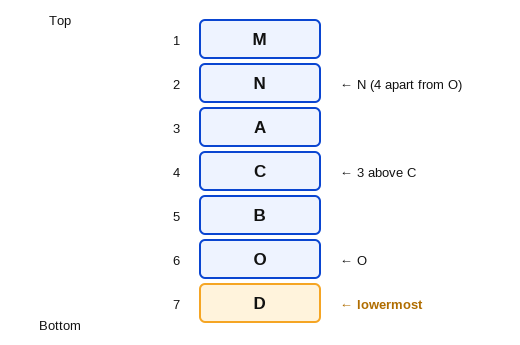
Only three boxes are kept above C. Only one box is kept between O and C. Only three boxes are kept between O and N. N is kept at some place above C. A is kept immediately below N. B is kept at one of the places above D. M is not kept immediately above or below O.
Which box is kept at the lowermost position?
सात बॉक्स A, B, C, D, M, N और O एक के ऊपर एक रखे गए हैं, लेकिन ज़रूरी नहीं कि इसी क्रम में हों।
C के ऊपर केवल तीन बॉक्स रखे गए हैं। O और C के बीच केवल एक बॉक्स रखा गया है। O और N के बीच केवल तीन बॉक्स रखे गए हैं। N, C के ऊपर किसी स्थान पर रखा गया है। A, N के ठीक नीचे रखा गया है। B, D के ऊपर के स्थानों में से किसी एक पर रखा गया है। M, O के ठीक ऊपर या ठीक नीचे नहीं रखा गया है।
सबसे नीचे के स्थान पर कौन-सा बॉक्स रखा गया है?
  1. AM
  2. BD
  3. CO
  4. DA
Show answer

Concept: Number positions 1 (top) to 7 (bottom) and place fixed boxes first.

  1. Three boxes above C ⇒ C at 4. One box between O and C ⇒ O at 2 or 6.
  2. N above C and three boxes between O and N ⇒ O = 6, N = 2; A just below N ⇒ A = 3.
  3. Left: 1, 5, 7. M not adjacent to O(6) ⇒ M = 1. B above D ⇒ B = 5, D = 7.

Trick: When N must be above C, test O = 2 first: N would be at 6 (below C) – rejected at once.

Answer: (B) D

अवधारणा: ऊपर से 1 से 7 स्थान लें और पहले निश्चित बॉक्स रखें।

  1. C के ऊपर तीन ⇒ C = 4। O और C के बीच एक ⇒ O = 2 या 6।
  2. N, C के ऊपर और O-N के बीच तीन ⇒ O = 6, N = 2; A ठीक N के नीचे ⇒ A = 3।
  3. बचे 1, 5, 7। M, O(6) के पास नहीं ⇒ M = 1। B, D के ऊपर ⇒ B = 5, D = 7।

ट्रिक: O = 2 लेने पर N = 6 (C के नीचे) आता है – तुरंत अस्वीकार।

उत्तर: (B) D

RRB NTPC Undergraduate CBT 1General Intelligence and ReasoningBox arrangementRRB NTPC Undergraduate CBT 1 2024 · 28 Aug Shift 3 →
Q1223.
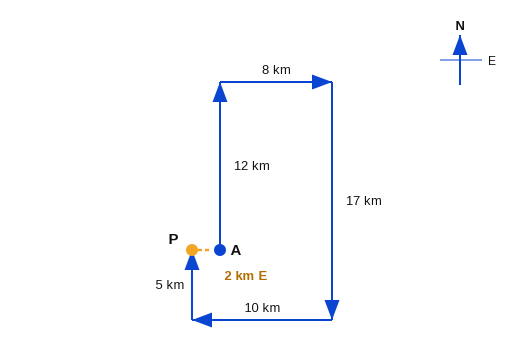
Hanish starts from Point A and drives 12 km towards the north. He then takes a right turn, drives 8 km, turns right and drives 17 km. He then takes a right turn and drives 10 km. He takes a final right turn, drives 5 km and stops at Point P. How far (shortest distance) and in which direction should he drive in order to reach Point A again? (All turns are 90-degree turns only unless specified.)
हनीश बिंदु A से चलना शुरू करता है और उत्तर की ओर 12 km गाड़ी चलाता है। फिर वह दाएँ मुड़ता है, 8 km गाड़ी चलाता है, दाएँ मुड़ता है और 17 km गाड़ी चलाता है। फिर वह दाएँ मुड़ता है और 10 km गाड़ी चलाता है। वह अंतिम बार दाएँ मुड़ता है, 5 km गाड़ी चलाता है और बिंदु P पर रुक जाता है। बिंदु A पर फिर से पहुँचने के लिए उसे कितनी दूर (न्यूनतम दूरी) और किस दिशा में गाड़ी चलानी चाहिए? (जब तक निर्दिष्ट न हो, सभी मोड़ केवल 90 डिग्री के हैं।)
  1. A2 km to the eastपूर्व की ओर 2 km
  2. B3 km to the westपश्चिम की ओर 3 km
  3. C3 km to the eastपूर्व की ओर 3 km
  4. D2 km to the westपश्चिम की ओर 2 km
Show answer

Concept: Track net east–west and north–south displacement.

  1. N 12, E 8, S 17, W 10, N 5.
  2. North–south: 12−17+5=0.
  3. East–west: 8−10=−2 ⇒ P is 2 km west of A.
  4. To return: 2 km east.

Trick: Four right turns bring you back to the original heading – only net values matter.

Answer: (A) 2 km to the east

अवधारणा: कुल पूर्व–पश्चिम और उत्तर–दक्षिण विस्थापन निकालें।

  1. उत्तर 12, पूर्व 8, दक्षिण 17, पश्चिम 10, उत्तर 5।
  2. उत्तर–दक्षिण: 12−17+5=0।
  3. पूर्व–पश्चिम: 8−10=−2 ⇒ P, A से 2 km पश्चिम।
  4. वापस जाने के लिए: 2 km पूर्व।

ट्रिक: केवल कुल (net) विस्थापन मायने रखता है।

उत्तर: (A) 2 km to the east

RRB NTPC Undergraduate CBT 1General Intelligence and ReasoningDirection and distanceRRB NTPC Undergraduate CBT 1 2024 · 28 Aug Shift 3 →
Q1224.
URKE is related to QOGB in a certain way based on the English alphabetical order. In the same way, EFUS is related to ACQP. To which of the given options is SWIJ related, following the same logic?
अंग्रेज़ी वर्णमाला क्रम के आधार पर URKE एक निश्चित प्रकार से QOGB से संबंधित है। उसी प्रकार, EFUS, ACQP से संबंधित है। समान तर्क का अनुसरण करते हुए, SWIJ दिए गए विकल्पों में से किससे संबंधित है?
  1. AOTEG
  2. BOTYU
  3. COGET
  4. DOETY
Show answer

Concept: Find the shift for each letter position.

  1. URKE → QOGB: −4, −3, −4, −3.
  2. EFUS → ACQP: −4, −3, −4, −3 ✓.
  3. SWIJ: S−4=O, W−3=T, I−4=E, J−3=G ⇒ OTEG.

Trick: Alternate shifts −4, −3: the third letter I−4=E already narrows to (A).

Answer: (A) OTEG

अवधारणा: हर स्थान के अक्षर का खिसकाव ज्ञात करें।

  1. URKE → QOGB: −4, −3, −4, −3।
  2. EFUS → ACQP: −4, −3, −4, −3 ✓।
  3. SWIJ: O, T, E, G ⇒ OTEG।

ट्रिक: तीसरा अक्षर I−4=E से ही (A) निश्चित।

उत्तर: (A) OTEG

RRB NTPC Undergraduate CBT 1General Intelligence and ReasoningLetter analogyRRB NTPC Undergraduate CBT 1 2024 · 28 Aug Shift 3 →
Q1225.
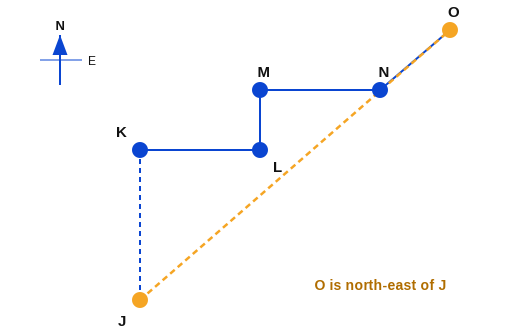
Town J is to the south of Town K. Town L is to the east of Town K. Town M is to the north of Town L. Town N is to the east of Town M. Town O is to the northeast of Town N. What is the position of Town O with respect to Town J?
शहर J, शहर K के दक्षिण में है। शहर L, शहर K के पूर्व में है। शहर M, शहर L के उत्तर में है। शहर N, शहर M के पूर्व में है। शहर O, शहर N के उत्तर-पूर्व में है। शहर J के सापेक्ष शहर O की स्थिति क्या है?
  1. ANortheastउत्तर-पूर्व
  2. BSouthwestदक्षिण-पश्चिम
  3. CSouthदक्षिण
  4. DSoutheastदक्षिण-पूर्व
Show answer

Concept: Place K at the origin and plot each town.

  1. J is south of K; L is east of K; M north of L; N east of M; O north-east of N.
  2. O is to the east of J (L, M, N, O all lie east of K's line) and to the north of J (J is south of K, O is north of K's level).
  3. East + North ⇒ north-east.

Trick: Compare only two things: is the town east/west of J, and north/south of J?

Answer: (A) Northeast

अवधारणा: K को मूल बिंदु मानकर हर नगर अंकित करें।

  1. J, K के दक्षिण; L, K के पूर्व; M, L के उत्तर; N, M के पूर्व; O, N के उत्तर-पूर्व।
  2. O, J के पूर्व में भी है और उत्तर में भी (J, K के दक्षिण है, O, K के स्तर से ऊपर)।
  3. पूर्व + उत्तर ⇒ उत्तर-पूर्व।

ट्रिक: केवल दो बातें देखें: J से पूर्व/पश्चिम और उत्तर/दक्षिण।

उत्तर: (A) Northeast

RRB NTPC Undergraduate CBT 1General Intelligence and ReasoningDirection senseRRB NTPC Undergraduate CBT 1 2024 · 28 Aug Shift 3 →
Q1226.
Who among the following was the runner-up defeated by Viktor Axelsen in his third India Open victory in the 2025 India Open Badminton Tournament in January 2025?
जनवरी 2025 में आयोजित इंडिया ओपन बैडमिंटन टूर्नामेंट 2025 में विक्टर एक्सेलसन (Viktor Axelsen) ने अपनी तीसरी इंडिया ओपन जीत में निम्नलिखित में से किस उपविजेता को हराया था?
  1. AAnthony Sinisuka Gintingएंथनी सिनिसुका गिंटिंग
  2. BLakshay Senलक्ष्य सेन
  3. CLee Cheuk Yiuली चेउक यिउ
  4. DChou Tien Chenचोउ तिएन चेन
Show answer

Concept: The India Open is a BWF Super 750 badminton tournament held in New Delhi.

  1. In the 2025 men's singles final, Denmark's Viktor Axelsen beat Lee Cheuk Yiu of Hong Kong (China) 21-16, 21-8.
  2. It was Axelsen's third India Open title.
  3. Lakshya Sen and others did not reach this final.

Yaad rakhein: India Open 2025: Axelsen (men) beat Lee Cheuk Yiu; An Se-young won the women's title.

Answer: (C) Lee Cheuk Yiu

अवधारणा: इंडिया ओपन नई दिल्ली में होने वाला BWF Super 750 बैडमिंटन टूर्नामेंट है।

  1. 2025 के पुरुष एकल फाइनल में डेनमार्क के विक्टर एक्सेलसन ने हांगकांग (चीन) के ली चेउक यियू को 21-16, 21-8 से हराया।
  2. यह एक्सेलसन का तीसरा इंडिया ओपन खिताब था।
  3. लक्ष्य सेन आदि इस फाइनल में नहीं थे।

याद रखें: इंडिया ओपन 2025: एक्सेलसन (पुरुष) ने ली चेउक यियू को हराया; महिला खिताब An Se-young ने जीता।

उत्तर: (C) ली चेउक यियू (Lee Cheuk Yiu)

RRB NTPC Undergraduate CBT 1General AwarenessSports – BadmintonRRB NTPC Undergraduate CBT 1 2024 · 28 Aug Shift 2 →
Q1227.
In which of the following years was Delhi Metro Rail Corporation established?
दिल्ली मेट्रो रेल कॉर्पोरेशन की स्थापना निम्नलिखित में से किस वर्ष में हुई थी?
  1. A1992
  2. B1995
  3. C1999
  4. D1997
Show answer

Concept: Delhi Metro Rail Corporation (DMRC) is a 50:50 joint venture of the Government of India and the Government of Delhi.

  1. DMRC was registered on 3 May 1995 under the Companies Act.
  2. Its first corridor (Shahdara–Tis Hazari, Red Line) opened on 24 December 2002.
  3. E. Sreedharan was its first Managing Director.

Yaad rakhein: DMRC – 1995 company, 2002 first train.

Answer: (B) 1995

अवधारणा: दिल्ली मेट्रो रेल कॉर्पोरेशन (DMRC) भारत सरकार और दिल्ली सरकार का 50:50 संयुक्त उपक्रम है।

  1. DMRC का पंजीकरण 3 मई 1995 को कंपनी अधिनियम के तहत हुआ।
  2. पहला कॉरिडोर (शाहदरा–तीस हजारी, रेड लाइन) 24 दिसंबर 2002 को शुरू हुआ।
  3. ई. श्रीधरन इसके पहले प्रबंध निदेशक थे।

याद रखें: DMRC – 1995 में कंपनी, 2002 में पहली ट्रेन।

उत्तर: (B) 1995

RRB NTPC Undergraduate CBT 1General AwarenessRailways & MetroRRB NTPC Undergraduate CBT 1 2024 · 28 Aug Shift 2 →
Q1228.
What is the full name of MNREGA in the Indian policy context?
भारतीय नीति के संदर्भ में MNREGA का पूरा नाम क्या है?
  1. AModern National Rural Employment Growth Actमॉडर्न नेशनल रूरल एम्प्लॉयमेंट ग्रोथ एक्ट
  2. BMahatma Gandhi National Rural Employment Guarantee Actमहात्मा गांधी राष्ट्रीय ग्रामीण रोज़गार गारंटी अधिनियम
  3. CMinistry for National Rural Employment Growth Agendaमिनिस्ट्री फॉर नेशनल रूरल एम्प्लॉयमेंट ग्रोथ एजेंडा
  4. DMainstream National Rural Education Guarantee Actमेनस्ट्रीम नेशनल रूरल एजुकेशन गारंटी एक्ट
Show answer

Concept: MGNREGA (often written MNREGA) is India's rural employment law.

  1. Full name: Mahatma Gandhi National Rural Employment Guarantee Act.
  2. Enacted in 2005 as NREGA; 'Mahatma Gandhi' was added to the name in 2009.
  3. It guarantees 100 days of wage employment a year to every rural household whose adult members volunteer for unskilled manual work.

Yaad rakhein: The 'G' stands for Guarantee, not Growth.

Answer: (B) Mahatma Gandhi National Rural Employment Guarantee Act

अवधारणा: MGNREGA (जिसे MNREGA भी लिखा जाता है) भारत का ग्रामीण रोज़गार कानून है।

  1. पूरा नाम: Mahatma Gandhi National Rural Employment Guarantee Act (महात्मा गांधी राष्ट्रीय ग्रामीण रोज़गार गारंटी अधिनियम)।
  2. 2005 में NREGA के रूप में बना; 2009 में नाम में 'महात्मा गांधी' जोड़ा गया।
  3. यह हर ग्रामीण परिवार को साल में 100 दिन के अकुशल शारीरिक काम की गारंटी देता है।

याद रखें: 'G' का अर्थ Guarantee है, Growth नहीं।

उत्तर: (B) Mahatma Gandhi National Rural Employment Guarantee Act

RRB NTPC Undergraduate CBT 1General AwarenessGovernment SchemesRRB NTPC Undergraduate CBT 1 2024 · 28 Aug Shift 2 →
Q1229.
Which of the following constitutional mechanisms ensures political representation for Scheduled Castes and Scheduled Tribes in the Indian Parliament?
निम्नलिखित में से कौन-सा संवैधानिक तंत्र भारतीय संसद में अनुसूचित जातियों और अनुसूचित जनजातियों के लिए राजनीतिक प्रतिनिधित्व सुनिश्चित करता है?
  1. AArticle 15 and 16अनुच्छेद 15 और 16
  2. BArticle 341 and 342अनुच्छेद 341 और 342
  3. CArticle 330 and 332अनुच्छेद 330 और 332
  4. DArticle 338 and 339अनुच्छेद 338 और 339
Show answer

Concept: Political representation means reservation of seats in elected legislatures.

  1. Article 330: reservation of seats for SCs and STs in the Lok Sabha.
  2. Article 332: reservation of seats for SCs and STs in State Legislative Assemblies.
  3. Articles 341–342 only notify which castes/tribes are SC/ST; Article 338 creates the National Commission for SCs; Articles 15–16 deal with equality.

Yaad rakhein: 330 – Lok Sabha, 332 – State Assemblies (both in Part XVI).

Answer: (C) Article 330 and 332

अवधारणा: राजनीतिक प्रतिनिधित्व का अर्थ है निर्वाचित विधायिकाओं में सीटों का आरक्षण।

  1. अनुच्छेद 330: लोकसभा में SC और ST के लिए सीटों का आरक्षण।
  2. अनुच्छेद 332: राज्य विधानसभाओं में SC और ST के लिए सीटों का आरक्षण।
  3. अनुच्छेद 341–342 केवल SC/ST की सूची अधिसूचित करते हैं; 338 राष्ट्रीय अनुसूचित जाति आयोग; 15–16 समानता से संबंधित हैं।

याद रखें: 330 – लोकसभा, 332 – राज्य विधानसभा (दोनों भाग XVI में)।

उत्तर: (C) अनुच्छेद 330 और 332

RRB NTPC Undergraduate CBT 1General AwarenessPolity – Reservation of seatsRRB NTPC Undergraduate CBT 1 2024 · 28 Aug Shift 2 →
Q1230.
The DBT‑funded project that first produced a GMP‑grade viral vector for Indian CAR‑T research was supported under which flagship scheme?
DBT द्वारा वित्तपोषित वह परियोजना, जिसने भारतीय CAR‑T अनुसंधान के लिए पहली बार GMP‑ग्रेड वायरल वेक्टर (viral vector) का उत्पादन किया, किस प्रमुख योजना के अंतर्गत समर्थित थी?
  1. ABiotechnology Ignition Grantबायोटेक्नोलॉजी इग्निशन ग्रांट
  2. BPACE
  3. CNational Biopharma Missionराष्ट्रीय बायोफार्मा मिशन
  4. DAtal Jai Anusandhanअटल जय अनुसंधान
Show answer

Concept: The National Biopharma Mission (NBM) is the flagship industry–academia programme of the Department of Biotechnology (DBT), run by BIRAC.

  1. NBM ('Innovate in India – i3'), co-funded by the World Bank, supports biologics, vaccines, devices and cell & gene therapy.
  2. Under NBM, India's first GMP-grade viral vector for CAR-T research was produced, aiding indigenous CAR-T therapy.
  3. BIG and PACE are smaller BIRAC grant schemes; Atal Jai Anusandhan is a research mission name, not the funding scheme here.

Yaad rakhein: CAR-T and vaccines support from DBT → National Biopharma Mission (BIRAC).

Answer: (C) National Biopharma Mission

अवधारणा: राष्ट्रीय बायोफार्मा मिशन (NBM) जैव प्रौद्योगिकी विभाग (DBT) का प्रमुख उद्योग–अकादमिक कार्यक्रम है, जिसे BIRAC चलाता है।

  1. NBM ('Innovate in India – i3') विश्व बैंक के सहयोग से बायोलॉजिक्स, वैक्सीन, उपकरण और सेल व जीन थेरेपी को सहायता देता है।
  2. NBM के तहत CAR-T अनुसंधान के लिए भारत का पहला GMP-ग्रेड वायरल वेक्टर बनाया गया।
  3. BIG और PACE छोटी BIRAC अनुदान योजनाएँ हैं; यहाँ फंडिंग योजना NBM है।

याद रखें: DBT से CAR-T व वैक्सीन सहायता → National Biopharma Mission (BIRAC)।

उत्तर: (C) National Biopharma Mission (राष्ट्रीय बायोफार्मा मिशन)

RRB NTPC Undergraduate CBT 1General AwarenessScience & Technology – BiotechnologyRRB NTPC Undergraduate CBT 1 2024 · 28 Aug Shift 2 →
Q1231.
Which of the following rivers flows through a small part of the Great Indian Desert?
निम्नलिखित में से कौन-सी नदी महान भारतीय मरुस्थल (थार) के एक छोटे भाग से होकर बहती है?
  1. ARaviरावी
  2. BMahanadiमहानदी
  3. CSatlujसतलुज
  4. DLuniलूनी
Show answer

Concept: The Luni is the main river of the Thar (Great Indian) Desert in western Rajasthan.

  1. It rises in the Aravalli range near Ajmer (Pushkar valley), flows south-west and ends in the marshes of the Rann of Kutch.
  2. It is an inland river – it does not reach the sea; its water becomes salty after Balotra.
  3. Ravi and Satluj flow through Punjab; Mahanadi flows through Chhattisgarh–Odisha.

Yaad rakhein: Luni = 'lavanavari' (salt river) of the Thar.

Answer: (D) Luni

अवधारणा: लूणी थार (महान भारतीय) मरुस्थल की मुख्य नदी है, जो पश्चिमी राजस्थान में बहती है।

  1. यह अजमेर के पास अरावली (पुष्कर घाटी) से निकलकर दक्षिण-पश्चिम बहती है और कच्छ के रण में समाप्त होती है।
  2. यह आंतरिक अपवाह वाली नदी है – समुद्र तक नहीं पहुँचती; बालोतरा के बाद इसका जल खारा हो जाता है।
  3. रावी व सतलुज पंजाब में, महानदी छत्तीसगढ़–ओडिशा में बहती है।

याद रखें: लूणी = थार की 'लवणवारी' (खारी नदी)।

उत्तर: (D) लूणी

RRB NTPC Undergraduate CBT 1General AwarenessIndian Geography – RiversRRB NTPC Undergraduate CBT 1 2024 · 28 Aug Shift 2 →
Q1232.
In which of the following years did Vasco da Gama land in Calicut on the Malabar Coast for the second time?
वास्को डी गामा निम्नलिखित में से किस वर्ष में दूसरी बार मालाबार तट पर कालीकट में उतरा था?
  1. A1509
  2. B1502
  3. C1505
  4. D1511
Show answer

Concept: Vasco da Gama made two voyages to Calicut (Kozhikode) on the Malabar coast.

  1. First voyage: reached Calicut on 20 May 1498, welcomed by the Zamorin.
  2. Second voyage: he returned to Calicut in 1502 with a large fleet and bombarded the town.
  3. He came a third time in 1524 as Viceroy and died in Cochin.

Yaad rakhein: Vasco da Gama: 1498 – 1502 – 1524.

Answer: (B) 1502

अवधारणा: वास्को डी गामा मालाबार तट पर कालीकट (कोझिकोड) दो बार यात्रा कर आया।

  1. पहली यात्रा: 20 मई 1498 को कालीकट पहुँचा, ज़मोरिन ने स्वागत किया।
  2. दूसरी यात्रा: 1502 में बड़े बेड़े के साथ लौटा और नगर पर गोलाबारी की।
  3. तीसरी बार 1524 में वायसराय बनकर आया और कोचीन में उसकी मृत्यु हुई।

याद रखें: वास्को डी गामा: 1498 – 1502 – 1524।

उत्तर: (B) 1502

RRB NTPC Undergraduate CBT 1General AwarenessModern History – Europeans in IndiaRRB NTPC Undergraduate CBT 1 2024 · 28 Aug Shift 2 →
Q1233.
The Pochampad Dam is also known as _____________.
पोचमपाड बाँध को _____________ के नाम से भी जाना जाता है।
  1. AHirakud Projectहीराकुंड परियोजना
  2. BSri Rama Sagar Projectश्री राम सागर परियोजना
  3. CBhakra Nangal Projectभाखड़ा नांगल परियोजना
  4. DNagarjuna Sagar Projectनागार्जुन सागर परियोजना
Show answer

Concept: Pochampad Dam is a multipurpose project on the Godavari river in Nizamabad district, Telangana.

  1. Its official name is the Sri Ram Sagar Project (SRSP).
  2. Hirakud is on the Mahanadi (Odisha), Bhakra Nangal on the Satluj, Nagarjuna Sagar on the Krishna.

Yaad rakhein: Pochampad = Sri Ram Sagar on the Godavari, Telangana.

Answer: (B) Sri Rama Sagar Project

अवधारणा: पोचमपाड बाँध तेलंगाना के निज़ामाबाद ज़िले में गोदावरी नदी पर बहुउद्देशीय परियोजना है।

  1. इसका आधिकारिक नाम श्रीराम सागर परियोजना (SRSP) है।
  2. हीराकुड महानदी (ओडिशा) पर, भाखड़ा नांगल सतलुज पर, नागार्जुन सागर कृष्णा पर है।

याद रखें: पोचमपाड = गोदावरी पर श्रीराम सागर, तेलंगाना।

उत्तर: (B) श्रीराम सागर परियोजना

RRB NTPC Undergraduate CBT 1General AwarenessIndian Geography – DamsRRB NTPC Undergraduate CBT 1 2024 · 28 Aug Shift 2 →
Q1234.
Which of the following Bengali writers composed the famous novel Anandamath?
निम्नलिखित में से किस बंगाली लेखक ने प्रसिद्ध उपन्यास आनंदमठ की रचना की थी?
  1. ASarat Chandra Chattopadhyayशरत चंद्र चट्टोपाध्याय
  2. BRabindranath Tagoreरवीन्द्रनाथ टैगोर
  3. CKazi Nazrul Islamकाज़ी नज़रुल इस्लाम
  4. DBankim Chandra Chattopadhyayबंकिम चंद्र चट्टोपाध्याय
Show answer

Concept: Anandamath is a Bengali novel set during the Sannyasi rebellion.

  1. It was written by Bankim Chandra Chattopadhyay and published in 1882.
  2. It contains the song 'Vande Mataram', adopted as India's National Song.
  3. Sarat Chandra wrote Devdas; Tagore wrote Gora; Kazi Nazrul Islam is the 'Rebel Poet'.

Yaad rakhein: Anandamath → Vande Mataram → Bankim Chandra.

Answer: (D) Bankim Chandra Chattopadhyay

अवधारणा: आनंदमठ संन्यासी विद्रोह की पृष्ठभूमि पर लिखा बांग्ला उपन्यास है।

  1. इसे बंकिम चंद्र चट्टोपाध्याय ने लिखा, 1882 में प्रकाशित।
  2. इसमें 'वंदे मातरम्' गीत है, जो भारत का राष्ट्रीय गीत है।
  3. शरतचंद्र ने देवदास, टैगोर ने गोरा लिखा; काज़ी नज़रुल इस्लाम 'विद्रोही कवि' हैं।

याद रखें: आनंदमठ → वंदे मातरम् → बंकिम चंद्र।

उत्तर: (D) बंकिम चंद्र चट्टोपाध्याय

RRB NTPC Undergraduate CBT 1General AwarenessLiterature – Bengali writersRRB NTPC Undergraduate CBT 1 2024 · 28 Aug Shift 2 →
Q1235.
At what age did Gautama Buddha attain Enlightenment (Nirvana) at Bodh Gaya in Bihar?
गौतम बुद्ध को बिहार के बोधगया में किस आयु में ज्ञान (निर्वाण) प्राप्त हुआ था?
  1. A49 years49 वर्ष
  2. B42 years42 वर्ष
  3. C35 years35 वर्ष
  4. D29 years29 वर्ष
Show answer

Concept: Key ages in the life of Gautama Buddha.

  1. Born at Lumbini (563 BCE, traditional date); left home at 29 (Mahabhinishkramana).
  2. After six years of search he attained enlightenment under the Bodhi tree at Bodh Gaya at the age of 35.
  3. First sermon at Sarnath; Mahaparinirvana at Kushinagar at 80.

Yaad rakhein: Buddha: 29 – leaves home, 35 – enlightenment, 80 – parinirvana.

Answer: (C) 35 years

अवधारणा: गौतम बुद्ध के जीवन की मुख्य आयु।

  1. लुंबिनी में जन्म (परंपरागत 563 ई.पू.); 29 वर्ष की आयु में गृहत्याग (महाभिनिष्क्रमण)।
  2. छह वर्ष की साधना के बाद 35 वर्ष की आयु में बोधगया में बोधि वृक्ष के नीचे ज्ञान प्राप्त हुआ।
  3. पहला उपदेश सारनाथ में; 80 वर्ष की आयु में कुशीनगर में महापरिनिर्वाण।

याद रखें: बुद्ध: 29 – गृहत्याग, 35 – ज्ञान, 80 – परिनिर्वाण।

उत्तर: (C) 35 वर्ष

RRB NTPC Undergraduate CBT 1General AwarenessAncient History – BuddhismRRB NTPC Undergraduate CBT 1 2024 · 28 Aug Shift 2 →
Q1236.
After a hundred years of conquest and administration, the English East India Company faced a massive uprising that took place in _________.
सौ वर्षों की विजय और प्रशासन के बाद, अंग्रेज़ी ईस्ट इंडिया कंपनी को एक विशाल विद्रोह का सामना करना पड़ा, जो _________ में हुआ था।
  1. A1856
  2. B1857
  3. C1854
  4. D1855
Show answer

Concept: The Company's rule in India effectively began with the Battle of Plassey (1757).

  1. Exactly a hundred years later, in 1857, a massive revolt broke out.
  2. It began at Meerut on 10 May 1857 and spread to Delhi, Kanpur, Lucknow, Jhansi and other centres.
  3. After it, the Government of India Act 1858 ended Company rule.

Yaad rakhein: Plassey 1757 + 100 years = Revolt of 1857.

Answer: (B) 1857

अवधारणा: भारत में कंपनी का शासन वास्तव में प्लासी के युद्ध (1757) से शुरू हुआ।

  1. ठीक सौ वर्ष बाद, 1857 में, एक बड़ा विद्रोह हुआ।
  2. यह 10 मई 1857 को मेरठ से शुरू होकर दिल्ली, कानपुर, लखनऊ, झाँसी आदि में फैला।
  3. इसके बाद भारत सरकार अधिनियम 1858 से कंपनी शासन समाप्त हुआ।

याद रखें: प्लासी 1757 + 100 वर्ष = 1857 का विद्रोह।

उत्तर: (B) 1857

RRB NTPC Undergraduate CBT 1General AwarenessModern History – Revolt of 1857RRB NTPC Undergraduate CBT 1 2024 · 28 Aug Shift 2 →
Q1237.
How many facial bones are there in the face skeleton, each with its own anatomical landmarks and stage of development?
चेहरे के कंकाल में कितनी चेहरे की अस्थियाँ (facial bones) होती हैं, जिनमें से प्रत्येक के अपने शारीरिक चिह्न (anatomical landmarks) और विकास की अवस्था होती है?
  1. A14
  2. B18
  3. C11
  4. D21
Show answer

Concept: The skull has 22 bones: 8 cranial bones and 14 facial bones.

  1. Paired facial bones (12): nasal, maxillae, zygomatic, lacrimal, palatine, inferior nasal conchae.
  2. Single facial bones (2): mandible and vomer.
  3. So the facial skeleton has 12 + 2 = 14 bones.

Yaad rakhein: Skull 22 = 8 cranial + 14 facial.

Answer: (A) 14

अवधारणा: खोपड़ी में 22 हड्डियाँ होती हैं: 8 कपाल (cranial) और 14 चेहरे (facial) की।

  1. युग्मित चेहरे की हड्डियाँ (12): nasal, maxilla, zygomatic, lacrimal, palatine, inferior nasal concha।
  2. एकल हड्डियाँ (2): mandible (निचला जबड़ा) और vomer।
  3. अतः चेहरे का कंकाल = 12 + 2 = 14 हड्डियाँ।

याद रखें: खोपड़ी 22 = 8 कपाल + 14 चेहरा।

उत्तर: (A) 14

RRB NTPC Undergraduate CBT 1General AwarenessBiology – Human skeletonRRB NTPC Undergraduate CBT 1 2024 · 28 Aug Shift 2 →
Q1238.
What was the theme for National Safety Day, observed on 4 March 2025?
4 मार्च 2025 को मनाए गए राष्ट्रीय सुरक्षा दिवस का विषय (थीम) क्या था?
  1. ASafety & Well-being Crucial for Viksit Bharatविकसित भारत के लिए सुरक्षा और कल्याण महत्वपूर्ण (Safety & Well-being Crucial for Viksit Bharat)
  2. BSafety Awareness: A National Priorityसुरक्षा जागरूकता: एक राष्ट्रीय प्राथमिकता
  3. CSafety First: Every Dayसुरक्षा पहले: हर दिन
  4. DSecure India: Secure Futureसुरक्षित भारत: सुरक्षित भविष्य
Show answer

Concept: National Safety Day is observed on 4 March, the foundation day of the National Safety Council (1966).

  1. The theme for 2025 was 'Safety & Well-being Crucial for Viksit Bharat'.
  2. It links workplace safety and health to the goal of a developed India by 2047.
  3. The day also starts National Safety Week (4–10 March).

Yaad rakhein: 2025 safety theme connects to Viksit Bharat.

Answer: (A) Safety & Well-being Crucial for Viksit Bharat

अवधारणा: राष्ट्रीय सुरक्षा दिवस 4 मार्च को राष्ट्रीय सुरक्षा परिषद (1966) के स्थापना दिवस पर मनाया जाता है।

  1. 2025 की थीम थी 'Safety & Well-being Crucial for Viksit Bharat'।
  2. यह कार्यस्थल सुरक्षा व स्वास्थ्य को 2047 तक विकसित भारत के लक्ष्य से जोड़ती है।
  3. इसी दिन से राष्ट्रीय सुरक्षा सप्ताह (4–10 मार्च) शुरू होता है।

याद रखें: 2025 की सुरक्षा थीम विकसित भारत से जुड़ी है।

उत्तर: (A) Safety & Well-being Crucial for Viksit Bharat

RRB NTPC Undergraduate CBT 1General AwarenessImportant Days – ThemesRRB NTPC Undergraduate CBT 1 2024 · 28 Aug Shift 2 →
Q1239.
In the first phase of the Green Revolution (approximately mid 1960s upto mid 1970s), the use of HYV seeds was restricted to the more affluent states such as _________.
हरित क्रांति के पहले चरण (लगभग 1960 के दशक के मध्य से 1970 के दशक के मध्य तक) में, HYV बीजों का उपयोग _________ जैसे अधिक समृद्ध राज्यों तक ही सीमित था।
  1. ARajasthan, Gujarat and Keralaराजस्थान, गुजरात और केरल
  2. BBihar, Odisha and West Bengalबिहार, ओडिशा और पश्चिम बंगाल
  3. CMaharashtra, Uttar Pradesh and Assamमहाराष्ट्र, उत्तर प्रदेश और असम
  4. DPunjab, Andhra Pradesh and Tamil Naduपंजाब, आंध्र प्रदेश और तमिलनाडु
Show answer

Concept: The first phase of the Green Revolution used HYV seeds with assured irrigation, fertilisers and pesticides.

  1. These inputs were available mainly in the better-off states – Punjab, Andhra Pradesh and Tamil Nadu.
  2. HYV seeds benefited mostly wheat-growing regions at first.
  3. In the second phase (mid-1970s to mid-1980s) the technology spread to more states and crops.

Yaad rakhein: Phase 1 Green Revolution = Punjab, AP, TN (irrigated, affluent).

Answer: (D) Punjab, Andhra Pradesh and Tamil Nadu

अवधारणा: हरित क्रांति के पहले चरण में सुनिश्चित सिंचाई, उर्वरक और कीटनाशक के साथ HYV बीज उपयोग हुए।

  1. ये साधन मुख्यतः संपन्न राज्यों – पंजाब, आंध्र प्रदेश और तमिलनाडु में उपलब्ध थे।
  2. शुरुआत में HYV बीजों का लाभ मुख्यतः गेहूँ उगाने वाले क्षेत्रों को मिला।
  3. दूसरे चरण (1970 के मध्य से 1980 के मध्य) में तकनीक अधिक राज्यों और फसलों तक फैली।

याद रखें: हरित क्रांति चरण 1 = पंजाब, आंध्र प्रदेश, तमिलनाडु।

उत्तर: (D) पंजाब, आंध्र प्रदेश और तमिलनाडु

RRB NTPC Undergraduate CBT 1General AwarenessIndian Economy – Green RevolutionRRB NTPC Undergraduate CBT 1 2024 · 28 Aug Shift 2 →
Q1240.
During the Later Vedic period, which of the following animals was specifically mentioned as useful for ploughing swampy land?
उत्तर वैदिक काल के दौरान, निम्नलिखित में से किस पशु का उल्लेख विशेष रूप से दलदली भूमि की जुताई के लिए उपयोगी के रूप में किया गया था?
  1. ACowगाय
  2. BBuffaloभैंस
  3. CHorseघोड़ा
  4. DElephantहाथी
Show answer

Concept: Agriculture became the main occupation in the Later Vedic period, as settlements moved into the Ganga plains.

  1. Heavy wooden ploughs were drawn by teams of oxen.
  2. The buffalo was domesticated and used for ploughing swampy (marshy) land of the Ganga valley.
  3. The horse was used for chariots and the elephant was a symbol of royalty, not ploughing animals.

Yaad rakhein: Marshy land + heavy work → buffalo.

Answer: (B) Buffalo

अवधारणा: उत्तर वैदिक काल में बस्तियाँ गंगा के मैदानों में फैलीं और कृषि मुख्य व्यवसाय बनी।

  1. भारी लकड़ी के हलों को बैलों की जोड़ियाँ खींचती थीं।
  2. भैंस को पालतू बनाकर गंगा घाटी की दलदली भूमि जोतने में उपयोग किया गया।
  3. घोड़ा रथ के लिए और हाथी राजसत्ता का प्रतीक था, हल जोतने के लिए नहीं।

याद रखें: दलदली भूमि + भारी काम → भैंस।

उत्तर: (B) भैंस

RRB NTPC Undergraduate CBT 1General AwarenessAncient History – Later Vedic periodRRB NTPC Undergraduate CBT 1 2024 · 28 Aug Shift 2 →