Question bank

Q&A: practice questions with answers

Search questions on any topic. Filter by exam category, exam, subject and topic, try the question, then open the answer and explanation.

Courses – airGurukul

20,719 questions found.

Q12541.
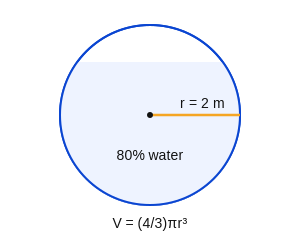
A spherical tank has a radius of 2 meters. If the tank is filled with water to 80% of its total volume, what is the volume of water in the tank (rounded to the nearest cubic meter)?
एक गोलाकार टंकी की त्रिज्या 2 मीटर है। यदि टंकी को उसके कुल आयतन के 80% तक पानी से भरा जाता है, तो टंकी में पानी का आयतन (निकटतम घन मीटर तक पूर्णांकित) कितना है?
  1. A33
  2. B21
  3. C38
  4. D27
Show answer

Concept: Volume of a sphere V=43πr3.

  1. V=43×227×23=70421≈33.52m3
  2. Water =80% of 33.52=0.8×33.52≈26.8
  3. Nearest whole number =27m3

Trick: Option 33 is the full tank — a common trap; remember to take 80%.

Answer: (D) 27

अवधारणा: गोले (sphere) का आयतन V=43πr3।

  1. V=43×227×23=70421≈33.52m3
  2. पानी =33.52 का 80%=0.8×33.52≈26.8
  3. निकटतम पूर्णांक =27m3

ट्रिक: विकल्प 33 पूरा टैंक है — जाल से बचें; 80% लेना न भूलें।

उत्तर: (D) 27

RRB NTPC Undergraduate CBT 1MathematicsVolume of SphereRRB NTPC Undergraduate CBT 1 2025 · 17 Jun Shift 2 →
Q12542.
A and B can do a piece of work in 12 days and 12 days, respectively. Both work for 3 days and then A leaves. How long (in days) will B take to complete the remaining work?
A और B किसी कार्य को क्रमशः 12 दिन और 12 दिन में कर सकते हैं। दोनों 3 दिन तक कार्य करते हैं और फिर A कार्य छोड़ देता है। शेष कार्य को पूरा करने में B को कितना समय (दिनों में) लगेगा?
  1. A6
  2. B5
  3. C8
  4. D7
Show answer

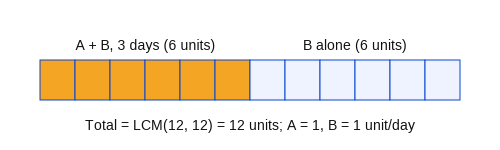
Concept: Take total work =LCM of days; efficiency =workdays.

  1. Total work =12 units; A =1, B =1 unit/day
  2. In 3 days together: 3×2=6 units
  3. Remaining =12−6=6 units
  4. B alone: 61=6 days

Trick: Equal workers → in 3 days they finish half; B needs half of 12 days =6.

Answer: (A) 6

अवधारणा: कुल कार्य = दिनों का LCM मानें; क्षमता =कार्यदिन।

  1. कुल कार्य =12 इकाई; A =1, B =1 इकाई/दिन
  2. 3 दिन साथ में: 3×2=6 इकाई
  3. शेष =12−6=6 इकाई
  4. B अकेला: 61=6 दिन

ट्रिक: दोनों बराबर → 3 दिन में आधा काम; B को 12 दिन का आधा =6 दिन।

उत्तर: (A) 6

RRB NTPC Undergraduate CBT 1MathematicsTime and WorkRRB NTPC Undergraduate CBT 1 2025 · 17 Jun Shift 2 →
Q12543.
₹2,288 is divided among Pankaj, Meera, and Ashok in such a way that if ₹39, ₹47, and ₹40 are deducted from their respective shares, they have money in the ratio 17:15:14. Find Meera’s share after deduction.
₹2,288 को पंकज, मीरा और अशोक के बीच इस प्रकार बाँटा जाता है कि यदि उनके संबंधित हिस्सों में से ₹39, ₹47 और ₹40 घटा दिए जाएँ, तो उनके पास धनराशि 17:15:14 के अनुपात में रह जाती है। कटौती के बाद मीरा का हिस्सा ज्ञात कीजिए।
  1. A₹855
  2. B₹805
  3. C₹705
  4. D₹605
Show answer

Concept: Subtract all deductions from the total; the remainder is divided in the given ratio.

  1. Total deductions =39+47+40=126
  2. Remaining =2288−126=2162
  3. Ratio sum =17+15+14=46; one part =216246=47
  4. Meera after deduction =15×47=705

Trick: Question asks share after deduction — don't add back ₹47 (that gives ₹752).

Answer: (C) ₹705

अवधारणा: कुल राशि में से सभी कटौतियाँ घटाएँ; शेष राशि दिए अनुपात में बँटती है।

  1. कुल कटौती =39+47+40=126
  2. शेष =2288−126=2162
  3. अनुपात योग =17+15+14=46; एक भाग =216246=47
  4. कटौती के बाद मीरा =15×47=705

ट्रिक: प्रश्न कटौती के बाद का भाग पूछ रहा है — ₹47 वापस न जोड़ें (वह ₹752 होगा)।

उत्तर: (C) ₹705

RRB NTPC Undergraduate CBT 1MathematicsRatio (Division with Deductions)RRB NTPC Undergraduate CBT 1 2025 · 17 Jun Shift 2 →
Q12544.
The simplified value of (1224)(126)÷(29×186+48)+69÷2811 of 119 is:
(1224)(126)÷(29×186+48)+69÷2811 of 119 का सरलीकृत मान है:
  1. A16
  2. B43
  3. C37
  4. D112
Show answer

Concept: Follow BODMAS: brackets first, then 'of', then ÷/×, then +.

  1. 12/2412/6=122=14
  2. Bracket: 29×186+48=23+12=76; so 14÷76=314
  3. 2811 of 119=289; 69÷289=628=314
  4. Total =314+314=37

Trick: Do 'of' before ÷: 69÷(2811×119).

Answer: (C) 37

अवधारणा: BODMAS अपनाएँ: पहले कोष्ठक, फिर 'का (of)', फिर ÷/×, फिर +।

  1. 12/2412/6=122=14
  2. कोष्ठक: 29×186+48=23+12=76; अतः 14÷76=314
  3. 2811 of 119=289; 69÷289=628=314
  4. कुल =314+314=37

ट्रिक: ÷ से पहले 'of' हल करें: 69÷(2811×119)।

उत्तर: (C) 37

RRB NTPC Undergraduate CBT 1MathematicsSimplification of FractionsRRB NTPC Undergraduate CBT 1 2025 · 17 Jun Shift 2 →
Q12545.
What is the compound interest on ₹3,000 for 2 years at 20% per annum, interest compounded annually?
₹3,000 पर 20% वार्षिक ब्याज दर से 2 वर्ष का चक्रवृद्धि ब्याज कितना होगा, यदि ब्याज वार्षिक रूप से संयोजित होता है?
  1. A₹1,200
  2. B₹1,300
  3. C₹1,440
  4. D₹1,320
Show answer

Concept: A=P(1+R100)n; CI=A−P.

  1. A=3000×(1.2)2=3000×1.44=4320
  2. CI=4320−3000=1320

Trick: 2-year CI rate =20+20+20×20100=44%; 44% of 3000=1320.

Answer: (D) ₹1,320

अवधारणा: A=P(1+R100)n; चक्रवृद्धि ब्याज =A−P।

  1. A=3000×(1.2)2=3000×1.44=4320
  2. CI=4320−3000=1320

ट्रिक: 2 वर्ष की CI दर =20+20+20×20100=44%; 3000 का 44%=1320।

उत्तर: (D) ₹1,320

RRB NTPC Undergraduate CBT 1MathematicsCompound InterestRRB NTPC Undergraduate CBT 1 2025 · 17 Jun Shift 2 →
Q12546.
The following data shows the number of minutes taken by 15 students to complete a mathematics test: 42, 38, 55, 47, 50, 44, 60, 39, 48, 52, 45, 41, 49, 46, 53. Find the median time taken by the students.
निम्नलिखित आँकड़े 15 छात्रों द्वारा गणित की एक परीक्षा पूरी करने में लिए गए मिनटों की संख्या दर्शाते हैं: 42, 38, 55, 47, 50, 44, 60, 39, 48, 52, 45, 41, 49, 46, 53. छात्रों द्वारा लिया गया माध्यिका समय ज्ञात कीजिए।
  1. A47 minutes47 मिनट
  2. B46 minutes46 मिनट
  3. C48 minutes48 मिनट
  4. D47.5 minutes47.5 मिनट
Show answer

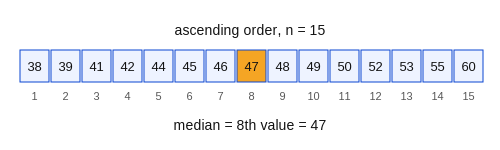
Concept: For n (odd) observations in ascending order, median =(n+12)th value.

  1. Ascending: 38, 39, 41, 42, 44, 45, 46, 47, 48, 49, 50, 52, 53, 55, 60
  2. n=15 → 15+12=8th value
  3. Median =47

Trick: Always sort first — the middle of the unsorted list (39) is wrong.

Answer: (A) 47 minutes

अवधारणा: n (विषम) प्रेक्षणों को आरोही क्रम में रखने पर माध्यिका (median) =(n+12)th मान।

  1. आरोही क्रम: 38, 39, 41, 42, 44, 45, 46, 47, 48, 49, 50, 52, 53, 55, 60
  2. n=15 → 15+12=8वाँ मान
  3. माध्यिका =47

ट्रिक: पहले क्रम में लगाएँ — बिना क्रम की सूची का बीच वाला मान (39) गलत है।

उत्तर: (A) 47 मिनट

RRB NTPC Undergraduate CBT 1MathematicsMedianRRB NTPC Undergraduate CBT 1 2025 · 17 Jun Shift 2 →
Q12547.
A sum of money becomes ₹7,865 after 2 years and ₹8,651.50 after 3 years on compound interest at the same rate, compounded annually. Find the sum.
कोई धनराशि समान दर पर वार्षिक रूप से संयोजित चक्रवृद्धि ब्याज पर 2 वर्ष बाद ₹7,865 और 3 वर्ष बाद ₹8,651.50 हो जाती है। धनराशि ज्ञात कीजिए।
  1. A₹6,500
  2. B₹7,000
  3. C₹7,200
  4. D₹6,800
Show answer

Concept: Amounts of consecutive years differ by the factor (1+R100).

  1. 8651.507865=1.1 → R=10%
  2. P×(1.1)2=7865
  3. P=78651.21=6500

Trick: Interest in 3rd year =786.5 is 10% of 7865 → rate 10%.

Answer: (A) ₹6,500

अवधारणा: लगातार वर्षों की राशियों का अनुपात (1+R100) होता है।

  1. 8651.507865=1.1 → R=10%
  2. P×(1.1)2=7865
  3. P=78651.21=6500

ट्रिक: तीसरे वर्ष का ब्याज =786.5, जो 7865 का 10% है → दर 10%।

उत्तर: (A) ₹6,500

RRB NTPC Undergraduate CBT 1MathematicsCompound Interest (Find Principal)RRB NTPC Undergraduate CBT 1 2025 · 17 Jun Shift 2 →
Q12548.
A wholesaler offers two options for a sofa set marked at ₹80,000: either a flat discount of 30% or two successive discounts of 20% and 12%. What is the difference in the selling price between the two options?
एक थोक विक्रेता ₹80,000 अंकित मूल्य वाले सोफ़ा सेट के लिए दो विकल्प प्रदान करता है: या तो 30% की एकमुश्त छूट या 20% और 12% की दो क्रमागत छूटें। दोनों विकल्पों के विक्रय मूल्य में कितना अंतर है?
  1. A₹320
  2. B₹240
  3. C₹400
  4. D₹480
Show answer

Concept: Two successive discounts a%, b% equal a single discount of (a+b−ab100)%.

  1. Single equivalent of 20% and 12%: 20+12−240100=29.6%
  2. Difference in discount =30%−29.6%=0.4%
  3. 0.4% of 80000=320

Trick: Find only the gap in discount %, then apply it once to the marked price.

Answer: (A) ₹320

अवधारणा: दो क्रमागत छूटें a%, b% एकल छूट (a+b−ab100)% के बराबर होती हैं।

  1. 20% और 12% का समतुल्य: 20+12−240100=29.6%
  2. छूट में अंतर =30%−29.6%=0.4%
  3. 80000 का 0.4%=320

ट्रिक: केवल छूट % का अंतर निकालें, फिर अंकित मूल्य पर एक बार लगाएँ।

उत्तर: (A) ₹320

RRB NTPC Undergraduate CBT 1MathematicsSuccessive DiscountsRRB NTPC Undergraduate CBT 1 2025 · 17 Jun Shift 2 →
Q12549.
A person sells two items: one at a profit of 20% and another at a loss of 10%. If both items cost ₹100 each, what is the overall gain or loss percentage?
एक व्यक्ति दो वस्तुएँ बेचता है: एक को 20% लाभ पर और दूसरी को 10% हानि पर। यदि दोनों वस्तुओं का क्रय मूल्य ₹100 प्रत्येक है, तो कुल लाभ या हानि प्रतिशत कितना है?
  1. A10% loss10% हानि
  2. B10% gain10% लाभ
  3. C5% loss5% हानि
  4. D5% gain5% लाभ
Show answer

Concept: Overall %=Total SP−Total CPTotal CP×100.

  1. SP of first =120, SP of second =90
  2. Total SP =210, Total CP =200
  3. Gain =10200×100=5%

Trick: Equal CPs → overall %=20+(−10)2=5% gain.

Answer: (D) 5% gain

अवधारणा: कुल %=कुल विक्रय मूल्य−कुल क्रय मूल्यकुल क्रय मूल्य×100।

  1. पहली वस्तु का SP =120, दूसरी का =90
  2. कुल SP =210, कुल CP =200
  3. लाभ =10200×100=5%

ट्रिक: क्रय मूल्य बराबर हों तो कुल %=20+(−10)2=5% लाभ।

उत्तर: (D) 5% लाभ

RRB NTPC Undergraduate CBT 1MathematicsProfit and LossRRB NTPC Undergraduate CBT 1 2025 · 17 Jun Shift 2 →
Q12550.
A town had a population of 5,000 at the beginning of a year. During the first year, the population decreased by 10%. In the following year, the population increased by 20%. What was the population of the town at the end of two years?
एक वर्ष के आरंभ में एक कस्बे की जनसंख्या 5,000 थी। पहले वर्ष के दौरान जनसंख्या में 10% की कमी हुई। अगले वर्ष जनसंख्या में 20% की वृद्धि हुई। दो वर्ष के अंत में कस्बे की जनसंख्या कितनी थी?
  1. A5800
  2. B5500
  3. C5200
  4. D5400
Show answer

Concept: Successive % changes multiply: P×(1−10100)(1+20100).

  1. After year 1: 5000×0.9=4500
  2. After year 2: 4500×1.2=5400

Trick: Net change =−10+20−200100=8% → 5000×1.08=5400.

Answer: (D) 5400

अवधारणा: क्रमागत % परिवर्तन गुणा होते हैं: P×(1−10100)(1+20100)।

  1. पहले वर्ष बाद: 5000×0.9=4500
  2. दूसरे वर्ष बाद: 4500×1.2=5400

ट्रिक: शुद्ध परिवर्तन =−10+20−200100=8% → 5000×1.08=5400।

उत्तर: (D) 5400

RRB NTPC Undergraduate CBT 1MathematicsPopulation ChangeRRB NTPC Undergraduate CBT 1 2025 · 17 Jun Shift 2 →
Q12551.
Evaluate 233 + (-15)3 + (-8)3
233 + (-15)3 + (-8)3 का मान ज्ञात कीजिए
  1. A8133
  2. B8059
  3. C8050
  4. D8280
Show answer

Concept: If a+b+c=0, then a3+b3+c3=3abc.

  1. 23+(−15)+(−8)=0 ✔
  2. Value =3×23×(−15)×(−8)
  3. =3×23×120=8280

Trick: Always test a+b+c=0 first in sums of three cubes.

Answer: (D) 8280

अवधारणा: यदि a+b+c=0, तो a3+b3+c3=3abc।

  1. 23+(−15)+(−8)=0 ✔
  2. मान =3×23×(−15)×(−8)
  3. =3×23×120=8280

ट्रिक: तीन घनों के योग में पहले a+b+c=0 जाँचें।

उत्तर: (D) 8280

RRB NTPC Undergraduate CBT 1MathematicsAlgebraic Identity (Cubes)RRB NTPC Undergraduate CBT 1 2025 · 17 Jun Shift 2 →
Q12552.
During a sale, 50% of the goods are sold at 12% profit, 40% of the remaining goods are sold at 16% profit and the still remaining goods are sold at a loss of 19%. If there is an overall profit of x%, then what is the value of x?
एक सेल के दौरान, 50% माल 12% लाभ पर बेचा जाता है, शेष माल का 40% 16% लाभ पर बेचा जाता है और बचा हुआ माल 19% हानि पर बेचा जाता है। यदि कुल लाभ x% है, तो x का मान क्या है?
  1. A2.5
  2. B5.5
  3. C4.5
  4. D3.5
Show answer

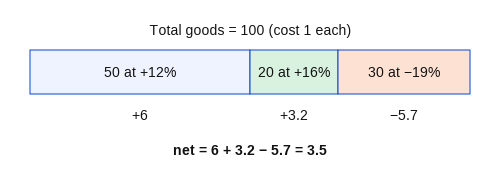
Concept: Take total goods =100 units costing 1 each; add up profit/loss of each part.

  1. 50 units at +12% → +6
  2. 40% of remaining 50=20 units at +16% → +3.2
  3. Remaining 30 units at −19% → −5.7
  4. Net =6+3.2−5.7=3.5 on 100 → x=3.5

Trick: Weighted average: 0.5(12)+0.2(16)+0.3(−19)=3.5.

Answer: (D) 3.5

अवधारणा: कुल माल =100 इकाई (प्रत्येक की लागत 1) मानें; हर भाग का लाभ/हानि जोड़ें।

  1. 50 इकाई +12% पर → +6
  2. शेष 50 का 40%=20 इकाई +16% पर → +3.2
  3. शेष 30 इकाई −19% पर → −5.7
  4. शुद्ध =6+3.2−5.7=3.5, 100 पर → x=3.5

ट्रिक: भारित औसत: 0.5(12)+0.2(16)+0.3(−19)=3.5।

उत्तर: (D) 3.5

RRB NTPC Undergraduate CBT 1MathematicsProfit and Loss (Partial Sales)RRB NTPC Undergraduate CBT 1 2025 · 17 Jun Shift 2 →
Q12553.
10 men and 15 women can complete a project in 12 days. If after 8 days, only 23 of the work is completed, how many more women must be added to finish the work in the next 2 days, assuming all men continue?
10 पुरुष और 15 महिलाएँ एक परियोजना को 12 दिनों में पूरा कर सकते हैं। यदि 8 दिनों के बाद केवल 23 कार्य पूरा हुआ है, तो यह मानते हुए कि सभी पुरुष कार्य जारी रखते हैं, अगले 2 दिनों में कार्य पूरा करने के लिए कितनी और महिलाओं को जोड़ना होगा?
  1. A20
  2. B25
  3. C30
  4. D35
Show answer

Concept: Work done ∝ (workforce × days). Taking one man's daily work equal to one woman's, the group equals 25 workers.

  1. 10 men + 15 women =25 workers; total work =25×12=300 worker-days
  2. Remaining work =13×300=100 worker-days
  3. To finish in 2 days: 1002=50 workers needed
  4. Extra women =50−25=25

Trick: Remaining time is halved (4 days → 2 days) → workforce must double → add another 25.

Answer: (B) 25

अवधारणा: किया गया कार्य ∝ (कार्यबल × दिन)। एक पुरुष और एक महिला का दैनिक कार्य बराबर मानने पर समूह =25 कार्यकर्ता।

  1. 10 पुरुष + 15 महिलाएँ =25 कार्यकर्ता; कुल कार्य =25×12=300 कार्य-दिवस
  2. शेष कार्य =13×300=100
  3. 2 दिन में पूरा करने हेतु: 1002=50 कार्यकर्ता
  4. अतिरिक्त महिलाएँ =50−25=25

ट्रिक: शेष समय आधा (4 → 2 दिन) → कार्यबल दोगुना → 25 और जोड़ें।

उत्तर: (B) 25

RRB NTPC Undergraduate CBT 1MathematicsTime and Work (Men and Women)RRB NTPC Undergraduate CBT 1 2025 · 17 Jun Shift 2 →
Q12554.
Which of the following numbers is divisible by 7?
निम्नलिखित में से कौन-सी संख्या 7 से विभाज्य है?
  1. A21234
  2. B24019
  3. C23452
  4. D24017
Show answer

Concept: Rule for 7: double the last digit and subtract it from the rest; repeat until small.

  1. 24017: 2401−14=2387 → 238−14=224 → 22−8=14 ✔ divisible
  2. Check: 7×3431=24017
  3. 21234 → 2123−8=2115 → 211−10=201 → 20−2=18 ✘

Trick: Alternatively 24017−21000=3017, and 3017=7×431.

Answer: (D) 24017

अवधारणा: 7 का नियम: अंतिम अंक का दोगुना शेष संख्या से घटाएँ; छोटी संख्या मिलने तक दोहराएँ।

  1. 24017: 2401−14=2387 → 238−14=224 → 22−8=14 ✔ विभाज्य
  2. जाँच: 7×3431=24017
  3. 21234 → 2123−8=2115 → 211−10=201 → 20−2=18 ✘

ट्रिक: या 24017−21000=3017, और 3017=7×431।

उत्तर: (D) 24017

RRB NTPC Undergraduate CBT 1MathematicsDivisibility by 7RRB NTPC Undergraduate CBT 1 2025 · 17 Jun Shift 2 →
Q12555.
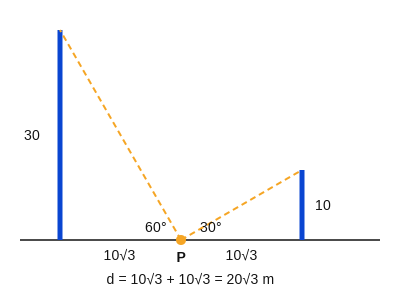
Two poles of heights 10 m and 30 m stand vertically on level ground at a distance d apart. From a point on the ground between them, along the line joining their feet, the angles of elevation to their tops of the taller and the shorter poles are 60∘ and 30∘, respectively. The distance d between the poles is:
10 m और 30 m ऊँचाई के दो खंभे समतल भूमि पर d दूरी पर ऊर्ध्वाधर खड़े हैं। उनके बीच भूमि पर स्थित एक बिंदु से, उनके पादों को मिलाने वाली रेखा पर, लंबे और छोटे खंभों के शीर्षों के उन्नयन कोण क्रमशः 60∘ और 30∘ हैं। खंभों के बीच की दूरी d है:
  1. A253 meters253 मीटर
  2. B103 meters103 मीटर
  3. C203 meters203 मीटर
  4. D303 meters303 मीटर
Show answer

Concept: tanθ=heightbase; the point lies between the poles, so d= sum of the two bases.

  1. Taller pole: tan60∘=30x⇒x=303=103
  2. Shorter pole: tan30∘=10y⇒y=103
  3. d=x+y=203m

Trick: tan60∘=3, tan30∘=13; here both bases come out equal.

Answer: (C) 203 meters

अवधारणा: tanθ=ऊँचाईआधार; बिंदु दोनों खंभों के बीच है, अतः d= दोनों आधारों का योग।

  1. ऊँचा खंभा: tan60∘=30x⇒x=303=103
  2. छोटा खंभा: tan30∘=10y⇒y=103
  3. d=x+y=203m

ट्रिक: tan60∘=3, tan30∘=13; यहाँ दोनों आधार बराबर हैं।

उत्तर: (C) 203 मीटर

RRB NTPC Undergraduate CBT 1MathematicsHeights and DistancesRRB NTPC Undergraduate CBT 1 2025 · 17 Jun Shift 2 →
Q12556.
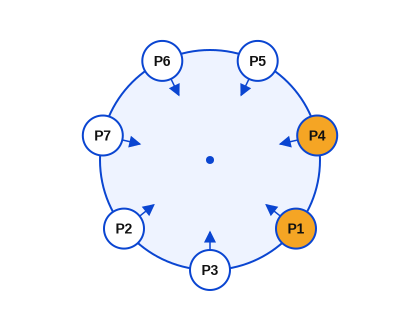
Seven people P1, P2, P3, P4, P5, P6 and P7 are sitting around a circular table facing towards the centre of the table. P1 sits to the immediate right of P3. P6 sits third to left of P3. P2 is sitting immediately between P3 and P7. P5 sits immediately left of P6. What is the position of P4 with respect to P1?
सात व्यक्ति P1, P2, P3, P4, P5, P6 और P7 एक वृत्ताकार मेज़ के चारों ओर मेज़ के केंद्र की ओर मुख करके बैठे हैं। P1, P3 के ठीक दाएँ बैठा है। P6, P3 के बाएँ से तीसरे स्थान पर बैठा है। P2, P3 और P7 के ठीक बीच में बैठा है। P5, P6 के ठीक बाएँ बैठा है। P1 के सापेक्ष P4 का स्थान क्या है?
  1. AImmediate rightठीक दाएँ
  2. BSecond to the leftबाएँ से दूसरा
  3. CSecond to the rightदाएँ से दूसरा
  4. DImmediate leftठीक बाएँ
Show answer

Concept: Facing the centre, a person’s right is anticlockwise and left is clockwise (as seen from above).

  1. Fix P3. P1 is immediately right of P3.
  2. P2 sits between P3 and P7, so P2 is on P3’s left and P7 next to P2.
  3. P6 is third to the left of P3; P5 is immediately left of P6. The only seat left goes to P4 (between P1 and P5).
  4. From P1, the next seat to the right is P4.

Trick: Fill the fixed clues first (P1, P2–P7, P6); the last empty seat is the answer person.

Answer: (A) Immediate right

अवधारणा: केंद्र की ओर मुख होने पर व्यक्ति का दायाँ वामावर्त (anticlockwise) और बायाँ दक्षिणावर्त (clockwise) होता है।

  1. P3 को स्थिर करें। P1, P3 के ठीक दाएँ है।
  2. P2, P3 और P7 के बीच है, अतः P2, P3 के बाएँ और उसके बाद P7।
  3. P6, P3 के बाएँ तीसरा है; P5, P6 के ठीक बाएँ है। बची सीट P4 की है (P1 और P5 के बीच)।
  4. P1 के ठीक दाएँ P4 बैठा है।

ट्रिक: पहले निश्चित संकेत (P1, P2–P7, P6) भरें; अंतिम खाली सीट उत्तर वाले व्यक्ति की होगी।

उत्तर: (A) ठीक दाएँ

RRB NTPC Undergraduate CBT 1General Intelligence and ReasoningCircular Seating ArrangementRRB NTPC Undergraduate CBT 1 2025 · 17 Jun Shift 2 →
Q12557.
Select the pair which follows the same pattern as that followed by the two sets of pairs given below. Both pairs follow the same pattern.
FGJ : HAE
KLO : MFJ
उस युग्म का चयन कीजिए जो उसी पैटर्न का अनुसरण करता है जिसका अनुसरण नीचे दिए गए युग्मों के दो समुच्चय करते हैं। दोनों युग्म एक ही पैटर्न का अनुसरण करते हैं।
FGJ : HAE
KLO : MFJ
  1. AMGQ : OAM
  2. BFJL : HDH
  3. CHMG : JGC
  4. DBMV : DGQ
Show answer

Concept: Use alphabet positions and find the change for each letter: FGJ : HAE.

  1. F(6)→H(8)=+2, G(7)→A(1)=−6, J(10)→E(5)=−5.
  2. Check KLO : MFJ: K→M=+2, L→F=−6, O→J=−5 ✓.
  3. BMV: B(2)+2=D, M(13)−6=G(7), V(22)−5=Q(17) → DGQ ✓.

Trick: Test only the first letter (+2) and then the second (−6) to eliminate options fast.

Answer: (D) BMV : DGQ

अवधारणा: अक्षरों के स्थानीय मान लेकर हर अक्षर का परिवर्तन ज्ञात करें: FGJ : HAE।

  1. F(6)→H(8)=+2, G(7)→A(1)=−6, J(10)→E(5)=−5।
  2. KLO : MFJ जाँचें: K→M=+2, L→F=−6, O→J=−5 ✓।
  3. BMV: B(2)+2=D, M(13)−6=G(7), V(22)−5=Q(17) → DGQ ✓।

ट्रिक: पहले अक्षर (+2) और फिर दूसरे (−6) से विकल्प जल्दी हटाएँ।

उत्तर: (D) BMV : DGQ

RRB NTPC Undergraduate CBT 1General Intelligence and ReasoningLetter AnalogyRRB NTPC Undergraduate CBT 1 2025 · 17 Jun Shift 2 →
Q12558.
What should come in place of ‘?’ in the given series?
314 277 244 215 190 169 ?
दी गई शृंखला में ‘?’ के स्थान पर क्या आना चाहिए?
314 277 244 215 190 169 ?
  1. A155
  2. B149
  3. C152
  4. D146
Show answer

Concept: Find the differences between consecutive terms.

  1. Differences: 314−277=37, 277−244=33, 244−215=29, 215−190=25, 190−169=21.
  2. The differences fall by 4 each time, so the next difference is 21−4=17.
  3. 169−17=152.

Trick: Differences 37, 33, 29, 25, 21, 17 — an AP with d=−4.

Answer: (C) 152

अवधारणा: क्रमागत पदों का अंतर निकालें।

  1. अंतर: 314−277=37, 277−244=33, 244−215=29, 215−190=25, 190−169=21।
  2. अंतर हर बार 4 घट रहा है, अतः अगला अंतर 21−4=17।
  3. 169−17=152।

ट्रिक: अंतर 37, 33, 29, 25, 21, 17 — d=−4 वाली समांतर श्रेणी।

उत्तर: (C) 152

RRB NTPC Undergraduate CBT 1General Intelligence and ReasoningNumber SeriesRRB NTPC Undergraduate CBT 1 2025 · 17 Jun Shift 2 →
Q12559.
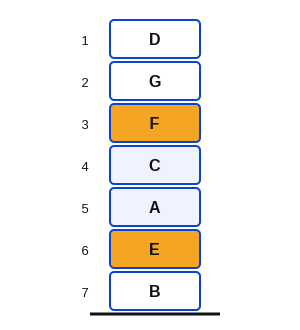
Seven boxes A, B, C, D, E, F and G are kept one over the other but not necessarily in the same order. Only D is kept above G. Only two boxes are kept between G and A. Only B is kept below E. F is not kept immediately above A. How many boxes are kept between E and F?
सात डिब्बे A, B, C, D, E, F और G एक के ऊपर एक रखे गए हैं, लेकिन आवश्यक नहीं कि इसी क्रम में हों। G के ऊपर केवल D रखा है। G और A के बीच केवल दो डिब्बे रखे हैं। E के नीचे केवल B रखा है। F, A के ठीक ऊपर नहीं रखा है। E और F के बीच कितने डिब्बे रखे हैं?
  1. A1
  2. B2
  3. C4
  4. D3
Show answer

Concept: Number the positions 1 (top) to 7 (bottom) and place the definite clues first.

  1. Only D is above G → D at 1, G at 2.
  2. Two boxes between G and A → A at 5.
  3. Only B is below E → B at 7, E at 6.
  4. F is not immediately above A, so F ≠ 4 → F at 3, C at 4.
  5. Between F (3) and E (6): C and A → 2 boxes.

Trick: “Only X above Y” fixes Y at position 2; “only X below Y” fixes Y at position 6.

Answer: (B) 2

अवधारणा: स्थानों को 1 (ऊपर) से 7 (नीचे) तक क्रमांकित करें और निश्चित संकेत पहले रखें।

  1. केवल D, G के ऊपर है → D स्थान 1, G स्थान 2।
  2. G और A के बीच दो बॉक्स → A स्थान 5।
  3. केवल B, E के नीचे है → B स्थान 7, E स्थान 6।
  4. F, A के ठीक ऊपर नहीं है, अतः F स्थान 4 पर नहीं → F स्थान 3, C स्थान 4।
  5. F (3) और E (6) के बीच: C और A → 2 बॉक्स।

ट्रिक: “केवल X, Y के ऊपर” का अर्थ Y स्थान 2 पर; “केवल X, Y के नीचे” का अर्थ Y स्थान 6 पर।

उत्तर: (B) 2

RRB NTPC Undergraduate CBT 1General Intelligence and ReasoningBox ArrangementRRB NTPC Undergraduate CBT 1 2025 · 17 Jun Shift 2 →
Q12560.
What should come in place of the question mark (?) in the given series based on the English alphabetical order?
TAV SZU RYT QXS ?
अंग्रेज़ी वर्णमाला क्रम के आधार पर दी गई शृंखला में प्रश्न चिह्न (?) के स्थान पर क्या आना चाहिए?
TAV SZU RYT QXS ?
  1. ANWT
  2. BNOT
  3. CPWR
  4. DOXS
Show answer

Concept: Read each letter position of the clusters as a separate series.

  1. 1st letters: T, S, R, Q → next P (−1).
  2. 2nd letters: A, Z, Y, X → next W (−1, Z comes after A going backwards).
  3. 3rd letters: V, U, T, S → next R (−1).
  4. So the answer is PWR.

Trick: Every letter moves one step back each time.

Answer: (C) PWR

अवधारणा: हर समूह के प्रत्येक स्थान के अक्षर को अलग श्रृंखला मानें।

  1. पहले अक्षर: T, S, R, Q → अगला P (−1)।
  2. दूसरे अक्षर: A, Z, Y, X → अगला W (−1, पीछे जाने पर A के बाद Z)।
  3. तीसरे अक्षर: V, U, T, S → अगला R (−1)।
  4. अतः उत्तर PWR है।

ट्रिक: हर अक्षर हर बार एक कदम पीछे जाता है।

उत्तर: (C) PWR

RRB NTPC Undergraduate CBT 1General Intelligence and ReasoningLetter SeriesRRB NTPC Undergraduate CBT 1 2025 · 17 Jun Shift 2 →