Question bank

Q&A: practice questions with answers

Search questions on any topic. Filter by exam category, exam, subject and topic, try the question, then open the answer and explanation.

Courses – airGurukul

20,719 questions found.

Q12921.
Which period is associated with the Extremist phase of the Indian National Congress?
भारतीय राष्ट्रीय कांग्रेस के उग्रवादी (गरमपंथी) चरण से कौन-सी अवधि संबद्ध है?
  1. A1947–1950
  2. B1885–1905
  3. C1905–1919
  4. D1920–1947
Show answer

Concept: The early national movement is divided into Moderate, Extremist and Gandhian phases.

  1. Moderate phase: 1885–1905 (Dadabhai Naoroji, Gokhale) – petitions and prayers.
  2. Extremist (Militant) phase: 1905–1919 – began with the partition of Bengal and Swadeshi movement; led by Lal-Bal-Pal and Aurobindo; Surat split 1907.
  3. Gandhian phase: 1920–1947.

Yaad rakhein: Bengal partition (1905) opens the Extremist era; Gandhi’s arrival in mass politics (1919) closes it.

Answer: (C) 1905–1919

अवधारणा: आरंभिक राष्ट्रीय आंदोलन को उदारवादी, उग्रवादी (गरमपंथी) और गांधीवादी चरणों में बाँटा जाता है।

  1. उदारवादी चरण: 1885–1905 (दादाभाई नौरोजी, गोखले) – याचिकाएँ व प्रार्थना।
  2. उग्रवादी चरण: 1905–1919 – बंगाल विभाजन व स्वदेशी आंदोलन से शुरुआत; लाल-बाल-पाल व अरविंद नेता; 1907 में सूरत विभाजन।
  3. गांधीवादी चरण: 1920–1947।

याद रखें: बंगाल विभाजन (1905) से उग्रवादी युग शुरू, गांधी के जन-राजनीति में आने (1919) पर समाप्त।

उत्तर: (C) 1905–1919
RRB NTPC Undergraduate CBT 1General AwarenessIndian National Movement – phasesRRB NTPC Undergraduate CBT 1 2025 · 16 Jun Shift 1 →
Q12922.
Which of the following has NOT aided in Globalisation of the Indian economy?
निम्नलिखित में से किसने भारतीय अर्थव्यवस्था के वैश्वीकरण में सहायता नहीं की है?
  1. AReduction of trade barriersव्यापार बाधाओं में कमी
  2. BEmergence of multinational companies in Indiaभारत में बहुराष्ट्रीय कंपनियों का उदय
  3. CE-commerceई-कॉमर्स
  4. DFarm subsidiesकृषि सब्सिडी
Show answer

Concept: Globalisation means integrating the domestic economy with the world through trade, investment, technology and people.

  1. Reduction of trade barriers, entry of MNCs and e-commerce all link India with world markets – they aid globalisation.
  2. Farm subsidies are domestic support to farmers; they protect local agriculture and are often criticised in WTO as trade-distorting – they do not promote globalisation.

Yaad rakhein: LPG reforms 1991: Liberalisation, Privatisation, Globalisation – subsidies are protection, not opening up.

Answer: (D) Farm subsidies

अवधारणा: वैश्वीकरण का अर्थ है व्यापार, निवेश, तकनीक व लोगों के माध्यम से घरेलू अर्थव्यवस्था को विश्व से जोड़ना।

  1. व्यापार बाधाएँ घटाना, बहुराष्ट्रीय कंपनियों का आगमन और ई-कॉमर्स भारत को विश्व बाज़ार से जोड़ते हैं – ये वैश्वीकरण में सहायक हैं।
  2. कृषि सब्सिडी किसानों को घरेलू सहायता है; यह स्थानीय कृषि की रक्षा करती है और WTO में व्यापार-विकृत मानी जाती है – यह वैश्वीकरण नहीं बढ़ाती।

याद रखें: 1991 LPG सुधार: उदारीकरण, निजीकरण, वैश्वीकरण – सब्सिडी संरक्षण है, खुलापन नहीं।

उत्तर: (D) कृषि सब्सिडी (Farm subsidies)

RRB NTPC Undergraduate CBT 1General AwarenessGlobalisation of Indian economyRRB NTPC Undergraduate CBT 1 2025 · 16 Jun Shift 1 →
Q12923.
According to the Women, Peace and Security (WPS) Index 2025/26, what is India's rank out of 181 countries?
महिला, शांति और सुरक्षा (WPS) सूचकांक 2025/26 के अनुसार, 181 देशों में भारत का स्थान क्या है?
  1. A121st121वाँ
  2. B111th111वाँ
  3. C131st131वाँ
  4. D141st141वाँ
Show answer

Concept: The Women, Peace and Security (WPS) Index is published by Georgetown Institute for Women, Peace and Security (GIWPS) with PRIO.

  1. It measures women’s well-being through three dimensions – inclusion, justice and security.
  2. In the WPS Index 2025–26, covering 181 countries, India ranked 131st.
  3. Denmark topped the index; Afghanistan was at the bottom.

Yaad rakhein: WPS Index = 3 pillars: Inclusion, Justice, Security.

Answer: (C) 131st

अवधारणा: महिला, शांति और सुरक्षा (WPS) सूचकांक जॉर्जटाउन इंस्टीट्यूट फ़ॉर विमेन, पीस एंड सिक्योरिटी (GIWPS) व PRIO द्वारा जारी किया जाता है।

  1. यह तीन आयामों – समावेशन (inclusion), न्याय (justice) और सुरक्षा (security) – पर महिलाओं की स्थिति मापता है।
  2. WPS सूचकांक 2025–26 में 181 देशों में भारत 131वें स्थान पर रहा।
  3. डेनमार्क शीर्ष पर रहा; अफ़ग़ानिस्तान सबसे नीचे।

याद रखें: WPS सूचकांक = 3 स्तंभ: समावेशन, न्याय, सुरक्षा।

उत्तर: (C) 131वाँ

RRB NTPC Undergraduate CBT 1General AwarenessIndices and reports (current affairs)RRB NTPC Undergraduate CBT 1 2025 · 16 Jun Shift 1 →
Q12924.
According to the Constitution of India, the ‘Right to Freedom’ is specifically guaranteed under which exact set of Articles?
भारत के संविधान के अनुसार, 'स्वतंत्रता का अधिकार' विशेष रूप से अनुच्छेदों के किस सटीक समूह के अंतर्गत प्रत्याभूत (guaranteed) है?
  1. AArticles 14, 15, 16 and 17अनुच्छेद 14, 15, 16 और 17
  2. BArticles 23, 24, 25 and 26अनुच्छेद 23, 24, 25 और 26
  3. CArticles 19, 20, 21 and 22अनुच्छेद 19, 20, 21 और 22
  4. DArticles 32, 33, 34 and 35अनुच्छेद 32, 33, 34 और 35
Show answer

Concept: Part III of the Constitution groups Fundamental Rights into six categories.

  1. Right to Freedom – Articles 19 to 22: six freedoms (Art. 19), protection in conviction (20), life and personal liberty (21), protection against arbitrary arrest (22).
  2. 14–18: Equality; 23–24: Against exploitation; 25–28: Religion; 32: Constitutional remedies.

Yaad rakhein: Equality 14–18, Freedom 19–22, Exploitation 23–24, Religion 25–28, Culture-Education 29–30, Remedies 32.

Answer: (C) Articles 19, 20, 21 and 22

अवधारणा: संविधान के भाग III में मौलिक अधिकारों को छह श्रेणियों में रखा गया है।

  1. स्वतंत्रता का अधिकार – अनुच्छेद 19 से 22: छह स्वतंत्रताएँ (अनु. 19), दोषसिद्धि में संरक्षण (20), जीवन व व्यक्तिगत स्वतंत्रता (21), मनमानी गिरफ़्तारी से संरक्षण (22)।
  2. 14–18: समानता; 23–24: शोषण के विरुद्ध; 25–28: धर्म; 32: संवैधानिक उपचार।

याद रखें: समानता 14–18, स्वतंत्रता 19–22, शोषण 23–24, धर्म 25–28, संस्कृति-शिक्षा 29–30, उपचार 32।

उत्तर: (C) अनुच्छेद 19, 20, 21 और 22

RRB NTPC Undergraduate CBT 1General AwarenessFundamental RightsRRB NTPC Undergraduate CBT 1 2025 · 16 Jun Shift 1 →
Q12925.
Wasteland refers to:
बंजर भूमि (Wasteland) से तात्पर्य है:
  1. ALand covered by forestsवनों से आच्छादित भूमि
  2. BLand not suitable for cultivation due to natural or human causesप्राकृतिक या मानवीय कारणों से खेती के लिए अनुपयुक्त भूमि
  3. CUrban green areasशहरी हरित क्षेत्र
  4. DRiver valley fertile landनदी घाटी की उपजाऊ भूमि
Show answer

Concept: Wasteland is degraded land that is not being used productively.

  1. It includes rocky, arid/desert, saline-alkaline, waterlogged, gullied and mined-out land – unfit for cultivation due to natural or human causes (erosion, overgrazing, mining, faulty irrigation).
  2. Forests, urban green areas and fertile river valleys are productive land, not wasteland.

Yaad rakhein: Wasteland = barren + unculturable + degraded land (mapped in the ‘Wastelands Atlas of India’).

Answer: (B) Land not suitable for cultivation due to natural or human causes

अवधारणा: बंजर भूमि (wasteland) वह अवनत भूमि है जिसका उत्पादक उपयोग नहीं हो रहा।

  1. इसमें पथरीली, शुष्क/रेगिस्तानी, लवणीय-क्षारीय, जलभराव वाली, बीहड़ और खनन से नष्ट भूमि शामिल है – प्राकृतिक या मानवीय कारणों से खेती के अयोग्य।
  2. वन, शहरी हरित क्षेत्र और उपजाऊ नदी घाटियाँ उत्पादक भूमि हैं, बंजर नहीं।

याद रखें: बंजर भूमि = ऊसर + कृषि-अयोग्य + अवनत भूमि (‘Wastelands Atlas of India’ में दर्शाई जाती है)।

उत्तर: (B) प्राकृतिक या मानवीय कारणों से खेती के अयोग्य भूमि

RRB NTPC Undergraduate CBT 1General AwarenessLand use – wastelandRRB NTPC Undergraduate CBT 1 2025 · 16 Jun Shift 1 →
Q12926.
A shopkeeper offers the following schemes on toys of the same marked price. (A) Successive discounts of 50% and 16% on any number of toys bought.
(B) Successive discounts of 49%, 8% and 13% on any number of toys bought. (C) 35% discount on the first 6 toys and 45% discount on each toy thereon.
(D) On buying eight items, the customer is billed for only four items.
A customer wants to buy 8 toys. Which of the above schemes is the least beneficial to her?
एक दुकानदार समान अंकित मूल्य वाले खिलौनों पर निम्नलिखित योजनाएँ प्रदान करता है। (A) कितने भी खिलौने खरीदने पर 50% और 16% की क्रमिक छूट।
(B) कितने भी खिलौने खरीदने पर 49%, 8% और 13% की क्रमिक छूट। (C) पहले 6 खिलौनों पर 35% छूट और उसके बाद प्रत्येक खिलौने पर 45% छूट।
(D) आठ वस्तुएँ खरीदने पर ग्राहक से केवल चार वस्तुओं का मूल्य लिया जाता है।
एक ग्राहक 8 खिलौने खरीदना चाहती है। उपर्युक्त में से कौन-सी योजना उसके लिए सबसे कम लाभदायक है?
  1. AB
  2. BD
  3. CC
  4. DA
Show answer

Concept: Compare what the customer actually pays for 8 toys under each scheme (marked price of one toy =m). The scheme with the highest bill is the least beneficial.

  1. (A): 0.50×0.84=0.42 → pays 8×0.42m=3.36m.
  2. (B): 0.51×0.92×0.87≈0.408 → pays ≈3.27m.
  3. (C): 6×0.65m+2×0.55m=3.9m+1.1m=5.0m.
  4. (D): pays for 4 of 8 → 4m.

Trick: Successive discounts a% then b% equal a single discount of a+b−ab100; here (A) =58%, far more than the ≈37.5% of (C).

Answer: (C) C

अवधारणा: हर स्कीम में 8 खिलौनों के लिए ग्राहक वास्तव में कितना देती है, यह निकालें (एक खिलौने का अंकित मूल्य =m)। जिसमें बिल सबसे ज़्यादा हो, वही सबसे कम लाभदायक है।

  1. (A): 0.50×0.84=0.42 → भुगतान 8×0.42m=3.36m।
  2. (B): 0.51×0.92×0.87≈0.408 → भुगतान ≈3.27m।
  3. (C): 6×0.65m+2×0.55m=3.9m+1.1m=5.0m।
  4. (D): 8 में से 4 का भुगतान → 4m।

ट्रिक: a% फिर b% की क्रमिक छूट = एकल छूट a+b−ab100; (A) में यह 58% है जबकि (C) में लगभग 37.5% ही।

उत्तर: (C) C

RRB NTPC Undergraduate CBT 1MathematicsSuccessive DiscountRRB NTPC Undergraduate CBT 1 2025 · 16 Jun Shift 1 →
Q12927.
A shopkeeper buys two types of rice costing ₹32 per kg and ₹40 per kg. He buys a total of 45 kg of rice for ₹1600. The ratio of the quantity (in kg) of rice costing ₹32 per kg to that costing ₹40 per kg is
एक दुकानदार ₹32 प्रति kg और ₹40 प्रति kg मूल्य वाले दो प्रकार के चावल खरीदता है। वह ₹1600 में कुल 45 kg चावल खरीदता है। ₹32 प्रति kg वाले चावल की मात्रा (kg में) और ₹40 प्रति kg वाले चावल की मात्रा का अनुपात है
  1. A3:2
  2. B5:4
  3. C4:5
  4. D2:3
Show answer

Concept: Form two equations from total quantity and total cost, or use alligation with the mean price.

  1. Mean price =160045=3209 ₹/kg.
  2. Ratio (₹32 : ₹40) =(40−3209):(3209−32)=409:329=5:4.
  3. Check: 25×32+20×40=800+800=1600 ✓.

Trick: Alligation: cheaper quantity : dearer quantity =(dearer−mean):(mean−cheaper).

Answer: (B) 5:4

अवधारणा: कुल मात्रा और कुल लागत से दो समीकरण बनाएँ, या औसत मूल्य लेकर पृथक्करण (alligation) लगाएँ।

  1. औसत मूल्य =160045=3209 ₹/kg।
  2. अनुपात (₹32 : ₹40) =(40−3209):(3209−32)=409:329=5:4।
  3. जाँच: 25×32+20×40=800+800=1600 ✓।

ट्रिक: सस्ती : महँगी मात्रा =(महँगा−औसत):(औसत−सस्ता)।

उत्तर: (B) 5:4

RRB NTPC Undergraduate CBT 1MathematicsMixture & AlligationRRB NTPC Undergraduate CBT 1 2025 · 16 Jun Shift 1 →
Q12928.
The value of the expression 0.125×44×2−5×0.252×82 is ______.
व्यंजक 0.125×44×2−5×0.252×82 का मान ______ है।
  1. A2
  2. B16
  3. C4
  4. D8
Show answer

Concept: Write every factor as a power of 2 and add the exponents.

  1. 0.125=2−3, 44=28, 0.252=(2−2)2=2−4, 82=26.
  2. Product =2−3+8−5−4+6=22=4.

Yaad rakhein: 0.5=2−1, 0.25=2−2, 0.125=2−3 — decimal powers of 2 appear often.

Answer: (C) 4

अवधारणा: हर गुणनखंड को 2 की घात में लिखें और घातांक जोड़ दें।

  1. 0.125=2−3, 44=28, 0.252=(2−2)2=2−4, 82=26।
  2. गुणनफल =2−3+8−5−4+6=22=4।

याद रखें: 0.5=2−1, 0.25=2−2, 0.125=2−3 — ये दशमलव 2 की घातें हैं।

उत्तर: (C) 4

RRB NTPC Undergraduate CBT 1MathematicsIndicesRRB NTPC Undergraduate CBT 1 2025 · 16 Jun Shift 1 →
Q12929.
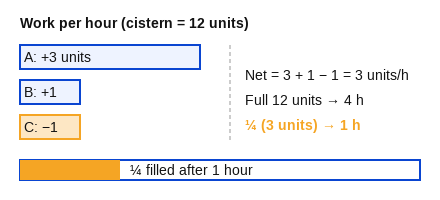
Two taps can fill a cistern in 4 hours and 12 hours, respectively. A third tap can empty it in 12 hours. How long (in hours) will it take to fill one-fourth of the empty cistern if all the taps are opened together?
दो नल एक टंकी को क्रमशः 4 घंटे और 12 घंटे में भर सकते हैं। एक तीसरा नल उसे 12 घंटे में खाली कर सकता है। यदि सभी नल एक साथ खोल दिए जाएँ, तो खाली टंकी के एक-चौथाई भाग को भरने में कितना समय (घंटों में) लगेगा?
  1. A4
  2. B2
  3. C3
  4. D1
Show answer

Concept: Take the cistern as LCM units and add the per-hour rates (emptying tap negative).

  1. Cistern =LCM(4,12,12)=12 units.
  2. Rates: +3, +1, −1 units/h → net =3 units/h.
  3. One-fourth =3 units → time =33=1 hour.

Trick: B and C cancel each other, so only tap A works effectively: full in 4 h, quarter in 1 h.

Answer: (D) 1

अवधारणा: टंकी को LCM इकाइयों में लें और प्रति घंटा दरें जोड़ें (खाली करने वाला नल ऋणात्मक)।

  1. टंकी =LCM(4,12,12)=12 इकाई।
  2. दरें: +3, +1, −1 इकाई/घंटा → शुद्ध =3 इकाई/घंटा।
  3. एक-चौथाई =3 इकाई → समय =33=1 घंटा।

ट्रिक: B और C एक-दूसरे को काट देते हैं, असल में केवल A काम करता है: पूरी 4 घंटे में, चौथाई 1 घंटे में।

उत्तर: (D) 1

RRB NTPC Undergraduate CBT 1MathematicsPipes & CisternsRRB NTPC Undergraduate CBT 1 2025 · 16 Jun Shift 1 →
Q12930.
A total of money is split among E, F, G and H in the ratio 9:7:5:3. If G gets ₹4000 less than F, how much does E receive?
एक धनराशि E, F, G और H के बीच 9:7:5:3 के अनुपात में बाँटी जाती है। यदि G को F से ₹4000 कम मिलते हैं, तो E को कितनी राशि मिलती है?
  1. A₹16000
  2. B₹20000
  3. C₹18000
  4. D₹17000
Show answer

Concept: The difference between two shares equals the difference of their ratio parts times the value of one part.

  1. F − G =7−5=2 parts = ₹4000 → 1 part = ₹2000.
  2. E =9 parts =9×2000= ₹18000.

Trick: Always find the value of one part first; every share then comes by simple multiplication.

Answer: (C) ₹18000

अवधारणा: दो हिस्सों का अंतर = उनके अनुपात-भागों का अंतर × एक भाग का मान।

  1. F − G =7−5=2 भाग = ₹4000 → 1 भाग = ₹2000।
  2. E =9 भाग =9×2000= ₹18000।

ट्रिक: पहले एक भाग का मान निकालें; फिर हर हिस्सा सीधे गुणा से मिल जाता है।

उत्तर: (C) ₹18000

RRB NTPC Undergraduate CBT 1MathematicsRatio & ProportionRRB NTPC Undergraduate CBT 1 2025 · 16 Jun Shift 1 →
Q12931.
A car travels from City A to City B at a speed of 60 km/h. After reaching City B, the driver increases the speed by 20 km/h for the return journey. Due to road repairs on the way back, the car is forced to slow down for 30 minutes, during which it travels at only 30 km/h instead of the increased speed. If the total time for the round trip is 7 hours, find the distance between City A and City B.
एक कार शहर A से शहर B तक 60 km/h की चाल से यात्रा करती है। शहर B पहुँचने के बाद, चालक वापसी यात्रा के लिए चाल 20 km/h बढ़ा देता है। वापसी के रास्ते में सड़क की मरम्मत के कारण कार को 30 मिनट के लिए धीमा होना पड़ता है, जिसके दौरान वह बढ़ी हुई चाल के बजाय केवल 30 km/h की चाल से चलती है। यदि आने-जाने की यात्रा का कुल समय 7 घंटे है, तो शहर A और शहर B के बीच की दूरी ज्ञात कीजिए।
  1. A22927 km
  2. B22725 km
  3. C21927 km
  4. D22925 km
Show answer

Concept: Total time = sum of times of each stretch. In the 30-minute slow stretch the car covers 30×12=15 km.

  1. Let distance =d km. Onward time =d60.
  2. Return: 12 h at 30 km/h (15 km) + d−1580 h at 80 km/h.
  3. d60+12+d−1580=7⇒4d+3d240=6.5+1580=10716.
  4. 7d=107×24016=1605⇒d=16057=22927 km.

Trick: Convert the slow stretch into a fixed distance (15 km) first; the rest is a plain two-speed equation.

Answer: (A) 22927 km

अवधारणा: कुल समय = हर हिस्से के समय का योग। 30 मिनट की धीमी चाल में कार 30×12=15 km चलती है।

  1. दूरी =d km मानें। जाने का समय =d60।
  2. वापसी: 12 घंटा 30 km/h पर (15 km) + d−1580 घंटा 80 km/h पर।
  3. d60+12+d−1580=7⇒4d+3d240=6.5+1580=10716।
  4. 7d=107×24016=1605⇒d=16057=22927 km।

ट्रिक: धीमे हिस्से को पहले निश्चित दूरी (15 km) में बदल लें; बाकी साधारण दो-चाल वाला समीकरण है।

उत्तर: (A) 22927 km

RRB NTPC Undergraduate CBT 1MathematicsSpeed, Time & DistanceRRB NTPC Undergraduate CBT 1 2025 · 16 Jun Shift 1 →
Q12932.
The arithmetic mean of 10 observations is 42. Three of the observations are 30, 38, and 50. The remaining six observations have an average of 45. Find the missing
observation.
10 प्रेक्षणों का समांतर माध्य 42 है। इनमें से तीन प्रेक्षण 30, 38 और 50 हैं। शेष छह प्रेक्षणों का औसत 45 है। लुप्त
प्रेक्षण ज्ञात कीजिए।
  1. A31
  2. B33
  3. C32
  4. D34
Show answer

Concept: Sum = mean × count; the missing value is total minus the known parts.

  1. Total of 10 =10×42=420.
  2. Known three: 30+38+50=118; six others: 6×45=270.
  3. Missing =420−118−270=32.

Trick: Work with totals, never with averages directly.

Answer: (C) 32

अवधारणा: योग = औसत × संख्या; लुप्त मान = कुल − ज्ञात भाग।

  1. 10 का योग =10×42=420।
  2. तीन ज्ञात: 30+38+50=118; बाकी छह: 6×45=270।
  3. लुप्त =420−118−270=32।

ट्रिक: हमेशा योग पर काम करें, औसत पर सीधे नहीं।

उत्तर: (C) 32

RRB NTPC Undergraduate CBT 1MathematicsAverageRRB NTPC Undergraduate CBT 1 2025 · 16 Jun Shift 1 →
Q12933.
A sum of ₹20,000 amounts to ₹21,218 in 2 years under compound interest, compounded annually. Find the rate of interest per annum.
₹20,000 की राशि वार्षिक रूप से संयोजित चक्रवृद्धि ब्याज पर 2 वर्षों में ₹21,218 हो जाती है। वार्षिक ब्याज दर ज्ञात कीजिए।
  1. A3%
  2. B5%
  3. C8%
  4. D4%
Show answer

Concept: A=P(1+r100)2.

  1. (1+r100)2=2121820000=1.0609.
  2. 1.032=1.0609 → r=3%.

Trick: 2-year CI %=2r+r2100; for r=3: 6+0.09=6.09% of 20000 =1218 ✓.

Answer: (A) 3%

अवधारणा: A=P(1+r100)2।

  1. (1+r100)2=2121820000=1.0609।
  2. 1.032=1.0609 → r=3%।

ट्रिक: 2 वर्ष का प्रभावी CI %=2r+r2100; r=3 पर 6.09% → 20000 का 1218 ✓।

उत्तर: (A) 3%

RRB NTPC Undergraduate CBT 1MathematicsCompound InterestRRB NTPC Undergraduate CBT 1 2025 · 16 Jun Shift 1 →
Q12934.
Find the value of {3.46+314−518+4.25+0.165}.
{3.46+314−518+4.25+0.165} का मान ज्ञात कीजिए।
  1. A7
  2. B7.4
  3. C6
  4. D6.8
Show answer

Concept: Convert mixed fractions to decimals and add step by step.

  1. 314=3.25, 518=5.125.
  2. 3.46+3.25=6.71; 6.71−5.125=1.585.
  3. 1.585+4.25+0.165=6.000.

Trick: Pair decimals that complete each other: 3.46+4.25+0.165=7.875 and 3.25−5.125=−1.875 → 6.

Answer: (C) 6

अवधारणा: मिश्र भिन्नों को दशमलव में बदलकर क्रम से जोड़ें।

  1. 314=3.25, 518=5.125।
  2. 3.46+3.25=6.71; 6.71−5.125=1.585।
  3. 1.585+4.25+0.165=6.000।

ट्रिक: पूरक दशमलव जोड़ें: 3.46+4.25+0.165=7.875 और 3.25−5.125=−1.875 → 6।

उत्तर: (C) 6

RRB NTPC Undergraduate CBT 1MathematicsSimplificationRRB NTPC Undergraduate CBT 1 2025 · 16 Jun Shift 1 →
Q12935.
A sum of ₹8,000 is borrowed at a simple interest rate of 5% per annum for 3 years. What is the simple interest payable?
₹8,000 की राशि 5% वार्षिक साधारण ब्याज दर पर 3 वर्षों के लिए उधार ली जाती है। देय साधारण ब्याज कितना है?
  1. A₹1,200
  2. B₹1,600
  3. C₹1,400
  4. D₹1,000
Show answer

Concept: SI=P×R×T100.

  1. SI=8000×5×3100=80×15=1200.

Trick: 5% for 3 years =15% of principal; 15% of 8000 =1200.

Answer: (A) ₹1,200

अवधारणा: SI=P×R×T100।

  1. SI=8000×5×3100=80×15=1200।

ट्रिक: 3 वर्ष का 5% = मूलधन का 15%; 8000 का 15%=1200।

उत्तर: (A) ₹1,200

RRB NTPC Undergraduate CBT 1MathematicsSimple InterestRRB NTPC Undergraduate CBT 1 2025 · 16 Jun Shift 1 →
Q12936.
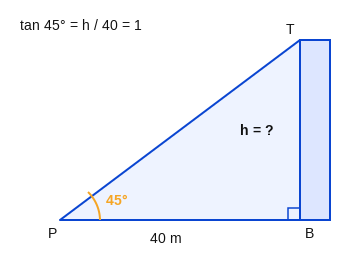
The angle of elevation of the top of a building from a point 40 m away is 45°. What is the height of the building?
40 m दूर स्थित एक बिंदु से एक भवन के शिखर का उन्नयन कोण 45° है। भवन की ऊँचाई कितनी है?
  1. A20 m
  2. B40 m
  3. C36 m
  4. D30 m
Show answer

Concept: tanθ=heightdistance.

  1. tan45∘=h40.
  2. tan45∘=1⇒h=40 m.

Yaad rakhein: At 45∘ elevation, height = distance (isosceles right triangle).

Answer: (B) 40 m

अवधारणा: tanθ=ऊँचाईदूरी।

  1. tan45∘=h40।
  2. tan45∘=1⇒h=40 m।

याद रखें: 45∘ उन्नयन कोण पर ऊँचाई = दूरी (समद्विबाहु समकोण त्रिभुज)।

उत्तर: (B) 40 m

RRB NTPC Undergraduate CBT 1MathematicsHeights & DistancesRRB NTPC Undergraduate CBT 1 2025 · 16 Jun Shift 1 →
Q12937.
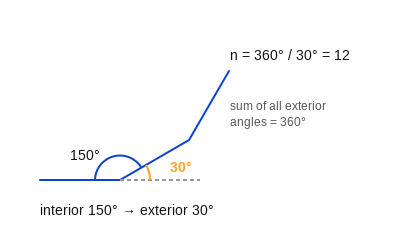
How many sides does a regular polygon have if each interior angle measures 150°?
यदि किसी सम बहुभुज का प्रत्येक अंतः कोण 150° है, तो उसकी कितनी भुजाएँ हैं?
  1. A15 sides15 भुजाएँ
  2. B10 sides10 भुजाएँ
  3. C8 sides8 भुजाएँ
  4. D12 sides12 भुजाएँ
Show answer

Concept: Exterior angle =180∘− interior angle, and n=360∘exterior angle.

  1. Exterior angle =180∘−150∘=30∘.
  2. n=360∘30∘=12.

Yaad rakhein: 108∘→5, 120∘→6, 135∘→8, 144∘→10, 150∘→12 sides.

Answer: (D) 12 sides

अवधारणा: बाह्य कोण =180∘− अंतः कोण, और n=360∘बाह्य कोण।

  1. बाह्य कोण =180∘−150∘=30∘।
  2. n=360∘30∘=12।

याद रखें: 108∘→5, 120∘→6, 135∘→8, 144∘→10, 150∘→12 भुजाएँ।

उत्तर: (D) 12 sides

RRB NTPC Undergraduate CBT 1MathematicsPolygon AnglesRRB NTPC Undergraduate CBT 1 2025 · 16 Jun Shift 1 →
Q12938.
Simplify √[1624+√{3225+√(419+157)}].
√[1624+√{3225+√(419+157)}] को सरल कीजिए।
  1. A43
  2. B45
  3. C47
  4. D41
Show answer

Concept: Simplify nested radicals from the innermost bracket outward.

  1. 419+157=576, 576=24.
  2. 3225+24=3249=572, 3249=57.
  3. 1624+57=1681=412, 1681=41.

Yaad rakhein: 412=1681, 572=3249, 242=576 — memorise squares up to 60.

Answer: (D) 41

अवधारणा: सबसे अंदर वाले कोष्ठक से बाहर की ओर करणी हल करें।

  1. 419+157=576, 576=24।
  2. 3225+24=3249=572, 3249=57।
  3. 1624+57=1681=412, 1681=41।

याद रखें: 412=1681, 572=3249, 242=576 — 60 तक के वर्ग याद रखें।

उत्तर: (D) 41

RRB NTPC Undergraduate CBT 1MathematicsSquare RootsRRB NTPC Undergraduate CBT 1 2025 · 16 Jun Shift 1 →
Q12939.
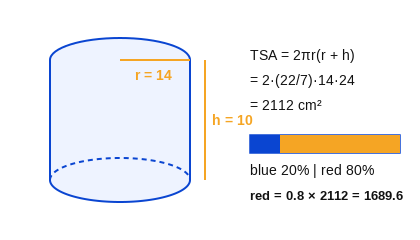
A closed cylindrical reservoir features a radius of 14 cm and a height of 10 cm. If 20% of the total surface area of this reservoir is coated in blue paint and the remaining surface is coated in red, determine the total area in square centimeters that is painted red. [Use π = 22/7]
एक बंद बेलनाकार जलाशय की त्रिज्या 14 cm और ऊँचाई 10 cm है। यदि इस जलाशय के कुल पृष्ठीय क्षेत्रफल के 20% भाग पर नीला पेंट किया गया है और शेष पृष्ठ पर लाल पेंट किया गया है, तो लाल रंग से पेंट किया गया कुल क्षेत्रफल वर्ग सेंटीमीटर में ज्ञात कीजिए। [π = 22/7 का प्रयोग कीजिए]
  1. A424.4 cm2
  2. B422.4 cm2
  3. C1689.6 cm2
  4. D1687.6 cm2
Show answer

Concept: Total surface area of a closed cylinder =2πr(r+h); red part =80% of it.

  1. TSA =2×227×14×(14+10)=88×24=2112 cm2.
  2. Red =80% of 2112=0.8×2112=1689.6 cm2.

Trick: With r=14, 2πr=88 exactly — then just multiply by (r+h).

Answer: (C) 1689.6 cm2

अवधारणा: बंद बेलन का कुल पृष्ठीय क्षेत्रफल =2πr(r+h); लाल भाग इसका 80%।

  1. TSA =2×227×14×(14+10)=88×24=2112 cm2।
  2. लाल =2112 का 80%=0.8×2112=1689.6 cm2।

ट्रिक: r=14 पर 2πr=88 ठीक-ठीक आता है — फिर बस (r+h) से गुणा करें।

उत्तर: (C) 1689.6 cm2

RRB NTPC Undergraduate CBT 1MathematicsMensuration – CylinderRRB NTPC Undergraduate CBT 1 2025 · 16 Jun Shift 1 →
Q12940.
A company has 10 officers and 30 clerks. The average monthly salary of an officer is ₹45,000 and that of a clerk is ₹25,000. What is the average salary of the entire staff?
एक कंपनी में 10 अधिकारी और 30 लिपिक हैं। एक अधिकारी का औसत मासिक वेतन ₹45,000 और एक लिपिक का ₹25,000 है। संपूर्ण कर्मचारियों का औसत वेतन कितना है?
  1. A₹35,000
  2. B₹30,000
  3. C₹28,000
  4. D₹32,000
Show answer

Concept: Average salary =total salarytotal staff.

  1. Total =10×45000+30×25000=450000+750000=1200000.
  2. Average =120000040=30000.

Trick: Ratio 1:3 → average lies 14 of the gap (20000) above 25000 → 25000+5000=30000.

Answer: (B) ₹30,000

अवधारणा: औसत वेतन =कुल वेतनकुल कर्मचारी।

  1. कुल =10×45000+30×25000=450000+750000=1200000।
  2. औसत =120000040=30000।

ट्रिक: अनुपात 1:3 → औसत, अंतर (20000) के 14 भाग जितना 25000 से ऊपर → 30000।

उत्तर: (B) ₹30,000

RRB NTPC Undergraduate CBT 1MathematicsWeighted AverageRRB NTPC Undergraduate CBT 1 2025 · 16 Jun Shift 1 →