Question bank

Q&A: practice questions with answers

Search questions on any topic. Filter by exam category, exam, subject and topic, try the question, then open the answer and explanation.

Courses – airGurukul

20,719 questions found.

Q13021.
What was the central aim of Raja Rammohan Roy’s Atmiya Sabha in early nineteenth- century Bengal?
उन्नीसवीं शताब्दी के प्रारंभिक बंगाल में राजा राममोहन राय की आत्मीय सभा का मुख्य उद्देश्य क्या था?
  1. ASupporting caste exclusiveness and encouraging ritualistic social customsजातिगत विशिष्टता का समर्थन करना और कर्मकांडी सामाजिक रीति-रिवाजों को प्रोत्साहित करना
  2. BOpposing idolatry and promoting rational interpretation of Vedantic doctrineमूर्तिपूजा का विरोध करना और वेदांत सिद्धांत की तर्कसंगत व्याख्या को बढ़ावा देना
  3. CDefending polytheistic worship and resisting all intellectual reform effortsबहुदेववादी उपासना का बचाव करना और सभी बौद्धिक सुधार प्रयासों का विरोध करना
  4. DPropagating occult traditions and discouraging scientific modes of thinkingगुप्त (occult) परंपराओं का प्रचार करना और वैज्ञानिक चिंतन पद्धतियों को हतोत्साहित करना
Show answer

Concept: Raja Rammohan Roy founded the Atmiya Sabha in Calcutta in 1815 to campaign against idolatry and ritualism and to propagate monotheism based on a rational reading of the Vedanta/Upanishads.

  1. Its discussions on philosophical and social questions led in 1828 to the Brahmo Sabha (later Brahmo Samaj).
  2. Options A, C and D describe the opposite – support for ritual, polytheism and occultism – which Roy opposed.

Trick: Rammohan Roy: Atmiya Sabha 1815 → Brahmo Sabha 1828 → Sati abolished 1829.

Answer: (B) र

अवधारणा: ['Opposing idolatry and promoting rational interpretation of Vedantic doctrine', 'मूर्तिपूजा का विरोध और वेदांत की तर्कसंगत व्याख्या को बढ़ावा']

  1. र
  2. ा
  3. ज
  4. ा
  5. र
  6. ा
  7. म
  8. म
  9. ो
  10. ह
  11. न
  12. र
  13. ा
  14. य
  15. न
  16. े
  17. 1
  18. 8
  19. 1
  20. 5
  21. म
  22. े
  23. ं
  24. क
  25. ल
  26. क
  27. त
  28. ्
  29. त
  30. ा
  31. म
  32. े
  33. ं
  34. आ
  35. त
  36. ्
  37. म
  38. ी
  39. य
  40. स
  41. भ
  42. ा
  43. क
  44. ी
  45. स
  46. ्
  47. थ
  48. ा
  49. प
  50. न
  51. ा
  52. म
  53. ू
  54. र
  55. ्
  56. त
  57. ि
  58. प
  59. ू
  60. ज
  61. ा
  62. व
  63. क
  64. र
  65. ्
  66. म
  67. क
  68. ा
  69. ं
  70. ड
  71. क
  72. े
  73. व
  74. ि
  75. र
  76. ो
  77. ध
  78. औ
  79. र
  80. व
  81. े
  82. द
  83. ा
  84. ं
  85. त
  86. /
  87. उ
  88. प
  89. न
  90. ि
  91. ष
  92. द
  93. ो
  94. ं
  95. क
  96. ी
  97. त
  98. र
  99. ्
  100. क
  101. स
  102. ं
  103. ग
  104. त
  105. व
  106. ्
  107. य
  108. ा
  109. ख
  110. ्
  111. य
  112. ा
  113. प
  114. र
  115. आ
  116. ध
  117. ा
  118. र
  119. ि
  120. त
  121. ए
  122. क
  123. े
  124. श
  125. ्
  126. व
  127. र
  128. व
  129. ा
  130. द
  131. क
  132. े
  133. प
  134. ्
  135. र
  136. च
  137. ा
  138. र
  139. ह
  140. े
  141. त
  142. ु
  143. क
  144. ी
  145. ।

ट्रिक: ['इसकी दार्शनिक व सामाजिक चर्चाओं से 1828 में ब्रह्म सभा (बाद में ब्रह्म समाज) बनी।', 'विकल्प A, C और D इसके विपरीत – कर्मकांड, बहुदेववाद और तंत्र-मंत्र का समर्थन – बताते हैं, जिनका राय ने विरोध किया।']

उत्तर: (B) ा
RRB NTPC Undergraduate CBT 1General AwarenessModern History – Socio-religious ReformRRB NTPC Undergraduate CBT 1 2025 · 15 Jun Shift 3 →
Q13022.
As reiterated by the Supreme Court of India in September 2025, under which legislation does a Tribunal have the authority to order the eviction of a child from the property of a senior citizen in cases of failure to maintain them?
सितंबर 2025 में भारत के सर्वोच्च न्यायालय द्वारा दोहराए गए अनुसार, किस कानून के अंतर्गत किसी अधिकरण (Tribunal) को वरिष्ठ नागरिक का भरण-पोषण न करने की स्थिति में संतान को वरिष्ठ नागरिक की संपत्ति से बेदखल करने का आदेश देने का अधिकार है?
  1. AMaintenance and Welfare of Parents and Senior Citizens Act, 2008माता-पिता और वरिष्ठ नागरिकों का भरण-पोषण तथा कल्याण अधिनियम, 2008
  2. BMaintenance and Welfare of Parents and Senior Citizens Act, 2007माता-पिता और वरिष्ठ नागरिकों का भरण-पोषण तथा कल्याण अधिनियम, 2007
  3. CMaintenance and Welfare of Parents and Senior Citizens Act, 2009माता-पिता और वरिष्ठ नागरिकों का भरण-पोषण तथा कल्याण अधिनियम, 2009
  4. DMaintenance and Welfare of Parents and Senior Citizens Act, 2006माता-पिता और वरिष्ठ नागरिकों का भरण-पोषण तथा कल्याण अधिनियम, 2006
Show answer

Concept: The Maintenance and Welfare of Parents and Senior Citizens Act, 2007 lets a Maintenance Tribunal order maintenance and, under Section 23, declare a transfer of property void and evict children who fail to care for the senior citizen.

  1. In September 2025 the Supreme Court reiterated that Tribunals under the 2007 Act can order eviction of a child from a parent’s property when maintenance obligations are not met.
  2. There is no Act of 2006, 2008 or 2009 by this name – only the year 2007 is correct.

Trick: Senior citizens’ maintenance law = 2007 (same year as the National Policy push); Section 23 = property transfer void.

Answer: (B) व

अवधारणा: ['Maintenance and Welfare of Parents and Senior Citizens Act, 2007', 'माता-पिता और वरिष्ठ नागरिकों का भरण-पोषण एवं कल्याण अधिनियम, 2007']

  1. म
  2. ा
  3. त
  4. ा
  5. -
  6. प
  7. ि
  8. त
  9. ा
  10. औ
  11. र
  12. व
  13. र
  14. ि
  15. ष
  16. ्
  17. ठ
  18. न
  19. ा
  20. ग
  21. र
  22. ि
  23. क
  24. ो
  25. ं
  26. क
  27. ा
  28. भ
  29. र
  30. ण
  31. -
  32. प
  33. ो
  34. ष
  35. ण
  36. ए
  37. व
  38. ं
  39. क
  40. ल
  41. ्
  42. य
  43. ा
  44. ण
  45. अ
  46. ध
  47. ि
  48. न
  49. ि
  50. य
  51. म
  52. ,
  53. 2
  54. 0
  55. 0
  56. 7
  57. क
  58. े
  59. अ
  60. ं
  61. त
  62. र
  63. ्
  64. ग
  65. त
  66. भ
  67. र
  68. ण
  69. -
  70. प
  71. ो
  72. ष
  73. ण
  74. अ
  75. ध
  76. ि
  77. क
  78. र
  79. ण
  80. (
  81. T
  82. r
  83. i
  84. b
  85. u
  86. n
  87. a
  88. l
  89. )
  90. भ
  91. र
  92. ण
  93. -
  94. प
  95. ो
  96. ष
  97. ण
  98. क
  99. ा
  100. आ
  101. द
  102. े
  103. श
  104. द
  105. े
  106. स
  107. क
  108. त
  109. ा
  110. ह
  111. ै
  112. औ
  113. र
  114. ध
  115. ा
  116. र
  117. ा
  118. 2
  119. 3
  120. क
  121. े
  122. त
  123. ह
  124. त
  125. स
  126. ं
  127. प
  128. त
  129. ्
  130. त
  131. ि
  132. ह
  133. स
  134. ्
  135. त
  136. ा
  137. ं
  138. त
  139. र
  140. ण
  141. श
  142. ू
  143. न
  144. ्
  145. य
  146. घ
  147. ो
  148. ष
  149. ि
  150. त
  151. क
  152. र
  153. ल
  154. ा
  155. प
  156. र
  157. व
  158. ा
  159. ह
  160. स
  161. ं
  162. त
  163. ा
  164. न
  165. क
  166. ो
  167. ब
  168. े
  169. द
  170. ख
  171. ल
  172. क
  173. र
  174. स
  175. क
  176. त
  177. ा
  178. ह
  179. ै
  180. ।

ट्रिक: ['सितंबर 2025 में सर्वोच्च न्यायालय ने दोहराया कि 2007 अधिनियम के अधिकरण भरण-पोषण न करने पर संतान को माता-पिता की संपत्ति से बेदखल करने का आदेश दे सकते हैं।', '2006, 2008 या 2009 का इस नाम का कोई अधिनियम नहीं है – केवल 2007 सही है।']

उत्तर: (B) र

RRB NTPC Undergraduate CBT 1General AwarenessPolity – Senior Citizens ActRRB NTPC Undergraduate CBT 1 2025 · 15 Jun Shift 3 →
Q13023.
The Atal Tunnel is built in which Himalayan range?
अटल सुरंग किस हिमालयी पर्वत श्रेणी में बनी है?
  1. AKarakoram Rangeकाराकोरम श्रेणी
  2. BPir Panjal Rangeपीर पंजाल श्रेणी
  3. CZaskar Rangeज़ास्कर श्रेणी
  4. DDhauladhar Rangeधौलाधार श्रेणी
Show answer

Concept: The Atal Tunnel (9.02 km, inaugurated 3 Oct 2020) runs under the Rohtang Pass in the Pir Panjal range of Himachal Pradesh, connecting Manali with the Lahaul–Spiti valley.

  1. Pir Panjal is the longest range of the Lesser (Middle) Himalaya; Rohtang Pass (3,978 m) lies on it.
  2. Karakoram and Zaskar are Trans-Himalayan ranges; Dhauladhar is the range near Dharamshala.

Trick: Atal Tunnel = Rohtang = Pir Panjal; longest highway tunnel above 10,000 ft.

Answer: (B) अ

अवधारणा: ['Pir Panjal Range', 'पीर पंजाल श्रेणी']

  1. अ
  2. ट
  3. ल
  4. स
  5. ु
  6. र
  7. ं
  8. ग
  9. (
  10. 9
  11. .
  12. 0
  13. 2
  14. k
  15. m
  16. ,
  17. उ
  18. द
  19. ्
  20. घ
  21. ा
  22. ट
  23. न
  24. 3
  25. अ
  26. क
  27. ्
  28. ट
  29. ू
  30. ब
  31. र
  32. 2
  33. 0
  34. 2
  35. 0
  36. )
  37. ह
  38. ि
  39. म
  40. ा
  41. च
  42. ल
  43. प
  44. ्
  45. र
  46. द
  47. े
  48. श
  49. क
  50. ी
  51. प
  52. ी
  53. र
  54. प
  55. ं
  56. ज
  57. ा
  58. ल
  59. श
  60. ्
  61. र
  62. े
  63. ण
  64. ी
  65. म
  66. े
  67. ं
  68. र
  69. ो
  70. ह
  71. त
  72. ा
  73. ं
  74. ग
  75. द
  76. र
  77. ्
  78. र
  79. े
  80. क
  81. े
  82. न
  83. ी
  84. च
  85. े
  86. ह
  87. ै
  88. औ
  89. र
  90. म
  91. न
  92. ा
  93. ल
  94. ी
  95. क
  96. ो
  97. ल
  98. ा
  99. ह
  100. ौ
  101. ल
  102. –
  103. स
  104. ्
  105. प
  106. ी
  107. त
  108. ि
  109. घ
  110. ा
  111. ट
  112. ी
  113. स
  114. े
  115. ज
  116. ो
  117. ड
  118. ़
  119. त
  120. ी
  121. ह
  122. ै
  123. ।

ट्रिक: ['पीर पंजाल लघु (मध्य) हिमालय की सबसे लंबी श्रेणी है; रोहतांग दर्रा (3,978 m) इसी पर है।', 'काराकोरम और ज़ास्कर ट्रांस-हिमालयी श्रेणियाँ हैं; धौलाधार धर्मशाला के पास की श्रेणी है।']

उत्तर: (B) ट

RRB NTPC Undergraduate CBT 1General AwarenessGeography – Himalayan RangesRRB NTPC Undergraduate CBT 1 2025 · 15 Jun Shift 3 →
Q13024.
Which of the following Chola rulers is credited with building a powerful navy and conquering Sri Lanka, Maldives, and Lakshadweep?
निम्नलिखित में से किस चोल शासक को एक शक्तिशाली नौसेना का निर्माण करने और श्रीलंका, मालदीव तथा लक्षद्वीप पर विजय प्राप्त करने का श्रेय दिया जाता है?
  1. ARajaraja Iराजराज प्रथम
  2. BVijayalayaविजयालय
  3. CKulottunga Iकुलोत्तुंग प्रथम
  4. DRajendra Iराजेंद्र प्रथम
Show answer

Concept: Rajaraja I (985–1014 CE) built the Chola navy into a powerful force and conquered northern Sri Lanka (Anuradhapura), the Maldives and Lakshadweep islands.

  1. He also built the Brihadeeswara Temple at Thanjavur (1010 CE).
  2. Rajendra I, his son, completed the conquest of Sri Lanka and sent the famous naval expedition to Srivijaya; Vijayalaya was the dynasty’s founder.

Trick: Rajaraja I = navy + Sri Lanka/Maldives + Thanjavur temple; Rajendra I = Ganga (Gangaikonda Cholapuram) + Srivijaya.

Answer: (A) र

अवधारणा: ['Rajaraja I', 'राजराज प्रथम']

  1. र
  2. ा
  3. ज
  4. र
  5. ा
  6. ज
  7. प
  8. ्
  9. र
  10. थ
  11. म
  12. (
  13. 9
  14. 8
  15. 5
  16. –
  17. 1
  18. 0
  19. 1
  20. 4
  21. ई
  22. .
  23. )
  24. न
  25. े
  26. च
  27. ो
  28. ल
  29. न
  30. ौ
  31. स
  32. े
  33. न
  34. ा
  35. क
  36. ो
  37. श
  38. क
  39. ्
  40. त
  41. ि
  42. श
  43. ा
  44. ल
  45. ी
  46. ब
  47. न
  48. ा
  49. य
  50. ा
  51. औ
  52. र
  53. उ
  54. त
  55. ्
  56. त
  57. र
  58. ी
  59. श
  60. ्
  61. र
  62. ी
  63. ल
  64. ं
  65. क
  66. ा
  67. (
  68. अ
  69. न
  70. ु
  71. र
  72. ा
  73. ध
  74. ा
  75. प
  76. ु
  77. र
  78. )
  79. ,
  80. म
  81. ा
  82. ल
  83. द
  84. ी
  85. व
  86. औ
  87. र
  88. ल
  89. क
  90. ्
  91. ष
  92. द
  93. ्
  94. व
  95. ी
  96. प
  97. ज
  98. ी
  99. त
  100. े
  101. ।

ट्रिक: ['उन्होंने तंजावुर का बृहदीश्वर मंदिर (1010 ई.) भी बनवाया।', 'उनके पुत्र राजेंद्र प्रथम ने श्रीलंका की विजय पूरी की और श्रीविजय पर नौसैनिक अभियान भेजा; विजयालय वंश के संस्थापक थे।']

उत्तर: (A) ा

RRB NTPC Undergraduate CBT 1General AwarenessMedieval History – CholasRRB NTPC Undergraduate CBT 1 2025 · 15 Jun Shift 3 →
Q13025.
When was the Telugu language declared as a classical language of India?
तेलुगु भाषा को भारत की शास्त्रीय भाषा कब घोषित किया गया था?
  1. A2007
  2. B2006
  3. C2008
  4. D2005
Show answer

Concept: Telugu and Kannada were declared classical languages of India together in 2008 (notified 31 Oct 2008).

  1. Order of classical status: Tamil 2004, Sanskrit 2005, Telugu & Kannada 2008, Malayalam 2013, Odia 2014; five more (Marathi, Pali, Prakrit, Assamese, Bengali) in 2024.
  2. 2005 is Sanskrit’s year; 2006 and 2007 saw no such declaration.

Trick: Remember “T-S-TK-M-O”: 2004, 2005, 2008 (two), 2013, 2014.

Answer: (C) य

अवधारणा: ['2008', '2008']

  1. त
  2. े
  3. ल
  4. ु
  5. ग
  6. ु
  7. औ
  8. र
  9. क
  10. न
  11. ्
  12. न
  13. ड
  14. ़
  15. क
  16. ो
  17. 2
  18. 0
  19. 0
  20. 8
  21. म
  22. े
  23. ं
  24. (
  25. अ
  26. ध
  27. ि
  28. स
  29. ू
  30. च
  31. न
  32. ा
  33. 3
  34. 1
  35. अ
  36. क
  37. ्
  38. ट
  39. ू
  40. ब
  41. र
  42. 2
  43. 0
  44. 0
  45. 8
  46. )
  47. ए
  48. क
  49. स
  50. ा
  51. थ
  52. भ
  53. ा
  54. र
  55. त
  56. क
  57. ी
  58. श
  59. ा
  60. स
  61. ्
  62. त
  63. ्
  64. र
  65. ी
  66. य
  67. भ
  68. ा
  69. ष
  70. ा
  71. घ
  72. ो
  73. ष
  74. ि
  75. त
  76. क
  77. ि
  78. य
  79. ा
  80. ग
  81. य
  82. ा
  83. ।

ट्रिक: ['क्रम: तमिल 2004, संस्कृत 2005, तेलुगु व कन्नड़ 2008, मलयालम 2013, ओड़िया 2014; 2024 में पाँच और (मराठी, पालि, प्राकृत, असमिया, बांग्ला)।', '2005 संस्कृत का वर्ष है; 2006 और 2007 में ऐसी कोई घोषणा नहीं हुई।']

उत्तर: (C) ा

RRB NTPC Undergraduate CBT 1General AwarenessClassical LanguagesRRB NTPC Undergraduate CBT 1 2025 · 15 Jun Shift 3 →
Q13026.
The difference in simple interest on a sum of money invested at 4% per annum for five years and for three years is ₹784. Find the simple interest (in ₹) on the same sum invested at the same rate of interest for eight years.
किसी धनराशि पर 4% वार्षिक दर से पाँच वर्ष और तीन वर्ष के लिए निवेश करने पर साधारण ब्याज का अंतर ₹784 है। उसी धनराशि पर उसी ब्याज दर से आठ वर्ष के लिए साधारण ब्याज (₹ में) ज्ञात कीजिए।
  1. A3136
  2. B2352
  3. C3920
  4. D4144
Show answer

Concept: Simple interest is directly proportional to time: SI=P×R×T100.

  1. SI for 5 years − SI for 3 years = SI for 2 years = ₹784.
  2. SI for 1 year =7842= ₹392.
  3. SI for 8 years =392×8= ₹3136.

Trick: In SI, the interest for each year is the same, so the difference for two periods is just the interest for the difference of years. No need to find the principal!

Answer: (A) 3136

अवधारणा: साधारण ब्याज समय के समानुपाती होता है: SI=P×R×T100.

  1. 5 वर्ष का SI − 3 वर्ष का SI = 2 वर्ष का SI = ₹784.
  2. 1 वर्ष का SI =7842= ₹392.
  3. 8 वर्ष का SI =392×8= ₹3136.

ट्रिक: SI में हर वर्ष का ब्याज बराबर होता है, इसलिए दो अवधियों का अंतर सिर्फ वर्षों के अंतर का ब्याज है। मूलधन निकालने की ज़रूरत ही नहीं!

उत्तर: (A) 3136

RRB NTPC Undergraduate CBT 1MathematicsSimple InterestRRB NTPC Undergraduate CBT 1 2025 · 15 Jun Shift 3 →
Q13027.
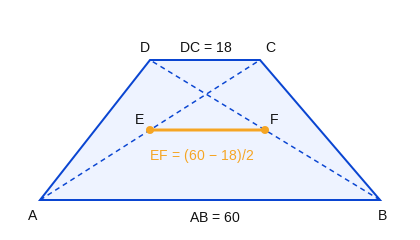
ABCD is a quadrilateral in which AB ∥ DC, and E and F are the mid points of the diagonals AC and BD, respectively. If AB = 60 cm, BC = 65 cm, DC = 18 cm, and AD = 10 cm, then what is the length (in cm) of EF?
ABCD एक चतुर्भुज है जिसमें AB ∥ DC है, और E तथा F क्रमशः विकर्णों AC और BD के मध्य-बिंदु हैं। यदि AB = 60 cm, BC = 65 cm, DC = 18 cm और AD = 10 cm है, तो EF की लंबाई (cm में) कितनी है?
  1. A23
  2. B21
  3. C25
  4. D22
Show answer

Concept: In a trapezium, the segment joining the mid-points of the diagonals is parallel to the parallel sides and equals half their difference: EF=12(AB−DC).

  1. Here AB∥DC, AB=60 cm, DC=18 cm.
  2. EF=12(60−18)=422=21 cm.
  3. The lengths BC=65 and AD=10 are extra information and are not needed.

Yaad rakhein: Mid-points of the non-parallel sides → half the sum (median); mid-points of the diagonals → half the difference.

Answer: (B) 21

अवधारणा: समलंब में विकर्णों के मध्य-बिंदुओं को मिलाने वाला रेखाखंड समांतर भुजाओं के समांतर होता है और उनके अंतर का आधा होता है: EF=12(AB−DC).

  1. यहाँ AB∥DC, AB=60 cm, DC=18 cm.
  2. EF=12(60−18)=422=21 cm.
  3. BC=65 और AD=10 अतिरिक्त जानकारी है, इनकी ज़रूरत नहीं।

याद रखें: असमांतर भुजाओं के मध्य-बिंदु → योग का आधा (मध्यिका); विकर्णों के मध्य-बिंदु → अंतर का आधा।

उत्तर: (B) 21

RRB NTPC Undergraduate CBT 1MathematicsGeometry – TrapeziumRRB NTPC Undergraduate CBT 1 2025 · 15 Jun Shift 3 →
Q13028.
Simplify: 92+42−716−7
सरल कीजिए: 92+42−716−7
  1. A45
  2. B58
  3. C50
  4. D57
Show answer

Concept: Evaluate powers and square roots first, then add/subtract left to right (BODMAS).

  1. 92=81, 42=4, 16=4 so 716=28.
  2. 81+4−28−7=85−35=50.

Trick: a2=a for positive a – do not expand 42=16 and then take the root; just cancel.

Answer: (C) 50

अवधारणा: पहले घात और वर्गमूल हल करें, फिर बाएँ से दाएँ जोड़-घटाव (BODMAS)।

  1. 92=81, 42=4, 16=4 अतः 716=28.
  2. 81+4−28−7=85−35=50.

ट्रिक: धनात्मक a के लिए a2=a – वर्ग करके फिर मूल निकालने की ज़रूरत नहीं, सीधे काट दें।

उत्तर: (C) 50

RRB NTPC Undergraduate CBT 1MathematicsSimplificationRRB NTPC Undergraduate CBT 1 2025 · 15 Jun Shift 3 →
Q13029.
A, B, and C can complete a work in 10, 12, and 15 days, respectively. A and B work together for 3 days, after which A withdraws. B and C then work together. Find the number of days required by B and C to complete the remaining work.
A, B और C किसी कार्य को क्रमशः 10, 12 और 15 दिनों में पूरा कर सकते हैं। A और B मिलकर 3 दिन कार्य करते हैं, जिसके बाद A कार्य छोड़ देता है। इसके बाद B और C मिलकर कार्य करते हैं। शेष कार्य को पूरा करने के लिए B और C द्वारा लिए गए दिनों की संख्या ज्ञात कीजिए।
  1. A5 days5 दिन
  2. B3 days3 दिन
  3. C4 days4 दिन
  4. D6 days6 दिन
Show answer

Concept: Take total work = LCM of the days and convert to units/day.

  1. Total work =LCM(10,12,15)=60 units. A =6, B =5, C =4 units/day.
  2. A and B for 3 days: (6+5)×3=33 units. Remaining =60−33=27.
  3. B and C do 5+4=9 units/day ⇒279=3 days.

Trick: LCM method turns every work problem into simple whole-number counting.

Answer: (B) 3 days

अवधारणा: कुल कार्य = दिनों का LCM लें और प्रति दिन इकाइयाँ निकालें।

  1. कुल कार्य =LCM(10,12,15)=60 इकाई। A =6, B =5, C =4 इकाई/दिन।
  2. A और B 3 दिन: (6+5)×3=33 इकाई। शेष =60−33=27.
  3. B और C 5+4=9 इकाई/दिन ⇒279=3 दिन।

ट्रिक: LCM विधि से हर कार्य-प्रश्न साधारण पूर्णांकों की गिनती बन जाता है।

उत्तर: (B) 3 days

RRB NTPC Undergraduate CBT 1MathematicsTime and WorkRRB NTPC Undergraduate CBT 1 2025 · 15 Jun Shift 3 →
Q13030.
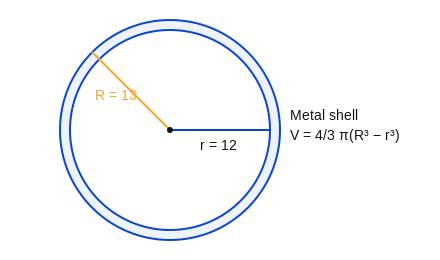
A hollow spherical shell is made of a metal of density 39 g/cm3. Its internal and external radii are 12 cm and 13 cm, respectively. What is the weight (in kg) of the shell?
(Use π=227 and Density=MassVolume)
एक खोखला गोलीय कोश 39 g/cm3 घनत्व वाली धातु से बना है। इसकी आंतरिक और बाह्य त्रिज्याएँ क्रमशः 12 cm और 13 cm हैं। कोश का भार (kg में) कितना है?
(Use π=227 and Density=MassVolume)
  1. A76.648
  2. B77.7
  3. C77.9
  4. D73.648
Show answer

Concept: Volume of a spherical shell =43π(R3−r3); mass = density × volume.

  1. R3−r3=133−123=2197−1728=469.
  2. Volume =43×227×469=88×673=58963cm3 (since 469=7×67).
  3. Mass =39×58963=13×5896=76648 g =76.648 kg.

Trick: Cancel before multiplying: 393=13 and 4697=67 – the whole thing reduces to 88×67×13.

Answer: (A) 76.648

अवधारणा: खोखले गोले का आयतन =43π(R3−r3); द्रव्यमान = घनत्व × आयतन।

  1. R3−r3=133−123=2197−1728=469.
  2. आयतन =43×227×469=88×673=58963cm3 (क्योंकि 469=7×67)।
  3. द्रव्यमान =39×58963=13×5896=76648 g =76.648 kg.

ट्रिक: गुणा से पहले काटें: 393=13 और 4697=67 – पूरा प्रश्न 88×67×13 रह जाता है।

उत्तर: (A) 76.648

RRB NTPC Undergraduate CBT 1MathematicsMensuration – Hollow SphereRRB NTPC Undergraduate CBT 1 2025 · 15 Jun Shift 3 →
Q13031.
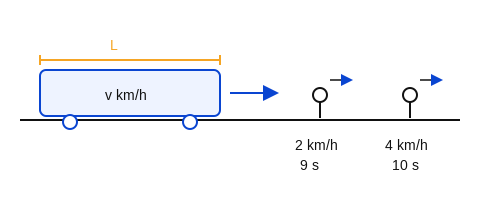
A train passes two persons walking in the same direction in which the train is going. These persons are walking at the rates of 2 km/hr and 4 km/hr, respectively, and are completely crossed by the train in 9 seconds and 10 seconds, respectively. What is the length of the train?
एक ट्रेन उसी दिशा में चल रहे दो व्यक्तियों को पार करती है जिस दिशा में ट्रेन जा रही है। ये व्यक्ति क्रमशः 2 km/hr और 4 km/hr की दर से चल रहे हैं, और ट्रेन इन्हें क्रमशः 9 सेकंड और 10 सेकंड में पूरी तरह पार कर लेती है। ट्रेन की लंबाई कितनी है?
  1. A75 meters75 मीटर
  2. B50 meters50 मीटर
  3. C45 meters45 मीटर
  4. D55 meters55 मीटर
Show answer

Concept: To cross a walking person the train covers its own length at relative speed (same direction ⇒ subtract).

  1. Let train speed =v km/h. Length L=(v−2)×518×9=(v−4)×518×10.
  2. 9(v−2)=10(v−4)⇒9v−18=10v−40⇒v=22 km/h.
  3. L=(22−2)×518×9=20×2.5=50 m.

Trick: The length is the same both times, so just equate 9(v−2)=10(v−4) – the 518 cancels.

Answer: (B) 50 meters

अवधारणा: चलते व्यक्ति को पार करने में रेलगाड़ी सापेक्ष चाल से अपनी लंबाई तय करती है (एक ही दिशा ⇒ घटाएँ)।

  1. माना रेलगाड़ी की चाल =v km/h. लंबाई L=(v−2)×518×9=(v−4)×518×10.
  2. 9(v−2)=10(v−4)⇒9v−18=10v−40⇒v=22 km/h.
  3. L=(22−2)×518×9=20×2.5=50 m.

ट्रिक: दोनों बार लंबाई समान है, इसलिए सीधे 9(v−2)=10(v−4) रखें – 518 कट जाता है।

उत्तर: (B) 50 meters

RRB NTPC Undergraduate CBT 1MathematicsTrains – Relative SpeedRRB NTPC Undergraduate CBT 1 2025 · 15 Jun Shift 3 →
Q13032.
The fourth proportional to the first number, the second number, and 20 is 36. If the sum of the first two numbers is 14, find the geometric mean of the first two numbers.
पहली संख्या, दूसरी संख्या और 20 का चतुर्थानुपाती 36 है। यदि पहली दो संख्याओं का योग 14 है, तो पहली दो संख्याओं का गुणोत्तर माध्य ज्ञात कीजिए।
  1. A53
  2. B35
  3. C52
  4. D25
Show answer

Concept: If a:b=20:36 (fourth proportional), then a:b=5:9. Geometric mean =ab.

  1. a:b::20:36⇒ab=59.
  2. a+b=14⇒a=5, b=9.
  3. GM =5×9=45=35.

Trick: Fourth proportional of a,b,c is bca – so ab=cd=2036 directly gives the ratio.

Answer: (B) 35

अवधारणा: यदि a:b=20:36 (चतुर्थानुपाती), तो a:b=5:9. गुणोत्तर माध्य (Geometric Mean) =ab.

  1. a:b::20:36⇒ab=59.
  2. a+b=14⇒a=5, b=9.
  3. GM =5×9=45=35.

ट्रिक: a,b,c का चतुर्थानुपाती bca होता है – अतः ab=cd=2036 से अनुपात सीधे मिल जाता है।

उत्तर: (B) 35

RRB NTPC Undergraduate CBT 1MathematicsProportion & Geometric MeanRRB NTPC Undergraduate CBT 1 2025 · 15 Jun Shift 3 →
Q13033.
The sum of two positive numbers is 67 and their product is 1012. The positive difference between them is:
दो धनात्मक संख्याओं का योग 67 है और उनका गुणनफल 1012 है। उनके बीच का धनात्मक अंतर कितना है?
  1. A21
  2. B30
  3. C13
  4. D24
Show answer

Concept: (a−b)2=(a+b)2−4ab.

  1. (a−b)2=672−4×1012=4489−4048=441.
  2. a−b=441=21.
  3. Check: numbers are 44 and 23 (44×23=1012).

Trick: Never solve the quadratic – the identity gives the difference in one line.

Answer: (A) 21

अवधारणा: (a−b)2=(a+b)2−4ab.

  1. (a−b)2=672−4×1012=4489−4048=441.
  2. a−b=441=21.
  3. जाँच: संख्याएँ 44 और 23 हैं (44×23=1012)।

ट्रिक: द्विघात समीकरण हल न करें – सर्वसमिका से अंतर एक पंक्ति में मिल जाता है।

उत्तर: (A) 21

RRB NTPC Undergraduate CBT 1MathematicsAlgebra – IdentitiesRRB NTPC Undergraduate CBT 1 2025 · 15 Jun Shift 3 →
Q13034.
In a class, there are 10 boys more than girls. Each girl has 3 pencils and each boy has 2 pencils with them. The total number of pencils in the class is 170. The ratio of girls to boys in the class is _____.
एक कक्षा में लड़कियों की तुलना में 10 लड़के अधिक हैं। प्रत्येक लड़की के पास 3 पेंसिलें और प्रत्येक लड़के के पास 2 पेंसिलें हैं। कक्षा में पेंसिलों की कुल संख्या 170 है। कक्षा में लड़कियों और लड़कों का अनुपात _____ है।
  1. A5:6
  2. B2:3
  3. C3:4
  4. D4:5
Show answer

Concept: Form one equation in the number of girls.

  1. Girls =g, boys =g+10.
  2. Pencils: 3g+2(g+10)=170⇒5g=150⇒g=30, boys =40.
  3. Girls : boys =30:40=3:4.

Trick: Check options: only 3:4 gives a difference of 10 with totals (30,40) that produce 90+80=170 pencils.

Answer: (C) 3:4

अवधारणा: लड़कियों की संख्या में एक समीकरण बनाएँ।

  1. लड़कियाँ =g, लड़के =g+10.
  2. पेंसिल: 3g+2(g+10)=170⇒5g=150⇒g=30, लड़के =40.
  3. लड़कियाँ : लड़के =30:40=3:4.

ट्रिक: विकल्प जाँचें: केवल 3:4 में (30,40) का अंतर 10 है और 90+80=170 पेंसिल बनती हैं।

उत्तर: (C) 3:4

RRB NTPC Undergraduate CBT 1MathematicsLinear Equations – RatioRRB NTPC Undergraduate CBT 1 2025 · 15 Jun Shift 3 →
Q13035.
A and B can do a piece of work in 12 days and 15 days, respectively. Both work for 4 days and then A leaves. How long (in days) will B take to complete the remaining work?
A और B किसी कार्य को क्रमशः 12 दिन और 15 दिन में कर सकते हैं। दोनों 4 दिन तक कार्य करते हैं और फिर A कार्य छोड़ देता है। शेष कार्य को पूरा करने में B को कितना समय (दिनों में) लगेगा?
  1. A8
  2. B6
  3. C7
  4. D5
Show answer

Concept: LCM method: total work =LCM(12,15)=60 units.

  1. A =5 units/day, B =4 units/day.
  2. 4 days together: 9×4=36 units; remaining =24.
  3. B alone: 244=6 days.

Trick: Alternatively, work done in 4 days =412+415=35; B finishes 25×15=6 days.

Answer: (B) 6

अवधारणा: LCM विधि: कुल कार्य =LCM(12,15)=60 इकाई।

  1. A =5 इकाई/दिन, B =4 इकाई/दिन।
  2. 4 दिन साथ: 9×4=36 इकाई; शेष =24.
  3. B अकेला: 244=6 दिन।

ट्रिक: वैकल्पिक: 4 दिन में कार्य =412+415=35; B शेष 25×15=6 दिन में।

उत्तर: (B) 6

RRB NTPC Undergraduate CBT 1MathematicsTime and WorkRRB NTPC Undergraduate CBT 1 2025 · 15 Jun Shift 3 →
Q13036.
Which of the following numbers is divisible by 11?
निम्नलिखित में से कौन-सी संख्या 11 से विभाज्य है?
  1. A5281
  2. B4735
  3. C2145
  4. D3522
Show answer

Concept: A number is divisible by 11 if (sum of digits at odd places) − (sum at even places) is 0 or a multiple of 11.

  1. 2145: (2+4)−(1+5)=6−6=0 ✓ divisible.
  2. 5281: (5+8)−(2+1)=10 ✗; 4735: (4+3)−(7+5)=−5 ✗; 3522: (3+2)−(5+2)=−2 ✗.
  3. 2145=11×195.

Trick: Alternate-sum test is fastest; do it mentally from the right.

Answer: (C) 2145

अवधारणा: कोई संख्या 11 से विभाज्य है यदि (विषम स्थानों के अंकों का योग) − (सम स्थानों का योग) 0 या 11 का गुणज हो।

  1. 2145: (2+4)−(1+5)=6−6=0 ✓ विभाज्य।
  2. 5281: (5+8)−(2+1)=10 ✗; 4735: (4+3)−(7+5)=−5 ✗; 3522: (3+2)−(5+2)=−2 ✗.
  3. 2145=11×195.

ट्रिक: एकांतर-योग की जाँच सबसे तेज़ है; दाएँ से मन में करें।

उत्तर: (C) 2145

RRB NTPC Undergraduate CBT 1MathematicsDivisibility RulesRRB NTPC Undergraduate CBT 1 2025 · 15 Jun Shift 3 →
Q13037.
Let both a and b be prime numbers such that (a2+b) is also a prime number less than 20. What is the number of possible values of b?
मान लीजिए a और b दोनों ऐसी अभाज्य संख्याएँ हैं कि (a2+b) भी 20 से कम एक अभाज्य संख्या है। b के संभावित मानों की संख्या कितनी है?
  1. A6
  2. B3
  3. C5
  4. D4
Show answer

Concept: List primes a,b with a2+b prime and less than 20.

  1. a=2: 4+b<20⇒b<16; 4+b prime for b=3(7), 7(11), 13(17).
  2. a=3: 9+b<20⇒b<11; 9+b prime only for b=2(11) (b=3,5,7 give 12, 14, 16).
  3. a≥5: a2≥25>20, impossible. So b∈{2,3,7,13} – 4 values.

Trick: Parity check: a2+b must be odd, so exactly one of a,b is 2 – this cuts the search to two short lists.

Answer: (D) 4

अवधारणा: ऐसे अभाज्य a,b सूचीबद्ध करें जिनके लिए a2+b अभाज्य और 20 से कम हो।

  1. a=2: 4+b<20⇒b<16; 4+b अभाज्य: b=3(7), 7(11), 13(17).
  2. a=3: 9+b<20⇒b<11; 9+b अभाज्य केवल b=2(11) के लिए (b=3,5,7 से 12, 14, 16)।
  3. a≥5: a2≥25>20, असंभव। अतः b∈{2,3,7,13} – 4 मान।

ट्रिक: सम-विषम जाँच: a2+b विषम होना चाहिए, इसलिए a,b में से ठीक एक 2 है – खोज दो छोटी सूचियों तक सिमट जाती है।

उत्तर: (D) 4

RRB NTPC Undergraduate CBT 1MathematicsPrime NumbersRRB NTPC Undergraduate CBT 1 2025 · 15 Jun Shift 3 →
Q13038.
What is the mode of the following data?
40, 47, 54, 45, 50, 43, 53, 52, 53, 49, 40, 50, 42, 52, 44, 52, 47, 55
निम्नलिखित आँकड़ों का बहुलक (mode) क्या है?
40, 47, 54, 45, 50, 43, 53, 52, 53, 49, 40, 50, 42, 52, 44, 52, 47, 55
  1. A40
  2. B52
  3. C47
  4. D54
Show answer

Concept: Mode is the value that occurs most often.

  1. Frequencies: 40 → 2, 47 → 2, 50 → 2, 52 → 3, 53 → 2, others once.
  2. 52 appears 3 times – the highest frequency.

Trick: Put a tick above each value as you scan the list once; the value with most ticks is the mode.

Answer: (B) 52

अवधारणा: बहुलक (Mode) वह मान है जो सबसे अधिक बार आता है।

  1. बारंबारता: 40 → 2, 47 → 2, 50 → 2, 52 → 3, 53 → 2, बाकी एक बार।
  2. 52 तीन बार आया है – सबसे अधिक।

ट्रिक: सूची एक बार पढ़ते हुए हर मान पर टिक लगाएँ; सबसे ज़्यादा टिक वाला मान बहुलक है।

उत्तर: (B) 52

RRB NTPC Undergraduate CBT 1MathematicsStatistics – ModeRRB NTPC Undergraduate CBT 1 2025 · 15 Jun Shift 3 →
Q13039.
What is the greatest length of a measuring rod that can exactly measure three fabric pieces of lengths 7 m 35 cm, 9 m 45 cm, and 10 m 50 cm?
उस मापक छड़ की अधिकतम लंबाई क्या है जो 7 m 35 cm, 9 m 45 cm और 10 m 50 cm लंबाई वाले कपड़े के तीन टुकड़ों को ठीक-ठीक माप सके?
  1. A1 m 25 cm
  2. B1 m 15 cm
  3. C1 m 5 cm
  4. D1 m 35 cm
Show answer

Concept: Greatest length that measures all pieces exactly = HCF of the lengths (in cm).

  1. Lengths: 735 cm, 945 cm, 1050 cm.
  2. 735=3×5×72, 945=33×5×7, 1050=2×3×52×7.
  3. HCF =3×5×7=105 cm =1 m 5 cm.

Trick: Differences 945−735=210, 1050−945=105; HCF must divide 105, and 105 divides all three – done.

Answer: (C) 1 m 5 cm

अवधारणा: सभी टुकड़ों को पूरा-पूरा मापने वाली सबसे बड़ी लंबाई = लंबाइयों का HCF (cm में)।

  1. लंबाइयाँ: 735 cm, 945 cm, 1050 cm.
  2. 735=3×5×72, 945=33×5×7, 1050=2×3×52×7.
  3. HCF =3×5×7=105 cm =1 m 5 cm.

ट्रिक: अंतर 945−735=210, 1050−945=105; HCF 105 का भाजक होगा, और 105 तीनों को विभाजित करता है – हो गया।

उत्तर: (C) 1 m 5 cm

RRB NTPC Undergraduate CBT 1MathematicsHCF – ApplicationRRB NTPC Undergraduate CBT 1 2025 · 15 Jun Shift 3 →
Q13040.
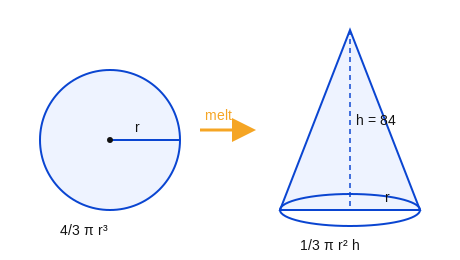
A solid metallic sphere is melted and recast into a cone whose radius is equal to the radius of the sphere. If the height of the cone is 84 cm, what was the volume of the original sphere?
(Use π=227)
धातु के एक ठोस गोले को पिघलाकर एक शंकु में ढाला जाता है जिसकी त्रिज्या गोले की त्रिज्या के बराबर है। यदि शंकु की ऊँचाई 84 cm है, तो मूल गोले का आयतन कितना था?
(Use π=227)
  1. A49808cm3
  2. B38808cm3
  3. C27808cm3
  4. D16808cm3
Show answer

Concept: Melting keeps volume constant: 43πr3=13πr2h.

  1. Same radius cancels: 4r=h=84⇒r=21 cm.
  2. Volume of sphere =43×227×213=43×227×9261.
  3. =4×22×441=38808cm3.

Yaad rakhein: Sphere recast into a cone of the same radius always has h=4r.

Answer: (B) 38808cm3

अवधारणा: पिघलाने पर आयतन समान रहता है: 43πr3=13πr2h.

  1. समान त्रिज्या कटने पर: 4r=h=84⇒r=21 cm.
  2. गोले का आयतन =43×227×213=43×227×9261.
  3. =4×22×441=38808cm3.

याद रखें: समान त्रिज्या के शंकु में ढाले गए गोले के लिए हमेशा h=4r.

उत्तर: (B) 38808cm3

RRB NTPC Undergraduate CBT 1MathematicsMensuration – Sphere & ConeRRB NTPC Undergraduate CBT 1 2025 · 15 Jun Shift 3 →