Question bank

Q&A: practice questions with answers

Search questions on any topic. Filter by exam category, exam, subject and topic, try the question, then open the answer and explanation.

Courses – airGurukul

20,719 questions found.

Q13061.
What should come in place of the ‘?’ in the given series?
8 6 9 23 87 ?
दी गई शृंखला में प्रश्न चिह्न ‘?’ के स्थान पर क्या आना चाहिए?
8 6 9 23 87 ?
  1. A421
  2. B429
  3. C437
  4. D433
Show answer

Concept: Each term is obtained by multiplying by an increasing number and subtracting the next number: ×1−2, ×2−3, ×3−4,…

  1. 8×1−2=6,6×2−3=9
  2. 9×3−4=23,23×4−5=87
  3. 87×5−6=435−6=429

Trick: A series that grows faster and faster (6, 9, 23, 87) usually hides a multiplier that increases by 1 each step.

Answer: (B) त

अवधारणा: ['429', '429']

  1. ह
  2. र
  3. प
  4. द
  5. प
  6. ि
  7. छ
  8. ल
  9. े
  10. प
  11. द
  12. क
  13. ो
  14. ब
  15. ढ
  16. ़
  17. त
  18. ी
  19. स
  20. ं
  21. ख
  22. ्
  23. य
  24. ा
  25. स
  26. े
  27. ग
  28. ु
  29. ण
  30. ा
  31. क
  32. र
  33. अ
  34. ग
  35. ल
  36. ी
  37. स
  38. ं
  39. ख
  40. ्
  41. य
  42. ा
  43. घ
  44. ट
  45. ा
  46. न
  47. े
  48. स
  49. े
  50. ब
  51. न
  52. त
  53. ा
  54. ह
  55. ै
  56. :
  57. </li><li>\</li><li>t</li><li>i</li><li>m</li><li>e</li><li>s</li><li>1</li><li>−</li><li>2</li><li>,</li><li>\</li><li></li><li>\</li><li>t</li><li>i</li><li>m</li><li>e</li><li>s</li><li>2</li><li>−</li><li>3</li><li>,</li><li>\</li><li></li><li>\</li><li>t</li><li>i</li><li>m</li><li>e</li><li>s</li><li>3</li><li>−</li><li>4</li><li>,</li><li>\</li><li>d</li><li>o</li><li>t</li><li>s</li><li>

ट्रिक: ['8times1−2=6,quad6times2−3=9', '9times3−4=23,quad23times4−5=87', '87times5−6=435−6=429']

उत्तर: (B) े

RRB NTPC Undergraduate CBT 1General Intelligence and ReasoningNumber SeriesRRB NTPC Undergraduate CBT 1 2025 · 15 Jun Shift 3 →
Q13062.
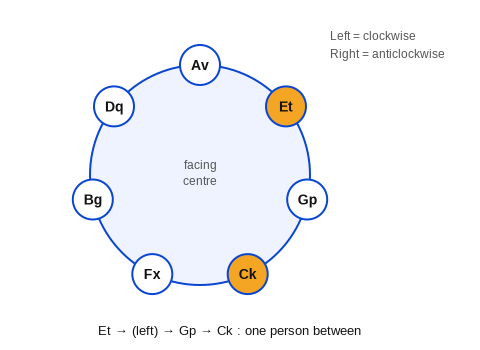
Av, Bg, Ck, Dq, Et, Fx and Gp are sitting around a circular table, facing the centre. Bg sits second to the right of Av. Gp sits second to the left of Av. Dq sits third to the right of Gp. Ck sits to the immediate right of Fx.
How many people sit between Et and Ck when counted from the left of Et?
Av, Bg, Ck, Dq, Et, Fx और Gp एक वृत्ताकार मेज़ के चारों ओर केंद्र की ओर मुख करके बैठे हैं। Bg, Av के दाएँ से दूसरे स्थान पर बैठा है। Gp, Av के बाएँ से दूसरे स्थान पर बैठा है। Dq, Gp के दाएँ से तीसरे स्थान पर बैठा है। Ck, Fx के ठीक दाएँ बैठा है।
Et के बाएँ से गिनने पर Et और Ck के बीच कितने व्यक्ति बैठे हैं?
  1. ATwoदो
  2. BThreeतीन
  3. CNoneकोई नहीं
  4. DOneएक
Show answer

Concept: For people facing the centre, “right” means anticlockwise and “left” means clockwise. Fix Av and place the others.

  1. Bg is 2nd to the right (anticlockwise) of Av; Gp is 2nd to the left (clockwise) of Av.
  2. Dq is 3rd to the right of Gp – going anticlockwise from Gp past Av, Dq lands just before Bg. Three seats remain: one between Av and Gp, and two between Gp and Bg.
  3. Ck is immediately right of Fx, so Fx and Ck take the two adjacent seats between Gp and Bg (Ck next to Gp); Et takes the seat between Av and Gp.
  4. Counting from the left (clockwise) of Et: Gp, then Ck – one person between.

Trick: Draw the circle first and mark arrows “L ↻, R ↺” – half the mistakes in such questions are direction slips.

Answer: (D) प

अवधारणा: ['One', 'एक (One)']

  1. क
  2. े
  3. ं
  4. द
  5. ्
  6. र
  7. क
  8. ी
  9. ओ
  10. र
  11. म
  12. ु
  13. ख
  14. व
  15. ा
  16. ल
  17. े
  18. ल
  19. ो
  20. ग
  21. ो
  22. ं
  23. क
  24. े
  25. ल
  26. ि
  27. ए
  28. “
  29. द
  30. ा
  31. ए
  32. ँ
  33. ”
  34. =
  35. व
  36. ा
  37. म
  38. ा
  39. व
  40. र
  41. ्
  42. त
  43. औ
  44. र
  45. “
  46. ब
  47. ा
  48. ए
  49. ँ
  50. ”
  51. =
  52. द
  53. क
  54. ्
  55. ष
  56. ि
  57. ण
  58. ा
  59. व
  60. र
  61. ्
  62. त
  63. ।
  64. A
  65. v
  66. क
  67. ो
  68. स
  69. ्
  70. थ
  71. ि
  72. र
  73. र
  74. ख
  75. क
  76. र
  77. ब
  78. ा
  79. क
  80. ी
  81. क
  82. ो
  83. ब
  84. ै
  85. ठ
  86. ा
  87. ए
  88. ँ
  89. ।

ट्रिक: ['Bg, Av के दाएँ (वामावर्त) दूसरे स्थान पर; Gp, Av के बाएँ (दक्षिणावर्त) दूसरे स्थान पर।', 'Dq, Gp के दाएँ तीसरे स्थान पर – Gp से वामावर्त Av पार कर Dq, Bg से ठीक पहले बैठता है। तीन सीटें बचीं: एक Av–Gp के बीच, दो Gp–Bg के बीच।', 'Ck, Fx के ठीक दाएँ है, अतः Fx और Ck, Gp–Bg के बीच की दो सटी सीटों पर (Ck, Gp के पास); Et, Av–Gp के बीच।', 'Et के बाएँ (दक्षिणावर्त) से गिनें: Gp, फिर Ck – बीच में एक व्यक्ति।']

उत्तर: (D) ह

RRB NTPC Undergraduate CBT 1General Intelligence and ReasoningCircular SeatingRRB NTPC Undergraduate CBT 1 2025 · 15 Jun Shift 3 →
Q13063.
What should come in place of '?' in the given series based on the English alphabetical order?
URW GDI SPU EBG ?
अंग्रेज़ी वर्णमाला क्रम के आधार पर दी गई शृंखला में प्रश्न चिह्न '?' के स्थान पर क्या आना चाहिए?
URW GDI SPU EBG ?
  1. AQNS
  2. BLIN
  3. CNJP
  4. DPLR
Show answer

Concept: Track the first letters of the clusters and the internal pattern of each cluster.

  1. First letters: U(21) → G(7) → S(19) → E(5) → ? : alternately −14 and +12, so next =5+12=17= Q.
  2. Inside every cluster: 2nd letter = 1st −3, 3rd letter = 1st +2 (U R W: 21, 18, 23).
  3. For Q(17): 17−3=14= N, 17+2=19= S → QNS.

Trick: Check the internal pattern against the options: only QNS has the shape (x, x−3, x+2).

Answer: (A) भ

अवधारणा: ['QNS', 'QNS']

  1. स
  2. म
  3. ू
  4. ह
  5. ो
  6. ं
  7. क
  8. े
  9. प
  10. ह
  11. ल
  12. े
  13. अ
  14. क
  15. ्
  16. ष
  17. र
  18. औ
  19. र
  20. ह
  21. र
  22. स
  23. म
  24. ू
  25. ह
  26. क
  27. े
  28. भ
  29. ी
  30. त
  31. र
  32. क
  33. ा
  34. प
  35. ै
  36. ट
  37. र
  38. ्
  39. न
  40. द
  41. े
  42. ख
  43. े
  44. ं
  45. ।

ट्रिक: ['पहले अक्षर: U(21) → G(7) → S(19) → E(5) → ? : बारी-बारी −14 और +12, अतः अगला =5+12=17= Q।', 'हर समूह में: दूसरा अक्षर = पहला −3, तीसरा = पहला +2 (U R W: 21, 18, 23)।', 'Q(17) के लिए: 17−3=14= N, 17+2=19= S → QNS।']

उत्तर: (A) ी

RRB NTPC Undergraduate CBT 1General Intelligence and ReasoningLetter SeriesRRB NTPC Undergraduate CBT 1 2025 · 15 Jun Shift 3 →
Q13064.
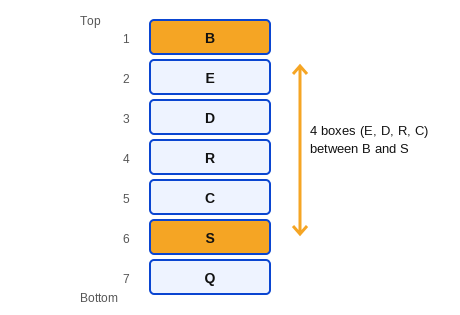
Seven boxes, B, C, D, E, Q, R and S, are kept one over the other, but not necessarily in the same order. Only one box is kept above E. Only two boxes are kept between C and E. B is kept immediately above E. Only Q is kept immediately below S. D is kept at some place below B and at some place above R. How many boxes are kept between B and S?
सात बक्से, B, C, D, E, Q, R और S, एक के ऊपर एक रखे गए हैं, परंतु आवश्यक नहीं कि इसी क्रम में हों। E के ऊपर केवल एक बक्सा रखा है। C और E के बीच केवल दो बक्से रखे हैं। B, E के ठीक ऊपर रखा है। S के ठीक नीचे केवल Q रखा है। D, B के नीचे किसी स्थान पर और R के ऊपर किसी स्थान पर रखा है। B और S के बीच कितने बक्से रखे हैं?
  1. AThreeतीन
  2. BFourचार
  3. COneएक
  4. DTwoदो
Show answer

Concept: Number the positions from the top (1) to the bottom (7) and place the boxes using the definite clues first.

  1. Only one box above E → E is 2nd; B is immediately above E → B is 1st (top).
  2. Two boxes between C and E → C is 5th.
  3. “Only Q is below S” → S is 6th and Q is 7th (bottom). The remaining D and R go to 3rd and 4th with D above R.
  4. Order (top→bottom): B, E, D, R, C, S, Q. Between B (1st) and S (6th): E, D, R, C = four boxes.

Trick: Start from clues that fix an exact slot (“only one above”, “immediately above”) – they anchor the stack in seconds.

Answer: (B) ठ

अवधारणा: ['Four', 'चार (Four)']

  1. ऊ
  2. प
  3. र
  4. (
  5. 1
  6. )
  7. स
  8. े
  9. न
  10. ी
  11. च
  12. े
  13. (
  14. 7
  15. )
  16. त
  17. क
  18. स
  19. ्
  20. थ
  21. ा
  22. न
  23. क
  24. ्
  25. र
  26. म
  27. ा
  28. ं
  29. क
  30. ि
  31. त
  32. क
  33. र
  34. े
  35. ं
  36. औ
  37. र
  38. प
  39. ह
  40. ल
  41. े
  42. न
  43. ि
  44. श
  45. ्
  46. च
  47. ि
  48. त
  49. स
  50. ं
  51. क
  52. े
  53. त
  54. ो
  55. ं
  56. स
  57. े
  58. ब
  59. ॉ
  60. क
  61. ्
  62. स
  63. र
  64. ख
  65. े
  66. ं
  67. ।

ट्रिक: ['E के ऊपर केवल एक बॉक्स → E दूसरा; B, E के ठीक ऊपर → B पहला (सबसे ऊपर)।', 'C और E के बीच दो बॉक्स → C पाँचवाँ।', '“S के नीचे केवल Q” → S छठा और Q सातवाँ (सबसे नीचे)। बचे D और R तीसरे-चौथे पर, D ऊपर।', 'क्रम (ऊपर→नीचे): B, E, D, R, C, S, Q। B (पहला) और S (छठा) के बीच: E, D, R, C = चार बॉक्स।']

उत्तर: (B) ी

RRB NTPC Undergraduate CBT 1General Intelligence and ReasoningBox Arrangement (Stacking)RRB NTPC Undergraduate CBT 1 2025 · 15 Jun Shift 3 →
Q13065.
MJ 8 is related to OM -6 in a certain way. In the same way, RW 12 is related to TZ -2. To which of the following is UR 1 related, following the same logic?
MJ 8 एक निश्चित प्रकार से OM -6 से संबंधित है। उसी प्रकार, RW 12, TZ -2 से संबंधित है। समान तर्क का अनुसरण करते हुए, UR 1 निम्नलिखित में से किससे संबंधित है?
  1. AKKO -12
  2. BYT -10
  3. CWU -13
  4. DUH -5
Show answer

Concept: Find how each letter and the number change in the given pairs, then apply the same change.

  1. MJ 8 → OM −6: M+2=O, J+3=M, 8−14=−6.
  2. RW 12 → TZ −2: R+2=T, W+3=Z, 12−14=−2 ✓ same rule.
  3. UR 1 → U+2=W, R+3=U, 1−14=−13 → WU −13.

Trick: Numbers going negative almost always mean a fixed subtraction – find it from the first pair (8→−6 is −14) and confirm with the second.

Answer: (C) ऋ

अवधारणा: ['WU -13', 'WU -13']

  1. द
  2. ि
  3. ए
  4. ग
  5. ए
  6. य
  7. ु
  8. ग
  9. ्
  10. म
  11. ो
  12. ं
  13. म
  14. े
  15. ं
  16. ह
  17. र
  18. अ
  19. क
  20. ्
  21. ष
  22. र
  23. औ
  24. र
  25. स
  26. ं
  27. ख
  28. ्
  29. य
  30. ा
  31. क
  32. ा
  33. प
  34. र
  35. ि
  36. व
  37. र
  38. ्
  39. त
  40. न
  41. न
  42. ि
  43. क
  44. ा
  45. ल
  46. े
  47. ं
  48. ,
  49. फ
  50. ि
  51. र
  52. व
  53. ह
  54. ी
  55. न
  56. ि
  57. य
  58. म
  59. ल
  60. ग
  61. ा
  62. ए
  63. ँ
  64. ।

ट्रिक: ['MJ 8 → OM −6: M+2=O, J+3=M, 8−14=−6।', 'RW 12 → TZ −2: R+2=T, W+3=Z, 12−14=−2 ✓ वही नियम।', 'UR 1 → U+2=W, R+3=U, 1−14=−13 → WU −13।']

उत्तर: (C) ण

RRB NTPC Undergraduate CBT 1General Intelligence and ReasoningAnalogy – Letter-NumberRRB NTPC Undergraduate CBT 1 2025 · 15 Jun Shift 3 →
Q13066.
Based on the English alphabetical order, three of the following four letter-cluster pairs are alike in a certain way and thus form a group. Which is the one that does not belong to that group?
(Note: The odd one out is not based on the number of consonants/vowels or their position in the letter-cluster pairs.)
अंग्रेज़ी वर्णमाला क्रम के आधार पर, निम्नलिखित चार अक्षर-समूह युग्मों में से तीन किसी निश्चित प्रकार से समान हैं और इस प्रकार एक समूह बनाते हैं। वह कौन-सा युग्म है जो उस समूह से संबंधित नहीं है?
(नोट: असंगत युग्म, अक्षर-समूह युग्मों में व्यंजनों/स्वरों की संख्या या उनके स्थान पर आधारित नहीं है।)
  1. AZB – PH
  2. BSU-KA
  3. CUW-MC
  4. DMO – EU
Show answer

Concept: Compare the shift of the first letters and of the second letters (use place values, wrapping past Z back to A).

  1. SU–KA: S(19)→K(11) −8; U(21)→A(1) −20.
  2. UW–MC: U(21)→M(13) −8; W(23)→C(3) −20. MO–EU: M(13)→E(5) −8; O(15)→U(21) is −20 after wrapping (15−20=−5⇒−5+26=21).
  3. ZB–PH: Z(26)→P(16) is −10, not −8 – the odd pair (B→H is −20 with wrap, consistent, but the first letter breaks).

Trick: Check first letters alone first: 19→11, 21→13, 13→5 are all −8; 26→16 is −10 – answer found without touching the second letters.

Answer: (A) प

अवधारणा: ['ZB – PH', 'ZB – PH']

  1. प
  2. ह
  3. ल
  4. े
  5. अ
  6. क
  7. ्
  8. ष
  9. र
  10. ो
  11. ं
  12. औ
  13. र
  14. द
  15. ू
  16. स
  17. र
  18. े
  19. अ
  20. क
  21. ्
  22. ष
  23. र
  24. ो
  25. ं
  26. क
  27. े
  28. प
  29. र
  30. ि
  31. व
  32. र
  33. ्
  34. त
  35. न
  36. क
  37. ी
  38. त
  39. ु
  40. ल
  41. न
  42. ा
  43. क
  44. र
  45. े
  46. ं
  47. (
  48. स
  49. ्
  50. थ
  51. ा
  52. न
  53. -
  54. म
  55. ा
  56. न
  57. ,
  58. Z
  59. क
  60. े
  61. ब
  62. ा
  63. द
  64. A
  65. प
  66. र
  67. ल
  68. ौ
  69. ट
  70. े
  71. ं
  72. )
  73. ।

ट्रिक: ['SU–KA: S(19)→K(11) −8; U(21)→A(1) −20।', 'UW–MC: U(21)→M(13) −8; W(23)→C(3) −20। MO–EU: M(13)→E(5) −8; O(15)→U(21) घुमाव के बाद −20 (15−20=−5Rightarrow−5+26=21)।', 'ZB–PH: Z(26)→P(16) −10 है, −8 नहीं – विषम युग्म (B→H घुमाव सहित −20 ठीक है, पर पहला अक्षर नियम तोड़ता है)।']

उत्तर: (A) ह

RRB NTPC Undergraduate CBT 1General Intelligence and ReasoningOdd One Out – Letter ClustersRRB NTPC Undergraduate CBT 1 2025 · 15 Jun Shift 3 →
Q13067.
In a certain code language, ‘DOLT’ is coded as ‘4963’ and ‘LOTS’ is coded as ‘6435’. What is the code for ‘S’ in the given code language?
एक निश्चित कूट भाषा में, ‘DOLT’ को ‘4963’ के रूप में कूटबद्ध किया जाता है और ‘LOTS’ को ‘6435’ के रूप में कूटबद्ध किया जाता है। दी गई कूट भाषा में ‘S’ का कूट क्या है?
  1. A6
  2. B5
  3. C4
  4. D3
Show answer

Concept: When two words share letters, the common letters share the common digits; the leftover letter gets the leftover digit.

  1. DOLT → 4 9 6 3 and LOTS → 6 4 3 5.
  2. Common letters O, L, T ↔ common digits 4, 6, 3.
  3. The extra letter in LOTS is S and the extra digit is 5, so S = 5 (and D = 9).

Trick: Don’t try to match positions – just cancel the common letters and common digits; what is left pairs up.

Answer: (B) स

अवधारणा: ['5', '5']

  1. ज
  2. ब
  3. द
  4. ो
  5. श
  6. ब
  7. ्
  8. द
  9. ो
  10. ं
  11. म
  12. े
  13. ं
  14. स
  15. म
  16. ा
  17. न
  18. अ
  19. क
  20. ्
  21. ष
  22. र
  23. ह
  24. ो
  25. ं
  26. ,
  27. त
  28. ो
  29. स
  30. म
  31. ा
  32. न
  33. अ
  34. क
  35. ्
  36. ष
  37. र
  38. ो
  39. ं
  40. क
  41. ो
  42. स
  43. म
  44. ा
  45. न
  46. अ
  47. ं
  48. क
  49. म
  50. ि
  51. ल
  52. त
  53. े
  54. ह
  55. ै
  56. ं
  57. ;
  58. ब
  59. च
  60. ा
  61. अ
  62. क
  63. ्
  64. ष
  65. र
  66. =
  67. ब
  68. च
  69. ा
  70. अ
  71. ं
  72. क
  73. ।

ट्रिक: ['DOLT → 4 9 6 3 और LOTS → 6 4 3 5।', 'समान अक्षर O, L, T ↔ समान अंक 4, 6, 3।', 'LOTS में अतिरिक्त अक्षर S और अतिरिक्त अंक 5, अतः S = 5 (और D = 9)।']

उत्तर: (B) ्

RRB NTPC Undergraduate CBT 1General Intelligence and ReasoningCoding-Decoding – Letter to DigitRRB NTPC Undergraduate CBT 1 2025 · 15 Jun Shift 3 →
Q13068.
Select the pair which follows the same pattern as that followed by the two sets of pairs given below. Both pairs follow the same pattern.
QVI : KZJ
USH : OWI
उस युग्म का चयन कीजिए जो उसी पैटर्न का अनुसरण करता है जिसका अनुसरण नीचे दिए गए युग्मों के दो समुच्चय करते हैं। दोनों युग्म समान पैटर्न का अनुसरण करते हैं।
QVI : KZJ
USH : OWI
  1. ALQG : FUH
  2. BCNK : WRJ
  3. CBRH : VVF
  4. DAHL : UMK
Show answer

Concept: Find the letter-wise shift in the given pairs and apply it to the options.

  1. QVI : KZJ → Q(17)→K(11) −6, V(22)→Z(26) +4, I(9)→J(10) +1.
  2. USH : OWI → U(21)→O(15) −6, S(19)→W(23) +4, H(8)→I(9) +1 ✓ pattern (−6,+4,+1).
  3. LQG : FUH → L(12)→F(6) −6, Q(17)→U(21) +4, G(7)→H(8) +1 ✓.

Trick: Test only the third letter first (+1): LQG→FUH (G→H ✓), CNK→WRJ (K→J ✗), BRH→VVF ✗, AHL→UMK ✗ – one check settles it.

Answer: (A) प

अवधारणा: ['LQG : FUH', 'LQG : FUH']

  1. द
  2. ि
  3. ए
  4. ग
  5. ए
  6. य
  7. ु
  8. ग
  9. ्
  10. म
  11. ो
  12. ं
  13. म
  14. े
  15. ं
  16. अ
  17. क
  18. ्
  19. ष
  20. र
  21. व
  22. ा
  23. र
  24. प
  25. र
  26. ि
  27. व
  28. र
  29. ्
  30. त
  31. न
  32. न
  33. ि
  34. क
  35. ा
  36. ल
  37. े
  38. ं
  39. औ
  40. र
  41. व
  42. ि
  43. क
  44. ल
  45. ्
  46. प
  47. ो
  48. ं
  49. प
  50. र
  51. ल
  52. ग
  53. ा
  54. ए
  55. ँ
  56. ।

ट्रिक: ['QVI : KZJ → Q(17)→K(11) −6, V(22)→Z(26) +4, I(9)→J(10) +1।', 'USH : OWI → U(21)→O(15) −6, S(19)→W(23) +4, H(8)→I(9) +1 ✓ पैटर्न (−6,+4,+1)।', 'LQG : FUH → L(12)→F(6) −6, Q(17)→U(21) +4, G(7)→H(8) +1 ✓।']

उत्तर: (A) ह

RRB NTPC Undergraduate CBT 1General Intelligence and ReasoningAnalogy – Letter ClustersRRB NTPC Undergraduate CBT 1 2025 · 15 Jun Shift 3 →
Q13069.
What should come in place of the question mark (?) in the given series based on the English alphabetical order?
FHD GIE HJF IKG ?
अंग्रेज़ी वर्णमाला क्रम के आधार पर दी गई शृंखला में प्रश्न चिह्न (?) के स्थान पर क्या आना चाहिए?
FHD GIE HJF IKG ?
  1. AJKM
  2. BJLH
  3. CJMG
  4. DJKG
Show answer

Concept: Compare corresponding letters of consecutive clusters.

  1. First letters F, G, H, I → next J; second letters H, I, J, K → next L; third letters D, E, F, G → next H.
  2. Every letter moves +1 each step, so the next cluster is JLH.

Trick: When all three positions step uniformly, just add 1 to each letter of the last cluster: IKG → JLH.

Answer: (B) ज

अवधारणा: ['JLH', 'JLH']

  1. ल
  2. ग
  3. ा
  4. त
  5. ा
  6. र
  7. स
  8. म
  9. ू
  10. ह
  11. ो
  12. ं
  13. क
  14. े
  15. स
  16. ं
  17. ग
  18. त
  19. अ
  20. क
  21. ्
  22. ष
  23. र
  24. ो
  25. ं
  26. क
  27. ी
  28. त
  29. ु
  30. ल
  31. न
  32. ा
  33. क
  34. र
  35. े
  36. ं
  37. ।

ट्रिक: ['पहले अक्षर F, G, H, I → अगला J; दूसरे H, I, J, K → अगला L; तीसरे D, E, F, G → अगला H।', 'हर अक्षर हर चरण में +1 बढ़ता है, अतः अगला समूह JLH।']

उत्तर: (B) ब

RRB NTPC Undergraduate CBT 1General Intelligence and ReasoningLetter SeriesRRB NTPC Undergraduate CBT 1 2025 · 15 Jun Shift 3 →
Q13070.
Seven people H, I, J, K, W, Y and Z are sitting around a circular table facing the center of the table. Only one person sits between H and W when counted from the left of W. Z sits third to the right of I. J sits third to the left of K. Z sits to the immediate right of J. Y is not an immediate neighbor of J. How many people sit between Y and W when counted from the right of Y?
सात व्यक्ति H, I, J, K, W, Y और Z एक वृत्ताकार मेज़ के चारों ओर मेज़ के केंद्र की ओर मुख करके बैठे हैं। W के बाएँ से गिनने पर H और W के बीच केवल एक व्यक्ति बैठा है। Z, I के दाएँ से तीसरे स्थान पर बैठा है। J, K के बाएँ से तीसरे स्थान पर बैठा है। Z, J के ठीक दाएँ बैठा है। Y, J का निकटतम पड़ोसी नहीं है। Y के दाएँ से गिनने पर Y और W के बीच कितने व्यक्ति बैठे हैं?
  1. ATwoदो
  2. BOneएक
  3. CThreeतीन
  4. DFourचार
Show answer

Concept: Facing the centre: right = anticlockwise, left = clockwise. Begin with the pair that is fixed relative to each other (J and Z).
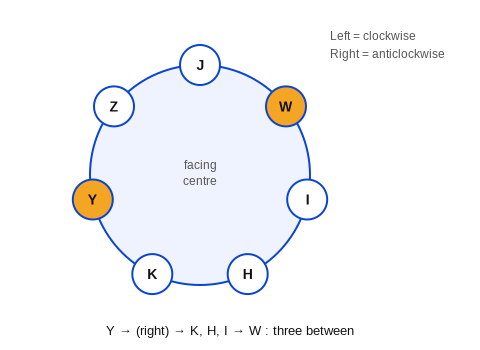
  1. Z is immediately right (anticlockwise) of J. J is 3rd to the left (clockwise) of K, so K is 3 seats anticlockwise from J (one seat beyond Z... i.e. Z, then a gap, then K). Z is 3rd to the right of I, so I is 3 seats clockwise from Z, i.e. 2 seats clockwise from J.
  2. Going clockwise from J: J, _, I, _, K, _, Z. The gaps are for H, W, Y.
  3. Y is not a neighbour of J, so Y is not in the seat between J and I; one person between H and W counted from the left (clockwise) of W → W between J and I, H between I and K, Y between K and Z.
  4. From the right (anticlockwise) of Y: K, H, I, then W → three people between Y and W.

Trick: Fill the circle with blanks first, then use “not a neighbour” clues to kill the wrong blanks.

Answer: (C) प

अवधारणा: ['Three', 'तीन (Three)']

  1. क
  2. े
  3. ं
  4. द
  5. ्
  6. र
  7. क
  8. ी
  9. ओ
  10. र
  11. म
  12. ु
  13. ख
  14. :
  15. द
  16. ा
  17. ए
  18. ँ
  19. =
  20. व
  21. ा
  22. म
  23. ा
  24. व
  25. र
  26. ्
  27. त
  28. ,
  29. ब
  30. ा
  31. ए
  32. ँ
  33. =
  34. द
  35. क
  36. ्
  37. ष
  38. ि
  39. ण
  40. ा
  41. व
  42. र
  43. ्
  44. त
  45. ।
  46. उ
  47. स
  48. ज
  49. ो
  50. ड
  51. ़
  52. ी
  53. स
  54. े
  55. श
  56. ु
  57. र
  58. ू
  59. क
  60. र
  61. े
  62. ं
  63. ज
  64. ो
  65. प
  66. र
  67. स
  68. ्
  69. प
  70. र
  71. न
  72. ि
  73. श
  74. ्
  75. च
  76. ि
  77. त
  78. ह
  79. ै
  80. (
  81. J
  82. औ
  83. र
  84. Z
  85. )
  86. ।

ट्रिक: ['Z, J के ठीक दाएँ (वामावर्त)। J, K के बाएँ तीसरा, अतः K, J से 3 सीट वामावर्त (Z के बाद एक सीट छोड़कर)। Z, I के दाएँ तीसरा, अतः I, Z से 3 सीट दक्षिणावर्त, यानी J से 2 सीट दक्षिणावर्त।', 'J से दक्षिणावर्त: J, _, I, _, K, _, Z। रिक्त स्थान H, W, Y के लिए।', 'Y, J का पड़ोसी नहीं, अतः Y, J–I के बीच नहीं; W के बाएँ (दक्षिणावर्त) से H–W के बीच एक व्यक्ति → W, J–I के बीच; H, I–K के बीच; Y, K–Z के बीच।', 'Y के दाएँ (वामावर्त) से: K, H, I, फिर W → Y और W के बीच तीन व्यक्ति।']

उत्तर: (C) ह

RRB NTPC Undergraduate CBT 1General Intelligence and ReasoningCircular SeatingRRB NTPC Undergraduate CBT 1 2025 · 15 Jun Shift 3 →
Q13071.
If ‘A’ stands for ‘÷’ , ‘B’ stands for ‘x’, ‘C’ stands for ‘+’ and ‘D’ stands for ‘-‘ , what will come in place of the question mark ‘?’ in the following equation?
81 A 3 D 7 B 2 C 16 = ?
यदि ‘A’ का अर्थ ‘÷’, ‘B’ का अर्थ ‘x’, ‘C’ का अर्थ ‘+’ और ‘D’ का अर्थ ‘-‘ है, तो निम्नलिखित समीकरण में प्रश्न चिह्न ‘?’ के स्थान पर क्या आएगा?
81 A 3 D 7 B 2 C 16 = ?
  1. A24
  2. B21
  3. C29
  4. D32
Show answer

Concept: Replace the letters by the given operators and apply BODMAS (division and multiplication before addition and subtraction).

  1. 81 A 3 D 7 B 2 C 16⇒81÷3−7×2+16
  2. =27−14+16
  3. =29

Trick: Write the substituted expression fully before computing – mixing substitution and calculation causes sign slips.

Answer: (C) ग

अवधारणा: ['29', '29']

  1. अ
  2. क
  3. ्
  4. ष
  5. र
  6. ो
  7. ं
  8. क
  9. ी
  10. ज
  11. ग
  12. ह
  13. द
  14. ि
  15. ए
  16. ग
  17. ए
  18. च
  19. ि
  20. ह
  21. ्
  22. न
  23. र
  24. ख
  25. े
  26. ं
  27. औ
  28. र
  29. B
  30. O
  31. D
  32. M
  33. A
  34. S
  35. ल
  36. ग
  37. ा
  38. ए
  39. ँ
  40. (
  41. भ
  42. ा
  43. ग
  44. -
  45. ग
  46. ु
  47. ण
  48. ा
  49. प
  50. ह
  51. ल
  52. े
  53. ,
  54. ज
  55. ो
  56. ड
  57. ़
  58. -
  59. घ
  60. ट
  61. ा
  62. व
  63. ब
  64. ा
  65. द
  66. म
  67. े
  68. ं
  69. )
  70. ।

ट्रिक: ['81textA3textD7textB2textC16Rightarrow81div3−7times2+16', '=27−14+16', '=29']

उत्तर: (C) ण

RRB NTPC Undergraduate CBT 1General Intelligence and ReasoningMathematical Operations – SubstitutionRRB NTPC Undergraduate CBT 1 2025 · 15 Jun Shift 3 →
Q13072.
Which of the following letter-number clusters will replace the question mark (?) in the given series to make it logically complete?
GAO 81 , EYM 75 , CWK 69 , AUI 63 , ?
निम्नलिखित में से कौन-सा अक्षर-संख्या समूह दी गई शृंखला में प्रश्न चिह्न (?) का स्थान लेकर उसे तार्किक रूप से पूर्ण करेगा?
GAO 81 , EYM 75 , CWK 69 , AUI 63 , ?
  1. AYRJ 50
  2. BXRF 55
  3. CXSF 52
  4. DYSG 57
Show answer

Concept: Treat the letters and the numbers as two separate series.

  1. Letters: G→E→C→A (each −2), A→Y→W→U (−2), O→M→K→I (−2). Next: A−2=Y, U−2=S, I−2=G → YSG.
  2. Numbers: 81,75,69,63 – each −6, so next =57.
  3. Combined: YSG 57.

Trick: Numbers alone eliminate three options (63−6=57); only option D has 57.

Answer: (D) क

अवधारणा: ['YSG 57', 'YSG 57']

  1. अ
  2. क
  3. ्
  4. ष
  5. र
  6. ो
  7. ं
  8. औ
  9. र
  10. स
  11. ं
  12. ख
  13. ्
  14. य
  15. ा
  16. ओ
  17. ं
  18. क
  19. ो
  20. द
  21. ो
  22. अ
  23. ल
  24. ग
  25. श
  26. ्
  27. र
  28. ृ
  29. ं
  30. ख
  31. ल
  32. ा
  33. ए
  34. ँ
  35. म
  36. ा
  37. न
  38. े
  39. ं
  40. ।

ट्रिक: ['अक्षर: G→E→C→A (हर बार −2), A→Y→W→U (−2), O→M→K→I (−2)। अगला: A−2=Y, U−2=S, I−2=G → YSG।', 'संख्याएँ: 81,75,69,63 – हर बार −6, अतः अगली =57।', 'मिलाकर: YSG 57।']

उत्तर: (D) े

RRB NTPC Undergraduate CBT 1General Intelligence and ReasoningLetter-Number SeriesRRB NTPC Undergraduate CBT 1 2025 · 15 Jun Shift 3 →
Q13073.
If ‘A’ stands for ‘+’, ‘B’ stands for ‘−’, ‘C’ stands for ‘×’, and ‘D’ stands for ‘÷’, then what will come in place of the question mark (?) in the following equation?
25 A 51 D 3 B 6 C 5 = ?
यदि ‘A’ का अर्थ ‘+’, ‘B’ का अर्थ ‘−’, ‘C’ का अर्थ ‘×’ और ‘D’ का अर्थ ‘÷’ है, तो निम्नलिखित समीकरण में प्रश्न चिह्न (?) के स्थान पर क्या आएगा?
25 A 51 D 3 B 6 C 5 = ?
  1. A12
  2. B14
  3. C15
  4. D10
Show answer

Concept: Substitute the operators and follow BODMAS.

  1. 25 A 51 D 3 B 6 C 5⇒25+51÷3−6×5
  2. =25+17−30
  3. =12

Trick: Do all ÷ and × first (51÷3=17, 6×5=30), then run left to right.

Answer: (A) प

अवधारणा: ['12', '12']

  1. च
  2. ि
  3. ह
  4. ्
  5. न
  6. प
  7. ्
  8. र
  9. त
  10. ि
  11. स
  12. ्
  13. थ
  14. ा
  15. प
  16. ि
  17. त
  18. क
  19. र
  20. े
  21. ं
  22. औ
  23. र
  24. B
  25. O
  26. D
  27. M
  28. A
  29. S
  30. ल
  31. ग
  32. ा
  33. ए
  34. ँ
  35. ।

ट्रिक: ['25textA51textD3textB6textC5Rightarrow25+51div3−6times5', '=25+17−30', '=12']

उत्तर: (A) ह

RRB NTPC Undergraduate CBT 1General Intelligence and ReasoningMathematical Operations – SubstitutionRRB NTPC Undergraduate CBT 1 2025 · 15 Jun Shift 3 →
Q13074.
In a certain code language,
A % B means ‘A is the sister of B’
A € B means ‘A is the son of B’
A = B means ‘A is the father of B’
A ? B means ‘A is the daughter of B’
Based on the above, how is B related to X if 'B % C ? O € P = X'?
एक निश्चित कूट भाषा में,
A % B का अर्थ है ‘A, B की बहन है’
A € B का अर्थ है ‘A, B का पुत्र है’
A = B का अर्थ है ‘A, B का पिता है’
A ? B का अर्थ है ‘A, B की पुत्री है’
उपर्युक्त के आधार पर, यदि 'B % C ? O € P = X' है, तो B का X से क्या संबंध है?
  1. AMother's motherमाता की माता
  2. BMotherमाता
  3. CWifeपत्नी
  4. DBrother's daughterभाई की पुत्री
Show answer

Concept: Decode from the end (X) backwards so that each person’s generation relative to X is clear.

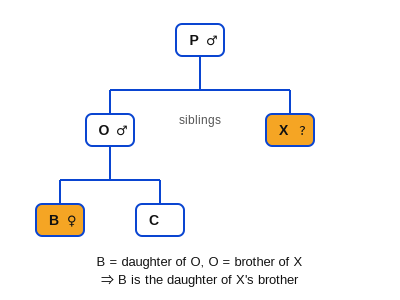
  1. P = X → P is the father of X. O € P → O is the son of P, so O is X’s brother.
  2. C ? O → C is the daughter of O. B % C → B is the sister of C, so B is also a daughter of O.
  3. Therefore B is the daughter of X’s brother.

Trick: “Son of X’s father” = X’s brother (gender known!). The child of a brother is a niece/nephew – here a daughter, so “brother’s daughter”.

Answer: (D) “

अवधारणा: ['Brother’s daughter', 'भाई की बेटी (Brother’s daughter)']

  1. अ
  2. ं
  3. त
  4. (
  5. X
  6. )
  7. स
  8. े
  9. प
  10. ी
  11. छ
  12. े
  13. क
  14. ी
  15. ओ
  16. र
  17. ड
  18. ि
  19. क
  20. ो
  21. ड
  22. क
  23. र
  24. े
  25. ं
  26. त
  27. ा
  28. क
  29. ि
  30. ह
  31. र
  32. व
  33. ्
  34. य
  35. क
  36. ्
  37. त
  38. ि
  39. क
  40. ी
  41. प
  42. ी
  43. ढ
  44. ़
  45. ी
  46. X
  47. क
  48. े
  49. स
  50. ा
  51. प
  52. े
  53. क
  54. ्
  55. ष
  56. स
  57. ्
  58. प
  59. ष
  60. ्
  61. ट
  62. र
  63. ह
  64. े
  65. ।

ट्रिक: ['P = X → P, X का पिता। O € P → O, P का पुत्र, अतः O, X का भाई।', 'C ? O → C, O की बेटी। B % C → B, C की बहन, अतः B भी O की बेटी।', 'इसलिए B, X के भाई की बेटी है।']

उत्तर: (D) X

RRB NTPC Undergraduate CBT 1General Intelligence and ReasoningBlood Relations – CodedRRB NTPC Undergraduate CBT 1 2025 · 15 Jun Shift 3 →
Q13075.
Read the given statement(s) and conclusions carefully. Assuming that the information given in the statements is true, even if it appears to be at variance with commonly known facts, decide which of the given conclusions logically follow(s) from the statement(s).
Statements:
All tigers are chairs.
All chairs are monks.
Conclusions:
(I) Some monks are chairs.
(II) All tigers are monks.
दिए गए कथन(नों) और निष्कर्षों को ध्यानपूर्वक पढ़िए। यह मानते हुए कि कथनों में दी गई जानकारी सत्य है, भले ही वह सामान्य रूप से ज्ञात तथ्यों से भिन्न प्रतीत होती हो, निर्णय कीजिए कि दिए गए निष्कर्षों में से कौन-सा/से निष्कर्ष कथन(नों) का तार्किक रूप से अनुसरण करता है/करते हैं।
कथन:
सभी बाघ, कुर्सियाँ हैं।
सभी कुर्सियाँ, भिक्षु हैं।
निष्कर्ष:
(I) कुछ भिक्षु, कुर्सियाँ हैं।
(II) सभी बाघ, भिक्षु हैं।
  1. AOnly conclusion (II) followsकेवल निष्कर्ष (II) अनुसरण करता है
  2. BOnly conclusion (I) followsकेवल निष्कर्ष (I) अनुसरण करता है
  3. CNeither conclusion (I) nor (II) followsन तो निष्कर्ष (I) और न ही (II) अनुसरण करता है
  4. DBoth conclusions (I) and (II) followनिष्कर्ष (I) और (II) दोनों अनुसरण करते हैं
Show answer

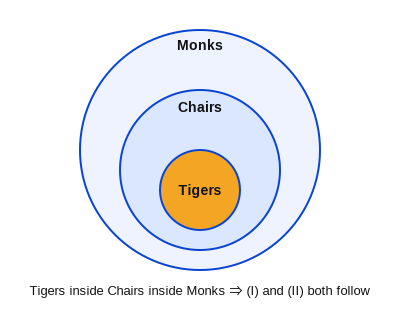
Concept: Draw Venn circles: “All A are B” puts circle A inside circle B.

  1. All tigers are chairs and all chairs are monks → Tigers ⊂ Chairs ⊂ Monks.
  2. Conclusion (I) “Some monks are chairs” is the valid conversion of “All chairs are monks” – follows.
  3. Conclusion (II) “All tigers are monks” follows by the chain (two universal affirmatives give a universal affirmative).

Trick: All + All = All (A→B, B→C gives A→C), and every “All B are C” also yields “Some C are B”.

Answer: (D) A

अवधारणा: ['Both conclusions (I) and (II) follow', 'निष्कर्ष (I) और (II) दोनों अनुसरण करते हैं']

  1. व
  2. े
  3. न
  4. व
  5. ृ
  6. त
  7. ्
  8. त
  9. ब
  10. न
  11. ा
  12. ए
  13. ँ
  14. :
  15. “
  16. स
  17. भ
  18. ी
  19. A
  20. ,
  21. B
  22. ह
  23. ै
  24. ं
  25. ”
  26. क
  27. ा
  28. अ
  29. र
  30. ्
  31. थ
  32. –
  33. व
  34. ृ
  35. त
  36. ्
  37. त
  38. A
  39. ,
  40. व
  41. ृ
  42. त
  43. ्
  44. त
  45. B
  46. क
  47. े
  48. भ
  49. ी
  50. त
  51. र
  52. ।

ट्रिक: ['सभी बाघ कुर्सियाँ और सभी कुर्सियाँ साधु → बाघ ⊂ कुर्सियाँ ⊂ साधु।', 'निष्कर्ष (I) “कुछ साधु कुर्सियाँ हैं” – “सभी कुर्सियाँ साधु हैं” का वैध परिवर्तन – अनुसरण करता है।', 'निष्कर्ष (II) “सभी बाघ साधु हैं” शृंखला से अनुसरण करता है (दो सार्वभौम सकारात्मक से सार्वभौम सकारात्मक)।']

उत्तर: (D) l

RRB NTPC Undergraduate CBT 1General Intelligence and ReasoningSyllogismRRB NTPC Undergraduate CBT 1 2025 · 15 Jun Shift 3 →
Q13076.
Refer to the following series and answer the question. (Counting to be done from left to right only.) (All numbers are single-digit numbers only.)
(Left) 3 5 8 9 7 4 1 5 9 6 2 3 6 5 8 7 4 1 5 9 8 6 3 2 1 5 4 7 8 4 1 2 5 9 8 7 4 1 5 6 2 3 9 8 7 8 9 7 5 1(Right)
How many such odd digits are there, each of which is immediately preceded by a perfect cube and immediately followed by an even digit? (NOTE: 1 is also a perfect cube.)
निम्नलिखित शृंखला को देखिए और प्रश्न का उत्तर दीजिए। (गिनती केवल बाएँ से दाएँ की जानी है।) (सभी संख्याएँ केवल एक अंक वाली संख्याएँ हैं।)
(बाएँ) 3 5 8 9 7 4 1 5 9 6 2 3 6 5 8 7 4 1 5 9 8 6 3 2 1 5 4 7 8 4 1 2 5 9 8 7 4 1 5 6 2 3 9 8 7 8 9 7 5 1(दाएँ)
ऐसे कितने विषम अंक हैं, जिनमें से प्रत्येक के ठीक पहले एक पूर्ण घन है और ठीक बाद एक सम अंक है? (नोट: 1 भी एक पूर्ण घन है।)
  1. A6
  2. B5
  3. C4
  4. D8
Show answer

Concept: Look for an odd digit whose left neighbour is a perfect cube (1 or 8) and whose right neighbour is even.

  1. Series: 3 5 8 9 7 4 1 5 9 6 2 3 6 5 8 7 4 1 5 9 8 6 3 2 1 5 4 7 8 4 1 2 5 9 8 7 4 1 5 6 2 3 9 8 7 8 9 7 5 1.
  2. Matches: 8 7 4, 1 5 4, 8 7 4, 1 5 6, 8 7 8.
  3. Near-misses: 8 9 7 (followed by odd) ✗, 1 5 9 ✗, 1 2 5 (2 is even) ✗. Total = 5.

Trick: Circle every 1 and 8, then read the two digits after each – odd then even is a hit.

Answer: (B) ह

अवधारणा: ['5', '5']

  1. ऐ
  2. स
  3. ा
  4. व
  5. ि
  6. ष
  7. म
  8. अ
  9. ं
  10. क
  11. ख
  12. ो
  13. ज
  14. े
  15. ं
  16. ज
  17. ि
  18. स
  19. क
  20. े
  21. ब
  22. ा
  23. ए
  24. ँ
  25. प
  26. ू
  27. र
  28. ्
  29. ण
  30. घ
  31. न
  32. (
  33. 1
  34. य
  35. ा
  36. 8
  37. )
  38. औ
  39. र
  40. द
  41. ा
  42. ए
  43. ँ
  44. स
  45. म
  46. अ
  47. ं
  48. क
  49. ह
  50. ो
  51. ।

ट्रिक: ['श्रृंखला: 3 5 8 9 7 4 1 5 9 6 2 3 6 5 8 7 4 1 5 9 8 6 3 2 1 5 4 7 8 4 1 2 5 9 8 7 4 1 5 6 2 3 9 8 7 8 9 7 5 1।', 'मिलान: 8 7 4, 1 5 4, 8 7 4, 1 5 6, 8 7 8।', 'लगभग-मिलान: 8 9 7 (बाद में विषम) ✗, 1 5 9 ✗, 1 2 5 (2 सम) ✗। कुल = 5।']

उत्तर: (B) र

RRB NTPC Undergraduate CBT 1General Intelligence and ReasoningNumber Series – CountingRRB NTPC Undergraduate CBT 1 2025 · 15 Jun Shift 3 →
Q13077.
Refer to the following series and answer the question. (Counting to be done from left to right only.) (All numbers are single-digit numbers only.)
(Left) 7 5 9 2 7 9 4 1 5 1 7 8 3 2 8 4 1 2 3 8 2 7 9 (Right)
How many such odd digits are there, each of which is immediately preceded by an odd digit and also immediately followed by an even digit?
निम्नलिखित शृंखला को देखिए और प्रश्न का उत्तर दीजिए। (गिनती केवल बाएँ से दाएँ की जानी है।) (सभी संख्याएँ केवल एक अंक वाली संख्याएँ हैं।)
(बाएँ) 7 5 9 2 7 9 4 1 5 1 7 8 3 2 8 4 1 2 3 8 2 7 9 (दाएँ)
ऐसे कितने विषम अंक हैं, जिनमें से प्रत्येक के ठीक पहले एक विषम अंक है और ठीक बाद एक सम अंक भी है?
  1. AThreeतीन
  2. BTwoदो
  3. COneएक
  4. DNoneकोई नहीं
Show answer

Concept: Find an odd digit with an odd digit immediately before it and an even digit immediately after it.

  1. Series: 7 5 9 2 7 9 4 1 5 1 7 8 3 2 8 4 1 2 3 8 2 7 9.
  2. Matches: 5 9 2, 7 9 4, 1 7 8.
  3. Others fail: 7 5 9 (followed by odd), 1 5 1 ✗, 7 8 → 8 is even itself, 1 2 3 → 1 not odd-preceded... So three.

Trick: Scan for the pattern “odd, odd, even” as a sliding window of three – the middle digit is the one you count.

Answer: (A) त

अवधारणा: ['Three', 'तीन (Three)']

  1. ऐ
  2. स
  3. ा
  4. व
  5. ि
  6. ष
  7. म
  8. अ
  9. ं
  10. क
  11. ख
  12. ो
  13. ज
  14. े
  15. ं
  16. ज
  17. ि
  18. स
  19. क
  20. े
  21. ठ
  22. ी
  23. क
  24. प
  25. ह
  26. ल
  27. े
  28. व
  29. ि
  30. ष
  31. म
  32. औ
  33. र
  34. ठ
  35. ी
  36. क
  37. ब
  38. ा
  39. द
  40. स
  41. म
  42. अ
  43. ं
  44. क
  45. ह
  46. ो
  47. ।

ट्रिक: ['श्रृंखला: 7 5 9 2 7 9 4 1 5 1 7 8 3 2 8 4 1 2 3 8 2 7 9।', 'मिलान: 5 9 2, 7 9 4, 1 7 8।', 'बाकी असफल: 7 5 9 (बाद में विषम), 1 5 1 ✗, 2 3 8 (पहले सम) ✗। अतः तीन।']

उत्तर: (A) ी

RRB NTPC Undergraduate CBT 1General Intelligence and ReasoningNumber Series – CountingRRB NTPC Undergraduate CBT 1 2025 · 15 Jun Shift 3 →
Q13078.
FR 6 is related to KN -6 in a certain way. In the same way, LU 9 is related to QQ -3. To which of the following is LS 14 related, following the same logic?
FR 6 एक निश्चित प्रकार से KN -6 से संबंधित है। उसी प्रकार, LU 9, QQ -3 से संबंधित है। समान तर्क का अनुसरण करते हुए, LS 14 निम्नलिखित में से किससे संबंधित है?
  1. AQO 2
  2. BYT 8
  3. CPR 0
  4. DGT 6
Show answer

Concept: Find the rule from the first pair and verify with the second.

  1. FR 6 → KN −6: F+5=K, R−4=N, 6−12=−6.
  2. LU 9 → QQ −3: L+5=Q, U−4=Q, 9−12=−3 ✓.
  3. LS 14 → L+5=Q, S−4=O, 14−12=2 → QO 2.

Trick: The first letter rule (+5: L→Q) alone leaves only option A starting with Q.

Answer: (A) क

अवधारणा: ['QO 2', 'QO 2']

  1. प
  2. ह
  3. ल
  4. े
  5. य
  6. ु
  7. ग
  8. ्
  9. म
  10. स
  11. े
  12. न
  13. ि
  14. य
  15. म
  16. न
  17. ि
  18. क
  19. ा
  20. ल
  21. े
  22. ं
  23. औ
  24. र
  25. द
  26. ू
  27. स
  28. र
  29. े
  30. स
  31. े
  32. ज
  33. ा
  34. ँ
  35. च
  36. े
  37. ं
  38. ।

ट्रिक: ['FR 6 → KN −6: F+5=K, R−4=N, 6−12=−6।', 'LU 9 → QQ −3: L+5=Q, U−4=Q, 9−12=−3 ✓।', 'LS 14 → L+5=Q, S−4=O, 14−12=2 → QO 2।']

उत्तर: (A) े

RRB NTPC Undergraduate CBT 1General Intelligence and ReasoningAnalogy – Letter-NumberRRB NTPC Undergraduate CBT 1 2025 · 15 Jun Shift 3 →
Q13079.
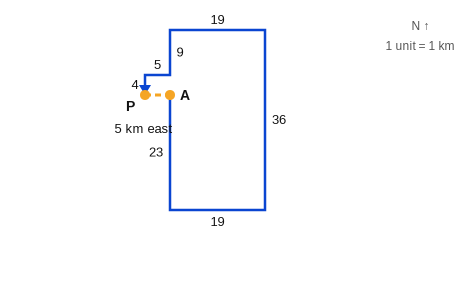
Mr. Vasu starts from Point A and drives 23 km towards the south. He then takes a left turn, drives 19 km, turns left and drives 36 km. He then takes a left turn and drives 19 km, turns left drives 9 km. He then takes a right turn and drives 5 km. He takes a final left turn, drives 4 km and stops at Point P. How far (shortest distance) and towards which direction should he drive in order to reach Point A again? (All turns are 90-degree turns only unless specified.)
श्री वासु बिंदु A से चलना शुरू करते हैं और दक्षिण की ओर 23 km गाड़ी चलाते हैं। फिर वे बाएँ मुड़ते हैं, 19 km गाड़ी चलाते हैं, बाएँ मुड़ते हैं और 36 km गाड़ी चलाते हैं। फिर वे बाएँ मुड़ते हैं और 19 km गाड़ी चलाते हैं, बाएँ मुड़ते हैं और 9 km गाड़ी चलाते हैं। फिर वे दाएँ मुड़ते हैं और 5 km गाड़ी चलाते हैं। वे अंतिम बार बाएँ मुड़ते हैं, 4 km गाड़ी चलाते हैं और बिंदु P पर रुक जाते हैं। पुनः बिंदु A पर पहुँचने के लिए उन्हें कितनी दूरी (न्यूनतम दूरी) और किस दिशा में गाड़ी चलानी चाहिए? (जब तक निर्दिष्ट न हो, सभी मोड़ केवल 90 डिग्री के मोड़ हैं।)
  1. A8 km to the northउत्तर की ओर 8 km
  2. B7 km to the southदक्षिण की ओर 7 km
  3. C4 km to the westपश्चिम की ओर 4 km
  4. D5 km to the eastपूर्व की ओर 5 km
Show answer

Concept: Take A as the origin and track the position after every turn (facing south, a left turn faces east; facing east, left faces north, and so on).

  1. A → 23 km south → (0, −23); left (east) 19 km → (19, −23); left (north) 36 km → (19, 13).
  2. Left (west) 19 km → (0, 13); left (south) 9 km → (0, 4); right (west) 5 km → (−5, 4); left (south) 4 km → P (−5, 0).
  3. P is 5 km due west of A, so he must drive 5 km to the east to reach A.

Trick: Add up the east–west moves and north–south moves separately: E 19−19−5=−5 (5 west); N −23+36−9−4=0 – P is 5 km west of A.

Answer: (D) प

अवधारणा: ['5 km to the east', '5 km पूर्व की ओर']

  1. A
  2. क
  3. ो
  4. म
  5. ू
  6. ल
  7. ब
  8. ि
  9. ं
  10. द
  11. ु
  12. म
  13. ा
  14. न
  15. े
  16. ं
  17. औ
  18. र
  19. ह
  20. र
  21. म
  22. ो
  23. ड
  24. ़
  25. क
  26. े
  27. ब
  28. ा
  29. द
  30. स
  31. ्
  32. थ
  33. ि
  34. त
  35. ि
  36. ल
  37. ि
  38. ख
  39. े
  40. ं
  41. (
  42. द
  43. क
  44. ्
  45. ष
  46. ि
  47. ण
  48. म
  49. ु
  50. ख
  51. म
  52. े
  53. ं
  54. ब
  55. ा
  56. य
  57. ा
  58. ँ
  59. म
  60. ो
  61. ड
  62. ़
  63. =
  64. प
  65. ू
  66. र
  67. ्
  68. व
  69. ;
  70. प
  71. ू
  72. र
  73. ्
  74. व
  75. म
  76. ु
  77. ख
  78. म
  79. े
  80. ं
  81. ब
  82. ा
  83. य
  84. ा
  85. ँ
  86. =
  87. उ
  88. त
  89. ्
  90. त
  91. र
  92. ,
  93. आ
  94. द
  95. ि
  96. )
  97. ।

ट्रिक: ['A → 23 km दक्षिण → (0, −23); बाएँ (पूर्व) 19 km → (19, −23); बाएँ (उत्तर) 36 km → (19, 13)।', 'बाएँ (पश्चिम) 19 km → (0, 13); बाएँ (दक्षिण) 9 km → (0, 4); दाएँ (पश्चिम) 5 km → (−5, 4); बाएँ (दक्षिण) 4 km → P (−5, 0)।', 'P, A से ठीक 5 km पश्चिम में है, अतः A पहुँचने के लिए 5 km पूर्व की ओर चलना होगा।']

उत्तर: (D) ू

RRB NTPC Undergraduate CBT 1General Intelligence and ReasoningDirection and DistanceRRB NTPC Undergraduate CBT 1 2025 · 15 Jun Shift 3 →
Q13080.
In a certain code language, ‘VIBE’ is coded as ‘4395’ and ‘BITE’ is coded as ‘5914’. What is the code for ‘T’ in the given code language?
एक निश्चित कूट भाषा में, ‘VIBE’ को ‘4395’ के रूप में कूटबद्ध किया जाता है और ‘BITE’ को ‘5914’ के रूप में कूटबद्ध किया जाता है। दी गई कूट भाषा में ‘T’ का कूट क्या है?
  1. A1
  2. B5
  3. C4
  4. D9
Show answer

Concept: Common letters of the two words take the common digits; the remaining letter takes the remaining digit.

  1. VIBE → 4 3 9 5 and BITE → 5 9 1 4.
  2. Common letters I, B, E ↔ common digits 4, 9, 5.
  3. Extra letter in BITE is T, extra digit is 1 → T = 1 (and V = 3).

Trick: Cancel what is common on both sides; the leftovers pair up instantly.

Answer: (A) द

अवधारणा: ['1', '1']

  1. द
  2. ो
  3. न
  4. ो
  5. ं
  6. श
  7. ब
  8. ्
  9. द
  10. ो
  11. ं
  12. क
  13. े
  14. स
  15. म
  16. ा
  17. न
  18. अ
  19. क
  20. ्
  21. ष
  22. र
  23. ो
  24. ं
  25. क
  26. ो
  27. स
  28. म
  29. ा
  30. न
  31. अ
  32. ं
  33. क
  34. म
  35. ि
  36. ल
  37. त
  38. े
  39. ह
  40. ै
  41. ं
  42. ;
  43. ब
  44. च
  45. ा
  46. अ
  47. क
  48. ्
  49. ष
  50. र
  51. =
  52. ब
  53. च
  54. ा
  55. अ
  56. ं
  57. क
  58. ।

ट्रिक: ['VIBE → 4 3 9 5 और BITE → 5 9 1 4।', 'समान अक्षर I, B, E ↔ समान अंक 4, 9, 5।', 'BITE में अतिरिक्त अक्षर T, अतिरिक्त अंक 1 → T = 1 (और V = 3)।']

उत्तर: (A) ो

RRB NTPC Undergraduate CBT 1General Intelligence and ReasoningCoding-Decoding – Letter to DigitRRB NTPC Undergraduate CBT 1 2025 · 15 Jun Shift 3 →