Question bank

Q&A: practice questions with answers

Search questions on any topic. Filter by exam category, exam, subject and topic, try the question, then open the answer and explanation.

Courses – airGurukul

20,719 questions found.

Q13121.
The Wahabi Movement primarily originated in which region of India?
वहाबी आंदोलन मुख्य रूप से भारत के किस क्षेत्र में शुरू हुआ था?
  1. ABengalबंगाल
  2. BPunjabपंजाब
  3. CBiharबिहार
  4. DDelhiदिल्ली
Show answer

Concept: The Wahabi Movement was an Islamic revivalist and anti-British movement of the 19th century.

  1. It was inspired by Syed Ahmad of Rae Bareli, and Patna (Bihar) became its main centre.
  2. Patna leaders such as Vilayat Ali and Inayat Ali organised it; the British suppressed it through the Wahabi trials of the 1860s–70s.
  3. Bengal is linked with the Faraizi Movement – the tempting wrong option.

Yaad rakhein: Wahabi → Patna (Bihar); Faraizi → Bengal; Kuka → Punjab.

Answer: (C) Bihar

अवधारणा: वहाबी आंदोलन 19वीं सदी का इस्लामी पुनरुत्थानवादी और ब्रिटिश-विरोधी आंदोलन था।

  1. इसके प्रेरक रायबरेली के सैयद अहमद थे और इसका मुख्य केंद्र पटना (बिहार) बना।
  2. पटना के विलायत अली और इनायत अली ने इसे संगठित किया; 1860–70 के दशक के वहाबी मुकदमों से अंग्रेज़ों ने इसे दबाया।
  3. बंगाल फ़राज़ी आंदोलन से जुड़ा है – यही भ्रमित करने वाला विकल्प है।

याद रखें: वहाबी → पटना (बिहार); फ़राज़ी → बंगाल; कूका → पंजाब।

उत्तर: (C) बिहार
RRB NTPC Undergraduate CBT 1General AwarenessModern History – Wahabi MovementRRB NTPC Undergraduate CBT 1 2025 · 15 Jun Shift 2 →
Q13122.
Which among the following measures was introduced by Muhammad bin Tughlaq to address the shortage of silver?
चाँदी की कमी को दूर करने के लिए मुहम्मद बिन तुगलक द्वारा निम्नलिखित में से कौन-सा उपाय शुरू किया गया था?
  1. AToken currencyसांकेतिक मुद्रा (Token currency)
  2. BProhibition of wineमदिरा निषेध
  3. CGarrison townsसैन्य छावनी नगर (Garrison towns)
  4. DLand revenue reformsभू-राजस्व सुधार
Show answer

Concept: Muhammad bin Tughlaq (1325–51) is known for bold experiments.

  1. Facing a shortage of silver, he introduced token currency – copper/brass coins to be valued like silver tankas.
  2. People forged the coins at home, the scheme failed and the Sultan had to exchange them for real silver coins.
  3. His other experiments: shifting the capital to Daulatabad and raising taxes in the Doab.

Yaad rakhein: Tughlaq's 'token' = copper coin with silver value.

Answer: (A) Token currency

अवधारणा: मुहम्मद बिन तुगलक (1325–51) अपने साहसी प्रयोगों के लिए जाना जाता है।

  1. चाँदी की कमी के कारण उसने सांकेतिक मुद्रा (token currency) चलाई – ताँबे/पीतल के सिक्के, जिनका मूल्य चाँदी के टंके जितना था।
  2. लोगों ने घरों में नकली सिक्के बना लिए, योजना विफल हुई और सुल्तान को उन्हें असली चाँदी के सिक्कों से बदलना पड़ा।
  3. अन्य प्रयोग: राजधानी दौलताबाद ले जाना, दोआब में कर वृद्धि।

याद रखें: तुगलक की 'टोकन' मुद्रा = चाँदी के मूल्य वाला ताँबे का सिक्का।

उत्तर: (A) सांकेतिक मुद्रा

RRB NTPC Undergraduate CBT 1General AwarenessMedieval History – Delhi SultanateRRB NTPC Undergraduate CBT 1 2025 · 15 Jun Shift 2 →
Q13123.
How many control characters are included in the original 7-bit ASCII standard?
मूल 7-बिट ASCII मानक में कितने नियंत्रण वर्ण (control characters) शामिल हैं?
  1. A16
  2. B64
  3. C32
  4. D33
Show answer

Concept: 7-bit ASCII has 27=128 codes (0 to 127): control codes plus printable characters.

  1. The control-character block is codes 0 to 31, i.e. 31−0+1=32 codes (NUL, TAB, LF, CR, ESC …).
  2. Codes 32 to 126 are the 95 printable characters (space, digits, letters, symbols).
  3. So the standard control block contains 32 characters; 64 and 16 do not fit this layout.

Yaad rakhein: ASCII: 0–31 control, 32–126 printable, total 128.

Answer: (C) 32

अवधारणा: 7-बिट ASCII में 27=128 कोड (0 से 127) हैं: नियंत्रण कोड और मुद्रण योग्य अक्षर।

  1. नियंत्रण वर्णों का खंड कोड 0 से 31 है, यानी 31−0+1=32 कोड (NUL, TAB, LF, CR, ESC …)।
  2. कोड 32 से 126 तक 95 मुद्रण योग्य वर्ण हैं (स्पेस, अंक, अक्षर, चिह्न)।
  3. अतः मानक नियंत्रण खंड में 32 वर्ण हैं; 64 और 16 इस ढाँचे में नहीं बैठते।

याद रखें: ASCII: 0–31 नियंत्रण, 32–126 मुद्रण योग्य, कुल 128।

उत्तर: (C) 32

RRB NTPC Undergraduate CBT 1General AwarenessComputer – ASCIIRRB NTPC Undergraduate CBT 1 2025 · 15 Jun Shift 2 →
Q13124.
The speed at which a Central Processing Unit (CPU) executes instructions is primarily determined by its clock rate, which is typically measured in gigahertz (GHz). If a CPU has a clock rate of 3.5 GHz, approximately how many clock cycles occur every second?
एक केंद्रीय प्रसंस्करण इकाई (CPU) जिस गति से निर्देशों को निष्पादित करती है, वह मुख्य रूप से उसकी क्लॉक दर (clock rate) द्वारा निर्धारित होती है, जिसे सामान्यतः गीगाहर्ट्ज़ (GHz) में मापा जाता है। यदि किसी CPU की क्लॉक दर 3.5 GHz है, तो प्रति सेकंड लगभग कितने क्लॉक चक्र होते हैं?
  1. A350 cycles per second350 चक्र प्रति सेकंड
  2. B3.5 million cycles per second3.5 मिलियन चक्र प्रति सेकंड
  3. C3.5 billion cycles per second3.5 बिलियन चक्र प्रति सेकंड
  4. D3.5 thousand cycles per second3.5 हज़ार चक्र प्रति सेकंड
Show answer

Concept: Hertz means cycles per second; giga (G) means 109 (one billion).

  1. 1GHz=109 cycles per second.
  2. 3.5GHz=3.5×10⁹ cycles per second.
  3. That is 3.5 billion cycles every second.

Trick: kilo 103 → mega 106 → giga 109 (thousand, million, billion).

Answer: (C) 3.5 billion cycles per second

अवधारणा: हर्ट्ज़ = प्रति सेकंड चक्र; गीगा (G) = 109 (एक अरब/billion)।

  1. 1GHz=109 चक्र प्रति सेकंड।
  2. 3.5GHz=3.5×10⁹ चक्र प्रति सेकंड।
  3. यानी हर सेकंड 3.5 बिलियन (350 करोड़) चक्र।

ट्रिक: किलो 103 → मेगा 106 → गीगा 109।

उत्तर: (C) 3.5 बिलियन चक्र प्रति सेकंड

RRB NTPC Undergraduate CBT 1General AwarenessComputer – CPU clock speedRRB NTPC Undergraduate CBT 1 2025 · 15 Jun Shift 2 →
Q13125.
The asthenosphere plays an important role in plate movements because:
दुर्बलतामंडल (asthenosphere) प्लेटों की गति में महत्वपूर्ण भूमिका निभाता है क्योंकि:
  1. AIt is partially molten and allows plates to moveयह आंशिक रूप से पिघला हुआ है और प्लेटों को गति करने देता है
  2. BIt is made of water bodiesयह जल निकायों से बना है
  3. CIt is perfectly solid and rigidयह पूर्णतः ठोस और कठोर है
  4. DIt forms the Earth’s magnetic fieldयह पृथ्वी का चुंबकीय क्षेत्र बनाता है
Show answer

Concept: The rigid lithosphere is broken into plates that rest on the asthenosphere.

  1. The asthenosphere (upper mantle, roughly 100–400 km deep) is hot, weak and partially molten, so it flows slowly like plastic.
  2. This ductile layer lets the lithospheric plates slide over it; convection currents in it help drive plate motion.
  3. It is not water, not rigid, and the magnetic field comes from the liquid outer core.

Yaad rakhein: Astheno = 'weak' (Greek) – the soft layer the plates ride on.

Answer: (A) It is partially molten and allows plates to move

अवधारणा: कठोर स्थलमंडल (lithosphere) प्लेटों में टूटा है जो दुर्बलतामंडल (asthenosphere) पर टिकी हैं।

  1. दुर्बलतामंडल (ऊपरी मेंटल, लगभग 100–400 km गहराई) गर्म, कमज़ोर और आंशिक रूप से पिघला है, इसलिए यह धीरे-धीरे बहता है।
  2. इसी नरम परत पर स्थलमंडलीय प्लेटें खिसकती हैं; इसमें संवहन धाराएँ प्लेट गति में सहायक हैं।
  3. यह जल नहीं, कठोर नहीं; चुंबकीय क्षेत्र तरल बाह्य क्रोड से बनता है।

याद रखें: Astheno = 'कमज़ोर' (ग्रीक) – वह नरम परत जिस पर प्लेटें चलती हैं।

उत्तर: (A) यह आंशिक रूप से पिघला है और प्लेटों को गति करने देता है

RRB NTPC Undergraduate CBT 1General AwarenessGeography – Earth's interiorRRB NTPC Undergraduate CBT 1 2025 · 15 Jun Shift 2 →
Q13126.
By selling lemons at 5 for a rupee, a man loses 34%. To gain 10% how many must he sell for a rupee?
एक व्यक्ति एक रुपये में 5 नींबू बेचकर 34% की हानि उठाता है। 10% का लाभ प्राप्त करने के लिए उसे एक रुपये में कितने नींबू बेचने चाहिए?
  1. A5
  2. B4
  3. C3
  4. D2
Show answer

Concept: SP per lemon stays fixed by the price; find CP per lemon from the loss, then the SP needed for the gain.

  1. 5 lemons for ₹1 → SP of 1 lemon =15=0.2.
  2. Loss 34%: 0.2=0.66×CP⇒CP=0.20.66=1033.
  3. For 10% gain, SP =1033×1.1=1133=13.
  4. So ₹1 buys 3 lemons.

Trick: New count=old count×100−loss100+gain=5×66110=3.

Answer: (C) 3

अवधारणा: एक नींबू का SP कीमत से तय है; हानि से एक नींबू का CP निकालें, फिर लाभ के लिए ज़रूरी SP।

  1. ₹1 में 5 नींबू → 1 नींबू का SP =15=0.2।
  2. 34% हानि: 0.2=0.66×CP⇒CP=1033।
  3. 10% लाभ के लिए SP =1033×1.1=13।
  4. अतः ₹1 में 3 नींबू।

ट्रिक: नई संख्या=पुरानी संख्या×100−हानि100+लाभ=5×66110=3।

उत्तर: (C) 3

RRB NTPC Undergraduate CBT 1MathematicsProfit and LossRRB NTPC Undergraduate CBT 1 2025 · 15 Jun Shift 2 →
Q13127.
An article is sold at a profit of 21%. If the cost price is increased by ₹50 and the selling price is reduced by ₹69, then the profit would be 13.6%. What is the original cost price (in ₹) of the article?
एक वस्तु 21% के लाभ पर बेची जाती है। यदि क्रय मूल्य में ₹50 की वृद्धि कर दी जाए और विक्रय मूल्य में ₹69 की कमी कर दी जाए, तो लाभ 13.6% होगा। वस्तु का मूल क्रय मूल्य (₹ में) क्या है?
  1. A2,000
  2. B1,700
  3. C1,500
  4. D1,400
Show answer

Concept: Form an equation with the original CP =x.

  1. Original SP =1.21x.
  2. New CP =x+50, new SP =1.21x−69, profit 13.6%: 1.21x−69=1.136(x+50).
  3. 1.21x−1.136x=56.8+69⇒0.074x=125.8.
  4. x=125.80.074=1700.

Trick: Check with option: CP 1700 → SP 2057; new CP 1750, new SP 1988, profit 238=13.6% of 1750 ✓.

Answer: (B) 1,700

अवधारणा: मूल CP =x मानकर समीकरण बनाएँ।

  1. मूल SP =1.21x।
  2. नया CP =x+50, नया SP =1.21x−69, लाभ 13.6%: 1.21x−69=1.136(x+50)।
  3. 0.074x=125.8।
  4. x=1700।

ट्रिक: विकल्प से जाँच: CP 1700 → SP 2057; नया CP 1750, नया SP 1988, लाभ 238=13.6% ✓।

उत्तर: (B) 1,700

RRB NTPC Undergraduate CBT 1MathematicsProfit and LossRRB NTPC Undergraduate CBT 1 2025 · 15 Jun Shift 2 →
Q13128.
A man walks 6 km at a speed of 6 km/h and then runs 18 km at a speed of 9 km/h. What is his average speed (in km/h) for the entire distance?
एक व्यक्ति 6 km/h की चाल से 6 km चलता है और फिर 9 km/h की चाल से 18 km दौड़ता है। पूरी दूरी के लिए उसकी औसत चाल (km/h में) क्या है?
  1. A10
  2. B9
  3. C7
  4. D8
Show answer

Concept: Average speed=Total distanceTotal time (never the average of speeds).

  1. Walking time =66=1 h; running time =189=2 h.
  2. Total distance =24 km, total time =3 h.
  3. Average speed =243=8km/h.

Yaad rakhein: Distances unequal → always compute time for each part separately.

Answer: (D) 8

अवधारणा: औसत चाल=कुल दूरीकुल समय (चालों का औसत नहीं)।

  1. पैदल समय =66=1 घंटा; दौड़ने का समय =189=2 घंटे।
  2. कुल दूरी =24 km, कुल समय =3 घंटे।
  3. औसत चाल =243=8km/h।

याद रखें: दूरियाँ असमान हों तो हर भाग का समय अलग निकालें।

उत्तर: (D) 8

RRB NTPC Undergraduate CBT 1MathematicsAverage SpeedRRB NTPC Undergraduate CBT 1 2025 · 15 Jun Shift 2 →
Q13129.
What is the mode of the following data?
43, 40, 41, 53, 50, 41, 44, 45, 43, 46, 48, 46, 51, 55, 52, 42, 46, 45
निम्नलिखित आँकड़ों का बहुलक (mode) क्या है?
43, 40, 41, 53, 50, 41, 44, 45, 43, 46, 48, 46, 51, 55, 52, 42, 46, 45
  1. A46
  2. B43
  3. C40
  4. D41
Show answer

Concept: Mode = the value occurring most often.

  1. Count repeats: 46 appears 3 times (positions 10, 12, 17).
  2. 43, 41 and 45 appear 2 times each; all others once.
  3. Highest frequency → mode =46.

Trick: Tally only values that repeat; a quick tick-mark count avoids rewriting the whole list.

Answer: (A) 46

अवधारणा: बहुलक (mode) = सबसे अधिक बार आने वाला मान।

  1. गिनती: 46 3 बार आया है।
  2. 43, 41 और 45 2-2 बार; बाकी एक बार।
  3. अधिकतम बारंबारता → बहुलक =46।

ट्रिक: केवल दोहराए गए मानों पर टैली लगाएँ, पूरी सूची दोबारा न लिखें।

उत्तर: (A) 46

RRB NTPC Undergraduate CBT 1MathematicsStatistics – ModeRRB NTPC Undergraduate CBT 1 2025 · 15 Jun Shift 2 →
Q13130.
A company has two departments, 'A' and 'B', with employees in the ratio 5:7,
respectively. If 28 employees are transferred from department 'B' to 'A', the ratio becomes 1:1. How many employees does each department have originally?
एक कंपनी में दो विभाग 'A' और 'B' हैं, जिनमें कर्मचारियों का अनुपात क्रमशः 5:7
है। यदि 28 कर्मचारियों को विभाग 'B' से 'A' में स्थानांतरित कर दिया जाए, तो अनुपात 1:1 हो जाता है। मूल रूप से प्रत्येक विभाग में कितने कर्मचारी हैं?
  1. A140 in A, 84 in BA में 140, B में 84
  2. B150 in A, 84 in BA में 150, B में 84
  3. C140 in A, 196 in BA में 140, B में 196
  4. D140 in A, 96 in BA में 140, B में 96
Show answer

Concept: Let the numbers be 5x and 7x; transfer keeps the total same.

  1. After transfer: A =5x+28, B =7x−28.
  2. Ratio 1:1: 5x+28=7x−28⇒2x=56⇒x=28.
  3. A =140, B =196.

Trick: Difference 7x−5x=2x must be covered by moving 28 twice (28 out of B and 28 into A) → 2x=56.

Answer: (C) 140 in A, 196 in B

अवधारणा: संख्याएँ 5x और 7x लें; स्थानांतरण से कुल नहीं बदलता।

  1. स्थानांतरण के बाद: A =5x+28, B =7x−28।
  2. अनुपात 1:1: 5x+28=7x−28⇒x=28।
  3. A =140, B =196।

ट्रिक: अंतर 2x को 28 बाहर और 28 अंदर, यानी 56 से पाटना है → 2x=56।

उत्तर: (C) 140 in A, 196 in B

RRB NTPC Undergraduate CBT 1MathematicsRatio and ProportionRRB NTPC Undergraduate CBT 1 2025 · 15 Jun Shift 2 →
Q13131.
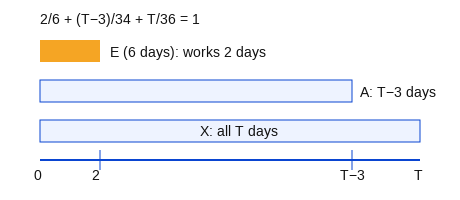
Eduardo, Abraham and Xavier can finish a certain piece of work in 6, 34 and 36 days, respectively. All three of them started the work together. Eduardo left the work after 2 days and Abraham left just 3 days before the work was completed. Find the total number of days taken for the work to be completed.
Eduardo, Abraham और Xavier किसी काम को क्रमशः 6, 34 और 36 दिनों में पूरा कर सकते हैं। तीनों ने एक साथ काम शुरू किया। Eduardo ने 2 दिन बाद काम छोड़ दिया और Abraham ने काम पूरा होने से ठीक 3 दिन पहले काम छोड़ दिया। काम पूरा होने में लगे कुल दिनों की संख्या ज्ञात कीजिए।
  1. A11.7
  2. B14.6
  3. C15.2
  4. D13.2
Show answer

Concept: Add each person's fraction of work done; total =1.

  1. Let total time =T days. Eduardo works 2 days, Abraham (T−3) days, Xavier T days.
  2. 26+T−334+T36=1⇒T−334+T36=23.
  3. Multiply by 612: 18(T−3)+17T=408⇒35T=462.
  4. T=13.2 days.

Trick: Write "who worked how many days" on a timeline first – the equation then writes itself.

Answer: (D) 13.2

अवधारणा: हर व्यक्ति के किए कार्य का भाग जोड़ें; योग =1।

  1. कुल समय =T दिन। Eduardo 2 दिन, Abraham (T−3) दिन, Xavier T दिन काम करता है।
  2. 26+T−334+T36=1⇒T−334+T36=23।
  3. 612 से गुणा: 18(T−3)+17T=408⇒35T=462।
  4. T=13.2 दिन।

ट्रिक: पहले टाइमलाइन पर लिखें कि किसने कितने दिन काम किया – समीकरण अपने आप बन जाता है।

उत्तर: (D) 13.2

RRB NTPC Undergraduate CBT 1MathematicsTime and WorkRRB NTPC Undergraduate CBT 1 2025 · 15 Jun Shift 2 →
Q13132.
Which formula correctly calculates simple interest when the principal, rate, and time are known?
जब मूलधन, दर और समय ज्ञात हों, तो कौन-सा सूत्र साधारण ब्याज की सही गणना करता है?
  1. ASimple Interest = Principal + Rate + Timeसाधारण ब्याज = मूलधन + दर + समय
  2. BSimple Interest = Principal × Time / Rateसाधारण ब्याज = मूलधन × समय / दर
  3. CSimple Interest = Principal × Rate / Timeसाधारण ब्याज = मूलधन × दर / समय
  4. DSimple Interest = (Principal × Rate × Time) / 100साधारण ब्याज = (मूलधन × दर × समय) / 100
Show answer

Concept: Simple interest grows linearly with principal, rate and time.

  1. SI=P×R×T100, where R is the rate per cent per annum.
  2. Options A–C add or divide the quantities, which gives wrong units (interest must be in rupees, proportional to all three).

Yaad rakhein: "PRT by 100" – doubling any one of P, R or T doubles the SI.

Answer: (D) Simple Interest = (Principal × Rate × Time) / 100

अवधारणा: साधारण ब्याज मूलधन, दर और समय तीनों के समानुपाती होता है।

  1. SI=P×R×T100, जहाँ R प्रतिशत वार्षिक दर है।
  2. विकल्प A–C में जोड़ या भाग है, जो गलत है – ब्याज तीनों के गुणनफल पर निर्भर करता है।

याद रखें: "PRT बटा 100" – P, R या T में से कोई भी दोगुना हो तो SI दोगुना।

उत्तर: (D) Simple Interest = (Principal × Rate × Time) / 100

RRB NTPC Undergraduate CBT 1MathematicsSimple InterestRRB NTPC Undergraduate CBT 1 2025 · 15 Jun Shift 2 →
Q13133.
The marked price of a cooker is the same at four shops I, II, III and IV. Shop I allows two successive discounts of 87% and 37%, shop II allows successive discounts of 81% and 37%, shop III allows successive discounts of 57% and 54% and shop IV allows successive discounts of 91%, 25%, and 59% on the marked price of the cooker. Which shop is selling the cooker at the lowest price?
चार दुकानों I, II, III और IV पर एक कुकर का अंकित मूल्य समान है। दुकान I कुकर के अंकित मूल्य पर 87% और 37% की दो क्रमिक छूट देती है, दुकान II 81% और 37% की क्रमिक छूट देती है, दुकान III 57% और 54% की क्रमिक छूट देती है और दुकान IV 91%, 25% और 59% की क्रमिक छूट देती है। कौन-सी दुकान कुकर को सबसे कम मूल्य पर बेच रही है?
  1. AIV
  2. BII
  3. CIII
  4. DI
Show answer

Concept: After successive discounts d1,d2,… the price paid =MP×(1−d1)(1−d2)⋯; smallest multiplier = lowest price.

  1. I: 0.13×0.63=0.0819.
  2. II: 0.19×0.63=0.1197.
  3. III: 0.43×0.46=0.1978.
  4. IV: 0.09×0.75×0.41=0.0277 – the smallest.

Trick: Compare the "paid fractions", not the discounts; a 91% discount alone (pay 9%) already beats every other shop.

Answer: (A) IV

अवधारणा: क्रमिक छूट d1,d2,… के बाद भुगतान =MP×(1−d1)(1−d2)⋯; सबसे छोटा गुणक = सबसे कम कीमत।

  1. I: 0.13×0.63=0.0819।
  2. II: 0.19×0.63=0.1197।
  3. III: 0.43×0.46=0.1978।
  4. IV: 0.09×0.75×0.41=0.0277 – सबसे कम।

ट्रिक: छूट नहीं, "भुगतान अंश" की तुलना करें; अकेली 91% छूट (9% भुगतान) ही बाकी सबसे कम है।

उत्तर: (A) IV

RRB NTPC Undergraduate CBT 1MathematicsSuccessive DiscountsRRB NTPC Undergraduate CBT 1 2025 · 15 Jun Shift 2 →
Q13134.
What smallest positive number should be subtracted from 3 and 5 so that 8 is the third proportional to them?
3 और 5 में से कौन-सी सबसे छोटी धनात्मक संख्या घटाई जानी चाहिए ताकि 8 उनका तृतीयानुपाती हो?
  1. A-2
  2. B2
  3. C-1
  4. D1
Show answer

Concept: If c is the third proportional to a,b then a:b=b:c, i.e. b2=ac.

  1. Subtract x: numbers become 3−x and 5−x.
  2. (5−x)2=8(3−x)⇒25−10x+x2=24−8x.
  3. x2−2x+1=0⇒(x−1)2=0⇒x=1.
  4. Check: 2,4,8 → 42=2×8 ✓.

Trick: Look for a geometric chain ending in 8: 2,4,8 – subtracting 1 from 3 and 5 gives exactly that.

Answer: (D) 1

अवधारणा: यदि c, a,b का तृतीयानुपाती है तो a:b=b:c, अर्थात b2=ac।

  1. x घटाने पर संख्याएँ 3−x और 5−x।
  2. (5−x)2=8(3−x)⇒x2−2x+1=0।
  3. (x−1)2=0⇒x=1।
  4. जाँच: 2,4,8 → 42=2×8 ✓।

ट्रिक: 8 पर खत्म होने वाली गुणोत्तर श्रृंखला 2,4,8 खोजें – 3 और 5 में से 1 घटाने पर यही मिलती है।

उत्तर: (D) 1

RRB NTPC Undergraduate CBT 1MathematicsProportionRRB NTPC Undergraduate CBT 1 2025 · 15 Jun Shift 2 →
Q13135.
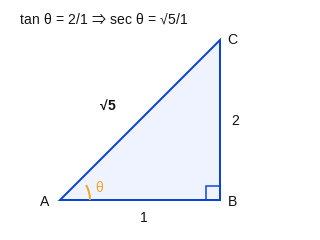
Given that tan θ = 2 and θ is in the first quadrant, what is the value of sec θ?
दिया गया है कि tan θ = 2 है और θ प्रथम चतुर्थांश में है, तो sec θ का मान क्या है?
  1. A2
  2. B2
  3. C3
  4. D5
Show answer

Concept: sec2θ=1+tan2θ; in the first quadrant secθ>0.

  1. sec2θ=1+22=5.
  2. secθ=5 (positive in quadrant I).
  3. Triangle check: perpendicular 2, base 1, hypotenuse 5 → secθ=51.

Yaad rakhein: tanθ=pb → hypotenuse =p2+b2, then sec=hb.

Answer: (D) 5

अवधारणा: sec2θ=1+tan2θ; प्रथम चतुर्थांश में secθ>0।

  1. sec2θ=1+22=5।
  2. secθ=5 (धनात्मक)।
  3. त्रिभुज से जाँच: लम्ब 2, आधार 1, कर्ण 5 → secθ=51।

याद रखें: tanθ=pb → कर्ण =p2+b2, फिर sec=hb।

उत्तर: (D) 5

RRB NTPC Undergraduate CBT 1MathematicsTrigonometric RatiosRRB NTPC Undergraduate CBT 1 2025 · 15 Jun Shift 2 →
Q13136.
Find the smallest number which when divided by 9, 12 and 15 leaves a remainder 3 in each case.
वह सबसे छोटी संख्या ज्ञात कीजिए जिसे 9, 12 और 15 से विभाजित करने पर प्रत्येक स्थिति में शेषफल 3 प्राप्त होता है।
  1. A363
  2. B723
  3. C123
  4. D183
Show answer

Concept: Same remainder r with every divisor → number =LCM×k+r.

  1. LCM(9,12,15)=180.
  2. Smallest such number =180+3=183.
  3. Check: 183÷9, ÷12, ÷15 each leave remainder 3 ✓.

Trick: Options minus 3 must be a multiple of 180: 123−3=120 ✗, 183−3=180 ✓.

Answer: (D) 183

अवधारणा: हर भाजक से समान शेष r → संख्या =LCM×k+r।

  1. LCM(9,12,15)=180।
  2. सबसे छोटी संख्या =180+3=183।
  3. जाँच: 183 को 9, 12, 15 से भाग देने पर शेष 3 ✓।

ट्रिक: विकल्प में से 3 घटाने पर 180 का गुणज होना चाहिए: 183−3=180 ✓।

उत्तर: (D) 183

RRB NTPC Undergraduate CBT 1MathematicsLCM – RemaindersRRB NTPC Undergraduate CBT 1 2025 · 15 Jun Shift 2 →
Q13137.
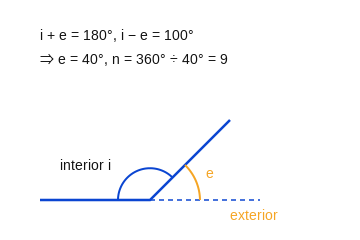
The difference between the measure of an interior angle and an exterior angle of a regular polygon is 100°. What is the number of sides of the polygon?
एक सम बहुभुज के एक अंतः कोण और एक बाह्य कोण की माप का अंतर 100° है। बहुभुज की भुजाओं की संख्या कितनी है?
  1. A12
  2. B8
  3. C9
  4. D10
Show answer

Concept: Interior + exterior angle =180∘ and exterior angle of a regular polygon =360∘n.

  1. i+e=180∘, i−e=100∘ → 2e=80∘⇒e=40∘.
  2. n=360∘40∘=9.

Trick: Solve for the exterior angle first – it always divides 360∘ exactly.

Answer: (C) 9

अवधारणा: अंतःकोण + बहिष्कोण =180∘ और सम बहुभुज का बहिष्कोण =360∘n।

  1. i+e=180∘, i−e=100∘ → e=40∘।
  2. n=360∘40∘=9।

ट्रिक: पहले बहिष्कोण निकालें – वह हमेशा 360∘ को पूरा-पूरा भाग देता है।

उत्तर: (C) 9

RRB NTPC Undergraduate CBT 1MathematicsPolygonsRRB NTPC Undergraduate CBT 1 2025 · 15 Jun Shift 2 →
Q13138.
A and B invest ₹12,000 and ₹8,000, respectively, in a business. If the total profit is ₹10,000, what is A’s share of profit?
A और B किसी व्यवसाय में क्रमशः ₹12,000 और ₹8,000 का निवेश करते हैं। यदि कुल लाभ ₹10,000 है, तो लाभ में A का हिस्सा क्या है?
  1. A₹4,000
  2. B₹5,000
  3. C₹6,000
  4. D₹7,000
Show answer

Concept: Same time → profit shared in the ratio of investments.

  1. A:B=12000:8000=3:2.
  2. A's share =35×10000=₹6,000.

Trick: A invests 60% of the total capital, so takes 60% of the profit.

Answer: (C) ₹6,000

अवधारणा: समान समय → लाभ निवेश के अनुपात में बँटता है।

  1. A:B=12000:8000=3:2।
  2. A का भाग =35×10000=₹6,000।

ट्रिक: A की पूँजी कुल का 60% है, इसलिए लाभ का भी 60%।

उत्तर: (C) ₹6,000

RRB NTPC Undergraduate CBT 1MathematicsPartnershipRRB NTPC Undergraduate CBT 1 2025 · 15 Jun Shift 2 →
Q13139.
The median of the given distribution is 28.5. Find the missing frequency x.
Class0-1010-2020-3030-4040-5050-60
Frequency5x201575
दिए गए बंटन की माध्यिका 28.5 है। लुप्त बारंबारता x ज्ञात कीजिए।
वर्ग0-1010-2020-3030-4040-5050-60
बारंबारता5x201575
  1. A10
  2. B8
  3. C3
  4. D5
Show answer

Concept: Median=l+N2−cff×h; median 28.5 lies in class 20–30.

  1. N=5+x+20+15+7+5=52+x; cf before 20–30 =5+x; f=20, h=10, l=20.
  2. 28.5=20+52+x2−(5+x)20×10.
  3. 8.5=21−x22⇒17=21−x2⇒x=8.

Trick: Once l,f,h are known, the whole question reduces to one linear equation in x.

Answer: (B) 8

अवधारणा: माध्यिका=l+N2−cff×h; 28.5 वर्ग 20–30 में है।

  1. N=52+x; 20–30 से पहले cf=5+x; f=20, h=10, l=20।
  2. 28.5=20+52+x2−(5+x)20×10।
  3. 17=21−x2⇒x=8।

ट्रिक: l,f,h तय होते ही प्रश्न x का एक रैखिक समीकरण रह जाता है।

उत्तर: (B) 8

RRB NTPC Undergraduate CBT 1MathematicsStatistics – MedianRRB NTPC Undergraduate CBT 1 2025 · 15 Jun Shift 2 →
Q13140.
The cost of five tables and seven chairs is ₹7040. If a table costs ₹400 more than a chair, find the cost of a table.
पाँच मेज़ों और सात कुर्सियों का मूल्य ₹7040 है। यदि एक मेज़ का मूल्य एक कुर्सी से ₹400 अधिक है, तो एक मेज़ का मूल्य ज्ञात कीजिए।
  1. A₹420
  2. B₹820
  3. C₹700
  4. D₹800
Show answer

Concept: Express both items in one variable.

  1. Chair =c, table =c+400.
  2. 5(c+400)+7c=7040⇒12c=5040⇒c=420.
  3. Table =420+400=₹820.

Trick: Remove the extra 5×400=2000 first: 12 chairs =5040.

Answer: (B) ₹820

अवधारणा: दोनों वस्तुओं को एक चर में लिखें।

  1. कुर्सी =c, मेज़ =c+400।
  2. 5(c+400)+7c=7040⇒12c=5040⇒c=420।
  3. मेज़ =₹820।

ट्रिक: पहले अतिरिक्त 5×400=2000 हटाएँ: 12 कुर्सियाँ =5040।

उत्तर: (B) ₹820

RRB NTPC Undergraduate CBT 1MathematicsLinear EquationsRRB NTPC Undergraduate CBT 1 2025 · 15 Jun Shift 2 →