Question bank

Q&A: practice questions with answers

Search questions on any topic. Filter by exam category, exam, subject and topic, try the question, then open the answer and explanation.

Courses – airGurukul

20,719 questions found.

Q13461.
Each of the digits in the number 3164857 is arranged in ascending order from left to right. What will be the sum of the digits that are third from the left and third from the right in the new number thus formed?
संख्या 3164857 के प्रत्येक अंक को बाएँ से दाएँ आरोही क्रम में व्यवस्थित किया जाता है। इस प्रकार बनी नई संख्या में बाएँ से तीसरे और दाएँ से तीसरे अंकों का योग क्या होगा?
  1. A9
  2. B8
  3. C10
  4. D12
Show answer

Concept: Arrange digits in ascending order, then pick the required positions.

  1. Digits of 3164857: 3, 1, 6, 4, 8, 5, 7 → ascending: 1 3 4 5 6 7 8.
  2. Third from left = 4; third from right = 6.
  3. Sum =4+6=10.

Trick: In a 7-digit sorted number, 3rd from left and 3rd from right are symmetric about the middle digit (5) – here 4+6=2×5=10.

Answer: (C) 10

अवधारणा: अंकों को आरोही क्रम में लगाएँ, फिर माँगे गए स्थान चुनें।

  1. 3164857 के अंक: 3, 1, 6, 4, 8, 5, 7 → आरोही: 1 3 4 5 6 7 8।
  2. बाएँ से तीसरा = 4; दाएँ से तीसरा = 6।
  3. योग =4+6=10।

ट्रिक: 7 अंकों की क्रमबद्ध संख्या में बाएँ से तीसरा और दाएँ से तीसरा मध्य अंक (5) के सममित होते हैं – यहाँ 4+6=2×5=10।

उत्तर: (C) 10

RRB NTPC Undergraduate CBT 1General Intelligence and ReasoningDigit arrangementRRB NTPC Undergraduate CBT 1 2025 · 14 Jun Shift 1 →
Q13462.
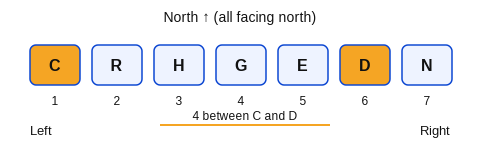
Seven people, N, H, C, D, E, R and G, are sitting in a row, facing north.
Only one person sits to the left of R. G sits fourth from the right end. Only two people sit between R and E. D sits to the immediate left of N. H does not sit to the left of C. How many people sit between C and D?
सात व्यक्ति, N, H, C, D, E, R और G, उत्तर की ओर मुख करके एक पंक्ति में बैठे हैं।
R के बाईं ओर केवल एक व्यक्ति बैठा है। G दाएँ छोर से चौथे स्थान पर बैठा है। R और E के बीच केवल दो व्यक्ति बैठे हैं। D, N के ठीक बाईं ओर बैठा है। H, C के बाईं ओर नहीं बैठा है। C और D के बीच कितने व्यक्ति बैठे हैं?
  1. ATwoदो
  2. BFourचार
  3. CThreeतीन
  4. DOneएक
Show answer

Concept: Number the seats 1–7 from left to right (all face north, so left/right are the same as ours) and fix the definite positions first.

  1. Only one person left of R → R at seat 2. G fourth from right → seat 4. Two between R and E → E at seat 5.
  2. D is immediately left of N, so D–N must occupy consecutive free seats: only 6–7 fit → D at 6, N at 7.
  3. H and C take seats 1 and 3; H is not to the left of C → C at 1, H at 3.
  4. Between C (1) and D (6): R, H, G, E = four people.

Trick: Place the "from the end" and "only one" clues first; the adjacent pair (D–N) then has a single slot.

Answer: (B) Four

अवधारणा: सीटों को बाएँ से दाएँ 1–7 क्रमांक दें (सभी उत्तर की ओर हैं, अतः बाएँ/दाएँ हमारे जैसे ही) और पहले निश्चित स्थान तय करें।

  1. R के बाएँ केवल एक व्यक्ति → R सीट 2 पर। G दाएँ से चौथा → सीट 4। R और E के बीच दो → E सीट 5 पर।
  2. D, N के ठीक बाएँ है, अतः D–N लगातार खाली सीटों पर: केवल 6–7 संभव → D सीट 6, N सीट 7।
  3. H और C सीट 1 व 3 पर; H, C के बाएँ नहीं → C सीट 1, H सीट 3।
  4. C (1) और D (6) के बीच: R, H, G, E = चार व्यक्ति।

ट्रिक: "छोर से" और "केवल एक" वाले संकेत पहले रखें; फिर आसन्न जोड़ी (D–N) के लिए एक ही जगह बचती है।

उत्तर: (B) Four

RRB NTPC Undergraduate CBT 1General Intelligence and ReasoningLinear seating arrangementRRB NTPC Undergraduate CBT 1 2025 · 14 Jun Shift 1 →
Q13463.
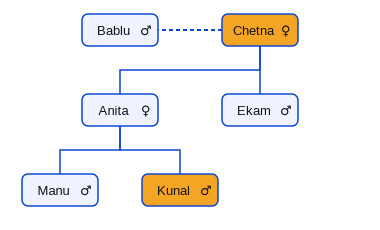
Bablu is the husband of Chetna. Anita is the daughter of Bablu. Ekam is the brother of Anita. Manu is the son of Anita. Kunal is the brother of Manu. How is Chetna related to Kunal?
बबलू, चेतना का पति है। अनीता, बबलू की पुत्री है। एकम, अनीता का भाई है। मनु, अनीता का पुत्र है। कुणाल, मनु का भाई है। चेतना, कुणाल से किस प्रकार संबंधित है?
  1. AMother's motherमाँ की माँ
  2. BDaughterपुत्री
  3. CFather's motherपिता की माँ
  4. DMotherमाँ
Show answer

Concept: Build the family tree generation by generation, then trace the path from Kunal up to Chetna.

  1. Bablu (husband) – Chetna (wife); Anita and Ekam are their children.
  2. Manu is Anita's son; Kunal is Manu's brother → Kunal is also Anita's son.
  3. Kunal → mother Anita → her mother Chetna. So Chetna is Kunal's mother's mother (maternal grandmother).

Trick: Always start from the person asked about (Kunal) and climb upward; "mother's mother" = nani.

Answer: (A) Mother's mother

अवधारणा: पीढ़ी-दर-पीढ़ी वंश-वृक्ष बनाएँ, फिर कुणाल से चेतना तक का रास्ता देखें।

  1. बबलू (पति) – चेतना (पत्नी); अनीता और एकम उनकी संतानें।
  2. मनु अनीता का पुत्र; कुणाल मनु का भाई → कुणाल भी अनीता का पुत्र।
  3. कुणाल → माँ अनीता → उसकी माँ चेतना। अतः चेतना कुणाल की माँ की माँ (नानी) है।

ट्रिक: हमेशा जिस व्यक्ति के बारे में पूछा है (कुणाल) उससे ऊपर की ओर चढ़ें; "Mother's mother" = नानी।

उत्तर: (A) Mother's mother

RRB NTPC Undergraduate CBT 1General Intelligence and ReasoningBlood relationsRRB NTPC Undergraduate CBT 1 2025 · 14 Jun Shift 1 →
Q13464.
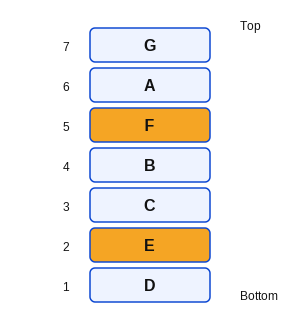
Seven boxes A, B, C, D, E, F and G are kept one over the other but not necessarily in the same order. Only G is kept above A. Only two boxes are kept between A and C. Only D is kept below E. F is not kept immediately above C. How many boxes are kept between E and F?
सात बक्से A, B, C, D, E, F और G एक के ऊपर एक रखे गए हैं, लेकिन ज़रूरी नहीं कि इसी क्रम में हों। A के ऊपर केवल G रखा गया है। A और C के बीच केवल दो बक्से रखे गए हैं। E के नीचे केवल D रखा गया है। F, C के ठीक ऊपर नहीं रखा गया है। E और F के बीच कितने बक्से रखे गए हैं?
  1. A4
  2. B2
  3. C3
  4. D1
Show answer

Concept: Number positions 1 (bottom) to 7 (top) and use the "only" clues to pin the ends.

  1. Only G is above A → G at 7, A at 6.
  2. Two boxes between A and C → C at 3. Only D is below E → D at 1, E at 2.
  3. Positions 4 and 5 remain for B and F; F is not immediately above C (position 4) → F at 5, B at 4.
  4. Between E (2) and F (5): C and B = 2 boxes.

Trick: "Only X is above/below Y" fixes two boxes at an end at once – start there.

Answer: (B) 2

अवधारणा: स्थानों को 1 (नीचे) से 7 (ऊपर) क्रमांक दें और "केवल" वाले संकेतों से छोर तय करें।

  1. A के ऊपर केवल G → G स्थान 7, A स्थान 6।
  2. A और C के बीच दो बॉक्स → C स्थान 3। E के नीचे केवल D → D स्थान 1, E स्थान 2।
  3. स्थान 4 व 5 पर B और F बचते हैं; F, C के ठीक ऊपर (स्थान 4) नहीं → F स्थान 5, B स्थान 4।
  4. E (2) और F (5) के बीच: C और B = 2 बॉक्स।

ट्रिक: "Y के ऊपर/नीचे केवल X" एक साथ छोर के दो बॉक्स तय कर देता है – वहीं से शुरू करें।

उत्तर: (B) 2

RRB NTPC Undergraduate CBT 1General Intelligence and ReasoningBox arrangementRRB NTPC Undergraduate CBT 1 2025 · 14 Jun Shift 1 →
Q13465.
Which of the following letter-number clusters will replace the question mark (?) in the given series to make it logically complete?
HEP 27, MCN 41, RAL 55, WYJ 69, ?
निम्नलिखित में से कौन-सा अक्षर-संख्या समूह दी गई शृंखला में प्रश्न चिह्न (?) के स्थान पर आकर इसे तार्किक रूप से पूर्ण करेगा?
HEP 27, MCN 41, RAL 55, WYJ 69, ?
  1. ACVH 83
  2. BBXG 81
  3. CBWH 83
  4. DAWG 81
Show answer

Concept: Track each letter position separately and the number separately.

  1. 1st letters H → M → R → W: +5 each; next W+5=B (wrap after Z).
  2. 2nd letters E → C → A → Y: −2 each; next Y−2=W. 3rd letters P → N → L → J: −2; next J−2=H.
  3. Numbers 27, 41, 55, 69: +14; next 69+14=83.

Trick: Check the number first – only options A and C end in 83; then the first letter (W+5=B) settles it.

Answer: (C) BWH 83

अवधारणा: प्रत्येक अक्षर-स्थान और संख्या को अलग-अलग ट्रैक करें।

  1. पहले अक्षर H → M → R → W: हर बार +5; अगला W+5=B (Z के बाद फिर A से)।
  2. दूसरे अक्षर E → C → A → Y: −2; अगला Y−2=W। तीसरे अक्षर P → N → L → J: −2; अगला J−2=H।
  3. संख्याएँ 27, 41, 55, 69: +14; अगली 69+14=83।

ट्रिक: पहले संख्या जाँचें – केवल A और C में 83 है; फिर पहला अक्षर (W+5=B) निर्णय कर देता है।

उत्तर: (C) BWH 83

RRB NTPC Undergraduate CBT 1General Intelligence and ReasoningLetter-number seriesRRB NTPC Undergraduate CBT 1 2025 · 14 Jun Shift 1 →
Q13466.
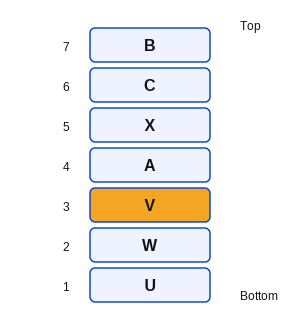
Seven boxes, U, V, W, X, A, B and C, are kept one over the other, but not necessarily in the same order.
Only U is kept below W. Only A is kept between V and X. Only C is kept between B and X. Box B is kept at the top-most position.
Which box is kept at the third position from the bottom?
सात बक्से, U, V, W, X, A, B और C, एक के ऊपर एक रखे गए हैं, लेकिन ज़रूरी नहीं कि इसी क्रम में हों।
W के नीचे केवल U रखा गया है। V और X के बीच केवल A रखा गया है। B और X के बीच केवल C रखा गया है। बक्सा B सबसे ऊपर के स्थान पर रखा गया है।
नीचे से तीसरे स्थान पर कौन-सा बक्सा रखा गया है?
  1. AV
  2. BX
  3. CC
  4. DA
Show answer

Concept: Number positions 1 (bottom) to 7 (top); fix the stated ends, then fit the "only one between" pairs.

  1. B is top-most → B at 7. Only U is below W → U at 1, W at 2.
  2. Only C is between B and X → C at 6, X at 5.
  3. Only A is between V and X → A at 4, V at 3.
  4. Third from the bottom = position 3 = V.

Trick: Each "only one between" clue, once one end is known, fixes two boxes in a row.

Answer: (A) V

अवधारणा: स्थान 1 (नीचे) से 7 (ऊपर) क्रमांकित करें; पहले बताए गए छोर तय करें, फिर "बीच में केवल एक" वाली जोड़ियाँ बैठाएँ।

  1. B सबसे ऊपर → B स्थान 7। W के नीचे केवल U → U स्थान 1, W स्थान 2।
  2. B और X के बीच केवल C → C स्थान 6, X स्थान 5।
  3. V और X के बीच केवल A → A स्थान 4, V स्थान 3।
  4. नीचे से तीसरा = स्थान 3 = V।

ट्रिक: "बीच में केवल एक" वाला संकेत, एक छोर ज्ञात होते ही, लगातार दो बॉक्स तय कर देता है।

उत्तर: (A) V

RRB NTPC Undergraduate CBT 1General Intelligence and ReasoningBox arrangementRRB NTPC Undergraduate CBT 1 2025 · 14 Jun Shift 1 →
Q13467.
Which of the following letter-number clusters will replace the question mark (?) in the given series to make it logically complete?
ZQF 19 , DUJ 28 , HYN 37 , LCR 46 , ?
निम्नलिखित में से कौन-सा अक्षर-संख्या समूह दी गई शृंखला में प्रश्न चिह्न (?) के स्थान पर आकर इसे तार्किक रूप से पूर्ण करेगा?
ZQF 19 , DUJ 28 , HYN 37 , LCR 46 , ?
  1. APGV 55
  2. BQFU 60
  3. CQHU 57
  4. DRFW 52
Show answer

Concept: Find the uniform shift of each letter and the number.

  1. Z → D → H → L: +4 each; next L+4=P.
  2. Q → U → Y → C: +4; next C+4=G. F → J → N → R: +4; next R+4=V.
  3. Numbers 19, 28, 37, 46: +9; next 55.

Trick: All three letters move +4 and the number +9 – only PGV 55 fits both.

Answer: (A) PGV 55

अवधारणा: प्रत्येक अक्षर और संख्या की समान बढ़त ज्ञात करें।

  1. Z → D → H → L: हर बार +4; अगला L+4=P।
  2. Q → U → Y → C: +4; अगला C+4=G। F → J → N → R: +4; अगला R+4=V।
  3. संख्याएँ 19, 28, 37, 46: +9; अगली 55।

ट्रिक: तीनों अक्षर +4 और संख्या +9 बढ़ती है – केवल PGV 55 दोनों पर खरा है।

उत्तर: (A) PGV 55

RRB NTPC Undergraduate CBT 1General Intelligence and ReasoningLetter-number seriesRRB NTPC Undergraduate CBT 1 2025 · 14 Jun Shift 1 →
Q13468.
Read the given statements and conclusions carefully. Assuming that the information given in the statements is true, even if it appears to be at variance with commonly known facts, decide which of the given conclusions logically follow(s) from the statements.
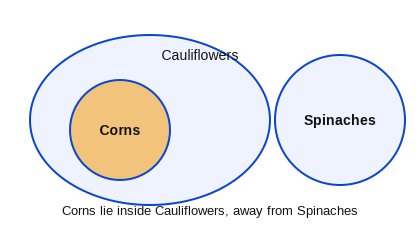
Statement: All Corns are Cauliflowers. No Cauliflowers are Spinaches.
Conclusion (I): No Spinaches are Corns.
Conclusion (II): Some Spinaches are Corns.
दिए गए कथनों और निष्कर्षों को ध्यानपूर्वक पढ़िए। यह मानते हुए कि कथनों में दी गई जानकारी सत्य है, भले ही वह सामान्यतः ज्ञात तथ्यों से भिन्न प्रतीत होती हो, निर्णय कीजिए कि दिए गए निष्कर्षों में से कौन-सा/से निष्कर्ष कथनों का तार्किक रूप से अनुसरण करता है/करते हैं।
कथन: सभी मक्के, फूलगोभियाँ हैं। कोई फूलगोभी, पालक नहीं है।
निष्कर्ष (I): कोई पालक, मक्का नहीं है।
निष्कर्ष (II): कुछ पालक, मक्के हैं।
  1. ANeither conclusion (I) nor (II) followsन तो निष्कर्ष (I) और न ही (II) अनुसरण करता है
  2. BOnly conclusion (I) followsकेवल निष्कर्ष (I) अनुसरण करता है
  3. COnly conclusion (II) followsकेवल निष्कर्ष (II) अनुसरण करता है
  4. DBoth conclusions (I) and (II) followनिष्कर्ष (I) और (II) दोनों अनुसरण करते हैं
Show answer

Concept: Draw the Venn diagram: "All Corns are Cauliflowers" puts the Corn circle inside Cauliflowers; "No Cauliflowers are Spinaches" keeps Spinaches completely apart.

  1. Since every Corn lies inside Cauliflowers and Cauliflowers never touch Spinaches, no Corn can be a Spinach → Conclusion (I) follows.
  2. Conclusion (II) "Some Spinaches are Corns" directly contradicts this → does not follow.

Trick: All A are B + No B are C ⇒ No A are C (and No C are A) – a standard valid pair.

Answer: (B) Only conclusion (I) follows

अवधारणा: वेन आरेख बनाएँ: "All Corns are Cauliflowers" से Corn का वृत्त Cauliflowers के अंदर; "No Cauliflowers are Spinaches" से Spinaches पूरी तरह अलग।

  1. हर Corn, Cauliflowers के अंदर है और Cauliflowers, Spinaches को छूते ही नहीं, अतः कोई Corn, Spinach नहीं हो सकता → निष्कर्ष (I) सही।
  2. निष्कर्ष (II) "Some Spinaches are Corns" इसके सीधे विपरीत है → अनुसरण नहीं करता।

ट्रिक: All A are B + No B are C ⇒ No A are C (और No C are A) – मानक वैध जोड़ी।

उत्तर: (B) Only conclusion (I) follows

RRB NTPC Undergraduate CBT 1General Intelligence and ReasoningSyllogismRRB NTPC Undergraduate CBT 1 2025 · 14 Jun Shift 1 →
Q13469.
Based on the English alphabetical order, three of the following four letter-clusters are alike in a certain way and thus form a group. Which is the one that does not belong to that group?
(Note: The odd one out is not based on the number of consonants/vowels or their position in the letter-cluster.)
अंग्रेज़ी वर्णमाला क्रम के आधार पर, निम्नलिखित चार अक्षर-समूहों में से तीन किसी निश्चित प्रकार से एकसमान हैं और इस प्रकार एक समूह बनाते हैं। कौन-सा अक्षर-समूह उस समूह से संबंधित नहीं है?
(नोट: असंगत अक्षर-समूह, व्यंजनों/स्वरों की संख्या या अक्षर-समूह में उनके स्थान पर आधारित नहीं है।)
  1. AGKN
  2. BQNJ
  3. CBFI
  4. DPTW
Show answer

Concept: Find the gap pattern between consecutive letters of each cluster.

  1. GKN: G+4=K, K+3=N → (+4,+3).
  2. BFI: B+4=F, F+3=I; PTW: P+4=T, T+3=W → same (+4,+3).
  3. QNJ: Q−3=N, N−4=J → (−3,−4), moving backwards – the odd one.

Trick: Three clusters run forward in the alphabet; QNJ runs backward – visible even before counting gaps.

Answer: (B) QNJ

अवधारणा: प्रत्येक समूह के क्रमागत अक्षरों के बीच अंतर का पैटर्न देखें।

  1. GKN: G+4=K, K+3=N → (+4,+3)।
  2. BFI: B+4=F, F+3=I; PTW: P+4=T, T+3=W → वही (+4,+3)।
  3. QNJ: Q−3=N, N−4=J → (−3,−4), उल्टी दिशा – यही अलग है।

ट्रिक: तीन समूह वर्णमाला में आगे बढ़ते हैं; QNJ पीछे जाता है – अंतर गिनने से पहले ही दिखता है।

उत्तर: (B) QNJ

RRB NTPC Undergraduate CBT 1General Intelligence and ReasoningLetter-cluster classificationRRB NTPC Undergraduate CBT 1 2025 · 14 Jun Shift 1 →
Q13470.
HI 26 is related to FF 11 in a certain way. In the same way, MG 22 is related to KD 7. To which of the following is KF 14 related, following the same logic?
HI 26 एक निश्चित प्रकार से FF 11 से संबंधित है। उसी प्रकार, MG 22, KD 7 से संबंधित है। उसी तर्क का अनुसरण करते हुए, KF 14 निम्नलिखित में से किससे संबंधित है?
  1. AHC −1
  2. BIB −3
  3. CIC −1
  4. DHB −3
Show answer

Concept: Find how each letter and the number change from the first term to the second, then apply the same change.

  1. HI 26 → FF 11: H−2=F, I−3=F, 26−15=11.
  2. MG 22 → KD 7: M−2=K, G−3=D, 22−15=7 ✓ same rule.
  3. KF 14 → K−2=I, F−3=C, 14−15=−1 → IC −1.

Trick: Pattern (−2,−3,−15); among options only IC −1 has both letters and number matching.

Answer: (C) IC −1

अवधारणा: पहले पद से दूसरे पद तक प्रत्येक अक्षर और संख्या का परिवर्तन निकालें, फिर वही नियम लगाएँ।

  1. HI 26 → FF 11: H−2=F, I−3=F, 26−15=11।
  2. MG 22 → KD 7: M−2=K, G−3=D, 22−15=7 ✓ वही नियम।
  3. KF 14 → K−2=I, F−3=C, 14−15=−1 → IC −1।

ट्रिक: पैटर्न (−2,−3,−15); विकल्पों में केवल IC −1 में अक्षर और संख्या दोनों मेल खाते हैं।

उत्तर: (C) IC −1

RRB NTPC Undergraduate CBT 1General Intelligence and ReasoningLetter-number analogyRRB NTPC Undergraduate CBT 1 2025 · 14 Jun Shift 1 →
Q13471.
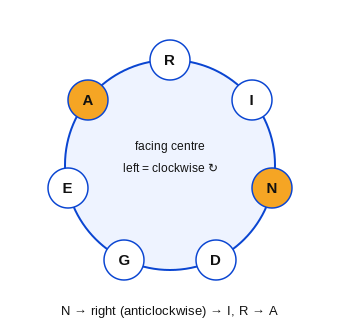
R, E, A, D, I, N and G are sitting around a circular table, facing the centre of the table. D sits third to the left of R. A sits second to the left of G. Only R sits between I and A. E is not an immediate neighbor of D.
How many people sit between N and A when counted from the right of N?
R, E, A, D, I, N और G एक वृत्ताकार मेज़ के चारों ओर मेज़ के केंद्र की ओर मुख करके बैठे हैं। D, R के बाईं ओर तीसरे स्थान पर बैठा है। A, G के बाईं ओर दूसरे स्थान पर बैठा है। I और A के बीच केवल R बैठा है। E, D का निकटतम पड़ोसी नहीं है।
N के दाईं ओर से गिनने पर N और A के बीच कितने व्यक्ति बैठे हैं?
  1. ATwoदो
  2. BFourचार
  3. COneएक
  4. DThreeतीन
Show answer

Concept: When people face the centre, "left" means clockwise and "right" means anticlockwise. Number the seats 1–7 clockwise with R at 1.

  1. D is third to the left of R → D at 4. Only R sits between I and A → I and A occupy seats 7 and 2 in some order.
  2. A is second to the left of G → G is two seats anticlockwise of A. If A = 2 then G = 7, but 7 is I's seat – impossible. So A = 7, I = 2, G = 5.
  3. Seats 3 and 6 remain for E and N; E is not next to D (4) → E = 6, N = 3.
  4. From N (3) counting to the right (anticlockwise): I (2), R (1), then A (7) → two people between.

Trick: Facing centre: left = clockwise, right = anticlockwise. Test the two cases of the "only R between I and A" clue – one collapses immediately.

Answer: (A) Two

अवधारणा: केंद्र की ओर मुख होने पर "बाएँ" = दक्षिणावर्त (clockwise) और "दाएँ" = वामावर्त (anticlockwise)। सीटों को R से शुरू कर दक्षिणावर्त 1–7 क्रमांक दें।

  1. D, R के बाएँ तीसरा → D सीट 4। I और A के बीच केवल R → I और A सीट 7 व 2 पर (किसी क्रम में)।
  2. A, G के बाएँ दूसरा → G, A से दो सीट वामावर्त। यदि A = 2 तो G = 7, पर 7 पर I है – असंभव। अतः A = 7, I = 2, G = 5।
  3. सीट 3 व 6 पर E और N; E, D (4) का पड़ोसी नहीं → E = 6, N = 3।
  4. N (3) से दाएँ (वामावर्त) गिनें: I (2), R (1), फिर A (7) → बीच में दो व्यक्ति।

ट्रिक: केंद्र की ओर मुख: बाएँ = clockwise, दाएँ = anticlockwise। "I और A के बीच केवल R" के दोनों विकल्प जाँचें – एक तुरंत गलत साबित होता है।

उत्तर: (A) Two

RRB NTPC Undergraduate CBT 1General Intelligence and ReasoningCircular seating arrangementRRB NTPC Undergraduate CBT 1 2025 · 14 Jun Shift 1 →
Q13472.
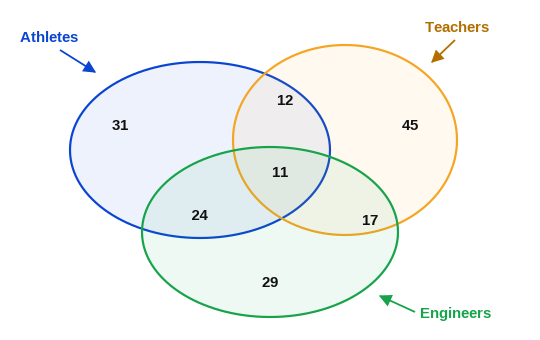
Study the given diagram carefully and answer the question. The numbers in different sections indicate the number of persons in a room. (NOTE: You have to take the given data to be true even if it seems to be at variance from commonly known facts.)

How many such engineers are there who are also athletes but not teachers?
दिए गए आरेख का ध्यानपूर्वक अध्ययन कीजिए और प्रश्न का उत्तर दीजिए। विभिन्न खंडों में दी गई संख्याएँ एक कमरे में व्यक्तियों की संख्या दर्शाती हैं। (नोट: आपको दिए गए आँकड़ों को सत्य मानना है, भले ही वे सामान्यतः ज्ञात तथ्यों से भिन्न प्रतीत होते हों।)

ऐसे कितने इंजीनियर हैं जो एथलीट भी हैं लेकिन शिक्षक नहीं हैं?
  1. A24
  2. B35
  3. C23
  4. D28
Show answer

Concept: "Engineers who are also athletes but not teachers" = the region common to the Engineers and Athletes circles only, outside the Teachers circle.

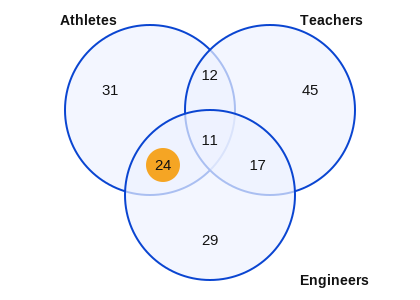
  1. The Athletes–Engineers overlap has two parts: 24 (outside Teachers) and 11 (inside all three).
  2. Excluding teachers leaves the single region with 24.
  3. So the required number is 24 (not 24+11=35, which includes teachers).

Trick: "Also X but not Y" → the two-circle overlap minus the central three-way region.

Answer: (A) 24

अवधारणा: "इंजीनियर जो एथलीट भी हैं पर शिक्षक नहीं" = केवल Engineers और Athletes वृत्तों का उभयनिष्ठ भाग, Teachers वृत्त के बाहर।

  1. Athletes–Engineers के ओवरलैप के दो हिस्से हैं: 24 (Teachers के बाहर) और 11 (तीनों के अंदर)।
  2. शिक्षकों को हटाने पर केवल 24 वाला क्षेत्र बचता है।
  3. अतः अभीष्ट संख्या 24 है (24+11=35 नहीं, जिसमें शिक्षक भी शामिल हैं)।

ट्रिक: "X भी पर Y नहीं" → दो वृत्तों का ओवरलैप घटा बीच का तीन-वृत्त क्षेत्र।

उत्तर: (A) 24

RRB NTPC Undergraduate CBT 1General Intelligence and ReasoningVenn diagram – data interpretationRRB NTPC Undergraduate CBT 1 2025 · 14 Jun Shift 1 →
Q13473.
What should come in place of the question mark (?) in the given series?
17 40 61 80 97 112 ?
दी गई शृंखला में प्रश्न चिह्न (?) के स्थान पर क्या आना चाहिए?
17 40 61 80 97 112 ?
  1. A125
  2. B130
  3. C127
  4. D122
Show answer

Concept: Successive differences that shrink by a constant.

  1. 40−17=23, 61−40=21, 80−61=19, 97−80=17, 112−97=15.
  2. Differences fall by 2 each time → next difference 13.
  3. 112+13=125.

Trick: Odd-number differences 23, 21, 19, 17, 15, 13 – just continue the odd sequence downward.

Answer: (A) 125

अवधारणा: क्रमागत अंतर जो समान मात्रा से घटते हैं।

  1. 40−17=23, 61−40=21, 80−61=19, 97−80=17, 112−97=15।
  2. अंतर हर बार 2 घटता है → अगला अंतर 13।
  3. 112+13=125।

ट्रिक: विषम अंतर 23, 21, 19, 17, 15, 13 – बस विषम क्रम को नीचे की ओर बढ़ाएँ।

उत्तर: (A) 125

RRB NTPC Undergraduate CBT 1General Intelligence and ReasoningNumber seriesRRB NTPC Undergraduate CBT 1 2025 · 14 Jun Shift 1 →
Q13474.
In a certain code language,
A @ B means ‘A is the mother of B’,
A × B means ‘A is the wife of B’,
A + B means ‘A is the brother of B’ and
A ÷ B means ‘A is the father of B’.
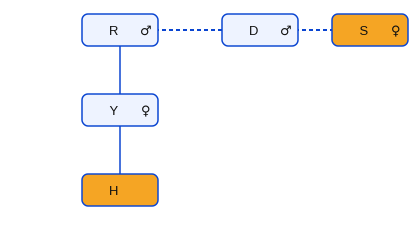
How is S related to H if ‘S × D + R ÷ Y @ H’?
एक निश्चित कूट भाषा में,
A @ B का अर्थ है ‘A, B की माँ है’,
A × B का अर्थ है ‘A, B की पत्नी है’,
A + B का अर्थ है ‘A, B का भाई है’ और
A ÷ B का अर्थ है ‘A, B का पिता है’।
यदि ‘S × D + R ÷ Y @ H’ है, तो S, H से किस प्रकार संबंधित है?
  1. AMother's father's brother's wifeमाँ के पिता के भाई की पत्नी
  2. BFather's brother's wifeपिता के भाई की पत्नी
  3. CBrother's wifeभाई की पत्नी
  4. DMother's father's brother's daughterमाँ के पिता के भाई की पुत्री
Show answer

Concept: Decode each symbol in order and build the tree: S × D + R ÷ Y @ H.

  1. S × D: S is the wife of D. D + R: D is the brother of R.
  2. R ÷ Y: R is the father of Y. Y @ H: Y is the mother of H.
  3. From H: mother Y → her father R → his brother D → his wife S. So S is H's mother's father's brother's wife.

Trick: Read the chain from H backwards; each symbol adds one step – mother → father → brother → wife.

Answer: (A) Mother's father's brother's wife

अवधारणा: प्रत्येक प्रतीक को क्रम से डिकोड कर वृक्ष बनाएँ: S × D + R ÷ Y @ H।

  1. S × D: S, D की पत्नी। D + R: D, R का भाई।
  2. R ÷ Y: R, Y का पिता। Y @ H: Y, H की माँ।
  3. H से: माँ Y → उसका पिता R → उसका भाई D → उसकी पत्नी S। अतः S, H की माँ के पिता के भाई की पत्नी है।

ट्रिक: श्रृंखला को H से पीछे की ओर पढ़ें; हर प्रतीक एक कदम जोड़ता है – माँ → पिता → भाई → पत्नी।

उत्तर: (A) Mother's father's brother's wife

RRB NTPC Undergraduate CBT 1General Intelligence and ReasoningCoded blood relationsRRB NTPC Undergraduate CBT 1 2025 · 14 Jun Shift 1 →
Q13475.
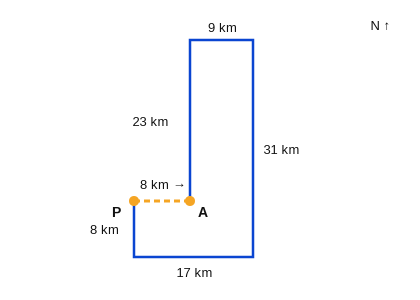
Kiran starts from Point A and drives 23 km towards the north. She then takes a right turn, drives 9 km, turns right and drives 31 km. She then takes a right turn and drives 17 km. She takes a final right turn, drives 8 km and stops at Point P. How far (shortest distance) and towards which direction should she drive in order to reach Point A again? (All turns are 90-degree turns only unless specified.)
किरण बिंदु A से चलना शुरू करती है और उत्तर की ओर 23 km गाड़ी चलाती है। फिर वह दाएँ मुड़ती है, 9 km गाड़ी चलाती है, दाएँ मुड़ती है और 31 km गाड़ी चलाती है। फिर वह दाएँ मुड़ती है और 17 km गाड़ी चलाती है। वह अंतिम बार दाएँ मुड़ती है, 8 km गाड़ी चलाती है और बिंदु P पर रुक जाती है। पुनः बिंदु A तक पहुँचने के लिए उसे कितनी दूरी (न्यूनतम दूरी) और किस दिशा में गाड़ी चलानी चाहिए? (जब तक निर्दिष्ट न हो, सभी मोड़ केवल 90 डिग्री के हैं।)
  1. A9 km to the westपश्चिम की ओर 9 km
  2. B8 km to the westपश्चिम की ओर 8 km
  3. C8 km to the eastपूर्व की ओर 8 km
  4. D9 km to the eastपूर्व की ओर 9 km
Show answer

Concept: Use coordinates with A at the origin; north = +y, east = +x. A right turn rotates the heading N → E → S → W → N.

  1. North 23: (0,23). Right (east) 9: (9,23). Right (south) 31: (9,−8).
  2. Right (west) 17: (−8,−8). Right (north) 8: (−8,0) = P.
  3. P is at (−8,0), A at (0,0) → A is 8 km to the east of P.

Trick: Net east–west: +9−17=−8 (8 km west of A); net north–south: 23−31+8=0. So go 8 km east.

Answer: (C) 8 km to the east

अवधारणा: A को मूल बिंदु मानकर निर्देशांक लें; उत्तर = +y, पूर्व = +x। दायाँ मोड़ दिशा को N → E → S → W → N घुमाता है।

  1. उत्तर 23: (0,23)। दाएँ (पूर्व) 9: (9,23)। दाएँ (दक्षिण) 31: (9,−8)।
  2. दाएँ (पश्चिम) 17: (−8,−8)। दाएँ (उत्तर) 8: (−8,0) = P।
  3. P (−8,0) पर, A (0,0) पर → A, P से 8 km पूर्व में है।

ट्रिक: शुद्ध पूर्व–पश्चिम: +9−17=−8 (A से 8 km पश्चिम); शुद्ध उत्तर–दक्षिण: 23−31+8=0। अतः 8 km पूर्व चलें।

उत्तर: (C) 8 km to the east

RRB NTPC Undergraduate CBT 1General Intelligence and ReasoningDirection and distanceRRB NTPC Undergraduate CBT 1 2025 · 14 Jun Shift 1 →
Q13476.
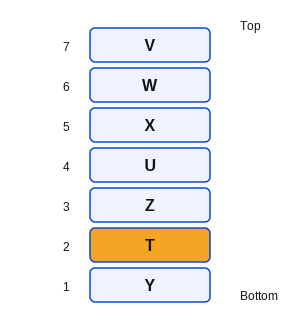
Seven boxes X, Y, Z, W, V, U and T are kept one over the other but not necessarily in the same order. Y is placed at the bottommost position. Exactly three boxes are kept between T and W. W is kept on one of the positions above T. Box U is kept immediately above Z. Box X is kept immediately below W. Box V is kept immediately above W. Which box is second from the bottom?
सात बक्से X, Y, Z, W, V, U और T एक के ऊपर एक रखे गए हैं, लेकिन ज़रूरी नहीं कि इसी क्रम में हों। Y सबसे नीचे के स्थान पर रखा गया है। T और W के बीच ठीक तीन बक्से रखे गए हैं। W, T के ऊपर के स्थानों में से किसी एक पर रखा गया है। बक्सा U, Z के ठीक ऊपर रखा गया है। बक्सा X, W के ठीक नीचे रखा गया है। बक्सा V, W के ठीक ऊपर रखा गया है। नीचे से दूसरे स्थान पर कौन-सा बक्सा है?
  1. AU
  2. BT
  3. CV
  4. DW
Show answer

Concept: Number positions 1 (bottom) to 7 (top). Build the rigid block around T and W first.

  1. Y at 1. W is above T with three boxes between; X is immediately below W and V immediately above W → block: T, _, _, X, W, V (six consecutive positions).
  2. This block needs positions 2–7 (position 1 is Y) → T at 2, X at 5, W at 6, V at 7.
  3. Positions 3 and 4 remain for U and Z; U is immediately above Z → Z at 3, U at 4.
  4. Second from the bottom = T.

Trick: Combine all clues about one box (W) into a single block – its length then fixes its place.

Answer: (B) T

अवधारणा: स्थान 1 (नीचे) से 7 (ऊपर) क्रमांकित करें। पहले T और W के चारों ओर का कठोर ब्लॉक बनाएँ।

  1. Y स्थान 1 पर। W, T के ऊपर है और बीच में तीन बॉक्स; X, W के ठीक नीचे और V, W के ठीक ऊपर → ब्लॉक: T, _, _, X, W, V (लगातार छह स्थान)।
  2. यह ब्लॉक स्थान 2–7 पर ही आ सकता है (स्थान 1 पर Y) → T स्थान 2, X स्थान 5, W स्थान 6, V स्थान 7।
  3. स्थान 3 व 4 पर U और Z; U, Z के ठीक ऊपर → Z स्थान 3, U स्थान 4।
  4. नीचे से दूसरा = T।

ट्रिक: एक बॉक्स (W) से जुड़े सभी संकेतों को एक ब्लॉक में जोड़ें – उसकी लंबाई ही उसका स्थान तय कर देती है।

उत्तर: (B) T

RRB NTPC Undergraduate CBT 1General Intelligence and ReasoningBox arrangementRRB NTPC Undergraduate CBT 1 2025 · 14 Jun Shift 1 →
Q13477.
JS 12 is related to MO -3 in a certain way. In the same way, LW 9 is related to OS -6. To which of the following is BT 6 related, following the same logic?
JS 12 एक निश्चित प्रकार से MO -3 से संबंधित है। उसी प्रकार, LW 9, OS -6 से संबंधित है। उसी तर्क का अनुसरण करते हुए, BT 6 निम्नलिखित में से किससे संबंधित है?
  1. AEP -9
  2. BTR 10
  3. CPT -11
  4. DYT 8
Show answer

Concept: Work out the change in each letter and the number from the first pair, then apply it.

  1. JS 12 → MO −3: J+3=M, S−4=O, 12−15=−3.
  2. LW 9 → OS −6: L+3=O, W−4=S, 9−15=−6 ✓.
  3. BT 6 → B+3=E, T−4=P, 6−15=−9 → EP −9.

Trick: Rule (+3,−4,−15); the number 6−15=−9 alone picks option A.

Answer: (A) EP -9

अवधारणा: पहली जोड़ी से प्रत्येक अक्षर और संख्या का परिवर्तन निकालें, फिर वही लगाएँ।

  1. JS 12 → MO −3: J+3=M, S−4=O, 12−15=−3।
  2. LW 9 → OS −6: L+3=O, W−4=S, 9−15=−6 ✓।
  3. BT 6 → B+3=E, T−4=P, 6−15=−9 → EP −9।

ट्रिक: नियम (+3,−4,−15); केवल संख्या 6−15=−9 से ही विकल्प A चुन लिया जाता है।

उत्तर: (A) EP -9

RRB NTPC Undergraduate CBT 1General Intelligence and ReasoningLetter-number analogyRRB NTPC Undergraduate CBT 1 2025 · 14 Jun Shift 1 →
Q13478.
Which of the following letter-number clusters will replace the question mark (?) in the given series to make it logically complete?
EV21 IS33 MP45 QM57 ?
निम्नलिखित में से कौन-सा अक्षर-संख्या समूह दी गई शृंखला में प्रश्न चिह्न (?) के स्थान पर आकर इसे तार्किक रूप से पूर्ण करेगा?
EV21 IS33 MP45 QM57 ?
  1. AUJ69
  2. BVK71
  3. CUK71
  4. DVJ69
Show answer

Concept: Separate the three strands – first letter, second letter, number.

  1. E → I → M → Q: +4; next Q+4=U.
  2. V → S → P → M: −3; next M−3=J.
  3. 21 → 33 → 45 → 57: +12; next 69. So UJ69.

Trick: Numbers are 12n+9; 57+12=69 eliminates two options, then Q+4=U decides.

Answer: (A) UJ69

अवधारणा: तीन धाराएँ अलग करें – पहला अक्षर, दूसरा अक्षर, संख्या।

  1. E → I → M → Q: +4; अगला Q+4=U।
  2. V → S → P → M: −3; अगला M−3=J।
  3. 21 → 33 → 45 → 57: +12; अगली 69। अतः UJ69।

ट्रिक: संख्याएँ 12n+9 हैं; 57+12=69 से दो विकल्प कटते हैं, फिर Q+4=U निर्णय करता है।

उत्तर: (A) UJ69

RRB NTPC Undergraduate CBT 1General Intelligence and ReasoningLetter-number seriesRRB NTPC Undergraduate CBT 1 2025 · 14 Jun Shift 1 →
Q13479.
In a certain code language, "VINP" is coded as "61" and "FSKA" is coded as "85". What is the code for "TOYG" in the given language?
एक निश्चित कूट भाषा में, "VINP" को "61" के रूप में कूटबद्ध किया जाता है और "FSKA" को "85" के रूप में कूटबद्ध किया जाता है। उसी भाषा में "TOYG" के लिए कूट क्या है?
  1. A63
  2. B61
  3. C55
  4. D69
Show answer

Concept: Try the sum of alphabet positions; if one word fails, test the opposite letters (A↔Z, position 27−n).

  1. VINP: 22+9+14+16=61 ✓, but FSKA: 6+19+11+1=37≠85 – so plain sum is not the rule.
  2. Opposite letters: V→E(5), I→R(18), N→M(13), P→K(11): sum 47; 47+14=61 ✓. FSKA → U(21) H(8) P(16) Z(26): 71+14=85 ✓.
  3. TOYG → G(7) L(12) B(2) T(20): 41+14=55.

Trick: Equivalent shortcut: code =122−(sum of positions); TOYG sum =67 → 122−67=55.

Answer: (C) 55

अवधारणा: पहले अक्षर-स्थानों का योग आज़माएँ; यदि एक शब्द पर न चले तो विपरीत अक्षर (A↔Z, स्थान 27−n) जाँचें।

  1. VINP: 22+9+14+16=61 ✓, पर FSKA: 6+19+11+1=37≠85 – अतः सीधा योग नियम नहीं।
  2. विपरीत अक्षर: V→E(5), I→R(18), N→M(13), P→K(11): योग 47; 47+14=61 ✓। FSKA → U(21) H(8) P(16) Z(26): 71+14=85 ✓।
  3. TOYG → G(7) L(12) B(2) T(20): 41+14=55।

ट्रिक: समतुल्य शॉर्टकट: कोड =122−(स्थानों का योग); TOYG का योग =67 → 122−67=55।

उत्तर: (C) 55

RRB NTPC Undergraduate CBT 1General Intelligence and ReasoningCoding–decodingRRB NTPC Undergraduate CBT 1 2025 · 14 Jun Shift 1 →
Q13480.
Refer to the following letter series and answer the question. (Counting to be done from left to right only.)
(Left) E S I C X Z O W G U K A Q D F T B Y M R H (Right)
How many such consonants are there, each of which is immediately preceded by a vowel and also immediately followed by a vowel?
निम्नलिखित अक्षर शृंखला को देखिए और प्रश्न का उत्तर दीजिए। (गिनती केवल बाएँ से दाएँ की जानी है।)
(बाएँ) E S I C X Z O W G U K A Q D F T B Y M R H (दाएँ)
ऐसे कितने व्यंजन हैं, जिनमें से प्रत्येक के ठीक पहले एक स्वर है और ठीक बाद भी एक स्वर है?
  1. A3
  2. B2
  3. C1
  4. D4
Show answer

Concept: Find consonants that sit between two vowels (vowel–consonant–vowel).

  1. Series: E S I C X Z O W G U K A Q D F T B Y M R H.
  2. E-S-I ✓; I-C-X ✗; Z-O-W: W followed by G ✗; U-K-A ✓; A-Q-D ✗.
  3. Qualifying consonants: S and K → 2.

Trick: Mark the vowels (E, I, O, U, A) first; only letters with a vowel on both sides count.

Answer: (B) 2

अवधारणा: ऐसे व्यंजन खोजें जो दो स्वरों के बीच हों (स्वर–व्यंजन–स्वर)।

  1. श्रृंखला: E S I C X Z O W G U K A Q D F T B Y M R H।
  2. E-S-I ✓; I-C-X ✗; Z-O-W: W के बाद G ✗; U-K-A ✓; A-Q-D ✗।
  3. शर्त पूरी करने वाले व्यंजन: S और K → 2।

ट्रिक: पहले स्वर (E, I, O, U, A) चिह्नित करें; केवल वही अक्षर गिनें जिनके दोनों ओर स्वर हों।

उत्तर: (B) 2

RRB NTPC Undergraduate CBT 1General Intelligence and ReasoningLetter series countingRRB NTPC Undergraduate CBT 1 2025 · 14 Jun Shift 1 →