Question bank

Q&A: practice questions with answers

Search questions on any topic. Filter by exam category, exam, subject and topic, try the question, then open the answer and explanation.

Courses – airGurukul

20,719 questions found.

Q13661.
Which of the following letter-number clusters will replace the question mark (?) in the given series to make it logically complete?
GDK 12 NKR 23 URY 34 BYF 45 ?
निम्नलिखित में से कौन-सा अक्षर-संख्या समूह दी गई शृंखला में प्रश्नचिह्न (?) के स्थान पर आकर उसे तार्किक रूप से पूर्ण करेगा?
GDK 12 NKR 23 URY 34 BYF 45 ?
  1. AJEK 55
  2. BKGM 55
  3. CIFM 56
  4. DSBU 56
Show answer

Concept: Check letters and numbers separately for a constant step.

  1. Letters: G→N→U→B (+7 each), D→K→R→Y (+7), K→R→Y→F (+7). Next: B+7 = I, Y+7 = F, F+7 = M → IFM.
  2. Numbers: 12, 23, 34, 45 (+11) → 56.

Trick: Use the circular alphabet: Y(25)+7 = 32 → 32−26 = 6 = F.

Answer: (C) IFM 56

अवधारणा: अक्षरों और संख्याओं को अलग-अलग देखकर स्थिर अंतर खोजें।

  1. अक्षर: G→N→U→B (+7), D→K→R→Y (+7), K→R→Y→F (+7)। अगला: B+7 = I, Y+7 = F, F+7 = M → IFM।
  2. संख्या: 12, 23, 34, 45 (+11) → 56।

ट्रिक: वृत्ताकार वर्णमाला प्रयोग करें: Y(25)+7 = 32 → 32−26 = 6 = F।

उत्तर: (C) IFM 56
RRB NTPC Undergraduate CBT 1General Intelligence and ReasoningAlphanumeric seriesRRB NTPC Undergraduate CBT 1 2025 · 9 May Shift 2 →
Q13662.
Read the given statement(s) and conclusions carefully. Assuming that the information given in the statements is true, even if it appears to be at variance with commonly known facts, decide which of the given conclusions logically follow(s) from the statement(s).
Statements:
Some fans are cars.
No car is a bus.
Conclusions:
(I) Some fans are buses.
(II) Some cars are fans.
दिए गए कथन(कथनों) और निष्कर्षों को ध्यानपूर्वक पढ़िए। यह मानते हुए कि कथनों में दी गई जानकारी सत्य है, भले ही वह सामान्यतः ज्ञात तथ्यों से भिन्न प्रतीत होती हो, निर्णय कीजिए कि दिए गए निष्कर्षों में से कौन-सा/कौन-से निष्कर्ष कथन(कथनों) का तार्किक रूप से अनुसरण करता है/करते हैं।
कथन:
कुछ पंखे, कार हैं।
कोई कार, बस नहीं है।
निष्कर्ष:
(I) कुछ पंखे, बस हैं।
(II) कुछ कार, पंखे हैं।
  1. AOnly conclusion (I) followsकेवल निष्कर्ष (I) अनुसरण करता है
  2. BOnly conclusion (II) followsकेवल निष्कर्ष (II) अनुसरण करता है
  3. CNeither conclusion (I) nor (II) followsन तो निष्कर्ष (I) और न ही (II) अनुसरण करता है
  4. DBoth conclusions (I) and (II) followनिष्कर्ष (I) और (II) दोनों अनुसरण करते हैं
Show answer

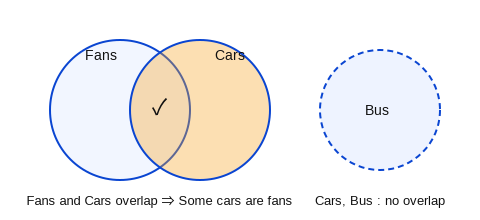
Concept: Draw the Venn diagram for the statements; a conclusion follows only if it is true in every possible diagram.

  1. "Some fans are cars" → fans and cars overlap. "No car is a bus" → cars and buses are separate.
  2. Conclusion I (some fans are buses): fans may or may not touch buses – not definite, does not follow.
  3. Conclusion II (some cars are fans): the converse of "some fans are cars" is always true → follows.

Trick: "Some A are B" ⇔ "Some B are A" always; a negative statement + a "some" never gives a definite positive link.

Answer: (B) Only conclusion (II) follows

अवधारणा: कथनों का वेन आरेख बनाएँ; निष्कर्ष तभी मान्य है जब वह हर संभव आरेख में सत्य हो।

  1. "कुछ fans, cars हैं" → fans और cars का अंश साझा। "कोई car, bus नहीं" → cars और buses अलग।
  2. निष्कर्ष I (कुछ fans, buses हैं): fans, buses को छू भी सकते हैं, नहीं भी – निश्चित नहीं, मान्य नहीं।
  3. निष्कर्ष II (कुछ cars, fans हैं): "कुछ fans, cars हैं" का विलोम सदैव सत्य → मान्य।

ट्रिक: "कुछ A, B हैं" ⇔ "कुछ B, A हैं" हमेशा; नकारात्मक कथन + "कुछ" से निश्चित सकारात्मक संबंध नहीं बनता।

उत्तर: (B) Only conclusion (II) follows

RRB NTPC Undergraduate CBT 1General Intelligence and ReasoningSyllogismRRB NTPC Undergraduate CBT 1 2025 · 9 May Shift 2 →
Q13663.
Which of the following letter-number clusters will replace the question mark (?) in the given series to make it logically complete?
MHL21 OJN29 QLP37 SNR45 ?
निम्नलिखित में से कौन-सा अक्षर-संख्या समूह दी गई शृंखला में प्रश्नचिह्न (?) के स्थान पर आकर उसे तार्किक रूप से पूर्ण करेगा?
MHL21 OJN29 QLP37 SNR45 ?
  1. AUPS54
  2. BUPS53
  3. CUPT53
  4. DUPT54
Show answer

Concept: Each letter position and the number move by a fixed step.

  1. Letters: M→O→Q→S (+2), H→J→L→N (+2), L→N→P→R (+2) → next S+2 = U, N+2 = P, R+2 = T → UPT.
  2. Numbers: 21, 29, 37, 45 (+8) → 53.

Trick: Options differ only in the third letter (S/T) and number (53 or 54) – check just those two.

Answer: (C) UPT53

अवधारणा: हर अक्षर स्थान और संख्या एक स्थिर अंतर से बढ़ती है।

  1. अक्षर: M→O→Q→S (+2), H→J→L→N (+2), L→N→P→R (+2) → अगला S+2 = U, N+2 = P, R+2 = T → UPT।
  2. संख्या: 21, 29, 37, 45 (+8) → 53।

ट्रिक: विकल्प केवल तीसरे अक्षर (S/T) और संख्या (53 या 54) में भिन्न हैं – बस वही जाँचें।

उत्तर: (C) UPT53

RRB NTPC Undergraduate CBT 1General Intelligence and ReasoningAlphanumeric seriesRRB NTPC Undergraduate CBT 1 2025 · 9 May Shift 2 →
Q13664.
If ‘+’ means ‘−’, ‘−’ means ‘×’, ‘×’ means ‘÷’, ‘÷’ means ‘+’, then what will come in place of the question mark (?) in the following equation?
322 × 23 − 14 ÷ 463 + 232 = ?
यदि ‘+’ का अर्थ ‘−’ है, ‘−’ का अर्थ ‘×’ है, ‘×’ का अर्थ ‘÷’ है, ‘÷’ का अर्थ ‘+’ है, तो निम्नलिखित समीकरण में प्रश्नचिह्न (?) के स्थान पर क्या आएगा?
322 × 23 − 14 ÷ 463 + 232 = ?
  1. A35
  2. B298
  3. C760
  4. D427
Show answer

Concept: Replace each symbol by its real meaning, then apply BODMAS.

  1. 322×23−14÷463+232 becomes 322÷23×14+463−232.
  2. 322÷23=14; 14×14=196.
  3. 196+463−232=659−232=427.

Trick: Rewrite the whole expression first, then solve ÷ and × before + and −.

Answer: (D) 427

अवधारणा: हर चिह्न को उसके वास्तविक अर्थ से बदलें, फिर BODMAS लगाएँ।

  1. 322×23−14÷463+232 बनता है 322÷23×14+463−232।
  2. 322÷23=14; 14×14=196।
  3. 196+463−232=659−232=427।

ट्रिक: पहले पूरा व्यंजक दोबारा लिखें, फिर ÷ और × को + और − से पहले हल करें।

उत्तर: (D) 427

RRB NTPC Undergraduate CBT 1General Intelligence and ReasoningMathematical operations (symbol substitution)RRB NTPC Undergraduate CBT 1 2025 · 9 May Shift 2 →
Q13665.
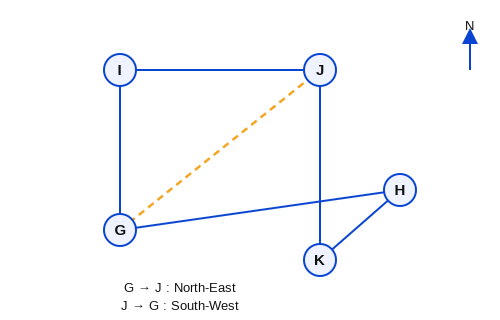
Town G is to the west of Town H. Town I is to the north of Town G. Town J is to the east of Town I. Town K is to the south of Town J. Town H is to the north-east of Town K. What is the position of Town G with respect to Town J?
नगर G, नगर H के पश्चिम में है। नगर I, नगर G के उत्तर में है। नगर J, नगर I के पूर्व में है। नगर K, नगर J के दक्षिण में है। नगर H, नगर K के उत्तर-पूर्व में है। नगर J के सापेक्ष नगर G की स्थिति क्या है?
  1. ASouth-westदक्षिण-पश्चिम
  2. BSouth-eastदक्षिण-पूर्व
  3. CNorth-eastउत्तर-पूर्व
  4. DNorth-westउत्तर-पश्चिम
Show answer

Concept: Plot the towns on a rough map with north upwards; relative direction is read from the first town towards the second.

  1. I is north of G, and J is east of I → J is to the north-east corner of the rectangle whose south-west corner is G.
  2. H (east of G) and K (south of J) only confirm the picture; they do not change G–J.
  3. From J, G lies down-left, i.e. G is to the south-west of J.

Trick: "G w.r.t. J" = stand at J and look for G; opposite of (J w.r.t. G = north-east).

Answer: (A) South-west

अवधारणा: उत्तर ऊपर रखकर कस्बों का मोटा नक्शा बनाएँ; सापेक्ष दिशा पहले कस्बे से दूसरे की ओर देखी जाती है।

  1. I, G के उत्तर में और J, I के पूर्व में → J उस आयत का उत्तर-पूर्व कोना है जिसका दक्षिण-पश्चिम कोना G है।
  2. H (G के पूर्व) और K (J के दक्षिण) केवल चित्र की पुष्टि करते हैं; G–J नहीं बदलते।
  3. J से G नीचे-बाएँ है, अर्थात G, J के दक्षिण-पश्चिम में।

ट्रिक: "J के सापेक्ष G" = J पर खड़े होकर G देखें; (G के सापेक्ष J = उत्तर-पूर्व) का उल्टा।

उत्तर: (A) South-west

RRB NTPC Undergraduate CBT 1General Intelligence and ReasoningDirection senseRRB NTPC Undergraduate CBT 1 2025 · 9 May Shift 2 →
Q13666.
In a certain code language,
A × B means ‘A is the son of B’,
A = B means ‘A is the brother of B’,
A + B means ‘A is the wife of B’ and
A − B means ‘A is the father of B’.
How is S related to Z if ‘S = W × R + T − Z’?
एक निश्चित कूट भाषा में,
A × B का अर्थ है ‘A, B का पुत्र है’,
A = B का अर्थ है ‘A, B का भाई है’,
A + B का अर्थ है ‘A, B की पत्नी है’ और
A − B का अर्थ है ‘A, B का पिता है’।
यदि ‘S = W × R + T − Z’ है, तो S, Z से किस प्रकार संबंधित है?
  1. AFatherपिता
  2. BSonपुत्र
  3. CBrotherभाई
  4. DHusbandपति
Show answer

Concept: Decode pairwise from left to right and build the family tree.

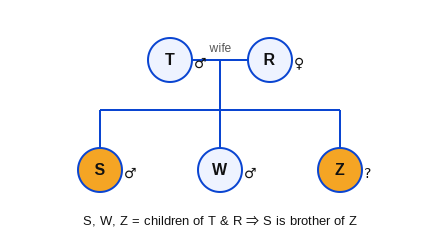
  1. S = W → S is brother of W; W × R → W is son of R; R + T → R is wife of T; T − Z → T is father of Z.
  2. So T and R are the parents; S, W and Z are their children.
  3. S is male (brother), hence S is the brother of Z.

Trick: Symbols between consecutive letters each give one relation – chain them, do not skip.

Answer: (C) Brother

अवधारणा: बाएँ से दाएँ जोड़ी-जोड़ी कोड खोलें और वंश-वृक्ष बनाएँ।

  1. S = W → S, W का भाई; W × R → W, R का पुत्र; R + T → R, T की पत्नी; T − Z → T, Z का पिता।
  2. अतः T और R माता-पिता हैं; S, W और Z उनकी संतानें।
  3. S पुरुष है (भाई), इसलिए S, Z का भाई है।

ट्रिक: लगातार अक्षरों के बीच का हर चिह्न एक संबंध देता है – श्रृंखला बनाएँ, कोई छोड़ें नहीं।

उत्तर: (C) Brother

RRB NTPC Undergraduate CBT 1General Intelligence and ReasoningBlood relations (coded)RRB NTPC Undergraduate CBT 1 2025 · 9 May Shift 2 →
Q13667.
Based on the English alphabetical order, three of the following four letter-cluster pairs are alike in a certain way and thus form a group. Which is the one that does not belong to that group? (Note: The odd one out is not based on the number of
consonants/vowels or their position in the letter cluster.)
अंग्रेज़ी वर्णमाला क्रम के आधार पर, निम्नलिखित चार अक्षर-समूह युग्मों में से तीन किसी निश्चित प्रकार से एक समान हैं और इस प्रकार एक समूह बनाते हैं। वह कौन-सा है जो उस समूह से संबंधित नहीं है? (नोट: असंगत युग्म व्यंजनों/स्वरों की संख्या या अक्षर-समूह में उनकी स्थिति पर आधारित
नहीं है।)
  1. AOL-JQ
  2. BUR-PW
  3. CXU-SY
  4. DRO-MT
Show answer

Concept: Compare the position differences between corresponding letters of each pair.

  1. OL–JQ: O−5 = J, L+5 = Q. UR–PW: U−5 = P, R+5 = W. RO–MT: R−5 = M, O+5 = T.
  2. XU–SY: X−5 = S but U+4 = Y (U+5 would be Z) → pattern broken.

Trick: Pattern (−5, +5) – check the second letter of each pair quickly.

Answer: (C) XU-SY

अवधारणा: हर युग्म के संगत अक्षरों के स्थान-अंतर की तुलना करें।

  1. OL–JQ: O−5 = J, L+5 = Q। UR–PW: U−5 = P, R+5 = W। RO–MT: R−5 = M, O+5 = T।
  2. XU–SY: X−5 = S पर U+4 = Y (U+5 होता Z) → पैटर्न टूटा।

ट्रिक: पैटर्न (−5, +5) – हर युग्म का दूसरा अक्षर जल्दी जाँचें।

उत्तर: (C) XU-SY

RRB NTPC Undergraduate CBT 1General Intelligence and ReasoningOdd one out (letter pairs)RRB NTPC Undergraduate CBT 1 2025 · 9 May Shift 2 →
Q13668.
In the following triad, each group of letters is related to the subsequent one following a certain logic. Select, from the given options, the one which follows the same logic. SAID - AISD - DIAS
MODE - ODME - EDOM
निम्नलिखित त्रिक में, अक्षरों का प्रत्येक समूह एक निश्चित तर्क के अनुसार अपने बाद वाले समूह से संबंधित है। दिए गए विकल्पों में से उस विकल्प का चयन कीजिए जो समान तर्क का अनुसरण करता है। SAID - AISD - DIAS
MODE - ODME - EDOM
  1. AHOGS - OHGS - SOGH
  2. BTONG - ONTG - GNOT
  3. CUGLY - GLUY - GLYU
  4. DMIND - MNID - DNIM
Show answer

Concept: Find how positions 1-2-3-4 are shuffled in each step.

  1. SAID → AISD: order 2-3-1-4; AISD → DIAS = reverse of SAID (4-3-2-1). MODE → ODME (2-3-1-4) → EDOM (reverse) confirms.
  2. TONG → 2-3-1-4 gives ONTG ✓; reverse of TONG = GNOT ✓.
  3. HOGS→OHGS swaps only first two; UGLY→GLYU is not the reverse; MIND→MNID fails the first step.

Trick: Third word = first word written backwards – test that first, it eliminates fast.

Answer: (B) TONG - ONTG - GNOT

अवधारणा: देखें कि हर चरण में स्थान 1-2-3-4 कैसे बदलते हैं।

  1. SAID → AISD: क्रम 2-3-1-4; AISD → DIAS = SAID का उल्टा (4-3-2-1)। MODE → ODME (2-3-1-4) → EDOM (उल्टा) से पुष्टि।
  2. TONG → 2-3-1-4 से ONTG ✓; TONG का उल्टा = GNOT ✓।
  3. HOGS→OHGS में केवल पहले दो बदले; UGLY→GLYU उल्टा नहीं; MIND→MNID पहला चरण ही गलत।

ट्रिक: तीसरा शब्द = पहला शब्द उल्टा – इसे पहले जाँचें, विकल्प जल्दी कटते हैं।

उत्तर: (B) TONG - ONTG - GNOT

RRB NTPC Undergraduate CBT 1General Intelligence and ReasoningLetter cluster analogyRRB NTPC Undergraduate CBT 1 2025 · 9 May Shift 2 →
Q13669.
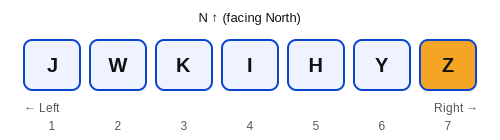
Seven people H, I, J, K, W, Y and Z are sitting in a row facing north. Only J sits to the left of W. Only four people sit between J and Y. Only I sits between K and H and K is not an immediate neighbor of Y. How many people sit to the right of Z?
सात व्यक्ति H, I, J, K, W, Y और Z उत्तर की ओर मुख करके एक पंक्ति में बैठे हैं। W के बाएँ केवल J बैठा है। J और Y के बीच केवल चार व्यक्ति बैठे हैं। K और H के बीच केवल I बैठा है और K, Y का निकटतम पड़ोसी नहीं है। Z के दाएँ कितने व्यक्ति बैठे हैं?
  1. AThreeतीन
  2. BOneएक
  3. CNoneकोई नहीं
  4. DTwoदो
Show answer

Concept: "Only J sits to the left of W" fixes both ends of the row at once.

  1. J is at position 1 (extreme left) and W at 2. Four people between J and Y → Y at 6.
  2. K–I–H (or H–I–K) must be consecutive in seats 3-4-5; K cannot be next to Y (seat 6), so K3, I4, H5.
  3. Z takes the last seat 7 → none sit to the right of Z.

Trick: "Only X sits to the left of Y" ⇒ X is at the extreme left, Y second.

Answer: (C) None

अवधारणा: "W के बाएँ केवल J बैठा है" – इससे पंक्ति के दोनों छोर एक साथ तय हो जाते हैं।

  1. J स्थान 1 (बाएँ छोर) पर और W 2 पर। J और Y के बीच चार लोग → Y 6 पर।
  2. K–I–H (या H–I–K) सीट 3-4-5 पर लगातार; K, Y (सीट 6) का पड़ोसी नहीं, अतः K3, I4, H5।
  3. Z अंतिम सीट 7 पर → Z के दाएँ कोई नहीं।

ट्रिक: "Y के बाएँ केवल X" ⇒ X बाएँ छोर पर, Y दूसरे स्थान पर।

उत्तर: (C) None

RRB NTPC Undergraduate CBT 1General Intelligence and ReasoningLinear seating arrangementRRB NTPC Undergraduate CBT 1 2025 · 9 May Shift 2 →
Q13670.
What should come in place of ‘?’ in the given series?
38 55 74 95 118 ?
दी गई शृंखला में ‘?’ के स्थान पर क्या आना चाहिए?
38 55 74 95 118 ?
  1. A161
  2. B143
  3. C155
  4. D152
Show answer

Concept: Take successive differences and look for a pattern.

  1. 55−38=17, 74−55=19, 95−74=21, 118−95=23 – differences are consecutive odd numbers.
  2. Next difference = 25 → 118+25=143.

Trick: Equal second differences (2, 2, 2…) → next term is just previous + (last difference + 2).

Answer: (B) 143

अवधारणा: क्रमागत अंतर निकालें और पैटर्न देखें।

  1. 55−38=17, 74−55=19, 95−74=21, 118−95=23 – अंतर क्रमागत विषम संख्याएँ हैं।
  2. अगला अंतर = 25 → 118+25=143।

ट्रिक: द्वितीय अंतर समान (2, 2, 2…) → अगला पद = पिछला + (अंतिम अंतर + 2)।

उत्तर: (B) 143

RRB NTPC Undergraduate CBT 1General Intelligence and ReasoningNumber seriesRRB NTPC Undergraduate CBT 1 2025 · 9 May Shift 2 →
Q13671.
WT 16 is related to XW -1 in a certain way. In the same way, DE 9 is related to EH -8. To which of the following is NK 19 related, following the same logic?
WT 16, XW -1 से एक निश्चित प्रकार से संबंधित है। उसी प्रकार, DE 9, EH -8 से संबंधित है। समान तर्क का अनुसरण करते हुए, NK 19 निम्नलिखित में से किससे संबंधित है?
  1. AUY 1
  2. BNJ 7
  3. CON 2
  4. DTY 5
Show answer

Concept: Find the shift of each letter and the change in the number from the two given pairs.

  1. WT 16 → XW −1: W+1 = X, T+3 = W, 16−17 = −1. DE 9 → EH −8: D+1 = E, E+3 = H, 9−17 = −8.
  2. Apply to NK 19: N+1 = O, K+3 = N, 19−17 = 2 → ON 2.

Trick: Rule: (+1, +3, −17); the number part alone (19−17 = 2) picks the option.

Answer: (C) ON 2

अवधारणा: दिए गए दो युग्मों से हर अक्षर का शिफ्ट और संख्या का परिवर्तन निकालें।

  1. WT 16 → XW −1: W+1 = X, T+3 = W, 16−17 = −1। DE 9 → EH −8: D+1 = E, E+3 = H, 9−17 = −8।
  2. NK 19 पर लगाएँ: N+1 = O, K+3 = N, 19−17 = 2 → ON 2।

ट्रिक: नियम: (+1, +3, −17); अकेला संख्या भाग (19−17 = 2) ही विकल्प चुन देता है।

उत्तर: (C) ON 2

RRB NTPC Undergraduate CBT 1General Intelligence and ReasoningLetter-number analogyRRB NTPC Undergraduate CBT 1 2025 · 9 May Shift 2 →
Q13672.
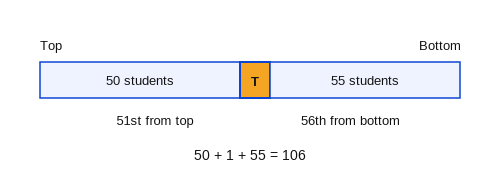
Tus ranked 56th from the bottom and 51st from the top in his class. How many students are there in his class?
तुस अपनी कक्षा में नीचे से 56वें और ऊपर से 51वें स्थान पर है। उसकी कक्षा में कितने विद्यार्थी हैं?
  1. A107
  2. B106
  3. C105
  4. D108
Show answer

Concept: When one person's rank is given from both ends, total = (rank from top) + (rank from bottom) − 1, since the person is counted twice.

  1. 51st from top → 50 students above; 56th from bottom → 55 students below.
  2. Total = 50+1+55=51+56−1=106.

Trick: Top + Bottom − 1 (same person counted in both).

Answer: (B) 106

अवधारणा: जब एक व्यक्ति का स्थान दोनों ओर से दिया हो, कुल = (ऊपर से स्थान) + (नीचे से स्थान) − 1, क्योंकि वह दो बार गिना गया है।

  1. ऊपर से 51वाँ → ऊपर 50 छात्र; नीचे से 56वाँ → नीचे 55 छात्र।
  2. कुल = 50+1+55=51+56−1=106।

ट्रिक: ऊपर + नीचे − 1 (एक ही व्यक्ति दोनों में गिना गया)।

उत्तर: (B) 106

RRB NTPC Undergraduate CBT 1General Intelligence and ReasoningRankingRRB NTPC Undergraduate CBT 1 2025 · 9 May Shift 2 →
Q13673.
QQ 5 is related to VR -6 in a certain way. In the same way, LV 12 is related to QW 1. To which of the following is ES 16 related, following the same logic?
QQ 5, VR -6 से एक निश्चित प्रकार से संबंधित है। उसी प्रकार, LV 12, QW 1 से संबंधित है। समान तर्क का अनुसरण करते हुए, ES 16 निम्नलिखित में से किससे संबंधित है?
  1. AYT 4
  2. BJT 5
  3. CUG 3
  4. DRW 1
Show answer

Concept: Work out the letter shifts and the number change from the given pairs.

  1. QQ 5 → VR −6: Q+5 = V, Q+1 = R, 5−11 = −6. LV 12 → QW 1: L+5 = Q, V+1 = W, 12−11 = 1.
  2. ES 16: E+5 = J, S+1 = T, 16−11 = 5 → JT 5.

Trick: Rule (+5, +1, −11); "16−11 = 5" alone separates JT 5 from the rest.

Answer: (B) JT 5

अवधारणा: दिए गए युग्मों से अक्षर शिफ्ट और संख्या परिवर्तन निकालें।

  1. QQ 5 → VR −6: Q+5 = V, Q+1 = R, 5−11 = −6। LV 12 → QW 1: L+5 = Q, V+1 = W, 12−11 = 1।
  2. ES 16: E+5 = J, S+1 = T, 16−11 = 5 → JT 5।

ट्रिक: नियम (+5, +1, −11); अकेला "16−11 = 5" ही JT 5 को अलग कर देता है।

उत्तर: (B) JT 5

RRB NTPC Undergraduate CBT 1General Intelligence and ReasoningLetter-number analogyRRB NTPC Undergraduate CBT 1 2025 · 9 May Shift 2 →
Q13674.
In a certain code language, "EUOA" is coded as "53" and "YFMP" is coded as "71". What is the code for "RIZB" in that given language?
एक निश्चित कूट भाषा में, "EUOA" को "53" के रूप में कूटबद्ध किया जाता है और "YFMP" को "71" के रूप में कूटबद्ध किया जाता है। उस कूट भाषा में "RIZB" का कूट क्या है?
  1. A56
  2. B66
  3. C60
  4. D58
Show answer

Concept: Try the sum of alphabetical positions and see what constant links it to the code.

  1. EUOA: 5+21+15+1=42; code 53 → 42+11. YFMP: 25+6+13+16=60; code 71 → 60+11.
  2. RIZB: 18+9+26+2=55; code = 55+11=66.

Trick: Code = (sum of positions) + 11 – always test "sum + constant" first in 4-letter number codes.

Answer: (B) 66

अवधारणा: वर्णमाला स्थानों का योग लें और देखें कोड से कौन-सा स्थिरांक जोड़ता है।

  1. EUOA: 5+21+15+1=42; कोड 53 → 42+11। YFMP: 25+6+13+16=60; कोड 71 → 60+11।
  2. RIZB: 18+9+26+2=55; कोड = 55+11=66।

ट्रिक: कोड = (स्थानों का योग) + 11 – 4-अक्षरी संख्या कोड में पहले "योग + स्थिरांक" जाँचें।

उत्तर: (B) 66

RRB NTPC Undergraduate CBT 1General Intelligence and ReasoningCoding–Decoding (number code)RRB NTPC Undergraduate CBT 1 2025 · 9 May Shift 2 →
Q13675.
What should come in place of '?' in the given series based on the English alphabetical order?
TGA WJD ZMG CPJ ?
अंग्रेज़ी वर्णमाला क्रम के आधार पर दी गई शृंखला में '?' के स्थान पर क्या आना चाहिए?
TGA WJD ZMG CPJ ?
  1. AFSM
  2. BERL
  3. CDPN
  4. DGTC
Show answer

Concept: Compare the same position across consecutive clusters.

  1. First letters: T→W→Z→C (+3); second: G→J→M→P (+3); third: A→D→G→J (+3).
  2. Next: C+3 = F, P+3 = S, J+3 = M → FSM.

Trick: Every letter +3; within a cluster the letters also drop by 13 and 6 (T−13 = G, G−6 = A) – a quick double check.

Answer: (A) FSM

अवधारणा: लगातार समूहों में समान स्थान के अक्षरों की तुलना करें।

  1. पहले अक्षर: T→W→Z→C (+3); दूसरे: G→J→M→P (+3); तीसरे: A→D→G→J (+3)।
  2. अगला: C+3 = F, P+3 = S, J+3 = M → FSM।

ट्रिक: हर अक्षर +3; समूह के भीतर भी अक्षर 13 और 6 घटते हैं (T−13 = G, G−6 = A) – त्वरित जाँच।

उत्तर: (A) FSM

RRB NTPC Undergraduate CBT 1General Intelligence and ReasoningLetter seriesRRB NTPC Undergraduate CBT 1 2025 · 9 May Shift 2 →
Q13676.
Select the set in which the numbers are related in the same way as are the numbers of the following sets.
(Note: Operations should be performed on the whole numbers, without breaking down the numbers into their constituent digits. E.g. 13 – Operations on 13 such as
adding/subtracting/multiplying to 13 can be performed. Breaking down 13 into 1 and 3 and then performing mathematical operations on 1 and 3 is not allowed.)
(163, 186, 23)
(144, 200, 56)
उस समुच्चय का चयन कीजिए जिसमें संख्याएँ उसी प्रकार संबंधित हैं जिस प्रकार निम्नलिखित समुच्चयों की संख्याएँ संबंधित हैं।
(नोट: संक्रियाएँ पूर्ण संख्याओं पर की जानी चाहिए, संख्याओं को उनके घटक अंकों में तोड़े बिना। उदाहरण के लिए 13 – 13 पर संक्रियाएँ जैसे
13 में जोड़ना/घटाना/गुणा करना किया जा सकता है। 13 को 1 और 3 में तोड़कर फिर 1 और 3 पर गणितीय संक्रियाएँ करने की अनुमति नहीं है।)
(163, 186, 23)
(144, 200, 56)
  1. A(141, 229, 98)
  2. B(113, 178, 65)
  3. C(135, 187, 62)
  4. D(201, 243, 43)
Show answer

Concept: Test simple relations among the three numbers – here the third is the difference of the first two.

  1. 186−163=23 ✓ and 200−144=56 ✓, so (second − first) = third.
  2. Options: 229−141=88 ✗, 178−113=65 ✓, 187−135=52 ✗, 243−201=42 ✗.

Trick: In (a, b, c) sets always check b − a, a + b and a × b first.

Answer: (B) (113, 178, 65)

अवधारणा: तीनों संख्याओं में सरल संबंध जाँचें – यहाँ तीसरी = पहली दो का अंतर।

  1. 186−163=23 ✓ और 200−144=56 ✓, अतः (दूसरी − पहली) = तीसरी।
  2. विकल्प: 229−141=88 ✗, 178−113=65 ✓, 187−135=52 ✗, 243−201=42 ✗।

ट्रिक: (a, b, c) समुच्चय में हमेशा पहले b − a, a + b और a × b जाँचें।

उत्तर: (B) (113, 178, 65)

RRB NTPC Undergraduate CBT 1General Intelligence and ReasoningNumber analogy (triplets)RRB NTPC Undergraduate CBT 1 2025 · 9 May Shift 2 →
Q13677.
Based on the English alphabetical order, three of the following four are alike in a certain way and thus form a group. Which is the one that does not belong to that group? (Note: The odd man out is not based on the number of consonants/vowels or their position in the letter cluster.)
अंग्रेज़ी वर्णमाला क्रम के आधार पर, निम्नलिखित चार में से तीन किसी निश्चित प्रकार से एक समान हैं और इस प्रकार एक समूह बनाते हैं। वह कौन-सा है जो उस समूह से संबंधित नहीं है? (नोट: असंगत विकल्प व्यंजनों/स्वरों की संख्या या अक्षर-समूह में उनकी स्थिति पर आधारित नहीं है।)
  1. AFGC
  2. BBCY
  3. CLNI
  4. DNOK
Show answer

Concept: Write the alphabetical positions and compare the gaps.

  1. FGC: 6, 7, 3 → +1, −4. BCY: 2, 3, 25 → +1, −4 (3−4 = −1 → wraps to 25 = Y). NOK: 14, 15, 11 → +1, −4.
  2. LNI: 12, 14, 9 → +2, −5 → different pattern.

Trick: Three options share "+1, −4"; LNI is the only one whose first two letters are not consecutive.

Answer: (C) LNI

अवधारणा: वर्णमाला स्थान लिखकर अंतर तुलना करें।

  1. FGC: 6, 7, 3 → +1, −4। BCY: 2, 3, 25 → +1, −4 (3−4 = −1 → घूमकर 25 = Y)। NOK: 14, 15, 11 → +1, −4।
  2. LNI: 12, 14, 9 → +2, −5 → अलग पैटर्न।

ट्रिक: तीन विकल्पों में "+1, −4"; केवल LNI के पहले दो अक्षर लगातार नहीं हैं।

उत्तर: (C) LNI

RRB NTPC Undergraduate CBT 1General Intelligence and ReasoningOdd one out (letter clusters)RRB NTPC Undergraduate CBT 1 2025 · 9 May Shift 2 →
Q13678.
Refer to the following letter series and answer the question that follows. Counting to be done from left to right only.
(Left) U L Y M R D E L C D A E H R O H F X L D W H (Right)
How many such vowels are there, each of which is immediately preceded by a consonant and also immediately followed by a consonant?
निम्नलिखित अक्षर शृंखला को देखिए और उसके बाद दिए गए प्रश्न का उत्तर दीजिए। गिनती केवल बाएँ से दाएँ की ओर की जानी है।
(बाएँ) U L Y M R D E L C D A E H R O H F X L D W H (दाएँ)
ऐसे कितने स्वर हैं, जिनमें से प्रत्येक के ठीक पहले एक व्यंजन है और ठीक बाद भी एक व्यंजन है?
  1. AFourचार
  2. BTwoदो
  3. COneएक
  4. DThreeतीन
Show answer

Concept: Mark each vowel and inspect its immediate neighbours; Y is treated as a consonant.

  1. Series: U L Y M R D E L C D A E H R O H F X L D W H. Vowels: U, E, A, E, O.
  2. U has no letter before it; A is followed by vowel E; E (12th) is preceded by vowel A – all fail.
  3. E (7th): D–E–L ✓ and O (15th): R–O–H ✓ → Two.

Trick: Circle the vowels first, then check only their two neighbours.

Answer: (B) Two

अवधारणा: हर स्वर पर निशान लगाएँ और उसके दोनों पड़ोसी देखें; Y व्यंजन माना जाता है।

  1. श्रृंखला: U L Y M R D E L C D A E H R O H F X L D W H। स्वर: U, E, A, E, O।
  2. U से पहले कोई अक्षर नहीं; A के बाद स्वर E; E (12वाँ) से पहले स्वर A – तीनों अयोग्य।
  3. E (7वाँ): D–E–L ✓ और O (15वाँ): R–O–H ✓ → दो।

ट्रिक: पहले स्वरों पर गोला लगाएँ, फिर केवल उनके दो पड़ोसी जाँचें।

उत्तर: (B) Two

RRB NTPC Undergraduate CBT 1General Intelligence and ReasoningLetter series countingRRB NTPC Undergraduate CBT 1 2025 · 9 May Shift 2 →
Q13679.
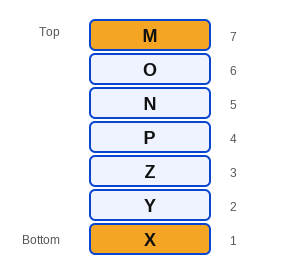
Seven boxes M, N, O, P, X, Y and Z are kept one over the other but not necessarily in the same order. Y is kept second from the bottom. Only three boxes are kept between Y and O. X is kept at one of the positions below Y. Only N is kept between O and P. M is kept at one of the positions above O. How many boxes are kept between X and M?
सात बक्से M, N, O, P, X, Y और Z एक के ऊपर एक रखे गए हैं, लेकिन आवश्यक नहीं कि इसी क्रम में हों। Y नीचे से दूसरे स्थान पर रखा गया है। Y और O के बीच केवल तीन बक्से रखे गए हैं। X, Y के नीचे किसी एक स्थान पर रखा गया है। O और P के बीच केवल N रखा गया है। M, O के ऊपर किसी एक स्थान पर रखा गया है। X और M के बीच कितने बक्से रखे गए हैं?
  1. AThreeतीन
  2. BOneएक
  3. CFourचार
  4. DFiveपाँच
Show answer

Concept: Number the positions 1 (bottom) to 7 (top) and place the fixed boxes first.

  1. Y = 2. Three boxes between Y and O → O = 6. X below Y → X = 1.
  2. Only N between O and P → P = 4, N = 5 (position 8 does not exist). M above O → M = 7; Z takes 3.
  3. Order (bottom→top): X Y Z P N O M. Between X (1) and M (7): Y, Z, P, N, O = Five.

Trick: "k boxes between A and B" means the positions differ by k + 1.

Answer: (D) Five

अवधारणा: स्थान 1 (नीचे) से 7 (ऊपर) तक गिनें और पहले निश्चित बॉक्स रखें।

  1. Y = 2। Y और O के बीच तीन बॉक्स → O = 6। X, Y से नीचे → X = 1।
  2. O और P के बीच केवल N → P = 4, N = 5 (स्थान 8 नहीं है)। M, O से ऊपर → M = 7; Z 3 पर।
  3. क्रम (नीचे→ऊपर): X Y Z P N O M। X (1) और M (7) के बीच: Y, Z, P, N, O = पाँच।

ट्रिक: "A और B के बीच k बॉक्स" = स्थानों का अंतर k + 1।

उत्तर: (D) Five

RRB NTPC Undergraduate CBT 1General Intelligence and ReasoningBox arrangement (stacking)RRB NTPC Undergraduate CBT 1 2025 · 9 May Shift 2 →
Q13680.
​Based on the English alphabetical order, three of the following four letter-clusters are alike in a certain way and thus form a group. Which is the one that DOES NOT belong to that group?
(Note: The odd one out is not based on the number of consonants/vowels or their position in the letter-cluster.)
​अंग्रेज़ी वर्णमाला क्रम के आधार पर, निम्नलिखित चार अक्षर-समूहों में से तीन किसी निश्चित प्रकार से एक समान हैं और इस प्रकार एक समूह बनाते हैं। वह कौन-सा है जो उस समूह से संबंधित नहीं है?
(नोट: असंगत विकल्प व्यंजनों/स्वरों की संख्या या अक्षर-समूह में उनकी स्थिति पर आधारित नहीं है।)
  1. ATPR
  2. BNJK
  3. CPLN
  4. DVRT
Show answer

Concept: Convert to positions and compare the two gaps.

  1. TPR: 20, 16, 18 → −4, +2. PLN: 16, 12, 14 → −4, +2. VRT: 22, 18, 20 → −4, +2.
  2. NJK: 14, 10, 11 → −4, +1 → odd one.

Trick: Third letter = first − 2 in the group (T→R, P→N, V→T) but N→K is −3.

Answer: (B) NJK

अवधारणा: स्थानों में बदलकर दोनों अंतर तुलना करें।

  1. TPR: 20, 16, 18 → −4, +2। PLN: 16, 12, 14 → −4, +2। VRT: 22, 18, 20 → −4, +2।
  2. NJK: 14, 10, 11 → −4, +1 → असंगत।

ट्रिक: समूह में तीसरा अक्षर = पहला − 2 (T→R, P→N, V→T) पर N→K में −3 है।

उत्तर: (B) NJK

RRB NTPC Undergraduate CBT 1General Intelligence and ReasoningOdd one out (letter clusters)RRB NTPC Undergraduate CBT 1 2025 · 9 May Shift 2 →