Question bank

Q&A: practice questions with answers

Search questions on any topic. Filter by exam category, exam, subject and topic, try the question, then open the answer and explanation.

Courses – airGurukul

20,719 questions found.

Q13701.
As of November 2025, Article 1 of the Indian Constitution classifies Indian territory into how many distinct categories under Constitutional provisions?
नवंबर 2025 की स्थिति के अनुसार, भारतीय संविधान का अनुच्छेद 1 संवैधानिक प्रावधानों के अंतर्गत भारतीय क्षेत्र को कितनी अलग-अलग श्रेणियों में वर्गीकृत करता है?
  1. AFourचार
  2. BThreeतीन
  3. CTwoदो
  4. DFiveपाँच
Show answer

Concept: Article 1 declares "India, that is Bharat, shall be a Union of States" and defines the territory of India.

  1. Article 1(3): the territory of India comprises (a) the territories of the States, (b) the Union Territories specified in the First Schedule, and (c) such other territories as may be acquired – three categories.
  2. The number of States/UTs (28 + 8) changes, but these three categories have been constant.

Yaad rakhein: Article 1 → 3 categories: States, UTs, acquired territories.

Answer: (B) Three

अवधारणा: अनुच्छेद 1 घोषित करता है "इंडिया, अर्थात् भारत, राज्यों का संघ होगा" और भारत के राज्यक्षेत्र को परिभाषित करता है।

  1. अनुच्छेद 1(3): भारत के राज्यक्षेत्र में (क) राज्यों के राज्यक्षेत्र, (ख) पहली अनुसूची में निर्दिष्ट संघ राज्यक्षेत्र, और (ग) अर्जित किए जाने वाले अन्य राज्यक्षेत्र शामिल हैं – तीन श्रेणियाँ।
  2. राज्यों/UT की संख्या (28 + 8) बदलती रहती है, पर ये तीन श्रेणियाँ स्थिर हैं।

याद रखें: अनुच्छेद 1 → 3 श्रेणियाँ: राज्य, संघ राज्यक्षेत्र, अर्जित क्षेत्र।

उत्तर: (B) Three
RRB NTPC Undergraduate CBT 1General AwarenessConstitution – Article 1RRB NTPC Undergraduate CBT 1 2025 · 9 May Shift 1 →
Q13702.
What event caused Mahatma Gandhi to withdraw the non-cooperation movement in February 1922?
किस घटना के कारण महात्मा गांधी ने फरवरी 1922 में असहयोग आंदोलन वापस ले लिया?
  1. AA decision by the British to suspend restrictions on civil liberties.नागरिक स्वतंत्रताओं पर प्रतिबंधों को निलंबित करने का अंग्रेज़ों का निर्णय।
  2. BThe violent attack on policemen during the Chauri Chaura incident.चौरी-चौरा की घटना के दौरान पुलिसकर्मियों पर हिंसक हमला।
  3. CThe approval of a new round of constitutional negotiations by London.लंदन द्वारा संवैधानिक वार्ताओं के एक नए दौर की स्वीकृति।
  4. DA nationwide strike by textile workers in Bombay and Ahmedabad.बंबई और अहमदाबाद में कपड़ा श्रमिकों की देशव्यापी हड़ताल।
Show answer

Concept: Gandhi's Non-Cooperation Movement (1920–22) was strictly non-violent; he withdrew it the moment it turned violent.

  1. On 5 February 1922 at Chauri Chaura (Gorakhpur, U.P.), a mob set fire to a police station killing 22 policemen.
  2. Gandhi called off the movement on 12 February 1922 (Bardoli resolution of the Congress Working Committee).

Yaad rakhein: Chauri Chaura (5 Feb 1922) → NCM withdrawn (12 Feb 1922) → Swarajists emerge.

Answer: (B) The violent attack on policemen during the Chauri Chaura incident.

अवधारणा: गांधीजी का असहयोग आंदोलन (1920–22) पूर्णतः अहिंसक था; हिंसा होते ही उन्होंने इसे वापस ले लिया।

  1. 5 फरवरी 1922 को चौरी-चौरा (गोरखपुर, उ.प्र.) में भीड़ ने थाने में आग लगा दी, जिसमें 22 पुलिसकर्मी मारे गए।
  2. गांधीजी ने 12 फरवरी 1922 को आंदोलन स्थगित किया (कांग्रेस कार्यसमिति का बारदोली प्रस्ताव)।

याद रखें: चौरी-चौरा (5 फ़र 1922) → असहयोग वापस (12 फ़र 1922) → स्वराजवादियों का उदय।

उत्तर: (B) The violent attack on policemen during the Chauri Chaura incident.

RRB NTPC Undergraduate CBT 1General AwarenessNon-Cooperation MovementRRB NTPC Undergraduate CBT 1 2025 · 9 May Shift 1 →
Q13703.
Which irrigation technique is considered most efficient for conserving water?
जल संरक्षण के लिए किस सिंचाई तकनीक को सबसे अधिक कुशल माना जाता है?
  1. AFlood irrigationबाढ़ सिंचाई
  2. BDrip irrigationड्रिप (टपक) सिंचाई
  3. CCanal irrigationनहर सिंचाई
  4. DSprinkler irrigationफव्वारा (स्प्रिंकलर) सिंचाई
Show answer

Concept: Micro-irrigation delivers water directly to the plant root zone, minimising evaporation and runoff.

  1. Drip irrigation achieves about 90% water-use efficiency – the highest among common methods; sprinklers are around 70–80%.
  2. Flood and canal irrigation lose a large share of water to seepage and evaporation.

Yaad rakhein: Efficiency order: Drip > Sprinkler > Furrow > Flood.

Answer: (B) Drip irrigation

अवधारणा: सूक्ष्म सिंचाई पानी सीधे पौधे की जड़ों तक पहुँचाती है, जिससे वाष्पीकरण और बहाव न्यूनतम होता है।

  1. ड्रिप (टपक) सिंचाई लगभग 90% जल-उपयोग दक्षता देती है – सामान्य विधियों में सर्वाधिक; स्प्रिंकलर लगभग 70–80%।
  2. बाढ़ और नहर सिंचाई में रिसाव व वाष्पीकरण से बहुत पानी नष्ट होता है।

याद रखें: दक्षता क्रम: ड्रिप > स्प्रिंकलर > कूँड़ > बाढ़।

उत्तर: (B) Drip irrigation

RRB NTPC Undergraduate CBT 1General AwarenessAgriculture – irrigation efficiencyRRB NTPC Undergraduate CBT 1 2025 · 9 May Shift 1 →
Q13704.
Tank irrigation is mainly practiced in which of the following states of India due to uneven terrain and less rainfall?
असमान भू-भाग और कम वर्षा के कारण तालाब सिंचाई मुख्य रूप से भारत के निम्नलिखित में से किस राज्य में की जाती है?
  1. AWest Bengalपश्चिम बंगाल
  2. BHaryanaहरियाणा
  3. CHimachal Pradeshहिमाचल प्रदेश
  4. DKarnatakaकर्नाटक
Show answer

Concept: Tank irrigation uses small reservoirs built by bunding natural depressions; it suits undulating, hard-rock terrain where rainfall is uncertain and groundwater is scarce.

  1. The Deccan plateau states – Tamil Nadu, Andhra Pradesh, Telangana and Karnataka – account for most tank-irrigated area in India; among the options only Karnataka fits.
  2. West Bengal and Haryana rely on canals/wells on flat alluvial plains; Himachal uses kuhls (hill channels).

Yaad rakhein: Tanks → peninsular (Deccan) states; canals → northern plains; wells/tube-wells → UP, Punjab.

Answer: (D) Karnataka

अवधारणा: तालाब सिंचाई प्राकृतिक गड्ढों पर बाँध बनाकर छोटे जलाशयों से होती है; यह ऊबड़-खाबड़, कठोर चट्टानी भूभाग के लिए उपयुक्त है जहाँ वर्षा अनिश्चित और भूजल कम हो।

  1. दक्कन पठार के राज्य – तमिलनाडु, आंध्र प्रदेश, तेलंगाना और कर्नाटक – भारत के अधिकांश तालाब-सिंचित क्षेत्र रखते हैं; विकल्पों में केवल कर्नाटक उपयुक्त है।
  2. पश्चिम बंगाल व हरियाणा समतल जलोढ़ मैदानों में नहर/कुओं पर निर्भर हैं; हिमाचल में कूहल (पहाड़ी नालियाँ) चलती हैं।

याद रखें: तालाब → प्रायद्वीपीय (दक्कन) राज्य; नहर → उत्तरी मैदान; कुएँ/नलकूप → UP, पंजाब।

उत्तर: (D) Karnataka

RRB NTPC Undergraduate CBT 1General AwarenessAgriculture – tank irrigationRRB NTPC Undergraduate CBT 1 2025 · 9 May Shift 1 →
Q13705.
Which of the following situations in football leads to a 'Penalty Kick' being awarded?
फुटबॉल में निम्नलिखित में से किस स्थिति में 'पेनल्टी किक' दी जाती है?
  1. AA player scores three consecutive goalsएक खिलाड़ी लगातार तीन गोल करता है
  2. BA foul is committed inside the penalty areaपेनल्टी क्षेत्र के अंदर फ़ाउल किया जाता है
  3. CThe goalkeeper handles the ball outside the goalगोलकीपर गोल के बाहर गेंद को हाथ से छूता है
  4. DA player is offsideएक खिलाड़ी ऑफ़साइड होता है
Show answer

Concept: In football a penalty kick is a direct free kick taken from the penalty spot (12 yards / 11 m) with only the goalkeeper defending.

  1. It is awarded when a defending player commits a direct-free-kick offence (foul or handball) inside their own penalty area.
  2. Three goals = hat-trick (no kick); goalkeeper handling outside the area = free kick, not penalty; offside = indirect free kick.

Yaad rakhein: Foul inside the box → penalty; outside the box → free kick.

Answer: (B) A foul is committed inside the penalty area

अवधारणा: फुटबॉल में पेनल्टी किक पेनल्टी स्पॉट (12 गज / 11 मी) से ली जाने वाली सीधी फ्री किक है, जिसमें केवल गोलकीपर बचाव करता है।

  1. यह तब दी जाती है जब बचाव पक्ष का खिलाड़ी अपने पेनल्टी क्षेत्र के अंदर फाउल या हैंडबॉल जैसा अपराध करता है।
  2. तीन गोल = हैट्रिक (कोई किक नहीं); गोलकीपर द्वारा क्षेत्र के बाहर हाथ लगाना = फ्री किक, पेनल्टी नहीं; ऑफसाइड = अप्रत्यक्ष फ्री किक।

याद रखें: बॉक्स के अंदर फाउल → पेनल्टी; बॉक्स के बाहर → फ्री किक।

उत्तर: (B) A foul is committed inside the penalty area

RRB NTPC Undergraduate CBT 1General AwarenessSports – football rulesRRB NTPC Undergraduate CBT 1 2025 · 9 May Shift 1 →
Q13706.
Which of the following islands/island groups of India is of coral origin?
भारत के निम्नलिखित में से कौन-सा द्वीप/द्वीप समूह प्रवाल (coral) मूल का है?
  1. ALakshadweep Islandsलक्षद्वीप द्वीप समूह
  2. BDiu Islandदीव द्वीप
  3. CNicobar Islandsनिकोबार द्वीप समूह
  4. DAndaman Islandsअंडमान द्वीप समूह
Show answer

Concept: India has two main island groups: the Andaman & Nicobar Islands in the Bay of Bengal and the Lakshadweep Islands in the Arabian Sea. Their origins differ.

  1. Lakshadweep islands are coral atolls built up by coral polyps on submerged volcanic banks; they are low, flat and ringed by lagoons.
  2. The Andaman and Nicobar Islands are of tectonic/volcanic origin – they are the peaks of a submerged mountain range (extension of the Arakan Yoma); Barren Island here is India's only active volcano.
  3. Diu is a small island off the Kathiawar coast, not coral.

Yaad rakhein: Arabian Sea islands = coral (Lakshadweep); Bay of Bengal islands = volcanic/tectonic (Andaman & Nicobar).

Answer: (A) Lakshadweep Islands

अवधारणा: भारत के दो मुख्य द्वीप समूह हैं – बंगाल की खाड़ी में अंडमान-निकोबार और अरब सागर में लक्षद्वीप। दोनों की उत्पत्ति अलग है।

  1. लक्षद्वीप के द्वीप प्रवाल (coral) द्वीप/एटॉल हैं, जो डूबे हुए ज्वालामुखीय आधार पर प्रवाल जीवों से बने हैं; ये नीचे, समतल और लैगून से घिरे हैं।
  2. अंडमान-निकोबार द्वीप विवर्तनिक/ज्वालामुखीय मूल के हैं – डूबी हुई पर्वत श्रृंखला (अराकान योमा का विस्तार) की चोटियाँ; यहीं भारत का एकमात्र सक्रिय ज्वालामुखी बैरन द्वीप है।
  3. दीव काठियावाड़ तट का छोटा द्वीप है, प्रवाल नहीं।

याद रखें: अरब सागर के द्वीप = प्रवाल (लक्षद्वीप); बंगाल की खाड़ी के द्वीप = ज्वालामुखीय (अंडमान-निकोबार)।

उत्तर: (A) लक्षद्वीप द्वीप समूह

RRB NTPC Undergraduate CBT 1General AwarenessIndian IslandsRRB NTPC Undergraduate CBT 1 2025 · 9 May Shift 1 →
Q13707.
Which of the following file formats does not get affected by the destination format and version?
निम्नलिखित में से कौन-सा फ़ाइल फ़ॉर्मेट गंतव्य (destination) फ़ॉर्मेट और संस्करण से प्रभावित नहीं होता है?
  1. A.pptx
  2. B.ppt
  3. C.pdf
  4. D.docx
Show answer

Concept: PDF (Portable Document Format) was designed to look exactly the same on every device, operating system and software version – it is a fixed-layout format.

  1. Files like .docx, .ppt and .pptx are editable formats; their appearance depends on the version of Word/PowerPoint, installed fonts and the destination device, so layout can shift.
  2. A PDF embeds fonts, images and layout, so the document is rendered identically everywhere – that is why it is used for sharing final documents, forms and e-books.

Yaad rakhein: P in PDF = Portable – "same look everywhere". Office formats (.doc/.ppt) = editable, version-dependent.

Answer: (C) .pdf

अवधारणा: PDF (Portable Document Format) इसलिए बनाया गया कि दस्तावेज़ हर डिवाइस, ऑपरेटिंग सिस्टम और सॉफ्टवेयर संस्करण में बिल्कुल एक जैसा दिखे – यह fixed-layout फॉर्मेट है।

  1. .docx, .ppt और .pptx संपादन योग्य (editable) फॉर्मेट हैं; इनका रूप Word/PowerPoint के संस्करण, फॉन्ट और डिवाइस पर निर्भर करता है, इसलिए लेआउट बदल सकता है।
  2. PDF में फॉन्ट, चित्र और लेआउट एम्बेड रहते हैं, इसलिए दस्तावेज़ हर जगह समान दिखता है – अंतिम दस्तावेज़, फॉर्म और ई-बुक इसी में साझा किए जाते हैं।

याद रखें: PDF का P = Portable – "हर जगह एक जैसा"। Office फॉर्मेट = editable, संस्करण पर निर्भर।

उत्तर: (C) .pdf

RRB NTPC Undergraduate CBT 1General AwarenessFile FormatsRRB NTPC Undergraduate CBT 1 2025 · 9 May Shift 1 →
Q13708.
In which year was the Rashtriya Sanskrit Sansthan established for the development and promotion of Sanskrit?
संस्कृत के विकास और प्रचार-प्रसार के लिए राष्ट्रीय संस्कृत संस्थान की स्थापना किस वर्ष की गई थी?
  1. A1970
  2. B1990
  3. C1960
  4. D1980
Show answer

Concept: Rashtriya Sanskrit Sansthan was set up by the Government of India as the apex body for the development and promotion of Sanskrit education.

  1. It was established on 15 October 1970 under the Ministry of Education, on the recommendation of the Sanskrit Commission (1956–57).
  2. It was declared a deemed university in 2002, and by the Central Sanskrit Universities Act, 2020 it became the Central Sanskrit University, New Delhi.

Yaad rakhein: Sanskrit Sansthan – 1970 → remember "Sanskrit–Sattar (70)".

Answer: (A) 1970

अवधारणा: राष्ट्रीय संस्कृत संस्थान भारत सरकार द्वारा संस्कृत शिक्षा के विकास और प्रचार के लिए स्थापित शीर्ष संस्था है।

  1. इसकी स्थापना 15 अक्टूबर 1970 को शिक्षा मंत्रालय के अधीन, संस्कृत आयोग (1956–57) की सिफारिश पर हुई।
  2. 2002 में इसे डीम्ड विश्वविद्यालय घोषित किया गया और केंद्रीय संस्कृत विश्वविद्यालय अधिनियम, 2020 द्वारा यह केंद्रीय संस्कृत विश्वविद्यालय, नई दिल्ली बन गया।

याद रखें: संस्कृत संस्थान – "संस्कृत–सत्तर (1970)"।

उत्तर: (A) 1970

RRB NTPC Undergraduate CBT 1General AwarenessInstitutions – SanskritRRB NTPC Undergraduate CBT 1 2025 · 9 May Shift 1 →
Q13709.
Which of the following statements is/are true or false about the Windows 11 Task Manager?
(i) It can monitor network usage and identify which app is using the most bandwidth. (ii) It can only view or end unresponsive apps, not start new programs or processes.
Windows 11 टास्क मैनेजर के बारे में निम्नलिखित में से कौन-सा/से कथन सत्य या असत्य है/हैं?
(i) यह नेटवर्क उपयोग की निगरानी कर सकता है और यह पहचान सकता है कि कौन-सा ऐप सबसे अधिक बैंडविड्थ का उपयोग कर रहा है। (ii) यह केवल अनुत्तरदायी (unresponsive) ऐप्स को देख या बंद कर सकता है, नए प्रोग्राम या प्रोसेस शुरू नहीं कर सकता।
  1. A(i) False, (ii) False(i) असत्य, (ii) असत्य
  2. B(i) True, (ii) True(i) सत्य, (ii) सत्य
  3. C(i) True, (ii) False(i) सत्य, (ii) असत्य
  4. D(i) False, (ii) True(i) असत्य, (ii) सत्य
Show answer

Concept: Task Manager in Windows 11 (Ctrl + Shift + Esc) is a monitoring and control utility – it shows CPU, memory, disk, network and GPU usage per process and lets you manage processes.

  1. Statement (i): The Processes and App history tabs show a Network column, so you can see which app is using the most bandwidth – True.
  2. Statement (ii): Besides ending unresponsive apps, Task Manager has a "Run new task" button that starts any program or process (e.g. explorer.exe) – so "only view or end" is False.

Yaad rakhein: Task Manager = monitor + end task + Run new task + Startup apps + Services. Any option saying "only" is usually wrong.

Answer: (C) (i) True, (ii) False

अवधारणा: Windows 11 का Task Manager (Ctrl + Shift + Esc) निगरानी और नियंत्रण उपयोगिता है – यह हर प्रोसेस का CPU, memory, disk, network और GPU उपयोग दिखाता है और प्रोसेस प्रबंधित करने देता है।

  1. कथन (i): Processes और App history टैब में Network कॉलम होता है, जिससे पता चलता है कौन-सा ऐप सबसे अधिक बैंडविड्थ ले रहा है – सत्य।
  2. कथन (ii): अनुत्तरदायी ऐप बंद करने के अलावा Task Manager में "Run new task" बटन है, जिससे कोई भी प्रोग्राम/प्रोसेस (जैसे explorer.exe) शुरू किया जा सकता है – अतः "केवल देखना या बंद करना" असत्य।

याद रखें: Task Manager = monitor + End task + Run new task + Startup apps + Services। "केवल" (only) वाला कथन प्रायः गलत होता है।

उत्तर: (C) (i) True, (ii) False

RRB NTPC Undergraduate CBT 1General AwarenessWindows Task ManagerRRB NTPC Undergraduate CBT 1 2025 · 9 May Shift 1 →
Q13710.
The Bhadla Solar Park, one of the largest in the world, is located in which Indian state?
भड़ला सोलर पार्क, जो विश्व के सबसे बड़े सोलर पार्कों में से एक है, भारत के किस राज्य में स्थित है?
  1. AGujaratगुजरात
  2. BMaharashtraमहाराष्ट्र
  3. CRajasthanराजस्थान
  4. DMadhya Pradeshमध्य प्रदेश
Show answer

Concept: Bhadla Solar Park is among the world's largest solar parks with an installed capacity of about 2,245 MW.

  1. It is located at Bhadla village in Phalodi tehsil of Jodhpur district, Rajasthan – a hot, dry desert area with very high solar radiation.
  2. Other big parks: Pavagada (Karnataka), Kurnool (Andhra Pradesh), Rewa (Madhya Pradesh), Charanka (Gujarat).

Yaad rakhein: Bhadla → Jodhpur → Rajasthan (Thar desert = maximum sunshine).

Answer: (C) Rajasthan

अवधारणा: भड़ला सोलर पार्क लगभग 2,245 MW क्षमता के साथ विश्व के सबसे बड़े सौर पार्कों में से एक है।

  1. यह राजस्थान के जोधपुर जिले की फलोदी तहसील के भड़ला गाँव में है – अत्यधिक सौर विकिरण वाला गर्म, शुष्क मरुस्थलीय क्षेत्र।
  2. अन्य बड़े पार्क: पावागड़ा (कर्नाटक), कुरनूल (आंध्र प्रदेश), रीवा (मध्य प्रदेश), चारणका (गुजरात)।

याद रखें: भड़ला → जोधपुर → राजस्थान (थार मरुस्थल = सबसे अधिक धूप)।

उत्तर: (C) राजस्थान

RRB NTPC Undergraduate CBT 1General AwarenessSolar Energy in IndiaRRB NTPC Undergraduate CBT 1 2025 · 9 May Shift 1 →
Q13711.
What is the primary goal of the Bharatiya Antariksha Station (BAS) initiative announced by ISRO?
ISRO द्वारा घोषित भारतीय अंतरिक्ष स्टेशन (BAS) पहल का प्राथमिक लक्ष्य क्या है?
  1. ATo privatize satellite launches in Indiaभारत में उपग्रह प्रक्षेपणों का निजीकरण करना
  2. BTo establish an indigenous space stationएक स्वदेशी अंतरिक्ष स्टेशन स्थापित करना
  3. CTo build India’s first space telescopeभारत की पहली अंतरिक्ष दूरबीन (space telescope) बनाना
  4. DTo launch India’s first human mission to Marsमंगल ग्रह पर भारत का पहला मानव मिशन भेजना
Show answer

Concept: Bharatiya Antariksh Station (BAS) is India's planned indigenous space station, approved by the Union Cabinet in September 2024 as part of the expanded Gaganyaan programme.

  1. Its first module (BAS-1) is targeted for launch by 2028 and the full station by 2035; an Indian crewed Moon landing is targeted for 2040.
  2. It will orbit at about 400 km and support long-duration human spaceflight and microgravity research.
  3. Telescopes (AstroSat) or Mars missions (Mangalyaan) are separate programmes.

Yaad rakhein: BAS 2035 – Moon 2040 (Amrit Kaal space roadmap).

Answer: (B) To establish an indigenous space station

अवधारणा: भारतीय अंतरिक्ष स्टेशन (BAS) भारत का प्रस्तावित स्वदेशी अंतरिक्ष स्टेशन है, जिसे सितंबर 2024 में केंद्रीय मंत्रिमंडल ने विस्तारित गगनयान कार्यक्रम के तहत मंज़ूरी दी।

  1. इसका पहला मॉड्यूल (BAS-1) 2028 तक और पूरा स्टेशन 2035 तक प्रक्षेपित करने का लक्ष्य है; 2040 तक भारतीय को चंद्रमा पर उतारने का लक्ष्य है।
  2. यह लगभग 400 km की कक्षा में रहेगा और लंबी अवधि की मानव अंतरिक्ष उड़ान व सूक्ष्मगुरुत्व अनुसंधान में सहायक होगा।
  3. दूरबीन (AstroSat) या मंगल मिशन (मंगलयान) अलग कार्यक्रम हैं।

याद रखें: BAS 2035 – चंद्रमा 2040 (अमृत काल अंतरिक्ष रोडमैप)।

उत्तर: (B) स्वदेशी अंतरिक्ष स्टेशन स्थापित करना

RRB NTPC Undergraduate CBT 1General AwarenessISRO – Space StationRRB NTPC Undergraduate CBT 1 2025 · 9 May Shift 1 →
Q13712.
Which of the following SI prefixes has a multiplicative factor of 10–9 ?
निम्नलिखित में से किस SI उपसर्ग (prefix) का गुणक 10–9 है?
  1. AMilliमिली
  2. BNanoनैनो
  3. CCentiसेंटी
  4. DMicroमाइक्रो
Show answer

Concept: SI prefixes denote powers of ten: centi =10−2, milli =10−3, micro =10−6, nano =10−9, pico =10−12.

  1. 10−9 corresponds to the prefix nano (symbol n), e.g. 1 nanometre =10−9 m.
  2. Milli is one-thousandth, centi one-hundredth and micro one-millionth, so none of them matches.

Yaad rakhein: Descending by 3: milli (−3) → micro (−6) → nano (−9) → pico (−12); "nano" ~ "nine".

Answer: (B) Nano

अवधारणा: SI उपसर्ग दस की घातें दर्शाते हैं: सेंटी =10−2, मिली =10−3, माइक्रो =10−6, नैनो =10−9, पिको =10−12।

  1. 10−9 के लिए उपसर्ग नैनो (प्रतीक n) है, जैसे 1 नैनोमीटर =10−9 m।
  2. मिली = हज़ारवाँ, सेंटी = सौवाँ, माइक्रो = दस लाखवाँ भाग – इनमें से कोई मेल नहीं खाता।

याद रखें: 3-3 घटते क्रम में: मिली (−3) → माइक्रो (−6) → नैनो (−9) → पिको (−12); "नैनो" ~ "नाइन"।

उत्तर: (B) नैनो (Nano)

RRB NTPC Undergraduate CBT 1General AwarenessSI PrefixesRRB NTPC Undergraduate CBT 1 2025 · 9 May Shift 1 →
Q13713.
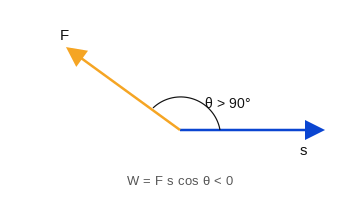
In which of the following cases is the work done negative?
निम्नलिखित में से किस स्थिति में किया गया कार्य ऋणात्मक होता है?
  1. AForce and displacement are between 0° and 90°बल और विस्थापन के बीच का कोण 0° और 90° के बीच हो
  2. BForce and displacement are in the same directionबल और विस्थापन एक ही दिशा में हों
  3. CForce and displacement are between 90° and 180°बल और विस्थापन के बीच का कोण 90° और 180° के बीच हो
  4. DForce and displacement are mutually perpendicularबल और विस्थापन परस्पर लंबवत हों
Show answer

Concept: Work done W=Fscosθ, where θ is the angle between the force and the displacement. Its sign depends only on cosθ.

  1. θ between 0∘ and 90∘: cosθ>0 → positive work (e.g. pushing a box forward).
  2. θ=90∘: cos90∘=0 → zero work (e.g. gravity on a horizontally moving body).
  3. θ between 90∘ and 180∘: cosθ<0 → negative work (e.g. friction, which acts opposite to motion).

Yaad rakhein: Force "helping" motion → +W; force "opposing" motion (friction, braking) → −W; force at right angle → zero.

Answer: (C) Force and displacement are between 90∘ and 180∘

अवधारणा: किया गया कार्य W=Fscosθ, जहाँ θ बल और विस्थापन के बीच का कोण है। कार्य का चिह्न केवल cosθ पर निर्भर करता है।

  1. θ, 0∘ और 90∘ के बीच: cosθ>0 → धनात्मक कार्य (जैसे बक्से को आगे धकेलना)।
  2. θ=90∘: cos90∘=0 → शून्य कार्य (जैसे क्षैतिज गति पर गुरुत्व बल)।
  3. θ, 90∘ और 180∘ के बीच: cosθ<0 → ऋणात्मक कार्य (जैसे घर्षण, जो गति के विपरीत लगता है)।

याद रखें: गति में "मदद" करने वाला बल → +W; गति का "विरोध" करने वाला बल (घर्षण, ब्रेक) → −W; लंबवत बल → शून्य।

उत्तर: (C) बल और विस्थापन 90∘ और 180∘ के बीच हों

RRB NTPC Undergraduate CBT 1General AwarenessWork – Sign of Work DoneRRB NTPC Undergraduate CBT 1 2025 · 9 May Shift 1 →
Q13714.
In which year was the Indian freedom fighter Tantia Tope, a prominent leader of the Revolt of 1857, executed by the British?
1857 के विद्रोह के प्रमुख नेता, भारतीय स्वतंत्रता सेनानी तात्या टोपे को अंग्रेज़ों द्वारा किस वर्ष फाँसी दी गई थी?
  1. A1860
  2. B1859
  3. C1857
  4. D1858
Show answer

Concept: Tantia Tope (Ramchandra Pandurang) was Nana Saheb's general and the most skilled guerrilla commander of the 1857 Revolt, fighting at Kanpur, Kalpi and Gwalior with Rani Lakshmibai.

  1. After the fall of Gwalior (June 1858) he carried on guerrilla warfare in Central India for nearly a year.
  2. He was betrayed by his associate Man Singh of Narwar, captured in April 1859 and hanged at Shivpuri (Sipri) on 18 April 1859.

Yaad rakhein: Lakshmibai fell June 1858; Tantia Tope hanged April 1859 – the last major leader to be executed.

Answer: (B) 1859

अवधारणा: तात्या टोपे (रामचंद्र पांडुरंग) नाना साहेब के सेनापति और 1857 के विद्रोह के सबसे कुशल छापामार (guerrilla) कमांडर थे, जिन्होंने कानपुर, कालपी और ग्वालियर में रानी लक्ष्मीबाई के साथ लड़ाई लड़ी।

  1. ग्वालियर के पतन (जून 1858) के बाद लगभग एक वर्ष तक मध्य भारत में छापामार युद्ध चलाते रहे।
  2. नरवर के मान सिंह के विश्वासघात से अप्रैल 1859 में पकड़े गए और 18 अप्रैल 1859 को शिवपुरी (सिप्री) में फाँसी दी गई।

याद रखें: लक्ष्मीबाई जून 1858 में शहीद; तात्या टोपे अप्रैल 1859 में फाँसी – अंतिम प्रमुख नेता जिन्हें फाँसी हुई।

उत्तर: (B) 1859

RRB NTPC Undergraduate CBT 1General AwarenessRevolt of 1857RRB NTPC Undergraduate CBT 1 2025 · 9 May Shift 1 →
Q13715.
Which of the following rulers issued the famous Junagarh inscription?
निम्नलिखित में से किस शासक ने प्रसिद्ध जूनागढ़ अभिलेख जारी किया था?
  1. ANahapanaनहपान
  2. BKanishkaकनिष्क
  3. CKadphises Iकडफिसेस प्रथम
  4. DRudradaman Iरुद्रदामन प्रथम
Show answer

Concept: The Junagadh (Girnar) rock inscription of 150 CE is the earliest long inscription in chaste Sanskrit and was issued by the Saka (Western Kshatrapa) ruler Rudradaman I.

  1. It records the repair of the Sudarshana lake, originally built under Chandragupta Maurya and improved under Ashoka, after it burst in a storm.
  2. It also praises Rudradaman's conquests, including victories over the Satavahana king Satakarni.
  3. Nahapana was an earlier Kshaharata Kshatrapa; Kanishka and Kadphises I were Kushana rulers.

Yaad rakhein: Junagadh = Rudradaman = Sudarshana lake = first Sanskrit inscription.

Answer: (D) Rudradaman I

अवधारणा: 150 ई. का जूनागढ़ (गिरनार) शिलालेख शुद्ध संस्कृत का सबसे पुराना लंबा अभिलेख है, जिसे शक (पश्चिमी क्षत्रप) शासक रुद्रदामन प्रथम ने जारी किया।

  1. इसमें सुदर्शन झील की मरम्मत का उल्लेख है, जो चंद्रगुप्त मौर्य के समय बनी और अशोक के समय सुधारी गई थी, तथा तूफ़ान में टूट गई थी।
  2. इसमें रुद्रदामन की विजयों, विशेषकर सातवाहन राजा शातकर्णि पर जीत, की प्रशंसा है।
  3. नहपान पहले का क्षहरात क्षत्रप था; कनिष्क और कडफिसेस प्रथम कुषाण शासक थे।

याद रखें: जूनागढ़ = रुद्रदामन = सुदर्शन झील = पहला संस्कृत अभिलेख।

उत्तर: (D) रुद्रदामन प्रथम

RRB NTPC Undergraduate CBT 1General AwarenessAncient InscriptionsRRB NTPC Undergraduate CBT 1 2025 · 9 May Shift 1 →
Q13716.
According to a 2025 release by the Department of Science and Technology, the new sodium-ion battery developed at Jawaharlal Nehru Centre for Advanced Scientific Research (JNCASR) can be fast-charged to about 80% in roughly:
विज्ञान और प्रौद्योगिकी विभाग द्वारा 2025 में जारी एक विज्ञप्ति के अनुसार, जवाहरलाल नेहरू उन्नत वैज्ञानिक अनुसंधान केंद्र (JNCASR) में विकसित नई सोडियम-आयन बैटरी को लगभग कितने समय में लगभग 80% तक फास्ट-चार्ज किया जा सकता है?
  1. A26 minutes26 मिनट
  2. B16 minutes16 मिनट
  3. C36 minutes36 मिनट
  4. D6 minutes6 मिनट
Show answer

Concept: In April 2025 the Department of Science and Technology announced that researchers at JNCASR, Bengaluru had developed a super-fast-charging sodium-ion (Na-ion) battery.

  1. The battery uses a NASICON-type anode (Na1.0V0.25Al0.25Nb1.5(PO4)3), engineered by nanosizing, carbon coating and aluminium doping.
  2. It can charge to about 80% in just 6 minutes and lasts over 3,000 charge cycles, offering a cheap, abundant alternative to lithium-ion.

Yaad rakhein: JNCASR sodium-ion → "6 minutes to 80%" – sodium is cheap and plentiful in India.

Answer: (D) 6 minutes

अवधारणा: अप्रैल 2025 में विज्ञान एवं प्रौद्योगिकी विभाग (DST) ने बताया कि JNCASR, बेंगलुरु के शोधकर्ताओं ने अति-तेज़ चार्ज होने वाली सोडियम-आयन (Na-ion) बैटरी विकसित की है।

  1. इसमें NASICON प्रकार का एनोड (Na1.0V0.25Al0.25Nb1.5(PO4)3) है, जिसे नैनो-आकार, कार्बन कोटिंग और एल्युमिनियम डोपिंग से तैयार किया गया।
  2. यह केवल 6 मिनट में लगभग 80% चार्ज हो जाती है और 3,000 से अधिक चक्र चलती है – लिथियम-आयन का सस्ता, सुलभ विकल्प।

याद रखें: JNCASR सोडियम-आयन → "6 मिनट में 80%" – सोडियम भारत में सस्ता और प्रचुर है।

उत्तर: (D) 6 मिनट

RRB NTPC Undergraduate CBT 1General AwarenessScience & Tech – BatteriesRRB NTPC Undergraduate CBT 1 2025 · 9 May Shift 1 →
Q13717.
The main aim of globalisation in India was to____.
भारत में वैश्वीकरण का मुख्य उद्देश्य ____ था।
  1. APromote only self-sufficiency within the nationराष्ट्र के भीतर केवल आत्मनिर्भरता को बढ़ावा देना
  2. BRestrict and close foreign trade completelyविदेशी व्यापार को पूरी तरह प्रतिबंधित और बंद करना
  3. CIncrease and maintain higher trade barriersव्यापार अवरोधों को बढ़ाना और ऊँचा बनाए रखना
  4. DIntegrate Indian economy with global marketsभारतीय अर्थव्यवस्था को वैश्विक बाज़ारों के साथ एकीकृत करना
Show answer

Concept: Globalisation, one of the three pillars of the 1991 New Economic Policy (Liberalisation, Privatisation, Globalisation), means integrating the national economy with the world economy.

  1. It involves reducing trade barriers, allowing foreign investment (FDI/FII), free flow of goods, services, technology and capital.
  2. Options about self-sufficiency only, closing trade or raising barriers describe the opposite – protectionism of the pre-1991 era.

Yaad rakhein: LPG 1991: Liberalisation = fewer controls, Privatisation = less government ownership, Globalisation = join the world market.

Answer: (D) Integrate Indian economy with global markets

अवधारणा: वैश्वीकरण 1991 की नई आर्थिक नीति के तीन स्तंभों (उदारीकरण, निजीकरण, वैश्वीकरण – LPG) में से एक है, जिसका अर्थ है राष्ट्रीय अर्थव्यवस्था को विश्व अर्थव्यवस्था से जोड़ना।

  1. इसमें व्यापार बाधाएँ घटाना, विदेशी निवेश (FDI/FII) की अनुमति, वस्तुओं, सेवाओं, तकनीक और पूँजी का मुक्त प्रवाह शामिल है।
  2. केवल आत्मनिर्भरता, व्यापार बंद करना या बाधाएँ बढ़ाना – ये 1991 से पहले के संरक्षणवाद (protectionism) को दर्शाते हैं, वैश्वीकरण के विपरीत।

याद रखें: LPG 1991: उदारीकरण = कम नियंत्रण, निजीकरण = कम सरकारी स्वामित्व, वैश्वीकरण = विश्व बाज़ार से जुड़ाव।

उत्तर: (D) भारतीय अर्थव्यवस्था को वैश्विक बाज़ारों से एकीकृत करना

RRB NTPC Undergraduate CBT 1General AwarenessEconomy – GlobalisationRRB NTPC Undergraduate CBT 1 2025 · 9 May Shift 1 →
Q13718.
Kalidasa, the celebrated Sanskrit poet and dramatist, flourished in the court of which Gupta ruler?
प्रसिद्ध संस्कृत कवि और नाटककार कालिदास किस गुप्त शासक के दरबार में फले-फूले?
  1. ASamudraguptaसमुद्रगुप्त
  2. BChandragupta IIचंद्रगुप्त द्वितीय
  3. CChandragupta Iचंद्रगुप्त प्रथम
  4. DSkandaguptaस्कंदगुप्त
Show answer

Concept: The Gupta age is called the golden age of Sanskrit literature; its greatest poet-dramatist Kalidasa is traditionally placed in the court of Chandragupta II 'Vikramaditya' (c. 375–415 CE).

  1. Kalidasa is counted among the Navaratnas (nine gems) of Vikramaditya's court; his works include Abhijnanashakuntalam, Meghadutam, Raghuvamsham and Kumarasambhavam.
  2. Samudragupta was a patron of Harishena; Chandragupta I founded the Gupta era (319–20 CE); Skandagupta repelled the Hunas.

Yaad rakhein: Kalidasa – Vikramaditya – Chandragupta II – Ujjain – Navaratna.

Answer: (B) Chandragupta II

अवधारणा: गुप्त काल संस्कृत साहित्य का स्वर्ण युग कहलाता है; इसके महानतम कवि-नाटककार कालिदास को परंपरागत रूप से चंद्रगुप्त द्वितीय 'विक्रमादित्य' (लगभग 375–415 ई.) के दरबार में माना जाता है।

  1. कालिदास विक्रमादित्य के दरबार के नवरत्नों में गिने जाते हैं; उनकी रचनाएँ – अभिज्ञानशाकुंतलम्, मेघदूतम्, रघुवंशम्, कुमारसंभवम्।
  2. समुद्रगुप्त हरिषेण के संरक्षक थे; चंद्रगुप्त प्रथम ने गुप्त संवत (319–20 ई.) चलाया; स्कंदगुप्त ने हूणों को हराया।

याद रखें: कालिदास – विक्रमादित्य – चंद्रगुप्त द्वितीय – उज्जैन – नवरत्न।

उत्तर: (B) चंद्रगुप्त द्वितीय

RRB NTPC Undergraduate CBT 1General AwarenessGupta Period – LiteratureRRB NTPC Undergraduate CBT 1 2025 · 9 May Shift 1 →
Q13719.
Name the popular technique used by the Harappans for casting bronze.
हड़प्पावासियों द्वारा काँसा ढालने के लिए प्रयुक्त प्रसिद्ध तकनीक का नाम बताइए।
  1. ASand Casting Techniqueसैंड कास्टिंग तकनीक
  2. BDie Casting Techniqueडाई कास्टिंग तकनीक
  3. CLost-Wax Techniqueलॉस्ट-वैक्स (मोम-विलय) तकनीक
  4. DOpen Mould Casting Techniqueओपन मोल्ड कास्टिंग तकनीक
Show answer

Concept: Harappan metal-workers cast bronze figurines by the lost-wax (cire perdue) technique.

  1. A wax model is coated with clay; on heating, the wax melts and drains out, leaving a hollow mould into which molten bronze is poured.
  2. The famous bronze 'Dancing Girl' from Mohenjodaro and the bronze buffalo and bull figures were made this way.
  3. Sand and die casting are modern industrial techniques, not Harappan.

Yaad rakhein: Harappan bronze = lost-wax; Dancing Girl = Mohenjodaro; bronze = copper + tin.

Answer: (C) Lost-Wax Technique

अवधारणा: हड़प्पाई धातुकार काँसे की मूर्तियाँ मोम-विलय (lost-wax / cire perdue) तकनीक से ढालते थे।

  1. मोम के मॉडल पर मिट्टी की परत चढ़ाई जाती थी; गर्म करने पर मोम पिघलकर बह जाता और खोखले साँचे में पिघला काँसा डाला जाता था।
  2. मोहनजोदड़ो की प्रसिद्ध काँसे की 'नर्तकी' (Dancing Girl) तथा भैंस और बैल की मूर्तियाँ इसी विधि से बनीं।
  3. सैंड कास्टिंग और डाई कास्टिंग आधुनिक औद्योगिक तकनीकें हैं, हड़प्पाई नहीं।

याद रखें: हड़प्पाई काँसा = lost-wax; नर्तकी = मोहनजोदड़ो; काँसा = ताँबा + टिन।

उत्तर: (C) मोम-विलय तकनीक (Lost-Wax Technique)

RRB NTPC Undergraduate CBT 1General AwarenessHarappan Civilisation – CraftsRRB NTPC Undergraduate CBT 1 2025 · 9 May Shift 1 →
Q13720.
Which of the following judicial approaches is best exemplified by the practice of Public Interest Litigation (PIL) in India?
भारत में जनहित याचिका (PIL) की प्रथा निम्नलिखित में से किस न्यायिक दृष्टिकोण का सर्वोत्तम उदाहरण है?
  1. AJudicial Absolutismन्यायिक निरंकुशता
  2. BJudicial Restraintन्यायिक संयम
  3. CJudicial Activismन्यायिक सक्रियता
  4. DJudicial Passivismन्यायिक निष्क्रियता
Show answer

Concept: Judicial activism is the proactive role of the judiciary in protecting citizens' rights and compelling the executive to act, going beyond strict interpretation of law.

  1. Public Interest Litigation (PIL), developed in India by Justices P.N. Bhagwati and V.R. Krishna Iyer around 1979–80, relaxed the rule of locus standi so that any public-spirited person can approach the court for the disadvantaged.
  2. Through PILs courts have ordered action on bonded labour, prison reforms, environment (M.C. Mehta cases) – a classic example of judicial activism.
  3. Judicial restraint is the opposite – deference to the legislature and executive.

Yaad rakhein: PIL = Bhagwati + Krishna Iyer = Judicial Activism (Hussainara Khatoon case, 1979).

Answer: (C) Judicial Activism

अवधारणा: न्यायिक सक्रियता (Judicial Activism) न्यायपालिका की वह सक्रिय भूमिका है जिसमें वह कानून की कठोर व्याख्या से आगे बढ़कर नागरिकों के अधिकारों की रक्षा करती है और कार्यपालिका को कार्य करने के लिए बाध्य करती है।

  1. जनहित याचिका (PIL) को भारत में न्यायमूर्ति पी.एन. भगवती और वी.आर. कृष्ण अय्यर ने 1979–80 के आसपास विकसित किया; इसमें locus standi का नियम शिथिल कर दिया गया ताकि कोई भी जनहितैषी व्यक्ति वंचितों के लिए अदालत जा सके।
  2. PIL से अदालतों ने बंधुआ मज़दूरी, जेल सुधार, पर्यावरण (एम.सी. मेहता मामले) पर आदेश दिए – न्यायिक सक्रियता का उत्कृष्ट उदाहरण।
  3. न्यायिक संयम (restraint) इसका विपरीत है – विधायिका और कार्यपालिका का सम्मान।

याद रखें: PIL = भगवती + कृष्ण अय्यर = न्यायिक सक्रियता (हुसैनारा खातून केस, 1979)।

उत्तर: (C) न्यायिक सक्रियता (Judicial Activism)

RRB NTPC Undergraduate CBT 1General AwarenessPolity – JudiciaryRRB NTPC Undergraduate CBT 1 2025 · 9 May Shift 1 →