Question bank

Q&A: practice questions with answers

Search questions on any topic. Filter by exam category, exam, subject and topic, try the question, then open the answer and explanation.

Courses – airGurukul

20,719 questions found.

Q13881.
What should come in place of the question mark (?) in the given series to make it logically complete?
MV7 PT13 RR19 ?
दी गई शृंखला को तार्किक रूप से पूर्ण करने के लिए प्रश्नचिह्न (?) के स्थान पर क्या आना चाहिए?
MV7 PT13 RR19 ?
  1. ATR27
  2. BTP25
  3. CSP25
  4. DTQ26
Show answer

Concept: Treat each of the three positions as its own series.

  1. 1st letter: M→P→R: +3,+2 → next +1 → S.
  2. 2nd letter: V→T→R: −2 each → P.
  3. Number: 7→13→19: +6 each → 25.
  4. Term: SP25.

Trick: The second letter (−2 → P) and number (+6 → 25) together match only option (C).

Answer: (C) SP25

अवधारणा: तीनों स्थानों को अलग-अलग श्रृंखला मानें।

  1. पहला अक्षर: M→P→R: +3,+2 → अगला +1 → S।
  2. दूसरा अक्षर: V→T→R: हर बार −2 → P।
  3. संख्या: 7→13→19: हर बार +6 → 25।
  4. पद: SP25।

ट्रिक: दूसरा अक्षर (−2 → P) और संख्या (+6 → 25) मिलकर केवल विकल्प (C) से मेल खाते हैं।

उत्तर: (C) SP25
RRB NTPC Undergraduate CBT 1General Intelligence and ReasoningLetter-number seriesRRB NTPC Undergraduate CBT 1 2025 · 8 May Shift 3 →
Q13882.
Based on the alphabetical order, three of the following four are alike in a certain way and thus form a group. Which is the one that does not belong to that group?
(Note: The odd man out is not based on the number of consonants/vowels or their position in the letter cluster.)
वर्णमाला क्रम के आधार पर, निम्नलिखित चार में से तीन एक निश्चित प्रकार से समान हैं और इस प्रकार एक समूह बनाते हैं। वह कौन-सा है जो उस समूह से संबंधित नहीं है?
(नोट: असंगत विकल्प व्यंजनों/स्वरों की संख्या या अक्षर-समूह में उनकी स्थिति पर आधारित नहीं है।)
  1. ANPS
  2. BHJL
  3. CEGJ
  4. DQSV
Show answer

Concept: Find the gaps between consecutive letters in each cluster.

  1. NPS: N→P +2, P→S +3. EGJ: +2,+3. QSV: +2,+3.
  2. HJL: H→J +2, J→L +2 → pattern (+2,+2) – different.

Trick: Write the position differences under each cluster; the one with a different pair is the odd one.

Answer: (B) HJL

अवधारणा: हर समूह में क्रमागत अक्षरों का अंतर निकालें।

  1. NPS: N→P +2, P→S +3। EGJ: +2,+3। QSV: +2,+3।
  2. HJL: H→J +2, J→L +2 → पैटर्न (+2,+2) – भिन्न।

ट्रिक: हर समूह के नीचे स्थान-अंतर लिखें; अलग जोड़े वाला ही विषम है।

उत्तर: (B) HJL

RRB NTPC Undergraduate CBT 1General Intelligence and ReasoningOdd one out (letter clusters)RRB NTPC Undergraduate CBT 1 2025 · 8 May Shift 3 →
Q13883.
Read the given statement(s) and conclusions carefully. Assuming that the information given in the statements is true, even if it appears to be at variance with commonly known facts, decide which of the given conclusions logically follow(s) from the statement(s).
Statements:
All carpets are shoes.
All paintings are shoes.
Conclusions:
(I) Some carpets are paintings.
(II) Some shoes are paintings.
दिए गए कथन(कथनों) और निष्कर्षों को ध्यानपूर्वक पढ़िए। यह मानते हुए कि कथनों में दी गई जानकारी सत्य है, भले ही वह सामान्यतः ज्ञात तथ्यों से भिन्न प्रतीत होती हो, निर्णय कीजिए कि दिए गए निष्कर्षों में से कौन-सा/कौन-से निष्कर्ष कथन(कथनों) का तार्किक रूप से अनुसरण करता है/करते हैं।
कथन:
सभी कालीन जूते हैं।
सभी चित्र जूते हैं।
निष्कर्ष:
(I) कुछ कालीन चित्र हैं।
(II) कुछ जूते चित्र हैं।
  1. AOnly conclusion (I) followsकेवल निष्कर्ष (I) अनुसरण करता है
  2. BNeither conclusion (I) nor (II) followsन तो निष्कर्ष (I) और न ही (II) अनुसरण करता है
  3. CBoth conclusions (I) and (II) followनिष्कर्ष (I) और (II) दोनों अनुसरण करते हैं
  4. DOnly conclusion (II) followsकेवल निष्कर्ष (II) अनुसरण करता है
Show answer

Concept: Two "All … are shoes" statements share only the predicate; the subjects need not overlap.

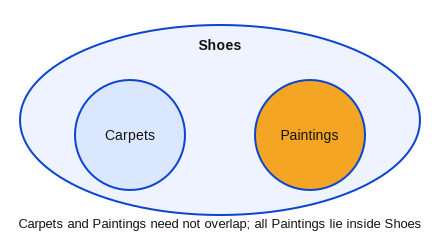
  1. Carpets and Paintings are both inside Shoes, but the diagram can be drawn with them separate – so "Some carpets are paintings" (I) does not necessarily follow.
  2. "All paintings are shoes" ⇒ "Some shoes are paintings" (II) – the converse always follows.

Trick: Middle term "shoes" is undistributed in both premises → no conclusion between carpets and paintings; only the direct converses follow.

Answer: (D) Only conclusion (II) follows

अवधारणा: दो "All … are shoes" कथनों में केवल विधेय साझा है; कर्ता (subjects) का overlap ज़रूरी नहीं।

  1. Carpets और Paintings दोनों Shoes के अंदर हैं, पर चित्र में उन्हें अलग-अलग भी खींचा जा सकता है – इसलिए "कुछ carpets, paintings हैं" (I) निश्चित रूप से नहीं निकलता।
  2. "सभी paintings, shoes हैं" ⇒ "कुछ shoes, paintings हैं" (II) – converse हमेशा सही।

ट्रिक: मध्य पद "shoes" दोनों कथनों में अव्याप्त है → carpets और paintings के बीच कोई निष्कर्ष नहीं; केवल सीधे converse निकलते हैं।

उत्तर: (D) Only conclusion (II) follows

RRB NTPC Undergraduate CBT 1General Intelligence and ReasoningSyllogismRRB NTPC Undergraduate CBT 1 2025 · 8 May Shift 3 →
Q13884.
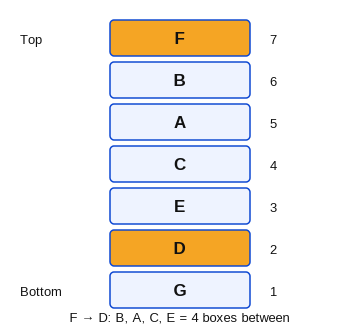
Seven boxes A, B, C, D, E, F and G are kept one over the other but not necessarily in the same order. Only two boxes are kept between C and G. Only F is kept above B. No box is kept below G. E is kept at some place below A but at some place above D. How many boxes are kept between F and D?
सात बक्से A, B, C, D, E, F और G एक के ऊपर एक रखे गए हैं, लेकिन आवश्यक नहीं कि इसी क्रम में हों। C और G के बीच केवल दो बक्से रखे हैं। B के ऊपर केवल F रखा है। G के नीचे कोई बक्सा नहीं रखा है। E, A के नीचे किसी स्थान पर लेकिन D के ऊपर किसी स्थान पर रखा है। F और D के बीच कितने बक्से रखे हैं?
  1. A3
  2. B1
  3. C4
  4. D2
Show answer

Concept: Number positions 1 (bottom) to 7 (top) and place the fixed boxes first.

  1. No box below G → G = 1. Only two boxes between C and G → C = 4.
  2. Only F is above B → F = 7, B = 6.
  3. Remaining places 2, 3, 5 for A, E, D with A above E above D → A = 5, E = 3, D = 2.
  4. Top to bottom: F B A C E D G. Between F (7) and D (2): B, A, C, E = 4 boxes.

Trick: "Only X is above Y" pins the top two at once; "no box below" pins the bottom.

Answer: (C) 4

अवधारणा: स्थान 1 (नीचे) से 7 (ऊपर) तक मानें और पहले निश्चित बॉक्स रखें।

  1. G के नीचे कोई बॉक्स नहीं → G = 1। C और G के बीच केवल दो → C = 4।
  2. B के ऊपर केवल F → F = 7, B = 6।
  3. बचे स्थान 2, 3, 5 में A, E, D, जहाँ A ऊपर, फिर E, फिर D → A = 5, E = 3, D = 2।
  4. ऊपर से नीचे: F B A C E D G। F (7) और D (2) के बीच: B, A, C, E = 4 बॉक्स।

ट्रिक: "Y के ऊपर केवल X" ऊपर के दो स्थान तुरंत तय करता है; "नीचे कोई नहीं" सबसे नीचे वाला।

उत्तर: (C) 4

RRB NTPC Undergraduate CBT 1General Intelligence and ReasoningBox arrangement (stack)RRB NTPC Undergraduate CBT 1 2025 · 8 May Shift 3 →
Q13885.
SMAL is related to VQFR in a certain way based on the English alphabetical order. In the same way, ECUJ is related to HGZP. To which of the following options is NOJB related, following the same logic?
अंग्रेज़ी वर्णमाला क्रम के आधार पर SMAL, VQFR से एक निश्चित प्रकार से संबंधित है। उसी प्रकार, ECUJ, HGZP से संबंधित है। उसी तर्क का अनुसरण करते हुए, NOJB निम्नलिखित में से किस विकल्प से संबंधित है?
  1. AQSIO
  2. BQOSH
  3. CQSHO
  4. DQSOH
Show answer

Concept: Each letter of the word moves forward by an increasing amount.

  1. SMAL → VQFR: S+3 = V, M+4 = Q, A+5 = F, L+6 = R. Shifts +3,+4,+5,+6.
  2. ECUJ → HGZP: E+3 = H, C+4 = G, U+5 = Z, J+6 = P ✓.
  3. NOJB → N+3 = Q, O+4 = S, J+5 = O, B+6 = H → QSOH.

Trick: Options (A), (C), (D) all start with QS – decide by the third letter: J+5 = O.

Answer: (D) QSOH

अवधारणा: शब्द का हर अक्षर बढ़ते हुए अंतर से आगे बढ़ता है।

  1. SMAL → VQFR: S+3 = V, M+4 = Q, A+5 = F, L+6 = R। शिफ्ट +3,+4,+5,+6।
  2. ECUJ → HGZP: E+3 = H, C+4 = G, U+5 = Z, J+6 = P ✓।
  3. NOJB → N+3 = Q, O+4 = S, J+5 = O, B+6 = H → QSOH।

ट्रिक: विकल्प (A), (C), (D) सभी QS से शुरू होते हैं – तीसरे अक्षर से तय करें: J+5 = O।

उत्तर: (D) QSOH

RRB NTPC Undergraduate CBT 1General Intelligence and ReasoningLetter analogyRRB NTPC Undergraduate CBT 1 2025 · 8 May Shift 3 →
Q13886.
Which of the following is the most widely used irrigation method in India?
भारत में निम्नलिखित में से कौन-सी सिंचाई विधि सबसे अधिक व्यापक रूप से प्रयोग की जाती है?
  1. ASurface irrigationसतही सिंचाई (Surface irrigation)
  2. BSprinkler irrigationफव्वारा सिंचाई (Sprinkler irrigation)
  3. CDrip irrigationड्रिप (टपक) सिंचाई (Drip irrigation)
  4. DSubsurface irrigationउपसतही सिंचाई (Subsurface irrigation)
Show answer

Concept: Irrigation methods: surface (flood/furrow), sprinkler, drip and subsurface.

  1. Surface irrigation – water flows over the field by gravity through canals, wells and tube-wells – covers the overwhelming majority of India's irrigated area.
  2. Sprinkler and drip (micro-irrigation) are water-efficient but still cover only a small share, promoted under PMKSY "Per Drop More Crop".

Yaad rakhein: Most used = surface (flood); most efficient = drip.

Answer: (A) Surface irrigation

अवधारणा: सिंचाई विधियाँ: सतही (flood/furrow), फव्वारा (sprinkler), टपक (drip) और उप-सतही (subsurface)।

  1. सतही सिंचाई – नहर, कुएँ और नलकूप से पानी गुरुत्व द्वारा खेत में बहता है – भारत के सिंचित क्षेत्र के अधिकांश भाग में प्रयुक्त होती है।
  2. फव्वारा व टपक (सूक्ष्म सिंचाई) जल-कुशल हैं पर इनका हिस्सा अभी कम है; PMKSY "Per Drop More Crop" से प्रोत्साहित।

याद रखें: सबसे अधिक प्रयुक्त = सतही (flood); सबसे कुशल = टपक (drip)।

उत्तर: (A) सतही सिंचाई (Surface irrigation)

RRB NTPC Undergraduate CBT 1General AwarenessIrrigation methods in IndiaRRB NTPC Undergraduate CBT 1 2025 · 8 May Shift 2 →
Q13887.
Which category of beneficiaries is eligible for ₹1 lakh under Telangana’s Revanth Anna ka Sahara-Miskeen la Kosam scheme launched in September 2025?
सितंबर 2025 में शुरू की गई तेलंगाना की 'रेवंत अन्ना का सहारा-मिस्कीन ला कोसम' योजना के अंतर्गत लाभार्थियों की कौन-सी श्रेणी ₹1 लाख के लिए पात्र है?
  1. AEconomically weak Muslim familiesआर्थिक रूप से कमज़ोर मुस्लिम परिवार
  2. BMinority teachers in private institutionsनिजी संस्थानों में अल्पसंख्यक शिक्षक
  3. COverseas migrant workers from Telanganaतेलंगाना के विदेशी प्रवासी श्रमिक
  4. DTribal self-help groupsजनजातीय स्वयं सहायता समूह
Show answer

Concept: Telangana's minority-welfare scheme launched in September 2025.

  1. "Revanth Anna ka Sahara – Miskeen la Kosam" provides ₹1 lakh financial assistance to economically weak (poor) Muslim families of the state.
  2. It is a welfare grant for poor minority households, not for teachers, migrant workers or tribal SHGs.

Yaad rakhein: "Miskeen" (Urdu) = poor/needy ⇒ the scheme targets poor Muslim families.

Answer: (A) Economically weak Muslim families

अवधारणा: सितंबर 2025 में शुरू तेलंगाना की अल्पसंख्यक-कल्याण योजना।

  1. "रेवंत अन्ना का सहारा – मिस्कीन ला कोसम" योजना राज्य के आर्थिक रूप से कमज़ोर (गरीब) मुस्लिम परिवारों को ₹1 लाख की आर्थिक सहायता देती है।
  2. यह गरीब अल्पसंख्यक परिवारों के लिए कल्याण अनुदान है – शिक्षकों, प्रवासी श्रमिकों या आदिवासी SHG के लिए नहीं।

याद रखें: "मिस्कीन" (उर्दू) = गरीब/ज़रूरतमंद ⇒ योजना गरीब मुस्लिम परिवारों के लिए।

उत्तर: (A) आर्थिक रूप से कमज़ोर मुस्लिम परिवार

RRB NTPC Undergraduate CBT 1General AwarenessState schemes (Telangana)RRB NTPC Undergraduate CBT 1 2025 · 8 May Shift 2 →
Q13888.
The fibrous root system, in which the primary root is short-lived and replaced by numerous adventitious roots, is a characteristic feature of which group of plants?
झकड़ा जड़ तंत्र (fibrous root system), जिसमें प्राथमिक जड़ अल्पजीवी होती है और उसका स्थान अनेक अपस्थानिक जड़ें ले लेती हैं, पौधों के किस समूह का विशिष्ट लक्षण है?
  1. ADicotyledonousद्विबीजपत्री (Dicotyledonous)
  2. BMonocotyledonousएकबीजपत्री (Monocotyledonous)
  3. CGymnospermsअनावृतबीजी (Gymnosperms)
  4. DPteridophytesटेरिडोफाइट (Pteridophytes)
Show answer

Concept: Tap root vs fibrous root system.

  1. In monocots (wheat, rice, maize, grasses) the primary root is short-lived and is replaced by many adventitious roots from the stem base – a fibrous root system.
  2. Dicots (mustard, gram) keep the primary root as a tap root; gymnosperms also have tap roots.

Yaad rakhein: Monocot = parallel venation + fibrous roots; Dicot = reticulate venation + tap root.

Answer: (B) Monocotyledonous

अवधारणा: मूसला जड़ (tap root) बनाम झकड़ा जड़ (fibrous root) तंत्र।

  1. एकबीजपत्री (गेहूँ, धान, मक्का, घास) में प्राथमिक जड़ अल्पजीवी होती है और तने के आधार से निकली अनेक अपस्थानिक (adventitious) जड़ें उसकी जगह लेती हैं – झकड़ा जड़ तंत्र।
  2. द्विबीजपत्री (सरसों, चना) में प्राथमिक जड़ मूसला जड़ बनी रहती है; अनावृतबीजी में भी मूसला जड़।

याद रखें: Monocot = समानांतर शिराविन्यास + झकड़ा जड़; Dicot = जालिका शिराविन्यास + मूसला जड़।

उत्तर: (B) एकबीजपत्री (Monocotyledonous)

RRB NTPC Undergraduate CBT 1General AwarenessRoot systems (Biology)RRB NTPC Undergraduate CBT 1 2025 · 8 May Shift 2 →
Q13889.
Which memory is fastest and located very close to the CPU?
कौन-सी मेमोरी सबसे तेज़ होती है और CPU के बहुत निकट स्थित होती है?
  1. AHard Diskहार्ड डिस्क
  2. BCD-ROM
  3. CCache Memoryकैश मेमोरी (Cache Memory)
  4. DPen Driveपेन ड्राइव
Show answer

Concept: Memory hierarchy: registers → cache → RAM → secondary storage.

  1. Cache memory is a small, very fast SRAM placed on or next to the CPU to hold frequently used data/instructions.
  2. Hard disk, CD-ROM and pen drive are secondary storage – large but slow and far from the CPU.

Yaad rakhein: Closer to CPU ⇒ faster and smaller (L1 < L2 < L3 cache).

Answer: (C) Cache Memory

अवधारणा: मेमोरी पदानुक्रम: रजिस्टर → कैश → RAM → द्वितीयक भंडारण।

  1. कैश मेमोरी छोटी, बहुत तेज़ SRAM है जो CPU पर या उसके पास रहती है और बार-बार प्रयुक्त डेटा/निर्देश रखती है।
  2. हार्ड डिस्क, CD-ROM और पेन ड्राइव द्वितीयक भंडारण हैं – बड़े पर धीमे और CPU से दूर।

याद रखें: CPU के जितना पास ⇒ उतना तेज़ और छोटा (L1 < L2 < L3 कैश)।

उत्तर: (C) कैश मेमोरी (Cache Memory)

RRB NTPC Undergraduate CBT 1General AwarenessComputer memory hierarchyRRB NTPC Undergraduate CBT 1 2025 · 8 May Shift 2 →
Q13890.
'Effect of Proclamation of Emergency' is explicitly provided in which of the following provisions of the Constitution of India?
'आपात की उद्घोषणा का प्रभाव' भारत के संविधान के निम्नलिखित में से किस प्रावधान में स्पष्ट रूप से उपबंधित है?
  1. AArticle 353अनुच्छेद 353
  2. BArticle 256अनुच्छेद 256
  3. CArticle 350अनुच्छेद 350
  4. DArticle 252अनुच्छेद 252
Show answer

Concept: Part XVIII (Articles 352–360) of the Constitution deals with Emergency.

  1. Article 352 – Proclamation of Emergency; Article 353 – Effect of Proclamation of Emergency (Union executive power extends to directing states; Parliament may legislate on state subjects).
  2. Art. 256 – obligation of states to comply with Union laws; Art. 350 – language for grievance representation; Art. 252 – Parliament legislating for two or more states by consent.

Yaad rakhein: 352 proclaim → 353 effect → 354 financial effect → 356 President's rule → 360 financial emergency.

Answer: (A) Article 353

अवधारणा: संविधान का भाग XVIII (अनुच्छेद 352–360) आपातकाल से संबंधित है।

  1. अनुच्छेद 352 – आपात की उद्घोषणा; अनुच्छेद 353 – आपात की उद्घोषणा का प्रभाव (संघ की कार्यपालिका शक्ति राज्यों को निर्देश देने तक विस्तृत; संसद राज्य-सूची पर कानून बना सकती है)।
  2. अनु. 256 – संघ के कानूनों का पालन करने का राज्यों का दायित्व; अनु. 350 – शिकायत निवारण की भाषा; अनु. 252 – दो या अधिक राज्यों की सहमति से संसद का विधायन।

याद रखें: 352 उद्घोषणा → 353 प्रभाव → 354 वित्तीय प्रभाव → 356 राष्ट्रपति शासन → 360 वित्तीय आपात।

उत्तर: (A) अनुच्छेद 353

RRB NTPC Undergraduate CBT 1General AwarenessEmergency provisions (Polity)RRB NTPC Undergraduate CBT 1 2025 · 8 May Shift 2 →
Q13891.
Which of the following regions, ruled by the Maukharies, gradually replaced Pataliputra as a political centre of North India?
मौखरियों द्वारा शासित निम्नलिखित में से किस क्षेत्र ने उत्तर भारत के राजनीतिक केंद्र के रूप में धीरे-धीरे पाटलिपुत्र का स्थान ले लिया?
  1. APatnaपटना
  2. BKannaujकन्नौज
  3. CAllahabadइलाहाबाद
  4. DThanesarथानेसर
Show answer

Concept: After the Guptas, the political centre of North India shifted from Pataliputra (Magadha) to Kannauj.

  1. The Maukharis ruled from Kannauj (Kanyakubja) in the 6th century; later Harshavardhana made it his capital and it became the prize of the Tripartite Struggle (Palas, Pratiharas, Rashtrakutas).
  2. Thanesar was the Pushyabhuti (Vardhana) seat, not Maukhari.

Yaad rakhein: Maukhari = Kannauj; Pushyabhuti = Thanesar; Later Guptas = Magadha.

Answer: (B) Kannauj

अवधारणा: गुप्तों के बाद उत्तर भारत का राजनीतिक केंद्र पाटलिपुत्र (मगध) से हटकर कन्नौज हो गया।

  1. मौखरियों ने 6वीं सदी में कन्नौज (कान्यकुब्ज) से शासन किया; बाद में हर्षवर्धन ने इसे राजधानी बनाया और यह त्रिपक्षीय संघर्ष (पाल, प्रतिहार, राष्ट्रकूट) का केंद्र बना।
  2. थानेसर पुष्यभूति (वर्धन) वंश की राजधानी थी, मौखरि की नहीं।

याद रखें: मौखरि = कन्नौज; पुष्यभूति = थानेसर; उत्तरगुप्त = मगध।

उत्तर: (B) कन्नौज (Kannauj)

RRB NTPC Undergraduate CBT 1General AwarenessPost-Gupta kingdoms (Maukharis)RRB NTPC Undergraduate CBT 1 2025 · 8 May Shift 2 →
Q13892.
Which of the following is an example of General-Purpose Software?
निम्नलिखित में से कौन-सा सामान्य-प्रयोजन सॉफ्टवेयर (General-Purpose Software) का उदाहरण है?
  1. ASchool Management Softwareस्कूल प्रबंधन सॉफ्टवेयर
  2. BAccounting Software made for a companyकिसी कंपनी के लिए बनाया गया लेखांकन सॉफ्टवेयर
  3. CA Customized Websiteएक अनुकूलित (Customized) वेबसाइट
  4. DLibreOffice Calc
Show answer

Concept: General-purpose (packaged) software is off-the-shelf and serves many users for many tasks; customised/tailor-made software is built for one organisation.

  1. LibreOffice Calc is a ready-made spreadsheet package usable by anyone – general-purpose application software.
  2. School management software, a company's bespoke accounting software and a customised website are specific-purpose / custom software.

Yaad rakhein: MS Office / LibreOffice / browsers = general-purpose; "made for a company" = customised.

Answer: (D) LibreOffice Calc

अवधारणा: सामान्य-उद्देश्य (packaged) सॉफ्टवेयर बना-बनाया होता है और अनेक उपयोगकर्ताओं के अनेक कार्यों के लिए; कस्टमाइज़्ड सॉफ्टवेयर एक संस्था के लिए बनाया जाता है।

  1. LibreOffice Calc कोई भी उपयोग कर सकता है – सामान्य-उद्देश्य अनुप्रयोग सॉफ्टवेयर।
  2. स्कूल प्रबंधन सॉफ्टवेयर, किसी कंपनी के लिए बना अकाउंटिंग सॉफ्टवेयर और कस्टमाइज़्ड वेबसाइट विशिष्ट-उद्देश्य/कस्टम सॉफ्टवेयर हैं।

याद रखें: MS Office / LibreOffice / ब्राउज़र = सामान्य-उद्देश्य; "किसी कंपनी के लिए बना" = कस्टमाइज़्ड।

उत्तर: (D) LibreOffice Calc

RRB NTPC Undergraduate CBT 1General AwarenessTypes of softwareRRB NTPC Undergraduate CBT 1 2025 · 8 May Shift 2 →
Q13893.
According to Joule’s law of heating, heat produced in a resistor is expressed by which relation?
जूल के तापन नियम के अनुसार, किसी प्रतिरोधक में उत्पन्न ऊष्मा किस संबंध द्वारा व्यक्त की जाती है?
  1. AH = I²Rt
  2. BH = IR
  3. CH = Vt
  4. DH = V/I
Show answer

Concept: Heat produced in a resistor is directly proportional to I2, R and t.

  1. Joule's law: H=I2Rt (joule), equivalently H=VIt=V2Rt.
  2. V=IR is Ohm's law, not a heat relation; Vt and VI are not energy expressions.

Yaad rakhein: Doubling current ⇒ 4 times the heat (I2).

Answer: (A) H=I2Rt

अवधारणा: प्रतिरोधक में उत्पन्न ऊष्मा I2, R और t के समानुपाती होती है।

  1. जूल का नियम: H=I2Rt (जूल), अर्थात् H=VIt=V2Rt.
  2. V=IR ओम का नियम है, ऊष्मा का संबंध नहीं; Vt और VI ऊर्जा के व्यंजक नहीं हैं।

याद रखें: धारा दोगुनी ⇒ ऊष्मा 4 गुनी (I2)।

उत्तर: (A) H=I2Rt

RRB NTPC Undergraduate CBT 1General AwarenessJoule's law of heatingRRB NTPC Undergraduate CBT 1 2025 · 8 May Shift 2 →
Q13894.
Which of the following is NOT a prominent language of the Indo-Aryan family?
निम्नलिखित में से कौन-सी भाषा भारतीय-आर्य (Indo-Aryan) परिवार की प्रमुख भाषा नहीं है?
  1. AKurukhकुरुख
  2. BUrduउर्दू
  3. CBengaliबांग्ला
  4. DHindiहिंदी
Show answer

Concept: India's four main families: Indo-Aryan, Dravidian, Austro-Asiatic, Tibeto-Burman.

  1. Kurukh (Oraon) is a Dravidian language spoken by the Oraon tribe of Jharkhand, Chhattisgarh and Odisha.
  2. Hindi, Urdu and Bengali are Indo-Aryan languages (descended from Sanskrit/Prakrit).

Yaad rakhein: Tribal Dravidian languages in central India: Kurukh, Gondi, Malto.

Answer: (A) Kurukh

अवधारणा: भारत के चार मुख्य भाषा परिवार: भारोपीय (Indo-Aryan), द्रविड़, ऑस्ट्रो-एशियाटिक, तिब्बती-बर्मी।

  1. कुरुख (उराँव) झारखंड, छत्तीसगढ़ और ओडिशा की उराँव जनजाति की द्रविड़ भाषा है।
  2. हिंदी, उर्दू और बांग्ला इंडो-आर्यन भाषाएँ हैं (संस्कृत/प्राकृत से विकसित)।

याद रखें: मध्य भारत की जनजातीय द्रविड़ भाषाएँ: कुरुख, गोंडी, माल्टो।

उत्तर: (A) कुरुख (Kurukh)

RRB NTPC Undergraduate CBT 1General AwarenessLanguage families of IndiaRRB NTPC Undergraduate CBT 1 2025 · 8 May Shift 2 →
Q13895.
‘The Mango Season’ is a book written by _________ and is a story of an Indian woman of modern India.
'The Mango Season' _________ द्वारा लिखी गई एक पुस्तक है और यह आधुनिक भारत की एक भारतीय महिला की कहानी है।
  1. AAmulya Malladiअमूल्या मल्लादी
  2. BSara Desaiसारा देसाई
  3. CSandhya Menonसंध्या मेनन
  4. DAlka Joshiअल्का जोशी
Show answer

Concept: Indian-origin women novelists and their popular works.

  1. The Mango Season (2003) is by Amulya Malladi – an NRI woman returns to India in mango season and must tell her family about her American fiancé.
  2. Sara Desai (The Marriage Game), Sandhya Menon (When Dimple Met Rishi) and Alka Joshi (The Henna Artist) are other authors.

Yaad rakhein: Amulya Malladi – The Mango Season, A Breath of Fresh Air.

Answer: (A) Amulya Malladi

अवधारणा: भारतीय मूल की महिला उपन्यासकार और उनकी लोकप्रिय कृतियाँ।

  1. The Mango Season (2003) अमूल्या मल्लाडी की कृति है – एक NRI महिला आम के मौसम में भारत लौटती है और परिवार को अपने अमेरिकी मंगेतर के बारे में बताना है।
  2. सारा देसाई (The Marriage Game), संध्या मेनन (When Dimple Met Rishi) और अल्का जोशी (The Henna Artist) अन्य लेखिकाएँ हैं।

याद रखें: अमूल्या मल्लाडी – The Mango Season, A Breath of Fresh Air.

उत्तर: (A) अमूल्या मल्लाडी (Amulya Malladi)

RRB NTPC Undergraduate CBT 1General AwarenessBooks and authorsRRB NTPC Undergraduate CBT 1 2025 · 8 May Shift 2 →
Q13896.
Krishna Basin mainly extends over which of the following groups of states?
कृष्णा बेसिन मुख्यतः राज्यों के निम्नलिखित में से किस समूह में विस्तृत है?
  1. AMaharashtra, Gujarat and Madhya Pradeshमहाराष्ट्र, गुजरात और मध्य प्रदेश
  2. BMaharashtra, Karnataka and Andhra Pradeshमहाराष्ट्र, कर्नाटक और आंध्र प्रदेश
  3. CMaharashtra, Odisha and Karnatakaमहाराष्ट्र, ओडिशा और कर्नाटक
  4. DMaharashtra, Madhya Pradesh and Chhattisgarhमहाराष्ट्र, मध्य प्रदेश और छत्तीसगढ़
Show answer

Concept: The Krishna rises at Mahabaleshwar (Maharashtra) and flows east to the Bay of Bengal.

  1. Its basin lies mainly in Maharashtra, Karnataka, Telangana and Andhra Pradesh (Telangana was part of AP earlier).
  2. Gujarat, MP, Odisha and Chhattisgarh are not in the Krishna basin (they belong to Narmada/Mahanadi/Godavari systems).

Yaad rakhein: Krishna tributaries – Bhima, Tungabhadra, Musi; delta near Vijayawada (AP).

Answer: (B) Maharashtra, Karnataka and Andhra Pradesh

अवधारणा: कृष्णा नदी महाबलेश्वर (महाराष्ट्र) से निकलकर पूर्व में बंगाल की खाड़ी में गिरती है।

  1. इसका बेसिन मुख्यतः महाराष्ट्र, कर्नाटक, तेलंगाना और आंध्र प्रदेश में है (तेलंगाना पहले AP का हिस्सा था)।
  2. गुजरात, MP, ओडिशा और छत्तीसगढ़ कृष्णा बेसिन में नहीं हैं (ये नर्मदा/महानदी/गोदावरी तंत्र के हैं)।

याद रखें: कृष्णा की सहायक – भीमा, तुंगभद्रा, मूसी; डेल्टा विजयवाड़ा (AP) के पास।

उत्तर: (B) महाराष्ट्र, कर्नाटक और आंध्र प्रदेश

RRB NTPC Undergraduate CBT 1General AwarenessRiver basins (Krishna)RRB NTPC Undergraduate CBT 1 2025 · 8 May Shift 2 →
Q13897.
Which of the following types of weathering is common in areas with large temperature differences between day and night?
निम्नलिखित में से किस प्रकार का अपक्षय (weathering) उन क्षेत्रों में सामान्य है जहाँ दिन और रात के तापमान में बड़ा अंतर होता है?
  1. ASolutionविलयन (Solution)
  2. BOxidationऑक्सीकरण (Oxidation)
  3. CExfoliationअपपत्रण (Exfoliation)
  4. DCarbonationकार्बोनेटीकरण (Carbonation)
Show answer

Concept: Physical (mechanical) weathering by repeated heating and cooling.

  1. In deserts the rock surface expands by day and contracts at night; the outer layers peel off in sheets – exfoliation (onion-peel weathering).
  2. Solution, oxidation and carbonation are chemical weathering processes needing water/air, not temperature swings.

Yaad rakhein: Exfoliation = "onion peeling" of rocks in hot deserts.

Answer: (C) Exfoliation

अवधारणा: बार-बार गर्म-ठंडा होने से भौतिक (यांत्रिक) अपक्षय।

  1. मरुस्थलों में चट्टान की सतह दिन में फैलती और रात में सिकुड़ती है; बाहरी परतें चादरों में उतर जाती हैं – अपपत्रण (exfoliation, onion-peel weathering)।
  2. घोलन (solution), ऑक्सीकरण और कार्बोनेशन रासायनिक अपक्षय हैं, जिनमें जल/वायु चाहिए, तापांतर नहीं।

याद रखें: Exfoliation = गर्म मरुस्थलों में चट्टानों का "प्याज़ के छिलके" जैसा उतरना।

उत्तर: (C) अपपत्रण (Exfoliation)

RRB NTPC Undergraduate CBT 1General AwarenessWeathering (Geography)RRB NTPC Undergraduate CBT 1 2025 · 8 May Shift 2 →
Q13898.
The Goa Carnival is primarily associated with which of the following cultural or religious traditions?
गोवा कार्निवल मुख्य रूप से निम्नलिखित में से किस सांस्कृतिक या धार्मिक परंपरा से संबंधित है?
  1. ABuddhist traditionबौद्ध परंपरा
  2. BPersian traditionsफ़ारसी परंपराएँ
  3. CJewish traditionsयहूदी परंपराएँ
  4. DChristian traditionईसाई परंपरा
Show answer

Concept: Goa Carnival is a legacy of over 450 years of Portuguese rule.

  1. It is a Christian (Catholic) pre-Lenten festival held in February/March, three days before Ash Wednesday, led by "King Momo".
  2. Floats, music and feasting mark the last indulgence before the 40-day Lent fast.

Yaad rakhein: Carnival → Lent → Easter: a Christian calendar sequence.

Answer: (D) Christian tradition

अवधारणा: गोवा कार्निवल 450 से अधिक वर्षों के पुर्तगाली शासन की विरासत है।

  1. यह ईसाई (कैथोलिक) लेंट-पूर्व त्योहार है जो फरवरी/मार्च में ऐश वेडनेसडे से तीन दिन पहले मनाया जाता है, जिसका नेतृत्व "किंग मोमो" करता है।
  2. झाँकियाँ, संगीत और दावतें 40 दिन के लेंट उपवास से पहले का अंतिम उत्सव हैं।

याद रखें: कार्निवल → लेंट → ईस्टर: ईसाई कैलेंडर का क्रम।

उत्तर: (D) ईसाई परंपरा (Christian tradition)

RRB NTPC Undergraduate CBT 1General AwarenessFestivals of India (Goa Carnival)RRB NTPC Undergraduate CBT 1 2025 · 8 May Shift 2 →
Q13899.
Which of the following was the first electro-mechanical computer?
निम्नलिखित में से कौन-सा पहला विद्युत-यांत्रिक (electro-mechanical) कंप्यूटर था?
  1. AMark I
  2. BEDVAC
  3. CUNIVAC
  4. DENIAC
Show answer

Concept: Generations of early computers.

  1. Harvard Mark I (1944), built by Howard Aiken with IBM, was the first large-scale electro-mechanical computer (relays and switches).
  2. ENIAC (1946) was the first general-purpose electronic computer; EDVAC (stored program) and UNIVAC (first commercial, 1951) came later.

Yaad rakhein: Mark I = electro-mechanical; ENIAC = electronic; UNIVAC = commercial.

Answer: (A) Mark I

अवधारणा: प्रारंभिक कंप्यूटरों की पीढ़ियाँ।

  1. हार्वर्ड Mark I (1944), हॉवर्ड ऐकेन ने IBM के साथ बनाया – पहला बड़ा विद्युत-यांत्रिक (electro-mechanical) कंप्यूटर (रिले और स्विच)।
  2. ENIAC (1946) पहला सामान्य-उद्देश्य इलेक्ट्रॉनिक कंप्यूटर; EDVAC (संग्रहित प्रोग्राम) और UNIVAC (पहला व्यावसायिक, 1951) बाद में आए।

याद रखें: Mark I = विद्युत-यांत्रिक; ENIAC = इलेक्ट्रॉनिक; UNIVAC = व्यावसायिक।

उत्तर: (A) Mark I

RRB NTPC Undergraduate CBT 1General AwarenessHistory of computersRRB NTPC Undergraduate CBT 1 2025 · 8 May Shift 2 →
Q13900.
A doctor prescribes a lens of power P = −2.5 D to a patient. This lens is ______.
एक डॉक्टर एक रोगी के लिए P = −2.5 D क्षमता का लेंस निर्धारित करता है। यह लेंस ______ है।
  1. Aa concave lens used to correct far-sightednessदूर-दृष्टि दोष (far-sightedness) को ठीक करने के लिए प्रयुक्त एक अवतल लेंस
  2. Ba convex lens used to correct far-sightednessदूर-दृष्टि दोष को ठीक करने के लिए प्रयुक्त एक उत्तल लेंस
  3. Ca convex lens used to correct near-sightednessनिकट-दृष्टि दोष (near-sightedness) को ठीक करने के लिए प्रयुक्त एक उत्तल लेंस
  4. Da concave lens used to correct near-sightednessनिकट-दृष्टि दोष को ठीक करने के लिए प्रयुक्त एक अवतल लेंस
Show answer

Concept: Power P=1f(m); negative power ⇒ concave (diverging) lens, used to correct myopia (near-sightedness).

  1. P=−2.5D⇒f=−12.5=−0.4m=−40cm – a concave lens.
  2. Myopia (distant objects blurred, image before retina) is corrected by a concave lens; hypermetropia (far-sightedness) by a convex (+) lens.

Yaad rakhein: Minus power → concave → myopia; plus power → convex → hypermetropia.

Answer: (D) a concave lens used to correct near-sightedness (myopia)

अवधारणा: क्षमता P=1f(m); ऋणात्मक क्षमता ⇒ अवतल (अपसारी) लेंस, जो निकट-दृष्टि दोष (myopia) ठीक करता है।

  1. P=−2.5D⇒f=−12.5=−0.4m=−40cm – अवतल लेंस।
  2. निकट-दृष्टि (दूर की वस्तुएँ धुँधली, प्रतिबिंब रेटिना से पहले) अवतल लेंस से ठीक होती है; दूर-दृष्टि (hypermetropia) उत्तल (+) लेंस से।

याद रखें: ऋण क्षमता → अवतल → myopia; धन क्षमता → उत्तल → hypermetropia।

उत्तर: (D) निकट-दृष्टि दोष (myopia) ठीक करने वाला अवतल लेंस

RRB NTPC Undergraduate CBT 1General AwarenessLenses and defects of visionRRB NTPC Undergraduate CBT 1 2025 · 8 May Shift 2 →