Question bank

Q&A: practice questions with answers

Search questions on any topic. Filter by exam category, exam, subject and topic, try the question, then open the answer and explanation.

Courses – airGurukul

20,719 questions found.

Q14081.
Read the given statement(s) and conclusions carefully. Assuming that the information given in the statements is true, even if it appears to be at variance with commonly known facts, decide which of the given conclusions logically follow(s) from the statement(s).
Statements:
All huts are villages.
No hut is a district.
Conclusions:
(I) No village is a district.
(II) Some districts are huts.
दिए गए कथन(कथनों) और निष्कर्षों को ध्यानपूर्वक पढ़िए। यह मानते हुए कि कथनों में दी गई जानकारी सत्य है, भले ही वह सामान्यतः ज्ञात तथ्यों से भिन्न प्रतीत होती हो, निर्णय कीजिए कि दिए गए निष्कर्षों में से कौन-सा/कौन-से निष्कर्ष कथन(कथनों) का तार्किक रूप से अनुसरण करता है/करते हैं।
कथन:
सभी झोपड़ियाँ, गाँव हैं।
कोई झोपड़ी, ज़िला नहीं है।
निष्कर्ष:
(I) कोई गाँव, ज़िला नहीं है।
(II) कुछ ज़िले, झोपड़ियाँ हैं।
  1. ABoth conclusions (I) and (II) followनिष्कर्ष (I) और (II) दोनों अनुसरण करते हैं
  2. BOnly conclusion (II) followsकेवल निष्कर्ष (II) अनुसरण करता है
  3. CNeither conclusion (I) nor (II) followsन तो निष्कर्ष (I) और न ही (II) अनुसरण करता है
  4. DOnly conclusion (I) followsकेवल निष्कर्ष (I) अनुसरण करता है
Show answer

Concept: "All huts are villages" + "No hut is a district" only tells us that the hut-part of villages is outside districts; other villages may or may not be districts.
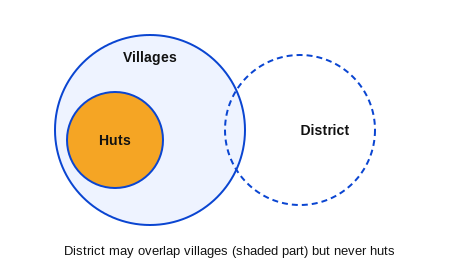
  1. Conclusion I "No village is a district" – not necessary; a village that is not a hut could be a district. Does not follow.
  2. Conclusion II "Some districts are huts" – directly contradicts "No hut is a district". Does not follow.
  3. The valid conclusion would be "Some villages are not districts", which is not given.

Trick: All A are B + No A is C ⇒ only "Some B are not C"; never "No B is C".

Answer: (C) Neither conclusion (I) nor (II) follows

अवधारणा: "सभी huts, villages हैं" + "कोई hut, district नहीं" से केवल इतना पता चलता है कि villages का hut-वाला भाग district से बाहर है; बाकी villages district हो भी सकते हैं।

  1. निष्कर्ष I "कोई village, district नहीं" – आवश्यक नहीं; जो village hut नहीं है वह district हो सकता है। अनुसरण नहीं करता।
  2. निष्कर्ष II "कुछ districts, huts हैं" – "कोई hut, district नहीं" का सीधा विरोध। अनुसरण नहीं करता।
  3. वैध निष्कर्ष होता "कुछ villages, district नहीं हैं", जो दिया नहीं गया।

ट्रिक: सभी A, B + कोई A, C नहीं ⇒ केवल "कुछ B, C नहीं"; कभी "कोई B, C नहीं" नहीं।

उत्तर: (C) न तो निष्कर्ष (I) न ही (II) अनुसरण करता है
RRB NTPC Undergraduate CBT 1General Intelligence and ReasoningSyllogismRRB NTPC Undergraduate CBT 1 2025 · 8 May Shift 1 →
Q14082.
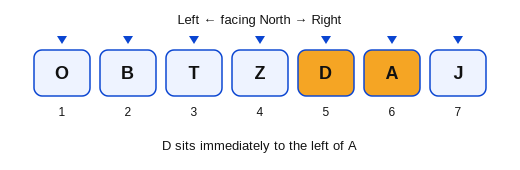
Seven people A, B, D, J, O, T and Z are sitting in a row, facing north. Only one person sits to the right of A. Only three people sit between B and A. Only three people sit between T and J, neither of whom sits on the left end. D sits immediately to the right of Z. Only one person sits between T and O. Who sits immediately to the left of A?
सात व्यक्ति A, B, D, J, O, T और Z एक पंक्ति में उत्तर की ओर मुख करके बैठे हैं। A के दाईं ओर केवल एक व्यक्ति बैठा है। B और A के बीच केवल तीन व्यक्ति बैठे हैं। T और J के बीच केवल तीन व्यक्ति बैठे हैं, जिनमें से कोई भी बाएँ छोर पर नहीं बैठा है। D, Z के ठीक दाईं ओर बैठा है। T और O के बीच केवल एक व्यक्ति बैठा है। A के ठीक बाईं ओर कौन बैठा है?
  1. AT
  2. BJ
  3. CB
  4. DD
Show answer

Concept: Number the seats 1–7 from left to right (all face north). Fix definite positions first, then test the "three between" pairs.

  1. Only one person right of A → A at 6. Three between B and A → B at 2.
  2. T and J have three between them: possible pairs (1,5), (2,6), (3,7). Neither is at the left end and 2, 6 are taken → T, J at 3 and 7.
  3. D is immediately right of Z: free seats 1, 4, 5 → Z at 4, D at 5, O at 1.
  4. One person between T and O(1) → T at 3, J at 7. Order: O B T Z D A J. Immediately left of A(6) is D.

Trick: List all seat-pairs with the required gap and strike out those blocked by earlier clues.

Answer: (D) D

अवधारणा: बाएँ से दाएँ सीटें 1–7 (सभी उत्तर की ओर)। पहले निश्चित स्थान तय करें, फिर "बीच में तीन" वाले जोड़े जाँचें।

  1. A के दाएँ केवल एक → A सीट 6। B और A के बीच तीन → B सीट 2।
  2. T और J के बीच तीन: संभावित जोड़े (1,5), (2,6), (3,7)। कोई बाएँ सिरे पर नहीं और 2, 6 भरी हैं → T, J सीट 3 व 7 पर।
  3. D, Z के ठीक दाएँ: खाली सीटें 1, 4, 5 → Z सीट 4, D सीट 5, O सीट 1।
  4. T और O(1) के बीच एक → T सीट 3, J सीट 7। क्रम: O B T Z D A J। A(6) के ठीक बाएँ D।

ट्रिक: आवश्यक अंतर वाले सभी सीट-जोड़े लिखें और पहले के सुरागों से बंद जोड़े काट दें।

उत्तर: (D) D

RRB NTPC Undergraduate CBT 1General Intelligence and ReasoningLinear seating arrangementRRB NTPC Undergraduate CBT 1 2025 · 8 May Shift 1 →
Q14083.
Refer to the following series and answer the question (all numbers are single digit numbers only).
(Left) 4 5 6 2 3 3 3 2 1 1 2 3 8 7 4 6 4 6 5 8 2 5 6 5 4 3 4 2 3 (Right)
How many such odd digits are there each of which is immediately preceded by an even digit and also immediately followed by an odd digit?
निम्नलिखित शृंखला को देखिए और प्रश्न का उत्तर दीजिए (सभी संख्याएँ केवल एक अंक की संख्याएँ हैं)।
(बाएँ) 4 5 6 2 3 3 3 2 1 1 2 3 8 7 4 6 4 6 5 8 2 5 6 5 4 3 4 2 3 (दाएँ)
ऐसे कितने विषम अंक हैं जिनमें से प्रत्येक के ठीक पहले एक सम अंक है और ठीक बाद में एक विषम अंक है?
  1. AONEएक
  2. BTWOदो
  3. CFIVEपाँच
  4. DNONEकोई नहीं
Show answer

Concept: We need an odd digit with an even digit just before it and an odd digit just after it (even–odd–odd triplet).

  1. Series: 4 5 6 2 3 3 3 2 1 1 2 3 8 7 4 6 4 6 5 8 2 5 6 5 4 3 4 2 3.
  2. 2 3 3 (positions 4–6): 3 is odd, preceded by 2 (even), followed by 3 (odd) ✓.
  3. 2 1 1 (positions 8–10): 1 is odd, preceded by 2, followed by 1 ✓.
  4. Others fail: 8 7 4 (followed by even), 6 5 8, 2 5 6, 6 5 4, 4 3 4 – all followed by even digits.

Trick: Scan for two odd digits side by side, then check that the digit before them is even.

Answer: (B) TWO

अवधारणा: ऐसा विषम अंक चाहिए जिसके ठीक पहले सम और ठीक बाद विषम अंक हो (सम–विषम–विषम त्रिक)।

  1. श्रृंखला: 4 5 6 2 3 3 3 2 1 1 2 3 8 7 4 6 4 6 5 8 2 5 6 5 4 3 4 2 3।
  2. 2 3 3 (स्थान 4–6): 3 विषम, पहले 2 (सम), बाद में 3 (विषम) ✓।
  3. 2 1 1 (स्थान 8–10): 1 विषम, पहले 2, बाद में 1 ✓।
  4. बाकी असफल: 8 7 4 (बाद में सम), 6 5 8, 2 5 6, 6 5 4, 4 3 4 – सबके बाद सम अंक।

ट्रिक: पास-पास दो विषम अंक खोजें, फिर जाँचें कि उनसे पहले का अंक सम है।

उत्तर: (B) दो (TWO)

RRB NTPC Undergraduate CBT 1General Intelligence and ReasoningNumber series countingRRB NTPC Undergraduate CBT 1 2025 · 8 May Shift 1 →
Q14084.
In a certain code language, ‘COAL’ is coded as ‘7649’ and ‘ALSO’ is coded as ‘5967’. What is the code for ‘S’ in the given code language?
एक निश्चित कूट भाषा में, 'COAL' को '7649' के रूप में और 'ALSO' को '5967' के रूप में कूटबद्ध किया जाता है। दी गई कूट भाषा में 'S' का कूट क्या है?
  1. A5
  2. B9
  3. C6
  4. D7
Show answer

Concept: Each letter has a fixed digit. Compare the two words: letters common to both must have codes common to both.

  1. COAL → 7 6 4 9 ; ALSO → 5 9 6 7.
  2. Common letters: A, L, O. Common digits: 7, 6, 9.
  3. The only letter of ALSO not in COAL is S, and the only digit of 5967 not in 7649 is 5 → S = 5.

Trick: Uncommon letter ↔ uncommon digit; no need to decode every letter.

Answer: (A) 5

अवधारणा: हर अक्षर का एक निश्चित अंक है। दोनों शब्दों की तुलना करें: दोनों में समान अक्षरों के कोड भी दोनों में समान होंगे।

  1. COAL → 7 6 4 9 ; ALSO → 5 9 6 7।
  2. समान अक्षर: A, L, O। समान अंक: 7, 6, 9।
  3. ALSO का एकमात्र अक्षर जो COAL में नहीं है, S है, और 5967 का एकमात्र अंक जो 7649 में नहीं, 5 है → S = 5।

ट्रिक: असमान अक्षर ↔ असमान अंक; हर अक्षर डिकोड करने की ज़रूरत नहीं।

उत्तर: (A) 5

RRB NTPC Undergraduate CBT 1General Intelligence and ReasoningCoding–decoding (letters to digits)RRB NTPC Undergraduate CBT 1 2025 · 8 May Shift 1 →
Q14085.
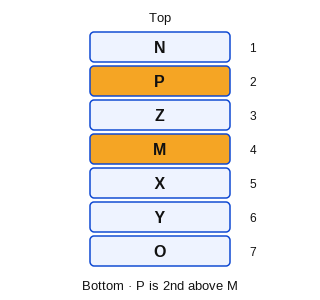
Seven boxes M, N, O, P, X, Y and Z are kept one over the other but not necessarily in the same order. Only N is kept above P. Only two boxes are kept between P and X. Only O is kept below Y. Z is not kept immediately above X. Which box is kept second above M?
सात बक्से M, N, O, P, X, Y और Z एक के ऊपर एक रखे गए हैं, लेकिन आवश्यक नहीं कि इसी क्रम में हों। P के ऊपर केवल N रखा है। P और X के बीच केवल दो बक्से रखे हैं। Y के नीचे केवल O रखा है। Z, X के ठीक ऊपर नहीं रखा है। M के ऊपर दूसरे स्थान पर कौन-सा बक्सा रखा है?
  1. AP
  2. BX
  3. CZ
  4. DO
Show answer

Concept: Number the positions 1 (top) to 7 (bottom) and fix the boxes with definite positions first.

  1. Only N is above P → N at 1, P at 2. Two boxes between P and X → X at 5.
  2. Only O is below Y → Y at 6, O at 7.
  3. Positions 3 and 4 remain for M and Z. Z is not immediately above X (not at 4) → Z at 3, M at 4.
  4. Stack: N, P, Z, M, X, Y, O. Second box above M (4) is at position 2 → P.

Trick: "Only X is above/below Y" fixes both boxes at an end – use such clues first.

Answer: (A) P

अवधारणा: स्थान 1 (सबसे ऊपर) से 7 (सबसे नीचे) तक नंबर दें और पहले निश्चित स्थान वाले बॉक्स रखें।

  1. P के ऊपर केवल N → N स्थान 1, P स्थान 2। P और X के बीच दो बॉक्स → X स्थान 5।
  2. Y के नीचे केवल O → Y स्थान 6, O स्थान 7।
  3. स्थान 3 और 4 M व Z के लिए बचे। Z, X के ठीक ऊपर नहीं (स्थान 4 नहीं) → Z स्थान 3, M स्थान 4।
  4. ढेर: N, P, Z, M, X, Y, O। M (4) से दूसरा ऊपर स्थान 2 → P।

ट्रिक: "Y के ऊपर/नीचे केवल X" दोनों बॉक्स सिरे पर तय कर देता है – ऐसे सुराग पहले लें।

उत्तर: (A) P

RRB NTPC Undergraduate CBT 1General Intelligence and ReasoningBox arrangement (stacking)RRB NTPC Undergraduate CBT 1 2025 · 8 May Shift 1 →
Q14086.
In genetics, a gene refers to which of the following?
आनुवंशिकी (genetics) में, जीन (gene) निम्नलिखित में से किसे संदर्भित करता है?
  1. AA sex chromosomeएक लिंग गुणसूत्र
  2. BA unit of blood groupरक्त समूह की एक इकाई
  3. CA section of DNA that codes for a proteinDNA का एक खंड जो किसी प्रोटीन के लिए कोड करता है
  4. DA type of chromosomeएक प्रकार का गुणसूत्र
Show answer

Concept: A gene is the basic unit of heredity.

  1. A gene is a specific segment (section) of DNA that carries the code for making a particular protein or RNA.
  2. Genes sit at fixed positions (loci) on chromosomes; a chromosome is a long DNA molecule containing thousands of genes – so a gene is not itself a chromosome.
  3. Blood groups are controlled by genes, but a gene is not a unit of blood group.

Yaad rakhein: DNA → gene (a section of DNA) → chromosome (many genes packed together). Mendel called them 'factors'.

Answer: (C) A section of DNA that codes for a protein

अवधारणा: जीन (gene) आनुवंशिकता की मूल इकाई है।

  1. जीन DNA का एक विशिष्ट खंड (section) है जो किसी विशेष प्रोटीन या RNA बनाने का कोड रखता है।
  2. जीन गुणसूत्रों (chromosomes) पर निश्चित स्थानों (loci) पर होते हैं; गुणसूत्र एक लंबा DNA अणु है जिसमें हज़ारों जीन होते हैं – अतः जीन स्वयं गुणसूत्र नहीं है।
  3. रक्त समूह जीनों द्वारा नियंत्रित होते हैं, पर जीन रक्त समूह की इकाई नहीं है।

याद रखें: DNA → जीन (DNA का खंड) → गुणसूत्र (अनेक जीन एक साथ)। मेंडल ने इन्हें 'कारक (factors)' कहा था।

उत्तर: (C) A section of DNA that codes for a protein

RRB NTPC Undergraduate CBT 1General AwarenessBiology – geneticsRRB NTPC Undergraduate CBT 1 2025 · 7 May Shift 3 →
Q14087.
Which of the following Harappan sites yielded excellent examples of metal-cast sculptures?
निम्नलिखित में से किस हड़प्पा स्थल से धातु-ढलाई (metal-cast) की मूर्तियों के उत्कृष्ट उदाहरण प्राप्त हुए हैं?
  1. ANageshwarनागेश्वर
  2. BKalibanganकालीबंगन
  3. CDaimabadदैमाबाद
  4. DRangpurरंगपुर
Show answer

Concept: Daimabad (Ahmednagar district, Maharashtra) is the southernmost Harappan site and famous for its bronze hoard.

  1. Four solid bronze (metal-cast) sculptures were found at Daimabad – a chariot driven by a man with two oxen, an elephant, a rhinoceros and a buffalo.
  2. Nageshwar (Gujarat) was a shell-working centre, Kalibangan (Rajasthan) is known for the ploughed field and fire altars, Rangpur (Gujarat) for rice husk evidence.

Yaad rakhein: Daimabad = bronze chariot; Lothal = dockyard; Kalibangan = ploughed field; Chanhudaro = bead-making.

Answer: (C) Daimabad

अवधारणा: दैमाबाद (अहमदनगर ज़िला, महाराष्ट्र) सबसे दक्षिणी हड़प्पा स्थल है और अपने कांस्य भंडार के लिए प्रसिद्ध है।

  1. दैमाबाद से चार ठोस कांस्य (धातु-ढली) मूर्तियाँ मिलीं – दो बैलों वाला रथ चलाता मनुष्य, हाथी, गैंडा और भैंसा।
  2. नागेश्वर (गुजरात) शंख-उद्योग केंद्र था, कालीबंगा (राजस्थान) जुते खेत व अग्निवेदियों के लिए, रंगपुर (गुजरात) धान की भूसी के साक्ष्य के लिए जाना जाता है।

याद रखें: दैमाबाद = कांस्य रथ; लोथल = गोदीबाड़ा; कालीबंगा = जुता खेत; चन्हूदड़ो = मनका-निर्माण।

उत्तर: (C) Daimabad

RRB NTPC Undergraduate CBT 1General AwarenessHarappan civilisationRRB NTPC Undergraduate CBT 1 2025 · 7 May Shift 3 →
Q14088.
According to the Constitution of India, which constitutional body advises the President on the principles governing grants-in-aid to States from the Consolidated Fund of India?
भारत के संविधान के अनुसार, कौन-सा संवैधानिक निकाय भारत की संचित निधि से राज्यों को सहायता-अनुदान (grants-in-aid) देने वाले सिद्धांतों पर राष्ट्रपति को सलाह देता है?
  1. APlanning Commissionयोजना आयोग
  2. BComptroller and Auditor General of Indiaभारत के नियंत्रक एवं महालेखा परीक्षक
  3. CFinance Commissionवित्त आयोग
  4. DNITI Aayogनीति आयोग
Show answer

Concept: Article 280 provides for a Finance Commission, constituted by the President every five years.

  1. Article 280(3)(b) asks it to recommend the principles governing grants-in-aid of the revenues of the States out of the Consolidated Fund of India (grants under Article 275).
  2. It also recommends the distribution of net tax proceeds between the Union and the States.
  3. Planning Commission and NITI Aayog are executive bodies, not constitutional; CAG audits accounts.

Yaad rakhein: Article 280 = Finance Commission; Article 275 = grants-in-aid to States; 16th Finance Commission chairman: Arvind Panagariya.

Answer: (C) Finance Commission

अवधारणा: अनुच्छेद 280 में वित्त आयोग का प्रावधान है, जिसे राष्ट्रपति हर पाँच वर्ष में गठित करते हैं।

  1. अनुच्छेद 280(3)(b) के अनुसार यह भारत की संचित निधि से राज्यों को सहायता अनुदान (grants-in-aid) के सिद्धांतों की सिफ़ारिश करता है (अनुच्छेद 275 के अनुदान)।
  2. यह संघ और राज्यों के बीच करों के शुद्ध आगम के बँटवारे की भी सिफ़ारिश करता है।
  3. योजना आयोग और NITI आयोग कार्यपालिका निकाय हैं, संवैधानिक नहीं; CAG लेखा-परीक्षा करता है।

याद रखें: अनुच्छेद 280 = वित्त आयोग; अनुच्छेद 275 = राज्यों को सहायता अनुदान; 16वें वित्त आयोग के अध्यक्ष: अरविंद पनगढ़िया।

उत्तर: (C) Finance Commission

RRB NTPC Undergraduate CBT 1General AwarenessPolity – Finance CommissionRRB NTPC Undergraduate CBT 1 2025 · 7 May Shift 3 →
Q14089.
Provisions for the 'Control over subordinate courts' are provided in which of the following Articles of the Constitution of India?
'अधीनस्थ न्यायालयों पर नियंत्रण' के प्रावधान भारत के संविधान के निम्नलिखित में से किस अनुच्छेद में दिए गए हैं?
  1. AArticle 225अनुच्छेद 225
  2. BArticle 235अनुच्छेद 235
  3. CArticle 255अनुच्छेद 255
  4. DArticle 245अनुच्छेद 245
Show answer

Concept: Articles 233–237 (Part VI, Chapter VI) deal with subordinate courts.

  1. Article 235: 'Control over subordinate courts' – vests in the High Court the control over district courts and courts subordinate to them (posting, promotion, leave of judicial officers).
  2. Article 233 is appointment of district judges; Article 234 recruitment of other judicial officers.
  3. Article 225 concerns jurisdiction of existing High Courts; 245 is extent of laws made by Parliament/States; 255 is about recommendations and previous sanctions.

Yaad rakhein: 233 appoint, 234 recruit, 235 control – the three 'subordinate court' articles in sequence.

Answer: (B) Article 235

अवधारणा: अनुच्छेद 233–237 (भाग VI, अध्याय VI) अधीनस्थ न्यायालयों से संबंधित हैं।

  1. अनुच्छेद 235: 'अधीनस्थ न्यायालयों पर नियंत्रण' – ज़िला और उनके अधीनस्थ न्यायालयों पर नियंत्रण (न्यायिक अधिकारियों की तैनाती, पदोन्नति, अवकाश) उच्च न्यायालय में निहित है।
  2. अनुच्छेद 233 ज़िला न्यायाधीशों की नियुक्ति; अनुच्छेद 234 अन्य न्यायिक अधिकारियों की भर्ती।
  3. अनुच्छेद 225 विद्यमान उच्च न्यायालयों की अधिकारिता; 245 संसद/राज्य विधियों का विस्तार; 255 सिफ़ारिशों और पूर्व मंज़ूरी के बारे में है।

याद रखें: 233 नियुक्ति, 234 भर्ती, 235 नियंत्रण – अधीनस्थ न्यायालय के तीन अनुच्छेद क्रम से।

उत्तर: (B) Article 235

RRB NTPC Undergraduate CBT 1General AwarenessPolity – JudiciaryRRB NTPC Undergraduate CBT 1 2025 · 7 May Shift 3 →
Q14090.
How many Indian languages hold Classical Language status as of October 2025?
अक्टूबर 2025 तक कितनी भारतीय भाषाओं को शास्त्रीय भाषा (Classical Language) का दर्जा प्राप्त है?
  1. A8
  2. B6
  3. C11
  4. D10
Show answer

Concept: India has 11 Classical Languages after the Union Cabinet added five on 3 October 2024.

  1. Earlier six: Tamil (2004), Sanskrit (2005), Telugu and Kannada (2008), Malayalam (2013), Odia (2014).
  2. Added in October 2024: Marathi, Pali, Prakrit, Assamese and Bengali – total 11.
  3. No further addition up to October 2025.

Yaad rakhein: 6 + 5 = 11; Tamil was first (2004), Odia was the sixth (2014), Bengali/Assamese/Marathi/Pali/Prakrit came together in 2024.

Answer: (C) 11

अवधारणा: 3 अक्टूबर 2024 को केंद्रीय मंत्रिमंडल द्वारा पाँच भाषाएँ जोड़ने के बाद भारत में 11 शास्त्रीय भाषाएँ हैं।

  1. पहले की छह: तमिल (2004), संस्कृत (2005), तेलुगु व कन्नड़ (2008), मलयालम (2013), ओड़िया (2014)।
  2. अक्टूबर 2024 में जोड़ी गईं: मराठी, पालि, प्राकृत, असमिया और बांग्ला – कुल 11।
  3. अक्टूबर 2025 तक कोई और भाषा नहीं जोड़ी गई।

याद रखें: 6 + 5 = 11; तमिल पहली (2004), ओड़िया छठी (2014), बांग्ला/असमिया/मराठी/पालि/प्राकृत 2024 में एक साथ।

उत्तर: (C) 11

RRB NTPC Undergraduate CBT 1General AwarenessClassical languagesRRB NTPC Undergraduate CBT 1 2025 · 7 May Shift 3 →
Q14091.
Which type of climate characterises the Great Indian Desert?
किस प्रकार की जलवायु महान भारतीय मरुस्थल (थार) की विशेषता है?
  1. AHumid subtropical climateआर्द्र उपोष्णकटिबंधीय जलवायु
  2. BArid and semi arid climateशुष्क और अर्ध-शुष्क जलवायु
  3. CTropical monsoon climateउष्णकटिबंधीय मानसूनी जलवायु
  4. DEquatorial climateभूमध्यरेखीय जलवायु
Show answer

Concept: The Great Indian (Thar) Desert in western Rajasthan receives less than 25 cm of rain a year.

  1. In Köppen's classification it falls under BWh (hot desert) and BSh (semi-arid steppe) – together 'arid and semi-arid'.
  2. Extreme temperature range, scanty rainfall and sandy soils characterise it; it lies in the rain shadow of the Aravallis as the Arabian Sea branch runs parallel to them.

Yaad rakhein: Thar = B (dry) climate; Jaisalmer is India's driest district (about 10 cm rain).

Answer: (B) Arid and semi arid climate

अवधारणा: पश्चिमी राजस्थान का थार (ग्रेट इंडियन) मरुस्थल वर्ष में 25 cm से कम वर्षा पाता है।

  1. कोपेन वर्गीकरण में यह BWh (उष्ण मरुस्थल) और BSh (अर्ध-शुष्क स्टेपी) में आता है – अर्थात् 'शुष्क और अर्ध-शुष्क'।
  2. अत्यधिक तापांतर, अल्प वर्षा और बलुई मिट्टी इसकी विशेषता हैं; अरब सागर शाखा अरावली के समानांतर चलती है, इसलिए यह वृष्टि-छाया में रहता है।

याद रखें: थार = B (शुष्क) जलवायु; जैसलमेर भारत का सबसे शुष्क ज़िला (लगभग 10 cm वर्षा)।

उत्तर: (B) Arid and semi arid climate

RRB NTPC Undergraduate CBT 1General AwarenessGeography – climate of IndiaRRB NTPC Undergraduate CBT 1 2025 · 7 May Shift 3 →
Q14092.
A Sultan of Delhi attempted to strengthen control over the Deccan by shifting his capital from Delhi to Deogir (Daulatabad), a decision that later proved controversial due to administrative difficulties. Who took this measure?
दिल्ली के एक सुल्तान ने अपनी राजधानी दिल्ली से देवगिरि (दौलताबाद) स्थानांतरित करके दक्कन पर नियंत्रण मजबूत करने का प्रयास किया, यह निर्णय प्रशासनिक कठिनाइयों के कारण बाद में विवादास्पद सिद्ध हुआ। यह कदम किसने उठाया?
  1. AMuhammad bin Tughlaqमुहम्मद बिन तुगलक
  2. BAlauddin Khaljiअलाउद्दीन खिलजी
  3. CGhiyasuddin Tughlaqगयासुद्दीन तुगलक
  4. DFiroz Shah Tughlaqफिरोज शाह तुगलक
Show answer

Concept: Muhammad bin Tughlaq (1325–1351) is remembered for ambitious experiments that failed in execution.

  1. In 1327 he shifted the capital from Delhi to Deogir, renamed Daulatabad, to control the Deccan; the forced march of Delhi's population and distance from the north made him reverse it.
  2. His other experiments: token currency (copper/brass coins), Khurasan and Qarachil expeditions, raising taxes in the Doab.
  3. Alauddin Khalji raided the Deccan but never moved the capital; Firoz Shah was known for public works.

Yaad rakhein: Muhammad bin Tughlaq = Daulatabad + token currency; Ibn Battuta visited his court.

Answer: (A) Muhammad bin Tughlaq

अवधारणा: मुहम्मद बिन तुगलक (1325–1351) अपने महत्वाकांक्षी पर असफल प्रयोगों के लिए याद किया जाता है।

  1. 1327 में उसने दक्कन पर नियंत्रण के लिए राजधानी दिल्ली से देवगिरि (दौलताबाद) स्थानांतरित की; दिल्ली की जनता का ज़बरन स्थानांतरण और उत्तर से दूरी के कारण निर्णय वापस लेना पड़ा।
  2. अन्य प्रयोग: सांकेतिक मुद्रा (ताँबे/पीतल के सिक्के), खुरासान व कराचिल अभियान, दोआब में कर वृद्धि।
  3. अलाउद्दीन खिलजी ने दक्कन पर आक्रमण किए पर राजधानी नहीं बदली; फ़िरोज़शाह सार्वजनिक निर्माण के लिए प्रसिद्ध है।

याद रखें: मुहम्मद बिन तुगलक = दौलताबाद + सांकेतिक मुद्रा; इब्न बतूता उसके दरबार में आया था।

उत्तर: (A) Muhammad bin Tughlaq

RRB NTPC Undergraduate CBT 1General AwarenessMedieval history – Delhi SultanateRRB NTPC Undergraduate CBT 1 2025 · 7 May Shift 3 →
Q14093.
Which of the following wind systems is primarily responsible for the rainfall over the Coromandel coast during the winter season?
निम्नलिखित में से कौन-सी पवन प्रणाली शीत ऋतु के दौरान कोरोमंडल तट पर होने वाली वर्षा के लिए मुख्य रूप से उत्तरदायी है?
  1. AWestern disturbancesपश्चिमी विक्षोभ
  2. BWesterliesपछुआ पवनें
  3. CNortheast monsoon windsउत्तर-पूर्वी मानसूनी पवनें
  4. DSouthwest monsoon windsदक्षिण-पश्चिमी मानसूनी पवनें
Show answer

Concept: The Coromandel coast (Tamil Nadu, south Andhra) gets most of its rain in October–December from the retreating/northeast monsoon.

  1. Northeast monsoon winds blow from land to sea but pick up moisture while crossing the Bay of Bengal and strike the Coromandel coast.
  2. Southwest monsoon leaves Tamil Nadu dry (rain-shadow of Western Ghats); western disturbances bring winter rain to north-west India, not the south-east coast.

Yaad rakhein: Chennai's rainy season is November – the northeast monsoon; Punjab's winter rain – western disturbances.

Answer: (C) Northeast monsoon winds

अवधारणा: कोरोमंडल तट (तमिलनाडु, दक्षिण आंध्र) को अधिकांश वर्षा अक्टूबर–दिसंबर में लौटते/उत्तर-पूर्वी मानसून से मिलती है।

  1. उत्तर-पूर्वी मानसून पवनें स्थल से समुद्र की ओर चलती हैं, पर बंगाल की खाड़ी पार करते समय नमी लेकर कोरोमंडल तट से टकराती हैं।
  2. दक्षिण-पश्चिम मानसून में तमिलनाडु शुष्क रहता है (पश्चिमी घाट की वृष्टि-छाया); पश्चिमी विक्षोभ उत्तर-पश्चिम भारत में शीत वर्षा लाते हैं, दक्षिण-पूर्वी तट पर नहीं।

याद रखें: चेन्नई का वर्षा-काल नवंबर – उत्तर-पूर्वी मानसून; पंजाब की शीत वर्षा – पश्चिमी विक्षोभ।

उत्तर: (C) Northeast monsoon winds

RRB NTPC Undergraduate CBT 1General AwarenessGeography – monsoonRRB NTPC Undergraduate CBT 1 2025 · 7 May Shift 3 →
Q14094.
India signed a Memorandum of Understanding (MoU) on 25 February 2026 to strengthen cooperation in forests, wildlife, environment, biodiversity conservation, and climate change with which country?
भारत ने 25 फरवरी 2026 को वन, वन्यजीव, पर्यावरण, जैव विविधता संरक्षण और जलवायु परिवर्तन के क्षेत्र में सहयोग मजबूत करने के लिए किस देश के साथ समझौता ज्ञापन (MoU) पर हस्ताक्षर किए?
  1. ABangladeshबांग्लादेश
  2. BNepalनेपाल
  3. CBhutanभूटान
  4. DSri Lankaश्रीलंका
Show answer

Concept: On 25 February 2026 India and Nepal signed an MoU for cooperation in forests, wildlife, environment, biodiversity conservation and climate change.

  1. The two countries share the Terai Arc Landscape and trans-boundary protected areas (Valmiki–Chitwan, Dudhwa–Shuklaphanta, Sukla–Bardia), so joint wildlife and forest management is a natural priority.
  2. India has similar environment MoUs with other neighbours, but the 25 February 2026 agreement was with Nepal.

Yaad rakhein: India–Nepal: open border, shared tiger and rhino landscapes, 2026 MoU on forests, wildlife, environment and climate change.

Answer: (B) Nepal

अवधारणा: 25 फ़रवरी 2026 को भारत और नेपाल ने वन, वन्यजीव, पर्यावरण, जैव विविधता संरक्षण और जलवायु परिवर्तन में सहयोग के लिए MoU पर हस्ताक्षर किए।

  1. दोनों देश तराई आर्क लैंडस्केप और सीमा-पार संरक्षित क्षेत्र (वाल्मीकि–चितवन, दुधवा–शुक्लाफांटा, शुक्ला–बर्दिया) साझा करते हैं, इसलिए संयुक्त वन्यजीव व वन प्रबंधन स्वाभाविक प्राथमिकता है।
  2. भारत के अन्य पड़ोसियों से भी पर्यावरण समझौते हैं, पर 25 फ़रवरी 2026 का समझौता नेपाल के साथ था।

याद रखें: भारत–नेपाल: खुली सीमा, साझा बाघ व गैंडा परिदृश्य, 2026 का वन-वन्यजीव-पर्यावरण-जलवायु MoU।

उत्तर: (B) Nepal

RRB NTPC Undergraduate CBT 1General AwarenessCurrent affairs – bilateral MoURRB NTPC Undergraduate CBT 1 2025 · 7 May Shift 3 →
Q14095.
Which of the following features characterises Stage III of demographic transition?
निम्नलिखित में से कौन-सी विशेषता जनांकिकीय संक्रमण (demographic transition) की चरण III की विशेषता है?
  1. ALow fertility and low mortalityनिम्न प्रजननता और निम्न मृत्यु दर
  2. BRapid death rate increaseमृत्यु दर में तीव्र वृद्धि
  3. CHigh mortality and high fertilityउच्च मृत्यु दर और उच्च प्रजननता
  4. DHigh migration and low death rateउच्च प्रवास और निम्न मृत्यु दर
Show answer

Concept: The demographic transition model describes how birth and death rates change as a society develops.

  1. Stage I: high birth and high death rates (little growth). Stage II: death rate falls, birth rate stays high (population explosion). Stage III: both fertility and mortality are low, population stabilises.
  2. Option (A) 'low fertility and low mortality' is Stage III; 'high mortality and high fertility' describes Stage I.

Yaad rakhein: High–High → High birth/Low death → Low–Low: Stages I, II, III. Developed countries are in Stage III.

Answer: (A) Low fertility and low mortality

अवधारणा: जनांकिकीय संक्रमण मॉडल बताता है कि विकास के साथ जन्म और मृत्यु दरें कैसे बदलती हैं।

  1. चरण I: उच्च जन्म व उच्च मृत्यु दर (कम वृद्धि)। चरण II: मृत्यु दर घटती है, जन्म दर उच्च रहती है (जनसंख्या विस्फोट)। चरण III: प्रजननता और मृत्यु दर दोनों निम्न, जनसंख्या स्थिर।
  2. विकल्प (A) 'निम्न प्रजननता और निम्न मृत्यु दर' चरण III है; 'उच्च मृत्यु और उच्च प्रजननता' चरण I है।

याद रखें: उच्च–उच्च → उच्च जन्म/निम्न मृत्यु → निम्न–निम्न: चरण I, II, III। विकसित देश चरण III में हैं।

उत्तर: (A) Low fertility and low mortality

RRB NTPC Undergraduate CBT 1General AwarenessDemographic transitionRRB NTPC Undergraduate CBT 1 2025 · 7 May Shift 3 →
Q14096.
In April 2025, BRIC-InStem in Bengaluru collaborated with which medical institution to successfully conduct India’s first gene therapy trial for Haemophilia?
अप्रैल 2025 में, बेंगलुरु स्थित BRIC-InStem ने हीमोफीलिया (Haemophilia) के लिए भारत का पहला जीन थेरेपी परीक्षण सफलतापूर्वक करने हेतु किस चिकित्सा संस्थान के साथ सहयोग किया?
  1. AIndian Council of Medical Researchभारतीय आयुर्विज्ञान अनुसंधान परिषद
  2. BChristian Medical College, Velloreक्रिश्चियन मेडिकल कॉलेज, वेल्लोर
  3. CAll India Institute of Medical Sciences, New Delhiअखिल भारतीय आयुर्विज्ञान संस्थान, नई दिल्ली
  4. DGandhi Medical College, Hyderabadगांधी मेडिकल कॉलेज, हैदराबाद
Show answer

Concept: India's first human gene therapy trial for haemophilia A was conducted by BRIC-inStem (Bengaluru) with Christian Medical College (CMC), Vellore.

  1. The lentiviral-vector gene therapy was given to patients at CMC Vellore's Centre for Stem Cell Research; results were published in the New England Journal of Medicine (December 2024) and highlighted by the government in April 2025.
  2. Patients showed sustained Factor VIII production with zero bleeding episodes during follow-up.

Yaad rakhein: Haemophilia gene therapy = BRIC-inStem + CMC Vellore; CMC Vellore is also India's pioneer of bone-marrow transplants.

Answer: (B) Christian Medical College, Vellore

अवधारणा: हीमोफीलिया A के लिए भारत का पहला मानव जीन थेरेपी परीक्षण BRIC-inStem (बेंगलुरु) ने क्रिश्चियन मेडिकल कॉलेज (CMC), वेल्लोर के साथ किया।

  1. लेंटीवायरल वेक्टर आधारित यह थेरेपी CMC वेल्लोर के सेंटर फ़ॉर स्टेम सेल रिसर्च में रोगियों को दी गई; परिणाम न्यू इंग्लैंड जर्नल ऑफ़ मेडिसिन (दिसंबर 2024) में प्रकाशित हुए और अप्रैल 2025 में सरकार ने इन्हें रेखांकित किया।
  2. फ़ॉलो-अप में रोगियों में Factor VIII का निरंतर उत्पादन और शून्य रक्तस्राव प्रकरण पाए गए।

याद रखें: हीमोफीलिया जीन थेरेपी = BRIC-inStem + CMC वेल्लोर; CMC वेल्लोर भारत में अस्थि-मज्जा प्रत्यारोपण का भी अग्रदूत है।

उत्तर: (B) Christian Medical College, Vellore

RRB NTPC Undergraduate CBT 1General AwarenessScience & tech – gene therapyRRB NTPC Undergraduate CBT 1 2025 · 7 May Shift 3 →
Q14097.
Which institution handles the promotion of Classical Languages under the Ministry of Education?
शिक्षा मंत्रालय के अंतर्गत कौन-सा संस्थान शास्त्रीय भाषाओं के संवर्धन का कार्य संभालता है?
  1. ASahitya Akademi of Indiaसाहित्य अकादमी, भारत
  2. BIndira Gandhi National Centre for the Artsइंदिरा गांधी राष्ट्रीय कला केंद्र
  3. CArchaeological Survey of Indiaभारतीय पुरातत्व सर्वेक्षण
  4. DCentral Institute of Indian Languagesभारतीय भाषा संस्थान (Central Institute of Indian Languages)
Show answer

Concept: The Central Institute of Indian Languages (CIIL), Mysuru, under the Ministry of Education, promotes Classical Languages.

  1. CIIL runs the Centres of Excellence for Studies in Classical Kannada, Telugu, Malayalam and Odia; the Central Institute of Classical Tamil (Chennai) and the Central Sanskrit University handle Tamil and Sanskrit.
  2. Sahitya Akademi is under the Ministry of Culture (literature awards); IGNCA and ASI are also Culture Ministry bodies.

Yaad rakhein: CIIL Mysuru (est. 1969) = Indian languages, Classical Language centres, Bhasha Sangam; Sahitya Akademi = awards, Ministry of Culture.

Answer: (D) Central Institute of Indian Languages

अवधारणा: शिक्षा मंत्रालय के अधीन केंद्रीय भारतीय भाषा संस्थान (CIIL), मैसूरु शास्त्रीय भाषाओं का संवर्धन करता है।

  1. CIIL शास्त्रीय कन्नड़, तेलुगु, मलयालम और ओड़िया के उत्कृष्टता केंद्र चलाता है; शास्त्रीय तमिल केंद्रीय संस्थान (चेन्नई) और केंद्रीय संस्कृत विश्वविद्यालय तमिल व संस्कृत देखते हैं।
  2. साहित्य अकादमी संस्कृति मंत्रालय के अधीन है (साहित्य पुरस्कार); IGNCA और ASI भी संस्कृति मंत्रालय के निकाय हैं।

याद रखें: CIIL मैसूरु (स्थापना 1969) = भारतीय भाषाएँ, शास्त्रीय भाषा केंद्र, भाषा संगम; साहित्य अकादमी = पुरस्कार, संस्कृति मंत्रालय।

उत्तर: (D) Central Institute of Indian Languages

RRB NTPC Undergraduate CBT 1General AwarenessClassical languages – institutionsRRB NTPC Undergraduate CBT 1 2025 · 7 May Shift 3 →
Q14098.
Which of the following statements most accurately describes the social structure of Mauryan society in ancient India?
निम्नलिखित में से कौन-सा कथन प्राचीन भारत में मौर्य समाज की सामाजिक संरचना का सबसे सटीक वर्णन करता है?
  1. AAn organised society with distinct social classes and a wide range of occupational groupsविशिष्ट सामाजिक वर्गों और व्यावसायिक समूहों की विस्तृत श्रृंखला वाला एक संगठित समाज
  2. BExclusively tribal society with absence of settled agricultureस्थायी कृषि के अभाव वाला पूर्णतः जनजातीय समाज
  3. CSociety controlled only by mercantile guilds with no other social groupsकेवल व्यापारिक श्रेणियों (guilds) द्वारा नियंत्रित समाज, जिसमें कोई अन्य सामाजिक समूह नहीं था
  4. DA completely egalitarian society without any form of social or occupational differentiationकिसी भी प्रकार के सामाजिक या व्यावसायिक विभेद से रहित एक पूर्णतः समतावादी समाज
Show answer

Concept: Mauryan society (c. 321–185 BCE) was a complex, organised agrarian-urban society.

  1. Megasthenes (Indica) described seven classes – philosophers, farmers, herdsmen, artisans, soldiers, overseers and councillors; Kautilya's Arthashastra mentions the four varnas, guilds (shrenis), slaves and many occupations.
  2. Settled agriculture, taxation, trade and a large bureaucracy rule out 'exclusively tribal' or 'completely egalitarian'; guilds existed but did not control society alone.

Yaad rakhein: Megasthenes' seven classes + Arthashastra's varna and guild system = organised, differentiated Mauryan society.

Answer: (A) An organised society with distinct social classes and a wide range of occupational groups

अवधारणा: मौर्य समाज (लगभग 321–185 ई.पू.) एक जटिल, सुसंगठित कृषि-नगरीय समाज था।

  1. मेगस्थनीज़ (इंडिका) ने सात वर्ग बताए – दार्शनिक, किसान, पशुपालक, शिल्पी, सैनिक, निरीक्षक और मंत्री; कौटिल्य के अर्थशास्त्र में चार वर्ण, श्रेणियाँ (guilds), दास और अनेक व्यवसायों का उल्लेख है।
  2. स्थायी कृषि, कर-व्यवस्था, व्यापार और विशाल नौकरशाही 'पूर्णतः जनजातीय' या 'पूर्णतः समतावादी' को नकारते हैं; श्रेणियाँ थीं पर अकेले समाज को नियंत्रित नहीं करती थीं।

याद रखें: मेगस्थनीज़ के सात वर्ग + अर्थशास्त्र की वर्ण व श्रेणी व्यवस्था = संगठित, विभेदित मौर्य समाज।

उत्तर: (A) An organised society with distinct social classes and a wide range of occupational groups

RRB NTPC Undergraduate CBT 1General AwarenessAncient history – Mauryan societyRRB NTPC Undergraduate CBT 1 2025 · 7 May Shift 3 →
Q14099.
When dilute Hydrochloric acid (HCl) reacts with Sodium Hydrogen Carbonte (NaHCO3), which is the product formed along with Sodium chloride(NaCl) and Water(H₂O)?
जब तनु हाइड्रोक्लोरिक अम्ल (HCl) सोडियम हाइड्रोजन कार्बोनेट (NaHCO3) के साथ अभिक्रिया करता है, तो सोडियम क्लोराइड (NaCl) और जल (H₂O) के साथ कौन-सा उत्पाद बनता है?
  1. AAmmonium Chloride (NH4Cl)अमोनियम क्लोराइड (NH4Cl)
  2. BChloroform (CHCl3)क्लोरोफॉर्म (CHCl3)
  3. CHydrogen gas(H₂)हाइड्रोजन गैस (H₂)
  4. DCarbon Dioxide(CO₂)कार्बन डाइऑक्साइड (CO₂)
Show answer

Concept: Acids react with carbonates and hydrogen carbonates to give salt, water and carbon dioxide.

  1. NaHCO3+HCl→NaCl+H2O+CO2↑.
  2. The gas evolved turns lime water milky – the standard test for CO2.
  3. Hydrogen gas is produced when acids react with active metals (Zn, Mg), not with carbonates.

Yaad rakhein: Acid + metal → H2; acid + carbonate/bicarbonate → CO2; acid + base → only salt + water.

Answer: (D) Carbon Dioxide(CO₂)

अवधारणा: अम्ल, कार्बोनेट और हाइड्रोजन कार्बोनेट से अभिक्रिया करके लवण, जल और कार्बन डाइऑक्साइड देते हैं।

  1. NaHCO3+HCl→NaCl+H2O+CO2↑।
  2. निकली गैस चूने के पानी को दूधिया कर देती है – CO2 की मानक जाँच।
  3. हाइड्रोजन गैस अम्ल की सक्रिय धातुओं (Zn, Mg) से अभिक्रिया में बनती है, कार्बोनेट से नहीं।

याद रखें: अम्ल + धातु → H2; अम्ल + कार्बोनेट/बाइकार्बोनेट → CO2; अम्ल + क्षार → केवल लवण + जल।

उत्तर: (D) Carbon Dioxide(CO₂)

RRB NTPC Undergraduate CBT 1General AwarenessChemistry – acid–carbonate reactionRRB NTPC Undergraduate CBT 1 2025 · 7 May Shift 3 →
Q14100.
Which central initiative by Indian Railways has rescued over 260 missing or trafficked children between January 2024 and April 2025?
भारतीय रेलवे की किस केंद्रीय पहल ने जनवरी 2024 से अप्रैल 2025 के बीच 260 से अधिक लापता या तस्करी किए गए बच्चों को बचाया है?
  1. AOperation Shaktiऑपरेशन शक्ति
  2. BMission Vatsalya Rail Driveमिशन वात्सल्य रेल ड्राइव
  3. COperation Nanhe Farishteऑपरेशन नन्हे फरिश्ते
  4. DChildline Expressचाइल्डलाइन एक्सप्रेस
Show answer

Concept: 'Operation Nanhe Farishte' is the Railway Protection Force (RPF) drive to rescue children found alone, missing, runaway or trafficked at stations and in trains.

  1. Rescued children are handed over to Child Welfare Committees/NGOs through Child Help Desks; under this operation RPF rescued a large number of children, including over 260 trafficked/missing children flagged between January 2024 and April 2025.
  2. Mission Vatsalya is a Women & Child Development ministry scheme, not a railway operation; 'Operation AAHT' is RPF's anti-trafficking drive for adults and children.

Yaad rakhein: RPF operations: Nanhe Farishte (children), AAHT (human trafficking), Meri Saheli (women passengers), Amanat (lost luggage), Yatri Suraksha.

Answer: (C) Operation Nanhe Farishte

अवधारणा: 'ऑपरेशन नन्हे फ़रिश्ते' रेलवे सुरक्षा बल (RPF) का अभियान है जिसमें स्टेशनों और ट्रेनों में अकेले, लापता, घर से भागे या तस्करी किए गए बच्चों को बचाया जाता है।

  1. बचाए गए बच्चे चाइल्ड हेल्प डेस्क के माध्यम से बाल कल्याण समितियों/NGO को सौंपे जाते हैं; इस अभियान में RPF ने जनवरी 2024 से अप्रैल 2025 के बीच 260 से अधिक लापता/तस्करी-पीड़ित बच्चों सहित बड़ी संख्या में बच्चे बचाए।
  2. मिशन वात्सल्य महिला एवं बाल विकास मंत्रालय की योजना है, रेलवे अभियान नहीं; 'ऑपरेशन AAHT' RPF का मानव-तस्करी विरोधी अभियान है।

याद रखें: RPF अभियान: नन्हे फ़रिश्ते (बच्चे), AAHT (मानव तस्करी), मेरी सहेली (महिला यात्री), अमानत (खोया सामान), यात्री सुरक्षा।

उत्तर: (C) Operation Nanhe Farishte

RRB NTPC Undergraduate CBT 1General AwarenessIndian Railways – RPF initiativesRRB NTPC Undergraduate CBT 1 2025 · 7 May Shift 3 →