Question bank

Q&A: practice questions with answers

Search questions on any topic. Filter by exam category, exam, subject and topic, try the question, then open the answer and explanation.

Courses – airGurukul

20,719 questions found.

Q14141.
During a sale, 40% of the goods are sold at a profit of 10%. Of the remaining goods, 25% are sold at a profit of 15%, and the rest are sold at a loss of 29%. If there is an overall loss of x%, find the value of x.
एक सेल के दौरान, 40% वस्तुएँ 10% लाभ पर बेची जाती हैं। शेष वस्तुओं में से 25% वस्तुएँ 15% लाभ पर बेची जाती हैं, और बाकी 29% हानि पर बेची जाती हैं। यदि कुल मिलाकर x% की हानि होती है, तो x का मान ज्ञात कीजिए।
  1. A1.5
  2. B2
  3. C6.8
  4. D3.5
Show answer

Concept: Take total cost =100 and find the total selling price part by part.

  1. 40 at 10% profit → 40×1.10=44.
  2. Remaining 60: 25%, i.e. 15, at 15% profit → 15×1.15=17.25.
  3. Rest 45 at 29% loss → 45×0.71=31.95.
  4. Total SP =44+17.25+31.95=93.2 → loss =6.8%.

Trick: Weighted average: 0.4(10)+0.15(15)+0.45(−29)=4+2.25−13.05=−6.8.

Answer: (C) 6.8

अवधारणा: कुल लागत =100 मानकर भाग-भाग में कुल विक्रय मूल्य निकालें।

  1. 40 पर 10% लाभ → 40×1.10=44।
  2. शेष 60 का 25% = 15, 15% लाभ पर → 15×1.15=17.25।
  3. बाकी 45 पर 29% हानि → 45×0.71=31.95।
  4. कुल SP =44+17.25+31.95=93.2 → हानि =6.8%।

ट्रिक: भारित औसत: 0.4(10)+0.15(15)+0.45(−29)=4+2.25−13.05=−6.8।

उत्तर: (C) 6.8

RRB NTPC Undergraduate CBT 1MathematicsProfit & loss – mixed saleRRB NTPC Undergraduate CBT 1 2025 · 7 May Shift 3 →
Q14142.
Two numbers are in the ratio 4 : 5. If their LCM is 240, what is the sum of the two numbers?
दो संख्याएँ 4 : 5 के अनुपात में हैं। यदि उनका LCM 240 है, तो दोनों संख्याओं का योग क्या है?
  1. A108
  2. B96
  3. C120
  4. D100
Show answer

Concept: Numbers in ratio 4:5 are 4x and 5x (co-prime parts), so their LCM =20x.

  1. 20x=240⇒x=12.
  2. Numbers: 48 and 60; sum =108.

Trick: For co-prime ratio terms, LCM = product of terms ×x and HCF =x.

Answer: (A) 108

अवधारणा: 4:5 अनुपात की संख्याएँ 4x और 5x (सह-अभाज्य भाग), अतः LCM =20x।

  1. 20x=240⇒x=12।
  2. संख्याएँ 48 और 60; योग =108।

ट्रिक: सह-अभाज्य अनुपात पदों के लिए LCM = पदों का गुणनफल ×x और HCF =x।

उत्तर: (A) 108

RRB NTPC Undergraduate CBT 1MathematicsLCM & ratioRRB NTPC Undergraduate CBT 1 2025 · 7 May Shift 3 →
Q14143.
The sum of the present ages of a mother and her daughter is 50 years. Five years ago, the mother's age was 7 times the daughter's age. What is the present age of the mother?
एक माँ और उसकी बेटी की वर्तमान आयु का योग 50 वर्ष है। पाँच वर्ष पहले, माँ की आयु बेटी की आयु की 7 गुनी थी। माँ की वर्तमान आयु क्या है?
  1. A40 years40 वर्ष
  2. B38 years38 वर्ष
  3. C35 years35 वर्ष
  4. D42 years42 वर्ष
Show answer

Concept: Write the present ages as m and d and use both conditions.

  1. m+d=50 and m−5=7(d−5)⇒m=7d−30.
  2. 7d−30+d=50⇒8d=80⇒d=10.
  3. m=50−10=40 years. Check: 35=7×5 ✓.

Trick: Five years ago the sum was 50−10=40 and it split in ratio 7:1 → 35 and 5; add 5 back.

Answer: (A) 40 years

अवधारणा: वर्तमान आयु m और d मानकर दोनों शर्तें लगाएँ।

  1. m+d=50 तथा m−5=7(d−5)⇒m=7d−30।
  2. 7d−30+d=50⇒8d=80⇒d=10।
  3. m=50−10=40 वर्ष। जाँच: 35=7×5 ✓।

ट्रिक: पाँच वर्ष पहले योग 50−10=40 था और 7:1 में बँटा → 35 और 5; 5 वापस जोड़ें।

उत्तर: (A) 40 years

RRB NTPC Undergraduate CBT 1MathematicsAgesRRB NTPC Undergraduate CBT 1 2025 · 7 May Shift 3 →
Q14144.
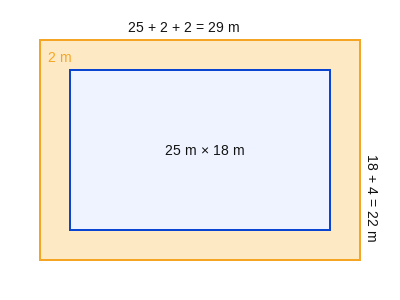
A rectangular garden has a length of 25 meters and a width of 18 meters. If a path of uniform width 2 meters is constructed around the outside of the garden, what is the perimeter of the outer edge of the path?
एक आयताकार बगीचे की लंबाई 25 मीटर और चौड़ाई 18 मीटर है। यदि बगीचे के बाहर चारों ओर 2 मीटर समान चौड़ाई का एक रास्ता बनाया जाता है, तो रास्ते के बाहरी किनारे का परिमाप क्या है?
  1. A86 meters86 मीटर
  2. B98 meters98 मीटर
  3. C112 meters112 मीटर
  4. D102 meters102 मीटर
Show answer

Concept: A path of width w outside a rectangle adds 2w to both the length and the width.

  1. Outer length =25+4=29m, outer width =18+4=22m.
  2. Perimeter =2(29+22)=2×51=102m.

Trick: Outer perimeter = inner perimeter +8w: 86+16=102.

Answer: (D) 102 meters

अवधारणा: आयत के बाहर w चौड़ाई का पथ लंबाई और चौड़ाई दोनों में 2w जोड़ देता है।

  1. बाहरी लंबाई =25+4=29m, बाहरी चौड़ाई =18+4=22m।
  2. परिमाप =2(29+22)=2×51=102m।

ट्रिक: बाहरी परिमाप = भीतरी परिमाप +8w: 86+16=102।

उत्तर: (D) 102 meters

RRB NTPC Undergraduate CBT 1MathematicsMensuration – pathRRB NTPC Undergraduate CBT 1 2025 · 7 May Shift 3 →
Q14145.
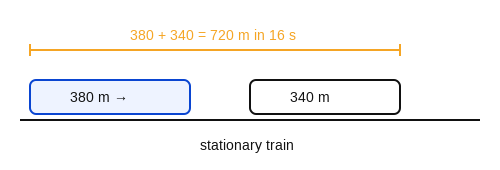
A train, 380 meters long, crosses a stationary train of length 340 m in 16 seconds. Find the speed of the train.
380 मीटर लंबी एक रेलगाड़ी 340 m लंबी एक स्थिर रेलगाड़ी को 16 सेकंड में पार करती है। रेलगाड़ी की चाल ज्ञात कीजिए।
  1. A162 km/h162 किमी/घंटा
  2. B164 km/h164 किमी/घंटा
  3. C166 km/h166 किमी/घंटा
  4. D160 km/h160 किमी/घंटा
Show answer

Concept: To cross a stationary train, the moving train covers the sum of both lengths.

  1. Distance =380+340=720m in 16s.
  2. Speed =72016=45m/s.
  3. 45×185=162km/h.

Trick: Multiples of 5 m/s convert cleanly: 45m/s=9×18=162km/h.

Answer: (A) 162 km/h

अवधारणा: खड़ी रेलगाड़ी को पार करने में चलती रेलगाड़ी दोनों लंबाइयों का योग तय करती है।

  1. दूरी =380+340=720m, समय 16s।
  2. चाल =72016=45m/s।
  3. 45×185=162km/h।

ट्रिक: 5 के गुणज m/s आसानी से बदलते हैं: 45m/s=9×18=162km/h।

उत्तर: (A) 162 km/h

RRB NTPC Undergraduate CBT 1MathematicsTrainsRRB NTPC Undergraduate CBT 1 2025 · 7 May Shift 3 →
Q14146.
Simplify: (1.5×0.2)0.3
सरल कीजिए: (1.5×0.2)0.3
  1. A10
  2. B1
  3. C0.1
  4. D0.01
Show answer

Concept: Multiply the numerator first, then divide.

  1. 1.5×0.2=0.30.
  2. 0.30.3=1.

Trick: 1.5×0.2: 15×2=30 with two decimal places → 0.30.

Answer: (B) 1

अवधारणा: पहले अंश का गुणा करें, फिर भाग दें।

  1. 1.5×0.2=0.30।
  2. 0.30.3=1।

ट्रिक: 1.5×0.2: 15×2=30, दो दशमलव स्थान → 0.30।

उत्तर: (B) 1

RRB NTPC Undergraduate CBT 1MathematicsDecimalsRRB NTPC Undergraduate CBT 1 2025 · 7 May Shift 3 →
Q14147.
The cost price of 25 articles is the same as the selling price of x articles. If the profit is 25%, then the value of x is:
25 वस्तुओं का क्रय मूल्य x वस्तुओं के विक्रय मूल्य के बराबर है। यदि लाभ 25% है, तो x का मान है:
  1. A23
  2. B18
  3. C20
  4. D16
Show answer

Concept: If CP of a articles = SP of b articles, profit%=a−bb×100.

  1. Let CP of each article be ₹1: 25=x×SP.
  2. Profit 25%⇒SP=1.25.
  3. x=251.25=20.

Trick: 25−xx=14⇒100−4x=x⇒x=20.

Answer: (C) 20

अवधारणा: यदि a वस्तुओं का CP = b वस्तुओं का SP, तो लाभ%=a−bb×100।

  1. प्रत्येक वस्तु का CP ₹1 मानें: 25=x×SP।
  2. लाभ 25%⇒SP=1.25।
  3. x=251.25=20।

ट्रिक: 25−xx=14⇒100−4x=x⇒x=20।

उत्तर: (C) 20

RRB NTPC Undergraduate CBT 1MathematicsProfit & loss – articlesRRB NTPC Undergraduate CBT 1 2025 · 7 May Shift 3 →
Q14148.
What is the mode of the following data?
40, 41, 42, 51, 45, 43, 45, 43, 51, 40, 51, 54, 46, 50, 55, 47, 42, 46
निम्नलिखित आँकड़ों का बहुलक (mode) क्या है?
40, 41, 42, 51, 45, 43, 45, 43, 51, 40, 51, 54, 46, 50, 55, 47, 42, 46
  1. A41
  2. B51
  3. C40
  4. D42
Show answer

Concept: Mode is the value that occurs most often.

  1. Frequencies: 40 → 2, 41 → 1, 42 → 2, 43 → 2, 45 → 2, 46 → 2, 51 → 3, others → 1.
  2. 51 appears 3 times, the maximum.

Trick: Tally only the values that repeat; one value with 3 occurrences stands out quickly.

Answer: (B) 51

अवधारणा: बहुलक (mode) वह मान है जो सबसे अधिक बार आता है।

  1. बारंबारता: 40 → 2, 41 → 1, 42 → 2, 43 → 2, 45 → 2, 46 → 2, 51 → 3, शेष → 1।
  2. 51 तीन बार आता है, जो अधिकतम है।

ट्रिक: केवल दोहराए गए मानों की गिनती करें; 3 बार वाला मान तुरंत दिख जाता है।

उत्तर: (B) 51

RRB NTPC Undergraduate CBT 1MathematicsStatistics – modeRRB NTPC Undergraduate CBT 1 2025 · 7 May Shift 3 →
Q14149.
Simplify: 30 + [{-9 × (26 - 11 + 6)}]
सरल कीजिए: 30 + [{-9 × (26 - 11 + 6)}]
  1. A-160
  2. B-162
  3. C-159
  4. D-161
Show answer

Concept: Solve the innermost bracket first, then multiply, then add.

  1. (26−11+6)=21.
  2. −9×21=−189.
  3. 30+(−189)=−159.

Trick: Left-to-right inside the bracket: 26−11=15, then +6=21 – do not subtract 17 from 26.

Answer: (C) -159

अवधारणा: सबसे भीतरी कोष्ठक पहले, फिर गुणा, फिर जोड़।

  1. (26−11+6)=21।
  2. −9×21=−189।
  3. 30+(−189)=−159।

ट्रिक: कोष्ठक में बाएँ से दाएँ: 26−11=15, फिर +6=21 – 26 में से 17 न घटाएँ।

उत्तर: (C) -159

RRB NTPC Undergraduate CBT 1MathematicsSimplification – BODMASRRB NTPC Undergraduate CBT 1 2025 · 7 May Shift 3 →
Q14150.
A tank is normally filled by pipe A in 10 hours. Due to a leak, the tank takes 12 hours to fill. Find the time taken by the leak alone to empty a full tank.
एक टंकी सामान्यतः पाइप A द्वारा 10 घंटे में भर जाती है। एक रिसाव के कारण टंकी को भरने में 12 घंटे लगते हैं। अकेले रिसाव द्वारा भरी हुई टंकी को खाली करने में लगने वाला समय ज्ञात कीजिए।
  1. A60 hours60 घंटे
  2. B40 hours40 घंटे
  3. C30 hours30 घंटे
  4. D80 hours80 घंटे
Show answer

Concept: Leak's rate = filling rate of A − net filling rate.

  1. A fills 110 per hour; with leak net is 112 per hour.
  2. Leak empties 110−112=6−560=160 per hour.
  3. Leak alone empties the tank in 60 hours.

Trick: Leak time =10×1212−10=60.

Answer: (A) 60 hours

अवधारणा: रिसाव की दर = A की भरने की दर − शुद्ध भरने की दर।

  1. A प्रति घंटा 110 भरता है; रिसाव के साथ शुद्ध 112 प्रति घंटा।
  2. रिसाव 110−112=6−560=160 प्रति घंटा खाली करता है।
  3. रिसाव अकेले 60 घंटे में टंकी खाली करेगा।

ट्रिक: रिसाव समय =10×1212−10=60।

उत्तर: (A) 60 hours

RRB NTPC Undergraduate CBT 1MathematicsPipes & cisternsRRB NTPC Undergraduate CBT 1 2025 · 7 May Shift 3 →
Q14151.
The mean proportional between two positive numbers is 30. If the difference between the two numbers is 45, what is the smaller of the two numbers?
दो धनात्मक संख्याओं के बीच मध्यानुपाती 30 है। यदि दोनों संख्याओं का अंतर 45 है, तो दोनों में से छोटी संख्या क्या है?
  1. A12
  2. B15
  3. C18
  4. D21
Show answer

Concept: Mean proportional m between a and b: m2=ab.

  1. ab=900 and a−b=45.
  2. (a+b)2=(a−b)2+4ab=2025+3600=5625⇒a+b=75.
  3. b=75−452=15 (and a=60; 60×15=900 ✓).

Trick: Factor pairs of 900 with difference 45: 60×15 – spot it directly.

Answer: (B) 15

अवधारणा: a और b का मध्यानुपाती (mean proportional) m: m2=ab।

  1. ab=900 तथा a−b=45।
  2. (a+b)2=(a−b)2+4ab=2025+3600=5625⇒a+b=75।
  3. b=75−452=15 (और a=60; 60×15=900 ✓)।

ट्रिक: 900 के गुणनखंड युग्म जिनका अंतर 45 हो: 60×15 – सीधे पहचानें।

उत्तर: (B) 15

RRB NTPC Undergraduate CBT 1MathematicsMean proportionalRRB NTPC Undergraduate CBT 1 2025 · 7 May Shift 3 →
Q14152.
If a sum of ₹70,000 amounts to ₹74,263 in X years under compound interest,
compounded annually at 3% per annum, find X.
यदि ₹70,000 की राशि 3% वार्षिक दर से वार्षिक रूप से संयोजित चक्रवृद्धि ब्याज पर X वर्षों में ₹74,263 हो जाती है,
तो X ज्ञात कीजिए।
  1. A5
  2. B2
  3. C4
  4. D3
Show answer

Concept: A=P(1+r100)n.

  1. 7426370000=1.0609.
  2. 1.032=1.0609, so n=2.

Trick: 1.032=1.0609, 1.033≈1.0927 – the amount barely exceeds 6%, so 2 years.

Answer: (B) 2

अवधारणा: A=P(1+r100)n।

  1. 7426370000=1.0609।
  2. 1.032=1.0609, अतः n=2।

ट्रिक: 1.032=1.0609, 1.033≈1.0927 – राशि 6% से थोड़ी ही अधिक है, अतः 2 वर्ष।

उत्तर: (B) 2

RRB NTPC Undergraduate CBT 1MathematicsCompound interestRRB NTPC Undergraduate CBT 1 2025 · 7 May Shift 3 →
Q14153.
If ₹25,200 is invested at a simple interest rate of 6% per annum for 4 years, find the interest earned.
यदि ₹25,200 को 6% वार्षिक साधारण ब्याज की दर से 4 वर्षों के लिए निवेश किया जाता है, तो अर्जित ब्याज ज्ञात कीजिए।
  1. A₹6,070
  2. B₹6,025
  3. C₹6,048
  4. D₹8,021
Show answer

Concept: SI=P×R×T100.

  1. SI=25200×6×4100.
  2. =252×24=6048.

Trick: 6%×4 years =24% of 25200 =24100×25200=6048.

Answer: (C) ₹6,048

अवधारणा: SI=P×R×T100।

  1. SI=25200×6×4100।
  2. =252×24=6048।

ट्रिक: 6%×4 वर्ष =24% of 25200 =24100×25200=6048।

उत्तर: (C) ₹6,048

RRB NTPC Undergraduate CBT 1MathematicsSimple interestRRB NTPC Undergraduate CBT 1 2025 · 7 May Shift 3 →
Q14154.
A and B can do a piece of work in 12 days and 36 days, respectively. Both work for 4 days and then A leaves. How long (in days) will B take to complete the remaining work?
A और B एक काम को क्रमशः 12 दिन और 36 दिन में कर सकते हैं। दोनों 4 दिन काम करते हैं और फिर A काम छोड़ देता है। शेष काम पूरा करने में B को कितना समय (दिनों में) लगेगा?
  1. A20
  2. B22
  3. C19
  4. D21
Show answer

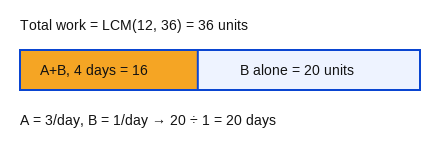
Concept: Take total work = LCM of days; work per day = total ÷ days.

  1. Total work =36 units; A =3 units/day, B =1 unit/day.
  2. In 4 days together: 4×(3+1)=16 units done; 20 remain.
  3. B alone: 201=20 days.

Trick: Fraction left =1−4(112+136)=1−1636=2036 → B takes 2036×36=20 days.

Answer: (A) 20

अवधारणा: कुल कार्य = दिनों का LCM; प्रतिदिन कार्य = कुल ÷ दिन।

  1. कुल कार्य =36 इकाई; A =3 इकाई/दिन, B =1 इकाई/दिन।
  2. 4 दिन साथ: 4×(3+1)=16 इकाई पूर्ण; 20 शेष।
  3. B अकेले: 201=20 दिन।

ट्रिक: शेष भाग =1−4(112+136)=2036 → B को 2036×36=20 दिन।

उत्तर: (A) 20

RRB NTPC Undergraduate CBT 1MathematicsTime & workRRB NTPC Undergraduate CBT 1 2025 · 7 May Shift 3 →
Q14155.
Three numbers are in the ratio 3 : 2 : 13, and their LCM is 6318. Their HCF is:
तीन संख्याएँ 3 : 2 : 13 के अनुपात में हैं, और उनका LCM 6318 है। उनका HCF है:
  1. A80
  2. B128
  3. C124
  4. D81
Show answer

Concept: For numbers 3x,2x,13x with co-prime ratio terms, HCF =x and LCM =3×2×13×x=78x.

  1. 78x=6318⇒x=631878=81.
  2. HCF =x=81.

Trick: 78×80=6240, 6318−6240=78 → one more, so x=81.

Answer: (D) 81

अवधारणा: सह-अभाज्य अनुपात पदों वाली संख्याएँ 3x,2x,13x: HCF =x और LCM =3×2×13×x=78x।

  1. 78x=6318⇒x=631878=81।
  2. HCF =x=81।

ट्रिक: 78×80=6240, 6318−6240=78 → एक और, अतः x=81।

उत्तर: (D) 81

RRB NTPC Undergraduate CBT 1MathematicsLCM & HCF – ratioRRB NTPC Undergraduate CBT 1 2025 · 7 May Shift 3 →
Q14156.
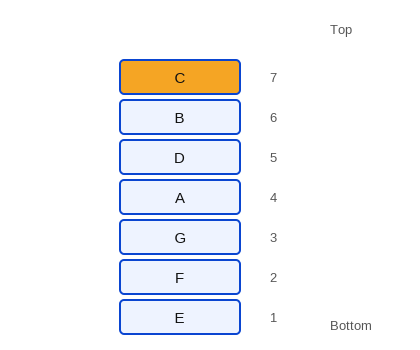
Seven boxes A, B, C, D, E, F and G are kept one over the other but not necessarily in the same order. Only two boxes are kept below G. Only one box is kept above B. Only one box is kept between B and A. F is kept immediately above E. D is kept at some place below C. Which box is kept at the top?
सात बक्से A, B, C, D, E, F और G एक के ऊपर एक रखे गए हैं, लेकिन आवश्यक नहीं कि इसी क्रम में हों। G के नीचे केवल दो बक्से रखे हैं। B के ऊपर केवल एक बक्सा रखा है। B और A के बीच केवल एक बक्सा रखा है। F, E के ठीक ऊपर रखा है। D, C के नीचे किसी स्थान पर रखा है। कौन-सा बक्सा सबसे ऊपर रखा है?
  1. AA
  2. BD
  3. CC
  4. DB
Show answer

Concept: Number the positions 1 (bottom) to 7 (top) and place the fixed clues first.

  1. Only two boxes below G → G at 3. Only one box above B → B at 6. One box between B and A → A at 4 (8 is impossible).
  2. Remaining places 1, 2, 5, 7 for C, D, E, F. F immediately above E needs consecutive places → E = 1, F = 2.
  3. C and D take 5 and 7 with D below C → D = 5, C = 7.

Trick: Clues with 'only one/two' fix absolute positions – start with them, then fit the 'immediately' pair into the only consecutive gap.

Answer: (C) C

अवधारणा: स्थानों को 1 (नीचे) से 7 (ऊपर) तक क्रमांकित करें और पहले निश्चित संकेत रखें।

  1. G के नीचे केवल दो बॉक्स → G = 3। B के ऊपर केवल एक → B = 6। B और A के बीच एक बॉक्स → A = 4 (8 संभव नहीं)।
  2. बचे स्थान 1, 2, 5, 7 C, D, E, F के लिए। F ठीक E के ऊपर, लगातार स्थान चाहिए → E = 1, F = 2।
  3. C और D 5 व 7 पर, D C के नीचे → D = 5, C = 7।

ट्रिक: 'केवल एक/दो' वाले संकेत पक्की स्थिति देते हैं – उनसे शुरू करें, फिर 'ठीक ऊपर' वाले जोड़े को इकलौते लगातार खाली स्थान में बिठाएँ।

उत्तर: (C) C

RRB NTPC Undergraduate CBT 1General Intelligence and ReasoningBox ArrangementRRB NTPC Undergraduate CBT 1 2025 · 7 May Shift 3 →
Q14157.
Based on the English alphabetical order, three of the following four letter-cluster pairs are alike in a certain way and thus form a group. Which is the one that does not belong to that group?
(Note: The odd one out is not based on the number of consonants/vowels or their position in the letter cluster.)
अंग्रेज़ी वर्णमाला क्रम के आधार पर, निम्नलिखित चार अक्षर-समूह युग्मों में से तीन किसी निश्चित प्रकार से समान हैं और इस प्रकार एक समूह बनाते हैं। वह कौन-सा है जो उस समूह से संबंधित नहीं है?
(नोट: असंगत युग्म व्यंजनों/स्वरों की संख्या या अक्षर-समूह में उनकी स्थिति पर आधारित नहीं है।)
  1. AYI - BM
  2. BGV - JZ
  3. CBU - EY
  4. DOS - RV
Show answer

Concept: Compare the positional shift of each letter from the first cluster to the second.

  1. YI → BM: Y(25)+3 = 28 → B(2), I(9)+4 = M(13): shifts +3,+4.
  2. GV → JZ: +3,+4; BU → EY: +3,+4.
  3. OS → RV: O(15)+3 = R(18), S(19)+3 = V(22): shifts +3,+3 – different.

Trick: Write letter numbers (EJOTY: E=5, J=10, O=15, T=20, Y=25) and check both shifts; the odd one differs in the second shift.

Answer: (D) OS - RV

अवधारणा: पहले समूह से दूसरे समूह तक हर अक्षर का स्थान-परिवर्तन तुलना करें।

  1. YI → BM: Y(25)+3 = 28 → B(2), I(9)+4 = M(13): परिवर्तन +3,+4।
  2. GV → JZ: +3,+4; BU → EY: +3,+4।
  3. OS → RV: O(15)+3 = R(18), S(19)+3 = V(22): +3,+3 – अलग।

ट्रिक: अक्षर-संख्या (EJOTY: E=5, J=10, O=15, T=20, Y=25) लिखकर दोनों परिवर्तन जाँचें; विषम वाला दूसरे परिवर्तन में अलग होता है।

उत्तर: (D) OS - RV

RRB NTPC Undergraduate CBT 1General Intelligence and ReasoningLetter Analogy – Odd One OutRRB NTPC Undergraduate CBT 1 2025 · 7 May Shift 3 →
Q14158.
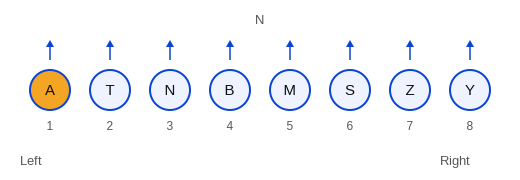
Eight people, A, B, M, N, S, T, Y and Z, are sitting in a row, facing north. S sits second to the left of Y and S sits third to the right of N. Y sits at one of the extreme ends. T sits to the immediate right of A. B sits to the immediate left of M and M sits second to the left of Z. Who sits at the extreme left end of the row?
आठ व्यक्ति A, B, M, N, S, T, Y और Z एक पंक्ति में उत्तर की ओर मुख करके बैठे हैं। S, Y के बाएँ से दूसरे स्थान पर बैठा है और S, N के दाएँ से तीसरे स्थान पर बैठा है। Y किसी एक अंतिम छोर पर बैठा है। T, A के ठीक दाएँ बैठा है। B, M के ठीक बाएँ बैठा है और M, Z के बाएँ से दूसरे स्थान पर बैठा है। पंक्ति के सबसे बाएँ छोर पर कौन बैठा है?
  1. AS
  2. BA
  3. CM
  4. DB
Show answer

Concept: Facing north, 'right' is the higher position number. Number seats 1 to 8 from left.

  1. Y is at an end and S is second to the left of Y → Y = 8, S = 6 (Y = 1 is impossible). S is third to the right of N → N = 3.
  2. B–M are adjacent with Z two places right of M. Free seats 1, 2, 4, 5, 7: B = 4, M = 5, Z = 7 (B = 1, M = 2 leaves no adjacent pair for A–T).
  3. T immediately right of A → A = 1, T = 2.

Trick: Fix the person at the extreme end first; every other clue then collapses to one option.

Answer: (B) A

अवधारणा: उत्तर की ओर मुख होने पर 'दाएँ' = बड़ी स्थान-संख्या। बाएँ से 1 से 8 तक सीटें क्रमांकित करें।

  1. Y एक छोर पर और S Y के बाएँ दूसरा → Y = 8, S = 6 (Y = 1 संभव नहीं)। S N के दाएँ तीसरा → N = 3।
  2. B–M साथ-साथ और Z M के दाएँ दूसरा। खाली सीटें 1, 2, 4, 5, 7: B = 4, M = 5, Z = 7 (B = 1, M = 2 लेने पर A–T के लिए लगातार सीटें नहीं बचतीं)।
  3. T A के ठीक दाएँ → A = 1, T = 2।

ट्रिक: पहले छोर वाले व्यक्ति को बिठाएँ; फिर हर संकेत का एक ही विकल्प बचता है।

उत्तर: (B) A

RRB NTPC Undergraduate CBT 1General Intelligence and ReasoningLinear Seating ArrangementRRB NTPC Undergraduate CBT 1 2025 · 7 May Shift 3 →
Q14159.
What should come in place of the question mark (?) in the given series?
26 34 45 53 64 72 ?
दी गई श्रृंखला में प्रश्नचिह्न (?) के स्थान पर क्या आना चाहिए?
26 34 45 53 64 72 ?
  1. A86
  2. B81
  3. C88
  4. D83
Show answer

Concept: Check the differences between consecutive terms for a repeating pattern.

  1. Differences: 34−26=8, 45−34=11, 53−45=8, 64−53=11, 72−64=8.
  2. The pattern is +8,+11 alternating, so the next difference is +11.
  3. 72+11=83.

Trick: Two alternating differences → the series is really two interleaved series each growing by 19: 26,45,64,83.

Answer: (D) 83

अवधारणा: लगातार पदों के अंतर में दोहराव वाला पैटर्न खोजें।

  1. अंतर: 34−26=8, 45−34=11, 53−45=8, 64−53=11, 72−64=8।
  2. पैटर्न +8,+11 बारी-बारी है, अतः अगला अंतर +11।
  3. 72+11=83।

ट्रिक: दो बारी-बारी अंतर → वास्तव में दो गुँथी श्रृंखलाएँ हैं जिनमें हर बार 19 बढ़ता है: 26,45,64,83।

उत्तर: (D) 83

RRB NTPC Undergraduate CBT 1General Intelligence and ReasoningNumber SeriesRRB NTPC Undergraduate CBT 1 2025 · 7 May Shift 3 →
Q14160.
Each letter in the word NERVOUS is arranged in the English alphabetical order. How many letters are there in the English alphabetical order between the letter which is fourth from the left and the one which is third from the right in the new letter cluster thus formed?
शब्द NERVOUS के प्रत्येक अक्षर को अंग्रेज़ी वर्णमाला क्रम में व्यवस्थित किया जाता है। इस प्रकार बने नए अक्षर-समूह में बाएँ से चौथे अक्षर और दाएँ से तीसरे अक्षर के बीच अंग्रेज़ी वर्णमाला क्रम में कितने अक्षर हैं?
  1. A3
  2. B4
  3. C0
  4. D1
Show answer

Concept: Rearrange the letters alphabetically, then count positions from the required end.

  1. NERVOUS in alphabetical order: E, N, O, R, S, U, V.
  2. Fourth from the left = R; third from the right = S.
  3. R(18) and S(19) are consecutive, so there are 0 letters between them.

Trick: Letters between two positions =|b−a|−1; here 19−18−1=0.

Answer: (C) 0

अवधारणा: अक्षरों को वर्णमाला क्रम में सजाएँ, फिर आवश्यक छोर से स्थान गिनें।

  1. NERVOUS वर्णमाला क्रम में: E, N, O, R, S, U, V।
  2. बाएँ से चौथा = R; दाएँ से तीसरा = S।
  3. R(18) और S(19) लगातार हैं, अतः बीच में 0 अक्षर।

ट्रिक: दो स्थानों के बीच अक्षर =|b−a|−1; यहाँ 19−18−1=0।

उत्तर: (C) 0

RRB NTPC Undergraduate CBT 1General Intelligence and ReasoningAlphabet TestRRB NTPC Undergraduate CBT 1 2025 · 7 May Shift 3 →