Question bank

Q&A: practice questions with answers

Search questions on any topic. Filter by exam category, exam, subject and topic, try the question, then open the answer and explanation.

Courses – airGurukul

20,719 questions found.

Q14321.
Which of the following baskets of the Buddhist Tipitaka contains monastic rules?
बौद्ध त्रिपिटक की निम्नलिखित में से किस पिटक में मठवासी (भिक्षु संघ के) नियम हैं?
  1. AJataka Pitakaजातक पिटक
  2. BSutta Pitakaसुत्त पिटक
  3. CAbhidhamma Pitakaअभिधम्म पिटक
  4. DVinaya Pitakaविनय पिटक
Show answer

Concept: The Pali Tipitaka ("three baskets") = Vinaya Pitaka, Sutta Pitaka and Abhidhamma Pitaka.

  1. Vinaya Pitaka – rules of discipline for monks and nuns of the Sangha.
  2. Sutta Pitaka – Buddha's sermons and teachings; Abhidhamma Pitaka – philosophical and psychological analysis.
  3. Jataka tales are stories of Buddha's previous births (part of Sutta Pitaka); "Jataka Pitaka" is not a basket.

Yaad rakhein: Vinaya = Vidhi (rules), Sutta = Sermons, Abhidhamma = Analysis.

Answer: (D) Vinaya Pitaka

अवधारणा: पालि त्रिपिटक ("तीन पिटारियाँ") = विनय पिटक, सुत्त पिटक और अभिधम्म पिटक।

  1. विनय पिटक – संघ के भिक्षु-भिक्षुणियों के लिए अनुशासन के नियम।
  2. सुत्त पिटक – बुद्ध के उपदेश; अभिधम्म पिटक – दार्शनिक और मनोवैज्ञानिक विश्लेषण।
  3. जातक कथाएँ बुद्ध के पूर्व जन्मों की कहानियाँ हैं (सुत्त पिटक का भाग); "जातक पिटक" कोई पिटक नहीं है।

याद रखें: विनय = विधि (नियम), सुत्त = सुभाषित/उपदेश, अभिधम्म = अध्ययन/विश्लेषण।

उत्तर: (D) विनय पिटक
RRB NTPC Undergraduate CBT 1General AwarenessBuddhist LiteratureRRB NTPC Undergraduate CBT 1 2025 · 7 May Shift 1 →
Q14322.
Consider the following statements regarding the provincial administration in the Mughal period and select the correct option.
Statement I: Each Suba was placed under a Subedar or provincial governor who was directly appointed by the Emperor.
Statement II: Daroga-i-Dak was responsible for maintaining the communication channel.
मुगल काल में प्रांतीय प्रशासन के संबंध में निम्नलिखित कथनों पर विचार कीजिए और सही विकल्प का चयन कीजिए।
कथन I: प्रत्येक सूबा एक सूबेदार या प्रांतीय गवर्नर के अधीन था, जिसे सीधे बादशाह द्वारा नियुक्त किया जाता था।
कथन II: दारोगा-ए-डाक संचार माध्यम को बनाए रखने के लिए उत्तरदायी था।
  1. ABoth statements I and II are incorrect.कथन I और II दोनों गलत हैं।
  2. BStatement I is incorrect, while statement II is correct.कथन I गलत है, जबकि कथन II सही है।
  3. CBoth statements I and II are correct.कथन I और II दोनों सही हैं।
  4. DStatement I is correct, while statement II is incorrect.कथन I सही है, जबकि कथन II गलत है।
Show answer

Concept: Akbar divided the empire into Subas (provinces), each a replica of the central government.

  1. Statement I – correct: the Suba was headed by a Subedar (Sipahsalar/Nazim) appointed directly by the Emperor; the Diwan, Bakhshi, Sadr, Qazi and Kotwal assisted him.
  2. Statement II – correct: the Daroga-i-Dak Chowki managed the postal and intelligence (dak) system that kept the centre informed of the provinces.

Yaad rakhein: Subedar = governor, Diwan = revenue, Bakhshi = military, Daroga-i-Dak = post/news.

Answer: (C) Both statements I and II are correct.

अवधारणा: अकबर ने साम्राज्य को सूबों (प्रांतों) में बाँटा, हर सूबा केंद्रीय शासन की प्रतिकृति था।

  1. कथन I – सही: सूबे का प्रमुख सूबेदार (सिपहसालार/नाज़िम) होता था जिसे सम्राट सीधे नियुक्त करता था; दीवान, बख्शी, सद्र, क़ाज़ी और कोतवाल उसकी सहायता करते थे।
  2. कथन II – सही: दरोगा-ए-डाक चौकी डाक और गुप्तचर (dak) व्यवस्था संभालता था, जो केंद्र को प्रांतों की सूचना देती थी।

याद रखें: सूबेदार = गवर्नर, दीवान = राजस्व, बख्शी = सेना, दरोगा-ए-डाक = डाक/समाचार।

उत्तर: (C) दोनों कथन I और II सही हैं।

RRB NTPC Undergraduate CBT 1General AwarenessMughal AdministrationRRB NTPC Undergraduate CBT 1 2025 · 7 May Shift 1 →
Q14323.
Which of the following Union Territories has a Legislative Assembly?
निम्नलिखित में से किस केंद्र शासित प्रदेश में विधान सभा है?
  1. ALakshadweepलक्षद्वीप
  2. BLadakhलद्दाख
  3. CNational Capital Territory of Delhiराष्ट्रीय राजधानी क्षेत्र दिल्ली
  4. DAndaman and Nicobar Islandsअंडमान और निकोबार द्वीप समूह
Show answer

Concept: Of India's 8 Union Territories, only three have Legislative Assemblies – Delhi (NCT), Puducherry and Jammu & Kashmir.

  1. Delhi got its Assembly under the 69th Amendment (Article 239AA, 1991).
  2. Lakshadweep, Ladakh and Andaman & Nicobar are administered directly by the President through an Administrator/Lt. Governor, with no legislature.

Yaad rakhein: UTs with Assembly = D-P-J (Delhi, Puducherry, J&K).

Answer: (C) National Capital Territory of Delhi

अवधारणा: भारत के 8 केंद्र शासित प्रदेशों में केवल तीन में विधानसभा है – दिल्ली (NCT), पुडुचेरी और जम्मू-कश्मीर।

  1. दिल्ली को 69वें संशोधन (अनुच्छेद 239AA, 1991) से विधानसभा मिली।
  2. लक्षद्वीप, लद्दाख और अंडमान-निकोबार का प्रशासन राष्ट्रपति प्रशासक/उपराज्यपाल के माध्यम से सीधे करते हैं, विधायिका नहीं है।

याद रखें: विधानसभा वाले UT = D-P-J (दिल्ली, पुडुचेरी, J&K)।

उत्तर: (C) राष्ट्रीय राजधानी क्षेत्र दिल्ली

RRB NTPC Undergraduate CBT 1General AwarenessUnion TerritoriesRRB NTPC Undergraduate CBT 1 2025 · 7 May Shift 1 →
Q14324.
Which Amendment restored the primacy of Fundamental Rights over Directive Principles?
किस संशोधन ने नीति निदेशक तत्वों पर मौलिक अधिकारों की प्रधानता को पुनः स्थापित किया?
  1. A44th Amendment44वाँ संशोधन
  2. B42nd Amendment42वाँ संशोधन
  3. C74th Amendment74वाँ संशोधन
  4. D84th Amendment84वाँ संशोधन
Show answer

Concept: The 42nd Amendment (1976) amended Article 31C to give all Directive Principles primacy over Fundamental Rights under Articles 14 and 19.

  1. The 44th Amendment (1978), passed by the Janata government, reversed many 42nd-Amendment changes and is credited with restoring the balance in favour of Fundamental Rights (it also strengthened Articles 20–21 during Emergency).
  2. In Minerva Mills (1980) the Supreme Court struck down the 42nd Amendment's expansion of Article 31C, confirming the primacy of Fundamental Rights.
  3. 74th (municipalities) and 84th (delimitation freeze) are unrelated.

Yaad rakhein: 42nd = DPSP over FR; 44th = balance restored to FR.

Answer: (A) 44th Amendment

अवधारणा: 42वें संशोधन (1976) ने अनुच्छेद 31C बदलकर सभी नीति-निदेशक तत्वों को अनुच्छेद 14 और 19 के मौलिक अधिकारों पर प्राथमिकता दी।

  1. जनता सरकार के 44वें संशोधन (1978) ने 42वें संशोधन के कई बदलाव पलटे और मौलिक अधिकारों के पक्ष में संतुलन बहाल करने का श्रेय इसे दिया जाता है (आपातकाल में अनुच्छेद 20–21 भी सुरक्षित किए)।
  2. मिनर्वा मिल्स (1980) में सुप्रीम कोर्ट ने 42वें संशोधन द्वारा अनुच्छेद 31C के विस्तार को रद्द कर मौलिक अधिकारों की प्राथमिकता पुष्ट की।
  3. 74वाँ (नगरपालिका) और 84वाँ (परिसीमन रोक) असंबंधित हैं।

याद रखें: 42वाँ = DPSP ऊपर; 44वाँ = मौलिक अधिकारों का संतुलन वापस।

उत्तर: (A) 44वाँ संशोधन

RRB NTPC Undergraduate CBT 1General AwarenessConstitutional AmendmentsRRB NTPC Undergraduate CBT 1 2025 · 7 May Shift 1 →
Q14325.
Who among the following led the large-scale armed attack on the Chittagong armoury in April 1930?
अप्रैल 1930 में चटगाँव शस्त्रागार पर बड़े पैमाने पर हुए सशस्त्र हमले का नेतृत्व निम्नलिखित में से किसने किया था?
  1. ASurya Senसूर्य सेन
  2. BChandrasekhar Azadचंद्रशेखर आज़ाद
  3. CJatin Dasजतिन दास
  4. DBhagat Singhभगत सिंह
Show answer

Concept: The Chittagong Armoury Raid (18 April 1930) was carried out by the Indian Republican Army led by "Masterda" Surya Sen.

  1. Surya Sen's group, including Ganesh Ghosh, Lokenath Bal, Pritilata Waddedar and Kalpana Datta, seized the police and auxiliary armouries in Chittagong (now Bangladesh).
  2. Surya Sen was captured in 1933 and hanged in January 1934.
  3. Azad and Bhagat Singh belonged to HSRA in north India; Jatin Das died on hunger strike in Lahore jail (1929).

Yaad rakhein: Chittagong 1930 = Surya Sen ("Masterda").

Answer: (A) Surya Sen

अवधारणा: चटगाँव शस्त्रागार छापा (18 अप्रैल 1930) "मास्टरदा" सूर्य सेन के नेतृत्व वाली इंडियन रिपब्लिकन आर्मी ने किया।

  1. सूर्य सेन के दल – गणेश घोष, लोकनाथ बल, प्रीतिलता वाद्देदार, कल्पना दत्त – ने चटगाँव (अब बांग्लादेश) के पुलिस और सहायक शस्त्रागारों पर कब्ज़ा किया।
  2. सूर्य सेन 1933 में पकड़े गए और जनवरी 1934 में फाँसी दी गई।
  3. आज़ाद और भगत सिंह उत्तर भारत के HSRA से थे; जतिन दास लाहौर जेल में भूख हड़ताल में शहीद हुए (1929)।

याद रखें: चटगाँव 1930 = सूर्य सेन ("मास्टरदा")।

उत्तर: (A) सूर्य सेन

RRB NTPC Undergraduate CBT 1General AwarenessRevolutionary MovementRRB NTPC Undergraduate CBT 1 2025 · 7 May Shift 1 →
Q14326.
A dealer sells a product at 15% profit. If he had bought it at 10% less and sold it for ₹126 less, he would have gained 20%. Find the cost price.
एक व्यापारी एक वस्तु को 15% लाभ पर बेचता है। यदि उसने इसे 10% कम में खरीदा होता और ₹126 कम में बेचा होता, तो उसे 20% लाभ होता। क्रय मूल्य ज्ञात कीजिए।
  1. A₹1,400
  2. B₹1,800
  3. C₹2,000
  4. D₹1,200
Show answer

Concept: Write both selling prices in terms of the cost price x and compare their difference with ₹126.

  1. Original: SP =1.15x.
  2. New CP =0.9x, gain 20% ⟹ new SP =1.2×0.9x=1.08x.
  3. Difference: 1.15x−1.08x=0.07x=126 ⟹ x=1800.

Trick: Successive % on CP: 0.9×1.2=1.08, so the gap is (115−108)%=7% of CP = ₹126.

Answer: (B) ₹1,800

अवधारणा: दोनों विक्रय मूल्य (SP) लागत मूल्य x के रूप में लिखें और अंतर को ₹126 के बराबर रखें।

  1. मूल: SP =1.15x।
  2. नया CP =0.9x, लाभ 20% ⟹ नया SP =1.2×0.9x=1.08x।
  3. अंतर: 1.15x−1.08x=0.07x=126 ⟹ x=1800।

ट्रिक: CP पर क्रमिक %: 0.9×1.2=1.08, अतः अंतर (115−108)%=7% CP का = ₹126।

उत्तर: (B) ₹1,800

RRB NTPC Undergraduate CBT 1MathematicsProfit and LossRRB NTPC Undergraduate CBT 1 2025 · 7 May Shift 1 →
Q14327.
Three numbers are in the ratio 4 : 13 : 9, and their LCM is 6084. Their HCF is:
तीन संख्याएँ 4 : 13 : 9 के अनुपात में हैं और उनका लघुत्तम समापवर्त्य (LCM) 6084 है। उनका महत्तम समापवर्तक (HCF) है:
  1. A23
  2. B13
  3. C12
  4. D48
Show answer

Concept: If numbers are 4k,13k,9k with k their HCF, then LCM =k×LCM(4,13,9).

  1. LCM(4,13,9)=468 (all co-prime).
  2. 468k=6084 ⟹ k=13.
  3. HCF =k=13.

Trick: For co-prime ratio terms, HCF =LCMproduct of ratio terms.

Answer: (B) 13

अवधारणा: संख्याएँ 4k,13k,9k हों (जहाँ k = HCF), तो LCM =k×LCM(4,13,9)।

  1. LCM(4,13,9)=468 (सभी सह-अभाज्य)।
  2. 468k=6084 ⟹ k=13।
  3. HCF =k=13।

ट्रिक: सह-अभाज्य अनुपात पदों के लिए HCF =LCMअनुपात पदों का गुणनफल।

उत्तर: (B) 13

RRB NTPC Undergraduate CBT 1MathematicsLCM and HCFRRB NTPC Undergraduate CBT 1 2025 · 7 May Shift 1 →
Q14328.
The present age of a man is 4 years more than twice the present age of his son. After 6 years, the sum of their ages will be 58 years. What is the present age of the son?
एक व्यक्ति की वर्तमान आयु उसके पुत्र की वर्तमान आयु के दोगुने से 4 वर्ष अधिक है। 6 वर्ष बाद उनकी आयु का योग 58 वर्ष होगा। पुत्र की वर्तमान आयु क्या है?
  1. A10 years10 वर्ष
  2. B11 years11 वर्ष
  3. C14 years14 वर्ष
  4. D9 years9 वर्ष
Show answer

Concept: Form linear equations with son's present age s.

  1. Man =2s+4.
  2. After 6 years: (2s+4+6)+(s+6)=58 ⟹ 3s+16=58.
  3. s=14 years.

Trick: Present sum =58−12=46; then 3s+4=46 ⟹ s=14.

Answer: (C) 14 years

अवधारणा: पुत्र की वर्तमान आयु s मानकर रैखिक समीकरण बनाएँ।

  1. व्यक्ति =2s+4।
  2. 6 वर्ष बाद: (2s+4+6)+(s+6)=58 ⟹ 3s+16=58।
  3. s=14 वर्ष।

ट्रिक: वर्तमान योग =58−12=46; तब 3s+4=46 ⟹ s=14।

उत्तर: (C) 14 वर्ष

RRB NTPC Undergraduate CBT 1MathematicsAgesRRB NTPC Undergraduate CBT 1 2025 · 7 May Shift 1 →
Q14329.
What sum (in ₹) will earn a simple interest of ₹1,320 in 3 years at 20% per year rate of interest?
कौन-सी धनराशि (₹ में) 20% वार्षिक ब्याज दर से 3 वर्ष में ₹1,320 का साधारण ब्याज अर्जित करेगी?
  1. A4,400
  2. B2,200
  3. C1,100
  4. D792
Show answer

Concept: SI=P×R×T100.

  1. 1320=P×20×3100=60P100.
  2. P=1320×10060=2200.

Trick: 20%×3=60% of sum =1320 ⟹ sum =1320÷0.6=2200.

Answer: (B) 2,200

अवधारणा: SI=P×R×T100।

  1. 1320=P×20×3100=60P100।
  2. P=1320×10060=2200।

ट्रिक: 20%×3=60% मूलधन का =1320 ⟹ मूलधन =1320÷0.6=2200।

उत्तर: (B) 2,200

RRB NTPC Undergraduate CBT 1MathematicsSimple InterestRRB NTPC Undergraduate CBT 1 2025 · 7 May Shift 1 →
Q14330.
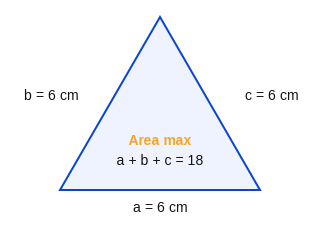
If a triangle has sides a, b, c, and fixed sum a+b+c=18, then the maximum possible area (in cm2) of the triangle is
यदि किसी त्रिभुज की भुजाएँ a, b, c हैं और उनका निश्चित योग a+b+c=18 है, तो त्रिभुज का अधिकतम संभव क्षेत्रफल (cm2 में) है
  1. A63
  2. B33
  3. C93
  4. D123
Show answer

Concept: For a fixed perimeter, the triangle of maximum area is equilateral.

  1. Each side =183=6 cm.
  2. Area =34a2=34×36=93 cm².

Yaad rakhein: Fixed perimeter ⟹ most "regular" shape has the greatest area (equilateral triangle, square, circle).

Answer: (C) 93

अवधारणा: निश्चित परिमाप के लिए अधिकतम क्षेत्रफल वाला त्रिभुज समबाहु (equilateral) होता है।

  1. प्रत्येक भुजा =183=6 cm।
  2. क्षेत्रफल =34a2=34×36=93 cm²।

याद रखें: परिमाप निश्चित ⟹ सबसे "नियमित" आकृति का क्षेत्रफल सबसे अधिक (समबाहु त्रिभुज, वर्ग, वृत्त)।

उत्तर: (C) 93

RRB NTPC Undergraduate CBT 1MathematicsTriangle – maximum areaRRB NTPC Undergraduate CBT 1 2025 · 7 May Shift 1 →
Q14331.
A fruit seller sold mangoes at ₹600 per box last month. This month, he first increased the price by 10% due to transportation costs and then offered a discount of 15% on the increased price. What is the final price of one box of mangoes?
एक फल विक्रेता ने पिछले महीने आम ₹600 प्रति पेटी की दर से बेचे। इस महीने, उसने परिवहन लागत के कारण पहले मूल्य में 10% की वृद्धि की और फिर बढ़े हुए मूल्य पर 15% की छूट दी। आम की एक पेटी का अंतिम मूल्य क्या है?
  1. A₹571
  2. B₹541
  3. C₹561
  4. D₹551
Show answer

Concept: Apply the changes one after another as multipliers.

  1. After 10% increase: 600×1.1=660.
  2. After 15% discount: 660×0.85=561.

Trick: Net change =10−15−10×15100=−6.5%; 600×0.935=561.

Answer: (C) ₹561

अवधारणा: परिवर्तनों को एक के बाद एक गुणक (multiplier) के रूप में लगाएँ।

  1. 10% वृद्धि के बाद: 600×1.1=660।
  2. 15% छूट के बाद: 660×0.85=561।

ट्रिक: शुद्ध परिवर्तन =10−15−10×15100=−6.5%; 600×0.935=561।

उत्तर: (C) ₹561

RRB NTPC Undergraduate CBT 1MathematicsSuccessive Percentage ChangeRRB NTPC Undergraduate CBT 1 2025 · 7 May Shift 1 →
Q14332.
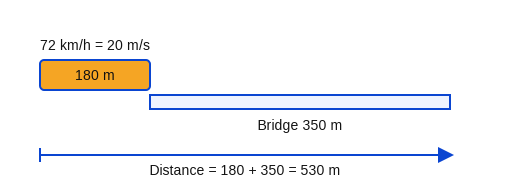
A train of length 180 meters is running at a speed of 72 km/h. How much time will it take to cross a bridge 350 meters long?
180 मीटर लंबी एक रेलगाड़ी 72 km/h की चाल से चल रही है। 350 मीटर लंबे पुल को पार करने में उसे कितना समय लगेगा?
  1. A26.5 seconds26.5 सेकंड
  2. B24.5 seconds24.5 सेकंड
  3. C23.5 seconds23.5 सेकंड
  4. D27.5 seconds27.5 सेकंड
Show answer

Concept: To cross a bridge the train covers (its own length + bridge length).

  1. Speed =72×518=20 m/s.
  2. Distance =180+350=530 m.
  3. Time =53020=26.5 s.

Trick: km/h → m/s: multiply by 518 (72 → 20).

Answer: (A) 26.5 seconds

अवधारणा: पुल पार करने में ट्रेन (अपनी लंबाई + पुल की लंबाई) तय करती है।

  1. चाल =72×518=20 m/s।
  2. दूरी =180+350=530 m।
  3. समय =53020=26.5 s।

ट्रिक: km/h → m/s: 518 से गुणा करें (72 → 20)।

उत्तर: (A) 26.5 सेकंड

RRB NTPC Undergraduate CBT 1MathematicsTrainsRRB NTPC Undergraduate CBT 1 2025 · 7 May Shift 1 →
Q14333.
The sum of two positive numbers is 27 and their product is 170. The positive difference between them is:
दो धनात्मक संख्याओं का योग 27 और उनका गुणनफल 170 है। उनके बीच का धनात्मक अंतर है:
  1. A7
  2. B12
  3. C19
  4. D2
Show answer

Concept: (a−b)2=(a+b)2−4ab.

  1. (a−b)2=272−4×170=729−680=49.
  2. a−b=7.

Trick: Check: 17×10=170, 17+10=27, difference 7.

Answer: (A) 7

अवधारणा: (a−b)2=(a+b)2−4ab।

  1. (a−b)2=272−4×170=729−680=49।
  2. a−b=7।

ट्रिक: जाँच: 17×10=170, 17+10=27, अंतर 7।

उत्तर: (A) 7

RRB NTPC Undergraduate CBT 1MathematicsAlgebraic IdentitiesRRB NTPC Undergraduate CBT 1 2025 · 7 May Shift 1 →
Q14334.
A streaming service charges ₹150 per month. If you buy an annual plan (12 months) with a 15% discount, what is your total savings (in ₹) compared to paying monthly for a year?
एक स्ट्रीमिंग सेवा ₹150 प्रति माह शुल्क लेती है। यदि आप 15% छूट के साथ वार्षिक योजना (12 माह) खरीदते हैं, तो एक वर्ष तक मासिक भुगतान करने की तुलना में आपकी कुल बचत (₹ में) कितनी होगी?
  1. A180
  2. B300
  3. C240
  4. D270
Show answer

Concept: Savings = discount % of the yearly monthly-payment total.

  1. Monthly for a year: 150×12=1800.
  2. Savings =15% of 1800=270.

Trick: 10% of 1800 =180, 5%=90; total 270.

Answer: (D) 270

अवधारणा: बचत = वार्षिक मासिक-भुगतान योग का छूट %।

  1. एक वर्ष का मासिक भुगतान: 150×12=1800।
  2. बचत =1800 का 15%=270।

ट्रिक: 1800 का 10%=180, 5%=90; कुल 270।

उत्तर: (D) 270

RRB NTPC Undergraduate CBT 1MathematicsPercentageRRB NTPC Undergraduate CBT 1 2025 · 7 May Shift 1 →
Q14335.
If the interest on a sum of ₹y at 10% per annum compounded annually for 2 years is ₹462, then the total amount payable at the end of the two-year period will be _________.
यदि ₹y की धनराशि पर 10% वार्षिक दर से वार्षिक रूप से संयोजित चक्रवृद्धि ब्याज 2 वर्ष में ₹462 है, तो दो वर्ष की अवधि के अंत में देय कुल मिश्रधन _________ होगा।
  1. A₹2,762
  2. B₹2,962
  3. C₹2,662
  4. D₹2,862
Show answer

Concept: CI for 2 years at 10% =21% of principal (since 1.12=1.21).

  1. 0.21y=462 ⟹ y=2200.
  2. Amount =2200+462=2662.

Trick: 21% → 462, so 1% → 22 and 121% → 2662.

Answer: (C) ₹2,662

अवधारणा: 10% पर 2 वर्ष का CI = मूलधन का 21% (क्योंकि 1.12=1.21)।

  1. 0.21y=462 ⟹ y=2200।
  2. मिश्रधन =2200+462=2662।

ट्रिक: 21% → 462, अतः 1% → 22 और 121% → 2662।

उत्तर: (C) ₹2,662

RRB NTPC Undergraduate CBT 1MathematicsCompound InterestRRB NTPC Undergraduate CBT 1 2025 · 7 May Shift 1 →
Q14336.
Find the diameter of a sphere of surface area 28962 cm2. (round off to the closest integer) (Use π=227)
28962 cm2 पृष्ठीय क्षेत्रफल वाले गोले का व्यास ज्ञात कीजिए। (निकटतम पूर्णांक तक पूर्णांकित कीजिए) (π=227 का प्रयोग कीजिए)
  1. A108 cm
  2. B48 cm
  3. C98 cm
  4. D96 cm
Show answer

Concept: Surface area of sphere =4πr2.

  1. 4×227×r2=28962 ⟹ r2=28962×788≈2303.8.
  2. r≈48 cm (since 482=2304).
  3. Diameter =2r=96 cm.

Trick: 2896288≈329, ×7≈2304=482. Don't stop at r – the question asks the diameter.

Answer: (D) 96 cm

अवधारणा: गोले का पृष्ठीय क्षेत्रफल =4πr2।

  1. 4×227×r2=28962 ⟹ r2=28962×788≈2303.8।
  2. r≈48 cm (क्योंकि 482=2304)।
  3. व्यास =2r=96 cm।

ट्रिक: 2896288≈329, ×7≈2304=482। r पर न रुकें – प्रश्न व्यास पूछ रहा है।

उत्तर: (D) 96 cm

RRB NTPC Undergraduate CBT 1MathematicsMensuration – SphereRRB NTPC Undergraduate CBT 1 2025 · 7 May Shift 1 →
Q14337.
The value of a machine depreciates by 10% every year. What is the total percentage depreciation after 2 years?
एक मशीन के मूल्य में प्रति वर्ष 10% का अवमूल्यन होता है। 2 वर्ष बाद कुल प्रतिशत अवमूल्यन कितना होगा?
  1. A21%
  2. B20%
  3. C19%
  4. D22%
Show answer

Concept: Two successive changes of a% and b% give net a+b+ab100.

  1. −10−10+(−10)(−10)100=−20+1=−19%.
  2. Check: 100→90→81, fall =19%.

Trick: Depreciation is less than 20% because the second 10% acts on a smaller value.

Answer: (C) 19%

अवधारणा: a% और b% के दो क्रमिक परिवर्तनों का शुद्ध प्रभाव a+b+ab100।

  1. −10−10+(−10)(−10)100=−20+1=−19%।
  2. जाँच: 100→90→81, कमी =19%।

ट्रिक: अवमूल्यन 20% से कम है क्योंकि दूसरा 10% छोटे मान पर लगता है।

उत्तर: (C) 19%

RRB NTPC Undergraduate CBT 1MathematicsSuccessive Percentage ChangeRRB NTPC Undergraduate CBT 1 2025 · 7 May Shift 1 →
Q14338.
A shopkeeper offers the following schemes on toys of the same marked price. (A) Successive discounts of 16% and 29% on any number of toys bought.
(B) Successive discounts of 4%, 34% and 37% on any number of toys bought. (C) 12% discount on the first 4 toys and 27% discount on each toy thereon.
(D) 4 toys free of cost on buying 10 toys.
A customer wants to buy 10 toys. Which of the above schemes is the least beneficial to her?
एक दुकानदार समान अंकित मूल्य वाले खिलौनों पर निम्नलिखित योजनाएँ देता है। (A) किसी भी संख्या में खरीदे गए खिलौनों पर 16% और 29% की क्रमिक छूट।
(B) किसी भी संख्या में खरीदे गए खिलौनों पर 4%, 34% और 37% की क्रमिक छूट। (C) पहले 4 खिलौनों पर 12% छूट और उसके बाद प्रत्येक खिलौने पर 27% छूट।
(D) 10 खिलौने खरीदने पर 4 खिलौने निःशुल्क।
एक ग्राहक 10 खिलौने खरीदना चाहती है। उपरोक्त में से कौन-सी योजना उसके लिए सबसे कम लाभदायक है?
  1. AB
  2. BC
  3. CA
  4. DD
Show answer

Concept: Compare what fraction of the marked price (MP) of 10 toys the customer actually pays under each scheme.

  1. (A) 0.84×0.71=0.5964 → pays 59.64%.
  2. (B) 0.96×0.66×0.63=0.3992 → pays 39.92% (discount ≈60.1%).
  3. (C) 4×0.88+6×0.7310=0.79 → pays 79%.
  4. (D) Buying 10 toys she pays full price for 10 (the 4 free toys are extra, not a price cut); effectively 1014≈71.4% per toy.
  5. Scheme B stands apart from the other three – it is the only one with a discount above 50%.

Trick: Multiply the "paid" fractions (1−d); never add the discount percentages.

Answer: (B) B

अवधारणा: प्रत्येक योजना में ग्राहक 10 खिलौनों के अंकित मूल्य (MP) का कितना अंश वास्तव में देती है, इसकी तुलना करें।

  1. (A) 0.84×0.71=0.5964 → 59.64% भुगतान।
  2. (B) 0.96×0.66×0.63=0.3992 → 39.92% भुगतान (छूट ≈60.1%)।
  3. (C) 4×0.88+6×0.7310=0.79 → 79% भुगतान।
  4. (D) 10 खिलौने खरीदने पर 10 का पूरा मूल्य (4 मुफ्त खिलौने अतिरिक्त हैं, मूल्य में कटौती नहीं); प्रभावी रूप से प्रति खिलौना 1014≈71.4%।
  5. योजना B अन्य तीनों से अलग है – केवल इसी में छूट 50% से अधिक है।

ट्रिक: "भुगतान" अंशों (1−d) को गुणा करें; छूट प्रतिशत कभी न जोड़ें।

उत्तर: (B) B

RRB NTPC Undergraduate CBT 1MathematicsSuccessive DiscountsRRB NTPC Undergraduate CBT 1 2025 · 7 May Shift 1 →
Q14339.
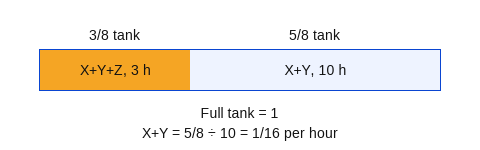
Pipes X, Y, and Z together can fill a tank in 8 hours. If all three work together for 3 hours, and then pipe Z is closed, the remaining tank is filled by X and Y in 10 hours. In how many hours can pipe Z alone fill the empty tank?
पाइप X, Y और Z मिलकर एक टंकी को 8 घंटे में भर सकते हैं। यदि तीनों 3 घंटे तक एक साथ कार्य करते हैं और फिर पाइप Z को बंद कर दिया जाता है, तो शेष टंकी को X और Y 10 घंटे में भरते हैं। पाइप Z अकेला खाली टंकी को कितने घंटे में भर सकता है?
  1. A18
  2. B16
  3. C32
  4. D24
Show answer

Concept: Work per hour =1time; split the tank into the part filled with Z and without Z.

  1. X+Y+Z fill 18 per hour ⟹ in 3 h: 38; remaining 58.
  2. X+Y fill 58 in 10 h ⟹ 580=116 per hour.
  3. Z =18−116=116 ⟹ Z alone takes 16 h.

Trick: Take tank =16 units: all three =2/h, X+Y =10÷10=1/h, so Z =1/h → 16 h.

Answer: (B) 16

अवधारणा: प्रति घंटा कार्य =1समय; टंकी को Z के साथ और Z के बिना भरे भाग में बाँटें।

  1. X+Y+Z प्रति घंटा 18 ⟹ 3 h में 38; शेष 58।
  2. X+Y 58 को 10 h में ⟹ 580=116 प्रति घंटा।
  3. Z =18−116=116 ⟹ Z अकेले 16 h।

ट्रिक: टंकी =16 इकाई लें: तीनों =2/h, X+Y =10÷10=1/h, अतः Z =1/h → 16 h।

उत्तर: (B) 16

RRB NTPC Undergraduate CBT 1MathematicsPipes and CisternsRRB NTPC Undergraduate CBT 1 2025 · 7 May Shift 1 →
Q14340.
Two bells are rung at intervals of 1,764 seconds and 2,268 seconds, respectively. They are rung together at the start. After how much time will the two bells ring together again for the first time?
दो घंटियाँ क्रमशः 1,764 सेकंड और 2,268 सेकंड के अंतराल पर बजती हैं। शुरुआत में वे एक साथ बजती हैं। कितने समय बाद दोनों घंटियाँ पहली बार फिर से एक साथ बजेंगी?
  1. A4 hours 24 minutes 36 seconds4 घंटे 24 मिनट 36 सेकंड
  2. B4 hours 36 minutes 24 seconds4 घंटे 36 मिनट 24 सेकंड
  3. C4 hours 18 minutes 12 seconds4 घंटे 18 मिनट 12 सेकंड
  4. D4 hours 12 minutes 18 seconds4 घंटे 12 मिनट 18 सेकंड
Show answer

Concept: Bells ring together again after LCM of the intervals.

  1. 1764=22×32×72, 2268=22×34×7.
  2. LCM =22×34×72=4×81×49=15876 s.
  3. 15876=14400+1476 ⟹ 4 h + 24 min 36 s.

Trick: HCF =252; LCM =1764×2268252=7×2268=15876.

Answer: (A) 4 hours 24 minutes 36 seconds

अवधारणा: घंटियाँ अंतरालों के LCM के बाद फिर साथ बजेंगी।

  1. 1764=22×32×72, 2268=22×34×7।
  2. LCM =22×34×72=4×81×49=15876 s।
  3. 15876=14400+1476 ⟹ 4 h + 24 min 36 s।

ट्रिक: HCF =252; LCM =1764×2268252=7×2268=15876।

उत्तर: (A) 4 घंटे 24 मिनट 36 सेकंड

RRB NTPC Undergraduate CBT 1MathematicsLCM – BellsRRB NTPC Undergraduate CBT 1 2025 · 7 May Shift 1 →