Question bank

Q&A: practice questions with answers

Search questions on any topic. Filter by exam category, exam, subject and topic, try the question, then open the answer and explanation.

Courses – airGurukul

20,719 questions found.

Q15081.
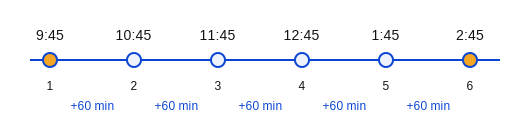
A gardener waters three rows of plants using automatic sprays. Spray A activates after every 12 minutes, Spray B after every 15 minutes, and Spray C after every 20 minutes. If they first activate together at 9:45 AM, at what time will they activate together for the sixth time (including the one at the beginning)?
एक माली स्वचालित स्प्रे का उपयोग करके पौधों की तीन पंक्तियों को पानी देता है। स्प्रे A प्रत्येक 12 मिनट के बाद, स्प्रे B प्रत्येक 15 मिनट के बाद और स्प्रे C प्रत्येक 20 मिनट के बाद सक्रिय होता है। यदि वे पहली बार 9:45 AM पर एक साथ सक्रिय होते हैं, तो वे छठी बार (आरंभ वाली बार को मिलाकर) एक साथ किस समय सक्रिय होंगे?
  1. A2:55 PM
  2. B2:45 PM
  3. C1:45 PM
  4. D2:25 PM
Show answer

Concept: Things repeating every a,b,c minutes coincide every LCM(a,b,c) minutes.

  1. LCM(12,15,20)=60 minutes, so all three sprays activate together every 1 hour.
  2. First together at 9:45 AM; the sixth time (including the first) is after 5×60=300 minutes = 5 hours.
  3. 9:45 AM + 5 h = 2:45 PM.

Trick: nth time together = start + (n−1)×LCM; don't add 6 intervals.

Answer: (B) 2:45 PM

अवधारणा: हर a,b,c मिनट में दोहराने वाली चीज़ें हर LCM(a,b,c) मिनट पर एक साथ होती हैं।

  1. LCM(12,15,20)=60 मिनट, अर्थात तीनों स्प्रे हर 1 घंटे में एक साथ चलते हैं।
  2. पहली बार 9:45 AM; छठी बार (पहली सहित) 5×60=300 मिनट = 5 घंटे बाद।
  3. 9:45 AM + 5 घंटे = 2:45 PM।

ट्रिक: nवीं बार = प्रारंभ + (n−1)×LCM; 6 अंतराल न जोड़ें।

उत्तर: (B) 2:45 PM
RRB NTPC Graduate CBT 1MathematicsLCM – bells/sprays togetherRRB NTPC Graduate CBT 1 2025 · 25 Mar Shift 2 →
Q15082.
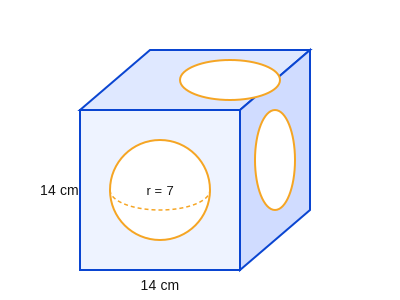
There is a wooden cube with an edge length of 14 cm. A hemisphere with a radius of 7 cm is carved out from each face of the cube. Find the surface area (in cm2) of the remaining structure. (Use π=227)
14 cm कोर (edge) लंबाई वाला एक लकड़ी का घन है। घन के प्रत्येक फलक से 7 cm त्रिज्या वाला एक अर्धगोला काटकर निकाला जाता है। शेष संरचना का पृष्ठीय क्षेत्रफल (cm2 में) ज्ञात कीजिए। (π=227 का प्रयोग कीजिए)
  1. A2150
  2. B2100
  3. C1800
  4. D1950
Show answer

Concept: When a hemisphere is scooped out of a face, the flat circle (πr2) is removed and the curved surface (2πr2) is added – net gain πr2 per face.

  1. Cube surface =6a2=6×142=1176cm2.
  2. Each of the 6 faces: −πr2+2πr2=+πr2=227×49=154cm2.
  3. Total =1176+6×154=1176+924=2100cm2.

Trick: Remaining area =6a2+6πr2 (one hemisphere per face).

Answer: (B) 2100

अवधारणा: किसी फलक से अर्धगोला काटने पर समतल वृत्त (πr2) हटता है और वक्र पृष्ठ (2πr2) जुड़ता है – प्रति फलक शुद्ध वृद्धि πr2।

  1. घन का पृष्ठ =6a2=6×142=1176cm2।
  2. प्रत्येक फलक पर: −πr2+2πr2=πr2=227×49=154cm2।
  3. कुल =1176+6×154=2100cm2।

ट्रिक: शेष पृष्ठ =6a2+6πr2 (हर फलक पर एक अर्धगोला)।

उत्तर: (B) 2100

RRB NTPC Graduate CBT 1MathematicsMensuration – cube with hemispherical cavitiesRRB NTPC Graduate CBT 1 2025 · 25 Mar Shift 2 →
Q15083.
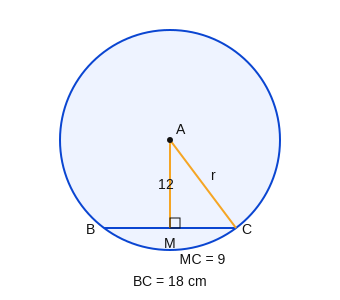
In a circle with centre A, an 18 cm long chord is at a distance of 12 cm from the centre. Find the length of the diameter.
केंद्र A वाले एक वृत्त में, 18 cm लंबी एक जीवा केंद्र से 12 cm की दूरी पर है। व्यास की लंबाई ज्ञात कीजिए।
  1. A38 cm
  2. B28 cm
  3. C30 cm
  4. D32 cm
Show answer

Concept: The perpendicular from the centre bisects the chord; radius, half-chord and distance form a right triangle: r2=d2+(c2)2.

  1. Half chord =182=9cm, distance d=12cm.
  2. r=122+92=144+81=225=15cm.
  3. Diameter =2r=30cm.

Trick: 9-12-15 is the 3-4-5 triple ×3 – no calculation needed.

Answer: (C) 30cm

अवधारणा: केंद्र से जीवा पर डाला गया लंब जीवा को समद्विभाजित करता है; त्रिज्या, आधी जीवा और दूरी समकोण त्रिभुज बनाते हैं: r2=d2+(c2)2।

  1. आधी जीवा =182=9cm, दूरी d=12cm।
  2. r=122+92=225=15cm।
  3. व्यास =2r=30cm।

ट्रिक: 9-12-15 = (3-4-5) ×3 – गणना की ज़रूरत ही नहीं।

उत्तर: (C) 30cm

RRB NTPC Graduate CBT 1MathematicsCircle – chord and distance from centreRRB NTPC Graduate CBT 1 2025 · 25 Mar Shift 2 →
Q15084.
Ramesh, Seema, and Shanaya invest ₹1230, ₹1710, and ₹1010 respectively to start a business. If the profit at the end of the year is ₹1580, then what is the share of Shanaya in the profit?
रमेश, सीमा और शनाया एक व्यापार शुरू करने के लिए क्रमशः ₹1230, ₹1710 और ₹1010 का निवेश करते हैं। यदि वर्ष के अंत में लाभ ₹1580 है, तो लाभ में शनाया का हिस्सा क्या है?
  1. A₹403
  2. B₹404
  3. C₹407
  4. D₹405
Show answer

Concept: For equal time, profit is shared in the ratio of investments.

  1. Ratio =1230:1710:1010=123:171:101 (dividing by 10); sum =395.
  2. Shanaya's share =101395×1580.
  3. 1580÷395=4, so share =101×4=₹404.

Trick: Total profit 1580 is exactly 4×395 – spot such multiples to avoid long division.

Answer: (B) ₹404

अवधारणा: समान समय के लिए लाभ निवेश के अनुपात में बँटता है।

  1. अनुपात =1230:1710:1010=123:171:101; योग =395।
  2. शनाया का हिस्सा =101395×1580।
  3. 1580÷395=4, अतः हिस्सा =101×4=₹404।

ट्रिक: कुल लाभ 1580 ठीक 4×395 है – ऐसे गुणज पहचानें, लंबा भाग नहीं करना पड़ेगा।

उत्तर: (B) ₹404

RRB NTPC Graduate CBT 1MathematicsPartnership – profit shareRRB NTPC Graduate CBT 1 2025 · 25 Mar Shift 2 →
Q15085.
Mansi and Neha started a partnership business, investing some amount in the ratio of 7 : 9. Utsavi joined then after six months with an amount equal to that of Neha. In what ratio should the profit at the end of one year be distributed among Mansi, Neha and Utsavi?
मानसी और नेहा ने 7 : 9 के अनुपात में कुछ राशि निवेश करके एक साझेदारी व्यापार शुरू किया। उत्सवी छह महीने बाद नेहा के बराबर राशि के साथ उनके साथ शामिल हुई। एक वर्ष के अंत में लाभ को मानसी, नेहा और उत्सवी के बीच किस अनुपात में वितरित किया जाना चाहिए?
  1. A18 : 19 : 10
  2. B13 : 14 : 8
  3. C14 : 18 : 9
  4. D12 : 17 : 8
Show answer

Concept: Profit ratio = (investment × months) for each partner.

  1. Mansi: 7x×12=84x; Neha: 9x×12=108x.
  2. Utsavi joins after 6 months with 9x: 9x×6=54x.
  3. Ratio =84:108:54=14:18:9 (dividing by 6).

Trick: Half the time with the same amount as Neha → Utsavi gets exactly half of Neha's share (18→9).

Answer: (C) 14:18:9

अवधारणा: लाभ का अनुपात = प्रत्येक साझेदार का (निवेश × महीने)।

  1. मानसी: 7x×12=84x; नेहा: 9x×12=108x।
  2. उत्सवी 6 महीने बाद 9x के साथ जुड़ी: 9x×6=54x।
  3. अनुपात =84:108:54=14:18:9।

ट्रिक: नेहा जितनी राशि आधे समय के लिए → उत्सवी का हिस्सा नेहा का ठीक आधा (18→9)।

उत्तर: (C) 14:18:9

RRB NTPC Graduate CBT 1MathematicsPartnership – time-weighted ratioRRB NTPC Graduate CBT 1 2025 · 25 Mar Shift 2 →
Q15086.
The price of fuel decreases by 30%, 20% and 50% in three successive months, but increases by 40% in the fourth month. What is the percentage increase or decrease in the price of fuel in the fourth month as compared to its original price?
ईंधन की कीमत तीन क्रमागत महीनों में 30%, 20% और 50% घटती है, लेकिन चौथे महीने में 40% बढ़ जाती है। चौथे महीने में ईंधन की कीमत में उसकी मूल कीमत की तुलना में प्रतिशत वृद्धि या कमी क्या है?
  1. ADecrease by 57.2%57.2% की कमी
  2. BDecrease by 60.8%60.8% की कमी
  3. CIncrease by 55.4%55.4% की वृद्धि
  4. DIncrease by 63.2%63.2% की वृद्धि
Show answer

Concept: Successive changes multiply: final =P×∏(1±r100).

  1. Let original price =100.
  2. After −30%,−20%,−50%,+40%: 100×0.7×0.8×0.5×1.4.
  3. 0.7×0.8=0.56; 0.56×0.5=0.28; 0.28×1.4=0.392 → price =39.2.
  4. Change =100−39.2=60.8% decrease.

Trick: Work with 100 and multiply decimals; a final value below 100 means a decrease.

Answer: (B) Decrease by 60.8%

अवधारणा: क्रमिक परिवर्तन गुणा होते हैं: अंतिम =P×∏(1±r100)।

  1. मूल कीमत =100 मानें।
  2. −30%,−20%,−50%,+40% के बाद: 100×0.7×0.8×0.5×1.4।
  3. 0.7×0.8=0.56; ×0.5=0.28; ×1.4=0.392 → कीमत =39.2।
  4. परिवर्तन =100−39.2=60.8% कमी।

ट्रिक: 100 मानकर दशमलव गुणा करें; 100 से कम अंतिम मान = कमी।

उत्तर: (B) 60.8% की कमी

RRB NTPC Graduate CBT 1MathematicsSuccessive percentage changeRRB NTPC Graduate CBT 1 2025 · 25 Mar Shift 2 →
Q15087.
For what values of ‘k’ will the value of (12x2 – kx + 27) be always positive?
‘k’ के किन मानों के लिए (12x2 – kx + 27) का मान सदैव धनात्मक होगा?
  1. A–36 < k < 36
  2. Bk < –36
  3. C–36 ≤ k ≤ 36
  4. Dk > 36
Show answer

Concept: ax2+bx+c>0 for all x when a>0 and discriminant b2−4ac<0.

  1. Here a=12>0, b=−k, c=27.
  2. D=k2−4×12×27=k2−1296<0.
  3. k2<362⇒−36<k<36 (strict, since D=0 would allow the value 0, which is not positive).

Trick: 4ac=4×12×27=1296=362 – recognise the perfect square.

Answer: (A) −36<k<36

अवधारणा: ax2+bx+c>0 सभी x के लिए तब, जब a>0 और विविक्तकर (discriminant) b2−4ac<0।

  1. यहाँ a=12>0, b=−k, c=27।
  2. D=k2−4×12×27=k2−1296<0।
  3. k2<362⇒−36<k<36 (बराबर नहीं, क्योंकि D=0 पर मान 0 हो सकता है जो धनात्मक नहीं)।

ट्रिक: 4ac=1296=362 – पूर्ण वर्ग पहचानें।

उत्तर: (A) −36<k<36

RRB NTPC Graduate CBT 1MathematicsQuadratic – always positiveRRB NTPC Graduate CBT 1 2025 · 25 Mar Shift 2 →
Q15088.
What is the value of (9x+7y), if the mean of the following distribution is 50?
Class0–2020–4040–6060–8080–100Total
Frequency818x2y52
यदि निम्नलिखित बंटन का माध्य 50 है, तो (9x+7y) का मान क्या है?
वर्ग0–2020–4040–6060–8080–100कुल
बारंबारता818x2y52
  1. A184
  2. B193
  3. C166
  4. D191
Show answer

Concept: Mean =∑fixi∑fi with xi = class mid-points (10, 30, 50, 70, 90).

  1. Frequencies: 8+18+x+2+y=52⇒x+y=24.
  2. ∑fixi=80+540+50x+140+90y=760+50x+90y=50×52=2600 ⇒5x+9y=184.
  3. Put x=24−y: 120+4y=184⇒y=16, x=8.
  4. 9x+7y=72+112=184.

Trick: Using assumed mean 50, deviations −40,−20,0,20,40: −320−360+40+40y=0⇒y=16 directly.

Answer: (A) 184

अवधारणा: माध्य =∑fixi∑fi, जहाँ xi = वर्ग मध्य-बिंदु (10, 30, 50, 70, 90)।

  1. बारंबारताएँ: 8+18+x+2+y=52⇒x+y=24।
  2. ∑fixi=760+50x+90y=50×52=2600⇒5x+9y=184।
  3. x=24−y रखें: 120+4y=184⇒y=16, x=8।
  4. 9x+7y=72+112=184।

ट्रिक: कल्पित माध्य 50 लेकर विचलन −40,−20,0,20,40: −320−360+40+40y=0⇒y=16 सीधे।

उत्तर: (A) 184

RRB NTPC Graduate CBT 1MathematicsStatistics – mean of grouped dataRRB NTPC Graduate CBT 1 2025 · 25 Mar Shift 2 →
Q15089.
Veer has ₹1404 with him. He divides this amount between his two sons, Nitin and Pravin, and asks them to invest their respective shares at a compound interest rate of 8% per annum, compounded annually. It is observed that Nitin’s investment amounts to the same value after 19 years as Pravin’s investment does after 20 years. How much (in ₹) did Veer give to Pravin?
वीर के पास ₹1404 हैं। वह इस राशि को अपने दो पुत्रों, नितिन और प्रवीण, के बीच बाँटता है और उन्हें अपने-अपने हिस्से को 8% वार्षिक चक्रवृद्धि ब्याज की दर पर, वार्षिक रूप से संयोजित, निवेश करने के लिए कहता है। यह देखा गया कि नितिन का निवेश 19 वर्षों के बाद उतनी ही राशि हो जाता है, जितनी प्रवीण का निवेश 20 वर्षों के बाद होता है। वीर ने प्रवीण को कितनी राशि (₹ में) दी?
  1. A675
  2. B525
  3. C829
  4. D729
Show answer

Concept: If N for n years and P for n+1 years give equal amounts at rate r, then N=P(1+r100).

  1. N(1.08)19=P(1.08)20⇒N=1.08P⇒N:P=108:100=27:25.
  2. Total =52 parts =₹1404⇒ 1 part =27.
  3. Pravin's share =25×27=₹675 (Nitin gets 27×27=729).

Trick: One extra year at 8% → ratio (100+8):100=27:25; the one invested longer gets the smaller share.

Answer: (A) 675

अवधारणा: यदि N को n वर्ष और P को n+1 वर्ष में दर r पर समान मिश्रधन मिले, तो N=P(1+r100)।

  1. N(1.08)19=P(1.08)20⇒N=1.08P⇒N:P=27:25।
  2. कुल 52 भाग =₹1404⇒ 1 भाग =27।
  3. प्रवीण का हिस्सा =25×27=₹675 (नितिन को 729)।

ट्रिक: 8% पर एक वर्ष अधिक → अनुपात 108:100=27:25; जो अधिक समय निवेश करता है उसे छोटा हिस्सा।

उत्तर: (A) 675

RRB NTPC Graduate CBT 1MathematicsCompound interest – equal amountsRRB NTPC Graduate CBT 1 2025 · 25 Mar Shift 2 →
Q15090.
Evaluate: 16 + 20 ÷ 5 - 2 × 4
मान ज्ञात कीजिए: 16 + 20 ÷ 5 - 2 × 4
  1. A11
  2. B15
  3. C12
  4. D14
Show answer

Concept: Division and multiplication before addition and subtraction (BODMAS).

  1. 20÷5=4 and 2×4=8.
  2. 16+4−8=12.

Trick: Never work left to right blindly – 16+20=36 first would be wrong.

Answer: (C) 12

अवधारणा: जोड़-घटाव से पहले भाग और गुणा (BODMAS)।

  1. 20÷5=4 और 2×4=8।
  2. 16+4−8=12।

ट्रिक: बाएँ से दाएँ अंधाधुंध न करें – पहले 16+20=36 करना ग़लत होगा।

उत्तर: (C) 12

RRB NTPC Graduate CBT 1MathematicsBODMASRRB NTPC Graduate CBT 1 2025 · 25 Mar Shift 2 →
Q15091.
What is the fraction equal to (0.5―+0.1) in simplest form?
सरलतम रूप में (0.5―+0.1) के बराबर भिन्न क्या है?
  1. A5191
  2. B7889
  3. C7169
  4. D5990
Show answer

Concept: 0.a―=a9; a terminating decimal is written over a power of 10.

  1. 0.5―=59 and 0.1=110.
  2. 59+110=50+990=5990.
  3. 59 is prime, so the fraction is already in simplest form.

Trick: Pure recurring → denominator 9s; mixed/terminating → 10s. LCM of 9 and 10 is 90.

Answer: (D) 5990

अवधारणा: 0.a―=a9; सांत दशमलव को 10 की घात पर लिखें।

  1. 0.5―=59 और 0.1=110।
  2. 59+110=50+990=5990।
  3. 59 अभाज्य है, अतः भिन्न पहले से सरलतम रूप में है।

ट्रिक: शुद्ध आवर्ती → हर में 9; सांत → हर में 10। 9 और 10 का LCM 90।

उत्तर: (D) 5990

RRB NTPC Graduate CBT 1MathematicsRecurring decimals to fractionsRRB NTPC Graduate CBT 1 2025 · 25 Mar Shift 2 →
Q15092.
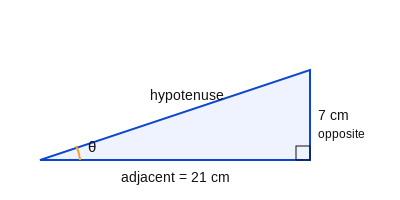
In a right-angled triangle, if the lengths of the opposite side and the adjacent side to angle θ are 7 cm and 21 cm, respectively, then what is the value of tanθ?
एक समकोण त्रिभुज में, यदि कोण θ की सम्मुख भुजा और आसन्न भुजा की लंबाइयाँ क्रमशः 7 cm और 21 cm हैं, तो tanθ का मान क्या है?
  1. A13
  2. B17
  3. C221
  4. D121
Show answer

Concept: tanθ=oppositeadjacent.

  1. Opposite side =7cm, adjacent side =21cm.
  2. tanθ=721=13.

Trick: Remember SOH-CAH-TOA: Tan = Opposite over Adjacent – the hypotenuse is not needed.

Answer: (A) 13

अवधारणा: tanθ=लंबआधार।

  1. लंब (opposite) =7cm, आधार (adjacent) =21cm।
  2. tanθ=721=13।

ट्रिक: SOH-CAH-TOA याद रखें: Tan = लंब/आधार – कर्ण की ज़रूरत नहीं।

उत्तर: (A) 13

RRB NTPC Graduate CBT 1MathematicsTrigonometric ratiosRRB NTPC Graduate CBT 1 2025 · 25 Mar Shift 2 →
Q15093.
Simplify: (2.33)3+(1.55)3+(1.22)3−3×2.33×1.55×1.22(2.33)2+(1.55)2+(1.22)2−3.6115−2.8426−1.891
सरल कीजिए: (2.33)3+(1.55)3+(1.22)3−3×2.33×1.55×1.22(2.33)2+(1.55)2+(1.22)2−3.6115−2.8426−1.891
  1. A5.2
  2. B5.1
  3. C5.3
  4. D5
Show answer

Concept: a3+b3+c3−3abc=(a+b+c)(a2+b2+c2−ab−bc−ca).

  1. Take a=2.33, b=1.55, c=1.22. Then ab=3.6115, ac=2.8426, bc=1.891 – exactly the numbers subtracted in the denominator.
  2. So the expression =(a+b+c)(a2+b2+c2−ab−bc−ca)a2+b2+c2−ab−bc−ca=a+b+c.
  3. 2.33+1.55+1.22=5.10.

Trick: Whenever you see cubes with −3abc on top and squares with products below, the answer is just a+b+c.

Answer: (B) 5.1

अवधारणा: a3+b3+c3−3abc=(a+b+c)(a2+b2+c2−ab−bc−ca)।

  1. a=2.33, b=1.55, c=1.22 लें। तब ab=3.6115, ac=2.8426, bc=1.891 – हर में घटाई गई संख्याएँ यही हैं।
  2. अतः व्यंजक =(a+b+c)(a2+b2+c2−ab−bc−ca)a2+b2+c2−ab−bc−ca=a+b+c।
  3. 2.33+1.55+1.22=5.10।

ट्रिक: ऊपर घन और −3abc, नीचे वर्ग और गुणनफल दिखें तो उत्तर सीधे a+b+c।

उत्तर: (B) 5.1

RRB NTPC Graduate CBT 1MathematicsAlgebraic identity a³+b³+c³−3abcRRB NTPC Graduate CBT 1 2025 · 25 Mar Shift 2 →
Q15094.
A shopkeeper professes to sell his goods at a 35% loss but uses a false balance and gains 55%. The actual weight (rounded off to one decimal place) he uses instead of 1 kg is:
एक दुकानदार अपना सामान 35% हानि पर बेचने का दावा करता है, लेकिन गलत तराजू का उपयोग करता है और 55% लाभ कमाता है। 1 kg के स्थान पर वह वास्तव में जो भार (एक दशमलव स्थान तक पूर्णांकित) उपयोग करता है, वह है:
  1. A419.4 gm
  2. B420.8 gm
  3. C417.6 gm
  4. D417.9 gm
Show answer

Concept: With a false weight w g used for 1000 g, true cost =w1000× CP, while the customer pays the professed price.

  1. Let CP of 1 kg = ₹100. Professing 35% loss, he sells "1 kg" for ₹65.
  2. He actually gains 55%, so his real cost =651.55=₹41.935.
  3. Cost ₹41.935 corresponds to 41.935100×1000≈419.4g.

Trick: w=100−loss%100+gain%×1000=65155×1000=419.4g.

Answer: (A) 419.4gm

अवधारणा: 1000 g की जगह w g का बाट प्रयोग करने पर वास्तविक लागत =w1000× CP, जबकि ग्राहक घोषित मूल्य देता है।

  1. 1 kg का CP = ₹100 मानें। 35% हानि का दावा → "1 kg" ₹65 में बेचता है।
  2. वास्तव में 55% लाभ, अतः असली लागत =651.55=₹41.935।
  3. ₹41.935 लागत =41.935100×1000≈419.4g के बराबर।

ट्रिक: w=100−हानि%100+लाभ%×1000=65155×1000=419.4g।

उत्तर: (A) 419.4gm

RRB NTPC Graduate CBT 1MathematicsDishonest dealer – false weightRRB NTPC Graduate CBT 1 2025 · 25 Mar Shift 2 →
Q15095.
The monthly incomes of two friends Tushar and Salil, are in the ratio 6 : 7 respectively and each of them saves ₹66,000 every month. If the ratio of their monthly expenditure is 2 : 4, find the monthly income of Tushar (in ₹).
दो मित्रों तुषार और सलिल की मासिक आय क्रमशः 6 : 7 के अनुपात में है और उनमें से प्रत्येक हर महीने ₹66,000 की बचत करता है। यदि उनके मासिक व्यय का अनुपात 2 : 4 है, तो तुषार की मासिक आय (₹ में) ज्ञात कीजिए।
  1. A1,10,880
  2. B79,200
  3. C78,200
  4. D80,200
Show answer

Concept: Expenditure = Income − Savings; set up the ratio of expenditures.

  1. Incomes 6x and 7x; savings ₹66,000 each.
  2. 6x−660007x−66000=24=12.
  3. 12x−132000=7x−66000⇒5x=66000⇒x=13200.
  4. Tushar's income =6x=₹79,200.

Trick: Simplify 2:4 to 1:2 first; the cross-multiplication then stays small.

Answer: (B) 79,200

अवधारणा: व्यय = आय − बचत; व्ययों का अनुपात बनाएँ।

  1. आय 6x और 7x; बचत प्रत्येक ₹66,000।
  2. 6x−660007x−66000=24=12।
  3. 12x−132000=7x−66000⇒5x=66000⇒x=13200।
  4. तुषार की आय =6x=₹79,200।

ट्रिक: पहले 2:4 को 1:2 करें; फिर वज्र-गुणन छोटा रहता है।

उत्तर: (B) 79,200

RRB NTPC Graduate CBT 1MathematicsRatio – income, expenditure, savingsRRB NTPC Graduate CBT 1 2025 · 25 Mar Shift 2 →
Q15096.
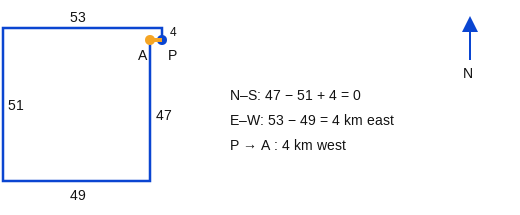
Sharad starts from Point A and drives 47 km towards the South. He then takes a right turn, drives 49 km, turns right and drives 51 km. He then takes a right turn and drives 53 km. He takes a final right turn, drives 4 km and stops at Point P. How far (shortest distance) and towards which direction should he drive in order to reach Point A again? (All turns are 90-degree turns only unless specified.)
शरद बिंदु A से शुरू करता है और दक्षिण की ओर 47 km गाड़ी चलाता है। फिर वह दाएँ मुड़ता है, 49 km चलता है, दाएँ मुड़ता है और 51 km चलता है। फिर वह दाएँ मुड़ता है और 53 km चलता है। अंत में वह दाएँ मुड़ता है, 4 km चलता है और बिंदु P पर रुक जाता है। पुनः बिंदु A तक पहुँचने के लिए उसे कितनी दूरी (न्यूनतम दूरी) और किस दिशा में गाड़ी चलानी चाहिए? (जब तक अन्यथा निर्दिष्ट न हो, सभी मोड़ केवल 90 डिग्री के मोड़ हैं।)
  1. A4 km to the west4 km पश्चिम की ओर
  2. B2 km to the west2 km पश्चिम की ओर
  3. C1 km to the west1 km पश्चिम की ओर
  4. D3 km to the west3 km पश्चिम की ओर
Show answer

Concept: Track north–south and east–west displacements separately; right turns go S→W→N→E→S.

  1. Moves: 47 S, 49 W, 51 N, 53 E, 4 S.
  2. N–S: 47−51+4=0 ⇒ P is level with A.
  3. E–W: 53−49=4 km east of A.
  4. So from P he must drive 4 km to the west.

Trick: Cancel opposite legs (S vs N, E vs W) – the leftover gives distance and direction at once.

Answer: (A) 4 km to the west

अवधारणा: उत्तर–दक्षिण और पूर्व–पश्चिम विस्थापन अलग-अलग जोड़ें; दाएँ मुड़ने पर दिशा S→W→N→E→S बदलती है।

  1. चाल: 47 S, 49 W, 51 N, 53 E, 4 S।
  2. N–S: 47−51+4=0 ⇒ P, A की सीध में है।
  3. E–W: 53−49=4 km, A से पूर्व।
  4. अतः P से 4 km पश्चिम चलना होगा।

ट्रिक: विपरीत भुजाएँ (S–N, E–W) काट दें – बचा हुआ भाग दूरी और दिशा दोनों बता देता है।

उत्तर: (A) 4 km पश्चिम

RRB NTPC Graduate CBT 1General Intelligence and ReasoningDirection SenseRRB NTPC Graduate CBT 1 2025 · 25 Mar Shift 2 →
Q15097.
In a certain code language,
A + B means ‘A is the husband of B’
A - B means ‘A is the daughter of B’
A × B means ‘A is the brother of B’
A ÷ B means ‘A is the sister of B’
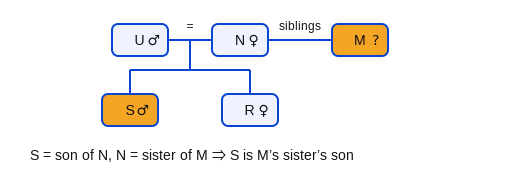
Based on the above, how is S related to M if ‘S × R - U + N ÷ M’?
एक निश्चित कूट भाषा में,
A + B का अर्थ है ‘A, B का पति है’
A - B का अर्थ है ‘A, B की पुत्री है’
A × B का अर्थ है ‘A, B का भाई है’
A ÷ B का अर्थ है ‘A, B की बहन है’
उपर्युक्त के आधार पर, यदि ‘S × R - U + N ÷ M’ है, तो S का M से क्या संबंध है?
  1. ADaughter’s sonपुत्री का पुत्र
  2. BBrother’s sonभाई का पुत्र
  3. CSister's sonबहन का पुत्र
  4. DSon’s sonपुत्र का पुत्र
Show answer

Concept: Decode each symbol pair-wise and build the family tree, fixing gender from the words brother/sister/daughter/husband.

  1. S × R: S is brother of R; R − U: R is daughter of U ⇒ S is son of U.
  2. U + N: U is husband of N ⇒ N is mother of S.
  3. N ÷ M: N is sister of M ⇒ S is the son of M's sister.

Trick: Reach the person asked about (M) through the chain, then read back: M → sister (N) → son (S).

Answer: (C) Sister's son

अवधारणा: हर संकेत को जोड़ी में पढ़ें और वंश-वृक्ष बनाएँ; brother/sister/daughter/husband से लिंग तय करें।

  1. S × R: S, R का भाई; R − U: R, U की बेटी ⇒ S, U का बेटा।
  2. U + N: U, N का पति ⇒ N, S की माँ।
  3. N ÷ M: N, M की बहन ⇒ S, M की बहन का बेटा।

ट्रिक: पूछे गए व्यक्ति (M) तक पहुँचें, फिर उल्टा पढ़ें: M → बहन (N) → बेटा (S)।

उत्तर: (C) बहन का बेटा (Sister's son)

RRB NTPC Graduate CBT 1General Intelligence and ReasoningBlood RelationsRRB NTPC Graduate CBT 1 2025 · 25 Mar Shift 2 →
Q15098.
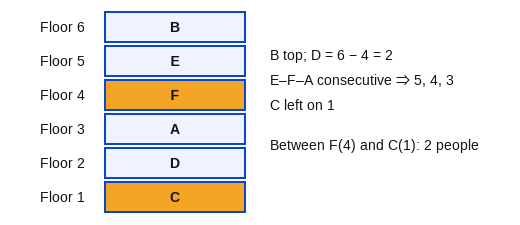
A, B, C, D, E and F live on six different floors of the same building. The lowermost floor in the building is numbered 1, the floor above it is numbered 2, and so on till the topmost floor is numbered 6. B lives on the topmost floor. Only three people live between B and D. F lives immediately above A, but immediately below E. How many people live between F and C?
A, B, C, D, E और F एक ही भवन की छह अलग-अलग मंज़िलों पर रहते हैं। भवन की सबसे निचली मंज़िल की संख्या 1 है, उसके ऊपर की मंज़िल की संख्या 2 है, और इसी प्रकार सबसे ऊपरी मंज़िल तक, जिसकी संख्या 6 है। B सबसे ऊपरी मंज़िल पर रहता है। B और D के बीच केवल तीन व्यक्ति रहते हैं। F, A के ठीक ऊपर, लेकिन E के ठीक नीचे रहता है। F और C के बीच कितने व्यक्ति रहते हैं?
  1. ANoneकोई नहीं
  2. BOneएक
  3. CTwoदो
  4. DThreeतीन
Show answer

Concept: Fix the definite clues first (top floor, counted gaps), then place the consecutive block.

  1. B = 6; three people between B and D ⇒ D = 2.
  2. E, F, A are consecutive (E above F above A); free floors 1, 3, 4, 5 ⇒ E = 5, F = 4, A = 3.
  3. C takes floor 1. Between F (4) and C (1): floors 3 and 2 ⇒ two people.

Trick: "Immediately above/below" clues form a rigid block – slide it into the only gap that fits.

Answer: (C) Two

अवधारणा: पहले निश्चित संकेत (सबसे ऊपरी मंज़िल, बीच की गिनती) लगाएँ, फिर लगातार वाले समूह को रखें।

  1. B = 6; B और D के बीच तीन ⇒ D = 2।
  2. E, F, A लगातार हैं (E ऊपर, फिर F, फिर A); खाली मंज़िलें 1, 3, 4, 5 ⇒ E = 5, F = 4, A = 3।
  3. C मंज़िल 1 पर। F (4) और C (1) के बीच मंज़िल 3, 2 ⇒ दो लोग।

ट्रिक: "ठीक ऊपर/नीचे" वाले संकेत एक कठोर ब्लॉक बनाते हैं – उसे उसी खाली जगह में खिसकाएँ जहाँ वह फिट हो।

उत्तर: (C) दो

RRB NTPC Graduate CBT 1General Intelligence and ReasoningFloor PuzzleRRB NTPC Graduate CBT 1 2025 · 25 Mar Shift 2 →
Q15099.
In this question, a question is followed by two statements numbered (I) and (II). You have to decide whether the data provided in the statements are sufficient to answer the question. Read both the statements and decide the appropriate answer.
Q. Five cousins – Kriti, Leena, Mona, Pooja, and Reema – are of different ages. Who is the youngest?
(I) Leena is older than Kriti but younger than Mona.
(II) Pooja is older than Kriti but younger than Leena.
इस प्रश्न में, एक प्रश्न के बाद (I) और (II) क्रमांकित दो कथन दिए गए हैं। आपको यह निर्णय करना है कि कथनों में दिए गए आँकड़े प्रश्न का उत्तर देने के लिए पर्याप्त हैं या नहीं। दोनों कथनों को पढ़िए और उचित उत्तर का चयन कीजिए।
प्रश्न. पाँच चचेरी बहनें – कृति, लीना, मोना, पूजा और रीमा – अलग-अलग आयु की हैं। सबसे छोटी कौन है?
(I) लीना, कृति से बड़ी है लेकिन मोना से छोटी है।
(II) पूजा, कृति से बड़ी है लेकिन लीना से छोटी है।
  1. AData in Statement II alone is sufficient to answer the question while data in Statement I is notकेवल कथन II के आँकड़े प्रश्न का उत्तर देने के लिए पर्याप्त हैं, जबकि कथन I के आँकड़े पर्याप्त नहीं हैं
  2. BBoth statements I and II together are NOT sufficient to answer the questionकथन I और II दोनों मिलकर भी प्रश्न का उत्तर देने के लिए पर्याप्त नहीं हैं
  3. CBoth statements I and II together (and not statement I alone or statement II alone) are sufficient to answer the questionकथन I और II दोनों मिलकर (और न केवल कथन I अकेले या कथन II अकेले) प्रश्न का उत्तर देने के लिए पर्याप्त हैं
  4. DData in Statement I alone is sufficient to answer the question while data in Statement II is notकेवल कथन I के आँकड़े प्रश्न का उत्तर देने के लिए पर्याप्त हैं, जबकि कथन II के आँकड़े पर्याप्त नहीं हैं
Show answer

Concept: To name the youngest of five, every person must be placed below the others – an unmentioned person leaves the answer open.

  1. (I): Mona > Leena > Kriti. Pooja and Reema unknown.
  2. (II): Leena > Pooja > Kriti. Mona and Reema unknown.
  3. Together: Mona > Leena > Pooja > Kriti, but Reema is not mentioned anywhere – she could be the youngest. Not sufficient.

Trick: First check whether all names appear in the statements; a missing name usually means "not sufficient".

Answer: (B) Both statements together are NOT sufficient

अवधारणा: पाँच में सबसे छोटा बताने के लिए हर व्यक्ति की स्थिति तय होनी चाहिए – जिसका ज़िक्र ही नहीं, वह उत्तर अधूरा छोड़ देता है।

  1. (I): मोना > लीना > कृति; पूजा और रीमा अज्ञात।
  2. (II): लीना > पूजा > कृति; मोना और रीमा अज्ञात।
  3. दोनों मिलाकर: मोना > लीना > पूजा > कृति, पर रीमा का कहीं उल्लेख नहीं – वह सबसे छोटी हो सकती है। अपर्याप्त।

ट्रिक: पहले देखें कि सभी नाम कथनों में आए हैं या नहीं; छूटा हुआ नाम प्रायः "अपर्याप्त" का संकेत है।

उत्तर: (B) दोनों कथन मिलकर भी पर्याप्त नहीं

RRB NTPC Graduate CBT 1General Intelligence and ReasoningData SufficiencyRRB NTPC Graduate CBT 1 2025 · 25 Mar Shift 2 →
Q15100.
What should come in place of ‘?’ in the given series?
99 124 140 149 153 ?
दी गई शृंखला में ‘?’ के स्थान पर क्या आना चाहिए?
99 124 140 149 153 ?
  1. A166
  2. B154
  3. C152
  4. D164
Show answer

Concept: Check the differences between consecutive terms – here they are perfect squares in decreasing order.

  1. 124−99=25, 140−124=16, 149−140=9, 153−149=4.
  2. Pattern 52,42,32,22 ⇒ next difference 12=1.
  3. ?=153+1=154.

Trick: Shrinking differences 25, 16, 9, 4 → squares; next is 1.

Answer: (B) 154

अवधारणा: लगातार पदों के अंतर देखें – यहाँ वे घटते क्रम में पूर्ण वर्ग हैं।

  1. 124−99=25, 140−124=16, 149−140=9, 153−149=4।
  2. पैटर्न 52,42,32,22 ⇒ अगला अंतर 12=1।
  3. ?=153+1=154।

ट्रिक: घटते अंतर 25, 16, 9, 4 → वर्ग संख्याएँ; अगला 1।

उत्तर: (B) 154

RRB NTPC Graduate CBT 1General Intelligence and ReasoningNumber SeriesRRB NTPC Graduate CBT 1 2025 · 25 Mar Shift 2 →