Question bank

Q&A: practice questions with answers

Search questions on any topic. Filter by exam category, exam, subject and topic, try the question, then open the answer and explanation.

Courses – airGurukul

20,719 questions found.

Q15161.
Which of the following is an example of a minor industrial region of India?
निम्नलिखित में से कौन-सा भारत के एक गौण (minor) औद्योगिक प्रदेश का उदाहरण है?
  1. AGujarat regionगुजरात प्रदेश
  2. BHugli regionहुगली प्रदेश
  3. CChota Nagpur regionछोटा नागपुर प्रदेश
  4. DBrahmaputra valleyब्रह्मपुत्र घाटी
Show answer

Concept: NCERT classifies India's industrial regions into eight major regions and thirteen minor regions.

  1. Major regions: Mumbai–Pune, Hugli, Bangalore–Tamil Nadu, Gujarat, Chota Nagpur, Vishakhapatnam–Guntur, Gurgaon–Delhi–Meerut, Kollam–Thiruvananthapuram.
  2. Minor regions include the Brahmaputra Valley (Assam), Ambala–Amritsar, Saharanpur–Muzaffarnagar–Bijnor, Indore–Dewas–Ujjain, Jaipur–Ajmer, Kolhapur–South Kannada, etc.

Yaad rakhein: 8 major, 13 minor; north-eastern Brahmaputra valley is a minor (tea, oil) region.

Answer: (D) Brahmaputra valley

अवधारणा: NCERT भारत के औद्योगिक प्रदेशों को आठ प्रमुख और तेरह गौण प्रदेशों में बाँटता है।

  1. प्रमुख प्रदेश: मुंबई–पुणे, हुगली, बैंगलोर–तमिलनाडु, गुजरात, छोटा नागपुर, विशाखापत्तनम–गुंटूर, गुड़गाँव–दिल्ली–मेरठ, कोल्लम–तिरुवनंतपुरम।
  2. गौण प्रदेशों में ब्रह्मपुत्र घाटी (असम), अंबाला–अमृतसर, सहारनपुर–मुज़फ्फरनगर–बिजनौर, इंदौर–देवास–उज्जैन, जयपुर–अजमेर, कोल्हापुर–दक्षिण कन्नड़ आदि।

याद रखें: 8 प्रमुख, 13 गौण; पूर्वोत्तर की ब्रह्मपुत्र घाटी गौण (चाय, तेल) प्रदेश है।

उत्तर: (D) ब्रह्मपुत्र घाटी
RRB NTPC Graduate CBT 1General AwarenessIndustrial Regions of IndiaRRB NTPC Graduate CBT 1 2025 · 25 Mar Shift 1 →
Q15162.
Consider the following statements.
1. Article 13 provides for judicial review of both pre-constitutional and post-
constitutional laws.
2. Article 13 declares that all laws inconsistent with or in derogation of the Fundamental Rights shall be null and void.
Which of the above statements is/are correct?
निम्नलिखित कथनों पर विचार कीजिए।
1. अनुच्छेद 13 संविधान-पूर्व और संविधान-पश्चात
दोनों प्रकार के कानूनों की न्यायिक समीक्षा का प्रावधान करता है।
2. अनुच्छेद 13 घोषित करता है कि मौलिक अधिकारों से असंगत या उनका अल्पीकरण करने वाले सभी कानून शून्य होंगे।
उपर्युक्त कथनों में से कौन-सा/कौन-से सही है/हैं?
  1. ANeither 1 nor 2न तो 1 और न ही 2
  2. BBoth 1 and 21 और 2 दोनों
  3. C2 onlyकेवल 2
  4. D1 onlyकेवल 1
Show answer

Concept: Article 13 is the backbone of judicial review for Fundamental Rights.

  1. Art. 13(1): all pre-constitutional laws inconsistent with Fundamental Rights are void to that extent; Art. 13(2): the State shall not make post-constitutional laws taking away these rights, and such laws are void – so statement 1 is correct.
  2. Statement 2 restates this: laws inconsistent with or in derogation of Fundamental Rights are null and void – correct.
  3. Art. 13(4) (24th Amendment) keeps constitutional amendments under Art. 368 outside this article.

Yaad rakhein: Art. 13 = 'laws' includes ordinances, bye-laws, customs; both old and new laws are tested against Part III.

Answer: (B) Both 1 and 2

अवधारणा: अनुच्छेद 13 मौलिक अधिकारों के लिए न्यायिक पुनर्विलोकन की रीढ़ है।

  1. अनु. 13(1): मौलिक अधिकारों से असंगत सभी संविधान-पूर्व कानून उस सीमा तक शून्य; अनु. 13(2): राज्य ऐसे संविधान-पश्चात कानून नहीं बनाएगा और बने तो शून्य – अतः कथन 1 सही।
  2. कथन 2 यही दोहराता है: मौलिक अधिकारों से असंगत या उनका अल्पीकरण करने वाले कानून शून्य – सही।
  3. अनु. 13(4) (24वाँ संशोधन) अनु. 368 के संविधान संशोधनों को इस अनुच्छेद से बाहर रखता है।

याद रखें: अनु. 13 में 'कानून' में अध्यादेश, उपविधि, रूढ़ि शामिल; पुराने-नए दोनों कानून भाग III पर परखे जाते हैं।

उत्तर: (B) 1 और 2 दोनों

RRB NTPC Graduate CBT 1General AwarenessArticle 13 – Judicial ReviewRRB NTPC Graduate CBT 1 2025 · 25 Mar Shift 1 →
Q15163.
Tea cultivation in India is mainly concentrated in which of the following regions?
भारत में चाय की खेती मुख्यतः निम्नलिखित में से किस क्षेत्र में केंद्रित है?
  1. ANorth-Eastern Hillsउत्तर-पूर्वी पहाड़ियाँ
  2. BAravali Hillsअरावली पहाड़ियाँ
  3. CCentral Plateauमध्य पठार
  4. DThar Desertथार मरुस्थल
Show answer

Concept: Tea needs warm, humid climate, 150–300 cm rain and well-drained hill slopes.

  1. Assam (Brahmaputra valley) and the Darjeeling hills along with other north-eastern hills produce the bulk of Indian tea; Assam alone gives over half.
  2. Aravali, central plateau and Thar are dry regions unsuited to tea; the other tea zone is the Nilgiri hills in the south.

Yaad rakhein: Tea = Assam, Darjeeling, Nilgiri; Coffee = Karnataka (Chikmagalur).

Answer: (A) North-Eastern Hills

अवधारणा: चाय को गर्म, आर्द्र जलवायु, 150–300 cm वर्षा और जल-निकास वाली पहाड़ी ढलानें चाहिए।

  1. असम (ब्रह्मपुत्र घाटी), दार्जिलिंग और अन्य पूर्वोत्तर पहाड़ियाँ भारत की अधिकांश चाय देती हैं; अकेला असम आधे से अधिक।
  2. अरावली, मध्य पठार और थार शुष्क क्षेत्र हैं, चाय के अनुपयुक्त; दूसरा चाय क्षेत्र दक्षिण की नीलगिरि पहाड़ियाँ हैं।

याद रखें: चाय = असम, दार्जिलिंग, नीलगिरि; कॉफी = कर्नाटक (चिकमगलूर)।

उत्तर: (A) पूर्वोत्तर पहाड़ियाँ

RRB NTPC Graduate CBT 1General AwarenessAgriculture – TeaRRB NTPC Graduate CBT 1 2025 · 25 Mar Shift 1 →
Q15164.
In November 2025, Oman enhanced its global environmental leadership by joining which international council?
नवंबर 2025 में, ओमान ने किस अंतर्राष्ट्रीय परिषद में शामिल होकर अपने वैश्विक पर्यावरणीय नेतृत्व को सुदृढ़ किया?
  1. AUNEP Governing CouncilUNEP गवर्निंग काउंसिल
  2. BUNESCO World Heritage CommitteeUNESCO विश्व विरासत समिति
  3. CIUCN CouncilIUCN काउंसिल
  4. DUNESCO Man and the Biosphere CouncilUNESCO मैन एंड द बायोस्फीयर काउंसिल
Show answer

Concept: UNESCO's Man and the Biosphere (MAB) Programme is governed by the International Co-ordinating Council (MAB Council), to which member states are elected.

  1. In November 2025, during UNESCO's 43rd General Conference, Oman was elected to the MAB International Co-ordinating Council, strengthening its global environmental role.
  2. The MAB Programme (1971) manages the World Network of Biosphere Reserves; India has 12 reserves in this network.

Yaad rakhein: MAB = Man and the Biosphere (UNESCO, 1971) – biosphere reserves; IUCN handles the Red List.

Answer: (D) UNESCO Man and the Biosphere Council

अवधारणा: UNESCO के Man and the Biosphere (MAB) कार्यक्रम का संचालन अंतर्राष्ट्रीय समन्वय परिषद (MAB Council) करती है, जिसमें सदस्य देश चुने जाते हैं।

  1. नवंबर 2025 में UNESCO के 43वें महासम्मेलन के दौरान ओमान MAB अंतर्राष्ट्रीय समन्वय परिषद में निर्वाचित हुआ, जिससे उसकी वैश्विक पर्यावरणीय भूमिका मज़बूत हुई।
  2. MAB कार्यक्रम (1971) विश्व बायोस्फीयर रिज़र्व नेटवर्क चलाता है; भारत के 12 रिज़र्व इसमें हैं।

याद रखें: MAB = Man and the Biosphere (UNESCO, 1971) – बायोस्फीयर रिज़र्व; IUCN रेड लिस्ट देखता है।

उत्तर: (D) UNESCO Man and the Biosphere Council

RRB NTPC Graduate CBT 1General AwarenessCurrent Affairs – InternationalRRB NTPC Graduate CBT 1 2025 · 25 Mar Shift 1 →
Q15165.
In the decision-making process of the GST Council, how is the voting power distributed between the Central Government and the State Governments?
GST परिषद की निर्णय-प्रक्रिया में, केंद्र सरकार और राज्य सरकारों के बीच मतदान शक्ति (voting power) का वितरण कैसे होता है?
  1. ACentre = 2/3, States = 1/3केंद्र = 2/3, राज्य = 1/3
  2. BCentre = 1/2, States = 1/2केंद्र = 1/2, राज्य = 1/2
  3. CCentre = 1/3, States = 2/3केंद्र = 1/3, राज्य = 2/3
  4. DStates alone = 1 , Centre = 0केवल राज्य = 1 , केंद्र = 0
Show answer

Concept: The GST Council (Article 279A, 101st Amendment) decides by a three-fourths majority of weighted votes.

  1. Weightage: Central Government =13 of the votes cast; all State Governments together =23.
  2. A decision needs at least 34 of the weighted votes, so neither the Centre alone nor the States alone can push a decision through.
  3. Quorum: half of the total members.

Yaad rakhein: 279A – Centre 13, States 23, decision 34, quorum 12.

Answer: (C) Centre = 13, States = 23

अवधारणा: GST परिषद (अनुच्छेद 279A, 101वाँ संशोधन) भारित मतों के तीन-चौथाई बहुमत से निर्णय लेती है।

  1. भार: केंद्र सरकार =13 मत; सभी राज्य सरकारें मिलकर =23।
  2. निर्णय के लिए कम से कम 34 भारित मत चाहिए, अतः न केंद्र अकेले और न राज्य अकेले निर्णय करा सकते हैं।
  3. कोरम: कुल सदस्यों का आधा।

याद रखें: 279A – केंद्र 13, राज्य 23, निर्णय 34, कोरम 12।

उत्तर: (C) केंद्र = 13, राज्य = 23

RRB NTPC Graduate CBT 1General AwarenessGST CouncilRRB NTPC Graduate CBT 1 2025 · 25 Mar Shift 1 →
Q15166.
What is the mean of the following distribution?
Marks1134516298
No. of Students5723951496
निम्नलिखित बंटन (distribution) का माध्य क्या है?
अंक1134516298
विद्यार्थियों की संख्या5723951496
  1. A64
  2. B79
  3. C58
  4. D44
Show answer

Concept: Mean=∑fixi∑fi.

  1. ∑fi=57+23+95+14+96=285.
  2. ∑fixi=11×57+34×23+51×95+62×14+98×96=627+782+4845+868+9408=16530.
  3. Mean =16530285=58.

Trick: 285×58=285×60−285×2=17100−570=16530 – check the division by multiplying back.

Answer: (C) 58

अवधारणा: माध्य=∑fixi∑fi।

  1. ∑fi=57+23+95+14+96=285।
  2. ∑fixi=11×57+34×23+51×95+62×14+98×96=627+782+4845+868+9408=16530।
  3. माध्य =16530285=58।

ट्रिक: 285×58=285×60−285×2=17100−570=16530 – भाग की जाँच गुणा करके करें।

उत्तर: (C) 58

RRB NTPC Graduate CBT 1MathematicsMean of a frequency distributionRRB NTPC Graduate CBT 1 2025 · 25 Mar Shift 1 →
Q15167.
If the standard deviation of 11, 13, 15, 17,...., 71 is m, then find the integral part of m.
यदि 11, 13, 15, 17,...., 71 का मानक विचलन (standard deviation) m है, तो m का पूर्णांक भाग ज्ञात कीजिए।
  1. A16
  2. B13
  3. C17
  4. D18
Show answer

Concept: For an AP of n terms with common difference d, variance =d2(n2−1)12.

  1. 11,13,…,71: n=71−112+1=31, d=2.
  2. Variance =4(312−1)12=4×96012=320.
  3. m=320≈17.89 (since 172=289<320<324=182). Integral part =17.

Trick: SD of the first n natural numbers is n2−112; multiply by d for any AP – shifting the terms does not change SD.

Answer: (C) 17

अवधारणा: n पदों और सार्व अंतर d वाली समांतर श्रेणी (AP) का प्रसरण =d2(n2−1)12।

  1. 11,13,…,71: n=71−112+1=31, d=2।
  2. प्रसरण =4(312−1)12=4×96012=320।
  3. m=320≈17.89 (क्योंकि 172=289<320<324=182)। पूर्णांक भाग =17।

ट्रिक: पहली n प्राकृत संख्याओं का SD n2−112 है; किसी भी AP के लिए इसे d से गुणा करें – पदों को खिसकाने से SD नहीं बदलता।

उत्तर: (C) 17

RRB NTPC Graduate CBT 1MathematicsStandard deviation of an APRRB NTPC Graduate CBT 1 2025 · 25 Mar Shift 1 →
Q15168.
A train of length 120 m travelling at 60 km/hr crosses another train travelling in the same direction at 24 km/hr in 30 seconds. What is the length (in m) of another train?
60 km/hr की चाल से चल रही 120 m लंबी एक ट्रेन, उसी दिशा में 24 km/hr की चाल से चल रही दूसरी ट्रेन को 30 सेकंड में पार करती है। दूसरी ट्रेन की लंबाई (m में) क्या है?
  1. A250
  2. B200
  3. C225
  4. D180
Show answer

Concept: Same direction → relative speed = difference of speeds; distance covered = sum of lengths.

  1. Relative speed =60−24=36km/h=36×518=10m/s.
  2. Distance in 30 s =10×30=300m.
  3. Other train =300−120=180m.

Trick: km/h → m/s: multiply by 518; 36 km/h is exactly 10 m/s.

Answer: (D) 180

अवधारणा: समान दिशा → सापेक्ष चाल = चालों का अंतर; तय दूरी = लंबाइयों का योग।

  1. सापेक्ष चाल =60−24=36km/h=36×518=10m/s।
  2. 30 s में दूरी =10×30=300m।
  3. दूसरी रेलगाड़ी =300−120=180m।

ट्रिक: km/h → m/s: 518 से गुणा करें; 36 km/h ठीक 10 m/s है।

उत्तर: (D) 180

RRB NTPC Graduate CBT 1MathematicsTrains – same directionRRB NTPC Graduate CBT 1 2025 · 25 Mar Shift 1 →
Q15169.
Harishika bought an article for ₹200 and sold it to Ritu at a loss of 30%. With this amount, Harishika bought another article and sold it at a gain of 75%. What is Harishika's overall gain percentage?
हरिशिका ने एक वस्तु ₹200 में खरीदी और उसे 30% की हानि पर रितु को बेच दिया। इस राशि से हरिशिका ने एक अन्य वस्तु खरीदी और उसे 75% के लाभ पर बेच दिया। हरिशिका का कुल लाभ प्रतिशत क्या है?
  1. A17.5%
  2. B19.4%
  3. C22.5%
  4. D24.5%
Show answer

Concept: Track the actual money: total investment is ₹200 (the second purchase is made from the first sale's money).

  1. Sale 1: 200×70100=140 (loss 30%).
  2. Second article bought for ₹140, sold at 75% gain: 140×175100=245.
  3. Overall gain =245−200=45 on ₹200 ⇒45200×100=22.5%.

Trick: Successive % formula: −30+75+(−30)(75)100=45−22.5=22.5%.

Answer: (C) 22.5%

अवधारणा: वास्तविक धन पर नज़र रखें: कुल निवेश ₹200 है (दूसरी खरीद पहली बिक्री के पैसे से होती है)।

  1. बिक्री 1: 200×70100=140 (30% हानि)।
  2. दूसरी वस्तु ₹140 में खरीदी, 75% लाभ पर बेची: 140×175100=245।
  3. कुल लाभ =245−200=45, ₹200 पर ⇒45200×100=22.5%।

ट्रिक: क्रमिक % सूत्र: −30+75+(−30)(75)100=45−22.5=22.5%।

उत्तर: (C) 22.5%

RRB NTPC Graduate CBT 1MathematicsSuccessive profit and lossRRB NTPC Graduate CBT 1 2025 · 25 Mar Shift 1 →
Q15170.
The population of a village was 2,90,000. It increased by 10% in the first year and increased by 30% in the second year. Its population after two years is _______.
एक गाँव की जनसंख्या 2,90,000 थी। पहले वर्ष में इसमें 10% की वृद्धि हुई और दूसरे वर्ष में 30% की वृद्धि हुई। दो वर्षों के बाद इसकी जनसंख्या _______ है।
  1. A3,19,000
  2. B3,77,000
  3. C4,14,700
  4. D4,06,000
Show answer

Concept: Successive increases multiply: P(1+r1100)(1+r2100).

  1. After year 1: 2,90,000×1.1=3,19,000.
  2. After year 2: 3,19,000×1.3=4,14,700.

Trick: Net % =10+30+10×30100=43%; 2,90,000×1.43=4,14,700.

Answer: (C) 4,14,700

अवधारणा: क्रमिक वृद्धियाँ गुणा होती हैं: P(1+r1100)(1+r2100)।

  1. पहले वर्ष बाद: 2,90,000×1.1=3,19,000।
  2. दूसरे वर्ष बाद: 3,19,000×1.3=4,14,700।

ट्रिक: शुद्ध % =10+30+10×30100=43%; 2,90,000×1.43=4,14,700।

उत्तर: (C) 4,14,700

RRB NTPC Graduate CBT 1MathematicsSuccessive percentage increaseRRB NTPC Graduate CBT 1 2025 · 25 Mar Shift 1 →
Q15171.
The average of 7 numbers is 47. If each number is decreased by 7, what will the new average be?
7 संख्याओं का औसत 47 है। यदि प्रत्येक संख्या में 7 की कमी कर दी जाए, तो नया औसत क्या होगा?
  1. A33
  2. B40
  3. C7
  4. D47
Show answer

Concept: If every observation changes by the same amount k, the average changes by exactly k.

  1. Each of the 7 numbers decreases by 7, so the total decreases by 7×7=49.
  2. New average =47×7−497=47−7=40.

Trick: Add/subtract to all → average shifts by the same; multiply all → average multiplies by the same.

Answer: (B) 40

अवधारणा: यदि हर प्रेक्षण में समान राशि k का परिवर्तन हो, तो औसत में ठीक k का परिवर्तन होता है।

  1. 7 संख्याओं में प्रत्येक 7 घटती है, अतः योग 7×7=49 घटता है।
  2. नया औसत =47×7−497=47−7=40।

ट्रिक: सबमें जोड़ें/घटाएँ → औसत उतना ही खिसकता है; सबको गुणा करें → औसत उतने ही गुना।

उत्तर: (B) 40

RRB NTPC Graduate CBT 1MathematicsAverage – shifting all valuesRRB NTPC Graduate CBT 1 2025 · 25 Mar Shift 1 →
Q15172.
Evaluate: 16 + 18 ÷ 6 - 3 × 4
मान ज्ञात कीजिए: 16 + 18 ÷ 6 - 3 × 4
  1. A6
  2. B9
  3. C10
  4. D7
Show answer

Concept: Order of operations: Division and Multiplication first (left to right), then Addition and Subtraction.

  1. 18÷6=3 and 3×4=12.
  2. 16+3−12=7.

Trick: Never add 16+18 first – that is the common trap.

Answer: (D) 7

अवधारणा: संक्रियाओं का क्रम: पहले भाग और गुणा (बाएँ से दाएँ), फिर जोड़ और घटाव।

  1. 18÷6=3 और 3×4=12।
  2. 16+3−12=7।

ट्रिक: कभी पहले 16+18 न जोड़ें – यही आम जाल है।

उत्तर: (D) 7

RRB NTPC Graduate CBT 1MathematicsBODMASRRB NTPC Graduate CBT 1 2025 · 25 Mar Shift 1 →
Q15173.
Find the value of 2tan30∘1+tan230∘.
2tan30∘1+tan230∘ का मान ज्ञात कीजिए।
  1. Acos 45°
  2. Bcos 30°
  3. Ccos 60°
  4. Dcos 90°
Show answer

Concept: 2tanθ1+tan2θ=sin2θ.

  1. With θ=30∘: value =sin60∘=32.
  2. Direct check: tan30∘=13, so 2/31+13=23×34=32.
  3. 32=cos30∘.

Trick: sin60∘=cos30∘ (complementary angles) – the options are in cos, so convert.

Answer: (B) cos30∘

अवधारणा: 2tanθ1+tan2θ=sin2θ।

  1. θ=30∘ पर: मान =sin60∘=32।
  2. सीधी जाँच: tan30∘=13, अतः 2/31+13=23×34=32।
  3. 32=cos30∘।

ट्रिक: sin60∘=cos30∘ (पूरक कोण) – विकल्प cos में हैं, इसलिए बदलें।

उत्तर: (B) cos30∘

RRB NTPC Graduate CBT 1MathematicsTrigonometric identitiesRRB NTPC Graduate CBT 1 2025 · 25 Mar Shift 1 →
Q15174.
Find the value of m, satisfying equation:
(129)19×(912)5×(129)8=(912)6m+11
समीकरण को संतुष्ट करने वाले m का मान ज्ञात कीजिए:
(129)19×(912)5×(129)8=(912)6m+11
  1. A−356
  2. B−336
  3. C−376
  4. D−346
Show answer

Concept: 912=(129)−1; make all bases equal, then equate powers.

  1. LHS =(129)19(129)−5(129)8=(129)22.
  2. RHS =(912)6m+11=(129)−(6m+11).
  3. 22=−(6m+11)⇒6m=−33⇒m=−336.

Trick: Flipping a fraction flips the sign of its exponent – convert everything to one base before adding powers.

Answer: (B) −336

अवधारणा: 912=(129)−1; सभी आधार समान करें, फिर घातों की तुलना करें।

  1. LHS =(129)19(129)−5(129)8=(129)22।
  2. RHS =(912)6m+11=(129)−(6m+11)।
  3. 22=−(6m+11)⇒6m=−33⇒m=−336।

ट्रिक: भिन्न को उलटने से घात का चिह्न उलट जाता है – घात जोड़ने से पहले सबको एक आधार में लाएँ।

उत्तर: (B) −336

RRB NTPC Graduate CBT 1MathematicsLaws of indicesRRB NTPC Graduate CBT 1 2025 · 25 Mar Shift 1 →
Q15175.
There are 42 members in group A, 31 members in group B and 32 members in group C. All the members of these groups went to a restaurant. The average amounts spent on each member of groups A, B and C are ₹335, ₹103 and ₹271, respectively. The overall average amount (in ₹) spent per member is:
समूह A में 42 सदस्य, समूह B में 31 सदस्य और समूह C में 32 सदस्य हैं। इन समूहों के सभी सदस्य एक रेस्तरां में गए। समूह A, B और C के प्रत्येक सदस्य पर खर्च की गई औसत राशि क्रमशः ₹335, ₹103 और ₹271 है। प्रति सदस्य खर्च की गई समग्र औसत राशि (₹ में) है:
  1. A248
  2. B247
  3. C242
  4. D249
Show answer

Concept: Overall average=∑(members×average)total members.

  1. Totals: 42×335=14070, 31×103=3193, 32×271=8672.
  2. Sum =14070+3193+8672=25935; members =42+31+32=105.
  3. Average =25935105=247.

Trick: 105×247=105×250−105×3=26250−315=25935 – verify by multiplying back.

Answer: (B) 247

अवधारणा: कुल औसत=∑(सदस्य×औसत)कुल सदस्य।

  1. योग: 42×335=14070, 31×103=3193, 32×271=8672।
  2. कुल =14070+3193+8672=25935; सदस्य =42+31+32=105।
  3. औसत =25935105=247।

ट्रिक: 105×247=105×250−105×3=26250−315=25935 – वापस गुणा करके जाँचें।

उत्तर: (B) 247

RRB NTPC Graduate CBT 1MathematicsWeighted averageRRB NTPC Graduate CBT 1 2025 · 25 Mar Shift 1 →
Q15176.
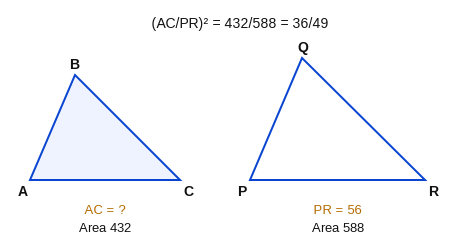
The areas of similar triangles ΔABC and ΔPQR are 432 cm2 and 588 cm2, respectively. If the longest side PR of ΔPQR is 56 cm, then find the longest side AC of ΔABC.
समरूप त्रिभुजों ΔABC और ΔPQR के क्षेत्रफल क्रमशः 432 cm2 और 588 cm2 हैं। यदि ΔPQR की सबसे लंबी भुजा PR 56 cm है, तो ΔABC की सबसे लंबी भुजा AC ज्ञात कीजिए।
  1. A48 cm
  2. B24 cm
  3. C52 cm
  4. D35 cm
Show answer

Concept: For similar triangles, Area1Area2=(side1side2)2, and corresponding (longest) sides pair up.

  1. (ACPR)2=432588=3649.
  2. ACPR=67⇒AC=56×67=48cm.

Trick: Divide both areas by 12 to see the perfect squares 36 and 49 at once.

Answer: (A) 48 cm

अवधारणा: समरूप त्रिभुजों में क्षेत्रफल1क्षेत्रफल2=(भुजा1भुजा2)2, और संगत (सबसे लंबी) भुजाएँ जोड़े में आती हैं।

  1. (ACPR)2=432588=3649।
  2. ACPR=67⇒AC=56×67=48cm।

ट्रिक: दोनों क्षेत्रफलों को 12 से भाग दें – पूर्ण वर्ग 36 और 49 तुरंत दिखेंगे।

उत्तर: (A) 48 cm

RRB NTPC Graduate CBT 1MathematicsSimilar triangles – area ratioRRB NTPC Graduate CBT 1 2025 · 25 Mar Shift 1 →
Q15177.
Find the sum of all the interior angles of a regular polygon of 6 sides.
6 भुजाओं वाले एक सम बहुभुज के सभी अंतः कोणों का योग ज्ञात कीजिए।
  1. A760°
  2. B720°
  3. C600°
  4. D680°
Show answer

Concept: Sum of interior angles of an n-sided polygon =(n−2)×180∘.

  1. n=6: (6−2)×180∘=4×180∘=720∘.
  2. Each angle of a regular hexagon =720∘6=120∘.

Yaad rakhein: Triangle 180°, quadrilateral 360°, pentagon 540°, hexagon 720° – add 180° per extra side.

Answer: (B) 720∘

अवधारणा: n भुजाओं वाले बहुभुज के अंतःकोणों का योग =(n−2)×180∘।

  1. n=6: (6−2)×180∘=4×180∘=720∘।
  2. सम षट्भुज का प्रत्येक कोण =720∘6=120∘।

याद रखें: त्रिभुज 180°, चतुर्भुज 360°, पंचभुज 540°, षट्भुज 720° – हर अतिरिक्त भुजा पर 180° जोड़ें।

उत्तर: (B) 720∘

RRB NTPC Graduate CBT 1MathematicsInterior angles of a polygonRRB NTPC Graduate CBT 1 2025 · 25 Mar Shift 1 →
Q15178.
A shopkeeper fixes the marked price of an item at 150% above its cost price. What percentage of discount on the marked price should be allowed to gain 20%?
एक दुकानदार किसी वस्तु का अंकित मूल्य उसके क्रय मूल्य से 150% अधिक निर्धारित करता है। 20% लाभ प्राप्त करने के लिए अंकित मूल्य पर कितने प्रतिशत की छूट दी जानी चाहिए?
  1. A54%
  2. B52%
  3. C49%
  4. D55%
Show answer

Concept: Take CP = 100; "150% above CP" means MP = 250; required SP = 120.

  1. Discount =250−120=130.
  2. Discount% =130250×100=52%.

Trick: "150% above" = 2.5 times (not 1.5 times) – read "above" carefully.

Answer: (B) 52%

अवधारणा: CP = 100 लें; "CP से 150% ऊपर" का अर्थ MP = 250; आवश्यक SP = 120।

  1. छूट =250−120=130।
  2. छूट% =130250×100=52%।

ट्रिक: "150% ऊपर" = 2.5 गुना (1.5 गुना नहीं) – "ऊपर" ध्यान से पढ़ें।

उत्तर: (B) 52%

RRB NTPC Graduate CBT 1MathematicsMarked price and discountRRB NTPC Graduate CBT 1 2025 · 25 Mar Shift 1 →
Q15179.
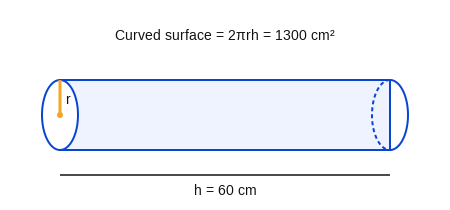
A cylindrical rod has an outer curved surface area of 1300 cm2. If the length of the rod is 60 cm, then the outer radius (in cm) of the rod, correct to two places of decimal, is: (Take π=227)
एक बेलनाकार छड़ का बाहरी वक्र पृष्ठीय क्षेत्रफल 1300 cm2 है। यदि छड़ की लंबाई 60 cm है, तो दशमलव के दो स्थानों तक सही, छड़ की बाहरी त्रिज्या (cm में) है: (π=227 लीजिए)
  1. A3.45
  2. B1.88
  3. C1.02
  4. D3.48
Show answer

Concept: Curved surface area of a cylinder =2πrh.

  1. 2×227×r×60=1300.
  2. r=1300×72×22×60=91002640≈3.447.
  3. Correct to two decimals: r≈3.45cm.

Trick: 91002640=455132; 132×3.45=455.4, so the answer is just under 3.45 → rounds to 3.45 (not 3.48).

Answer: (A) 3.45

अवधारणा: बेलन का वक्र पृष्ठ क्षेत्रफल =2πrh।

  1. 2×227×r×60=1300।
  2. r=1300×72×22×60=91002640≈3.447।
  3. दो दशमलव तक: r≈3.45cm।

ट्रिक: 91002640=455132; 132×3.45=455.4, अतः उत्तर 3.45 से ज़रा कम → 3.45 (3.48 नहीं)।

उत्तर: (A) 3.45

RRB NTPC Graduate CBT 1MathematicsCylinder – curved surface areaRRB NTPC Graduate CBT 1 2025 · 25 Mar Shift 1 →
Q15180.
Simplify
25−5.6÷7+1.6×0.5
सरल कीजिए
25−5.6÷7+1.6×0.5
  1. A5.6
  2. B23.4
  3. C0
  4. D25
Show answer

Concept: Do ÷ and × before + and −.

  1. 5.6÷7=0.8 and 1.6×0.5=0.8.
  2. 25−0.8+0.8=25.

Trick: The two middle terms are equal and opposite – they cancel, leaving 25.

Answer: (D) 25

अवधारणा: + और − से पहले ÷ और × करें।

  1. 5.6÷7=0.8 और 1.6×0.5=0.8।
  2. 25−0.8+0.8=25।

ट्रिक: बीच के दोनों पद बराबर और विपरीत हैं – कट जाते हैं, 25 बचता है।

उत्तर: (D) 25

RRB NTPC Graduate CBT 1MathematicsSimplification (BODMAS)RRB NTPC Graduate CBT 1 2025 · 25 Mar Shift 1 →