Question bank

Q&A: practice questions with answers

Search questions on any topic. Filter by exam category, exam, subject and topic, try the question, then open the answer and explanation.

Courses – airGurukul

20,719 questions found.

Q15781.
The sum of 12 numbers is 528. Find their average.
12 संख्याओं का योग 528 है। उनका औसत ज्ञात कीजिए।
  1. A42
  2. B43
  3. C44
  4. D45
Show answer

Concept: Average =Sum of observationsNumber of observations.

  1. Sum =528, count =12.
  2. Average =52812=44.

Trick: 12×44=528 (12×40=480, 12×4=48).

Answer: (C) 44

अवधारणा: औसत =प्रेक्षणों का योगप्रेक्षणों की संख्या।

  1. योग =528, संख्या =12।
  2. औसत =52812=44।

ट्रिक: 12×44=528 (12×40=480, 12×4=48)।

उत्तर: (C) 44

RRB NTPC Graduate CBT 1MathematicsAverageRRB NTPC Graduate CBT 1 2025 · 22 Mar Shift 1 →
Q15782.
Find the difference between the values of ‘m’ for which 2m=5m−2.
‘m’ के उन मानों के बीच का अंतर ज्ञात कीजिए जिनके लिए 2m=5m−2।
  1. A83
  2. B154
  3. C23
  4. D22
Show answer

Concept: Put t=m to turn the equation into a quadratic in t.

  1. 2m=5m−2⇒2t2−5t+2=0.
  2. (2t−1)(t−2)=0⇒t=2 or t=12.
  3. m=t2=4 or 14.
  4. Difference =4−14=154.

Trick: Whenever m and m appear together, substitute t=m – it is just a quadratic.

Answer: (B) 154

अवधारणा: t=m रखने पर समीकरण t में द्विघात (quadratic) बन जाता है।

  1. 2m=5m−2⇒2t2−5t+2=0.
  2. (2t−1)(t−2)=0⇒t=2 या t=12.
  3. m=t2=4 या 14.
  4. अंतर =4−14=154.

ट्रिक: जब m और m साथ आएँ, t=m रख दें – सीधा द्विघात समीकरण बन जाता है।

उत्तर: (B) 154

RRB NTPC Graduate CBT 1MathematicsQuadratic in √mRRB NTPC Graduate CBT 1 2025 · 22 Mar Shift 1 →
Q15783.
There are 21 members in group A, 11 members in group B and 17 members in group C. All the members of these groups went to a restaurant. The average amounts spent on each member of groups A, B and C are ₹465, ₹410 and ₹466, respectively. The overall average amount (in ₹) spent per member is:
समूह A में 21 सदस्य, समूह B में 11 सदस्य और समूह C में 17 सदस्य हैं। इन समूहों के सभी सदस्य एक रेस्तरां में गए। समूह A, B और C के प्रत्येक सदस्य पर खर्च की गई औसत राशि क्रमशः ₹465, ₹410 और ₹466 है। प्रति सदस्य खर्च की गई समग्र औसत राशि (₹ में) है:
  1. A454
  2. B453
  3. C452
  4. D455
Show answer

Concept: Overall average =total amounttotal members.

  1. Total =21×465+11×410+17×466=9765+4510+7922=22197.
  2. Members =21+11+17=49.
  3. Average =2219749=453.

Trick: Take 450 as base: deviations 21×15+11×(−40)+17×16=315−440+272=147; 14749=3, so average =453.

Answer: (B) 453

अवधारणा: कुल औसत =कुल राशिकुल सदस्य.

  1. कुल =21×465+11×410+17×466=9765+4510+7922=22197.
  2. सदस्य =21+11+17=49.
  3. औसत =2219749=453.

ट्रिक: 450 को आधार लें: विचलन 21×15+11×(−40)+17×16=147; 14749=3, अतः औसत =453.

उत्तर: (B) 453

RRB NTPC Graduate CBT 1MathematicsWeighted averageRRB NTPC Graduate CBT 1 2025 · 22 Mar Shift 1 →
Q15784.
A bag contains coins of ₹1, ₹2, and ₹5 in the ratio 8 : 4 : 3. If the total value of the coins is ₹930, what is the total number of coins in the bag?
एक थैले में ₹1, ₹2 और ₹5 के सिक्के 8 : 4 : 3 के अनुपात में हैं। यदि सिक्कों का कुल मूल्य ₹930 है, तो थैले में सिक्कों की कुल संख्या क्या है?
  1. A400
  2. B450
  3. C420
  4. D480
Show answer

Concept: Number of coins 8x:4x:3x; value = number × denomination.

  1. Value =8x×1+4x×2+3x×5=8x+8x+15x=31x.
  2. 31x=930⇒x=30.
  3. Total coins =(8+4+3)x=15×30=450.

Trick: Multiply each ratio term by its denomination, add, and divide the total value by that sum to get x.

Answer: (B) 450

अवधारणा: सिक्कों की संख्या 8x:4x:3x; मूल्य = संख्या × मूल्यवर्ग।

  1. मूल्य =8x×1+4x×2+3x×5=31x.
  2. 31x=930⇒x=30.
  3. कुल सिक्के =(8+4+3)x=15×30=450.

ट्रिक: हर अनुपात-पद को उसके मूल्यवर्ग से गुणा करके जोड़ें, कुल मूल्य को उस योग से भाग दें – x मिल जाएगा।

उत्तर: (B) 450

RRB NTPC Graduate CBT 1MathematicsRatio – coinsRRB NTPC Graduate CBT 1 2025 · 22 Mar Shift 1 →
Q15785.
A woman travelled at a speed of 20 m/min for 90 min, and at a speed of 65 m/min for 60 min. Her average speed (in m/min) for the entire journey is:
एक महिला ने 90 मिनट तक 20 m/min की चाल से और 60 मिनट तक 65 m/min की चाल से यात्रा की। पूरी यात्रा के लिए उसकी औसत चाल (m/min में) है:
  1. A31
  2. B42
  3. C38
  4. D44
Show answer

Concept: Average speed =total distancetotal time (not the average of speeds).

  1. Distance 1 =20×90=1800m; distance 2 =65×60=3900m.
  2. Total =5700m in 150 min.
  3. Average speed =5700150=38m/min.

Trick: With times in ratio 3:2, weighted mean =3×20+2×655=1905=38.

Answer: (C) 38

अवधारणा: औसत चाल =कुल दूरीकुल समय (चालों का औसत नहीं)।

  1. दूरी 1 =20×90=1800m; दूरी 2 =65×60=3900m.
  2. कुल =5700m, समय 150 मिनट।
  3. औसत चाल =5700150=38m/min.

ट्रिक: समय का अनुपात 3:2 है, अतः भारित औसत =3×20+2×655=38.

उत्तर: (C) 38

RRB NTPC Graduate CBT 1MathematicsAverage speedRRB NTPC Graduate CBT 1 2025 · 22 Mar Shift 1 →
Q15786.
The price of each article of type P, Q, and R is ₹280, ₹180 and ₹120, respectively. Subrata buys articles of each type in the ratio 3 : 2 : 3 for ₹6,240. How many articles of type Q did he purchase?
P, Q और R प्रकार की प्रत्येक वस्तु का मूल्य क्रमशः ₹280, ₹180 और ₹120 है। सुब्रत प्रत्येक प्रकार की वस्तुएँ 3 : 2 : 3 के अनुपात में ₹6,240 में खरीदता है। उसने Q प्रकार की कितनी वस्तुएँ खरीदीं?
  1. A16
  2. B8
  3. C14
  4. D5
Show answer

Concept: Let the numbers be 3x,2x,3x; total cost = sum of (number × price).

  1. Cost =3x×280+2x×180+3x×120=840x+360x+360x=1560x.
  2. 1560x=6240⇒x=4.
  3. Articles of type Q =2x=8.

Trick: 1560×4=6240 – spotting that 6240 is 4×1560 gives x instantly.

Answer: (B) 8

अवधारणा: संख्याएँ 3x,2x,3x मानें; कुल लागत = (संख्या × मूल्य) का योग।

  1. लागत =3x×280+2x×180+3x×120=1560x.
  2. 1560x=6240⇒x=4.
  3. Q प्रकार की वस्तुएँ =2x=8.

ट्रिक: 6240=4×1560 पहचानते ही x=4 मिल जाता है।

उत्तर: (B) 8

RRB NTPC Graduate CBT 1MathematicsRatio – total costRRB NTPC Graduate CBT 1 2025 · 22 Mar Shift 1 →
Q15787.
If x4−83x2+1=0 and x>0, then the value of x3−x−3+28 is:
यदि x4−83x2+1=0 और x>0 है, तो x3−x−3+28 का मान है:
  1. A29
  2. B27
  3. C28
  4. D26
Show answer

Concept: Divide by x2 to get x2+1x2, then use (x−1x)2=x2+1x2−2 and x3−1x3=a3+3a where a=x−1x.

  1. x4−83x2+1=0⇒x2+1x2=83.
  2. (x−1x)2=83−2=81⇒x−1x=9 (taking the value that keeps the root real).
  3. x3−x−3=93+3×9=729+27=756.
  4. 756+28=784=28.

Trick: x2+1x2=83⇒x−1x=81=9; then a3+3a – remember ‘minus’ identity has ‘plus 3a’.

Answer: (C) 28

अवधारणा: x2 से भाग देकर x2+1x2 निकालें, फिर (x−1x)2=x2+1x2−2 और x3−1x3=a3+3a (a=x−1x) का प्रयोग करें।

  1. x4−83x2+1=0⇒x2+1x2=83.
  2. (x−1x)2=81⇒x−1x=9 (वह मान जिससे वर्गमूल वास्तविक रहे)।
  3. x3−x−3=93+3×9=756.
  4. 756+28=784=28.

ट्रिक: x2+1x2=83⇒x−1x=9; फिर a3+3a – ‘माइनस’ वाली सर्वसमिका में ‘प्लस 3a’ आता है।

उत्तर: (C) 28

RRB NTPC Graduate CBT 1MathematicsAlgebraic identitiesRRB NTPC Graduate CBT 1 2025 · 22 Mar Shift 1 →
Q15788.
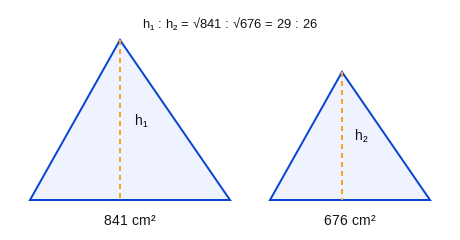
The areas of two similar triangles are 841 cm2 and 676 cm2, respectively. What is the ratio of their corresponding altitudes?
दो समरूप त्रिभुजों के क्षेत्रफल क्रमशः 841 cm2 और 676 cm2 हैं। उनके संगत शीर्षलंबों (altitudes) का अनुपात क्या है?
  1. A38 : 27
  2. B29 : 26
  3. C24 : 28
  4. D27 : 24
Show answer

Concept: For similar triangles, A1A2=(h1h2)2 (ratio of areas = square of ratio of corresponding altitudes/sides).

  1. h1h2=841676.
  2. 841=29, 676=26.
  3. Ratio =29:26.

Trick: Areas → take square root for any length ratio (side, altitude, median, perimeter).

Answer: (B) 29 : 26

अवधारणा: समरूप त्रिभुजों में A1A2=(h1h2)2 (क्षेत्रफलों का अनुपात = संगत शीर्षलंबों/भुजाओं के अनुपात का वर्ग)।

  1. h1h2=841676.
  2. 841=29, 676=26.
  3. अनुपात =29:26.

ट्रिक: क्षेत्रफल दिया हो → किसी भी लंबाई (भुजा, शीर्षलंब, माध्यिका, परिमाप) के अनुपात के लिए वर्गमूल लें।

उत्तर: (B) 29 : 26

RRB NTPC Graduate CBT 1MathematicsSimilar triangles – area ratioRRB NTPC Graduate CBT 1 2025 · 22 Mar Shift 1 →
Q15789.
Evaluate: 16 + 18 ÷ 6 - 3 × 3
मान ज्ञात कीजिए: 16 + 18 ÷ 6 - 3 × 3
  1. A13
  2. B9
  3. C10
  4. D12
Show answer

Concept: Division and multiplication before addition and subtraction.

  1. 18÷6=3, 3×3=9.
  2. 16+3−9=10.

Trick: Underline every ÷ and × pair first, solve them, then move left to right with + and −.

Answer: (C) 10

अवधारणा: भाग और गुणा पहले, फिर जोड़ और घटाव।

  1. 18÷6=3, 3×3=9.
  2. 16+3−9=10.

ट्रिक: पहले हर ÷ और × जोड़े को रेखांकित कर हल करें, फिर बाएँ से दाएँ + और − करें।

उत्तर: (C) 10

RRB NTPC Graduate CBT 1MathematicsBODMASRRB NTPC Graduate CBT 1 2025 · 22 Mar Shift 1 →
Q15790.
P sells an item to Q at 77% profit. Q sells the same item to R at 50% loss. If R paid ₹ 2655 for the item, then at what price (in ₹) is the item purchased by P?
P एक वस्तु Q को 77% लाभ पर बेचता है। Q वही वस्तु R को 50% हानि पर बेचता है। यदि R ने उस वस्तु के लिए ₹ 2655 का भुगतान किया, तो P ने वह वस्तु किस मूल्य (₹ में) पर खरीदी थी?
  1. A3000
  2. B3001
  3. C3002
  4. D3003
Show answer

Concept: Work backwards: each selling price = cost price × multiplier.

  1. R paid ₹2655 = Q’s SP =CPQ×0.5⇒CPQ=5310.
  2. Q’s CP = P’s SP =CPP×1.77⇒CPP=53101.77=3000.

Trick: Final price =CPP×177100×50100=CPP×0.885; 26550.885=3000.

Answer: (A) 3000

अवधारणा: उल्टा चलें: हर विक्रय मूल्य = क्रय मूल्य × गुणक।

  1. R ने ₹2655 दिए = Q का SP =CPQ×0.5⇒CPQ=5310.
  2. Q का CP = P का SP =CPP×1.77⇒CPP=53101.77=3000.

ट्रिक: अंतिम मूल्य =CPP×177100×50100=CPP×0.885; 26550.885=3000.

उत्तर: (A) 3000

RRB NTPC Graduate CBT 1MathematicsSuccessive profit and lossRRB NTPC Graduate CBT 1 2025 · 22 Mar Shift 1 →
Q15791.
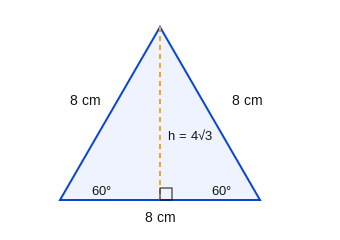
Find the area of an equilateral triangle with side 8 cm (correct to 2 decimal places).
8 cm भुजा वाले एक समबाहु त्रिभुज का क्षेत्रफल ज्ञात कीजिए (2 दशमलव स्थानों तक सही)।
  1. A29.91 sq. cm.29.91 वर्ग cm
  2. B27.71 sq. cm.27.71 वर्ग cm
  3. C26.61 sq. cm.26.61 वर्ग cm
  4. D24.41 sq. cm.24.41 वर्ग cm
Show answer

Concept: Area of an equilateral triangle =34a2.

  1. a=8⇒Area=34×64=163.
  2. 3≈1.732⇒16×1.732=27.712.
  3. Correct to 2 decimals: 27.71cm2.

Trick: Memorise 3=1.732; 163=27.71, 253=43.30 appear often.

Answer: (B) 27.71 sq. cm.

अवधारणा: समबाहु त्रिभुज का क्षेत्रफल =34a2.

  1. a=8⇒क्षेत्रफल=34×64=163.
  2. 3≈1.732⇒16×1.732=27.712.
  3. दो दशमलव तक: 27.71cm2.

ट्रिक: 3=1.732 याद रखें; 163=27.71, 253=43.30 बार-बार आते हैं।

उत्तर: (B) 27.71 sq. cm.

RRB NTPC Graduate CBT 1MathematicsArea of equilateral triangleRRB NTPC Graduate CBT 1 2025 · 22 Mar Shift 1 →
Q15792.
Find the value of y, satisfying 19×7×630÷2025=y+517
y का वह मान ज्ञात कीजिए, जो 19×7×630÷2025=y+517 को संतुष्ट करता है
  1. A1345
  2. B1348
  3. C1340
  4. D1335
Show answer

Concept: Simplify the square root first, then work left to right with × and ÷.

  1. 2025=45.
  2. 19×7×630÷45=19×7×14=1862.
  3. y=1862−517=1345.

Trick: Cancel before multiplying: 63045=14, then 133×14=1862.

Answer: (A) 1345

अवधारणा: पहले वर्गमूल सरल करें, फिर बाएँ से दाएँ × और ÷ करें।

  1. 2025=45.
  2. 19×7×630÷45=19×7×14=1862.
  3. y=1862−517=1345.

ट्रिक: गुणा से पहले काटें: 63045=14, फिर 133×14=1862.

उत्तर: (A) 1345

RRB NTPC Graduate CBT 1MathematicsSimplificationRRB NTPC Graduate CBT 1 2025 · 22 Mar Shift 1 →
Q15793.
Amit invested equal amounts at simple interest and compound interest, compounded annually, for 2 years at the same rate of 4% per annum. In the end, he noticed a difference of ₹52 between the two interests earned. What was the amount (in ₹) invested in each case?
अमित ने समान धनराशियाँ साधारण ब्याज और वार्षिक रूप से संयोजित चक्रवृद्धि ब्याज पर 2 वर्षों के लिए 4% वार्षिक की समान दर से निवेश कीं। अंत में उसने देखा कि अर्जित दोनों ब्याजों के बीच ₹52 का अंतर है। प्रत्येक स्थिति में निवेश की गई राशि (₹ में) क्या थी?
  1. A31600
  2. B32500
  3. C31750
  4. D32850
Show answer

Concept: For 2 years, CI−SI=P(r100)2.

  1. P×(4100)2=P×1610000=52.
  2. P=52×1000016=32500.

Trick: Difference for 2 years = SI on the first year’s interest: 4% of 4% of P = 0.16% of P.

Answer: (B) 32500

अवधारणा: 2 वर्षों के लिए CI−SI=P(r100)2.

  1. P×(4100)2=P×1610000=52.
  2. P=52×1000016=32500.

ट्रिक: 2 वर्ष का अंतर = पहले वर्ष के ब्याज पर ब्याज: P का 4% का 4% = P का 0.16%.

उत्तर: (B) 32500

RRB NTPC Graduate CBT 1MathematicsCI – SI difference (2 years)RRB NTPC Graduate CBT 1 2025 · 22 Mar Shift 1 →
Q15794.
By selling an article at 310 of its marked price, Hitesh incurs a loss of 16%. If he sells it at 69% of its marked price, then the profit percentage is
किसी वस्तु को उसके अंकित मूल्य के 310 पर बेचने से हितेश को 16% की हानि होती है। यदि वह इसे अंकित मूल्य के 69% पर बेचता है, तो लाभ प्रतिशत है
  1. A95.7%
  2. B93.8%
  3. C94.8%
  4. D93.2%
Show answer

Concept: Express CP in terms of MP from the first sale, then compare with the second SP.

  1. Let MP =100. First SP =30; loss 16%⇒CP=300.84=2507.
  2. Second SP =69. Profit =69−2507=2337.
  3. Profit%=233/7250/7×100=233250×100=93.2%.

Trick: New SP is 6930=2.3 times the old SP, so new multiplier =0.84×2.3=1.932⇒93.2% profit.

Answer: (D) 93.2%

अवधारणा: पहली बिक्री से CP को MP के रूप में निकालें, फिर दूसरे SP से तुलना करें।

  1. MP =100 मानें। पहला SP =30; हानि 16%⇒CP=300.84=2507.
  2. दूसरा SP =69. लाभ =69−2507=2337.
  3. लाभ%=233250×100=93.2%.

ट्रिक: नया SP पुराने का 6930=2.3 गुना है, अतः नया गुणक =0.84×2.3=1.932⇒93.2% लाभ।

उत्तर: (D) 93.2%

RRB NTPC Graduate CBT 1MathematicsProfit & loss – marked priceRRB NTPC Graduate CBT 1 2025 · 22 Mar Shift 1 →
Q15795.
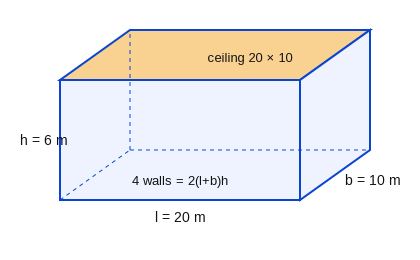
The length, breadth and height of a room are 20m, 10m and 6m, respectively. If the rate of painting the four walls and the ceiling of the room is ₹15/square metre, then find the total cost.
एक कमरे की लंबाई, चौड़ाई और ऊँचाई क्रमशः 20m, 10m और 6m है। यदि कमरे की चार दीवारों और छत की पुताई की दर ₹15/वर्ग मीटर है, तो कुल लागत ज्ञात कीजिए।
  1. A₹6500
  2. B₹8400
  3. C₹7200
  4. D₹9200
Show answer

Concept: Area of 4 walls =2(l+b)h; ceiling =l×b.

  1. Walls =2(20+10)×6=360m2.
  2. Ceiling =20×10=200m2.
  3. Total =560m2; cost =560×15= ₹8400.

Trick: ‘Four walls and ceiling’ = total surface area minus floor: 2(lb+bh+hl)−lb=lb+2h(l+b).

Answer: (B) ₹8400

अवधारणा: 4 दीवारों का क्षेत्रफल =2(l+b)h; छत =l×b.

  1. दीवारें =2(20+10)×6=360m2.
  2. छत =20×10=200m2.
  3. कुल =560m2; लागत =560×15= ₹8400.

ट्रिक: ‘चार दीवारें और छत’ = कुल पृष्ठीय क्षेत्रफल − फर्श: 2(lb+bh+hl)−lb=lb+2h(l+b).

उत्तर: (B) ₹8400

RRB NTPC Graduate CBT 1MathematicsMensuration – painting walls & ceilingRRB NTPC Graduate CBT 1 2025 · 22 Mar Shift 1 →
Q15796.
If ‘A’ stands for ‘÷’, ‘B’ stands for ‘×’, ‘C’ stands for ‘+’ and ‘D’ stands for ‘−’, then what will come in place of the question mark (?) in the following equation?
13 B 2 C 6 D 8 A 4 = ?
यदि ‘A’ का अर्थ ‘÷’, ‘B’ का अर्थ ‘×’, ‘C’ का अर्थ ‘+’ और ‘D’ का अर्थ ‘−’ है, तो निम्नलिखित समीकरण में प्रश्नचिह्न (?) के स्थान पर क्या आएगा?
13 B 2 C 6 D 8 A 4 = ?
  1. A29
  2. B27
  3. C30
  4. D28
Show answer

Concept: Replace each letter by its symbol and then apply BODMAS (÷ and × before + and −).

  1. 13 B 2 C 6 D 8 A 4 becomes 13×2+6−8÷4.
  2. Division first: 8÷4=2; multiplication: 13×2=26.
  3. 26+6−2=30.

Trick: Write the decoded expression fully before calculating – most mistakes come from solving left-to-right instead of BODMAS.

Answer: (C) 30

अवधारणा: हर अक्षर को उसके चिह्न से बदलें और फिर BODMAS लगाएँ (÷ और × पहले, + और − बाद में)।

  1. 13 B 2 C 6 D 8 A 4 बनता है 13×2+6−8÷4।
  2. पहले भाग: 8÷4=2; गुणा: 13×2=26।
  3. 26+6−2=30।

ट्रिक: पहले पूरा decoded व्यंजक लिखें, फिर हल करें – अधिकतर गलती बाएँ-से-दाएँ हल करने से होती है, BODMAS से नहीं।

उत्तर: (C) 30

RRB NTPC Graduate CBT 1General Intelligence and ReasoningMathematical OperationsRRB NTPC Graduate CBT 1 2025 · 22 Mar Shift 1 →
Q15797.
Based on the English alphabetical order, three of the following four letter-cluster pairs are alike in a certain way and thus form a group. Which letter-cluster pair DOES NOT belong to that group?
(Note: The odd one out is not based on the number of consonants/vowels or their position in the letter-cluster.)
अंग्रेज़ी वर्णमाला क्रम के आधार पर, निम्नलिखित चार अक्षर-समूह युग्मों में से तीन एक निश्चित प्रकार से समान हैं और इस प्रकार एक समूह बनाते हैं। कौन-सा अक्षर-समूह युग्म उस समूह से संबंधित नहीं है?
(नोट: असंगत युग्म व्यंजनों/स्वरों की संख्या या अक्षर-समूह में उनकी स्थिति पर आधारित नहीं है।)
  1. AZC−AD
  2. BOR−OU
  3. CDG−EH
  4. DRU−SV
Show answer

Concept: Compare the two letters of each pair position-wise using alphabet positions.

  1. ZC−AD: Z→A (+1, cyclic), C→D (+1).
  2. DG−EH: D→E (+1), G→H (+1). RU−SV: R→S (+1), U→V (+1).
  3. OR−OU: O→O (0), R→U (+3) – breaks the +1,+1 pattern.

Trick: Z→A counts as +1 (alphabet wraps around) – don't pick ZC−AD as odd just because it crosses Z.

Answer: (B) OR−OU

अवधारणा: प्रत्येक जोड़े के अक्षरों की स्थिति-वार तुलना वर्णमाला क्रमांक से करें।

  1. ZC−AD: Z→A (+1, चक्रीय), C→D (+1)।
  2. DG−EH: D→E (+1), G→H (+1)। RU−SV: R→S (+1), U→V (+1)।
  3. OR−OU: O→O (0), R→U (+3) – +1,+1 पैटर्न टूटता है।

ट्रिक: Z→A को +1 ही गिनें (वर्णमाला घूमकर A पर आती है) – Z पार करने भर से ZC−AD को विषम न मानें।

उत्तर: (B) OR−OU

RRB NTPC Graduate CBT 1General Intelligence and ReasoningLetter Cluster ClassificationRRB NTPC Graduate CBT 1 2025 · 22 Mar Shift 1 →
Q15798.
This question is based on the five, three-digit numbers given below. (Left) 442 405 297 384 316 (Right)
(Example- 697 – First digit = 6, second digit = 9 and third digit = 7) NOTE - All operations to be done from left to right.
What will be the resultant if third digit of the highest number is added to the second digit of lowest number ?
यह प्रश्न नीचे दी गई पाँच, तीन-अंकीय संख्याओं पर आधारित है। (बाएँ) 442 405 297 384 316 (दाएँ)
(उदाहरण- 697 – पहला अंक = 6, दूसरा अंक = 9 और तीसरा अंक = 7) नोट - सभी संक्रियाएँ बाएँ से दाएँ की जानी हैं।
यदि सबसे बड़ी संख्या के तीसरे अंक को सबसे छोटी संख्या के दूसरे अंक में जोड़ा जाए, तो परिणाम क्या होगा?
  1. A12
  2. B11
  3. C10
  4. D9
Show answer

Concept: Identify the required numbers first, then pick the asked digits.

  1. Numbers: 442, 405, 297, 384, 316. Highest = 442, lowest = 297.
  2. Third digit of 442 = 2; second digit of 297 = 9.
  3. Sum =2+9=11.

Trick: Underline the highest and lowest numbers as soon as you read the list – it saves re-scanning for every sub-question of this set.

Answer: (B) 11

अवधारणा: पहले अपेक्षित संख्याएँ पहचानें, फिर पूछे गए अंक चुनें।

  1. संख्याएँ: 442, 405, 297, 384, 316। सबसे बड़ी = 442, सबसे छोटी = 297।
  2. 442 का तीसरा अंक = 2; 297 का दूसरा अंक = 9।
  3. योग =2+9=11।

ट्रिक: सूची पढ़ते ही सबसे बड़ी और छोटी संख्या पर निशान लगा लें – इस सेट के हर प्रश्न में दोबारा खोजने से बचेंगे।

उत्तर: (B) 11

RRB NTPC Graduate CBT 1General Intelligence and ReasoningNumber Based OperationsRRB NTPC Graduate CBT 1 2025 · 22 Mar Shift 1 →
Q15799.
22 is related to 60 following a certain logic. Following the same logic, 27 is related to 75. To which of the following is 33 related, following the same logic?
(NOTE: Operations should be performed on the whole numbers, without breaking down the numbers into their constituent digits. E.g. 13 – Operations on 13 such as adding/ subtracting /multiplying to 13 can be performed. Breaking down 13 into 1 and 3 and then performing mathematical operations on 1 and 3 is not allowed.)
22, एक निश्चित तर्क के अनुसार 60 से संबंधित है। उसी तर्क के अनुसार, 27, 75 से संबंधित है। उसी तर्क के अनुसार, 33 निम्नलिखित में से किससे संबंधित है?
(नोट: संक्रियाएँ पूर्ण संख्याओं पर की जानी चाहिए, संख्याओं को उनके घटक अंकों में तोड़े बिना। उदाहरण के लिए 13 – 13 पर संक्रियाएँ जैसे 13 में जोड़ना/घटाना/गुणा करना की जा सकती हैं। 13 को 1 और 3 में तोड़कर फिर 1 और 3 पर गणितीय संक्रियाएँ करने की अनुमति नहीं है।)
  1. A86
  2. B97
  3. C103
  4. D93
Show answer

Concept: Find one operation on the whole number that works for both given pairs.

  1. 22×3−6=66−6=60 ✓
  2. 27×3−6=81−6=75 ✓
  3. 33×3−6=99−6=93.

Trick: The second number is a little less than 3× the first (66→60, 81→75, both −6) – test "×3 then −6" immediately.

Answer: (D) 93

अवधारणा: पूरी संख्या पर ऐसी एक संक्रिया खोजें जो दोनों दिए गए जोड़ों पर लागू हो।

  1. 22×3−6=66−6=60 ✓
  2. 27×3−6=81−6=75 ✓
  3. 33×3−6=99−6=93।

ट्रिक: दूसरी संख्या पहली के 3 गुने से थोड़ी कम है (66→60, 81→75, दोनों में −6) – तुरंत "×3 फिर −6" जाँचें।

उत्तर: (D) 93

RRB NTPC Graduate CBT 1General Intelligence and ReasoningNumber AnalogyRRB NTPC Graduate CBT 1 2025 · 22 Mar Shift 1 →
Q15800.
Read the given statements and conclusions carefully. Assuming that the information given in the statements is true, even if it appears to be at variance with commonly known facts, decide which of the given conclusions logically follow(s) from the statements.
Statements:
All hands are legs. Some hands are faces. Some faces are arms.
Conclusions:
(I) Some legs are faces.
(II) Some hands are arms.
दिए गए कथनों और निष्कर्षों को ध्यानपूर्वक पढ़िए। कथनों में दी गई जानकारी को सत्य मानते हुए, भले ही वह सामान्यतः ज्ञात तथ्यों से भिन्न प्रतीत होती हो, निर्णय कीजिए कि दिए गए निष्कर्षों में से कौन-सा/कौन-से निष्कर्ष कथनों का तार्किक रूप से अनुसरण करता है/करते हैं।
कथन:
सभी हाथ, टाँगें हैं। कुछ हाथ, चेहरे हैं। कुछ चेहरे, बाँहें हैं।
निष्कर्ष:
(I) कुछ टाँगें, चेहरे हैं।
(II) कुछ हाथ, बाँहें हैं।
  1. ABoth conclusions (I) and (II) followनिष्कर्ष (I) और (II) दोनों अनुसरण करते हैं
  2. BOnly conclusion (I) followsकेवल निष्कर्ष (I) अनुसरण करता है
  3. COnly conclusion (II) followsकेवल निष्कर्ष (II) अनुसरण करता है
  4. DNeither conclusion (I) nor (II) followsन तो निष्कर्ष (I) और न ही (II) अनुसरण करता है
Show answer

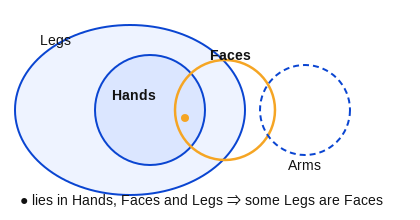
Concept: Draw the Venn diagram with the minimum overlap allowed by the statements and test each conclusion.

  1. All hands are legs → the "hands" circle lies inside "legs". Some hands are faces → the hands–faces overlap is non-empty, and it also lies inside legs. So some legs are faces – conclusion (I) follows.
  2. Some faces are arms – the arms can overlap faces outside hands, so "some hands are arms" is not necessary. Conclusion (II) does not follow.

Trick: Two "Some" statements in a chain (Some hands are faces, Some faces are arms) never give a definite conclusion between the end terms.

Answer: (B) Only conclusion (I) follows

अवधारणा: कथनों के अनुसार न्यूनतम ओवरलैप वाला वेन आरेख बनाएँ और हर निष्कर्ष जाँचें।

  1. All hands are legs → "hands" वृत्त "legs" के अंदर। Some hands are faces → hands–faces का ओवरलैप खाली नहीं है और वह legs के अंदर है। अतः some legs are faces – निष्कर्ष (I) सही।
  2. Some faces are arms – arms, faces से hands के बाहर भी मिल सकते हैं, इसलिए "some hands are arms" निश्चित नहीं। निष्कर्ष (II) नहीं निकलता।

ट्रिक: श्रृंखला में दो "Some" कथन (Some hands are faces, Some faces are arms) सिरे के पदों के बीच कभी निश्चित निष्कर्ष नहीं देते।

उत्तर: (B) Only conclusion (I) follows

RRB NTPC Graduate CBT 1General Intelligence and ReasoningSyllogismRRB NTPC Graduate CBT 1 2025 · 22 Mar Shift 1 →