Question bank

Q&A: practice questions with answers

Search questions on any topic. Filter by exam category, exam, subject and topic, try the question, then open the answer and explanation.

Courses – airGurukul

20,719 questions found.

Q16121.
Read the given statements and conclusions carefully. You have to take the given statements to be true even if they seem to be at variance from commonly known facts. You have to decide which conclusion/s logically follow/s from the given statements. Statements:
All hands are legs. Some hands are ears. Some ears are arms.
Conclusions:
(I) Some legs are ears.
(II) Some hands are arms.
दिए गए कथनों और निष्कर्षों को ध्यानपूर्वक पढ़ें। आपको दिए गए कथनों को सत्य मानना है, भले ही वे सामान्य रूप से ज्ञात तथ्यों से भिन्न प्रतीत होते हों। आपको निर्णय करना है कि दिए गए कथनों से कौन-सा/से निष्कर्ष तार्किक रूप से अनुसरण करता है/करते हैं। कथन:
सभी हाथ टाँगें हैं। कुछ हाथ कान हैं। कुछ कान बाँहें हैं।
निष्कर्ष:
(I) कुछ टाँगें कान हैं।
(II) कुछ हाथ बाँहें हैं।
  1. AOnly conclusion II follows.केवल निष्कर्ष II अनुसरण करता है।
  2. BOnly conclusion I follows.केवल निष्कर्ष I अनुसरण करता है।
  3. CBoth conclusions I and II follow.निष्कर्ष I और II दोनों अनुसरण करते हैं।
  4. DNeither conclusion I nor II follows.न तो निष्कर्ष I और न ही II अनुसरण करता है।
Show answer

Concept: Draw the Venn diagram from the statements and test each conclusion against every possible drawing.
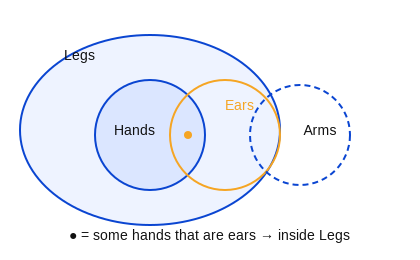
  1. All hands are legs + some hands are ears → the hands that are ears lie inside legs, so some legs are ears. Conclusion I follows.
  2. Some ears are arms: these arms may be ears that are not hands at all, so 'some hands are arms' is not certain. Conclusion II does not follow.

Trick: Two 'some' statements in a chain (hands–ears, ears–arms) never give a definite 'some' conclusion.

Answer: (B) Only conclusion I follows.

अवधारणा: कथनों से वेन आरेख बनाएँ और हर निष्कर्ष को सभी संभव आकृतियों पर जाँचें।

  1. सभी हाथ पैर हैं + कुछ हाथ कान हैं → जो हाथ कान हैं वे पैर के अंदर हैं, अतः कुछ पैर कान हैं। निष्कर्ष I सही।
  2. कुछ कान बाँह हैं: ये बाँहें ऐसे कान हो सकते हैं जो हाथ नहीं हैं, इसलिए 'कुछ हाथ बाँह हैं' निश्चित नहीं। निष्कर्ष II नहीं निकलता।

ट्रिक: श्रृंखला में दो 'कुछ' कथन (हाथ–कान, कान–बाँह) कभी निश्चित 'कुछ' निष्कर्ष नहीं देते।

उत्तर: (B) केवल निष्कर्ष I अनुसरण करता है।
RRB NTPC Graduate CBT 1General Intelligence and ReasoningSyllogismRRB NTPC Graduate CBT 1 2025 · 19 Mar Shift 1 →
Q16122.
Seven people F, G, H, I, U, V, and W are sitting around a circular table facing the centre of the table. G sits third to the right of U. Only three people sit between F and H when counted from the right of H. G sits to the immediate right of H. V sits to the immediate right of W. Who sits second to the right of I?
सात व्यक्ति F, G, H, I, U, V और W एक वृत्ताकार मेज के चारों ओर मेज के केंद्र की ओर मुख करके बैठे हैं। G, U के दाएँ तीसरे स्थान पर बैठा है। H के दाएँ से गिनने पर F और H के बीच केवल तीन व्यक्ति बैठे हैं। G, H के ठीक दाएँ बैठा है। V, W के ठीक दाएँ बैठा है। I के दाएँ दूसरे स्थान पर कौन बैठा है?
  1. AW
  2. BG
  3. CU
  4. DF
Show answer

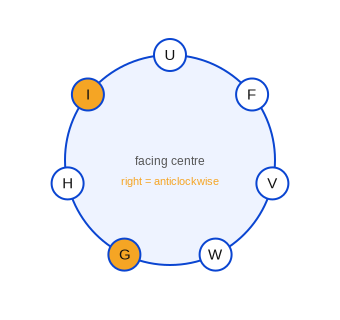
Concept: Facing the centre, 'right' means anticlockwise. Fix one person and place the rest from the definite clues.

  1. Put U at the top. G is third to the right of U; H is to the immediate left of G (since G is to H's immediate right).
  2. Counting from H's right, three people sit between F and H → F is the fifth seat to H's right, which lands F just to the left of U.
  3. Remaining seats: W with V to his immediate right fills two of them, I takes the last one (between U and H).
  4. Second to the right of I is G.

Trick: Draw 7 dots, mark arrows for 'right', and place the pair with a fixed gap (U–G) first.

Answer: (B) G

अवधारणा: केंद्र की ओर मुख होने पर 'दाएँ' = वामावर्त (anticlockwise)। एक व्यक्ति को स्थिर रखें और निश्चित शर्तों से बाकी बैठाएँ।

  1. U को ऊपर रखें। G, U के दाएँ तीसरा; H, G के ठीक बाएँ (क्योंकि G, H के ठीक दाएँ है)।
  2. H के दाएँ से गिनने पर F और H के बीच तीन लोग → F, H के दाएँ पाँचवीं सीट पर, यानी U के ठीक बाएँ।
  3. बची सीटें: W और उसके ठीक दाएँ V दो सीटें लेते हैं, I अंतिम सीट (U और H के बीच) पर।
  4. I के दाएँ दूसरा G है।

ट्रिक: 7 बिंदु बनाएँ, 'दाएँ' का तीर लगाएँ, और निश्चित अंतर वाले जोड़े (U–G) को पहले रखें।

उत्तर: (B) G

RRB NTPC Graduate CBT 1General Intelligence and ReasoningCircular seatingRRB NTPC Graduate CBT 1 2025 · 19 Mar Shift 1 →
Q16123.
In a certain code language,
A@ B means ‘A is the son of B’
A % B means ‘A is the brother of B’
A + B means ‘A is the wife of B’
A & B means ‘ A is the father of B’
Based on the above, how is T related to K if ‘T@S%G+H&K’?
एक निश्चित कूट भाषा में,
A@ B का अर्थ है ‘A, B का पुत्र है’
A % B का अर्थ है ‘A, B का भाई है’
A + B का अर्थ है ‘A, B की पत्नी है’
A & B का अर्थ है ‘A, B का पिता है’
उपर्युक्त के आधार पर, यदि ‘T@S%G+H&K’ है, तो T, K से किस प्रकार संबंधित है?
  1. AMother's brotherमाता का भाई
  2. BMother's fatherमाता का पिता
  3. CSonपुत्र
  4. DMother's brother's sonमाता के भाई का पुत्र
Show answer

Concept: Decode the chain from left to right and build the family tree.

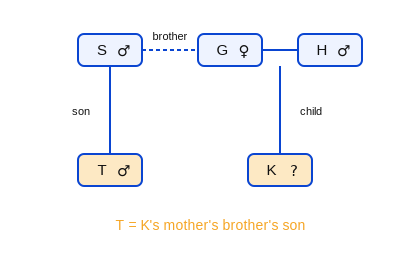
  1. T @ S: T is the son of S. S % G: S is the brother of G.
  2. G + H: G is the wife of H. H & K: H is the father of K → G is K's mother.
  3. S is K's mother's brother (maternal uncle); T, the son of S, is K's mother's brother's son.

Trick: Decode the symbols nearest the target (K) first, then walk back along the chain.

Answer: (D) Mother's brother's son

अवधारणा: श्रृंखला को बाएँ से दाएँ डिकोड करें और वंश-वृक्ष बनाएँ।

  1. T @ S: T, S का पुत्र। S % G: S, G का भाई।
  2. G + H: G, H की पत्नी। H & K: H, K का पिता → G, K की माँ।
  3. S, K की माँ का भाई (मामा); T, S का पुत्र = K की माँ के भाई का पुत्र।

ट्रिक: लक्ष्य (K) के सबसे पास के प्रतीक पहले डिकोड करें, फिर श्रृंखला में पीछे चलें।

उत्तर: (D) माँ के भाई का पुत्र

RRB NTPC Graduate CBT 1General Intelligence and ReasoningBlood relations (coded)RRB NTPC Graduate CBT 1 2025 · 19 Mar Shift 1 →
Q16124.
In this question, a question is followed by two statements numbered (I) and (II). You have to decide whether the data provided in the statements are sufficient to answer the question. Read both the statements and decide the appropriate answer.
Q. Harsh, Ketan, Mayank, Rohit, and Sidharth, each have different height. Who is the shortest?
(I) Mayank is taller than Harsh but shorter than Ketan.
(II) Rohit is taller than Harsh but shorter than Mayank.
इस प्रश्न में, एक प्रश्न के बाद (I) और (II) संख्या वाले दो कथन दिए गए हैं। आपको यह निर्णय करना है कि कथनों में दिए गए डेटा प्रश्न का उत्तर देने के लिए पर्याप्त हैं या नहीं। दोनों कथनों को पढ़ें और उचित उत्तर का निर्णय करें।
प्रश्न. हर्ष, केतन, मयंक, रोहित और सिद्धार्थ में से प्रत्येक की ऊँचाई अलग-अलग है। सबसे छोटा (कम ऊँचाई वाला) कौन है?
(I) मयंक, हर्ष से लंबा है परंतु केतन से छोटा है।
(II) रोहित, हर्ष से लंबा है परंतु मयंक से छोटा है।
  1. AData in Statement II alone is sufficient to answer the question while data in Statement I is notकथन II में दिया गया डेटा अकेले प्रश्न का उत्तर देने के लिए पर्याप्त है, जबकि कथन I में दिया गया डेटा पर्याप्त नहीं है
  2. BBoth statements I and II together are NOT sufficient to answer the questionकथन I और II दोनों मिलकर भी प्रश्न का उत्तर देने के लिए पर्याप्त नहीं हैं
  3. CData in Statement I alone is sufficient to answer the question while data in Statement II is notकथन I में दिया गया डेटा अकेले प्रश्न का उत्तर देने के लिए पर्याप्त है, जबकि कथन II में दिया गया डेटा पर्याप्त नहीं है
  4. DBoth statements I and II together (and not statement I alone or statement II alone) are sufficient to answer the questionकथन I और II दोनों मिलकर (न कि केवल कथन I अथवा केवल कथन II) प्रश्न का उत्तर देने के लिए पर्याप्त हैं
Show answer

Concept: The question asks for the shortest of five people; all five must be placed, or at least the bottom position must be certain.

  1. Statement I: Ketan > Mayank > Harsh. Rohit and Sidharth unknown – not sufficient.
  2. Statement II: Mayank > Rohit > Harsh. Ketan and Sidharth unknown – not sufficient.
  3. Together: Ketan > Mayank > Rohit > Harsh, but Sidharth is never mentioned – he could be shortest. Still not sufficient.

Trick: Count the names in the statements; if one person is missing from both, the shortest/tallest can't be fixed.

Answer: (B) Both statements I and II together are NOT sufficient to answer the question

अवधारणा: प्रश्न पाँच लोगों में सबसे छोटा पूछता है; पाँचों की स्थिति या कम से कम सबसे नीचे की स्थिति निश्चित होनी चाहिए।

  1. कथन I: केतन > मयंक > हर्ष। रोहित और सिद्धार्थ अज्ञात – पर्याप्त नहीं।
  2. कथन II: मयंक > रोहित > हर्ष। केतन और सिद्धार्थ अज्ञात – पर्याप्त नहीं।
  3. दोनों मिलाकर: केतन > मयंक > रोहित > हर्ष, पर सिद्धार्थ का कहीं ज़िक्र नहीं – वह सबसे छोटा हो सकता है। फिर भी पर्याप्त नहीं।

ट्रिक: कथनों में नाम गिनें; यदि कोई व्यक्ति दोनों से गायब है तो सबसे छोटा/लंबा तय नहीं हो सकता।

उत्तर: (B) दोनों कथन I और II मिलकर भी प्रश्न का उत्तर देने के लिए पर्याप्त नहीं हैं

RRB NTPC Graduate CBT 1General Intelligence and ReasoningData sufficiencyRRB NTPC Graduate CBT 1 2025 · 19 Mar Shift 1 →
Q16125.
Each of seven people, E, F, G, H, J, K and L, has an exam on a different day of a week, starting from Monday and ending on Sunday of the same week. Only three people have exams between L and J. Only three people have exams between H and K. E has exam on some day before J and on some day after F. Only G has exam before K. How many people have exams before L?
सात व्यक्तियों, E, F, G, H, J, K और L में से प्रत्येक की परीक्षा एक ही सप्ताह के सोमवार से प्रारंभ होकर रविवार को समाप्त होने वाले सप्ताह के अलग-अलग दिन है। L और J के बीच केवल तीन व्यक्तियों की परीक्षाएँ हैं। H और K के बीच केवल तीन व्यक्तियों की परीक्षाएँ हैं। E की परीक्षा J से पहले किसी दिन और F के बाद किसी दिन है। K से पहले केवल G की परीक्षा है। L से पहले कितने व्यक्तियों की परीक्षाएँ हैं?
  1. AThreeतीन
  2. BOneएक
  3. CFourचार
  4. DTwoदो
Show answer

Concept: Number Monday–Sunday as 1–7 and start with the clue that pins positions.

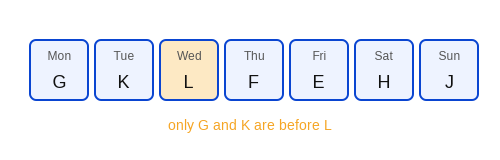
  1. 'Only G has exam before K' → G = Mon (1), K = Tue (2).
  2. Three people between H and K → H = Sat (6).
  3. Three between L and J → the free pair with gap 4 is (Wed, Sun). F < E < J forces J = Sun (7), L = Wed (3); F = Thu, E = Fri.
  4. Before L (Wed): G and K → two people.

Trick: 'Only X before Y' fixes two slots at once – always the first clue to use.

Answer: (D) Two

अवधारणा: सोम–रवि को 1–7 मानें और उस शर्त से शुरू करें जो स्थान तय कर दे।

  1. 'K से पहले केवल G' → G = सोम (1), K = मंगल (2)।
  2. H और K के बीच तीन लोग → H = शनि (6)।
  3. L और J के बीच तीन → 4 के अंतर वाला खाली जोड़ा (बुध, रवि)। F < E < J से J = रवि (7), L = बुध (3); F = गुरु, E = शुक्र।
  4. L (बुध) से पहले: G और K → दो लोग।

ट्रिक: 'Y से पहले केवल X' एक साथ दो स्थान तय करता है – इसे हमेशा पहले इस्तेमाल करें।

उत्तर: (D) दो

RRB NTPC Graduate CBT 1General Intelligence and ReasoningScheduling puzzle (days)RRB NTPC Graduate CBT 1 2025 · 19 Mar Shift 1 →
Q16126.
Which of the following rulers built Tughlaqabad Fort in 1321?
1321 में तुगलकाबाद किले का निर्माण निम्नलिखित में से किस शासक ने करवाया था?
  1. AMuhammad bin Tughlaqमुहम्मद बिन तुगलक
  2. BFiroz Shah Tughlaqफिरोज शाह तुगलक
  3. CGhiyasuddin Tughlaqगयासुद्दीन तुगलक
  4. DAlauddin Khaljiअलाउद्दीन खिलजी
Show answer

Concept: Tughlaqabad Fort in Delhi was built by the founder of the Tughlaq dynasty.

  1. Ghiyasuddin Tughlaq (Ghazi Malik) founded the Tughlaq dynasty in 1320 and built the massive Tughlaqabad Fort in 1321 as his new capital city.
  2. Muhammad bin Tughlaq is known for shifting the capital to Daulatabad; Firoz Shah built Firozabad (Firoz Shah Kotla); Alauddin Khalji built Siri Fort.

Yaad rakhein: Delhi's forts by ruler: Siri – Alauddin Khalji; Tughlaqabad – Ghiyasuddin; Firoz Shah Kotla – Firoz Shah.

Answer: (C) Ghiyasuddin Tughlaq

अवधारणा: दिल्ली का तुगलकाबाद किला तुगलक वंश के संस्थापक ने बनवाया था।

  1. गयासुद्दीन तुगलक (गाज़ी मलिक) ने 1320 में तुगलक वंश की स्थापना की और 1321 में अपनी नई राजधानी के रूप में विशाल तुगलकाबाद किला बनवाया।
  2. मुहम्मद बिन तुगलक राजधानी दौलताबाद ले जाने के लिए, फिरोज शाह फिरोजाबाद (फिरोज शाह कोटला) के लिए और अलाउद्दीन खिलजी सीरी किले के लिए जाने जाते हैं।

याद रखें: दिल्ली के किले: सीरी – अलाउद्दीन खिलजी; तुगलकाबाद – गयासुद्दीन; फिरोज शाह कोटला – फिरोज शाह।

उत्तर: (C) गयासुद्दीन तुगलक (Ghiyasuddin Tughlaq)

RRB NTPC Graduate CBT 1General AwarenessMedieval History – Tughlaq DynastyRRB NTPC Graduate CBT 1 2025 · 18 Mar Shift 3 →
Q16127.
Which of the following is a similarity between Hindustani and Carnatic music systems?
निम्नलिखित में से कौन-सी हिंदुस्तानी और कर्नाटक संगीत पद्धतियों के बीच एक समानता है?
  1. AUse of identical compositionsएक समान रचनाओं का प्रयोग
  2. BRejection of Shruti conceptश्रुति की अवधारणा की अस्वीकृति
  3. CExclusive focus on instrumental musicकेवल वाद्य संगीत पर ध्यान
  4. DFoundation on Raga and Talaराग और ताल पर आधारित होना
Show answer

Concept: Both Indian classical systems rest on the same two pillars – Raga (melodic framework) and Tala (rhythmic cycle).

  1. Hindustani (North) and Carnatic (South) music differ in style, instruments and compositions, but both are built on Raga and Tala and both accept the concept of Shruti (microtones).
  2. Compositions are not identical, and both systems are primarily vocal, not exclusively instrumental – so the other options are wrong.

Yaad rakhein: Hindustani vs Carnatic: different flavours, same grammar – Raga + Tala.

Answer: (D) Foundation on Raga and Tala

अवधारणा: भारत की दोनों शास्त्रीय संगीत पद्धतियाँ एक ही दो स्तंभों पर टिकी हैं – राग (स्वर-ढाँचा) और ताल (लय-चक्र)।

  1. हिंदुस्तानी (उत्तर) और कर्नाटक (दक्षिण) संगीत शैली, वाद्य और रचनाओं में अलग हैं, पर दोनों का आधार राग और ताल है और दोनों श्रुति (microtones) की अवधारणा मानते हैं।
  2. रचनाएँ एक जैसी नहीं होतीं और दोनों पद्धतियाँ मुख्यतः गायन-प्रधान हैं, केवल वाद्य नहीं – इसलिए बाकी विकल्प गलत हैं।

याद रखें: हिंदुस्तानी बनाम कर्नाटक: स्वाद अलग, व्याकरण एक – राग + ताल।

उत्तर: (D) राग और ताल पर आधारित (Foundation on Raga and Tala)

RRB NTPC Graduate CBT 1General AwarenessIndian Classical MusicRRB NTPC Graduate CBT 1 2025 · 18 Mar Shift 3 →
Q16128.
Which of the following scientists proposed the nuclear model of the atom based on the results of the gold foil experiment?
निम्नलिखित में से किस वैज्ञानिक ने स्वर्ण-पत्र प्रयोग (gold foil experiment) के परिणामों के आधार पर परमाणु का नाभिकीय मॉडल प्रस्तावित किया था?
  1. AJohn Daltonजॉन डाल्टन
  2. BErnest Rutherfordअर्नेस्ट रदरफोर्ड
  3. CNiels Bohrनील्स बोर
  4. DJ.J. Thomsonजे.जे. थॉमसन
Show answer

Concept: The gold foil (alpha-particle scattering) experiment of 1909–11 revealed the tiny, dense, positively charged nucleus.

  1. Ernest Rutherford interpreted the experiment: most alpha particles passed straight through, a few bounced back → atom is mostly empty space with a central nucleus – the nuclear model (1911).
  2. Dalton gave the indivisible-atom theory, Thomson the 'plum pudding' model (electron discovery), and Bohr the quantised-orbit model (1913) that refined Rutherford's.

Yaad rakhein: Dalton → Thomson (plum pudding) → Rutherford (nucleus) → Bohr (orbits).

Answer: (B) Ernest Rutherford

अवधारणा: सोने की पन्नी (alpha-particle scattering) प्रयोग (1909–11) से छोटे, घने, धनावेशित नाभिक का पता चला।

  1. अर्नेस्ट रदरफोर्ड ने प्रयोग की व्याख्या की: अधिकांश alpha कण सीधे निकल गए, कुछ वापस लौटे → परमाणु अधिकतर खाली है, बीच में नाभिक – नाभिकीय मॉडल (1911)।
  2. डाल्टन ने अविभाज्य परमाणु सिद्धांत, थॉमसन ने 'plum pudding' मॉडल और बोर ने (1913) क्वांटित कक्षाओं वाला मॉडल दिया, जो रदरफोर्ड मॉडल का सुधार था।

याद रखें: डाल्टन → थॉमसन (plum pudding) → रदरफोर्ड (नाभिक) → बोर (कक्षाएँ)।

उत्तर: (B) अर्नेस्ट रदरफोर्ड (Ernest Rutherford)

RRB NTPC Graduate CBT 1General AwarenessAtomic StructureRRB NTPC Graduate CBT 1 2025 · 18 Mar Shift 3 →
Q16129.
Which organization concluded its 46th summit in Manama, where leaders adopted the Sakhir Declaration, reaffirming their commitment to deeper political, security, and economic integration?
किस संगठन ने मनामा में अपना 46वाँ शिखर सम्मेलन संपन्न किया, जहाँ नेताओं ने गहन राजनीतिक, सुरक्षा और आर्थिक एकीकरण के प्रति अपनी प्रतिबद्धता की पुनः पुष्टि करते हुए सखीर घोषणा-पत्र (Sakhir Declaration) को अपनाया?
  1. AOrganization of Islamic Cooperation (OIC)इस्लामिक सहयोग संगठन (OIC)
  2. BUnited Nations (UN)संयुक्त राष्ट्र (UN)
  3. CGulf Cooperation Council (GCC)खाड़ी सहयोग परिषद (GCC)
  4. DArab Leagueअरब लीग
Show answer

Concept: The Gulf Cooperation Council (GCC) is the six-member bloc of Bahrain, Kuwait, Oman, Qatar, Saudi Arabia and the UAE.

  1. The 46th GCC Supreme Council summit was held in Manama, Bahrain, in December 2025 and ended with the 'Sakhir Declaration' (named after Bahrain's Sakhir area).
  2. The declaration reaffirmed deeper political, security and economic integration among Gulf states.
  3. OIC summits are far larger (57 members) and the Arab League meets in different Arab capitals – neither issued a Sakhir Declaration.

Yaad rakhein: Sakhir = Bahrain (also home of the Bahrain F1 circuit) → GCC summit in Manama.

Answer: (C) Gulf Cooperation Council (GCC)

अवधारणा: खाड़ी सहयोग परिषद (GCC) बहरीन, कुवैत, ओमान, क़तर, सऊदी अरब और UAE का छह-सदस्यीय संगठन है।

  1. 46वाँ GCC सर्वोच्च परिषद शिखर सम्मेलन दिसंबर 2025 में मनामा (बहरीन) में हुआ और 'सखीर घोषणा' (Sakhir Declaration) के साथ समाप्त हुआ।
  2. घोषणा में खाड़ी देशों के बीच गहरे राजनीतिक, सुरक्षा और आर्थिक एकीकरण की प्रतिबद्धता दोहराई गई।
  3. OIC (57 सदस्य) बहुत बड़ा संगठन है और अरब लीग अलग-अलग अरब राजधानियों में मिलती है – इनमें से किसी ने सखीर घोषणा जारी नहीं की।

याद रखें: सखीर = बहरीन (बहरीन F1 सर्किट भी यहीं) → मनामा में GCC शिखर सम्मेलन।

उत्तर: (C) खाड़ी सहयोग परिषद (GCC)

RRB NTPC Graduate CBT 1General AwarenessCurrent Affairs – International SummitsRRB NTPC Graduate CBT 1 2025 · 18 Mar Shift 3 →
Q16130.
A user mistakenly turns on the overwrite mode and each new letter replaces the old one in a line. Which key is responsible for toggling between the insert mode and the overwrite mode?
एक उपयोगकर्ता गलती से ओवरराइट मोड (overwrite mode) चालू कर देता है और पंक्ति में प्रत्येक नया अक्षर पुराने अक्षर को प्रतिस्थापित कर देता है। इन्सर्ट मोड और ओवरराइट मोड के बीच टॉगल करने के लिए कौन-सी कुंजी (key) उत्तरदायी है?
  1. AF5
  2. BDel
  3. CIns
  4. DTab
Show answer

Concept: The Insert (Ins) key toggles between insert mode and overtype (overwrite) mode in text editors.

  1. In insert mode new characters push existing text to the right; in overwrite mode each typed character replaces the one under the cursor. Pressing Ins switches between the two.
  2. Del deletes the character after the cursor, Tab moves to the next tab stop, and F5 is usually refresh / start slideshow.

Yaad rakhein: Ins = Insert ↔ Overwrite switch; Del = delete, not a mode toggle.

Answer: (C) Ins

अवधारणा: Insert (Ins) कुंजी टेक्स्ट एडिटर में insert मोड और overtype (overwrite) मोड के बीच टॉगल करती है।

  1. Insert मोड में नए अक्षर पुराने टेक्स्ट को दाईं ओर खिसकाते हैं; overwrite मोड में हर टाइप किया अक्षर कर्सर के नीचे वाले अक्षर की जगह ले लेता है। Ins दबाने से मोड बदलता है।
  2. Del कर्सर के बाद का अक्षर मिटाती है, Tab अगले tab stop पर ले जाती है और F5 आमतौर पर refresh / slideshow शुरू करती है।

याद रखें: Ins = Insert ↔ Overwrite स्विच; Del = मिटाना, मोड बदलना नहीं।

उत्तर: (C) Ins

RRB NTPC Graduate CBT 1General AwarenessComputer Awareness – Keyboard KeysRRB NTPC Graduate CBT 1 2025 · 18 Mar Shift 3 →
Q16131.
The intermediary that DNA molecules use to communicate with the rest of the cell is the:
वह मध्यस्थ, जिसका उपयोग DNA अणु कोशिका के शेष भाग के साथ संचार करने के लिए करते हैं, है:
  1. AmiRNA
  2. BtRNA
  3. CmRNA
  4. DrRNA
Show answer

Concept: Messenger RNA (mRNA) carries the genetic message from DNA in the nucleus to the ribosomes in the cytoplasm.

  1. DNA stays in the nucleus; its instructions are transcribed into mRNA, which travels out and is translated into protein – so mRNA is DNA's 'messenger' to the rest of the cell.
  2. tRNA brings amino acids during translation, rRNA forms the ribosome, and miRNA regulates gene expression – none of them carries the DNA message itself.

Yaad rakhein: m = messenger → carries the message; t = transfer → carries amino acids; r = ribosomal → builds the ribosome.

Answer: (C) mRNA

अवधारणा: संदेशवाहक RNA (mRNA) केंद्रक में DNA का आनुवंशिक संदेश कोशिकाद्रव्य के राइबोसोम तक ले जाता है।

  1. DNA केंद्रक में रहता है; उसके निर्देश transcription से mRNA में उतरते हैं, जो बाहर जाकर protein में translate होता है – इसलिए mRNA ही DNA का बाकी कोशिका से 'संदेशवाहक' है।
  2. tRNA अमीनो अम्ल लाता है, rRNA राइबोसोम बनाता है और miRNA जीन अभिव्यक्ति नियंत्रित करता है – इनमें से कोई DNA का संदेश नहीं ले जाता।

याद रखें: m = messenger → संदेश ले जाता है; t = transfer → अमीनो अम्ल लाता है; r = ribosomal → राइबोसोम बनाता है।

उत्तर: (C) mRNA

RRB NTPC Graduate CBT 1General AwarenessBiology – Nucleic AcidsRRB NTPC Graduate CBT 1 2025 · 18 Mar Shift 3 →
Q16132.
The total area covered by the Andaman & Nicobar Islands is approximately:
अंडमान और निकोबार द्वीप समूह द्वारा कवर किया गया कुल क्षेत्रफल लगभग है:
  1. A5,163 sq. kms5,163 वर्ग किमी
  2. B8,249 sq. kms8,249 वर्ग किमी
  3. C6,249 sq. kms6,249 वर्ग किमी
  4. D7,567sq. kms7,567 वर्ग किमी
Show answer

Concept: The Andaman & Nicobar Islands, a union territory in the Bay of Bengal, have a total geographical area of about 8,249 sq km.

  1. The UT consists of 836 islands/islets (only about 31 inhabited) spread over roughly 8,249 sq km, with Port Blair (Sri Vijaya Puram) as capital.
  2. Lakshadweep, by contrast, is only about 32 sq km – so the Andamans are by far the larger island UT.

Yaad rakhein: A&N area ≈ 8,249 sq km – remember '8-2-4-9'; the largest island UT of India.

Answer: (B) 8,249 sq. kms

अवधारणा: अंडमान और निकोबार द्वीप समूह, बंगाल की खाड़ी में स्थित केंद्र शासित प्रदेश, का कुल भौगोलिक क्षेत्रफल लगभग 8,249 वर्ग km है।

  1. इस UT में 836 द्वीप/टापू (लगभग 31 बसे हुए) लगभग 8,249 वर्ग km में फैले हैं; राजधानी पोर्ट ब्लेयर (श्री विजय पुरम)।
  2. तुलना में लक्षद्वीप केवल लगभग 32 वर्ग km है – अतः अंडमान कहीं बड़ा द्वीपीय UT है।

याद रखें: A&N क्षेत्रफल ≈ 8,249 वर्ग km – '8-2-4-9' याद रखें; भारत का सबसे बड़ा द्वीपीय UT।

उत्तर: (B) 8,249 sq. kms

RRB NTPC Graduate CBT 1General AwarenessIndian Geography – Union TerritoriesRRB NTPC Graduate CBT 1 2025 · 18 Mar Shift 3 →
Q16133.
Who among the following was the court poet of the Vardhana ruler, Harsha?
निम्नलिखित में से कौन वर्धन शासक हर्ष का दरबारी कवि था?
  1. ABanabhattaबाणभट्ट
  2. BKalashokaकालाशोक
  3. CVasumitraवसुमित्र
  4. DHarishenaहरिषेण
Show answer

Concept: Banabhatta was the court poet (Asthana Kavi) of Harshavardhana (606–647 CE) of the Pushyabhuti/Vardhana dynasty.

  1. Banabhatta wrote 'Harshacharita' (biography of Harsha) and the Sanskrit prose romance 'Kadambari'.
  2. Harishena was the court poet of Samudragupta (Prayag Prashasti); Vasumitra and Kalashoka belong to the Buddhist councils' history, not Harsha's court.

Yaad rakhein: Harsha – Bana (Harshacharita, Kadambari); Samudragupta – Harishena; Chandragupta II – Kalidasa.

Answer: (A) Banabhatta

अवधारणा: बाणभट्ट पुष्यभूति/वर्धन वंश के हर्षवर्धन (606–647 ई.) के राजकवि थे।

  1. बाणभट्ट ने 'हर्षचरित' (हर्ष की जीवनी) और संस्कृत गद्य-काव्य 'कादम्बरी' लिखे।
  2. हरिषेण समुद्रगुप्त के दरबारी कवि थे (प्रयाग प्रशस्ति); वसुमित्र और कालाशोक बौद्ध संगीतियों के इतिहास से जुड़े हैं, हर्ष के दरबार से नहीं।

याद रखें: हर्ष – बाण (हर्षचरित, कादम्बरी); समुद्रगुप्त – हरिषेण; चंद्रगुप्त द्वितीय – कालिदास।

उत्तर: (A) बाणभट्ट (Banabhatta)

RRB NTPC Graduate CBT 1General AwarenessAncient History – HarshavardhanaRRB NTPC Graduate CBT 1 2025 · 18 Mar Shift 3 →
Q16134.
What economic system was adopted by India post-1947 to balance the development of different sectors?
विभिन्न क्षेत्रों के विकास में संतुलन बनाने के लिए 1947 के बाद भारत द्वारा कौन-सी आर्थिक प्रणाली अपनाई गई?
  1. APure socialismविशुद्ध समाजवाद
  2. BMixed economyमिश्रित अर्थव्यवस्था
  3. CCommand economyनियंत्रित (कमांड) अर्थव्यवस्था
  4. DPure capitalismविशुद्ध पूँजीवाद
Show answer

Concept: Independent India chose a mixed economy – public and private sectors coexisting under state planning.

  1. The Industrial Policy Resolutions of 1948 and 1956 and the Five-Year Plans (from 1951) reserved core/heavy industries for the public sector while allowing private enterprise in others – a balance between socialism and capitalism.
  2. A command economy (USSR-type) or pure socialism would exclude private enterprise; pure capitalism would exclude state planning – India adopted neither.

Yaad rakhein: Nehru–Mahalanobis model = Mixed economy: 'commanding heights' with the State, the rest with the market.

Answer: (B) Mixed economy

अवधारणा: स्वतंत्र भारत ने मिश्रित अर्थव्यवस्था चुनी – राज्य नियोजन के अंतर्गत सार्वजनिक और निजी क्षेत्र साथ-साथ।

  1. 1948 और 1956 के औद्योगिक नीति प्रस्ताव और पंचवर्षीय योजनाएँ (1951 से) मूल/भारी उद्योग सार्वजनिक क्षेत्र के लिए आरक्षित करते हुए बाकी में निजी उद्यम की अनुमति देते थे – समाजवाद और पूँजीवाद के बीच संतुलन।
  2. कमांड अर्थव्यवस्था (USSR जैसी) या शुद्ध समाजवाद निजी उद्यम को बाहर रखते; शुद्ध पूँजीवाद राज्य नियोजन को – भारत ने दोनों नहीं अपनाए।

याद रखें: नेहरू–महालनोबिस मॉडल = मिश्रित अर्थव्यवस्था: 'commanding heights' राज्य के पास, बाकी बाज़ार के पास।

उत्तर: (B) मिश्रित अर्थव्यवस्था (Mixed economy)

RRB NTPC Graduate CBT 1General AwarenessIndian Economy – Economic SystemRRB NTPC Graduate CBT 1 2025 · 18 Mar Shift 3 →
Q16135.
In which year was the world’s first commercial microprocessor, the Intel 4004, launched?
विश्व का पहला व्यावसायिक माइक्रोप्रोसेसर, Intel 4004, किस वर्ष लॉन्च किया गया था?
  1. A1985
  2. B1960
  3. C1945
  4. D1971
Show answer

Concept: The Intel 4004, the world's first commercially available microprocessor, was released in November 1971.

  1. It was a 4-bit chip with about 2,300 transistors, designed by Federico Faggin, Ted Hoff and Stanley Mazor for a Busicom calculator.
  2. 1945 (ENIAC era) and 1960 predate integrated-circuit microprocessors; by 1985 Intel had already reached the 32-bit 80386.

Yaad rakhein: Intel 4004 → 1971; Intel 8080 → 1974; IBM PC → 1981.

Answer: (D) 1971

अवधारणा: Intel 4004, दुनिया का पहला व्यावसायिक microprocessor, नवंबर 1971 में जारी हुआ।

  1. यह लगभग 2,300 transistors वाली 4-bit चिप थी, जिसे Federico Faggin, Ted Hoff और Stanley Mazor ने Busicom कैलकुलेटर के लिए डिज़ाइन किया।
  2. 1945 (ENIAC का दौर) और 1960 integrated-circuit microprocessor से पहले के हैं; 1985 तक Intel 32-bit 80386 तक पहुँच चुका था।

याद रखें: Intel 4004 → 1971; Intel 8080 → 1974; IBM PC → 1981।

उत्तर: (D) 1971

RRB NTPC Graduate CBT 1General AwarenessComputer Awareness – HistoryRRB NTPC Graduate CBT 1 2025 · 18 Mar Shift 3 →
Q16136.
Which of the following was the capital expenditure (capex) announced for FY 2025-26 in the Union Budget of India?
भारत के केंद्रीय बजट में वित्त वर्ष 2025-26 के लिए निम्नलिखित में से कितना पूँजीगत व्यय (capex) घोषित किया गया था?
  1. A₹8 lakh crore₹8 लाख करोड़
  2. B₹10.0 lakh crore₹10.0 लाख करोड़
  3. C₹11.21 lakh crore₹11.21 लाख करोड़
  4. D₹13.5 lakh crore₹13.5 लाख करोड़
Show answer

Concept: Union Budget 2025-26 (presented 1 February 2025 by Finance Minister Nirmala Sitharaman) set capital expenditure at ₹11.21 lakh crore.

  1. This capex is about 3.1% of GDP, marginally above the ₹11.11 lakh crore budgeted for 2024-25, with a focus on infrastructure, railways and defence.
  2. ₹10 lakh crore was the capex figure of 2023-24, which is why it is the tempting wrong option.

Yaad rakhein: Capex ladder: 2023-24 → ₹10 lakh cr; 2024-25 → ₹11.11 lakh cr; 2025-26 → ₹11.21 lakh cr.

Answer: (C) ₹11.21 lakh crore

अवधारणा: केंद्रीय बजट 2025-26 (1 फरवरी 2025, वित्त मंत्री निर्मला सीतारमण) में पूँजीगत व्यय (capex) ₹11.21 लाख करोड़ रखा गया।

  1. यह GDP का लगभग 3.1% है, 2024-25 के ₹11.11 लाख करोड़ से थोड़ा अधिक, जिसमें अवसंरचना, रेलवे और रक्षा पर ज़ोर है।
  2. ₹10 लाख करोड़ 2023-24 का capex था – इसीलिए यह भ्रामक विकल्प है।

याद रखें: Capex सीढ़ी: 2023-24 → ₹10 लाख करोड़; 2024-25 → ₹11.11 लाख करोड़; 2025-26 → ₹11.21 लाख करोड़।

उत्तर: (C) ₹11.21 लाख करोड़

RRB NTPC Graduate CBT 1General AwarenessUnion Budget 2025-26RRB NTPC Graduate CBT 1 2025 · 18 Mar Shift 3 →
Q16137.
Which of the following Articles of the Indian Constitution contains the fundamental duties?
भारतीय संविधान के निम्नलिखित में से किस अनुच्छेद में मौलिक कर्तव्य निहित हैं?
  1. AArticle 51Aअनुच्छेद 51A
  2. BArticle 31Aअनुच्छेद 31A
  3. CArticle 61Aअनुच्छेद 61A
  4. DArticle 41Aअनुच्छेद 41A
Show answer

Concept: Fundamental Duties are listed in Article 51A, Part IV-A of the Constitution.

  1. They were added by the 42nd Amendment (1976) on the Swaran Singh Committee's recommendation – originally 10 duties; the 11th (education of children aged 6–14) came by the 86th Amendment, 2002.
  2. Article 31A deals with saving of laws for acquisition of estates; Articles 41A and 61A do not exist.

Yaad rakhein: Part IV-A, Article 51A, 11 duties, 42nd Amendment – the four numbers of Fundamental Duties.

Answer: (A) Article 51A

अवधारणा: मौलिक कर्तव्य संविधान के भाग IV-A, अनुच्छेद 51A में दिए गए हैं।

  1. इन्हें स्वर्ण सिंह समिति की सिफ़ारिश पर 42वें संशोधन (1976) से जोड़ा गया – मूलतः 10 कर्तव्य; 11वाँ (6–14 वर्ष के बच्चों की शिक्षा) 86वें संशोधन, 2002 से आया।
  2. अनुच्छेद 31A संपदा अधिग्रहण संबंधी विधियों के संरक्षण से जुड़ा है; अनुच्छेद 41A और 61A अस्तित्व में नहीं हैं।

याद रखें: भाग IV-A, अनुच्छेद 51A, 11 कर्तव्य, 42वाँ संशोधन – मौलिक कर्तव्यों के चार अंक।

उत्तर: (A) अनुच्छेद 51A

RRB NTPC Graduate CBT 1General AwarenessIndian Polity – Fundamental DutiesRRB NTPC Graduate CBT 1 2025 · 18 Mar Shift 3 →
Q16138.
In December 2025, which organization issued a Request for Proposal (RfP) to establish 'Space Labs' in universities across India?
दिसंबर 2025 में, किस संगठन ने भारत भर के विश्वविद्यालयों में 'स्पेस लैब्स' (Space Labs) स्थापित करने के लिए प्रस्ताव हेतु अनुरोध (RfP) जारी किया?
  1. AIndian Space Research Organisation (ISRO)भारतीय अंतरिक्ष अनुसंधान संगठन (ISRO)
  2. BDefence Research and Development Organisation (DRDO)रक्षा अनुसंधान एवं विकास संगठन (DRDO)
  3. CDepartment of Science and Technology (DST)विज्ञान और प्रौद्योगिकी विभाग (DST)
  4. DIndian National Space Promotion and Authorisation Centre (IN-SPACe)भारतीय राष्ट्रीय अंतरिक्ष संवर्धन और प्राधिकरण केंद्र (IN-SPACe)
Show answer

Concept: IN-SPACe (Indian National Space Promotion and Authorisation Centre) is the single-window agency under the Department of Space that promotes private and academic participation in space.

  1. In December 2025 IN-SPACe issued a Request for Proposal to set up 'Space Labs' in universities/institutions across India, to give students hands-on exposure to space technology and build a talent pipeline for the space ecosystem.
  2. ISRO builds and launches missions; DST and DRDO are not the nodal agencies for academic space-lab outreach.

Yaad rakhein: Private/academic space promotion = IN-SPACe (set up 2020, HQ Ahmedabad); missions = ISRO.

Answer: (D) Indian National Space Promotion and Authorisation Centre (IN-SPACe)

अवधारणा: IN-SPACe (Indian National Space Promotion and Authorisation Centre) अंतरिक्ष विभाग के अधीन एकल-खिड़की एजेंसी है जो अंतरिक्ष में निजी और शैक्षणिक भागीदारी बढ़ाती है।

  1. दिसंबर 2025 में IN-SPACe ने देशभर के विश्वविद्यालयों/संस्थानों में 'Space Labs' स्थापित करने के लिए Request for Proposal (RfP) जारी किया, ताकि छात्रों को अंतरिक्ष तकनीक का व्यावहारिक अनुभव मिले और प्रतिभा तैयार हो।
  2. ISRO मिशन बनाता और प्रक्षेपित करता है; DST और DRDO शैक्षणिक space-lab पहल की नोडल एजेंसियाँ नहीं हैं।

याद रखें: निजी/शैक्षणिक अंतरिक्ष संवर्धन = IN-SPACe (स्थापना 2020, मुख्यालय अहमदाबाद); मिशन = ISRO।

उत्तर: (D) IN-SPACe

RRB NTPC Graduate CBT 1General AwarenessCurrent Affairs – SpaceRRB NTPC Graduate CBT 1 2025 · 18 Mar Shift 3 →
Q16139.
Which Article empowers the President to specify the Scheduled Castes in various states and union territories?
कौन-सा अनुच्छेद राष्ट्रपति को विभिन्न राज्यों और केंद्र शासित प्रदेशों में अनुसूचित जातियों को विनिर्दिष्ट करने का अधिकार देता है?
  1. AArticle 330अनुच्छेद 330
  2. BArticle 341अनुच्छेद 341
  3. CArticle 342अनुच्छेद 342
  4. DArticle 344अनुच्छेद 344
Show answer

Concept: Article 341 empowers the President, after consulting the Governor of the state, to notify the Scheduled Castes for each state/UT.

  1. Any later inclusion or exclusion from that list can be made only by Parliament by law (Article 341(2)).
  2. Article 342 is the parallel provision for Scheduled Tribes; Article 330 reserves Lok Sabha seats for SC/ST; Article 344 is about the Official Language Commission.

Yaad rakhein: 341 – SC, 342 – ST (one after the other); 330 – reserved seats in Lok Sabha.

Answer: (B) Article 341

अवधारणा: अनुच्छेद 341 राष्ट्रपति को, राज्य के राज्यपाल से परामर्श के बाद, प्रत्येक राज्य/UT के लिए अनुसूचित जातियाँ अधिसूचित करने की शक्ति देता है।

  1. उस सूची में बाद में कोई जोड़/हटाव केवल संसद विधि द्वारा कर सकती है (अनुच्छेद 341(2))।
  2. अनुच्छेद 342 अनुसूचित जनजातियों के लिए समानांतर प्रावधान है; अनुच्छेद 330 लोकसभा में SC/ST सीटें आरक्षित करता है; अनुच्छेद 344 राजभाषा आयोग से संबंधित है।

याद रखें: 341 – SC, 342 – ST (एक के बाद एक); 330 – लोकसभा में आरक्षित सीटें।

उत्तर: (B) अनुच्छेद 341

RRB NTPC Graduate CBT 1General AwarenessIndian Polity – Scheduled CastesRRB NTPC Graduate CBT 1 2025 · 18 Mar Shift 3 →
Q16140.
According to ____ of the Indian Constitution, the Parliament may by law, constitute a High Court for a Union territory.
भारतीय संविधान के ____ के अनुसार, संसद विधि द्वारा किसी केंद्र शासित प्रदेश के लिए एक उच्च न्यायालय का गठन कर सकती है।
  1. AArticle 239अनुच्छेद 239
  2. BArticle 238अनुच्छेद 238
  3. CArticle 240अनुच्छेद 240
  4. DArticle 241अनुच्छेद 241
Show answer

Concept: Article 241 provides that Parliament may by law constitute a High Court for a Union territory, or declare any court there to be a High Court.

  1. Under this provision Delhi got its own High Court in 1966; other UTs come under the jurisdiction of neighbouring state High Courts (e.g., Kerala HC for Lakshadweep, Punjab & Haryana HC for Chandigarh).
  2. Article 239 deals with administration of UTs by the President through an Administrator; Article 240 gives the President power to make regulations for certain UTs; Article 238 was repealed in 1956.

Yaad rakhein: UT articles: 239 – administration; 240 – President's regulations; 241 – High Court for UT.

Answer: (D) Article 241

अवधारणा: अनुच्छेद 241 के अनुसार संसद विधि द्वारा किसी केंद्र शासित प्रदेश के लिए उच्च न्यायालय गठित कर सकती है या वहाँ के किसी न्यायालय को उच्च न्यायालय घोषित कर सकती है।

  1. इसी प्रावधान के तहत दिल्ली को 1966 में अपना उच्च न्यायालय मिला; अन्य UT पड़ोसी राज्यों के उच्च न्यायालयों के अधीन हैं (जैसे लक्षद्वीप – केरल HC)।
  2. अनुच्छेद 239 राष्ट्रपति द्वारा प्रशासक के माध्यम से UT के प्रशासन से, अनुच्छेद 240 कुछ UT के लिए राष्ट्रपति के विनियम बनाने की शक्ति से संबंधित है; अनुच्छेद 238 1956 में निरस्त हो गया।

याद रखें: UT अनुच्छेद: 239 – प्रशासन; 240 – राष्ट्रपति के विनियम; 241 – UT के लिए उच्च न्यायालय।

उत्तर: (D) अनुच्छेद 241

RRB NTPC Graduate CBT 1General AwarenessIndian Polity – High CourtsRRB NTPC Graduate CBT 1 2025 · 18 Mar Shift 3 →