Question bank

Q&A: practice questions with answers

Search questions on any topic. Filter by exam category, exam, subject and topic, try the question, then open the answer and explanation.

Courses – airGurukul

20,719 questions found.

Q16201.
A is the sister of B. C is the brother of D. E is the husband of D. B is the mother of C. How is A related to E?
A, B की बहन है। C, D का भाई है। E, D का पति है। B, C की माता है। A, E से किस प्रकार संबंधित है?
  1. AWife's motherपत्नी की माता
  2. BWife's mother's sisterपत्नी की माता की बहन
  3. CMotherमाता
  4. DMother's motherमाता की माता
Show answer

Concept: Build the family tree generation by generation, then read the relation from E's side.
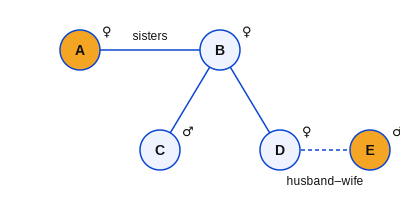
  1. B is the mother of C and D (C is D's brother). A is B's sister → A is the maternal aunt of D.
  2. E is D's husband → D is E's wife. A is the sister of E's wife's mother.
  3. So A is E's wife's mother's sister.

Trick: Write 'E's wife = D' first; whatever A is to D, prefix it with 'wife's'. A = D's mother's sister → wife's mother's sister.

Answer: (B) Wife's mother's sister

अवधारणा: पीढ़ी-दर-पीढ़ी वंश-वृक्ष बनाएँ, फिर E की ओर से संबंध पढ़ें।

  1. B, C और D की माँ है (C, D का भाई)। A, B की बहन → A, D की मौसी।
  2. E, D का पति → D, E की पत्नी। A, E की पत्नी की माँ की बहन है।
  3. अतः A, E की पत्नी की माँ की बहन (wife's mother's sister)।

ट्रिक: पहले 'E की पत्नी = D' लिखें; A का D से जो रिश्ता है उसके आगे 'पत्नी की' जोड़ दें। A = D की माँ की बहन → पत्नी की माँ की बहन।

उत्तर: (B) पत्नी की माँ की बहन (Wife's mother's sister)
RRB NTPC Graduate CBT 1General Intelligence and ReasoningBlood RelationsRRB NTPC Graduate CBT 1 2025 · 18 Mar Shift 3 →
Q16202.
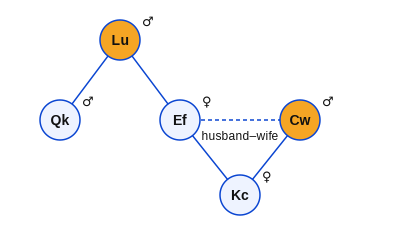
Kc is the daughter of Cw. Lu is the father of Qk. Ef is the mother of Kc. Qk is the brother of Ef. How is Lu related to Cw?
Kc, Cw की पुत्री है। Lu, Qk का पिता है। Ef, Kc की माता है। Qk, Ef का भाई है। Lu, Cw से किस प्रकार संबंधित है?
  1. AWife’s fatherपत्नी का पिता
  2. BDaughter’s husbandपुत्री का पति
  3. CWife’s brotherपत्नी का भाई
  4. DSister’s daughterबहन की पुत्री
Show answer

Concept: Fix the couple first: Kc's mother is Ef and Kc's father is Cw, so Ef and Cw are husband and wife.

  1. Qk is Ef's brother and Lu is Qk's father → Lu is also Ef's father.
  2. Ef is Cw's wife, so Lu is Cw's wife's father (father-in-law).

Trick: Whenever two persons are mother and father of the same child, link them as a couple at once – the chain shortens immediately.

Answer: (A) Wife's father

अवधारणा: पहले दंपति तय करें: Kc की माँ Ef और पिता Cw, अतः Ef और Cw पति-पत्नी।

  1. Qk, Ef का भाई और Lu, Qk का पिता → Lu, Ef का भी पिता।
  2. Ef, Cw की पत्नी है, अतः Lu, Cw की पत्नी का पिता (ससुर)।

ट्रिक: जब दो व्यक्ति एक ही बच्चे के माता और पिता हों, उन्हें तुरंत दंपति के रूप में जोड़ें – श्रृंखला छोटी हो जाती है।

उत्तर: (A) पत्नी का पिता (Wife's father)

RRB NTPC Graduate CBT 1General Intelligence and ReasoningBlood Relations (Coded Names)RRB NTPC Graduate CBT 1 2025 · 18 Mar Shift 3 →
Q16203.
Refer to the following letter, symbol series and answer the question. Counting to be done from left to right only.
(Left) K { J % I + H = G * F / D : - ! B C ? A # (Right)
How many such symbols are there, each of which is immediately preceded by a letter and also immediately followed by another letter?
निम्नलिखित अक्षर, प्रतीक श्रृंखला को देखिए और प्रश्न का उत्तर दीजिए। गणना केवल बाएँ से दाएँ की जानी है।
(बायाँ) K { J % I + H = G * F / D : - ! B C ? A # (दायाँ)
ऐसे कितने प्रतीक हैं, जिनमें से प्रत्येक के ठीक पहले एक अक्षर है और ठीक बाद भी एक अन्य अक्षर है?
  1. ASEVENसात
  2. BFOURचार
  3. CTHREEतीन
  4. DTWOदो
Show answer

Concept: Scan each symbol and check both neighbours: letter on the left AND letter on the right.

  1. Series: K { J % I + H = G * F / D : - ! B C ? A #.
  2. Qualifying symbols: { (K…J), % (J…I), + (I…H), = (H…G), * (G…F), / (F…D), ? (C…A) – 7 symbols.
  3. Rejected: ':' and '!' are next to '-', '-' is between two symbols, and '#' has nothing on its right.

Trick: Underline every symbol, then tick only those sandwiched between two letters; symbols adjacent to another symbol or at the end are out.

Answer: (A) SEVEN

अवधारणा: हर प्रतीक के दोनों पड़ोसी देखें: बाएँ भी अक्षर और दाएँ भी अक्षर।

  1. श्रृंखला: K { J % I + H = G * F / D : - ! B C ? A #।
  2. मान्य प्रतीक: { (K…J), % (J…I), + (I…H), = (H…G), * (G…F), / (F…D), ? (C…A) – 7 प्रतीक।
  3. अमान्य: ':' और '!' के पास '-' है, '-' दो प्रतीकों के बीच है, और '#' के दाएँ कुछ नहीं।

ट्रिक: हर प्रतीक को रेखांकित करें, फिर केवल दो अक्षरों के बीच वालों पर टिक लगाएँ; दूसरे प्रतीक से सटे या अंत वाले बाहर।

उत्तर: (A) SEVEN

RRB NTPC Graduate CBT 1General Intelligence and ReasoningLetter–Symbol SeriesRRB NTPC Graduate CBT 1 2025 · 18 Mar Shift 3 →
Q16204.
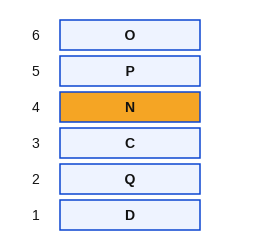
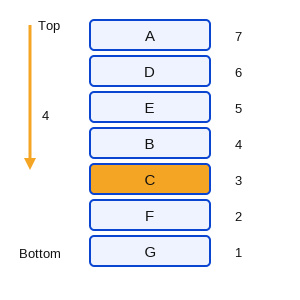
C, D, N, O, P and Q live on six different floors of the same building. The lowermost floor in the building is numbered 1, the floor above it is numbered 2 and so on, till the topmost floor, which is numbered 6. D lives on the floor numbered 1. Only two people live between Q and P. Q lives below C. Only two people live between O and C. Only one person lives between D and C. How many people live above N?
C, D, N, O, P और Q एक ही इमारत की छह अलग-अलग मंज़िलों पर रहते हैं। इमारत की सबसे निचली मंज़िल की संख्या 1 है, उसके ऊपर की मंज़िल की संख्या 2 है और इसी प्रकार सबसे ऊपरी मंज़िल तक, जिसकी संख्या 6 है। D मंज़िल संख्या 1 पर रहता है। Q और P के बीच केवल दो व्यक्ति रहते हैं। Q, C के नीचे रहता है। O और C के बीच केवल दो व्यक्ति रहते हैं। D और C के बीच केवल एक व्यक्ति रहता है। N के ऊपर कितने व्यक्ति रहते हैं?
  1. ATwoदो
  2. BFourचार
  3. COneएक
  4. DThreeतीन
Show answer

Concept: Start from the fixed floor and use the 'only n between' clues; six floors, 1 at the bottom.

  1. D = 1. Only one person between D and C → C = 3. Only two between O and C → O = 6 (floor 0 does not exist).
  2. Q is below C with two people between Q and P: Q = 2 and P = 5 (Q = 1 is taken by D).
  3. The last person N takes floor 4. Above N are P (5) and O (6) → two people.

Trick: Build the tower bottom-up: 1-D, 2-Q, 3-C, 4-N, 5-P, 6-O. 'Above N' = floors higher than 4.

Answer: (A) Two

अवधारणा: निश्चित मंज़िल से शुरू करें और 'बीच में केवल n' वाले संकेत लगाएँ; छह मंज़िलें, 1 सबसे नीचे।

  1. D = 1। D और C के बीच केवल एक → C = 3। O और C के बीच केवल दो → O = 6 (मंज़िल 0 नहीं है)।
  2. Q, C से नीचे और Q–P के बीच दो लोग: Q = 2, P = 5 (मंज़िल 1 पर D है)।
  3. बचा N मंज़िल 4 पर। N के ऊपर P (5) और O (6) → दो लोग।

ट्रिक: नीचे से ऊपर टावर बनाएँ: 1-D, 2-Q, 3-C, 4-N, 5-P, 6-O। 'N के ऊपर' = 4 से ऊँची मंज़िलें।

उत्तर: (A) दो (Two)

RRB NTPC Graduate CBT 1General Intelligence and ReasoningFloor PuzzleRRB NTPC Graduate CBT 1 2025 · 18 Mar Shift 3 →
Q16205.
63 is related to 159 following a certain logic. Following the same logic, 44 is related to 102. To which of the following is 57 related, following the same logic?
(NOTE : Operations should be performed on the whole numbers, without breaking down the numbers into its constituent digits. E.g. 13 – Operations on 13 such as adding /subtracting /multiplying etc. to 13 can be performed. Breaking down 13 into 1 and 3 and then performing mathematical operations on 1 and 3 is not allowed.)
63 एक निश्चित तर्क के अनुसार 159 से संबंधित है। उसी तर्क के अनुसार, 44, 102 से संबंधित है। उसी तर्क के अनुसार 57 निम्नलिखित में से किससे संबंधित है?
(नोट : संक्रियाएँ पूर्ण संख्याओं पर की जानी चाहिए, संख्याओं को उनके घटक अंकों में तोड़े बिना। उदाहरण के लिए 13 – 13 पर संक्रियाएँ जैसे 13 में जोड़ना/घटाना/गुणा करना आदि की जा सकती हैं। 13 को 1 और 3 में तोड़कर फिर 1 और 3 पर गणितीय संक्रियाएँ करने की अनुमति नहीं है।)
  1. A152
  2. B139
  3. C141
  4. D127
Show answer

Concept: Find one operation on the whole number that works for both given pairs.

  1. 63×3=189, 189−30=159 ✓
  2. 44×3=132, 132−30=102 ✓ – rule: 3n−30.
  3. 57×3−30=171−30=141.

Trick: Check the difference of the pairs: 159−102=57 and 63−44=19; 57=3×19, so the multiplier is 3, then adjust the constant.

Answer: (C) 141

अवधारणा: पूरी संख्या पर एक ऐसी संक्रिया खोजें जो दोनों दिए गए युग्मों पर लागू हो।

  1. 63×3=189, 189−30=159 ✓
  2. 44×3=132, 132−30=102 ✓ – नियम: 3n−30।
  3. 57×3−30=171−30=141।

ट्रिक: युग्मों का अंतर देखें: 159−102=57 और 63−44=19; 57=3×19, अतः गुणक 3, फिर स्थिरांक मिलाएँ।

उत्तर: (C) 141

RRB NTPC Graduate CBT 1General Intelligence and ReasoningNumber AnalogyRRB NTPC Graduate CBT 1 2025 · 18 Mar Shift 3 →
Q16206.
Which of the following letter-clusters should replace # and % so that the pattern and relationship followed between the letter-cluster pair on the left side of :: is the same as that on the right side of :: ?
# : KUC :: XHP : %
निम्नलिखित में से कौन-से अक्षर-समूह # और % को प्रतिस्थापित करने चाहिए ताकि :: के बाईं ओर के अक्षर-समूह युग्म के बीच अनुसरण किया गया पैटर्न और संबंध वही हो जो :: के दाईं ओर है?
# : KUC :: XHP : %
  1. A# = EOX % = DNV
  2. B# = FOW % = DNV
  3. C# = EOW % = DNO
  4. D# = EOW % = DNV
Show answer

Concept: Find the shift from the right-hand pair where both terms are partly known, then apply it (in reverse) on the left.

  1. Right side XHP : %. Testing option letters: X(24)+6 = 30 → D(4), H(8)+6 = N(14), P(16)+6 = V(22) → % = DNV (each letter +6, cyclic).
  2. So the rule is 'first + 6 = second'. On the left, # + 6 = KUC → # = K−6 = E, U−6 = O, C−6 = W (3−6 = −3 → 23 = W).
  3. # = EOW, % = DNV.

Trick: Only option (D) has both EOW and DNV; options with DNO or FOW break the uniform +6 shift.

Answer: (D) # = EOW % = DNV

अवधारणा: दाएँ युग्म (जिसका एक पद ज्ञात है) से शिफ्ट पता करें, फिर उसे बाईं ओर उल्टा लगाएँ।

  1. दाईं ओर XHP : %। विकल्पों से जाँच: X(24)+6 = 30 → D(4), H(8)+6 = N(14), P(16)+6 = V(22) → % = DNV (हर अक्षर +6, चक्रीय)।
  2. नियम 'पहला + 6 = दूसरा'। बाईं ओर # + 6 = KUC → # = K−6 = E, U−6 = O, C−6 = W (3−6 = −3 → 23 = W)।
  3. # = EOW, % = DNV।

ट्रिक: केवल विकल्प (D) में EOW और DNV दोनों हैं; DNO या FOW वाले विकल्प समान +6 शिफ्ट तोड़ते हैं।

उत्तर: (D) # = EOW % = DNV

RRB NTPC Graduate CBT 1General Intelligence and ReasoningLetter-Cluster AnalogyRRB NTPC Graduate CBT 1 2025 · 18 Mar Shift 3 →
Q16207.
RILA is related to SKOE in a certain way based on the English alphabetical order. In the same way, KEPO is related to LGSS. To which of the following is MJRT related, following the same logic?
RILA, अंग्रेज़ी वर्णमाला क्रम के आधार पर एक निश्चित प्रकार से SKOE से संबंधित है। उसी प्रकार, KEPO, LGSS से संबंधित है। उसी तर्क के अनुसार MJRT निम्नलिखित में से किससे संबंधित है?
  1. ANOYZ
  2. BNLUX
  3. CNMWX
  4. DNKTY
Show answer

Concept: Compare letter positions in the given pair to find the position-wise shift.

  1. RILA → SKOE: R+1 = S, I+2 = K, L+3 = O, A+4 = E. Pattern +1, +2, +3, +4.
  2. Check: KEPO → K+1 = L, E+2 = G, P+3 = S, O+4 = S → LGSS ✓
  3. MJRT → M+1 = N, J+2 = L, R+3 = U, T+4 = X → NLUX.

Trick: When the first letters differ by 1 and the last by 4, suspect the +1, +2, +3, +4 staircase.

Answer: (B) NLUX

अवधारणा: दिए गए युग्म में अक्षरों की स्थितियाँ मिलाकर स्थान-वार शिफ्ट निकालें।

  1. RILA → SKOE: R+1 = S, I+2 = K, L+3 = O, A+4 = E। पैटर्न +1, +2, +3, +4।
  2. जाँच: KEPO → K+1 = L, E+2 = G, P+3 = S, O+4 = S → LGSS ✓
  3. MJRT → M+1 = N, J+2 = L, R+3 = U, T+4 = X → NLUX।

ट्रिक: जब पहले अक्षर में 1 और अंतिम में 4 का अंतर हो, तो +1, +2, +3, +4 सीढ़ी का संदेह करें।

उत्तर: (B) NLUX

RRB NTPC Graduate CBT 1General Intelligence and ReasoningLetter-Cluster AnalogyRRB NTPC Graduate CBT 1 2025 · 18 Mar Shift 3 →
Q16208.
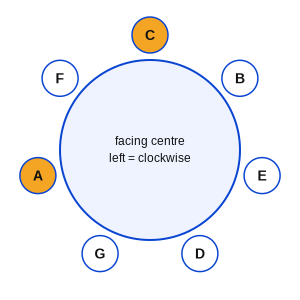
A, B, C, D, E, F and G sit around a circular table, facing the centre.
Only one person sits between D and B when counted from the left of B. F sits third to the right of E. C sits third to the left of G. F sits to the immediate right of C. A is not an immediate neighbour of C.
How many people sit between A and C when counted from the left of A?
A, B, C, D, E, F और G एक वृत्ताकार मेज़ के चारों ओर केंद्र की ओर मुख करके बैठे हैं।
B के बाईं ओर से गिनने पर D और B के बीच केवल एक व्यक्ति बैठा है। F, E के दाईं ओर तीसरे स्थान पर बैठा है। C, G के बाईं ओर तीसरे स्थान पर बैठा है। F, C के ठीक दाईं ओर बैठा है। A, C का निकटतम पड़ोसी नहीं है।
A के बाईं ओर से गिनने पर A और C के बीच कितने व्यक्ति बैठे हैं?
  1. A2
  2. B1
  3. C4
  4. D3
Show answer

Concept: Facing the centre: 'left' means clockwise and 'right' means anticlockwise. Start with the clue linking two fixed people.

  1. F is to the immediate right of C. C is third to the left of G, so G is third to the right of C. F is third to the right of E → E is third to the left of F.
  2. Going clockwise from C: C, _, E, _, G, _, F (E is 3 places left of F, G is 3 right of C, F just right of C).
  3. Only one person between D and B counted from the left of B → D is 2nd to the left of B. The empty seats are the 1st, 3rd and 5th clockwise from C; A is not next to C, so A is at the 5th seat (between G and F), B at the 1st and D at the 3rd.
  4. From A's left (clockwise): F, then C → one person between A and C.

Trick: Draw 7 dots, mark C, and put F anticlockwise of C at once; the rest of the clues fill in without any trial.

Answer: (B) 1

अवधारणा: केंद्र की ओर मुख: 'बाएँ' = दक्षिणावर्त (clockwise), 'दाएँ' = वामावर्त। दो लोगों को जोड़ने वाले संकेत से शुरू करें।

  1. F, C के तुरंत दाएँ। C, G के बाएँ तीसरा → G, C के दाएँ तीसरा। F, E के दाएँ तीसरा → E, F के बाएँ तीसरा।
  2. C से दक्षिणावर्त: C, _, E, _, G, _, F।
  3. B के बाएँ से गिनने पर D और B के बीच केवल एक → D, B के बाएँ दूसरा। खाली सीटें C से 1ली, 3री, 5वीं; A, C के पास नहीं → A 5वीं सीट पर (G और F के बीच), B 1ली पर, D 3री पर।
  4. A के बाएँ से: F, फिर C → A और C के बीच एक व्यक्ति।

ट्रिक: 7 बिंदु बनाएँ, C लिखें और F को तुरंत C के वामावर्त रखें; बाकी संकेत बिना ट्रायल के भर जाते हैं।

उत्तर: (B) 1

RRB NTPC Graduate CBT 1General Intelligence and ReasoningCircular SeatingRRB NTPC Graduate CBT 1 2025 · 18 Mar Shift 3 →
Q16209.
Read the given statements and conclusions carefully. You have to take the given statements to be true even if they seem to be at variance from commonly known facts. You have to decide which conclusion/s logically follow/s from the given statements. Statements:
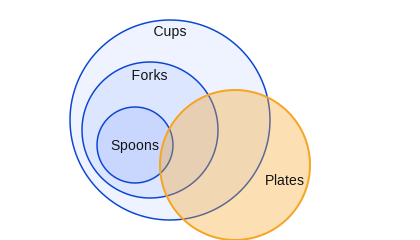
All spoons are forks. All forks are cups. Some spoons are plates.
Conclusions:
(I) Some forks are plates.
(II) Some cups are plates.
दिए गए कथनों और निष्कर्षों को ध्यानपूर्वक पढ़िए। आपको दिए गए कथनों को सत्य मानना है, भले ही वे सामान्यतः ज्ञात तथ्यों से भिन्न प्रतीत होते हों। आपको यह निर्णय लेना है कि दिए गए कथनों से कौन-सा/कौन-से निष्कर्ष तार्किक रूप से अनुसरण करता है/करते हैं। कथन:
सभी चम्मच काँटे हैं। सभी काँटे कप हैं। कुछ चम्मच प्लेटें हैं।
निष्कर्ष:
(I) कुछ काँटे प्लेटें हैं।
(II) कुछ कप प्लेटें हैं।
  1. ABoth conclusions I and II follow.निष्कर्ष I और II दोनों अनुसरण करते हैं।
  2. BNeither conclusion I nor II follows.न तो निष्कर्ष I और न ही II अनुसरण करता है।
  3. COnly conclusion I follows.केवल निष्कर्ष I अनुसरण करता है।
  4. DOnly conclusion II follows.केवल निष्कर्ष II अनुसरण करता है।
Show answer

Concept: Draw the sets: Spoons inside Forks inside Cups; Plates overlapping Spoons.

  1. Some spoons are plates, and every spoon is a fork → those spoon-plates are forks → 'Some forks are plates' follows.
  2. Every fork is a cup, so those same elements are cups too → 'Some cups are plates' follows.
  3. Both conclusions follow.

Trick: 'All A are B' + 'Some A are C' always gives 'Some B are C'; chain it up through 'All B are D' to get 'Some D are C'.

Answer: (A) Both conclusions I and II follow.

अवधारणा: समुच्चय बनाएँ: Spoons, Forks के अंदर, Forks, Cups के अंदर; Plates, Spoons से ओवरलैप।

  1. कुछ spoons, plates हैं और हर spoon, fork है → वे spoon-plates, forks भी हैं → 'कुछ forks, plates हैं' निकलता है।
  2. हर fork, cup है, अतः वही तत्व cups भी हैं → 'कुछ cups, plates हैं' निकलता है।
  3. दोनों निष्कर्ष सही।

ट्रिक: 'सभी A, B हैं' + 'कुछ A, C हैं' से हमेशा 'कुछ B, C हैं' निकलता है; 'सभी B, D हैं' से आगे बढ़ाकर 'कुछ D, C हैं'।

उत्तर: (A) दोनों निष्कर्ष I और II अनुसरण करते हैं।

RRB NTPC Graduate CBT 1General Intelligence and ReasoningSyllogismRRB NTPC Graduate CBT 1 2025 · 18 Mar Shift 3 →
Q16210.
Read the given statements and conclusions carefully. Assuming that the information given in the statements is true, even if it appears to be at variance with commonly known facts, decide which of the given conclusion(s) logically follow(s) from the statements.
Statements:
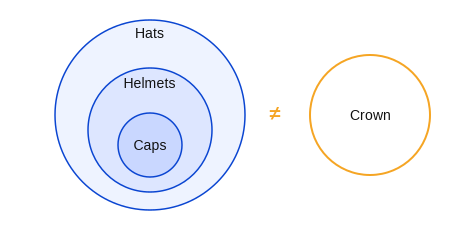
All caps are helmets. All helmets are hats. No hat is a crown.
Conclusions:
(I) No cap is a crown.
(II) Some hats are caps.
दिए गए कथनों और निष्कर्षों को ध्यानपूर्वक पढ़िए। यह मानते हुए कि कथनों में दी गई जानकारी सत्य है, भले ही वह सामान्यतः ज्ञात तथ्यों से भिन्न प्रतीत होती हो, निर्णय लीजिए कि दिए गए निष्कर्षों में से कौन-सा/कौन-से कथनों से तार्किक रूप से अनुसरण करता है/करते हैं।
कथन:
सभी टोपियाँ हेलमेट हैं। सभी हेलमेट हैट हैं। कोई हैट मुकुट नहीं है।
निष्कर्ष:
(I) कोई टोपी मुकुट नहीं है।
(II) कुछ हैट टोपियाँ हैं।
  1. ABoth conclusions (I) and (II) follow.निष्कर्ष (I) और (II) दोनों अनुसरण करते हैं।
  2. BNeither conclusion (I) nor (II) follows.न तो निष्कर्ष (I) और न ही (II) अनुसरण करता है।
  3. COnly conclusion (II) follows.केवल निष्कर्ष (II) अनुसरण करता है।
  4. DOnly conclusion (I) follows.केवल निष्कर्ष (I) अनुसरण करता है।
Show answer

Concept: Caps inside Helmets inside Hats; Crowns completely outside Hats.

  1. Every cap is a helmet and every helmet is a hat → every cap is a hat. No hat is a crown → no cap is a crown. Conclusion I follows.
  2. All caps are hats; hence at least those caps are hats that are caps → 'Some hats are caps' follows (conversion of 'All caps are hats').
  3. Both conclusions follow.

Trick: 'All A are B' can always be converted to 'Some B are A'; and 'All A are B' + 'No B is C' gives 'No A is C'.

Answer: (A) Both conclusions (I) and (II) follow.

अवधारणा: Caps, Helmets के अंदर, Helmets, Hats के अंदर; Crowns, Hats से पूरी तरह बाहर।

  1. हर cap, helmet और हर helmet, hat → हर cap, hat। कोई hat, crown नहीं → कोई cap, crown नहीं। निष्कर्ष I सही।
  2. सभी caps, hats हैं; अतः 'कुछ hats, caps हैं' निकलता है ('सभी caps, hats हैं' का परिवर्तन)।
  3. दोनों निष्कर्ष सही।

ट्रिक: 'सभी A, B हैं' से हमेशा 'कुछ B, A हैं' निकलता है; और 'सभी A, B हैं' + 'कोई B, C नहीं' से 'कोई A, C नहीं'।

उत्तर: (A) दोनों निष्कर्ष (I) और (II) अनुसरण करते हैं।

RRB NTPC Graduate CBT 1General Intelligence and ReasoningSyllogismRRB NTPC Graduate CBT 1 2025 · 18 Mar Shift 3 →
Q16211.
Refer to the following letter, number and symbol series and answer the question that follows. Counting should be done from left to right only.
(Left) S # % 2 S 4 P # Z 4 B 8 5 R € * 8 © J & € N (Right)
If all the symbols are dropped from the series, which of the following will be fourth from the left?
निम्नलिखित अक्षर, संख्या और प्रतीक श्रृंखला को देखिए और उसके बाद दिए गए प्रश्न का उत्तर दीजिए। गणना केवल बाएँ से दाएँ की जानी चाहिए।
(बायाँ) S # % 2 S 4 P # Z 4 B 8 5 R € * 8 © J & € N (दायाँ)
यदि श्रृंखला से सभी प्रतीकों को हटा दिया जाए, तो निम्नलिखित में से कौन-सा बाएँ से चौथा होगा?
  1. AP
  2. BZ
  3. C4
  4. D2
Show answer

Concept: Remove the symbols and count positions from the left in the new series.

  1. Symbols in the series: #, %, #, €, *, ©, &, €. Dropping them leaves: S 2 S 4 P Z 4 B 8 5 R 8 J N.
  2. Counting from the left: 1st S, 2nd 2, 3rd S, 4th = 4.

Trick: In "drop" questions, write only the remaining elements in one line before counting – avoids skipping errors.

Answer: (C) 4

अवधारणा: प्रतीक हटाकर नई श्रृंखला में बाएँ से स्थान गिनें।

  1. श्रृंखला के प्रतीक: #, %, #, €, *, ©, &, €। इन्हें हटाने पर: S 2 S 4 P Z 4 B 8 5 R 8 J N।
  2. बाएँ से गिनने पर: पहला S, दूसरा 2, तीसरा S, चौथा = 4।

ट्रिक: "हटाने" वाले प्रश्नों में बचे हुए तत्वों को एक पंक्ति में लिखकर ही गिनें – छूटने की गलती नहीं होगी।

उत्तर: (C) 4

RRB NTPC Graduate CBT 1General Intelligence and ReasoningAlphanumeric SeriesRRB NTPC Graduate CBT 1 2025 · 18 Mar Shift 3 →
Q16212.
Refer to the following letter, symbol series and answer the question. Counting to be done from left to right only.
(Left) H F G J D J V D K P = % S O C B = % B + # (Right)
How many such letters are there, each of which is immediately preceded by a symbol and also immediately followed by a symbol?
निम्नलिखित अक्षर, प्रतीक श्रृंखला को देखिए और प्रश्न का उत्तर दीजिए। गणना केवल बाएँ से दाएँ की जानी है।
(बायाँ) H F G J D J V D K P = % S O C B = % B + # (दायाँ)
ऐसे कितने अक्षर हैं, जिनमें से प्रत्येक के ठीक पहले एक प्रतीक है और ठीक बाद भी एक प्रतीक है?
  1. ATwoदो
  2. BNoneकोई नहीं
  3. CThreeतीन
  4. DOneएक
Show answer

Concept: Check each letter whose immediate left neighbour and immediate right neighbour are both symbols.

  1. Series: H F G J D J V D K P = % S O C B = % B + #.
  2. Letters next to symbols: S (between % and O – O is a letter, fails), B (between C and =, fails), B (between % and +) – passes.
  3. So only one such letter.

Trick: Look only around the symbols; a letter needs a symbol on BOTH sides, so scan each symbol-letter-symbol triplet.

Answer: (D) One

अवधारणा: ऐसे अक्षर देखें जिनके ठीक बाएँ और ठीक दाएँ दोनों ओर प्रतीक हों।

  1. श्रृंखला: H F G J D J V D K P = % S O C B = % B + #।
  2. प्रतीकों के पास के अक्षर: S (% और O के बीच – O अक्षर है, असफल), B (C और = के बीच, असफल), B (% और + के बीच) – सफल।
  3. अतः ऐसा केवल एक अक्षर है।

ट्रिक: केवल प्रतीकों के आसपास देखें; अक्षर के दोनों ओर प्रतीक चाहिए, इसलिए प्रतीक-अक्षर-प्रतीक तिकड़ी खोजें।

उत्तर: (D) एक (One)

RRB NTPC Graduate CBT 1General Intelligence and ReasoningAlphanumeric SeriesRRB NTPC Graduate CBT 1 2025 · 18 Mar Shift 3 →
Q16213.
Seven boxes, A, B, C, D, E, F and G, are kept one over the other but not necessarily in the same order. F is kept second from the bottom. Only three boxes are kept between F and D. G is kept at one of the positions below F. Only E is kept between D and B. A is kept at one of the positions above D. How many boxes are kept above C?
सात बक्से, A, B, C, D, E, F और G, एक के ऊपर एक रखे गए हैं, लेकिन आवश्यक नहीं कि इसी क्रम में हों। F नीचे से दूसरे स्थान पर रखा गया है। F और D के बीच केवल तीन बक्से रखे गए हैं। G, F के नीचे के किसी एक स्थान पर रखा गया है। D और B के बीच केवल E रखा गया है। A, D के ऊपर के किसी एक स्थान पर रखा गया है। C के ऊपर कितने बक्से रखे गए हैं?
  1. A4
  2. B2
  3. C3
  4. D1
Show answer

Concept: Number positions 1 (bottom) to 7 (top) and place the boxes using the fixed clue first.

  1. F is 2nd from bottom → F = 2. Three boxes between F and D → D = 6. G is below F → G = 1.
  2. Only E between D and B → E = 5, B = 4 (position 8 does not exist).
  3. A above D → A = 7. The remaining box C = 3.
  4. Boxes above C: B, E, D, A = 4.

Trick: Always start with the clue that gives an exact position (F = 2) and the clue with a fixed gap (3 between F and D).

Answer: (A) 4

अवधारणा: स्थानों को 1 (नीचे) से 7 (ऊपर) तक क्रमांकित करें और पहले निश्चित संकेत वाले बॉक्स रखें।

  1. F नीचे से दूसरा → F = 2। F और D के बीच तीन बॉक्स → D = 6। G, F के नीचे → G = 1।
  2. D और B के बीच केवल E → E = 5, B = 4 (स्थान 8 नहीं है)।
  3. A, D के ऊपर → A = 7। बचा हुआ बॉक्स C = 3।
  4. C के ऊपर बॉक्स: B, E, D, A = 4।

ट्रिक: हमेशा उस संकेत से शुरू करें जो सटीक स्थान देता है (F = 2) और जिसमें निश्चित अंतर हो (F–D के बीच 3)।

उत्तर: (A) 4

RRB NTPC Graduate CBT 1General Intelligence and ReasoningBox Arrangement (Stacking)RRB NTPC Graduate CBT 1 2025 · 18 Mar Shift 3 →
Q16214.
In this question, a question is followed by two statements numbered (I) and (II). You have to decide whether the data provided in the statements are sufficient to answer the question. Read both the statements and decide the appropriate answer.
Question:
Among 5 trees, L, M, N, T and V each having a different height, which tree is the tallest? Statements:
(I) M is taller than V but shorter than N.M is shorter than only one tree.
(II) V is taller than T.
इस प्रश्न में, एक प्रश्न के बाद (I) और (II) क्रमांकित दो कथन दिए गए हैं। आपको यह निर्णय लेना है कि कथनों में दिए गए आँकड़े प्रश्न का उत्तर देने के लिए पर्याप्त हैं या नहीं। दोनों कथनों को पढ़िए और उपयुक्त उत्तर का निर्णय लीजिए।
प्रश्न:
5 पेड़ों L, M, N, T और V में, जिनमें से प्रत्येक की ऊँचाई अलग-अलग है, कौन-सा पेड़ सबसे ऊँचा है? कथन:
(I) M, V से ऊँचा है लेकिन N से छोटा है। M केवल एक पेड़ से छोटा है।
(II) V, T से ऊँचा है।
  1. ABoth statements I and II together are NOT sufficient to answer the questionकथन I और II दोनों मिलकर भी प्रश्न का उत्तर देने के लिए पर्याप्त नहीं हैं
  2. BBoth statements I and II together (and not statement 1 alone or statement II alone) are sufficient to answer the questionकथन I और II दोनों मिलकर (और न कि अकेले कथन I या अकेले कथन II) प्रश्न का उत्तर देने के लिए पर्याप्त हैं
  3. CData in Statement II alone is sufficient to answer the question while data in statement I is notअकेले कथन II के आँकड़े प्रश्न का उत्तर देने के लिए पर्याप्त हैं, जबकि कथन I के आँकड़े पर्याप्त नहीं हैं
  4. DData in Statement I alone is sufficient to answer the question while data in statement II is notअकेले कथन I के आँकड़े प्रश्न का उत्तर देने के लिए पर्याप्त हैं, जबकि कथन II के आँकड़े पर्याप्त नहीं हैं
Show answer

Concept: Test each statement alone; the question needs only the tallest tree.

  1. Statement I: N > M > V, and M is shorter than only one tree → M is 2nd tallest, so the only tree above M, N, is the tallest. Sufficient.
  2. Statement II: V > T gives no information about the tallest. Not sufficient.

Trick: "Shorter than only one" = second position; whoever is already known to be above that person is the top.

Answer: (D) Data in Statement I alone is sufficient to answer the question while data in statement II is not

अवधारणा: प्रत्येक कथन को अकेले जाँचें; प्रश्न में केवल सबसे ऊँचा पेड़ चाहिए।

  1. कथन I: N > M > V, और M केवल एक पेड़ से छोटा → M दूसरा सबसे ऊँचा, अतः M से ऊपर का एकमात्र पेड़ N सबसे ऊँचा है। पर्याप्त।
  2. कथन II: V > T से सबसे ऊँचे के बारे में कुछ पता नहीं चलता। अपर्याप्त।

ट्रिक: "केवल एक से छोटा" = दूसरा स्थान; जो पहले से उसके ऊपर ज्ञात है, वही शीर्ष पर है।

उत्तर: (D) कथन I अकेले पर्याप्त है, कथन II नहीं

RRB NTPC Graduate CBT 1General Intelligence and ReasoningData Sufficiency – OrderingRRB NTPC Graduate CBT 1 2025 · 18 Mar Shift 3 →
Q16215.
Which of the following letter-number clusters will replace the question mark “?” in the given series to make it logically complete?
GCW 10, FAT 16, EYQ 22, DWN 28, ?
दी गई श्रृंखला को तार्किक रूप से पूर्ण करने के लिए निम्नलिखित में से कौन-सा अक्षर-संख्या समूह प्रश्नवाचक चिह्न “?” को प्रतिस्थापित करेगा?
GCW 10, FAT 16, EYQ 22, DWN 28, ?
  1. ACUK 34
  2. BCUJ 33
  3. CBUL 32
  4. DCVM 34
Show answer

Concept: Treat the letters and the number as separate patterns.

  1. First letters: G, F, E, D → each −1 → next C.
  2. Second letters: C, A, Y, W → each −2 → next U. Third letters: W, T, Q, N → each −3 → next K.
  3. Numbers: 10, 16, 22, 28 → +6 → 34. So CUK 34.

Trick: In cluster series, write the alphabet positions (A=1…Z=26) column-wise; constant differences appear instantly.

Answer: (A) CUK 34

अवधारणा: अक्षरों और संख्या के पैटर्न को अलग-अलग देखें।

  1. पहले अक्षर: G, F, E, D → प्रत्येक −1 → अगला C।
  2. दूसरे अक्षर: C, A, Y, W → प्रत्येक −2 → अगला U। तीसरे अक्षर: W, T, Q, N → प्रत्येक −3 → अगला K।
  3. संख्याएँ: 10, 16, 22, 28 → +6 → 34। अतः CUK 34।

ट्रिक: क्लस्टर श्रृंखला में अक्षरों के स्थान (A=1…Z=26) स्तंभ में लिखें; नियत अंतर तुरंत दिखेगा।

उत्तर: (A) CUK 34

RRB NTPC Graduate CBT 1General Intelligence and ReasoningLetter–Number SeriesRRB NTPC Graduate CBT 1 2025 · 18 Mar Shift 3 →
Q16216.
GLOW is related to KQRY in a certain way based on the English alphabetical order. In the same way, OVUA is related to SAXC. To which of the following is WFAE related, following the same logic?
GLOW, अंग्रेज़ी वर्णमाला क्रम के आधार पर एक निश्चित प्रकार से KQRY से संबंधित है। उसी प्रकार, OVUA, SAXC से संबंधित है। उसी तर्क के अनुसार WFAE निम्नलिखित में से किससे संबंधित है?
  1. ACKEG
  2. BBLCH
  3. CAKDG
  4. DZLEF
Show answer

Concept: Find the position shift applied to each letter and apply the same to the new word.

  1. GLOW → KQRY: G+4=K, L+5=Q, O+3=R, W+2=Y. Pattern +4, +5, +3, +2.
  2. Check: OVUA → O+4=S, V+5=A, U+3=X, A+2=C = SAXC ✓.
  3. WFAE: W+4=A, F+5=K, A+3=D, E+2=G → AKDG.

Trick: Verify the rule on the second given pair before applying – here W+4 wraps past Z to A.

Answer: (C) AKDG

अवधारणा: प्रत्येक अक्षर पर लगाया गया स्थान-परिवर्तन निकालें और नए शब्द पर वही लगाएँ।

  1. GLOW → KQRY: G+4=K, L+5=Q, O+3=R, W+2=Y। पैटर्न +4, +5, +3, +2।
  2. जाँच: OVUA → O+4=S, V+5=A, U+3=X, A+2=C = SAXC ✓।
  3. WFAE: W+4=A, F+5=K, A+3=D, E+2=G → AKDG।

ट्रिक: नियम को दूसरे दिए गए जोड़े पर जाँचकर ही लगाएँ – यहाँ W+4 Z के बाद A पर पहुँचता है।

उत्तर: (C) AKDG

RRB NTPC Graduate CBT 1General Intelligence and ReasoningLetter AnalogyRRB NTPC Graduate CBT 1 2025 · 18 Mar Shift 3 →
Q16217.
Based on the alphabetical order, three of the following four are alike in a certain way and thus form a group. Which is the one that does not belong to that group?
(Note: The odd one out is not based on the number of consonants/vowels or their position in the letter cluster)
वर्णमाला क्रम के आधार पर, निम्नलिखित चार में से तीन एक निश्चित प्रकार से समान हैं और इस प्रकार एक समूह बनाते हैं। वह कौन-सा है जो उस समूह से संबंधित नहीं है?
(नोट: विषम वर्ग व्यंजनों/स्वरों की संख्या या अक्षर-समूह में उनकी स्थिति पर आधारित नहीं है)
  1. ALIF
  2. BXUR
  3. CEVY
  4. DOLI
Show answer

Concept: Convert letters to positions and compare the gaps.

  1. LIF: 12, 9, 6 → −3, −3. XUR: 24, 21, 18 → −3, −3. OLI: 15, 12, 9 → −3, −3.
  2. EVY: 5, 22, 25 → +17, +3 – different pattern.

Trick: Three clusters are "reverse skip-2" sequences (L_ _ I _ _ F); the one that is not reading backwards with equal gaps is the odd one.

Answer: (C) EVY

अवधारणा: अक्षरों को स्थान-संख्या में बदलकर अंतर की तुलना करें।

  1. LIF: 12, 9, 6 → −3, −3। XUR: 24, 21, 18 → −3, −3। OLI: 15, 12, 9 → −3, −3।
  2. EVY: 5, 22, 25 → +17, +3 – अलग पैटर्न।

ट्रिक: तीन समूह "उल्टे क्रम में 2 छोड़कर" (L _ _ I _ _ F) हैं; जो समान अंतर से उल्टा नहीं चलता, वही विषम है।

उत्तर: (C) EVY

RRB NTPC Graduate CBT 1General Intelligence and ReasoningOdd One Out – Letter ClustersRRB NTPC Graduate CBT 1 2025 · 18 Mar Shift 3 →
Q16218.
Based on the English alphabetical order, three of the following four letter cluster pairs are alike in a certain way and thus form a group. Which is the one that does not belong to that group? (Note: The odd man out is not based on the number of
consonants/vowels or their position in the letter cluster)
अंग्रेज़ी वर्णमाला क्रम के आधार पर, निम्नलिखित चार अक्षर-समूह युग्मों में से तीन एक निश्चित प्रकार से समान हैं और इस प्रकार एक समूह बनाते हैं। वह कौन-सा है जो उस समूह से संबंधित नहीं है? (नोट: विषम वर्ग व्यंजनों/स्वरों की संख्या या अक्षर-समूह में
उनकी स्थिति पर आधारित नहीं है)
  1. AMP-OR
  2. BAD-CF
  3. CIL-KN
  4. DHK-JN
Show answer

Concept: Find the shift from the first cluster to the second in each pair.

  1. MP → OR: M+2=O, P+2=R. AD → CF: +2, +2. IL → KN: +2, +2.
  2. HK → JN: H+2=J but K+3=N – the shift is not uniform, so HK-JN is the odd pair.

Trick: Also note each first cluster has letters 3 apart (M–P, A–D, I–L, H–K); the second cluster should keep that gap – O–R, C–F, K–N do, but J–N (gap 4) does not.

Answer: (D) HK-JN

अवधारणा: प्रत्येक युग्म में पहले समूह से दूसरे समूह तक का स्थान-परिवर्तन निकालें।

  1. MP → OR: M+2=O, P+2=R। AD → CF: +2, +2। IL → KN: +2, +2।
  2. HK → JN: H+2=J पर K+3=N – परिवर्तन समान नहीं, अतः HK-JN विषम है।

ट्रिक: पहले समूह के अक्षरों में 3 का अंतर है (M–P, A–D, I–L, H–K); दूसरे समूह में भी यही अंतर रहना चाहिए – O–R, C–F, K–N में है, पर J–N (अंतर 4) में नहीं।

उत्तर: (D) HK-JN

RRB NTPC Graduate CBT 1General Intelligence and ReasoningOdd One Out – Letter PairsRRB NTPC Graduate CBT 1 2025 · 18 Mar Shift 3 →
Q16219.
If 2 is subtracted from each of the digits in the number 3975684 and the resultant digits are then re-arranged in ascending order from left to right, which digit will be fifth from the left end in the new number thus formed?
यदि संख्या 3975684 के प्रत्येक अंक में से 2 घटाया जाए और फिर प्राप्त अंकों को बाएँ से दाएँ आरोही क्रम में पुनर्व्यवस्थित किया जाए, तो इस प्रकार बनी नई संख्या में बाएँ छोर से पाँचवाँ अंक कौन-सा होगा?
  1. A4
  2. B2
  3. C3
  4. D5
Show answer

Concept: Perform the operation on every digit, then sort.

  1. 3975684 → subtract 2 from each digit: 1, 7, 5, 3, 4, 6, 2.
  2. Ascending order: 1 2 3 4 5 6 7.
  3. Fifth from the left = 5.

Trick: After subtracting, the seven digits are exactly 1–7, so the n-th from left is simply n.

Answer: (D) 5

अवधारणा: प्रत्येक अंक पर संक्रिया करें, फिर क्रम में लगाएँ।

  1. 3975684 → प्रत्येक अंक से 2 घटाने पर: 1, 7, 5, 3, 4, 6, 2।
  2. आरोही क्रम: 1 2 3 4 5 6 7।
  3. बाएँ से पाँचवाँ = 5।

ट्रिक: घटाने के बाद सातों अंक ठीक 1–7 हैं, अतः बाएँ से n-वाँ अंक n ही है।

उत्तर: (D) 5

RRB NTPC Graduate CBT 1General Intelligence and ReasoningNumber OperationsRRB NTPC Graduate CBT 1 2025 · 18 Mar Shift 3 →
Q16220.
Select the set in which the numbers are related in the same way as are the numbers of the following sets.
(NOTE : Operations should be performed on the whole numbers, without breaking down the numbers into its constituent digits. E.g. 13 – Operations on 13 such as adding / subtracting /multiplying etc. to 13 can be performed. Breaking down 13 into 1 and 3 and then performing mathematical operations on 1 and 3 is not allowed)
(21, 52, 5)
(45, 138, 24)
उस समुच्चय का चयन कीजिए जिसमें संख्याएँ उसी प्रकार संबंधित हैं जिस प्रकार निम्नलिखित समुच्चयों की संख्याएँ संबंधित हैं।
(नोट : संक्रियाएँ पूर्ण संख्याओं पर की जानी चाहिए, संख्याओं को उनके घटक अंकों में तोड़े बिना। उदाहरण के लिए 13 – 13 पर संक्रियाएँ जैसे 13 में जोड़ना/घटाना/गुणा करना आदि की जा सकती हैं। 13 को 1 और 3 में तोड़कर फिर 1 और 3 पर गणितीय संक्रियाएँ करने की अनुमति नहीं है)
(21, 52, 5)
(45, 138, 24)
  1. A(17, 55, 11)
  2. B(11, 39, 9)
  3. C(36, 74, 1)
  4. D(41, 117, 18)
Show answer

Concept: Find a rule linking the three numbers of each given set and test it on the options.

  1. (21, 52, 5): 2×(21+5)=52 ✓. (45, 138, 24): 2×(45+24)=138 ✓. Rule: middle =2×(first+third).
  2. (36, 74, 1): 2×(36+1)=74 ✓.
  3. Others: 2×28=56≠55; 2×20=40≠39; 2×59=118≠117.

Trick: When the middle number is the largest, first try (first + third) × k or first × third ± k.

Answer: (C) (36, 74, 1)

अवधारणा: दिए गए समूहों की तीनों संख्याओं को जोड़ने वाला नियम खोजें और विकल्पों पर जाँचें।

  1. (21, 52, 5): 2×(21+5)=52 ✓। (45, 138, 24): 2×(45+24)=138 ✓। नियम: बीच की संख्या =2×(पहली+तीसरी)।
  2. (36, 74, 1): 2×(36+1)=74 ✓।
  3. अन्य: 2×28=56≠55; 2×20=40≠39; 2×59=118≠117।

ट्रिक: जब बीच की संख्या सबसे बड़ी हो, तो पहले (पहली + तीसरी) × k या पहली × तीसरी ± k आज़माएँ।

उत्तर: (C) (36, 74, 1)

RRB NTPC Graduate CBT 1General Intelligence and ReasoningNumber Set AnalogyRRB NTPC Graduate CBT 1 2025 · 18 Mar Shift 3 →