Question bank

Q&A: practice questions with answers

Search questions on any topic. Filter by exam category, exam, subject and topic, try the question, then open the answer and explanation.

Courses – airGurukul

20,719 questions found.

Q16221.
Below are given two sets of numbers. In each set of numbers, a certain mathematical operation on the first number results in the second number. Similarly, a certain mathematical operation on the second number results in the third number, and so on. Which of the given options follows the same set of operations as in the question? (NOTE: A two-/three-digit number cannot be broken into individual digits for operations, e.g. if 37 is followed by 10, the operation cannot be 3 + 7, as a two-digit number cannot be broken into individual digits.)
3 – 6 – 7 – 14 ; 12 – 24 – 25 – 50
नीचे संख्याओं के दो समुच्चय दिए गए हैं। संख्याओं के प्रत्येक समुच्चय में, पहली संख्या पर एक निश्चित गणितीय संक्रिया करने से दूसरी संख्या प्राप्त होती है। इसी प्रकार, दूसरी संख्या पर एक निश्चित गणितीय संक्रिया करने से तीसरी संख्या प्राप्त होती है, और इसी प्रकार आगे भी। दिए गए विकल्पों में से कौन-सा प्रश्न में दी गई संक्रियाओं के समान समुच्चय का अनुसरण करता है? (नोट: संक्रियाओं के लिए दो-/तीन-अंकीय संख्या को अलग-अलग अंकों में नहीं तोड़ा जा सकता, उदाहरण के लिए यदि 37 के बाद 10 आता है, तो संक्रिया 3 + 7 नहीं हो सकती, क्योंकि दो-अंकीय संख्या को अलग-अलग अंकों में नहीं तोड़ा जा सकता।)
3 – 6 – 7 – 14 ; 12 – 24 – 25 – 50
  1. A25 – 50 – 25 – 35
  2. B20 – 40 – 41 – 82
  3. C15 – 30 – 60 – 62
  4. D11 – 22 – 21 – 42
Show answer

Concept: Identify the chain of operations and check which option repeats it exactly.

  1. 3 → 6 (×2), 6 → 7 (+1), 7 → 14 (×2). Likewise 12 → 24 → 25 → 50. Pattern: ×2, +1, ×2.
  2. 20 → 40 (×2) → 41 (+1) → 82 (×2) ✓.
  3. Others break: 50 → 25 (÷2), 30 → 60 (×2 instead of +1), 22 → 21 (−1).

Trick: Check the second step first – it is "+1" and immediately eliminates (A), (C), (D).

Answer: (B) 20 – 40 – 41 – 82

अवधारणा: संक्रियाओं की शृंखला पहचानें और देखें कौन-सा विकल्प उसे ठीक वैसे ही दोहराता है।

  1. 3 → 6 (×2), 6 → 7 (+1), 7 → 14 (×2)। इसी तरह 12 → 24 → 25 → 50। पैटर्न: ×2, +1, ×2।
  2. 20 → 40 (×2) → 41 (+1) → 82 (×2) ✓।
  3. अन्य टूटते हैं: 50 → 25 (÷2), 30 → 60 (+1 की जगह ×2), 22 → 21 (−1)।

ट्रिक: पहले दूसरा चरण जाँचें – वह "+1" है और तुरंत (A), (C), (D) हट जाते हैं।

उत्तर: (B) 20 – 40 – 41 – 82
RRB NTPC Graduate CBT 1General Intelligence and ReasoningNumber Series OperationsRRB NTPC Graduate CBT 1 2025 · 18 Mar Shift 3 →
Q16222.
What should come in place of ‘?’ in the given series?
21 23 26 31 38 ?
दी गई श्रृंखला में ‘?’ के स्थान पर क्या आना चाहिए?
21 23 26 31 38 ?
  1. A53
  2. B49
  3. C47
  4. D51
Show answer

Concept: Look at the differences between consecutive terms.

  1. Differences: 23−21 = 2, 26−23 = 3, 31−26 = 5, 38−31 = 7 → prime numbers 2, 3, 5, 7.
  2. Next prime is 11, so ? =38+11=49.

Trick: Differences 2, 3, 5, 7 are the primes in order – a very common RRB pattern; the next is always 11.

Answer: (B) 49

अवधारणा: क्रमागत पदों के अंतर देखें।

  1. अंतर: 23−21 = 2, 26−23 = 3, 31−26 = 5, 38−31 = 7 → अभाज्य संख्याएँ 2, 3, 5, 7।
  2. अगली अभाज्य 11, अतः ? =38+11=49।

ट्रिक: अंतर 2, 3, 5, 7 क्रम में अभाज्य हैं – RRB का बहुत सामान्य पैटर्न; अगला हमेशा 11।

उत्तर: (B) 49

RRB NTPC Graduate CBT 1General Intelligence and ReasoningNumber SeriesRRB NTPC Graduate CBT 1 2025 · 18 Mar Shift 3 →
Q16223.
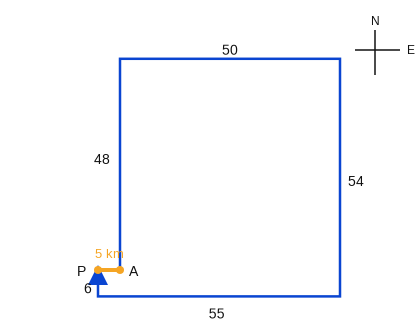
Yeti starts from Point A and drives 48 km towards North. He then takes a right turn, drives 50 km, turns right and drives 54 km. He then takes a right turn and drives 55 km. He takes a final right turn, drives 6 km and stops at Point P. How far (shortest distance) and towards which direction should he drive in order to reach Point A again? (All turns are 90-degree turns only, unless specified.)
येति बिंदु A से चलना शुरू करता है और उत्तर की ओर 48 km गाड़ी चलाता है। फिर वह दाएँ मुड़ता है, 50 km गाड़ी चलाता है, दाएँ मुड़ता है और 54 km गाड़ी चलाता है। फिर वह दाएँ मुड़ता है और 55 km गाड़ी चलाता है। वह अंतिम बार दाएँ मुड़ता है, 6 km गाड़ी चलाता है और बिंदु P पर रुकता है। बिंदु A पर पुनः पहुँचने के लिए उसे कितनी दूर (न्यूनतम दूरी) और किस दिशा में गाड़ी चलानी चाहिए? (जब तक अन्यथा निर्दिष्ट न हो, सभी मोड़ केवल 90 डिग्री के मोड़ हैं।)
  1. A6 km to the west6 km पश्चिम की ओर
  2. B5 km to the east5 km पूर्व की ओर
  3. C7 km to the west7 km पश्चिम की ओर
  4. D4 km to the east4 km पूर्व की ओर
Show answer

Concept: Take A as origin, plot each leg (right turn = clockwise change of direction) and compare the final point with A.

  1. A(0, 0) → 48 km North → (0, 48) → right (East) 50 km → (50, 48) → right (South) 54 km → (50, −6).
  2. Right (West) 55 km → (−5, −6) → right (North) 6 km → P(−5, 0).
  3. P is 5 km west of A on the same horizontal line, so Yeti must drive 5 km East.

Trick: Net North–South: 48 − 54 + 6 = 0; net East–West: 50 − 55 = −5 → 5 km west of start.

Answer: (B) 5 km to the east

अवधारणा: A को मूल बिंदु मानें, प्रत्येक भाग आरेखित करें (दायाँ मोड़ = दक्षिणावर्त दिशा-परिवर्तन) और अंतिम बिंदु की A से तुलना करें।

  1. A(0, 0) → 48 km उत्तर → (0, 48) → दाएँ (पूर्व) 50 km → (50, 48) → दाएँ (दक्षिण) 54 km → (50, −6)।
  2. दाएँ (पश्चिम) 55 km → (−5, −6) → दाएँ (उत्तर) 6 km → P(−5, 0)।
  3. P, A से उसी क्षैतिज रेखा पर 5 km पश्चिम में है, अतः येती को 5 km पूर्व चलना होगा।

ट्रिक: शुद्ध उत्तर–दक्षिण: 48 − 54 + 6 = 0; शुद्ध पूर्व–पश्चिम: 50 − 55 = −5 → प्रारंभ से 5 km पश्चिम।

उत्तर: (B) 5 km पूर्व की ओर

RRB NTPC Graduate CBT 1General Intelligence and ReasoningDirection and DistanceRRB NTPC Graduate CBT 1 2025 · 18 Mar Shift 3 →
Q16224.
What will come in the place of ‘?’ in the following equation, if ‘+’ and ‘-‘ are interchanged and ‘×’ and ‘÷’ are interchanged?
47 ÷ 12 + 164 × 2 - 135 = ?
यदि ‘+’ और ‘-’ को आपस में बदल दिया जाए तथा ‘×’ और ‘÷’ को आपस में बदल दिया जाए, तो निम्नलिखित समीकरण में ‘?’ के स्थान पर क्या आएगा?
47 ÷ 12 + 164 × 2 - 135 = ?
  1. A693
  2. B601
  3. C617
  4. D666
Show answer

Concept: Swap the signs as instructed, then apply BODMAS.

  1. After interchange: 47×12−164÷2+135.
  2. 47×12=564; 164÷2=82.
  3. 564−82+135=617.

Trick: Rewrite the whole expression with swapped signs first, then solve ÷ and × before − and +.

Answer: (C) 617

अवधारणा: निर्देशानुसार चिह्न बदलें, फिर BODMAS लगाएँ।

  1. अदला-बदली के बाद: 47×12−164÷2+135।
  2. 47×12=564; 164÷2=82।
  3. 564−82+135=617।

ट्रिक: पहले पूरा व्यंजक बदले हुए चिह्नों से लिखें, फिर − और + से पहले ÷ और × हल करें।

उत्तर: (C) 617

RRB NTPC Graduate CBT 1General Intelligence and ReasoningMathematical Operations – InterchangeRRB NTPC Graduate CBT 1 2025 · 18 Mar Shift 3 →
Q16225.
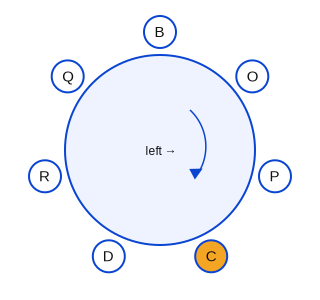
Seven people B, C, D, O, P, Q and R are sitting around a circular table facing the center of the table. Only one person sits between P and B when counted from the left of B. Only one person sits between B and R. Only one person sits between P and D. Only two people sit between O and R. Only one person sits between Q and D. Who sits to the immediate right and immediate left of C, respectively?
सात व्यक्ति B, C, D, O, P, Q और R एक वृत्ताकार मेज़ के चारों ओर मेज़ के केंद्र की ओर मुख करके बैठे हैं। B के बाईं ओर से गिनने पर P और B के बीच केवल एक व्यक्ति बैठा है। B और R के बीच केवल एक व्यक्ति बैठा है। P और D के बीच केवल एक व्यक्ति बैठा है। O और R के बीच केवल दो व्यक्ति बैठे हैं। Q और D के बीच केवल एक व्यक्ति बैठा है। C के ठीक दाएँ और ठीक बाएँ क्रमशः कौन बैठे हैं?
  1. AB and RB और R
  2. BQ and DQ और D
  3. CP and BP और B
  4. DP and DP और D
Show answer

Concept: All face the centre, so a person's left is clockwise and right is anticlockwise. Fix B and place others.

  1. One person between P and B counted from B's left → P is 2nd clockwise from B. One between B and R → R is 2nd anticlockwise from B (the clockwise seat is P's).
  2. One between P and D → D is 2nd clockwise from P (the other seat would be B). Two between O and R → O sits between B and P.
  3. One between Q and D → Q is between R and D on the far side. The remaining seat, between P and D, is C.
  4. C's immediate right (anticlockwise) = P; immediate left (clockwise) = D.

Trick: Facing centre: Left = clockwise, Right = anticlockwise. Start from the clue that gives a direction ("from the left of B").

Answer: (D) P and D

अवधारणा: सभी केंद्र की ओर मुख किए हैं, अतः बायाँ = दक्षिणावर्त और दायाँ = वामावर्त। B को स्थिर कर बाकी रखें।

  1. B के बाएँ से गिनने पर P और B के बीच एक व्यक्ति → P, B से दक्षिणावर्त दूसरे स्थान पर। B और R के बीच एक → R, B से वामावर्त दूसरे स्थान पर (दक्षिणावर्त सीट P की है)।
  2. P और D के बीच एक → D, P से दक्षिणावर्त दूसरे स्थान पर (दूसरी सीट B होती)। O और R के बीच दो → O, B और P के बीच।
  3. Q और D के बीच एक → Q, दूसरी ओर R और D के बीच। बची सीट P और D के बीच C की।
  4. C के ठीक दाएँ (वामावर्त) = P; ठीक बाएँ (दक्षिणावर्त) = D।

ट्रिक: केंद्र की ओर मुख: बायाँ = दक्षिणावर्त, दायाँ = वामावर्त। उस संकेत से शुरू करें जो दिशा देता है ("B के बाएँ से")।

उत्तर: (D) P और D

RRB NTPC Graduate CBT 1General Intelligence and ReasoningCircular Seating ArrangementRRB NTPC Graduate CBT 1 2025 · 18 Mar Shift 3 →
Q16226.
Which AI-powered diagnostic model, unveiled by Indian scientists in 2025, analyses cancer at the molecular level to improve classification and treatment outcomes?
2025 में भारतीय वैज्ञानिकों द्वारा प्रस्तुत किया गया कौन-सा AI-आधारित निदान मॉडल (diagnostic model) वर्गीकरण और उपचार परिणामों को बेहतर बनाने के लिए कैंसर का आणविक स्तर पर विश्लेषण करता है?
  1. AOncoMark AI-powered cancer diagnostic modelOncoMark AI-आधारित कैंसर निदान मॉडल
  2. BGeneMap advanced molecular oncology platformGeneMap उन्नत आणविक ऑन्कोलॉजी प्लेटफ़ॉर्म
  3. CBioScan AI-based tumour classification modelBioScan AI-आधारित ट्यूमर वर्गीकरण मॉडल
  4. DTumourTrack intelligent cancer analysis systemTumourTrack इंटेलिजेंट कैंसर विश्लेषण प्रणाली
Show answer

Concept: Current affairs 2025 – Indian AI tools in cancer research.

  1. OncoMark is an AI framework developed by Indian scientists (S. N. Bose National Centre for Basic Sciences, Kolkata, with collaborators) in 2025.
  2. It reads molecular (gene-expression) data of a tumour to score the "hallmarks of cancer", helping classify tumours and plan personalised therapy.
  3. GeneMap, BioScan and TumourTrack are distractor names, not Indian cancer models of 2025.

Yaad rakhein: Onco = cancer, Mark = hallmark → OncoMark = AI that marks cancer hallmarks.

Answer: (A) OncoMark AI-powered cancer diagnostic model

अवधारणा: करेंट अफेयर्स 2025 – कैंसर अनुसंधान में भारतीय AI उपकरण।

  1. OncoMark भारतीय वैज्ञानिकों (S. N. Bose National Centre for Basic Sciences, कोलकाता व सहयोगी) द्वारा 2025 में विकसित AI फ्रेमवर्क है।
  2. यह ट्यूमर के आणविक (gene-expression) डेटा से "कैंसर के hallmarks" का आकलन कर वर्गीकरण और व्यक्तिगत उपचार में मदद करता है।
  3. GeneMap, BioScan और TumourTrack केवल भ्रामक नाम हैं।

याद रखें: Onco = कैंसर, Mark = hallmark → OncoMark = कैंसर के लक्षण चिह्नित करने वाला AI।

उत्तर: (A) OncoMark AI-powered cancer diagnostic model

RRB NTPC Graduate CBT 1General AwarenessScience & Tech – AI in HealthcareRRB NTPC Graduate CBT 1 2025 · 18 Mar Shift 2 →
Q16227.
Which power mode uses the least electricity while maintaining an open session?
कौन-सा पावर मोड (power mode) एक खुले सत्र (open session) को बनाए रखते हुए सबसे कम बिजली का उपयोग करता है?
  1. ASleepस्लीप (Sleep)
  2. BStandbyस्टैंडबाय (Standby)
  3. CHibernateहाइबरनेट (Hibernate)
  4. DActive modeएक्टिव मोड (Active mode)
Show answer

Concept: Power states of a computer: Active, Sleep/Standby, Hibernate, Shut down.

  1. Sleep keeps the open session alive in RAM and switches off almost everything else, so it draws only a trickle of power.
  2. Active mode uses full power; Hibernate saves the session to disk and powers off completely, so the session is no longer "open" (it is restored on start-up).
  3. Among the options, Sleep is the low-power state in which the session stays open.

Yaad rakhein: Sleep = RAM (fast wake, little power); Hibernate = hard disk (zero power, slower wake).

Answer: (A) Sleep

अवधारणा: कंप्यूटर की पावर अवस्थाएँ: Active, Sleep/Standby, Hibernate, Shut down।

  1. Sleep में खुला सत्र (session) RAM में बना रहता है और बाकी लगभग सब बंद हो जाता है, इसलिए बहुत कम बिजली लगती है।
  2. Active मोड पूरी बिजली लेता है; Hibernate सत्र को डिस्क पर सहेजकर पूरी तरह बंद कर देता है, यानी सत्र "खुला" नहीं रहता।
  3. विकल्पों में Sleep ही वह कम-पावर अवस्था है जिसमें सत्र खुला रहता है।

याद रखें: Sleep = RAM (जल्दी चालू, कम बिजली); Hibernate = हार्ड डिस्क (शून्य बिजली, धीमा चालू)।

उत्तर: (A) Sleep

RRB NTPC Graduate CBT 1General AwarenessComputer – Power ModesRRB NTPC Graduate CBT 1 2025 · 18 Mar Shift 2 →
Q16228.
What is the main difference between a Cabinet Minister and a Minister of State with independent charge?
कैबिनेट मंत्री और स्वतंत्र प्रभार वाले राज्य मंत्री के बीच मुख्य अंतर क्या है?
  1. AA Minister of State with independent charge does not exercise any significant powers.स्वतंत्र प्रभार वाला राज्य मंत्री कोई महत्वपूर्ण शक्ति का प्रयोग नहीं करता है।
  2. BA Minister of State with independent charge may head a ministry without being under a Cabinet Minister.स्वतंत्र प्रभार वाला राज्य मंत्री किसी कैबिनेट मंत्री के अधीन हुए बिना किसी मंत्रालय का प्रमुख हो सकता है।
  3. CA Ministry of State is included in Cabinet meetings but does not exercise any significant powers.राज्य मंत्री को कैबिनेट की बैठकों में शामिल किया जाता है, परंतु वह कोई महत्वपूर्ण शक्ति का प्रयोग नहीं करता है।
  4. DA Minister of State with independent charge does not hold any specific responsibilities.स्वतंत्र प्रभार वाला राज्य मंत्री कोई विशिष्ट उत्तरदायित्व नहीं रखता है।
Show answer

Concept: The Union Council of Ministers has three ranks: Cabinet Ministers, Ministers of State (independent charge) and Ministers of State.

  1. A Minister of State with independent charge heads a ministry on his own and reports directly to the Prime Minister, without working under a Cabinet Minister.
  2. A Cabinet Minister heads a major ministry and attends Cabinet meetings as of right; an MoS attends only when invited.
  3. Options A, C and D wrongly claim such ministers have no powers or responsibilities.

Yaad rakhein: "Independent charge" = own ministry, no Cabinet Minister above, but not a Cabinet member.

Answer: (B) A Minister of State with independent charge may head a ministry without being under a Cabinet Minister.

अवधारणा: केंद्रीय मंत्रिपरिषद में तीन श्रेणियाँ हैं: कैबिनेट मंत्री, राज्य मंत्री (स्वतंत्र प्रभार) और राज्य मंत्री।

  1. स्वतंत्र प्रभार वाला राज्य मंत्री स्वयं मंत्रालय का प्रमुख होता है और सीधे प्रधानमंत्री को रिपोर्ट करता है, किसी कैबिनेट मंत्री के अधीन नहीं।
  2. कैबिनेट मंत्री बड़े मंत्रालय का प्रमुख होता है और अधिकारपूर्वक कैबिनेट बैठक में बैठता है; राज्य मंत्री केवल बुलाए जाने पर।
  3. विकल्प A, C, D गलत कहते हैं कि ऐसे मंत्रियों के पास शक्तियाँ/जिम्मेदारियाँ नहीं होतीं।

याद रखें: "स्वतंत्र प्रभार" = अपना मंत्रालय, ऊपर कोई कैबिनेट मंत्री नहीं, पर कैबिनेट सदस्य भी नहीं।

उत्तर: (B) स्वतंत्र प्रभार वाला राज्य मंत्री बिना कैबिनेट मंत्री के अधीन हुए मंत्रालय का प्रमुख हो सकता है।

RRB NTPC Graduate CBT 1General AwarenessPolity – Council of MinistersRRB NTPC Graduate CBT 1 2025 · 18 Mar Shift 2 →
Q16229.
Which of the following regions would you expect has the highest population density based on geographic factors?
भौगोलिक कारकों के आधार पर निम्नलिखित में से किस क्षेत्र में आप सबसे अधिक जनसंख्या घनत्व की अपेक्षा करेंगे?
  1. AGanga River basin in Indiaभारत में गंगा नदी बेसिन
  2. BCanadian Arctic tundraकनाडा का आर्कटिक टुंड्रा
  3. CSahara Desert in Africaअफ्रीका में सहारा मरुस्थल
  4. DAmazon rainforest in Brazilब्राज़ील में अमेज़न वर्षावन
Show answer

Concept: Fertile alluvial plains with water, flat land and a mild climate support dense populations.

  1. The Ganga basin has rich alluvial soil, perennial rivers, monsoon rain and flat land for farming — among the most densely populated regions on earth.
  2. Tundra (extreme cold), Sahara (extreme aridity) and the Amazon (dense forest, poor soils) are all sparsely populated.

Yaad rakhein: River plains = people; deserts, ice and thick forests = empty.

Answer: (A) Ganga River basin in India

अवधारणा: उपजाऊ जलोढ़ मैदान, पानी, समतल भूमि और अनुकूल जलवायु घनी आबादी को सहारा देते हैं।

  1. गंगा बेसिन में उपजाऊ जलोढ़ मिट्टी, सदानीरा नदियाँ, मानसूनी वर्षा और खेती योग्य समतल भूमि है — विश्व के सबसे घने बसे क्षेत्रों में से एक।
  2. टुंड्रा (अत्यधिक ठंड), सहारा (अत्यधिक शुष्कता) और अमेज़न (घना वन, कमज़ोर मिट्टी) विरल आबादी वाले हैं।

याद रखें: नदी के मैदान = आबादी; रेगिस्तान, बर्फ और घने जंगल = खाली।

उत्तर: (A) Ganga River basin in India

RRB NTPC Graduate CBT 1General AwarenessGeography – Population DensityRRB NTPC Graduate CBT 1 2025 · 18 Mar Shift 2 →
Q16230.
Which tab in the Windows 11 Task Manager allows a user to change the priority of a running application?'
Windows 11 के Task Manager में कौन-सा टैब (tab) उपयोगकर्ता को किसी चल रहे एप्लिकेशन की प्राथमिकता (priority) बदलने की अनुमति देता है?
  1. ADetails
  2. BUsers
  3. CStartup
  4. DPerformance
Show answer

Concept: Windows 11 Task Manager tabs: Processes, Performance, App history, Startup apps, Users, Details, Services.

  1. In the Details tab, right-click a process → Set priority (Realtime, High, Above normal, Normal, Below normal, Low).
  2. Performance shows CPU/RAM graphs, Startup controls boot-time apps, Users lists logged-in users — none of them change priority.

Yaad rakhein: Priority and affinity are per-process "details" → Details tab.

Answer: (A) Details

अवधारणा: Windows 11 Task Manager के टैब: Processes, Performance, App history, Startup apps, Users, Details, Services।

  1. Details टैब में प्रोसेस पर राइट-क्लिक → Set priority (Realtime, High, Above normal, Normal, Below normal, Low)।
  2. Performance में CPU/RAM ग्राफ, Startup में बूट-समय के ऐप, Users में लॉग-इन उपयोगकर्ता — कोई भी प्राथमिकता नहीं बदलता।

याद रखें: Priority और affinity प्रोसेस के "details" हैं → Details टैब।

उत्तर: (A) Details

RRB NTPC Graduate CBT 1General AwarenessComputer – Task ManagerRRB NTPC Graduate CBT 1 2025 · 18 Mar Shift 2 →
Q16231.
Which of the following is not contained in Article 51?
निम्नलिखित में से कौन-सा अनुच्छेद 51 में शामिल नहीं है?
  1. AJust and honourable relations between nationsराष्ट्रों के बीच न्यायसंगत और सम्मानपूर्ण संबंध
  2. BPromotion of international peace and securityअंतर्राष्ट्रीय शांति और सुरक्षा का संवर्धन
  3. CProtection of forests and wildlife of Indiaभारत के वनों और वन्य जीवों की रक्षा
  4. DRespect for international law and treaty obligationsअंतर्राष्ट्रीय कानून और संधि-दायित्वों के प्रति सम्मान
Show answer

Concept: Article 51 (Directive Principle) deals with promotion of international peace and security.

  1. Article 51 directs the State to (a) promote international peace and security, (b) maintain just and honourable relations between nations, (c) foster respect for international law and treaty obligations, (d) encourage settlement of disputes by arbitration.
  2. Protection of forests and wildlife is Article 48A (added by the 42nd Amendment), not Article 51.

Yaad rakhein: 51 = world peace; 48A = forests & wildlife; 51A = Fundamental Duties.

Answer: (C) Protection of forests and wildlife of India

अवधारणा: अनुच्छेद 51 (नीति निदेशक तत्व) अंतरराष्ट्रीय शांति और सुरक्षा की अभिवृद्धि से संबंधित है।

  1. अनुच्छेद 51 राज्य को निर्देश देता है: (a) अंतरराष्ट्रीय शांति-सुरक्षा बढ़ाना, (b) राष्ट्रों के बीच न्यायसंगत और सम्मानपूर्ण संबंध, (c) अंतरराष्ट्रीय विधि और संधि-दायित्वों का सम्मान, (d) विवादों का मध्यस्थता से निपटारा।
  2. वन और वन्यजीवों की रक्षा अनुच्छेद 48A (42वाँ संशोधन) में है, 51 में नहीं।

याद रखें: 51 = विश्व शांति; 48A = वन व वन्यजीव; 51A = मौलिक कर्तव्य।

उत्तर: (C) Protection of forests and wildlife of India

RRB NTPC Graduate CBT 1General AwarenessPolity – Article 51 (DPSP)RRB NTPC Graduate CBT 1 2025 · 18 Mar Shift 2 →
Q16232.
Which of the following incidents prompted Mahatma Gandhi to withdraw the Non- Cooperation Movement?
निम्नलिखित में से किस घटना ने महात्मा गांधी को असहयोग आंदोलन वापस लेने के लिए प्रेरित किया?
  1. AWithdrawal of the Khilafat Movementखिलाफत आंदोलन की वापसी
  2. BSuspension of the Rowlatt Actरॉलेट एक्ट का निलंबन
  3. CChauri-Chaura incidentचौरी-चौरा की घटना
  4. DAlipore bomb caseअलीपुर बम कांड
Show answer

Concept: Gandhi withdrew the Non-Cooperation Movement (1920–22) after violence broke out.

  1. On 5 February 1922 at Chauri Chaura (Gorakhpur, UP), a mob set fire to a police station, killing 22 policemen.
  2. Gandhi, committed to non-violence, called off the movement on 12 February 1922 (Bardoli resolution).
  3. The Alipore bomb case (1908) and the Rowlatt Act (1919) are unrelated to the withdrawal.

Yaad rakhein: Chauri Chaura 1922 → NCM stopped; Gandhi then jailed for 6 years.

Answer: (C) Chauri-Chaura incident

अवधारणा: हिंसा भड़कने पर गांधीजी ने असहयोग आंदोलन (1920–22) वापस ले लिया।

  1. 5 फरवरी 1922 को चौरी-चौरा (गोरखपुर, UP) में भीड़ ने थाने में आग लगा दी, 22 पुलिसकर्मी मारे गए।
  2. अहिंसा के प्रति प्रतिबद्ध गांधीजी ने 12 फरवरी 1922 को आंदोलन स्थगित कर दिया (बारदोली प्रस्ताव)।
  3. अलीपुर बम कांड (1908) और रॉलेट एक्ट (1919) का वापसी से संबंध नहीं।

याद रखें: चौरी-चौरा 1922 → असहयोग बंद; फिर गांधीजी को 6 वर्ष की जेल।

उत्तर: (C) Chauri-Chaura incident (चौरी-चौरा कांड)

RRB NTPC Graduate CBT 1General AwarenessHistory – Non-Cooperation MovementRRB NTPC Graduate CBT 1 2025 · 18 Mar Shift 2 →
Q16233.
Which crop variety, highlighted by the National Agri-food Biotechnology Institute (NABI), can withstand flash floods, showcasing climate-resilient biotechnology?
राष्ट्रीय कृषि-खाद्य जैव प्रौद्योगिकी संस्थान (NABI) द्वारा रेखांकित कौन-सी फसल किस्म अचानक आई बाढ़ (flash floods) को सहन कर सकती है, जो जलवायु-प्रतिरोधी जैव प्रौद्योगिकी को प्रदर्शित करती है?
  1. AIR8 RiceIR8 धान
  2. BSwarna-Sub1 riceस्वर्णा-Sub1 धान
  3. CPusa DST Rice 1पूसा DST धान 1
  4. DDRR Rice 100 (Kamla)DRR धान 100 (कमला)
Show answer

Concept: Submergence-tolerant rice carries the Sub1 gene.

  1. Swarna-Sub1 is the popular Swarna rice with the Sub1A gene, letting the plant survive 2 weeks of complete flooding — ideal for flash-flood-prone eastern India.
  2. IR8 was the Green Revolution "miracle rice"; Pusa DST Rice 1 and DRR Dhan 100 (Kamla) are the 2025 genome-edited varieties for salinity/drought and higher yield, not flood tolerance.

Yaad rakhein: Sub1 = Submergence; Swarna-Sub1 = "scuba rice".

Answer: (B) Swarna-Sub1 rice

अवधारणा: जलमग्नता-सहिष्णु धान में Sub1 जीन होता है।

  1. Swarna-Sub1 लोकप्रिय स्वर्णा धान में Sub1A जीन जोड़कर बनी किस्म है, जो 2 सप्ताह तक पूरी तरह डूबे रहने पर भी बच जाती है — आकस्मिक बाढ़ वाले पूर्वी भारत के लिए उपयुक्त।
  2. IR8 हरित क्रांति का "चमत्कारी धान" था; Pusa DST Rice 1 और DRR Dhan 100 (Kamla) 2025 की जीनोम-संपादित किस्में हैं (लवणता/सूखा, अधिक उपज), बाढ़ के लिए नहीं।

याद रखें: Sub1 = Submergence (जलमग्नता); Swarna-Sub1 = "scuba rice"।

उत्तर: (B) Swarna-Sub1 rice

RRB NTPC Graduate CBT 1General AwarenessAgriculture – Climate-resilient CropsRRB NTPC Graduate CBT 1 2025 · 18 Mar Shift 2 →
Q16234.
Providing free legal aid under Article 39A indirectly promotes which Preamble objective?
अनुच्छेद 39A के अंतर्गत निःशुल्क विधिक सहायता प्रदान करना अप्रत्यक्ष रूप से प्रस्तावना के किस उद्देश्य को बढ़ावा देता है?
  1. AJusticeन्याय
  2. BSovereigntyप्रभुत्व-संपन्नता
  3. CRepublicगणराज्य
  4. DSecularismपंथनिरपेक्षता
Show answer

Concept: Article 39A (DPSP, 42nd Amendment) provides for equal justice and free legal aid.

  1. Free legal aid ensures that no citizen is denied justice because of poverty or disability — it directly serves the Preamble's promise of Justice (social, economic, political).
  2. Sovereignty, Republic and Secularism describe the nature of the State, not access to courts.

Yaad rakhein: 39A → Legal aid → Justice; implemented through the Legal Services Authorities Act, 1987 (NALSA).

Answer: (A) Justice

अवधारणा: अनुच्छेद 39A (नीति निदेशक तत्व, 42वाँ संशोधन) समान न्याय और निःशुल्क विधिक सहायता का प्रावधान करता है।

  1. निःशुल्क विधिक सहायता सुनिश्चित करती है कि गरीबी या अक्षमता के कारण किसी को न्याय से वंचित न होना पड़े — यह सीधे प्रस्तावना के न्याय (सामाजिक, आर्थिक, राजनीतिक) उद्देश्य को पूरा करती है।
  2. संप्रभुता, गणराज्य और पंथनिरपेक्षता राज्य के स्वरूप को बताते हैं, न्याय तक पहुँच को नहीं।

याद रखें: 39A → विधिक सहायता → न्याय; विधिक सेवा प्राधिकरण अधिनियम, 1987 (NALSA) से लागू।

उत्तर: (A) Justice (न्याय)

RRB NTPC Graduate CBT 1General AwarenessPolity – Preamble & Article 39ARRB NTPC Graduate CBT 1 2025 · 18 Mar Shift 2 →
Q16235.
India adopted the United Nations Sustainable Development Goals (SDGs) in which year?
भारत ने संयुक्त राष्ट्र सतत विकास लक्ष्यों (SDGs) को किस वर्ष अपनाया?
  1. A2015
  2. B2011
  3. C2012
  4. D1992
Show answer

Concept: The 2030 Agenda with 17 SDGs was adopted by all UN members, including India, at the UN Summit in September 2015.

  1. SDGs came into effect on 1 January 2016, replacing the Millennium Development Goals (2000–2015).
  2. 1992 was the Rio Earth Summit (Agenda 21); 2012 was Rio+20 where the idea of SDGs was proposed.

Yaad rakhein: 17 goals, 169 targets, adopted 2015, deadline 2030.

Answer: (A) 2015

अवधारणा: 17 SDGs वाला 2030 एजेंडा सितंबर 2015 के UN शिखर सम्मेलन में भारत सहित सभी सदस्य देशों ने अपनाया।

  1. SDGs 1 जनवरी 2016 से प्रभावी हुए और सहस्राब्दी विकास लक्ष्यों (2000–2015) की जगह ली।
  2. 1992 रियो पृथ्वी सम्मेलन (Agenda 21) था; 2012 में Rio+20 में SDGs का विचार रखा गया।

याद रखें: 17 लक्ष्य, 169 टार्गेट, अपनाए 2015, समय-सीमा 2030।

उत्तर: (A) 2015

RRB NTPC Graduate CBT 1General AwarenessSDGsRRB NTPC Graduate CBT 1 2025 · 18 Mar Shift 2 →
Q16236.
Dr. Budhri Tati, named for the Padma Shri in the Padma Awards announced in 2026, is linked to which of the following areas of contribution?
2026 में घोषित पद्म पुरस्कारों में पद्म श्री के लिए नामित डॉ. बुधरी ताती निम्नलिखित में से किस योगदान-क्षेत्र से संबंधित हैं?
  1. ASocial Workसमाज सेवा
  2. BLiterature and Educationसाहित्य और शिक्षा
  3. CScience and Engineeringविज्ञान और इंजीनियरिंग
  4. DTrade and Industryव्यापार और उद्योग
Show answer

Concept: Padma Awards 2026 were announced on the eve of Republic Day (25 January 2026).

  1. Budhri Tati of Dantewada district, Chhattisgarh, was named for the Padma Shri in the field of Social Work for women's empowerment and tribal upliftment in a Naxal-affected area.
  2. Her citation falls under social service, not literature, science or industry.

Yaad rakhein: Padma Shri 2026 honoured many grassroots "unsung heroes" — Budhri Tati (Bastar) is one such social worker.

Answer: (A) Social Work

अवधारणा: पद्म पुरस्कार 2026 की घोषणा गणतंत्र दिवस की पूर्व संध्या (25 जनवरी 2026) पर हुई।

  1. छत्तीसगढ़ के दंतेवाड़ा ज़िले की बुधरी टाटी को नक्सल-प्रभावित क्षेत्र में महिला सशक्तिकरण और आदिवासी उत्थान के लिए समाज सेवा (Social Work) क्षेत्र में पद्म श्री के लिए चुना गया।
  2. उनका योगदान साहित्य, विज्ञान या उद्योग में नहीं, समाज सेवा में है।

याद रखें: पद्म श्री 2026 में अनेक ज़मीनी "गुमनाम नायक" सम्मानित हुए — बुधरी टाटी (बस्तर) ऐसी ही समाजसेवी हैं।

उत्तर: (A) Social Work (समाज सेवा)

RRB NTPC Graduate CBT 1General AwarenessCurrent Affairs – Padma Awards 2026RRB NTPC Graduate CBT 1 2025 · 18 Mar Shift 2 →
Q16237.
In the post-liberalization era, the agricultural marketing system remained inefficient due to which structural factor?
उदारीकरण के बाद के युग में, किस संरचनात्मक कारक के कारण कृषि विपणन प्रणाली अकुशल बनी रही?
  1. AFull deregulation of exportsनिर्यात का पूर्ण विनियमन-मुक्तीकरण (deregulation)
  2. BUniform E-NAM adoptionE-NAM का एकरूप अंगीकरण
  3. COver-corporatization of produceउत्पाद का अति-निगमीकरण (over-corporatization)
  4. DWeak APMC reform implementationAPMC सुधारों का कमज़ोर कार्यान्वयन
Show answer

Concept: Agricultural marketing in India is governed by State APMC Acts; reform has been slow and uneven.

  1. Even after 1991, farmers were tied to regulated mandis, middlemen and fragmented markets because most States implemented the Model APMC Act (2003) and later reforms only partially — a structural weakness.
  2. Exports were never fully deregulated, e-NAM (2016) adoption is still patchy, and corporatisation of produce is not the problem described.

Yaad rakhein: Mandi inefficiency = weak APMC reform; e-NAM is the attempted fix, not the cause.

Answer: (D) Weak APMC reform implementation

अवधारणा: भारत में कृषि विपणन राज्यों के APMC अधिनियमों से नियंत्रित है; सुधार धीमे और असमान रहे।

  1. 1991 के बाद भी किसान विनियमित मंडियों, बिचौलियों और खंडित बाज़ारों से बँधे रहे, क्योंकि अधिकांश राज्यों ने मॉडल APMC अधिनियम (2003) व बाद के सुधार आंशिक रूप से ही लागू किए — यह संरचनात्मक कमज़ोरी है।
  2. निर्यात कभी पूर्णतः विनियमन-मुक्त नहीं हुआ, e-NAM (2016) का अपनाना अभी भी असमान है, और उपज का कॉरपोरेटीकरण वर्णित समस्या नहीं है।

याद रखें: मंडी की अक्षमता = कमज़ोर APMC सुधार; e-NAM उसका समाधान-प्रयास है, कारण नहीं।

उत्तर: (D) Weak APMC reform implementation

RRB NTPC Graduate CBT 1General AwarenessEconomy – Agricultural MarketingRRB NTPC Graduate CBT 1 2025 · 18 Mar Shift 2 →
Q16238.
Which city hosted the National Games after India's independence in 1948?
1948 में भारत की स्वतंत्रता के बाद किस शहर ने राष्ट्रीय खेलों (National Games) की मेज़बानी की?
  1. AKolkataकोलकाता
  2. BChennaiचेन्नई
  3. CLucknowलखनऊ
  4. DDelhiदिल्ली
Show answer

Concept: The National Games began in 1924 at Lahore as the "Indian Olympic Games".

  1. The first edition after Independence was held in 1948 at Lucknow (the 13th edition).
  2. Kolkata hosted in 1938 and 1951; Delhi in 1946 and 1985; Chennai (Madras) in 1932 and 1934.

Yaad rakhein: 1924 Lahore (first) → 1948 Lucknow (first after Independence) → 1985 Delhi (first in modern format).

Answer: (C) Lucknow

अवधारणा: राष्ट्रीय खेल 1924 में लाहौर में "Indian Olympic Games" के रूप में शुरू हुए।

  1. स्वतंत्रता के बाद पहला संस्करण 1948 में लखनऊ में हुआ (13वाँ संस्करण)।
  2. कोलकाता ने 1938 और 1951 में, दिल्ली ने 1946 और 1985 में, चेन्नई (मद्रास) ने 1932 और 1934 में आयोजन किया।

याद रखें: 1924 लाहौर (पहला) → 1948 लखनऊ (आज़ादी के बाद पहला) → 1985 दिल्ली (आधुनिक प्रारूप में पहला)।

उत्तर: (C) Lucknow (लखनऊ)

RRB NTPC Graduate CBT 1General AwarenessSports – National GamesRRB NTPC Graduate CBT 1 2025 · 18 Mar Shift 2 →
Q16239.
Which physical quantity can be zero even when a body is in motion?
कौन-सी भौतिक राशि किसी वस्तु के गति में होने पर भी शून्य हो सकती है?
  1. ADistanceदूरी (Distance)
  2. BSpeedचाल (Speed)
  3. CDisplacementविस्थापन (Displacement)
  4. DVelocityवेग (Velocity)
Show answer

Concept: Distance is the path length (scalar); displacement is the straight-line change in position (vector).

  1. A body moving in a closed path (e.g. one lap of a track) returns to its start: distance >0 but displacement =0.
  2. Distance and speed can never be zero while a body is moving; velocity is zero only at an instant, but average velocity over a round trip is zero because displacement is zero — displacement is the basic quantity that is zero.

Yaad rakhein: Round trip → displacement 0, distance ≠0.

Answer: (C) Displacement

अवधारणा: दूरी पथ की लंबाई (अदिश) है; विस्थापन स्थिति में सीधी रेखा में परिवर्तन (सदिश) है।

  1. बंद पथ पर चलने वाला पिंड (जैसे ट्रैक का एक चक्कर) प्रारंभ बिंदु पर लौटता है: दूरी >0 पर विस्थापन =0।
  2. गति के दौरान दूरी और चाल कभी शून्य नहीं हो सकतीं; औसत वेग इसलिए शून्य होता है क्योंकि विस्थापन शून्य है — मूल राशि विस्थापन ही है।

याद रखें: आना-जाना (round trip) → विस्थापन 0, दूरी ≠0।

उत्तर: (C) Displacement (विस्थापन)

RRB NTPC Graduate CBT 1General AwarenessPhysics – MotionRRB NTPC Graduate CBT 1 2025 · 18 Mar Shift 2 →
Q16240.
The T-shaped pillar found in Türkiye in October 2025 is significant for which historical period?
अक्टूबर 2025 में तुर्किये (Türkiye) में पाया गया T-आकार का स्तंभ किस ऐतिहासिक काल के लिए महत्वपूर्ण है?
  1. AMedievalमध्यकाल
  2. BNeolithicनवपाषाण काल (Neolithic)
  3. CIron Ageलौह युग
  4. DBronze Ageकांस्य युग
Show answer

Concept: T-shaped pillars are the signature of the Neolithic "Taş Tepeler" sites of south-east Türkiye (Göbekli Tepe, Karahantepe).

  1. In October 2025 archaeologists at Karahantepe unveiled a roughly 12,000-year-old T-shaped pillar carved with a human face — the first of its kind.
  2. These monuments date to the Pre-Pottery Neolithic (c. 9500–8000 BCE), long before the Bronze Age (c. 3300 BCE) or Iron Age.

Yaad rakhein: Göbekli Tepe / Karahantepe = world's oldest temples = Neolithic.

Answer: (B) Neolithic

अवधारणा: T-आकार के स्तंभ दक्षिण-पूर्व तुर्किये के नवपाषाण "Taş Tepeler" स्थलों (गोबेकली टेपे, काराहानटेपे) की पहचान हैं।

  1. अक्टूबर 2025 में काराहानटेपे में पुरातत्वविदों ने लगभग 12,000 वर्ष पुराना मानव-चेहरे वाला T-आकार का स्तंभ सामने रखा — अपनी तरह का पहला।
  2. ये स्मारक पूर्व-मृद्भांड नवपाषाण काल (लगभग 9500–8000 ईसा पूर्व) के हैं, कांस्य युग (लगभग 3300 ईसा पूर्व) या लौह युग से बहुत पहले।

याद रखें: गोबेकली टेपे / काराहानटेपे = विश्व के सबसे पुराने मंदिर = नवपाषाण (Neolithic)।

उत्तर: (B) Neolithic (नवपाषाण)

RRB NTPC Graduate CBT 1General AwarenessCurrent Affairs – ArchaeologyRRB NTPC Graduate CBT 1 2025 · 18 Mar Shift 2 →