Question bank

Q&A: practice questions with answers

Search questions on any topic. Filter by exam category, exam, subject and topic, try the question, then open the answer and explanation.

Courses – airGurukul

20,719 questions found.

Q16381.
Mr. X travelled 810 km, 492 km and 988 km at a speed of 30 km/hr, 12 km/hr and 38 km/hr, respectively. Find his average speed in km/hr.
श्री X ने 810 km, 492 km और 988 km की दूरी क्रमशः 30 km/hr, 12 km/hr और 38 km/hr की चाल से तय की। उनकी औसत चाल km/hr में ज्ञात कीजिए।
  1. A241847
  2. B241747
  3. C252047
  4. D241647
Show answer

Concept: Average speed=Total distanceTotal time – never average the speeds directly.

  1. Times: 81030=27 h, 49212=41 h, 98838=26 h.
  2. Total time =27+41+26=94 h; total distance =810+492+988=2290 km.
  3. Average speed =229094=243494=241747 km/h.

Trick: Divide each distance by its speed first – here all three come out as whole hours, so the only work is one final division.

Answer: (B) 241747

अवधारणा: औसत चाल=कुल दूरीकुल समय – चालों का सीधा औसत कभी न लें।

  1. समय: 81030=27 घंटे, 49212=41 घंटे, 98838=26 घंटे।
  2. कुल समय =27+41+26=94 घंटे; कुल दूरी =810+492+988=2290 km।
  3. औसत चाल =229094=243494=241747 km/h।

ट्रिक: पहले हर दूरी को उसकी चाल से भाग दें – यहाँ तीनों पूर्ण घंटे आते हैं, तो बस एक अंतिम भाग करना है।

उत्तर: (B) 241747
RRB NTPC Graduate CBT 1MathematicsAverage speedRRB NTPC Graduate CBT 1 2025 · 18 Mar Shift 1 →
Q16382.
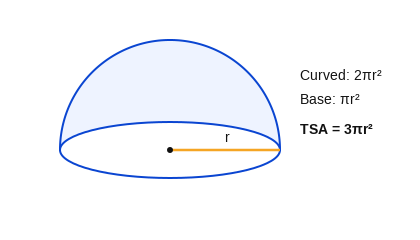
The total surface area of a solid hemisphere is 272 cm2. Its radius (in cm) is: (Take π=227)
एक ठोस अर्धगोले का कुल पृष्ठीय क्षेत्रफल 272 cm2 है। इसकी त्रिज्या (cm में) है: (π=227 लीजिए)
  1. A96233
  2. B96833
  3. C95233
  4. D94633
Show answer

Concept: Total surface area of a solid hemisphere =2πr2+πr2=3πr2.

  1. 3×227×r2=272
  2. r2=272×766=190466=95233
  3. r=95233 cm.

Trick: Solid hemisphere → 3πr2 (curved + flat base); hollow bowl → only 2πr2. Don't drop the base.

Answer: (C) 95233

अवधारणा: ठोस अर्धगोले का कुल पृष्ठीय क्षेत्रफल =2πr2+πr2=3πr2।

  1. 3×227×r2=272
  2. r2=272×766=190466=95233
  3. r=95233 cm।

ट्रिक: ठोस अर्धगोला → 3πr2 (वक्र + समतल आधार); खोखला कटोरा → केवल 2πr2। आधार छोड़ना नहीं।

उत्तर: (C) 95233

RRB NTPC Graduate CBT 1MathematicsMensuration – hemisphereRRB NTPC Graduate CBT 1 2025 · 18 Mar Shift 1 →
Q16383.
A dealer buys two articles X and Y for ₹500 each. He marks each of them at the same price. He sells X by giving two successive discounts of 20% and 45% and still earns ₹636 as profit. If he sells Y at a single discount of 67%, then what is the profit
percentage on Y?
एक व्यापारी दो वस्तुएँ X और Y प्रत्येक ₹500 में खरीदता है। वह दोनों पर एक समान मूल्य अंकित करता है। वह X को 20% और 45% की दो क्रमिक छूट देकर बेचता है और फिर भी ₹636 का लाभ कमाता है। यदि वह Y को 67% की एकल छूट पर बेचता है, तो Y पर लाभ
प्रतिशत क्या है?
  1. A69.4%
  2. B69%
  3. C70%
  4. D70.4%
Show answer

Concept: Two successive discounts of a% and b% leave (100−a)(100−b)100% of the marked price.

  1. SP of X =500+636=1136. After 20% and 45%: SP=MP×0.8×0.55=0.44MP.
  2. So 0.44MP=1136.
  3. Y at 67% discount: SPY=0.33MP=1136×0.330.44=1136×34=852.
  4. Profit =852−500=352; profit% =352500×100=70.4%.

Trick: You never need MP itself – 0.330.44=34, so SP of Y is just 34 of SP of X.

Answer: (D) 70.4%

अवधारणा: a% और b% की दो क्रमिक छूट के बाद अंकित मूल्य का (100−a)(100−b)100% बचता है।

  1. X का SP =500+636=1136। 20% और 45% के बाद: SP=MP×0.8×0.55=0.44MP।
  2. अतः 0.44MP=1136।
  3. Y पर 67% छूट: SPY=0.33MP=1136×0.330.44=1136×34=852।
  4. लाभ =852−500=352; लाभ% =352500×100=70.4%।

ट्रिक: MP निकालने की ज़रूरत ही नहीं – 0.330.44=34, तो Y का SP, X के SP का बस 34 है।

उत्तर: (D) 70.4%

RRB NTPC Graduate CBT 1MathematicsSuccessive discountsRRB NTPC Graduate CBT 1 2025 · 18 Mar Shift 1 →
Q16384.
A shopkeeper purchased 47 dozens of articles at the rate of ₹480 per dozen. He sold each one of them at the rate of ₹78. What percentage profit did he make?
एक दुकानदार ने ₹480 प्रति दर्जन की दर से 47 दर्जन वस्तुएँ खरीदीं। उसने उनमें से प्रत्येक को ₹78 की दर से बेचा। उसने कितने प्रतिशत लाभ कमाया?
  1. A92%
  2. B93%
  3. C98%
  4. D95%
Show answer

Concept: Compare cost and selling price of one unit; Profit%=SP−CPCP×100.

  1. CP of one article =48012= ₹40.
  2. SP of one article = ₹78, profit =78−40= ₹38.
  3. Profit% =3840×100=95%.

Trick: "47 dozens" is a distraction – percentage profit is the same for one article as for all of them.

Answer: (D) 95%

अवधारणा: एक इकाई का क्रय और विक्रय मूल्य तुलना करें; लाभ%=SP−CPCP×100।

  1. एक वस्तु का CP =48012= ₹40।
  2. एक वस्तु का SP = ₹78, लाभ =78−40= ₹38।
  3. लाभ% =3840×100=95%।

ट्रिक: "47 दर्जन" सिर्फ़ भटकाने के लिए है – एक वस्तु पर लाभ प्रतिशत और सभी पर लाभ प्रतिशत बराबर होता है।

उत्तर: (D) 95%

RRB NTPC Graduate CBT 1MathematicsProfit percentageRRB NTPC Graduate CBT 1 2025 · 18 Mar Shift 1 →
Q16385.
Walking at 37 of his normal speed from his home, Lakshya is 20 minutes late in reaching his office. The usual time taken by him to cover the distance between his home and his office is
अपने घर से अपनी सामान्य चाल के 37 से चलने पर, लक्ष्य अपने कार्यालय पहुँचने में 20 मिनट देर हो जाता है। अपने घर और कार्यालय के बीच की दूरी तय करने में उसके द्वारा लिया जाने वाला सामान्य समय है
  1. A13 minutes13 मिनट
  2. B11 minutes11 मिनट
  3. C15 minutes15 मिनट
  4. D5 minutes5 मिनट
Show answer

Concept: For a fixed distance, time is inversely proportional to speed.

  1. Speed becomes 37 of normal → time becomes 73 of normal time T.
  2. Extra time =73T−T=43T=20 minutes.
  3. T=20×34=15 minutes.

Trick: Speed ratio 3:7 → time ratio 7:3; the difference of 4 parts = 20 min, so 1 part = 5 min and usual time = 3 parts = 15 min.

Answer: (C) 15 minutes

अवधारणा: निश्चित दूरी के लिए समय, चाल के व्युत्क्रमानुपाती होता है।

  1. चाल सामान्य की 37 हो गई → समय सामान्य समय T का 73 हो गया।
  2. अतिरिक्त समय =73T−T=43T=20 मिनट।
  3. T=20×34=15 मिनट।

ट्रिक: चाल अनुपात 3:7 → समय अनुपात 7:3; 4 भागों का अंतर = 20 मिनट, तो 1 भाग = 5 मिनट और सामान्य समय = 3 भाग = 15 मिनट।

उत्तर: (C) 15 मिनट

RRB NTPC Graduate CBT 1MathematicsSpeed and timeRRB NTPC Graduate CBT 1 2025 · 18 Mar Shift 1 →
Q16386.
The following table shows the distribution of marks obtained by students in a test. Find the mode. (Round off to two decimal places.)
Marks Range0-1010-2020-3030-4040-50
Number of Students512182510
निम्नलिखित तालिका एक परीक्षा में विद्यार्थियों द्वारा प्राप्त अंकों का बंटन दर्शाती है। बहुलक ज्ञात कीजिए। (दो दशमलव स्थानों तक पूर्णांकित कीजिए।)
अंक सीमा: 0-10, 10-20, 20-30, 30-40, 40-50
विद्यार्थियों की संख्या: 5, 12, 18, 25, 10
  1. A32.56
  2. B33.65
  3. C33.18
  4. D32.84
Show answer

Concept: Mode=l+f1−f02f1−f0−f2×h for grouped data.

  1. Modal class = 30–40 (highest frequency f1=25); l=30, h=10, f0=18, f2=10.
  2. Mode=30+25−1850−18−10×10=30+7022
  3. =30+3.18=33.18.

Trick: The mode always lies inside the modal class – only option (C) and (D) are between 30 and 40 and close; compute 7022≈3.18 to settle it.

Answer: (C) 33.18

अवधारणा: वर्गीकृत आँकड़ों के लिए बहुलक=l+f1−f02f1−f0−f2×h।

  1. बहुलक वर्ग = 30–40 (सबसे अधिक बारंबारता f1=25); l=30, h=10, f0=18, f2=10।
  2. बहुलक=30+25−1850−18−10×10=30+7022
  3. =30+3.18=33.18।

ट्रिक: बहुलक हमेशा बहुलक वर्ग के भीतर होता है; 7022≈3.18 निकालते ही उत्तर तय।

उत्तर: (C) 33.18

RRB NTPC Graduate CBT 1MathematicsStatistics – modeRRB NTPC Graduate CBT 1 2025 · 18 Mar Shift 1 →
Q16387.
Find the value of m, satisfying equation:
(165)13×(516)16×(165)5=(516)6m+16
समीकरण को संतुष्ट करने वाले m का मान ज्ञात कीजिए:
(165)13×(516)16×(165)5=(516)6m+16
  1. A9
  2. B−3
  3. C−1
  4. D6
Show answer

Concept: (ab)−n=(ba)n and am×an=am+n; write every term with the same base.

  1. (516)16=(165)−16, so LHS =(165)13−16+5=(165)2.
  2. (165)2=(516)−2.
  3. Equate powers: 6m+16=−2⇒6m=−18⇒m=−3.

Trick: Flipping the fraction flips the sign of the exponent – convert everything to base 516: −13+16−5=−2.

Answer: (B) −3

अवधारणा: (ab)−n=(ba)n और am×an=am+n; हर पद को एक ही आधार में लिखें।

  1. (516)16=(165)−16, अतः LHS =(165)13−16+5=(165)2।
  2. (165)2=(516)−2।
  3. घातें बराबर करें: 6m+16=−2⇒6m=−18⇒m=−3।

ट्रिक: भिन्न उलटने से घात का चिह्न उलट जाता है – सब कुछ आधार 516 में लाएँ: −13+16−5=−2।

उत्तर: (B) −3

RRB NTPC Graduate CBT 1MathematicsLaws of indicesRRB NTPC Graduate CBT 1 2025 · 18 Mar Shift 1 →
Q16388.
By selling an article at 25 of its actual selling price, Akash incurs a loss of 24%. If he sells it at 84% of its actual selling price, then the profit percentage is
किसी वस्तु को उसके वास्तविक विक्रय मूल्य के 25 पर बेचने पर, आकाश को 24% की हानि होती है। यदि वह इसे इसके वास्तविक विक्रय मूल्य के 84% पर बेचता है, तो लाभ प्रतिशत है
  1. A59.6%
  2. B58.3%
  3. C57.8%
  4. D61.6%
Show answer

Concept: Express both selling prices as fractions of the cost price.

  1. Let actual SP =S and CP =C. 25S=0.76C⇒S=0.76×52C=1.9C.
  2. New SP =0.84S=0.84×1.9C=1.596C.
  3. Profit% =(1.596−1)×100=59.6%.

Trick: Take CP = 100: 25S=76⇒S=190; 84% of 190 = 159.6 → profit 59.6%.

Answer: (A) 59.6%

अवधारणा: दोनों विक्रय मूल्यों को क्रय मूल्य के भिन्न के रूप में लिखें।

  1. वास्तविक SP =S और CP =C लें। 25S=0.76C⇒S=0.76×52C=1.9C।
  2. नया SP =0.84S=0.84×1.9C=1.596C।
  3. लाभ% =(1.596−1)×100=59.6%।

ट्रिक: CP = 100 लें: 25S=76⇒S=190; 190 का 84% = 159.6 → लाभ 59.6%।

उत्तर: (A) 59.6%

RRB NTPC Graduate CBT 1MathematicsProfit and lossRRB NTPC Graduate CBT 1 2025 · 18 Mar Shift 1 →
Q16389.
At what rate (in percentage, rounded off to two decimal place) per year will a sum of money 5 times itself in 22 years on simple interest?
साधारण ब्याज पर कोई धनराशि 22 वर्षों में स्वयं की 5 गुनी किस वार्षिक दर (प्रतिशत में, दो दशमलव स्थानों तक पूर्णांकित) पर हो जाएगी?
  1. A20.18
  2. B18.18
  3. C16.18
  4. D36.36
Show answer

Concept: If a sum becomes n times in T years at SI, interest =(n−1)P, so R=(n−1)×100T.

  1. Sum becomes 5 times → SI =4P in 22 years.
  2. R=4×10022=40022=18.18% per year.

Trick: "5 times" means 4 times the principal as interest – never use 5; 50022=22.7 is the trap value.

Answer: (B) 18.18

अवधारणा: SI पर राशि T वर्ष में n गुना हो तो ब्याज =(n−1)P, अतः R=(n−1)×100T।

  1. राशि 5 गुना → SI =4P, 22 वर्ष में।
  2. R=4×10022=40022=18.18% प्रति वर्ष।

ट्रिक: "5 गुना" का अर्थ है ब्याज = मूलधन का 4 गुना – 5 का प्रयोग कभी न करें; 50022=22.7 जाल है।

उत्तर: (B) 18.18

RRB NTPC Graduate CBT 1MathematicsSimple interestRRB NTPC Graduate CBT 1 2025 · 18 Mar Shift 1 →
Q16390.
If the median of a data is 77.74 less than its mode, then the median of the data exceeds its mean by _____. (Use the empirical formula to find the answer)
यदि किसी आँकड़े की माध्यिका उसके बहुलक से 77.74 कम है, तो आँकड़े की माध्यिका उसके माध्य से _____ अधिक है। (उत्तर ज्ञात करने के लिए आनुभविक सूत्र का प्रयोग कीजिए)
  1. A37.09
  2. B44.11
  3. C35.13
  4. D38.87
Show answer

Concept: Empirical formula: Mode=3Median−2Mean.

  1. Rearrange: Mode−Median=2(Median−Mean).
  2. Given Mode−Median=77.74.
  3. Median−Mean=77.742=38.87.

Trick: Mode, Median, Mean lie in ratio gaps 2:1 – (Mode − Median) is always twice (Median − Mean). Just halve.

Answer: (D) 38.87

अवधारणा: आनुभविक सूत्र: बहुलक=3माध्यिका−2माध्य।

  1. पुनर्व्यवस्थित करें: बहुलक−माध्यिका=2(माध्यिका−माध्य)।
  2. दिया है बहुलक−माध्यिका=77.74।
  3. माध्यिका−माध्य=77.742=38.87।

ट्रिक: (बहुलक − माध्यिका) हमेशा (माध्यिका − माध्य) का दोगुना होता है। बस आधा करें।

उत्तर: (D) 38.87

RRB NTPC Graduate CBT 1MathematicsStatistics – empirical relationRRB NTPC Graduate CBT 1 2025 · 18 Mar Shift 1 →
Q16391.
How many solutions for given three unknowns are possible to satisfy all these equations?
−3α+2β−5γ=−14
2α−3β+4γ=10
α+β+γ=4
दिए गए तीन अज्ञातों के लिए इन सभी समीकरणों को संतुष्ट करने वाले कितने हल संभव हैं?
−3α+2β−5γ=−14
2α−3β+4γ=10
α+β+γ=4
  1. AUnique solutionअद्वितीय हल
  2. BInfinite solutionsअनंत हल
  3. CNo solutionकोई हल नहीं
  4. DTwo solutionsदो हल
Show answer

Concept: If one equation is a combination of the other two (dependent system with same RHS), the system has infinitely many solutions.

  1. Equations: (1) −3α+2β−5γ=−14, (2) 2α−3β+4γ=10, (3) α+β+γ=4.
  2. Add (2) and (3): 3α−2β+5γ=14, i.e. −(2)−(3) gives −3α+2β−5γ=−14 – exactly equation (1).
  3. Determinant of coefficients =−3(−3−4)−2(2−4)−5(2+3)=21+4−25=0 and the equations are consistent → infinitely many solutions.

Trick: Before computing determinants, try adding/subtracting equations – (2) + (3) is the negative of (1), which immediately shows dependence.

Answer: (B) Infinite solutions

अवधारणा: यदि एक समीकरण अन्य दो का संयोजन हो (समान RHS वाला आश्रित निकाय), तो निकाय के अनंत हल होते हैं।

  1. समीकरण: (1) −3α+2β−5γ=−14, (2) 2α−3β+4γ=10, (3) α+β+γ=4।
  2. (2) + (3): 3α−2β+5γ=14, अर्थात −(2)−(3) देता है −3α+2β−5γ=−14 – ठीक समीकरण (1)।
  3. गुणांकों का सारणिक =−3(−3−4)−2(2−4)−5(2+3)=21+4−25=0 और समीकरण संगत हैं → अनंत हल।

ट्रिक: सारणिक से पहले समीकरणों को जोड़ने/घटाने की कोशिश करें – (2) + (3), (1) का ऋणात्मक है, जो तुरंत आश्रितता दिखा देता है।

उत्तर: (B) Infinite solutions (अनंत हल)

RRB NTPC Graduate CBT 1MathematicsLinear equations – consistencyRRB NTPC Graduate CBT 1 2025 · 18 Mar Shift 1 →
Q16392.
If x=asinθ and y=acosθ, then find the relation between x, y and a.
यदि x=asinθ और y=acosθ है, तो x, y और a के बीच संबंध ज्ञात कीजिए।
  1. Ax2−y2=−a2
  2. Bx2−y2=a2
  3. Cx2+y2=−a2
  4. Dx2+y2=a2
Show answer

Concept: Eliminate θ using sin2θ+cos2θ=1.

  1. x2=a2sin2θ, y2=a2cos2θ.
  2. x2+y2=a2(sin2θ+cos2θ)=a2.

Trick: Whenever two quantities are asinθ and acosθ, their squares add to a2 – it is the equation of a circle of radius a.

Answer: (D) x2+y2=a2

अवधारणा: sin2θ+cos2θ=1 से θ हटाएँ।

  1. x2=a2sin2θ, y2=a2cos2θ।
  2. x2+y2=a2(sin2θ+cos2θ)=a2।

ट्रिक: जब दो राशियाँ asinθ और acosθ हों, उनके वर्गों का योग a2 होता है – यह त्रिज्या a के वृत्त का समीकरण है।

उत्तर: (D) x2+y2=a2

RRB NTPC Graduate CBT 1MathematicsTrigonometric identityRRB NTPC Graduate CBT 1 2025 · 18 Mar Shift 1 →
Q16393.
Four years ago from now, the average age of Amit, Bharat and Chitra was 36 years. Six years ago from now, the average age of Amit and Bharat was 30 years. What was the age of Chitra three years ago from now?
आज से चार वर्ष पहले, अमित, भरत और चित्रा की औसत आयु 36 वर्ष थी। आज से छह वर्ष पहले, अमित और भरत की औसत आयु 30 वर्ष थी। आज से तीन वर्ष पहले चित्रा की आयु क्या थी?
  1. A45 years45 वर्ष
  2. B42 years42 वर्ष
  3. C40 years40 वर्ष
  4. D43 years43 वर्ष
Show answer

Concept: Average × number = total; shifting every age by the same years shifts the total by (years × number).

  1. Four years ago, A + B + C =3×36=108 → today =108+12=120.
  2. Six years ago, A + B =2×30=60 → today =60+12=72.
  3. Chitra today =120−72=48; three years ago =45 years.

Trick: Bring every statement to "today" first (add years × persons), then subtract.

Answer: (A) 45 years

अवधारणा: औसत × संख्या = योग; हर आयु को समान वर्ष खिसकाने पर योग (वर्ष × संख्या) से खिसकता है।

  1. चार वर्ष पहले A + B + C =3×36=108 → आज =108+12=120।
  2. छह वर्ष पहले A + B =2×30=60 → आज =60+12=72।
  3. चित्रा आज =120−72=48; तीन वर्ष पहले =45 वर्ष।

ट्रिक: हर कथन को पहले "आज" पर लाएँ (वर्ष × व्यक्ति जोड़ें), फिर घटाएँ।

उत्तर: (A) 45 वर्ष

RRB NTPC Graduate CBT 1MathematicsAverage – agesRRB NTPC Graduate CBT 1 2025 · 18 Mar Shift 1 →
Q16394.
What is the maximum value that must be assigned to A so that the 8-digit number 588A9792 is divisible by 4?
A को अधिकतम कौन-सा मान दिया जाना चाहिए ताकि 8-अंकीय संख्या 588A9792, 4 से विभाज्य हो?
  1. A5
  2. B7
  3. C6
  4. D9
Show answer

Concept: A number is divisible by 4 when the number formed by its last two digits is divisible by 4.

  1. Last two digits of 588A9792 are 92, and 92÷4=23 – divisible for any value of A.
  2. So A can be any digit 0–9; the maximum value is 9.

Trick: For divisibility by 4 (or 8), only the last 2 (or 3) digits matter – a digit in the middle never changes the result.

Answer: (D) 9

अवधारणा: कोई संख्या 4 से विभाज्य होती है जब उसके अंतिम दो अंकों से बनी संख्या 4 से विभाज्य हो।

  1. 588A9792 के अंतिम दो अंक 92 हैं, और 92÷4=23 – A के किसी भी मान पर विभाज्य।
  2. अतः A कोई भी अंक 0–9 हो सकता है; अधिकतम मान 9।

ट्रिक: 4 (या 8) की विभाज्यता में केवल अंतिम 2 (या 3) अंक मायने रखते हैं – बीच का अंक परिणाम कभी नहीं बदलता।

उत्तर: (D) 9

RRB NTPC Graduate CBT 1MathematicsDivisibilityRRB NTPC Graduate CBT 1 2025 · 18 Mar Shift 1 →
Q16395.
If 6 machines can manufacture 480 components in 8 hours, how many components can 10 machines manufacture in 12 hours, assuming all machines work at the same constant rate?
यदि 6 मशीनें 8 घंटे में 480 पुर्जे बना सकती हैं, तो 10 मशीनें 12 घंटे में कितने पुर्जे बना सकती हैं, यह मानते हुए कि सभी मशीनें समान स्थिर दर से कार्य करती हैं?
  1. A1200
  2. B1000
  3. C1440
  4. D900
Show answer

Concept: Output is proportional to (machines × hours): M1H1W1=M2H2W2.

  1. Rate per machine-hour =4806×8=10 components.
  2. 10 machines × 12 hours = 120 machine-hours → 120×10=1200 components.

Trick: Machines ×106 and hours ×128 → 480×53×32=480×2.5=1200.

Answer: (A) 1200

अवधारणा: उत्पादन (मशीनें × घंटे) के समानुपाती है: M1H1W1=M2H2W2।

  1. प्रति मशीन-घंटा दर =4806×8=10 पुर्ज़े।
  2. 10 मशीनें × 12 घंटे = 120 मशीन-घंटे → 120×10=1200 पुर्ज़े।

ट्रिक: मशीनें ×106 और घंटे ×128 → 480×53×32=480×2.5=1200।

उत्तर: (A) 1200

RRB NTPC Graduate CBT 1MathematicsWork – chain ruleRRB NTPC Graduate CBT 1 2025 · 18 Mar Shift 1 →
Q16396.
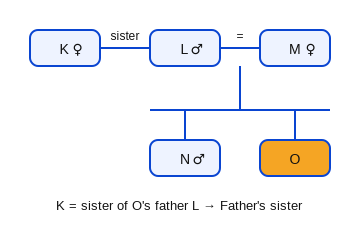
​In a certain code language,
A + B means ‘A is the sister of B’,
A – B means ‘A is the husband of B’,
A × B means ‘A is the mother of B’ and
A ÷ B means ‘A is the brother of B’.
Based on the above information, how is K related to O if ‘K + L – M × N ÷ O’?
​एक निश्चित कूट भाषा में,
A + B का अर्थ है ‘A, B की बहन है’,
A – B का अर्थ है ‘A, B का पति है’,
A × B का अर्थ है ‘A, B की माँ है’ और
A ÷ B का अर्थ है ‘A, B का भाई है’।
उपर्युक्त जानकारी के आधार पर, यदि ‘K + L – M × N ÷ O’ है, तो K का O से क्या संबंध है?
  1. AMother's sisterमाँ की बहन
  2. BFather's sisterपिता की बहन
  3. CFather's motherपिता की माँ
  4. DMother's motherमाँ की माँ
Show answer

Concept: Decode each symbol from left to right and build the family tree.

  1. K + L: K is the sister of L (K female).
  2. L – M: L is the husband of M, so L is male.
  3. M × N: M is the mother of N; N ÷ O: N is the brother of O. So L and M are the parents of N and O.
  4. L is O's father and K is L's sister, i.e. O's father's sister.

Trick: Find the generation first: K is in the parents' generation of O, and she is on the father's (L's) side.

Answer: (B) Father's sister

अवधारणा: हर चिह्न को बाएँ से दाएँ डिकोड करके वंश-वृक्ष (family tree) बनाइए।

  1. K + L: K, L की बहन है (K स्त्री)।
  2. L – M: L, M का पति है, अतः L पुरुष।
  3. M × N: M, N की माता; N ÷ O: N, O का भाई। अतः L और M, N व O के माता-पिता हैं।
  4. L, O का पिता है और K, L की बहन है — यानी O के पिता की बहन।

ट्रिक: पहले पीढ़ी तय करें: K, O के माता-पिता की पीढ़ी में है और पिता (L) की ओर से है।

उत्तर: (B) Father's sister (बुआ)

RRB NTPC Graduate CBT 1General Intelligence and ReasoningBlood Relations (Coded)RRB NTPC Graduate CBT 1 2025 · 18 Mar Shift 1 →
Q16397.
In a certain code language, ‘kids are playing’ is coded as ‘pu rs bp’ and ‘people love kids’ is coded as ‘rs gu xc’. How is ‘kids’ coded in that language?
एक निश्चित कूट भाषा में, ‘kids are playing’ को ‘pu rs bp’ के रूप में कूटबद्ध किया जाता है और ‘people love kids’ को ‘rs gu xc’ के रूप में कूटबद्ध किया जाता है। उस भाषा में ‘kids’ को कैसे कूटबद्ध किया जाएगा?
  1. Axc
  2. Bbp
  3. Cpu
  4. Drs
Show answer

Concept: A word common to two sentences has a code common to both.

  1. 'kids are playing' → pu rs bp; 'people love kids' → rs gu xc.
  2. Only 'kids' is common to both sentences and only 'rs' is common to both codes.
  3. So kids = rs.

Trick: Match the common word with the common code – no need to decode the rest.

Answer: (D) rs

अवधारणा: दो वाक्यों में जो शब्द समान है, उसका कोड भी दोनों में समान होगा।

  1. 'kids are playing' → pu rs bp; 'people love kids' → rs gu xc।
  2. दोनों वाक्यों में केवल 'kids' समान है और कोड में केवल 'rs' समान है।
  3. अतः kids = rs।

ट्रिक: समान शब्द को समान कोड से मिलाइए — बाकी डिकोड करने की ज़रूरत नहीं।

उत्तर: (D) rs

RRB NTPC Graduate CBT 1General Intelligence and ReasoningCoding-Decoding (Sentence)RRB NTPC Graduate CBT 1 2025 · 18 Mar Shift 1 →
Q16398.
In the following number-pairs, the second number is obtained by applying certain mathematical operations to the first number. Select the set in which the numbers are related in the same way as are the numbers of the following sets.
(NOTE : Operations should be performed on the whole numbers, without breaking down the numbers into its constituent digits. E.g. 13 – Operations on 13 such as adding / subtracting /multiplying etc. to 13 can be performed. Breaking down 13 into 1 and 3 and then performing mathematical operations on 1 and 3 is not allowed.)
15, 29
32, 63
निम्नलिखित संख्या-युग्मों में, पहली संख्या पर कुछ गणितीय संक्रियाएँ करके दूसरी संख्या प्राप्त की जाती है। उस समुच्चय का चयन कीजिए जिसमें संख्याएँ उसी प्रकार संबंधित हैं जिस प्रकार निम्नलिखित समुच्चयों की संख्याएँ संबंधित हैं।
(नोट : संक्रियाएँ पूर्ण संख्याओं पर की जानी चाहिए, संख्याओं को उनके घटक अंकों में तोड़े बिना। उदाहरण के लिए 13 – 13 पर संक्रियाएँ जैसे 13 में जोड़ना / घटाना / गुणा करना आदि की जा सकती हैं। 13 को 1 और 3 में तोड़कर फिर 1 और 3 पर गणितीय संक्रियाएँ करने की अनुमति नहीं है।)
15, 29
32, 63
  1. A11, 34
  2. B14, 44
  3. C17, 33
  4. D23, 49
Show answer

Concept: Find one operation on the whole first number that gives the second in both given pairs.

  1. 15→29: 2×15−1=29.
  2. 32→63: 2×32−1=63.
  3. Options: 2×11−1=21≠34; 2×14−1=27≠44; 2×17−1=33 ✓; 2×23−1=45≠49.

Trick: Second number is odd and just under double the first → test 2n−1 first.

Answer: (C) 17, 33

अवधारणा: पूरी पहली संख्या पर ऐसी एक संक्रिया खोजिए जो दोनों दिए जोड़ों में दूसरी संख्या दे।

  1. 15→29: 2×15−1=29।
  2. 32→63: 2×32−1=63।
  3. विकल्प: 2×11−1=21≠34; 2×14−1=27≠44; 2×17−1=33 ✓; 2×23−1=45≠49।

ट्रिक: दूसरी संख्या विषम है और पहली के दोगुने से ज़रा कम → पहले 2n−1 जाँचें।

उत्तर: (C) 17, 33

RRB NTPC Graduate CBT 1General Intelligence and ReasoningNumber AnalogyRRB NTPC Graduate CBT 1 2025 · 18 Mar Shift 1 →
Q16399.
In a certain code language, ‘LITE’ is coded as ‘1527’ and ‘EDIT’ is coded as ‘5124’. What is the code for ‘D’ in the given code language?
एक निश्चित कूट भाषा में, ‘LITE’ को ‘1527’ के रूप में कूटबद्ध किया जाता है और ‘EDIT’ को ‘5124’ के रूप में कूटबद्ध किया जाता है। दी गई कूट भाषा में ‘D’ का कूट क्या है?
  1. A4
  2. B5
  3. C1
  4. D2
Show answer

Concept: Letters common to both words get the common digits; the leftover letter gets the leftover digit.

  1. LITE → 1527, EDIT → 5124.
  2. Common letters I, T, E ↔ common digits 1, 2, 5.
  3. In LITE the extra letter L ↔ extra digit 7; in EDIT the extra letter D ↔ extra digit 4.

Trick: Don't decode every letter – just isolate the odd one out in each word.

Answer: (A) 4

अवधारणा: दोनों शब्दों के समान अक्षरों को समान अंक मिलते हैं; बचा अक्षर बचे अंक से जुड़ता है।

  1. LITE → 1527, EDIT → 5124।
  2. समान अक्षर I, T, E ↔ समान अंक 1, 2, 5।
  3. LITE में अतिरिक्त अक्षर L ↔ अतिरिक्त अंक 7; EDIT में अतिरिक्त D ↔ अतिरिक्त अंक 4।

ट्रिक: हर अक्षर डिकोड न करें — बस हर शब्द का अलग अक्षर और अलग अंक पकड़ें।

उत्तर: (A) 4

RRB NTPC Graduate CBT 1General Intelligence and ReasoningCoding-Decoding (Letters to digits)RRB NTPC Graduate CBT 1 2025 · 18 Mar Shift 1 →
Q16400.
Read the given statements and conclusions carefully. Assuming that the information given in the statements is true, even if it appears to be at variance with commonly known facts, decide which of the given conclusion(s) logically follow(s) from the statements.
Statements:
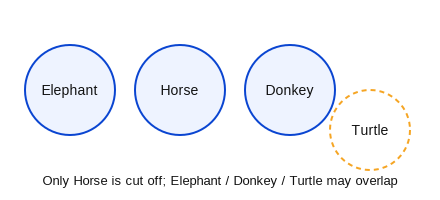
No elephant is a horse. No horse is a donkey. No horse is a turtle.
Conclusions:
(I) No elephant is a donkey.
(II) Some turtles are donkeys.
दिए गए कथनों और निष्कर्षों को ध्यानपूर्वक पढ़िए। यह मानते हुए कि कथनों में दी गई जानकारी सत्य है, भले ही वह सामान्यतः ज्ञात तथ्यों से भिन्न प्रतीत होती हो, निर्णय कीजिए कि दिए गए निष्कर्षों में से कौन-सा/कौन-से निष्कर्ष कथनों का तार्किक रूप से अनुसरण करता है/करते हैं।
कथन:
कोई हाथी घोड़ा नहीं है। कोई घोड़ा गधा नहीं है। कोई घोड़ा कछुआ नहीं है।
निष्कर्ष:
(I) कोई हाथी गधा नहीं है।
(II) कुछ कछुए गधे हैं।
  1. ANeither conclusion (I) nor (II) follows.न तो निष्कर्ष (I) और न ही (II) अनुसरण करता है।
  2. BOnly conclusion (I) follows.केवल निष्कर्ष (I) अनुसरण करता है।
  3. COnly conclusion (II) follows.केवल निष्कर्ष (II) अनुसरण करता है।
  4. DBoth conclusions (I) and (II) follow.निष्कर्ष (I) और (II) दोनों अनुसरण करते हैं।
Show answer

Concept: Two negative (No/No) statements give no definite conclusion; draw the possible Venn diagram.

  1. All three statements only say that Horse is separate from Elephant, Donkey and Turtle.
  2. Elephant and Donkey may or may not overlap, so (I) "No elephant is a donkey" does not follow.
  3. Turtle and Donkey may or may not overlap, so (II) "Some turtles are donkeys" is only a possibility, not a certainty.

Trick: Conclusion from two "No" premises is never definite ("No + No = No conclusion").

Answer: (A) Neither conclusion (I) nor (II) follows.

अवधारणा: दो नकारात्मक (No/No) कथनों से कोई निश्चित निष्कर्ष नहीं निकलता; संभावित वेन आरेख बनाइए।

  1. तीनों कथन केवल यह कहते हैं कि Horse, Elephant, Donkey और Turtle से अलग है।
  2. Elephant और Donkey में संबंध हो भी सकता है, नहीं भी — अतः (I) "No elephant is a donkey" निश्चित नहीं।
  3. Turtle और Donkey भी मिल सकते हैं या नहीं — अतः (II) केवल संभावना है, निश्चित नहीं।

ट्रिक: दो "No" कथनों से कभी निश्चित निष्कर्ष नहीं ("No + No = No conclusion")।

उत्तर: (A) Neither conclusion (I) nor (II) follows.

RRB NTPC Graduate CBT 1General Intelligence and ReasoningSyllogismRRB NTPC Graduate CBT 1 2025 · 18 Mar Shift 1 →