Question bank

Q&A: practice questions with answers

Search questions on any topic. Filter by exam category, exam, subject and topic, try the question, then open the answer and explanation.

Courses – airGurukul

20,719 questions found.

Q16461.
Which aspect of Hindu religion is reflected through the Raut Nacha dance form in Chhattisgarh ?
छत्तीसगढ़ के राउत नाचा नृत्य रूप के माध्यम से हिंदू धर्म का कौन-सा पहलू प्रतिबिंबित होता है?
  1. ALegends of Lord Shivaभगवान शिव की कथाएँ
  2. BMemories of Lord Krishnaभगवान कृष्ण की स्मृतियाँ
  3. CStories of Goddess Parvatiदेवी पार्वती की कहानियाँ
  4. DEpics of Lord Ramaभगवान राम के महाकाव्य
Show answer

Concept: Raut Nacha is a folk dance of the Yadav/Raut (cowherd) community of Chhattisgarh, performed after Diwali (Dev Uthani Ekadashi).

  1. The dancers see themselves as descendants of Lord Krishna and the dance re-enacts episodes of Krishna's life with cowherds (Gopas), accompanied by 'dohas'.
  2. It is often called the 'Raas Leela' of Chhattisgarh and is centred on Bilaspur.

Yaad rakhein: Raut = cowherd → Krishna, the divine cowherd.

Answer: (B) Memories of Lord Krishna

अवधारणा: राउत नाचा छत्तीसगढ़ के यादव/राउत (ग्वाला) समुदाय का लोक नृत्य है, जो दीवाली के बाद (देव उठनी एकादशी) किया जाता है।

  1. नर्तक स्वयं को भगवान कृष्ण के वंशज मानते हैं और नृत्य में कृष्ण के ग्वालों (गोप) के साथ जीवन-प्रसंगों को 'दोहों' के साथ दोहराया जाता है।
  2. इसे छत्तीसगढ़ की 'रासलीला' भी कहते हैं; इसका केंद्र बिलासपुर है।

याद रखें: राउत = ग्वाला → कृष्ण, दिव्य ग्वाला।

उत्तर: (B) Memories of Lord Krishna
RRB NTPC Graduate CBT 1General AwarenessArt & culture – folk dancesRRB NTPC Graduate CBT 1 2025 · 17 Mar Shift 3 →
Q16462.
Which Vedic text, composed around 1000 BCE, contains 1028 hymns dedicated to various deities?
लगभग 1000 ईसा पूर्व रचित किस वैदिक ग्रंथ में विभिन्न देवताओं को समर्पित 1028 सूक्त (hymns) हैं?
  1. ASama Vedaसामवेद
  2. BYajur Vedaयजुर्वेद
  3. CRig Vedaऋग्वेद
  4. DAtharva Vedaअथर्ववेद
Show answer

Concept: The Rig Veda is the oldest Veda, a collection (samhita) of 1028 hymns (suktas) in 10 mandalas addressed to deities like Indra, Agni and Varuna.

  1. It is dated to roughly 1500–1000 BCE and is the oldest text of the Indo-European family.
  2. Sama Veda – hymns set to music; Yajur Veda – sacrificial formulas; Atharva Veda – charms, medicine and everyday life.

Yaad rakhein: Rig = 1028 hymns, 10 mandalas, Gayatri mantra (3rd mandala).

Answer: (C) Rig Veda

अवधारणा: ऋग्वेद सबसे प्राचीन वेद है – 10 मंडलों में 1028 सूक्तों (hymns) का संग्रह, जो इंद्र, अग्नि, वरुण जैसे देवताओं को समर्पित हैं।

  1. इसका काल लगभग 1500–1000 ईसा पूर्व है और यह भारोपीय परिवार का सबसे पुराना ग्रंथ है।
  2. सामवेद – संगीतबद्ध ऋचाएँ; यजुर्वेद – यज्ञ-सूत्र; अथर्ववेद – मंत्र-तंत्र, औषधि और दैनिक जीवन।

याद रखें: ऋग्वेद = 1028 सूक्त, 10 मंडल, गायत्री मंत्र (तीसरा मंडल)।

उत्तर: (C) Rig Veda

RRB NTPC Graduate CBT 1General AwarenessAncient history – Vedic literatureRRB NTPC Graduate CBT 1 2025 · 17 Mar Shift 3 →
Q16463.
The FAO Food Price Index (FFPI), which monitors monthly fluctuations in the global prices of a basket of internationally traded food commodities, averaged how many points in December 2025?
FAO खाद्य मूल्य सूचकांक (FFPI), जो अंतर्राष्ट्रीय रूप से व्यापार की जाने वाली खाद्य वस्तुओं की एक बास्केट की वैश्विक कीमतों में मासिक उतार-चढ़ाव की निगरानी करता है, दिसंबर 2025 में औसतन कितने अंक रहा?
  1. A120.5 points120.5 अंक
  2. B130.1 points130.1 अंक
  3. C128.6 points128.6 अंक
  4. D124.3 points124.3 अंक
Show answer

Concept: The FAO Food Price Index tracks monthly world prices of cereals, vegetable oils, dairy, meat and sugar (base 2014–16 = 100).

  1. The FFPI averaged 124.3 points in December 2025, slightly lower than November, as cereal, dairy and sugar prices eased while vegetable oils and meat firmed.
  2. For 2025 as a whole the index averaged about 127 points, above the 2024 average.

Yaad rakhein: FAO = Rome-based UN agency (1945); FFPI released on the first Friday of each month.

Answer: (D) 124.3 points

अवधारणा: FAO खाद्य मूल्य सूचकांक अनाज, वनस्पति तेल, डेयरी, मांस और चीनी की मासिक विश्व कीमतों पर नज़र रखता है (आधार 2014–16 = 100)।

  1. दिसंबर 2025 में FFPI औसतन 124.3 अंक रहा – नवंबर से थोड़ा कम, क्योंकि अनाज, डेयरी व चीनी की कीमतें नरम हुईं जबकि वनस्पति तेल और मांस मज़बूत रहे।
  2. पूरे 2025 में सूचकांक औसतन लगभग 127 अंक रहा, जो 2024 के औसत से अधिक था।

याद रखें: FAO = रोम स्थित UN एजेंसी (1945); FFPI हर महीने के पहले शुक्रवार को जारी।

उत्तर: (D) 124.3 points

RRB NTPC Graduate CBT 1General AwarenessCurrent affairs – economy (FAO)RRB NTPC Graduate CBT 1 2025 · 17 Mar Shift 3 →
Q16464.
Which of the following ports have NOT been identified for Port Modernization and Maritime Infrastructure Expansion under the Maritime Amrit Kaal Vision 2047 (MAKV 2047)?
निम्नलिखित में से किस बंदरगाह की पहचान मैरीटाइम अमृत काल विज़न 2047 (MAKV 2047) के अंतर्गत बंदरगाह आधुनिकीकरण और समुद्री अवसंरचना विस्तार के लिए नहीं की गई है?
  1. AV.O Chidambaranar Port Authority (Tuticorin)वी.ओ. चिदंबरनार पोर्ट अथॉरिटी (तूतीकोरिन)
  2. BPanaji Portपणजी बंदरगाह
  3. CParadip Port Authorityपारादीप पोर्ट अथॉरिटी
  4. DDeendayal Port Authority (Kandla)दीनदयाल पोर्ट अथॉरिटी (कांडला)
Show answer

Concept: Maritime Amrit Kaal Vision 2047 (launched October 2023) plans modernisation of India's 12 Major Ports under the Ministry of Ports, Shipping and Waterways.

  1. V.O. Chidambaranar (Tuticorin), Paradip and Deendayal (Kandla) are Major Ports and are covered by the port-modernisation plans.
  2. Panaji is a small non-major (state) port in Goa; the Major Port in Goa is Mormugao – so Panaji is not in the list.

Yaad rakhein: India's 12 Major Ports: Kandla, Mumbai, JNPT, Mormugao, New Mangalore, Kochi, Tuticorin, Chennai, Kamarajar, Visakhapatnam, Paradip, Kolkata.

Answer: (B) Panaji Port

अवधारणा: मैरीटाइम अमृत काल विज़न 2047 (अक्टूबर 2023) में पत्तन, पोत परिवहन व जलमार्ग मंत्रालय के अधीन भारत के 12 प्रमुख बंदरगाहों के आधुनिकीकरण की योजना है।

  1. वी.ओ. चिदंबरनार (तूतीकोरिन), पारादीप और दीनदयाल (कांडला) प्रमुख बंदरगाह हैं और आधुनिकीकरण योजना में शामिल हैं।
  2. पणजी गोवा का छोटा गैर-प्रमुख (राज्य) बंदरगाह है; गोवा का प्रमुख बंदरगाह मोरमुगाओ है – अतः पणजी सूची में नहीं।

याद रखें: भारत के 12 प्रमुख बंदरगाह: कांडला, मुंबई, JNPT, मोरमुगाओ, न्यू मंगलौर, कोच्चि, तूतीकोरिन, चेन्नई, कामराजर, विशाखापत्तनम, पारादीप, कोलकाता।

उत्तर: (B) Panaji Port

RRB NTPC Graduate CBT 1General AwarenessCurrent affairs – ports & shippingRRB NTPC Graduate CBT 1 2025 · 17 Mar Shift 3 →
Q16465.
What is the amount of heat per unit mass transferred during change of state of a substance called?
किसी पदार्थ की अवस्था परिवर्तन के दौरान प्रति इकाई द्रव्यमान स्थानांतरित ऊष्मा की मात्रा को क्या कहा जाता है?
  1. ASpecific heatविशिष्ट ऊष्मा (Specific heat)
  2. BInduced heatप्रेरित ऊष्मा (Induced heat)
  3. CLatent heatगुप्त ऊष्मा (Latent heat)
  4. DThermal heatतापीय ऊष्मा (Thermal heat)
Show answer

Concept: Latent heat is the heat absorbed or released per unit mass during a change of state at constant temperature.

  1. Latent heat of fusion (ice → water, 80 cal/g) and latent heat of vaporisation (water → steam, 540 cal/g) are the two common types.
  2. Specific heat is the heat needed to raise 1 g by 1°C with no change of state – that is the tempting wrong option.

Yaad rakhein: 'Latent' = hidden: temperature does not change while the state changes.

Answer: (C) Latent heat

अवधारणा: गुप्त ऊष्मा (Latent heat) वह ऊष्मा है जो स्थिर ताप पर अवस्था परिवर्तन के दौरान प्रति इकाई द्रव्यमान अवशोषित या मुक्त होती है।

  1. गलन की गुप्त ऊष्मा (बर्फ → जल, 80 cal/g) और वाष्पन की गुप्त ऊष्मा (जल → भाप, 540 cal/g) दो सामान्य प्रकार हैं।
  2. विशिष्ट ऊष्मा (Specific heat) बिना अवस्था बदले 1 g का ताप 1°C बढ़ाने की ऊष्मा है – यही भ्रमित करने वाला विकल्प है।

याद रखें: 'गुप्त' = छिपी हुई: अवस्था बदलते समय ताप नहीं बदलता।

उत्तर: (C) Latent heat

RRB NTPC Graduate CBT 1General AwarenessScience – heatRRB NTPC Graduate CBT 1 2025 · 17 Mar Shift 3 →
Q16466.
The marks scored by 100 students in Mathematics examination are given by the following table. Find the mode of this data (up to 2 decimal places).
Marks scored35 - 4445 - 5455 - 6465 - 7475 - 8485 - 94
No. of students10203025105
गणित की परीक्षा में 100 विद्यार्थियों द्वारा प्राप्त अंक निम्नलिखित तालिका में दिए गए हैं। इन आँकड़ों का बहुलक (mode) ज्ञात कीजिए (2 दशमलव स्थानों तक)।
प्राप्त अंक: 35 - 44, 45 - 54, 55 - 64, 65 - 74, 75 - 84, 85 - 94
विद्यार्थियों की संख्या: 10, 20, 30, 25, 10, 5
  1. A61.17
  2. B61.67
  3. C60.56
  4. D55.44
Show answer

Concept: Classes are inclusive (35–44, 45–54 …), so first make them continuous by adjusting 0.5; then Mode=l+f1−f02f1−f0−f2×h.

  1. Highest frequency f1=30 (class 55–64) → modal class 54.5–64.5, l=54.5, h=10.
  2. f0=20 (previous class), f2=25 (next class).
  3. Mode=54.5+30−2060−20−25×10=54.5+1015×10=54.5+6.67=61.17.

Trick: Inclusive classes → subtract 0.5 from the lower limit; forgetting this gives 61.67 (option B), the trap.

Answer: (A) 61.17

अवधारणा: वर्ग समावेशी (35–44, 45–54 …) हैं, इसलिए पहले 0.5 घटाकर/जोड़कर उन्हें सतत बनाएँ; फिर बहुलक=l+f1−f02f1−f0−f2×h।

  1. अधिकतम बारंबारता f1=30 (वर्ग 55–64) → बहुलक वर्ग 54.5–64.5, l=54.5, h=10।
  2. f0=20, f2=25।
  3. बहुलक=54.5+30−2060−20−25×10=54.5+6.67=61.17।

ट्रिक: समावेशी वर्ग → निचली सीमा से 0.5 घटाएँ; यह भूलने पर 61.67 (विकल्प B) आता है – यही जाल है।

उत्तर: (A) 61.17

RRB NTPC Graduate CBT 1MathematicsStatistics – Mode of Grouped DataRRB NTPC Graduate CBT 1 2025 · 17 Mar Shift 3 →
Q16467.
Mr. Q travelled 336 km, 925 km and 432 km at a speed of 24 km/hr, 5 km/hr and 12 km/hr, respectively. Find his average speed in km/hr.
श्री Q ने 336 km, 925 km और 432 km की दूरी क्रमशः 24 km/hr, 5 km/hr और 12 km/hr की चाल से तय की। उनकी औसत चाल km/hr में ज्ञात कीजिए।
  1. A846235
  2. B751235
  3. C748235
  4. D747235
Show answer

Concept: Average speed=Total distanceTotal time – never the average of the three speeds.

  1. Total distance =336+925+432=1693km.
  2. Times: 33624=14, 9255=185, 43212=36 → total 235h.
  3. Average speed =1693235=748235km/h (since 7×235=1645, remainder 48).

Trick: All options have denominator 235 = total time; only the remainder 1693−1645=48 decides the answer.

Answer: (C) 748235

अवधारणा: औसत चाल=कुल दूरीकुल समय – तीनों चालों का औसत कभी नहीं।

  1. कुल दूरी =336+925+432=1693km।
  2. समय: 33624=14, 9255=185, 43212=36 → कुल 235h।
  3. औसत चाल =1693235=748235km/h (7×235=1645, शेष 48)।

ट्रिक: सभी विकल्पों का हर 235 = कुल समय है; केवल शेष 1693−1645=48 से उत्तर तय होता है।

उत्तर: (C) 748235

RRB NTPC Graduate CBT 1MathematicsAverage SpeedRRB NTPC Graduate CBT 1 2025 · 17 Mar Shift 3 →
Q16468.
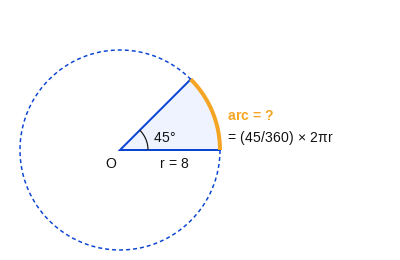
If the central angle of a sector of a circle with radius 8 units is 45∘, then find the length (in units) of the arc forming the sector. (Use π=227)
यदि 8 इकाई त्रिज्या वाले वृत्त के एक त्रिज्यखंड (sector) का केंद्रीय कोण 45∘ है, तो त्रिज्यखंड बनाने वाले चाप की लंबाई (इकाई में) ज्ञात कीजिए। (π=227 का उपयोग कीजिए)
  1. A187
  2. B447
  3. C227
  4. D367
Show answer

Concept: Length of an arc =θ360∘×2πr.

  1. r=8, θ=45∘ → fraction of circle =45360=18.
  2. Circumference =2×227×8=3527.
  3. Arc =18×3527=447 units.

Trick: 45∘ is one-eighth of a turn; 2πr÷8=πr4=227×2=447.

Answer: (B) 447

अवधारणा: चाप की लंबाई =θ360∘×2πr।

  1. r=8, θ=45∘ → वृत्त का भाग =45360=18।
  2. परिधि =2×227×8=3527।
  3. चाप =18×3527=447 इकाई।

ट्रिक: 45∘ = पूरे चक्कर का आठवाँ भाग; πr4=227×2=447।

उत्तर: (B) 447

RRB NTPC Graduate CBT 1MathematicsMensuration – Arc LengthRRB NTPC Graduate CBT 1 2025 · 17 Mar Shift 3 →
Q16469.
20% of a number is more than 20% of 620 by 220. The number is:
किसी संख्या का 20%, 620 के 20% से 220 अधिक है। वह संख्या है:
  1. A1570
  2. B1770
  3. C1720
  4. D1820
Show answer

Concept: Translate the sentence directly into an equation: 20% of x =20% of 620+220.

  1. 20% of 620=124.
  2. 0.2x=124+220=344.
  3. x=3440.2=1720.

Trick: 20%=15, so x=5×344=1720; or note the number exceeds 620 by 2200.2=1100.

Answer: (C) 1720

अवधारणा: वाक्य को सीधे समीकरण में बदलें: x का 20% =620 का 20%+220।

  1. 620 का 20%=124।
  2. 0.2x=124+220=344।
  3. x=3440.2=1720।

ट्रिक: 20%=15, अतः x=5×344=1720; या संख्या 620 से 2200.2=1100 अधिक है।

उत्तर: (C) 1720

RRB NTPC Graduate CBT 1MathematicsPercentageRRB NTPC Graduate CBT 1 2025 · 17 Mar Shift 3 →
Q16470.
A man bought two types of chocolates, one at ₹8 for 9 chocolates and the other at ₹8 per chocolate. He purchased an equal number of each type and sold all the chocolates at ₹8 per piece. Find his percentage profit.
एक व्यक्ति ने दो प्रकार की चॉकलेट खरीदीं, एक ₹8 में 9 चॉकलेट की दर से और दूसरी ₹8 प्रति चॉकलेट की दर से। उसने प्रत्येक प्रकार की समान संख्या में चॉकलेट खरीदीं और सभी चॉकलेट ₹8 प्रति नग की दर से बेच दीं। उसका प्रतिशत लाभ ज्ञात कीजिए।
  1. A78%
  2. B84%
  3. C82%
  4. D80%
Show answer

Concept: Take a convenient equal number of each type (LCM of 9 and 1 = 9), find total CP and SP, then Profit%=SP−CPCP×100.

  1. Buy 9 of each: first type costs ₹8 for all 9; second type costs 9×8= ₹72. Total CP =8+72= ₹80.
  2. Sold 18 chocolates at ₹8 each: SP =18×8= ₹144.
  3. Profit =144−80=64; Profit%=6480×100=80%.

Trick: Second type is sold at cost (no gain); the whole profit comes from the cheap type: ₹8 → ₹72. Overall 6480=80%.

Answer: (D) 80%

अवधारणा: दोनों प्रकार की समान सुविधाजनक संख्या लें (9 और 1 का LCM = 9), कुल CP और SP निकालें, फिर लाभ%=SP−CPCP×100।

  1. प्रत्येक के 9 खरीदे: पहले प्रकार के 9 = ₹8; दूसरे प्रकार के 9 =9×8= ₹72। कुल CP =80।
  2. 18 चॉकलेट ₹8 प्रति के भाव से: SP =18×8= ₹144।
  3. लाभ =144−80=64; लाभ%=6480×100=80%।

ट्रिक: दूसरा प्रकार लागत पर बिका (लाभ शून्य); पूरा लाभ सस्ते प्रकार से: ₹8 → ₹72। कुल 6480=80%।

उत्तर: (D) 80%

RRB NTPC Graduate CBT 1MathematicsProfit and LossRRB NTPC Graduate CBT 1 2025 · 17 Mar Shift 3 →
Q16471.
Two taps can fill a cistern in 4 hours and 31 hours respectively. A third tap can empty it in 31 hours. How long (in hours) will it take to fill one-fourth of the empty cistern, if all of them are opened together?
दो नल एक टंकी को क्रमशः 4 घंटे और 31 घंटे में भर सकते हैं। एक तीसरा नल इसे 31 घंटे में खाली कर सकता है। यदि सभी नल एक साथ खोल दिए जाएँ, तो खाली टंकी का एक-चौथाई भाग भरने में कितना समय (घंटों में) लगेगा?
  1. A2
  2. B4
  3. C3
  4. D1
Show answer

Concept: Add the filling rates and subtract the emptying rate (work per hour).

  1. Rates: 14+131−131=14 of the cistern per hour.
  2. The second tap and the emptying tap cancel each other exactly.
  3. One-fourth of the cistern at 14 per hour → 1 hour.

Trick: Same time to fill and to empty (31 h) → the pair does nothing; only the 4-hour tap counts.

Answer: (D) 1

अवधारणा: भरने की दरें जोड़ें और खाली करने की दर घटाएँ (प्रति घंटा कार्य)।

  1. दरें: 14+131−131=14 टंकी प्रति घंटा।
  2. दूसरा नल और खाली करने वाला नल एक-दूसरे को पूरी तरह काट देते हैं।
  3. एक-चौथाई टंकी, 14 प्रति घंटा की दर से → 1 घंटा।

ट्रिक: भरने और खाली करने का समय समान (31 h) → यह जोड़ी निष्प्रभावी; केवल 4 घंटे वाला नल गिनें।

उत्तर: (D) 1

RRB NTPC Graduate CBT 1MathematicsPipes and CisternsRRB NTPC Graduate CBT 1 2025 · 17 Mar Shift 3 →
Q16472.
Three positive integers a, b, and c satisfy: gcd(a, b)=12, gcd(b, c)=18, gcd(c, a)=6. If a+b+c=6k for some positive integer k, then the minimum possible value of k is:
तीन धनात्मक पूर्णांक a, b और c इस प्रकार हैं कि: gcd(a, b)=12, gcd(b, c)=18, gcd(c, a)=6। यदि किसी धनात्मक पूर्णांक k के लिए a+b+c=6k है, तो k का न्यूनतम संभव मान है:
  1. A11
  2. B10
  3. C12
  4. D9
Show answer

Concept: Each number must be a multiple of every gcd it is part of; choose the smallest such numbers and verify the gcds.

  1. b is a multiple of 12 and 18 → multiple of LCM=36; a is a multiple of 12 and 6 → of 12; c is a multiple of 18 and 6 → of 18.
  2. Smallest choice: a=12, b=36, c=18. Check: gcd(12,36)=12, gcd(36,18)=18, gcd(18,12)=6 ✓.
  3. a+b+c=66=6×11 → minimum k=11.

Trick: Minimum sum =12+36+18=66; any smaller a,b,c would violate a gcd, so k=666=11.

Answer: (A) 11

अवधारणा: हर संख्या उन सभी gcd की गुणज होनी चाहिए जिनमें वह शामिल है; सबसे छोटी ऐसी संख्याएँ चुनकर gcd जाँचें।

  1. b, 12 और 18 का गुणज → LCM=36 का गुणज; a → 12 का; c → 18 का गुणज।
  2. सबसे छोटा चयन: a=12, b=36, c=18। जाँच: gcd(12,36)=12, gcd(36,18)=18, gcd(18,12)=6 ✓।
  3. a+b+c=66=6×11 → न्यूनतम k=11।

ट्रिक: न्यूनतम योग =12+36+18=66; इससे छोटे a,b,c कोई gcd तोड़ देंगे, अतः k=666=11।

उत्तर: (A) 11

RRB NTPC Graduate CBT 1MathematicsHCF – Minimum SumRRB NTPC Graduate CBT 1 2025 · 17 Mar Shift 3 →
Q16473.
The average of 5 numbers is 20. If one number is excluded, the average of the remaining numbers is 18. What is the excluded number?
5 संख्याओं का औसत 20 है। यदि एक संख्या को हटा दिया जाए, तो शेष संख्याओं का औसत 18 हो जाता है। हटाई गई संख्या क्या है?
  1. A32
  2. B25
  3. C28
  4. D30
Show answer

Concept: Sum = average × count; the excluded number is the difference of the two sums.

  1. Sum of 5 numbers =5×20=100.
  2. Sum of remaining 4 numbers =4×18=72.
  3. Excluded number =100−72=28.

Trick: Excluded = new average + (old count) × (drop in average) =18+5×2=28.

Answer: (C) 28

अवधारणा: योग = औसत × संख्या; निकाली गई संख्या दोनों योगों का अंतर है।

  1. 5 संख्याओं का योग =5×20=100।
  2. शेष 4 का योग =4×18=72।
  3. निकाली गई संख्या =100−72=28।

ट्रिक: निकाली गई = नया औसत + (पुरानी गिनती) × (औसत में गिरावट) =18+5×2=28।

उत्तर: (C) 28

RRB NTPC Graduate CBT 1MathematicsAverageRRB NTPC Graduate CBT 1 2025 · 17 Mar Shift 3 →
Q16474.
A data scientist finds that the mean proportional between two experimental values 18 and 32 needs to be increased by 25% for optimal model performance. If this new increased value becomes the mean proportional between 18 and another value y, what is y?
एक डेटा वैज्ञानिक पाता है कि दो प्रायोगिक मानों 18 और 32 के बीच के मध्यानुपाती (mean proportional) को इष्टतम मॉडल प्रदर्शन के लिए 25% बढ़ाने की आवश्यकता है। यदि यह नया बढ़ा हुआ मान 18 और किसी अन्य मान y के बीच का मध्यानुपाती बन जाता है, तो y क्या है?
  1. A45
  2. B50
  3. C54
  4. D48
Show answer

Concept: Mean proportional between a and b is ab; if m is the mean proportional between a and y, then m2=ay.

  1. 18×32=576=24.
  2. Increase by 25%: 24×54=30.
  3. 302=18y⇒y=90018=50.

Trick: 18×32=576=242 – spot it as (25−1)2; then y=30218=50.

Answer: (B) 50

अवधारणा: a और b का मध्यानुपाती ab; यदि m, a और y का मध्यानुपाती है तो m2=ay।

  1. 18×32=576=24।
  2. 25% वृद्धि: 24×54=30।
  3. 302=18y⇒y=90018=50।

ट्रिक: 18×32=576=242 पहचानें; फिर y=30218=50।

उत्तर: (B) 50

RRB NTPC Graduate CBT 1MathematicsMean ProportionalRRB NTPC Graduate CBT 1 2025 · 17 Mar Shift 3 →
Q16475.
Which of the following is not a quadratic equation?
निम्नलिखित में से कौन-सा द्विघात समीकरण नहीं है?
  1. A(x – 1)(x + 2) = x² + 3
  2. Bx² + 2x + 1 = 0
  3. Cx(x – 3) = 2
  4. D3x² – 5x + 2 = 0
Show answer

Concept: An equation is quadratic only if, after simplification, the highest power of x is exactly 2 (coefficient of x2≠0).

  1. (A) (x−1)(x+2)=x2+3⇒x2+x−2=x2+3⇒x−5=0 – the x2 terms cancel → linear, not quadratic.
  2. (B) x2+2x+1=0 and (D) 3x2−5x+2=0 are already in the form ax2+bx+c=0.
  3. (C) x(x−3)=2⇒x2−3x−2=0 – quadratic.

Trick: Whenever x2 appears on both sides, expand and check whether it cancels.

Answer: (A) (x – 1)(x + 2) = x2 + 3

अवधारणा: समीकरण द्विघात तभी है जब सरलीकरण के बाद x की उच्चतम घात ठीक 2 हो (x2 का गुणांक ≠0)।

  1. (A) (x−1)(x+2)=x2+3⇒x2+x−2=x2+3⇒x−5=0 – x2 कट गया → रैखिक, द्विघात नहीं।
  2. (B) x2+2x+1=0 और (D) 3x2−5x+2=0 पहले से ax2+bx+c=0 रूप में हैं।
  3. (C) x(x−3)=2⇒x2−3x−2=0 – द्विघात।

ट्रिक: जब x2 दोनों ओर हो, तो फैलाकर देखें कि वह कटता है या नहीं।

उत्तर: (A) (x – 1)(x + 2) = x2 + 3

RRB NTPC Graduate CBT 1MathematicsQuadratic EquationsRRB NTPC Graduate CBT 1 2025 · 17 Mar Shift 3 →
Q16476.
Evaluate: (-9) - (-56) ÷ (-14) + (-4) × 6
मान ज्ञात कीजिए: (-9) - (-56) ÷ (-14) + (-4) × 6
  1. A-40
  2. B-37
  3. C-36
  4. D-39
Show answer

Concept: Do division and multiplication first, then addition and subtraction; watch the signs.

  1. (−56)÷(−14)=4 and (−4)×6=−24.
  2. Expression becomes (−9)−4+(−24).
  3. −9−4−24=−37.

Trick: Negative ÷ negative = positive; the minus sign before it then makes it −4.

Answer: (B) -37

अवधारणा: पहले भाग और गुणा, फिर जोड़ और घटाव; चिह्नों पर ध्यान दें।

  1. (−56)÷(−14)=4 और (−4)×6=−24।
  2. व्यंजक बनता है (−9)−4+(−24)।
  3. −9−4−24=−37।

ट्रिक: ऋण ÷ ऋण = धन; उसके आगे का ऋण चिह्न उसे −4 बना देता है।

उत्तर: (B) -37

RRB NTPC Graduate CBT 1MathematicsSimplification (BODMAS with Integers)RRB NTPC Graduate CBT 1 2025 · 17 Mar Shift 3 →
Q16477.
There are 42 members in group A, 14 members in group B and 21 members in group C. All the members of these groups went to a restaurant. The average amounts spent on each member of groups A, B and C are ₹275, ₹430 and ₹498, respectively. The overall average amount (in ₹) spent per member is:
समूह A में 42 सदस्य, समूह B में 14 सदस्य और समूह C में 21 सदस्य हैं। इन समूहों के सभी सदस्य एक रेस्तरां में गए। समूह A, B और C के प्रत्येक सदस्य पर खर्च की गई औसत राशि क्रमशः ₹275, ₹430 और ₹498 है। प्रति सदस्य खर्च की गई समग्र औसत राशि (₹ में) है:
  1. A366
  2. B369
  3. C364
  4. D365
Show answer

Concept: Overall average=∑(members×average)total members.

  1. Totals: 42×275=11550, 14×430=6020, 21×498=10458.
  2. Grand total =11550+6020+10458=28028; members =42+14+21=77.
  3. 2802877=364.

Trick: Members are in ratio 6:2:3 (÷7): 6×275+2×430+3×49811=1650+860+149411=400411=364.

Answer: (C) 364

अवधारणा: कुल औसत=∑(सदस्य×औसत)कुल सदस्य।

  1. कुल राशि: 42×275=11550, 14×430=6020, 21×498=10458।
  2. महायोग =28028; सदस्य =42+14+21=77।
  3. 2802877=364।

ट्रिक: सदस्य अनुपात 6:2:3 (÷7): 6×275+2×430+3×49811=400411=364।

उत्तर: (C) 364

RRB NTPC Graduate CBT 1MathematicsWeighted AverageRRB NTPC Graduate CBT 1 2025 · 17 Mar Shift 3 →
Q16478.
The monthly incomes of A and B are in the ratio 4 : 5, and their monthly expenditures are in the ratio 3 : 4. A saves ₹10,000 while B saves ₹12,000, find the monthly income of A (in ₹)
A और B की मासिक आय का अनुपात 4 : 5 है, और उनके मासिक व्यय का अनुपात 3 : 4 है। A ₹10,000 की बचत करता है जबकि B ₹12,000 की बचत करता है, A की मासिक आय (₹ में) ज्ञात कीजिए।
  1. A14,000
  2. B16,000
  3. C15,000
  4. D13,000
Show answer

Concept: Income − Expenditure = Savings. Let incomes be 4x,5x and expenditures 3y,4y, then solve two equations.

  1. 4x−3y=10000 … (i) and 5x−4y=12000 … (ii).
  2. (i)×4: 16x−12y=40000; (ii)×3: 15x−12y=36000. Subtract: x=4000.
  3. Income of A =4x= ₹16,000 (check: y=2000, B saves 20000−8000=12000 ✓).

Trick: Eliminate y by making its coefficients equal (12y); then x comes out in one subtraction.

Answer: (B) 16,000

अवधारणा: आय − व्यय = बचत। आय 4x,5x और व्यय 3y,4y मानकर दो समीकरण हल करें।

  1. 4x−3y=10000 … (i) और 5x−4y=12000 … (ii)।
  2. (i)×4: 16x−12y=40000; (ii)×3: 15x−12y=36000। घटाने पर x=4000।
  3. A की आय =4x= ₹16,000 (जाँच: y=2000, B की बचत 20000−8000=12000 ✓)।

ट्रिक: y के गुणांक बराबर (12y) करके उसे हटाएँ; एक घटाव में x मिल जाता है।

उत्तर: (B) 16,000

RRB NTPC Graduate CBT 1MathematicsRatio – Income and ExpenditureRRB NTPC Graduate CBT 1 2025 · 17 Mar Shift 3 →
Q16479.
The value of [0.72−0.420.33] is:
[0.72−0.420.33] का मान है:
  1. A0.65
  2. B1
  3. C2
  4. D1.5
Show answer

Concept: Use a2−b2=(a+b)(a−b) instead of squaring decimals.

  1. 0.72−0.42=(0.7+0.4)(0.7−0.4)=1.1×0.3=0.33.
  2. 0.330.33=1.

Trick: When the denominator equals (a+b)(a−b), the answer is simply 1 – no decimal multiplication needed.

Answer: (B) 1

अवधारणा: दशमलवों का वर्ग करने के बजाय a2−b2=(a+b)(a−b) का प्रयोग करें।

  1. 0.72−0.42=(0.7+0.4)(0.7−0.4)=1.1×0.3=0.33।
  2. 0.330.33=1।

ट्रिक: जब हर (a+b)(a−b) के बराबर हो, उत्तर सीधे 1 – दशमलव गुणा की ज़रूरत नहीं।

उत्तर: (B) 1

RRB NTPC Graduate CBT 1MathematicsSimplification – Difference of SquaresRRB NTPC Graduate CBT 1 2025 · 17 Mar Shift 3 →
Q16480.
P sells an item to Q at 30% profit. Q sells the same item to R at 52% loss. If R paid ₹ 3900 for the item, then at what price (in ₹) is the item purchased by P?
P एक वस्तु Q को 30% लाभ पर बेचता है। Q वही वस्तु R को 52% हानि पर बेचता है। यदि R ने उस वस्तु के लिए ₹ 3900 का भुगतान किया, तो P ने वह वस्तु किस मूल्य (₹ में) पर खरीदी थी?
  1. A6250
  2. B6252
  3. C6253
  4. D6248
Show answer

Concept: Work backwards: each sale multiplies the price by (1±rate), so divide to go back.

  1. R paid ₹3900 after Q's 52% loss, so Q's cost =39000.48=8125.
  2. Q's cost is P's selling price at 30% profit: P's cost =81251.30=6250.
  3. Check: 6250×1.3=8125, 8125×0.48=3900 ✓.

Trick: Combined multiplier =1.3×0.48=0.624; 39000.624=6250 in one step.

Answer: (A) 6250

अवधारणा: पीछे से चलें: हर बिक्री कीमत को (1±दर) से गुणा करती है, इसलिए वापस जाने के लिए भाग दें।

  1. R ने Q की 52% हानि के बाद ₹3900 दिए, अतः Q की लागत =39000.48=8125।
  2. Q की लागत = P का 30% लाभ वाला विक्रय मूल्य: P की लागत =81251.30=6250।
  3. जाँच: 6250×1.3=8125, 8125×0.48=3900 ✓।

ट्रिक: संयुक्त गुणक =1.3×0.48=0.624; एक ही चरण में 39000.624=6250।

उत्तर: (A) 6250

RRB NTPC Graduate CBT 1MathematicsProfit and loss – successive transactionsRRB NTPC Graduate CBT 1 2025 · 17 Mar Shift 3 →