Question bank

Q&A: practice questions with answers

Search questions on any topic. Filter by exam category, exam, subject and topic, try the question, then open the answer and explanation.

Courses – airGurukul

20,719 questions found.

Q16601.
In a certain code language, ‘repair the mobile’ is coded as ‘gf ed ls’ and ‘mobile is lost’ is coded as ‘sq gf tf’. How is ‘mobile’ coded in that language?
एक निश्चित कूट भाषा में, ‘repair the mobile’ को ‘gf ed ls’ के रूप में कूटबद्ध किया जाता है और ‘mobile is lost’ को ‘sq gf tf’ के रूप में कूटबद्ध किया जाता है। उस भाषा में ‘mobile’ को कैसे कूटबद्ध किया जाएगा?
  1. Aed
  2. Bsq
  3. Cls
  4. Dgf
Show answer

Concept: A word common to two sentences has the code common to both.

  1. 'repair the mobile' → gf ed ls; 'mobile is lost' → sq gf tf.
  2. Only 'mobile' is common to both sentences and only 'gf' is common to both codes.
  3. So mobile = gf.

Trick: Match common words with common codes – no need to decode the rest.

Answer: (D) gf

अवधारणा: दो वाक्यों में उभयनिष्ठ शब्द का कूट भी दोनों में उभयनिष्ठ होता है।

  1. 'repair the mobile' → gf ed ls; 'mobile is lost' → sq gf tf।
  2. दोनों वाक्यों में केवल 'mobile' और दोनों कूटों में केवल 'gf' समान है।
  3. अतः mobile = gf।

ट्रिक: समान शब्द को समान कूट से मिलाएँ – बाकी को डिकोड करने की ज़रूरत नहीं।

उत्तर: (D) gf
RRB NTPC Graduate CBT 1General Intelligence and ReasoningCoding-Decoding (Sentence Codes)RRB NTPC Graduate CBT 1 2025 · 17 Mar Shift 2 →
Q16602.
In a certain code language, ‘MILE’ is coded as ‘9574’ and ‘TIME’ is coded as ‘5429’. What is the code for ‘T’ in the given code language?
एक निश्चित कूट भाषा में, ‘MILE’ को ‘9574’ के रूप में कूटबद्ध किया जाता है और ‘TIME’ को ‘5429’ के रूप में कूटबद्ध किया जाता है। दी गई कूट भाषा में ‘T’ का कूट क्या है?
  1. A4
  2. B5
  3. C2
  4. D9
Show answer

Concept: Letters common to both words get the digits common to both codes.

  1. MILE → 9, 5, 7, 4 and TIME → 5, 4, 2, 9.
  2. Common letters I, M, E ↔ common digits 9, 5, 4.
  3. The extra letter in TIME is T and the extra digit is 2 → T = 2.

Trick: Cancel the common part; what is left on each side matches.

Answer: (C) 2

अवधारणा: दोनों शब्दों के समान अक्षरों को दोनों कूटों के समान अंक मिलते हैं।

  1. MILE → 9, 5, 7, 4 और TIME → 5, 4, 2, 9।
  2. समान अक्षर I, M, E ↔ समान अंक 9, 5, 4।
  3. TIME में अतिरिक्त अक्षर T और अतिरिक्त अंक 2 → T = 2।

ट्रिक: समान भाग काट दें; दोनों ओर जो बचे वही आपस में मिलते हैं।

उत्तर: (C) 2

RRB NTPC Graduate CBT 1General Intelligence and ReasoningCoding-Decoding (Letter Codes)RRB NTPC Graduate CBT 1 2025 · 17 Mar Shift 2 →
Q16603.
Refer to the following letter, symbol series and answer the question. Counting to be done from left to right only.
(Left) K C © C V € @ € # U © & Y £ © I $ N W # & Q (Right)
How many such symbols are there each of which is immediately preceded by a letter and also immediately followed by a symbol?
निम्नलिखित अक्षर, प्रतीक श्रेणी को देखिए और प्रश्न का उत्तर दीजिए। गिनती केवल बाएँ से दाएँ की जानी है।
(बाएँ) K C © C V € @ € # U © & Y £ © I $ N W # & Q (दाएँ)
ऐसे कितने प्रतीक हैं, जिनमें से प्रत्येक के ठीक पहले एक अक्षर है और ठीक बाद एक प्रतीक भी है?
  1. A5
  2. B6
  3. C4
  4. D3
Show answer

Concept: Look for the pattern Letter – Symbol – Symbol and count the middle symbol.

  1. Series: K C © C V € @ € # U © & Y £ © I $ N W # & Q.
  2. V € @ ✓, U © & ✓, Y £ © ✓, W # & ✓.
  3. C © C and I $ N fail (followed by a letter). Total = 4.

Trick: Scan every symbol once and check only its left and right neighbours – mark ticks under the series.

Answer: (C) 4

अवधारणा: पैटर्न अक्षर – प्रतीक – प्रतीक खोजें और बीच वाला प्रतीक गिनें।

  1. श्रृंखला: K C © C V € @ € # U © & Y £ © I $ N W # & Q।
  2. V € @ ✓, U © & ✓, Y £ © ✓, W # & ✓।
  3. C © C और I $ N नहीं चलते (बाद में अक्षर है)। कुल = 4।

ट्रिक: हर प्रतीक को एक बार देखें और केवल उसके बाएँ-दाएँ पड़ोसी जाँचें – श्रृंखला के नीचे टिक लगाते चलें।

उत्तर: (C) 4

RRB NTPC Graduate CBT 1General Intelligence and ReasoningLetter-Symbol SeriesRRB NTPC Graduate CBT 1 2025 · 17 Mar Shift 2 →
Q16604.
In this question, a question is followed by two statements numbered (I) and (II). You have to decide whether the data provided in the statements are sufficient to answer the question. Read both the statements and decide the appropriate answer.
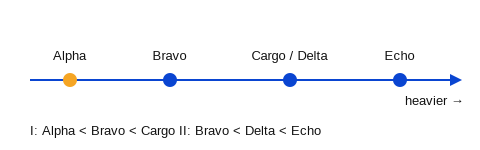
Q. Five parcels – Alpha, Bravo, Cargo, Delta, and Echo – have different weights. Which parcel is the lightest?
(I) Bravo is heavier than Alpha but lighter than Cargo.
(II) Delta is heavier than Bravo but lighter than Echo.
इस प्रश्न में, एक प्रश्न के बाद (I) और (II) क्रमांकित दो कथन दिए गए हैं। आपको यह निर्णय लेना है कि कथनों में दिए गए आँकड़े प्रश्न का उत्तर देने के लिए पर्याप्त हैं या नहीं। दोनों कथनों को पढ़िए और उपयुक्त उत्तर का निर्णय कीजिए।
प्रश्न. पाँच पार्सलों – Alpha, Bravo, Cargo, Delta और Echo – के भार अलग-अलग हैं। कौन-सा पार्सल सबसे हल्का है?
(I) Bravo, Alpha से भारी है परंतु Cargo से हल्का है।
(II) Delta, Bravo से भारी है परंतु Echo से हल्का है।
  1. AData in Statement II alone is sufficient to answer the question while data in Statement I is notकथन II के आँकड़े अकेले प्रश्न का उत्तर देने के लिए पर्याप्त हैं, जबकि कथन I के आँकड़े पर्याप्त नहीं हैं
  2. BBoth statements I and II together (and not statement I alone or statement II alone) are sufficient to answer the questionकथन I और II दोनों मिलकर (और न तो अकेला कथन I और न ही अकेला कथन II) प्रश्न का उत्तर देने के लिए पर्याप्त हैं
  3. CData in Statement I alone is sufficient to answer the question while data in Statement II is notकथन I के आँकड़े अकेले प्रश्न का उत्तर देने के लिए पर्याप्त हैं, जबकि कथन II के आँकड़े पर्याप्त नहीं हैं
  4. DBoth statements I and II together are NOT sufficient to answer the questionकथन I और II दोनों मिलकर भी प्रश्न का उत्तर देने के लिए पर्याप्त नहीं हैं
Show answer

Concept: Test each statement alone, then together.

  1. (I) alone: Alpha < Bravo < Cargo – Delta and Echo unknown, so the lightest is not fixed.
  2. (II) alone: Bravo < Delta < Echo – Alpha and Cargo unknown.
  3. Together: Alpha < Bravo and Bravo is lighter than Cargo, Delta, Echo → Alpha is the lightest.

Trick: In ordering questions, a statement is sufficient only if every parcel is placed relative to the extreme asked.

Answer: (B) Both statements I and II together are sufficient

अवधारणा: हर कथन को पहले अकेले, फिर साथ में जाँचें।

  1. (I) अकेले: Alpha < Bravo < Cargo – Delta और Echo अज्ञात, अतः सबसे हल्का तय नहीं।
  2. (II) अकेले: Bravo < Delta < Echo – Alpha और Cargo अज्ञात।
  3. दोनों साथ: Alpha < Bravo और Bravo, Cargo, Delta, Echo से हल्का → Alpha सबसे हल्का।

ट्रिक: क्रम वाले प्रश्नों में कथन तभी पर्याप्त है जब पूछे गए सिरे के सापेक्ष हर वस्तु की स्थिति तय हो।

उत्तर: (B) कथन I और II दोनों मिलकर पर्याप्त हैं

RRB NTPC Graduate CBT 1General Intelligence and ReasoningData Sufficiency (Ordering)RRB NTPC Graduate CBT 1 2025 · 17 Mar Shift 2 →
Q16605.
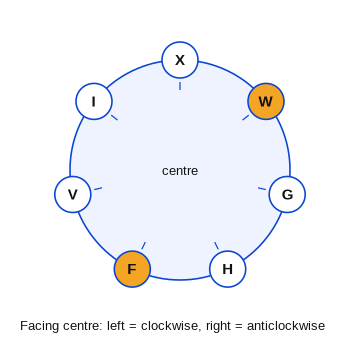
Seven people F, G, H, I, V, W, and X are sitting around a circular table facing the centre of the table. G sits second to the left of X. V sits third to the left of G. Only two people sit between H and I when counted from the right of I. F is an immediate neighbour of H. Who sits fourth to the right of W?
सात व्यक्ति F, G, H, I, V, W और X एक वृत्ताकार मेज़ के चारों ओर केंद्र की ओर मुख करके बैठे हैं। G, X के बाएँ दूसरे स्थान पर बैठा है। V, G के बाएँ तीसरे स्थान पर बैठा है। I के दाएँ से गिनने पर H और I के बीच केवल दो व्यक्ति बैठे हैं। F, H का निकटतम पड़ोसी है। W के दाएँ चौथे स्थान पर कौन बैठा है?
  1. AV
  2. BX
  3. CH
  4. DF
Show answer

Concept: Facing the centre, 'left' is clockwise and 'right' is anticlockwise. Number the seats 1–7 clockwise.

  1. X = 1 → G second to the left = 3 → V third to the left of G = 6.
  2. Two people between H and I counted from the right of I: I = 7, H = 4 works (I = 5, H = 2 leaves no vacant seat beside H for F).
  3. F next to H → F = 5; W takes the last seat 2.
  4. Fourth to the right (anticlockwise) of W: 1, 7, 6, 5 → F.

Trick: Draw the circle, mark 'left = clockwise' once, and test both cases of a two-way clue quickly.

Answer: (D) F

अवधारणा: केंद्र की ओर मुख होने पर 'बायाँ' दक्षिणावर्त (clockwise) और 'दायाँ' वामावर्त है। सीटों को 1–7 दक्षिणावर्त नंबर दें।

  1. X = 1 → G, X के बाएँ दूसरा = 3 → V, G के बाएँ तीसरा = 6।
  2. I के दाएँ से गिनने पर H और I के बीच दो: I = 7, H = 4 सही (I = 5, H = 2 में F के लिए H के पास खाली सीट नहीं बचती)।
  3. F, H का पड़ोसी → F = 5; W अंतिम सीट 2 पर।
  4. W के दाएँ (वामावर्त) चौथा: 1, 7, 6, 5 → F।

ट्रिक: वृत्त बनाएँ, 'बायाँ = clockwise' एक बार लिख लें, और दो-तरफ़ा सुराग के दोनों केस जल्दी जाँचें।

उत्तर: (D) F

RRB NTPC Graduate CBT 1General Intelligence and ReasoningCircular Seating ArrangementRRB NTPC Graduate CBT 1 2025 · 17 Mar Shift 2 →
Q16606.
Refer to the following letter, symbol series and answer the question. Counting to be done from left to right only
(Left) B T # A M @ * * # € © * C H # N £ H Q £ T O (Right)
How many such letters are there each of which is immediately preceded by a letter and also immediately followed by a symbol?
निम्नलिखित अक्षर, प्रतीक श्रेणी को देखिए और प्रश्न का उत्तर दीजिए। गिनती केवल बाएँ से दाएँ की जानी है
(बाएँ) B T # A M @ * * # € © * C H # N £ H Q £ T O (दाएँ)
ऐसे कितने अक्षर हैं, जिनमें से प्रत्येक के ठीक पहले एक अक्षर है और ठीक बाद एक प्रतीक भी है?
  1. A4
  2. B6
  3. C3
  4. D5
Show answer

Concept: Look for the pattern Letter – Letter – Symbol and count the middle letter.

  1. Series: B T # A M @ * * # € © * C H # N £ H Q £ T O.
  2. B T # ✓, A M @ ✓, C H # ✓, H Q £ ✓.
  3. £ T O and N £ H do not fit. Total = 4.

Trick: Only letters that have a letter on the left can qualify – check just those.

Answer: (A) 4

अवधारणा: पैटर्न अक्षर – अक्षर – प्रतीक खोजें और बीच वाला अक्षर गिनें।

  1. श्रृंखला: B T # A M @ * * # € © * C H # N £ H Q £ T O।
  2. B T # ✓, A M @ ✓, C H # ✓, H Q £ ✓।
  3. £ T O और N £ H नहीं चलते। कुल = 4।

ट्रिक: केवल वे अक्षर योग्य हो सकते हैं जिनके बाएँ अक्षर हो – बस उन्हीं को जाँचें।

उत्तर: (A) 4

RRB NTPC Graduate CBT 1General Intelligence and ReasoningLetter-Symbol SeriesRRB NTPC Graduate CBT 1 2025 · 17 Mar Shift 2 →
Q16607.
Select the triad which follows the same pattern as that followed by the two pairs given below. Both pairs follow the same pattern.
DASH-ASHD-SHDA
GAME-AMEG-MEGA
उस त्रिक (triad) का चयन कीजिए जो नीचे दिए गए दो युग्मों द्वारा अनुसरण किए गए पैटर्न का ही अनुसरण करता है। दोनों युग्म समान पैटर्न का अनुसरण करते हैं।
DASH-ASHD-SHDA
GAME-AMEG-MEGA
  1. AIRON-RONI-ONRI
  2. BBALD-ALDB-LDBA
  3. CFADE-EDAF-DAEF
  4. DJAIL-LJAI-ILJA
Show answer

Concept: Each step moves the first letter to the end (left rotation by one).

  1. DASH → ASHD → SHDA; GAME → AMEG → MEGA.
  2. BALD → ALDB → LDBA follows the same rotation.
  3. IRON → RONI → ONIR (not ONRI); FADE and JAIL do not rotate at all.

Trick: Check the third word with the second, not only the second with the first.

Answer: (B) BALD-ALDB-LDBA

अवधारणा: हर चरण में पहला अक्षर अंत में चला जाता है (एक स्थान बायाँ घुमाव)।

  1. DASH → ASHD → SHDA; GAME → AMEG → MEGA।
  2. BALD → ALDB → LDBA उसी घुमाव का पालन करता है।
  3. IRON → RONI → ONIR (ONRI नहीं); FADE और JAIL में घुमाव है ही नहीं।

ट्रिक: तीसरे शब्द को दूसरे से भी जाँचें, केवल दूसरे को पहले से नहीं।

उत्तर: (B) BALD-ALDB-LDBA

RRB NTPC Graduate CBT 1General Intelligence and ReasoningLetter Cluster AnalogyRRB NTPC Graduate CBT 1 2025 · 17 Mar Shift 2 →
Q16608.
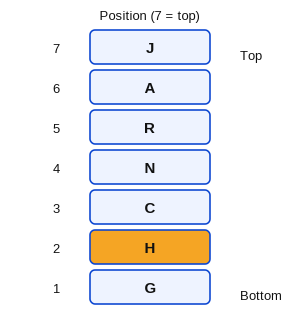
Seven boxes A, C, G, H, J, N and R are kept one over the other but not necessarily in the same order.
Only three boxes are kept above N. Only one box is kept between H and N. Only three boxes are kept between H and A. A is kept at some place above N. R is kept immediately below A. C is kept at one of the places above G. J is not kept immediately above or below H.
How many boxes are kept above H?
सात बक्से A, C, G, H, J, N और R एक के ऊपर एक रखे गए हैं, परंतु आवश्यक नहीं कि इसी क्रम में हों।
N के ऊपर केवल तीन बक्से रखे गए हैं। H और N के बीच केवल एक बक्सा रखा गया है। H और A के बीच केवल तीन बक्से रखे गए हैं। A, N के ऊपर किसी स्थान पर रखा गया है। R, A के ठीक नीचे रखा गया है। C, G के ऊपर किसी एक स्थान पर रखा गया है। J, H के ठीक ऊपर या ठीक नीचे नहीं रखा गया है।
H के ऊपर कितने बक्से रखे गए हैं?
  1. A4
  2. B2
  3. C3
  4. D5
Show answer

Concept: Number places 1 (bottom) to 7 (top); start from the clue that fixes an exact place.

  1. Three boxes above N → N = 4. One box between H and N, and A above N with three boxes between H and A → H = 2, A = 6.
  2. R immediately below A → R = 5.
  3. Places 1, 3, 7 remain for C, G, J. J is not adjacent to H (2) → J = 7; C above G → C = 3, G = 1.
  4. Boxes above H: C, N, R, A, J = 5.

Trick: 'Exactly three above' pins the middle box of seven – build outward from it.

Answer: (D) 5

अवधारणा: स्थान 1 (नीचे) से 7 (ऊपर) नंबर दें; उस सुराग से शुरू करें जो सटीक स्थान तय करे।

  1. N के ऊपर तीन बॉक्स → N = 4। H और N के बीच एक बॉक्स, तथा A, N के ऊपर और H-A के बीच तीन बॉक्स → H = 2, A = 6।
  2. R, A के ठीक नीचे → R = 5।
  3. स्थान 1, 3, 7 बचे C, G, J के लिए। J, H (2) से सटा नहीं → J = 7; C, G के ऊपर → C = 3, G = 1।
  4. H के ऊपर बॉक्स: C, N, R, A, J = 5।

ट्रिक: 'ठीक तीन ऊपर' सात में बीच वाला बॉक्स तय कर देता है – वहाँ से बाहर की ओर बनाएँ।

उत्तर: (D) 5

RRB NTPC Graduate CBT 1General Intelligence and ReasoningBox ArrangementRRB NTPC Graduate CBT 1 2025 · 17 Mar Shift 2 →
Q16609.
Based on the English alphabetical order, three of the following four letter-clusters are alike in a certain way and thus form a group. Which is the letter-cluster that DOES NOT belong to that group?
(Note: The odd one out is not based on the number of consonants/vowels or their position in the letter-cluster.)
अंग्रेज़ी वर्णमाला क्रम के आधार पर, निम्नलिखित चार अक्षर-समूहों में से तीन एक निश्चित प्रकार से समान हैं और इस प्रकार एक समूह बनाते हैं। वह अक्षर-समूह कौन-सा है जो उस समूह से संबंधित नहीं है?
(नोट: असंगत विकल्प व्यंजनों/स्वरों की संख्या या अक्षर-समूह में उनकी स्थिति पर आधारित नहीं है।)
  1. AMQO
  2. BSWU
  3. CCHE
  4. DZDB
Show answer

Concept: Use letter positions (A=1 … Z=26) and compare the gaps.

  1. MQO: M(13) +4 → Q(17) −2 → O(15).
  2. SWU: S(19) +4 → W(23) −2 → U(21); ZDB: Z(26) +4 → D(4) −2 → B(2) (cyclic).
  3. CHE: C(3) +5 → H(8) −3 → E(5) – different gaps, so it is the odd one.

Trick: Write the gaps as a pattern (+4, −2) and the odd cluster shows itself.

Answer: (C) CHE

अवधारणा: अक्षर स्थान (A=1 … Z=26) लें और अंतराल तुलना करें।

  1. MQO: M(13) +4 → Q(17) −2 → O(15)।
  2. SWU: S(19) +4 → W(23) −2 → U(21); ZDB: Z(26) +4 → D(4) −2 → B(2) (चक्रीय)।
  3. CHE: C(3) +5 → H(8) −3 → E(5) – अलग अंतराल, अतः यही विषम है।

ट्रिक: अंतरालों को पैटर्न (+4, −2) की तरह लिखें, विषम समूह खुद दिख जाता है।

उत्तर: (C) CHE

RRB NTPC Graduate CBT 1General Intelligence and ReasoningLetter Cluster ClassificationRRB NTPC Graduate CBT 1 2025 · 17 Mar Shift 2 →
Q16610.
Based on the English alphabetical order, three of the following four letter cluster pairs are alike in a certain way and thus form a group. Which is the one that does not belong to that group?
(Note: The odd one out is not based on the number of consonants/vowels or their position in the letter cluster)
अंग्रेज़ी वर्णमाला क्रम के आधार पर, निम्नलिखित चार अक्षर-समूह युग्मों में से तीन एक निश्चित प्रकार से समान हैं और इस प्रकार एक समूह बनाते हैं। वह कौन-सा है जो उस समूह से संबंधित नहीं है?
(नोट: असंगत विकल्प व्यंजनों/स्वरों की संख्या या अक्षर-समूह में उनकी स्थिति पर आधारित नहीं है)
  1. ACG-FJ
  2. BWA-ZD
  3. CYC-BE
  4. DAE-DH
Show answer

Concept: Compare how each letter of the first cluster moves to the second.

  1. CG → FJ: C+3 = F, G+3 = J. WA → ZD: W+3 = Z, A+3 = D. AE → DH: A+3 = D, E+3 = H.
  2. YC → BE: Y+3 = B (cyclic) but C+2 = E – the second letter breaks the +3 rule.

Trick: Check both letters of every pair; the odd one usually hides the error in the second letter.

Answer: (C) YC-BE

अवधारणा: देखें कि पहले समूह का हर अक्षर दूसरे में कैसे बदलता है।

  1. CG → FJ: C+3 = F, G+3 = J। WA → ZD: W+3 = Z, A+3 = D। AE → DH: A+3 = D, E+3 = H।
  2. YC → BE: Y+3 = B (चक्रीय) पर C+2 = E – दूसरा अक्षर +3 नियम तोड़ता है।

ट्रिक: हर युग्म के दोनों अक्षर जाँचें; विषम युग्म की गड़बड़ी प्रायः दूसरे अक्षर में छिपी होती है।

उत्तर: (C) YC-BE

RRB NTPC Graduate CBT 1General Intelligence and ReasoningLetter Pair ClassificationRRB NTPC Graduate CBT 1 2025 · 17 Mar Shift 2 →
Q16611.
If 1 is added to each odd digit and 2 is subtracted from each even digit in the number 8134576, which of the following digits will be second from the left in the new number thus formed?
यदि संख्या 8134576 में प्रत्येक विषम अंक में 1 जोड़ा जाए और प्रत्येक सम अंक से 2 घटाया जाए, तो इस प्रकार बनी नई संख्या में बाएँ से दूसरा अंक निम्नलिखित में से कौन-सा होगा?
  1. A2
  2. B6
  3. C8
  4. D4
Show answer

Concept: Apply the rule digit by digit: odd → +1, even → −2.

  1. 8 1 3 4 5 7 6 → 6 2 4 2 6 8 4.
  2. New number 6242684; second digit from the left is 2.

Trick: Only the asked position matters – the second digit 1 is odd → 1 + 1 = 2. Done in one step.

Answer: (A) 2

अवधारणा: नियम अंक-दर-अंक लगाएँ: विषम → +1, सम → −2।

  1. 8 1 3 4 5 7 6 → 6 2 4 2 6 8 4।
  2. नई संख्या 6242684; बाएँ से दूसरा अंक 2।

ट्रिक: केवल पूछा गया स्थान मायने रखता है – दूसरा अंक 1 विषम है → 1 + 1 = 2। एक चरण में हल।

उत्तर: (A) 2

RRB NTPC Graduate CBT 1General Intelligence and ReasoningNumber Operations (Digit Manipulation)RRB NTPC Graduate CBT 1 2025 · 17 Mar Shift 2 →
Q16612.
108 is related to 12 following a certain logic. Following the same logic, 234 is related to 26. To which of the following is 198 related, following the same logic?
(NOTE: Operations should be performed on the whole numbers, without breaking down the numbers into their constituent digits. E.g. 13 – Operations on 13 such as adding/ subtracting /multiplying to 13 can be performed. Breaking down 13 into 1 and 3 and then performing mathematical operations on 1 and 3 is not allowed.)
एक निश्चित तर्क के अनुसार 108, 12 से संबंधित है। उसी तर्क के अनुसार 234, 26 से संबंधित है। उसी तर्क के अनुसार 198 निम्नलिखित में से किससे संबंधित है?
(नोट: संक्रियाएँ पूर्ण संख्याओं पर की जानी चाहिए, संख्याओं को उनके घटक अंकों में तोड़े बिना। उदाहरण के लिए 13 – 13 पर संक्रियाएँ जैसे 13 में जोड़ना/घटाना/गुणा करना की जा सकती हैं। 13 को 1 और 3 में तोड़कर फिर 1 और 3 पर गणितीय संक्रियाएँ करने की अनुमति नहीं है।)
  1. A28
  2. B18
  3. C34
  4. D22
Show answer

Concept: Find the operation linking the first number to the second in both pairs.

  1. 108÷9=12 and 234÷9=26 – rule: second = first ÷9.
  2. 198÷9=22.

Trick: When the first number is much larger, try division first; 108, 234, 198 are all multiples of 9 (digit sums 9, 9, 18).

Answer: (D) 22

अवधारणा: दोनों युग्मों में पहली संख्या को दूसरी से जोड़ने वाली संक्रिया खोजें।

  1. 108÷9=12 और 234÷9=26 – नियम: दूसरी = पहली ÷9।
  2. 198÷9=22।

ट्रिक: पहली संख्या बहुत बड़ी हो तो पहले भाग आज़माएँ; 108, 234, 198 सभी 9 के गुणज हैं (अंक योग 9, 9, 18)।

उत्तर: (D) 22

RRB NTPC Graduate CBT 1General Intelligence and ReasoningNumber AnalogyRRB NTPC Graduate CBT 1 2025 · 17 Mar Shift 2 →
Q16613.
In a certain code language,
A + B means ‘A is the mother of B’
A – B means ‘A is the brother of B’
A x B means ‘A is the wife of B’
A % B means ‘A is the father of B’
A # B means ‘A is the daughter of B’
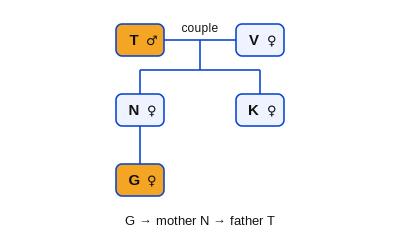
Based on the above, how is T related to G if ‘G # N # V + K # T’?
एक निश्चित कूट भाषा में,
A + B का अर्थ है ‘A, B की माता है’
A – B का अर्थ है ‘A, B का भाई है’
A x B का अर्थ है ‘A, B की पत्नी है’
A % B का अर्थ है ‘A, B का पिता है’
A # B का अर्थ है ‘A, B की पुत्री है’
उपर्युक्त के आधार पर, यदि ‘G # N # V + K # T’ है, तो T, G से किस प्रकार संबंधित है?
  1. ASister’s daughterबहन की पुत्री
  2. BMother’s fatherमाता का पिता
  3. CDaughter’s daughterपुत्री की पुत्री
  4. DMother’s sisterमाता की बहन
Show answer

Concept: Decode each symbol step by step and build the family tree.

  1. G # N: G is daughter of N. N # V: N is daughter of V. V + K: V is mother of K. K # T: K is daughter of T.
  2. V and T are both parents of K, so T is the father (V is female). Hence T is also the father of N.
  3. N is G's mother → T is G's mother's father.

Trick: Start decoding from the person asked about (G) and move link by link; fix genders from 'mother/daughter' words.

Answer: (B) Mother's father

अवधारणा: हर चिह्न को चरणबद्ध डिकोड करें और वंश-वृक्ष बनाएँ।

  1. G # N: G, N की बेटी। N # V: N, V की बेटी। V + K: V, K की माँ। K # T: K, T की बेटी।
  2. V और T दोनों K के माता-पिता हैं, अतः T पिता है (V महिला है)। इसलिए T, N का भी पिता है।
  3. N, G की माँ → T, G की माँ का पिता (नाना)।

ट्रिक: जिसके बारे में पूछा है (G) उससे डिकोड शुरू करें और कड़ी-दर-कड़ी बढ़ें; 'माँ/बेटी' शब्दों से लिंग तय करें।

उत्तर: (B) माँ का पिता (नाना)

RRB NTPC Graduate CBT 1General Intelligence and ReasoningBlood Relations (Coded)RRB NTPC Graduate CBT 1 2025 · 17 Mar Shift 2 →
Q16614.
Read the given statements and conclusions carefully. Assuming that the information given in the statements is true, even if it appears to be at variance with commonly known facts, decide which of the given conclusion(s) logically follow(s) from the statement.
Statements:
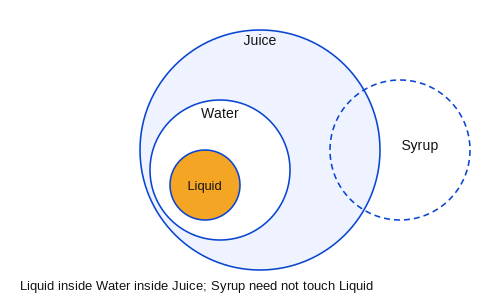
All liquid is water. All water is juice. Some juices are syrup.
Conclusions:
(I) All liquid is juice.
(II) Some syrups are liquid.
दिए गए कथनों और निष्कर्षों को ध्यानपूर्वक पढ़िए। यह मानते हुए कि कथनों में दी गई जानकारी सत्य है, भले ही वह सामान्यतः ज्ञात तथ्यों से भिन्न प्रतीत होती हो, निर्णय कीजिए कि दिए गए निष्कर्षों में से कौन-सा/से निष्कर्ष कथनों का तार्किक रूप से अनुसरण करता है/करते हैं।
कथन:
सभी द्रव, जल हैं। सभी जल, जूस हैं। कुछ जूस, सिरप हैं।
निष्कर्ष:
(I) सभी द्रव, जूस हैं।
(II) कुछ सिरप, द्रव हैं।
  1. AOnly conclusion (II) follows.केवल निष्कर्ष (II) अनुसरण करता है।
  2. BBoth conclusions (I) and (II) follow.निष्कर्ष (I) और (II) दोनों अनुसरण करते हैं।
  3. COnly conclusion (I) follows.केवल निष्कर्ष (I) अनुसरण करता है।
  4. DNeither conclusion (I) nor (II) follows.न तो निष्कर्ष (I) और न ही (II) अनुसरण करता है।
Show answer

Concept: 'All A are B' and 'All B are C' give 'All A are C'; a 'Some' statement passes nothing definite backwards.

  1. All liquid is water, all water is juice → All liquid is juice. Conclusion I follows.
  2. Some juices are syrup: the syrup part of juice may lie entirely outside water and liquid, so 'Some syrups are liquid' is not certain. Conclusion II does not follow.

Trick: Draw the smallest possible Venn: nested circles for 'All', and put the 'Some' overlap as far from the inner circle as you can.

Answer: (C) Only conclusion (I) follows.

अवधारणा: 'सभी A, B हैं' और 'सभी B, C हैं' से 'सभी A, C हैं' मिलता है; 'कुछ' वाला कथन पीछे की ओर कुछ निश्चित नहीं देता।

  1. सभी liquid, water हैं; सभी water, juice हैं → सभी liquid, juice हैं। निष्कर्ष I सही।
  2. कुछ juice, syrup हैं: juice का syrup वाला भाग water और liquid से पूरी तरह बाहर हो सकता है, अतः 'कुछ syrup, liquid हैं' निश्चित नहीं। निष्कर्ष II नहीं निकलता।

ट्रिक: सबसे छोटा संभव Venn बनाएँ: 'सभी' के लिए एक-दूसरे के अंदर वृत्त, और 'कुछ' वाले ओवरलैप को भीतरी वृत्त से जितना दूर हो सके रखें।

उत्तर: (C) केवल निष्कर्ष (I) निकलता है।

RRB NTPC Graduate CBT 1General Intelligence and ReasoningSyllogismRRB NTPC Graduate CBT 1 2025 · 17 Mar Shift 2 →
Q16615.
Which of the following letter-clusters should replace # and % so that the pattern and relationship followed between the letter-cluster pair on the left side of :: is the same as that on the right side of :: ?
# : KUC :: VFN : %
निम्नलिखित में से कौन-से अक्षर-समूह # और % के स्थान पर आने चाहिए ताकि :: के बाईं ओर के अक्षर-समूह युग्म के बीच का पैटर्न और संबंध वही हो जो :: के दाईं ओर है?
# : KUC :: VFN : %
  1. A# = DNV % = CMU
  2. B# = DNV % = CMP
  3. C# = DUV % = CMU
  4. D# = DNV % = CNU
Show answer

Concept: Find the uniform letter shift that links the given pair, then apply it to the other pair.

  1. Try option A: DNV : KUC → D+7=K, N+7=U, V+7=C. Each letter moves +7.
  2. Apply +7 to VFN: V+7=C, F+7=M, N+7=U ⇒ CMU.
  3. Only option A has both # = DNV and % = CMU.

Trick: Check the second pair first – VFN +7 = CMU eliminates B and D at once; then DNV vs DUV decides A.

Answer: (A) # = DNV % = CMU

अवधारणा: दिए गए युग्म में अक्षरों का समान shift पहचानें और दूसरे युग्म पर लगाएँ।

  1. विकल्प A लें: DNV : KUC → D+7=K, N+7=U, V+7=C। हर अक्षर +7 बढ़ता है।
  2. VFN पर +7: V+7=C, F+7=M, N+7=U ⇒ CMU।
  3. केवल विकल्प A में # = DNV और % = CMU दोनों हैं।

ट्रिक: पहले दूसरा युग्म जाँचें – VFN +7 = CMU से B और D तुरंत कटते हैं; फिर DNV बनाम DUV से A तय होता है।

उत्तर: (A) # = DNV % = CMU

RRB NTPC Graduate CBT 1General Intelligence and ReasoningLetter-cluster analogyRRB NTPC Graduate CBT 1 2025 · 17 Mar Shift 2 →
Q16616.
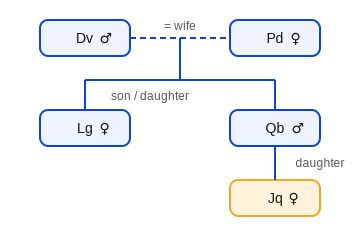
Lg is the daughter of Dv. Jq is the daughter of Qb. Pd is the wife of Dv. Qb is the brother of Lg. How is Jq related to Dv?
Lg, Dv की पुत्री है। Jq, Qb की पुत्री है। Pd, Dv की पत्नी है। Qb, Lg का भाई है। Jq, Dv से किस प्रकार संबंधित है?
  1. ADaughter’s daughterपुत्री की पुत्री
  2. BSon’s wifeपुत्र की पत्नी
  3. CFather’s fatherपिता का पिता
  4. DSon’s daughterपुत्र की पुत्री
Show answer

Concept: Build the family tree generation by generation.

  1. Lg is Dv's daughter; Qb is Lg's brother ⇒ Qb is Dv's son.
  2. Jq is Qb's daughter ⇒ Jq is the daughter of Dv's son.
  3. So Jq is Dv's son's daughter (granddaughter).

Trick: Brother of a daughter = son of the same parent. Sibling links always share the parent.

Answer: (D) Son's daughter

अवधारणा: पीढ़ी-दर-पीढ़ी परिवार वृक्ष बनाएँ।

  1. Lg, Dv की बेटी है; Qb, Lg का भाई है ⇒ Qb, Dv का बेटा है।
  2. Jq, Qb की बेटी है ⇒ Jq, Dv के बेटे की बेटी है।
  3. अतः Jq, Dv की पोती (बेटे की बेटी) है।

ट्रिक: बेटी का भाई = उसी माता-पिता का बेटा। भाई-बहन का संबंध माता-पिता साझा करता है।

उत्तर: (D) बेटे की बेटी

RRB NTPC Graduate CBT 1General Intelligence and ReasoningBlood RelationsRRB NTPC Graduate CBT 1 2025 · 17 Mar Shift 2 →
Q16617.
Which of the following letter-clusters should replace # and % so that the pattern and relationship followed between the letter-cluster pair on the left side of :: is the same as that on the right side of ::?
# : CGW :: LDM : %
निम्नलिखित में से कौन-से अक्षर-समूह # और % के स्थान पर आने चाहिए ताकि :: के बाईं ओर के अक्षर-समूह युग्म के बीच का पैटर्न और संबंध वही हो जो :: के दाईं ओर है?
# : CGW :: LDM : %
  1. A# = BET, % = MFP
  2. B# = AET, % = MFO
  3. C# = ADS, % = NEO
  4. D# = BDT, % = MEP
Show answer

Concept: Each letter position may have its own shift; find the pattern from the options.

  1. Option A: BET : CGW → B+1=C, E+2=G, T+3=W – shifts +1,+2,+3.
  2. Apply to LDM: L+1=M, D+2=F, M+3=P ⇒ MFP.
  3. Option A gives exactly # = BET and % = MFP.

Trick: Shifts +1,+2,+3 are the most common RRB pattern – test it first.

Answer: (A) # = BET, % = MFP

अवधारणा: हर अक्षर-स्थान का अपना shift हो सकता है; विकल्पों से पैटर्न पहचानें।

  1. विकल्प A: BET : CGW → B+1=C, E+2=G, T+3=W – shift +1,+2,+3।
  2. LDM पर लगाएँ: L+1=M, D+2=F, M+3=P ⇒ MFP।
  3. विकल्प A में ठीक # = BET और % = MFP है।

ट्रिक: +1,+2,+3 RRB का सबसे आम पैटर्न है – इसे पहले जाँचें।

उत्तर: (A) # = BET, % = MFP

RRB NTPC Graduate CBT 1General Intelligence and ReasoningLetter-cluster analogyRRB NTPC Graduate CBT 1 2025 · 17 Mar Shift 2 →
Q16618.
Two sets of numbers are given below. In each set of numbers, certain mathematical operation(s) on the first number result(s) in the second number. Similarly, certain mathematical operation(s) on the second number result(s) in the third number and so on. Which of the given options follows the same set of operations as in the given sets? (NOTE: Operations should be performed on the whole numbers, without breaking down the numbers into their constituent digits. E.g. 13 – Operations on 13 such as adding / subtracting /multiplying to 13 can be performed. Breaking down 13 into 1 and 3 and then performing mathematical operations on 1 and 3 is not allowed.)
8 – 64 – 84 – 252; 12 – 144 – 164 – 492
नीचे संख्याओं के दो समुच्चय दिए गए हैं। संख्याओं के प्रत्येक समुच्चय में, पहली संख्या पर कुछ निश्चित गणितीय संक्रिया(एँ) करने से दूसरी संख्या प्राप्त होती है। इसी प्रकार, दूसरी संख्या पर कुछ निश्चित गणितीय संक्रिया(एँ) करने से तीसरी संख्या प्राप्त होती है, और इसी तरह आगे। दिए गए विकल्पों में से कौन-सा दिए गए समुच्चयों के समान संक्रियाओं के समुच्चय का अनुसरण करता है? (नोट: संक्रियाएँ पूर्ण संख्याओं पर की जानी चाहिए, संख्याओं को उनके घटक अंकों में तोड़े बिना। उदाहरण के लिए 13 – 13 पर संक्रियाएँ जैसे 13 में जोड़ना/घटाना/गुणा करना की जा सकती हैं। 13 को 1 और 3 में तोड़कर फिर 1 और 3 पर गणितीय संक्रियाएँ करने की अनुमति नहीं है।)
8 – 64 – 84 – 252; 12 – 144 – 164 – 492
  1. A9 – 81 – 121 – 423
  2. B14 – 256 – 456 – 969
  3. C4 – 16 – 46 – 153
  4. D5 – 25 – 45 – 135
Show answer

Concept: Find the chain of operations that works for both given sets.

  1. 8→82=64→64+20=84→84×3=252.
  2. 12→122=144→144+20=164→164×3=492. Pattern: square, +20, ×3.
  3. Option D: 5→25→45→135 ✓. (A: 81+20=101≠121; B: 142=196≠256; C: 16+20=36≠46.)

Trick: Check the first step alone (n2) – it kills option B; then the +20 step kills A and C.

Answer: (D) 5 – 25 – 45 – 135

अवधारणा: दोनों दिए गए समुच्चयों पर लागू संक्रियाओं की शृंखला पहचानें।

  1. 8→82=64→64+20=84→84×3=252।
  2. 12→122=144→144+20=164→164×3=492। पैटर्न: वर्ग, +20, ×3।
  3. विकल्प D: 5→25→45→135 ✓। (A: 81+20=101≠121; B: 142=196≠256; C: 16+20=36≠46।)

ट्रिक: पहला चरण (n2) ही B को काट देता है; फिर +20 से A और C कटते हैं।

उत्तर: (D) 5 – 25 – 45 – 135

RRB NTPC Graduate CBT 1General Intelligence and ReasoningNumber operation seriesRRB NTPC Graduate CBT 1 2025 · 17 Mar Shift 2 →
Q16619.
What should come in place of ‘?’ in the given series?
98 100 103 108 115 ?
दी गई श्रेणी में ‘?’ के स्थान पर क्या आना चाहिए?
98 100 103 108 115 ?
  1. A128
  2. B126
  3. C125
  4. D127
Show answer

Concept: Look at the differences between consecutive terms.

  1. Differences: 100−98=2, 103−100=3, 108−103=5, 115−108=7.
  2. 2,3,5,7 are consecutive primes; next prime is 11.
  3. ?=115+11=126.

Trick: Small irregular gaps like 2, 3, 5, 7 almost always mean primes.

Answer: (B) 126

अवधारणा: क्रमागत पदों के अंतर देखें।

  1. अंतर: 100−98=2, 103−100=3, 108−103=5, 115−108=7।
  2. 2,3,5,7 क्रमागत अभाज्य हैं; अगला अभाज्य 11।
  3. ?=115+11=126।

ट्रिक: 2, 3, 5, 7 जैसे छोटे अनियमित अंतर प्रायः अभाज्य संख्याएँ होते हैं।

उत्तर: (B) 126

RRB NTPC Graduate CBT 1General Intelligence and ReasoningNumber SeriesRRB NTPC Graduate CBT 1 2025 · 17 Mar Shift 2 →
Q16620.
Read the given statements and conclusions carefully. Assuming that the information given in the statements is true, even if it appears to be at variance with commonly known facts, decide which of the given conclusion(s) logically follow(s) from the statements.
Statements:
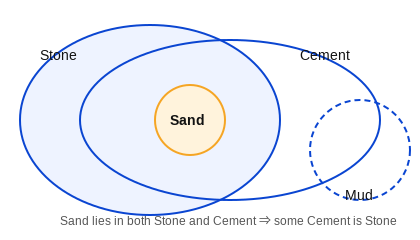
All sand is stone. All sand is cement. Some cements are mud.
Conclusions:
(I) Some muds are sand.
(II) Some cements are stone.
दिए गए कथनों और निष्कर्षों को ध्यानपूर्वक पढ़िए। यह मानते हुए कि कथनों में दी गई जानकारी सत्य है, भले ही वह सामान्यतः ज्ञात तथ्यों से भिन्न प्रतीत होती हो, निर्णय कीजिए कि दिए गए निष्कर्षों में से कौन-सा/से निष्कर्ष कथनों का तार्किक रूप से अनुसरण करता है/करते हैं।
कथन:
सभी बालू, पत्थर हैं। सभी बालू, सीमेंट हैं। कुछ सीमेंट, कीचड़ हैं।
निष्कर्ष:
(I) कुछ कीचड़, बालू हैं।
(II) कुछ सीमेंट, पत्थर हैं।
  1. AOnly conclusion (II) follows.केवल निष्कर्ष (II) अनुसरण करता है।
  2. BNeither conclusion (I) nor (II) follows.न तो निष्कर्ष (I) और न ही (II) अनुसरण करता है।
  3. COnly conclusion (I) follows.केवल निष्कर्ष (I) अनुसरण करता है।
  4. DBoth conclusions (I) and (II) follow.निष्कर्ष (I) और (II) दोनों अनुसरण करते हैं।
Show answer

Concept: Draw a Venn diagram that satisfies all statements with the least overlap.

  1. All sand is stone and all sand is cement ⇒ the sand region lies inside both stone and cement, so some cement is stone – conclusion (II) definitely follows.
  2. 'Some cements are mud' – the mud part of cement may be entirely outside sand, so 'some muds are sand' is only possible, not certain – conclusion (I) does not follow.

Trick: Two 'All A is B' and 'All A is C' statements always give 'Some B is C'. A 'Some' statement cannot pass a definite link onward.

Answer: (A) Only conclusion (II) follows.

अवधारणा: सभी कथनों को न्यूनतम overlap के साथ संतुष्ट करने वाला वेन आरेख बनाएँ।

  1. सभी sand, stone है और सभी sand, cement है ⇒ sand का क्षेत्र stone और cement दोनों के अंदर है, अतः कुछ cement, stone है – निष्कर्ष (II) निश्चित रूप से सही।
  2. 'कुछ cement, mud है' – cement का mud वाला भाग sand से पूरी तरह बाहर हो सकता है, अतः 'कुछ mud, sand है' केवल संभव है, निश्चित नहीं – निष्कर्ष (I) नहीं निकलता।

ट्रिक: 'सभी A, B है' और 'सभी A, C है' से हमेशा 'कुछ B, C है' निकलता है। 'कुछ' वाला कथन निश्चित संबंध आगे नहीं पहुँचाता।

उत्तर: (A) केवल निष्कर्ष (II) अनुसरण करता है।

RRB NTPC Graduate CBT 1General Intelligence and ReasoningSyllogismRRB NTPC Graduate CBT 1 2025 · 17 Mar Shift 2 →