Q18141.
If and , then ?
यदि और है, तो ?
- A127
- B35
- C25
- D58
Show answer
Concept: .
- .
- .
Yaad rakhein: .
Answer: (B) 35
अवधारणा: ।
- ।
- ।
याद रखें: ।
उत्तर: (B) 35

Question bank
Search questions on any topic. Filter by exam category, exam, subject and topic, try the question, then open the answer and explanation.

Concept: .
Yaad rakhein: .
Answer: (B) 35
अवधारणा: ।
याद रखें: ।
उत्तर: (B) 35
Concept: A prime has exactly two factors; the first prime is 2.
Yaad rakhein: 1 is not a prime number, and 2 is the only even prime.
Answer: (B) 28
अवधारणा: अभाज्य संख्या के ठीक दो गुणनखंड होते हैं; पहली अभाज्य संख्या 2 है।
याद रखें: 1 अभाज्य नहीं है, और 2 एकमात्र सम अभाज्य संख्या है।
उत्तर: (B) 28
Concept: Let the average of all nine be ; total .
Trick: The extra ₹2 of the ninth man is shared by 8 others: average .
Answer: (A) ₹29.25
अवधारणा: नौ लोगों का औसत मानें; कुल ।
ट्रिक: नौवें व्यक्ति के अतिरिक्त ₹2 बाकी 8 में बँटते हैं: औसत ।
उत्तर: (A) ₹29.25
Concept: Greatest number giving the same remainder of the differences of the numbers.
Yaad rakhein: Same remainder use HCF of differences; zero remainder HCF of numbers.
Answer: (B) 2
अवधारणा: समान शेषफल देने वाली सबसे बड़ी संख्या संख्याओं के अंतरों का HCF।
याद रखें: समान शेषफल अंतरों का HCF; शेषफल शून्य संख्याओं का HCF।
उत्तर: (B) 2
Concept: An effect must follow directly from the cause (heavy rain and floods in low-lying areas).
Yaad rakhein: Rescue and relief actions are natural effects of a disaster; unrelated policy changes are not.
Answer: (B) Both II and III can be the possible effects
अवधारणा: प्रभाव कारण (भारी बारिश और निचले क्षेत्रों में बाढ़) से सीधे उत्पन्न होना चाहिए।
याद रखें: बचाव और राहत कार्य आपदा के स्वाभाविक प्रभाव हैं; असंबंधित नीतिगत बदलाव नहीं।
उत्तर: (B) II और III दोनों संभावित प्रभाव हो सकते हैं
Concept: Decode each symbol from left to right and draw the family tree.
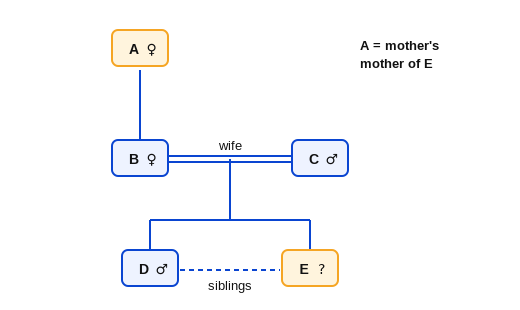
Yaad rakhein: Mother's mother = maternal grandmother (नानी).
Answer: (B) Mother’s mother
अवधारणा: हर चिह्न को बाएँ से दाएँ डिकोड करें और वंश-वृक्ष बनाएँ।
याद रखें: माँ की माँ = नानी।
उत्तर: (B) माता की माता
Concept: Check the position gaps between consecutive letters.
Trick: Simply compare first and last letters: P–N, U–S, Q–O differ by 2, but W–V differ by 1.
Answer: (B) WZV
अवधारणा: क्रमागत अक्षरों के बीच स्थान-अंतर जाँचें।
ट्रिक: केवल पहला और अंतिम अक्षर देखें: P–N, U–S, Q–O में अंतर 2 है, पर W–V में 1।
उत्तर: (B) WZV
Concept: Swap the signs first, then apply BODMAS.
Yaad rakhein: Division and multiplication are done left to right before addition and subtraction.
Answer: (D) 10
अवधारणा: पहले चिह्न बदलें, फिर BODMAS लगाएँ।
याद रखें: भाग और गुणा बाएँ से दाएँ, जोड़-घटाव से पहले करें।
उत्तर: (D) 10
Concept: Find the shift applied to each letter.
Trick: Positions: R = 18, M = 13, Q = 17, L = 12; subtract 8 → 10, 5, 9, 4 = J, E, I, D.
Answer: (C) JEID
अवधारणा: हर अक्षर पर लगाया गया खिसकाव ज्ञात करें।
ट्रिक: स्थान: R = 18, M = 13, Q = 17, L = 12; 8 घटाएँ → 10, 5, 9, 4 = J, E, I, D।
उत्तर: (C) JEID
Concept: Vowels → next letter, consonants → previous letter; then arrange in reverse alphabetical order.
Yaad rakhein: Reverse alphabetical order means Z to A.
Answer: (C) O
अवधारणा: स्वर → अगला अक्षर, व्यंजन → पिछला अक्षर; फिर उल्टे वर्णमाला क्रम में लगाएँ।
याद रखें: उल्टा वर्णमाला क्रम अर्थात Z से A।
उत्तर: (C) O
Concept: A letter common to both words gets the digit common to both codes.
Yaad rakhein: Codes may be jumbled, so match by common letters, not by position.
Answer: (B) 7
अवधारणा: दोनों शब्दों में उभयनिष्ठ अक्षर को दोनों कूटों का उभयनिष्ठ अंक मिलता है।
याद रखें: कूट क्रम बदल सकता है, इसलिए स्थान से नहीं, उभयनिष्ठ अक्षर से मिलान करें।
उत्तर: (B) 7
Concept: Treat the first letter, second letter and number as three separate series.
Trick: Number ; only TZ54 fits.
Answer: (B) TZ54
अवधारणा: पहला अक्षर, दूसरा अक्षर और संख्या को तीन अलग श्रृंखलाएँ मानें।
ट्रिक: संख्या ; केवल TZ54 फिट है।
उत्तर: (B) TZ54
Concept: Compare first letters and second letters of the two clusters (wrap Z → A).
Yaad rakhein: After Z, counting continues from A (circular alphabet).
Answer: (D) AD – YW
अवधारणा: दोनों समूहों के पहले और दूसरे अक्षरों की तुलना करें (Z के बाद A)।
याद रखें: Z के बाद गिनती फिर A से शुरू होती है (चक्रीय वर्णमाला)।
उत्तर: (D) AD – YW
Concept: Replace symbols (, , , ), then apply BODMAS.
Yaad rakhein: Do and first (left to right), then and .
Answer: (A) 59
अवधारणा: चिह्न बदलें (, , , ), फिर BODMAS लगाएँ।
याद रखें: पहले और (बाएँ से दाएँ), फिर और ।
उत्तर: (A) 59
Concept: Find the rule: (7, 28, 56) and (9, 36, 72) → second first , third second .
Trick: Third first : with middle .
Answer: (B) (13, 52, 104)
अवधारणा: नियम ज्ञात करें: (7, 28, 56) और (9, 36, 72) → दूसरी पहली , तीसरी दूसरी ।
ट्रिक: तीसरी पहली : और बीच में ।
उत्तर: (B) (13, 52, 104)
Concept: In HE-JG-LN: first letters , ; second letters , then .
Trick: Check only the last jump of the second letters: it must be ().
Answer: (B) QN-SP-UW
अवधारणा: HE-JG-LN में: पहले अक्षर , ; दूसरे अक्षर , फिर ।
ट्रिक: केवल दूसरे अक्षरों की अंतिम छलाँग देखें: यह होनी चाहिए ()।
उत्तर: (B) QN-SP-UW
Concept: Number positions 1 (top) to 7 (bottom) and place the fixed clues first.
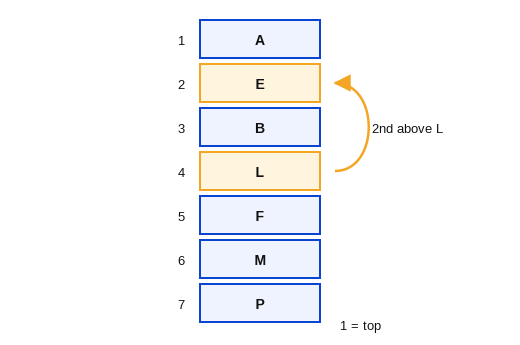
Yaad rakhein: 'Only X above Y' fixes Y at position 2 from the top.
Answer: (B) E
अवधारणा: स्थान 1 (ऊपर) से 7 (नीचे) तक मानें और पहले निश्चित संकेत रखें।
याद रखें: 'केवल X, Y के ऊपर' का अर्थ है Y ऊपर से दूसरे स्थान पर है।
उत्तर: (B) E
Concept: A letter common to both words gets the digit common to both codes.
Yaad rakhein: Codes may be jumbled, so match by common letters, not by position.
Answer: (A) 5
अवधारणा: दोनों शब्दों में उभयनिष्ठ अक्षर को दोनों कूटों का उभयनिष्ठ अंक मिलता है।
याद रखें: कूट क्रम बदल सकता है, इसलिए स्थान से नहीं, उभयनिष्ठ अक्षर से मिलान करें।
उत्तर: (A) 5
Concept: Facing the centre, a person's right is the anticlockwise direction (as drawn). Fix F and place others.
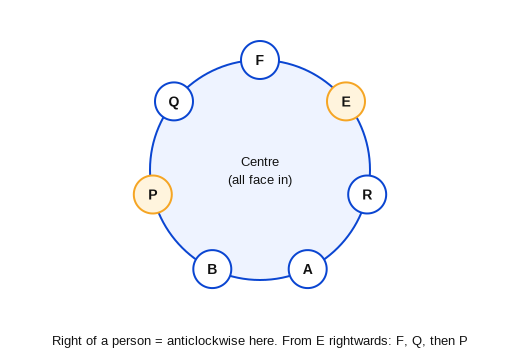
Yaad rakhein: Count the people strictly between, not the seats moved.
Answer: (B) Two
अवधारणा: केंद्र की ओर मुख होने पर व्यक्ति का दायाँ, चित्र में वामावर्त दिशा है। F को स्थिर करके बाकी बैठाएँ।
याद रखें: बीच में बैठे व्यक्ति गिनें, खिसके हुए स्थान नहीं।
उत्तर: (B) दो
Concept: Draw the Venn diagram: Rose inside Lily; Lily separate from Marigold.
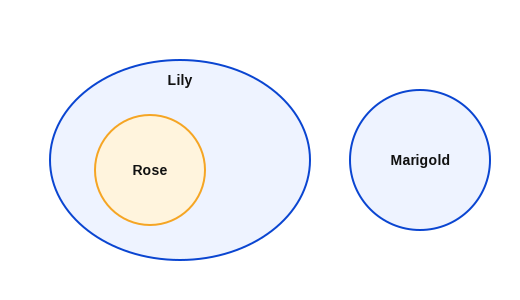
Yaad rakhein: 'All A are B' cannot be reversed to 'All B are A'.
Answer: (A) Only conclusion II follows
अवधारणा: वेन आरेख बनाएँ: गुलाब, लिली के अंदर; लिली, गेंदे से अलग।
याद रखें: 'सभी A, B हैं' को उलटकर 'सभी B, A हैं' नहीं कह सकते।
उत्तर: (A) केवल निष्कर्ष II अनुसरण करता है