Question bank

Q&A: practice questions with answers

Search questions on any topic. Filter by exam category, exam, subject and topic, try the question, then open the answer and explanation.

Courses – airGurukul

21,196 questions found.

Q17241.
The value of 79−10×[2+3×{12 −6(6−5)×2}÷20 ] is:
79−10×[2+3×{12 −6(6−5)×2}÷20 ] का मान है:
  1. A59
  2. B63
  3. C55
  4. D57
Show answer

Concept: Solve brackets inside out: ( ) → { } → [ ], then BODMAS.

  1. 6(6−5)×2=12.
  2. {12−12}=0, so 3×0÷20=0.
  3. [2+0]=2 → 79−10×2=59.

Trick: Spot early that the curly bracket becomes 0 — everything multiplied by it vanishes.

Answer: (A) 59

अवधारणा: कोष्ठक अंदर से बाहर: ( ) → { } → [ ], फिर BODMAS।

  1. 6(6−5)×2=12।
  2. {12−12}=0, अतः 3×0÷20=0।
  3. [2+0]=2 → 79−10×2=59।

ट्रिक: जल्दी देख लें कि { } शून्य हो जाता है — उससे गुणा होने वाला सब शून्य।

उत्तर: (A) 59
SSC GDElementary MathematicsSimplification – nested bracketsSSC GD 2025 · 25 Feb Shift 1 →
Q17242.
A merchant fixes the marked price of his goods at 50% above the cost price. He sells his goods at 12% discount. His percentage of profit is:
एक व्यापारी अपने सामान का अंकित मूल्य क्रय मूल्य से 50% अधिक रखता है। वह अपना सामान 12% छूट पर बेचता है। उसका लाभ प्रतिशत है:
  1. A37%
  2. B32%
  3. C43%
  4. D35%
Show answer

Concept: Successive change: net % = a−b−ab100.

  1. CP = 100 → MP = 150.
  2. SP = 150×0.88=132.
  3. Profit = 32%.

Trick: +50 and −12: 50−12−50×12100=38−6=32%.

Answer: (B) 32%

अवधारणा: क्रमिक परिवर्तन: शुद्ध % = a−b−ab100।

  1. CP = 100 → MP = 150।
  2. SP = 150×0.88=132।
  3. लाभ = 32%।

ट्रिक: +50 और −12: 50−12−50×12100=38−6=32%।

उत्तर: (B) 32%

SSC GDElementary MathematicsProfit – markup then discountSSC GD 2025 · 25 Feb Shift 1 →
Q17243.
Evaluate: 2−[3−{6−(6−4+6)}]
मान ज्ञात कीजिए: 2−[3−{6−(6−4+6)}]
  1. A2
  2. B-3
  3. C-6
  4. D0
Show answer

Concept: Work from the innermost bracket outward; watch the minus signs.

  1. (6 − 4 + 6) = 8.
  2. {6 − 8} = −2.
  3. [3 − (−2)] = 5 → 2 − 5 = −3.

Trick: Minus before a bracket flips every sign inside — the two minuses before −2 make it +2.

Answer: (B) -3

अवधारणा: सबसे भीतरी कोष्ठक से शुरू करें; ऋण चिह्न का ध्यान रखें।

  1. (6 − 4 + 6) = 8।
  2. {6 − 8} = −2।
  3. [3 − (−2)] = 5 → 2 − 5 = −3।

ट्रिक: कोष्ठक से पहले ऋण चिह्न अंदर के सब चिह्न उलट देता है।

उत्तर: (B) -3

SSC GDElementary MathematicsSimplification – nested bracketsSSC GD 2025 · 25 Feb Shift 1 →
Q17244.
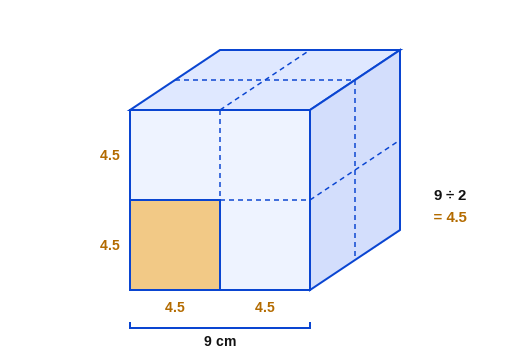
A cube of side 9 cm made of iron is melted and recast into 8 small cubes. Find the side (in cm ) of each small cube.
लोहे से बने 9 cm भुजा वाले एक घन को पिघलाकर 8 छोटे घन बनाए जाते हैं। प्रत्येक छोटे घन की भुजा (cm में) ज्ञात कीजिए।
  1. A4
  2. B4.5
  3. C5.5
  4. D5
Show answer

Concept: Volume stays the same on melting and recasting.

  1. Big cube volume = 93=729cm3.
  2. 8a3=729 → a3=7298.
  3. a=92=4.5 cm.

Trick: Making n3 equal cubes divides the side by n: 8=23, so side = 9÷2.

Answer: (B) 4.5

अवधारणा: पिघलाकर ढालने पर आयतन वही रहता है।

  1. बड़े घन का आयतन = 93=729cm3।
  2. 8a3=729 → a3=7298।
  3. a=92=4.5 cm।

ट्रिक: n3 बराबर घन बनें तो भुजा n से भाग: 8=23, भुजा = 9÷2।

उत्तर: (B) 4.5

SSC GDElementary MathematicsMensuration – recasting cubesSSC GD 2025 · 25 Feb Shift 1 →
Q17245.
Find the value of
((36÷9)×(568+141×(6−5)))
मान ज्ञात कीजिए
((36÷9)×(568+141×(6−5)))
  1. A84
  2. B81
  3. C78
  4. D98
Show answer

Concept: Solve each bracket, then multiply.

  1. 36÷9=4.
  2. 568+14×(6−5)=7+14=21.
  3. 4×21=84.

Trick: (6−5)=1 just leaves 14 unchanged — skip it mentally.

Answer: (A) 84

अवधारणा: हर कोष्ठक हल करें, फिर गुणा करें।

  1. 36÷9=4।
  2. 568+14×(6−5)=7+14=21।
  3. 4×21=84।

ट्रिक: (6−5)=1 होने से 14 वैसा ही रहता है — मन में छोड़ दें।

उत्तर: (A) 84

SSC GDElementary MathematicsSimplification – BODMASSSC GD 2025 · 25 Feb Shift 1 →
Q17246.
The average age of 28 students of a class is 40 years. If the age of the teacher is also included, the average age of the whole group becomes 41 years. The age (in years) of the teacher is:
एक कक्षा के 28 विद्यार्थियों की औसत आयु 40 वर्ष है। यदि शिक्षक की आयु भी सम्मिलित कर ली जाए, तो पूरे समूह की औसत आयु 41 वर्ष हो जाती है। शिक्षक की आयु (वर्षों में) है:
  1. A74
  2. B67
  3. C70
  4. D69
Show answer

Concept: New member's value = new average + (old count × increase).

  1. Students' total = 28×40=1120.
  2. Group total = 29×41=1189.
  3. Teacher = 1189−1120=69 years.

Trick: 41+28×1=69 — he gives 1 year to each of 28 students and keeps 41 for himself.

Answer: (D) 69

अवधारणा: नए सदस्य का मान = नया औसत + (पुरानी संख्या × वृद्धि)।

  1. छात्रों का योग = 28×40=1120।
  2. समूह का योग = 29×41=1189।
  3. शिक्षक = 1189−1120=69 वर्ष।

ट्रिक: 41+28×1=69 — शिक्षक हर छात्र को 1 वर्ष देकर अपने पास 41 रखते हैं।

उत्तर: (D) 69

SSC GDElementary MathematicsAverage – inclusion of a new memberSSC GD 2025 · 25 Feb Shift 1 →
Q17247.
Ravi decided to cover a distance of 24 km in 2 hours 24 minutes. Further he decided to cover the initial one-third of the total distance at 8km/hr and the remaining at some different speed. What is the speed (in km/hr) of Ravi after one-third distance is covered?
रवि ने 24 km की दूरी 2 घंटे 24 मिनट में तय करने का निश्चय किया। आगे उसने कुल दूरी का प्रारंभिक एक-तिहाई भाग 8km/hr की चाल से तथा शेष दूरी किसी भिन्न चाल से तय करने का निश्चय किया। एक-तिहाई दूरी तय कर लेने के बाद रवि की चाल (km/hr में) क्या है?
  1. A1137
  2. B12
  3. C1237
  4. D11
Show answer

Concept: Speed = remaining distance ÷ remaining time.

  1. Total time = 2 h 24 min = 2.4 h.
  2. First 8 km at 8 km/h → 1 h.
  3. Left: 16 km in 1.4 h → 16÷1.4=807=1137 km/h.

Trick: Work in minutes: 16 km in 84 min → 16×6084=807.

Answer: (A) 1137

अवधारणा: चाल = शेष दूरी ÷ शेष समय।

  1. कुल समय = 2 घं 24 मि = 2.4 घं।
  2. पहले 8 km, 8 km/h पर → 1 घं।
  3. शेष: 16 km, 1.4 घं में → 16÷1.4=807=1137 km/h।

ट्रिक: मिनट में सोचें: 84 मिनट में 16 km → 16×6084=807।

उत्तर: (A) 1137

SSC GDElementary MathematicsSpeed – remaining part of journeySSC GD 2025 · 25 Feb Shift 1 →
Q17248.
Evaluate: 32÷8×4−2×3
मान ज्ञात कीजिए: 32÷8×4−2×3
  1. A9
  2. B12
  3. C13
  4. D10
Show answer

Concept: ÷ and × have equal priority — go left to right.

  1. 32÷8=4, then 4×4=16.
  2. 2×3=6.
  3. 16−6=10.

Trick: Common trap: doing 8×4 first gives 32÷32=1 → wrong. Always left to right.

Answer: (D) 10

अवधारणा: ÷ और × बराबर प्राथमिकता — बाएँ से दाएँ।

  1. 32÷8=4, फिर 4×4=16।
  2. 2×3=6।
  3. 16−6=10।

ट्रिक: आम ग़लती: पहले 8×4 करने से 32÷32=1 → ग़लत। हमेशा बाएँ से दाएँ।

उत्तर: (D) 10

SSC GDElementary MathematicsSimplification – order of operationsSSC GD 2025 · 25 Feb Shift 1 →
Q17249.
The students in the three sections A, B and C of Class X are in the ratio 5 : 4 : 7. If 15, 16 and 9 new students are admitted to sections A, B and C, respectively, the ratio changes to 10 : 9 : 11. What is the total number of students in Class X after the new admissions?
कक्षा X के तीन वर्गों A, B और C के विद्यार्थी 5 : 4 : 7 के अनुपात में हैं। यदि वर्ग A, B और C में क्रमशः 15, 16 और 9 नए विद्यार्थी प्रवेश लेते हैं, तो अनुपात बदलकर 10 : 9 : 11 हो जाता है। नए प्रवेशों के बाद कक्षा X में विद्यार्थियों की कुल संख्या क्या है?
  1. A210
  2. B120
  3. C150
  4. D90
Show answer

Concept: Write each section as a multiple of x and use the new ratio.

  1. Sections: 5x, 4x, 7x → after: 5x+15, 4x+16, 7x+9.
  2. 5x+154x+16=109 → 45x+135=40x+160 → x=5.
  3. New strengths: 40, 36, 44 → total 120.

Trick: New total must be a multiple of 10+9+11=30 and exceed old total + 40; test options: 120=30×4 ✔ (old 80=16×5).

Answer: (B) 120

अवधारणा: हर वर्ग को x के गुणज में लिखें और नया अनुपात लगाएँ।

  1. वर्ग: 5x, 4x, 7x → बाद में 5x+15, 4x+16, 7x+9।
  2. 5x+154x+16=109 → 45x+135=40x+160 → x=5।
  3. नई संख्या: 40, 36, 44 → कुल 120।

ट्रिक: नया योग 30 (10 + 9 + 11) का गुणज हो और पुराना योग (16 का गुणज) + 40 हो: 120=80+40 ✔।

उत्तर: (B) 120

SSC GDElementary MathematicsRatio – after admissionsSSC GD 2025 · 25 Feb Shift 1 →
Q17250.
Yogesh invested some money in HDFC at 4% per annum rate of interest. What would be the corresponding simple interest (in ₹) if after 2 years, Yogesh got ₹229.5 as compound interest, considering annual compounding ?
योगेश ने HDFC में 4% वार्षिक ब्याज दर पर कुछ धन निवेश किया। यदि 2 वर्ष बाद, वार्षिक संयोजन मानते हुए, योगेश को ₹229.5 चक्रवृद्धि ब्याज मिला, तो तत्संबंधी साधारण ब्याज (₹ में) क्या होगा?
  1. A235
  2. B225
  3. C240
  4. D220
Show answer

Concept: For 2 years: CI=SI×(1+R200).

  1. CI=SI×(1+4200)=SI×1.02.
  2. SI=229.51.02=225.
  3. Check: CI−SI=4.5 = 4% of one year's interest 112.5 ✔.

Trick: No need to find the principal — divide CI by (1+R200) directly.

Answer: (B) 225

अवधारणा: 2 वर्ष के लिए: CI=SI×(1+R200)।

  1. CI=SI×(1+4200)=SI×1.02।
  2. SI=229.51.02=225।
  3. जाँच: CI−SI=4.5 = एक वर्ष के ब्याज 112.5 का 4% ✔।

ट्रिक: मूलधन निकालने की ज़रूरत नहीं — CI को सीधे (1+R200) से भाग दें।

उत्तर: (B) 225

SSC GDElementary MathematicsInterest – SI from 2-year CISSC GD 2025 · 25 Feb Shift 1 →
Q17251.
Rakesh sold 150 chairs and had a gain equal to the selling price of 75 chairs. What is his profit percentage?
राकेश ने 150 कुर्सियाँ बेचीं और उसे 75 कुर्सियों के विक्रय मूल्य के बराबर लाभ हुआ। उसका लाभ प्रतिशत क्या है?
  1. A110%
  2. B95%
  3. C100%
  4. D105%
Show answer

Concept: Gain=SP−CP.

  1. Gain = SP of 75 chairs, so CP of 150 = SP of 150 − SP of 75 = SP of 75.
  2. CP of 150 chairs = SP of 75 chairs → SP=2×CP.
  3. Profit = 100%.

Trick: Gain = SP of k out of n items → profit%=kn−k×100=7575×100=100%.

Answer: (C) 100%

अवधारणा: लाभ=SP−CP।

  1. लाभ = 75 कुर्सियों का SP, अतः 150 का CP = 75 का SP।
  2. यानी SP=2×CP।
  3. लाभ = 100%।

ट्रिक: n वस्तुओं पर लाभ = k वस्तुओं का SP → लाभ%=kn−k×100=7575×100=100%।

उत्तर: (C) 100%

SSC GDElementary MathematicsProfit – gain in terms of SPSSC GD 2025 · 25 Feb Shift 1 →
Q17252.
12 chairs and 6 tables were bought for ₹12,600. If the average cost of a table is ₹1,500, then find the average cost of a chair.
12 कुर्सियाँ और 6 मेजें ₹12,600 में खरीदी गईं। यदि एक मेज़ की औसत लागत ₹1,500 है, तो एक कुर्सी की औसत लागत ज्ञात कीजिए।
  1. A₹350
  2. B₹500
  3. C₹250
  4. D₹300
Show answer

Concept: Total of chairs = grand total − total of tables.

  1. Tables: 6×1,500 = ₹9,000.
  2. Chairs: 12,600−9,000 = ₹3,600.
  3. Average chair = 3,600÷12 = ₹300.

Trick: Halve everything (6 chairs + 3 tables = 6,300): 6,300−4,500=1,800÷6=300.

Answer: (D) ₹300

अवधारणा: कुर्सियों का योग = कुल − मेज़ों का योग।

  1. मेज़ें: 6×1,500 = ₹9,000।
  2. कुर्सियाँ: 12,600−9,000 = ₹3,600।
  3. औसत कुर्सी = 3,600÷12 = ₹300।

ट्रिक: सब आधा करें (6 कुर्सी + 3 मेज़ = 6,300): 6,300−4,500=1,800÷6=300।

उत्तर: (D) ₹300

SSC GDElementary MathematicsAverage – cost of itemsSSC GD 2025 · 25 Feb Shift 1 →
Q17253.
The population of a district is 327000, out of which 224000 are males. 65% of the population is literate. If 65% males are literate, then what percentage of females are literate?
एक जिले की जनसंख्या 327000 है, जिनमें से 224000 पुरुष हैं। जनसंख्या का 65% साक्षर है। यदि 65% पुरुष साक्षर हैं, तो कितने प्रतिशत महिलाएँ साक्षर हैं?
  1. A68%
  2. B67%
  3. C65%
  4. D66%
Show answer

Concept: Overall rate is a weighted average of male and female rates.

  1. Females = 327,000−224,000=103,000.
  2. Literate: total 212,550; males 145,600 → females 66,950.
  3. 66,950103,000×100=65%.

Trick: If one group's rate equals the overall rate, the other group's rate must equal it too — 65% without calculation.

Answer: (C) 65%

अवधारणा: कुल दर, पुरुष व महिला दरों का भारित औसत होती है।

  1. महिलाएँ = 327,000−224,000=103,000।
  2. साक्षर: कुल 212,550; पुरुष 145,600 → महिलाएँ 66,950।
  3. 66,950103,000×100=65%।

ट्रिक: एक समूह की दर कुल दर के बराबर हो तो दूसरे की भी वही होगी — बिना गणना 65%।

उत्तर: (C) 65%

SSC GDElementary MathematicsPercentage – literacy by genderSSC GD 2025 · 25 Feb Shift 1 →
Q17254.
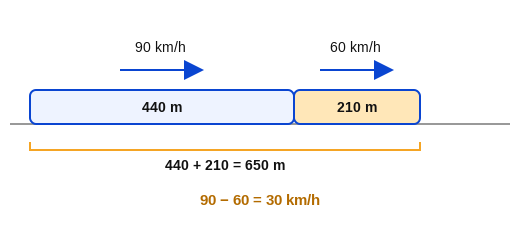
Two trains having lengths of 210 m and 440 m are running at speeds of 60 km/h and 90km/h, respectively, in the same direction. The time taken (in minutes) by the faster train, coming from behind, to completely cross the other train is:
210 m और 440 m लंबाई वाली दो रेलगाड़ियाँ क्रमशः 60 km/h और 90km/h की चाल से एक ही दिशा में चल रही हैं। पीछे से आती हुई तेज़ रेलगाड़ी द्वारा दूसरी रेलगाड़ी को पूरी तरह पार करने में लिया गया समय (मिनट में) है:
  1. A1.3
  2. B2.2
  3. C3
  4. D1.9
Show answer

Concept: Same direction: relative speed = difference; distance = sum of lengths.

  1. Relative speed = 90−60=30 km/h =253 m/s.
  2. Distance = 210+440=650 m.
  3. Time = 650×325=78 s = 1.3 min.

Trick: 30 km/h = 500 m per minute → 650÷500=1.3 min directly.

Answer: (A) 1.3

अवधारणा: एक ही दिशा: सापेक्ष चाल = अंतर; दूरी = लंबाइयों का योग।

  1. सापेक्ष चाल = 90−60=30 km/h =253 m/s।
  2. दूरी = 210+440=650 m।
  3. समय = 650×325=78 s = 1.3 मिनट।

ट्रिक: 30 km/h = 500 m प्रति मिनट → 650÷500=1.3 मिनट सीधे।

उत्तर: (A) 1.3

SSC GDElementary MathematicsTrains – same direction crossingSSC GD 2025 · 25 Feb Shift 1 →
Q17255.
A sum of ₹ x amounts to ₹ 75867 in 212 years at 12% p.a., interest compounded after every 10 months. What is the value of x ?
₹ x की एक राशि 212 वर्षों में 12% वार्षिक की दर से, प्रत्येक 10 महीने बाद ब्याज संयोजित होने पर, ₹ 75867 हो जाती है। x का मान क्या है?
  1. A56000
  2. B58000
  3. C55000
  4. D57000
Show answer

Concept: Change rate and time to the compounding period.

  1. Rate per 10 months = 12×1012=10%.
  2. 212 years = 30 months = 3 periods.
  3. x×(1110)3=75,867 → x=75,867×10001331=57,000.

Trick: (1.1)3=1.331; 75,867÷1.331 — check the option: 57,000×1.331=75,867 ✔.

Answer: (D) 57000

अवधारणा: दर और समय को चक्रवृद्धि अवधि में बदलें।

  1. 10 माह की दर = 12×1012=10%।
  2. 212 वर्ष = 30 माह = 3 अवधियाँ।
  3. x×(1110)3=75,867 → x=75,867×10001331=57,000।

ट्रिक: (1.1)3=1.331; विकल्प जाँचें: 57,000×1.331=75,867 ✔।

उत्तर: (D) 57000

SSC GDElementary MathematicsCompound interest – 10-month periodsSSC GD 2025 · 25 Feb Shift 1 →
Q17256.
Gopal invests a sum of ₹5400 and Akshay invests a sum of ₹9400 at the same rate of simple interest per annum. If, at the end of 6 years, Akshay gets ₹720 more interest than Gopal, then find the rate of interest per annum (in percentage).
गोपाल ₹5400 की राशि तथा अक्षय ₹9400 की राशि समान वार्षिक साधारण ब्याज दर पर निवेश करते हैं। यदि 6 वर्ष के अंत में अक्षय को गोपाल से ₹720 अधिक ब्याज मिलता है, तो वार्षिक ब्याज दर (प्रतिशत में) ज्ञात कीजिए।
  1. A5
  2. B2
  3. C3
  4. D4
Show answer

Concept: Same rate and time → difference in SI comes from difference in principal.

  1. Principal difference = 9,400−5,400=4,000.
  2. 4,000×R×6100=720 → 240R=720.
  3. R=3%.

Trick: 720÷6 years = 120 per year on 4,000 → 3%.

Answer: (C) 3

अवधारणा: दर और समय समान → ब्याज का अंतर केवल मूलधन के अंतर से।

  1. मूलधन का अंतर = 9,400−5,400=4,000।
  2. 4,000×R×6100=720 → 240R=720।
  3. R=3%।

ट्रिक: 720÷6=120 प्रति वर्ष, 4,000 पर → 3%।

उत्तर: (C) 3

SSC GDElementary MathematicsSimple interest – difference of interestsSSC GD 2025 · 25 Feb Shift 1 →
Q17257.
Select the most appropriate meaning of the given idiom.
Spill the beans
  1. ATo drop something accidentally
  2. BTo cook a meal
  3. CTo tell people secret information
  4. DTo clean up a mess
Show answer

Concept: Idioms carry a figurative, not literal, meaning.

  1. 'Spill the beans' = to let out a secret (often too early).
  2. Use: Don't spill the beans about her promotion till Friday.
  3. Options about dropping, cooking or cleaning are literal readings — rejected.

Yaad rakhein: Similar idioms: 'let the cat out of the bag' = reveal a secret; opposite: 'keep it under wraps'.

Answer: (C) To tell people secret information

अवधारणा: मुहावरे का अर्थ लाक्षणिक होता है, शाब्दिक नहीं।

  1. 'Spill the beans' = राज़ खोल देना (अक्सर समय से पहले)।
  2. प्रयोग: Don't spill the beans about her promotion till Friday.
  3. गिराना, पकाना, साफ़ करना — ये शाब्दिक अर्थ हैं, अतः ग़लत।

याद रखें: समान मुहावरा: 'let the cat out of the bag' = भेद खोलना; विपरीत: 'keep it under wraps'।

उत्तर: (C) To tell people secret information

SSC GDEnglishIdioms – Spill the beansSSC GD 2025 · 25 Feb Shift 1 →
Q17258.
Fill in the blank with the most appropriate ANTONYM of the word in brackets in the following sentence.
The events ____ (composed) beautiful thoughts in her memory.
  1. Arectified
  2. Bagitated
  3. Cfocused
  4. Dsecured
Show answer

Concept: Composed = calm, settled; we need its opposite.

  1. Composed (calm) ↔ agitated (disturbed, stirred up).
  2. Sentence: The events agitated beautiful thoughts in her memory.
  3. Rectified = corrected; focused = concentrated; secured = made safe — not opposites.

Yaad rakhein: Composure (noun) = calmness; 'lose one's composure' = become agitated.

Answer: (B) agitated

अवधारणा: Composed = शांत, स्थिर; इसका विलोम चाहिए।

  1. Composed (शांत) ↔ agitated (बेचैन, उद्वेलित)।
  2. वाक्य: The events agitated beautiful thoughts in her memory.
  3. Rectified = सुधारा; focused = केंद्रित; secured = सुरक्षित — विलोम नहीं।

याद रखें: Composure = शांति; 'lose one's composure' = बेचैन हो जाना।

उत्तर: (B) agitated

SSC GDEnglishAntonyms – composedSSC GD 2025 · 25 Feb Shift 1 →
Q17259.
Select the most appropriate option to fill in the blank.
She was ____ when she pointed out the discrimination against women to her manager.
  1. Areticent
  2. Binhibited
  3. Ccandid
  4. Dlaconic
Show answer

Concept: The blank describes someone who spoke openly about a problem.

  1. Pointing out discrimination to the manager shows frankness.
  2. Candid = honest and straightforward.
  3. Reticent (quiet), inhibited (held back), laconic (few words) all mean holding back — wrong.

Trick: Three options share one idea (not speaking much); the odd one out with the opposite sense is the answer.

Answer: (C) candid

अवधारणा: रिक्त स्थान ऐसे व्यक्ति का वर्णन है जिसने खुलकर बात रखी।

  1. मैनेजर के सामने भेदभाव की बात उठाना स्पष्टवादिता है।
  2. Candid = स्पष्ट और ईमानदार।
  3. Reticent (चुप्पा), inhibited (संकोची), laconic (कम बोलने वाला) — ये सब रुकने का भाव, ग़लत।

ट्रिक: तीन विकल्प एक ही भाव (कम बोलना) के हैं; विपरीत भाव वाला अकेला विकल्प उत्तर है।

उत्तर: (C) candid

SSC GDEnglishVocabulary – candidSSC GD 2025 · 25 Feb Shift 1 →
Q17260.
Select the most appropriate option to fill in the blank. Determine the collocation through the sentence.
He suffers from ____ pain in the joints.
  1. Aexternal
  2. Bexcruciating
  3. Cquick
  4. Dawkward
Show answer

Concept: Some adjectives naturally pair with certain nouns.

  1. 'Excruciating' = extremely painful, unbearable.
  2. 'Excruciating pain' is a fixed, natural pairing.
  3. External / quick / awkward pain are not natural collocations here.

Yaad rakhein: Other pain collocations: acute pain, chronic pain, sharp pain, dull ache.

Answer: (B) excruciating

अवधारणा: कुछ विशेषण कुछ संज्ञाओं के साथ स्वाभाविक रूप से आते हैं।

  1. 'Excruciating' = असहनीय, अत्यंत कष्टदायक।
  2. 'Excruciating pain' स्वाभाविक जोड़ी है।
  3. External / quick / awkward pain यहाँ स्वाभाविक संयोजन नहीं।

याद रखें: दर्द के अन्य संयोजन: acute pain, chronic pain, sharp pain, dull ache।

उत्तर: (B) excruciating

SSC GDEnglishCollocation – excruciating painSSC GD 2025 · 25 Feb Shift 1 →