Question bank

Q&A: practice questions with answers

Search questions on any topic. Filter by exam category, exam, subject and topic, try the question, then open the answer and explanation.

Courses – airGurukul

21,196 questions found.

Q17701.
Read the given statements and conclusions carefully. Assuming that the information given in the statements is true, even if it appears to be at variance with commonly known facts, decide which of the given conclusions logically follow(s) from the statements.
Statements:
All pianists are musicians.
All musicians are singers.
No singer is a composer.
Conclusions:
(I): No pianist is a composer.
(II): Some singers are pianists.
दिए गए कथनों और निष्कर्षों को ध्यानपूर्वक पढ़िए। यह मानते हुए कि कथनों में दी गई जानकारी सत्य है, भले ही वह सर्वज्ञात तथ्यों से भिन्न प्रतीत होती हो, निर्णय कीजिए कि दिए गए निष्कर्षों में से कौन-सा/से कथनों का तार्किक रूप से अनुसरण करता है/करते हैं।
कथन:
सभी पियानोवादक संगीतज्ञ हैं।
सभी संगीतज्ञ गायक हैं।
कोई भी गायक रचयिता नहीं है।
निष्कर्ष:
(I): कोई भी पियानोवादक रचयिता नहीं है।
(II): कुछ गायक पियानोवादक हैं।
  1. ANeither conclusion (I) nor (II) follows.न तो निष्कर्ष (I) और न ही (II) अनुसरण करता है।
  2. BBoth conclusions (I) and (II) follow.निष्कर्ष (I) और (II) दोनों अनुसरण करते हैं।
  3. COnly conclusion (II) follows.केवल निष्कर्ष (II) अनुसरण करता है।
  4. DOnly conclusion (I) follows.केवल निष्कर्ष (I) अनुसरण करता है।
Show answer

Concept: All + All gives All; All + No gives No.
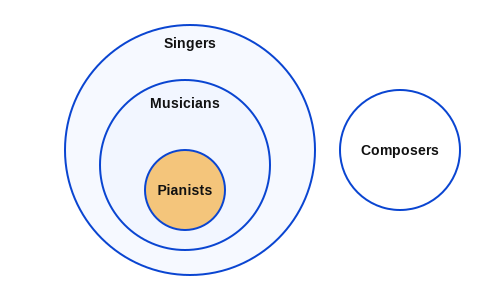
  1. All pianists are musicians + all musicians are singers ⇒ all pianists are singers.
  2. All pianists are singers + no singer is a composer ⇒ no pianist is a composer. (I) follows.
  3. 'All pianists are singers' can be converted to 'Some singers are pianists'. (II) follows.

Trick: Whenever 'All A are B' is true, 'Some B are A' is automatically true – tick such a conclusion at once.

Answer: (B) Both conclusions (I) and (II) follow.

अवधारणा: सभी + सभी = सभी; सभी + कोई नहीं = कोई नहीं।

  1. संक्षेप: पियानोवादक = P, संगीतकार = M, गायक = S, रचनाकार = C. P ⊂ M ⊂ S ⇒ पूरा P, S के भीतर।
  2. S और C का कोई मेल नहीं ⇒ P और C का भी नहीं। निष्कर्ष (I) निकलता है।
  3. पूरा P, S के भीतर है, तो S का कुछ भाग P है ⇒ निष्कर्ष (II) भी निकलता है।

ट्रिक: 'सभी A, B हैं' सत्य हो तो 'कुछ B, A हैं' अपने-आप सत्य होता है।

उत्तर: (B) निष्कर्ष (I) और (II) दोनों अनुसरण करते हैं।

SSC GDGeneral Intelligence & ReasoningSyllogism – all/all/no chainSSC GD 2025 · 20 Feb Shift 2 →
Q17702.
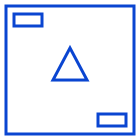
The sequence of folding a piece of paper and the manner in which the folded paper is cut is shown in the following figures. How would this paper look when unfolded?
कागज़ के एक टुकड़े को मोड़ने का क्रम तथा मुड़े हुए कागज़ को जिस प्रकार काटा गया है, वह निम्नलिखित आकृतियों में दर्शाया गया है। खोलने पर यह कागज़ कैसा दिखाई देगा?
  1. A
  2. B
  3. C
  4. D
Show answer

Concept: Each fold doubles every cut; open the folds in reverse order, mirroring across each crease.

  1. Bottom half goes up, then right half goes left ⇒ the cut is made on the top-left quarter; two folds ⇒ every cut appears 4 times.
  2. The small rectangle is near the outer edge, away from the creases ⇒ its 4 copies sit near the 4 outer corners.
  3. The slanting cut is at the corner where both creases meet (sheet centre) ⇒ it opens into one full diamond at the centre.

Trick: A cut touching both creases becomes ONE shape at the centre; a cut away from creases becomes 4 separate shapes. Option (C) alone shows this.

Answer: (C)

अवधारणा: हर मोड़ कटाव की संख्या दोगुनी करता है; खोलते समय उल्टे क्रम में तह की रेखा के पार दर्पण प्रतिबिंब बनाएँ।

  1. दो बार मोड़ने पर कागज़ का ऊपर-बायाँ क्वार्टर बचता है, कटाव उसी पर; अतः हर कटाव खुलने पर 4 जगह दिखेगा।
  2. छोटा आयत तह से दूर, बाहरी किनारे की ओर है ⇒ खुलने पर 4 आयत, शीट के कोनों के निकट।
  3. तिरछा कटाव उस कोने पर है जहाँ दोनों तह मिलती हैं (केंद्र) ⇒ खुलने पर केंद्र में एक पूरा हीरा (diamond)।

ट्रिक: दोनों तहों को छूने वाला कटाव केंद्र पर एक ही आकृति बनता है; तहों से दूर वाला कटाव 4 अलग आकृतियाँ। यह केवल (C) में है।

उत्तर: (C)

SSC GDGeneral Intelligence & ReasoningPaper folding – two folds, unfolding cutsSSC GD 2025 · 20 Feb Shift 2 →
Q17703.
Based on the English alphabetical order, three of the following four letter-clusters are alike in a certain way and thus form a group. Which is the one that DOES NOT belong to that group? (Note: The odd one out is not based on the number of consonants/vowels or their position in the letter-cluster.)
अंग्रेज़ी वर्णमाला क्रम के आधार पर, निम्नलिखित चार अक्षर-समूहों में से तीन एक निश्चित प्रकार से समान हैं और इस प्रकार एक समूह बनाते हैं। वह कौन-सा है जो उस समूह से संबंधित नहीं है? (नोट: विषम पद अक्षर-समूह में व्यंजनों/स्वरों की संख्या या उनकी स्थिति पर आधारित नहीं है।)
  1. AUVQ
  2. BIMH
  3. CWXS
  4. DIJE
Show answer

Concept: Measure each letter's shift from the first letter.

  1. UVQ: U+1 = V, U−4 = Q.
  2. WXS: W+1 = X, W−4 = S; IJE: I+1 = J, I−4 = E.
  3. IMH: I+4 = M, I−1 = H – the shifts are reversed, so it is the odd one.

Trick: In three options the first two letters are consecutive (UV, WX, IJ). The cluster without that pair (IM) is the odd one – found in 5 seconds.

Answer: (B) IMH

अवधारणा: पहले अक्षर से बाकी अक्षरों का अंतर देखें।

  1. UVQ: U+1 = V, U−4 = Q.
  2. WXS: W+1 = X, W−4 = S; IJE: I+1 = J, I−4 = E.
  3. IMH: I+4 = M, I−1 = H — अंतर उल्टा है, अतः यही विषम है।

ट्रिक: तीन विकल्पों में पहले दो अक्षर क्रमागत हैं (UV, WX, IJ)। जिसमें ऐसा नहीं (IM), वही विषम।

उत्तर: (B) IMH

SSC GDGeneral Intelligence & ReasoningOdd one out – letter cluster shiftsSSC GD 2025 · 20 Feb Shift 2 →
Q17704.
Select the option that represents the letters that, when sequentially placed from left to right in the blanks below, will complete the letter series.
__TB_NA_BM_A
उस विकल्प का चयन कीजिए जो उन अक्षरों को निरूपित करता है, जिन्हें नीचे दिए गए रिक्त स्थानों में बाएँ से दाएँ क्रमिक रूप से रखने पर अक्षर-शृंखला पूर्ण हो जाएगी।
__TB_NA_BM_A
  1. ANAMTN
  2. BTAMNA
  3. CMTANN
  4. DNTMAN
Show answer

Concept: Find the length of the repeating unit and fill the gaps from it.

  1. 12 places; given: _ _ T B _ N A _ B M _ A.
  2. B is at places 4 and 9 ⇒ the pattern repeats every 5 letters.
  3. Unit = N A T B M ⇒ NATBM NATBM NA.
  4. Blanks (1, 2, 5, 8, 11) = N, A, M, T, N.

Trick: Distance between two same letters (B…B = 5) gives the block length directly. Then check options: only NAMTN fits.

Answer: (A) NAMTN

अवधारणा: दोहराई जाने वाली इकाई की लंबाई पहचानें और रिक्त स्थान भरें।

  1. 12 स्थान: _ _ T B _ N A _ B M _ A.
  2. B स्थान 4 और 9 पर ⇒ हर 5 अक्षर बाद दोहराव।
  3. इकाई = N A T B M ⇒ NATBM NATBM NA.
  4. रिक्त स्थान (1, 2, 5, 8, 11) = N, A, M, T, N.

ट्रिक: एक ही अक्षर के दो स्थानों का अंतर (B…B = 5) सीधे इकाई की लंबाई बताता है।

उत्तर: (A) NAMTN

SSC GDGeneral Intelligence & ReasoningLetter series – repeating block of fiveSSC GD 2025 · 20 Feb Shift 2 →
Q17705.
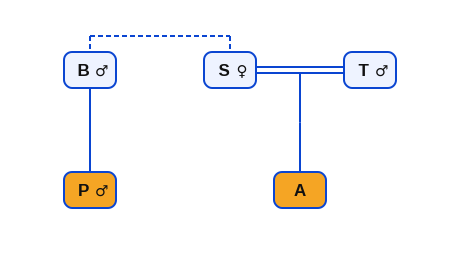
In a certain code language, ' A!B ' means ' A is the brother of B ', ' A<B ' means ' A is the son of B ', ' A/B ' means ' A is the father of B ' and ' A:B ' means ' A is the wife of B '.
How is P related to A if ' P<B!S:T/A '?
एक निश्चित कूट भाषा में, ' A!B ' का अर्थ है ' A, B का भाई है ', ' A<B ' का अर्थ है ' A, B का पुत्र है ', ' A/B ' का अर्थ है ' A, B का पिता है ' और ' A:B ' का अर्थ है ' A, B की पत्नी है '।
यदि ' P<B!S:T/A ' है, तो P, A से किस प्रकार संबंधित है?
  1. AMother's sister's sisterमाता की बहन की बहन
  2. BMother's fatherमाता के पिता
  3. CMother's brother's sonमाता के भाई का पुत्र
  4. DMother's sister's brotherमाता की बहन का भाई
Show answer

Concept: Decode each symbol, then trace back from the target person.

  1. T / A: T is A's father.
  2. S : T: S is T's wife ⇒ S is A's mother.
  3. B ! S: B is S's brother ⇒ A's mother's brother (maternal uncle).
  4. P < B: P is B's son ⇒ P = mother's brother's son.

Trick: Read the chain from the right end (A) and add one relation at a time: father → mother → mother's brother → his son.

Answer: (C) Mother's brother's son

अवधारणा: हर चिह्न का अर्थ लिखें और लक्ष्य व्यक्ति से पीछे की ओर संबंध जोड़ें।

  1. T / A: T, A का पिता।
  2. S : T: S, T की पत्नी ⇒ S, A की माँ।
  3. B ! S: B, S का भाई ⇒ A का मामा।
  4. P < B: P, B का पुत्र ⇒ P = माँ के भाई का पुत्र।

ट्रिक: श्रृंखला को दाएँ छोर (A) से पढ़ें: पिता → माँ → मामा → मामा का बेटा।

उत्तर: (C) माता के भाई का पुत्र

SSC GDGeneral Intelligence & ReasoningCoded blood relationsSSC GD 2025 · 20 Feb Shift 2 →
Q17706.
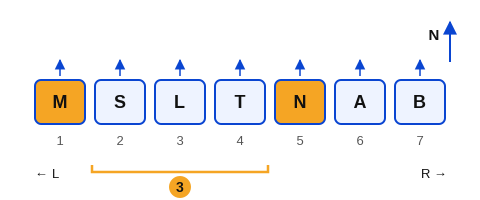
Seven people, A, B, L, M, N, S and T, are sitting in a row, facing north (but not necessarily in the same order).
Only three people sit to the left of T. Only B sits to the right of A. Only three people sit between A and S. L sits at some place to the left of N but at some place to the right of M. How many people sit between M and N ?
सात व्यक्ति A, B, L, M, N, S और T एक पंक्ति में उत्तर की ओर मुख करके बैठे हैं (आवश्यक नहीं कि इसी क्रम में)।
T के बाईं ओर केवल तीन व्यक्ति बैठे हैं। A के दाईं ओर केवल B बैठा है। A और S के बीच केवल तीन व्यक्ति बैठे हैं। L, N के बाईं ओर किसी स्थान पर, किंतु M के दाईं ओर किसी स्थान पर बैठा है। M और N के बीच कितने व्यक्ति बैठे हैं?
  1. AThreeतीन
  2. BOneएक
  3. CFourचार
  4. DTwoदो
Show answer

Concept: Place the persons with fixed seats first, then the conditional ones.

  1. Three to the left of T ⇒ T = seat 4. Only B to the right of A ⇒ A = 6, B = 7.
  2. Three between A and S ⇒ S = 2.
  3. Seats 1, 3, 5 left; M < L < N ⇒ M = 1, L = 3, N = 5.
  4. Between M (1) and N (5): S, L, T = 3 persons.

Trick: People between seats p and q = |p − q| − 1 = 5 − 1 − 1 = 3.

Answer: (A) Three

अवधारणा: पहले निश्चित स्थान वाले व्यक्ति बैठाएँ, फिर शर्त वाले।

  1. T के बाएँ 3 लोग ⇒ T = सीट 4. A के दाएँ केवल B ⇒ A = 6, B = 7.
  2. A और S के बीच 3 ⇒ S = 2.
  3. बची सीटें 1, 3, 5; M, L के बाएँ और L, N के बाएँ ⇒ M = 1, L = 3, N = 5.
  4. M (1) और N (5) के बीच: S, L, T = 3 लोग।

ट्रिक: सीट p और q के बीच लोग = |p − q| − 1 = 4 − 1 = 3.

उत्तर: (A) तीन

SSC GDGeneral Intelligence & ReasoningLinear seating – seven in a rowSSC GD 2025 · 20 Feb Shift 2 →
Q17707.
SHMA is related to PJOX in a certain way based on the English alphabetical order. In the same way, RBUX is related to ODWU. To which of the given options is NCTV related, following the same logic?
SHMA एक निश्चित प्रकार से PJOX से संबंधित है, जो अंग्रेज़ी वर्णमाला क्रम पर आधारित है। उसी प्रकार, RBUX, ODWU से संबंधित है। उसी तर्क का अनुसरण करते हुए, दिए गए विकल्पों में से NCTV किससे संबंधित है?
  1. AJFVU
  2. BKEVS
  3. CLDWT
  4. DLEWS
Show answer

Concept: Find the shift of each letter position and apply the same shifts.

  1. S→P (−3), H→J (+2), M→O (+2), A→X (−3).
  2. Check: R→O (−3), B→D (+2), U→W (+2), X→U (−3) ✔
  3. For NCTV: K (= N back 3), E (= C ahead 2), V (= T ahead 2), S (= V back 3) ⇒ KEVS.

Trick: Work out only the first letter: N − 3 = K. Only option (B) starts with K.

Answer: (B) KEVS

अवधारणा: हर स्थान के अक्षर का अंतर निकालें और वही अंतर लगाएँ।

  1. S→P (−3), H→J (+2), M→O (+2), A→X (−3).
  2. जाँच: R→O (−3), B→D (+2), U→W (+2), X→U (−3) ✔
  3. NCTV पर लगाएँ: K (N से 3 पीछे), E (C से 2 आगे), V (T से 2 आगे), S (V से 3 पीछे) ⇒ KEVS.

ट्रिक: केवल पहला अक्षर निकालें: N − 3 = K; K से केवल विकल्प (B) शुरू होता है।

उत्तर: (B) KEVS

SSC GDGeneral Intelligence & ReasoningLetter analogy – position shiftsSSC GD 2025 · 20 Feb Shift 2 →
Q17708.
What should come in place of the question mark (?) in the given series based on the English alphabetical order? ATE VOZ QJU LEP?
अंग्रेज़ी वर्णमाला क्रम के आधार पर दी गई शृंखला में प्रश्नवाचक चिह्न (?) के स्थान पर क्या आना चाहिए? ATE VOZ QJU LEP?
  1. AHZK
  2. BGZK
  3. CGYK
  4. DGZL
Show answer

Concept: Each letter moves 5 places back in every next term (wrapping after A to Z).

  1. 1st letters: A → V → Q → L → G.
  2. 2nd letters: T → O → J → E → Z (E − 5 wraps to Z).
  3. 3rd letters: E → Z → U → P → K.
  4. Next term = GZK.

Trick: For backward wrap, add 26: E = 5 ⇒ 5−5=0 ⇒ 26 = Z. Options differ only by G/H, Z/Y, K/L – one check each.

Answer: (B) GZK

अवधारणा: पद-दर-पद तीनों स्थानों पर −5 का अंतर है; A से पीछे गिनती Z पर घूम जाती है।

  1. पहले अक्षर: A → V → Q → L → G.
  2. दूसरे अक्षर: T → O → J → E → Z (E − 5 = Z).
  3. तीसरे अक्षर: E → Z → U → P → K.
  4. अगला पद = GZK.

ट्रिक: पीछे की ओर गिनती में 0 या ऋण आए तो 26 जोड़ें: 5−5=0 → 26 = Z.

उत्तर: (B) GZK

SSC GDGeneral Intelligence & ReasoningLetter series – each letter −5SSC GD 2025 · 20 Feb Shift 2 →
Q17709.
The position(s) of how many letters will remain unchanged if each letter in the word CLIMBER is arranged in the English alphabetical order?
यदि शब्द CLIMBER के प्रत्येक अक्षर को अंग्रेज़ी वर्णमाला क्रम में व्यवस्थित किया जाए, तो कितने अक्षरों की स्थिति अपरिवर्तित रहेगी?
  1. ATwoदो
  2. BNoneकोई नहीं
  3. CThreeतीन
  4. DOneएक
Show answer

Concept: Write the word and its alphabetical arrangement one below the other and compare place by place.

  1. Word: C L I M B E R
  2. Sorted: B C E I L M R
  3. Only the 7th letter R matches.

Trick: First check the last letter: if the word's last letter is its alphabetically biggest letter (R here), it surely stays put.

Answer: (D) One

अवधारणा: शब्द और उसका वर्णक्रम वाला रूप एक-दूसरे के नीचे लिखकर स्थान-दर-स्थान मिलाएँ।

  1. शब्द: C L I M B E R
  2. क्रम में: B C E I L M R
  3. केवल 7वाँ अक्षर R समान है।

ट्रिक: अंतिम अक्षर पहले देखें: यदि वह शब्द का वर्णक्रम में सबसे बड़ा अक्षर है (यहाँ R), तो वह अपनी जगह पर ही रहेगा।

उत्तर: (D) एक

SSC GDGeneral Intelligence & ReasoningLetter positions after alphabetical arrangementSSC GD 2025 · 20 Feb Shift 2 →
Q17710.
'PWGZ' is related to 'RZIC' in a certain way based on the English alphabetical order. In the same way, 'UELO' is related to 'WHNR'. To which of the following is 'JDVB' related, following the same logic?
'PWGZ' एक निश्चित प्रकार से 'RZIC' से संबंधित है, जो अंग्रेज़ी वर्णमाला क्रम पर आधारित है। उसी प्रकार, 'UELO', 'WHNR' से संबंधित है। उसी तर्क का अनुसरण करते हुए, निम्नलिखित में से 'JDVB' किससे संबंधित है?
  1. ANFWD
  2. BNFXD
  3. CLGXE
  4. DMHYF
Show answer

Concept: Same position-wise shifts apply to the new cluster.

  1. PWGZ → RZIC: +2, +3, +2, +3.
  2. Check UELO → WHNR: +2, +3, +2, +3 ✔
  3. For JDVB: L (J ahead 2), G (D ahead 3), X (V ahead 2), E (B ahead 3) ⇒ LGXE.

Trick: J + 2 = L – only option (C) begins with L, so stop there.

Answer: (C) LGXE

अवधारणा: स्थान-अनुसार वही अंतर नए समूह पर लगाएँ।

  1. PWGZ → RZIC: +2, +3, +2, +3.
  2. जाँच UELO → WHNR: +2, +3, +2, +3 ✔
  3. JDVB पर: L (J से 2 आगे), G (D से 3 आगे), X (V से 2 आगे), E (B से 3 आगे) ⇒ LGXE.

ट्रिक: J + 2 = L; केवल विकल्प (C) L से शुरू होता है।

उत्तर: (C) LGXE

SSC GDGeneral Intelligence & ReasoningLetter analogy – alternate +2, +3SSC GD 2025 · 20 Feb Shift 2 →
Q17711.
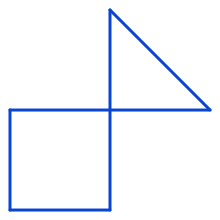
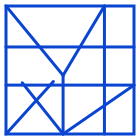
Select the option figure in which the given figure ( X ) is embedded as its part (rotation NOT allowed).

(X)
उस विकल्प आकृति का चयन कीजिए जिसमें दी गई आकृति (X) उसके एक भाग के रूप में सन्निहित है (घुमाने की अनुमति नहीं है)।

(X)
  1. A
  2. B
  3. C
  4. D
Show answer

Concept: The given figure must appear inside an option with the same size, shape and orientation.

  1. (X) = a square with a right-angled triangle on its top-right corner; one leg goes up, one goes right, each equal to the square's side.
  2. In (C), the lower-left small square of the big square, the upper half of the vertical middle line, the right half of the horizontal middle line and the slant between them form exactly (X).
  3. (A), (B), (D) have no such triangle sitting on a square's corner.

Trick: Search for the most unusual line of (X) – here the slanting side – in each option first; it quickly removes wrong choices.

Answer: (C)

अवधारणा: दी गई आकृति विकल्प में उसी आकार, माप और दिशा में छिपी होनी चाहिए।

  1. (X) में एक वर्ग है और उसके दाहिने-ऊपरी शीर्ष से एक समकोण त्रिभुज निकला है — एक पैर सीधा ऊपर, दूसरा सीधा दाहिने, दोनों की लंबाई वर्ग की साइड जितनी।
  2. विकल्प (C) में नीचे-बाईं ओर का छोटा खाना वही वर्ग है; केंद्र से ऊपर जाती रेखा, केंद्र से दाहिने जाती रेखा और इन्हें जोड़ने वाली तिरछी रेखा त्रिभुज पूरा करती हैं।
  3. (A), (B), (D) में ऐसा त्रिभुज किसी वर्ग के कोने पर नहीं है।

ट्रिक: (X) की सबसे अलग रेखा (यहाँ तिरछी रेखा) को पहले हर विकल्प में खोजें — गलत विकल्प जल्दी हट जाते हैं।

उत्तर: (C)

SSC GDGeneral Intelligence & ReasoningEmbedded figureSSC GD 2025 · 20 Feb Shift 2 →
Q17712.
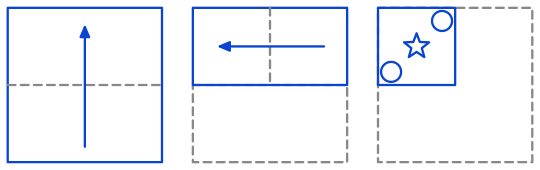
The sequence of folding a piece of paper and the manner in which the folded paper is cut is shown in the following figures. How would this paper look when unfolded?
कागज़ के एक टुकड़े को मोड़ने का क्रम तथा मुड़े हुए कागज़ को जिस प्रकार काटा गया है, वह निम्नलिखित आकृतियों में दर्शाया गया है। खोलने पर यह कागज़ कैसा दिखाई देगा?
  1. A
  2. B
  3. C
  4. D
Show answer

Concept: Two folds ⇒ every cut appears 4 times, mirrored across both creases.

  1. Count: 1 star + 2 circles become 4 stars + 8 circles ⇒ (B) (one star) and (C) (four circles) are out.
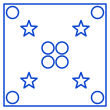
  2. The circles lie next to the creases, so after opening they form pairs at the middle of the top, bottom, left and right edges – none at the corners.
  3. (D) puts circles at corners/centre, so it is out; (A) matches.

Trick: Count first: number of holes after opening = holes cut×2number of folds. Counting alone removes two options here.

Answer: (A)

अवधारणा: दो मोड़ ⇒ हर कटाव 4 बार, दोनों तह-रेखाओं के पार दर्पण की तरह।

  1. गिनती: कटे हुए 1 तारा व 2 वृत्त, हर एक × 4 ⇒ तारे 4 और वृत्त 8 होने चाहिए ⇒ (B) में केवल एक तारा और (C) में केवल चार वृत्त, दोनों गलत।
  2. वृत्त तह-रेखाओं के पास हैं, इसलिए खुलने पर ऊपर, नीचे, बाएँ, दाएँ किनारों के बीच जोड़ियाँ बनती हैं — कोनों पर नहीं।
  3. (D) में वृत्त कोनों/केंद्र पर हैं, अतः गलत; (A) सही।

ट्रिक: पहले गिनें: खुलने पर छेद = काटे गए छेद×2मोड़ों की संख्या।

उत्तर: (A)

SSC GDGeneral Intelligence & ReasoningPaper folding – star and circlesSSC GD 2025 · 20 Feb Shift 2 →
Q17713.
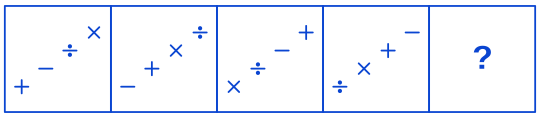
Identify the figure given in the options which when put in place of the question mark (?) will logically complete the series.
उस आकृति की पहचान कीजिए जो विकल्पों में दी गई है और जिसे प्रश्नवाचक चिह्न (?) के स्थान पर रखने पर शृंखला तार्किक रूप से पूर्ण हो जाएगी।
  1. A
  2. B
  3. C
  4. D
Show answer

Concept: The same four signs (+, −, ÷, ×) lie on a diagonal; only their order changes in a fixed cycle.

  1. Read bottom-left to top-right: Fig 1: + − ÷ ×; Fig 2: − + × ÷; Fig 3: × ÷ − +; Fig 4: ÷ × + −.
  2. Changes alternate: swap within pairs, then swap the two pairs, then swap within pairs again.
  3. Next step = swap the pairs: ÷ × + − → + − ÷ ×.

Trick: Two 'swap' operations applied twice bring you back to the start – figure 5 is the same as figure 1.

Answer: (B)

अवधारणा: वही चार चिह्न (+, −, ÷, ×) विकर्ण पर हैं; केवल उनका क्रम एक निश्चित चक्र में बदलता है।

  1. नीचे-बाएँ से ऊपर-दाएँ पढ़ें: आकृति 1: + − ÷ ×; आकृति 2: − + × ÷; आकृति 3: × ÷ − +; आकृति 4: ÷ × + −.
  2. बदलाव बारी-बारी: जोड़ी के अंदर अदला-बदली, फिर दोनों जोड़ियों की अदला-बदली।
  3. अगला कदम = जोड़ियों की अदला-बदली: ÷ × + − → + − ÷ ×.

ट्रिक: दोनों अदला-बदली दो-दो बार होने पर क्रम शुरुआत पर लौट आता है — आकृति 5 = आकृति 1.

उत्तर: (B)

SSC GDGeneral Intelligence & ReasoningFigure series – rearranging four signsSSC GD 2025 · 20 Feb Shift 2 →
Q17714.
What will come in the place of the question mark '(?)' in the following equation, if ' - ' and ' ÷ ' are interchanged and ' x ' and ' + ' are interchanged? 32+49−7×4÷3= ?
निम्नलिखित समीकरण में प्रश्नवाचक चिह्न '(?)' के स्थान पर क्या आएगा, यदि ' - ' और ' ÷ ' को आपस में बदल दिया जाए तथा ' x ' और ' + ' को आपस में बदल दिया जाए? 32+49−7×4÷3= ?
  1. A225
  2. B228
  3. C227
  4. D226
Show answer

Concept: Replace the signs first, then solve by BODMAS.

  1. − ↔ ÷ and × ↔ +: 32+49−7×4÷3 becomes 32×49÷7+4−3.
  2. 49÷7=7; 32×7=224.
  3. 224+4−3=225.

Trick: Divide early: 49÷7=7 avoids the big product 32×49. Unit digit check: 4+4−3 ⇒ ends in 5 ⇒ only 225.

Answer: (A) 225

अवधारणा: पहले चिह्न बदलें, फिर BODMAS से हल करें।

  1. − ↔ ÷ और × ↔ +: 32+49−7×4÷3 ⇒ 32×49÷7+4−3.
  2. 49÷7=7; 32×7=224.
  3. 224+4−3=225.

ट्रिक: पहले भाग करें (49÷7=7), बड़ा गुणा बचता है। इकाई अंक: 4+4−3=5 ⇒ केवल 225.

उत्तर: (A) 225

SSC GDGeneral Intelligence & ReasoningMathematical operations – sign interchangeSSC GD 2025 · 20 Feb Shift 2 →
Q17715.
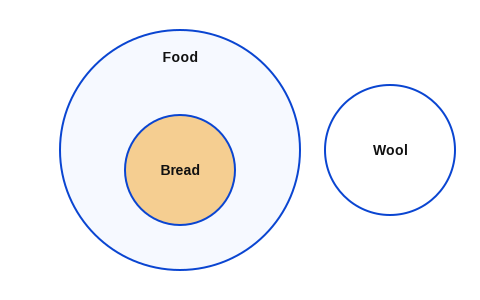
Which of the following Venn diagrams indicates the best relation between Food, Bread and Wool ?
निम्नलिखित में से कौन-सा वेन आरेख Food (भोजन), Bread (ब्रेड) और Wool (ऊन) के बीच सर्वोत्तम संबंध दर्शाता है?
  1. A
  2. B
  3. C
  4. D
Show answer

Concept: Show 'is a kind of' as a circle inside another, and unrelated things as separate circles.

  1. Bread is a type of food ⇒ Bread circle inside Food circle.
  2. Wool is not food at all ⇒ a separate circle, touching neither.
  3. Only option (A) shows one circle inside another plus one apart.

Trick: Ask 'Is every X a Y?' for each pair – yes = inside, no link = separate, some = overlap.

Answer: (A)

अवधारणा: 'एक प्रकार का' संबंध = एक वृत्त दूसरे के अंदर; असंबंधित वस्तुएँ = अलग वृत्त।

  1. ब्रेड एक प्रकार का भोजन है ⇒ ब्रेड का वृत्त भोजन के अंदर।
  2. ऊन भोजन नहीं है ⇒ बिल्कुल अलग वृत्त।
  3. केवल विकल्प (A) में एक वृत्त दूसरे के अंदर और तीसरा अलग है।

ट्रिक: हर जोड़ी से पूछें 'क्या हर X, Y है?' — हाँ = अंदर, कोई संबंध नहीं = अलग, कुछ = आंशिक मिलन।

उत्तर: (A)

SSC GDGeneral Intelligence & ReasoningVenn diagram – Food, Bread, WoolSSC GD 2025 · 20 Feb Shift 2 →
Q17716.
What should come in place of the question mark (?) in the given series?
36, 40, 48, 64, 96, ?
दी गई शृंखला में प्रश्नवाचक चिह्न (?) के स्थान पर क्या आना चाहिए?
36, 40, 48, 64, 96, ?
  1. A126
  2. B148
  3. C134
  4. D160
Show answer

Concept: Differences form a doubling pattern.

  1. Differences: 4, 8, 16, 32 (each ×2).
  2. Next difference = 32×2=64.
  3. ? = 96+64=160.

Trick: Subtract 32 from every term: 4, 8, 16, 32, 64 – a pure doubling series. Next = 128, so ? = 128+32=160.

Answer: (D) 160

अवधारणा: अंतर हर बार दोगुना होता है।

  1. अंतर: 4, 8, 16, 32 (हर बार ×2)।
  2. अगला अंतर = 32×2=64.
  3. ? = 96+64=160.

ट्रिक: हर पद में से 32 घटाएँ: 4, 8, 16, 32, 64 — सीधी दोगुनी श्रृंखला। अगला 128 ⇒ ? = 128+32=160.

उत्तर: (D) 160

SSC GDGeneral Intelligence & ReasoningNumber series – doubling differencesSSC GD 2025 · 20 Feb Shift 2 →
Q17717.
The film RRR was bestowed with the esteemed Golden Globe award in the category of 'Best Original Song' for the composition 'Natu Natu'. Who are the singers of this song ?
फिल्म RRR को 'Natu Natu' गीत के लिए 'सर्वश्रेष्ठ मूल गीत' (Best Original Song) श्रेणी में प्रतिष्ठित गोल्डन ग्लोब पुरस्कार से सम्मानित किया गया। इस गीत के गायक कौन हैं?
  1. AVineeth Sreenivasan and Anirudh Ravichanderविनीत श्रीनिवासन और अनिरुद्ध रविचंदर
  2. BTM Soundararajan and Vijayटी एम साउंडराजन और विजय
  3. CRahul Sipligunj and Kalabhairavaराहुल सिप्लिगंज और कालभैरव
  4. DRajesh Krishnan and Silambarasan TRराजेश कृष्णन और सिलंबरासन टी आर
Show answer

Concept: Awards and credits of the RRR song 'Naatu Naatu'.

  1. The song was sung by Rahul Sipligunj and Kaala Bhairava; music by M. M. Keeravaani, lyrics by Chandrabose.
  2. It won Best Original Song at the 80th Golden Globes (January 2023) and later the Oscar (95th Academy Awards, 2023).
  3. Anirudh, Vijay, Silambarasan etc. are unrelated to this track.

Yaad rakhein: Naatu Naatu was the first song from an Indian film to win both the Golden Globe and the Oscar for Best Original Song.

Answer: (C) Rahul Sipligunj and Kalabhairava

अवधारणा: RRR फ़िल्म के पुरस्कार-विजेता गीत 'नाटू नाटू' की जानकारी।

  1. इस गीत को आवाज़ दी — राहुल सिप्लिगुंज एवं कालभैरव ने; संगीतकार एम. एम. कीरवाणी, गीतकार चंद्रबोस।
  2. 2023 में इसे गोल्डन ग्लोब (80वाँ संस्करण) की Best Original Song श्रेणी मिली, उसके बाद ऑस्कर भी।
  3. बाकी विकल्पों के नाम दूसरे गायकों/अभिनेताओं के हैं।

याद रखें: गोल्डन ग्लोब और ऑस्कर दोनों में 'Best Original Song' पाने वाला यह पहला भारतीय फ़िल्मी गीत है।

उत्तर: (C) राहुल सिप्लिगंज और कालभैरव

SSC GDGeneral Knowledge & General AwarenessNaatu Naatu – singersSSC GD 2025 · 20 Feb Shift 2 →
Q17718.
How many Fundamental Duties are there for citizens of India?
भारत के नागरिकों के लिए कितने मूल कर्तव्य हैं?
  1. A8
  2. B6
  3. C10
  4. D11
Show answer

Concept: Fundamental Duties are in Part IV-A, Article 51A.

  1. The 42nd Amendment (1976), on the Swaran Singh Committee's advice, added 10 duties.
  2. The 86th Amendment (2002) added the 11th: parents/guardians to give education to children aged 6–14.
  3. Total today = 11.

Trick: '42 gave 10, 86 made it 11' – remember the two amendment numbers and the count follows.

Answer: (D) 11

अवधारणा: मौलिक कर्तव्य — Part IV-A, अनुच्छेद 51A.

  1. 1976 के 42वें संशोधन से पहले 10 कर्तव्य जुड़े (सुझाव: सरदार स्वर्ण सिंह कमेटी)।
  2. 2002 के 86वें संशोधन से 11वाँ कर्तव्य आया — अभिभावक अपने 6 से 14 साल तक के बच्चे को पढ़ने का मौका दें।
  3. कुल संख्या = 11.

ट्रिक: '42 ने दिए 10, 86 ने बनाए 11'।

उत्तर: (D) 11

SSC GDGeneral Knowledge & General AwarenessFundamental Duties – numberSSC GD 2025 · 20 Feb Shift 2 →
Q17719.
As per the official NBA rules, each basket ring shall be securely attached to the backboard with its upper edge
____ above and parallel to the floor and equidistant from the vertical edges of the board.
आधिकारिक NBA नियमों के अनुसार, प्रत्येक बास्केट रिंग को बैकबोर्ड से इस प्रकार दृढ़तापूर्वक जोड़ा जाना चाहिए कि उसका ऊपरी किनारा
____ फर्श से ऊपर तथा उसके समानांतर हो और बोर्ड के ऊर्ध्वाधर किनारों से समान दूरी पर हो।
  1. A12'
  2. B10'
  3. C13'
  4. D11'
Show answer

Concept: Standard height of a basketball ring.

  1. Under NBA (and FIBA) rules, the top of the ring is 10 feet (≈ 3.05 m) above the floor.
  2. It must be level (parallel to the court) and placed midway between the two side edges of the board; the hoop's inside diameter is 18 inches.

Yaad rakhein: Basketball was invented by James Naismith (1891, USA); the rim height of 10 ft has never changed.

Answer: (B) 10'

अवधारणा: बास्केटबॉल रिंग की मानक ऊँचाई।

  1. NBA (और FIBA) नियमों के अनुसार रिंग का ऊपरी किनारा फ़र्श से 10 फ़ुट (लगभग 3.05 मी) ऊपर होता है।
  2. रिंग फ़र्श के समानांतर और बोर्ड के दोनों किनारों से बराबर दूरी पर; भीतरी व्यास 18 इंच।

याद रखें: बास्केटबॉल का आविष्कार जेम्स नाइस्मिथ ने 1891 में (USA) किया था।

उत्तर: (B) 10'

SSC GDGeneral Knowledge & General AwarenessBasketball – rim heightSSC GD 2025 · 20 Feb Shift 2 →
Q17720.
In which year was the Indian Press Act, a law that granted the government extensive powers to control the press in India, passed?
भारतीय प्रेस अधिनियम, जो सरकार को भारत में प्रेस पर नियंत्रण की व्यापक शक्तियाँ देता था, किस वर्ष पारित किया गया था?
  1. A1910
  2. B1911
  3. C1912
  4. D1913
Show answer

Concept: British press-control laws in India.

  1. The Indian Press Act was passed in 1910 under Viceroy Lord Minto II.
  2. Presses had to deposit security, which could be forfeited for 'objectionable' writing – aimed at nationalist papers after the Partition of Bengal.
  3. 1911 is the year of the Delhi Durbar; not linked to this Act.

Yaad rakhein: Vernacular Press Act = 1878 (Lytton), repealed 1882 (Ripon); Indian Press Act = 1910 (Minto II).

Answer: (A) 1910

अवधारणा: अंग्रेज़ी शासन में प्रेस पर नियंत्रण के कानून।

  1. Indian Press Act वर्ष 1910 में लाया गया; उस समय वायसराय मिंटो (द्वितीय) थे।
  2. छापाखानों से सिक्योरिटी राशि ली जाती थी और 'आपत्तिजनक' लेखन पर वह ज़ब्त हो सकती थी — निशाना बंग-भंग के बाद के राष्ट्रवादी अख़बार थे।
  3. 1911 तो दिल्ली दरबार का वर्ष है।

याद रखें: देशी भाषा समाचार-पत्र कानून = 1878 (लिटन), समाप्त 1882 (रिपन); इंडियन प्रेस एक्ट = 1910.

उत्तर: (A) 1910

SSC GDGeneral Knowledge & General AwarenessIndian Press Act 1910SSC GD 2025 · 20 Feb Shift 2 →