Question bank

Q&A: practice questions with answers

Search questions on any topic. Filter by exam category, exam, subject and topic, try the question, then open the answer and explanation.

Courses – airGurukul

21,196 questions found.

Q19201.
What should come in place of the question mark (?) in the given series ?
32, 39, 44, 51, 56, ?
दी गई शृंखला में प्रश्नवाचक चिह्न (?) के स्थान पर क्या आना चाहिए?
32, 39, 44, 51, 56, ?
  1. A64
  2. B65
  3. C62
  4. D63
Show answer

Concept: Look at the differences between consecutive terms.

  1. Gaps between terms: 7, 5, 7, 5 (they alternate).
  2. So the next gap is 7.
  3. 56 + 7 = 63.

Trick: Every alternate term grows by 12 (32, 44, 56 and 39, 51, ?) → 51 + 12 = 63.

Answer: (D) 63

अवधारणा: क्रमागत पदों का अंतर देखिए।

  1. पदों के बीच अंतर: 7, 5, 7, 5 (बारी-बारी से)
  2. अतः अगला अंतर 7 होगा
  3. 56 + 7 = 63

ट्रिक: एक छोड़कर पद 12 से बढ़ते हैं: 39, 51, ? → 51 + 12 = 63।

उत्तर: (D) 63
SSC GDGeneral Intelligence & ReasoningNumber series – alternate differencesSSC GD 2025 · 12 Feb Shift 2 →
Q19202.
Based on the English alphabetical order, three of the following four letter-clusters are alike in a certain way and thus form a group. Which letter-cluster DOES NOT belong to that group?
(Note: The odd one out is not based on the number of consonants/vowels or their position in the letter-cluster.)
अंग्रेजी वर्णमाला क्रम के आधार पर, निम्नलिखित चार अक्षर-समूहों में से तीन एक निश्चित प्रकार से समान हैं और इस प्रकार एक समूह बनाते हैं। कौन-सा अक्षर-समूह उस समूह से संबंधित नहीं है?
(नोट: असंगत अक्षर-समूह, अक्षर-समूह में व्यंजनों/स्वरों की संख्या या उनकी स्थिति पर आधारित नहीं है।)
  1. AGZS
  2. BOHA
  3. CFYT
  4. DIBU
Show answer

Concept: Convert letters to positions (A=1 … Z=26) and compare the steps.

  1. GZS: 7→26→19 = −7, −7 (cyclic).
  2. OHA: 15→8→1 = −7, −7.
  3. IBU: 9→2→21 = −7, −7 (cyclic).
  4. FYT: 6→25 = −7, but 25→20 = −5 → odd one.

Trick: Going back 7 is the same as going forward 19; just check each cluster's second-to-third step – FYT breaks it.

Answer: (C) FYT

अवधारणा: अक्षरों को स्थान-संख्या (A=1 … Z=26) में बदलकर अंतर देखिए।

  1. GZS: 7→26→19 = −7, −7 (चक्रीय)
  2. OHA: 15→8→1 = −7, −7
  3. IBU: 9→2→21 = −7, −7 (चक्रीय)
  4. FYT: 6→25 = −7, पर 25→20 = −5 → यही अलग

ट्रिक: दूसरे से तीसरे अक्षर का अंतर जाँचें – Y से 7 पीछे R आता, T नहीं।

उत्तर: (C) FYT

SSC GDGeneral Intelligence & ReasoningOdd one out – letter gapsSSC GD 2025 · 12 Feb Shift 2 →
Q19203.
In a certain code language, 'HAMS' is coded as '5607' and 'MASK' is coded as '0578'. What is the code for ' K ' in the given code language?
एक निश्चित कूट भाषा में, 'HAMS' को '5607' के रूप में कूटबद्ध किया जाता है और 'MASK' को '0578' के रूप में कूटबद्ध किया जाता है। दी गई कूट भाषा में 'K' के लिए कूट क्या है?
  1. A5
  2. B0
  3. C8
  4. D7
Show answer

Concept: Common letters ↔ common digits; the leftover letter takes the leftover digit.

  1. HAMS → 5607, MASK → 0578.
  2. Common letters A, M, S ↔ common digits 5, 0, 7.
  3. MASK has K left; 0578 has 8 left → K = 8.
  4. (Also H = 6.)

Trick: Strike out what is common in both words and both codes – the unpaired ones match.

Answer: (C) 8

अवधारणा: समान अक्षर ↔ समान अंक; बचे अक्षर को बचा अंक।

  1. HAMS → 5607, MASK → 0578
  2. समान अक्षर A, M, S ↔ समान अंक 5, 0, 7
  3. MASK में बचा K, 0578 में बचा 8 → K = 8
  4. (साथ ही H = 6)

ट्रिक: दोनों तरफ़ समान चीज़ें काटें – बची हुई सीधी जोड़ी बनाती हैं।

उत्तर: (C) 8

SSC GDGeneral Intelligence & ReasoningCoding – common letter eliminationSSC GD 2025 · 12 Feb Shift 2 →
Q19204.
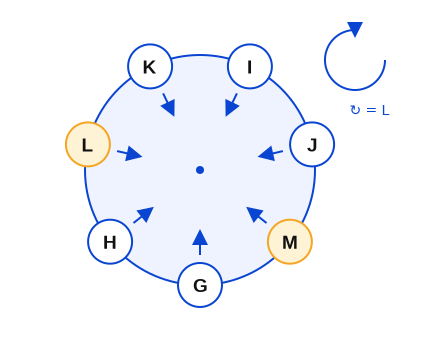
G, H, I, J, K, L and M are sitting around a circular table, facing the centre of the table (but not necessarily in the same order). Only two people sit between G and I when counted from the right of G. Only two people sit between I and H. Only three people sit between G and K. M sits to the immediate left of J. How many people sit between L and M when counted from the right of L ?
G, H, I, J, K, L और M एक वृत्ताकार मेज के चारों ओर मेज के केंद्र की ओर मुख करके बैठे हैं (आवश्यक नहीं कि इसी क्रम में हों)। G के दाईं ओर से गिनने पर G और I के बीच केवल दो व्यक्ति बैठे हैं। I और H के बीच केवल दो व्यक्ति बैठे हैं। G और K के बीच केवल तीन व्यक्ति बैठे हैं। M, J के ठीक बाईं ओर बैठा है। L के दाईं ओर से गिनने पर L और M के बीच कितने व्यक्ति बैठे हैं?
  1. ATwoदो
  2. BOneएक
  3. CThreeतीन
  4. DFourचार
Show answer

Concept: Facing the centre: left = clockwise, right = anticlockwise. Number 7 seats clockwise 0–6.

  1. G = 0; I is 3 seats to G's right → I = 4.
  2. H is 3 seats from I; seat 0 is taken → H = 1.
  3. K is 4 seats from G; seat 4 is taken → K = 3.
  4. Free: 2, 5, 6. M on J's immediate left → J = 5, M = 6; L = 2.
  5. From L going right (anticlockwise): H, G, then M → 2 people between.

Trick: Settle the fixed people (G, I, H, K) first; the adjacent pair (J–M) always goes to the only two neighbouring empty seats.

Answer: (A) Two

अवधारणा: केंद्र की ओर मुख हो तो बायाँ = दक्षिणावर्त, दायाँ = वामावर्त। 7 सीटें 0–6 (दक्षिणावर्त)।

  1. G = 0; I, G के दाएँ तीसरी सीट → I = 4
  2. H, I से 3 सीट दूर; 0 भरी है → H = 1
  3. K, G से 4 सीट दूर; 4 भरी है → K = 3
  4. खाली 2, 5, 6; M, J के ठीक बाएँ → J = 5, M = 6, L = 2
  5. L के दाएँ (वामावर्त) चलें: H, G, फिर M → बीच में 2 व्यक्ति

ट्रिक: पहले निश्चित व्यक्ति बैठाएँ; पास-पास बैठने वाली जोड़ी (J–M) बची हुई दो सटी सीटों पर ही जाएगी।

उत्तर: (A) दो

SSC GDGeneral Intelligence & ReasoningCircular seating – facing centreSSC GD 2025 · 12 Feb Shift 2 →
Q19205.
What will come in the place of the question mark '(?)' in the following equation, if '−' and '÷' are interchanged and '×' and '+' are interchanged? 19 + 24 − 6 × 8 ÷ 6 = ?
निम्नलिखित समीकरण में प्रश्नवाचक चिह्न '(?)' के स्थान पर क्या आएगा, यदि '−' और '÷' को आपस में बदल दिया जाए तथा '×' और '+' को आपस में बदल दिया जाए? 19 + 24 − 6 × 8 ÷ 6 = ?
  1. A76
  2. B78
  3. C77
  4. D79
Show answer

Concept: Swap the signs first, then solve using BODMAS.

  1. − ↔ ÷ and × ↔ +: 19+24−6×8÷6 becomes 19×24÷6+8−6.
  2. 19×24=456; 456÷6=76.
  3. 76+8−6=78.

Trick: Simplify 24÷6=4 first: 19×4=76, then +2 → 78.

Answer: (B) 78

अवधारणा: पहले चिह्न बदलिए, फिर BODMAS से हल कीजिए।

  1. − ↔ ÷ और × ↔ +: 19×24÷6+8−6
  2. 19×24=456; 456÷6=76
  3. 76+8−6=78

ट्रिक: पहले 24÷6=4 करें: 19×4=76, फिर +8−6=+2 → 78।

उत्तर: (B) 78

SSC GDGeneral Intelligence & ReasoningSign interchange – BODMASSSC GD 2025 · 12 Feb Shift 2 →
Q19206.
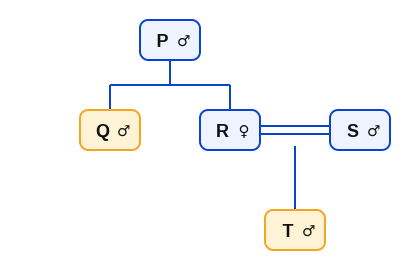
Q is the son of P. P is the father of R. R is the wife of S. T is the son of S. How is Q related to T ?
Q, P का पुत्र है। P, R का पिता है। R, S की पत्नी है। T, S का पुत्र है। Q, T से किस प्रकार संबंधित है?
  1. ABrotherभाई
  2. BMother's brotherमाता का भाई (मामा)
  3. CFatherपिता
  4. DMother's fatherमाता के पिता (नाना)
Show answer

Concept: Link each person generation by generation.

  1. Q and R are both children of P → siblings (Q is male).
  2. R is S's wife and T is S's son → R is T's mother.
  3. Q = brother of T's mother.

Trick: Mother's brother = maternal uncle (mama). Q is one generation above T, so 'Brother' is ruled out at once.

Answer: (B) Mother's brother

अवधारणा: हर व्यक्ति को पीढ़ी-दर-पीढ़ी जोड़िए।

  1. Q और R दोनों P की संतान → भाई-बहन (Q पुरुष)
  2. R, S की पत्नी और T, S का पुत्र → R, T की माँ
  3. Q = T की माँ का भाई

ट्रिक: माँ का भाई = मामा। Q, T से एक पीढ़ी ऊपर है, इसलिए 'भाई' तुरंत बाहर।

उत्तर: (B) माता का भाई (मामा)

SSC GDGeneral Intelligence & ReasoningBlood relation – uncleSSC GD 2025 · 12 Feb Shift 2 →
Q19207.
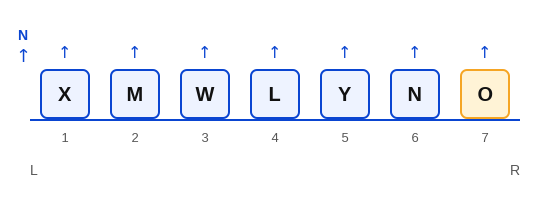
Seven people, L, M, N, O, W, X and Y, are sitting in a row, facing north (but not necessarily in the same order). No one sits to the left of X. Only four people sit between X and N . Only three people sit to the right of L. M sits to the immediate left of W. O is not an immediate neighbour of L. Who sits at the right most end of the line?
सात व्यक्ति L, M, N, O, W, X और Y एक पंक्ति में उत्तर की ओर मुख करके बैठे हैं (आवश्यक नहीं कि इसी क्रम में हों)। X के बाईं ओर कोई नहीं बैठा है। X और N के बीच केवल चार व्यक्ति बैठे हैं। L के दाईं ओर केवल तीन व्यक्ति बैठे हैं। M, W के ठीक बाईं ओर बैठा है। O, L का निकटतम पड़ोसी नहीं है। पंक्ति के सबसे दाएँ सिरे पर कौन बैठा है?
  1. AL
  2. BY
  3. CN
  4. DO
Show answer

Concept: Facing north, left end = seat 1, right end = seat 7. Fix definite people first.

  1. No one left of X → X = 1. Four between X and N → N = 6.
  2. Three to the right of L → L = 4.
  3. M immediately left of W: only adjacent free seats are 2–3 → M = 2, W = 3.
  4. O not next to L → O ≠ 5 → O = 7, Y = 5.
  5. Row: X M W L Y N O → right end is O.

Trick: 'Only k people to the right' means seat number = 7 − k; here L = 7 − 3 = 4.

Answer: (D) O

अवधारणा: उत्तर की ओर मुख: बायाँ सिरा = सीट 1, दायाँ सिरा = सीट 7। पहले निश्चित स्थान भरें।

  1. X के बाएँ कोई नहीं → X = 1; X और N के बीच चार → N = 6
  2. L के दाएँ तीन → L = 4
  3. M, W के ठीक बाएँ: सटी खाली सीटें केवल 2–3 → M = 2, W = 3
  4. O, L का पड़ोसी नहीं → O = 7, Y = 5
  5. क्रम: X M W L Y N O → दाएँ सिरे पर O

ट्रिक: 'दाएँ केवल k व्यक्ति' का अर्थ सीट = 7 − k; यहाँ L = 4।

उत्तर: (D) O

SSC GDGeneral Intelligence & ReasoningLinear seating – row facing northSSC GD 2025 · 12 Feb Shift 2 →
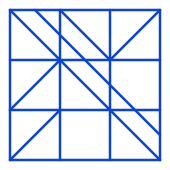
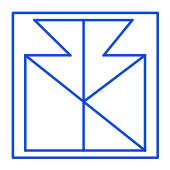
Q19208.
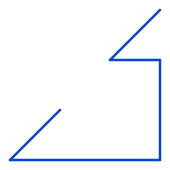
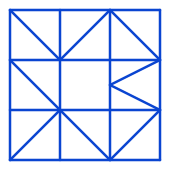
Select the option in which the given figure is embedded (rotation is NOT allowed).
उस विकल्प का चयन कीजिए जिसमें दी गई आकृति अंतर्निहित है (घुमाने की अनुमति नहीं है)।
  1. A
  2. B
  3. C
  4. D
Show answer

Concept: The exact figure, same size and same orientation, must be traceable inside the option.

  1. Break the figure into its parts: long base, tall right vertical, short step at the top, a slant rising to the right above the step, and a small slant at the bottom-left.
  2. (B) and (D) have no full base joined to a right vertical → rejected.
  3. In (A) the top slant runs the wrong way; in (C) every stroke appears with the correct direction.

Trick: Pick the most unusual stroke (here the slant above the step) and check its direction in each option first – this removes wrong options quickly.

Answer: (C)Option (c)

अवधारणा: दी गई आकृति उसी आकार और उसी दिशा में विकल्प के अंदर दिखनी चाहिए (घुमाना नहीं)।

  1. आकृति के भाग: लंबा आधार, दाईं ओर ऊँची खड़ी रेखा, ऊपर छोटा कदम, कदम के ऊपर दाईं ओर उठती तिरछी रेखा, नीचे-बाएँ छोटी तिरछी रेखा।
  2. (B) व (D) में आधार से जुड़ी दाईं खड़ी रेखा नहीं → बाहर।
  3. (A) में ऊपरी तिरछी रेखा उलटी दिशा में है; (C) में सभी भाग सही दिशा में हैं।

ट्रिक: सबसे अलग दिखने वाली रेखा (ऊपर की तिरछी) की दिशा पहले जाँचें – गलत विकल्प जल्दी हट जाते हैं।

उत्तर: (C)विकल्प (c)

SSC GDGeneral Intelligence & ReasoningEmbedded figureSSC GD 2025 · 12 Feb Shift 2 →
Q19209.
What should come in place of the question mark (?) in the given series ? 335, 280, 228, 179, 133, ?
दी गई शृंखला में प्रश्नवाचक चिह्न (?) के स्थान पर क्या आना चाहिए? 335, 280, 228, 179, 133, ?
  1. A112
  2. B90
  3. C106
  4. D98
Show answer

Concept: Find the differences; check if they change by a fixed amount.

  1. Gaps: 55, 52, 49, 46.
  2. Each gap is 3 less than the previous → next gap 43.
  3. 133 − 43 = 90.

Trick: Second-level difference is constant (−3): just continue 55, 52, 49, 46, 43.

Answer: (B) 90

अवधारणा: अंतर निकालिए और देखिए कि वह कितना बदल रहा है।

  1. अंतर: 55, 52, 49, 46
  2. हर अंतर पिछले से 3 कम → अगला अंतर 43
  3. 133 − 43 = 90

ट्रिक: अंतरों का अंतर स्थिर (−3) है: 55, 52, 49, 46, 43।

उत्तर: (B) 90

SSC GDGeneral Intelligence & ReasoningNumber series – decreasing differencesSSC GD 2025 · 12 Feb Shift 2 →
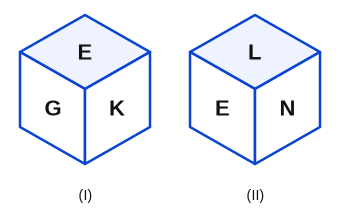
Q19210.
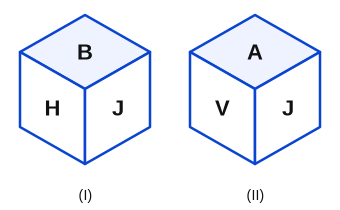
A dice has its faces marked by letters N, K, G, H, L and E. Two positions of the same dice are given below. Which face is opposite to face H ?
एक पासे के फलकों पर अक्षर N, K, G, H, L और E अंकित हैं। उसी पासे की दो स्थितियाँ नीचे दी गई हैं। फलक H के विपरीत कौन-सा फलक है?
  1. AE
  2. BG
  3. CL
  4. DN
Show answer

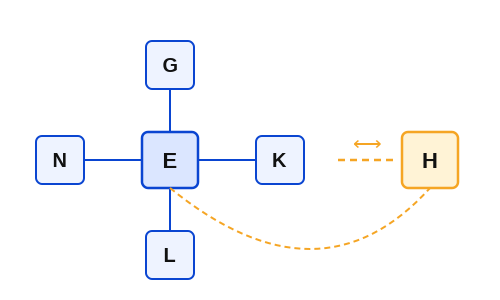
Concept: A face touches four faces; the one face never seen beside it is its opposite.

  1. View 1: E with G and K. View 2: E with L and N.
  2. E is adjacent to G, K, L, N.
  3. Only H is left → H is opposite E.

Trick: The letter appearing in both views often reveals its opposite at once: list its four neighbours, the missing letter is the answer.

Answer: (A) E

अवधारणा: एक फलक चार फलकों को छूता है; जो कभी साथ न दिखे वह विपरीत है।

  1. पहली स्थिति: E के साथ G, K; दूसरी: E के साथ L, N
  2. E के पड़ोसी G, K, L, N
  3. बचा केवल H → H, E के विपरीत

ट्रिक: दोनों स्थितियों में दिखने वाले अक्षर के चार पड़ोसी लिखें – जो छूटे वही विपरीत।

उत्तर: (A) E

SSC GDGeneral Intelligence & ReasoningDice – common face methodSSC GD 2025 · 12 Feb Shift 2 →
Q19211.
The position(s) of how many letters will remain unchanged if each of the letters in the word CABLEWAY is arranged in reverse English alphabetical order ?
यदि शब्द CABLEWAY के प्रत्येक अक्षर को विपरीत अंग्रेजी वर्णमाला क्रम में व्यवस्थित किया जाए, तो कितने अक्षरों का स्थान अपरिवर्तित रहेगा?
  1. ATwoदो
  2. BFourचार
  3. CThreeतीन
  4. DOneएक
Show answer

Concept: Rewrite the letters Z→A and compare position by position.

  1. CABLEWAY has 8 letters, with A appearing twice.
  2. Arranged from Z to A: Y, W, L, E, C, B and then the two A's at places 7 and 8.
  3. Original: C A B L E W A Y. Matching place by place, only position 7 has the same letter (A) in both.

Trick: In reverse order the two A's must take the last two places; CABLEWAY has A at place 7 → that one stays. Count = 1.

Answer: (D) One

अवधारणा: अक्षरों को Z→A क्रम में लिखकर स्थान-दर-स्थान मिलाइए।

  1. CABLEWAY में 8 अक्षर हैं, A दो बार
  2. Z से A क्रम: Y, W, L, E, C, B, फिर दोनों A (7वें व 8वें स्थान पर)
  3. मूल शब्द C A B L E W A Y से मिलाने पर केवल 7वें स्थान पर दोनों में A है

ट्रिक: उलटे क्रम में दोनों A अंतिम दो स्थानों पर जाएँगे; मूल शब्द में 7वें स्थान पर A है → वही अपरिवर्तित।

उत्तर: (D) एक

SSC GDGeneral Intelligence & ReasoningLetter rearrangement – reverse orderSSC GD 2025 · 12 Feb Shift 2 →
Q19212.
EWRT is related to LDYA in a certain way based on the English alphabetical order. In the same way, GYTV is related to NFAC. To which of the following options is BTOQ related, following the same logic?
EWRT, अंग्रेजी वर्णमाला क्रम के आधार पर एक निश्चित तरीके से LDYA से संबंधित है। उसी प्रकार, GYTV, NFAC से संबंधित है। उसी तर्क का अनुसरण करते हुए, निम्नलिखित विकल्पों में से BTOQ किससे संबंधित है?
  1. AVAIX
  2. BIAXV
  3. CVAXI
  4. DIAVX
Show answer

Concept: Each letter moves a fixed number of places (cyclic).

  1. E(5)→L(12): +7; W(23)→D(4): +7 cyclic; R→Y, T→A also +7.
  2. GYTV → NFAC confirms +7.
  3. BTOQ: B→I, T→A, O→V, Q→X = IAVX.

Trick: Check only the first two letters: B+7 = I and T+7 = A → only 'IAVX' and 'IAXV' remain; O+7 = V gives IAVX.

Answer: (D) IAVX

अवधारणा: हर अक्षर निश्चित स्थान आगे खिसकता है (चक्रीय)।

  1. E(5)→L(12): +7; W(23)→D(4): +7 (चक्रीय); R→Y, T→A भी +7
  2. GYTV → NFAC से पुष्टि
  3. BTOQ: B→I, T→A, O→V, Q→X = IAVX

ट्रिक: पहले दो अक्षर देखें: I, A → दो विकल्प बचे; तीसरा O+7 = V → IAVX।

उत्तर: (D) IAVX

SSC GDGeneral Intelligence & ReasoningLetter analogy – +7 shiftSSC GD 2025 · 12 Feb Shift 2 →
Q19213.
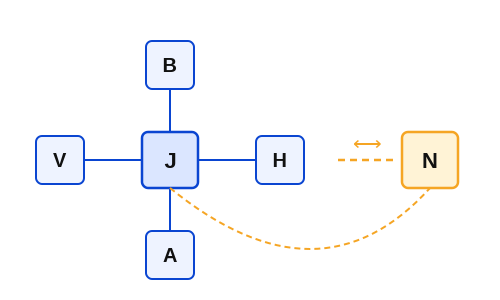
A dice has its faces marked by letters V, H, A, N, B and J. Two positions of the same dice are given below. Which face is opposite to face N ?
एक पासे के फलकों पर अक्षर V, H, A, N, B और J अंकित हैं। उसी पासे की दो स्थितियाँ नीचे दी गई हैं। फलक N के विपरीत कौन-सा फलक है?
  1. AA
  2. BB
  3. CH
  4. DJ
Show answer

Concept: The face never seen next to a given face is its opposite.

  1. View 1: J with B and H. View 2: J with A and V.
  2. Neighbours of J: B, H, A, V.
  3. The only face not touching J is N → N is opposite J.

Trick: Take the letter common to both views, write its four neighbours – the missing sixth letter is its opposite.

Answer: (D) J

अवधारणा: जो फलक किसी फलक के साथ कभी न दिखे, वही उसके विपरीत।

  1. पहली स्थिति: J के साथ B, H; दूसरी: J के साथ A, V
  2. J के पड़ोसी: B, H, A, V
  3. J को न छूने वाला केवल N → N, J के विपरीत

ट्रिक: दोनों स्थितियों में समान अक्षर के चार पड़ोसी लिखें – छठा छूटा अक्षर विपरीत।

उत्तर: (D) J

SSC GDGeneral Intelligence & ReasoningDice – common face methodSSC GD 2025 · 12 Feb Shift 2 →
Q19214.
What should come in place of the question mark (?) in the given series based on the English alphabetical order ? CZV FYU IXT LWS?
अंग्रेजी वर्णमाला क्रम के आधार पर दी गई शृंखला में प्रश्नवाचक चिह्न (?) के स्थान पर क्या आना चाहिए? CZV FYU IXT LWS ?
  1. AOVR
  2. BVVO
  3. CORV
  4. DVOR
Show answer

Concept: Track each column of letters separately.

  1. 1st letters: C, F, I, L → +3 → next O.
  2. 2nd letters: Z, Y, X, W → −1 → next V.
  3. 3rd letters: V, U, T, S → −1 → next R.
  4. Next term = OVR.

Trick: First letters alone decide it: L+3 = O, and only OVR / ORV start with O; second letter W−1 = V → OVR.

Answer: (A) OVR

अवधारणा: हर स्तंभ के अक्षर अलग-अलग देखिए।

  1. पहले अक्षर: C, F, I, L → +3 → O
  2. दूसरे अक्षर: Z, Y, X, W → −1 → V
  3. तीसरे अक्षर: V, U, T, S → −1 → R
  4. अगला पद = OVR

ट्रिक: L+3 = O से दो विकल्प बचते हैं; W−1 = V से OVR पक्का।

उत्तर: (A) OVR

SSC GDGeneral Intelligence & ReasoningLetter-cluster seriesSSC GD 2025 · 12 Feb Shift 2 →
Q19215.
Identify the figure given in the options which when put in place of the question mark (?) will logically complete the series.
विकल्पों में दी गई उस आकृति की पहचान कीजिए, जिसे प्रश्नवाचक चिह्न (?) के स्थान पर रखने से शृंखला तार्किक रूप से पूर्ण हो जाएगी।
  1. A
  2. B
  3. C
  4. D
Show answer

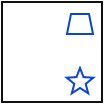
Concept: Follow each shape separately and note how many cells it moves per step.

  1. Both the trapezium and the star move one row up each step.
  2. After the top row, a shape restarts at the bottom of the next column.
  3. In figure 5 the trapezium reaches the top of the middle column and the star the middle of the same column, directly below it – only option (d) shows this.

Trick: Predict the position of just one shape (trapezium → top-middle) and eliminate; then confirm with the second shape.

Answer: (D)Option (d)

अवधारणा: हर आकृति को अलग से देखें कि वह हर चरण में कितना खिसकती है।

  1. समलंब और तारा दोनों हर चरण में एक पंक्ति ऊपर जाते हैं।
  2. सबसे ऊपर पहुँचने के बाद आकृति अगले स्तंभ की सबसे नीचे वाली पंक्ति से शुरू होती है।
  3. 5वीं आकृति में समलंब बीच वाले स्तंभ में ऊपर और तारा ठीक उसके नीचे बीच में – केवल विकल्प (d) में ऐसा है।

ट्रिक: पहले केवल एक आकृति (समलंब) की स्थिति निकालें, विकल्प हटाएँ; फिर तारे से पुष्टि करें।

उत्तर: (D)विकल्प (d)

SSC GDGeneral Intelligence & ReasoningFigure series – moving shapesSSC GD 2025 · 12 Feb Shift 2 →
Q19216.
Select the combination of letters that when filled in the blanks in the same sequence will make the series logically complete.
_DHLI_JNKH_PMJN_OLP_
उस अक्षर संयोजन का चयन कीजिए, जिसे रिक्त स्थानों में उसी क्रम में भरने पर शृंखला तार्किक रूप से पूर्ण हो जाएगी।
_DHLI_JNKH_PMJN_OLP_
  1. AEFMRU
  2. BEDMSU
  3. CGDLST
  4. DGFLRT
Show answer

Concept: 20 places → split into five blocks of 4 and read column-wise.

  1. Blocks: _DHL / I_JN / KH_P / MJN_ / OLP_.
  2. Column 1: _, I, K, M, O (+2) → G. Column 2: D, _, H, J, L → F.
  3. Column 3: H, J, _, N, P → L. Column 4: L, N, P, _, _ → R, T.
  4. Blanks: G F L R T.

Trick: First blank alone: column I, K, M, O steps +2, so it is G → only GDLST or GFLRT; second blank F settles it.

Answer: (D) GFLRT

अवधारणा: 20 स्थान → 4-4 के पाँच खंड बनाकर स्तंभवार पढ़ें।

  1. खंड: _DHL / I_JN / KH_P / MJN_ / OLP_
  2. स्तंभ 1: _, I, K, M, O (+2) → G; स्तंभ 2: D, _, H, J, L → F
  3. स्तंभ 3: H, J, _, N, P → L; स्तंभ 4: L, N, P, _, _ → R, T
  4. रिक्त स्थान: G F L R T

ट्रिक: पहला रिक्त G आते ही दो विकल्प बचते हैं; दूसरा F → GFLRT।

उत्तर: (D) GFLRT

SSC GDGeneral Intelligence & ReasoningLetter series – blanksSSC GD 2025 · 12 Feb Shift 2 →
Q19217.
Which Article of the Indian Constitution encourages the protection and improvement of the environment, as well as the safeguarding of forests and wildlife ?
भारतीय संविधान का कौन-सा अनुच्छेद पर्यावरण के संरक्षण तथा संवर्धन एवं वनों और वन्य जीवन की रक्षा को प्रोत्साहित करता है?
  1. AArticle 46Dअनुच्छेद 46D
  2. BArticle 48Aअनुच्छेद 48A
  3. CArticle 47Bअनुच्छेद 47B
  4. DArticle 49Aअनुच्छेद 49A
Show answer

Concept: Directive Principles (Part IV) include a duty of the State towards environment.

  1. Article 48A: the State shall try to protect and improve the environment and safeguard forests and wildlife.
  2. Added by the 42nd Amendment, 1976.
  3. Articles '46D', '47B', '49A' do not exist in the Constitution.

Yaad rakhein: 48A = State's duty; 51A(g) = citizen's Fundamental Duty to protect nature. Both came in 1976.

Answer: (B) Article 48A

अवधारणा: नीति निदेशक तत्वों (भाग IV) में पर्यावरण के प्रति राज्य का दायित्व।

  1. अनुच्छेद 48A: राज्य पर्यावरण की रक्षा व सुधार तथा वन एवं वन्यजीवों की सुरक्षा का प्रयास करेगा।
  2. 42वें संशोधन, 1976 द्वारा जोड़ा गया।
  3. 46D, 47B, 49A जैसे अनुच्छेद संविधान में नहीं हैं।

याद रखें: 48A = राज्य का कर्तव्य; 51A(g) = नागरिक का मौलिक कर्तव्य – दोनों 1976 में जुड़े।

उत्तर: (B) अनुच्छेद 48A

SSC GDGeneral Knowledge & General AwarenessConstitution – DPSP on environmentSSC GD 2025 · 12 Feb Shift 2 →
Q19218.
Which chemical found in the peels of citrus fruits is used as a flavouring agent in beverages and chewing gums ?
खट्टे (सिट्रस) फलों के छिलकों में पाया जाने वाला कौन-सा रसायन पेय पदार्थों और च्युइंग गम में स्वादवर्धक (फ्लेवरिंग एजेंट) के रूप में प्रयोग किया जाता है?
  1. AEthylvanillinएथिलवैनिलिन
  2. BMenthoneमेन्थोन
  3. CLutidineल्यूटिडीन
  4. DLimoneneलिमोनीन
Show answer

Concept: Natural compounds give fruits their typical smell and taste.

  1. Limonene is a terpene that forms the major part of orange/lemon peel oil.
  2. It is used as a citrus flavour in drinks, candies and chewing gum, and in perfumes and cleaners.
  3. Ethylvanillin = vanilla flavour; menthone = from mint; lutidine = lab chemical.

Trick: Limonene ↔ lime/lemon – the name itself points to citrus.

Answer: (D) Limonene

अवधारणा: फलों की विशेष गंध और स्वाद प्राकृतिक यौगिकों से आते हैं।

  1. लिमोनीन एक टर्पीन है, जो संतरे-नींबू के छिलके के तेल का मुख्य भाग है।
  2. इसे शीतल पेय, मिठाइयों और गम का नींबू-संतरे जैसा फ्लेवर देने में तथा इत्र में प्रयोग करते हैं।
  3. एथिलवैनिलिन = वनीला स्वाद; मेंथोन = पुदीना; ल्यूटिडीन = प्रयोगशाला रसायन।

ट्रिक: Limonene ↔ लाइम/लेमन – नाम से ही नींबू वर्ग का संकेत।

उत्तर: (D) लिमोनीन

SSC GDGeneral Knowledge & General AwarenessChemistry – citrus flavour compoundSSC GD 2025 · 12 Feb Shift 2 →
Q19219.
Who among the following was the successor of King Bimbisara to the throne of Magadha ?
निम्नलिखित में से कौन मगध के सिंहासन पर राजा बिंबिसार का उत्तराधिकारी था?
  1. AUdayinउदयिन
  2. BAshokaअशोक
  3. CChandragupta Mauryaचंद्रगुप्त मौर्य
  4. DAjatashatruअजातशत्रु
Show answer

Concept: Order of early Magadha rulers of the Haryanka dynasty.

  1. Bimbisara → his son Ajatashatru → Udayin.
  2. Ajatashatru took the throne after Bimbisara (he is said to have imprisoned his father).
  3. Udayin came after Ajatashatru; Chandragupta Maurya and Ashoka belong to the later Mauryan dynasty.

Trick: Haryanka order 'B-A-U': Bimbisara, Ajatashatru, Udayin (who founded Pataliputra).

Answer: (D) Ajatashatru

अवधारणा: मगध के हर्यक वंश के शासकों का क्रम।

  1. बिम्बिसार → पुत्र अजातशत्रु → उदयिन
  2. बिम्बिसार के बाद गद्दी अजातशत्रु को मिली (कहा जाता है उसने पिता को बंदी बनाया)।
  3. उदयिन तीसरे क्रम पर था; चंद्रगुप्त व अशोक तो लगभग डेढ़ सौ वर्ष बाद मौर्य काल में हुए।

ट्रिक: हर्यक क्रम 'बि-अ-उ': बिम्बिसार, अजातशत्रु, उदयिन (पाटलिपुत्र का संस्थापक)।

उत्तर: (D) अजातशत्रु

SSC GDGeneral Knowledge & General AwarenessAncient India – Haryanka dynastySSC GD 2025 · 12 Feb Shift 2 →
Q19220.
Which of the following neighbouring countries of India has the lowest population density ?
भारत के निम्नलिखित पड़ोसी देशों में से किसका जनसंख्या घनत्व सबसे कम है?
  1. ABhutanभूटान
  2. BPakistanपाकिस्तान
  3. CBangladeshबांग्लादेश
  4. DNepalनेपाल
Show answer

Concept: Population density = population ÷ area.

  1. Bhutan: under 10 lakh people on a mountainous area of about 38,000 km² → roughly 20 persons/km², the lowest.
  2. Bangladesh is one of the most densely populated countries (over 1,000/km²).
  3. Pakistan and Nepal lie in between.

Trick: Small population + hilly terrain = low density; Bhutan fits both.

Answer: (A) Bhutan

अवधारणा: घनत्व = कुल लोग ÷ कुल क्षेत्र (प्रति वर्ग किमी)।

  1. भूटान: 10 लाख से कम लोग, लगभग 38,000 वर्ग किमी पहाड़ी क्षेत्र → लगभग 20 व्यक्ति/वर्ग किमी, सबसे कम।
  2. बांग्लादेश विश्व के सबसे घने देशों में (1,000/वर्ग किमी से अधिक)।
  3. नेपाल व पाकिस्तान का घनत्व इन दोनों के बीच है।

ट्रिक: कम आबादी + पहाड़ी भूभाग = कम घनत्व; भूटान दोनों में फिट।

उत्तर: (A) भूटान

SSC GDGeneral Knowledge & General AwarenessGeography – population density of neighboursSSC GD 2025 · 12 Feb Shift 2 →