Question bank

Q&A: practice questions with answers

Search questions on any topic. Filter by exam category, exam, subject and topic, try the question, then open the answer and explanation.

Courses – airGurukul

21,196 questions found.

Q19901.
Select the correct alternative that when filled in the blanks in the same sequence will make the series logically complete.
_URVQ_SWRW_XSXU_TYV_
वह सही विकल्प चुनिए जिसे रिक्त स्थानों में उसी क्रम में भरने पर शृंखला तार्किक रूप से पूर्ण हो जाएगी।
_URVQ_SWRW_XSXU_TYV_
  1. APVTYZ
  2. BPUTWZ
  3. COVSYX
  4. DOUSWX
Show answer

Concept: Split the 20-letter string into 5 blocks of 4; each block gets one blank.

  1. Blocks: _URV | Q_SW | RW_X | SXU_ | TYV_.
  2. Position 1: P,Q,R,S,T; position 2: U,V,W,X,Y; position 3: R,S,T,U,V; position 4: V,W,X,Y,Z.
  3. Blanks = P, V, T, Y, Z.

Trick: Block 1 starts with the blank and block 2 with Q → blank 1 must be P; only (a) and (b) start with P. Block 2's 2nd letter must be V → (a).

Answer: (A) PVTYZ

अवधारणा: 20 अक्षरों को 4-4 के 5 समूहों में बाँटें, हर समूह में एक रिक्त स्थान है।

  1. समूह: _URV | Q_SW | RW_X | SXU_ | TYV_।
  2. पहला स्थान P→T, दूसरा U→Y, तीसरा R→V, चौथा V→Z (हर बार +1)।
  3. रिक्त अक्षर = P, V, T, Y, Z।

ट्रिक: दूसरा समूह Q से शुरू है, तो पहला P होगा; अब (a), (b) में से दूसरा रिक्त V वाला (a)।

उत्तर: (A) PVTYZ
SSC GDGeneral Intelligence & ReasoningLetter series – fill the blanksSSC GD 2025 · 10 Feb Shift 1 →
Q19902.
What should come in place of the
question mark (?) in the given series based on the English alphabetical order? TEJ UDK VCL WBM ?
अंग्रेज़ी वर्णमाला क्रम के आधार पर दी गई शृंखला में प्रश्नवाचक चिह्न (?) के स्थान पर क्या आना चाहिए? TEJ UDK VCL WBM ?
  1. AXAN
  2. BYAO
  3. CYAN
  4. DXAO
Show answer

Concept: Each letter position of the cluster follows its own +1 / −1 pattern.

  1. 1st letters: T, U, V, W → X (+1).
  2. 2nd letters: E, D, C, B → A (−1).
  3. 3rd letters: J, K, L, M → N (+1). Next = XAN.

Trick: Middle letter decides fast: B−1 = A, and the last letter M+1 = N → only XAN.

Answer: (A) XAN

अवधारणा: समूह का हर स्थान अपना अलग +1/−1 क्रम चलता है।

  1. पहला अक्षर: T, U, V, W → X (+1)।
  2. दूसरा अक्षर: E, D, C, B → A (−1)।
  3. तीसरा अक्षर: J, K, L, M → N (+1)। अगला = XAN।

ट्रिक: पहला अक्षर X और अंतिम N वाला विकल्प केवल XAN है।

उत्तर: (A) XAN

SSC GDGeneral Intelligence & ReasoningLetter-cluster series – position-wise patternSSC GD 2025 · 10 Feb Shift 1 →
Q19903.
In a certain code language, ACEG is coded as 16 and BOQT is coded as 54. How will UWIF be coded in the given language?
एक निश्चित कूट भाषा में, ACEG को 16 और BOQT को 54 लिखा जाता है। दी गई भाषा में UWIF को किस प्रकार लिखा जाएगा?
  1. A60
  2. B75
  3. C59
  4. D57
Show answer

Concept: Code = sum of the alphabet place values of the letters.

  1. ACEG: 1+3+5+7 = 16 ✓
  2. BOQT: 2+15+17+20 = 54 ✓
  3. UWIF: 21+23+9+6 = 59

Trick: Remember EJOTY = 5, 10, 15, 20, 25 to get place values in a second: U = 21, W = 23.

Answer: (C) 59

अवधारणा: कोड = अक्षरों के वर्णमाला क्रमांकों का योग।

  1. ACEG: 1+3+5+7 = 16 ✓
  2. BOQT: 2+15+17+20 = 54 ✓
  3. UWIF: 21+23+9+6 = 59

ट्रिक: EJOTY (5, 10, 15, 20, 25) याद रखें – U = 21, W = 23 तुरंत निकलेंगे।

उत्तर: (C) 59

SSC GDGeneral Intelligence & ReasoningCoding – sum of letter positionsSSC GD 2025 · 10 Feb Shift 1 →
Q19904.
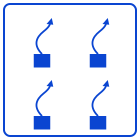
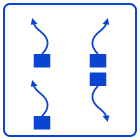
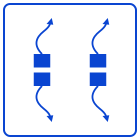
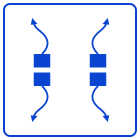
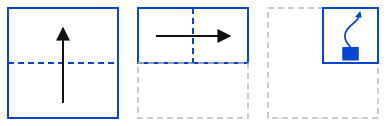
A paper is folded and punched as shown below. How will it appear when unfolded?
नीचे दर्शाए अनुसार एक कागज़ को मोड़ा और पंच किया जाता है। खोले जाने पर वह कैसा दिखाई देगा?
  1. A
  2. B
  3. C
  4. D
Show answer

Concept: Every fold doubles the holes; on unfolding, each hole reappears as a mirror image across the fold line.

  1. Two folds (bottom up, then left over right) leave a quarter of the sheet.
  2. The punch passes through 4 layers → 4 holes, one per quarter.
  3. The holes must be mirror images across both the vertical and horizontal centre lines – this pattern appears only in (d).

Trick: Count first: n folds → 2n holes. Then check symmetry about each fold line; unfold in reverse order of folding.

Answer: (D) Figure (d)

अवधारणा: हर मोड़ पर छेद दोगुने होते हैं; खोलने पर छेद मोड़-रेखा के सापेक्ष दर्पण-प्रतिबिंब में आता है।

  1. दो मोड़ (नीचे से ऊपर, फिर बाएँ से दाएँ) के बाद कागज़ का एक-चौथाई भाग बचता है।
  2. छेद 4 परतों से गुज़रता है → हर चौथाई में एक, कुल 4 छेद।
  3. छेद ऊर्ध्वाधर और क्षैतिज दोनों केंद्र-रेखाओं के सापेक्ष सममित हों – ऐसा केवल (d) में है।

ट्रिक: n मोड़ = 2n छेद। फिर उल्टे क्रम में खोलते हुए समरूपता जाँचें।

उत्तर: (D) आकृति (d)

SSC GDGeneral Intelligence & ReasoningPaper folding and punchingSSC GD 2025 · 10 Feb Shift 1 →
Q19905.
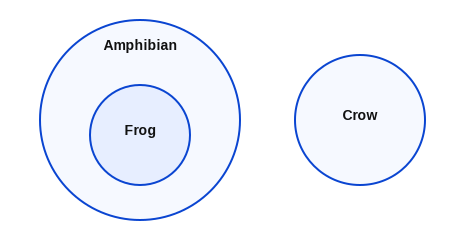
Select the Venn diagram that best illustrates the relationship between the following classes.
Amphibian, Crow, Frog
वह वेन आरेख चुनिए जो निम्नलिखित वर्गों के बीच के संबंध को सर्वोत्तम रूप से दर्शाता है।
उभयचर, कौआ, मेंढक
  1. A
  2. B
  3. C
  4. D
Show answer

Concept: Draw a subset inside its parent class; an unrelated class stays separate.

  1. Frog is a type of amphibian → Frog circle inside Amphibian circle.
  2. Crow is a bird – neither amphibian nor frog → separate circle.

Trick: Pattern '2 nested + 1 separate' – look for one circle inside another and a third circle away from both.

Answer: (A) Figure (a)

अवधारणा: उपवर्ग को मुख्य वर्ग के अंदर बनाएँ; असंबंधित वर्ग अलग रहता है।

  1. हर मेंढक उभयचर वर्ग में आता है → छोटा वृत्त (मेंढक) बड़े वृत्त (उभयचर) में।
  2. कौआ एक पक्षी है, उभयचर नहीं → अलग वृत्त।

ट्रिक: 'दो वृत्त एक-दूसरे के अंदर + एक अलग' वाला चित्र चुनें।

उत्तर: (A) आकृति (a)

SSC GDGeneral Intelligence & ReasoningVenn diagram – class relationshipSSC GD 2025 · 10 Feb Shift 1 →
Q19906.
What should come in place of the question mark (?) in the given series? 77 86 104 140 212 ?
दी गई शृंखला में प्रश्नवाचक चिह्न (?) के स्थान पर क्या आना चाहिए? 77 86 104 140 212 ?
  1. A355
  2. B356
  3. C358
  4. D357
Show answer

Concept: Differences between terms form a ×2 pattern.

  1. Differences: 9, 18, 36, 72.
  2. Next difference = 72×2=144.
  3. ? = 212+144=356.

Trick: When differences double, next term = last term + 2 × (last difference): 212+144.

Answer: (B) 356

अवधारणा: क्रमागत पदों का अंतर हर बार ×2 होता है।

  1. अंतर: 9, 18, 36, 72।
  2. अगला अंतर = 72×2=144।
  3. ? = 212+144=356।

ट्रिक: अंतर दोगुना हो तो अगला पद = अंतिम पद + 2 × अंतिम अंतर।

उत्तर: (B) 356

SSC GDGeneral Intelligence & ReasoningNumber series – doubling differencesSSC GD 2025 · 10 Feb Shift 1 →
Q19907.
In a certain code language, 'STAIR' is coded as '#*&@$' and 'TEARS' is coded as '*&^@#'. What is the code for 'I' in the given code language?
एक निश्चित कूट भाषा में, 'STAIR' को '#*&@$' और 'TEARS' को '*&^@#' लिखा जाता है। दी गई कूट भाषा में 'I' के लिए कूट क्या है?
  1. A#
  2. B^
  3. C@
  4. D$
Show answer

Concept: Letters common to both words share symbols; the unique letter takes the unique symbol.

  1. STAIR = #*&@$, TEARS = *&^@#.
  2. Common letters S, T, A, R ↔ common symbols #, *, &, @.
  3. STAIR's extra letter I ↔ its extra symbol $ (and E = ^).

Trick: Only $ is absent from the second code – so it must be I, the only letter absent from TEARS.

Answer: (D) $

अवधारणा: दोनों शब्दों के समान अक्षरों के चिह्न समान; अलग अक्षर = अलग चिह्न।

  1. STAIR = #*&@$, TEARS = *&^@#।
  2. समान अक्षर S, T, A, R ↔ समान चिह्न #, *, &, @।
  3. STAIR का अतिरिक्त अक्षर I ↔ अतिरिक्त चिह्न $ (E = ^)।

ट्रिक: दूसरे कोड में जो चिह्न नहीं है ($), वही पहले शब्द के अनोखे अक्षर I का है।

उत्तर: (D) $

SSC GDGeneral Intelligence & ReasoningCoding – symbol for the odd letterSSC GD 2025 · 10 Feb Shift 1 →
Q19908.
What should come in place of the question mark (?) in the given series? 9 25 53 157 317 ?
दी गई शृंखला में प्रश्नवाचक चिह्न (?) के स्थान पर क्या आना चाहिए? 9 25 53 157 317 ?
  1. A953
  2. B947
  3. C949
  4. D951
Show answer

Concept: Two operations alternate.

  1. 9×3−2=25; 25×2+3=53.
  2. 53×3−2=157; 157×2+3=317.
  3. Next: 317×3−2=949.

Trick: Ratio check: terms roughly ×3, ×2, ×3, ×2 – so next ≈ 317×3=951; adjust by −2 → 949.

Answer: (C) 949

अवधारणा: दो संक्रियाएँ बारी-बारी से लगती हैं।

  1. 9×3−2=25; 25×2+3=53।
  2. 53×3−2=157; 157×2+3=317।
  3. अगला: 317×3−2=949।

ट्रिक: पद लगभग ×3, ×2 बढ़ रहे हैं; अगला ≈ 317×3=951, फिर −2 = 949।

उत्तर: (C) 949

SSC GDGeneral Intelligence & ReasoningNumber series – alternate ×3−2, ×2+3SSC GD 2025 · 10 Feb Shift 1 →
Q19909.
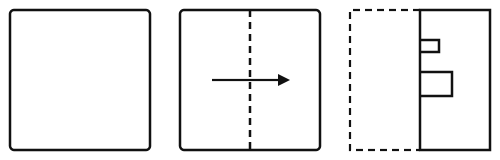
A paper is folded and cut as shown below. How will it appear when unfolded?
नीचे दर्शाए अनुसार एक कागज़ को मोड़ा और काटा जाता है। खोले जाने पर वह कैसा दिखाई देगा?
  1. A
  2. B
  3. C
  4. D
Show answer

Concept: A cut touching the fold opens into one bigger hole centred on the fold line.

  1. One vertical fold: left half laid on right half.
  2. Both rectangular cuts sit on the folded edge.
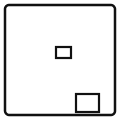
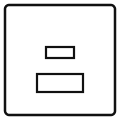
  3. Unfolded: two rectangles (small above, bigger in the middle), each spread equally across the vertical centre line – figure (b).

Trick: Cut on the fold = single symmetric hole; cut away from the fold = two separate mirror holes.

Answer: (B) Figure (b)

अवधारणा: मोड़ की रेखा पर किया गया कट खोलने पर मोड़-रेखा के बीचों-बीच एक बड़ा छेद बनता है।

  1. एक ऊर्ध्वाधर मोड़: बायाँ आधा दाएँ आधे पर।
  2. दोनों आयताकार कट मोड़ वाले किनारे पर हैं।
  3. खोलने पर दो आयत (ऊपर छोटा, बीच में बड़ा) केंद्र-रेखा पर सममित – आकृति (b)।

ट्रिक: मोड़ पर कट = एक सममित छेद; मोड़ से दूर कट = दो अलग दर्पण छेद।

उत्तर: (B) आकृति (b)

SSC GDGeneral Intelligence & ReasoningPaper folding and cuttingSSC GD 2025 · 10 Feb Shift 1 →
Q19910.
Based on the English alphabetical order, three of the following four letter-clusters are alike in a certain way and thus form a group. Which letter-cluster DOES NOT belong to that group?
( Note :- The odd one out is not based on the number of consonants/vowels or their position in the letter-cluster.)
अंग्रेज़ी वर्णमाला क्रम के आधार पर, निम्नलिखित चार अक्षर-समूहों में से तीन एक निश्चित प्रकार से समान हैं और इस प्रकार एक समूह बनाते हैं। कौन-सा अक्षर-समूह उस समूह से संबंधित नहीं है?
( नोट :- विषम अक्षर-समूह का चयन व्यंजनों/स्वरों की संख्या अथवा अक्षर-समूह में उनके स्थान पर आधारित नहीं है।)
  1. AKOI
  2. BMTW
  3. CLPJ
  4. DOSM
Show answer

Concept: Compare the step from 1st→2nd and 2nd→3rd letter in each cluster.

  1. KOI: 11→15→9 = +4, −6.
  2. LPJ: 12→16→10 = +4, −6; OSM: 15→19→13 = +4, −6.
  3. MTW: 13→20→23 = +7, +3 – different.

Trick: In three clusters the 3rd letter comes before the 2nd in the alphabet; in MTW it goes forward – spot it without full counting.

Answer: (B) MTW

अवधारणा: हर समूह में पहले→दूसरे और दूसरे→तीसरे अक्षर का अंतर देखें।

  1. KOI: 11→15→9 = +4, −6।
  2. LPJ: 12→16→10 = +4, −6; OSM: 15→19→13 = +4, −6।
  3. MTW: 13→20→23 = +7, +3 – अलग।

ट्रिक: तीन समूहों में तीसरा अक्षर पीछे लौटता है, MTW में आगे बढ़ता है – वही विषम।

उत्तर: (B) MTW

SSC GDGeneral Intelligence & ReasoningOdd one out – letter gapsSSC GD 2025 · 10 Feb Shift 1 →
Q19911.
The position(s) of how many letters will remain unchanged if each of the letters in the word GRISTLE is arranged in the English alphabetical order?
यदि शब्द GRISTLE के प्रत्येक अक्षर को अंग्रेज़ी वर्णमाला क्रम में व्यवस्थित किया जाए, तो कितने अक्षरों का स्थान अपरिवर्तित रहेगा?
  1. ATwoदो
  2. BOneएक
  3. CThreeतीन
  4. DZeroशून्य
Show answer

Concept: Write the letters in A–Z order and compare position by position.

  1. GRISTLE → E G I L R S T.
  2. Compare: G/E, R/G, I/I, S/L, T/R, L/S, E/T.
  3. Only I (3rd place) stays.

Trick: Check middle letters first – here I is 3rd in both words; the ends (G, E) obviously change.

Answer: (B) One

अवधारणा: अक्षरों को A–Z क्रम में लिखकर स्थानवार तुलना करें।

  1. GRISTLE → E G I L R S T।
  2. तुलना: G/E, R/G, I/I, S/L, T/R, L/S, E/T।
  3. केवल I (तीसरा स्थान) अपरिवर्तित।

ट्रिक: दोनों पंक्तियाँ एक-दूसरे के नीचे लिखें, मिलान तुरंत दिखेगा।

उत्तर: (B) एक

SSC GDGeneral Intelligence & ReasoningAlphabetical rearrangement – unchanged positionsSSC GD 2025 · 10 Feb Shift 1 →
Q19912.
If 2 is added to each odd digit and 2 is subtracted from each even digit in the number 5163748 , what will be the sum of the highest and lowest digit in the new number thus formed?
यदि संख्या 5163748 के प्रत्येक विषम अंक में 2 जोड़ा जाए और प्रत्येक सम अंक में से 2 घटाया जाए, तो इस प्रकार बनी नई संख्या के सबसे बड़े और सबसे छोटे अंक का योग क्या होगा?
  1. A9
  2. B14
  3. C11
  4. D16
Show answer

Concept: Apply the rule to each digit, then pick the largest and smallest digit.

  1. 5163748 → 7, 3, 4, 5, 9, 2, 6.
  2. Highest = 9 (from 7), lowest = 2 (from 4).
  3. Sum = 9 + 2 = 11.

Trick: No need to write the full number: highest comes from the biggest odd digit (7+2 = 9), lowest from min(1+2, 4−2) = 2.

Answer: (C) 11

अवधारणा: हर अंक पर नियम लगाकर सबसे बड़ा और सबसे छोटा अंक चुनें।

  1. 5163748 → 7, 3, 4, 5, 9, 2, 6।
  2. सबसे बड़ा = 9, सबसे छोटा = 2।
  3. योग = 9 + 2 = 11।

ट्रिक: पूरी संख्या की ज़रूरत नहीं: सबसे बड़ा विषम 7+2 = 9; सबसे छोटा min(1+2, 4−2) = 2।

उत्तर: (C) 11

SSC GDGeneral Intelligence & ReasoningDigit operations – odd +2, even −2SSC GD 2025 · 10 Feb Shift 1 →
Q19913.
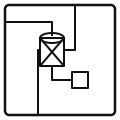
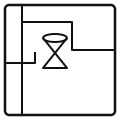
Select the option in which the given figure ( X ) is embedded (rotation is NOT allowed).
वह विकल्प चुनिए जिसमें दी गई आकृति (X) सन्निहित है (घुमाने की अनुमति नहीं है)।
  1. A
  2. B
  3. C
  4. D
Show answer

Concept: Find the exact shape, same size and same orientation, hidden inside an option.

  1. Figure X: an upright box with a curved cap on top and two lines from the top corners meeting at the centre.
  2. (a), (b) have no capped box; in (d) the cap sits on an hourglass, not a box.
  3. In (c) the capped box is present and the upper half of the cross inside it gives the two corner-to-centre lines.

Trick: Pick the most unusual part of X (the curved cap) and search only for it – most options fail immediately.

Answer: (C) Figure (c)

अवधारणा: दी गई आकृति उसी आकार और उसी दिशा में किसी विकल्प के भीतर छिपी होनी चाहिए।

  1. आकृति X: खड़ा बॉक्स, ऊपर घुमावदार टोपी और ऊपरी कोनों से केंद्र तक दो रेखाएँ।
  2. (a), (b) में टोपी वाला बॉक्स नहीं; (d) में टोपी एक घड़ी-आकार पर है, बॉक्स पर नहीं।
  3. (c) में टोपी वाला बॉक्स है और भीतर के क्रॉस का ऊपरी भाग कोनों से केंद्र की रेखाएँ देता है।

ट्रिक: आकृति का सबसे अनोखा भाग (घुमावदार टोपी) पहले खोजें – अधिकतर विकल्प वहीं कट जाते हैं।

उत्तर: (C) आकृति (c)

SSC GDGeneral Intelligence & ReasoningEmbedded figureSSC GD 2025 · 10 Feb Shift 1 →
Q19914.
Read the given statements and conclusions carefully. Assuming that the information given in the statements is true, even if it appears to be at variance with commonly known facts, decide which of the given conclusion(s) logically follow(s) from the statements.
Statements:
All crows are rocks.
All rocks are plants.
All plants are flowers.
Conclusions:
(I) All crows are flowers.
(II) Some flowers are rocks.
दिए गए कथनों और निष्कर्षों को ध्यानपूर्वक पढ़िए। यह मानते हुए कि कथनों में दी गई सूचना सत्य है, चाहे वह सामान्यतः ज्ञात तथ्यों से भिन्न प्रतीत होती हो, निर्णय कीजिए कि दिए गए निष्कर्षों में से कौन-सा/से निष्कर्ष कथनों का तार्किक रूप से अनुसरण करता है/करते हैं।
कथन:
सभी कौए चट्टानें हैं।
सभी चट्टानें पौधे हैं।
सभी पौधे फूल हैं।
निष्कर्ष:
(I) सभी कौए फूल हैं।
(II) कुछ फूल चट्टानें हैं।
  1. AOnly conclusion (II) follows.केवल निष्कर्ष (II) अनुसरण करता है।
  2. BNeither conclusion (I) nor (II) follows.न तो निष्कर्ष (I) और न ही निष्कर्ष (II) अनुसरण करता है।
  3. COnly conclusion (I) follows.केवल निष्कर्ष (I) अनुसरण करता है।
  4. DBoth conclusions (I) and (II) follow.निष्कर्ष (I) और (II) दोनों अनुसरण करते हैं।
Show answer

Concept: All A are B, all B are C ⇒ all A are C; and 'All B are C' always implies 'Some C are B'.

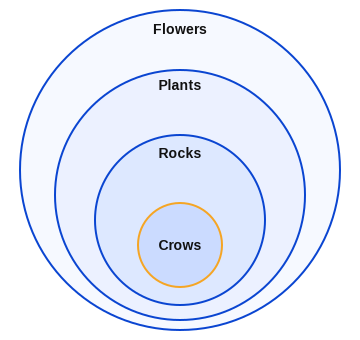
  1. Crows ⊂ Rocks ⊂ Plants ⊂ Flowers.
  2. I: crows are inside flowers → follows.
  3. II: rocks are inside flowers, so some flowers are rocks → follows.

Trick: In a pure 'All' chain, any 'All' conclusion going forward and any 'Some' conclusion in either direction is true.

Answer: (D) Both conclusions (I) and (II) follow.

अवधारणा: सभी A, B हैं और सभी B, C हैं ⇒ सभी A, C हैं; 'सभी B, C हैं' से 'कुछ C, B हैं' भी निकलता है।

  1. कौआ ⊂ चट्टान ⊂ पौधा ⊂ फूल।
  2. I: सभी कौए फूल हैं → अनुसरण करता है।
  3. II: हर चट्टान फूल वर्ग के भीतर है, इसलिए फूलों का एक हिस्सा चट्टान है → यह भी सही।

ट्रिक: केवल 'सभी' वाली श्रृंखला में आगे की दिशा का 'सभी' और किसी भी दिशा का 'कुछ' सत्य होता है।

उत्तर: (D) निष्कर्ष (I) और (II) दोनों अनुसरण करते हैं।

SSC GDGeneral Intelligence & ReasoningSyllogism – chain of 'All'SSC GD 2025 · 10 Feb Shift 1 →
Q19915.
In a certain code language,
' A+B ' means ' A is the mother of B ',
' A−B ' means ' A is the brother of B ',
' A×B ' means ' A is the wife of B′ and
′A÷B′ means ' A is the father of B′.
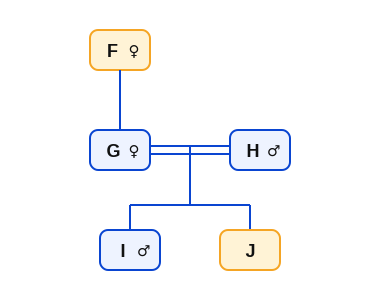
Based on the above, how is F related to J if ' F+G×H÷I−J '?
एक निश्चित कूट भाषा में,
' A+B ' का अर्थ है ' A, B की माता है ',
' A−B ' का अर्थ है ' A, B का भाई है ',
' A×B ' का अर्थ है ' A, B′ की पत्नी है और
′A÷B′ का अर्थ है ' A, B′ का पिता है।
उपर्युक्त के आधार पर, यदि ' F+G×H÷I−J ' है, तो F, J से किस प्रकार संबंधित है?
  1. AWife's fatherपत्नी के पिता
  2. BMother's motherमाता की माता
  3. CDaughterपुत्री
  4. DMother's husbandमाता के पति
Show answer

Concept: Decode each symbol pair and build a family tree.

  1. F + G: F is G's mother. G × H: G is H's wife.
  2. H ÷ I: H is I's father → G is I's mother.
  3. I − J: I is J's brother → J is also G's child.
  4. F is mother of G, who is mother of J → F is J's mother's mother.

Trick: Gender check: F is a mother (female), so 'Wife's father' and 'Mother's husband' are out instantly.

Answer: (B) Mother's mother

अवधारणा: हर चिह्न को खोलकर परिवार-वृक्ष बनाएँ।

  1. F + G: F, G की माँ। G × H: G, H की पत्नी।
  2. H ÷ I: H, I का पिता → G, I की माँ।
  3. I − J: I, J का भाई → J भी G की संतान।
  4. F, G की माँ और G, J की माँ → F, J की माँ की माँ (नानी)।

ट्रिक: F 'माँ' है यानी स्त्री – 'पत्नी के पिता' और 'माँ के पति' तुरंत हट जाते हैं।

उत्तर: (B) माता की माता

SSC GDGeneral Intelligence & ReasoningCoded blood relationSSC GD 2025 · 10 Feb Shift 1 →
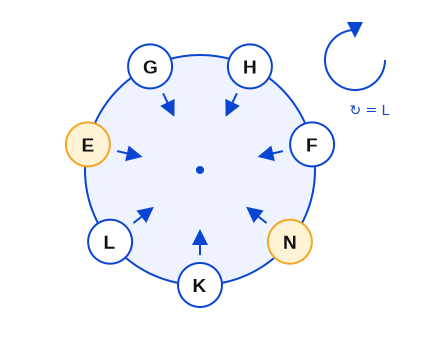
Q19916.
E, F, G, H, K, L and N are sitting around a circular table, facing the centre (but not necessarily in the same order).
G sits third to the left of K. N sits second to the left of H. Only K sits between L and N. F is not an immediate neighbour of G.
How many people sit between E and N when counted from the right of E ?
E, F, G, H, K, L और N एक वृत्ताकार मेज़ के चारों ओर केंद्र की ओर उन्मुख होकर बैठे हैं (आवश्यक नहीं कि इसी क्रम में)।
G, K के बाईं ओर तीसरे स्थान पर बैठा है। N, H के बाईं ओर दूसरे स्थान पर बैठा है। L और N के बीच केवल K बैठा है। F, G का निकटतम पड़ोसी नहीं है।
E के दाईं ओर से गिनने पर E और N के बीच कितने व्यक्ति बैठे हैं?
  1. AThreeतीन
  2. BOneएक
  3. CTwoदो
  4. DFourचार
Show answer

Concept: Facing the centre: left = clockwise, right = anticlockwise.

  1. Place K; G is 3rd to K's left. L and N are K's two neighbours.
  2. N is 2nd to the left of H; this works only with N on K's right side and H two seats further right.
  3. Empty seats: one between H and N, one between L and G. F can't touch G → F between H and N, E between L and G.
  4. From E going right: L, K, then N → 2 people between.

Trick: Fix the person with the most clues (K) first; 'only K between L and N' instantly gives K's two neighbours.

Answer: (C) Two

अवधारणा: केंद्र की ओर मुख हो तो बायाँ = दक्षिणावर्त, दायाँ = वामावर्त।

  1. K को रखें; G, K के बाएँ तीसरे स्थान पर। L और N, K के दोनों पड़ोसी।
  2. N, H के बाएँ दूसरे स्थान पर – यह तभी संभव है जब N, K के दाएँ हो और H उससे दो स्थान आगे दाएँ।
  3. खाली सीटें: H–N के बीच और L–G के बीच। F, G का पड़ोसी नहीं → F, H–N के बीच; E, L–G के बीच।
  4. E के दाएँ से गिनें: L, K, फिर N → बीच में 2 व्यक्ति।

ट्रिक: सबसे अधिक सूचना वाले (K) से शुरू करें; 'L और N के बीच केवल K' से K के दोनों पड़ोसी तय हो जाते हैं।

उत्तर: (C) दो

SSC GDGeneral Intelligence & ReasoningCircular seating – facing centreSSC GD 2025 · 10 Feb Shift 1 →
Q19917.
Who is the Cabinet Secretary of India as of September 2024 ?
सितंबर 2024 तक भारत के कैबिनेट सचिव कौन हैं ?
  1. ARajiv Gaubaराजीव गौबा
  2. BAjit Kumar Sethअजीत कुमार सेठ
  3. CTV Somanathanटी. वी. सोमनाथन
  4. DPradeep Kumar Sinhaप्रदीप कुमार सिन्हा
Show answer

Concept: Current holders of top constitutional/administrative posts.

  1. T. V. Somanathan (IAS, 1987 batch, Tamil Nadu cadre) became Cabinet Secretary on 30 August 2024.
  2. He replaced Rajiv Gauba (2019–2024). P. K. Sinha and Ajit Kumar Seth are earlier holders.

Yaad rakhein: The Cabinet Secretary is India's senior-most civil servant; the post's first holder was N. R. Pillai (1950).

Answer: (C) TV Somanathan

अवधारणा: शीर्ष प्रशासनिक पदों पर वर्तमान पदाधिकारी।

  1. टी. वी. सोमनाथन (1987 बैच IAS, तमिलनाडु कैडर) 30 अगस्त 2024 को कैबिनेट सचिव बने।
  2. उनसे पहले राजीव गौबा (2019–2024) थे; पी. के. सिन्हा और अजीत कुमार सेठ उससे भी पहले रहे।

याद रखें: कैबिनेट सचिव देश का सबसे वरिष्ठ सिविल सेवक होता है; पहले कैबिनेट सचिव एन. आर. पिल्लई (1950) थे।

उत्तर: (C) टी. वी. सोमनाथन

SSC GDGeneral Knowledge & General AwarenessCabinet Secretary of India (2024)SSC GD 2025 · 10 Feb Shift 1 →
Q19918.
A very heavy concentration of Malwa settlements of Chalcolithic period was found in the :
ताम्रपाषाण काल की मालवा बस्तियों का अत्यधिक सघन संकेंद्रण किस क्षेत्र में पाया गया था :
  1. AGanga basinगंगा बेसिन
  2. BCentral Narmada basinमध्य नर्मदा बेसिन
  3. CMahanadi basinमहानदी बेसिन
  4. DIndus basinसिंधु बेसिन
Show answer

Concept: Regional Chalcolithic cultures of India and their core areas.

  1. Malwa culture (c. 1700–1200 BCE) flourished in western Madhya Pradesh.
  2. Its densest cluster of sites lies in the central Narmada valley – Navdatoli (on the Narmada), Kayatha, Eran, Nagda.
  3. Indus basin = Harappan; Ganga basin is not the Malwa zone.

Yaad rakhein: Navdatoli, the biggest Malwa site, stands on the Narmada bank – link 'Malwa ↔ Narmada'.

Answer: (B) Central Narmada basin

अवधारणा: Chalcolithic (कांस्य-पत्थर) युग की क्षेत्रीय संस्कृतियाँ कहाँ बसीं।

  1. मालवा कल्चर का समय करीब 1700 से 1200 BCE माना जाता है; क्षेत्र – पश्चिमी MP।
  2. इसकी सबसे घनी बस्तियाँ मध्य नर्मदा घाटी में हैं – नवदाटोली, कायथा, एरण, नागदा।
  3. Indus बेसिन तो Harappan सभ्यता का क्षेत्र था।

याद रखें: मालवा का सबसे बड़ा स्थल नवदाटोली नर्मदा तट पर है – 'मालवा ↔ नर्मदा' याद रखें।

उत्तर: (B) मध्य नर्मदा बेसिन

SSC GDGeneral Knowledge & General AwarenessMalwa Chalcolithic cultureSSC GD 2025 · 10 Feb Shift 1 →
Q19919.
In tennis, the court should be ____ wide for a doubles match as per the International Tennis Federation.
टेनिस में, अंतरराष्ट्रीय टेनिस महासंघ के अनुसार युगल मैच के लिए कोर्ट ____ चौड़ा होना चाहिए।
  1. A35 ft35 फुट
  2. B37 ft37 फुट
  3. C36 ft36 फुट
  4. D38 ft38 फुट
Show answer

Concept: ITF standard court size.

  1. Length = 78 ft (23.77 m) for both formats.
  2. Singles width = 27 ft; doubles adds a 4.5 ft alley on each side.
  3. Doubles width = 27 + 4.5 + 4.5 = 36 ft (10.97 m).

Trick: 78 – 27 – 36: length, singles width, doubles width.

Answer: (C) 36 ft

अवधारणा: ITF नियमों के मुताबिक कोर्ट का साइज़।

  1. कोर्ट लंबा होता है 78 ft का।
  2. सिंगल्स चौड़ाई = 27 फीट; डबल्स में दोनों ओर 4.5 फीट की गली जुड़ती है।
  3. डबल्स के लिए: 27 में दोनों गलियाँ जोड़ें → 27 + 9 = 36 ft (लगभग 10.97 m)।

ट्रिक: 78 – 27 – 36: लंबाई, सिंगल्स चौड़ाई, डबल्स चौड़ाई।

उत्तर: (C) 36 फुट

SSC GDGeneral Knowledge & General AwarenessTennis court dimensionsSSC GD 2025 · 10 Feb Shift 1 →
Q19920.
How many types of plate tectonic boundaries are there?
प्लेट विवर्तनिक सीमाएँ कितने प्रकार की होती हैं?
  1. AFourचार
  2. BTwoदो
  3. CFiveपाँच
  4. DThreeतीन
Show answer

Concept: Plates can move apart, towards each other, or sideways past each other.

  1. Divergent (constructive) – plates separate, new crust forms (e.g. Mid-Atlantic Ridge).
  2. Convergent (destructive) – plates collide; subduction or fold mountains (Himalaya).
  3. Transform (conservative) – plates slide past (San Andreas Fault).

Trick: Constructive, Destructive, Conservative – three C/D words = three boundaries.

Answer: (D) Three

अवधारणा: प्लेटें दूर जा सकती हैं, पास आ सकती हैं या एक-दूसरे के बगल से खिसक सकती हैं।

  1. अपसारी (रचनात्मक) – प्लेटें अलग होती हैं, नई पर्पटी बनती है।
  2. अभिसारी (विनाशी) – प्लेटें टकराती हैं; जैसे हिमालय।
  3. रूपांतर (संरक्षी) – प्लेटें बगल से खिसकती हैं; जैसे सैन एंड्रियास भ्रंश।

ट्रिक: रचनात्मक, विनाशी, संरक्षी – तीन सीमाएँ।

उत्तर: (D) तीन

SSC GDGeneral Knowledge & General AwarenessPlate boundaries – typesSSC GD 2025 · 10 Feb Shift 1 →