Question bank

Q&A: practice questions with answers

Search questions on any topic. Filter by exam category, exam, subject and topic, try the question, then open the answer and explanation.

Courses – airGurukul

2,400 questions found.

Q2081.
What should come in place of ‘?’ in the given series?
64 62 59 54 47 ?
दी गई श्रेणी में ‘?’ के स्थान पर क्या आना चाहिए?
64 62 59 54 47 ?
  1. A34
  2. B32
  3. C38
  4. D36
Show answer

Concept: Look at the differences between consecutive terms.

  1. 64→62→59→54→47: differences 2,3,5,7 – consecutive prime numbers.
  2. Next prime is 11: 47−11=36.

Trick: Differences 2, 3, 5, 7, 11, 13 … = primes; a very common series pattern.

Answer: (D) 36

अवधारणा: क्रमागत पदों के अंतर देखिए।

  1. 64→62→59→54→47: अंतर 2,3,5,7 – क्रमागत अभाज्य संख्याएँ।
  2. अगली अभाज्य 11: 47−11=36।

ट्रिक: अंतर 2, 3, 5, 7, 11, 13 … = अभाज्य; बहुत आम पैटर्न।

उत्तर: (D) 36
RRB NTPC Graduate CBT 1General Intelligence and ReasoningNumber SeriesRRB NTPC Graduate CBT 1 2025 · 17 Mar Shift 1 →
Q2082.
In this question, a question is followed by two statements numbered (I) and (II). You have to decide whether the data provided in the statements is sufficient to answer the question. Read both the statements and decide the appropriate answer.
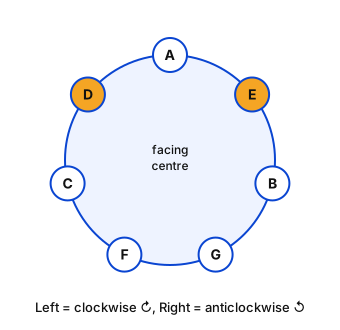
A, B, C, D, E and F are sitting around a circular table, facing the centre. Who sits to the immediate right of C?
(I) D sits to the immediate left of F. C is the immediate neighbour of A and E.
(II) B sits second to the left of F. C sits second to the right of F.
इस प्रश्न में, एक प्रश्न के बाद (I) और (II) क्रमांकित दो कथन दिए गए हैं। आपको यह निर्णय करना है कि कथनों में दिए गए आँकड़े प्रश्न का उत्तर देने के लिए पर्याप्त हैं या नहीं। दोनों कथनों को पढ़िए और उचित उत्तर का चयन कीजिए।
A, B, C, D, E और F एक वृत्ताकार मेज़ के चारों ओर केंद्र की ओर मुख करके बैठे हैं। C के ठीक दाएँ कौन बैठा है?
(I) D, F के ठीक बाएँ बैठा है। C, A और E का निकटतम पड़ोसी है।
(II) B, F के बाएँ दूसरे स्थान पर बैठा है। C, F के दाएँ दूसरे स्थान पर बैठा है।
  1. ABoth statements I and II together are not sufficient to answer the question.कथन I और II दोनों मिलकर भी प्रश्न का उत्तर देने के लिए पर्याप्त नहीं हैं।
  2. BData in Statement II alone is sufficient to answer the question while data in statement I is not.केवल कथन II के आँकड़े प्रश्न का उत्तर देने के लिए पर्याप्त हैं, जबकि कथन I के आँकड़े पर्याप्त नहीं हैं।
  3. CData in Statement I alone is sufficient to answer the question while data in statement II is not.केवल कथन I के आँकड़े प्रश्न का उत्तर देने के लिए पर्याप्त हैं, जबकि कथन II के आँकड़े पर्याप्त नहीं हैं।
  4. DBoth statements I and II together (and not statement I alone or statement II alone) are sufficient to answer the question.कथन I और II दोनों मिलकर (न कि केवल कथन I या केवल कथन II) प्रश्न का उत्तर देने के लिए पर्याप्त हैं।
Show answer

Concept: Test each statement alone, then together; the answer must be unique to be "sufficient".

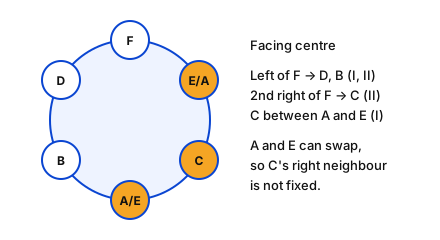
  1. I alone: C sits between A and E, but which of them is on C's right is unknown → not sufficient.
  2. II alone: fixes F, B (2nd left) and C (2nd right); C's neighbours can be any of A, D, E → not sufficient.
  3. Together: D is F's immediate left neighbour, so A and E occupy the two seats beside C – but they can swap. Still two possible answers (A or E).

Trick: If two people can interchange without breaking any condition, the data is insufficient.

Answer: (A) Both statements I and II together are not sufficient to answer the question.

अवधारणा: हर कथन को अकेले, फिर साथ में जाँचिए; "पर्याप्त" तभी जब उत्तर अद्वितीय हो।

  1. केवल I: C, A और E के बीच है, पर C के दाएँ कौन है – पता नहीं → अपर्याप्त।
  2. केवल II: F, B (बाएँ दूसरा) और C (दाएँ दूसरा) तय होते हैं; C के पड़ोसी A, D, E में से कोई → अपर्याप्त।
  3. दोनों साथ: D, F के तुरंत बाएँ है, तो C के दोनों ओर A और E हैं – पर वे अदल-बदल सकते हैं। फिर भी दो संभावित उत्तर (A या E)।

ट्रिक: यदि दो व्यक्ति बिना कोई शर्त तोड़े स्थान बदल सकें, तो आँकड़े अपर्याप्त हैं।

उत्तर: (A) कथन I और II मिलकर भी प्रश्न का उत्तर देने के लिए पर्याप्त नहीं हैं।

RRB NTPC Graduate CBT 1General Intelligence and ReasoningData Sufficiency – SeatingRRB NTPC Graduate CBT 1 2025 · 17 Mar Shift 1 →
Q2083.
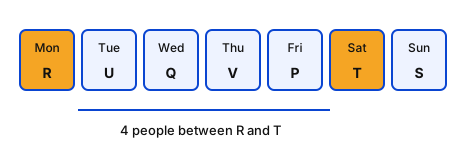
Each of P, Q, R, S, T, U and V has an exam on a different day of a week starting from Monday and ending on Sunday of the same week.
Only two people have exams before Q. Only three people have exams after V. Only three people have exams between S and Q. P has the exam immediately before T but not on Monday. R does not have the exam on Tuesday.
How many people have exams between R and T?
P, Q, R, S, T, U और V में से प्रत्येक की परीक्षा एक ही सप्ताह के सोमवार से रविवार तक, सप्ताह के अलग-अलग दिन है।
Q से पहले केवल दो व्यक्तियों की परीक्षा है। V के बाद केवल तीन व्यक्तियों की परीक्षा है। S और Q के बीच केवल तीन व्यक्तियों की परीक्षा है। P की परीक्षा T से ठीक पहले है, परंतु सोमवार को नहीं। R की परीक्षा मंगलवार को नहीं है।
R और T के बीच कितने व्यक्तियों की परीक्षा है?
  1. AThreeतीन
  2. BTwoदो
  3. CFourचार
  4. DOneएक
Show answer

Concept: Place the fixed people first (Q, V, S), then fit the pair P–T, then the rest.

  1. Two before Q → Q = Wed; three after V → V = Thu; three between S and Q → S = Sun.
  2. P immediately before T, P not Monday: only Fri–Sat is free as a pair → P = Fri, T = Sat.
  3. R not Tuesday → R = Mon, U = Tue. Between R (Mon) and T (Sat): Tue, Wed, Thu, Fri = 4 people.

Trick: "Only n people before/after X" fixes X's position at once.

Answer: (C) Four

अवधारणा: पहले निश्चित लोगों (Q, V, S) को रखें, फिर जोड़ी P–T, फिर बाकी।

  1. Q से पहले दो → Q = बुध; V के बाद तीन → V = गुरु; S और Q के बीच तीन → S = रवि।
  2. P, T से ठीक पहले और सोमवार नहीं: केवल शुक्र–शनि खाली जोड़ी → P = शुक्र, T = शनि।
  3. R मंगल नहीं → R = सोम, U = मंगल। R (सोम) और T (शनि) के बीच: मंगल, बुध, गुरु, शुक्र = 4 लोग।

ट्रिक: "X से पहले/बाद केवल n लोग" X की स्थिति तुरंत तय कर देता है।

उत्तर: (C) चार

RRB NTPC Graduate CBT 1General Intelligence and ReasoningScheduling PuzzleRRB NTPC Graduate CBT 1 2025 · 17 Mar Shift 1 →
Q2084.
In a certain code language, ‘WAND’ is coded as ‘1846’ and ‘GNAW’ is coded as ‘4165’. What is the code for ‘G’ in that language?
एक निश्चित कूट भाषा में, ‘WAND’ को ‘1846’ के रूप में और ‘GNAW’ को ‘4165’ के रूप में कूटबद्ध किया जाता है। उस भाषा में ‘G’ का कूट क्या है?
  1. A6
  2. B5
  3. C1
  4. D4
Show answer

Concept: Common letters ↔ common digits; the odd letter takes the odd digit.

  1. WAND → 1846, GNAW → 4165. Common letters W, A, N; common digits 1, 4, 6.
  2. In GNAW the extra letter is G and the extra digit is 5 → G = 5.
  3. (In WAND, D = 8.)

Trick: Codes are not in letter order – match by elimination, not position.

Answer: (B) 5

अवधारणा: साझा अक्षर ↔ साझा अंक; अलग अक्षर अलग अंक लेता है।

  1. WAND → 1846, GNAW → 4165। साझा अक्षर W, A, N; साझा अंक 1, 4, 6।
  2. GNAW में अतिरिक्त अक्षर G और अतिरिक्त अंक 5 → G = 5।
  3. (WAND में D = 8।)

ट्रिक: कोड अक्षर-क्रम में नहीं हैं – स्थिति से नहीं, निराकरण से मिलान करें।

उत्तर: (B) 5

RRB NTPC Graduate CBT 1General Intelligence and ReasoningCoding-DecodingRRB NTPC Graduate CBT 1 2025 · 17 Mar Shift 1 →
Q2085.
Which of the following letter-clusters should replace # and % so that the pattern and relationship followed between the letter-cluster pair on the left side of :: is the same as that on the right side of :: ?
# : NQW :: LOU : %
निम्नलिखित में से कौन-से अक्षर-समूह # और % के स्थान पर आने चाहिए, ताकि :: के बाईं ओर के अक्षर-समूह युग्म के बीच का पैटर्न और संबंध :: के दाईं ओर के युग्म के समान हो?
# : NQW :: LOU : %
  1. A# = KKQ, % = RUA
  2. B# = HKQ, % = RUL
  3. C# = HKQ, % = RUA
  4. D# = HKQ, % = RUO
Show answer

Concept: One uniform shift must link # → NQW and LOU → %.

  1. Three options start with HKQ: H→N, K→Q, Q→W – each letter moves forward 6 (8→14, 11→17, 17→23).
  2. Apply +6 to LOU: L(12)→R(18), O(15)→U(21), U(21)→A(27−26=1) = RUA.
  3. Only option (C) has both HKQ and RUA.

Trick: U + 6 wraps past Z: 21 + 6 = 27 → A.

Answer: (C) # = HKQ, % = RUA

अवधारणा: एक समान स्थानांतरण से # → NQW और LOU → % बनना चाहिए।

  1. तीन विकल्पों में HKQ है: H→N, K→Q, Q→W – हर अक्षर 6 आगे (8→14, 11→17, 17→23)।
  2. LOU पर +6: L(12)→R(18), O(15)→U(21), U(21)→A(27−26=1) = RUA।
  3. केवल (C) में HKQ और RUA दोनों हैं।

ट्रिक: U + 6, Z के पार जाता है: 21 + 6 = 27 → A।

उत्तर: (C) # = HKQ, % = RUA

RRB NTPC Graduate CBT 1General Intelligence and ReasoningLetter AnalogyRRB NTPC Graduate CBT 1 2025 · 17 Mar Shift 1 →
Q2086.
Read the given statements and conclusions carefully. Assuming that the information given in the statements is true, even if it appears to be at variance with commonly known facts, decide which of the given conclusions logically follow(s) from the statements.
Statements:
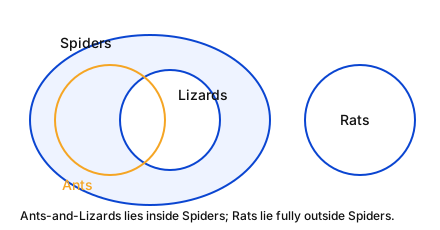
Some ants are lizards.
All lizards are spiders.
No spider is a rat.
Conclusions:
(I) Some rats are lizards.
(II) Some spiders are ants.
दिए गए कथनों और निष्कर्षों को ध्यानपूर्वक पढ़िए। यह मानते हुए कि कथनों में दी गई जानकारी सत्य है, भले ही वह सामान्यतः ज्ञात तथ्यों से भिन्न प्रतीत होती हो, निर्णय कीजिए कि दिए गए निष्कर्षों में से कौन-सा/कौन-से निष्कर्ष कथनों का तार्किक रूप से अनुसरण करता है/करते हैं।
कथन:
कुछ चींटियाँ छिपकलियाँ हैं।
सभी छिपकलियाँ मकड़ियाँ हैं।
कोई मकड़ी चूहा नहीं है।
निष्कर्ष:
(I) कुछ चूहे छिपकलियाँ हैं।
(II) कुछ मकड़ियाँ चींटियाँ हैं।
  1. AOnly conclusion (II) followsकेवल निष्कर्ष (II) अनुसरण करता है
  2. BNeither conclusion (I) nor (II) followsन तो निष्कर्ष (I) और न ही (II) अनुसरण करता है
  3. CBoth conclusions (I) and (II) followनिष्कर्ष (I) और (II) दोनों अनुसरण करते हैं
  4. DOnly conclusion (I) followsकेवल निष्कर्ष (I) अनुसरण करता है
Show answer

Concept: Draw a Venn diagram that satisfies all statements and test each conclusion.

  1. Some ants are lizards + all lizards are spiders → those ants are spiders → "Some spiders are ants" (II) follows.
  2. No spider is a rat and every lizard is a spider → no lizard is a rat → (I) "Some rats are lizards" is false.

Trick: "Some A are B" + "All B are C" always gives "Some A are C" (and its converse).

Answer: (A) Only conclusion (II) follows

अवधारणा: सभी कथनों को संतुष्ट करने वाला वेन आरेख बनाकर हर निष्कर्ष जाँचिए।

  1. कुछ चींटियाँ छिपकली + सभी छिपकली मकड़ी → वे चींटियाँ मकड़ी हैं → "कुछ मकड़ियाँ चींटियाँ हैं" (II) सही।
  2. कोई मकड़ी चूहा नहीं और हर छिपकली मकड़ी है → कोई छिपकली चूहा नहीं → (I) "कुछ चूहे छिपकली हैं" गलत।

ट्रिक: "कुछ A, B हैं" + "सभी B, C हैं" से सदैव "कुछ A, C हैं" (और उसका विलोम) निकलता है।

उत्तर: (A) केवल निष्कर्ष (II) अनुसरण करता है

RRB NTPC Graduate CBT 1General Intelligence and ReasoningSyllogismRRB NTPC Graduate CBT 1 2025 · 17 Mar Shift 1 →
Q2087.
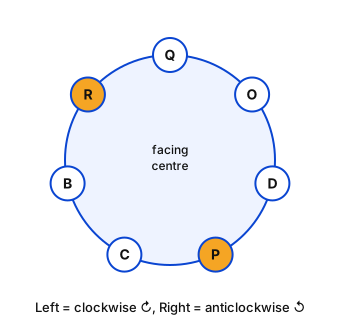
Seven people B, C, D, O, P, Q and R are sitting around a circular table facing the center of the table. P sits third to the left of Q. Only one person sits between Q and B when counted from the right of Q. Only two people sit between O and C when counted from the left of O. D is an immediate neighbor of O. Who sits third to the right of R?
सात व्यक्ति B, C, D, O, P, Q और R एक वृत्ताकार मेज़ के चारों ओर मेज़ के केंद्र की ओर मुख करके बैठे हैं। P, Q के बाएँ तीसरे स्थान पर बैठा है। Q के दाएँ से गिनने पर Q और B के बीच केवल एक व्यक्ति बैठा है। O के बाएँ से गिनने पर O और C के बीच केवल दो व्यक्ति बैठे हैं। D, O का निकटतम पड़ोसी है। R के दाएँ तीसरे स्थान पर कौन बैठा है?
  1. AD
  2. BP
  3. CC
  4. DO
Show answer

Concept: When people face the centre, "left" means clockwise and "right" means anticlockwise. Fix one person and place the others step by step.

  1. Fix Q at the top. P is 3rd to the left (clockwise) of Q.
  2. One person between Q and B from Q's right (anticlockwise) → B is 2nd to the right of Q.
  3. Two people between O and C from O's left → C is 3rd clockwise from O. The only free positions that allow this are O immediately left of Q and C just before B.
  4. D is the neighbour of O (the seat between O and P); the last seat, between B and Q, goes to R.
  5. Counting 3 to the right (anticlockwise) of R: B, C, P → P.

Trick: Facing centre → Left = clockwise. Always draw the circle; never solve seating in the head.

Answer: (B) P

अवधारणा: केंद्र की ओर मुख होने पर "बाएँ" = दक्षिणावर्त (clockwise) और "दाएँ" = वामावर्त (anticlockwise)। एक व्यक्ति को स्थिर करके बाकी को क्रम से बैठाएँ।

  1. Q को ऊपर रखें। P, Q के बाएँ (clockwise) तीसरे स्थान पर।
  2. Q के दाएँ से गिनने पर Q और B के बीच एक व्यक्ति → B, Q के दाएँ दूसरे स्थान पर।
  3. O के बाएँ से गिनने पर O और C के बीच दो व्यक्ति → C, O से clockwise तीसरे स्थान पर। यह केवल तभी संभव है जब O, Q के ठीक बाएँ और C, B के ठीक पहले हो।
  4. D, O का पड़ोसी (O और P के बीच की सीट); बची सीट (B और Q के बीच) R की।
  5. R के दाएँ (anticlockwise) 3 गिनें: B, C, P → P।

ट्रिक: केंद्र की ओर मुख → बाएँ = clockwise। वृत्त बनाकर ही हल करें, दिमाग में नहीं।

उत्तर: (B) P

RRB NTPC Graduate CBT 1General Intelligence and ReasoningCircular seatingRRB NTPC Graduate CBT 1 2025 · 17 Mar Shift 1 →
Q2088.
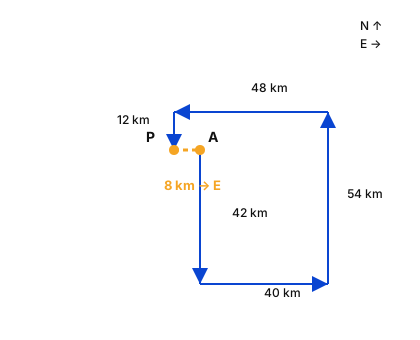
Manan starts from Point A and drives 42 km towards South. He then takes a left turn, drives 40 km, turns left and drives 54 km. He then takes a left turn and drives 48 km. He takes a final left turn, drives 12 km and stops at Point P. How far (shortest distance) and towards which direction should he drive in order to reach Point A again? (All turns are 90-degree turns only, unless specified.)
मनन बिंदु A से चलना शुरू करता है और दक्षिण की ओर 42 km गाड़ी चलाता है। फिर वह बाएँ मुड़ता है, 40 km गाड़ी चलाता है, बाएँ मुड़ता है और 54 km गाड़ी चलाता है। फिर वह बाएँ मुड़ता है और 48 km गाड़ी चलाता है। अंत में वह बाएँ मुड़ता है, 12 km गाड़ी चलाता है और बिंदु P पर रुक जाता है। बिंदु A पर पुनः पहुँचने के लिए उसे कितनी दूर (न्यूनतम दूरी) और किस दिशा में गाड़ी चलानी चाहिए? (जब तक अन्यथा न कहा जाए, सभी मोड़ केवल 90 डिग्री के हैं।)
  1. A8 km to the east8 km पूर्व की ओर
  2. B7 km to the east7 km पूर्व की ओर
  3. C6 km to the west6 km पश्चिम की ओर
  4. D5 km to the west5 km पश्चिम की ओर
Show answer

Concept: Track the position as (East, North) coordinates; left turns rotate the heading anticlockwise: S → E → N → W → S.

  1. Start A (0, 0). South 42 → (0, −42).
  2. Left (East) 40 → (40, −42). Left (North) 54 → (40, 12).
  3. Left (West) 48 → (−8, 12). Left (South) 12 → (−8, 0) = P.
  4. P is 8 km due west of A, so Manan must drive 8 km towards the east.

Trick: Net East–West =40−48=−8 (8 km west); net North–South =−42+54−12=0. Opposite-direction distances just subtract.

Answer: (A) 8 km to the east

अवधारणा: स्थिति को (पूर्व, उत्तर) निर्देशांक में लिखें; बायाँ मोड़ दिशा को वामावर्त घुमाता है: S → E → N → W → S।

  1. A (0, 0) से दक्षिण 42 → (0, −42)।
  2. बाएँ (पूर्व) 40 → (40, −42)। बाएँ (उत्तर) 54 → (40, 12)।
  3. बाएँ (पश्चिम) 48 → (−8, 12)। बाएँ (दक्षिण) 12 → (−8, 0) = P।
  4. P, A से ठीक 8 km पश्चिम में है, अतः मनन को 8 km पूर्व की ओर चलना होगा।

ट्रिक: नेट पूर्व–पश्चिम =40−48=−8 (8 km पश्चिम); नेट उत्तर–दक्षिण =−42+54−12=0। विपरीत दिशाओं की दूरियाँ बस घटा दें।

उत्तर: (A) 8 km to the east

RRB NTPC Graduate CBT 1General Intelligence and ReasoningDirection & distanceRRB NTPC Graduate CBT 1 2025 · 17 Mar Shift 1 →
Q2089.
TN 13 is related to WR 16 in a certain way. In the same way, KE 18 is related to NI 21. To which of the following is VP 26 related, following the same logic?
TN 13 एक निश्चित प्रकार से WR 16 से संबंधित है। उसी प्रकार, KE 18, NI 21 से संबंधित है। उसी तर्क का अनुसरण करते हुए, VP 26 निम्नलिखित में से किससे संबंधित है?
  1. AXU 28
  2. BYV 29
  3. CYT 29
  4. DXY 28
Show answer

Concept: Find the shift applied to each letter and to the number, then apply the same shift.

  1. TN 13 → WR 16: T+3 = W, N+4 = R, 13+3=16.
  2. KE 18 → NI 21: K+3 = N, E+4 = I, 18+3=21 – same rule.
  3. VP 26: V+3 = Y, P+4 = T, 26+3=29 → YT 29.

Trick: Rule (+3, +4, +3). Place values: V=22→25=Y, P=16→20=T.

Answer: (C) YT 29

अवधारणा: हर अक्षर और संख्या पर लगा शिफ्ट पहचानें, फिर वही शिफ्ट लागू करें।

  1. TN 13 → WR 16: T+3 = W, N+4 = R, 13+3=16।
  2. KE 18 → NI 21: K+3 = N, E+4 = I, 18+3=21 – वही नियम।
  3. VP 26: V+3 = Y, P+4 = T, 26+3=29 → YT 29।

ट्रिक: नियम (+3, +4, +3)। स्थान मान: V=22→25=Y, P=16→20=T।

उत्तर: (C) YT 29

RRB NTPC Graduate CBT 1General Intelligence and ReasoningLetter–number analogyRRB NTPC Graduate CBT 1 2025 · 17 Mar Shift 1 →
Q2090.
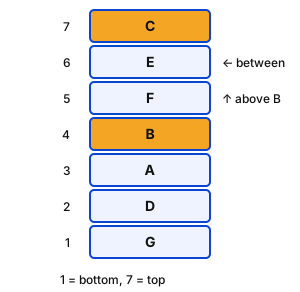
Seven boxes A, B, C, D, E, F and G are kept one over the other but not necessarily in the same order. Only two boxes are kept below A. Only two boxes are kept between E and A. F is kept immediately above B. D is kept above G but below A.
How many boxes are kept below C but above B?
सात बक्से A, B, C, D, E, F और G एक के ऊपर एक रखे गए हैं, परंतु आवश्यक नहीं कि इसी क्रम में हों। A के नीचे केवल दो बक्से रखे हैं। E और A के बीच केवल दो बक्से रखे हैं। F, B के ठीक ऊपर रखा है। D, G के ऊपर परंतु A के नीचे रखा है।
C के नीचे परंतु B के ऊपर कितने बक्से रखे हैं?
  1. AFiveपाँच
  2. BThreeतीन
  3. CTwoदो
  4. DFourचार
Show answer

Concept: Number the positions 1 (bottom) to 7 (top) and fill the definite clues first.

  1. Two boxes below A → A = 3. Two boxes between E and A → E = 6.
  2. D above G but below A → G = 1, D = 2.
  3. Free positions 4, 5, 7. F immediately above B → B = 4, F = 5; C takes 7 (top).
  4. Between B (4) and C (7): F and E → two boxes.

Trick: "Only two below A" fixes A instantly; use such exact-count clues to anchor the stack.

Answer: (C) Two

अवधारणा: स्थानों को 1 (सबसे नीचे) से 7 (सबसे ऊपर) तक नंबर दें और पहले निश्चित संकेत भरें।

  1. A के नीचे दो बॉक्स → A = 3। E और A के बीच दो बॉक्स → E = 6।
  2. D, G के ऊपर पर A के नीचे → G = 1, D = 2।
  3. खाली स्थान 4, 5, 7। F ठीक B के ऊपर → B = 4, F = 5; C = 7 (सबसे ऊपर)।
  4. B (4) और C (7) के बीच: F और E → दो बॉक्स।

ट्रिक: "A के नीचे केवल दो" जैसे सटीक-गिनती संकेत से A तुरंत तय हो जाता है; ऐसे संकेतों से स्टैक को एंकर करें।

उत्तर: (C) Two

RRB NTPC Graduate CBT 1General Intelligence and ReasoningBox arrangementRRB NTPC Graduate CBT 1 2025 · 17 Mar Shift 1 →
Q2091.
Which of the following letter-number clusters will replace the question mark (?) in the given series to make it logically complete?
PMO 51 SPR 46 VSU 41 YVX 36 ?
निम्नलिखित में से कौन-सा अक्षर-संख्या समूह दी गई श्रेणी में प्रश्नवाचक चिह्न (?) के स्थान पर आएगा, ताकि श्रेणी तार्किक रूप से पूर्ण हो जाए?
PMO 51 SPR 46 VSU 41 YVX 36 ?
  1. ABZZ 31
  2. BBJS 30
  3. CBXZ 30
  4. DBYA 31
Show answer

Concept: Examine letters and numbers separately.

  1. Letters: P→S→V→Y (each +3), M→P→S→V (+3), O→R→U→X (+3).
  2. Next: Y+3 = B, V+3 = Y, X+3 = A (wrap around after Z).
  3. Numbers: 51, 46, 41, 36 → each −5 → 31.
  4. Cluster = BYA 31.

Trick: Each cluster is three consecutive letters (PMO = P, M, O with middle 3 behind); next cluster starts with B → BYA.

Answer: (D) BYA 31

अवधारणा: अक्षरों और संख्याओं को अलग-अलग जाँचें।

  1. अक्षर: P→S→V→Y (हर बार +3), M→P→S→V (+3), O→R→U→X (+3)।
  2. अगला: Y+3 = B, V+3 = Y, X+3 = A (Z के बाद A से दोबारा)।
  3. संख्याएँ: 51, 46, 41, 36 → हर बार −5 → 31।
  4. समूह = BYA 31।

ट्रिक: अक्षरों में +3 और संख्या में −5; Z के बाद गिनती A से शुरू।

उत्तर: (D) BYA 31

RRB NTPC Graduate CBT 1General Intelligence and ReasoningLetter–number seriesRRB NTPC Graduate CBT 1 2025 · 17 Mar Shift 1 →
Q2092.
This question is based on the five, three-digit numbers given below.
(Left) 194 582 419 149 825 (Right)
(Example- 697 – First digit = 6, second digit = 9 and third digit = 7)
What will be the resultant if the third digit of the highest number is added to the second digit of the lowest number?
यह प्रश्न नीचे दी गई पाँच, तीन-अंकीय संख्याओं पर आधारित है।
(बाएँ) 194 582 419 149 825 (दाएँ)
(उदाहरण- 697 – पहला अंक = 6, दूसरा अंक = 9 और तीसरा अंक = 7)
यदि सबसे बड़ी संख्या के तीसरे अंक को सबसे छोटी संख्या के दूसरे अंक में जोड़ा जाए, तो परिणाम क्या होगा?
  1. A9
  2. B8
  3. C6
  4. D12
Show answer

Concept: Identify the required numbers first, then pick the asked digits.

  1. Numbers: 194, 582, 419, 149, 825. Highest = 825, lowest = 149.
  2. Third digit of 825 = 5; second digit of 149 = 4.
  3. 5+4=9.

Trick: Compare the hundreds digit first to spot the highest (8xx) and lowest (1xx) numbers quickly; 149 < 194 because 4 < 9 at tens place.

Answer: (A) 9

अवधारणा: पहले आवश्यक संख्याएँ पहचानें, फिर पूछे गए अंक लें।

  1. संख्याएँ: 194, 582, 419, 149, 825। सबसे बड़ी = 825, सबसे छोटी = 149।
  2. 825 का तीसरा अंक = 5; 149 का दूसरा अंक = 4।
  3. 5+4=9।

ट्रिक: सैकड़े का अंक देखकर सबसे बड़ी (8xx) और सबसे छोटी (1xx) संख्या तुरंत पहचानें; 149 < 194 क्योंकि दहाई में 4 < 9।

उत्तर: (A) 9

RRB NTPC Graduate CBT 1General Intelligence and ReasoningNumber-based reasoningRRB NTPC Graduate CBT 1 2025 · 17 Mar Shift 1 →
Q2093.
If 1 is added to each odd digit and 2 is subtracted from each even digit in the number 4813576, what will be the difference between the highest and the lowest digits in the number thus formed?
यदि संख्या 4813576 के प्रत्येक विषम अंक में 1 जोड़ा जाए और प्रत्येक सम अंक से 2 घटाया जाए, तो इस प्रकार बनी संख्या के सबसे बड़े और सबसे छोटे अंक के बीच का अंतर क्या होगा?
  1. A7
  2. B8
  3. C5
  4. D6
Show answer

Concept: Apply the rule digit by digit, then compare the new digits.

  1. 4813576: odd digits +1 → 1→2, 3→4, 5→6, 7→8; even digits −2 → 4→2, 8→6, 6→4.
  2. New number: 2 6 2 4 6 8 4 = 2624684.
  3. Highest digit 8, lowest 2 → difference 8−2=6.

Trick: Write the new digits directly under the old ones; only the max and min matter, so spot 7→8 and (4 or 1)→2 quickly.

Answer: (D) 6

अवधारणा: नियम को हर अंक पर लगाएँ, फिर नए अंकों की तुलना करें।

  1. 4813576: विषम अंक +1 → 1→2, 3→4, 5→6, 7→8; सम अंक −2 → 4→2, 8→6, 6→4।
  2. नई संख्या: 2 6 2 4 6 8 4 = 2624684।
  3. सबसे बड़ा अंक 8, सबसे छोटा 2 → अंतर 8−2=6।

ट्रिक: नए अंक पुराने के ठीक नीचे लिखें; केवल max और min चाहिए, तो 7→8 और (4 या 1)→2 तुरंत पहचानें।

उत्तर: (D) 6

RRB NTPC Graduate CBT 1General Intelligence and ReasoningDigit operationsRRB NTPC Graduate CBT 1 2025 · 17 Mar Shift 1 →
Q2094.
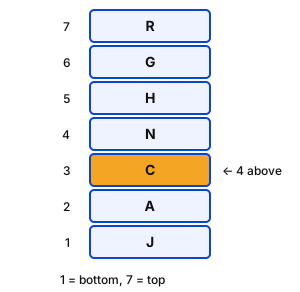
Seven boxes A, C, G, H, J, N and R are kept one over the other but not necessarily in the same order. Only three boxes are kept below N. Only two boxes are kept between N and J. Only G is kept immediately above H. C is kept at some place below R and at some place above A. How many boxes are kept above C?
सात बक्से A, C, G, H, J, N और R एक के ऊपर एक रखे गए हैं, परंतु आवश्यक नहीं कि इसी क्रम में हों। N के नीचे केवल तीन बक्से रखे हैं। N और J के बीच केवल दो बक्से रखे हैं। H के ठीक ऊपर केवल G रखा है। C, R के नीचे किसी स्थान पर और A के ऊपर किसी स्थान पर रखा है। C के ऊपर कितने बक्से रखे हैं?
  1. A3
  2. B2
  3. C4
  4. D1
Show answer

Concept: Number positions 1 (bottom) to 7 (top); fix the exact-count clues first and test the two possible cases.

  1. Three boxes below N → N = 4. Two boxes between N and J → J = 1 or 7.
  2. R is above C and C above A (R > C > A), and G sits immediately above H.
  3. Take J = 1. Then A, C, R and the G–H pair must fill 2, 3, 5, 6, 7 with R above C above A: A = 2, C = 3, and R, G, H occupy 5–7 (G–H together, R the remaining slot).
  4. Boxes above C (position 3): N, H/R, G, R/H → 4 boxes.

Trick: Clues like "R above C above A" need three free slots in increasing order – use them to decide between the two J positions.

Answer: (C) 4

अवधारणा: स्थानों को 1 (नीचे) से 7 (ऊपर) नंबर दें; पहले सटीक-गिनती वाले संकेत भरें और दोनों संभावित स्थितियाँ जाँचें।

  1. N के नीचे तीन बॉक्स → N = 4। N और J के बीच दो बॉक्स → J = 1 या 7।
  2. R, C के ऊपर और C, A के ऊपर (R > C > A); G ठीक H के ऊपर।
  3. J = 1 लें। तब A, C, R और G–H जोड़ी को 2, 3, 5, 6, 7 भरने हैं: A = 2, C = 3, और R, G, H स्थान 5–7 पर (G–H साथ, R बचे स्थान पर)।
  4. C (स्थान 3) के ऊपर: N, H/R, G, R/H → 4 बॉक्स।

ट्रिक: "R, C के ऊपर, C, A के ऊपर" जैसे संकेतों को बढ़ते क्रम में तीन खाली स्थान चाहिए – इसी से J की दो स्थितियों में से चुनें।

उत्तर: (C) 4

RRB NTPC Graduate CBT 1General Intelligence and ReasoningBox arrangementRRB NTPC Graduate CBT 1 2025 · 17 Mar Shift 1 →
Q2095.
Which of the following letter-number clusters will replace the question mark (?) in the given series to make it logically complete?
EGE 85 DFD 90 CEC 95 BDB 100 ?
निम्नलिखित में से कौन-सा अक्षर-संख्या समूह दी गई श्रेणी में प्रश्नवाचक चिह्न (?) के स्थान पर आएगा, ताकि श्रेणी तार्किक रूप से पूर्ण हो जाए?
EGE 85 DFD 90 CEC 95 BDB 100 ?
  1. AABZ 104
  2. BABD 104
  3. CADZ 105
  4. DACA 105
Show answer

Concept: Treat letters and numbers as separate series.

  1. Letters: E→D→C→B (each −1), G→F→E→D (−1), E→D→C→B (−1).
  2. Next: B−1 = A, D−1 = C, B−1 = A → ACA.
  3. Numbers: 85, 90, 95, 100 → +5 → 105.
  4. Cluster = ACA 105.

Trick: Each cluster is "X, X+2, X" moving one step back; the number climbs by 5. Options with 104 are out at once.

Answer: (D) ACA 105

अवधारणा: अक्षरों और संख्याओं को अलग-अलग श्रृंखला मानें।

  1. अक्षर: E→D→C→B (हर बार −1), G→F→E→D (−1), E→D→C→B (−1)।
  2. अगला: B−1 = A, D−1 = C, B−1 = A → ACA।
  3. संख्याएँ: 85, 90, 95, 100 → +5 → 105।
  4. समूह = ACA 105।

ट्रिक: हर समूह "X, X+2, X" है जो एक कदम पीछे जाता है; संख्या 5 बढ़ती है। 104 वाले विकल्प तुरंत बाहर।

उत्तर: (D) ACA 105

RRB NTPC Graduate CBT 1General Intelligence and ReasoningLetter–number seriesRRB NTPC Graduate CBT 1 2025 · 17 Mar Shift 1 →
Q2096.
Read the given statements and conclusions carefully. Assuming that the information given in the statements is true, even if it appears to be at variance with commonly known facts, decide which of the given conclusions logically follow(s) from the statements.
Statements:
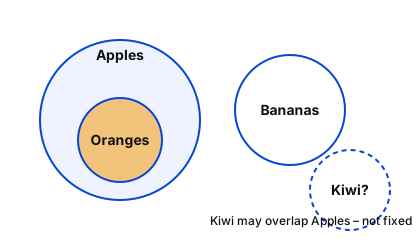
All oranges are apples. No apple is a banana. No banana is a kiwi.
Conclusions:
(I) No orange is a banana.
(II) No apple is a kiwi.
दिए गए कथनों और निष्कर्षों को ध्यानपूर्वक पढ़िए। यह मानते हुए कि कथनों में दी गई जानकारी सत्य है, भले ही वह सामान्यतः ज्ञात तथ्यों से भिन्न प्रतीत होती हो, निर्णय कीजिए कि दिए गए निष्कर्षों में से कौन-सा/कौन-से निष्कर्ष कथनों का तार्किक रूप से अनुसरण करता है/करते हैं।
कथन:
सभी संतरे सेब हैं। कोई सेब केला नहीं है। कोई केला कीवी नहीं है।
निष्कर्ष:
(I) कोई संतरा केला नहीं है।
(II) कोई सेब कीवी नहीं है।
  1. ABoth conclusions (I) and (II) followनिष्कर्ष (I) और (II) दोनों अनुसरण करते हैं
  2. BNeither conclusion (I) nor (II) followsन तो निष्कर्ष (I) और न ही (II) अनुसरण करता है
  3. COnly conclusion (I) followsकेवल निष्कर्ष (I) अनुसरण करता है
  4. DOnly conclusion (II) followsकेवल निष्कर्ष (II) अनुसरण करता है
Show answer

Concept: Draw a Venn diagram of the statements; a conclusion follows only if it is true in every possible diagram.

  1. All oranges are apples → Oranges inside Apples. No apple is a banana → Apples and Bananas are separate.
  2. Hence Oranges are also separate from Bananas → (I) No orange is a banana follows.
  3. No banana is a kiwi tells nothing about Apples and Kiwi – Kiwi may or may not overlap Apples → (II) does not follow.

Trick: Two negative statements ("No apple is banana", "No banana is kiwi") never give a conclusion between their outer terms (apple–kiwi).

Answer: (C) Only conclusion (I) follows

अवधारणा: कथनों का वेन आरेख बनाएँ; निष्कर्ष तभी सही है जब वह हर संभव आरेख में सत्य हो।

  1. सभी संतरे सेब हैं → Oranges, Apples के अंदर। कोई सेब केला नहीं → Apples और Bananas अलग।
  2. अतः Oranges भी Bananas से अलग → (I) कोई संतरा केला नहीं अनुसरण करता है।
  3. "कोई केला कीवी नहीं" Apples और Kiwi के बारे में कुछ नहीं बताता – Kiwi, Apples से मिल भी सकता है → (II) अनुसरण नहीं करता।

ट्रिक: दो नकारात्मक कथनों ("कोई सेब केला नहीं", "कोई केला कीवी नहीं") से उनके बाहरी पदों (सेब–कीवी) के बीच कभी निष्कर्ष नहीं निकलता।

उत्तर: (C) Only conclusion (I) follows

RRB NTPC Graduate CBT 1General Intelligence and ReasoningSyllogismRRB NTPC Graduate CBT 1 2025 · 17 Mar Shift 1 →
Q2097.
Below are given two sets of numbers. In each set of numbers, a certain mathematical operation on the first number results in the second number. Similarly, a certain mathematical operation on the second number results in the third number and so on. Which of the given options follows the same set of operations as in the question? (NOTE – A two/three-digit number cannot be broken into individual digits for
operations. E.g. if 37 is followed by 10, the operation cannot be 3+7 as a two-digit number cannot be broken into individual digits.)
15 – 225 – 235 – 195
9 – 81 – 91 – 51
नीचे संख्याओं के दो समुच्चय दिए गए हैं। संख्याओं के प्रत्येक समुच्चय में, पहली संख्या पर एक निश्चित गणितीय संक्रिया करने से दूसरी संख्या प्राप्त होती है। इसी प्रकार, दूसरी संख्या पर एक निश्चित गणितीय संक्रिया करने से तीसरी संख्या प्राप्त होती है, और इसी तरह आगे। दिए गए विकल्पों में से कौन-सा प्रश्न में दी गई संक्रियाओं के उसी समुच्चय का अनुसरण करता है? (नोट – दो/तीन अंकों की संख्या को संक्रियाओं के लिए
अलग-अलग अंकों में नहीं तोड़ा जा सकता। उदाहरण के लिए यदि 37 के बाद 10 है, तो संक्रिया 3+7 नहीं हो सकती, क्योंकि दो अंकों की संख्या को अलग-अलग अंकों में नहीं तोड़ा जा सकता।)
15 – 225 – 235 – 195
9 – 81 – 91 – 51
  1. A10 – 100 – 110 – 90
  2. B8 – 64 – 74 – 104
  3. C18 – 324 – 334 – 294
  4. D16 – 256 – 276 – 246
Show answer

Concept: Find the operation between consecutive numbers in the given sets and test the options.

  1. 15→225 (152), 225→235 (+10), 235→195 (−40).
  2. 9→81 (92), 81→91 (+10), 91→51 (−40). Rule: square, +10, −40.
  3. Option C: 182=324, 324+10=334, 334−40=294 ✓.
  4. A: 110−90=20 ✗; B: 74→104 is +30 ✗; D: 256→276 is +20 ✗.

Trick: Check the last step first (−40): only option C has 334 − 294 = 40.

Answer: (C) 18 – 324 – 334 – 294

अवधारणा: दिए गए समूहों में क्रमागत संख्याओं के बीच की संक्रिया पहचानें और विकल्प जाँचें।

  1. 15→225 (152), 225→235 (+10), 235→195 (−40)।
  2. 9→81 (92), 81→91 (+10), 91→51 (−40)। नियम: वर्ग, +10, −40।
  3. विकल्प C: 182=324, 324+10=334, 334−40=294 ✓।
  4. A: 110−90=20 ✗; B: 74→104 में +30 ✗; D: 256→276 में +20 ✗।

ट्रिक: पहले अंतिम चरण (−40) जाँचें: केवल विकल्प C में 334−294=40।

उत्तर: (C) 18 – 324 – 334 – 294

RRB NTPC Graduate CBT 1General Intelligence and ReasoningNumber operations analogyRRB NTPC Graduate CBT 1 2025 · 17 Mar Shift 1 →
Q2098.
Based on the English alphabetical order, three of the following four letter cluster pairs are alike in a certain way and thus form a group. Which is the one that does not belong to that group? (Note: The odd man out is not based on the number of
consonants/vowels or their position in the letter cluster)
अंग्रेज़ी वर्णमाला क्रम के आधार पर, निम्नलिखित चार अक्षर-समूह युग्मों में से तीन एक निश्चित प्रकार से समान हैं और इस प्रकार एक समूह बनाते हैं। वह कौन-सा है जो उस समूह से संबंधित नहीं है? (नोट: असंगत युग्म अक्षर-समूह में
व्यंजनों/स्वरों की संख्या या उनकी स्थिति पर आधारित नहीं है)
  1. AJL-MO
  2. BBD-EH
  3. CNP-QS
  4. DLN-OQ
Show answer

Concept: Find the letter gaps inside each cluster and between the two clusters.

  1. JL–MO: J+2 = L, M+2 = O; J+3 = M.
  2. NP–QS: +2, +2; N+3 = Q. LN–OQ: +2, +2; L+3 = O.
  3. BD–EH: B+2 = D but E+3 = H – the second cluster breaks the +2 pattern.

Trick: In the regular pairs the four letters are consecutive-alternate (J, L, M, O → skip one, none, one). Spot the pair whose letters are not evenly spaced.

Answer: (B) BD-EH

अवधारणा: हर समूह के भीतर और दोनों समूहों के बीच अक्षरों का अंतर देखें।

  1. JL–MO: J+2 = L, M+2 = O; J+3 = M।
  2. NP–QS: +2, +2; N+3 = Q। LN–OQ: +2, +2; L+3 = O।
  3. BD–EH: B+2 = D लेकिन E+3 = H – दूसरा समूह +2 पैटर्न तोड़ता है।

ट्रिक: नियमित युग्मों में चारों अक्षर समान दूरी पर हैं (J, L, M, O → एक छोड़, कोई नहीं, एक छोड़)। जिस युग्म में अंतर समान नहीं, वही विषम।

उत्तर: (B) BD-EH

RRB NTPC Graduate CBT 1General Intelligence and ReasoningLetter cluster – odd one outRRB NTPC Graduate CBT 1 2025 · 17 Mar Shift 1 →
Q2099.
Based on the English alphabetical order, three of the following four letter cluster pairs are alike in a certain way and thus form a group. Which is the one that does not belong to that group? (Note: The odd man out is not based on the number of
consonants/vowels or their position in the letter cluster)
अंग्रेज़ी वर्णमाला क्रम के आधार पर, निम्नलिखित चार अक्षर-समूह युग्मों में से तीन एक निश्चित प्रकार से समान हैं और इस प्रकार एक समूह बनाते हैं। वह कौन-सा है जो उस समूह से संबंधित नहीं है? (नोट: असंगत युग्म अक्षर-समूह में
व्यंजनों/स्वरों की संख्या या उनकी स्थिति पर आधारित नहीं है)
  1. ADF-GJ
  2. BPR-SU
  3. CHJ-KM
  4. DMO-PR
Show answer

Concept: Compare the letter gaps inside each cluster and between the clusters.

  1. PR–SU: P+2 = R, S+2 = U; P+3 = S. HJ–KM: +2, +2; H+3 = K. MO–PR: +2, +2; M+3 = P.
  2. DF–GJ: D+2 = F, but G+3 = J – the second cluster does not follow the +2 gap.

Trick: Each regular pair is "X, X+2 – X+3, X+5". Check the second cluster's gap first; the odd one shows up immediately.

Answer: (A) DF-GJ

अवधारणा: हर समूह के भीतर और समूहों के बीच अक्षरों का अंतर मिलाएँ।

  1. PR–SU: P+2 = R, S+2 = U; P+3 = S। HJ–KM: +2, +2; H+3 = K। MO–PR: +2, +2; M+3 = P।
  2. DF–GJ: D+2 = F, लेकिन G+3 = J – दूसरा समूह +2 अंतर नहीं रखता।

ट्रिक: हर नियमित युग्म "X, X+2 – X+3, X+5" है। पहले दूसरे समूह का अंतर जाँचें; विषम तुरंत दिख जाता है।

उत्तर: (A) DF-GJ

RRB NTPC Graduate CBT 1General Intelligence and ReasoningLetter cluster – odd one outRRB NTPC Graduate CBT 1 2025 · 17 Mar Shift 1 →
Q2100.
A, B, C, D, E, F and G are sitting around a circular table facing the centre. D sits to the immediate right of A. Only three people sit between D and G when counted from the left of D. Only three people sit between A and F when counted from the right of F. E sits to the immediate right of B. How many people sit between D and E when counted from the right of D?
A, B, C, D, E, F और G एक वृत्ताकार मेज़ के चारों ओर केंद्र की ओर मुख करके बैठे हैं। D, A के ठीक दाएँ बैठा है। D के बाएँ से गिनने पर D और G के बीच केवल तीन व्यक्ति बैठे हैं। F के दाएँ से गिनने पर A और F के बीच केवल तीन व्यक्ति बैठे हैं। E, B के ठीक दाएँ बैठा है। D के दाएँ से गिनने पर D और E के बीच कितने व्यक्ति बैठे हैं?
  1. A3
  2. B2
  3. C1
  4. D4
Show answer

Concept: Facing the centre: right = anticlockwise, left = clockwise. Place A and build from the definite clues.

  1. D is to the immediate right (anticlockwise) of A.
  2. Three people between D and G counted from D's left (clockwise): A and two more, then G → G is 4th clockwise from D.
  3. Three between A and F counted from F's right: A is 4 seats anticlockwise from F, i.e. F is 4th clockwise from A.
  4. Three seats remain: two between A and G, one between F and D. E must be immediately right (anticlockwise) of B, so E and B take the two seats next to A (E beside A, then B); C fills the seat between F and D.
  5. From D going right (anticlockwise): C, F, G, B, then E → 4 people between D and E.

Trick: "Counted from the right of X" means start moving anticlockwise from X. Draw 7 dots and tick each clue off.

Answer: (D) 4

अवधारणा: केंद्र की ओर मुख: दाएँ = वामावर्त (anticlockwise), बाएँ = दक्षिणावर्त (clockwise)। A को रखकर निश्चित संकेतों से आगे बढ़ें।

  1. D, A के ठीक दाएँ (anticlockwise)।
  2. D के बाएँ (clockwise) से गिनने पर D और G के बीच तीन लोग: A और दो और, फिर G → G, D से clockwise चौथे स्थान पर।
  3. F के दाएँ से गिनने पर A और F के बीच तीन: A, F से 4 सीट anticlockwise, यानी F, A से clockwise चौथे स्थान पर।
  4. बची तीन सीटें B, C, E की; E, B के ठीक दाएँ (anticlockwise) → A के बगल में E, फिर B; F और D के बीच की सीट C की।
  5. D से दाएँ (anticlockwise) चलें: C, F, G, B, फिर E → D और E के बीच 4 लोग।

ट्रिक: "X के दाएँ से गिनने पर" = X से anticlockwise चलना शुरू करें। 7 बिंदु बनाकर हर संकेत टिक करें।

उत्तर: (D) 4

RRB NTPC Graduate CBT 1General Intelligence and ReasoningCircular seatingRRB NTPC Graduate CBT 1 2025 · 17 Mar Shift 1 →