Question bank

Q&A: practice questions with answers

Search questions on any topic. Filter by exam category, exam, subject and topic, try the question, then open the answer and explanation.

Courses – airGurukul

2,400 questions found.

Q2381.
VASE is related to ZEOA in a certain way based on the English alphabetical order. In the same way, DIKW is related to HMGS. To which of the following is LQCO related, following the same logic?
अंग्रेज़ी वर्णमाला क्रम के आधार पर VASE एक निश्चित प्रकार से ZEOA से संबंधित है। उसी प्रकार, DIKW, HMGS से संबंधित है। उसी तर्क का अनुसरण करते हुए, LQCO निम्नलिखित में से किससे संबंधित है?
  1. AQUXL
  2. BQVZL
  3. COTXJ
  4. DPUYK
Show answer

Concept: Find the shift applied to each letter position.

  1. VASE → ZEOA: V+4=Z, A+4=E, S−4=O, E−4=A. Pattern +4,+4,−4,−4.
  2. Check: DIKW → H, M, G, S = HMGS ✓.
  3. LQCO: L+4=P, Q+4=U, C−4=Y (wrap), O−4=K ⇒ PUYK.

Trick: Going below A wraps to Z: C−4 → B, A, Z, Y = Y.

Answer: (D) PUYK

अवधारणा: हर अक्षर-स्थान पर लगाया गया बदलाव निकालिए।

  1. VASE → ZEOA: V+4=Z, A+4=E, S−4=O, E−4=A। पैटर्न +4,+4,−4,−4।
  2. जाँच: DIKW → H, M, G, S = HMGS ✓।
  3. LQCO: L+4=P, Q+4=U, C−4=Y (घुमाव), O−4=K ⇒ PUYK।

ट्रिक: A से नीचे जाने पर Z से घूमता है: C−4 → B, A, Z, Y = Y।

उत्तर: (D) PUYK
RRB NTPC Graduate CBT 1General Intelligence and ReasoningLetter analogyRRB NTPC Graduate CBT 1 2025 · 16 Mar Shift 1 →
Q2382.
Based on the English alphabetical order, three of the following four are alike in a certain way and thus form a group. Which is the one that does not belong to that group? (Note: The odd one out is not based on the number of consonants/vowels or their position in the letter cluster.)
अंग्रेज़ी वर्णमाला क्रम के आधार पर, निम्नलिखित चार में से तीन एक निश्चित प्रकार से समान हैं और इस प्रकार एक समूह बनाते हैं। वह कौन-सा है जो उस समूह से संबंधित नहीं है? (नोट: असंगत विकल्प व्यंजनों/स्वरों की संख्या या अक्षर-समूह में उनकी स्थिति पर आधारित नहीं है।)
  1. ABXS
  2. BDZV
  3. CPLG
  4. DWSN
Show answer

Concept: Convert to positions and compare the gaps between consecutive letters.

  1. BXS: B(2)→X(24) is −4 with wrap, X→S is −5. PLG: −4,−5. WSN: −4,−5.
  2. DZV: D(4)→Z(26) is −4 with wrap, but Z(26)→V(22) is −4, not −5.
  3. So DZV breaks the −4,−5 pattern.

Trick: Compare the 2nd→3rd letter gap first: 5, 4, 5, 5 – the odd one stands out immediately.

Answer: (B) DZV

अवधारणा: अक्षरों को स्थान-संख्या में बदलकर क्रमागत अंतर की तुलना कीजिए।

  1. BXS: B(2)→X(24) घुमाव सहित −4, X→S −5। PLG: −4,−5। WSN: −4,−5।
  2. DZV: D(4)→Z(26) घुमाव सहित −4, पर Z(26)→V(22) −4 है, −5 नहीं।
  3. अतः DZV, −4,−5 पैटर्न तोड़ता है।

ट्रिक: पहले दूसरे→तीसरे अक्षर का अंतर देखिए: 5, 4, 5, 5 – विषम तुरंत दिख जाता है।

उत्तर: (B) DZV

RRB NTPC Graduate CBT 1General Intelligence and ReasoningOdd one out (letter clusters)RRB NTPC Graduate CBT 1 2025 · 16 Mar Shift 1 →
Q2383.
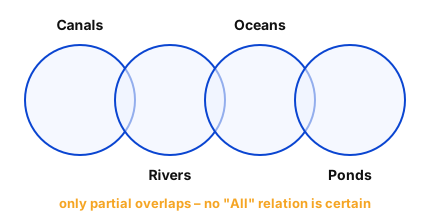
Read the given statements and conclusions carefully. Assuming that the information given in the statements is true, even if it appears to be at variance with commonly known facts, decide which of the given conclusions logically follow(s) from the statements.
Statements:
Some canals are rivers.
Some rivers are oceans.
Some oceans are ponds.
Conclusions:
(I) All ponds are rivers.
(II) All oceans are canals.
दिए गए कथनों और निष्कर्षों को ध्यानपूर्वक पढ़िए। यह मानते हुए कि कथनों में दी गई जानकारी सत्य है, भले ही वह सामान्यतः ज्ञात तथ्यों से भिन्न प्रतीत होती हो, निर्णय कीजिए कि दिए गए निष्कर्षों में से कौन-सा/से कथनों का तार्किक रूप से अनुसरण करता है/करते हैं।
कथन:
कुछ नहरें नदियाँ हैं।
कुछ नदियाँ महासागर हैं।
कुछ महासागर तालाब हैं।
निष्कर्ष:
(I) सभी तालाब नदियाँ हैं।
(II) सभी महासागर नहरें हैं।
  1. ANeither conclusion (I) nor (II) followsन तो निष्कर्ष (I) और न ही (II) अनुसरण करता है
  2. BBoth conclusions (I) and (II) followनिष्कर्ष (I) और (II) दोनों अनुसरण करते हैं
  3. COnly conclusion (I) followsकेवल निष्कर्ष (I) अनुसरण करता है
  4. DOnly conclusion (II) followsकेवल निष्कर्ष (II) अनुसरण करता है
Show answer

Concept: "Some A are B" statements only guarantee an overlap; a conclusion with "All" can never follow from a chain of "Some" statements.

  1. Conclusion I "All ponds are rivers": ponds are linked to rivers only through oceans by two "some" links – no definite relation.
  2. Conclusion II "All oceans are canals": the same – oceans and canals are connected only via "some rivers".
  3. Neither follows.

Trick: Some + Some = No conclusion. "All" conclusions from "Some" premises are always wrong.

Answer: (A) Neither conclusion (I) nor (II) follows

अवधारणा: "कुछ A, B हैं" कथन केवल अतिव्यापन (overlap) बताते हैं; "कुछ" कथनों की शृंखला से "सभी" वाला निष्कर्ष कभी नहीं निकलता।

  1. निष्कर्ष I "सभी तालाब नदियाँ हैं": तालाब और नदियाँ महासागर के ज़रिये दो "कुछ" कड़ियों से जुड़े हैं – कोई निश्चित संबंध नहीं।
  2. निष्कर्ष II "सभी महासागर नहरें हैं": वही – महासागर और नहरें केवल "कुछ नदियाँ" के ज़रिये जुड़े हैं।
  3. कोई भी निष्कर्ष नहीं निकलता।

ट्रिक: कुछ + कुछ = कोई निष्कर्ष नहीं। "कुछ" आधार से "सभी" निष्कर्ष हमेशा गलत।

उत्तर: (A) न तो निष्कर्ष (I) न ही (II) अनुसरण करता है

RRB NTPC Graduate CBT 1General Intelligence and ReasoningSyllogismRRB NTPC Graduate CBT 1 2025 · 16 Mar Shift 1 →
Q2384.
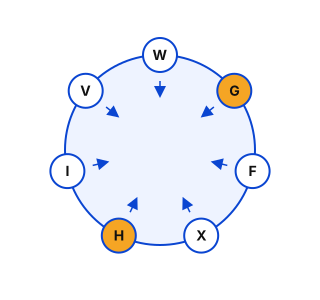
Seven people F, G, H, I, V, W, and X are sitting around a circular table facing the centre of the table. I sits second to the right of W. I sits third to the left of F. V sits third to the left of X. G is an immediate neighbour of both W and F. How many people sit between H and G when counted from the left of H?
सात व्यक्ति F, G, H, I, V, W और X एक गोल मेज़ के चारों ओर मेज़ के केंद्र की ओर मुख करके बैठे हैं। I, W के दाएँ दूसरे स्थान पर बैठा है। I, F के बाएँ तीसरे स्थान पर बैठा है। V, X के बाएँ तीसरे स्थान पर बैठा है। G, W और F दोनों का निकटतम पड़ोसी है। H के बाएँ से गिनने पर H और G के बीच कितने व्यक्ति बैठे हैं?
  1. AOneएक
  2. BZeroशून्य
  3. CThreeतीन
  4. DTwoदो
Show answer

Concept: Facing the centre: left = clockwise, right = anticlockwise. Place W first and build around it.

  1. I is 2nd to the right of W ⇒ 2 seats anticlockwise. I is 3rd to the left of F ⇒ F is 3 seats anticlockwise from I, i.e. 2 seats clockwise from W.
  2. G is neighbour of both W and F ⇒ G sits between them. V is 3rd to the left of X ⇒ with the remaining seats, X is next to F and V next to I; H takes the last seat (between X and I).
  3. Clockwise order: W, G, F, X, H, I, V. From H's left (clockwise): I, V, W, then G ⇒ three people.

Trick: "Neighbour of both A and B" fixes a person instantly – use such clues right after placing the anchors.

Answer: (C) Three

अवधारणा: केंद्र की ओर मुख: बाएँ = दक्षिणावर्त, दाएँ = वामावर्त। पहले W रखिए और उसके चारों ओर बनाइए।

  1. I, W के दाएँ दूसरा ⇒ 2 सीट वामावर्त। I, F के बाएँ तीसरा ⇒ F, I से 3 सीट वामावर्त, यानी W से 2 सीट दक्षिणावर्त।
  2. G, W और F दोनों का पड़ोसी ⇒ G उनके बीच। V, X के बाएँ तीसरा ⇒ बची सीटों में X, F के बगल और V, I के बगल; H अंतिम सीट (X और I के बीच) पर।
  3. दक्षिणावर्त क्रम: W, G, F, X, H, I, V। H के बाएँ (दक्षिणावर्त) से: I, V, W, फिर G ⇒ तीन व्यक्ति।

ट्रिक: "A और B दोनों का पड़ोसी" किसी व्यक्ति को तुरंत स्थिर कर देता है – आधार व्यक्ति रखते ही ऐसे सूत्र प्रयोग करें।

उत्तर: (C) तीन (Three)

RRB NTPC Graduate CBT 1General Intelligence and ReasoningCircular seating arrangementRRB NTPC Graduate CBT 1 2025 · 16 Mar Shift 1 →
Q2385.
Below are given two sets of numbers. In each set of numbers, a certain mathematical operation on the first number results in the second number. Similarly, certain
mathematical operation on the second number results in the third number and so on. Which of the given options follows the same set of operations as in question? (NOTE – A two/three-digit number cannot be broken into individual digits for operations, e.g., if 37 is followed by 10, the operation cannot be 3+7 as a two-digit number cannot be broken into individual digits.)
7 - 21 - 31 - 62; 9 - 27 - 37 - 74
नीचे संख्याओं के दो समुच्चय दिए गए हैं। संख्याओं के प्रत्येक समुच्चय में, पहली संख्या पर एक निश्चित गणितीय संक्रिया करने से दूसरी संख्या प्राप्त होती है। इसी प्रकार, दूसरी संख्या पर एक निश्चित
गणितीय संक्रिया करने से तीसरी संख्या प्राप्त होती है, और इसी तरह आगे। दिए गए विकल्पों में से कौन-सा प्रश्न में दिए गए संक्रियाओं के समुच्चय का अनुसरण करता है? (नोट – संक्रियाओं के लिए किसी दो/तीन-अंकीय संख्या को उसके अलग-अलग अंकों में नहीं तोड़ा जा सकता, उदाहरण के लिए, यदि 37 के बाद 10 आता है, तो संक्रिया 3+7 नहीं हो सकती क्योंकि दो-अंकीय संख्या को अलग-अलग अंकों में नहीं तोड़ा जा सकता।)
7 - 21 - 31 - 62; 9 - 27 - 37 - 74
  1. A11-33-43-86
  2. B12-36-46-82
  3. C8-32-42-84
  4. D6-18-28-76
Show answer

Concept: Find the chain of operations in the given sets and test the options.

  1. 7×3=21, 21+10=31, 31×2=62. Check: 9×3=27, 27+10=37, 37×2=74 ✓. Rule: ×3, +10, ×2.
  2. Option A: 11×3=33, 33+10=43, 43×2=86 ✓.
  3. B fails at the last step (46×2=92≠82); C fails at the first (8×3=24≠32); D fails at the last (28×2=56≠76).

Trick: Test the first step on all options first – it eliminates C in one glance; then only the last step is needed.

Answer: (A) 11-33-43-86

अवधारणा: दिए गए समूहों में संक्रियाओं की शृंखला निकालिए और विकल्पों पर जाँचिए।

  1. 7×3=21, 21+10=31, 31×2=62। जाँच: 9×3=27, 27+10=37, 37×2=74 ✓। नियम: ×3, +10, ×2।
  2. विकल्प A: 11×3=33, 33+10=43, 43×2=86 ✓।
  3. B अंतिम चरण में असफल (46×2=92≠82); C पहले चरण में (8×3=24≠32); D अंतिम चरण में (28×2=56≠76)।

ट्रिक: पहला चरण सभी विकल्पों पर पहले जाँचें – C एक नज़र में कटता है; फिर सिर्फ अंतिम चरण देखना है।

उत्तर: (A) 11-33-43-86

RRB NTPC Graduate CBT 1General Intelligence and ReasoningNumber operations analogyRRB NTPC Graduate CBT 1 2025 · 16 Mar Shift 1 →
Q2386.
This question is based on the five, three-digit numbers given below.
(Left) 458 652 748 351 591 (Right)
(Example- 697 – First digit = 6, second digit = 9 and third digit = 7)
NOTE - All operations to be done from left to right.
What will be the resultant if third digit of the highest number is multiplied with the third digit of lowest number?
यह प्रश्न नीचे दी गई पाँच तीन-अंकीय संख्याओं पर आधारित है।
(बाएँ) 458 652 748 351 591 (दाएँ)
(उदाहरण- 697 – पहला अंक = 6, दूसरा अंक = 9 और तीसरा अंक = 7)
नोट - सभी संक्रियाएँ बाएँ से दाएँ की जानी हैं।
यदि सबसे बड़ी संख्या के तीसरे अंक को सबसे छोटी संख्या के तीसरे अंक से गुणा किया जाए, तो परिणाम क्या होगा?
  1. A8
  2. B7
  3. C6
  4. D5
Show answer

Concept: Pick the highest and lowest numbers and read the required digits.

  1. Highest =748⇒ third digit =8
  2. Lowest =351⇒ third digit =1
  3. 8×1=8

Trick: Compare hundreds digits first: 7 (748) is the largest, 3 (351) the smallest.

Answer: (A) 8

अवधारणा: सबसे बड़ी और सबसे छोटी संख्या चुनकर माँगे गए अंक पढ़ें।

  1. सबसे बड़ी =748⇒ तीसरा अंक =8
  2. सबसे छोटी =351⇒ तीसरा अंक =1
  3. 8×1=8

ट्रिक: पहले सैकड़े का अंक देखें: 7 (748) सबसे बड़ा, 3 (351) सबसे छोटा।

उत्तर: (A) 8

RRB NTPC Graduate CBT 1General Intelligence and ReasoningNumber operationsRRB NTPC Graduate CBT 1 2025 · 16 Mar Shift 1 →
Q2387.
In a certain code language, ‘CARD’ is coded as ‘4628’ and ‘NEAT’ is coded as ‘3574’. What is the code for ‘A’ in that language?
एक निश्चित कूट भाषा में, ‘CARD’ को ‘4628’ के रूप में कूटबद्ध किया जाता है और ‘NEAT’ को ‘3574’ के रूप में कूटबद्ध किया जाता है। उस भाषा में ‘A’ का कूट क्या है?
  1. A4
  2. B6
  3. C3
  4. D7
Show answer

Concept: A letter common to two words gets the digit common to both codes.

  1. CARD → 4, 6, 2, 8 and NEAT → 3, 5, 7, 4
  2. Only common letter = A; only common digit = 4
  3. So A = 4

Trick: Match common letters with common code digits — no need to decode the whole word.

Answer: (A) 4

अवधारणा: दो शब्दों में उभयनिष्ठ अक्षर का कोड दोनों कोडों में उभयनिष्ठ अंक होता है।

  1. CARD → 4, 6, 2, 8 और NEAT → 3, 5, 7, 4
  2. एकमात्र उभयनिष्ठ अक्षर = A; एकमात्र उभयनिष्ठ अंक = 4
  3. अतः A = 4

ट्रिक: उभयनिष्ठ अक्षर को उभयनिष्ठ अंक से मिलाएँ — पूरा शब्द डिकोड करने की ज़रूरत नहीं।

उत्तर: (A) 4

RRB NTPC Graduate CBT 1General Intelligence and ReasoningCoding – common letterRRB NTPC Graduate CBT 1 2025 · 16 Mar Shift 1 →
Q2388.
In a certain code language,
A @ B means ‘A is the son of B’,
A # B means ‘A is the sister of B’,
A + B means ‘A is the wife of B’ and
A % B means ‘A is the father of B’.
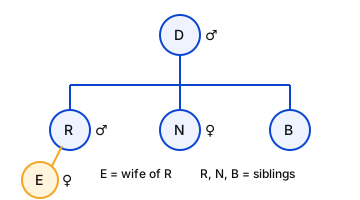
Based on the above, how is E related to B if ‘E + R @ D% N # B’?
एक निश्चित कूट भाषा में,
A @ B का अर्थ है ‘A, B का पुत्र है’,
A # B का अर्थ है ‘A, B की बहन है’,
A + B का अर्थ है ‘A, B की पत्नी है’ और
A % B का अर्थ है ‘A, B का पिता है’।
उपर्युक्त के आधार पर, यदि ‘E + R @ D% N # B’ है, तो E, B से किस प्रकार संबंधित है?
  1. AMotherमाता
  2. BWifeपत्नी
  3. CSisterबहन
  4. DBrother's wifeभाई की पत्नी
Show answer

Concept: Decode the chain from left to right and build the family tree.

  1. E + R: E is the wife of R; R @ D: R is the son of D; D % N: D is the father of N; N # B: N is the sister of B.
  2. So R, N and B are children of D — R is B's brother.
  3. E is the wife of B's brother, i.e. brother's wife (sister-in-law).

Trick: Draw generations as levels; "son of" and "father of" put R, N, B on the same level under D.

Answer: (D) Brother's wife

अवधारणा: श्रृंखला को बाएँ से दाएँ डिकोड करके वंश-वृक्ष बनाएँ।

  1. E + R: E, R की पत्नी; R @ D: R, D का पुत्र; D % N: D, N का पिता; N # B: N, B की बहन।
  2. अतः R, N और B सभी D की संतानें हैं — R, B का भाई है।
  3. E, B के भाई की पत्नी है, अर्थात भाभी (Brother's wife)।

ट्रिक: पीढ़ियों को स्तरों में बनाएँ; "पुत्र" और "पिता" से R, N, B एक ही स्तर पर D के नीचे आते हैं।

उत्तर: (D) Brother's wife (भाभी)

RRB NTPC Graduate CBT 1General Intelligence and ReasoningBlood relations – codedRRB NTPC Graduate CBT 1 2025 · 16 Mar Shift 1 →
Q2389.
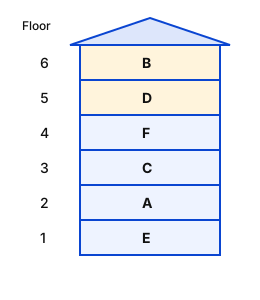
A, B, C, D, E and F live on six different floors of the same building. The lowermost floor in the building is numbered 1, the floor above it is numbered 2, and so on till the topmost floor is numbered 6.
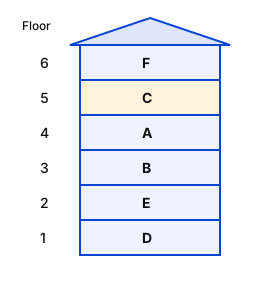
Only five people live above D. Only two people live above A. C lives below F but above A. B does not live on an even numbered floor.
How many people live below C?
A, B, C, D, E और F एक ही भवन की छह अलग-अलग मंज़िलों पर रहते हैं। भवन की सबसे निचली मंज़िल की संख्या 1 है, उसके ऊपर की मंज़िल की संख्या 2 है, और इसी प्रकार सबसे ऊपरी मंज़िल तक, जिसकी संख्या 6 है।
D के ऊपर केवल पाँच लोग रहते हैं। A के ऊपर केवल दो लोग रहते हैं। C, F के नीचे परंतु A के ऊपर रहता है। B सम संख्या वाली मंज़िल पर नहीं रहता है।
C के नीचे कितने लोग रहते हैं?
  1. AFourचार
  2. BOneएक
  3. CThreeतीन
  4. DTwoदो
Show answer

Concept: Fix the definite positions first, then fill the rest with the remaining clues.

  1. Five above D → D on floor 1. Two above A → A on floor 4.
  2. C below F but above A → C = 5, F = 6.
  3. Floors 2, 3 left for B and E; B is not on an even floor → B = 3, E = 2.
  4. Below C (floor 5): A, B, E, D = four people.

Trick: "Only n people above X" gives X's floor directly: floor =6−n.

Answer: (A) Four

अवधारणा: पहले निश्चित स्थान तय करें, फिर बाकी सुरागों से शेष भरें।

  1. D के ऊपर पाँच → D मंज़िल 1 पर। A के ऊपर दो → A मंज़िल 4 पर।
  2. C, F के नीचे पर A के ऊपर → C = 5, F = 6।
  3. B और E के लिए मंज़िल 2, 3 बचीं; B सम मंज़िल पर नहीं → B = 3, E = 2।
  4. C (मंज़िल 5) के नीचे: A, B, E, D = चार लोग।

ट्रिक: "X के ऊपर केवल n लोग" से X की मंज़िल सीधे मिलती है: मंज़िल =6−n।

उत्तर: (A) Four (चार)

RRB NTPC Graduate CBT 1General Intelligence and ReasoningFloor puzzleRRB NTPC Graduate CBT 1 2025 · 16 Mar Shift 1 →
Q2390.
Select the set in which the numbers are related in the same way as are the numbers of the following sets.
(NOTE : Operations should be performed on the whole numbers, without breaking down the numbers into their constituent digits. E.g. 13 – Operations on 13 such as adding / subtracting / multiplying etc. to 13 can be performed. Breaking down 13 into 1 and 3 and then performing mathematical operations on 1 and 3 is not allowed.)
(20, 46, 2)
(32, 136, 24)
उस समुच्चय का चयन कीजिए जिसमें संख्याएँ उसी प्रकार संबंधित हैं जिस प्रकार निम्नलिखित समुच्चयों की संख्याएँ संबंधित हैं।
(नोट : संक्रियाएँ पूर्ण संख्याओं पर की जानी चाहिए, संख्याओं को उनके घटक अंकों में तोड़े बिना। उदाहरण के लिए 13 – 13 पर संक्रियाएँ जैसे 13 में जोड़ना / घटाना / गुणा करना आदि की जा सकती हैं। 13 को 1 और 3 में तोड़कर फिर 1 और 3 पर गणितीय संक्रियाएँ करने की अनुमति नहीं है।)
(20, 46, 2)
(32, 136, 24)
  1. A(6, 42, 10)
  2. B(32, 93, 11)
  3. C(13, 25, 1)
  4. D(17, 78, 16)
Show answer

Concept: Find one rule linking (first, third) to the middle number in both given sets.

  1. (20,46,2): 2×20+3×2=40+6=46 ✓
  2. (32,136,24): 2×32+3×24=64+72=136 ✓ — rule: middle =2×first+3×third.
  3. (6,42,10): 12+30=42 ✓; others fail (32,93,11: 97; 13,25,1: 29; 17,78,16: 82).

Trick: Try a·x+b·z with small coefficients when the middle number is bigger than both ends.

Answer: (A) (6, 42, 10)

अवधारणा: दोनों दिए गए समुच्चयों में (पहली, तीसरी) संख्या को बीच वाली से जोड़ने वाला एक नियम खोजें।

  1. (20,46,2): 2×20+3×2=40+6=46 ✓
  2. (32,136,24): 2×32+3×24=64+72=136 ✓ — नियम: बीच =2×पहली+3×तीसरी।
  3. (6,42,10): 12+30=42 ✓; बाकी विफल (32,93,11: 97; 13,25,1: 29; 17,78,16: 82)।

ट्रिक: जब बीच की संख्या दोनों सिरों से बड़ी हो, तो छोटे गुणांकों से a·x+b·z आज़माएँ।

उत्तर: (A) (6, 42, 10)

RRB NTPC Graduate CBT 1General Intelligence and ReasoningNumber analogy – tripletsRRB NTPC Graduate CBT 1 2025 · 16 Mar Shift 1 →
Q2391.
Read the given statements and conclusions carefully. Assuming that the information given in the statements is true, even if it appears to be at variance with commonly known facts, decide which of the given conclusions logically follow(s) from the statements.
Statements:
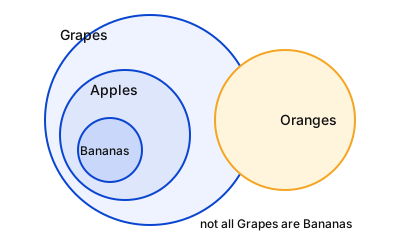
All bananas are apples.
All apples are grapes.
Some grapes are oranges.
Conclusions:
(I) All grapes are bananas.
(II) All oranges are apples.
दिए गए कथनों और निष्कर्षों को ध्यानपूर्वक पढ़िए। यह मानते हुए कि कथनों में दी गई जानकारी सत्य है, भले ही वह सामान्यतः ज्ञात तथ्यों से भिन्न प्रतीत होती हो, निर्णय कीजिए कि दिए गए निष्कर्षों में से कौन-सा/से कथनों का तार्किक रूप से अनुसरण करता है/करते हैं।
कथन:
सभी केले सेब हैं।
सभी सेब अंगूर हैं।
कुछ अंगूर संतरे हैं।
निष्कर्ष:
(I) सभी अंगूर केले हैं।
(II) सभी संतरे सेब हैं।
  1. AOnly conclusion (I) followsकेवल निष्कर्ष (I) अनुसरण करता है
  2. BOnly conclusion (II) followsकेवल निष्कर्ष (II) अनुसरण करता है
  3. CBoth conclusions (I) and (II) followनिष्कर्ष (I) और (II) दोनों अनुसरण करते हैं
  4. DNeither conclusion (I) nor (II) followsन तो निष्कर्ष (I) और न ही (II) अनुसरण करता है
Show answer

Concept: Draw the Venn diagram: Bananas inside Apples inside Grapes; Oranges partly overlap Grapes.

  1. (I) "All grapes are bananas" — reverses "All bananas are apples, all apples are grapes"; grapes may lie outside bananas → does not follow.
  2. (II) "All oranges are apples" — only "some grapes are oranges" is given; oranges need not touch apples at all → does not follow.

Trick: "All A are B" never gives "All B are A"; a "Some" statement never yields an "All" conclusion.

Answer: (D) Neither conclusion (I) nor (II) follows

अवधारणा: वेन आरेख बनाएँ: Bananas, Apples के अंदर, Apples, Grapes के अंदर; Oranges, Grapes से आंशिक रूप से मिलते हैं।

  1. (I) "सभी grapes, bananas हैं" — यह "सभी bananas, apples हैं; सभी apples, grapes हैं" का उल्टा है; grapes, bananas के बाहर भी हो सकते हैं → अनुसरण नहीं करता।
  2. (II) "सभी oranges, apples हैं" — केवल "कुछ grapes, oranges हैं" दिया है; oranges का apples से कोई संबंध ज़रूरी नहीं → अनुसरण नहीं करता।

ट्रिक: "सभी A, B हैं" से कभी "सभी B, A हैं" नहीं निकलता; "कुछ" कथन से "सभी" निष्कर्ष नहीं मिलता।

उत्तर: (D) Neither conclusion (I) nor (II) follows (न I न II)

RRB NTPC Graduate CBT 1General Intelligence and ReasoningSyllogismRRB NTPC Graduate CBT 1 2025 · 16 Mar Shift 1 →
Q2392.
This question is based on the five, three-digit numbers given below.
(Left) 318 745 472 123 672 (Right)
(Example: 697 – First digit = 6, second digit = 9 and third digit = 7)
(NOTE: All operations to be done from left to right.)
If all the numbers are arranged in the ascending order, the position of how many numbers will remain unchanged?
यह प्रश्न नीचे दी गई पाँच तीन-अंकीय संख्याओं पर आधारित है।
(बाएँ) 318 745 472 123 672 (दाएँ)
(उदाहरण: 697 – पहला अंक = 6, दूसरा अंक = 9 और तीसरा अंक = 7)
(नोट: सभी संक्रियाएँ बाएँ से दाएँ की जानी हैं।)
यदि सभी संख्याओं को आरोही क्रम में व्यवस्थित किया जाए, तो कितनी संख्याओं की स्थिति अपरिवर्तित रहेगी?
  1. A0
  2. B3
  3. C1
  4. D2
Show answer

Concept: Compare each original position with the ascending arrangement.

  1. Original: 318, 745, 472, 123, 672
  2. Ascending: 123, 318, 472, 672, 745
  3. Only the 3rd position (472) is unchanged → 1 number.

Trick: Write both rows one below the other and tick matching columns.

Answer: (C) 1

अवधारणा: मूल स्थिति की तुलना आरोही क्रम से करें।

  1. मूल: 318, 745, 472, 123, 672
  2. आरोही: 123, 318, 472, 672, 745
  3. केवल तीसरा स्थान (472) अपरिवर्तित → 1 संख्या।

ट्रिक: दोनों पंक्तियाँ एक के नीचे एक लिखकर मेल खाते स्तंभों पर निशान लगाएँ।

उत्तर: (C) 1

RRB NTPC Graduate CBT 1General Intelligence and ReasoningNumber arrangementRRB NTPC Graduate CBT 1 2025 · 16 Mar Shift 1 →
Q2393.
If ‘A’ stands for ‘÷’, ‘B’ stands for ‘×’, ‘C’ stands for ‘+’ and ‘D’ stands for ‘−’, then what will come in place of the question mark (?) in the following equation?
20 D 8 A 2 C 1 B 5 = ?
यदि ‘A’ का अर्थ ‘÷’, ‘B’ का अर्थ ‘×’, ‘C’ का अर्थ ‘+’ और ‘D’ का अर्थ ‘−’ है, तो निम्नलिखित समीकरण में प्रश्नचिह्न (?) के स्थान पर क्या आएगा?
20 D 8 A 2 C 1 B 5 = ?
  1. A22
  2. B20
  3. C21
  4. D23
Show answer

Concept: Replace the letters by their symbols, then apply BODMAS.

  1. 20 D 8 A 2 C 1 B 5⇒20−8÷2+1×5
  2. =20−4+5=21

Trick: Division and multiplication first, then add/subtract left to right.

Answer: (C) 21

अवधारणा: अक्षरों की जगह उनके चिह्न रखें, फिर BODMAS लगाएँ।

  1. 20 D 8 A 2 C 1 B 5⇒20−8÷2+1×5
  2. =20−4+5=21

ट्रिक: पहले भाग और गुणा, फिर बाएँ से दाएँ जोड़/घटाव।

उत्तर: (C) 21

RRB NTPC Graduate CBT 1General Intelligence and ReasoningMathematical operations – BODMASRRB NTPC Graduate CBT 1 2025 · 16 Mar Shift 1 →
Q2394.
A, B, C, D, E and F live on six different floors of the same building. The lowermost floor in the building is numbered 1, the floor above it is numbered 2 and so on till the topmost floor, which is numbered 6.
Only two people live below C. Only two people live between B and C. A lives above E but below C. F does not live above D.
Who lives immediately below B?
A, B, C, D, E और F एक ही भवन की छह अलग-अलग मंज़िलों पर रहते हैं। भवन की सबसे निचली मंज़िल की संख्या 1 है, उसके ऊपर की मंज़िल की संख्या 2 है और इसी प्रकार सबसे ऊपरी मंज़िल तक, जिसकी संख्या 6 है।
C के नीचे केवल दो लोग रहते हैं। B और C के बीच केवल दो लोग रहते हैं। A, E के ऊपर परंतु C के नीचे रहता है। F, D के ऊपर नहीं रहता है।
B के ठीक नीचे कौन रहता है?
  1. AC
  2. BD
  3. CF
  4. DA
Show answer

Concept: Start from the clue that fixes a floor and build upwards/downwards.

  1. Two below C → C = 3. Two between B and C → B = 6.
  2. A above E but below C → A = 2, E = 1.
  3. F and D take 4 and 5; F not above D → F = 4, D = 5.
  4. Immediately below B (6) is D (5).

Trick: "Only two between B and C" with C = 3 forces B = 6 (floor 0 does not exist).

Answer: (B) D

अवधारणा: जिस सुराग से मंज़िल तय हो, उससे शुरू करके ऊपर/नीचे भरें।

  1. C के नीचे दो → C = 3। B और C के बीच दो → B = 6।
  2. A, E के ऊपर पर C के नीचे → A = 2, E = 1।
  3. F और D के पास 4 और 5; F, D के ऊपर नहीं → F = 4, D = 5।
  4. B (6) के ठीक नीचे D (5)।

ट्रिक: C = 3 के साथ "B और C के बीच केवल दो" से B = 6 ही संभव (मंज़िल 0 नहीं होती)।

उत्तर: (B) D

RRB NTPC Graduate CBT 1General Intelligence and ReasoningFloor puzzleRRB NTPC Graduate CBT 1 2025 · 16 Mar Shift 1 →
Q2395.
Select the set in which the numbers are related in the same way as are the numbers of the following sets.
(NOTE : Operations should be performed on the whole numbers, without breaking down the numbers into their constituent digits. E.g. 13 – Operations on 13 such as adding / subtracting / multiplying etc. to 13 can be performed. Breaking down 13 into 1 and 3 and then performing mathematical operations on 1 and 3 is not allowed.)
(6,3,14)
(14,8,27)
उस समुच्चय का चयन कीजिए जिसमें संख्याएँ उसी प्रकार संबंधित हैं जिस प्रकार निम्नलिखित समुच्चयों की संख्याएँ संबंधित हैं।
(नोट : संक्रियाएँ पूर्ण संख्याओं पर की जानी चाहिए, संख्याओं को उनके घटक अंकों में तोड़े बिना। उदाहरण के लिए 13 – 13 पर संक्रियाएँ जैसे 13 में जोड़ना / घटाना / गुणा करना आदि की जा सकती हैं। 13 को 1 और 3 में तोड़कर फिर 1 और 3 पर गणितीय संक्रियाएँ करने की अनुमति नहीं है।)
(6,3,14)
(14,8,27)
  1. A(19,12,36)
  2. B(14,87,26)
  3. C(6,15,21)
  4. D(16,25,31)
Show answer

Concept: Test a simple relation between the first two numbers and the third.

  1. (6,3,14): 6+3+5=14 ✓
  2. (14,8,27): 14+8+5=27 ✓ — rule: third = first + second +5.
  3. (19,12,36): 19+12+5=36 ✓; others: 14+87+5=106, 6+15+5=26, 16+25+5=46 ✗.

Trick: First check sum of the two numbers; the gap to the third (here always 5) reveals the rule.

Answer: (A) (19, 12, 36)

अवधारणा: पहली दो संख्याओं और तीसरी के बीच सरल संबंध जाँचें।

  1. (6,3,14): 6+3+5=14 ✓
  2. (14,8,27): 14+8+5=27 ✓ — नियम: तीसरी = पहली + दूसरी +5।
  3. (19,12,36): 19+12+5=36 ✓; अन्य: 14+87+5=106, 6+15+5=26, 16+25+5=46 ✗।

ट्रिक: पहले दोनों संख्याओं का योग देखें; तीसरी से अंतर (यहाँ हमेशा 5) नियम बता देता है।

उत्तर: (A) (19, 12, 36)

RRB NTPC Graduate CBT 1General Intelligence and ReasoningNumber analogy – tripletsRRB NTPC Graduate CBT 1 2025 · 16 Mar Shift 1 →
Q2396.
Which of the following letter-clusters should replace # and % so that the pattern and relationship followed between the letter-cluster pair on the left side of :: is the same as that on the right side of :: ?
# : IGC :: TRN : %
निम्नलिखित में से कौन-से अक्षर-समूह # और % के स्थान पर आने चाहिए ताकि :: के बाईं ओर के अक्षर-समूह युग्म के बीच का पैटर्न और संबंध :: के दाईं ओर के युग्म के समान हो?
# : IGC :: TRN : %
  1. A# = LGY; % = QJH
  2. B# = LJF; % = QOK
  3. C# = LJK; % = QNJ
  4. D# = JKF; % = QJH
Show answer

Concept: Find the letter shift that turns # into IGC, and apply the same to TRN.

  1. Test option B: LJF → IGC: L(12)−3=I(9), J(10)−3=G(7), F(6)−3=C(3) ✓ — each letter moves 3 back.
  2. TRN: T(20)−3=Q(17), R(18)−3=O(15), N(14)−3=K(11) → QOK ✓
  3. Options A, C, D fail the uniform −3 pattern.

Trick: Options give # first — check which # maps to IGC by one uniform shift, then verify %.

Answer: (B) # = LJF; % = QOK

अवधारणा: # को IGC बनाने वाला अक्षर-परिवर्तन खोजें और वही TRN पर लगाएँ।

  1. विकल्प B जाँचें: LJF → IGC: L(12)−3=I(9), J(10)−3=G(7), F(6)−3=C(3) ✓ — हर अक्षर 3 पीछे।
  2. TRN: T(20)−3=Q(17), R(18)−3=O(15), N(14)−3=K(11) → QOK ✓
  3. विकल्प A, C, D में एकसमान −3 पैटर्न नहीं बनता।

ट्रिक: विकल्पों में # पहले दिया है — देखें कौन-सा # एकसमान शिफ्ट से IGC बनता है, फिर % जाँचें।

उत्तर: (B) # = LJF; % = QOK

RRB NTPC Graduate CBT 1General Intelligence and ReasoningLetter-cluster analogyRRB NTPC Graduate CBT 1 2025 · 16 Mar Shift 1 →
Q2397.
Based on the alphabetical order, three of the following four are alike in a certain way and thus form a group. Which one does not belong to that group?
(Note: The odd one out is not based on the number of consonants or vowels or their position in the letter cluster)
वर्णमाला क्रम के आधार पर, निम्नलिखित चार में से तीन एक निश्चित प्रकार से समान हैं और इस प्रकार एक समूह बनाते हैं। कौन-सा उस समूह से संबंधित नहीं है?
(नोट: असंगत विकल्प व्यंजनों या स्वरों की संख्या या अक्षर-समूह में उनकी स्थिति पर आधारित नहीं है)
  1. AUWR
  2. BSUP
  3. CKMG
  4. DEGB
Show answer

Concept: Convert letters to positions and compare the gaps.

  1. UWR: 21, 23, 18 → +2,−5
  2. SUP: 19, 21, 16 → +2,−5; EGB: 5, 7, 2 → +2,−5
  3. KMG: 11, 13, 7 → +2,−6 — different pattern.

Trick: In a trio, check the gap between the 2nd and 3rd letter — the odd one usually breaks there.

Answer: (C) KMG

अवधारणा: अक्षरों को उनकी स्थिति में बदलकर अंतर की तुलना करें।

  1. UWR: 21, 23, 18 → +2,−5
  2. SUP: 19, 21, 16 → +2,−5; EGB: 5, 7, 2 → +2,−5
  3. KMG: 11, 13, 7 → +2,−6 — अलग पैटर्न।

ट्रिक: तीन अक्षरों में दूसरे और तीसरे का अंतर देखें — विषम प्रायः वहीं टूटता है।

उत्तर: (C) KMG

RRB NTPC Graduate CBT 1General Intelligence and ReasoningLetter cluster – odd one outRRB NTPC Graduate CBT 1 2025 · 16 Mar Shift 1 →
Q2398.
Each of the digits in the number 15762349 is arranged in ascending order from left to right. The position of how many digits will remain unchanged as compared to that in the original number?
संख्या 15762349 के प्रत्येक अंक को बाएँ से दाएँ आरोही क्रम में व्यवस्थित किया जाता है। मूल संख्या की तुलना में कितने अंकों की स्थिति अपरिवर्तित रहेगी?
  1. ATwoदो
  2. BOneएक
  3. CNoneकोई नहीं
  4. DThreeतीन
Show answer

Concept: Write the ascending arrangement under the original and compare position by position.

  1. Original: 1 5 7 6 2 3 4 9
  2. Ascending: 1 2 3 4 5 6 7 9
  3. Unchanged: 1st (1) and 8th (9) → two digits.

Trick: The smallest and largest digits, if already at the ends, stay put — check them first.

Answer: (A) Two

अवधारणा: आरोही क्रम को मूल संख्या के नीचे लिखकर स्थान-दर-स्थान तुलना करें।

  1. मूल: 1 5 7 6 2 3 4 9
  2. आरोही: 1 2 3 4 5 6 7 9
  3. अपरिवर्तित: पहला (1) और आठवाँ (9) → दो अंक।

ट्रिक: सबसे छोटा और सबसे बड़ा अंक यदि पहले से सिरों पर हों तो वहीं रहते हैं — पहले उन्हें देखें।

उत्तर: (A) Two (दो)

RRB NTPC Graduate CBT 1General Intelligence and ReasoningDigit arrangementRRB NTPC Graduate CBT 1 2025 · 16 Mar Shift 1 →
Q2399.
In this question, a question is followed by two statements numbered (I) and (II). You have to decide whether the data provided in the statements are sufficient to answer the question. Read both the statements and decide the appropriate answer.
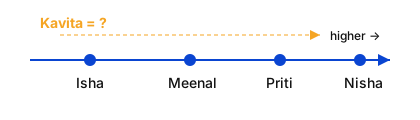
Q. Five students – Isha, Kavita, Meenal, Nisha, and Priti – scored different marks. Who scored the second highest?
(I) Meenal scored more than Isha but less than Nisha.
(II) Priti scored more than Meenal but less than Nisha.
इस प्रश्न में, एक प्रश्न के बाद दो कथन (I) और (II) दिए गए हैं। आपको यह निर्णय करना है कि कथनों में दिए गए आँकड़े प्रश्न का उत्तर देने के लिए पर्याप्त हैं या नहीं। दोनों कथनों को पढ़िए और उचित उत्तर का चयन कीजिए।
प्रश्न. पाँच विद्यार्थियों – ईशा, कविता, मीनल, निशा और प्रीति – ने अलग-अलग अंक प्राप्त किए। दूसरे सबसे अधिक अंक किसने प्राप्त किए?
(I) मीनल ने ईशा से अधिक परंतु निशा से कम अंक प्राप्त किए।
(II) प्रीति ने मीनल से अधिक परंतु निशा से कम अंक प्राप्त किए।
  1. ABoth statements I and II together are NOT sufficient to answer the questionकथन I और II दोनों मिलकर भी प्रश्न का उत्तर देने के लिए पर्याप्त नहीं हैं
  2. BData in Statement II alone is sufficient to answer the question while data in Statement I is notकेवल कथन II के आँकड़े प्रश्न का उत्तर देने के लिए पर्याप्त हैं, जबकि कथन I के आँकड़े पर्याप्त नहीं हैं
  3. CData in Statement I alone is sufficient to answer the question while data in Statement II is notकेवल कथन I के आँकड़े प्रश्न का उत्तर देने के लिए पर्याप्त हैं, जबकि कथन II के आँकड़े पर्याप्त नहीं हैं
  4. DBoth statements I and II together (and not statement I alone or statement II alone) are sufficient to answer the questionकथन I और II दोनों मिलकर (और न केवल कथन I अकेले या कथन II अकेले) प्रश्न का उत्तर देने के लिए पर्याप्त हैं
Show answer

Concept: Combine the inequalities and see whether the second position is uniquely fixed.

  1. (I): Nisha > Meenal > Isha. (II): Nisha > Priti > Meenal.
  2. Together: Nisha > Priti > Meenal > Isha — but Kavita's place is unknown; she could be above Nisha, between Nisha and Priti, or lower.
  3. Second highest may be Priti, Kavita or even Nisha → cannot be determined.

Trick: In ranking DS, a person who appears in no statement makes the answer "not sufficient" unless only the extremes are asked with full data.

Answer: (A) Both statements I and II together are NOT sufficient to answer the question

अवधारणा: असमानताओं को जोड़कर देखें कि दूसरा स्थान अद्वितीय रूप से तय होता है या नहीं।

  1. (I): निशा > मीनल > ईशा। (II): निशा > प्रीति > मीनल।
  2. दोनों मिलाकर: निशा > प्रीति > मीनल > ईशा — पर कविता का स्थान अज्ञात; वह निशा से ऊपर, निशा और प्रीति के बीच, या नीचे कहीं भी हो सकती है।
  3. दूसरा सर्वोच्च प्रीति, कविता या निशा भी हो सकता है → निर्धारित नहीं हो सकता।

ट्रिक: क्रम वाली DS में जो व्यक्ति किसी कथन में न हो, वह उत्तर "अपर्याप्त" बना देता है।

उत्तर: (A) Both statements I and II together are NOT sufficient (दोनों कथन मिलकर भी अपर्याप्त)

RRB NTPC Graduate CBT 1General Intelligence and ReasoningData sufficiency – rankingRRB NTPC Graduate CBT 1 2025 · 16 Mar Shift 1 →
Q2400.
What should come in place of ‘?’ in the given series?
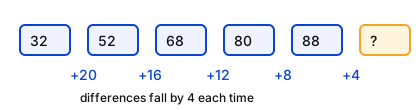
32 52 68 80 88 ?
दी गई श्रेणी में ‘?’ के स्थान पर क्या आना चाहिए?
32 52 68 80 88 ?
  1. A96
  2. B94
  3. C90
  4. D92
Show answer

Concept: Look at the differences between consecutive terms.

  1. 52−32=20, 68−52=16, 80−68=12, 88−80=8
  2. Differences fall by 4 each time → next difference =4
  3. 88+4=92

Trick: When terms grow slower and slower, the differences form a decreasing AP.

Answer: (D) 92

अवधारणा: क्रमागत पदों के अंतर देखें।

  1. 52−32=20, 68−52=16, 80−68=12, 88−80=8
  2. अंतर हर बार 4 घटता है → अगला अंतर =4
  3. 88+4=92

ट्रिक: जब पद धीरे-धीरे बढ़ें, तो अंतर एक घटती समांतर श्रेढ़ी बनाते हैं।

उत्तर: (D) 92

RRB NTPC Graduate CBT 1General Intelligence and ReasoningNumber seriesRRB NTPC Graduate CBT 1 2025 · 16 Mar Shift 1 →