Question bank

Q&A: practice questions with answers

Search questions on any topic. Filter by exam category, exam, subject and topic, try the question, then open the answer and explanation.

Courses – airGurukul

7,077 questions found.

Q2861.
What will come in place of the question mark (?) in the following equation if '÷' and '–' are interchanged and '×' and '+' are interchanged?
89 ÷ 4984 – 89 × 9 + 2 = ?
यदि '÷' और '–' को आपस में बदल दिया जाए तथा '×' और '+' को आपस में बदल दिया जाए, तो निम्नलिखित समीकरण में प्रश्न चिह्न (?) के स्थान पर क्या आएगा?
89 ÷ 4984 – 89 × 9 + 2 = ?
  1. A15
  2. B51
  3. C55
  4. D92
Show answer

Concept: Interchange the signs first, then solve using BODMAS.

  1. Swap ÷ ↔ – and × ↔ +: 89−4984÷89+9×2
  2. 4984÷89=56 and 9×2=18
  3. 89−56+18=51

Trick: Rewrite the whole expression once with new signs before calculating – avoids half-swapped mistakes.

Answer: (B) 51

अवधारणा: पहले चिह्न बदलें, फिर BODMAS से हल करें।

  1. ÷ ↔ – और × ↔ + बदलने पर: 89−4984÷89+9×2
  2. 4984÷89=56 तथा 9×2=18
  3. 89−56+18=51

ट्रिक: गणना से पहले पूरा व्यंजक एक बार नए चिह्नों के साथ लिख लें – गलती नहीं होगी।

उत्तर: (B) 51
RRB NTPC Graduate CBT 1General Intelligence and ReasoningMathematical operations – sign interchangeRRB NTPC Graduate CBT 1 2024 · 13 Jun Shift 1 →
Q2862.
What will come in the place of the question mark (?) in the following equation, if ‘+’ and ‘−’ are interchanged and ‘×’ and ‘÷’ are interchanged?
405 ÷ 2 + 369 × 9 − 32 = ?
यदि ‘+’ और ‘−’ को आपस में बदल दिया जाए तथा ‘×’ और ‘÷’ को आपस में बदल दिया जाए, तो निम्नलिखित समीकरण में प्रश्न चिह्न (?) के स्थान पर क्या आएगा?
405 ÷ 2 + 369 × 9 − 32 = ?
  1. A804
  2. B801
  3. C803
  4. D802
Show answer

Concept: Interchange the signs, then apply BODMAS.

  1. Swap + ↔ − and × ↔ ÷: 405×2−369÷9+32
  2. 405×2=810, 369÷9=41
  3. 810−41+32=801

Trick: Do division/multiplication first; only then add and subtract left to right.

Answer: (B) 801

अवधारणा: चिह्न बदलें, फिर BODMAS लगाएँ।

  1. + ↔ − और × ↔ ÷ बदलने पर: 405×2−369÷9+32
  2. 405×2=810, 369÷9=41
  3. 810−41+32=801

ट्रिक: पहले भाग/गुणा, फिर बाएँ से दाएँ जोड़-घटाव।

उत्तर: (B) 801

RRB NTPC Graduate CBT 1General Intelligence and ReasoningMathematical operations – sign interchangeRRB NTPC Graduate CBT 1 2024 · 13 Jun Shift 1 →
Q2863.
JKL is related to KMO in a certain way based on the English alphabetical order. In the same way, PQR is related to QSU. To which of the following is XYZ related, following the same logic?
अंग्रेज़ी वर्णमाला क्रम के आधार पर JKL एक निश्चित प्रकार से KMO से संबंधित है। उसी प्रकार, PQR, QSU से संबंधित है। समान तर्क का अनुसरण करते हुए, XYZ निम्नलिखित में से किससे संबंधित है?
  1. AYZA
  2. BFED
  3. CABC
  4. DYAC
Show answer

Concept: Compare letter positions of the pair: each letter moves by a different step.

  1. J→K (+1), K→M (+2), L→O (+3); PQR→QSU also +1,+2,+3.
  2. X +1 = Y; Y +2 = A (Z, A – wrapping after Z); Z +3 = C (A, B, C).
  3. So XYZ → YAC.

Trick: After Z, count again from A (circular alphabet).

Answer: (D) YAC

अवधारणा: जोड़े में अक्षरों की स्थिति की तुलना करें: हर अक्षर अलग कदम से बढ़ता है।

  1. J→K (+1), K→M (+2), L→O (+3); PQR→QSU भी +1,+2,+3।
  2. X +1 = Y; Y +2 = A (Z के बाद फिर A); Z +3 = C (A, B, C)।
  3. अतः XYZ → YAC।

ट्रिक: Z के बाद फिर A से गिनें (वृत्ताकार वर्णमाला)।

उत्तर: (D) YAC

RRB NTPC Graduate CBT 1General Intelligence and ReasoningLetter analogyRRB NTPC Graduate CBT 1 2024 · 13 Jun Shift 1 →
Q2864.
This question is based on the five, three-digit numbers given below.
(Left) 740 636 787 884 316 (Right)
(Example- 697 – First digit = 6, second digit = 9 and third digit = 7)
(NOTE: All operations to be done from left to right.)
What will be the resultant if the second digit of the highest number is added to the third digit of the lowest number?
यह प्रश्न नीचे दी गई तीन अंकों वाली पाँच संख्याओं पर आधारित है।
(बाएँ) 740 636 787 884 316 (दाएँ)
(उदाहरण- 697 – पहला अंक = 6, दूसरा अंक = 9 और तीसरा अंक = 7)
(नोट: सभी संक्रियाएँ बाएँ से दाएँ की जानी हैं।)
यदि सबसे बड़ी संख्या के दूसरे अंक को सबसे छोटी संख्या के तीसरे अंक में जोड़ा जाए, तो परिणाम क्या होगा?
  1. A14
  2. B17
  3. C13
  4. D15
Show answer

Concept: Identify the highest and lowest numbers, then pick the required digits.

  1. Highest number = 884 → second digit = 8.
  2. Lowest number = 316 → third digit = 6.
  3. 8+6=14

Trick: Compare only first digits to find highest/lowest quickly: 8 (884) and 3 (316).

Answer: (A) 14

अवधारणा: सबसे बड़ी और सबसे छोटी संख्या पहचानें, फिर आवश्यक अंक लें।

  1. सबसे बड़ी संख्या = 884 → दूसरा अंक = 8।
  2. सबसे छोटी संख्या = 316 → तीसरा अंक = 6।
  3. 8+6=14

ट्रिक: बड़ी/छोटी संख्या के लिए पहले सिर्फ़ पहले अंक देखें: 8 (884) और 3 (316)।

उत्तर: (A) 14

RRB NTPC Graduate CBT 1General Intelligence and ReasoningNumber-based questionsRRB NTPC Graduate CBT 1 2024 · 13 Jun Shift 1 →
Q2865.
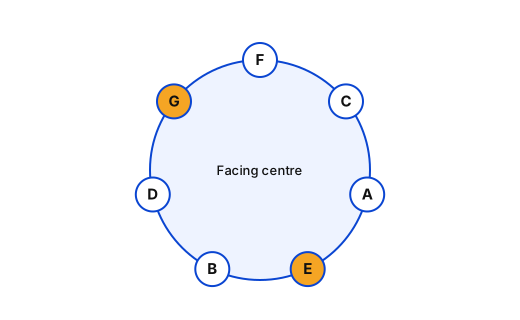
A, B, C, D, E, F and G are sitting around a circular table facing the centre. D sits third to the right of C. A sits second to the right of B. B is not an immediate neighbour of C. G sits to the immediate right of F. C sits to the immediate left of F. How many people sit between G and E when counted from the left of G?
A, B, C, D, E, F और G एक वृत्ताकार मेज़ के चारों ओर केंद्र की ओर मुख करके बैठे हैं। D, C के दाईं ओर तीसरे स्थान पर बैठा है। A, B के दाईं ओर दूसरे स्थान पर बैठा है। B, C का निकटतम पड़ोसी नहीं है। G, F के ठीक दाईं ओर बैठा है। C, F के ठीक बाईं ओर बैठा है। G के बाईं ओर से गिनने पर G और E के बीच कितने व्यक्ति बैठे हैं?
  1. AThreeतीन
  2. BNoneकोई नहीं
  3. CTwoदो
  4. DOneएक
Show answer

Concept: Facing the centre: right = anticlockwise, left = clockwise.

  1. Fix F. C is immediate left of F, G is immediate right of F ⇒ G, F, C are together.
  2. D is third to the right of C. B is not next to C and A is second to the right of B ⇒ only B with A two places right of it fits, so E takes the last seat.
  3. Clockwise order: F, C, A, E, B, D, G.
  4. Going left (clockwise) from G: F, C, A, then E ⇒ three persons between.

Trick: Fix the pair with "immediate" clues first, then place third/second-to clues.

Answer: (A) Three

अवधारणा: केंद्र की ओर मुख होने पर: दायाँ = वामावर्त, बायाँ = दक्षिणावर्त।

  1. F को तय करें। C, F के ठीक बाएँ और G, F के ठीक दाएँ ⇒ G, F, C साथ हैं।
  2. D, C के दाएँ तीसरा। B, C का पड़ोसी नहीं और A, B के दाएँ दूसरा ⇒ यही स्थिति बैठती है; बचा स्थान E का।
  3. दक्षिणावर्त क्रम: F, C, A, E, B, D, G।
  4. G से बाएँ (दक्षिणावर्त) गिनें: F, C, A, फिर E ⇒ बीच में तीन व्यक्ति।

ट्रिक: पहले "ठीक बगल" वाले संकेत लगाएँ, फिर दूसरे/तीसरे स्थान वाले।

उत्तर: (A) तीन

RRB NTPC Graduate CBT 1General Intelligence and ReasoningCircular seating arrangementRRB NTPC Graduate CBT 1 2024 · 13 Jun Shift 1 →
Q2866.
If 1 is added to each odd digit and 2 is subtracted from each even digit in the number 3762184, what will be the sum of the highest and lowest digits in the number thus formed?
यदि संख्या 3762184 में प्रत्येक विषम अंक में 1 जोड़ा जाए और प्रत्येक सम अंक में से 2 घटाया जाए, तो इस प्रकार बनी संख्या में सबसे बड़े और सबसे छोटे अंक का योग क्या होगा?
  1. A6
  2. B9
  3. C7
  4. D8
Show answer

Concept: Apply the rule to each digit separately.

  1. 3762184: odd digits +1 → 3→4, 7→8, 1→2.
  2. Even digits −2 → 6→4, 2→0, 8→6, 4→2.
  3. New number 4840262: highest 8, lowest 0 ⇒ 8+0=8.

Trick: Write the new digit under each old digit – no mix-ups.

Answer: (D) 8

अवधारणा: नियम हर अंक पर अलग-अलग लगाएँ।

  1. 3762184: विषम अंक +1 → 3→4, 7→8, 1→2।
  2. सम अंक −2 → 6→4, 2→0, 8→6, 4→2।
  3. नई संख्या 4840262: सबसे बड़ा 8, सबसे छोटा 0 ⇒ 8+0=8।

ट्रिक: हर पुराने अंक के नीचे नया अंक लिखें – गलती नहीं होगी।

उत्तर: (D) 8

RRB NTPC Graduate CBT 1General Intelligence and ReasoningNumber operations – digit changeRRB NTPC Graduate CBT 1 2024 · 13 Jun Shift 1 →
Q2867.
Which of the following letter-number-clusters will replace the question mark (?) in the given series to make it logically complete?
GOQ 35, HPR 32, IQS 29, JRT 26, ?
निम्नलिखित में से कौन-सा अक्षर-संख्या समूह दी गई श्रृंखला में प्रश्न चिह्न (?) के स्थान पर आकर उसे तार्किक रूप से पूर्ण करेगा?
GOQ 35, HPR 32, IQS 29, JRT 26, ?
  1. AKSU 23
  2. BKPN 22
  3. CRQM 22
  4. DRPM 23
Show answer

Concept: Track the letters and the numbers separately.

  1. First letters: G, H, I, J → K (+1). Second: O, P, Q, R → S. Third: Q, R, S, T → U.
  2. Numbers: 35, 32, 29, 26 → 26−3=23.
  3. Next term = KSU 23.

Trick: Number pattern (−3) alone removes the 22 options; letters +1 give KSU.

Answer: (A) KSU 23

अवधारणा: अक्षरों और संख्याओं को अलग-अलग देखें।

  1. पहले अक्षर: G, H, I, J → K (+1)। दूसरे: O, P, Q, R → S। तीसरे: Q, R, S, T → U।
  2. संख्याएँ: 35, 32, 29, 26 → 26−3=23।
  3. अगला पद = KSU 23।

ट्रिक: केवल संख्या (−3) से 22 वाले विकल्प हट जाते हैं; अक्षर +1 से KSU।

उत्तर: (A) KSU 23

RRB NTPC Graduate CBT 1General Intelligence and ReasoningLetter-number seriesRRB NTPC Graduate CBT 1 2024 · 13 Jun Shift 1 →
Q2868.
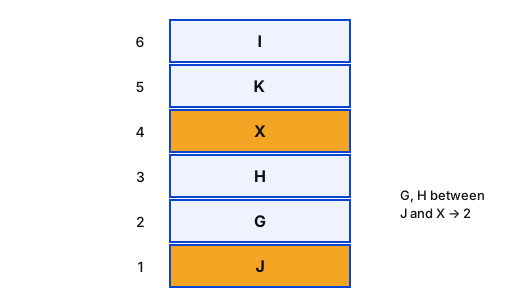
G, H, I, J, K and X live on six different floors of the same building. The lowermost floor in the building is numbered 1, the floor above it, number 2 and so on, till the topmost floor is numbered 6. K lives on an odd numbered floor but not on the lowermost floor. Only two people live between K and G. Only two people live between I and H. X lives immediately below K. No one lives above I. How many people live between J and X?
G, H, I, J, K और X एक ही इमारत की छह अलग-अलग मंज़िलों पर रहते हैं। इमारत की सबसे निचली मंज़िल की संख्या 1 है, उसके ऊपर वाली मंज़िल की संख्या 2 है और इसी प्रकार सबसे ऊपरी मंज़िल की संख्या 6 है। K एक विषम संख्या वाली मंज़िल पर रहता है, परंतु सबसे निचली मंज़िल पर नहीं। K और G के बीच केवल दो व्यक्ति रहते हैं। I और H के बीच केवल दो व्यक्ति रहते हैं। X, K के ठीक नीचे रहता है। I के ऊपर कोई नहीं रहता है। J और X के बीच कितने व्यक्ति रहते हैं?
  1. ATwoदो
  2. BThreeतीन
  3. CFourचार
  4. DOneएक
Show answer

Concept: Start with the fixed clues ("no one above", "immediately below"), then use gap clues.

  1. No one above I ⇒ I on floor 6. Two between I and H ⇒ H on 3.
  2. K odd, not 1, not 3 ⇒ K on 5; X immediately below ⇒ X on 4.
  3. Two between K and G ⇒ G on 2; J on the remaining floor 1.
  4. Between J (1) and X (4): G and H ⇒ two persons.

Trick: A "top" clue (no one above) is the best anchor – place it first.

Answer: (A) Two

अवधारणा: पहले निश्चित संकेत ("ऊपर कोई नहीं", "ठीक नीचे") लगाएँ, फिर अंतर वाले संकेत।

  1. I के ऊपर कोई नहीं ⇒ I मंज़िल 6 पर। I और H के बीच दो ⇒ H मंज़िल 3 पर।
  2. K विषम, 1 नहीं, 3 नहीं ⇒ K मंज़िल 5; X ठीक नीचे ⇒ X मंज़िल 4।
  3. K और G के बीच दो ⇒ G मंज़िल 2; शेष मंज़िल 1 पर J।
  4. J (1) और X (4) के बीच: G और H ⇒ दो व्यक्ति।

ट्रिक: "सबसे ऊपर" वाला संकेत सबसे अच्छा आधार है – पहले उसे लगाएँ।

उत्तर: (A) दो

RRB NTPC Graduate CBT 1General Intelligence and ReasoningFloor puzzleRRB NTPC Graduate CBT 1 2024 · 13 Jun Shift 1 →
Q2869.
Select the triad that follows the same pattern as that followed by the two triads given below. Both triads follow the same pattern.
SW-NR-IM
IM-DH-YC
उस त्रयी का चयन कीजिए जो उसी पैटर्न का अनुसरण करती है जिसका अनुसरण नीचे दी गई दो त्रयियाँ करती हैं। दोनों त्रयियाँ समान पैटर्न का अनुसरण करती हैं।
SW-NR-IM
IM-DH-YC
  1. AYC-TX-OS
  2. BUY-PT-LO
  3. CHL-DG-XB
  4. DFJ-AE-WZ
Show answer

Concept: Each letter of a pair moves back by the same step.

  1. SW-NR-IM: S→N→I is −5,−5; W→R→M is −5,−5.
  2. IM-DH-YC: I→D→Y and M→H→C are −5,−5 (wrapping after A).
  3. YC-TX-OS: Y→T→O −5,−5; C→X→S −5,−5 ✔.
  4. (B) P→L is −4 ✘; (C) H→D is −4 ✘; (D) A→W is −4 ✘.

Trick: Also each pair has the same gap (W−S = 4 letters): YC also has gap 4 (Y Z A B C).

Answer: (A) YC-TX-OS

अवधारणा: हर अक्षर समान कदम से पीछे जाता है।

  1. SW-NR-IM: S→N→I −5,−5; W→R→M −5,−5।
  2. IM-DH-YC: I→D→Y और M→H→C −5,−5 (A के बाद फिर Z)।
  3. YC-TX-OS: Y→T→O −5,−5; C→X→S −5,−5 ✔।
  4. (B) में P→L −4 ✘; (C) में H→D −4 ✘; (D) में A→W −4 ✘।

ट्रिक: हर जोड़े में दोनों अक्षरों का अंतर भी समान (S से W = 4): YC में भी 4 (Y Z A B C)।

उत्तर: (A) YC-TX-OS

RRB NTPC Graduate CBT 1General Intelligence and ReasoningLetter triads – analogyRRB NTPC Graduate CBT 1 2024 · 13 Jun Shift 1 →
Q2870.
In this question, a group of letters is coded by using numbers and symbols as per the table given below and the conditions which follow.
LetterUMSJPTFEA
Code74@$%*623

Conditions:
1. If the 1st letter is a vowel and the 3rd letter is a consonant, both to be coded as the code of the consonant.
2. If the 1st and last letters are vowels, both are to be coded as ‘N’.
3. If the 2nd and last letters are vowels, their codes are to be interchanged.
What is the correct combination of codes (by following only the applicable condition(s)) for the following letters?
SEMTU
इस प्रश्न में, अक्षरों के एक समूह को नीचे दी गई तालिका और उसके बाद दी गई शर्तों के अनुसार संख्याओं और प्रतीकों का उपयोग करके कूटबद्ध किया गया है।
अक्षरUMSJPTFEA
कूट74@$%*623

शर्तें:
1. यदि पहला अक्षर स्वर है और तीसरा अक्षर व्यंजन है, तो दोनों को व्यंजन के कूट के रूप में कूटबद्ध किया जाना है।
2. यदि पहला और अंतिम अक्षर स्वर हैं, तो दोनों को ‘N’ के रूप में कूटबद्ध किया जाना है।
3. यदि दूसरा और अंतिम अक्षर स्वर हैं, तो उनके कूटों को आपस में बदल दिया जाना है।
निम्नलिखित अक्षरों के लिए कूटों का सही संयोजन (केवल लागू होने वाली शर्त/शर्तों का पालन करते हुए) क्या है?
SEMTU
  1. A@ 7 4 * 2
  2. B@ 2 4 * 2
  3. C@ 2 4 * 7
  4. D@ 7 4 * 7
Show answer

Concept: Write basic codes first, then check each condition.

  1. SEMTU → S=@, E=2, M=4, T=*, U=7.
  2. Cond. 1 and 2 need the 1st letter to be a vowel – S is a consonant, so not applicable.
  3. Cond. 3: 2nd letter E and last letter U are vowels ⇒ interchange their codes (2 ↔ 7).
  4. Code: @ 7 4 * 2.

Trick: Check the first letter first – a consonant start kills conditions 1 and 2 instantly.

Answer: (A) @ 7 4 * 2

अवधारणा: पहले मूल कोड लिखें, फिर हर शर्त जाँचें।

  1. SEMTU → S=@, E=2, M=4, T=*, U=7।
  2. शर्त 1 और 2 में पहला अक्षर स्वर होना चाहिए – S व्यंजन है, अतः लागू नहीं।
  3. शर्त 3: दूसरा अक्षर E और अंतिम U स्वर हैं ⇒ उनके कोड आपस में बदलें (2 ↔ 7)।
  4. कोड: @ 7 4 * 2।

ट्रिक: पहला अक्षर सबसे पहले देखें – व्यंजन हो तो शर्त 1 और 2 तुरंत हट जाती हैं।

उत्तर: (A) @ 7 4 * 2

RRB NTPC Graduate CBT 1General Intelligence and ReasoningCoding with conditionsRRB NTPC Graduate CBT 1 2024 · 13 Jun Shift 1 →
Q2871.
In a certain code language,
'A + B' means 'A is the sister of B'
'A – B' means 'A is the brother of B'
'A × B' means 'A is the wife of B'
'A ÷ B' means 'A is the father of B'
Based on the above, how is M related to Q if 'M ÷ N – O + P × Q'?
एक निश्चित कूट भाषा में,
'A + B' का अर्थ है 'A, B की बहन है'
'A – B' का अर्थ है 'A, B का भाई है'
'A × B' का अर्थ है 'A, B की पत्नी है'
'A ÷ B' का अर्थ है 'A, B का पिता है'
उपरोक्त के आधार पर, यदि 'M ÷ N – O + P × Q' है, तो M, Q से किस प्रकार संबंधित है?
  1. ABrotherभाई
  2. BWife's Brotherपत्नी का भाई
  3. CFatherपिता
  4. DWife's Fatherपत्नी का पिता
Show answer

Concept: Decode each symbol from left to right and draw a family tree.

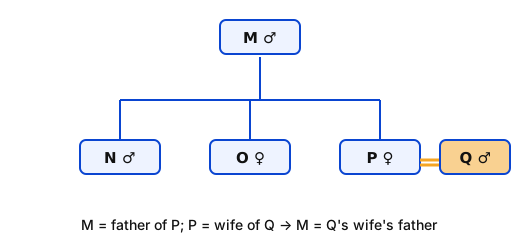
  1. M ÷ N: M is father of N. N – O: N is brother of O.
  2. O + P: O is sister of P ⇒ N, O, P are siblings, all children of M.
  3. P × Q: P is wife of Q (so P is female).
  4. M is father of P, who is Q's wife ⇒ M is Q's wife's father (father-in-law).

Trick: Siblings share the parent – once N, O, P are siblings, M is father of all three.

Answer: (D) Wife's Father

अवधारणा: हर चिह्न को बाएँ से दाएँ खोलें और वंश-वृक्ष बनाएँ।

  1. M ÷ N: M, N का पिता। N – O: N, O का भाई।
  2. O + P: O, P की बहन ⇒ N, O, P भाई-बहन, तीनों M की संतान।
  3. P × Q: P, Q की पत्नी (P महिला)।
  4. M, P का पिता और P, Q की पत्नी ⇒ M, Q की पत्नी का पिता (ससुर)।

ट्रिक: भाई-बहनों के माता-पिता समान – N, O, P भाई-बहन हैं तो M तीनों का पिता।

उत्तर: (D) पत्नी के पिता (Wife's Father)

RRB NTPC Graduate CBT 1General Intelligence and ReasoningBlood relation – codedRRB NTPC Graduate CBT 1 2024 · 13 Jun Shift 1 →
Q2872.
Which of the following letter-number clusters will replace the question mark (?) in the given series to make it logically complete?
DK26, GN33, JQ40, MT47, ?
निम्नलिखित में से कौन-सा अक्षर-संख्या समूह दी गई श्रृंखला में प्रश्न चिह्न (?) के स्थान पर आकर उसे तार्किक रूप से पूर्ण करेगा?
DK26, GN33, JQ40, MT47, ?
  1. APV53
  2. BPW54
  3. CPV54
  4. DPW53
Show answer

Concept: Letters and numbers follow separate patterns.

  1. First letters: D, G, J, M → P (+3).
  2. Second letters: K, N, Q, T → W (+3).
  3. Numbers: 26, 33, 40, 47 → 54 (+7).
  4. Next = PW54.

Trick: Number (+7 ⇒ 54) leaves PW54 / PV54; letter +3 after T is W.

Answer: (B) PW54

अवधारणा: अक्षर और संख्याएँ अलग-अलग पैटर्न पर चलते हैं।

  1. पहले अक्षर: D, G, J, M → P (+3)।
  2. दूसरे अक्षर: K, N, Q, T → W (+3)।
  3. संख्याएँ: 26, 33, 40, 47 → 54 (+7)।
  4. अगला = PW54।

ट्रिक: संख्या (+7 ⇒ 54) से PW54/PV54 बचते हैं; T के बाद +3 = W।

उत्तर: (B) PW54

RRB NTPC Graduate CBT 1General Intelligence and ReasoningLetter-number seriesRRB NTPC Graduate CBT 1 2024 · 13 Jun Shift 1 →
Q2873.
What should come in place of the question mark (?) in the given series?
46 55 78 87 110 119 ?
दी गई श्रृंखला में प्रश्न चिह्न (?) के स्थान पर क्या आना चाहिए?
46 55 78 87 110 119 ?
  1. A128
  2. B142
  3. C137
  4. D150
Show answer

Concept: Check the differences between consecutive terms.

  1. Differences: 55−46=9, 78−55=23, 87−78=9, 110−87=23, 119−110=9.
  2. Pattern +9,+23 alternates; next is +23.
  3. 119+23=142

Trick: Alternating differences – just continue the pair (+9,+23).

Answer: (B) 142

अवधारणा: क्रमागत पदों का अंतर देखें।

  1. अंतर: 55−46=9, 78−55=23, 87−78=9, 110−87=23, 119−110=9।
  2. पैटर्न +9,+23 बारी-बारी; अगला +23।
  3. 119+23=142

ट्रिक: बारी-बारी वाले अंतर – बस जोड़ी (+9,+23) आगे बढ़ाएँ।

उत्तर: (B) 142

RRB NTPC Graduate CBT 1General Intelligence and ReasoningNumber seriesRRB NTPC Graduate CBT 1 2024 · 13 Jun Shift 1 →
Q2874.
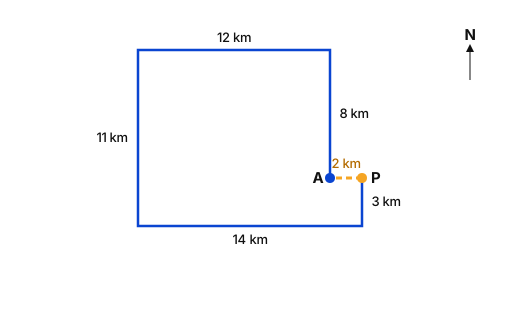
Rohan starts from point A and drives 8 km towards the north. He then takes a left turn, drives 12 km, turns left and drives 11 km. He then takes a left turn and drives 14 km. He takes a final left turn, drives 3 km and stops at point P. How far (shortest distance) and towards which direction should he drive in order to reach point A again? (All turns are 90-degree turns only unless specified.)
रोहन बिंदु A से चलना शुरू करता है और उत्तर की ओर 8 km गाड़ी चलाता है। फिर वह बाएँ मुड़ता है, 12 km गाड़ी चलाता है, बाएँ मुड़ता है और 11 km गाड़ी चलाता है। फिर वह बाएँ मुड़ता है और 14 km गाड़ी चलाता है। वह अंतिम बार बाएँ मुड़ता है, 3 km गाड़ी चलाता है और बिंदु P पर रुक जाता है। पुनः बिंदु A पर पहुँचने के लिए उसे कितनी दूर (न्यूनतम दूरी) और किस दिशा में गाड़ी चलानी चाहिए? (जब तक निर्दिष्ट न हो, सभी मोड़ केवल 90 डिग्री के हैं।)
  1. A3 km to the westपश्चिम की ओर 3 km
  2. B2 km to the westपश्चिम की ओर 2 km
  3. C3 km to the eastपूर्व की ओर 3 km
  4. D2 km to the eastपूर्व की ओर 2 km
Show answer

Concept: Track coordinates: North/South change y, East/West change x.

  1. Start A (0,0); 8 km North → (0,8).
  2. Left (West) 12 → (−12,8); left (South) 11 → (−12,−3).
  3. Left (East) 14 → (2,−3); left (North) 3 → P (2,0).
  4. P is 2 km East of A ⇒ he must drive 2 km to the West.

Trick: North–South: 8−11+3=0, so only East–West matters: −12+14=2 East ⇒ go back West.

Answer: (B) 2 km to the west

अवधारणा: निर्देशांक लें: उत्तर/दक्षिण से y, पूर्व/पश्चिम से x बदलता है।

  1. प्रारंभ A (0,0); 8 km उत्तर → (0,8)।
  2. बाएँ (पश्चिम) 12 → (−12,8); बाएँ (दक्षिण) 11 → (−12,−3)।
  3. बाएँ (पूर्व) 14 → (2,−3); बाएँ (उत्तर) 3 → P (2,0)।
  4. P, A से 2 km पूर्व में ⇒ उसे 2 km पश्चिम जाना होगा।

ट्रिक: उत्तर–दक्षिण: 8−11+3=0, अतः केवल पूर्व–पश्चिम: −12+14=2 पूर्व ⇒ वापस पश्चिम जाएँ।

उत्तर: (B) 2 km पश्चिम की ओर

RRB NTPC Graduate CBT 1General Intelligence and ReasoningDirection & DistanceRRB NTPC Graduate CBT 1 2024 · 13 Jun Shift 1 →
Q2875.
Select the triad that follows the same pattern as that followed by the two triads given below. Both triads follow the same pattern.
NK-RO-VX
LI-PM-TV
उस त्रयी का चयन कीजिए जो उसी पैटर्न का अनुसरण करती है जिसका अनुसरण नीचे दी गई दो त्रयियाँ करती हैं। दोनों त्रयियाँ समान पैटर्न का अनुसरण करती हैं।
NK-RO-VX
LI-PM-TV
  1. AJG-NK-RT
  2. BIG-NK-RU
  3. CIG-NL-RU
  4. DJG-NK-RU
Show answer

Concept: Compare the letters by their alphabet positions in each triad.

  1. NK-RO-VX: N(14)→R(18)→V(22) is +4,+4; K(11)→O(15)→X(24) is +4,+9.
  2. LI-PM-TV: L→P→T is +4,+4; I(9)→M(13)→V(22) is +4,+9.
  3. JG-NK-RT: J(10)→N(14)→R(18) is +4,+4; G(7)→K(11)→T(20) is +4,+9 ✓
  4. JG-NK-RU fails (K→U is +10); IG options fail (I→N is +5).

Trick: Check the first letters (+4,+4) first – it removes both IG options at once.

Answer: (A) JG-NK-RT

अवधारणा: हर त्रयी में अक्षरों की वर्णमाला स्थिति की तुलना करें।

  1. NK-RO-VX: N(14)→R(18)→V(22) में +4,+4; K(11)→O(15)→X(24) में +4,+9।
  2. LI-PM-TV: L→P→T में +4,+4; I(9)→M(13)→V(22) में +4,+9।
  3. JG-NK-RT: J(10)→N(14)→R(18) में +4,+4; G(7)→K(11)→T(20) में +4,+9 ✓
  4. JG-NK-RU गलत (K→U में +10); IG वाले विकल्प गलत (I→N में +5)।

ट्रिक: पहले अक्षरों (+4,+4) की जाँच करें – दोनों IG विकल्प तुरंत हट जाते हैं।

उत्तर: (A) JG-NK-RT

RRB NTPC Graduate CBT 1General Intelligence and ReasoningLetter Analogy (Triads)RRB NTPC Graduate CBT 1 2024 · 13 Jun Shift 1 →
Q2876.
If 1 is added to each even digit and 1 is added to each odd digit in the number 7142568, what will be the sum of the first digit from the left and the first digit from the right in the new number thus formed?
यदि संख्या 7142568 में प्रत्येक सम अंक में 1 जोड़ा जाए और प्रत्येक विषम अंक में 1 जोड़ा जाए, तो इस प्रकार बनी नई संख्या में बाएँ से पहले अंक और दाएँ से पहले अंक का योग क्या होगा?
  1. A15
  2. B14
  3. C17
  4. D10
Show answer

Concept: Every digit (even or odd) increases by 1.

  1. 7142568 → each digit +1 → 8253679
  2. First digit from left =8; first digit from right =9
  3. Sum =8+9=17

Trick: Only the two end digits matter: (7+1)+(8+1)=17.

Answer: (C) 17

अवधारणा: हर अंक (सम या विषम) में 1 जुड़ता है।

  1. 7142568 → हर अंक +1 → 8253679
  2. बाएँ से पहला अंक =8; दाएँ से पहला अंक =9
  3. योग =8+9=17

ट्रिक: केवल दोनों किनारे के अंक देखें: (7+1)+(8+1)=17।

उत्तर: (C) 17

RRB NTPC Graduate CBT 1General Intelligence and ReasoningDigit OperationsRRB NTPC Graduate CBT 1 2024 · 13 Jun Shift 1 →
Q2877.
Based on the English alphabetical order, three of the following four letter-clusters are alike in a certain way and thus form a group. Which letter-cluster DOES NOT belong to that group?
(Note: The odd one out is not based on the number of consonants/vowels or their position in the letter-cluster.)
अंग्रेज़ी वर्णमाला क्रम के आधार पर, निम्नलिखित चार अक्षर-समूहों में से तीन किसी निश्चित प्रकार से एक समान हैं और इस प्रकार एक समूह बनाते हैं। कौन-सा अक्षर-समूह उस समूह से संबंधित नहीं है?
(नोट: असंगत अक्षर-समूह, उस अक्षर-समूह में व्यंजनों/स्वरों की संख्या या उनके स्थान पर आधारित नहीं है।)
  1. AAWRP
  2. BRNIG
  3. CHDVW
  4. DJFAY
Show answer

Concept: Find the step between consecutive letters (backward counting wraps from A to Z).

  1. AWRP: A→−4W→−5R→−2P
  2. RNIG: R→−4N→−5I→−2G; JFAY: J→−4F→−5A→−2Y
  3. HDVW: H→−4D, but D→V is −8 and V→W is +1 ✗

Trick: Fix the pattern −4,−5,−2 from two clusters, then test the rest.

Answer: (C) HDVW

अवधारणा: क्रमागत अक्षरों के बीच का अंतर देखें (पीछे गिनते समय A के बाद Z)।

  1. AWRP: A→−4W→−5R→−2P
  2. RNIG: R→−4N→−5I→−2G; JFAY: J→−4F→−5A→−2Y
  3. HDVW: H→−4D, पर D→V में −8 और V→W में +1 ✗

ट्रिक: दो समूहों से पैटर्न −4,−5,−2 तय करें, फिर बाकी जाँचें।

उत्तर: (C) HDVW

RRB NTPC Graduate CBT 1General Intelligence and ReasoningOdd One Out – Letter ClustersRRB NTPC Graduate CBT 1 2024 · 13 Jun Shift 1 →
Q2878.
Refer to the following number and symbol series and answer the question that follows. Counting to be done from left to right only.
(Left) 8 * * € 6 % 3 2 $ # 9 9 9 2 @ # 5 3 % 9 @ 1 (Right)
How many such numbers are there each of which is immediately preceded by a number and also immediately followed by a symbol?
निम्नलिखित संख्या और प्रतीक श्रृंखला का संदर्भ लीजिए और उसके बाद दिए गए प्रश्न का उत्तर दीजिए। गिनती केवल बाएँ से दाएँ की जानी है।
(बाएँ) 8 * * € 6 % 3 2 $ # 9 9 9 2 @ # 5 3 % 9 @ 1 (दाएँ)
ऐसी कितनी संख्याएँ हैं जिनमें से प्रत्येक के ठीक पहले एक संख्या है और ठीक बाद एक प्रतीक भी है?
  1. A3
  2. B4
  3. C2
  4. D5
Show answer

Concept: Look for the pattern Number – Number – Symbol and count the middle number.

  1. … 3 2 $ … → 2 preceded by 3, followed by $ ✓
  2. … 9 2 @ … → 2 preceded by 9, followed by @ ✓
  3. … 5 3 % … → 3 preceded by 5, followed by % ✓
  4. No other number fits (e.g. the 9s are followed by numbers), so the count is 3.

Trick: Scan only the symbols: for each symbol, check whether the two places just before it are both numbers.

Answer: (A) 3

अवधारणा: संख्या – संख्या – प्रतीक का क्रम खोजें और बीच वाली संख्या गिनें।

  1. … 3 2 $ … → 2 से पहले 3, बाद में $ ✓
  2. … 9 2 @ … → 2 से पहले 9, बाद में @ ✓
  3. … 5 3 % … → 3 से पहले 5, बाद में % ✓
  4. कोई अन्य संख्या शर्त पूरी नहीं करती (जैसे 9 के बाद संख्याएँ हैं), अतः कुल 3।

ट्रिक: केवल प्रतीकों को देखें: हर प्रतीक से ठीक पहले के दोनों स्थान संख्याएँ हैं या नहीं।

उत्तर: (A) 3

RRB NTPC Graduate CBT 1General Intelligence and ReasoningNumber-Symbol SeriesRRB NTPC Graduate CBT 1 2024 · 13 Jun Shift 1 →
Q2879.
Refer to the following number and symbol series and answer the question that follows. Counting to be done from left to right only.
(Left) 3 € & £ @ * # 1 $ € @ © € © & 1 € 4 1 2 4 © (Right)
How many such symbols are there each of which is immediately preceded by a number and also immediately followed by a symbol?
निम्नलिखित संख्या और प्रतीक श्रृंखला का संदर्भ लीजिए और उसके बाद दिए गए प्रश्न का उत्तर दीजिए। गिनती केवल बाएँ से दाएँ की जानी है।
(बाएँ) 3 € & £ @ * # 1 $ € @ © € © & 1 € 4 1 2 4 © (दाएँ)
ऐसे कितने प्रतीक हैं जिनमें से प्रत्येक के ठीक पहले एक संख्या है और ठीक बाद एक प्रतीक भी है?
  1. A3
  2. B1
  3. C4
  4. D2
Show answer

Concept: Look for the pattern Number – Symbol – Symbol and count the middle symbol.

  1. 3 € & → € preceded by 3, followed by & ✓
  2. 1 $ € → $ preceded by 1, followed by € ✓
  3. 1 € 4 → followed by a number ✗; 4 © at the end → nothing follows ✗
  4. Count = 2

Trick: List every number, then check the next two places: symbol + symbol.

Answer: (D) 2

अवधारणा: संख्या – प्रतीक – प्रतीक का क्रम खोजें और बीच वाला प्रतीक गिनें।

  1. 3 € & → € से पहले 3, बाद में & ✓
  2. 1 $ € → $ से पहले 1, बाद में € ✓
  3. 1 € 4 → बाद में संख्या ✗; अंत का 4 © → बाद में कुछ नहीं ✗
  4. कुल = 2

ट्रिक: हर संख्या के बाद के दो स्थान देखें: प्रतीक + प्रतीक।

उत्तर: (D) 2

RRB NTPC Graduate CBT 1General Intelligence and ReasoningNumber-Symbol SeriesRRB NTPC Graduate CBT 1 2024 · 13 Jun Shift 1 →
Q2880.
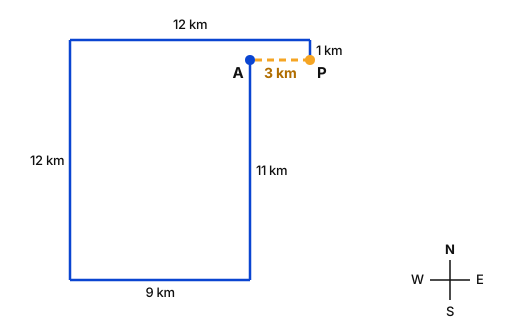
Rituraj starts from Point A and drives 11 km towards South. He then takes a right turn, drives 9 km, turns right and drives 12 km. He then takes a right turn and drives 12 km. He takes a final right turn, drives 1 km and stops at Point P. How far (shortest distance) and towards which direction should he drive in order to reach Point A again? (All turns are 90° turns only, unless specified)
रितुराज बिंदु A से चलना शुरू करता है और दक्षिण की ओर 11 km गाड़ी चलाता है। फिर वह दाएँ मुड़ता है, 9 km गाड़ी चलाता है, दाएँ मुड़ता है और 12 km गाड़ी चलाता है। फिर वह दाएँ मुड़ता है और 12 km गाड़ी चलाता है। वह अंतिम बार दाएँ मुड़ता है, 1 km गाड़ी चलाता है और बिंदु P पर रुक जाता है। पुनः बिंदु A पर पहुँचने के लिए उसे कितनी दूर (न्यूनतम दूरी) और किस दिशा में गाड़ी चलानी चाहिए? (जब तक निर्दिष्ट न हो, सभी मोड़ केवल 90° के हैं)
  1. A3 km to the westपश्चिम की ओर 3 km
  2. B1 km to the westपश्चिम की ओर 1 km
  3. C4 km to the westपश्चिम की ओर 4 km
  4. D2 km to the westपश्चिम की ओर 2 km
Show answer

Concept: Track the position on a grid (East +x, North +y); a right turn while facing South points West.

  1. A(0, 0) → 11 km South → (0, −11)
  2. Right (West) 9 km → (−9, −11); right (North) 12 km → (−9, 1)
  3. Right (East) 12 km → (3, 1); right (South) 1 km → P(3, 0)
  4. P is 3 km East of A, so he must drive 3 km to the West.

Trick: Net East = 12 − 9 = 3 km; net North = 12 − 11 − 1 = 0 → move 3 km West.

Answer: (A) 3 km to the west

अवधारणा: ग्रिड पर स्थिति देखें (पूर्व +x, उत्तर +y); दक्षिण की ओर मुख करके दाएँ मुड़ने पर पश्चिम।

  1. A(0, 0) → 11 km दक्षिण → (0, −11)
  2. दाएँ (पश्चिम) 9 km → (−9, −11); दाएँ (उत्तर) 12 km → (−9, 1)
  3. दाएँ (पूर्व) 12 km → (3, 1); दाएँ (दक्षिण) 1 km → P(3, 0)
  4. P, A से 3 km पूर्व में है, अतः उसे 3 km पश्चिम जाना होगा।

ट्रिक: शुद्ध पूर्व = 12 − 9 = 3 km; शुद्ध उत्तर = 12 − 11 − 1 = 0 → 3 km पश्चिम।

उत्तर: (A) 3 km पश्चिम की ओर

RRB NTPC Graduate CBT 1General Intelligence and ReasoningDirection and DistanceRRB NTPC Graduate CBT 1 2024 · 13 Jun Shift 1 →