Question bank

Q&A: practice questions with answers

Search questions on any topic. Filter by exam category, exam, subject and topic, try the question, then open the answer and explanation.

Courses – airGurukul

7,077 questions found.

Q2941.
Three numbers are in the ratio 1 : 5 : 6, and their LCM is 5250. Their HCF is:
तीन संख्याएँ 1 : 5 : 6 के अनुपात में हैं, और उनका LCM 5250 है। उनका HCF है:
  1. A183
  2. B175
  3. C171
  4. D193
Show answer

Concept: Let the numbers be x,5x,6x (1, 5, 6 have no common factor, so HCF =x).

  1. LCM =x×LCM(1,5,6)=30x.
  2. 30x=5250 ⇒ x=175.
  3. HCF =175 (numbers 175, 875, 1050).

Trick: HCF =LCMLCM of ratio terms=525030.

Answer: (B) 175

अवधारणा: संख्याएँ x,5x,6x मानें (1, 5, 6 सह-अभाज्य, अतः म.स. =x)।

  1. ल.स. =x×LCM(1,5,6)=30x।
  2. 30x=5250 ⇒ x=175।
  3. म.स. =175 (संख्याएँ 175, 875, 1050)।

ट्रिक: म.स.=ल.स.अनुपात पदों का ल.स.=525030।

उत्तर: (B) 175

RRB NTPC Graduate CBT 1MathematicsHCF and LCMRRB NTPC Graduate CBT 1 2024 · 12 Jun Shift 3 →
Q2942.
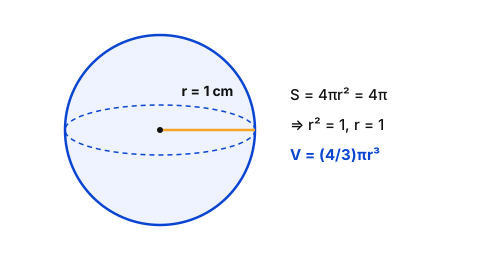
The surface area of a sphere is 4πcm2. The volume of the sphere is:
एक गोले का पृष्ठीय क्षेत्रफल 4πcm2 है। गोले का आयतन है:
  1. A2π3cm3
  2. B5π3cm3
  3. C13π3cm3
  4. D4π3cm3
Show answer

Concept: Surface area =4πr2, volume =43πr3.

  1. 4πr2=4π ⇒ r2=1 ⇒ r=1 cm.
  2. V=43π×13=4π3cm3.

Trick: V=S×r3=4π×13.

Answer: (D) 4π3cm3

अवधारणा: पृष्ठीय क्षेत्रफल =4πr2, आयतन =43πr3।

  1. 4πr2=4π ⇒ r2=1 ⇒ r=1 cm।
  2. V=43π×13=4π3cm3।

ट्रिक: V=S×r3=4π×13।

उत्तर: (D) 4π3cm3

RRB NTPC Graduate CBT 1MathematicsMensuration – SphereRRB NTPC Graduate CBT 1 2024 · 12 Jun Shift 3 →
Q2943.
A vendor buys 44 laptop bags for ₹48,884 and sells them at 28 for ₹35,252. How many laptop bags should be bought and sold to earn a profit of ₹6,956?
एक विक्रेता 44 लैपटॉप बैग ₹48,884 में खरीदता है और उन्हें 28 बैग ₹35,252 की दर से बेचता है। ₹6,956 का लाभ अर्जित करने के लिए कितने लैपटॉप बैग खरीदे और बेचे जाने चाहिए?
  1. A17
  2. B37
  3. C47
  4. D20
Show answer

Concept: Find profit per article, then divide the required profit by it.

  1. CP per bag =4888444= ₹1111.
  2. SP per bag =3525228= ₹1259.
  3. Profit per bag =1259−1111= ₹148.
  4. Bags needed =6956148=47.

Trick: Check the last digit: 148×47 ends in 6, matching 6956.

Answer: (C) 47

अवधारणा: प्रति वस्तु लाभ निकालें, फिर अभीष्ट लाभ को उससे भाग दें।

  1. प्रति बैग क्रय मूल्य =4888444= ₹1111।
  2. प्रति बैग विक्रय मूल्य =3525228= ₹1259।
  3. प्रति बैग लाभ =1259−1111= ₹148।
  4. आवश्यक बैग =6956148=47।

ट्रिक: इकाई अंक जाँचें: 148×47 का अंतिम अंक 6, जो 6956 से मेल खाता है।

उत्तर: (C) 47

RRB NTPC Graduate CBT 1MathematicsProfit and LossRRB NTPC Graduate CBT 1 2024 · 12 Jun Shift 3 →
Q2944.
If the selling price of a bed is 3-times of initial, then the profit is 4-times of initial. Find the initial profit percentage (in %).
यदि एक पलंग का विक्रय मूल्य प्रारंभिक विक्रय मूल्य का 3 गुना हो, तो लाभ प्रारंभिक लाभ का 4 गुना हो जाता है। प्रारंभिक लाभ प्रतिशत (% में) ज्ञात कीजिए।
  1. A75
  2. B133.33
  3. C200
  4. D33.33
Show answer

Concept: SP=CP+Profit; cost price stays the same when SP changes.

  1. Let initial profit =P, so initial SP=C+P.
  2. New SP =3(C+P) and new profit =4P, so 3(C+P)=C+4P.
  3. 3C+3P=C+4P⇒P=2C.
  4. Initial profit %=2CC×100=200%.

Trick: Write both SPs as C+profit and equate – the cost cancels to a simple ratio.

Answer: (C) 200

अवधारणा: SP=CP+लाभ; विक्रय मूल्य बदलने पर भी क्रय मूल्य वही रहता है।

  1. माना प्रारंभिक लाभ =P, तो प्रारंभिक SP=C+P।
  2. नया SP =3(C+P) और नया लाभ =4P, अतः 3(C+P)=C+4P।
  3. 3C+3P=C+4P⇒P=2C।
  4. प्रारंभिक लाभ %=2CC×100=200%।

ट्रिक: दोनों SP को C+लाभ के रूप में लिखकर बराबर करें।

उत्तर: (C) 200

RRB NTPC Graduate CBT 1MathematicsProfit and LossRRB NTPC Graduate CBT 1 2024 · 12 Jun Shift 3 →
Q2945.
If the eight-digit number 51883p47 is divisible by 9, then the maximum value of p is:
यदि आठ अंकों की संख्या 51883p47, 9 से विभाज्य है, तो p का अधिकतम मान है:
  1. A8
  2. B7
  3. C5
  4. D9
Show answer

Concept: A number is divisible by 9 if the sum of its digits is divisible by 9.

  1. Digit sum =5+1+8+8+3+p+4+7=36+p.
  2. 36 is already a multiple of 9, so p must be 0 or 9.
  3. Maximum value of p=9.

Trick: If the known digits already sum to a multiple of 9, the blank can be only 0 or 9.

Answer: (D) 9

अवधारणा: कोई संख्या 9 से विभाज्य है यदि उसके अंकों का योग 9 से विभाज्य हो।

  1. अंकों का योग =5+1+8+8+3+p+4+7=36+p।
  2. 36 पहले से 9 का गुणज है, अतः p=0 या 9।
  3. p का अधिकतम मान =9।

ट्रिक: ज्ञात अंकों का योग 9 का गुणज हो तो रिक्त अंक केवल 0 या 9 हो सकता है।

उत्तर: (D) 9

RRB NTPC Graduate CBT 1MathematicsDivisibility RulesRRB NTPC Graduate CBT 1 2024 · 12 Jun Shift 3 →
Q2946.
The average price of three items of furniture is ₹15,015. If their prices are in the ratio 3 : 5 : 7, the price of the costliest item (in ₹) is:
फ़र्नीचर की तीन वस्तुओं का औसत मूल्य ₹15,015 है। यदि उनके मूल्य 3 : 5 : 7 के अनुपात में हैं, तो सबसे महंगी वस्तु का मूल्य (₹ में) है:
  1. A7,007
  2. B9,009
  3. C21,021
  4. D5,005
Show answer

Concept: Total =average×count; then divide the total in the given ratio.

  1. Total price =15015×3=45045.
  2. Sum of ratio terms =3+5+7=15.
  3. Costliest item =715×45045=7×3003=21021.

Trick: Average of the ratio is 153=5 parts =15015, so 1 part =3003 and 7 parts =21021.

Answer: (C) ₹21,021

अवधारणा: कुल =औसत×संख्या; फिर कुल को दिए अनुपात में बाँटें।

  1. कुल मूल्य =15015×3=45045।
  2. अनुपात का योग =3+5+7=15।
  3. सबसे महँगी वस्तु =715×45045=7×3003=21021।

ट्रिक: अनुपात का औसत 153=5 भाग =15015, अतः 1 भाग =3003, 7 भाग =21021।

उत्तर: (C) ₹21,021

RRB NTPC Graduate CBT 1MathematicsAverage and RatioRRB NTPC Graduate CBT 1 2024 · 12 Jun Shift 3 →
Q2947.
If 2% of x = 360, then x is equal to:
यदि x का 2% = 360 है, तो x बराबर है:
  1. A36000
  2. B18000
  3. C18100
  4. D36100
Show answer

Concept: If a% of x=b, then x=b×100a.

  1. 2100×x=360.
  2. x=360×1002=18000.

Trick: 2%=360⇒1%=180⇒100%=18000.

Answer: (B) 18000

अवधारणा: यदि x का a%=b, तो x=b×100a।

  1. 2100×x=360।
  2. x=360×1002=18000।

ट्रिक: 2%=360⇒1%=180⇒100%=18000।

उत्तर: (B) 18000

RRB NTPC Graduate CBT 1MathematicsPercentageRRB NTPC Graduate CBT 1 2024 · 12 Jun Shift 3 →
Q2948.
Simplify:
22×934×6561
सरल कीजिए:
22×934×6561
  1. A27
  2. B18
  3. C23
  4. D21
Show answer

Concept: Write everything as powers of small primes, then cancel.

  1. Numerator: 22×93=4×729=2916.
  2. Denominator: 4×6561=2×81=162.
  3. Value =2916162=18.

Trick: 93=36 and 6561=34, so 4×362×34=2×9=18.

Answer: (B) 18

अवधारणा: सभी को छोटी अभाज्य संख्याओं की घात में लिखें और काटें।

  1. अंश: 22×93=4×729=2916।
  2. हर: 4×6561=2×81=162।
  3. मान =2916162=18।

ट्रिक: 93=36 और 6561=34, अतः 4×362×34=2×9=18।

उत्तर: (B) 18

RRB NTPC Graduate CBT 1MathematicsSimplification (Powers and Roots)RRB NTPC Graduate CBT 1 2024 · 12 Jun Shift 3 →
Q2949.
The sum of 2 times Priya's present age and Jaya's present age is 48 years. Sanjay's is presently 2 times as old as Jaya. Mohit's present age is 4 years more than Priya's present age. The sum of the present ages of Sanjay and Mohit is 46 years. What is the sum of the present ages (in years) of Priya and Jaya?
प्रिया की वर्तमान आयु के 2 गुने और जया की वर्तमान आयु का योग 48 वर्ष है। संजय की वर्तमान आयु जया की आयु की 2 गुनी है। मोहित की वर्तमान आयु प्रिया की वर्तमान आयु से 4 वर्ष अधिक है। संजय और मोहित की वर्तमान आयु का योग 46 वर्ष है। प्रिया और जया की वर्तमान आयु का योग (वर्षों में) क्या है?
  1. A40
  2. B38
  3. C30
  4. D15
Show answer

Concept: Convert each statement into an equation and add the two final equations.

  1. 2P+J=48 … (i)
  2. S=2J, M=P+4 and S+M=46⇒2J+P+4=46⇒P+2J=42 … (ii)
  3. Add (i) and (ii): 3P+3J=90⇒P+J=30.

Trick: When coefficients are swapped (2P+J and P+2J), just add and divide by 3.

Answer: (C) 30

अवधारणा: हर कथन को समीकरण में बदलें और अंतिम दोनों समीकरण जोड़ें।

  1. 2P+J=48 … (i)
  2. S=2J, M=P+4 और S+M=46⇒2J+P+4=46⇒P+2J=42 … (ii)
  3. (i) + (ii): 3P+3J=90⇒P+J=30।

ट्रिक: गुणांक उलटे हों (2P+J और P+2J) तो जोड़कर 3 से भाग दें।

उत्तर: (C) 30

RRB NTPC Graduate CBT 1MathematicsProblems on AgesRRB NTPC Graduate CBT 1 2024 · 12 Jun Shift 3 →
Q2950.
If 25% of k is 10 less than 1200% of 25, then k is:
यदि k का 25%, 25 के 1200% से 10 कम है, तो k है:
  1. A1200
  2. B1120
  3. C1140
  4. D1160
Show answer

Concept: Translate the sentence directly into an equation.

  1. 1200% of 25=12×25=300.
  2. 25% of k=300−10=290.
  3. k4=290⇒k=1160.

Trick: 25%=14, so multiply by 4: 290×4=1160.

Answer: (D) 1160

अवधारणा: वाक्य को सीधे समीकरण में बदलें।

  1. 25 का 1200%=12×25=300।
  2. k का 25%=300−10=290।
  3. k4=290⇒k=1160।

ट्रिक: 25%=14, अतः 290×4=1160।

उत्तर: (D) 1160

RRB NTPC Graduate CBT 1MathematicsPercentageRRB NTPC Graduate CBT 1 2024 · 12 Jun Shift 3 →
Q2951.
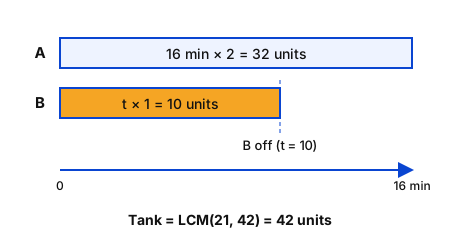
Pipes A and B can fill an empty cistern in 21 minutes and 42 minutes, respectively. Both Pipe A and Pipe B are opened together. After how much time should Pipe B be turned off so that the empty cistern is completely filled in a total of 16 minutes?
पाइप A और B एक खाली टंकी को क्रमशः 21 मिनट और 42 मिनट में भर सकते हैं। पाइप A और पाइप B दोनों को एक साथ खोला जाता है। पाइप B को कितने समय बाद बंद कर देना चाहिए ताकि खाली टंकी कुल 16 मिनट में पूरी भर जाए?
  1. A5 minutes5 मिनट
  2. B10 minutes10 मिनट
  3. C15 minutes15 मिनट
  4. D12 minutes12 मिनट
Show answer

Concept: Take tank capacity = LCM of times; work = rate × time for each pipe.

  1. Capacity =LCM(21,42)=42 units. Rate of A =2 units/min, B =1 unit/min.
  2. A runs all 16 minutes: 16×2=32 units.
  3. Remaining 42−32=10 units are filled by B ⇒ B runs 10 minutes.

Trick: Fill-time of the pipe kept open for the full period first; the shortfall gives the other pipe's time.

Answer: (B) 10 minutes

अवधारणा: टंकी की क्षमता = समयों का LCM; हर पाइप का कार्य = दर × समय।

  1. क्षमता =LCM(21,42)=42 इकाई। A की दर =2 इकाई/मिनट, B =1 इकाई/मिनट।
  2. A पूरे 16 मिनट चलता है: 16×2=32 इकाई।
  3. शेष 42−32=10 इकाई B भरता है ⇒ B 10 मिनट चलता है।

ट्रिक: पूरे समय चलने वाले पाइप का कार्य पहले निकालें; बची कमी दूसरे पाइप का समय देती है।

उत्तर: (B) 10 मिनट

RRB NTPC Graduate CBT 1MathematicsPipes and CisternRRB NTPC Graduate CBT 1 2024 · 12 Jun Shift 3 →
Q2952.
Find the discriminant of the quadratic equation 3x2− 4x + 2 = 0, and hence determine the nature of its roots.
द्विघात समीकरण 3x2− 4x + 2 = 0 का विविक्तकर (discriminant) ज्ञात कीजिए, और इससे इसके मूलों की प्रकृति निर्धारित कीजिए।
  1. ADiscriminant = −8, roots are imaginaryविविक्तकर = −8, मूल काल्पनिक हैं
  2. BDiscriminant = 8, roots are real and equalविविक्तकर = 8, मूल वास्तविक और समान हैं
  3. CDiscriminant = −8, roots are real and distinctविविक्तकर = −8, मूल वास्तविक और भिन्न हैं
  4. DDiscriminant = 8, roots are real and distinctविविक्तकर = 8, मूल वास्तविक और भिन्न हैं
Show answer

Concept: For ax2+bx+c=0, D=b2−4ac; D<0 ⇒ roots imaginary, D=0 ⇒ real and equal, D>0 ⇒ real and distinct.

  1. a=3, b=−4, c=2.
  2. D=(−4)2−4×3×2=16−24=−8.
  3. D<0 ⇒ the roots are imaginary (not real).

Trick: A negative discriminant can never give real roots – options with −8 and "real" are impossible.

Answer: (A) Discriminant =−8, roots are imaginary

अवधारणा: ax2+bx+c=0 के लिए D=b2−4ac; D<0 ⇒ काल्पनिक मूल, D=0 ⇒ वास्तविक व बराबर, D>0 ⇒ वास्तविक व भिन्न।

  1. a=3, b=−4, c=2।
  2. D=(−4)2−4×3×2=16−24=−8।
  3. D<0 ⇒ मूल काल्पनिक (imaginary) हैं।

ट्रिक: ऋणात्मक विविक्तकर से कभी वास्तविक मूल नहीं मिलते।

उत्तर: (A) विविक्तकर =−8, मूल काल्पनिक हैं

RRB NTPC Graduate CBT 1MathematicsQuadratic Equations – Nature of RootsRRB NTPC Graduate CBT 1 2024 · 12 Jun Shift 3 →
Q2953.
What is the third proportional of 10x2 and 30xy?
10x2 और 30xy का तृतीयानुपाती क्या है?
  1. A92y2
  2. B87y2
  3. C93y2
  4. D90y2
Show answer

Concept: Third proportional of a and b is c where a:b=b:c, i.e. c=b2a.

  1. a=10x2, b=30xy.
  2. c=(30xy)210x2=900x2y210x2.
  3. c=90y2.

Trick: Numbers alone: 30210=90; variables: x2y2x2=y2.

Answer: (D) 90y2

अवधारणा: a और b का तृतीयानुपाती c है जहाँ a:b=b:c, अर्थात् c=b2a।

  1. a=10x2, b=30xy।
  2. c=(30xy)210x2=900x2y210x2।
  3. c=90y2।

ट्रिक: केवल संख्याएँ: 30210=90; चर: x2y2x2=y2।

उत्तर: (D) 90y2

RRB NTPC Graduate CBT 1MathematicsThird ProportionalRRB NTPC Graduate CBT 1 2024 · 12 Jun Shift 3 →
Q2954.
Simplify: 50÷{3×(86 of 66)}
सरल कीजिए: 50÷{3×(86 of 66)}
  1. A312
  2. B252
  3. C232
  4. D272
Show answer

Concept: BODMAS – brackets first, and "of" is done before ÷ and ×.

  1. 86 of 66=86×1=86.
  2. 3×86=4.
  3. 50÷4=252.

Trick: 66=1, so the bracket is just 3×43=4.

Answer: (B) 252

अवधारणा: BODMAS – पहले कोष्ठक, और "का (of)" ÷ और × से पहले।

  1. 86 of 66=86×1=86।
  2. 3×86=4।
  3. 50÷4=252।

ट्रिक: 66=1, अतः कोष्ठक =3×43=4।

उत्तर: (B) 252

RRB NTPC Graduate CBT 1MathematicsSimplification (BODMAS)RRB NTPC Graduate CBT 1 2024 · 12 Jun Shift 3 →
Q2955.
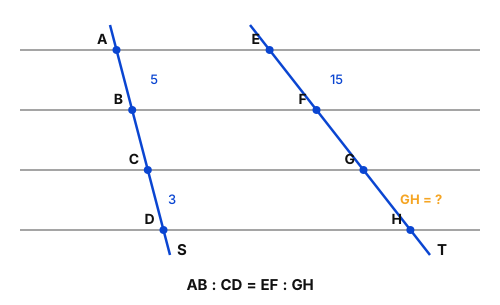
Two transversal lines S and T cut a set of distinct parallel lines. S cuts the parallel lines in points A, B, C and D and T cuts the parallel lines in points E, F, G and H. If AB = 5 cm, CD = 3 cm and EF = 15 cm, then the length (in cm) of GH is:
दो तिर्यक रेखाएँ S और T भिन्न समांतर रेखाओं के एक समूह को काटती हैं। S समांतर रेखाओं को बिंदुओं A, B, C और D पर काटती है तथा T समांतर रेखाओं को बिंदुओं E, F, G और H पर काटती है। यदि AB = 5 cm, CD = 3 cm और EF = 15 cm है, तो GH की लंबाई (cm में) है:
  1. A9
  2. B6
  3. C8
  4. D4
Show answer

Concept: Parallel lines cut any two transversals proportionally: ABCD=EFGH.

  1. 53=15GH.
  2. GH=15×35=9cm.

Trick: T's intercepts are 155=3 times S's, so GH=3×3=9.

Answer: (A) 9

अवधारणा: समानांतर रेखाएँ किन्हीं दो तिर्यक रेखाओं (transversals) को समानुपात में काटती हैं: ABCD=EFGH।

  1. 53=15GH।
  2. GH=15×35=9cm।

ट्रिक: T के अंतःखंड S के 155=3 गुना हैं, अतः GH=3×3=9।

उत्तर: (A) 9

RRB NTPC Graduate CBT 1MathematicsGeometry – Basic Proportionality (Intercepts)RRB NTPC Graduate CBT 1 2024 · 12 Jun Shift 3 →
Q2956.
A 120 m long train overtakes a man moving at a speed of 9 km/hr (in same direction) in 18 seconds. How much time (in seconds) will this train take to completely cross another 230 m long train, moving in the opposite direction at a speed of 27 km/hr?
120 m लंबी एक रेलगाड़ी 9 km/hr की चाल से (समान दिशा में) चल रहे एक व्यक्ति को 18 सेकंड में पार करती है। यह रेलगाड़ी विपरीत दिशा में 27 km/hr की चाल से चल रही 230 m लंबी एक अन्य रेलगाड़ी को पूरी तरह पार करने में कितना समय (सेकंड में) लेगी?
  1. A17
  2. B35
  3. C21
  4. D33
Show answer

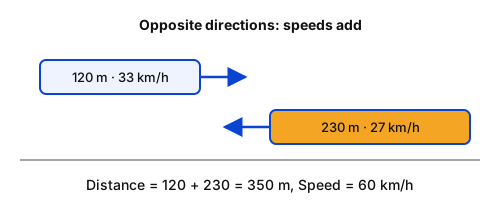
Concept: Same direction ⇒ relative speed = difference; opposite ⇒ sum. Distance = total length.

  1. Overtaking the man: relative speed =12018=203m/s=24km/h ⇒ train speed =24+9=33km/h.
  2. Opposite direction: relative speed =33+27=60km/h=503m/s.
  3. Distance =120+230=350m.
  4. Time =350÷503=21s.

Trick: 1m/s=185km/h: 203×185=24.

Answer: (C) 21

अवधारणा: एक ही दिशा ⇒ सापेक्ष चाल = अंतर; विपरीत ⇒ योग। दूरी = दोनों लंबाइयों का योग।

  1. व्यक्ति को पार करना: सापेक्ष चाल =12018=203m/s=24km/h ⇒ ट्रेन की चाल =24+9=33km/h।
  2. विपरीत दिशा: सापेक्ष चाल =33+27=60km/h=503m/s।
  3. दूरी =120+230=350m।
  4. समय =350÷503=21s।

ट्रिक: 1m/s=185km/h: 203×185=24।

उत्तर: (C) 21

RRB NTPC Graduate CBT 1MathematicsSpeed – TrainsRRB NTPC Graduate CBT 1 2024 · 12 Jun Shift 3 →
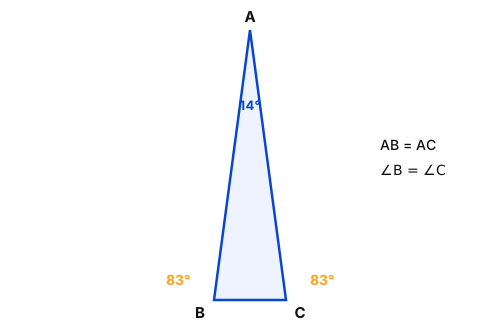
Q2957.
In an isosceles triangle, the vertex angle measures 14°. What is the measure of each of the base angles?
एक समद्विबाहु त्रिभुज में, शीर्ष कोण का माप 14° है। प्रत्येक आधार कोण का माप क्या है?
  1. A103° and 103°103° और 103°
  2. B86° and 86°86° और 86°
  3. C83° and 83°83° और 83°
  4. D79° and 79°79° और 79°
Show answer

Concept: In an isosceles triangle the two base angles are equal and all angles sum to 180∘.

  1. Base angles together =180∘−14∘=166∘.
  2. Each base angle =166∘2=83∘.

Trick: Each base angle =90∘−vertex2=90∘−7∘=83∘.

Answer: (C) 83∘ and 83∘

अवधारणा: समद्विबाहु त्रिभुज के दोनों आधार कोण बराबर होते हैं और कोणों का योग 180∘ है।

  1. दोनों आधार कोणों का योग =180∘−14∘=166∘।
  2. प्रत्येक आधार कोण =166∘2=83∘।

ट्रिक: आधार कोण =90∘−शीर्ष कोण2=90∘−7∘=83∘।

उत्तर: (C) 83∘ और 83∘

RRB NTPC Graduate CBT 1MathematicsGeometry – Isosceles TriangleRRB NTPC Graduate CBT 1 2024 · 12 Jun Shift 3 →
Q2958.
What should come in place of the question mark (?) in the given series?
982 980 976 970 962 ?
दी गई श्रृंखला में प्रश्न चिह्न (?) के स्थान पर क्या आना चाहिए?
982 980 976 970 962 ?
  1. A952
  2. B954
  3. C948
  4. D950
Show answer

Concept: Check the differences between consecutive terms.

  1. 982−980=2, 980−976=4, 976−970=6, 970−962=8.
  2. Differences are even numbers increasing by 2, so the next difference is 10.
  3. 962−10=952.

Trick: Subtract consecutive even numbers: −2,−4,−6,−8,−10.

Answer: (A) 952

अवधारणा: क्रमागत पदों का अंतर देखें।

  1. 982−980=2, 980−976=4, 976−970=6, 970−962=8।
  2. अंतर सम संख्याएँ हैं जो 2-2 बढ़ रही हैं, अतः अगला अंतर 10 होगा।
  3. 962−10=952।

ट्रिक: क्रमागत सम संख्याएँ घटाएँ: −2,−4,−6,−8,−10।

उत्तर: (A) 952

RRB NTPC Graduate CBT 1General Intelligence and ReasoningNumber SeriesRRB NTPC Graduate CBT 1 2024 · 12 Jun Shift 3 →
Q2959.
If 2 is added to each even digit and 3 is subtracted from each odd digit in the number 596432, what will be the sum of the greatest and smallest digits in the new number thus formed?
यदि संख्या 596432 में प्रत्येक सम अंक में 2 जोड़ा जाए और प्रत्येक विषम अंक में से 3 घटाया जाए, तो इस प्रकार बनी नई संख्या में सबसे बड़े और सबसे छोटे अंक का योग क्या होगा?
  1. A8
  2. B12
  3. C6
  4. D10
Show answer

Concept: Apply the rule digit by digit.

  1. 596432: odd digits 5,9,3 become 2,6,0; even digits 6,4,2 become 8,6,4.
  2. New number: 2 6 8 6 0 4.
  3. Greatest digit =8, smallest digit =0, sum =8+0=8.

Trick: Only the extreme digits matter: largest even digit 6→8 and odd digit 3→0.

Answer: (A) 8

अवधारणा: प्रत्येक अंक पर नियम लगाएँ।

  1. 596432 में विषम अंक 5,9,3 बनते हैं 2,6,0; सम अंक 6,4,2 बनते हैं 8,6,4।
  2. नई संख्या: 2 6 8 6 0 4।
  3. सबसे बड़ा अंक =8, सबसे छोटा =0, योग =8+0=8।

ट्रिक: केवल सबसे बड़ा और सबसे छोटा अंक देखें: 6→8 और 3→0।

उत्तर: (A) 8

RRB NTPC Graduate CBT 1General Intelligence and ReasoningNumber OperationsRRB NTPC Graduate CBT 1 2024 · 12 Jun Shift 3 →
Q2960.
If ‘A’ stands for ‘÷’, ‘B’ stands for ‘×’, ‘C’ stands for ‘+’ and ‘D’ stands for ‘−’, then what will come in place of question mark (?) in the following equation?
43 D 15 C 7 B 9 D (28 A 2) = ?
यदि 'A' का अर्थ '÷', 'B' का अर्थ '×', 'C' का अर्थ '+' और 'D' का अर्थ '−' है, तो निम्नलिखित समीकरण में प्रश्न चिह्न (?) के स्थान पर क्या आएगा?
43 D 15 C 7 B 9 D (28 A 2) = ?
  1. A83
  2. B92
  3. C64
  4. D77
Show answer

Concept: Replace the letters by signs, then use BODMAS.

  1. Expression: 43−15+7×9−(28÷2).
  2. Bracket: 28÷2=14; multiplication: 7×9=63.
  3. 43−15+63−14=77.

Trick: Write the sign-converted expression first, then solve bracket → ×/÷ → +/−.

Answer: (D) 77

अवधारणा: अक्षरों को चिह्नों से बदलें, फिर BODMAS लगाएँ।

  1. व्यंजक: 43−15+7×9−(28÷2)।
  2. कोष्ठक: 28÷2=14; गुणा: 7×9=63।
  3. 43−15+63−14=77।

ट्रिक: पहले चिह्न बदलकर पूरा व्यंजक लिखें, फिर कोष्ठक → ×/÷ → +/−।

उत्तर: (D) 77

RRB NTPC Graduate CBT 1General Intelligence and ReasoningMathematical OperationsRRB NTPC Graduate CBT 1 2024 · 12 Jun Shift 3 →