Question bank

Q&A: practice questions with answers

Search questions on any topic. Filter by exam category, exam, subject and topic, try the question, then open the answer and explanation.

Courses – airGurukul

7,077 questions found.

Q3741.
After allowing a discount of 76%, the value of a ceiling fan is ₹3,330. If no discount is allowed, then the shopkeeper gains 50%. Find the cost price (in ₹) of the ceiling fan.
76% की छूट देने के बाद, एक सीलिंग फ़ैन का मूल्य ₹3,330 है। यदि कोई छूट नहीं दी जाती है, तो दुकानदार को 50% का लाभ होता है। सीलिंग फ़ैन का क्रय मूल्य (₹ में) ज्ञात कीजिए।
  1. A9,247
  2. B9,248
  3. C9,252
  4. D9,250
Show answer

Concept: Selling price after discount =MP×(100−d)%; with no discount, SP = MP.

  1. MP×24100=3330⇒MP=3330×10024=13875
  2. With no discount, gain 50%: MP=1.5×CP
  3. CP=138751.5=9250

Trick: CP=33300.24×1.5=33300.36=9250.

Answer: (D) 9,250

अवधारणा: छूट के बाद विक्रय मूल्य =MP×(100−d)%; बिना छूट के SP = MP।

  1. MP×24100=3330⇒MP=13875
  2. बिना छूट 50% लाभ: MP=1.5×CP
  3. CP=138751.5=9250

ट्रिक: CP=33300.24×1.5=33300.36=9250।

उत्तर: (D) 9,250

RRB NTPC Graduate CBT 1MathematicsProfit, Loss and DiscountRRB NTPC Graduate CBT 1 2024 · 10 Jun Shift 1 →
Q3742.
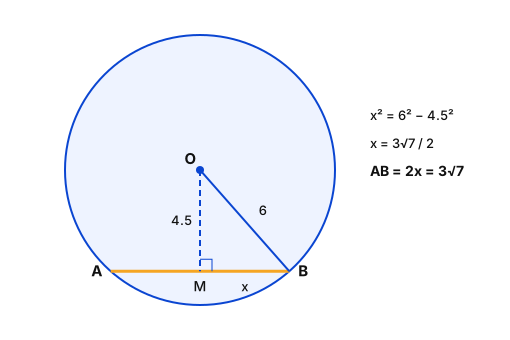
A chord AB is drawn in a circle with centre O and radius 6 cm. If the shortest distance between the centre and the chord is 4.5 cm, then find the length of chord AB.
केंद्र O और 6 cm त्रिज्या वाले एक वृत्त में एक जीवा AB खींची गई है। यदि केंद्र और जीवा के बीच की न्यूनतम दूरी 4.5 cm है, तो जीवा AB की लंबाई ज्ञात कीजिए।
  1. A2√7 cm
  2. B4√7 cm
  3. C3√7 cm
  4. D√7 cm
Show answer

Concept: The perpendicular from the centre bisects the chord; use Pythagoras in the half-chord triangle.

  1. OB=6, OM=4.5, MB=x.
  2. x2=62−4.52=36−20.25=15.75=634
  3. x=632=372
  4. AB=2x=37cm

Trick: AB=2r2−d2=4(36−20.25)=63=37.

Answer: (C) 37cm

अवधारणा: केंद्र से जीवा पर डाला गया लंब जीवा को समद्विभाजित करता है; आधी जीवा वाले त्रिभुज में पाइथागोरस लगाएँ।

  1. OB=6, OM=4.5, MB=x।
  2. x2=36−20.25=15.75=634
  3. x=372
  4. AB=2x=37cm

ट्रिक: AB=2r2−d2=63=37।

उत्तर: (C) 37cm

RRB NTPC Graduate CBT 1MathematicsGeometry – Circle ChordRRB NTPC Graduate CBT 1 2024 · 10 Jun Shift 1 →
Q3743.
The average of first 12 natural numbers is:
प्रथम 12 प्राकृत संख्याओं का औसत है:
  1. A6
  2. B6.5
  3. C7
  4. D7.5
Show answer

Concept: Average of first n natural numbers =n+12.

  1. Sum =12×132=78
  2. Average =7812=6.5

Trick: Average of consecutive numbers = (first + last) ÷ 2 =1+122=6.5.

Answer: (B) 6.5

अवधारणा: प्रथम n प्राकृत संख्याओं का औसत =n+12।

  1. योग =12×132=78
  2. औसत =7812=6.5

ट्रिक: लगातार संख्याओं का औसत = (पहली + अंतिम) ÷ 2 =1+122=6.5।

उत्तर: (B) 6.5

RRB NTPC Graduate CBT 1MathematicsAverageRRB NTPC Graduate CBT 1 2024 · 10 Jun Shift 1 →
Q3744.
Find the simple interest (in ₹) on ₹900 at an interest rate of 6% per month in 12 months.
₹900 पर 6% प्रति माह की ब्याज दर से 12 महीनों का साधारण ब्याज (₹ में) ज्ञात कीजिए।
  1. A108
  2. B648
  3. C54
  4. D74
Show answer

Concept: SI=P×R×T100, with rate and time in the same unit (here per month).

  1. P=900, R=6% per month, T=12 months.
  2. SI=900×6×12100=648

Trick: 6% per month = 72% per year; 72% of 900 =648.

Answer: (B) 648

अवधारणा: SI=P×R×T100; दर और समय एक ही इकाई (यहाँ मासिक) में हों।

  1. P=900, R=6% प्रति माह, T=12 माह।
  2. SI=900×6×12100=648

ट्रिक: 6% मासिक = 72% वार्षिक; 900 का 72%=648।

उत्तर: (B) 648

RRB NTPC Graduate CBT 1MathematicsSimple InterestRRB NTPC Graduate CBT 1 2024 · 10 Jun Shift 1 →
Q3745.
By selling an article for ₹112, a man loses 30%. At what price (in ₹) should he sell it to gain 15%?
एक वस्तु को ₹112 में बेचने पर एक व्यक्ति को 30% की हानि होती है। 15% लाभ प्राप्त करने के लिए उसे वह वस्तु किस मूल्य (₹ में) पर बेचनी चाहिए?
  1. A184
  2. B194
  3. C174
  4. D204
Show answer

Concept: SP=CP×100±%100.

  1. Loss 30%: CP×0.7=112⇒CP=160
  2. Gain 15%: SP=160×1.15=184

Trick: New SP=112×11570=16×11510=184.

Answer: (A) 184

अवधारणा: SP=CP×100±%100।

  1. 30% हानि: CP×0.7=112⇒CP=160
  2. 15% लाभ: SP=160×1.15=184

ट्रिक: नया SP=112×11570=184।

उत्तर: (A) 184

RRB NTPC Graduate CBT 1MathematicsProfit and LossRRB NTPC Graduate CBT 1 2024 · 10 Jun Shift 1 →
Q3746.
The downstream speed is 41 km/hr and the upstream speed is 20.5 km/hr. It takes a boat a total of 13 hours to go to a place and come back. What is the total distance travelled by the boat?
धारा के अनुकूल चाल 41 km/hr है और धारा के प्रतिकूल चाल 20.5 km/hr है। एक नाव को किसी स्थान तक जाने और वापस आने में कुल 13 घंटे लगते हैं। नाव द्वारा तय की गई कुल दूरी कितनी है?
  1. A5294 km
  2. B10863 km
  3. C5333 km
  4. D10663 km
Show answer

Concept: Time =DistanceSpeed; one-way distance d is covered once downstream and once upstream.

  1. d41+d20.5=13
  2. d41+2d41=3d41=13⇒d=5333km
  3. Total distance =2d=10663km

Trick: 5333 is only one way — the question asks total distance, so double it.

Answer: (D) 10663km

अवधारणा: समय =दूरीचाल; एक तरफ़ की दूरी d एक बार धारा के साथ और एक बार विपरीत तय होती है।

  1. d41+d20.5=13
  2. 3d41=13⇒d=5333km
  3. कुल दूरी =2d=10663km

ट्रिक: 5333 केवल एक तरफ़ की दूरी है — कुल दूरी के लिए दोगुना करें।

उत्तर: (D) 10663km

RRB NTPC Graduate CBT 1MathematicsBoats and StreamsRRB NTPC Graduate CBT 1 2024 · 10 Jun Shift 1 →
Q3747.
The average of eight numbers is 124. Find the least number if it is one-sixteenth of the sum of the numbers.
आठ संख्याओं का औसत 124 है। सबसे छोटी संख्या ज्ञात कीजिए, यदि वह संख्याओं के योग का सोलहवाँ भाग है।
  1. A64
  2. B65
  3. C62
  4. D63
Show answer

Concept: Sum = Average × Count.

  1. Sum =124×8=992
  2. Least number =116×992=62

Trick: 8×12416=1242=62 — half the average.

Answer: (C) 62

अवधारणा: योग = औसत × संख्या।

  1. योग =124×8=992
  2. सबसे छोटी संख्या =116×992=62

ट्रिक: 8×12416=1242=62 — औसत का आधा।

उत्तर: (C) 62

RRB NTPC Graduate CBT 1MathematicsAverageRRB NTPC Graduate CBT 1 2024 · 10 Jun Shift 1 →
Q3748.
C is the third proportional of 57 and B. If B is the sum of the first three even natural numbers, then find the value of C.
(Rounded off to two decimal places)
C, 57 और B का तृतीयानुपाती है। यदि B प्रथम तीन सम प्राकृत संख्याओं का योग है, तो C का मान ज्ञात कीजिए।
(दशमलव के दो स्थानों तक पूर्णांकित)
  1. A2.53
  2. B1.33
  3. C0.65
  4. D0.07
Show answer

Concept: Third proportional of a and b: a:b=b:c⇒c=b2a.

  1. B=2+4+6=12
  2. C=12257=14457
  3. =2.526…≈2.53

Trick: 14457=4819; 19×2.5=47.5 so the answer is just above 2.5.

Answer: (A) 2.53

अवधारणा: a और b का तृतीयानुपाती: a:b=b:c⇒c=b2a।

  1. B=2+4+6=12
  2. C=14457
  3. =2.526…≈2.53

ट्रिक: 14457=4819; 19×2.5=47.5, अतः उत्तर 2.5 से थोड़ा अधिक।

उत्तर: (A) 2.53

RRB NTPC Graduate CBT 1MathematicsRatio and ProportionRRB NTPC Graduate CBT 1 2024 · 10 Jun Shift 1 →
Q3749.
A can do a certain work at the same time in which B and C together can do it. If A and B together can do it in 7 days and C alone in 9 days, then B alone can do it in ______ days.
A किसी कार्य को उतने ही समय में कर सकता है जितने समय में B और C मिलकर उसे कर सकते हैं। यदि A और B मिलकर उसे 7 दिनों में और C अकेले 9 दिनों में कर सकता है, तो B अकेले उसे ______ दिनों में कर सकता है।
  1. A252
  2. B63
  3. C189
  4. D126
Show answer

Concept: Work per day adds up; A's rate = B's rate + C's rate.

  1. A+B=17, C=19, A=B+19
  2. 2B+19=17⇒2B=9−763=263
  3. B=163 → B alone takes 63 days.

Trick: Total work =63 units: A+B=9, C=7, A=B+7⇒2B=2, B=1 unit/day → 63 days.

Answer: (B) 63

अवधारणा: प्रतिदिन का कार्य जुड़ता है; A की दर = B की दर + C की दर।

  1. A+B=17, C=19, A=B+19
  2. 2B+19=17⇒2B=263
  3. B=163 → B अकेला 63 दिन लेगा।

ट्रिक: कुल कार्य =63 इकाई: A+B=9, C=7, A=B+7⇒2B=2, B=1 → 63 दिन।

उत्तर: (B) 63

RRB NTPC Graduate CBT 1MathematicsTime and WorkRRB NTPC Graduate CBT 1 2024 · 10 Jun Shift 1 →
Q3750.
Based on the English alphabetical order, three of the following four letter-clusters are alike in a certain way and thus form a group. Which letter-cluster DOES NOT belong to that group?
(Note: The odd one out is not based on the number of consonants/vowels or their position in the letter-cluster.)
अंग्रेज़ी वर्णमाला क्रम के आधार पर, निम्नलिखित चार अक्षर-समूहों में से तीन किसी निश्चित प्रकार से एकसमान हैं और इस प्रकार एक समूह बनाते हैं। कौन-सा अक्षर-समूह उस समूह से संबंधित नहीं है?
(ध्यान दें: असंगत अक्षर-समूह, उस अक्षर-समूह में व्यंजनों/स्वरों की संख्या या उनके स्थान पर आधारित नहीं है।)
  1. APXR
  2. BLTO
  3. CNVQ
  4. DHPK
Show answer

Concept: Check the gaps between consecutive letters using alphabet positions.

  1. LTO: 12→20→15 → +8,−5; NVQ: 14→22→17 → +8,−5.
  2. HPK: 8→16→11 → +8,−5.
  3. PXR: 16→24→18 → +8,−6 ✗ — the pattern breaks.

Trick: Pehla gap sab me same (+8) ho to doosra gap check karo.

Answer: (A) PXR

अवधारणा: क्रमागत अक्षरों के बीच अंतर वर्णमाला स्थान से देखें।

  1. LTO: 12→20→15 → +8,−5; NVQ: 14→22→17 → +8,−5।
  2. HPK: 8→16→11 → +8,−5।
  3. PXR: 16→24→18 → +8,−6 ✗ — पैटर्न टूटता है।

ट्रिक: पहला अंतर सबमें समान (+8) हो तो दूसरा अंतर जाँचें।

उत्तर: (A) PXR

RRB NTPC Graduate CBT 1General Intelligence and ReasoningOdd one out – letter clustersRRB NTPC Graduate CBT 1 2024 · 10 Jun Shift 1 →
Q3751.
Select the set in which the numbers are related in the same way as are the numbers of the following sets.
(NOTE: Operations should be performed on the whole numbers, without breaking down the numbers into their constituent digits. E.g. 13 – Operations on 13 such as
adding/subtracting/multiplying to 13 can be performed. Breaking down 13 into 1 and 3 and then performing mathematical operations on 1 and 3 is not allowed.)
(43, 48, 5)
(49, 70, 21)
उस समुच्चय का चयन कीजिए जिसमें संख्याएँ उसी प्रकार संबंधित हैं जिस प्रकार निम्नलिखित समुच्चयों की संख्याएँ संबंधित हैं।
(ध्यान दें: संख्याओं को उनके घटक अंकों में विभाजित किए बिना, पूर्ण संख्याओं पर संक्रियाएँ की जानी चाहिए। उदाहरण के लिए 13 – 13 पर की जाने वाली संक्रियाएँ, जैसे
13 में जोड़ना/घटाना/गुणा करना आदि की जा सकती हैं। 13 को 1 और 3 में विभाजित करना और फिर 1 और 3 पर गणितीय संक्रियाएँ करना वर्जित है।)
(43, 48, 5)
(49, 70, 21)
  1. A(36, 52, 13)
  2. B(45, 52, 4)
  3. C(20, 34, 14)
  4. D(48, 71, 20)
Show answer

Concept: Find the relation among the three numbers of the given sets.

  1. (43,48,5): 48−43=5; (49,70,21): 70−49=21. So third = second − first.
  2. (C) (20,34,14): 34−20=14 ✓.
  3. (A) 52−36=16≠13; (B) 52−45=7≠4; (D) 71−48=23≠20.

Trick: Pehle simplest relation (difference) try karo.

Answer: (C) (20, 34, 14)

अवधारणा: दिए गए समूहों की तीनों संख्याओं के बीच संबंध खोजें।

  1. (43,48,5): 48−43=5; (49,70,21): 70−49=21। अतः तीसरी = दूसरी − पहली।
  2. (C) (20,34,14): 34−20=14 ✓।
  3. (A) 52−36=16≠13; (B) 52−45=7≠4; (D) 71−48=23≠20।

ट्रिक: पहले सबसे सरल संबंध (अंतर) आज़माएँ।

उत्तर: (C) (20, 34, 14)

RRB NTPC Graduate CBT 1General Intelligence and ReasoningNumber set analogyRRB NTPC Graduate CBT 1 2024 · 10 Jun Shift 1 →
Q3752.
What should come in place of the question mark (?) in the given series?
49 55 63 73 85 99 ?
दी गई श्रृंखला में प्रश्नचिह्न (?) के स्थान पर क्या आना चाहिए?
49 55 63 73 85 99 ?
  1. A129
  2. B115
  3. C120
  4. D111
Show answer

Concept: Look at the differences between consecutive terms.

  1. Differences: 55−49=6, 8, 10, 12, 14 — increasing by 2.
  2. Next difference =16.
  3. Missing term =99+16=115.

Trick: Differences in AP (+2 each time) → just add the next even number.

Answer: (B) 115

अवधारणा: क्रमागत पदों के अंतर देखें।

  1. अंतर: 55−49=6, 8, 10, 12, 14 — हर बार 2 बढ़ रहा है।
  2. अगला अंतर =16।
  3. लुप्त पद =99+16=115।

ट्रिक: अंतर समांतर श्रेणी में (+2) हों → अगली सम संख्या जोड़ दें।

उत्तर: (B) 115

RRB NTPC Graduate CBT 1General Intelligence and ReasoningNumber seriesRRB NTPC Graduate CBT 1 2024 · 10 Jun Shift 1 →
Q3753.
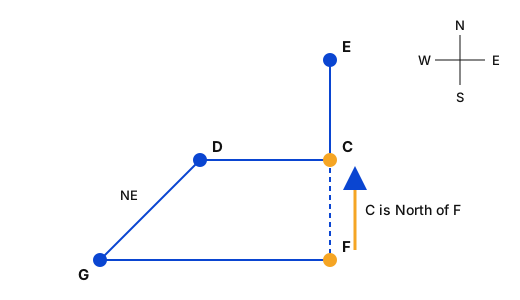
Town C is to the east of Town D. Town E is to the north of Town C. Town F is to the south of Town E. Town G is to the west of Town F. Town D is to the north-east of Town G. What is the position of Town C with respect to Town F?
कस्बा C, कस्बा D के पूर्व में है। कस्बा E, कस्बा C के उत्तर में है। कस्बा F, कस्बा E के दक्षिण में है। कस्बा G, कस्बा F के पश्चिम में है। कस्बा D, कस्बा G के उत्तर-पूर्व में है। कस्बा F के सापेक्ष कस्बा C की स्थिति क्या है?
  1. AWestपश्चिम
  2. BSouthदक्षिण
  3. CNorthउत्तर
  4. DEastपूर्व
Show answer

Concept: Place the towns step by step on a grid.

  1. Put G at the start; D is north-east of G; C is east of D (so C is north-east side of G, one level above).
  2. E is north of C; F is south of E, and G is west of F → F lies on the same horizontal level as G, directly below C.
  3. C and F are on the same vertical line, with C above F → C is North of F.

Trick: Start from the town that links the most statements (G) and draw.

Answer: (C) North

अवधारणा: कस्बों को चरण-दर-चरण ग्रिड पर रखें।

  1. G को आरंभ में रखें; D, G के उत्तर-पूर्व में; C, D के पूर्व में (G से एक स्तर ऊपर)।
  2. E, C के उत्तर में; F, E के दक्षिण में और G, F के पश्चिम में → F, G के स्तर पर C के ठीक नीचे है।
  3. C और F एक ही ऊर्ध्व रेखा पर हैं, C ऊपर → C, F के उत्तर में है।

ट्रिक: जिस कस्बे से सबसे अधिक कथन जुड़ें (G), वहीं से चित्र बनाना शुरू करें।

उत्तर: (C) उत्तर

RRB NTPC Graduate CBT 1General Intelligence and ReasoningDirection senseRRB NTPC Graduate CBT 1 2024 · 10 Jun Shift 1 →
Q3754.
In a certain code language, ‘HEIR’ is coded as ‘2468’ and ‘EASY’ is coded as ‘1327’. What is the code for ‘E’ in the given code language?
एक निश्चित कूट भाषा में, ‘HEIR’ को ‘2468’ के रूप में और ‘EASY’ को ‘1327’ के रूप में कूटबद्ध किया जाता है। दी गई कूट भाषा में ‘E’ के लिए कूट क्या है?
  1. A1
  2. B2
  3. C4
  4. D7
Show answer

Concept: A letter common to two words takes the digit common to their codes.

  1. HEIR → {2, 4, 6, 8}; EASY → {1, 3, 2, 7}.
  2. Common letter: E; common digit: 2.
  3. So E = 2.

Trick: Common letter ↔ common digit.

Answer: (B) 2

अवधारणा: दो शब्दों में उभयनिष्ठ अक्षर का कोड उनके कोड में उभयनिष्ठ अंक होता है।

  1. HEIR → {2, 4, 6, 8}; EASY → {1, 3, 2, 7}।
  2. उभयनिष्ठ अक्षर: E; उभयनिष्ठ अंक: 2।
  3. अतः E = 2।

ट्रिक: उभयनिष्ठ अक्षर ↔ उभयनिष्ठ अंक।

उत्तर: (B) 2

RRB NTPC Graduate CBT 1General Intelligence and ReasoningCoding-decodingRRB NTPC Graduate CBT 1 2024 · 10 Jun Shift 1 →
Q3755.
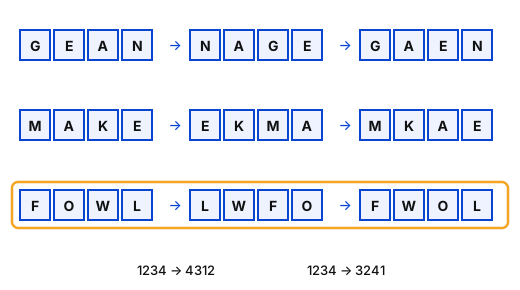
In the following triads, each group of letters is related to the subsequent one following a certain logic. Select from the given options, the one that follows the same logic. GEAN - NAGE - GAEN
MAKE - EKMA - MKAE
निम्नलिखित त्रिकों में, अक्षरों का प्रत्येक समूह एक निश्चित तर्क का अनुसरण करते हुए अपने अगले समूह से संबंधित है। दिए गए विकल्पों में से उस विकल्प का चयन कीजिए जो समान तर्क का अनुसरण करता है। GEAN - NAGE - GAEN
MAKE - EKMA - MKAE
  1. ATURN - URTN - URNT
  2. BBOLD - BLOD - DLOB
  3. CFOWL - LWFO - FWOL
  4. DBEAN - NABE - EABN
Show answer

Concept: Track the positions 1 2 3 4 of the letters in each step.

  1. GEAN → NAGE is 1234→4312; NAGE → GAEN is 1234→3241. Same for MAKE → EKMA → MKAE.
  2. FOWL → 4312 → LWFO ✓; LWFO → 3241 → FWOL ✓.
  3. TURN → 4312 would be NRTU, BOLD → DLBO, BEAN → NABE but then 3241 gives BAEN, not EABN.

Trick: Write position numbers under the letters once; then check options fast.

Answer: (C) FOWL - LWFO - FWOL

अवधारणा: हर चरण में अक्षरों के स्थान 1 2 3 4 का क्रम देखें।

  1. GEAN → NAGE: 1234→4312; NAGE → GAEN: 1234→3241। MAKE → EKMA → MKAE में भी यही।
  2. FOWL → 4312 → LWFO ✓; LWFO → 3241 → FWOL ✓।
  3. TURN → 4312 से NRTU, BOLD → DLBO बनेगा; BEAN → NABE के बाद 3241 से BAEN बनेगा, EABN नहीं।

ट्रिक: अक्षरों के नीचे स्थान संख्याएँ लिख लें, फिर विकल्प जल्दी जाँचें।

उत्तर: (C) FOWL - LWFO - FWOL

RRB NTPC Graduate CBT 1General Intelligence and ReasoningLetter rearrangement analogyRRB NTPC Graduate CBT 1 2024 · 10 Jun Shift 1 →
Q3756.
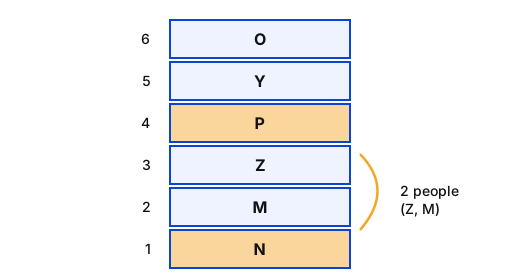
M, N, O, P, Y and Z live on six different floors of the same building. The lowermost floor in the building is numbered 1, the floor above it, number 2 and so on till the topmost floor is numbered 6. O lives on an even numbered floor but not on floor number 4. Only two people live between O and Z. Y lives on an odd numbered floor but not on the lowermost floor. Only two people live between Y and M. P lives immediately below Y. How many people live between N and P?
M, N, O, P, Y और Z एक ही इमारत की छह अलग-अलग मंज़िलों पर रहते हैं। इमारत की सबसे निचली मंज़िल की संख्या 1 है, उसके ऊपर वाली मंज़िल की संख्या 2 है और इसी प्रकार सबसे ऊपरी मंज़िल की संख्या 6 है। O एक सम संख्या वाली मंज़िल पर रहता है लेकिन मंज़िल संख्या 4 पर नहीं। O और Z के बीच केवल दो व्यक्ति रहते हैं। Y एक विषम संख्या वाली मंज़िल पर रहता है लेकिन सबसे निचली मंज़िल पर नहीं। Y और M के बीच केवल दो व्यक्ति रहते हैं। P, Y के ठीक नीचे रहता है। N और P के बीच कितने व्यक्ति रहते हैं?
  1. AThreeतीन
  2. BTwoदो
  3. COneएक
  4. DFourचार
Show answer

Concept: Use the definite clues (O, Y, P) and test the cases.

  1. O is on floor 2 or 6. If O = 2 then Z = 5, so Y = 3 and P = 2 — clash with O. ✗
  2. So O = 6, Z = 3 (two people between). Y odd, not 1 → Y = 5, P = 4.
  3. Two between Y and M → M = 2; remaining N = 1.
  4. Between N (1) and P (4): floors 2 and 3 → M and Z → two people.

Trick: Start with the person who has the fewest possible floors (O) and branch.

Answer: (B) Two

अवधारणा: निश्चित संकेतों (O, Y, P) से शुरू करके स्थितियाँ जाँचें।

  1. O मंज़िल 2 या 6 पर। यदि O = 2 तो Z = 5, फिर Y = 3 और P = 2 — O से टकराव। ✗
  2. अतः O = 6, Z = 3 (बीच में दो व्यक्ति)। Y विषम, 1 नहीं → Y = 5, P = 4।
  3. Y और M के बीच दो → M = 2; शेष N = 1।
  4. N (1) और P (4) के बीच: मंज़िल 2 और 3 → M और Z → दो व्यक्ति।

ट्रिक: जिस व्यक्ति के सबसे कम विकल्प हों (O), वहीं से केस बनाएँ।

उत्तर: (B) दो

RRB NTPC Graduate CBT 1General Intelligence and ReasoningFloor puzzleRRB NTPC Graduate CBT 1 2024 · 10 Jun Shift 1 →
Q3757.
If ‘A’ stands for ‘÷’, ‘B’ stands for ‘×’, ‘C’ stands for ‘+’ and ‘D’ stands for ‘−’, then the resultant of which of the following would be 75?
यदि ‘A’ का अर्थ ‘÷’, ‘B’ का अर्थ ‘×’, ‘C’ का अर्थ ‘+’ और ‘D’ का अर्थ ‘−’ है, तो निम्नलिखित में से किसका परिणाम 75 होगा?
  1. A84 B 12 C 76 D 36 A 4
  2. B84 D 12 A 76 B 36 C 4
  3. C84 A 12 D 76 C 36 B 4
  4. D84 C 12 D 76 A 36 B 4
Show answer

Concept: Replace letters (A = ÷, B = ×, C = +, D = −) and apply BODMAS.

  1. (C) 84÷12−76+36×4=7−76+144=75 ✓.
  2. (A) 84×12+76−36÷4=1008+76−9=1075.
  3. (B) 84−12÷76×36+4 is not an integer; (D) 84+12−76÷36×4 is not an integer.

Trick: Options giving fractions can be rejected at once (76 is not divisible by 12 or 36).

Answer: (C) 84 A 12 D 76 C 36 B 4

अवधारणा: अक्षरों को बदलें (A = ÷, B = ×, C = +, D = −) और BODMAS लगाएँ।

  1. (C) 84÷12−76+36×4=7−76+144=75 ✓।
  2. (A) 84×12+76−36÷4=1008+76−9=1075।
  3. (B) 84−12÷76×36+4 पूर्णांक नहीं; (D) 84+12−76÷36×4 पूर्णांक नहीं।

ट्रिक: जिन विकल्पों में भिन्न आए उन्हें तुरंत हटाएँ (76, 12 या 36 से विभाज्य नहीं)।

उत्तर: (C) 84 A 12 D 76 C 36 B 4

RRB NTPC Graduate CBT 1General Intelligence and ReasoningMathematical operationsRRB NTPC Graduate CBT 1 2024 · 10 Jun Shift 1 →
Q3758.
If + means −, − means ×, × means ÷, and ÷ means +, what will come in place of the question mark (?) in the following equation?
15 – 3 ÷ 5 + 18 × 6 = ?
यदि + का अर्थ −, − का अर्थ ×, × का अर्थ ÷ और ÷ का अर्थ + है, तो निम्नलिखित समीकरण में प्रश्नचिह्न (?) के स्थान पर क्या आएगा?
15 – 3 ÷ 5 + 18 × 6 = ?
  1. A40
  2. B57
  3. C50
  4. D47
Show answer

Concept: Interchange the signs as given (+ → −, − → ×, × → ÷, ÷ → +), then apply BODMAS.

  1. 15−3÷5+18×6 becomes 15×3+5−18÷6.
  2. =45+5−3.
  3. =47.

Trick: Rewrite the whole expression first, then calculate — never mix both steps.

Answer: (D) 47

अवधारणा: चिह्न बदलें (+ → −, − → ×, × → ÷, ÷ → +), फिर BODMAS लगाएँ।

  1. 15−3÷5+18×6 बनता है 15×3+5−18÷6।
  2. =45+5−3।
  3. =47।

ट्रिक: पहले पूरा व्यंजक बदलकर लिखें, फिर गणना करें।

उत्तर: (D) 47

RRB NTPC Graduate CBT 1General Intelligence and ReasoningMathematical operationsRRB NTPC Graduate CBT 1 2024 · 10 Jun Shift 1 →
Q3759.
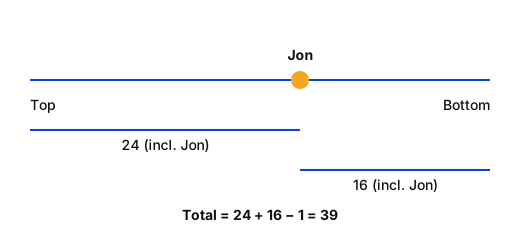
Jon ranked 24th from the top and 16th from the bottom in his class. How many students are there in his class?
जॉन (Jon) अपनी कक्षा में ऊपर से 24वें और नीचे से 16वें स्थान पर है। उसकी कक्षा में कितने विद्यार्थी हैं?
  1. A39
  2. B40
  3. C38
  4. D37
Show answer

Concept: Total = rank from top + rank from bottom − 1 (Jon is counted twice).

  1. Rank from top =24, from bottom =16.
  2. Total =24+16−1=39.

Trick: Always subtract 1 because the person is in both counts.

Answer: (A) 39

अवधारणा: कुल = ऊपर से रैंक + नीचे से रैंक − 1 (जॉन दो बार गिना जाता है)।

  1. ऊपर से रैंक =24, नीचे से =16।
  2. कुल =24+16−1=39।

ट्रिक: हमेशा 1 घटाएँ, क्योंकि व्यक्ति दोनों गिनतियों में है।

उत्तर: (A) 39

RRB NTPC Graduate CBT 1General Intelligence and ReasoningRankingRRB NTPC Graduate CBT 1 2024 · 10 Jun Shift 1 →
Q3760.
Based on the English alphabetical order, three of the following four letter-cluster pairs are alike in a certain way and thus form a group. Which letter-cluster pair DOES NOT belong to that group? (Note: The odd one out is not based on the number of
consonants/vowels or their position in the letter cluster)
अंग्रेज़ी वर्णमाला क्रम के आधार पर, निम्नलिखित चार अक्षर-समूह युग्मों में से तीन किसी निश्चित प्रकार से एकसमान हैं और इस प्रकार एक समूह बनाते हैं। कौन-सा अक्षर-समूह युग्म उस समूह से संबंधित नहीं है? (ध्यान दें: असंगत, अक्षर-समूह में
व्यंजनों/स्वरों की संख्या या उनके स्थान पर आधारित नहीं है।)
  1. APS - NQ
  2. BEH - CF
  3. CKN - IL
  4. DGJ - FK
Show answer

Concept: Check the gap inside each cluster and between clusters.

  1. PS–NQ: 16→19 (+3), 14→17 (+3), first letters −2.
  2. EH–CF and KN–IL: the same pattern (+3, +3, −2).
  3. GJ–FK: 7→10 (+3) but 6→11 (+5) ✗.

Trick: Find one rule from two pairs, then test the rest.

Answer: (D) GJ - FK

अवधारणा: हर समूह के भीतर और समूहों के बीच अंतर देखें।

  1. PS–NQ: 16→19 (+3), 14→17 (+3), पहले अक्षरों में −2।
  2. EH–CF और KN–IL: यही पैटर्न (+3, +3, −2)।
  3. GJ–FK: 7→10 (+3) पर 6→11 (+5) ✗।

ट्रिक: दो युग्मों से नियम बनाएँ, फिर बाकी जाँचें।

उत्तर: (D) GJ - FK

RRB NTPC Graduate CBT 1General Intelligence and ReasoningOdd one out – letter pairsRRB NTPC Graduate CBT 1 2024 · 10 Jun Shift 1 →