Question bank

Q&A: practice questions with answers

Search questions on any topic. Filter by exam category, exam, subject and topic, try the question, then open the answer and explanation.

Courses – airGurukul

7,077 questions found.

Q3861.
What should come in place of the question mark (?) in the given series based on the English alphabetical order?
FMT AHO VCJ QXE ?
अंग्रेज़ी वर्णमाला क्रम के आधार पर दी गई श्रृंखला में प्रश्नचिह्न (?) के स्थान पर क्या आना चाहिए?
FMT AHO VCJ QXE ?
  1. AZSL
  2. BLZS
  3. CZLS
  4. DLSZ
Show answer

Concept: Track each letter position separately (A=1 … Z=26, wrap around).

  1. 1st letters: F → A → V → Q → L (each −5).
  2. 2nd letters: M → H → C → X → S (each −5).
  3. 3rd letters: T → O → J → E → Z (each −5).
  4. Next term: LSZ.

Trick: All three positions move back by 5 – just shift QXE by −5.

Answer: (D) LSZ

अवधारणा: हर स्थान के अक्षर को अलग देखें (A=1 … Z=26, चक्रीय)।

  1. पहले अक्षर: F → A → V → Q → L (हर बार −5)।
  2. दूसरे अक्षर: M → H → C → X → S (हर बार −5)।
  3. तीसरे अक्षर: T → O → J → E → Z (हर बार −5)।
  4. अगला पद: LSZ।

ट्रिक: तीनों अक्षर 5 पीछे – QXE को −5 खिसकाएँ।

उत्तर: (D) LSZ

RRB NTPC Graduate CBT 1General Intelligence and ReasoningLetter SeriesRRB NTPC Graduate CBT 1 2024 · 9 Jun Shift 3 →
Q3862.
Based on the English alphabetical order, three of the following four letter-clusters are alike in a certain way and thus form a group. Which letter-cluster DOES NOT belong to that group? (Note: The odd one out is not based on the number of consonants/vowels or their position in the letter-cluster.)
अंग्रेज़ी वर्णमाला क्रम के आधार पर, निम्नलिखित चार अक्षर-समूहों में से तीन किसी निश्चित प्रकार से समान हैं और इस प्रकार एक समूह बनाते हैं। कौन-सा अक्षर-समूह उस समूह से संबंधित नहीं है? (नोट: असंगत का निर्धारण व्यंजनों/स्वरों की संख्या या अक्षर-समूह में उनके स्थान के आधार पर नहीं है।)
  1. AACG
  2. BSUY
  3. CBEH
  4. DFHL
Show answer

Concept: Check the gaps between letter positions in each cluster.

  1. ACG: A +2 C +4 G; SUY: S +2 U +4 Y; FHL: F +2 H +4 L.
  2. BEH: B +3 E +3 H – different pattern.

Trick: Three clusters follow +2, +4; the odd one follows +3, +3.

Answer: (C) BEH

अवधारणा: प्रत्येक समूह में अक्षरों के बीच का अंतर देखें।

  1. ACG: A +2 C +4 G; SUY: S +2 U +4 Y; FHL: F +2 H +4 L।
  2. BEH: B +3 E +3 H – अलग पैटर्न।

ट्रिक: तीन समूह +2, +4; विषम वाला +3, +3।

उत्तर: (C) BEH

RRB NTPC Graduate CBT 1General Intelligence and ReasoningOdd One Out – LettersRRB NTPC Graduate CBT 1 2024 · 9 Jun Shift 3 →
Q3863.
A, B, C, D, E and F live on six different floors of the same building. The lowermost floor in the building is numbered 1, the floor above it, number 2 and so on till the topmost floor is numbered 6.
E lives on a floor which is a prime number. The product of floors on which E and A live is 8. C lives immediately above F. The sum of floors on which A and B live is 7. How many people live between C and E?
A, B, C, D, E और F एक ही इमारत की छह अलग-अलग मंज़िलों पर रहते हैं। इमारत की सबसे निचली मंज़िल की संख्या 1 है, उसके ऊपर की मंज़िल की संख्या 2 है और इसी प्रकार सबसे ऊपरी मंज़िल की संख्या 6 है।
E एक ऐसी मंज़िल पर रहता है जो एक अभाज्य संख्या है। E और A जिन मंज़िलों पर रहते हैं उनका गुणनफल 8 है। C, F के ठीक ऊपर रहता है। A और B जिन मंज़िलों पर रहते हैं उनका योग 7 है। C और E के बीच कितने व्यक्ति रहते हैं?
  1. AOneएक
  2. BThreeतीन
  3. CTwoदो
  4. DFourचार
Show answer

Concept: Use the number clues (prime, product, sum) to fix floors.

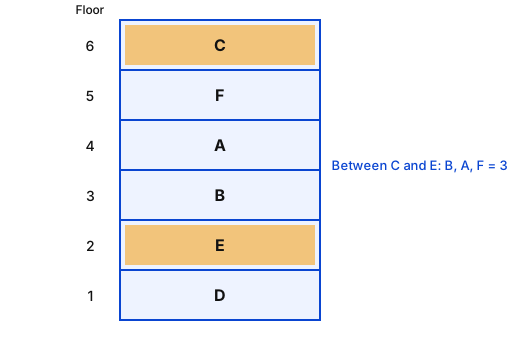
  1. E on a prime floor and E×A=8 → E=2, A=4 (8=2×4).
  2. A+B=7 → B on floor 3.
  3. Floors 1, 5, 6 remain; C just above F → F on 5, C on 6; D on 1.
  4. Between C (6) and E (2): B, A, F.

Trick: Product 8 with a prime factor on floors 1–6 gives only 2×4.

Answer: (B) Three

अवधारणा: संख्या संकेतों (अभाज्य, गुणनफल, योग) से मंज़िलें तय करें।

  1. E अभाज्य मंज़िल पर और E×A=8 → E=2, A=4 (8=2×4)।
  2. A+B=7 → B मंज़िल 3 पर।
  3. 1, 5, 6 बचीं; C, F के ठीक ऊपर → F 5 पर, C 6 पर; D 1 पर।
  4. C (6) और E (2) के बीच: B, A, F।

ट्रिक: 1–6 मंज़िलों में 8 का अभाज्य गुणनखंड वाला युग्म केवल 2×4।

उत्तर: (B) Three (तीन)

RRB NTPC Graduate CBT 1General Intelligence and ReasoningFloor PuzzleRRB NTPC Graduate CBT 1 2024 · 9 Jun Shift 3 →
Q3864.
In a certain code language, ‘read this book’ is coded as ‘op st qr’ and ‘book on table’ is coded as ‘qr lm pq’. How is ‘book’ coded in the given language?
एक निश्चित कूट भाषा में, 'read this book' को 'op st qr' के रूप में और 'book on table' को 'qr lm pq' के रूप में कूटबद्ध किया जाता है। दी गई भाषा में 'book' को किस प्रकार कूटबद्ध किया जाता है?
  1. Aop
  2. Bpq
  3. Clm
  4. Dqr
Show answer

Concept: A word common to two sentences takes the code common to both.

  1. 'book' appears in both 'read this book' and 'book on table'.
  2. The only code common to 'op st qr' and 'qr lm pq' is 'qr'.
  3. So book = qr.

Trick: Common word ↔ common code.

Answer: (D) qr

अवधारणा: दो वाक्यों में समान शब्द का कोड दोनों कोडों में समान होता है।

  1. 'book' दोनों वाक्यों 'read this book' और 'book on table' में है।
  2. 'op st qr' और 'qr lm pq' में समान कोड केवल 'qr' है।
  3. अतः book = qr।

ट्रिक: समान शब्द ↔ समान कोड।

उत्तर: (D) qr

RRB NTPC Graduate CBT 1General Intelligence and ReasoningCoding–Decoding (Words)RRB NTPC Graduate CBT 1 2024 · 9 Jun Shift 3 →
Q3865.
Prabin starts from Point A and drives 12 km towards the west. He then takes a right turn, drives 8 km, turns right and drives 14 km. He then takes a right turn and drives 12 km. He takes a final right turn, drives 2 km and stops at Point P. How far (shortest distance) and towards which direction should he drive in order to reach Point A again? (All turns are 90 degrees turns only unless specified.)
प्रबिन बिंदु A से शुरू करता है और पश्चिम की ओर 12 km ड्राइव करता है। फिर वह दाएँ मुड़ता है, 8 km ड्राइव करता है, दाएँ मुड़ता है और 14 km ड्राइव करता है। फिर वह दाएँ मुड़ता है और 12 km ड्राइव करता है। वह अंतिम बार दाएँ मुड़ता है, 2 km ड्राइव करता है और बिंदु P पर रुक जाता है। बिंदु A पर फिर से पहुँचने के लिए उसे कितनी दूरी (न्यूनतम दूरी) और किस दिशा में ड्राइव करना चाहिए? (जब तक निर्दिष्ट न हो, सभी मोड़ केवल 90 डिग्री के हैं।)
  1. A5 km to the northउत्तर की ओर 5 km
  2. B3 km to the northउत्तर की ओर 3 km
  3. C4 km to the southदक्षिण की ओर 4 km
  4. D4 km to the northउत्तर की ओर 4 km
Show answer

Concept: Trace each turn; a right turn while facing west makes you face north, and so on.

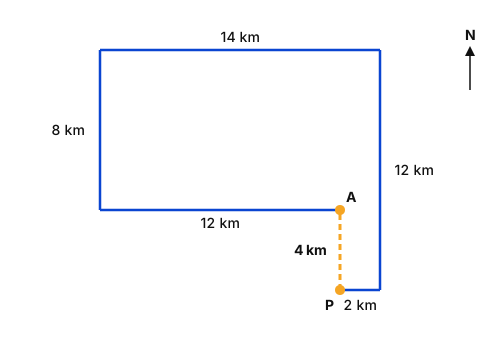
  1. A → 12 km West; right → 8 km North; right → 14 km East.
  2. Right → 12 km South; right → 2 km West → P.
  3. East–West: −12+14−2=0, so P is in line with A.
  4. North–South: 8−12=−4, so P is 4 km south of A → drive 4 km north.

Trick: Net horizontal 0 ⇒ answer is only the vertical difference 12−8=4km.

Answer: (D) 4 km to the north

अवधारणा: हर मोड़ को क्रम से बनाएँ; पश्चिम की ओर मुख करके दाएँ मुड़ने पर उत्तर की ओर मुख होता है।

  1. A → 12 km पश्चिम; दाएँ → 8 km उत्तर; दाएँ → 14 km पूर्व।
  2. दाएँ → 12 km दक्षिण; दाएँ → 2 km पश्चिम → P।
  3. पूर्व–पश्चिम: −12+14−2=0, अतः P, A की सीध में है।
  4. उत्तर–दक्षिण: 8−12=−4, P, A से 4 km दक्षिण में → 4 km उत्तर जाना होगा।

ट्रिक: क्षैतिज दूरी 0 ⇒ केवल ऊर्ध्वाधर अंतर 12−8=4km।

उत्तर: (D) 4 km उत्तर की ओर

RRB NTPC Graduate CBT 1General Intelligence and ReasoningDirection and DistanceRRB NTPC Graduate CBT 1 2024 · 9 Jun Shift 3 →
Q3866.
Read the given statements and conclusions carefully. Assuming that the information given in the statements is true, even if it appears to be at variance with commonly known facts, decide which of the given conclusions logically follow(s) from the statements.
Statements:
Some guns are bombs.
Some guns are cargos.
Some bombs are riffles.
Conclusions:
(I): Some guns are riffles.
(II): Some bombs are cargos.
दिए गए कथनों और निष्कर्षों को ध्यानपूर्वक पढ़िए। कथनों में दी गई जानकारी को सत्य मानते हुए, भले ही वह सामान्यतः ज्ञात तथ्यों से भिन्न प्रतीत होती हो, निर्णय कीजिए कि दिए गए निष्कर्षों में से कौन-सा/कौन-से निष्कर्ष कथनों का तार्किक रूप से अनुसरण करता है/करते हैं।
कथन:
कुछ बंदूकें, बम हैं।
कुछ बंदूकें, कार्गो हैं।
कुछ बम, राइफ़ल हैं।
निष्कर्ष:
(I): कुछ बंदूकें, राइफ़ल हैं।
(II): कुछ बम, कार्गो हैं।
  1. AOnly conclusion (II) follows.केवल निष्कर्ष (II) अनुसरण करता है।
  2. BOnly conclusion (I) follows.केवल निष्कर्ष (I) अनुसरण करता है।
  3. CBoth conclusions (I) and (II) follow.निष्कर्ष (I) और (II) दोनों अनुसरण करते हैं।
  4. DNeither conclusion (I) nor (II) follows.न तो निष्कर्ष (I) और न ही (II) अनुसरण करता है।
Show answer

Concept: Two 'Some' statements never give a definite conclusion about the third pair.

  1. Some guns are bombs + some bombs are riffles → 'some guns are riffles' is not certain (I ✗).
  2. Some guns are bombs + some guns are cargos → 'some bombs are cargos' is not certain (II ✗).
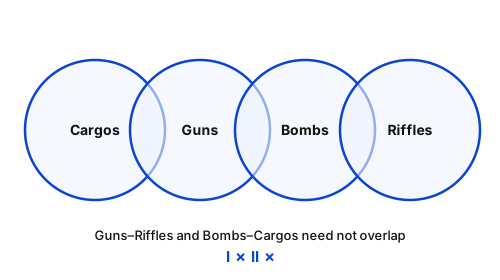
  3. The chain diagram satisfies all statements with no Guns–Riffles or Bombs–Cargos overlap.

Trick: Some + Some = No conclusion.

Answer: (D) Neither conclusion (I) nor (II) follows.

अवधारणा: दो 'कुछ' कथनों से तीसरी जोड़ी के बारे में निश्चित निष्कर्ष नहीं निकलता।

  1. कुछ guns bombs हैं + कुछ bombs riffles हैं → 'कुछ guns riffles हैं' निश्चित नहीं (I ✗)।
  2. कुछ guns bombs हैं + कुछ guns cargos हैं → 'कुछ bombs cargos हैं' निश्चित नहीं (II ✗)।
  3. चित्र में सभी कथन सत्य हैं पर Guns–Riffles और Bombs–Cargos का कोई ओवरलैप नहीं।

ट्रिक: कुछ + कुछ = कोई निष्कर्ष नहीं।

उत्तर: (D) न तो निष्कर्ष (I) और न ही (II) अनुसरण करता है।

RRB NTPC Graduate CBT 1General Intelligence and ReasoningSyllogismRRB NTPC Graduate CBT 1 2024 · 9 Jun Shift 3 →
Q3867.
Based on the English alphabetical order, three of the following four letter-cluster pairs are alike in a certain way and thus form a group. Which letter-cluster pair DOES NOT belong to that group? (Note: The odd one out is not based on the number of
consonants/vowels or their position in the letter cluster)
अंग्रेज़ी वर्णमाला क्रम के आधार पर, निम्नलिखित चार अक्षर-समूह युग्मों में से तीन किसी निश्चित प्रकार से समान हैं और इस प्रकार एक समूह बनाते हैं। कौन-सा अक्षर-समूह युग्म उस समूह से संबंधित नहीं है? (नोट: असंगत का निर्धारण
व्यंजनों/स्वरों की संख्या या अक्षर-समूह में उनके स्थान के आधार पर नहीं है।)
  1. AMQ - UZ
  2. BGJ - PS
  3. CEH - NQ
  4. DJM - SV
Show answer

Concept: Check the gap inside each cluster (letter positions).

  1. GJ: 7→10 (+3), PS: 16→19 (+3).
  2. EH (+3), NQ (+3); JM (+3), SV (+3).
  3. MQ: 13→17 (+4), UZ: 21→26 (+5) – different pattern.

Trick: Three pairs are '+3, +3' (and first letters differ by 9); MQ – UZ breaks it.

Answer: (A) MQ - UZ

अवधारणा: हर समूह में अक्षरों के बीच का अंतर (स्थान मान) देखें।

  1. GJ: 7→10 (+3), PS: 16→19 (+3)।
  2. EH (+3), NQ (+3); JM (+3), SV (+3)।
  3. MQ: 13→17 (+4), UZ: 21→26 (+5) – अलग पैटर्न।

ट्रिक: तीन जोड़ों में '+3, +3' (और पहले अक्षरों में 9 का अंतर); MQ – UZ अलग है।

उत्तर: (A) MQ - UZ

RRB NTPC Graduate CBT 1General Intelligence and ReasoningOdd One Out – Letter ClustersRRB NTPC Graduate CBT 1 2024 · 9 Jun Shift 3 →
Q3868.
Which of the following letter-clusters should replace # and % so that the pattern and relationship followed between the letter-cluster pair on the left side of :: is the same as that on the right side of ::?
# : UWC :: OHW : %
निम्नलिखित में से कौन-से अक्षर-समूह # और % को प्रतिस्थापित करने चाहिए ताकि :: के बाईं ओर के अक्षर-समूह युग्म के बीच अपनाया गया पैटर्न और संबंध वही हो जो :: के दाईं ओर है?
# : UWC :: OHW : %
  1. A# = MCU, % = KXS
  2. B# = QMY, % = MCU
  3. C# = SRA, % = QMY
  4. D# = KXS, % = SRA
Show answer

Concept: Find the shift from the first cluster to the second, then apply it on the right.

  1. Option (C): SRA → UWC: S+2=U, R+5=W, A+2=C.
  2. OHW → QMY: O+2=Q, H+5=M, W+2=Y. Same rule (+2, +5, +2).

Trick: Test the options – the one whose both sides show the same shifts is correct.

Answer: (C) # = SRA, % = QMY

अवधारणा: पहले समूह से दूसरे समूह तक का अंतर ज्ञात कर दाईं ओर लगाएँ।

  1. विकल्प (C): SRA → UWC: S+2=U, R+5=W, A+2=C।
  2. OHW → QMY: O+2=Q, H+5=M, W+2=Y। समान नियम (+2, +5, +2)।

ट्रिक: विकल्प जाँचें – जिसमें दोनों ओर समान अंतर हो वही सही है।

उत्तर: (C) # = SRA, % = QMY

RRB NTPC Graduate CBT 1General Intelligence and ReasoningAnalogy – Letter ClustersRRB NTPC Graduate CBT 1 2024 · 9 Jun Shift 3 →
Q3869.
What should come in place of the question mark (?) in the given series based on the English alphabetical order?
AHE CJG ELI GNK ?
अंग्रेज़ी वर्णमाला क्रम के आधार पर दी गई श्रृंखला में प्रश्नचिह्न (?) के स्थान पर क्या आना चाहिए?
AHE CJG ELI GNK ?
  1. AION
  2. BIPN
  3. CIOM
  4. DIPM
Show answer

Concept: Track each position of the cluster separately.

  1. 1st letters: A, C, E, G, I (+2).
  2. 2nd letters: H, J, L, N, P (+2).
  3. 3rd letters: E, G, I, K, M (+2).

Trick: All three positions move +2 → GNK + 2 each = IPM.

Answer: (D) IPM

अवधारणा: समूह के हर स्थान को अलग-अलग देखें।

  1. पहला अक्षर: A, C, E, G, I (+2)।
  2. दूसरा: H, J, L, N, P (+2)।
  3. तीसरा: E, G, I, K, M (+2)।

ट्रिक: तीनों स्थान +2 → GNK में +2 = IPM।

उत्तर: (D) IPM

RRB NTPC Graduate CBT 1General Intelligence and ReasoningLetter SeriesRRB NTPC Graduate CBT 1 2024 · 9 Jun Shift 3 →
Q3870.
Select the number from among the given options that can replace the question mark (?) in the following series.
13 26 29 58 61 122 125 ?
दिए गए विकल्पों में से उस संख्या का चयन कीजिए जो निम्नलिखित श्रृंखला में प्रश्नचिह्न (?) को प्रतिस्थापित कर सकती है।
13 26 29 58 61 122 125 ?
  1. A131
  2. B250
  3. C225
  4. D128
Show answer

Concept: Alternate operations ×2 and +3.

  1. 13×2=26, 26+3=29, 29×2=58, 58+3=61.
  2. 61×2=122, 122+3=125, 125×2=250.

Trick: Big jump, small jump alternating → ×2, +3.

Answer: (B) 250

अवधारणा: बारी-बारी से ×2 और +3।

  1. 13×2=26, 26+3=29, 29×2=58, 58+3=61।
  2. 61×2=122, 122+3=125, 125×2=250।

ट्रिक: बड़ा उछाल, छोटा उछाल बारी-बारी → ×2, +3।

उत्तर: (B) 250

RRB NTPC Graduate CBT 1General Intelligence and ReasoningNumber SeriesRRB NTPC Graduate CBT 1 2024 · 9 Jun Shift 3 →
Q3871.
If '−' means '÷', '÷' means '×', '×' means '+' and '+' means '−', then what will come in place of the question mark (?) in the following equation?
3 ÷ 45 × 855 − 19 + 16 = ?
यदि '−' का अर्थ '÷', '÷' का अर्थ '×', '×' का अर्थ '+' और '+' का अर्थ '−' है, तो निम्नलिखित समीकरण में प्रश्नचिह्न (?) के स्थान पर क्या आएगा?
3 ÷ 45 × 855 − 19 + 16 = ?
  1. A180
  2. B136
  3. C164
  4. D460
Show answer

Concept: Replace the signs first, then apply BODMAS.

  1. 3÷45×855−19+16 becomes 3×45+855÷19−16.
  2. =135+45−16=164.

Trick: Write the substituted expression fully before solving.

Answer: (C) 164

अवधारणा: पहले चिह्न बदलें, फिर BODMAS लगाएँ।

  1. 3÷45×855−19+16 बनता है 3×45+855÷19−16।
  2. =135+45−16=164।

ट्रिक: हल करने से पहले बदला हुआ व्यंजक पूरा लिखें।

उत्तर: (C) 164

RRB NTPC Graduate CBT 1General Intelligence and ReasoningMathematical OperationsRRB NTPC Graduate CBT 1 2024 · 9 Jun Shift 3 →
Q3872.
This question is based on the five, three-digit numbers given below.
(Left) 773 263 387 270 378 (Right)
(Example: 697 – First digit = 6, second digit = 9 and third digit = 7)
(NOTE: All operations to be done from left to right.)
What will be the resultant if the first digit of the lowest number is subtracted from the first digit of the highest number?
यह प्रश्न नीचे दी गई तीन अंकों वाली पाँच संख्याओं पर आधारित है।
(बाएँ) 773 263 387 270 378 (दाएँ)
(उदाहरण: 697 – पहला अंक = 6, दूसरा अंक = 9 और तीसरा अंक = 7)
(नोट: सभी संक्रियाएँ बाएँ से दाएँ की जानी हैं।)
यदि सबसे छोटी संख्या के पहले अंक को सबसे बड़ी संख्या के पहले अंक में से घटाया जाए, तो परिणाम क्या होगा?
  1. A6
  2. B8
  3. C5
  4. D4
Show answer

Concept: Identify the highest and lowest numbers, then pick their first digits.

  1. Highest = 773 → first digit 7.
  2. Lowest = 263 → first digit 2.
  3. 7−2=5.

Trick: Compare hundreds digit first: 7 is the largest, 2 the smallest.

Answer: (C) 5

अवधारणा: सबसे बड़ी और सबसे छोटी संख्या पहचानें, फिर उनके पहले अंक लें।

  1. सबसे बड़ी = 773 → पहला अंक 7।
  2. सबसे छोटी = 263 → पहला अंक 2।
  3. 7−2=5।

ट्रिक: पहले सैकड़े का अंक देखें: 7 सबसे बड़ा, 2 सबसे छोटा।

उत्तर: (C) 5

RRB NTPC Graduate CBT 1General Intelligence and ReasoningNumber Puzzle – DigitsRRB NTPC Graduate CBT 1 2024 · 9 Jun Shift 3 →
Q3873.
A, B, C, D, G, H, and I are sitting around a circular table facing the centre.
Only one person sits between H and I when counted from the right of H. Only one person sits between I and C. Only one person sits between H and G. Only two people sit between A and C. Only one person sits between B and G.
Who sits third to the right of D ?
A, B, C, D, G, H और I एक वृत्ताकार मेज़ के चारों ओर केंद्र की ओर मुख करके बैठे हैं।
H के दाईं ओर से गिनने पर H और I के बीच केवल एक व्यक्ति बैठा है। I और C के बीच केवल एक व्यक्ति बैठा है। H और G के बीच केवल एक व्यक्ति बैठा है। A और C के बीच केवल दो व्यक्ति बैठे हैं। B और G के बीच केवल एक व्यक्ति बैठा है।
D के दाईं ओर तीसरे स्थान पर कौन बैठा है?
  1. AC
  2. BG
  3. CA
  4. DI
Show answer

Concept: Facing the centre, 'right' means anticlockwise. Fix H and place the others.

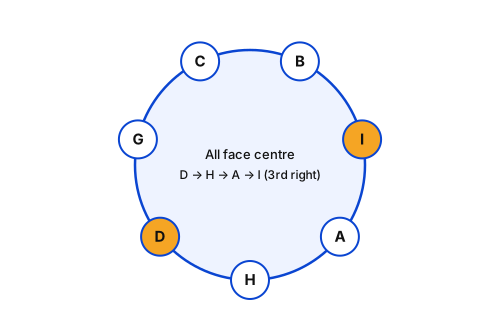
  1. I is second to the right of H. C is two places from I (other side of H) → C third from I.
  2. One between H and G → G opposite side, next to C; two between A and C → A immediately right of H.
  3. One between B and G → B between I and C; D fills the last seat (left of H).
  4. Order to the right: D, H, A, I → third to the right of D is I.

Trick: Start from the 'counted from the right' clue – it fixes direction.

Answer: (D) I

अवधारणा: केंद्र की ओर मुख होने पर 'दायाँ' = वामावर्त (anticlockwise)। H को स्थिर कर बाकी बैठाएँ।

  1. I, H के दाएँ से दूसरे स्थान पर। C, I से दो स्थान दूर (H की विपरीत दिशा में)।
  2. H और G के बीच एक → G, C के बगल में; A और C के बीच दो → A, H के ठीक दाएँ।
  3. B और G के बीच एक → B, I और C के बीच; D बचा स्थान (H के बाएँ)।
  4. दाईं ओर क्रम: D, H, A, I → D के दाएँ तीसरा I है।

ट्रिक: 'दाएँ से गिनने' वाले संकेत से शुरू करें – इससे दिशा तय होती है।

उत्तर: (D) I

RRB NTPC Graduate CBT 1General Intelligence and ReasoningCircular Seating ArrangementRRB NTPC Graduate CBT 1 2024 · 9 Jun Shift 3 →
Q3874.
Vijay ranked 34th from the top and 11th from the bottom in his class. How many students are there in his class?
विजय की अपनी कक्षा में ऊपर से 34वीं और नीचे से 11वीं रैंक है। उसकी कक्षा में कितने विद्यार्थी हैं?
  1. A42
  2. B44
  3. C45
  4. D43
Show answer

Concept: Total = rank from top + rank from bottom − 1.

  1. 34+11−1=44.

Trick: Subtract 1 because Vijay is counted twice.

Answer: (B) 44

अवधारणा: कुल = ऊपर से रैंक + नीचे से रैंक − 1।

  1. 34+11−1=44।

ट्रिक: 1 घटाएँ क्योंकि विजय दो बार गिना गया।

उत्तर: (B) 44

RRB NTPC Graduate CBT 1General Intelligence and ReasoningRankingRRB NTPC Graduate CBT 1 2024 · 9 Jun Shift 3 →
Q3875.
Select the triad that follows the same pattern as that followed by the two triads given below. Both triads follow the same pattern.
HO-JQ-LN
JQ-LS-NP
उस त्रिक का चयन कीजिए जो उसी पैटर्न का अनुसरण करता है जिसका अनुसरण नीचे दिए गए दो त्रिक करते हैं। दोनों त्रिक एक ही पैटर्न का अनुसरण करते हैं।
HO-JQ-LN
JQ-LS-NP
  1. ALS-NU-PR
  2. BLS-NU-PQ
  3. CKS-NU-PQ
  4. DKS-NV-PQ
Show answer

Concept: Compare letter shifts between consecutive pairs.

  1. HO → JQ: +2, +2; JQ → LN: +2, −3.
  2. JQ → LS: +2, +2; LS → NP: +2, −3.
  3. LS → NU: +2, +2; NU → PR: +2, −3 ✓ (option A).

Trick: In (B) U → Q is −4, so only (A) fits.

Answer: (A) LS-NU-PR

अवधारणा: क्रमागत जोड़ों के बीच अक्षरों का अंतर देखें।

  1. HO → JQ: +2, +2; JQ → LN: +2, −3।
  2. JQ → LS: +2, +2; LS → NP: +2, −3।
  3. LS → NU: +2, +2; NU → PR: +2, −3 ✓ (विकल्प A)।

ट्रिक: (B) में U → Q = −4, अतः केवल (A) सही।

उत्तर: (A) LS-NU-PR

RRB NTPC Graduate CBT 1General Intelligence and ReasoningLetter Triads – PatternRRB NTPC Graduate CBT 1 2024 · 9 Jun Shift 3 →
Q3876.
LQRU is related to ONTS in a certain way based on the English alphabetical order. In the same way, RKVQ is related to UHXO. To which of the given options is XEZM related, following the same logic?
अंग्रेज़ी वर्णमाला क्रम के आधार पर LQRU एक निश्चित प्रकार से ONTS से संबंधित है। उसी प्रकार, RKVQ, UHXO से संबंधित है। समान तर्क का अनुसरण करते हुए, XEZM दिए गए विकल्पों में से किससे संबंधित है?
  1. ABCAK
  2. BBABJ
  3. CABBK
  4. DZBZL
Show answer

Concept: Find the letter-wise shifts in the given pairs.

  1. LQRU → ONTS: +3, −3, +2, −2.
  2. RKVQ → UHXO: +3, −3, +2, −2 ✓.
  3. XEZM: X+3=A, E−3=B, Z+2=B, M−2=K → ABBK.

Trick: Wrap around: after Z comes A.

Answer: (C) ABBK

अवधारणा: दिए गए जोड़ों में अक्षरवार अंतर ज्ञात करें।

  1. LQRU → ONTS: +3, −3, +2, −2।
  2. RKVQ → UHXO: +3, −3, +2, −2 ✓।
  3. XEZM: X+3=A, E−3=B, Z+2=B, M−2=K → ABBK।

ट्रिक: Z के बाद फिर A आता है।

उत्तर: (C) ABBK

RRB NTPC Graduate CBT 1General Intelligence and ReasoningAnalogy – Letter CodingRRB NTPC Graduate CBT 1 2024 · 9 Jun Shift 3 →
Q3877.
If 1 is added to each odd digit and 2 is subtracted from each even digit in the number 8457312, what will be sum of the highest and lowest digits in the number thus formed?
यदि संख्या 8457312 में प्रत्येक विषम अंक में 1 जोड़ा जाए और प्रत्येक सम अंक में से 2 घटाया जाए, तो इस प्रकार बनी संख्या के सबसे बड़े और सबसे छोटे अंकों का योग क्या होगा?
  1. A7
  2. B6
  3. C8
  4. D9
Show answer

Concept: Odd digits +1, even digits −2.

  1. 8457312 → 8→6, 4→2, 5→6, 7→8, 3→4, 1→2, 2→0 → 6268420.
  2. Highest digit 8, lowest digit 0; sum =8+0=8.

Trick: Watch for 2 → 0 – the lowest digit becomes 0.

Answer: (C) 8

अवधारणा: विषम अंक +1, सम अंक −2।

  1. 8457312 → 8→6, 4→2, 5→6, 7→8, 3→4, 1→2, 2→0 → 6268420।
  2. सबसे बड़ा अंक 8, सबसे छोटा 0; योग =8+0=8।

ट्रिक: ध्यान दें 2 → 0 – सबसे छोटा अंक 0 बनता है।

उत्तर: (C) 8

RRB NTPC Graduate CBT 1General Intelligence and ReasoningNumber Operations – DigitsRRB NTPC Graduate CBT 1 2024 · 9 Jun Shift 3 →
Q3878.
In a certain code language, ‘NOSE’ is coded as ‘3517’ and ‘OILY’ is coded as ‘2458’. What is the code for ‘O’ in the given code language?
एक निश्चित कूट भाषा में, 'NOSE' को '3517' के रूप में और 'OILY' को '2458' के रूप में कूटबद्ध किया जाता है। दी गई कूट भाषा में 'O' के लिए कूट क्या है?
  1. A1
  2. B5
  3. C2
  4. D7
Show answer

Concept: A letter common to two words gets the digit common to both codes.

  1. NOSE and OILY share only the letter O.
  2. 3517 and 2458 share only the digit 5.
  3. So O = 5.

Trick: Common letter ↔ common digit.

Answer: (B) 5

अवधारणा: दो शब्दों में उभयनिष्ठ अक्षर को दोनों कोड का उभयनिष्ठ अंक मिलता है।

  1. NOSE और OILY में केवल O उभयनिष्ठ है।
  2. 3517 और 2458 में केवल 5 उभयनिष्ठ है।
  3. अतः O = 5।

ट्रिक: उभयनिष्ठ अक्षर ↔ उभयनिष्ठ अंक।

उत्तर: (B) 5

RRB NTPC Graduate CBT 1General Intelligence and ReasoningCoding–DecodingRRB NTPC Graduate CBT 1 2024 · 9 Jun Shift 3 →
Q3879.
A group of numbers/symbols is coded using letter codes as per the codes given below and the conditions that follow. If none of the conditions apply, then codes for the respective number/symbol to be followed directly as given in the table.
Number/Symbol92@&345%18∆76
CodeLCZMDWAPRTFBK
Conditions:
(i) If the first element is a symbol and the last a number, the codes for these two (the first and the last elements) are to be interchanged.
(ii) If the first element is an odd number and the last an even number, the first and last elements are to be coded as ©.
(iii) If both the second and third elements are perfect squares, the third element is to be coded as the code for the second element.
What will be the code for the following group?
7 & 2 @ 9 % 2
संख्याओं/प्रतीकों के एक समूह को नीचे दिए गए कूटों और उसके बाद की शर्तों के अनुसार अक्षर कूटों का उपयोग करके कूटबद्ध किया जाता है। यदि कोई भी शर्त लागू नहीं होती है, तो संबंधित संख्या/प्रतीक के लिए तालिका में दिए गए कूटों का सीधे अनुसरण किया जाना है।
संख्या/प्रतीक92@&345%18∆76
कूटLCZMDWAPRTFBK
शर्तें:
(i) यदि पहला अवयव एक प्रतीक है और अंतिम अवयव एक संख्या है, तो इन दोनों (पहले और अंतिम अवयवों) के कूट आपस में बदल दिए जाने हैं।
(ii) यदि पहला अवयव एक विषम संख्या है और अंतिम अवयव एक सम संख्या है, तो पहले और अंतिम अवयवों को © के रूप में कूटबद्ध किया जाना है।
(iii) यदि दूसरा और तीसरा दोनों अवयव पूर्ण वर्ग हैं, तो तीसरे अवयव को दूसरे अवयव के कूट के रूप में कूटबद्ध किया जाना है।
निम्नलिखित समूह के लिए कूट क्या होगा?
7 & 2 @ 9 % 2
  1. AM M C Z L P ©
  2. B© M Z C L P ©
  3. C© M C Z P L ©
  4. D© M C Z L P ©
Show answer

Concept: Check each condition in order; apply only those that fit.

  1. Group 7 & 2 @ 9 % 2: first 7 is odd, last 2 is even → condition (ii): first and last coded ©.
  2. (i) fails (first is a number); (iii) fails (& and 2 are not perfect squares).
  3. Middle: & = M, 2 = C, @ = Z, 9 = L, % = P → © M C Z L P ©.

Trick: Read the first and last elements first – they decide conditions (i) and (ii).

Answer: (D) © M C Z L P ©

अवधारणा: शर्तें क्रम से जाँचें; केवल लागू होने वाली शर्त लगाएँ।

  1. समूह 7 & 2 @ 9 % 2: पहला 7 विषम, अंतिम 2 सम → शर्त (ii): पहला व अंतिम © ।
  2. (i) लागू नहीं (पहला अंक संख्या है); (iii) लागू नहीं (& और 2 पूर्ण वर्ग नहीं)।
  3. बीच में: & = M, 2 = C, @ = Z, 9 = L, % = P → © M C Z L P ©।

ट्रिक: पहले पहला और अंतिम तत्व देखें – वही (i) व (ii) तय करते हैं।

उत्तर: (D) © M C Z L P ©

RRB NTPC Graduate CBT 1General Intelligence and ReasoningCoding with ConditionsRRB NTPC Graduate CBT 1 2024 · 9 Jun Shift 3 →
Q3880.
Which event marked the final collapse of the British policy of annexation?
किस घटना ने ब्रिटिश विलय नीति (policy of annexation) के अंतिम पतन को चिह्नित किया?
  1. AQuit India Movementभारत छोड़ो आंदोलन
  2. BRevolt of 18571857 का विद्रोह
  3. CGovernment of India Act, 1935भारत सरकार अधिनियम, 1935
  4. DPartition of Bengalबंगाल विभाजन
Show answer

Concept: The British policy of annexation (Doctrine of Lapse, annexation on grounds of "misrule") reached its peak under Lord Dalhousie (1848–56).

  1. The annexations of Satara, Jhansi, Nagpur and Awadh were major causes of the Revolt of 1857.
  2. After the revolt, Queen Victoria's Proclamation (1858) promised to respect the rights and territories of Indian princes – annexation was formally given up.
  3. Quit India (1942), the 1935 Act and Partition of Bengal (1905) came long after the policy had ended.

Yaad rakhein: Dalhousie annexed → 1857 revolted → 1858 Proclamation said "no more annexation".

Answer: (B) Revolt of 1857

अवधारणा: ब्रिटिश विलय नीति (व्यपगत का सिद्धांत, "कुशासन" के आधार पर विलय) लॉर्ड डलहौजी (1848–56) के समय चरम पर थी।

  1. सतारा, झांसी, नागपुर और अवध का विलय 1857 के विद्रोह के मुख्य कारण थे।
  2. विद्रोह के बाद महारानी विक्टोरिया की घोषणा (1858) ने भारतीय राजाओं के अधिकार व क्षेत्र मानने का वादा किया – विलय नीति समाप्त हुई।
  3. भारत छोड़ो (1942), 1935 का अधिनियम और बंगाल विभाजन (1905) इस नीति के समाप्त होने के बहुत बाद के हैं।

याद रखें: डलहौजी का विलय → 1857 का विद्रोह → 1858 की घोषणा: "अब कोई विलय नहीं"।

उत्तर: (B) 1857 का विद्रोह

RRB NTPC Graduate CBT 1General AwarenessDoctrine of Lapse and 1857RRB NTPC Graduate CBT 1 2024 · 9 Jun Shift 2 →