Question bank

Q&A: practice questions with answers

Search questions on any topic. Filter by exam category, exam, subject and topic, try the question, then open the answer and explanation.

Courses – airGurukul

7,077 questions found.

Q3941.
When 1278, 2368 and 4318 are divided by the greatest number x, the remainder in each case is y. What is the value of (3x − 14y)?
जब 1278, 2368 और 4318 को सबसे बड़ी संख्या x से विभाजित किया जाता है, तो प्रत्येक स्थिति में शेषफल y होता है। (3x − 14y) का मान क्या है?
  1. A−82
  2. B−85
  3. C−79
  4. D−86
Show answer

Concept: The greatest number leaving the same remainder when dividing several numbers = HCF of their differences.

  1. Differences: 2368−1278=1090, 4318−2368=1950.
  2. HCF(1090,1950)=10 (also divides 4318−1278=3040), so x=10.
  3. 1278÷10 leaves remainder y=8.
  4. 3x−14y=30−112=−82.

Trick: Same remainder ⇒ take HCF of differences, then any one number mod x gives y.

Answer: (A) −82

अवधारणा: कई संख्याओं को भाग देने पर समान शेषफल छोड़ने वाली सबसे बड़ी संख्या = उनके अंतरों का HCF।

  1. अंतर: 2368−1278=1090, 4318−2368=1950।
  2. HCF(1090,1950)=10 (4318−1278=3040 को भी विभाजित करता है), अतः x=10।
  3. 1278÷10 से शेषफल y=8।
  4. 3x−14y=30−112=−82।

ट्रिक: समान शेषफल ⇒ अंतरों का HCF लें, फिर किसी एक संख्या को x से भाग देकर y निकालें।

उत्तर: (A) −82
RRB NTPC Graduate CBT 1MathematicsHCF – Same RemainderRRB NTPC Graduate CBT 1 2024 · 9 Jun Shift 2 →
Q3942.
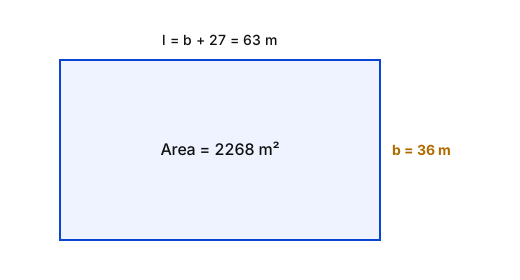
The length of a rectangular park is 27 m more than its breadth. Its area is 2268 m2. Its breadth (in m) is:
एक आयताकार पार्क की लंबाई उसकी चौड़ाई से 27 m अधिक है। इसका क्षेत्रफल 2268 m2 है। इसकी चौड़ाई (m में) है:
  1. A23
  2. B40
  3. C38
  4. D36
Show answer

Concept: Area of rectangle =l×b.

  1. l=b+27, so b(b+27)=2268.
  2. b2+27b−2268=0⇒(b+63)(b−36)=0.
  3. b=36 m (and l=63 m; check 36×63=2268).

Trick: Test options: 36×63=2268 ✓ — fastest.

Answer: (D) 36

अवधारणा: आयत का क्षेत्रफल =l×b।

  1. l=b+27, अतः b(b+27)=2268।
  2. b2+27b−2268=0⇒(b+63)(b−36)=0।
  3. b=36 m (l=63 m; जाँच 36×63=2268)।

ट्रिक: विकल्प जाँचें: 36×63=2268 ✓ — सबसे तेज़।

उत्तर: (D) 36

RRB NTPC Graduate CBT 1MathematicsMensuration – RectangleRRB NTPC Graduate CBT 1 2024 · 9 Jun Shift 2 →
Q3943.
Simplify: 71+627+30−31
सरल कीजिए: 71+627+30−31
  1. A5427
  2. B5587
  3. C5527
  4. D5577
Show answer

Concept: Combine the whole numbers first, then add the fraction over a common denominator.

  1. 71+30−31=70.
  2. 70+627=4907+627=5527.

Trick: Options differ only in the numerator: 70×7+62=552.

Answer: (C) 5527

अवधारणा: पहले पूर्ण संख्याएँ जोड़ें, फिर समान हर लेकर भिन्न जोड़ें।

  1. 71+30−31=70।
  2. 70+627=4907+627=5527।

ट्रिक: विकल्पों में केवल अंश अलग है: 70×7+62=552।

उत्तर: (C) 5527

RRB NTPC Graduate CBT 1MathematicsSimplification – FractionsRRB NTPC Graduate CBT 1 2024 · 9 Jun Shift 2 →
Q3944.
One pipe can fill the tank in 7 minutes while another pipe can empty the completely filled tank in 56 minutes. If both the pipes are operated together on empty tank, how long (in minutes) will it take to fill three-fourth of the tank?
एक पाइप टंकी को 7 मिनट में भर सकता है जबकि दूसरा पाइप पूरी भरी हुई टंकी को 56 मिनट में खाली कर सकता है। यदि दोनों पाइपों को खाली टंकी पर एक साथ चलाया जाए, तो टंकी का तीन-चौथाई भाग भरने में कितना समय (मिनट में) लगेगा?
  1. A7
  2. B12
  3. C6
  4. D13
Show answer

Concept: Net rate = filling rate − emptying rate.

  1. Net rate =17−156=8−156=18 tank per minute.
  2. Full tank takes 8 minutes.
  3. 34 tank takes 34×8=6 minutes.

Trick: LCM method: tank =56 units; rates +8 and −1 → net 7 units/min; 34×56=42 units → 6 min.

Answer: (C) 6

अवधारणा: शुद्ध दर = भरने की दर − खाली करने की दर।

  1. शुद्ध दर =17−156=8−156=18 टंकी प्रति मिनट।
  2. पूरी टंकी 8 मिनट में भरेगी।
  3. 34 टंकी =34×8=6 मिनट।

ट्रिक: LCM विधि: टंकी =56 इकाई; दरें +8 और −1 → शुद्ध 7 इकाई/मिनट; 34×56=42 इकाई → 6 मिनट।

उत्तर: (C) 6

RRB NTPC Graduate CBT 1MathematicsPipes and CisternsRRB NTPC Graduate CBT 1 2024 · 9 Jun Shift 2 →
Q3945.
If x + y = 14, product of x and y is 45, then the value of x4 + y4 is:
यदि x + y = 14 है, x और y का गुणनफल 45 है, तो x4 + y4 का मान है:
  1. A7177
  2. B7141
  3. C7090
  4. D7186
Show answer

Concept: x2+y2=(x+y)2−2xy and x4+y4=(x2+y2)2−2x2y2.

  1. x2+y2=142−2×45=196−90=106.
  2. x4+y4=1062−2×452=11236−4050=7186.

Trick: Here x=9, y=5: 94+54=6561+625=7186 ✓.

Answer: (D) 7186

अवधारणा: x2+y2=(x+y)2−2xy तथा x4+y4=(x2+y2)2−2x2y2।

  1. x2+y2=142−2×45=196−90=106।
  2. x4+y4=1062−2×452=11236−4050=7186।

ट्रिक: यहाँ x=9, y=5: 94+54=6561+625=7186 ✓।

उत्तर: (D) 7186

RRB NTPC Graduate CBT 1MathematicsAlgebraic IdentitiesRRB NTPC Graduate CBT 1 2024 · 9 Jun Shift 2 →
Q3946.
Rohit bought an article for ₹4,400. He spent ₹3,600 on it. He marked the price 25% above his total cost price. He then allowed two successive discounts of 19% on it. Find the selling price (in ₹) of the article.
रोहित ने एक वस्तु ₹4,400 में खरीदी। उसने उस पर ₹3,600 खर्च किए। उसने अपने कुल क्रय मूल्य से 25% अधिक मूल्य अंकित किया। फिर उसने उस पर 19% की दो क्रमागत छूटें दीं। वस्तु का विक्रय मूल्य (₹ में) ज्ञात कीजिए।
  1. A6,560
  2. B6,563
  3. C6,561
  4. D6,564
Show answer

Concept: Total cost includes extra expenses; successive discounts multiply.

  1. Total CP =4400+3600=8000.
  2. MP =8000×125100=10000.
  3. SP =10000×81100×81100=6561.

Trick: 0.81×0.81=0.6561, so SP =0.6561×10000.

Answer: (C) 6,561

अवधारणा: कुल लागत में अतिरिक्त खर्च जुड़ता है; क्रमागत छूटें गुणा होती हैं।

  1. कुल क्रय मूल्य =4400+3600=8000।
  2. अंकित मूल्य =8000×125100=10000।
  3. विक्रय मूल्य =10000×81100×81100=6561।

ट्रिक: 0.81×0.81=0.6561, अतः विक्रय मूल्य =0.6561×10000।

उत्तर: (C) 6,561

RRB NTPC Graduate CBT 1MathematicsMarked Price and Successive DiscountsRRB NTPC Graduate CBT 1 2024 · 9 Jun Shift 2 →
Q3947.
The sum of the present ages of a father and his son is 19 years more than 2 times the present age of the son. After 15 years, 12 times the father's age will be 17 years less than 13 times the son's age. The difference (in years) between the present ages of the father and the son is:
एक पिता और उसके पुत्र की वर्तमान आयु का योग, पुत्र की वर्तमान आयु के 2 गुने से 19 वर्ष अधिक है। 15 वर्ष बाद, पिता की आयु का 12 गुना, पुत्र की आयु के 13 गुने से 17 वर्ष कम होगा। पिता और पुत्र की वर्तमान आयु के बीच का अंतर (वर्षों में) है:
  1. A14
  2. B24
  3. C19
  4. D21
Show answer

Concept: Translate the first sentence into an equation — it directly gives the difference.

  1. F+S=2S+19⇒F−S=19.
  2. Check with the second condition: 12(F+15)=13(S+15)−17⇒12F−13S=−2.
  3. With F=S+19: 12S+228−13S=−2⇒S=230, F=249; difference =19.

Trick: Subtract 2S from both sides of the first condition — the second condition is not needed.

Answer: (C) 19

अवधारणा: पहले वाक्य को समीकरण में बदलें — इसी से सीधे अंतर मिल जाता है।

  1. F+S=2S+19⇒F−S=19।
  2. दूसरी शर्त से जाँच: 12(F+15)=13(S+15)−17⇒12F−13S=−2।
  3. F=S+19 रखने पर: 12S+228−13S=−2⇒S=230, F=249; अंतर =19।

ट्रिक: पहली शर्त में दोनों ओर से 2S घटाएँ — दूसरी शर्त की ज़रूरत नहीं।

उत्तर: (C) 19

RRB NTPC Graduate CBT 1MathematicsProblems on AgesRRB NTPC Graduate CBT 1 2024 · 9 Jun Shift 2 →
Q3948.
Rohit marks the price of his article 60% more than its cost price. If he sells the article for ₹18,510 after allowing a discount of 85%, then what will be the cost price (in ₹) of the article?
रोहित अपनी वस्तु का मूल्य उसके क्रय मूल्य से 60% अधिक अंकित करता है। यदि वह 85% की छूट देने के बाद वस्तु को ₹18,510 में बेचता है, तो वस्तु का क्रय मूल्य (₹ में) क्या होगा?
  1. A77,124
  2. B77,128
  3. C77,127
  4. D77,125
Show answer

Concept: SP = CP ×(1+markup)×(1−discount).

  1. SP = CP ×160100×15100=0.24CP.
  2. 0.24CP=18510
  3. CP =185100.24=77125.

Trick: 1.6×0.15=0.24; divide 18510 by 24 and multiply by 100.

Answer: (D) 77,125

अवधारणा: विक्रय मूल्य=क्रय मूल्य×(1+मार्कअप)×(1−छूट)।

  1. SP=CP×160100×15100=0.24CP।
  2. 0.24CP=18510
  3. CP=185100.24=77125।

ट्रिक: 1.6×0.15=0.24; 18510 को 24 से भाग देकर 100 से गुणा करें।

उत्तर: (D) 77,125

RRB NTPC Graduate CBT 1MathematicsMarked Price and DiscountRRB NTPC Graduate CBT 1 2024 · 9 Jun Shift 2 →
Q3949.
In the following triads, each group of letters is related to the subsequent one following a certain logic. Select from the given options, the one that follows the same logic. BEAN - EBAN - BANE
MAKE - AMKE - MKEA
निम्नलिखित त्रिकों में, अक्षरों का प्रत्येक समूह एक निश्चित तर्क का अनुसरण करते हुए अगले समूह से संबंधित है। दिए गए विकल्पों में से उस विकल्प का चयन कीजिए जो समान तर्क का अनुसरण करता है। BEAN - EBAN - BANE
MAKE - AMKE - MKEA
  1. AMACK - AMCK - MCKA
  2. BRACE - RCAE - ECAR
  3. CWORK - OWRK - KORW
  4. DNEAR - ENAR - EARN
Show answer

Concept: Find the position change from word 1 → 2 and 2 → 3.

  1. BEAN → EBAN: swap the 1st and 2nd letters. EBAN → BANE: move the 1st letter to the end.
  2. Check MAKE → AMKE → MKEA: same rule.
  3. MACK → AMCK (swap) → MCKA (A moved to end) ✓. Others fail, e.g. RACE → RCAE is not a swap of the first two letters.

Trick: Write positions as 1234 → 2134 → 1342 and test each option.

Answer: (A) MACK - AMCK - MCKA

अवधारणा: शब्द 1 → 2 और 2 → 3 में अक्षरों का स्थान-परिवर्तन देखें।

  1. BEAN → EBAN: पहले दो अक्षर आपस में बदलें। EBAN → BANE: पहला अक्षर अंत में ले जाएँ।
  2. MAKE → AMKE → MKEA: यही नियम।
  3. MACK → AMCK → MCKA ✓; बाकी विकल्प नियम पर नहीं चलते।

ट्रिक: स्थानों को 1234 → 2134 → 1342 लिखें और विकल्प जाँचें।

उत्तर: (A) MACK - AMCK - MCKA

RRB NTPC Graduate CBT 1General Intelligence and ReasoningLetter triads – rearrangementRRB NTPC Graduate CBT 1 2024 · 9 Jun Shift 2 →
Q3950.
Based on the English alphabetical order, three of the following four letter-cluster pairs are alike in a certain way and thus form a group. Which letter-cluster pair DOES NOT belong to that group? (Note: The odd one out is not based on the number of
consonants/vowels or their position in the letter cluster)
अंग्रेज़ी वर्णमाला क्रम के आधार पर, निम्नलिखित चार अक्षर-समूह युग्मों में से तीन किसी निश्चित प्रकार से समान हैं और इस प्रकार एक समूह बनाते हैं। कौन-सा अक्षर-समूह युग्म उस समूह से संबंधित नहीं है? (ध्यान दें: असंगत अक्षर-समूह, उस अक्षर-समूह में
व्यंजनों/स्वरों की संख्या या उनकी स्थिति पर आधारित नहीं है)
  1. AQR - WX
  2. BLM - RS
  3. CST - YZ
  4. DGH - OM
Show answer

Concept: Use alphabet positions of the first letters of each pair.

  1. QR – WX: Q(17)→W(23), gap +6; both pairs are consecutive letters.
  2. LM – RS: 12→18, +6. ST – YZ: 19→25, +6.
  3. GH – OM: 7→15, +8, and OM is not consecutive – odd one.

Trick: Each pair: consecutive letters, second pair 6 steps ahead.

Answer: (D) GH - OM

अवधारणा: प्रत्येक युग्म के अक्षरों की स्थिति संख्या देखें।

  1. QR – WX: 17→23, अंतर +6; दोनों जोड़े क्रमागत अक्षर।
  2. LM – RS: 12→18; ST – YZ: 19→25 – दोनों +6।
  3. GH – OM: 7→15 (+8) और OM क्रमागत नहीं – विषम।

ट्रिक: क्रमागत अक्षर जोड़ा, दूसरा जोड़ा 6 स्थान आगे।

उत्तर: (D) GH - OM

RRB NTPC Graduate CBT 1General Intelligence and ReasoningOdd one out – letter clustersRRB NTPC Graduate CBT 1 2024 · 9 Jun Shift 2 →
Q3951.
What should come in place of the question mark (?) in the given series based on the English alphabetical order?
DKR HOV LSZ PWD ?
अंग्रेज़ी वर्णमाला क्रम के आधार पर दी गई शृंखला में प्रश्न चिह्न (?) के स्थान पर क्या आना चाहिए?
DKR HOV LSZ PWD ?
  1. AHAT
  2. BHTA
  3. CTAH
  4. DTHA
Show answer

Concept: Each letter position moves by a fixed step (counting cyclically after Z).

  1. 1st letters: D, H, L, P, T (each +4).
  2. 2nd letters: K, O, S, W, A (+4, W → A).
  3. 3rd letters: R, V, Z, D, H (+4).

Trick: All three positions jump +4 – just add 4 to PWD.

Answer: (C) TAH

अवधारणा: प्रत्येक स्थान का अक्षर निश्चित अंतर से बढ़ता है (Z के बाद फिर A)।

  1. पहले अक्षर: D, H, L, P, T (+4)।
  2. दूसरे: K, O, S, W, A (+4)।
  3. तीसरे: R, V, Z, D, H (+4)।

ट्रिक: तीनों स्थान +4 – PWD में 4 जोड़ें।

उत्तर: (C) TAH

RRB NTPC Graduate CBT 1General Intelligence and ReasoningLetter seriesRRB NTPC Graduate CBT 1 2024 · 9 Jun Shift 2 →
Q3952.
GN 14 is related to ER 1 in a certain way. In the same way, HP 18 is related to FT 5. To which of the given options is TK 4 related, following the same logic?
GN 14 एक निश्चित प्रकार से ER 1 से संबंधित है। उसी प्रकार, HP 18, FT 5 से संबंधित है। समान तर्क का अनुसरण करते हुए, TK 4 दिए गए विकल्पों में से किससे संबंधित है?
  1. APW −7
  2. BKJ −13
  3. CRO −9
  4. DTY −11
Show answer

Concept: Find the change in each letter and in the number.

  1. GN 14 → ER 1: G−2=E, N+4=R, 14−13=1.
  2. HP 18 → FT 5: H−2=F, P+4=T, 18−13=5.
  3. TK 4 → T−2=R, K+4=O, 4−13=−9 → RO −9.

Trick: Rule: first −2, second +4, number −13.

Answer: (C) RO −9

अवधारणा: हर अक्षर और संख्या में परिवर्तन देखें।

  1. GN 14 → ER 1: G−2, N+4, 14−13।
  2. HP 18 → FT 5: वही नियम।
  3. TK 4 → R, O, 4−13=−9 → RO −9।

ट्रिक: नियम: पहला −2, दूसरा +4, संख्या −13।

उत्तर: (C) RO −9

RRB NTPC Graduate CBT 1General Intelligence and ReasoningAnalogy – letters and numbersRRB NTPC Graduate CBT 1 2024 · 9 Jun Shift 2 →
Q3953.
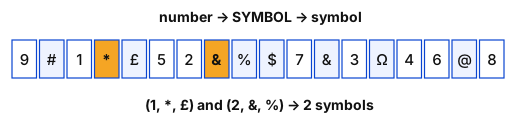
Refer to the following number and symbol series and answer the question that follows. Counting to be done from left to right only. All numbers are single-digit numbers only. (Left) 9 # 1 * £ 5 2 & % $ 7 & 3 Ω 4 6 @ 8 (Right)
How many such symbols are there each of which is immediately preceded by a number and also immediately followed by another symbol?
निम्नलिखित संख्या और प्रतीक शृंखला को देखिए और उसके बाद आने वाले प्रश्न का उत्तर दीजिए। गिनती केवल बाएँ से दाएँ की जानी है। सभी संख्याएँ केवल एक-अंकीय संख्याएँ हैं। (बाएँ) 9 # 1 * £ 5 2 & % $ 7 & 3 Ω 4 6 @ 8 (दाएँ)
ऐसे कितने प्रतीक हैं जिनमें से प्रत्येक के ठीक पहले एक संख्या है और ठीक बाद एक अन्य प्रतीक भी है?
  1. AThreeतीन
  2. BFourचार
  3. CTwoदो
  4. DOneएक
Show answer

Concept: Look for the pattern number – symbol – symbol and count the middle symbol.

  1. 1 * £ → * qualifies.
  2. 2 & % → & qualifies.
  3. Others fail: # is followed by 1, the later & by 3, Ω by 4, @ by 8; £, % and $ are preceded by symbols.

Trick: Scan only symbols that come right after a digit, then check the next element.

Answer: (C) Two

अवधारणा: पैटर्न संख्या – प्रतीक – प्रतीक खोजें और बीच के प्रतीक गिनें।

  1. 1 * £ → * मान्य।
  2. 2 & % → & मान्य।
  3. बाकी: # के बाद 1, दूसरे & के बाद 3, Ω के बाद 4, @ के बाद 8; £, %, $ से पहले प्रतीक है।

ट्रिक: केवल अंक के ठीक बाद वाले प्रतीक देखें, फिर अगला तत्व जाँचें।

उत्तर: (C) दो

RRB NTPC Graduate CBT 1General Intelligence and ReasoningNumber–symbol seriesRRB NTPC Graduate CBT 1 2024 · 9 Jun Shift 2 →
Q3954.
Two sets of numbers are given below. In each set of numbers, certain mathematical operation(s) on the first number result(s) in the second number. Similarly, certain mathematical operation(s) on the second number result(s) in the third number and so on. Which of the given options follows the same set of operations as in the given sets? (NOTE: Operations should be performed on the whole numbers, without breaking down the numbers into their constituent digits. E.g. 13 – Operations on 13 such as adding / subtracting /multiplying to 13 can be performed. Breaking down 13 into 1 and 3 and then performing mathematical operations on 1 and 3 is not allowed.)
10 - 20 - 40 - 80 ; 3 - 6 - 12 - 24
नीचे संख्याओं के दो समुच्चय दिए गए हैं। संख्याओं के प्रत्येक समुच्चय में, पहली संख्या पर कुछ गणितीय संक्रिया/संक्रियाएँ करने पर दूसरी संख्या प्राप्त होती है। इसी प्रकार, दूसरी संख्या पर कुछ गणितीय संक्रिया/संक्रियाएँ करने पर तीसरी संख्या प्राप्त होती है और इसी प्रकार आगे भी। दिए गए विकल्पों में से कौन-सा विकल्प दिए गए समुच्चयों के समान संक्रियाओं के समुच्चय का अनुसरण करता है? (ध्यान दें: संख्याओं को उनके घटक अंकों में विभाजित किए बिना, संक्रियाएँ पूर्ण संख्याओं पर की जानी चाहिए। उदाहरण के लिए 13 – 13 पर संक्रियाएँ जैसे 13 में जोड़ना/घटाना/गुणा करना आदि की जा सकती हैं। 13 को 1 और 3 में विभाजित करना और फिर 1 और 3 पर गणितीय संक्रियाएँ करना वर्जित है।)
10 - 20 - 40 - 80 ; 3 - 6 - 12 - 24
  1. A5 - 10 - 20 - 30
  2. B8 - 10 - 20 - 40
  3. C4 - 8 - 12 - 24
  4. D6 - 12 - 24 - 48
Show answer

Concept: Find the operation between consecutive numbers.

  1. 10→20→40→80: each ×2.
  2. 3→6→12→24: each ×2.
  3. 6→12→24→48: each ×2 ✓.

Trick: Option A ends 20→30, C has 8→12 – they break the doubling.

Answer: (D) 6 - 12 - 24 - 48

अवधारणा: क्रमागत संख्याओं के बीच संक्रिया खोजें।

  1. 10→20→40→80: हर बार ×2।
  2. 3→6→12→24: ×2।
  3. 6→12→24→48: ×2 ✓।

ट्रिक: A में 20→30, C में 8→12 – दोगुना नियम टूटता है।

उत्तर: (D) 6 - 12 - 24 - 48

RRB NTPC Graduate CBT 1General Intelligence and ReasoningNumber set patternRRB NTPC Graduate CBT 1 2024 · 9 Jun Shift 2 →
Q3955.
If ‘A’ stands for ‘÷’, ‘B’ stands for ‘×’, ‘C’ stands for ‘+’ and ‘D’ stands for ‘−’, then the resultant of which of the following would be 5?
यदि ‘A’ का अर्थ ‘÷’, ‘B’ का अर्थ ‘×’, ‘C’ का अर्थ ‘+’ और ‘D’ का अर्थ ‘−’ है, तो निम्नलिखित में से किसका परिणाम 5 होगा?
  1. A96 C 12 B 45 A 3 D 14
  2. B96 B 12 D 45 A 3 C 14
  3. C96 A 12 D 45 C 3 B 14
  4. D96 D 12 C 45 B 3 A 14
Show answer

Concept: Replace letters by operators and apply BODMAS.

  1. Option C: 96÷12−45+3×14.
  2. =8−45+42.
  3. =5 ✓.

Trick: Try the option with ÷ on 96 and 12 first – it gives a small number like 8.

Answer: (C) 96 A 12 D 45 C 3 B 14

अवधारणा: अक्षरों की जगह चिह्न रखें और BODMAS लगाएँ।

  1. विकल्प C: 96÷12−45+3×14।
  2. =8−45+42।
  3. =5 ✓।

ट्रिक: 96 ÷ 12 वाला विकल्प पहले जाँचें – छोटी संख्या 8 मिलती है।

उत्तर: (C) 96 A 12 D 45 C 3 B 14

RRB NTPC Graduate CBT 1General Intelligence and ReasoningSymbol substitutionRRB NTPC Graduate CBT 1 2024 · 9 Jun Shift 2 →
Q3956.
What should come in place of the question mark (?) in the given series?
501 500 497 492 485 ?
दी गई शृंखला में प्रश्न चिह्न (?) के स्थान पर क्या आना चाहिए?
501 500 497 492 485 ?
  1. A471
  2. B475
  3. C473
  4. D476
Show answer

Concept: Check the differences between consecutive terms.

  1. 501−1=500, 500−3=497, 497−5=492, 492−7=485.
  2. Subtracted numbers are consecutive odd numbers.
  3. Next: 485−9=476.

Trick: Also 501−n2: 501−0,501−1,501−4,…,501−25=476.

Answer: (D) 476

अवधारणा: क्रमागत पदों का अंतर देखें।

  1. घटाए गए: 1, 3, 5, 7 (क्रमागत विषम)।
  2. अगला घटाव 9।
  3. 485−9=476।

ट्रिक: 501−n2: 501−25=476।

उत्तर: (D) 476

RRB NTPC Graduate CBT 1General Intelligence and ReasoningNumber series – differencesRRB NTPC Graduate CBT 1 2024 · 9 Jun Shift 2 →
Q3957.
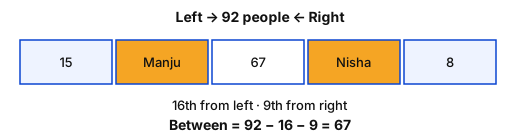
All 92 people are standing in a row facing north. Manju is 16th from the left end while Nisha is 9th from the right end. How many people are there between Manju and Nisha?
सभी 92 व्यक्ति उत्तर की ओर मुख करके एक पंक्ति में खड़े हैं। मंजू बाएँ छोर से 16वें स्थान पर है जबकि निशा दाएँ छोर से 9वें स्थान पर है। मंजू और निशा के बीच कितने व्यक्ति हैं?
  1. A58
  2. B48
  3. C65
  4. D67
Show answer

Concept: People between = Total − (position from left + position from right), when they do not overlap.

  1. Manju has 15 people on her left; Nisha has 8 on her right.
  2. 16+9=25<92, so they do not overlap.
  3. Between =92−16−9=67.

Trick: No overlap → Total − sum of positions.

Answer: (D) 67

अवधारणा: यदि स्थान आपस में न टकराएँ तो बीच के लोग = कुल − (बाएँ से स्थान + दाएँ से स्थान)।

  1. मंजू बाएँ से 16वीं, निशा दाएँ से 9वीं।
  2. 16+9=25<92, अतः ओवरलैप नहीं।
  3. बीच में =92−16−9=67।

ट्रिक: ओवरलैप नहीं → कुल − स्थानों का योग।

उत्तर: (D) 67

RRB NTPC Graduate CBT 1General Intelligence and ReasoningRanking in a rowRRB NTPC Graduate CBT 1 2024 · 9 Jun Shift 2 →
Q3958.
IV 17 is related to FR 6 in a certain way. In the same way, KJ 12 is related to HF 1. To which of the given options is OE −6 related, following the same logic?
IV 17 एक निश्चित प्रकार से FR 6 से संबंधित है। उसी प्रकार, KJ 12, HF 1 से संबंधित है। समान तर्क का अनुसरण करते हुए, OE −6 दिए गए विकल्पों में से किससे संबंधित है?
  1. AKI −13
  2. BLA −17
  3. CTR −29
  4. DPA −21
Show answer

Concept: Find the change in each letter and in the number.

  1. IV 17 → FR 6: I−3=F, V−4=R, 17−11=6.
  2. KJ 12 → HF 1: K−3=H, J−4=F, 12−11=1.
  3. OE −6 → O−3=L, E−4=A, −6−11=−17 → LA −17.

Trick: Rule: −3, −4, number −11.

Answer: (B) LA −17

अवधारणा: हर अक्षर और संख्या में परिवर्तन देखें।

  1. IV 17 → FR 6: −3, −4, −11।
  2. KJ 12 → HF 1: वही।
  3. OE −6 → L, A, −6−11=−17।

ट्रिक: नियम: −3, −4, संख्या −11।

उत्तर: (B) LA −17

RRB NTPC Graduate CBT 1General Intelligence and ReasoningAnalogy – letters and numbersRRB NTPC Graduate CBT 1 2024 · 9 Jun Shift 2 →
Q3959.
In a certain code language, ‘PAID’ is coded as ‘3517’ and ‘ARCS’ is coded as ‘2458’. What is the code for ‘A’ in the given code language?
एक निश्चित कूट भाषा में, ‘PAID’ को ‘3517’ के रूप में और ‘ARCS’ को ‘2458’ के रूप में कूटबद्ध किया जाता है। दी गई कूट भाषा में ‘A’ का कूट क्या है?
  1. A2
  2. B7
  3. C8
  4. D5
Show answer

Concept: A letter common to two words gets the digit common to both codes (order may be jumbled).

  1. PAID = 3517, ARCS = 2458.
  2. Common letter: A.
  3. Common digit: 5 → A = 5.

Trick: Match common letters with common digits.

Answer: (D) 5

अवधारणा: दोनों शब्दों में उभयनिष्ठ अक्षर को दोनों कोड का उभयनिष्ठ अंक मिलता है।

  1. PAID = 3517, ARCS = 2458।
  2. उभयनिष्ठ अक्षर: A।
  3. उभयनिष्ठ अंक: 5 → A = 5।

ट्रिक: उभयनिष्ठ अक्षर ↔ उभयनिष्ठ अंक।

उत्तर: (D) 5

RRB NTPC Graduate CBT 1General Intelligence and ReasoningCoding – common letterRRB NTPC Graduate CBT 1 2024 · 9 Jun Shift 2 →
Q3960.
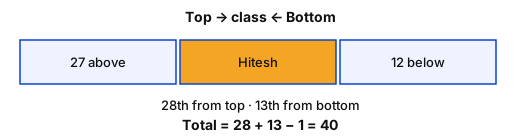
Hitesh ranked 28th from the top and 13th from the bottom in his class. How many students are there in his class?
हितेश अपनी कक्षा में ऊपर से 28वें और नीचे से 13वें स्थान पर है। उसकी कक्षा में कितने विद्यार्थी हैं?
  1. A42
  2. B40
  3. C41
  4. D39
Show answer

Concept: Total = rank from top + rank from bottom − 1.

  1. 28+13−1=40.
  2. 27 students above Hitesh, 12 below, plus Hitesh himself.

Trick: Subtract 1 because the person is counted twice.

Answer: (B) 40

अवधारणा: कुल = ऊपर से स्थान + नीचे से स्थान − 1।

  1. 28+13−1=40।
  2. हितेश के ऊपर 27, नीचे 12, और स्वयं हितेश।

ट्रिक: 1 घटाएँ क्योंकि व्यक्ति दो बार गिना गया।

उत्तर: (B) 40

RRB NTPC Graduate CBT 1General Intelligence and ReasoningRanking – total countRRB NTPC Graduate CBT 1 2024 · 9 Jun Shift 2 →