Question bank

Q&A: practice questions with answers

Search questions on any topic. Filter by exam category, exam, subject and topic, try the question, then open the answer and explanation.

Courses – airGurukul

7,077 questions found.

Q3961.
Town V is to the west of Town W. Town X is to the east of Town V. Town Y is to the north of Town W. Town Z is to the north of Town X. Town Z is to the north-west of Town W. What is the position of Town X with respect to Town W?
शहर V, शहर W के पश्चिम में है। शहर X, शहर V के पूर्व में है। शहर Y, शहर W के उत्तर में है। शहर Z, शहर X के उत्तर में है। शहर Z, शहर W के उत्तर-पश्चिम में है। शहर W के सापेक्ष शहर X की स्थिति क्या है?
  1. ANorthउत्तर
  2. BEastपूर्व
  3. CWestपश्चिम
  4. DSouthदक्षिण
Show answer

Concept: Place towns one by one on a grid.
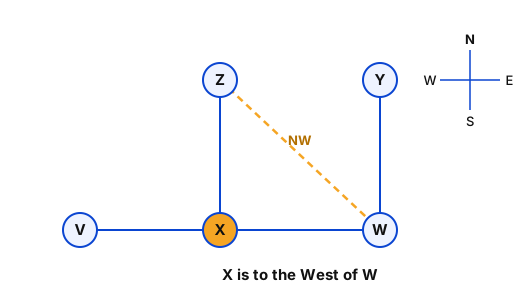
  1. V is west of W; Y is north of W.
  2. Z is north of X and also north-west of W – so Z (and X below it) must lie to the west of W.
  3. X is east of V and on the same line as V and W, so X lies between V and W → X is west of W.

Trick: If Z is NW of W and X is directly below Z, X is due West of W.

Answer: (C) West

अवधारणा: शहरों को एक-एक करके ग्रिड पर रखें।

  1. V, W के पश्चिम में; Y, W के उत्तर में।
  2. Z, X के उत्तर में और W के उत्तर-पश्चिम में – अतः Z (और उसके नीचे X) W के पश्चिम में।
  3. X, V के पूर्व में और V–W रेखा पर → X, W के पश्चिम में।

ट्रिक: Z, W के NW में और X ठीक Z के नीचे → X, W के पश्चिम में।

उत्तर: (C) पश्चिम
RRB NTPC Graduate CBT 1General Intelligence and ReasoningDirection senseRRB NTPC Graduate CBT 1 2024 · 9 Jun Shift 2 →
Q3962.
D, E, F, G, H, I and K are sitting around a circular table facing the centre of the table. I sits third to the left of H. E sits second to the left of G. Only H sits between D and E. K is not an immediate neighbour of I. How many people sit between F and E when counted from the right of F?
D, E, F, G, H, I और K एक वृत्ताकार मेज़ के चारों ओर मेज़ के केंद्र की ओर मुख करके बैठे हैं। I, H के बाएँ से तीसरे स्थान पर बैठा है। E, G के बाएँ से दूसरे स्थान पर बैठा है। D और E के बीच केवल H बैठा है। K, I का निकटतम पड़ोसी नहीं है। F के दाएँ से गिनने पर F और E के बीच कितने व्यक्ति बैठे हैं?
  1. AThreeतीन
  2. BFourचार
  3. COneएक
  4. DTwoदो
Show answer

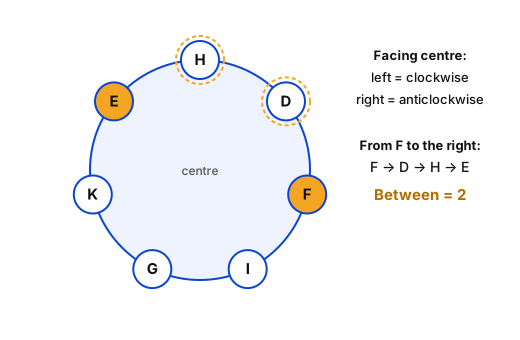
Concept: Facing the centre: left = clockwise, right = anticlockwise.

  1. Fix H; I is 3rd to the left of H. D and E are the two neighbours of H.
  2. If E were to H's left, G (two to E's right) would clash with D – so D is H's immediate left, E is H's immediate right, and G sits second to the right of E, next to I.
  3. F and K fill the last two seats; K is not next to I, so F sits next to I. Order (clockwise): H, D, F, I, G, K, E.
  4. From F going right: D, H, then E → 2 people between.

Trick: Seat the fixed-distance clues (I, then D–H–E) first, then test the two cases.

Answer: (D) Two

अवधारणा: केंद्र की ओर मुख: बायाँ = दक्षिणावर्त, दायाँ = वामावर्त।

  1. H को स्थिर करें; I, H के बाएँ तीसरा। D और E, H के दोनों पड़ोसी।
  2. E को H के बाएँ रखने पर G का स्थान D से टकराता है – अतः D, H के ठीक बाएँ और E ठीक दाएँ; G, I के बगल में।
  3. K, I का पड़ोसी नहीं, अतः F, I के बगल में। क्रम (दक्षिणावर्त): H, D, F, I, G, K, E।
  4. F से दाईं ओर: D, H, फिर E → बीच में 2 लोग।

ट्रिक: पहले निश्चित दूरी वाले संकेत (I, फिर D–H–E) रखें, फिर दोनों स्थितियाँ जाँचें।

उत्तर: (D) दो

RRB NTPC Graduate CBT 1General Intelligence and ReasoningCircular seating arrangementRRB NTPC Graduate CBT 1 2024 · 9 Jun Shift 2 →
Q3963.
What should come in place of the question mark (?) in the given series?
34 46 58 70 ? 94 106
दी गई शृंखला में प्रश्न चिह्न (?) के स्थान पर क्या आना चाहिए?
34 46 58 70 ? 94 106
  1. A88
  2. B86
  3. C80
  4. D82
Show answer

Concept: Constant difference series.

  1. 46−34=12, 58−46=12, 70−58=12.
  2. Next: 70+12=82.
  3. Check: 82+12=94 ✓.

Trick: Verify with the term after the blank.

Answer: (D) 82

अवधारणा: अचर अंतर वाली श्रृंखला।

  1. अंतर 12।
  2. 70+12=82।
  3. जाँच: 82+12=94 ✓।

ट्रिक: खाली स्थान के बाद वाले पद से जाँचें।

उत्तर: (D) 82

RRB NTPC Graduate CBT 1General Intelligence and ReasoningNumber series – APRRB NTPC Graduate CBT 1 2024 · 9 Jun Shift 2 →
Q3964.
​F is the sister of G. G is the husband of H. H is the daughter of I. I is the wife of J. How is F related to J?
F, G की बहन है। G, H का पति है। H, I की पुत्री है। I, J की पत्नी है। F का J से क्या संबंध है?
  1. ADaughter's husband's motherपुत्री के पति की माता
  2. BSisterबहन
  3. CDaughter's husband's sisterपुत्री के पति की बहन
  4. DMotherमाता
Show answer

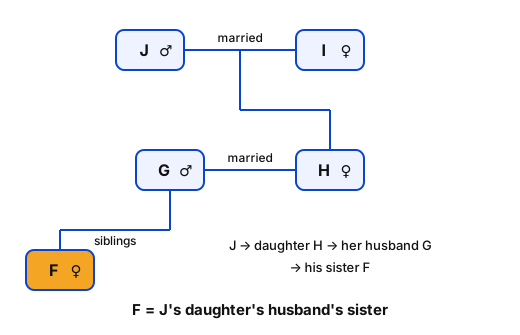
Concept: Build the family tree step by step.

  1. I is J's wife and H is their daughter.
  2. G is H's husband, i.e. J's son-in-law (daughter's husband).
  3. F is G's sister → F is J's daughter's husband's sister.

Trick: Trace the path J → H → G → F and read it in words.

Answer: (C) Daughter's husband's sister

अवधारणा: क्रमशः परिवार वृक्ष बनाएँ।

  1. I, J की पत्नी है और H उनकी बेटी।
  2. G, H का पति = J का दामाद।
  3. F, G की बहन → F, J की बेटी के पति की बहन।

ट्रिक: रास्ता J → H → G → F पढ़ें।

उत्तर: (C) Daughter's husband's sister

RRB NTPC Graduate CBT 1General Intelligence and ReasoningBlood relationsRRB NTPC Graduate CBT 1 2024 · 9 Jun Shift 2 →
Q3965.
A group of numbers/symbols is coded using letter codes as per the codes given below and the conditions that follow. If none of the conditions apply, then codes for the respective number/symbol to be followed directly as given in the table.
Number/S38@&275%19∆46 ymbol
CodeLEZMDWAPRTFBK Conditions:
(i) If the first element and the last element is a number, the codes for these two (the first and the last elements) are to be interchanged.
(ii) If the first element is an odd number and the last an even number, the first and last elements are to be coded as ©.
(iii) If both the second and third elements are perfect squares, the third element is to be coded as the code for the second element.
What will be the code for the following group?
7 2 ∆ 8 9 @ 3
संख्याओं/प्रतीकों के एक समूह को नीचे दिए गए कूटों और उसके बाद दी गई शर्तों के अनुसार अक्षर कूटों का उपयोग करके कूटबद्ध किया जाता है। यदि कोई भी शर्त लागू नहीं होती है, तो संबंधित संख्या/प्रतीक के लिए तालिका में दिए गए कूटों का सीधे अनुसरण किया जाना है।
संख्या/प्र38@&275%19∆46 तीक
कूटLEZMDWAPRTFBK शर्तें:
(i) यदि पहला तत्व और अंतिम तत्व एक संख्या है, तो इन दोनों (पहले और अंतिम तत्वों) के कूट आपस में बदल दिए जाने हैं।
(ii) यदि पहला तत्व एक विषम संख्या है और अंतिम एक सम संख्या है, तो पहले और अंतिम तत्वों को © के रूप में कूटबद्ध किया जाना है।
(iii) यदि दूसरा और तीसरा दोनों तत्व पूर्ण वर्ग हैं, तो तीसरे तत्व को दूसरे तत्व के कूट के रूप में कूटबद्ध किया जाना है।
निम्नलिखित समूह का कूट क्या होगा?
7 2 ∆ 8 9 @ 3
  1. AW D F L T Z W
  2. BW D F E T Z L
  3. CL D F E Z T W
  4. DL D F E T Z W
Show answer

Concept: Write the table code of each element, then test the conditions one by one; apply only the one that holds.

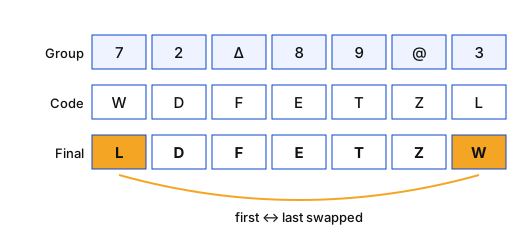
  1. Table codes: 7→W, 2→D, ∆→F, 8→E, 9→T, @→Z, 3→L, so plain coding gives W D F E T Z L.
  2. Condition (i): first element 7 and last element 3 are both numbers → their codes are interchanged.
  3. Condition (ii) fails (last element 3 is odd, not even); condition (iii) fails (2 and ∆ are not perfect squares).
  4. Final code: L D F E T Z W.

Trick: Check condition (ii) right after (i) — it needs odd first and even last; here both ends are odd, so only the swap applies.

Answer: (D) L D F E T Z W

अवधारणा: हर तत्व का तालिका वाला कोड लिखें, फिर शर्तें एक-एक कर जाँचें; केवल लागू होने वाली शर्त अपनाएँ।

  1. तालिका कोड: 7→W, 2→D, ∆→F, 8→E, 9→T, @→Z, 3→L; सामान्य कोड W D F E T Z L।
  2. शर्त (i): पहला 7 और अंतिम 3 दोनों संख्याएँ हैं → इनके कोड आपस में बदल जाएँगे।
  3. शर्त (ii) लागू नहीं (अंतिम 3 विषम है, सम नहीं); शर्त (iii) भी नहीं (2 और ∆ पूर्ण वर्ग नहीं)।
  4. अंतिम कोड: L D F E T Z W।

ट्रिक: शर्त (ii) के लिए पहला विषम और अंतिम सम चाहिए; यहाँ दोनों सिरे विषम हैं, इसलिए केवल अदला-बदली होगी।

उत्तर: (D) L D F E T Z W

RRB NTPC Graduate CBT 1General Intelligence and ReasoningCoding with ConditionsRRB NTPC Graduate CBT 1 2024 · 9 Jun Shift 2 →
Q3966.
KQRL is related to OTTM in a certain way based on the English alphabetical order. In the same way, SWVN is related to WZXO. To which of the given options is ACZP related, following the same logic?
अंग्रेज़ी वर्णमाला क्रम के आधार पर KQRL एक निश्चित प्रकार से OTTM से संबंधित है। उसी प्रकार, SWVN, WZXO से संबंधित है। समान तर्क का अनुसरण करते हुए, ACZP दिए गए विकल्पों में से किससे संबंधित है?
  1. ADEAP
  2. BDGBP
  3. CFDZR
  4. DEFBQ
Show answer

Concept: Compare each letter of the first cluster with the corresponding letter of the second using alphabet positions.

  1. KQRL → OTTM: K+4=O, Q+3=T, R+2=T, L+1=M.
  2. SWVN → WZXO: S+4=W, W+3=Z, V+2=X, N+1=O (same pattern +4, +3, +2, +1).
  3. ACZP: A+4=E, C+3=F, Z+2=B (wraps around), P+1=Q → EFBQ.

Trick: Pattern +4, +3, +2, +1; after Z continue from A (Z+2 = B).

Answer: (D) EFBQ

अवधारणा: अक्षरों की वर्णमाला स्थिति से पहले समूह के प्रत्येक अक्षर की तुलना दूसरे समूह के संगत अक्षर से करें।

  1. KQRL → OTTM: K+4=O, Q+3=T, R+2=T, L+1=M।
  2. SWVN → WZXO: S+4=W, W+3=Z, V+2=X, N+1=O (वही पैटर्न +4, +3, +2, +1)।
  3. ACZP: A+4=E, C+3=F, Z+2=B (Z के बाद फिर A से), P+1=Q → EFBQ।

ट्रिक: पैटर्न +4, +3, +2, +1; Z के बाद गिनती A से शुरू (Z+2 = B)।

उत्तर: (D) EFBQ

RRB NTPC Graduate CBT 1General Intelligence and ReasoningLetter AnalogyRRB NTPC Graduate CBT 1 2024 · 9 Jun Shift 2 →
Q3967.
A, B, C, D, E and F live on six different floors of the same building. The lowermost floor in the building is numbered 1, the floor above it, number 2 and so on till the topmost floor is numbered 6.
The product of floors on which E and F live is 10. A lives immediately above C. The sum of floors on which B and E live is 11.
What is the sum of floors on which C and D live?
A, B, C, D, E और F एक ही इमारत की छह अलग-अलग मंज़िलों पर रहते हैं। इमारत की सबसे निचली मंज़िल की संख्या 1 है, उसके ऊपर वाली मंज़िल की संख्या 2 है और इसी प्रकार सबसे ऊपरी मंज़िल की संख्या 6 है।
E और F जिन मंज़िलों पर रहते हैं, उनका गुणनफल 10 है। A, C के ठीक ऊपर रहता है। B और E जिन मंज़िलों पर रहते हैं, उनका योग 11 है।
C और D जिन मंज़िलों पर रहते हैं, उनका योग क्या है?
  1. A6
  2. B4
  3. C5
  4. D7
Show answer

Concept: Fix the persons with numeric clues first, then place the rest.

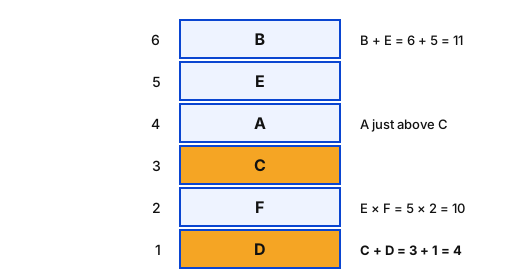
  1. E×F=10 with floors 1–6 ⇒{E,F}={2,5}.
  2. B+E=11: if E=2, B=9 (impossible); so E=5, B=6, F=2.
  3. Remaining floors 1, 3, 4: A immediately above C ⇒ C = 3, A = 4, so D = 1.
  4. C+D=3+1=4.

Trick: A product of 10 among 1–6 can only be 2 × 5 — start from there.

Answer: (B) 4

अवधारणा: पहले संख्यात्मक संकेतों वाले व्यक्तियों को तय करें, फिर बाकी को रखें।

  1. E×F=10, मंज़िलें 1–6 ⇒{E,F}={2,5}।
  2. B+E=11: यदि E=2 तो B=9 (संभव नहीं); अतः E=5, B=6, F=2।
  3. बची मंज़िलें 1, 3, 4: A ठीक C के ऊपर ⇒ C = 3, A = 4, तो D = 1।
  4. C+D=3+1=4।

ट्रिक: 1–6 में गुणनफल 10 केवल 2 × 5 से बनता है — वहीं से शुरू करें।

उत्तर: (B) 4

RRB NTPC Graduate CBT 1General Intelligence and ReasoningFloor PuzzleRRB NTPC Graduate CBT 1 2024 · 9 Jun Shift 2 →
Q3968.
Based on the English alphabetical order, three of the following four letter-cluster pairs are alike in a certain way and thus form a group. Which letter-cluster pair DOES NOT belong to that group?
(Note: The odd one out is not based on the number of consonants/vowels or their position in the letter-cluster.)
अंग्रेज़ी वर्णमाला क्रम के आधार पर, निम्नलिखित चार अक्षर-समूह युग्मों में से तीन किसी निश्चित प्रकार से समान हैं और इस प्रकार एक समूह बनाते हैं। कौन-सा अक्षर-समूह युग्म उस समूह से संबंधित नहीं है?
(ध्यान दें: असंगत अक्षर-समूह, उस अक्षर-समूह में व्यंजनों/स्वरों की संख्या या उनकी स्थिति पर आधारित नहीं है।)
  1. AJM - IL
  2. BNQ - MP
  3. CFI - EH
  4. DNT - JK
Show answer

Concept: Find the rule linking the two clusters of each pair using alphabet positions.

  1. JM – IL: J−1 = I, M−1 = L.
  2. NQ – MP: N−1 = M, Q−1 = P; FI – EH: F−1 = E, I−1 = H.
  3. NT – JK: N−4 = J, T−9 = K — the −1, −1 rule breaks.

Trick: In the three alike pairs both clusters also have a gap of 3 (J_M, N_Q, F_I); NT has a gap of 6.

Answer: (D) NT - JK

अवधारणा: हर युग्म के दोनों समूहों का संबंध अक्षरों की वर्णमाला स्थिति से जाँचें।

  1. JM – IL: J−1 = I, M−1 = L।
  2. NQ – MP: N−1 = M, Q−1 = P; FI – EH: F−1 = E, I−1 = H।
  3. NT – JK: N−4 = J, T−9 = K — −1, −1 का नियम टूट गया।

ट्रिक: तीन समान युग्मों में पहले समूह में अक्षरों का अंतर 3 है (J_M, N_Q, F_I); NT में 6 है।

उत्तर: (D) NT - JK

RRB NTPC Graduate CBT 1General Intelligence and ReasoningOdd One Out – Letter PairsRRB NTPC Graduate CBT 1 2024 · 9 Jun Shift 2 →
Q3969.
In a certain code language, ‘good morning all’ is coded as ‘cx fg zq’ and ‘all students present’ is coded as ‘zq nr vk’. How is ‘all’ coded in the given language?
एक निश्चित कूट भाषा में, ‘good morning all’ को ‘cx fg zq’ के रूप में और ‘all students present’ को ‘zq nr vk’ के रूप में कूटबद्ध किया जाता है। दी गई भाषा में ‘all’ को किस प्रकार कूटबद्ध किया जाता है?
  1. Azq
  2. Bnr
  3. Cfg
  4. Dvk
Show answer

Concept: A word common to two sentences gets the code common to both coded sentences.

  1. ‘good morning all’ → ‘cx fg zq’; ‘all students present’ → ‘zq nr vk’.
  2. Common word: ‘all’; common code: ‘zq’.

Trick: Match common word with common code.

Answer: (A) zq

अवधारणा: दोनों वाक्यों में उभयनिष्ठ शब्द का कोड दोनों कोडित वाक्यों में उभयनिष्ठ कोड होता है।

  1. ‘good morning all’ → ‘cx fg zq’; ‘all students present’ → ‘zq nr vk’।
  2. उभयनिष्ठ शब्द ‘all’; उभयनिष्ठ कोड ‘zq’।

ट्रिक: उभयनिष्ठ शब्द = उभयनिष्ठ कोड।

उत्तर: (A) zq

RRB NTPC Graduate CBT 1General Intelligence and ReasoningCoding–Decoding (Common Word)RRB NTPC Graduate CBT 1 2024 · 9 Jun Shift 2 →
Q3970.
This question is based on the five, three-digit numbers given below.
(Left) 210 878 407 692 140 (Right)
(Example: 697 – First digit = 6, second digit = 9 and third digit = 7)
(NOTE: All operations to be done from left to right.)
What will be the resultant if the third digit of the highest number is subtracted from the first digit of the lowest number?
यह प्रश्न नीचे दी गई पाँच, तीन-अंकीय संख्याओं पर आधारित है।
(बाएँ) 210 878 407 692 140 (दाएँ)
(उदाहरण: 697 – पहला अंक = 6, दूसरा अंक = 9 और तीसरा अंक = 7)
(ध्यान दें: सभी संक्रियाएँ बाएँ से दाएँ की जानी हैं।)
यदि सबसे बड़ी संख्या के तीसरे अंक को सबसे छोटी संख्या के पहले अंक में से घटाया जाए, तो परिणाम क्या होगा?
  1. A−6
  2. B−7
  3. C−8
  4. D−4
Show answer

Concept: Identify the required numbers first, then pick the asked digits.

  1. Numbers: 210, 878, 407, 692, 140. Highest = 878, lowest = 140.
  2. Third digit of 878 = 8; first digit of 140 = 1.
  3. “8 subtracted from 1”: 1−8=−7.

Trick: “A subtracted from B” means B − A — watch the order.

Answer: (B) −7

अवधारणा: पहले आवश्यक संख्याएँ पहचानें, फिर पूछे गए अंक चुनें।

  1. संख्याएँ: 210, 878, 407, 692, 140। सबसे बड़ी = 878, सबसे छोटी = 140।
  2. 878 का तीसरा अंक = 8; 140 का पहला अंक = 1।
  3. “8 को 1 में से घटाना”: 1−8=−7।

ट्रिक: “A को B में से घटाना” = B − A; क्रम का ध्यान रखें।

उत्तर: (B) −7

RRB NTPC Graduate CBT 1General Intelligence and ReasoningNumber Arrangement – DigitsRRB NTPC Graduate CBT 1 2024 · 9 Jun Shift 2 →
Q3971.
If 2 is added to each odd digit and 1 is subtracted from each even digit in the number 2645783, what will be the sum of the highest and lowest digits in the new number thus formed?
यदि संख्या 2645783 में प्रत्येक विषम अंक में 2 जोड़ा जाए और प्रत्येक सम अंक में से 1 घटाया जाए, तो इस प्रकार बनी नई संख्या में सबसे बड़े और सबसे छोटे अंकों का योग क्या होगा?
  1. A10
  2. B14
  3. C12
  4. D16
Show answer

Concept: Change every digit as per its odd/even nature, then read the new number.

  1. 2645783: 2→1, 6→5, 4→3, 5→7, 7→9, 8→7, 3→5.
  2. New number: 1537975.
  3. Highest digit 9, lowest digit 1; sum =9+1=10.

Trick: Only the extremes matter: largest odd 7 → 9, smallest even 2 → 1.

Answer: (A) 10

अवधारणा: प्रत्येक अंक को उसके विषम/सम होने के अनुसार बदलें, फिर नई संख्या पढ़ें।

  1. 2645783: 2→1, 6→5, 4→3, 5→7, 7→9, 8→7, 3→5।
  2. नई संख्या: 1537975।
  3. सबसे बड़ा अंक 9, सबसे छोटा 1; योग =9+1=10।

ट्रिक: केवल सिरे देखें: सबसे बड़ा विषम 7 → 9, सबसे छोटा सम 2 → 1।

उत्तर: (A) 10

RRB NTPC Graduate CBT 1General Intelligence and ReasoningDigit OperationsRRB NTPC Graduate CBT 1 2024 · 9 Jun Shift 2 →
Q3972.
If + means −, − means ×, × means ÷, and ÷ means +, then what will come in place of the question mark (?) in the following equation?
30 − 5 ÷ 2 + 10 × 2 = ?
यदि + का अर्थ −, − का अर्थ ×, × का अर्थ ÷ और ÷ का अर्थ + है, तो निम्नलिखित समीकरण में प्रश्न चिह्न (?) के स्थान पर क्या आएगा?
30 − 5 ÷ 2 + 10 × 2 = ?
  1. A150
  2. B147
  3. C100
  4. D125
Show answer

Concept: Replace each symbol with its meaning, then solve using BODMAS.

  1. 30−5÷2+10×2 becomes 30×5+2−10÷2.
  2. =150+2−5=147

Trick: Rewrite the full expression first; do not substitute and solve at the same time.

Answer: (B) 147

अवधारणा: हर चिह्न को उसके अर्थ से बदलें, फिर BODMAS से हल करें।

  1. 30−5÷2+10×2 बन जाता है 30×5+2−10÷2।
  2. =150+2−5=147

ट्रिक: पहले पूरा व्यंजक दोबारा लिखें; बदलना और हल करना एक साथ न करें।

उत्तर: (B) 147

RRB NTPC Graduate CBT 1General Intelligence and ReasoningMathematical OperationsRRB NTPC Graduate CBT 1 2024 · 9 Jun Shift 2 →
Q3973.
Sunny starts from point A and drives 11 km towards the east. He then takes a left turn, drives 8 km, turns left and drives 12 km. He then takes a left turn and drives 10 km. He takes a final left turn, drives 1 km and stops at point P. How far (shortest distance) and towards which direction should he drive in order to reach point A again? (All turns are 90 degree turns only unless specified.)
सनी बिंदु A से चलना शुरू करता है और पूर्व की ओर 11 km गाड़ी चलाता है। फिर वह बाएँ मुड़ता है, 8 km गाड़ी चलाता है, बाएँ मुड़ता है और 12 km गाड़ी चलाता है। फिर वह बाएँ मुड़ता है और 10 km गाड़ी चलाता है। वह अंतिम बार बाएँ मुड़ता है, 1 km गाड़ी चलाता है और बिंदु P पर रुक जाता है। पुनः बिंदु A तक पहुँचने के लिए उसे कितनी दूरी (न्यूनतम दूरी) तक और किस दिशा में गाड़ी चलानी चाहिए? (जब तक निर्दिष्ट न किया जाए, सभी मोड़ केवल 90 डिग्री के मोड़ हैं।)
  1. A2 km to the southदक्षिण की ओर 2 km
  2. B2 km to the northउत्तर की ओर 2 km
  3. C1 km to the southदक्षिण की ओर 1 km
  4. D4 km to the southदक्षिण की ओर 4 km
Show answer

Concept: Track the position on coordinate axes (east = +x, north = +y), turning left each time.

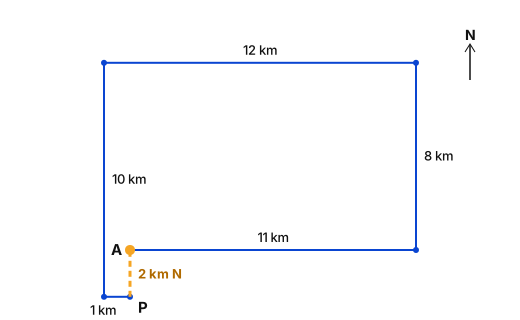
  1. Start A (0, 0) → 11 km east → (11, 0).
  2. Left (north) 8 km → (11, 8); left (west) 12 km → (−1, 8).
  3. Left (south) 10 km → (−1, −2); left (east) 1 km → P (0, −2).
  4. P is 2 km directly south of A, so he must drive 2 km north.

Trick: Net east–west: 11 − 12 + 1 = 0; net north–south: 8 − 10 = −2 → P is 2 km south of A.

Answer: (B) 2 km to the north

अवधारणा: स्थिति को निर्देशांक पर देखें (पूर्व = +x, उत्तर = +y), हर बार बाएँ मुड़ना है।

  1. प्रारंभ A (0, 0) → 11 km पूर्व → (11, 0)।
  2. बाएँ (उत्तर) 8 km → (11, 8); बाएँ (पश्चिम) 12 km → (−1, 8)।
  3. बाएँ (दक्षिण) 10 km → (−1, −2); बाएँ (पूर्व) 1 km → P (0, −2)।
  4. P, A से ठीक 2 km दक्षिण में है, अतः उसे 2 km उत्तर जाना होगा।

ट्रिक: शुद्ध पूर्व–पश्चिम: 11 − 12 + 1 = 0; शुद्ध उत्तर–दक्षिण: 8 − 10 = −2 → P, A से 2 km दक्षिण में।

उत्तर: (B) 2 km उत्तर की ओर

RRB NTPC Graduate CBT 1General Intelligence and ReasoningDirection and DistanceRRB NTPC Graduate CBT 1 2024 · 9 Jun Shift 2 →
Q3974.
This question is based on the five, three-digit numbers given below.
(Left) 993 281 995 257 599 (Right)
(Example: 697 – First digit = 6, second digit = 9 and third digit = 7)
(NOTE: All operations to be done from left to right.)
What will be the resultant if the third digit of the highest number is added to the first digit of the lowest number?
यह प्रश्न नीचे दी गई पाँच, तीन-अंकीय संख्याओं पर आधारित है।
(बाएँ) 993 281 995 257 599 (दाएँ)
(उदाहरण: 697 – पहला अंक = 6, दूसरा अंक = 9 और तीसरा अंक = 7)
(ध्यान दें: सभी संक्रियाएँ बाएँ से दाएँ की जानी हैं।)
यदि सबसे बड़ी संख्या के तीसरे अंक को सबसे छोटी संख्या के पहले अंक में जोड़ा जाए, तो परिणाम क्या होगा?
  1. A8
  2. B7
  3. C10
  4. D6
Show answer

Concept: Identify the highest and lowest numbers, then pick the asked digits.

  1. Numbers: 993, 281, 995, 257, 599. Highest = 995, lowest = 257.
  2. Third digit of 995 = 5; first digit of 257 = 2.
  3. 5+2=7.

Trick: 993 vs 995: compare the last digit when the first two digits are equal.

Answer: (B) 7

अवधारणा: सबसे बड़ी और सबसे छोटी संख्या पहचानें, फिर पूछे गए अंक लें।

  1. संख्याएँ: 993, 281, 995, 257, 599। सबसे बड़ी = 995, सबसे छोटी = 257।
  2. 995 का तीसरा अंक = 5; 257 का पहला अंक = 2।
  3. 5+2=7।

ट्रिक: 993 और 995: पहले दो अंक समान हों तो अंतिम अंक की तुलना करें।

उत्तर: (B) 7

RRB NTPC Graduate CBT 1General Intelligence and ReasoningNumber Arrangement – DigitsRRB NTPC Graduate CBT 1 2024 · 9 Jun Shift 2 →
Q3975.
What will come in the place of the question mark (?) in the following equation, if ‘+’ and ‘−’ are interchanged and ‘×’ and ‘÷’ are interchanged?
45 ÷ 13 − 286 × 2 + 68 =?
यदि ‘+’ और ‘−’ को आपस में बदल दिया जाए तथा ‘×’ और ‘÷’ को आपस में बदल दिया जाए, तो निम्नलिखित समीकरण में प्रश्न चिह्न (?) के स्थान पर क्या आएगा?
45 ÷ 13 − 286 × 2 + 68 =?
  1. A680
  2. B670
  3. C660
  4. D690
Show answer

Concept: Interchange the signs as told, then solve using BODMAS.

  1. 45÷13−286×2+68 becomes 45×13+286÷2−68.
  2. =585+143−68=660

Trick: Rewrite the expression fully before calculating.

Answer: (C) 660

अवधारणा: बताए अनुसार चिह्न बदलें, फिर BODMAS से हल करें।

  1. 45÷13−286×2+68 बन जाता है 45×13+286÷2−68।
  2. =585+143−68=660

ट्रिक: गणना से पहले पूरा व्यंजक दोबारा लिखें।

उत्तर: (C) 660

RRB NTPC Graduate CBT 1General Intelligence and ReasoningMathematical OperationsRRB NTPC Graduate CBT 1 2024 · 9 Jun Shift 2 →
Q3976.
Read the given statements and conclusions carefully. Assuming that the information given in the statements is true, even if it appears to be at variance with commonly known facts, decide which of the given conclusions logically follow(s) from the statements.
Statements:
All tubs are shirts.
Some shirts are jams.
No jam is a coat.
Conclusions:
(I) No tub is a coat.
(II) Some jams are tubs.
दिए गए कथनों और निष्कर्षों को ध्यानपूर्वक पढ़िए। कथनों में दी गई जानकारी को सत्य मानते हुए, भले ही वह सामान्यतः ज्ञात तथ्यों से भिन्न प्रतीत होती हो, निर्णय कीजिए कि दिए गए निष्कर्षों में से कौन-सा/से निष्कर्ष कथनों का तार्किक रूप से अनुसरण करता है/करते हैं।
कथन:
सभी टब, शर्ट हैं।
कुछ शर्ट, जैम हैं।
कोई जैम, कोट नहीं है।
निष्कर्ष:
(I) कोई टब, कोट नहीं है।
(II) कुछ जैम, टब हैं।
  1. AOnly conclusion (II) followsकेवल निष्कर्ष (II) अनुसरण करता है
  2. BOnly conclusion (I) followsकेवल निष्कर्ष (I) अनुसरण करता है
  3. CNeither conclusion (I) nor (II) followsन तो निष्कर्ष (I) और न ही (II) अनुसरण करता है
  4. DBoth conclusions (I) and (II) followनिष्कर्ष (I) और (II) दोनों अनुसरण करते हैं
Show answer

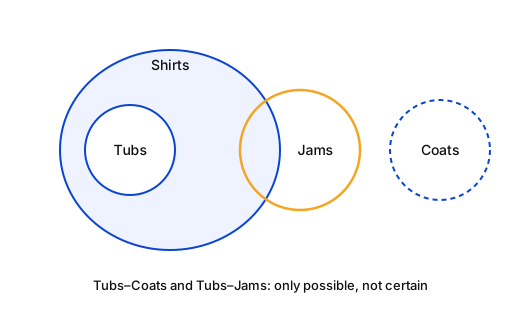
Concept: Draw the least-overlap Venn diagram allowed by the statements; a conclusion follows only if it is true in every possible diagram.

  1. All tubs are inside shirts; jams overlap shirts (some); coats are completely separate from jams.
  2. Tubs and coats have no direct relation — coats can still overlap tubs. So “No tub is a coat” is not certain: (I) does not follow.
  3. Jams meet shirts, but not necessarily the tub part. So “Some jams are tubs” is only possible: (II) does not follow.

Trick: Two “some/all” links do not chain into a definite tub–jam or tub–coat relation.

Answer: (C) Neither conclusion (I) nor (II) follows

अवधारणा: कथनों से संभव न्यूनतम-मेल वाला वेन आरेख बनाएँ; निष्कर्ष तभी सही है जब हर संभव आरेख में सत्य हो।

  1. सभी tubs, shirts के अंदर; jams का shirts से आंशिक मेल; coats, jams से पूर्णतः अलग।
  2. Tubs और coats का कोई सीधा संबंध नहीं — coats, tubs से मिल भी सकते हैं। अतः “कोई tub, coat नहीं” निश्चित नहीं: (I) अनुसरण नहीं करता।
  3. Jams, shirts से मिलते हैं पर जरूरी नहीं कि tubs वाले भाग से। अतः “कुछ jams, tubs हैं” केवल संभावना है: (II) भी अनुसरण नहीं करता।

ट्रिक: दो “कुछ/सभी” कड़ियों से tub–jam या tub–coat का निश्चित संबंध नहीं बनता।

उत्तर: (C) न तो निष्कर्ष (I) और न ही (II) अनुसरण करता है

RRB NTPC Graduate CBT 1General Intelligence and ReasoningSyllogismRRB NTPC Graduate CBT 1 2024 · 9 Jun Shift 2 →
Q3977.
P, Q, R, S, T, U and V are sitting around a circular table facing the centre. U sits to the immediate right of T. Only three people sit between U and V when counted from the left of U. Only three people sit between T and R. Q sits to the immediate right of P. How many people sit between T and P when counted from the left of P?
P, Q, R, S, T, U और V एक वृत्ताकार मेज़ के चारों ओर केंद्र की ओर मुख करके बैठे हैं। U, T के ठीक दाएँ बैठा है। U के बाएँ से गिनने पर U और V के बीच केवल तीन व्यक्ति बैठे हैं। T और R के बीच केवल तीन व्यक्ति बैठे हैं। Q, P के ठीक दाएँ बैठा है। P के बाएँ से गिनने पर T और P के बीच कितने व्यक्ति बैठे हैं?
  1. A3
  2. B1
  3. C4
  4. D2
Show answer

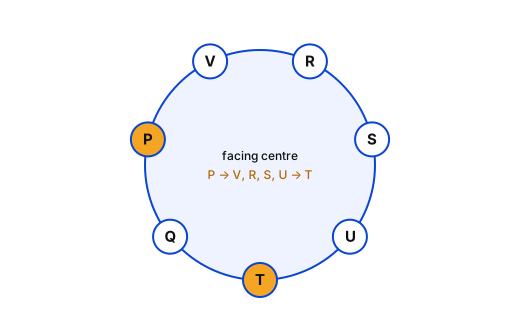
Concept: Facing the centre, a person’s right is anticlockwise and left is clockwise.

  1. Place T; U is to T’s immediate right.
  2. Going left (clockwise) from U: T and two more seats, then V — so three people sit between U and V.
  3. Three people between T and R fixes R next to V (the other side would clash with V). Q immediate right of P leaves P and Q in the two seats on T’s left, S in the last seat.
  4. From P going left (clockwise): V, R, S, U, then T — 4 people between.

Trick: With 7 people, “3 between” on one side means 2 between on the other — use this to rule out seats fast.

Answer: (C) 4

अवधारणा: केंद्र की ओर मुख होने पर व्यक्ति का दायाँ = वामावर्त (anticlockwise), बायाँ = दक्षिणावर्त (clockwise)।

  1. T को रखें; U, T के ठीक दाएँ।
  2. U से बाएँ (दक्षिणावर्त) चलें: T और दो अन्य, फिर V — U और V के बीच तीन व्यक्ति।
  3. T और R के बीच तीन व्यक्ति → R, V के बगल में (दूसरी ओर V से टकराव)। P के ठीक दाएँ Q → P और Q, T के बाईं ओर की दो सीटों पर, बची सीट पर S।
  4. P से बाएँ (दक्षिणावर्त): V, R, S, U, फिर T — बीच में 4 व्यक्ति।

ट्रिक: 7 लोगों में एक ओर “3 बीच में” हो तो दूसरी ओर 2 बीच में होंगे — इससे सीटें जल्दी हटती हैं।

उत्तर: (C) 4

RRB NTPC Graduate CBT 1General Intelligence and ReasoningCircular Seating ArrangementRRB NTPC Graduate CBT 1 2024 · 9 Jun Shift 2 →
Q3978.
What should come in place of the question mark (?) in the given series based on the English alphabetical order?
BIG DKI FMK HOM ?
अंग्रेज़ी वर्णमाला क्रम के आधार पर दी गई शृंखला में प्रश्न चिह्न (?) के स्थान पर क्या आना चाहिए?
BIG DKI FMK HOM ?
  1. AJRP
  2. BJQO
  3. CJRO
  4. DJQP
Show answer

Concept: Check each letter position of the clusters separately.

  1. First letters: B, D, F, H, J (+2).
  2. Second letters: I, K, M, O, Q (+2).
  3. Third letters: G, I, K, M, O (+2). Next term: JQO.

Trick: Each cluster is the previous one shifted +2 in every position.

Answer: (B) JQO

अवधारणा: समूहों के हर स्थान के अक्षर अलग-अलग जाँचें।

  1. पहले अक्षर: B, D, F, H, J (+2)।
  2. दूसरे अक्षर: I, K, M, O, Q (+2)।
  3. तीसरे अक्षर: G, I, K, M, O (+2)। अगला पद: JQO।

ट्रिक: हर समूह, पिछले समूह के हर अक्षर में +2 करने से बनता है।

उत्तर: (B) JQO

RRB NTPC Graduate CBT 1General Intelligence and ReasoningLetter SeriesRRB NTPC Graduate CBT 1 2024 · 9 Jun Shift 2 →
Q3979.
How many total islands/islets/rocky outcrops are there in the Andaman & Nicobar Islands as per the Andaman and Nicobar Administration?
अंडमान और निकोबार प्रशासन के अनुसार, अंडमान और निकोबार द्वीपसमूह में कुल कितने द्वीप/टापू/चट्टानी उभार (rocky outcrops) हैं?
  1. A836
  2. B1002
  3. C742
  4. D612
Show answer

Concept: The Andaman & Nicobar Administration counts every island, islet and rocky outcrop of the Union Territory.

  1. The UT has a total of 836 islands/islets/rocky outcrops.
  2. Only about 31 of them are inhabited.
  3. The chain is split by the Ten Degree Channel into the Andaman group (north) and Nicobar group (south).

Yaad rakhein: A&N = 836 islands, 31 inhabited; capital Sri Vijaya Puram (earlier Port Blair).

Answer: (A) 836

अवधारणा: अंडमान और निकोबार प्रशासन केंद्र शासित प्रदेश के सभी द्वीप, छोटे द्वीप (islets) और चट्टानी संरचनाएँ (rocky outcrops) गिनता है।

  1. कुल 836 द्वीप/छोटे द्वीप/चट्टानें हैं।
  2. इनमें से केवल लगभग 31 पर लोग रहते हैं।
  3. Ten Degree Channel अंडमान समूह (उत्तर) को निकोबार समूह (दक्षिण) से अलग करता है।

याद रखें: A&N = 836 द्वीप, 31 आबाद; राजधानी श्री विजयपुरम (पहले पोर्ट ब्लेयर)।

उत्तर: (A) 836

RRB NTPC Graduate CBT 1General AwarenessAndaman & Nicobar IslandsRRB NTPC Graduate CBT 1 2024 · 9 Jun Shift 1 →
Q3980.
Which organisation does the Ministry of Rural Development cooperate with for rural development in Asia and the Pacific?
ग्रामीण विकास मंत्रालय एशिया और प्रशांत क्षेत्र में ग्रामीण विकास के लिए किस संगठन के साथ सहयोग करता है?
  1. AAsian Development Bank (ADB)एशियाई विकास बैंक (ADB)
  2. BAfrican-Asian Rural Development Organization (AARDO)अफ्रीकी-एशियाई ग्रामीण विकास संगठन (AARDO)
  3. CCentre on Integrated Rural Development for Asia and Pacific (CIRDAP)एशिया और प्रशांत के लिए एकीकृत ग्रामीण विकास केंद्र (CIRDAP)
  4. DWorld Bankविश्व बैंक
Show answer

Concept: CIRDAP is an inter-governmental body set up in 1979 for integrated rural development in the Asia-Pacific region.

  1. CIRDAP (Centre on Integrated Rural Development for Asia and the Pacific) has its headquarters in Dhaka.
  2. India is a founder member, and the Ministry of Rural Development is its nodal (contact) ministry.
  3. AARDO covers Africa and Asia; ADB and the World Bank are lending banks, not dedicated Asia-Pacific rural development centres.

Trick: CIRDAP – "R" for Rural, "AP" for Asia-Pacific; HQ Dhaka.

Answer: (C) Centre on Integrated Rural Development for Asia and Pacific (CIRDAP)

अवधारणा: CIRDAP 1979 में बना एक अंतर-सरकारी संगठन है जो एशिया-प्रशांत क्षेत्र में समेकित ग्रामीण विकास के लिए काम करता है।

  1. CIRDAP का मुख्यालय ढाका में है।
  2. भारत इसका संस्थापक सदस्य है और ग्रामीण विकास मंत्रालय इसका नोडल मंत्रालय है।
  3. AARDO अफ्रीका-एशिया के लिए है; ADB और World Bank ऋण देने वाले बैंक हैं।

ट्रिक: CIRDAP – "R" = Rural, "AP" = Asia-Pacific; मुख्यालय ढाका।

उत्तर: (C) Centre on Integrated Rural Development for Asia and Pacific (CIRDAP)

RRB NTPC Graduate CBT 1General AwarenessRural development organisationsRRB NTPC Graduate CBT 1 2024 · 9 Jun Shift 1 →