Question bank

Q&A: practice questions with answers

Search questions on any topic. Filter by exam category, exam, subject and topic, try the question, then open the answer and explanation.

Courses – airGurukul

7,077 questions found.

Q4141.
X has planned his expenditure as follows: 30% of salary for house rent; 25% for food; 15% for medical expenditure and 16% for others. If he can save ₹42,000 every month, then his monthly salary (in ₹) is:
X ने अपने व्यय की योजना इस प्रकार बनाई है: वेतन का 30% मकान किराए के लिए; 25% भोजन के लिए; 15% चिकित्सा व्यय के लिए और 16% अन्य के लिए। यदि वह प्रति माह ₹42,000 बचा सकता है, तो उसका मासिक वेतन (₹ में) है:
  1. A3,30,000
  2. B3,00,000
  3. C3,50,000
  4. D4,20,000
Show answer

Concept: Savings = 100% minus total spending.
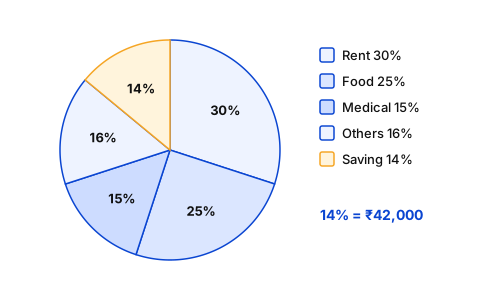
  1. Spending =30+25+15+16=86%.
  2. Savings =14%=42000.
  3. Salary =4200014×100=300000, i.e. ₹3,00,000.

Trick: 1%=3000, so 100%=3,00,000.

Answer: (B) 3,00,000

अवधारणा: बचत = 100% − कुल खर्च।

  1. खर्च =30+25+15+16=86%.
  2. बचत =14%=42000.
  3. वेतन =4200014×100=300000, अर्थात ₹3,00,000.

ट्रिक: 1%=3000, अतः 100%=3,00,000.

उत्तर: (B) 3,00,000

RRB NTPC Graduate CBT 1MathematicsPercentage – savingsRRB NTPC Graduate CBT 1 2024 · 6 Jun Shift 3 →
Q4142.
Find the value of m which satisfies (1110)7×(1011)10×(1110)9=(1011)3m+17.
m का वह मान ज्ञात कीजिए जो (1110)7×(1011)10×(1110)9=(1011)3m+17 को संतुष्ट करता है।
  1. A−293
  2. B−233
  3. C−153
  4. D−193
Show answer

Concept: Write all terms with the same base: (1011)n=(1110)−n, then add powers.

  1. LHS =(1110)7−10+9=(1110)6=(1011)−6.
  2. So 3m+17=−6.
  3. 3m=−23 ⇒ m=−233.

Trick: Flipping the fraction just changes the sign of the power.

Answer: (B) −233

अवधारणा: सभी पदों को एक ही आधार में लिखें: (1011)n=(1110)−n, फिर घातें जोड़ें।

  1. LHS =(1110)7−10+9=(1110)6=(1011)−6.
  2. अतः 3m+17=−6.
  3. 3m=−23 ⇒ m=−233.

ट्रिक: भिन्न उलटने पर घात का केवल चिह्न बदलता है।

उत्तर: (B) −233

RRB NTPC Graduate CBT 1MathematicsLaws of exponentsRRB NTPC Graduate CBT 1 2024 · 6 Jun Shift 3 →
Q4143.
If cotθ=34, then find the value of sin3θ.
यदि cotθ=34 है, तो sin3θ का मान ज्ञात कीजिए।
  1. A44125
  2. B117125
  3. C81125
  4. D−117125
Show answer

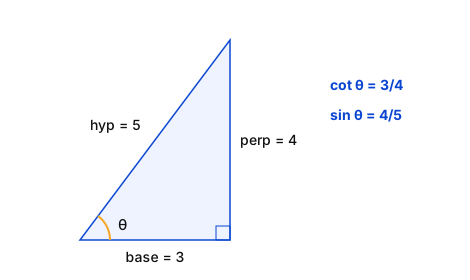
Concept: sin3θ=3sinθ−4sin3θ. From cotθ=34 build a 3-4-5 right triangle.

  1. Base =3, perpendicular =4, hypotenuse =5 ⇒ sinθ=45.
  2. sin3θ=3×45−4×64125.
  3. =300125−256125=44125.

Trick: 3-4-5 triple: cot=baseperp, so perp =4.

Answer: (A) 44125

अवधारणा: sin3θ=3sinθ−4sin3θ. cotθ=34 से 3-4-5 समकोण त्रिभुज बनाएँ।

  1. आधार =3, लंब =4, कर्ण =5 ⇒ sinθ=45.
  2. sin3θ=3×45−4×64125.
  3. =300125−256125=44125.

ट्रिक: 3-4-5 त्रिक: cot=आधारलंब, अतः लंब =4.

उत्तर: (A) 44125

RRB NTPC Graduate CBT 1MathematicsTrigonometry – multiple angleRRB NTPC Graduate CBT 1 2024 · 6 Jun Shift 3 →
Q4144.
If the ratio of two numbers is 17 : 7 and the product of their LCM and their HCF is 119, then the sum of the reciprocals of the LCM and the HCF is:
यदि दो संख्याओं का अनुपात 17 : 7 है और उनके LCM और HCF का गुणनफल 119 है, तो LCM और HCF के व्युत्क्रमों का योग है:
  1. A120119
  2. B120137
  3. C120161
  4. D120139
Show answer

Concept: Product of two numbers =LCM×HCF. With ratio 17:7 the numbers are 17k and 7k, HCF =k.

  1. 17k×7k=119 ⇒ k2=1 ⇒ k=1.
  2. HCF =1, LCM =119.
  3. 1119+11=120119.

Trick: Product equals 17×7 itself, so the numbers are 17 and 7 (co-prime).

Answer: (A) 120119

अवधारणा: दो संख्याओं का गुणनफल =LCM×HCF. अनुपात 17:7 से संख्याएँ 17k और 7k, HCF =k.

  1. 17k×7k=119 ⇒ k2=1 ⇒ k=1.
  2. HCF =1, LCM =119.
  3. 1119+11=120119.

ट्रिक: गुणनफल स्वयं 17×7 है, अतः संख्याएँ 17 और 7 (सह-अभाज्य) हैं।

उत्तर: (A) 120119

RRB NTPC Graduate CBT 1MathematicsHCF and LCMRRB NTPC Graduate CBT 1 2024 · 6 Jun Shift 3 →
Q4145.
Find the average of 308, 127, 90, 45, 125 and 103.
308, 127, 90, 45, 125 और 103 का औसत ज्ञात कीजिए।
  1. A135
  2. B132
  3. C130
  4. D133
Show answer

Concept: Average =sumcount.

  1. Sum =308+127+90+45+125+103=798.
  2. Average =7986=133.

Trick: Check unit digits: 8+7+0+5+5+3=28 → sum ends in 8; 133×6=798 ✓.

Answer: (D) 133

अवधारणा: औसत =योगसंख्या.

  1. योग =308+127+90+45+125+103=798.
  2. औसत =7986=133.

ट्रिक: इकाई अंक जाँचें: योग 8 पर समाप्त; 133×6=798 ✓.

उत्तर: (D) 133

RRB NTPC Graduate CBT 1MathematicsAverageRRB NTPC Graduate CBT 1 2024 · 6 Jun Shift 3 →
Q4146.
Following are the ages (in years) of 6 people in a group: 25, 30, 35, 40, 45 and 50. What is the standard deviation of their ages (rounded to two decimal places)?
एक समूह में 6 व्यक्तियों की आयु (वर्षों में) इस प्रकार है: 25, 30, 35, 40, 45 और 50। उनकी आयु का मानक विचलन (दो दशमलव स्थानों तक पूर्णांकित) क्या है?
  1. A9.26
  2. B7.38
  3. C8.54
  4. D6.57
Show answer

Concept: σ=∑(x−x¯)2n.

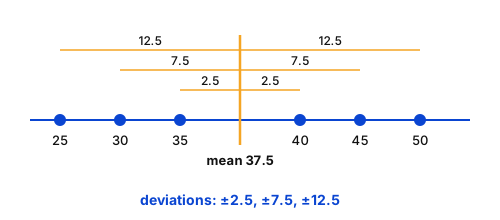
  1. Mean x¯=2256=37.5.
  2. Deviations ±2.5,±7.5,±12.5; squares 6.25,56.25,156.25 (each twice).
  3. ∑(x−x¯)2=2×218.75=437.5.
  4. σ=437.56=72.92≈8.54.

Trick: Equally spaced data with gap d: σ=dn2−112=53512≈8.54.

Answer: (C) 8.54

अवधारणा: σ=∑(x−x¯)2n.

  1. माध्य x¯=2256=37.5.
  2. विचलन ±2.5,±7.5,±12.5; वर्ग 6.25,56.25,156.25 (हर एक दो बार)।
  3. ∑(x−x¯)2=2×218.75=437.5.
  4. σ=437.56=72.92≈8.54.

ट्रिक: समान अंतर d वाले आँकड़ों के लिए: σ=dn2−112=53512≈8.54.

उत्तर: (C) 8.54

RRB NTPC Graduate CBT 1MathematicsStandard deviationRRB NTPC Graduate CBT 1 2024 · 6 Jun Shift 3 →
Q4147.
Simplify 8x3+27y3−64z3+72xyz4x2+9y2+16z2−6xy+12yz+8zx.
8x3+27y3−64z3+72xyz4x2+9y2+16z2−6xy+12yz+8zx को सरल कीजिए।
  1. A(2x−3y+4z)
  2. B(2x+3y−4z)
  3. C(2x+3y+4z)
  4. D(2x−3y−4z)
Show answer

Concept: a3+b3+c3−3abc=(a+b+c)(a2+b2+c2−ab−bc−ca).

  1. Take a=2x, b=3y, c=−4z.
  2. Numerator: 8x3+27y3−64z3−3(2x)(3y)(−4z)=8x3+27y3−64z3+72xyz ✓.
  3. Denominator: 4x2+9y2+16z2−6xy+12yz+8zx ✓.
  4. Quotient =a+b+c=2x+3y−4z.

Trick: The sign of z in −64z3 fixes c=−4z; answer must contain −4z with +3y.

Answer: (B) (2x+3y−4z)

अवधारणा: a3+b3+c3−3abc=(a+b+c)(a2+b2+c2−ab−bc−ca).

  1. a=2x, b=3y, c=−4z लें।
  2. अंश: 8x3+27y3−64z3−3(2x)(3y)(−4z)=8x3+27y3−64z3+72xyz ✓.
  3. हर: 4x2+9y2+16z2−6xy+12yz+8zx ✓.
  4. भागफल =a+b+c=2x+3y−4z.

ट्रिक: −64z3 में चिह्न से c=−4z तय होता है; उत्तर में +3y के साथ −4z होना चाहिए।

उत्तर: (B) (2x+3y−4z)

RRB NTPC Graduate CBT 1MathematicsAlgebraic identitiesRRB NTPC Graduate CBT 1 2024 · 6 Jun Shift 3 →
Q4148.
Gaurav bought the first pen for ₹444 and the second pen for ₹356, respectively. He sells the first pen at 75% of the profit but the buyer bargains for the price, and he has to offer a 14% discount and the second pen at 48% of the profit. Find the total profit he had in this transaction (correct to two decimal places).
गौरव ने पहला पेन ₹444 में और दूसरा पेन ₹356 में खरीदा। वह पहला पेन 75% लाभ पर बेचता है, लेकिन खरीदार मूल्य पर मोलभाव करता है और उसे 14% की छूट देनी पड़ती है, तथा दूसरा पेन 48% लाभ पर बेचता है। इस लेन-देन में उसे हुआ कुल लाभ (दो दशमलव स्थानों तक सही) ज्ञात कीजिए।
  1. A₹396.11
  2. B₹399.02
  3. C₹394.67
  4. D₹395.10
Show answer

Concept: Read 'sells at 75% of the profit' as a selling price fixed at 75% profit, then reduced by the 14% discount; the second pen is sold at 48% profit.

  1. Pen 1: 444×1.75=777; after discount 777×0.86=668.22; profit =224.22.
  2. Pen 2: profit =356×0.48=170.88.
  3. Total profit =224.22+170.88=395.10.

Trick: Pen 1 multiplier 1.75×0.86=1.505 → profit =444×0.505=224.22.

Answer: (D) ₹395.10

अवधारणा: '75% के लाभ पर बेचता है' को 75% लाभ पर तय विक्रय मूल्य मानें, जिस पर 14% छूट दी गई; दूसरा पेन 48% लाभ पर बेचा गया।

  1. पेन 1: 444×1.75=777; छूट के बाद 777×0.86=668.22; लाभ =224.22.
  2. पेन 2: लाभ =356×0.48=170.88.
  3. कुल लाभ =224.22+170.88=395.10.

ट्रिक: पेन 1 गुणक 1.75×0.86=1.505 → लाभ =444×0.505=224.22.

उत्तर: (D) ₹395.10

RRB NTPC Graduate CBT 1MathematicsProfit and discountRRB NTPC Graduate CBT 1 2024 · 6 Jun Shift 3 →
Q4149.
If '−' means '÷', '÷' means '×', '×' means '+' and '+' means '−', then what will come in place of the question mark (?) in the following equation?
9 ÷ 12 × 450 + 8208 − 18 = ?
यदि '−' का अर्थ '÷', '÷' का अर्थ '×', '×' का अर्थ '+' और '+' का अर्थ '−' है, तो निम्नलिखित समीकरण में प्रश्नवाचक चिह्न (?) के स्थान पर क्या आएगा?
9 ÷ 12 × 450 + 8208 − 18 = ?
  1. A100
  2. B101
  3. C102
  4. D425
Show answer

Concept: Replace each sign by its meaning, then apply BODMAS.

  1. Given: 9÷12×450+8208−18
  2. After interchange: 9×12+450−8208÷18
  3. 8208÷18=456, 9×12=108
  4. 108+450−456=102

Trick: Write the new expression first, then do ÷ and × before + and −.

Answer: (C) 102

अवधारणा: हर चिह्न को उसके अर्थ से बदलें, फिर BODMAS लगाएँ।

  1. दिया है: 9÷12×450+8208−18
  2. बदलने पर: 9×12+450−8208÷18
  3. 8208÷18=456, 9×12=108
  4. 108+450−456=102

ट्रिक: पहले नया व्यंजक लिखें, फिर ÷ और × को + और − से पहले हल करें।

उत्तर: (C) 102

RRB NTPC Graduate CBT 1General Intelligence and ReasoningMathematical OperationsRRB NTPC Graduate CBT 1 2024 · 6 Jun Shift 3 →
Q4150.
Select the pair that follows the same pattern as that followed by the two sets of pairs given below. Both pairs follow the same pattern.
JAY : MDB
PAN : SDQ
उस युग्म का चयन कीजिए जो उसी पैटर्न का अनुसरण करता है जिसका अनुसरण नीचे दिए गए युग्मों के दो समुच्चयों द्वारा किया जाता है। दोनों युग्म एक ही पैटर्न का अनुसरण करते हैं।
JAY : MDB
PAN : SDQ
  1. AHEN : KHJ
  2. BRIC : ULZ
  3. CKUT : HRW
  4. DUPC : XSF
Show answer

Concept: Find the shift applied to each letter.

  1. J→M, A→D, Y→B: each letter +3 (Y +3 wraps to B)
  2. P→S, A→D, N→Q: each +3
  3. UPC: U→X, P→S, C→F = XSF ✓; HEN would give KHQ, RIC gives ULF, KUT gives NXW

Trick: Constant +3 on all three letters – check only the last letter of each option first.

Answer: (D) UPC : XSF

अवधारणा: हर अक्षर पर लगा अंतर (shift) ज्ञात करें।

  1. J→M, A→D, Y→B: हर अक्षर +3 (Y +3 = B)
  2. P→S, A→D, N→Q: हर अक्षर +3
  3. UPC: U→X, P→S, C→F = XSF ✓; HEN से KHQ, RIC से ULF, KUT से NXW बनता

ट्रिक: तीनों अक्षरों पर +3 – पहले हर विकल्प का अंतिम अक्षर जाँचें।

उत्तर: (D) UPC : XSF

RRB NTPC Graduate CBT 1General Intelligence and ReasoningLetter AnalogyRRB NTPC Graduate CBT 1 2024 · 6 Jun Shift 3 →
Q4151.
Manoj starts from Point A and drives 13 km towards west. He then takes a right turn, drives 2 km, turns right and drives 7 km. He then takes a left turn and drives 5 km. He takes a final right turn, drives 6 km and stops at Point P. How far (shortest distance) and towards which direction should he drive in order to reach Point A again (all turns are 90° turns only unless specified)?
मनोज बिंदु A से चलना शुरू करता है और पश्चिम की ओर 13 km गाड़ी चलाता है। फिर वह दाएँ मुड़ता है, 2 km गाड़ी चलाता है, दाएँ मुड़ता है और 7 km गाड़ी चलाता है। फिर वह बाएँ मुड़ता है और 5 km गाड़ी चलाता है। वह अंतिम बार दाएँ मुड़ता है, 6 km गाड़ी चलाता है और बिंदु P पर रुक जाता है। फिर से बिंदु A पर पहुँचने के लिए उसे कितनी दूरी (न्यूनतम दूरी) तक और किस दिशा में गाड़ी चलानी चाहिए (जब तक निर्दिष्ट न हो, सभी मोड़ केवल 90° के मोड़ हैं)?
  1. A5 km; South5 km; दक्षिण
  2. B9 km; South9 km; दक्षिण
  3. C7 km; South7 km; दक्षिण
  4. D6 km; South6 km; दक्षिण
Show answer

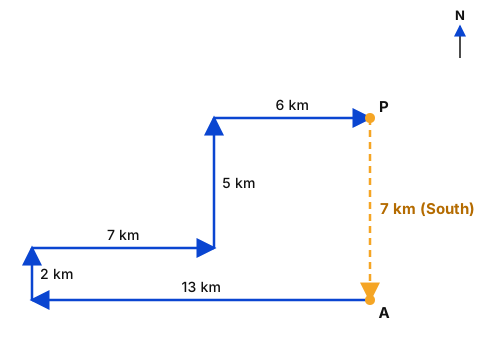
Concept: Trace the path on axes (East +x, North +y), starting at A (0,0).

  1. 13 km west → (−13,0); right (north) 2 km → (−13,2)
  2. Right (east) 7 km → (−6,2); left (north) 5 km → (−6,7)
  3. Right (east) 6 km → P (0,7)
  4. P is 7 km north of A, so he must drive 7 km south.

Trick: East–west: −13+7+6=0; North: 2+5=7 → straight 7 km back south.

Answer: (C) 7 km; South

अवधारणा: अक्षों पर रास्ता बनाएँ (पूर्व +x, उत्तर +y), A (0,0) से शुरू।

  1. 13 km पश्चिम → (−13,0); दाएँ (उत्तर) 2 km → (−13,2)
  2. दाएँ (पूर्व) 7 km → (−6,2); बाएँ (उत्तर) 5 km → (−6,7)
  3. दाएँ (पूर्व) 6 km → P (0,7)
  4. P, A से 7 km उत्तर में है, अतः 7 km दक्षिण जाना होगा।

ट्रिक: पूर्व–पश्चिम: −13+7+6=0; उत्तर: 2+5=7 → सीधे 7 km दक्षिण।

उत्तर: (C) 7 km; South

RRB NTPC Graduate CBT 1General Intelligence and ReasoningDirection and DistanceRRB NTPC Graduate CBT 1 2024 · 6 Jun Shift 3 →
Q4152.
A, B, C, D, G, H, and I are sitting around a circular table facing the centre.
Only two people sit between D and A when counted from the left of A. H sits third to the left of G. I sits to the immediate right of G. I sits second to the left of D. B is not an immediate neighbor of H.
Who sits third to the right of C?
A, B, C, D, G, H और I एक वृत्ताकार मेज़ के चारों ओर केंद्र की ओर मुख करके बैठे हैं।
A के बाएँ से गिनने पर D और A के बीच केवल दो व्यक्ति बैठे हैं। H, G के बाएँ से तीसरे स्थान पर बैठा है। I, G के ठीक दाएँ बैठा है। I, D के बाएँ से दूसरे स्थान पर बैठा है। B, H का निकटतम पड़ोसी नहीं है।
C के दाएँ से तीसरे स्थान पर कौन बैठा है?
  1. AD
  2. BA
  3. CI
  4. DH
Show answer

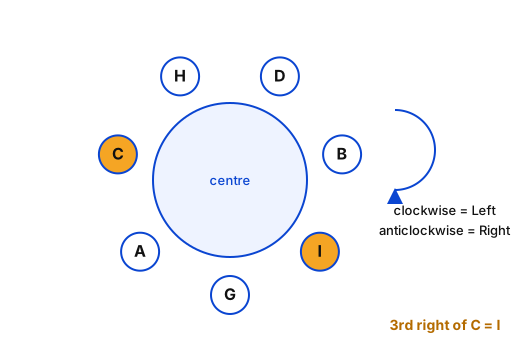
Concept: Facing the centre, a person's left is clockwise and right is anticlockwise.

  1. Fix G. I is immediate right of G; H is 3rd to the left of G.
  2. I is 2nd to the left of D → D is 2nd to the right of I, i.e. 3rd to the right of G.
  3. D is 3rd to the left of A (two people between) → A sits immediate left of G.
  4. Seats left for B and C: the one next to H must be C (B is not H's neighbour); B sits between D and I.
  5. From C, going right (anticlockwise): A, G, I → I is 3rd to the right of C.

Trick: Draw G at the bottom first; every clue then fixes one seat.

Answer: (C) I

अवधारणा: केंद्र की ओर मुख होने पर व्यक्ति का बायाँ = दक्षिणावर्त (clockwise), दायाँ = वामावर्त (anticlockwise)।

  1. G को स्थिर करें। I, G के ठीक दाएँ; H, G के बाएँ तीसरे स्थान पर।
  2. I, D के बाएँ दूसरा → D, I के दाएँ दूसरा, अर्थात G के दाएँ तीसरा।
  3. D, A के बाएँ तीसरा (बीच में दो लोग) → A, G के ठीक बाएँ।
  4. B और C के लिए बची सीटों में H के पास वाली C की (B, H का पड़ोसी नहीं); B, D और I के बीच।
  5. C से दाएँ (anticlockwise) गिनें: A, G, I → C के दाएँ तीसरा I है।

ट्रिक: पहले G को नीचे रखें; हर शर्त एक सीट तय कर देती है।

उत्तर: (C) I

RRB NTPC Graduate CBT 1General Intelligence and ReasoningCircular Seating ArrangementRRB NTPC Graduate CBT 1 2024 · 6 Jun Shift 3 →
Q4153.
Based on the English alphabetical order, three of the following four letter-cluster pairs are alike in a certain way and thus form a group. Which letter-cluster pair DOES NOT belong to that group? (Note: The odd one out is not based on the number of
consonants/vowels or their position in the letter cluster)
अंग्रेज़ी वर्णमाला क्रम के आधार पर, निम्नलिखित चार अक्षर-समूह युग्मों में से तीन किसी निश्चित प्रकार से एकसमान हैं और इस प्रकार एक समूह बनाते हैं। कौन-सा अक्षर-समूह युग्म उस समूह से संबंधित नहीं है? (ध्यान दें: असंगत युग्म, अक्षर-समूह में
व्यंजनों/स्वरों की संख्या या उनके स्थान पर आधारित नहीं है)
  1. ANR - MQ
  2. BEI - DH
  3. CRV - QU
  4. DXZ - TL
Show answer

Concept: Check the gap inside each cluster and between the two clusters.

  1. NR – MQ: N +4 = R, M +4 = Q; first letters N → M (−1)
  2. EI – DH and RV – QU follow the same: +4 inside, −1 between
  3. XZ – TL: X +2 = Z and T → L is −8; breaks the pattern

Trick: Pattern = (letter, letter +4) – (letter −1, letter +3); XZ fails at the first check.

Answer: (D) XZ - TL

अवधारणा: हर क्लस्टर के अंदर और दोनों क्लस्टरों के बीच का अंतर देखें।

  1. NR – MQ: N +4 = R, M +4 = Q; पहले अक्षर N → M (−1)
  2. EI – DH और RV – QU में भी यही: अंदर +4, बीच में −1
  3. XZ – TL: X +2 = Z और T → L −8; पैटर्न टूटता है

ट्रिक: पैटर्न = (अक्षर, अक्षर +4) – (अक्षर −1, अक्षर +3); XZ पहली जाँच में ही बाहर।

उत्तर: (D) XZ - TL

RRB NTPC Graduate CBT 1General Intelligence and ReasoningOdd One Out – Letter PairsRRB NTPC Graduate CBT 1 2024 · 6 Jun Shift 3 →
Q4154.
Refer to the following number and symbol series and answer the question that follows. Counting to be done from left to right only. All numbers are single-digit numbers. (Left) 4 @ 7 4 £ 9 9 # @ 1 4 $ % 4 3 8 2 © © 1 5 # (Right)
How many such numbers are there each of which is immediately preceded by a number and also immediately followed by a number?
निम्नलिखित संख्या और प्रतीक शृंखला को देखिए और उसके बाद आने वाले प्रश्न का उत्तर दीजिए। गिनती केवल बाएँ से दाएँ की जानी है। सभी संख्याएँ एक-अंकीय संख्याएँ हैं। (बाएँ) 4 @ 7 4 £ 9 9 # @ 1 4 $ % 4 3 8 2 © © 1 5 # (दाएँ)
ऐसी कितनी संख्याएँ हैं जिनमें से प्रत्येक के ठीक पहले एक संख्या है और ठीक बाद में भी एक संख्या है?
  1. A3
  2. B1
  3. C2
  4. D4
Show answer

Concept: Look for number–number–number triplets.

  1. Series: 4 @ 7 4 £ 9 9 # @ 1 4 $ % 4 3 8 2 © © 1 5 #
  2. Triplets with a number on both sides: 4 3 8 and 3 8 2.
  3. Others fail: e.g. 7 4 £ (followed by £), 9 9 # (followed by #), 1 4 $, 1 5 #.

Trick: Scan only runs of 3 or more digits in a row: here only '4 3 8 2'.

Answer: (C) 2

अवधारणा: संख्या–संख्या–संख्या वाले त्रिक खोजें।

  1. शृंखला: 4 @ 7 4 £ 9 9 # @ 1 4 $ % 4 3 8 2 © © 1 5 #
  2. दोनों ओर संख्या वाले: 4 3 8 और 3 8 2।
  3. बाकी असफल: जैसे 7 4 £ (बाद में £), 9 9 # (बाद में #), 1 4 $, 1 5 #।

ट्रिक: केवल लगातार 3 या अधिक अंकों वाले हिस्से देखें: यहाँ केवल '4 3 8 2'।

उत्तर: (C) 2

RRB NTPC Graduate CBT 1General Intelligence and ReasoningNumber–Symbol SeriesRRB NTPC Graduate CBT 1 2024 · 6 Jun Shift 3 →
Q4155.
Which of the following letter-clusters should replace # and % so that the pattern and relationship followed between the letter-cluster pair on the left side of :: is the same as that on the right side of ::?
# : AIP :: MRV : %
निम्नलिखित में से कौन-से अक्षर-समूह # और % को प्रतिस्थापित करने चाहिए ताकि :: के बाईं ओर के अक्षर-समूह युग्म के बीच का पैटर्न और संबंध वही हो जो :: के दाईं ओर के अक्षर-समूह युग्म के बीच है?
# : AIP :: MRV : %
  1. A# = ELR, % = QUX
  2. B# = WFN, % = QUX
  3. C# = IOT, % = WFN
  4. D# = QUX, % = ELR
Show answer

Concept: Find the rule using the complete pair from an option, then apply it to MRV.

  1. Try # = WFN: W +4 = A, F +3 = I, N +2 = P → AIP ✓
  2. Apply +4,+3,+2 to MRV: M → Q, R → U, V → X = QUX
  3. So # = WFN and % = QUX.

Trick: % must be MRV shifted forward: only QUX starts with Q (M +4).

Answer: (B) # = WFN, % = QUX

अवधारणा: किसी विकल्प से नियम ज्ञात कर MRV पर लगाएँ।

  1. # = WFN लें: W +4 = A, F +3 = I, N +2 = P → AIP ✓
  2. MRV पर +4,+3,+2: M → Q, R → U, V → X = QUX
  3. अतः # = WFN और % = QUX।

ट्रिक: % = MRV आगे खिसकाकर; केवल QUX, Q (M +4) से शुरू होता है।

उत्तर: (B) # = WFN, % = QUX

RRB NTPC Graduate CBT 1General Intelligence and ReasoningLetter AnalogyRRB NTPC Graduate CBT 1 2024 · 6 Jun Shift 3 →
Q4156.
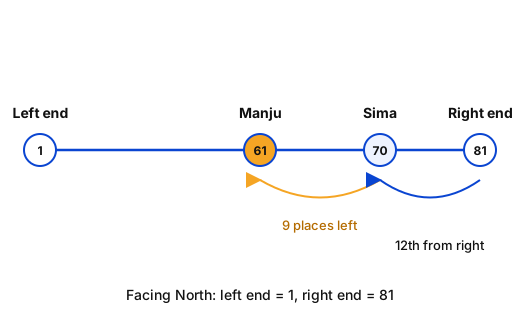
In a row of 81 students facing north, Sima is 12th from the right end. If Manju is 9th to the left of Sima, what is Manju’s position from the left end of the line?
उत्तर की ओर मुख करके खड़े 81 विद्यार्थियों की एक पंक्ति में, सीमा दाएँ छोर से 12वें स्थान पर है। यदि मंजू, सीमा के बाएँ से 9वें स्थान पर है, तो पंक्ति के बाएँ छोर से मंजू का स्थान क्या है?
  1. A52nd52वाँ
  2. B38th38वाँ
  3. C61st61वाँ
  4. D47th47वाँ
Show answer

Concept: Position from left =Total−position from right+1.

  1. Sima from left =81−12+1=70
  2. Manju is 9 places to the left: 70−9=61
  3. Manju is 61st from the left end.

Trick: Facing north, 'left' means towards the left end, so subtract.

Answer: (C) 61st

अवधारणा: बाएँ से स्थान =कुल−दाएँ से स्थान+1।

  1. सीमा बाएँ से =81−12+1=70
  2. मंजू 9 स्थान बाएँ: 70−9=61
  3. मंजू बाएँ सिरे से 61st है।

ट्रिक: उत्तर की ओर मुख – 'बाएँ' का अर्थ बाएँ सिरे की ओर, इसलिए घटाएँ।

उत्तर: (C) 61st

RRB NTPC Graduate CBT 1General Intelligence and ReasoningRanking and OrderRRB NTPC Graduate CBT 1 2024 · 6 Jun Shift 3 →
Q4157.
What should come in place of the question mark (?) in the given series based on the English alphabetical order?
KIO LJP MKQ NLR ?
अंग्रेज़ी वर्णमाला क्रम के आधार पर दी गई शृंखला में प्रश्नवाचक चिह्न (?) के स्थान पर क्या आना चाहिए?
KIO LJP MKQ NLR ?
  1. AONR
  2. BOMS
  3. CONS
  4. DOMR
Show answer

Concept: Each position of the three-letter term moves forward by one letter.

  1. 1st letters: K, L, M, N → O
  2. 2nd letters: I, J, K, L → M
  3. 3rd letters: O, P, Q, R → S

Trick: Every letter +1: NLR → OMS.

Answer: (B) OMS

अवधारणा: तीन अक्षरों वाले हर पद का हर अक्षर एक-एक आगे बढ़ता है।

  1. पहले अक्षर: K, L, M, N → O
  2. दूसरे अक्षर: I, J, K, L → M
  3. तीसरे अक्षर: O, P, Q, R → S

ट्रिक: हर अक्षर +1: NLR → OMS।

उत्तर: (B) OMS

RRB NTPC Graduate CBT 1General Intelligence and ReasoningLetter SeriesRRB NTPC Graduate CBT 1 2024 · 6 Jun Shift 3 →
Q4158.
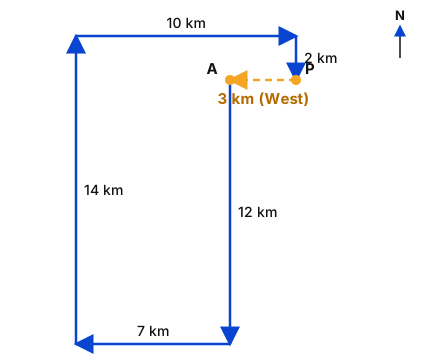
Pravenesh starts from point A and drives 12 km towards the south. He then takes a right turn, drives 7 km, turns right and drives 14 km. He then takes a right turn and drives 10 km. He takes a final right turn, drives 2 km and stops at point P. How far (shortest distance) and towards which direction should he drive in order to reach point A again? (All turns are 90 degree turns only unless specified.)
प्रवेनेश बिंदु A से चलना शुरू करता है और दक्षिण की ओर 12 km गाड़ी चलाता है। फिर वह दाएँ मुड़ता है, 7 km गाड़ी चलाता है, दाएँ मुड़ता है और 14 km गाड़ी चलाता है। फिर वह दाएँ मुड़ता है और 10 km गाड़ी चलाता है। वह अंतिम बार दाएँ मुड़ता है, 2 km गाड़ी चलाता है और बिंदु P पर रुक जाता है। फिर से बिंदु A पर पहुँचने के लिए उसे कितनी दूरी (न्यूनतम दूरी) तक और किस दिशा में गाड़ी चलानी चाहिए? (जब तक निर्दिष्ट न हो, सभी मोड़ केवल 90 डिग्री के मोड़ हैं।)
  1. A2 km to the eastपूर्व की ओर 2 km
  2. B4 km to the eastपूर्व की ओर 4 km
  3. C3 km to the eastपूर्व की ओर 3 km
  4. D3 km to the westपश्चिम की ओर 3 km
Show answer

Concept: Trace the path on axes (East +x, North +y), starting at A (0,0).

  1. 12 km south → (0,−12); right (west) 7 km → (−7,−12)
  2. Right (north) 14 km → (−7,2); right (east) 10 km → (3,2)
  3. Right (south) 2 km → P (3,0)
  4. P is 3 km east of A, so he must drive 3 km towards the west.

Trick: Net east =−7+10=3; net north =−12+14−2=0.

Answer: (D) 3 km to the west

अवधारणा: अक्षों पर रास्ता बनाएँ (पूर्व +x, उत्तर +y), A (0,0) से शुरू।

  1. 12 km दक्षिण → (0,−12); दाएँ (पश्चिम) 7 km → (−7,−12)
  2. दाएँ (उत्तर) 14 km → (−7,2); दाएँ (पूर्व) 10 km → (3,2)
  3. दाएँ (दक्षिण) 2 km → P (3,0)
  4. P, A से 3 km पूर्व में है, अतः 3 km पश्चिम जाना होगा।

ट्रिक: कुल पूर्व =−7+10=3; कुल उत्तर =−12+14−2=0।

उत्तर: (D) 3 km to the west

RRB NTPC Graduate CBT 1General Intelligence and ReasoningDirection and DistanceRRB NTPC Graduate CBT 1 2024 · 6 Jun Shift 3 →
Q4159.
Which of the following letter-clusters should replace # and % so that the pattern and relationship followed between the letter-cluster pair on the left side of :: is the same as that on the right side of :: ?
# : EKN :: RVN : %
निम्नलिखित में से कौन-से अक्षर-समूह # और % को प्रतिस्थापित करने चाहिए ताकि :: के बाईं ओर के अक्षर-समूह युग्म के बीच का पैटर्न और संबंध वही हो जो :: के दाईं ओर के अक्षर-समूह युग्म के बीच है?
# : EKN :: RVN : %
  1. A# = DHL, % = SYP
  2. B# = DMK, % = SZQ
  3. C# = CIK, % = PYR
  4. D# = CML, % = PZT
Show answer

Concept: Find the rule using the complete pair from an option, then apply it to RVN.

  1. Try # = DHL: D +1 = E, H +3 = K, L +2 = N → EKN ✓
  2. Apply +1,+3,+2 to RVN: R → S, V → Y, N → P = SYP
  3. So # = DHL and % = SYP.

Trick: % must start with R +1 = S and end with N +2 = P → SYP.

Answer: (A) # = DHL, % = SYP

अवधारणा: किसी विकल्प से नियम ज्ञात कर RVN पर लगाएँ।

  1. # = DHL लें: D +1 = E, H +3 = K, L +2 = N → EKN ✓
  2. RVN पर +1,+3,+2: R → S, V → Y, N → P = SYP
  3. अतः # = DHL और % = SYP।

ट्रिक: % का पहला अक्षर R +1 = S और अंतिम N +2 = P → SYP।

उत्तर: (A) # = DHL, % = SYP

RRB NTPC Graduate CBT 1General Intelligence and ReasoningLetter AnalogyRRB NTPC Graduate CBT 1 2024 · 6 Jun Shift 3 →
Q4160.
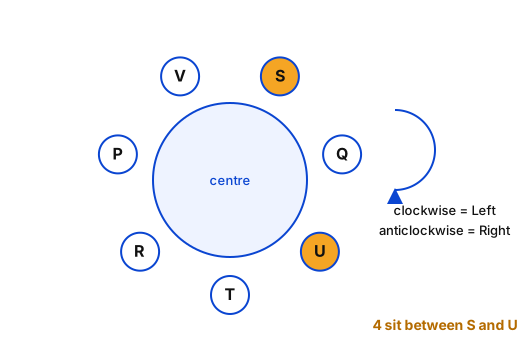
P, Q, R, S, T, U and V are sitting around a circular table facing the centre. Both Q and V are immediate neighbours of S. V sits third to the left of T. R sits to the immediate left of T. U is not an immediate neighbour of V. How many people sit between S and U when counted from the right of S?
P, Q, R, S, T, U और V एक वृत्ताकार मेज़ के चारों ओर केंद्र की ओर मुख करके बैठे हैं। Q और V दोनों, S के निकटतम पड़ोसी हैं। V, T के बाएँ से तीसरे स्थान पर बैठा है। R, T के ठीक बाएँ बैठा है। U, V का निकटतम पड़ोसी नहीं है। S के दाएँ से गिनने पर S और U के बीच कितने व्यक्ति बैठे हैं?
  1. A1
  2. B2
  3. C4
  4. D3
Show answer

Concept: Facing the centre, a person's left is clockwise and right is anticlockwise.

  1. Fix T. R is immediate left of T; V is 3rd to the left of T.
  2. S is a neighbour of V. The seat between R and V cannot be S (Q also needs to be next to S), so S is on V's other side and Q next to S.
  3. Remaining seats: between R and V, and between Q and T. U is not next to V → U sits between Q and T; P between R and V.
  4. From S going right (anticlockwise): V, P, R, T, then U → 4 people between.

Trick: Place T first, then the 'third to the left' person; the neighbour clues finish the circle.

Answer: (C) 4

अवधारणा: केंद्र की ओर मुख होने पर बायाँ = दक्षिणावर्त (clockwise), दायाँ = वामावर्त।

  1. T को स्थिर करें। R, T के ठीक बाएँ; V, T के बाएँ तीसरा।
  2. S, V का पड़ोसी है। R और V के बीच की सीट S की नहीं हो सकती (Q को भी S के पास बैठना है), अतः S, V के दूसरी ओर और Q, S के पास।
  3. बची सीटें: R–V के बीच और Q–T के बीच। U, V का पड़ोसी नहीं → U, Q और T के बीच; P, R और V के बीच।
  4. S से दाएँ (anticlockwise) गिनें: V, P, R, T, फिर U → बीच में 4 लोग।

ट्रिक: पहले T, फिर 'बाएँ तीसरा' व्यक्ति रखें; पड़ोसी वाली शर्तें व्यवस्था पूरी कर देती हैं।

उत्तर: (C) 4

RRB NTPC Graduate CBT 1General Intelligence and ReasoningCircular Seating ArrangementRRB NTPC Graduate CBT 1 2024 · 6 Jun Shift 3 →