Question bank

Q&A: practice questions with answers

Search questions on any topic. Filter by exam category, exam, subject and topic, try the question, then open the answer and explanation.

Courses – airGurukul

7,077 questions found.

Q4261.
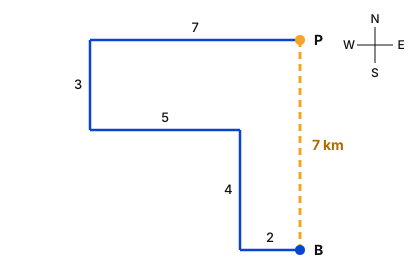
Tanveer starts from Point B and drives 2 km towards west. He then takes a right turn, drives 4 km, turns left and drives 5 km. He then takes a right turn and drives 3 km. He takes a final right turn, drives 7 km and stops at Point P. How far (shortest distance) and towards which direction should he drive in order to reach Point B again (all turns are 90° turns only unless specified)?
तनवीर बिंदु B से चलना शुरू करता है और पश्चिम की ओर 2 km ड्राइव करता है। फिर वह दाएँ मुड़ता है, 4 km ड्राइव करता है, बाएँ मुड़ता है और 5 km ड्राइव करता है। फिर वह दाएँ मुड़ता है और 3 km ड्राइव करता है। वह अंतिम बार दाएँ मुड़ता है, 7 km ड्राइव करता है और बिंदु P पर रुक जाता है। बिंदु B पर पुनः पहुँचने के लिए उसे कितनी दूरी (न्यूनतम दूरी) और किस दिशा में ड्राइव करना चाहिए (जब तक निर्दिष्ट न हो, सभी मोड़ केवल 90° के हैं)?
  1. A5 km south5 km दक्षिण
  2. B7 km south7 km दक्षिण
  3. C6 km south6 km दक्षिण
  4. D4 km south4 km दक्षिण
Show answer

Concept: Track each move as coordinates (East +x, North +y) starting from B (0,0).

  1. West 2 → (−2,0); right turn = North 4 → (−2,4)
  2. Left = West 5 → (−7,4); right = North 3 → (−7,7)
  3. Right = East 7 → P (0,7)
  4. P is 7 km directly north of B, so he must drive 7 km south.

Trick: Net E–W: −2−5+7=0; net N–S: 4+3=7 north → return 7 km south.

Answer: (B) 7 km south

अवधारणा: B (0,0) से हर चाल को निर्देशांक (पूर्व +x, उत्तर +y) में लिखें।

  1. पश्चिम 2 → (−2,0); दाएँ = उत्तर 4 → (−2,4)
  2. बाएँ = पश्चिम 5 → (−7,4); दाएँ = उत्तर 3 → (−7,7)
  3. दाएँ = पूर्व 7 → P (0,7)
  4. P, B के ठीक 7 km उत्तर में है, अतः 7 km दक्षिण जाना होगा।

ट्रिक: शुद्ध पूर्व–पश्चिम: −2−5+7=0; उत्तर–दक्षिण: 4+3=7 उत्तर → 7 km दक्षिण।

उत्तर: (B) 7 km south
RRB NTPC Graduate CBT 1General Intelligence and ReasoningDirection and distanceRRB NTPC Graduate CBT 1 2024 · 6 Jun Shift 2 →
Q4262.
Based on the English alphabetical order, three of the following four letter-cluster pairs are alike in a certain way and thus form a group. Which letter-cluster pair DOES NOT belong to that group?
(Note: The odd one out is not based on the number of consonants/vowels or their position in the letter-cluster.)
अंग्रेज़ी वर्णमाला क्रम के आधार पर, निम्नलिखित चार अक्षर-समूह युग्मों में से तीन किसी निश्चित प्रकार से एकसमान हैं और इस प्रकार एक समूह बनाते हैं। कौन-सा अक्षर-समूह युग्म उस समूह से संबंधित नहीं है?
(ध्यान दें: असंगत अक्षर-समूह, उस अक्षर-समूह में व्यंजनों/स्वरों की संख्या या उनके स्थान पर आधारित नहीं है।)
  1. AIM - KO
  2. BSP - QI
  3. CLP - NR
  4. DGK - IM
Show answer

Concept: Compare each letter of the first cluster with the corresponding letter of the second.

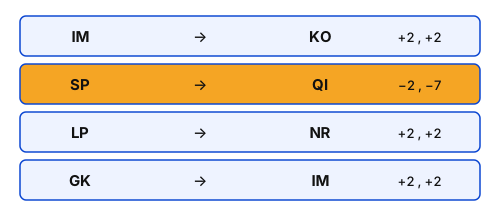
  1. IM → KO: +2,+2; LP → NR: +2,+2; GK → IM: +2,+2
  2. SP → QI: S(19)−2=Q(17), P(16)−7=I(9) → −2,−7
  3. SP – QI breaks the pattern.

Trick: In the three alike pairs both clusters have a gap of 4 (I_M, L_P, G_K); SP goes backwards.

Answer: (B) SP - QI

अवधारणा: पहले समूह के प्रत्येक अक्षर की तुलना दूसरे समूह के संगत अक्षर से करें।

  1. IM → KO: +2,+2; LP → NR: +2,+2; GK → IM: +2,+2
  2. SP → QI: S(19)−2=Q(17), P(16)−7=I(9) → −2,−7
  3. SP – QI नियम तोड़ता है।

ट्रिक: समान तीनों युग्मों में अक्षरों के बीच 4 का अंतर है (I_M, L_P, G_K); SP उल्टा है।

उत्तर: (B) SP - QI

RRB NTPC Graduate CBT 1General Intelligence and ReasoningLetter-cluster pairs (odd one out)RRB NTPC Graduate CBT 1 2024 · 6 Jun Shift 2 →
Q4263.
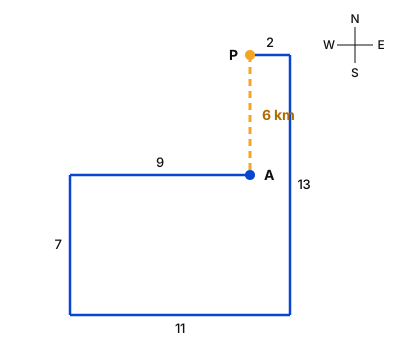
Raju starts from point A and drives 9 km towards the west. He then takes a left turn, drives 7 km, turns left and drives 11 km. He then takes a left turn and drives 13 km. He takes a final left turn, drives 2 km and stops at point P. How far (shortest distance) and towards which direction should he drive in order to reach point A again? (All turns are 90 degree turns only unless specified.)
राजू बिंदु A से चलना शुरू करता है और पश्चिम की ओर 9 km ड्राइव करता है। फिर वह बाएँ मुड़ता है, 7 km ड्राइव करता है, बाएँ मुड़ता है और 11 km ड्राइव करता है। फिर वह बाएँ मुड़ता है और 13 km ड्राइव करता है। वह अंतिम बार बाएँ मुड़ता है, 2 km ड्राइव करता है और बिंदु P पर रुक जाता है। बिंदु A पर पुनः पहुँचने के लिए उसे कितनी दूरी (न्यूनतम दूरी) और किस दिशा में ड्राइव करना चाहिए? (जब तक निर्दिष्ट न हो, सभी मोड़ केवल 90 डिग्री के हैं।)
  1. A5 km to the northउत्तर की ओर 5 km
  2. B6 km to the southदक्षिण की ओर 6 km
  3. C5 km to the southदक्षिण की ओर 5 km
  4. D6 km to the northउत्तर की ओर 6 km
Show answer

Concept: Track each move as coordinates (East +x, North +y) starting from A (0,0).

  1. West 9 → (−9,0); left = South 7 → (−9,−7)
  2. Left = East 11 → (2,−7); left = North 13 → (2,6)
  3. Left = West 2 → P (0,6)
  4. P is 6 km north of A, so he must drive 6 km south.

Trick: Net E–W: −9+11−2=0; net N–S: −7+13=6 north → return 6 km south.

Answer: (B) 6 km to the south

अवधारणा: A (0,0) से हर चाल को निर्देशांक (पूर्व +x, उत्तर +y) में लिखें।

  1. पश्चिम 9 → (−9,0); बाएँ = दक्षिण 7 → (−9,−7)
  2. बाएँ = पूर्व 11 → (2,−7); बाएँ = उत्तर 13 → (2,6)
  3. बाएँ = पश्चिम 2 → P (0,6)
  4. P, A के 6 km उत्तर में है, अतः 6 km दक्षिण जाना होगा।

ट्रिक: शुद्ध पूर्व–पश्चिम: −9+11−2=0; उत्तर–दक्षिण: −7+13=6 उत्तर → 6 km दक्षिण।

उत्तर: (B) 6 km to the south

RRB NTPC Graduate CBT 1General Intelligence and ReasoningDirection and distanceRRB NTPC Graduate CBT 1 2024 · 6 Jun Shift 2 →
Q4264.
In a certain code language, ‘BRAVE’ is coded as ‘29317’ and ‘VIBER’ is coded as ‘38792’. What is the code for ‘A’ in the given code language?
एक निश्चित कूट भाषा में, ‘BRAVE’ को ‘29317’ और ‘VIBER’ को ‘38792’ के रूप में कूटबद्ध किया जाता है। दी गई कूट भाषा में ‘A’ का कूट क्या है?
  1. A7
  2. B2
  3. C1
  4. D9
Show answer

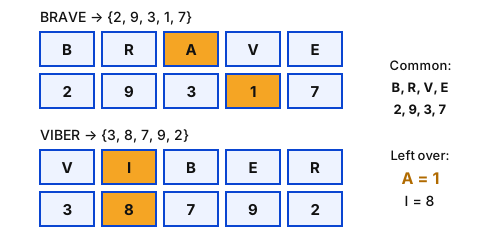
Concept: Codes are not in letter order: match common letters with common digits.

  1. BRAVE → {2, 9, 3, 1, 7}; VIBER → {3, 8, 7, 9, 2}
  2. Common letters B, R, V, E ↔ common digits 2, 9, 3, 7.
  3. The letter left in BRAVE is A and the digit left is 1 → A = 1.

Trick: Leftover letter ↔ leftover digit.

Answer: (C) 1

अवधारणा: कोड अक्षरों के क्रम में नहीं हैं: उभयनिष्ठ अक्षरों को उभयनिष्ठ अंकों से मिलाएँ।

  1. BRAVE → {2, 9, 3, 1, 7}; VIBER → {3, 8, 7, 9, 2}
  2. उभयनिष्ठ अक्षर B, R, V, E ↔ उभयनिष्ठ अंक 2, 9, 3, 7।
  3. BRAVE में बचा अक्षर A और बचा अंक 1 → A = 1।

ट्रिक: बचा अक्षर ↔ बचा अंक।

उत्तर: (C) 1

RRB NTPC Graduate CBT 1General Intelligence and ReasoningCoding-decoding (letter-digit sets)RRB NTPC Graduate CBT 1 2024 · 6 Jun Shift 2 →
Q4265.
GV 14 is related to LS 5 in a certain way. In the same way, HQ 5 is related to MN -4. To which of the given options is MG 0 related, following the same logic?
GV 14 एक निश्चित प्रकार से LS 5 से संबंधित है। उसी प्रकार, HQ 5, MN -4 से संबंधित है। समान तर्क का अनुसरण करते हुए, MG 0 दिए गए विकल्पों में से किससे संबंधित है?
  1. ANY -6
  2. BRD -9
  3. CBG -7
  4. DHR -3
Show answer

Concept: Find the shift applied to each letter and to the number.

  1. GV 14 → LS 5: G(7)+5=L(12), V(22)−3=S(19), 14−9=5.
  2. Check HQ 5 → MN −4: H+5=M, Q−3=N, 5−9=−4 ✓.
  3. MG 0: M(13)+5=R(18), G(7)−3=D(4), 0−9=−9 → RD −9.

Trick: Rule: first letter +5, second letter −3, number −9.

Answer: (B) RD -9

अवधारणा: हर अक्षर और संख्या में होने वाला बदलाव ज्ञात करें।

  1. GV 14 → LS 5: G(7)+5=L(12), V(22)−3=S(19), 14−9=5।
  2. जाँच HQ 5 → MN −4: H+5=M, Q−3=N, 5−9=−4 ✓।
  3. MG 0: M(13)+5=R(18), G(7)−3=D(4), 0−9=−9 → RD −9।

ट्रिक: नियम: पहला अक्षर +5, दूसरा अक्षर −3, संख्या −9।

उत्तर: (B) RD -9

RRB NTPC Graduate CBT 1General Intelligence and ReasoningAnalogy – letters and numbersRRB NTPC Graduate CBT 1 2024 · 6 Jun Shift 2 →
Q4266.
Each of the digits in the number 8569142 is arranged in the descending order from left to right. The position(s) of how many digits will remain unchanged in the new number thus formed as compared to that in the original number?
संख्या 8569142 के प्रत्येक अंक को बाएँ से दाएँ अवरोही क्रम में व्यवस्थित किया जाता है। इस प्रकार बनी नई संख्या में, मूल संख्या की तुलना में कितने अंकों का स्थान अपरिवर्तित रहेगा?
  1. AThreeतीन
  2. BFourचार
  3. CTwoदो
  4. DOneएक
Show answer

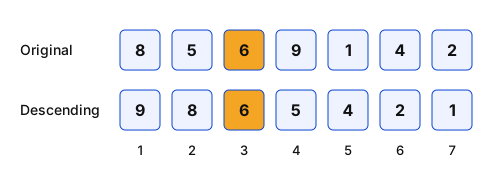
Concept: Arrange digits in descending order and compare place by place.

  1. Original: 8 5 6 9 1 4 2.
  2. Descending: 9 8 6 5 4 2 1.
  3. Only the 3rd place (digit 6) is the same in both numbers.

Trick: Write both numbers one below the other and tick matching columns.

Answer: (D) One

अवधारणा: अंकों को घटते क्रम में लिखें और स्थान-दर-स्थान तुलना करें।

  1. मूल संख्या: 8 5 6 9 1 4 2।
  2. घटता क्रम: 9 8 6 5 4 2 1।
  3. केवल तीसरे स्थान का अंक (6) दोनों में समान है।

ट्रिक: दोनों संख्याओं को एक के नीचे एक लिखकर मेल खाते कॉलम पर निशान लगाएँ।

उत्तर: (D) एक

RRB NTPC Graduate CBT 1General Intelligence and ReasoningDigit arrangementRRB NTPC Graduate CBT 1 2024 · 6 Jun Shift 2 →
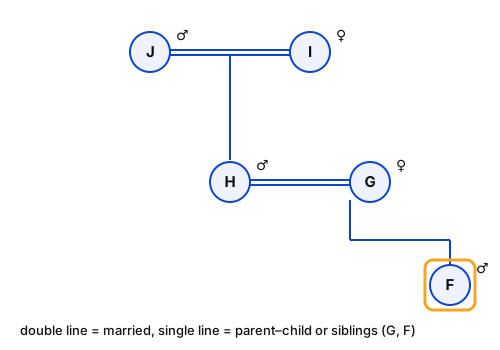
Q4267.
​F is the brother of G.
G is the wife of H.
H is the son of I.
I is the wife of J.
How is F related to J?
​F, G का भाई है।
G, H की पत्नी है।
H, I का पुत्र है।
I, J की पत्नी है।
F का J से क्या संबंध है?
  1. AFatherपिता
  2. BSon's wife's brotherपुत्र की पत्नी का भाई
  3. CSonपुत्र
  4. DSon's wife's fatherपुत्र की पत्नी का पिता
Show answer

Concept: Draw the family tree step by step.

  1. I is the wife of J and H is the son of I → H is the son of J.
  2. G is the wife of H → G is J’s son’s wife (daughter-in-law).
  3. F is the brother of G → F is J’s son’s wife’s brother.

Trick: Trace the chain from J: son (H) → son’s wife (G) → her brother (F).

Answer: (B) Son's wife's brother

अवधारणा: चरणबद्ध रूप से वंश-वृक्ष बनाएँ।

  1. I, J की पत्नी है और H, I का पुत्र है → H, J का पुत्र है।
  2. G, H की पत्नी है → G, J के पुत्र की पत्नी (बहू) है।
  3. F, G का भाई है → F, J के पुत्र की पत्नी का भाई है।

ट्रिक: J से शुरू करें: पुत्र (H) → पुत्र की पत्नी (G) → उसका भाई (F)।

उत्तर: (B) पुत्र की पत्नी का भाई

RRB NTPC Graduate CBT 1General Intelligence and ReasoningBlood relationRRB NTPC Graduate CBT 1 2024 · 6 Jun Shift 2 →
Q4268.
This question is based on the five, three-digit numbers given below.
(Left) 910 316 525 204 303 (Right)
(Example: 697 – First digit = 6, second digit = 9 and third digit = 7)
(NOTE: All operations to be done from left to right.)
What will be the resultant if the first digit of the highest number is added to the second digit of the lowest number?
यह प्रश्न नीचे दी गई पाँच, तीन-अंकीय संख्याओं पर आधारित है।
(बाएँ) 910 316 525 204 303 (दाएँ)
(उदाहरण: 697 – पहला अंक = 6, दूसरा अंक = 9 और तीसरा अंक = 7)
(ध्यान दें: सभी संक्रियाएँ बाएँ से दाएँ की जानी हैं।)
यदि सबसे बड़ी संख्या के पहले अंक को सबसे छोटी संख्या के दूसरे अंक में जोड़ा जाए, तो परिणाम क्या होगा?
  1. A9
  2. B12
  3. C8
  4. D10
Show answer

Concept: Identify the highest and lowest numbers first, then pick the required digits.

  1. Numbers: 910, 316, 525, 204, 303.
  2. Highest = 910 → first digit = 9; lowest = 204 → second digit = 0.
  3. 9+0=9.

Trick: Sort once (204 < 303 < 316 < 525 < 910) and read digits carefully.

Answer: (A) 9

अवधारणा: पहले सबसे बड़ी और सबसे छोटी संख्या पहचानें, फिर आवश्यक अंक लें।

  1. संख्याएँ: 910, 316, 525, 204, 303।
  2. सबसे बड़ी = 910 → पहला अंक = 9; सबसे छोटी = 204 → दूसरा अंक = 0।
  3. 9+0=9।

ट्रिक: एक बार क्रम में लगाएँ (204 < 303 < 316 < 525 < 910) और अंक ध्यान से पढ़ें।

उत्तर: (A) 9

RRB NTPC Graduate CBT 1General Intelligence and ReasoningNumber operationsRRB NTPC Graduate CBT 1 2024 · 6 Jun Shift 2 →
Q4269.
RWKA is related to TULZ in a certain way based on the English alphabetical order. In the same way, VSMY is related to XQNX. To which of the given options is ZOOW related, following the same logic?
अंग्रेज़ी वर्णमाला क्रम के आधार पर RWKA एक निश्चित प्रकार से TULZ से संबंधित है। उसी प्रकार, VSMY, XQNX से संबंधित है। समान तर्क का अनुसरण करते हुए, ZOOW दिए गए विकल्पों में से किससे संबंधित है?
  1. ABMPV
  2. BCLQU
  3. CALOV
  4. DCNPW
Show answer

Concept: Find the position change of each letter.

  1. RWKA → TULZ: R+2=T, W−2=U, K+1=L, A−1=Z.
  2. Check VSMY → XQNX: V+2, S−2, M+1, Y−1 ✓.
  3. ZOOW: Z+2=B, O−2=M, O+1=P, W−1=V → BMPV.

Trick: Pattern +2,−2,+1,−1; after Z comes A again (circular).

Answer: (A) BMPV

अवधारणा: हर अक्षर के स्थान में परिवर्तन ज्ञात करें।

  1. RWKA → TULZ: R+2=T, W−2=U, K+1=L, A−1=Z।
  2. जाँच VSMY → XQNX: V+2, S−2, M+1, Y−1 ✓।
  3. ZOOW: Z+2=B, O−2=M, O+1=P, W−1=V → BMPV।

ट्रिक: पैटर्न +2,−2,+1,−1; Z के बाद फिर A आता है (चक्रीय)।

उत्तर: (A) BMPV

RRB NTPC Graduate CBT 1General Intelligence and ReasoningLetter analogyRRB NTPC Graduate CBT 1 2024 · 6 Jun Shift 2 →
Q4270.
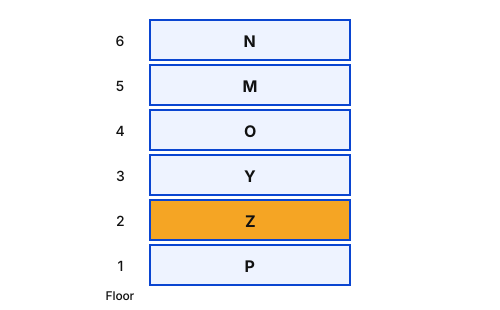
M, N, O, P, Y and Z live on six different floors of the same building. The lowermost floor in the building is numbered 1, the floor above it, number 2 and so on till the topmost floor is numbered 6. O lives on floor numbered 4. Only two people live between O and P. Only M lives between O and N. Y lives immediately below O. Who lives on floor numbered 2?
M, N, O, P, Y और Z एक ही इमारत की छह अलग-अलग मंज़िलों पर रहते हैं। इमारत की सबसे निचली मंज़िल की संख्या 1 है, उसके ऊपर वाली मंज़िल की संख्या 2 है और इसी प्रकार सबसे ऊपरी मंज़िल की संख्या 6 है। O मंज़िल संख्या 4 पर रहता है। O और P के बीच केवल दो व्यक्ति रहते हैं। O और N के बीच केवल M रहता है। Y, O के ठीक नीचे रहता है। मंज़िल संख्या 2 पर कौन रहता है?
  1. AN
  2. BZ
  3. CM
  4. DY
Show answer

Concept: Fix the definite positions first, then place the others.

  1. O = 4 and Y is immediately below O → Y = 3.
  2. Two people between O and P → P = 1 (floor 7 does not exist).
  3. Only M between O and N → M = 5, N = 6 (M cannot be 3 as Y is there).
  4. The remaining person Z lives on floor 2.

Trick: Start with the person whose floor is given, then use “immediately” clues.

Answer: (B) Z

अवधारणा: पहले निश्चित स्थान तय करें, फिर बाकी को रखें।

  1. O = 4 और Y ठीक O के नीचे → Y = 3।
  2. O और P के बीच दो व्यक्ति → P = 1 (7वीं मंज़िल नहीं है)।
  3. O और N के बीच केवल M → M = 5, N = 6 (M = 3 संभव नहीं, वहाँ Y है)।
  4. बचा हुआ Z मंज़िल 2 पर रहता है।

ट्रिक: जिसकी मंज़िल दी है उससे शुरू करें, फिर “ठीक नीचे/ऊपर” वाले संकेत लगाएँ।

उत्तर: (B) Z

RRB NTPC Graduate CBT 1General Intelligence and ReasoningFloor puzzleRRB NTPC Graduate CBT 1 2024 · 6 Jun Shift 2 →
Q4271.
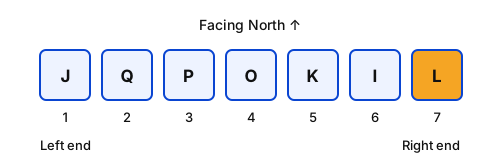
Seven people, I, J, K, L, O, P and Q are sitting in a row, facing north. Only J sits to the left of Q. Only four people sit between J and I. Only O sits between P and K and P is not an immediate neighbour of I. Who sits at the extreme right end of the row?
सात व्यक्ति, I, J, K, L, O, P और Q एक पंक्ति में उत्तर की ओर मुख करके बैठे हैं। Q के बाईं ओर केवल J बैठा है। J और I के बीच केवल चार व्यक्ति बैठे हैं। P और K के बीच केवल O बैठा है और P, I का निकटतम पड़ोसी नहीं है। पंक्ति के सबसे दाएँ छोर पर कौन बैठा है?
  1. AO
  2. BK
  3. CL
  4. DI
Show answer

Concept: Seven seats in a row facing north: left to right = 1 to 7.

  1. Only J is to the left of Q → J = 1, Q = 2.
  2. Four people between J and I → I = 6.
  3. Only O between P and K, and P not next to I → P = 3, O = 4, K = 5.
  4. Remaining L sits at 7, the extreme right end.

Trick: “Only X to the left of Y” immediately fixes both at positions 1 and 2.

Answer: (C) L

अवधारणा: उत्तर की ओर मुख किए सात सीटें: बाएँ से दाएँ = 1 से 7।

  1. Q के बाईं ओर केवल J → J = 1, Q = 2।
  2. J और I के बीच चार व्यक्ति → I = 6।
  3. P और K के बीच केवल O, और P, I का पड़ोसी नहीं → P = 3, O = 4, K = 5।
  4. बचा हुआ L स्थान 7 पर, अर्थात दाएँ सिरे पर।

ट्रिक: “Y के बाईं ओर केवल X” से दोनों तुरंत 1 और 2 पर तय हो जाते हैं।

उत्तर: (C) L

RRB NTPC Graduate CBT 1General Intelligence and ReasoningLinear seating arrangementRRB NTPC Graduate CBT 1 2024 · 6 Jun Shift 2 →
Q4272.
Select the pair that follows the same pattern as that followed by the two sets of pairs given below. Both pairs follow the same pattern.
ZIL : ARO
GRZ : TIA
उस युग्म का चयन कीजिए जो उसी पैटर्न का अनुसरण करता है जिसका अनुसरण नीचे दिए गए युग्मों के दो समुच्चय करते हैं। दोनों युग्म समान पैटर्न का अनुसरण करते हैं।
ZIL : ARO
GRZ : TIA
  1. AJPE : QJT
  2. BMAP : NZJ
  3. CLOT : OKG
  4. DXMS : CNH
Show answer

Concept: Opposite letter pairs: positions add up to 27 (A–Z, B–Y, …).

  1. ZIL → ARO: Z↔A, I↔R, L↔O (each letter replaced by its opposite).
  2. GRZ → TIA: G↔T, R↔I, Z↔A ✓.
  3. XMS → CNH: X↔C, M↔N, S↔H ✓. Others fail (e.g. J↔Q, but P↔K not J).

Trick: Opposite of a letter =27− its position.

Answer: (D) XMS : CNH

अवधारणा: विपरीत अक्षर युग्म: स्थानों का योग 27 (A–Z, B–Y, …)।

  1. ZIL → ARO: Z↔A, I↔R, L↔O (हर अक्षर अपने विपरीत से बदला)।
  2. GRZ → TIA: G↔T, R↔I, Z↔A ✓।
  3. XMS → CNH: X↔C, M↔N, S↔H ✓। अन्य विकल्प नहीं मिलते (जैसे P का विपरीत K है, J नहीं)।

ट्रिक: किसी अक्षर का विपरीत =27− उसका स्थान।

उत्तर: (D) XMS : CNH

RRB NTPC Graduate CBT 1General Intelligence and ReasoningOpposite lettersRRB NTPC Graduate CBT 1 2024 · 6 Jun Shift 2 →
Q4273.
Piyush ranked 24th from the top and 55th from the bottom in his class. How many students are there in his class?
पीयूष अपनी कक्षा में ऊपर से 24वें और नीचे से 55वें स्थान पर है। उसकी कक्षा में कितने विद्यार्थी हैं?
  1. A79
  2. B77
  3. C78
  4. D76
Show answer

Concept: Total = rank from top + rank from bottom − 1.

  1. Total =24+55−1.
  2. Total =78 students.

Trick: Subtract 1 because the person is counted twice.

Answer: (C) 78

अवधारणा: कुल = ऊपर से रैंक + नीचे से रैंक − 1।

  1. कुल =24+55−1।
  2. कुल =78 छात्र।

ट्रिक: 1 घटाएँ क्योंकि वही व्यक्ति दो बार गिना गया।

उत्तर: (C) 78

RRB NTPC Graduate CBT 1General Intelligence and ReasoningRankingRRB NTPC Graduate CBT 1 2024 · 6 Jun Shift 2 →
Q4274.
Read the given statements and conclusions carefully. Assuming that the information given in the statements is true, even if it appears to be at variance with commonly known facts, decide which of the given conclusions logically follow(s) from the statements.
Statements:
All crabs are ties.
Some ties are hooves.
Some hooves are vents.
Conclusions:
(I): Some vents are crabs.
(II): Some hooves are crabs.
दिए गए कथनों और निष्कर्षों को ध्यानपूर्वक पढ़िए। यह मानते हुए कि कथनों में दी गई जानकारी सत्य है, भले ही वह सामान्यतः ज्ञात तथ्यों से भिन्न प्रतीत होती हो, निर्णय कीजिए कि दिए गए निष्कर्षों में से कौन-सा/से निष्कर्ष कथनों का तार्किक रूप से अनुसरण करता है/करते हैं।
कथन:
सभी केकड़े, टाई हैं।
कुछ टाई, खुर हैं।
कुछ खुर, वेंट हैं।
निष्कर्ष:
(I): कुछ वेंट, केकड़े हैं।
(II): कुछ खुर, केकड़े हैं।
  1. AOnly conclusion (II) follows.केवल निष्कर्ष (II) अनुसरण करता है।
  2. BBoth conclusions (I) and (II) follow.निष्कर्ष (I) और (II) दोनों अनुसरण करते हैं।
  3. CNeither conclusion (I) nor (II) follows.न तो निष्कर्ष (I) और न ही (II) अनुसरण करता है।
  4. DOnly conclusion (I) follows.केवल निष्कर्ष (I) अनुसरण करता है।
Show answer

Concept: Draw the least-overlap Venn diagram; a conclusion follows only if it is true in every possible case.

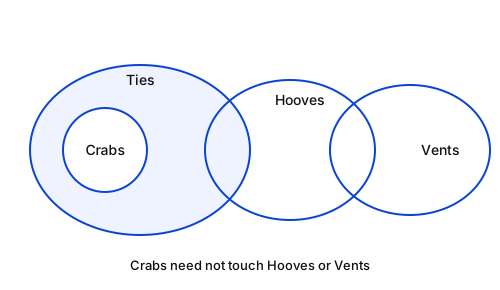
  1. All crabs are inside ties; some ties are hooves – but the hooves part may lie outside crabs.
  2. So “Some hooves are crabs” (II) is not certain.
  3. Vents are linked only with hooves, so “Some vents are crabs” (I) is not certain either.

Trick: “Some” + “some” never gives a definite conclusion.

Answer: (C) Neither conclusion (I) nor (II) follows.

अवधारणा: न्यूनतम-संयोग वाला वेन आरेख बनाएँ; निष्कर्ष तभी सही है जब हर संभव स्थिति में सत्य हो।

  1. सभी crabs, ties के अंदर हैं; कुछ ties, hooves हैं – पर hooves वाला भाग crabs के बाहर भी हो सकता है।
  2. अतः “कुछ hooves, crabs हैं” (II) निश्चित नहीं।
  3. Vents केवल hooves से जुड़े हैं, अतः “कुछ vents, crabs हैं” (I) भी निश्चित नहीं।

ट्रिक: “कुछ” + “कुछ” से कभी निश्चित निष्कर्ष नहीं निकलता।

उत्तर: (C) न तो निष्कर्ष (I) और न ही (II) अनुसरण करता है।

RRB NTPC Graduate CBT 1General Intelligence and ReasoningSyllogismRRB NTPC Graduate CBT 1 2024 · 6 Jun Shift 2 →
Q4275.
If '−' means '÷', '÷' means '×', '×' means '+' and '+' means '−', then what will come in place of the question mark (?) in the following equation?
1568 − 16 + 4 ÷ 5 × 22 = ?
यदि '−' का अर्थ '÷' है, '÷' का अर्थ '×' है, '×' का अर्थ '+' है और '+' का अर्थ '−' है, तो निम्नलिखित समीकरण में प्रश्न चिह्न (?) के स्थान पर क्या आएगा?
1568 − 16 + 4 ÷ 5 × 22 = ?
  1. A492
  2. B294
  3. C100
  4. D113
Show answer

Concept: Replace the signs as given, then apply BODMAS.

  1. 1568−16+4÷5×22 becomes 1568÷16−4×5+22.
  2. =98−20+22.
  3. =100.

Trick: Rewrite the whole expression first, then calculate – avoid mixing old and new signs.

Answer: (C) 100

अवधारणा: दिए अनुसार चिह्न बदलें, फिर BODMAS लगाएँ।

  1. 1568−16+4÷5×22 बन जाता है 1568÷16−4×5+22।
  2. =98−20+22।
  3. =100।

ट्रिक: पहले पूरा व्यंजक नए चिह्नों के साथ लिखें, फिर गणना करें।

उत्तर: (C) 100

RRB NTPC Graduate CBT 1General Intelligence and ReasoningMathematical operationsRRB NTPC Graduate CBT 1 2024 · 6 Jun Shift 2 →
Q4276.
What will come in place of the question mark (?) in the following equation, if ‘+’ and ‘−’ are interchanged and ‘×’ and ‘÷’ are interchanged?
52 ÷ 15 − 189 × 9 + 117 = ?
यदि ‘+’ और ‘−’ को आपस में बदल दिया जाए तथा ‘×’ और ‘÷’ को आपस में बदल दिया जाए, तो निम्नलिखित समीकरण में प्रश्न चिह्न (?) के स्थान पर क्या आएगा?
52 ÷ 15 − 189 × 9 + 117 = ?
  1. A684
  2. B672
  3. C688
  4. D678
Show answer

Concept: Interchange + ↔ − and × ↔ ÷, then use BODMAS.

  1. 52÷15−189×9+117 becomes 52×15+189÷9−117.
  2. =780+21−117.
  3. =684.

Trick: Do ÷ and × first: 189÷9=21, 52×15=780.

Answer: (A) 684

अवधारणा: + ↔ − और × ↔ ÷ आपस में बदलें, फिर BODMAS लगाएँ।

  1. 52÷15−189×9+117 बन जाता है 52×15+189÷9−117।
  2. =780+21−117।
  3. =684।

ट्रिक: पहले ÷ और ×: 189÷9=21, 52×15=780।

उत्तर: (A) 684

RRB NTPC Graduate CBT 1General Intelligence and ReasoningMathematical operationsRRB NTPC Graduate CBT 1 2024 · 6 Jun Shift 2 →
Q4277.
Which of the following letter-clusters should replace # and % so that the pattern and relationship followed between the letter-cluster pair on the left side of :: is the same as that on the right side of :: ?
# : RND :: QRX : %
निम्नलिखित में से कौन-से अक्षर-समूह # और % को प्रतिस्थापित करें ताकि :: के बाईं ओर के अक्षर-समूह युग्म के बीच का पैटर्न और संबंध वही हो जो :: के दाईं ओर के युग्म के बीच है?
# : RND :: QRX : %
  1. A# = MQB, % = FFT
  2. B# = MRQ, % = HHN
  3. C# = PQC, % = YYP
  4. D# = PMB, % = SSZ
Show answer

Concept: The change from the 1st cluster to the 2nd must be the same on both sides of ::.

  1. Try option D: PMB → RND: P+2=R, M+1=N, B+2=D.
  2. Apply the same to QRX: Q+2=S, R+1=S, X+2=Z → SSZ = %.
  3. Both sides follow +2,+1,+2 ✓.

Trick: Check the right-hand pair from the options quickly; only one gives a consistent rule.

Answer: (D) # = PMB, % = SSZ

अवधारणा: :: के दोनों ओर पहले समूह से दूसरे समूह का बदलाव समान होना चाहिए।

  1. विकल्प D लें: PMB → RND: P+2=R, M+1=N, B+2=D।
  2. यही QRX पर: Q+2=S, R+1=S, X+2=Z → SSZ = %।
  3. दोनों ओर +2,+1,+2 ✓।

ट्रिक: विकल्पों से दाएँ युग्म की जल्दी जाँच करें; केवल एक में नियम समान बैठता है।

उत्तर: (D) # = PMB, % = SSZ

RRB NTPC Graduate CBT 1General Intelligence and ReasoningLetter-cluster analogyRRB NTPC Graduate CBT 1 2024 · 6 Jun Shift 2 →
Q4278.
What should come in place of the question mark (?) in the given series?
801 800 797 792 785 ?
दी गई शृंखला में प्रश्न चिह्न (?) के स्थान पर क्या आना चाहिए?
801 800 797 792 785 ?
  1. A773
  2. B775
  3. C776
  4. D774
Show answer

Concept: Look at the differences between consecutive terms.

  1. 801−1=800, 800−3=797, 797−5=792, 792−7=785.
  2. Differences are odd numbers 1, 3, 5, 7, so next is 9.
  3. 785−9=776.

Trick: Also 801−n2: 801−0,801−1,801−4,801−9,801−16,801−25=776.

Answer: (C) 776

अवधारणा: क्रमागत पदों का अंतर देखें।

  1. 801−1=800, 800−3=797, 797−5=792, 792−7=785।
  2. अंतर विषम संख्याएँ 1, 3, 5, 7 हैं, अगला 9।
  3. 785−9=776।

ट्रिक: या 801−n2: 801−0,801−1,801−4,801−9,801−16,801−25=776।

उत्तर: (C) 776

RRB NTPC Graduate CBT 1General Intelligence and ReasoningNumber seriesRRB NTPC Graduate CBT 1 2024 · 6 Jun Shift 2 →
Q4279.
Which of the following actors was honoured with the 2025 International Goya Award for his contributions to global cinema?
वैश्विक सिनेमा में उनके योगदान के लिए निम्नलिखित में से किस अभिनेता/अभिनेत्री को 2025 के अंतर्राष्ट्रीय गोया पुरस्कार (International Goya Award) से सम्मानित किया गया?
  1. ASigourney Weaver
  2. BRichard Gere
  3. CCate Blanchett
  4. DJuliette Binoche
Show answer

Concept: The International Goya Award is given by the Spanish Film Academy at the Goya Awards.

  1. In February 2025 (39th Goya Awards, Granada), the International Goya went to Hollywood actor Richard Gere.
  2. It honoured his contribution to world cinema and humanitarian work.
  3. Cate Blanchett received it in 2022, Juliette Binoche in 2023, Sigourney Weaver in 2024.

Yaad rakhein: Goya = Spain’s top film awards (like Oscars of Spain).

Answer: (B) Richard Gere

अवधारणा: International Goya Award स्पेनिश फिल्म अकादमी द्वारा गोया पुरस्कारों में दिया जाता है।

  1. फरवरी 2025 (39वें गोया पुरस्कार, ग्रेनाडा) में यह हॉलीवुड अभिनेता रिचर्ड गेरे को मिला।
  2. यह विश्व सिनेमा व मानवीय कार्यों में योगदान के लिए था।
  3. केट ब्लैंचेट (2022), जूलियट बिनोश (2023), सिगोरनी वीवर (2024) को पहले मिला।

याद रखें: गोया = स्पेन के सर्वोच्च फिल्म पुरस्कार।

उत्तर: (B) Richard Gere

RRB NTPC Graduate CBT 1General AwarenessAwards 2025RRB NTPC Graduate CBT 1 2024 · 6 Jun Shift 1 →
Q4280.
What milestone did Virat Kohli achieve in the 2025 IPL season (as of 15 April, 2025)?
2025 के IPL सत्र में (15 अप्रैल, 2025 तक) विराट कोहली ने कौन-सी उपलब्धि हासिल की?
  1. AHitting 500 sixes in the IPLIPL में 500 छक्के लगाना
  2. BScoring 10,000 runs in the IPLIPL में 10,000 रन बनाना
  3. CRegistering a combined total of 1000 fours and sixes in IPL historyIPL इतिहास में कुल मिलाकर 1000 चौके और छक्के दर्ज करना
  4. DWinning 5 IPL titles5 IPL खिताब जीतना
Show answer

Concept: Boundary records in IPL history.

  1. On 13 April 2025 (RCB vs RR, Jaipur), Virat Kohli became the first batter to reach 1000 boundaries (fours + sixes combined) in the IPL.
  2. He has not hit 500 IPL sixes, and RCB had not won 5 titles; 10,000 IPL runs was not reached.

Yaad rakhein: Kohli = first to 1000 IPL boundaries (2025).

Answer: (C) Registering a combined total of 1000 fours and sixes in IPL history

अवधारणा: IPL इतिहास में बाउंड्री रिकॉर्ड।

  1. 13 अप्रैल 2025 (RCB बनाम RR, जयपुर) को विराट कोहली IPL में 1000 बाउंड्री (चौके + छक्के) पूरी करने वाले पहले बल्लेबाज़ बने।
  2. उन्होंने 500 IPL छक्के या 10,000 IPL रन नहीं बनाए, और RCB ने 5 खिताब नहीं जीते।

याद रखें: कोहली = IPL में 1000 बाउंड्री वाले पहले खिलाड़ी (2025)।

उत्तर: (C) Registering a combined total of 1000 fours and sixes in IPL history

RRB NTPC Graduate CBT 1General AwarenessSports – IPL 2025RRB NTPC Graduate CBT 1 2024 · 6 Jun Shift 1 →